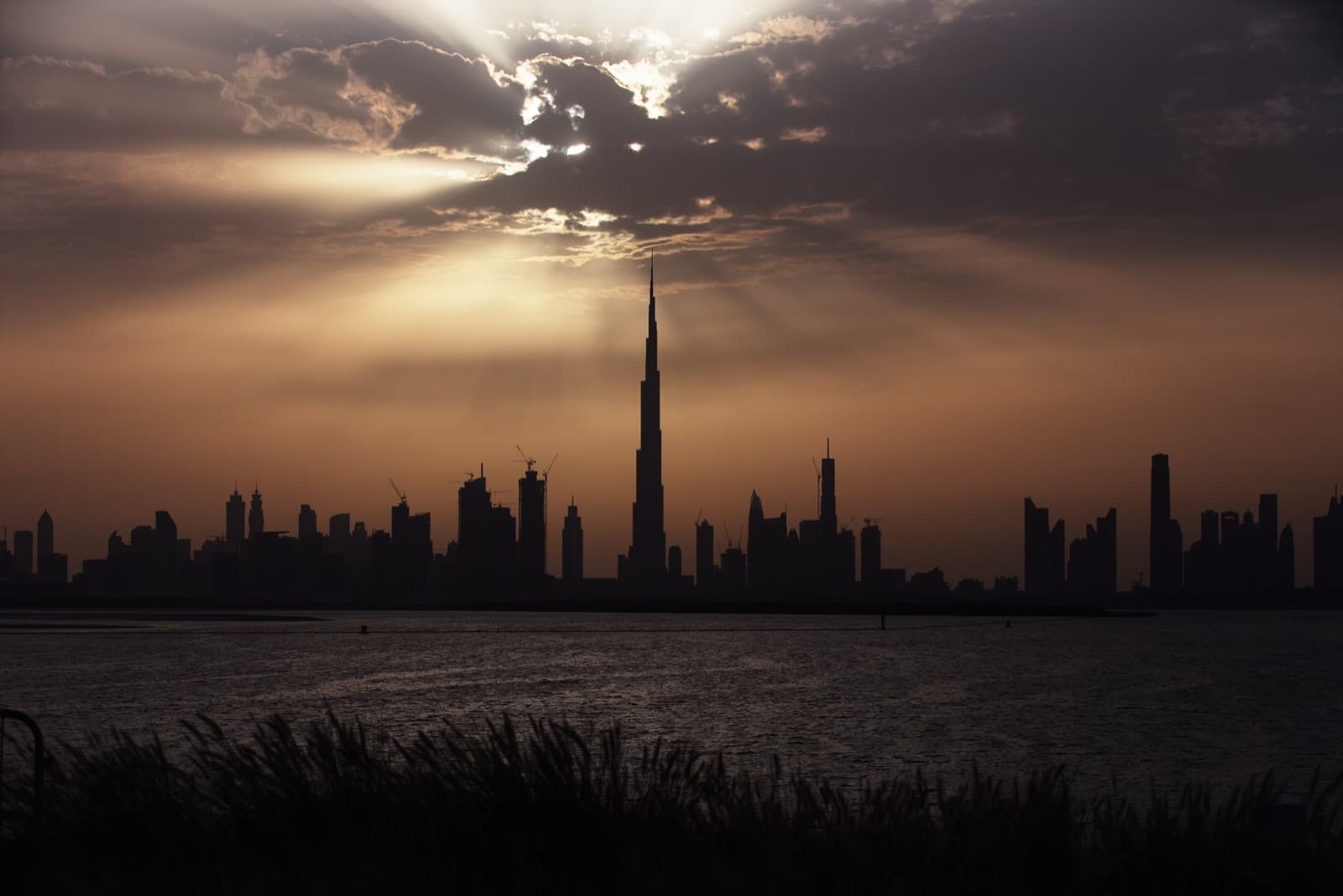
Burj Khalifa rises 828 metres to its roof, about 830 metres including the antenna spire, with 154 occupied floors and roughly 163 levels total. It is the tallest building in the world and the tallest free-standing structure ever built. It opened on 4 January 2010. Its height stems from a three-winged, buttressed-core geometry that confuses the wind.
Burj Khalifa is an engineered gesture: a single 828-metre tower, three wings around a buttressed central core, drawn on paper and raised on open desert to be the tallest building on earth. Standing at its foot, the thing to understand is not the height alone but the reasoning behind the height, the way a structure this tall was solved and why a young Gulf city chose to solve it at all. The record is real. The more interesting story is the grammar underneath it.
The number, and what it costs to reach it
The tower rises 828 metres to its roof, and about 830 metres if you count the antenna spire. It carries 154 occupied floors and roughly 163 levels in total once the mechanical floors are included. By a clear margin it is both the tallest building in the world and the tallest free-standing structure ever built. It opened on the fourth of January, 2010.
Numbers like these are easy to recite and hard to feel. What they conceal is the central engineering problem of any supertall: the enemy is not gravity, which columns handle easily, but the wind. Push on something this slender and it wants to sway and, worse, to shed vortices that make it oscillate. The design answer here is legible from the ground if you know where to look. The floor plan is a Y, three wings radiating from a buttressed central core. The architect was Adrian Smith, working for the American firm Skidmore, Owings and Merrill, and the structure was engineered by Bill Baker of the same firm. Baker's approach is often called a buttressed core: each of the three wings braces the others against the central spine, so the whole tower behaves like a tripod rather than a mast.
Why the shape confuses the wind
Hear a stop from this walk
Emaar Boulevard & the Downtown Towers: The Whole District at Once
Look up and you will see the wings step inward as the tower climbs, dropping away at intervals in a spiralling pattern. That setback geometry is not styling. Each change in the tower's width along its height changes the frequency at which wind sheds off its faces, so the wind never finds a single steady rhythm to push against. The building, in effect, refuses to give the air a consistent target. This is the quiet reason a structure so tall stays so still for the people inside it. The three-lobed plan itself was drawn in part from a desert flower, the hymenocallis, a three-lobed lily. It is a rare case where an ornamental reference and a structural solution happen to be the same shape.
Everything else you will encounter on the walk radiates out from this single point. The tower is stop one because it is, quite literally, the origin of the district's geometry.
The name records a rescue
The tower was originally called Burj Dubai, which simply means the Dubai tower, burj being the Arabic word for tower. It was renamed at its opening for Sheikh Khalifa bin Zayed Al Nahyan, then president of the United Arab Emirates. The renaming was not ceremonial flourish. During the financial crisis of 2008 and 2009, Abu Dhabi and the federal government lent Dubai tens of billions of dollars. The tower opened at the tail of that crisis, and the change of name from Burj Dubai to Burj Khalifa quietly acknowledged where the money to steady Dubai had come from. So the name itself is a piece of documented history: a record of a real moment of rescue, fixed to the side of the tallest thing ever built.
It is worth stating plainly, because it is part of the honest account of this building: the tower was constructed by a very large workforce drawn largely from South Asia, alongside the lead contractor, the South Korean firm Samsung Construction and Trading, working with a Belgian firm and an Emirati one. The people who laid the structure came, in large part, from elsewhere, which is true of Dubai's built environment as a whole.
Reading it from the ground
You do not need a ticket to understand the Burj Khalifa. The observation levels, the At the Top decks, are ticketed through Emaar and priced in UAE dirhams, with timed slots that sell out, but the entire ground-level experience is free. The single most useful thing you can do standing here is walk a short arc around the base and watch the three wings slide past one another. From one position the tower reads as a slim blade; move a few dozen metres and it thickens into a broad, stepped mass. That shift is the buttressed-core plan revealing itself, and it is the clearest way to grasp that the height is a consequence of the geometry, not a decoration on top of it.
One practical note the structure imposes on you: this is a desert. The comfortable season runs roughly from November to March. In deep summer, from about June to September, the outdoor approach becomes genuinely taxing, so do the walk in the early morning or after dark, when the tower is illuminated and the heat has broken. Carry water even in winter, because the dry air dehydrates faster than you expect.
The tower as the first word
Read on its own, the Burj Khalifa is a superlative. Read as the first stop on a walk, it becomes a thesis statement. It sits at the centre of Downtown Dubai, a two-square-kilometre quarter that was master-planned by a single company, Emaar Properties, from around the year 2000 on former open desert. The lake, the choreographed fountain, the vast mall that works as an air-conditioned town square, the mock-souk and the dhow-shaped opera house all radiate from this spire, conceived together and raised in little more than a decade. Most cities are a palimpsest written over centuries. This one was written in a single hand.
That is why the tower rewards a walk rather than a photograph. The best way to understand what a supertall means to the city built around it is to stand at its base and then follow its logic outward, stop by stop. The guided route that includes it, Dubai walking tours, traces the whole grammar of the district at an unhurried pace, and you can see how it fits the wider city on the Dubai page. The tower is the first word. The rest of the walk is the sentence.
Sources
- Burj Khalifa, Wikipedia. Encyclopaedic overview of the tower's height, floor count, opening date, architects and engineers, and the Burj Dubai to Burj Khalifa renaming.
- SOM: Burj Khalifa, Dezeen (2025). Feature on Skidmore, Owings and Merrill's design, including the buttressed-core structural concept and the tower's place in 21st-century architecture.
- Downtown Dubai, Wikipedia. Background on Emaar Properties' master plan, the district's scale and cost, and its development timeline from around 2000.
- Roamer tour transcript, "Burj Khalifa and Downtown Dubai: The Vertical City." Fact-audited walking-tour narration and per-stop historical context underlying this article.
Ready to experience it?
Burj Khalifa & Downtown Dubai: The Vertical City
75 min · 2.7 km · easy
More from Dubai
Explore more at your own pace.
Dubai From the Creek to the Crown of the Tower
Al Fahidi: The Coral-and-Wind Town That Dubai Grew From
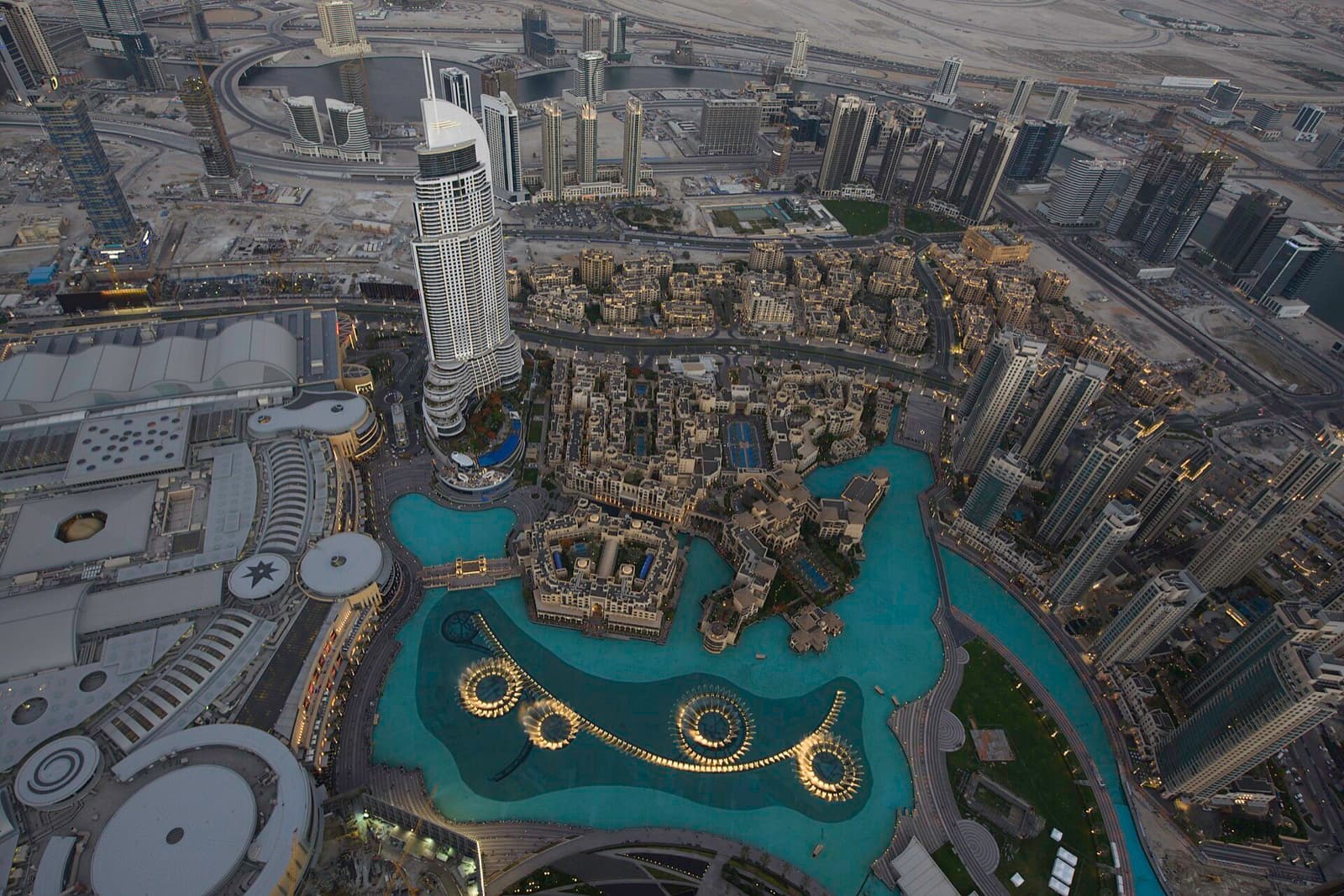
Emaar Boulevard: Reading the Grammar of a City Built All at Once
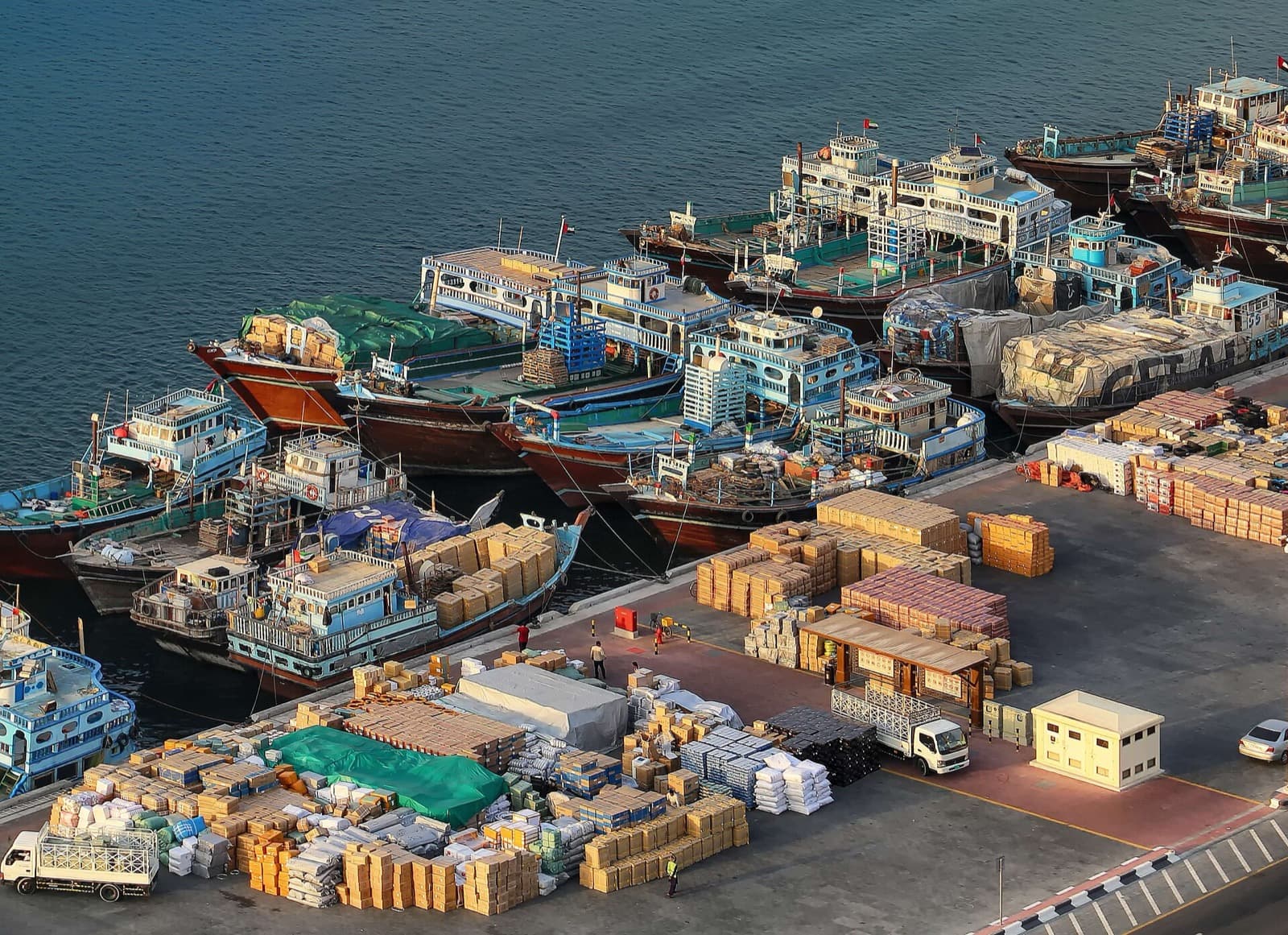
The Dhow Wharfage: Where Old Dubai Still Loads Cargo by Hand
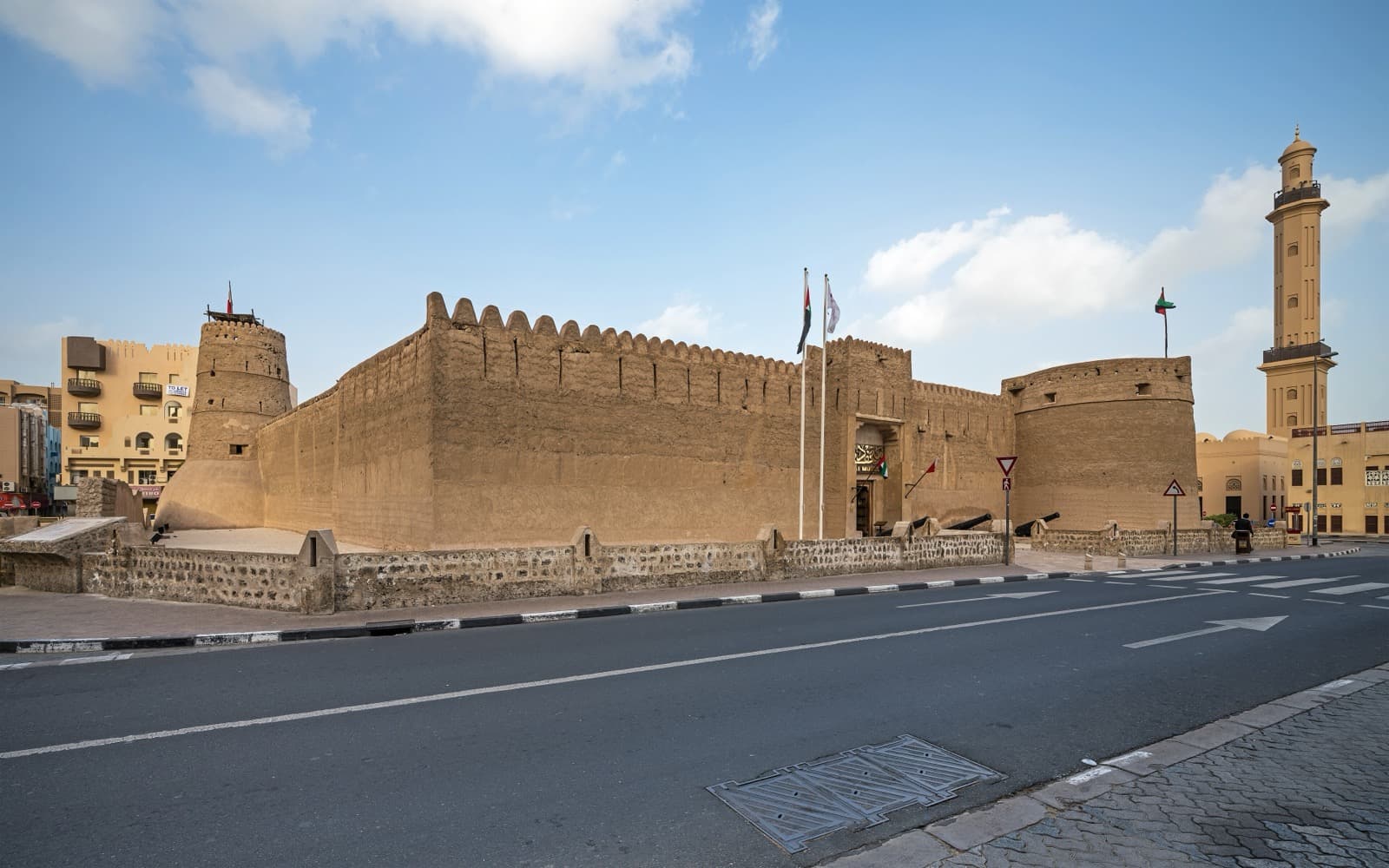
Al Fahidi Fort and the Dubai Museum: The Oldest Stone in the City