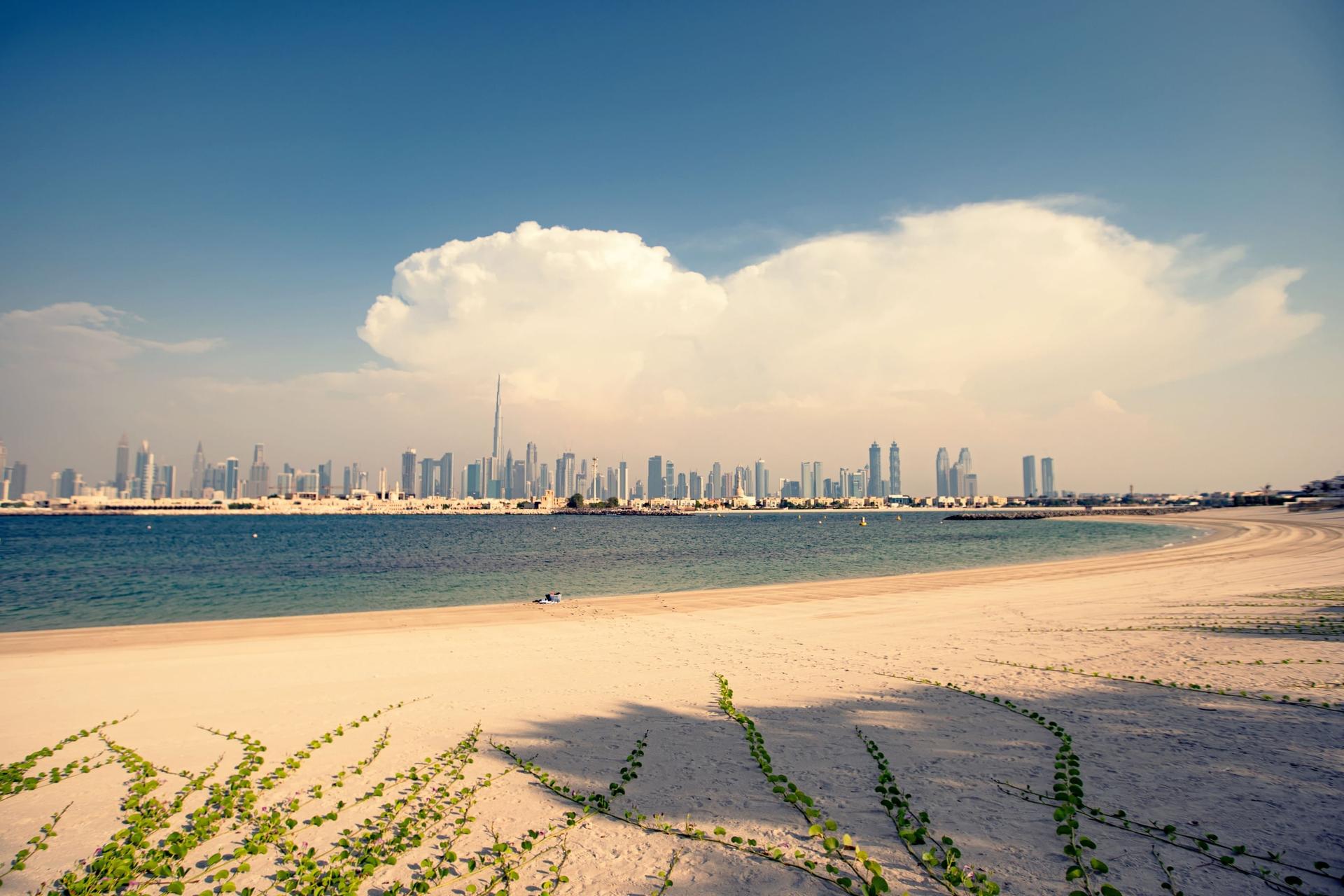
A loop round Burj Lake on its free promenades: the Dubai Mall's waterfront, Souk Al Bahar and the Old Town, Burj Plaza, Burj Park, Dubai Opera, the Burj Khalifa's foot and the Dubai Fountain.
Start · Dubai Mall Waterfront: One Developer's Plan
DirectionsStops
- 1
Dubai Mall Waterfront: One Developer's Plan
One company drew this whole quarter. The Dubai Mall's lake front, on Emaar's 500-acre Downtown Dubai, with the Burj Khalifa across the water.
- 2
Souk Al Bahar Terrace: The Dubai Fountain
The fountain lies hidden in the basin. The Dubai Fountain, by WET Design, opened in 2009: about 275 m across the lake, jets to about 150 m.
- 3
Palace Downtown View: A New Old Town
A new quarter dressed as an old one. The Palace Downtown on The Old Town Island and Souk Al Bahar, both opened in autumn 2007.
- 4
Old Town Waterside: Spice Names and Wind Towers
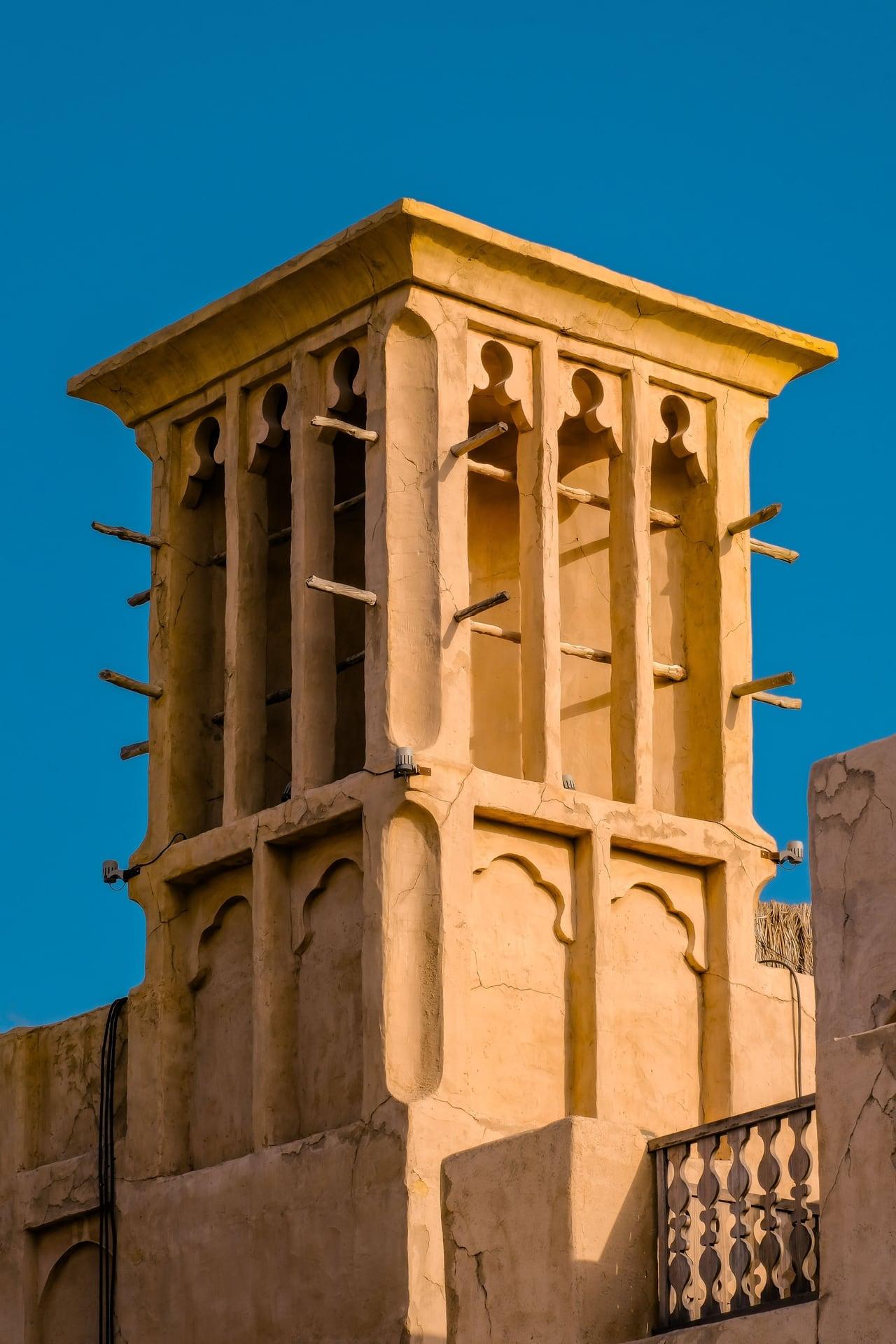
Old forms beside the newest tower. The Old Town's low blocks, named with Arabic spice words, with wind tower roofs as ornament.
- 5
Burj Plaza: Wings of Mexico
A pair of bronze wings to stand between. Jorge Marín's Wings of Mexico on Burj Plaza, at the lake's south tip by the Boulevard.
- 6
Burj Residences Promenade: The Whole Tower
The tower stands whole up the lake. The Burj Khalifa seen top to bottom from the promenade below the Burj Residences towers.
- 7
Burj Park: The New Year's Eve Lawn
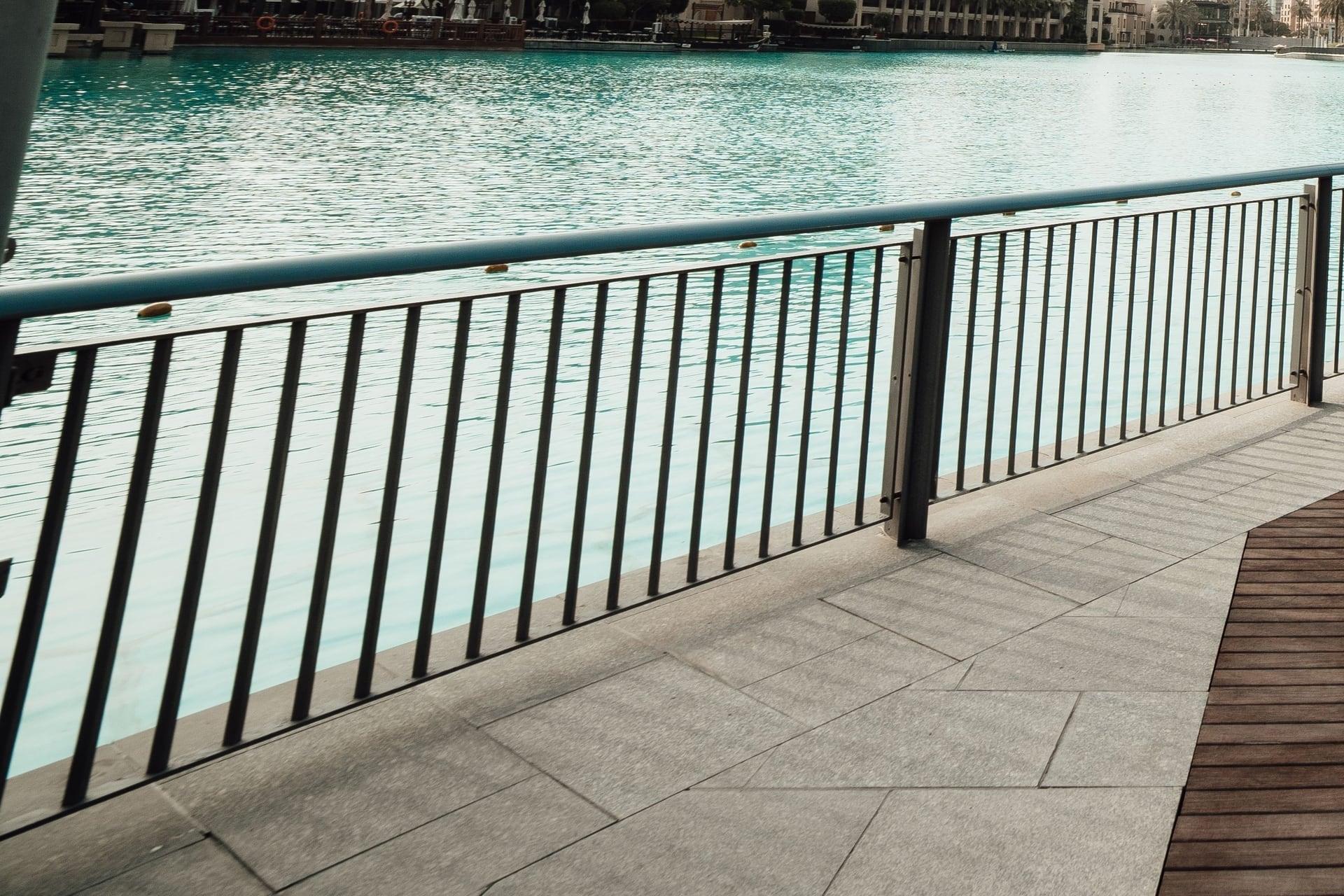
A lawn that faces the tower across water. Burj Park, free most days, the ticketed hub of Downtown's New Year's Eve.
- 8
Dubai Opera: A Hall Shaped Like a Dhow
An opera house shaped like a boat. Dubai Opera, by Atkins, opened in 2016: up to 2,000 seats, a glass bow on the plaza.
- 9
Burj Khalifa Foot: Three Wings and a Core
Look straight up at three wings. The Burj Khalifa's base from the free plaza: SOM's Y-shaped plan, a buttressed core, spiraling setbacks.
- 10
Burj Khalifa Across the Water: The Name and the Height
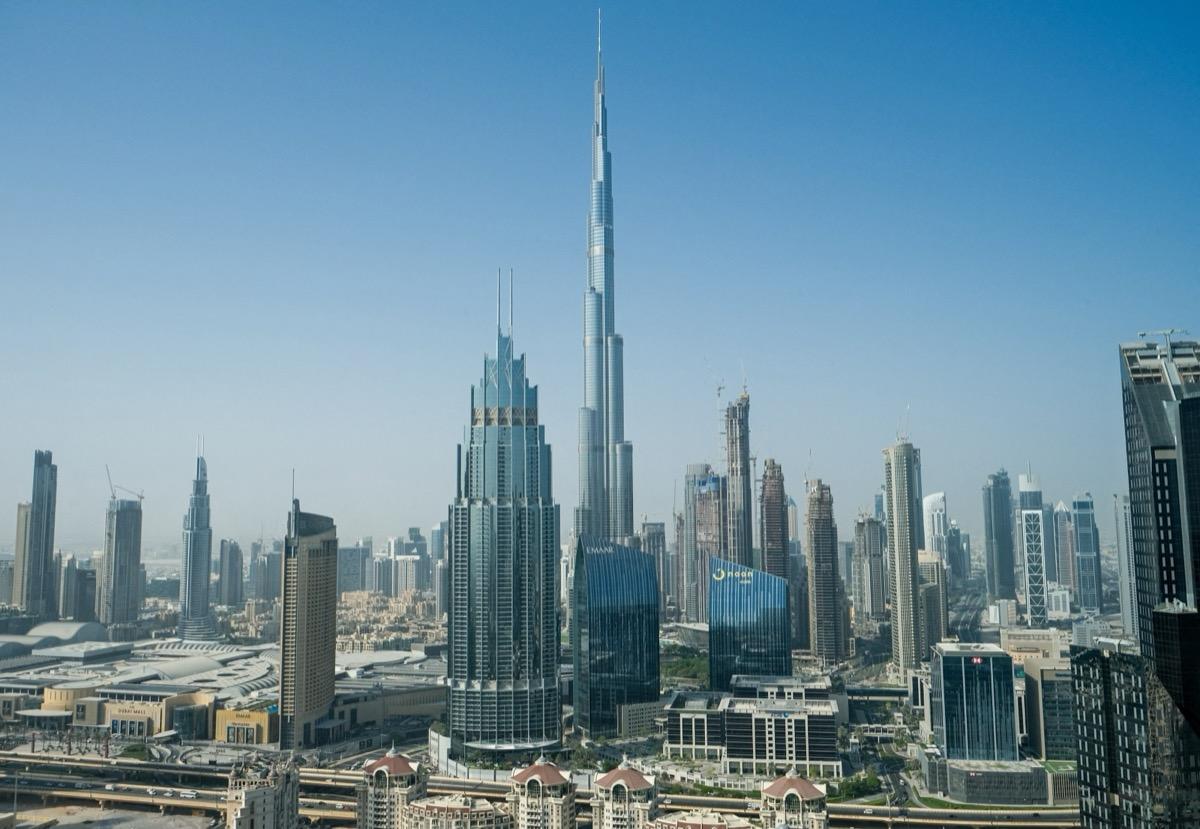
The world's tallest building rises across the water. The Burj Khalifa across the arm of the lake, opened and renamed on 4 January 2010.
- 11
Boardwalk Gate: The Free Side of the Show
The free edge of a ticketed pier. The Dubai Fountain Boardwalk's gate, where a floating walkway runs out into the jets.
- 12
Fountain Views: The Show at Night
The basin opens out at its widest. Fountain Views at the mall's waterfront, where the evening shows play every half hour.
Details
Best Time to Visit
From about 15:30 in the cooler months (November to March) into the evening: the promenades are lit after dark and the fountain's evening shows run every 30 minutes from 18:00 to 23:00 (afternoon shows 13:00 and 13:30 Saturday to Thursday, 14:00 and 14:30 Friday; Emaar). Sunset is about 17:30 in November and December and about 18:10 in mid-February (computed). Little shade on the route: avoid midday and the summer months. Not on New Year's Eve. Ramadan (expected from about 8 February 2027) changes the show times. Checked 10 November 2026.
Pro Tips
- •Start on the Dubai Mall's lake front by the fountain: Red Line to Burj Khalifa/Dubai Mall, then the covered Metro Link bridge into the mall and out its lake-side doors.
- •Cooler hours only, all outdoors: leave Burj Khalifa/Dubai Mall station on the Burj Khalifa side, follow the signed path south-east to the lake at the tower's foot, and walk east along the water to the mall's lake front, about 1.9 km and 25 minutes in open sun. You pass stops 9 to 12 first: the walk begins at stop 1. Checked 10 November 2026.
- •Or take a taxi to The Dubai Mall or Souk Al Bahar. The mall's opening hours were not verified; if its doors are shut, use the outdoor way or a taxi. Checked 10 November 2026.
- •Dubai Fountain shows (free from every promenade): daily every 30 minutes from 18:00 to 23:00, plus 13:00 and 13:30 Saturday to Thursday and 14:00 and 14:30 on Friday (Emaar). Times change in Ramadan: re-check before February 2027. Checked 10 November 2026.
- •The Dubai Fountain Boardwalk (stop 11) is a ticketed floating pier: book with Emaar; the price was not verified. The Burj Khalifa's observation decks are ticketed and entered from inside The Dubai Mall. Dubai Opera's hall is ticketed for shows and tours; its plaza is free. Checked 10 November 2026.
- •The walk ends a few steps from the mall's lake doors: the Metro Link takes you back to the Red Line at Burj Khalifa/Dubai Mall. Check lines and times with the RTA before you go. Checked 10 November 2026.
Safety & Precautions
- •Between stops 3 and 4 the route crosses the Palace Downtown hotel's forecourt and, once, its driveway, with no marked crossing: keep to the paved edge and watch for cars from both sides. If staff turn walkers back, go back over the footbridge and follow the mall's lake front and the Boulevard sidewalk to Burj Plaza (about 1.2 km) and rejoin at stop 5.
- •Step-free: the Souk Al Bahar footbridge (stops 1 to 2) has a gentle ramp beside its steps. The two short flights on the hotel's island (stops 3 to 4) have no ramp mapped: wheelchair and stroller users should take the Burj Plaza detour above.
- •Works in the lake: in late October 2026 new water features were being installed between the mall and the tower and a section of the waterfront was cordoned off (Gulf News, 26 October 2026). Parts of the lake edge may be fenced: walk around the barriers on the open side. Checked 10 November 2026.
- •New Year's Eve: Downtown's roads close from the afternoon and Burj Park is ticketed (2025 to 2026 plan; the 2026 to 2027 plan was not announced on 10 November 2026). Do the walk another night.
- •Burj Park (stop 7) is fenced for events through the season. If the park's lake edge is closed, keep to the open promenade or go on to the Opera plaza (stop 8).
- •Strong sun and little shade, even in winter: carry water, wear a hat, and avoid the middle of the day.
- •Ask before photographing people: UAE law protects privacy in photographs. Restaurant terraces along Souk Al Bahar are for customers.
- •In Ramadan (expected from about 8 February 2027), avoid eating or drinking openly on the promenades in daylight; hours shift.
- •GPS can drift at the tower's foot (stop 9) and beside the mall's wall: orient by the tower, the fountain and the water.
Travel advisory: Reconsider Travel (Level 3).
Gallery
Related Reading
Go deeper on what you'll see, hear, and walk through.
Overview
Best Self-Guided Walking Tours in Dubai (2026)
5 min
Overview
Dubai Travel Guide: How Many Days, Best Time, Getting Around, and Costs
8 min
Overview
One Day in Dubai: A Walkable Old-to-New Itinerary
9 min
Thematic
Dubai From the Creek to the Crown of the Tower
9 min
Companion
Emaar Boulevard: Reading the Grammar of a City Built All at Once
7 min
Deep dive
Burj Khalifa: How the Tallest Building on Earth Actually Stands Up
7 min
Read
What to Eat in Dubai: Emirati Dishes and Where to Find Them
7 min
Read the walk
The full story of Burj Khalifa and the Dubai Fountain: Built Around a Lake, in words. Prefer to listen? Play it narrated, from home or on location.
Introduction
Downtown Dubai was drawn on a plan by one developer, around a lake made for it. On one side of the water stands the Burj Khalifa, the world's tallest building. Around the rest are a mall, a souk and an old town built new in an old style, an opera house shaped like a boat, and, in the middle, the Dubai Fountain. This walk circles the lake on the free promenades at its edge.
There are twelve stops over just over two kilometers, about a mile and a third, and it takes about an hour and a quarter. It is flat, with a few short flights of steps and no public road to cross. Between stops three and four the path goes through a hotel's forecourt, and stop three tells you how.
There is little shade, and the sun is strong even in winter: bring water and a hat. The best time is late afternoon into the evening, when the promenades are lit and the fountain plays every half hour from six to eleven, with different times in Ramadan. On New Year's Eve, come another night.
To reach the start, take the Red Line to Burj Khalifa Dubai Mall station, follow the covered, air conditioned link bridge into the Dubai Mall, and walk through to its lake side doors by the fountain. The walk ends on the same lake front, a few steps from those doors.
When you arrive at Dubai Mall Waterfront, begin with stop one.
1. Dubai Mall Waterfront: One Developer's Plan
Welcome to the Dubai Mall's lake front, where this walk begins. Stand at the rail with the water in front of you. Across the lake rises the Burj Khalifa, whole from its foot to its spire if you tip your head back. Over the footbridge, the low arcaded block is Souk Al Bahar. Behind you is the long wall of the mall.
Everything you can see was drawn by one developer. Emaar, the Dubai company that built this district, gives its own figure for it: five hundred acres, about two square kilometers. At the center of the plan it put a lake, and around the water's edge it set the tower, the mall, the hotels and the homes. The district has a name to match its ambition: Downtown Dubai.
The mall behind you opened on the fourth of November, two thousand eight. In a city where the sun rules the day, the plan needed a huge shaded room, and this is it: the indoor half of the district. The outdoor half is the ring of promenades around the lake, and that ring is free. This walk keeps to it all the way around, and never goes inside.
Now look down at the water in front of you. When it is still, you can make out rings and long curving lines just under the surface. That is the Dubai Fountain, waiting for its next show.
In late October twenty twenty six, new installations were going up in the lake between the mall and the tower, and a section of this waterfront was fenced off for the works. If you meet barriers along the way, walk around them on the open side.
Follow the route along the lake front and over the footbridge to Souk Al Bahar. At the far end there are short steps down, with a ramp beside them.
2. Souk Al Bahar Terrace: The Dubai Fountain
Walk on to the corner of the souk's lake walk, where the basin opens out with the tower beyond it, and stop by the rail. The restaurant terraces along this edge are for their customers; the public walk is free.
Look across the water toward the tower. Between you and it lies the Dubai Fountain. When it is not playing it hardly shows: a long arc of nozzles and rings, just under the surface. Then the music starts, and the lake stands up.
The fountain first played on the eighth of May, two thousand nine. It was designed by WET Design, the firm behind the fountains at the Bellagio in Las Vegas. Here it runs about two hundred and seventy five meters across the lake, and its tallest jets reach about one hundred and fifty meters into the air.
Emaar calls it the world's largest choreographed fountain system. Choreographed is the word that matters. The jets are not simply on or off: they rise, sway and fall in time to a piece of music, and the lights move with them.
Seen from this low corner, the fountain is in front of the tower, so the two read as one picture: the water below, the building above. That was the plan's idea from the start. In a desert city, the developer put water at the center and made it perform.
Shows run every half hour from six to eleven in the evening. There are two in the early afternoon as well: at one and half past one, or on Fridays at two and half past two. Those are the times Emaar last published; check them on the day.
Follow the route along the souk's lake walk, with the water beside you. Next is a hotel built to look old.
3. Palace Downtown View: A New Old Town
Walk on to the souk's next corner, where the walk turns, and stop where you can see across the narrow channel to the hotel on its island.
That is the Palace Downtown. Look at its towers, its pavilions and its rooflines: they borrow from old Arabian building. Now look back at the souk beside you, with its arches and its long arcades. Both look old. Neither is.
The hotel opened in October two thousand seven, under the name The Palace. Emaar opened the first part of Souk Al Bahar on the fifteenth of December that year. Its own announcement described the souk as set within the context of a traditional Arabian souk, with winding corridors and high archways. Souk means market, and bahr is the Arabic word for sea. Both buildings stand on ground the developer named The Old Town Island.
In two thousand seven, the tower across the lake was still going up; it would not be finished until twenty ten. So the developer built the past and the future at the same time: a brand new old town, at the foot of what would become the world's tallest building.
Dubai's real old town lies on the creek, with its wind tower houses, and our Old Dubai walk goes there.
Follow the route over the little bridge onto the hotel's island. The path crosses the Palace Downtown's forecourt, the hotel's arrival court: keep to the paved edge, and where you cross the hotel's driveway, watch for cars from both sides. Then go down the short steps to the lakeside walk. If staff ask you to go another way, go back over the footbridge and around by the mall's lake front and the Boulevard's sidewalk to Burj Plaza, stop five.
4. Old Town Waterside: Spice Names and Wind Towers
At the bottom of the steps, walk on along the lakeside walk and stop by the water. You have come through the hotel's forecourt, and this walk along the water belongs to the Old Town.
Turn to look at the buildings behind you. Low blocks, sand colored, with small square towers on their roofs. Those towers quote a traditional form of the Gulf: the wind tower, in Arabic barjeel. The working ones stand in Dubai's old town on the creek. Here they are a style, worn by new buildings, and they are best read as ornament.
These are homes. The lanes that run in among the blocks are the residents' own, so the walk keeps to the water's edge.
The blocks carry Arabic names, and several of them are the Arabic words for spices: Zaafaran, saffron; Kamoon, cumin; Yansoon, anise. Say them over to yourself and the Old Town starts to sound like a spice market, an echo of the trading town Dubai once was.
Now look back the way you came. The Palace Downtown rises there, and above its roofs stands the Burj Khalifa. This is the contrast the whole district is built on: low, sand colored forms that look back to the past, and behind them a tower of glass and steel that looks to nothing but the sky.
Follow the route along the water and out onto the Boulevard's sidewalk for a short stretch. Stay on the sidewalk, away from the traffic, until the path turns into the plaza.
5. Burj Plaza: Wings of Mexico
Walk on across the plaza's paving to its corner by the lake, and stop there. Turn around to the plaza. On a stand in the open, a pair of great bronze wings spreads wide, with a space between them just the size of a person. This is Wings of Mexico, by the Mexican sculptor Jorge…
Full narration for this stop unlocks with the tour.
6. Burj Residences Promenade: The Whole Tower
Walk on along the promenade and stop by the rail, where the lake runs straight ahead toward the tower. This is the view. The Burj Khalifa stands at the far end of the water, and from here you can take it in whole, from its foot to the tip of its spire, in one look. Look at its…
Full narration for this stop unlocks with the tour.
7. Burj Park: The New Year's Eve Lawn
Walk on along the lake's edge and stop by the rail, with the park's lawns on one side and the fountain basin on the other. This is Burj Park. On most days it is a free green space, an open lawn by the water, with the tower rising beyond it. Look at how it sits: the whole park…
Full narration for this stop unlocks with the tour.
8. Dubai Opera: A Hall Shaped Like a Dhow
Walk on onto the plaza and stop where the opera house's glass front faces you. This is Dubai Opera. The building is ticketed, for shows and for guided tours, but the plaza is free, and the outside tells the story. Look at the shape. The high glass front, rising to a point, is…
Full narration for this stop unlocks with the tour.
9. Burj Khalifa Foot: Three Wings and a Core
Walk on to the head of the water, where the paving opens into a plaza at the tower's foot, and stop there, with the Burj Khalifa rising in front of you. The tower's observation decks are ticketed, and their entrance is inside the Dubai Mall, not here. From this free plaza, you…
Full narration for this stop unlocks with the tour.
10. Burj Khalifa Across the Water: The Name and the Height
Walk on along the promenade and stop by the rail, where the tower stands across the water. Here is the number. The Burj Khalifa stands eight hundred and twenty eight meters tall, to the top of its spire: the world's tallest building. Emaar counts more than two hundred stories,…
Full narration for this stop unlocks with the tour.
11. Boardwalk Gate: The Free Side of the Show
Walk on along the promenade and stop by the gate at the water's edge. The gate leads onto the Dubai Fountain Boardwalk, a floating walkway that runs out into the basin among the jets. It is ticketed. Emaar describes it as close enough to feel the mist. This walk stays on the…
Full narration for this stop unlocks with the tour.
12. Fountain Views: The Show at Night
Walk on to the end of the promenade, where it meets the mall's lake front, and stop by the rail facing the water. The basin is at its widest in front of you. Souk Al Bahar is across the water, where you stood at stop two, and the Burj Khalifa rises off to the side. If a show is…
Full narration for this stop unlocks with the tour.