Downtown Dubai was master-planned and built by a single company on former open desert, and Emaar Boulevard is the street where you can read that entire deliberate composition at once. Most cities are a palimpsest, written and rewritten street by street over centuries. This one was written in a single hand: one developer, Emaar Properties, drew roughly two square kilometres of desert into a complete downtown from around the year two thousand, at an estimated cost of about twenty billion American dollars, and raised the whole thing in little more than a decade. If you want to understand why the district looks and behaves the way it does, start on its spine, then walk the rest of the grammar.
The street that explains the plan
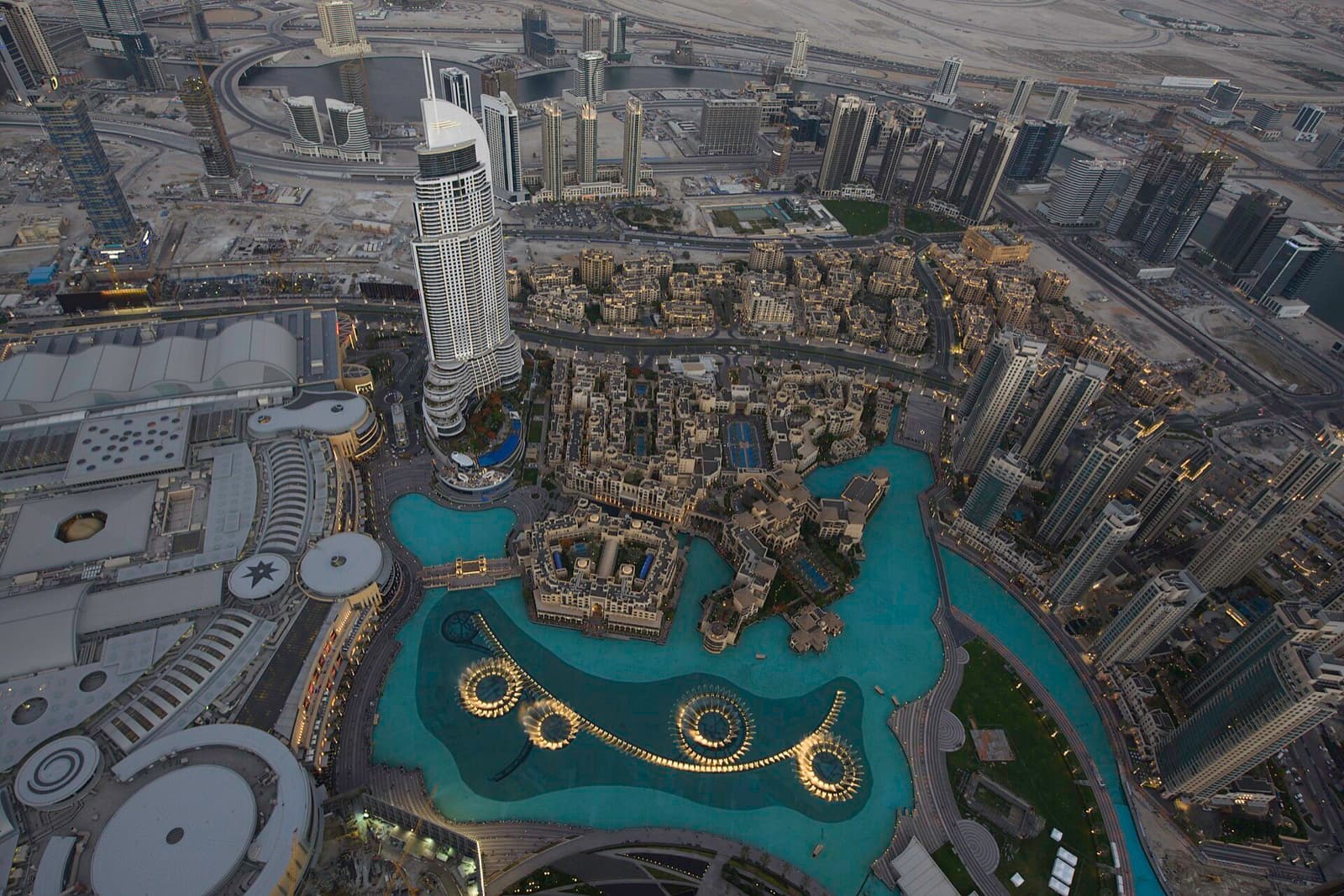
The curving avenue officially named Mohammed bin Rashid Boulevard, usually called Emaar Boulevard, runs for roughly three and a half kilometres in a long arc around the base of the tower. It is a genuine public street, not a private forecourt, lined with tall residential and hotel towers including The Address Downtown and Burj Vista. Walk it slowly and one fact becomes physical rather than abstract: nothing here was assembled piecemeal. The tower, the lake, the fountain, the mall, the mock-souk, the opera house and this ring of towers were conceived together, as one composition, and delivered almost simultaneously.
That is unusual enough to be worth pausing on. Cities normally accrete. A merchant builds a warehouse, a mosque follows, a market grows in the gap, a road bends to avoid a wall that no longer exists. Downtown Dubai skipped all of that. It has the internal logic of a single drawing, and the boulevard is the clearest place to feel it, because from the street you can see how each major element was positioned in relation to the others rather than to whatever happened to be there first. This is the pre-walk argument of the full route: every stop is one word, and the boulevard is the sentence they add up to.
The record at the centre
Hear a stop from this walk
Emaar Boulevard & the Downtown Towers: The Whole District at Once
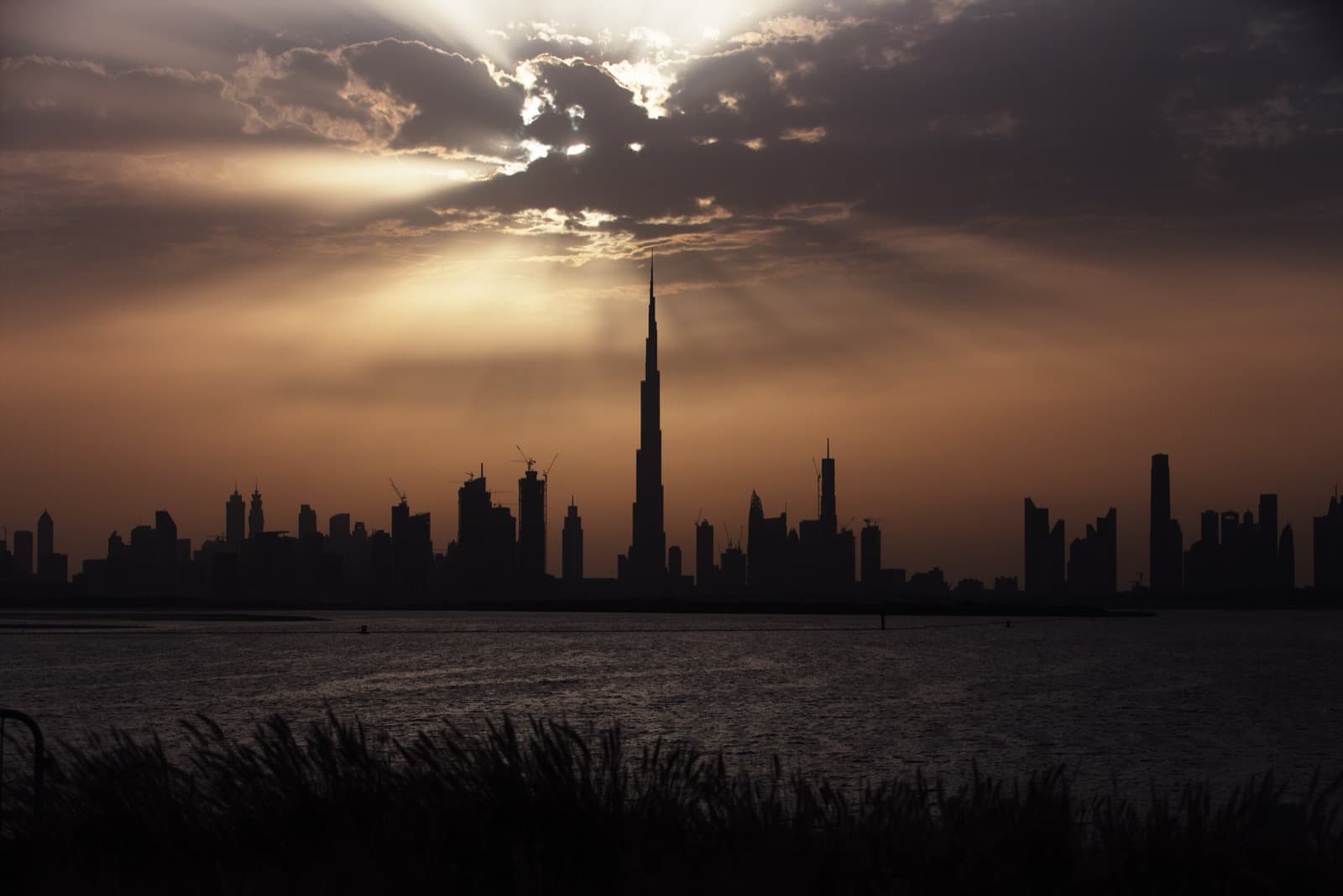
The composition radiates from one point. The Burj Khalifa rises eight hundred and twenty-eight metres to its roof, about eight hundred and thirty metres counting the antenna spire, with one hundred and fifty-four occupied floors and roughly one hundred and sixty-three levels in all. It is, by a clear margin, the tallest building in the world and the tallest free-standing structure ever built. It opened on the fourth of January, two thousand and ten, designed by Adrian Smith for the American firm Skidmore, Owings and Merrill, and structurally engineered by Bill Baker of the same firm. Its plan is three wings around a buttressed central core, a form drawn in part from the hymenocallis, a three-lobed desert lily.
The name records a real moment. The tower was called Burj Dubai during construction, then renamed at its opening for Sheikh Khalifa bin Zayed Al Nahyan, then president of the United Arab Emirates, after Abu Dhabi and the federal government lent Dubai tens of billions of dollars during the financial crisis of two thousand and eight and two thousand and nine. The building at the centre of the plan carries, in its name, the story of the rescue that helped keep the plan alive.
Water, a room, and a borrowed past
The other stops each solve a specific problem of building a vertical city in a hot, arid place. Burj Khalifa Lake, the twelve-hectare body of water at the centre, is entirely artificial: in a climate where fresh water has always been precious, the planners chose to put a lake, and then a choreographed water show, at the heart of everything. The Dubai Fountain that performs on it was designed by WET Design of California, the firm behind the Bellagio fountains in Las Vegas, inaugurated on the eighth of May, two thousand and nine, its jets reaching up to about one hundred and fifty-two metres.
The Dubai Mall, which opened on the fourth of November, two thousand and eight, reads more honestly as public architecture than as retail. Measured by total land area, roughly one million one hundred and twenty-four thousand square metres, it is the largest mall in the world, and it draws over one hundred million visitors a year. In a climate where summer middays are too hot to spend outdoors, it functions as the town square of the vertical city: a cool, sheltered public interior with a full Olympic-sized ice rink and the Dubai Aquarium and Underwater Zoo. Next to it, Souk Al Bahar (also opened in November two thousand and eight) does the opposite work. It is a brand-new complex of arches and warm stone built in a deliberately traditional idiom, old forms borrowed to soften the geometry of the towers.
Then there is the Dubai Opera, opened on the thirty-first of August, two thousand and sixteen, with an inaugural performance by the tenor Placido Domingo. Designed by Janus Rostock of the firm Atkins in the shape of a dhow, the traditional wooden Gulf sailing ship, its high bow holds the stage and its long low hull holds the foyers. About nine hundred of its roughly two thousand seats retract on hydraulics so the room can become a theatre, a concert hall, a banquet hall or a flat exhibition floor. A society that once lived by pearling and sea trade cast its old ship in glass and steel at the foot of its tallest tower.
Who built it, and how to read it
There is a plainer fact the boulevard also makes visible. This district, like modern Dubai as a whole, was built by an enormous workforce drawn largely from South Asia, in a city whose population today is a majority of people who came from elsewhere. Those workers laid every stone of the ground you walk on. Reading the plan soberly means holding both things at once: the ambition of a complete downtown delivered in a single breath, and the labour that delivered it.
That is the case for walking the full route rather than photographing the tower and leaving. On the ground the record-breaking numbers stop being trivia and start being reasoning: why a lake, why a mall this size, why a fake souk, why a dhow-shaped opera house, all arranged around one spire. Do the outdoor stops in the cooler season, roughly November to March, or early morning and after dark, and use the mall's air conditioning to move between them. To plan the wider trip, browse the full set of Dubai walking tours or the city overview for Dubai. The self-guided audio walk begins at the tower and ends here, on the boulevard, where the whole grammar finally resolves.
Sources
- Downtown Dubai, Wikipedia. Overview of the master-planned district, its scale and Emaar's role as developer.
- Burj Khalifa, Wikipedia. Height, floor count, opening date, architects and the Burj Dubai to Burj Khalifa renaming.
- Dubai Fountain, Wikipedia. WET Design attribution, inauguration date and jet height on Burj Khalifa Lake.
- Dubai Mall, Guinness World Records. Confirmation of largest shopping centre by total area.
- Dubai Opera, Wikipedia. Atkins and Janus Rostock design, dhow form, hydraulic seating and the two thousand and sixteen opening with Placido Domingo.
Ready to experience it?
Burj Khalifa & Downtown Dubai: The Vertical City
75 min · 2.7 km · easy
More from Dubai
Explore more at your own pace.
Dubai From the Creek to the Crown of the Tower
Al Fahidi: The Coral-and-Wind Town That Dubai Grew From
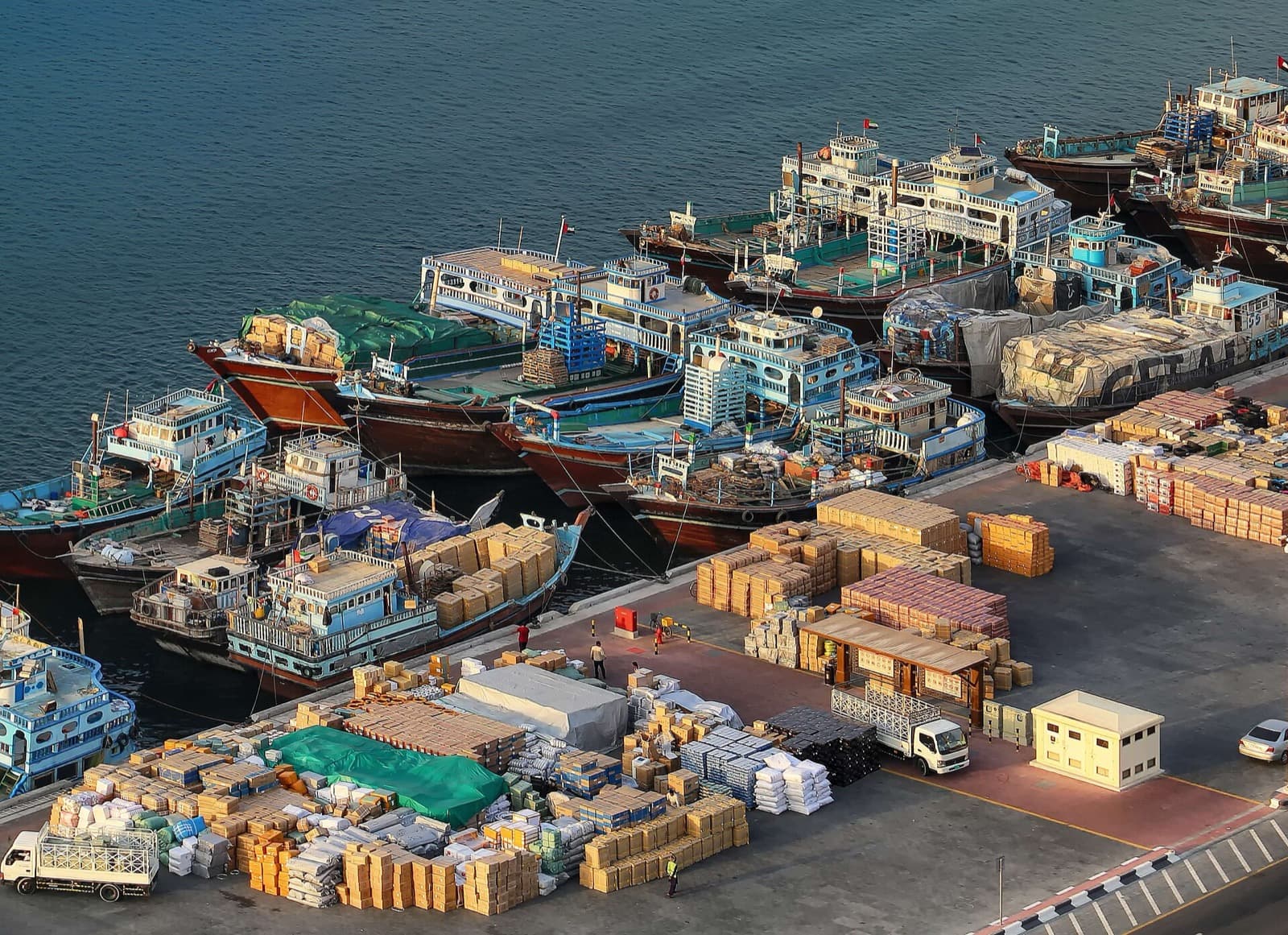
The Dhow Wharfage: Where Old Dubai Still Loads Cargo by Hand
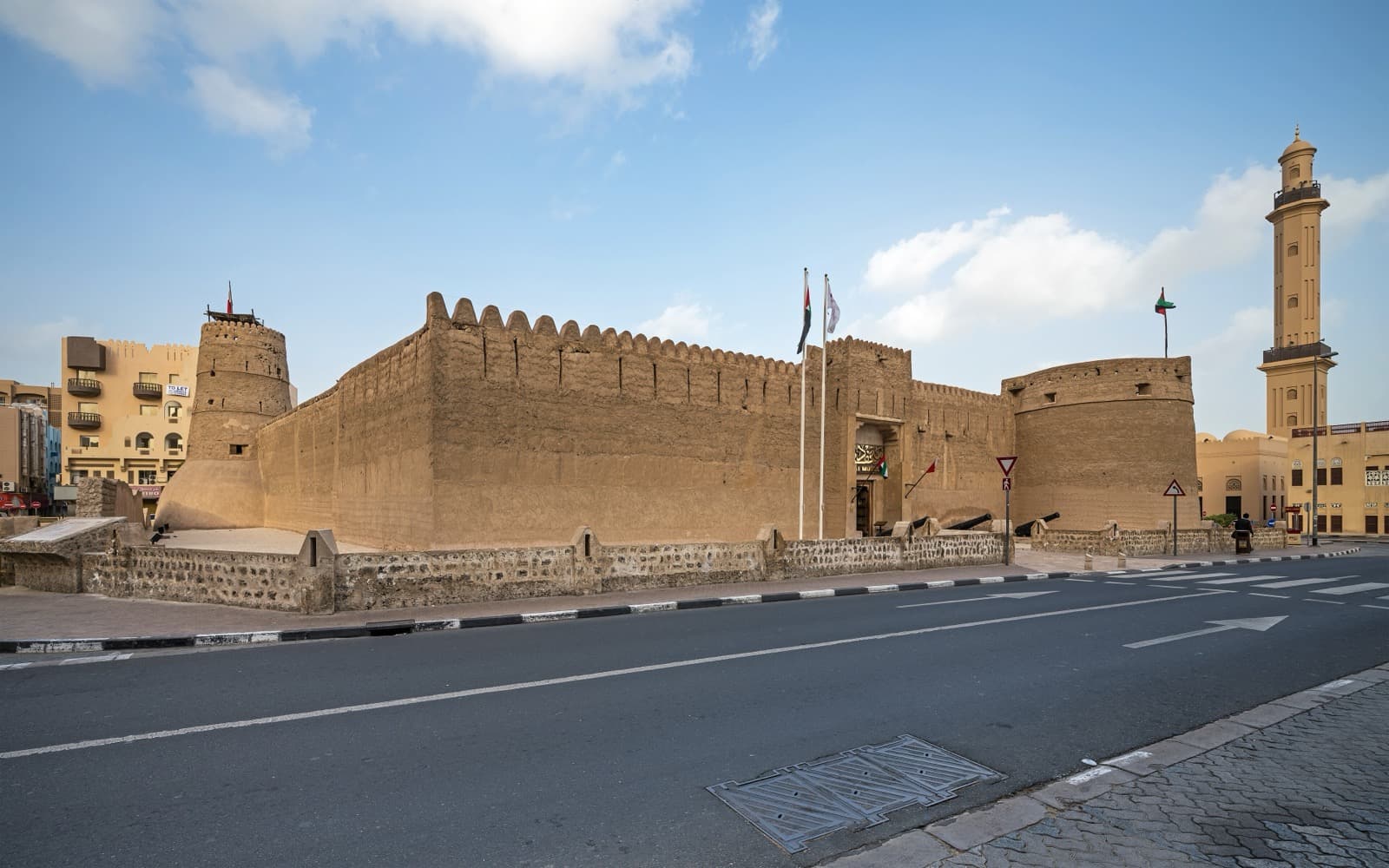
Al Fahidi Fort and the Dubai Museum: The Oldest Stone in the City
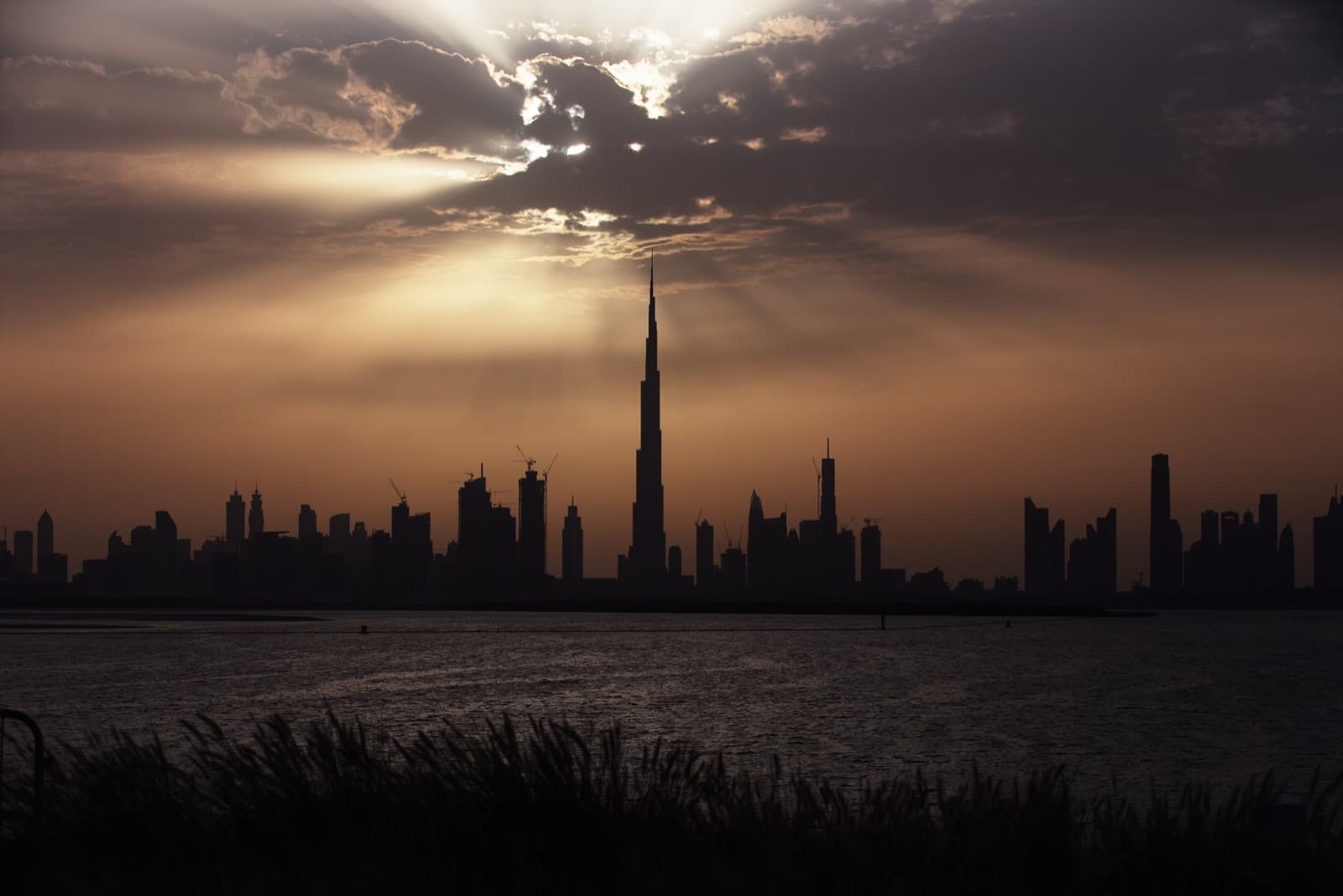
Burj Khalifa: How the Tallest Building on Earth Actually Stands Up