Before the glass towers, Dubai was a town of coral, gypsum, and wind. The Al Fahidi Historical Neighbourhood, long known as Bastakiya, is the oldest surviving quarter of that town, a maze of shaded coral lanes and wind-tower houses on the Bur Dubai bank of the Creek. Reading it on foot restores the two centuries Dubai lived before oil: a small pearling and trading settlement whose ingenuity was social and climatic, not financial. The picture most visitors carry is the vertical, oil-financed spectacle. The truth these lanes hold is older and quieter, and it explains everything the skyline hides.
The Quarter That Almost Did Not Survive
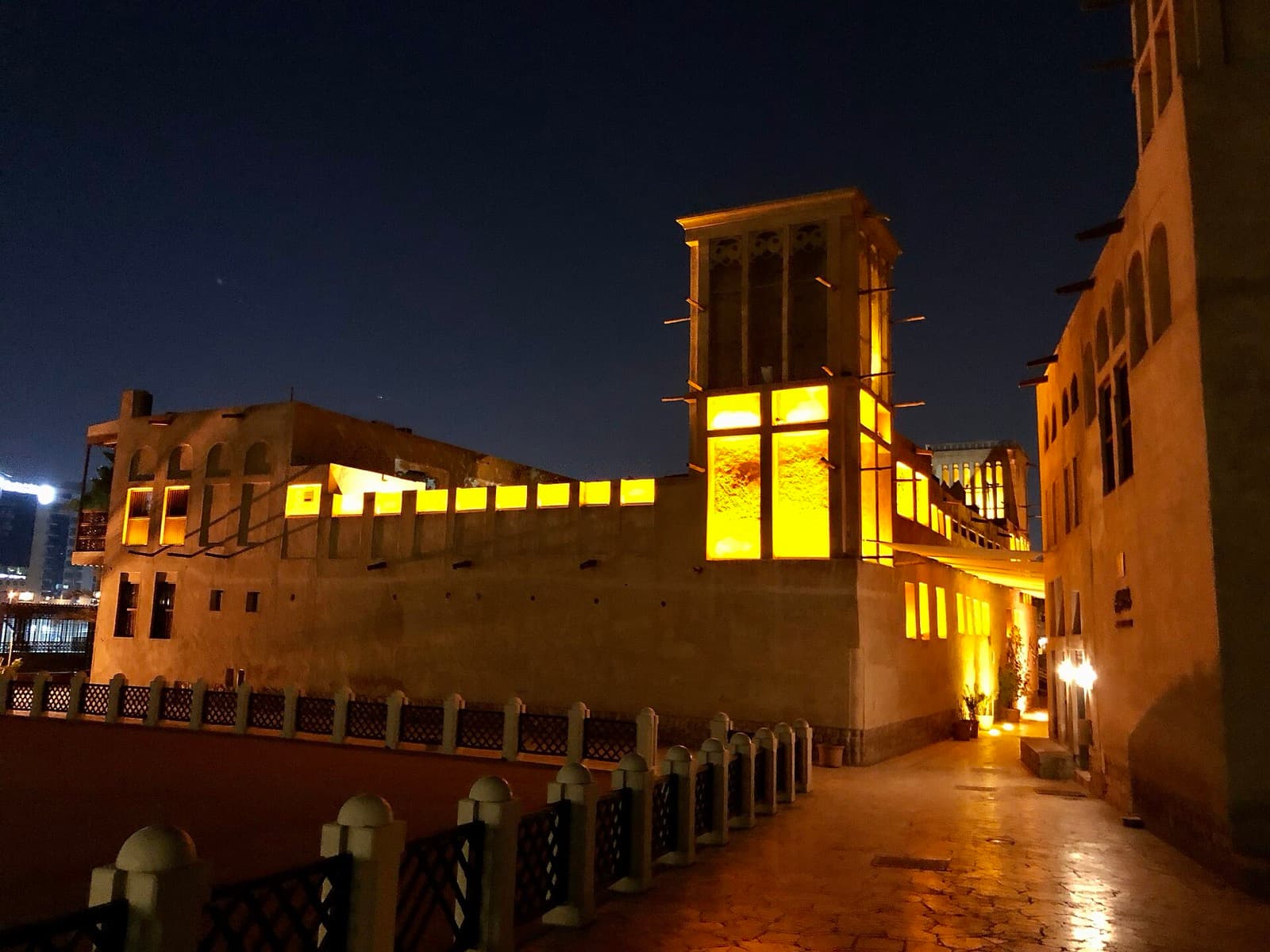
Wealthy Persian merchants from the town of Bastak, in southern Iran, laid out this quarter in the eighteen nineties, and for a long time it carried their name. In its early days it held roughly sixty housing units strung along narrow pedestrian lanes called sikkas. The walls are coral stone, quarried from the sea and bound with gypsum, finished with teak, sandalwood, and palm wood. Above them rise the wind towers that gave the town its true skyline.
The remarkable thing is that any of it is still standing. Half of Al Fahidi was pulled down in the nineteen eighties for offices, and by nineteen eighty-nine Dubai Municipality had directed that the rest be demolished. What saved it was not a government program but a persistent individual. A British architect named Rayner Otter, who had restored his own house in the quarter, campaigned to preserve it and wrote to Prince Charles ahead of a royal visit. On arrival in nineteen eighty-nine, the Prince asked to see the neighbourhood, walked its lanes with Otter, and recommended it be kept. The demolition plans were cancelled. Dubai Municipality began a formal restoration in two thousand and five, and today the coral houses hold galleries, cafes, and small museums.
This is the frame for the whole walk. What you are looking at is not a themed reconstruction of a distant past but the actual fabric of a town that came within a signature of erasure. The families who governed it, the Al Maktoum, descend from the Bani Yas confederation of the desert and the coast. Their living came from the pearl banks and the harbour, and this is the kind of place they ruled.
The Engineering in the Skyline
Hear a stop from this walk
Shindagha and the Sheikh Saeed Al Maktoum House: The Ruler's Wind-Tower House
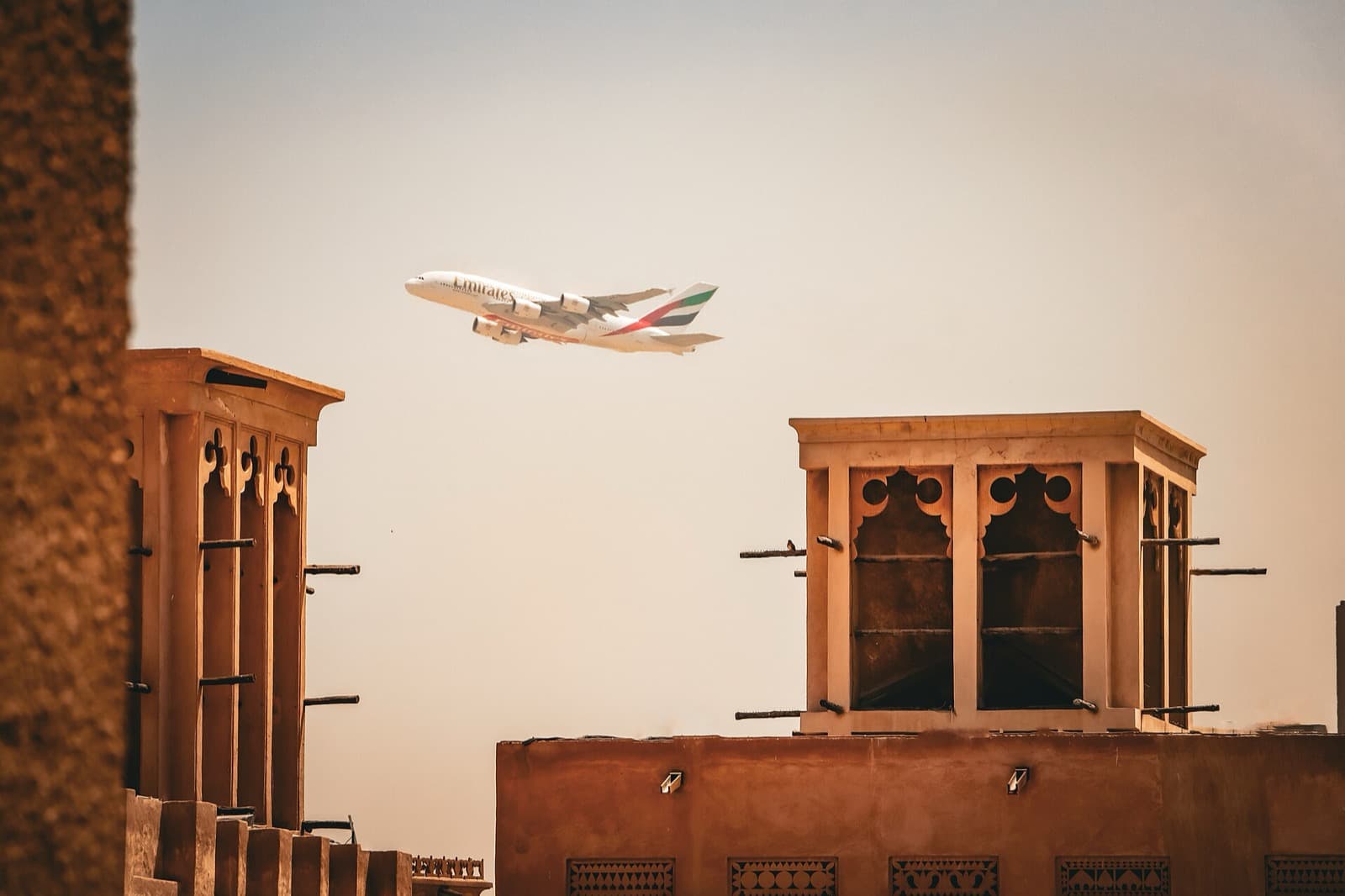
Look up among the houses and you see the barjeel, the wind tower, called the badgir in Persian, where the idea originated. This is the piece of engineering that made life here possible in the heat, and it needed no electricity, because there was none. An open-sided tower rises above the courtyard and catches the breeze from whatever direction it blows, funneling it down a central shaft into the rooms below. When the outside air is still, it reverses and works as a chimney: hot air rises out, drawing cooler air in behind it. The difference indoors can reach the mid-teens in degrees Celsius, which in this climate separates a room you can rest in from one you cannot.
The design is not native to Dubai. It travelled along the Gulf coast from Persia, carried by the same merchants and trade that built this quarter. That single detail reframes the town. Dubai was never a closed place. Its architecture, its commerce, and its population were shaped by movement across the water, and the wind tower is the proof, cooling the homes of pearl divers, coral masons, and traders alike for a century before air conditioning arrived. You will see the grandest example later, on the ruler's house at Shindagha. This is the tour's argument in a single object: survival here was a matter of catching the wind.
From Coral Fort to Living Creek
The walk moves outward from Al Fahidi into the rest of the old town, and each stop deepens the same thesis. Al Fahidi Fort holds the oldest stone in the city. Its oldest tower was built around seventeen eighty-seven and is believed to be the oldest existing building in Dubai, coral rock bound with mortar. It served in turn as ruler's palace, garrison, and prison, and in nineteen seventy-one it became the Dubai Museum. The Grand Mosque of Dubai began around nineteen hundred as a Qur'an school, a kuttab, and its minaret of about seventy metres, the tallest in the city, is nicknamed the Lighthouse of Dubai. Its roof carries fifty-four domes.
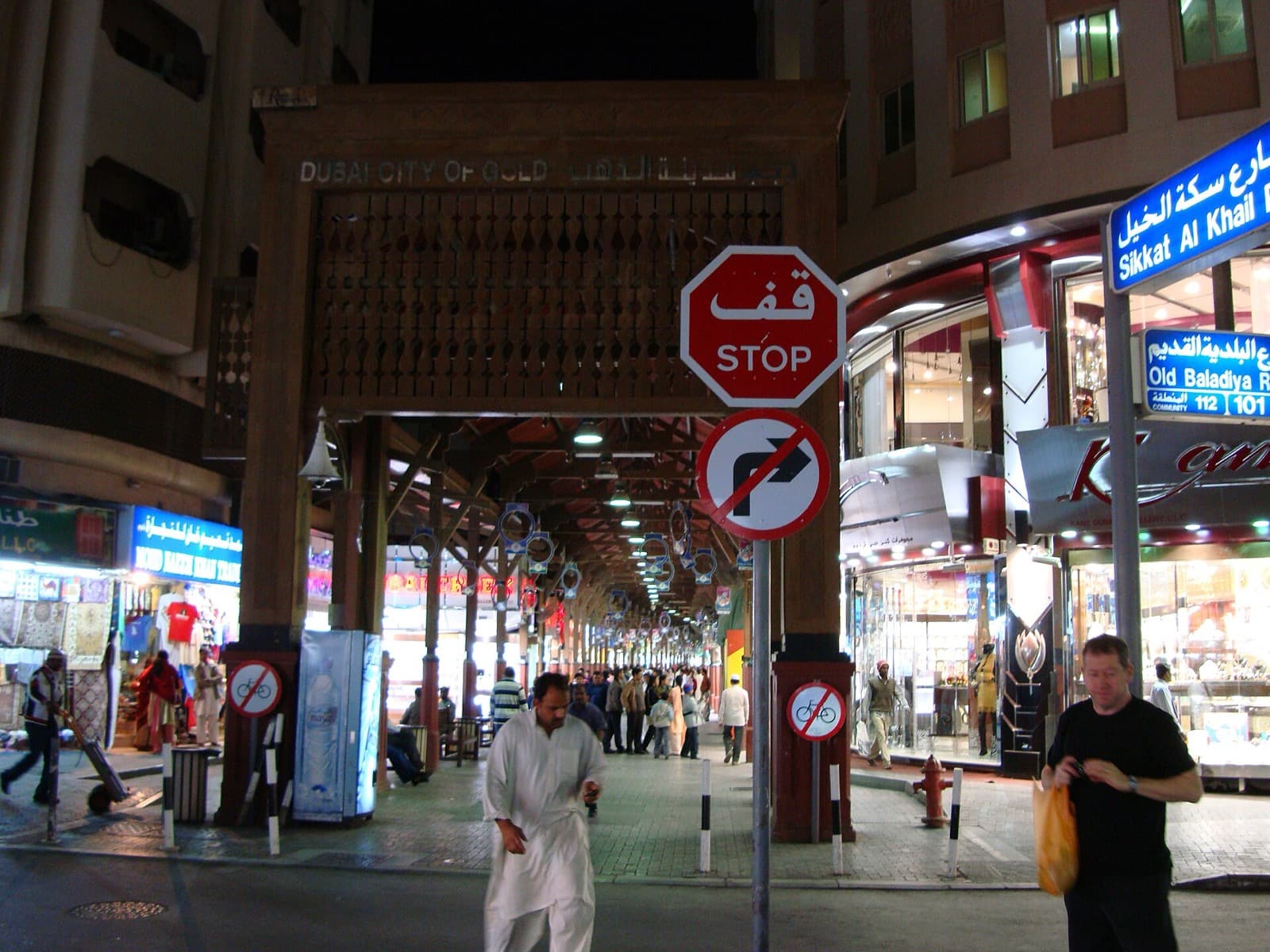
Down by the water runs the Textile Souk, the covered market that dates to the nineteenth century and grew exactly where a trading town's market grows: along the Creek, where goods came off the dhows and commerce met the tide. The Bur Dubai bank has long held a strong community of Indian and Pakistani traders whose shops were part of the town's fabric for generations. The climax is the Sheikh Saeed Al Maktoum House at Shindagha, established around eighteen ninety-six, with inner courtyards, ornamented teak doors, and its wind towers catching the breeze off the water. Sheikh Rashid bin Saeed Al Maktoum, born in nineteen twelve, grew up here and later became Vice President and Prime Minister of the United Arab Emirates, which was founded on the second of December nineteen seventy-one.
The tour ends at the Dubai Creek itself, the Khor Dubai, a tidal inlet that divides Bur Dubai from Deira. It was shallow and always silting until Sheikh Rashid dredged it between nineteen fifty-nine and nineteen sixty-one so larger ships could enter. The first bridge opened in nineteen sixty-three. Before that, the only way across was the abra, the small wooden ferry that still crosses for one dirham per person, paid straight to the driver, exactly as it did a century ago. In the nineteen fifties this was a town of around twenty thousand people. Stand at the waterfront and you can hold the whole story at once: the wooden boats crossing for a single coin, and the new city on the horizon behind them.
If you want the context before you go, the Dubai walking tours hub covers how this route sits beside the Creek souks and Downtown, and you can browse everything in Dubai. This is a self-guided audio walk of a little under three kilometres over roughly eighty minutes of easy walking, best in the mild months from November to March and early in the morning, before the tour groups reach the lanes. Al Fahidi is where the modern city begins, one coral lane at a time.
Sources
- Al Bastakiya, Wikipedia. Founding by Bastak merchants, sikkas, the nineteen eighties demolition, and the Rayner Otter and Prince Charles preservation campaign.
- Al Fahidi Fort, Wikipedia. The circa seventeen eighty-seven tower, coral construction, and the fort's conversion to the Dubai Museum in nineteen seventy-one.
- Saeed Al Maktoum House, Wikipedia. The circa eighteen ninety-six house at Shindagha, its courtyards and wind towers, and its role as residence of the ruling family.
- Dubai Creek: the making of Sheikh Rashid's first mega project, The National. The nineteen fifty-nine to sixty-one dredging and the transformation of the Creek harbour.
- King Charles in Dubai: How he saved the Al Fahidi district, Time Out Dubai. The nineteen eighty-nine visit and its role in halting demolition.
Ready to experience it?
Al Fahidi Historic District: The Wind-Tower City
80 min · 2.7 km · easy
More from Dubai
Explore more at your own pace.
Dubai From the Creek to the Crown of the Tower
Emaar Boulevard: Reading the Grammar of a City Built All at Once
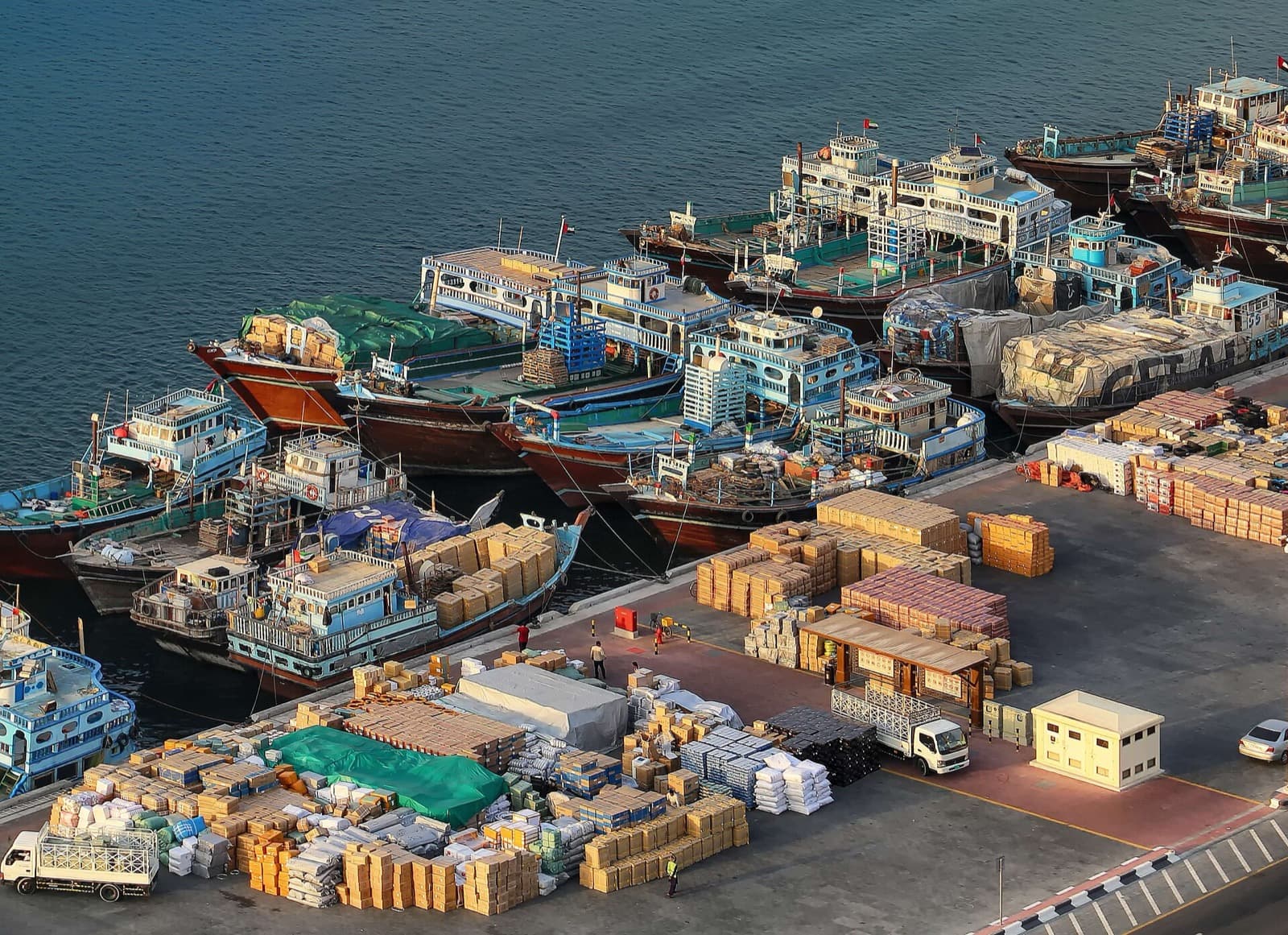
The Dhow Wharfage: Where Old Dubai Still Loads Cargo by Hand
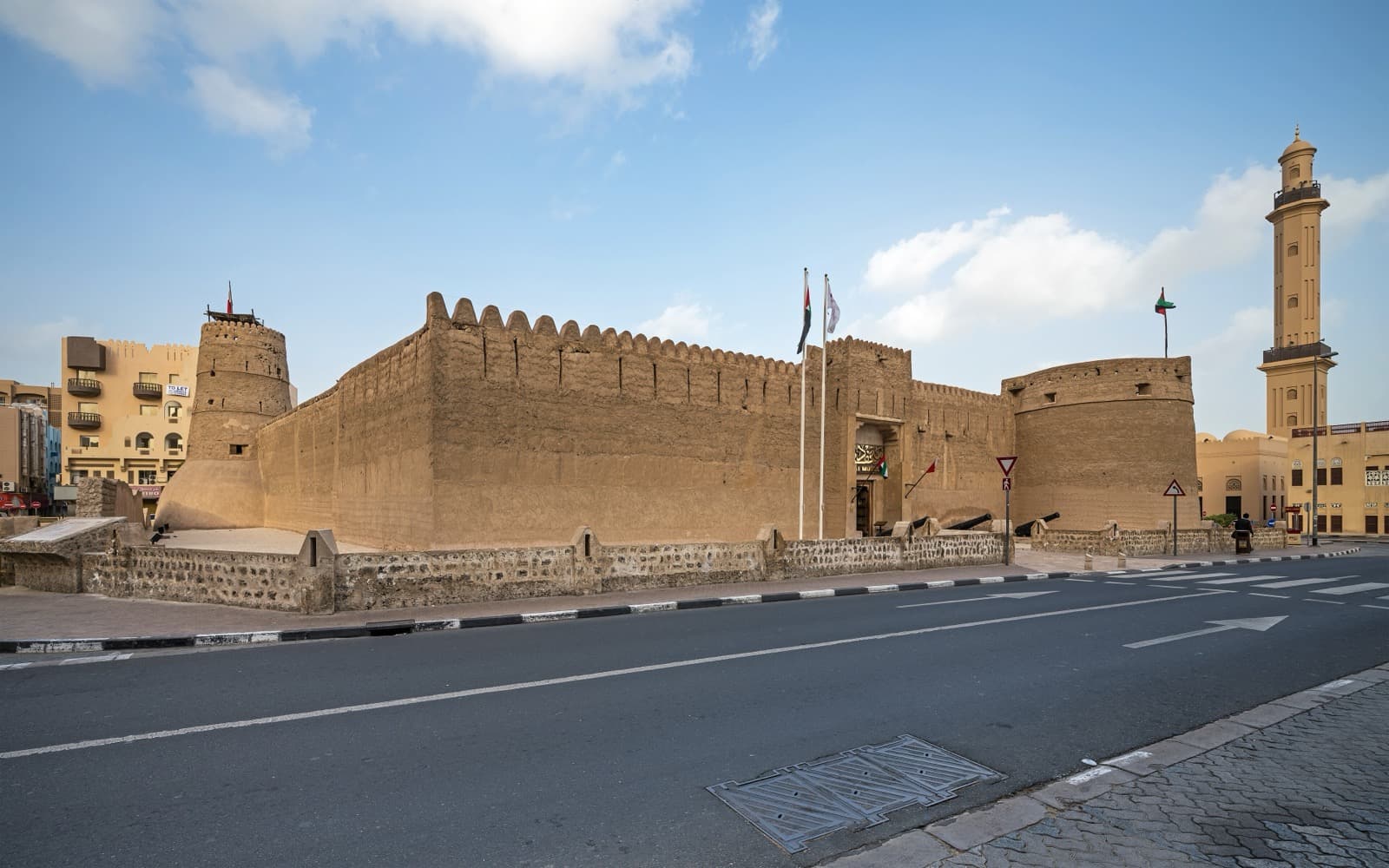
Al Fahidi Fort and the Dubai Museum: The Oldest Stone in the City
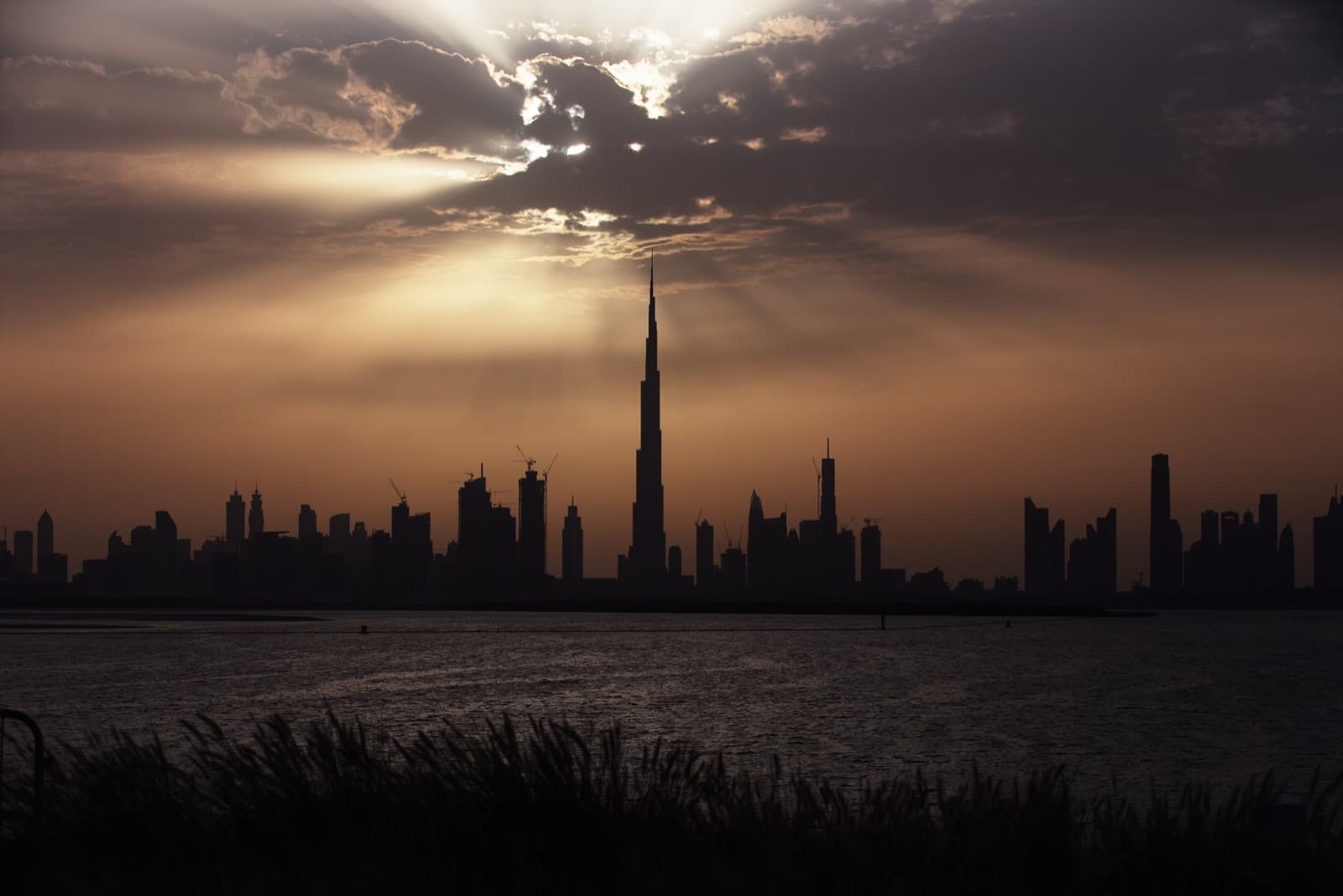
Burj Khalifa: How the Tallest Building on Earth Actually Stands Up