Humayun's Tomb: A Dynasty's Argument in a Garden
75 min · 1.9 km · easy
Lodhi Garden is a 1936 park laid out round a village's worth of older monuments. Its tombs are four and five centuries older than the park, and older than New Delhi itself. Walk it from the south-west gate on Lodhi Road to the north-east gate and you walk forward in time: a Sayyid king's tomb of the 1440s, Lodi tombs and a mosque inscription of 1494, a walled garden tomb of after 1517, and then a Mughal bridge and a Mughal garden gate. The park is free, and the walk is one of the calmest hours in Delhi.
A park that was hoped for
In 1919 the Archaeological Survey's list of Delhi's monuments recorded these buildings under the name of a village, Khairpur, and added a sentence: "It is hoped that it will be eventually possible to surround the group of Lodi tombs with a small park." Seventeen years later it happened. The New Delhi Municipal Council records that the park was inaugurated by Lady Willingdon, the Viceroy's wife, on 9 April 1936, as Lady Willingdon Park, on the land of the village of Khairpur, which was moved to make room. It was renamed Lodhi Garden later.
The landscape you walk through is mostly younger still. In 1968 the American architect Joseph Allen Stein reshaped the park, the council says, and the works of those years included the spiral lake, about 300 meters long. The landscape architect Garrett Eckbo won an American Society of Landscape Architects merit award for "Lodi Park" in 1970. The glasshouse by the south-west gate, where the walk begins, was built in December 1970 with Ford Foundation help.
Two kinds of tomb
Hear a stop from this walk
Humayun's Tomb: West Side
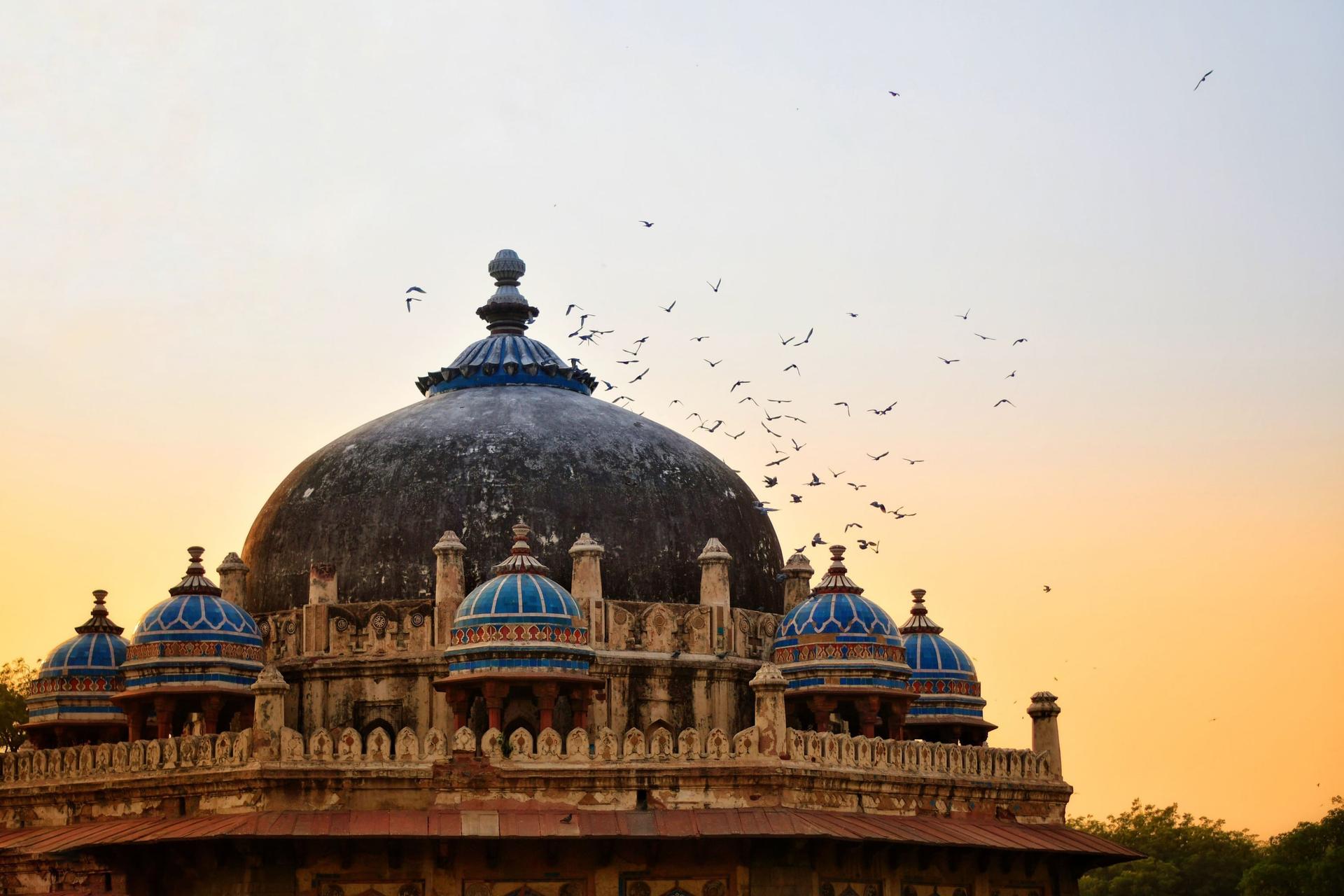
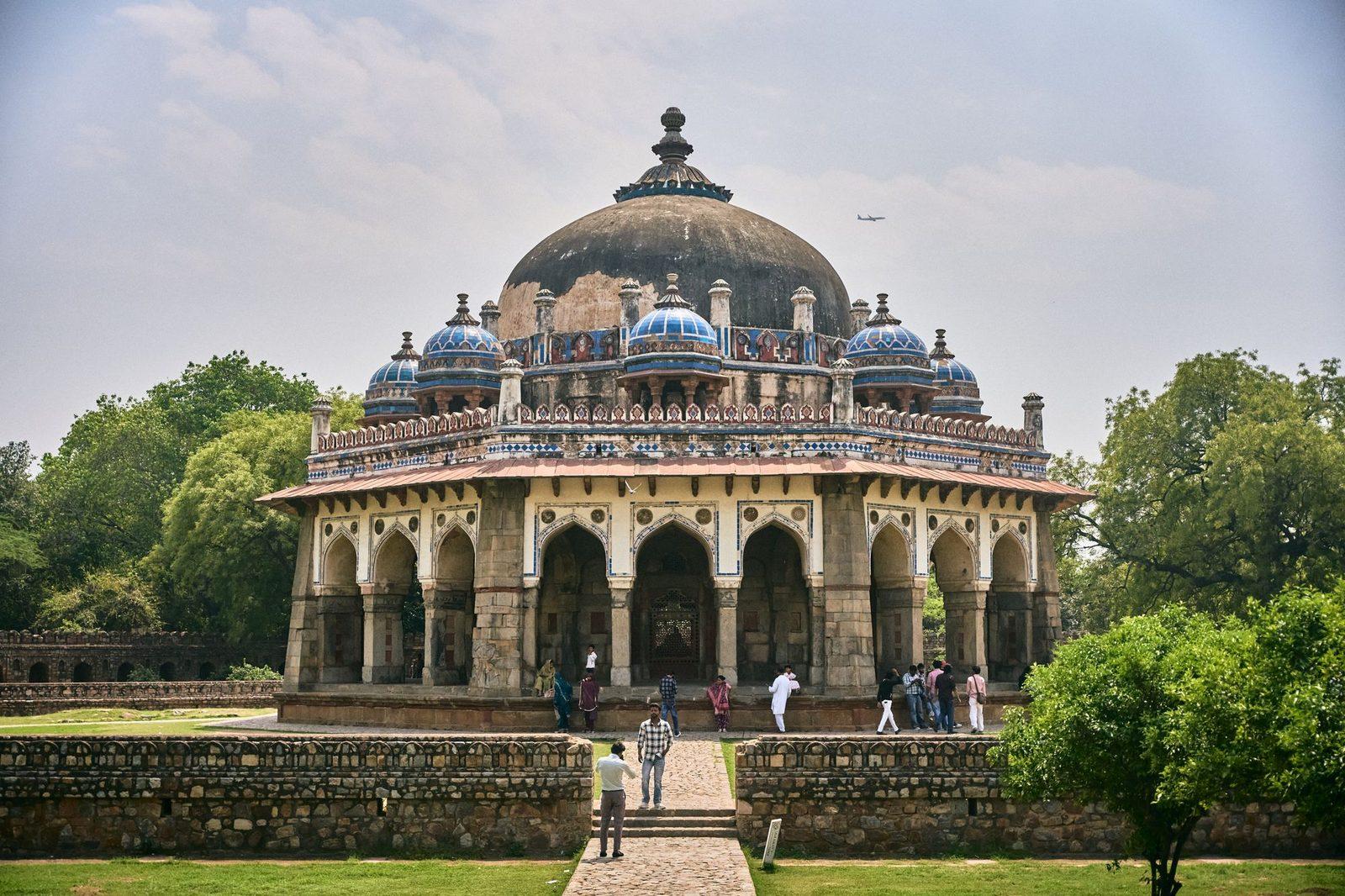
The walk's first monument is the tomb held to be that of Muhammad Shah, a king of the Sayyid dynasty who died in the mid-1440s; the chroniclers differ by a year or two. It is an octagon wrapped in a veranda of arches, with a domed kiosk over each face and a dome on a sixteen-sided drum. Further on, the Sheesh Gumbad, the "glass dome", named for the blue glazed tiles on its face, is a square: taller, with no veranda, its walls set with rows of niches so it reads as two stories. The 1919 survey counted eight graves inside and could not say whose they were.
The architectural historian Percy Brown, in 1942, made those two shapes into a pattern. The three royal tombs of the period, he noted, are octagons, so the octagon was probably the recognized design for a king, with the square kept for nobles. It is a "probably", and the park lets you test it with your own eyes.
The big dome nobody can classify
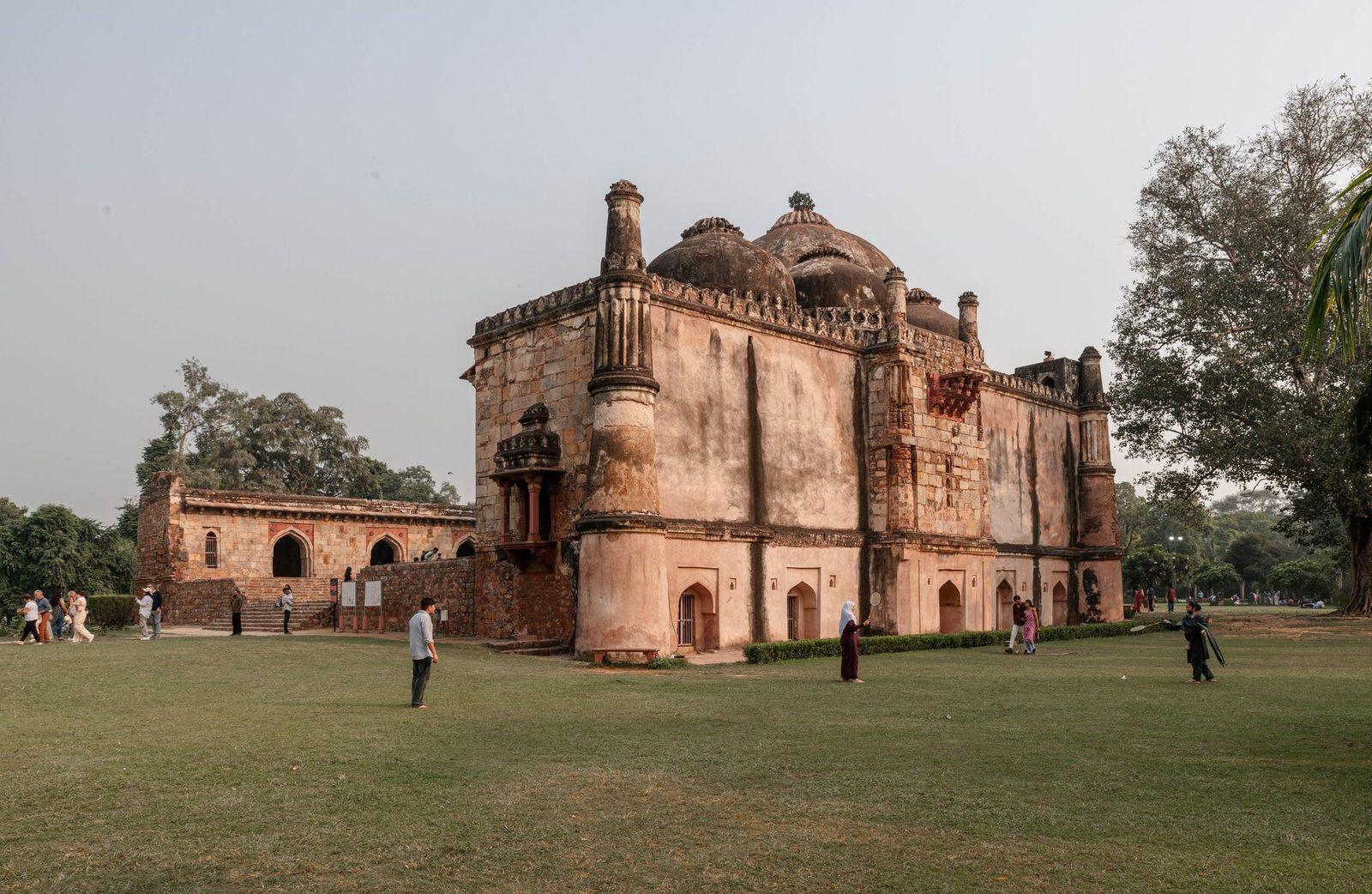
Between them stands the Bara Gumbad, the "big dome". What it is remains argued. The 1919 survey, following the archaeologist Alexander Cunningham, called it a gateway to the mosque's court, comparing it with the Alai Darwaza at the Qutub, built almost two centuries earlier. Brown listed it among the square tombs. The walk keeps both readings. Its mosque beside it carries the date that anchors the whole group: an inscription over the southern prayer niche dated 30 November 1494, in the reign of Sikandar Lodi. The 1919 reading is that it records an addition to a mosque already there. The hall is carved plaster and tile, and, the same survey notes, it was used for years as a cowshed before it was reclaimed and repaired.
The first garden tomb, by the Survey's own words
Sikandar Lodi, son of Bahlol Lodi, came to the throne in the late 1480s and reigned until his death in 1517. His tomb stands inside a walled garden with a gate on its south side, and it is believed to have been built after his death by his son, Ibrahim Lodi; the 1919 survey says "it is supposed", and the Tokyo survey of Delhi's monuments notes that no document proves it. The Archaeological Survey's own page for Humayun's Tomb calls Sikandar Lodi's tomb the first garden tomb to be built in India. Brown also called its dome, with an inner and an outer shell, the first application in Indian architecture of a double dome. No kiosks crown its roof today.
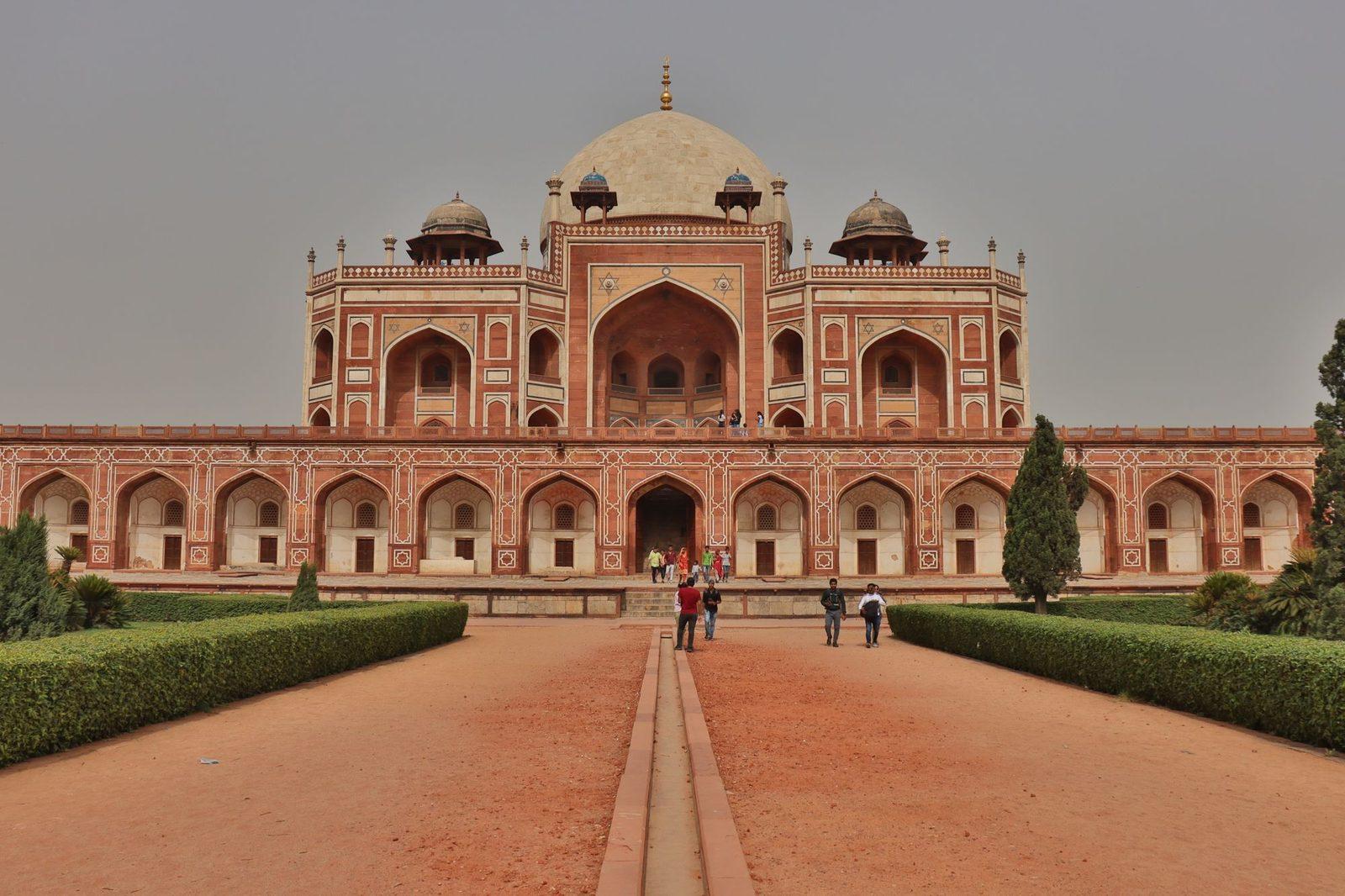
About half a century later the same idea, a tomb in a walled garden, reappears on an imperial scale at Humayun's Tomb, about 2 km east.
Into the Mughal age
Beside the tomb, the lake follows what was probably the old stream bed, and the Athpula crosses it: seven arches on eight piers, which probably gave it its name, "eight piers". The 1919 survey records it as Mughal and says it was built by one Nawab Bahadur who had been at Kabul in the time of Akbar. The walk ends at a two-story Mughal gateway with scalloped arches and twisted corner columns, the entrance to a walled garden whose grounds now hold the park's rose garden. Delhi's state archaeologists describe its features as Rajput, a different language from the sultans' stone around it.
Before you go
The park is free and, by the council's hours, open from 6 am to 8 pm from October to March and from 5 am to 8 pm the rest of the year, every day (checked 11 November 2026). None of its monuments is ticketed. The walk has eleven stops on park paths with no road to cross; the nearest metro stations are Jor Bagh on the Yellow Line, near the start, and Khan Market on the Violet Line, near the end. For how these tombs lead to the Mughal ones, read Delhi's garden tombs, from the Lodis to the Mughals, then walk the park at your own pace with Lodhi Garden: Tombs of the Sultans, Oldest First.
Ready to experience it?
Humayun's Tomb: A Dynasty's Argument in a Garden
75 min · 1.9 km · easy
More from Delhi
Explore more at your own pace.
Delhi Monument Tickets, Hours and Closures (Checked November 2026)
Delhi's Garden Tombs: From the Lodis to Humayun, in Four Steps
The Seven Cities of Delhi: A Tradition, Not a Count
Chandni Chowk: Reading Shah Jahan's Planned City on Foot

India Gate and Kartavya Path: Who Is Named Where on the Axis