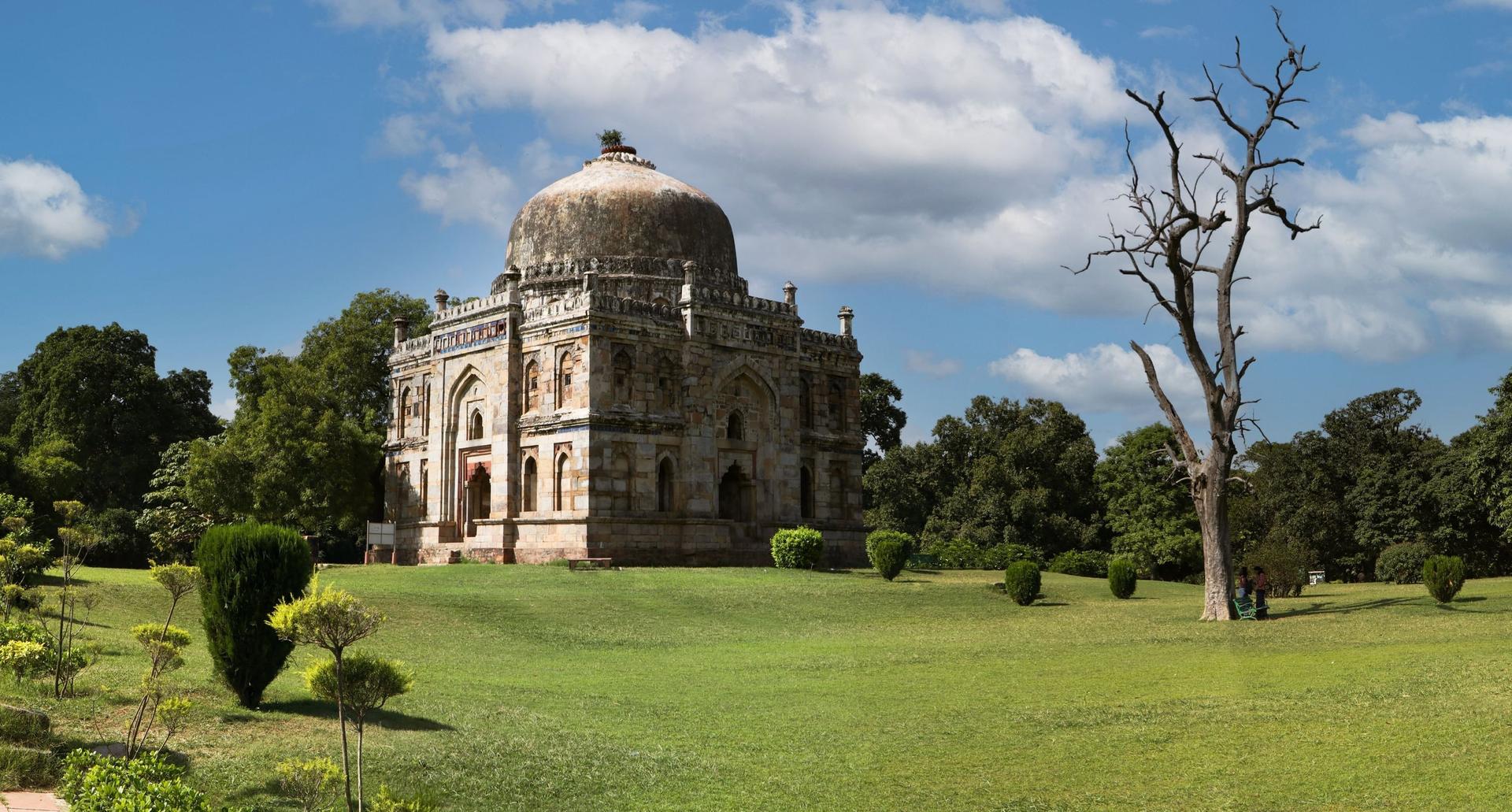
From the glasshouse inside the south-west gate on Lodhi Road to a Mughal garden gate beyond the Athpula: a free park walk forward in time, past a Sayyid king's octagon of the 1440s, the Bara Gumbad and its mosque of 1494, the Sheesh Gumbad, Sikandar Lodi's walled garden tomb and the Mughal bridge, in a park opened in 1936.
Start · Glasshouse
DirectionsStops
- 1
Glasshouse
The park's newest building stands here. The glasshouse of December 1970, built with Ford Foundation help, in a park opened in 1936 on the land of the village of Khairpur.
- 2
Muhammad Shah's Tomb
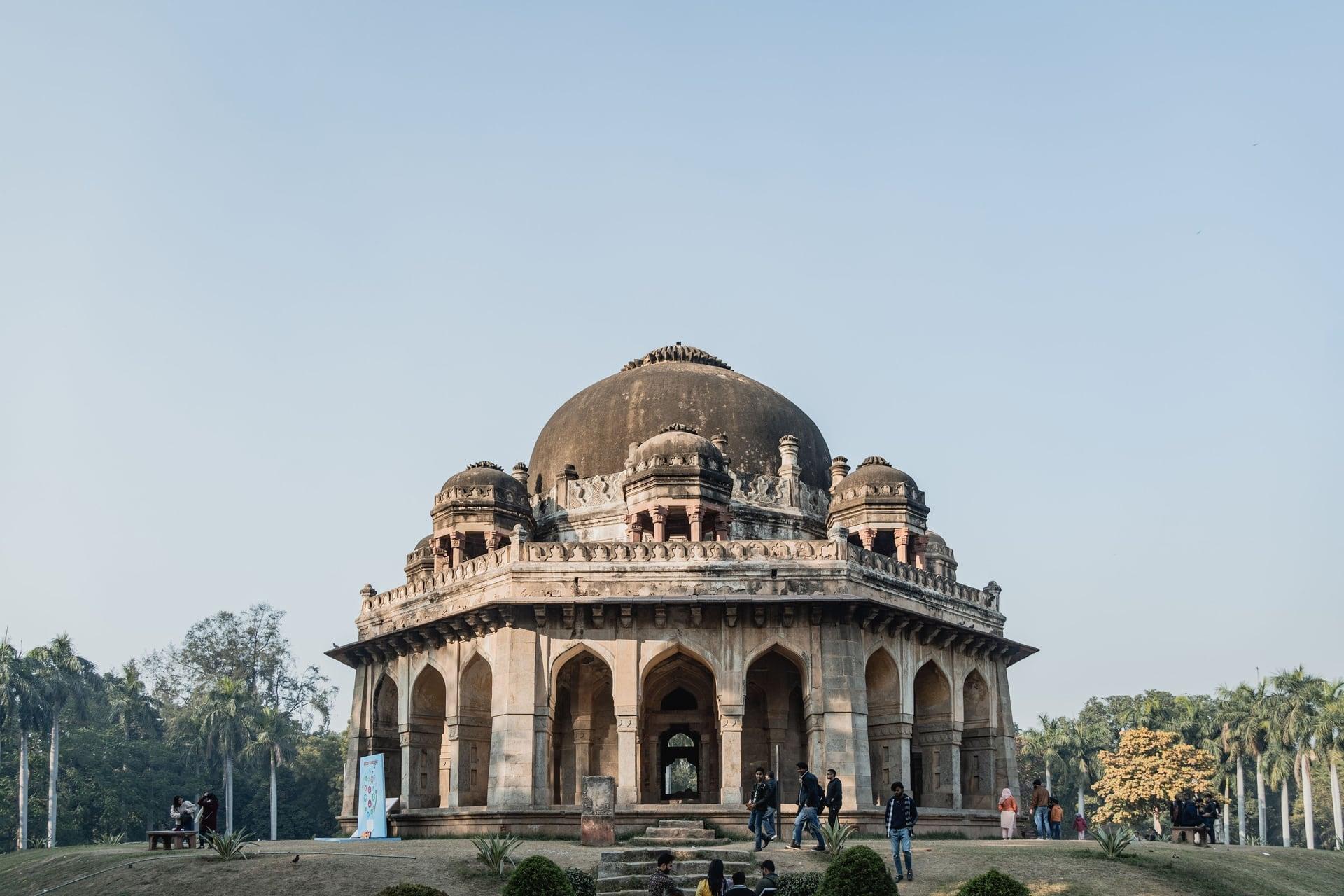
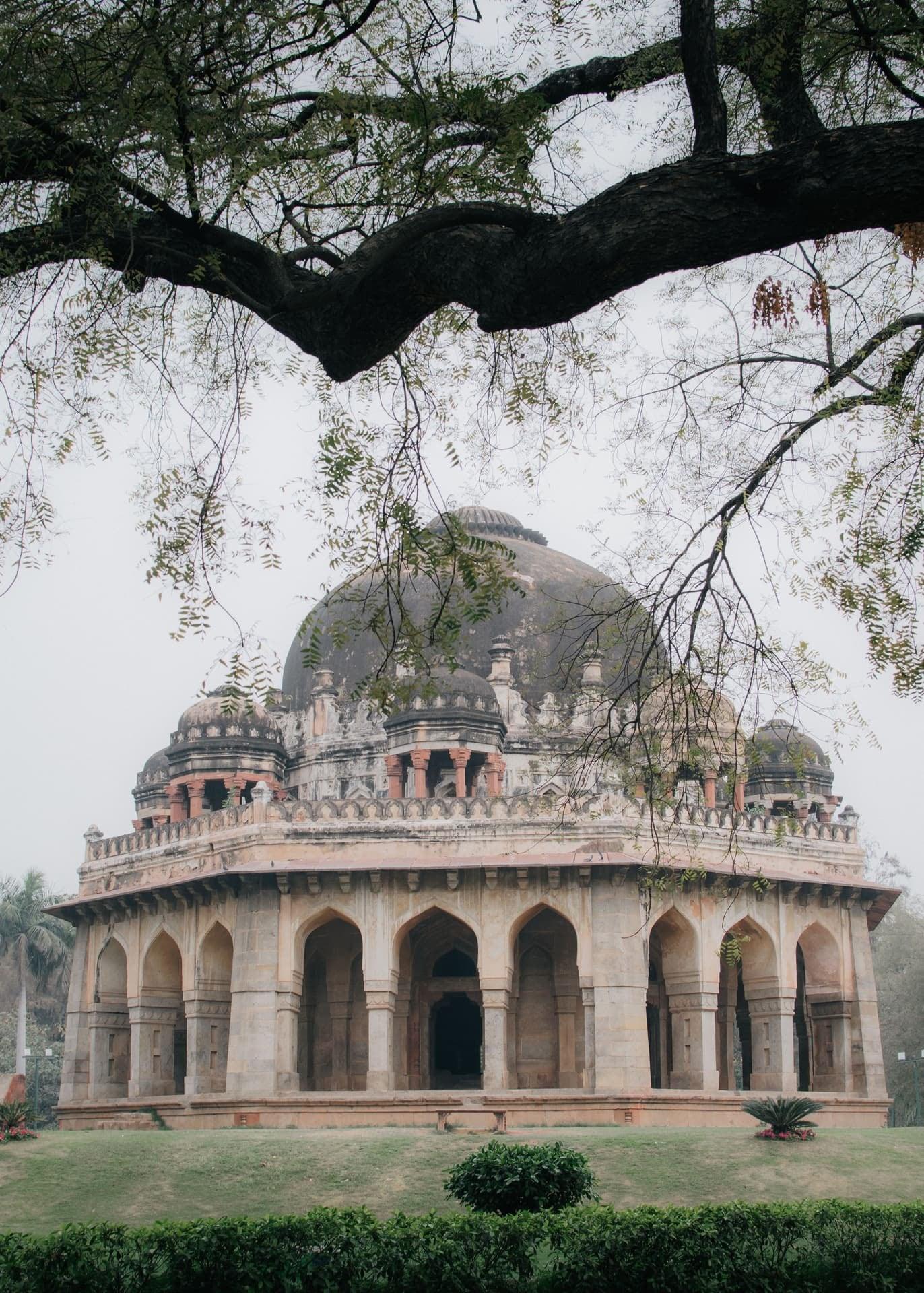
A Sayyid king's octagon starts the story. The tomb held to be Muhammad Shah's, from the mid 1440s: eight sides, a veranda of arches and a domed kiosk over every face.
- 3
Ruined Mosque
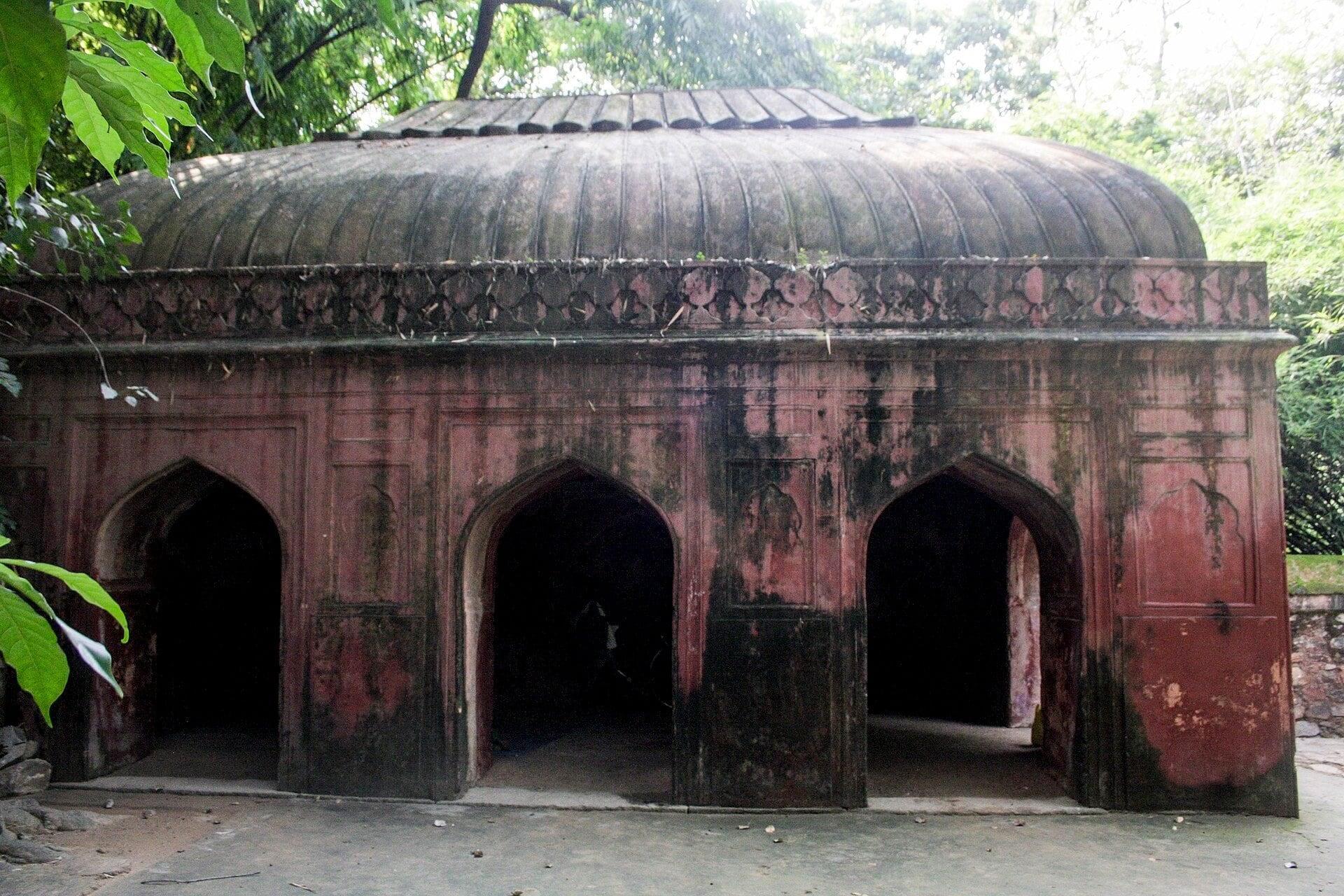
A nameless ruin hides in the trees. A small mosque the 1919 survey could not name, listed as ruinous: a glimpse of Khairpur before the park.
- 4
Bara Gumbad
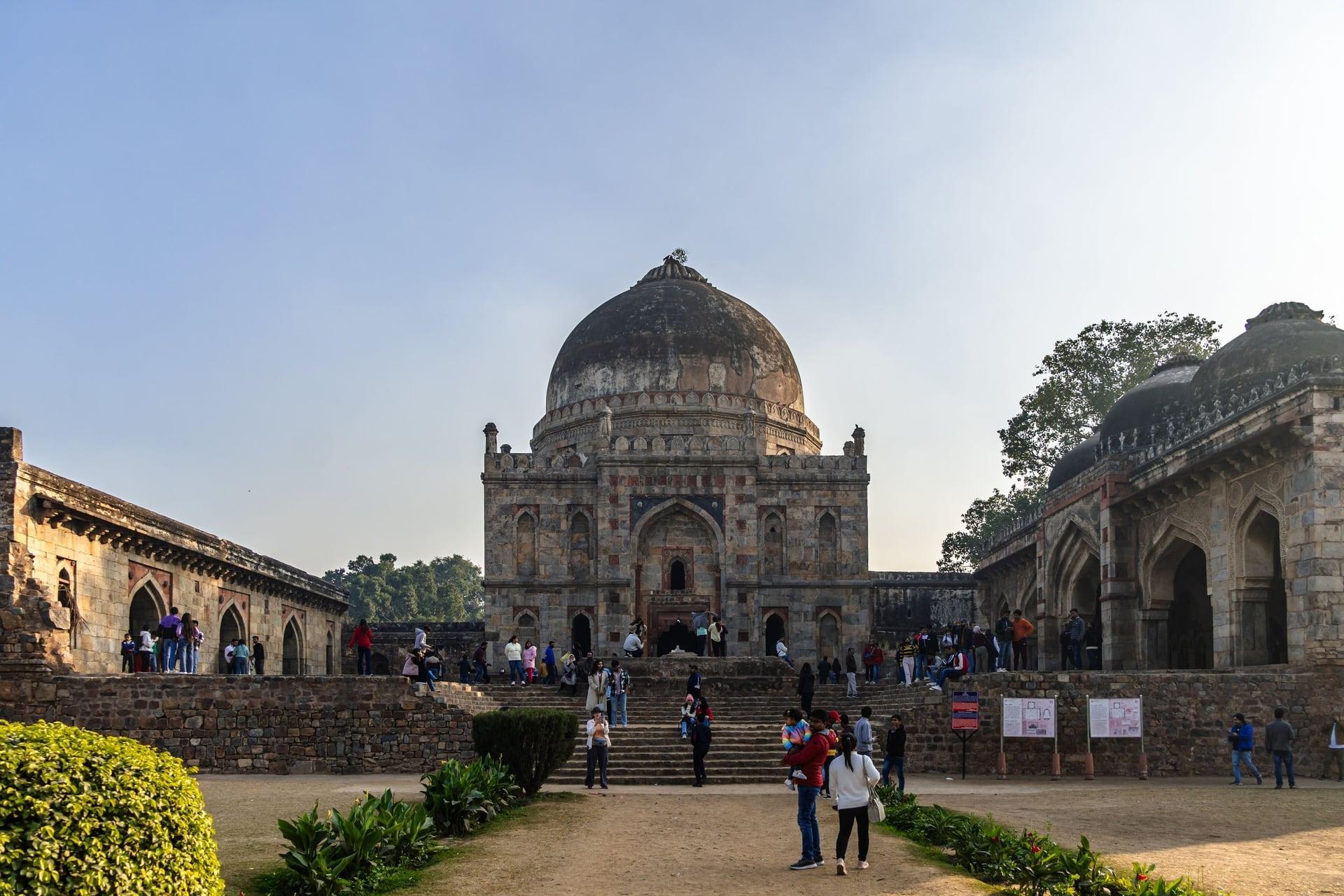
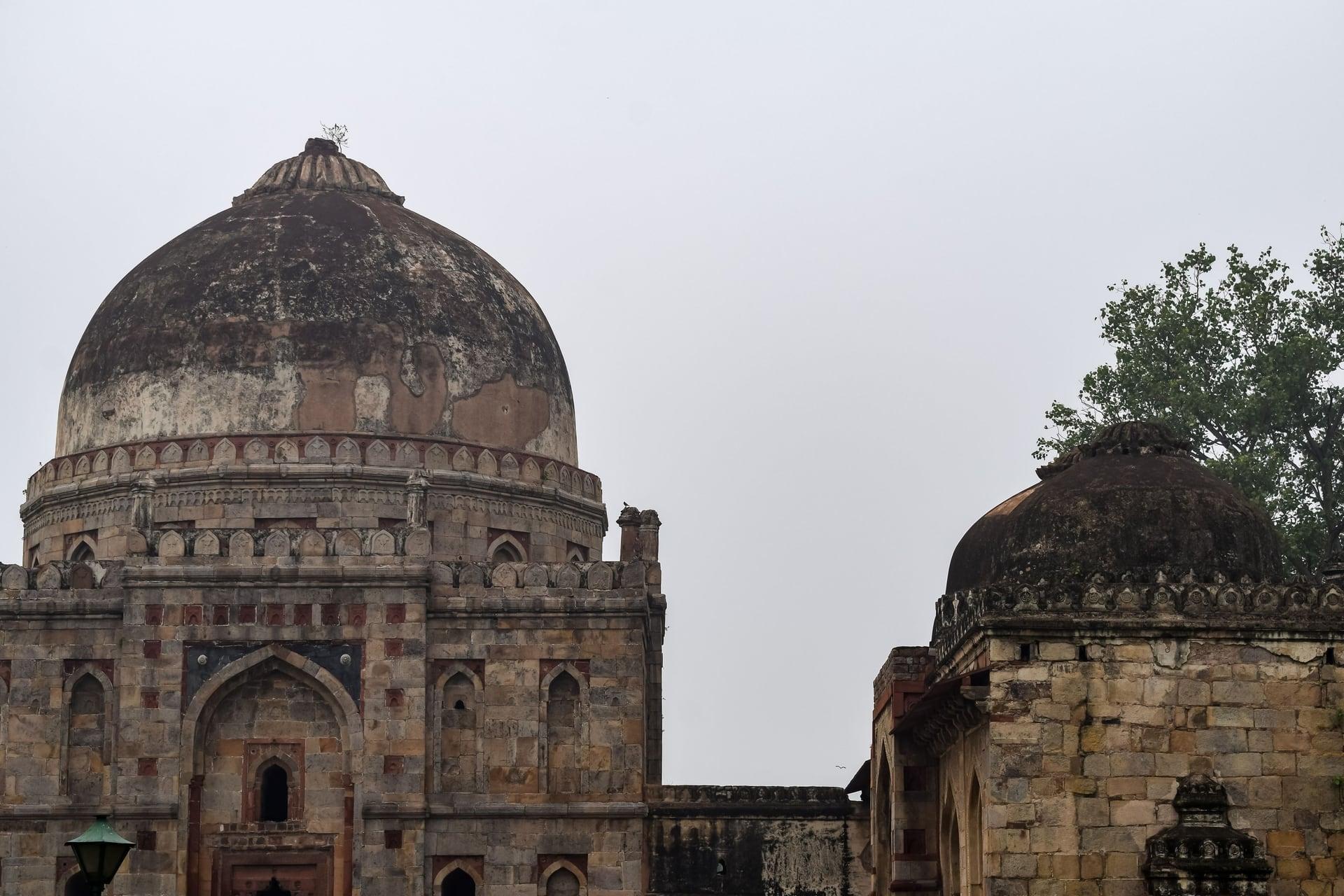
A great dome whose purpose is argued. The Bara Gumbad, the 'big dome': a gateway to its mosque's court for the 1919 survey, a square tomb for a historian writing in 1942.
- 5
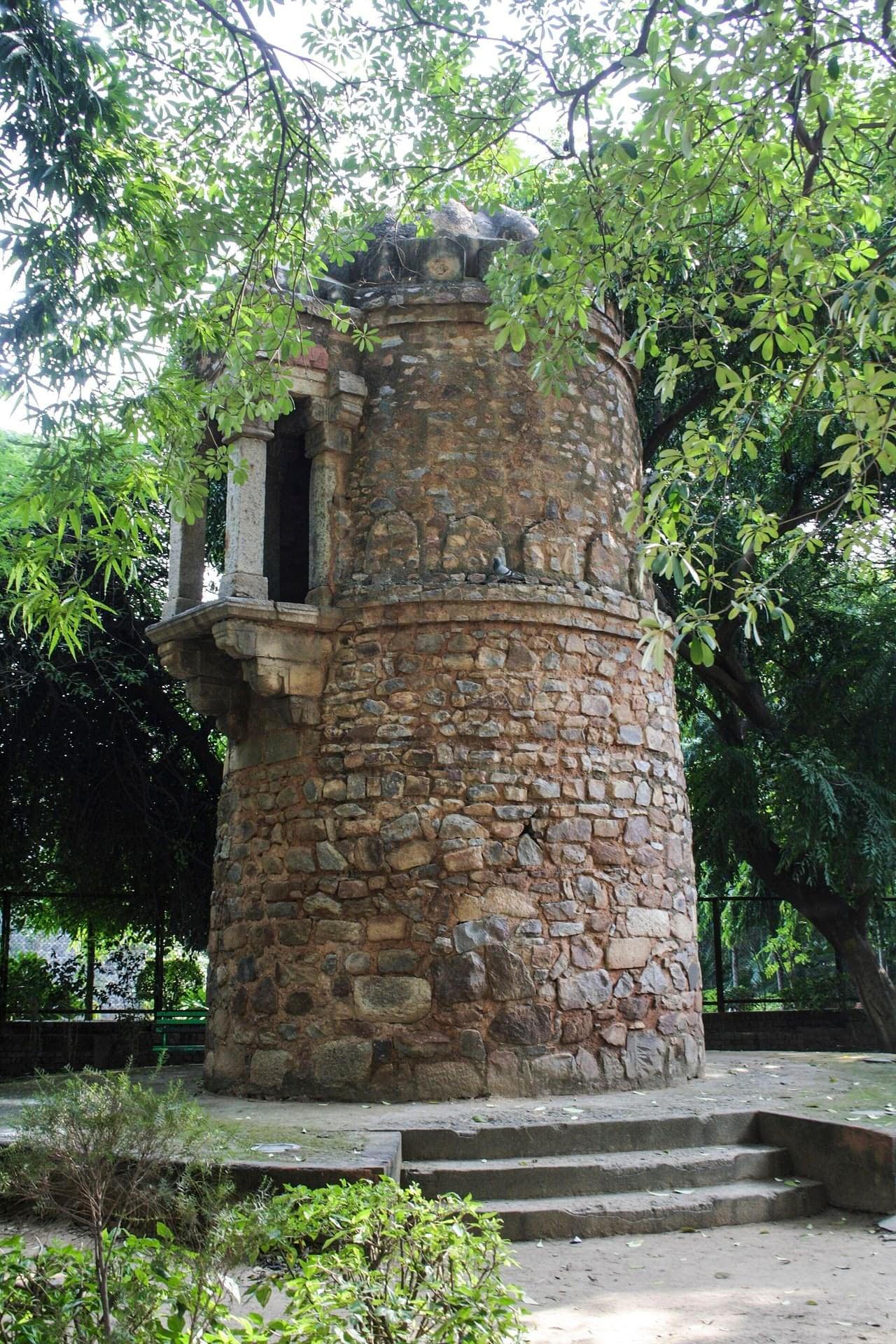
Lone Turret
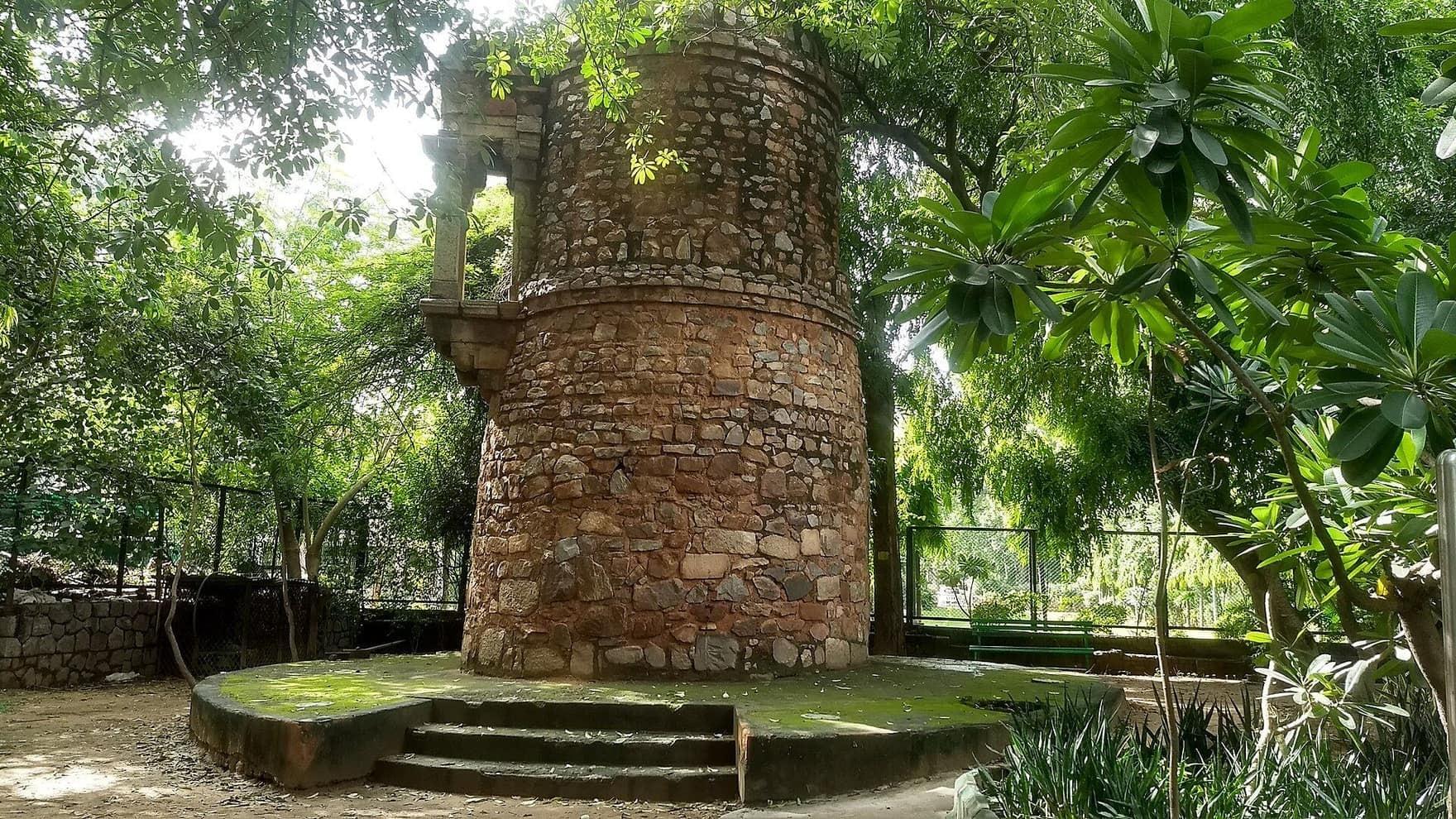
A corner tower outlived its walls. A round turret with a lotus-petal dome, the last angle of a vanished enclosure; the surveys disagree on its age by a century.
- 6
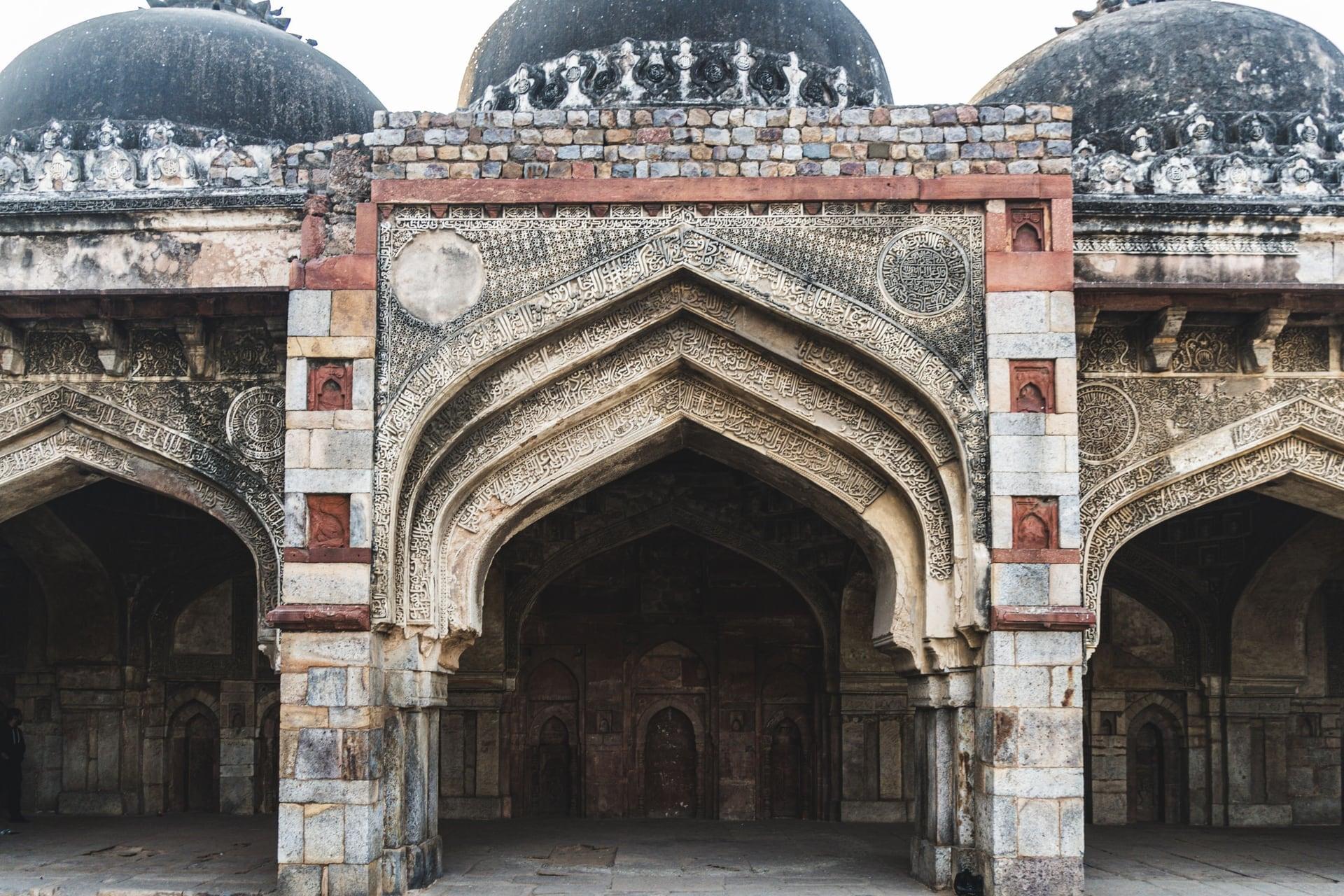
Bara Gumbad Mosque
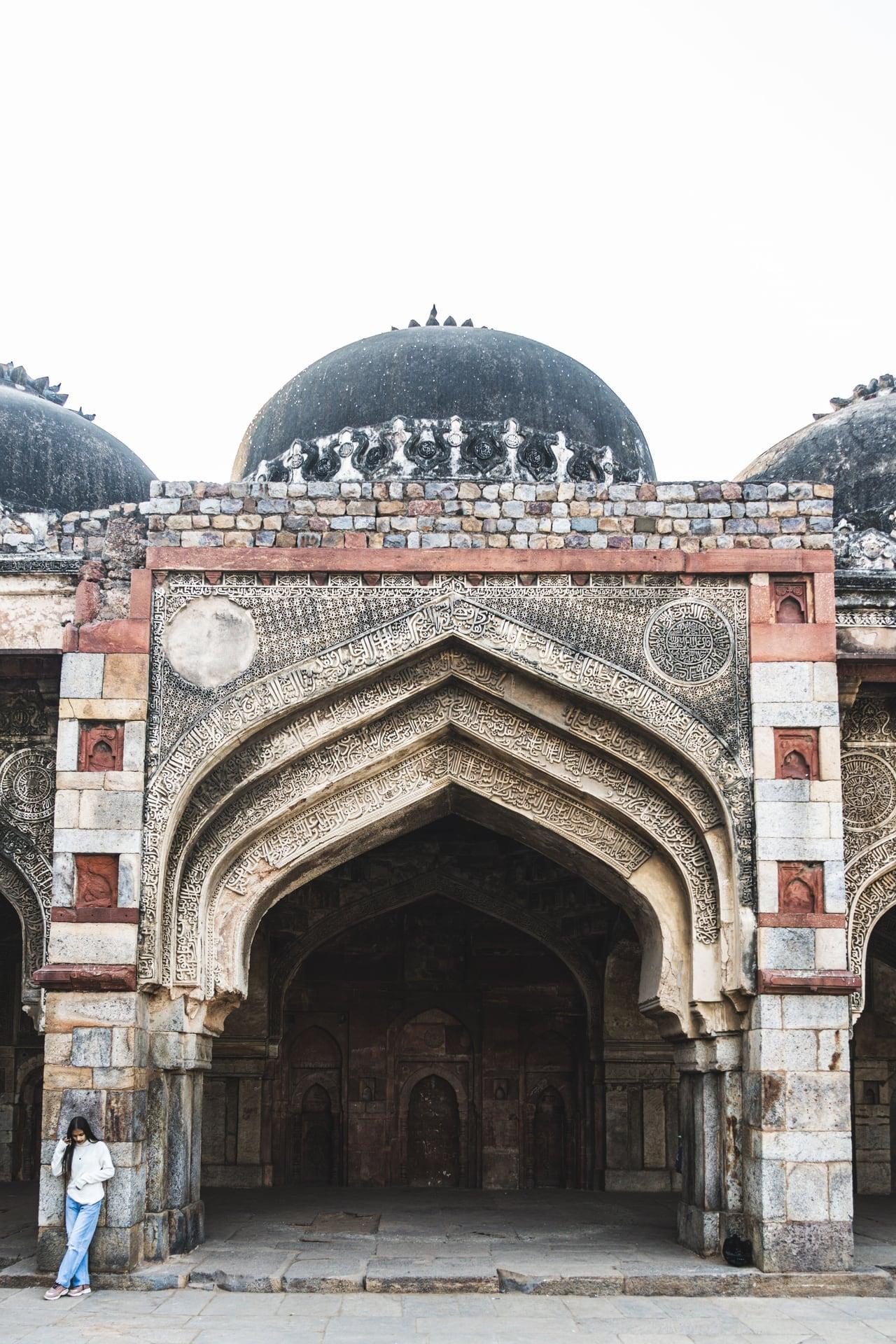
One inscription anchors the whole group. The Bara Gumbad mosque: carved plaster and tile, and an inscription of 30 November 1494 in Sikandar Lodi's reign.
- 7
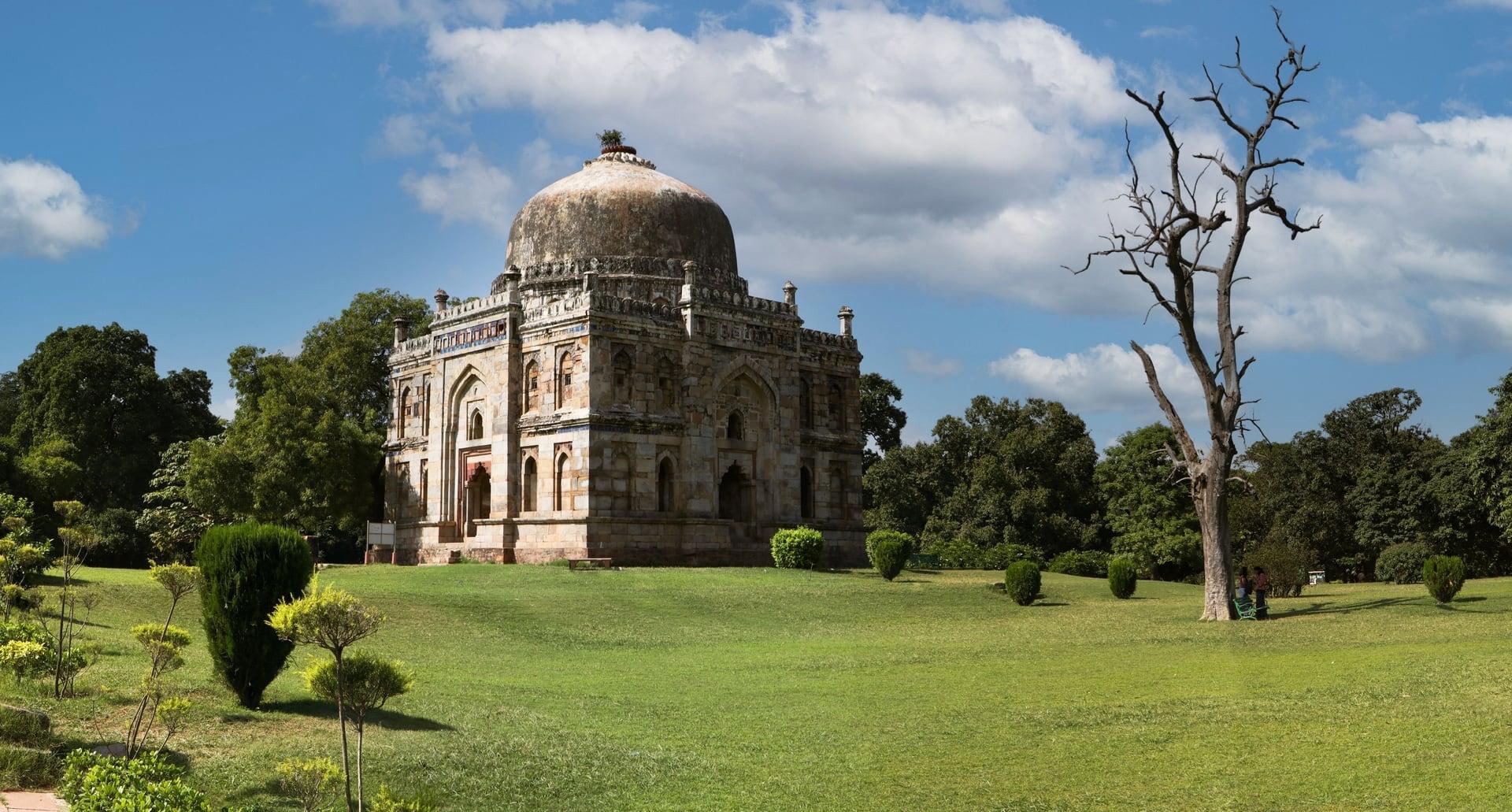
Sheesh Gumbad
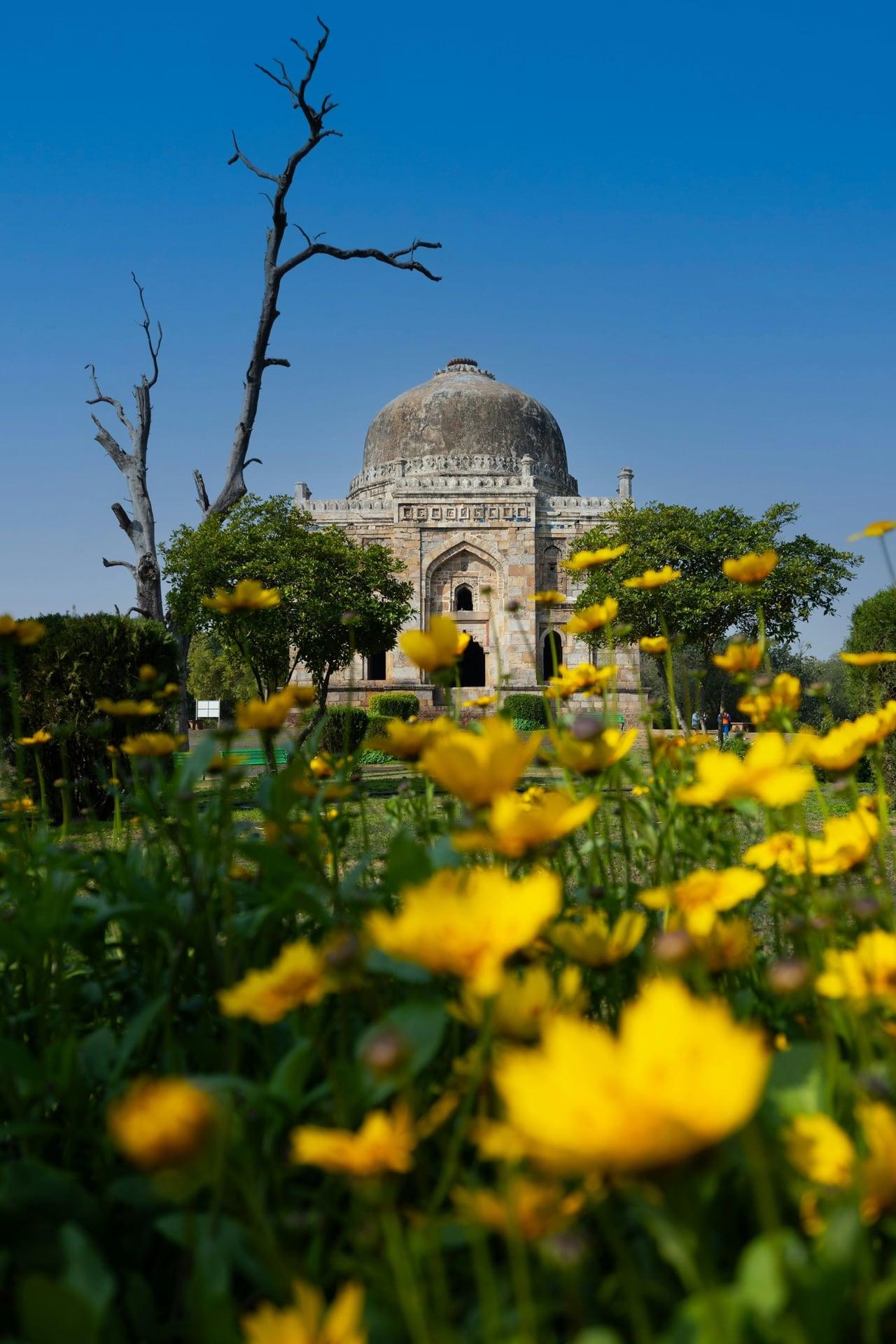
A square tomb shows the second type. The Sheesh Gumbad, the 'glass dome', named for its blue glazed tiles: eight graves, occupants unknown.
- 8
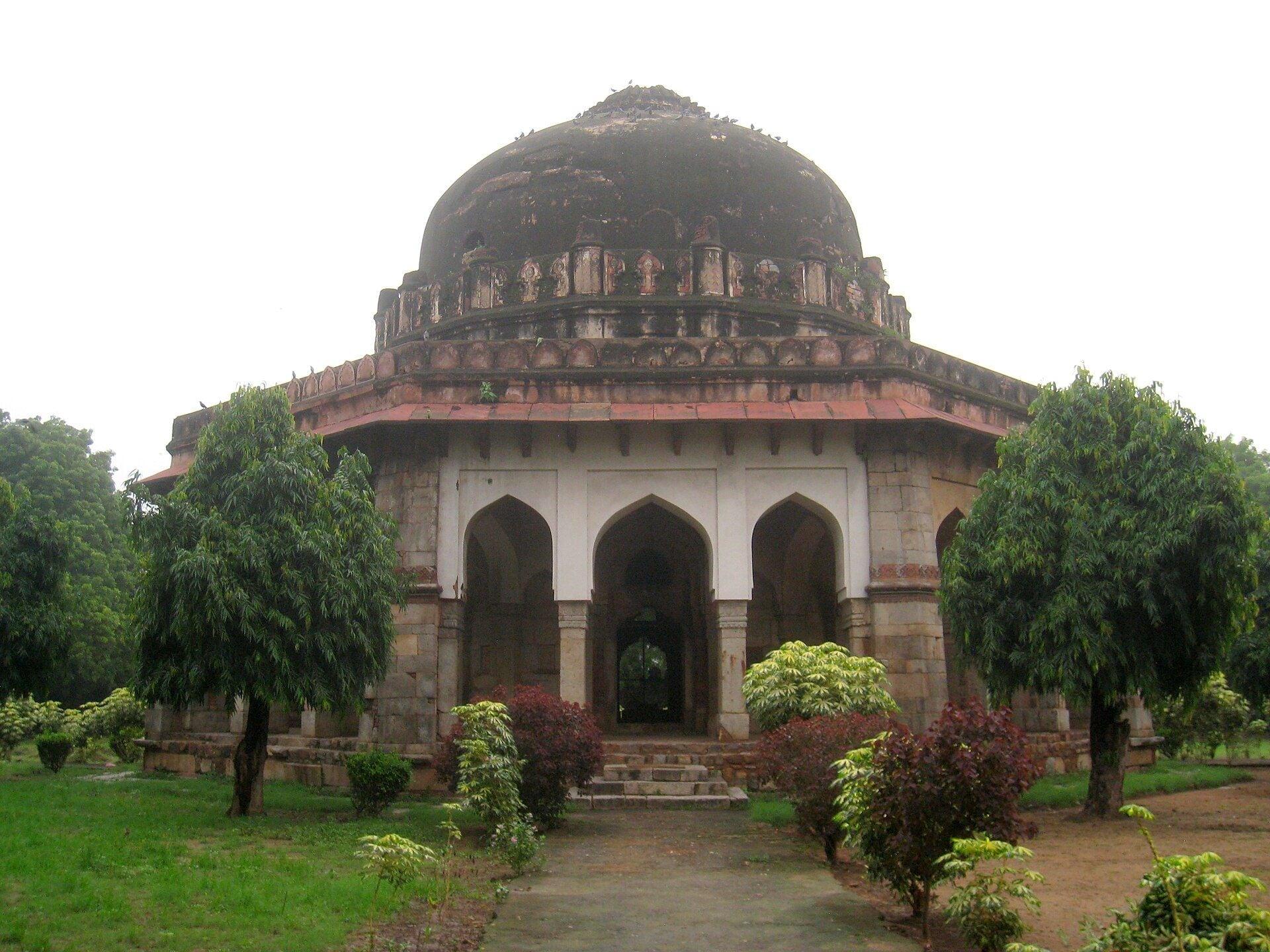
Sikandar Lodi's Tomb
A king's tomb inside a garden wall. Sikandar Lodi's tomb, believed built after his death in 1517, which the Archaeological Survey of India calls the first garden-tomb built in India.
- 9
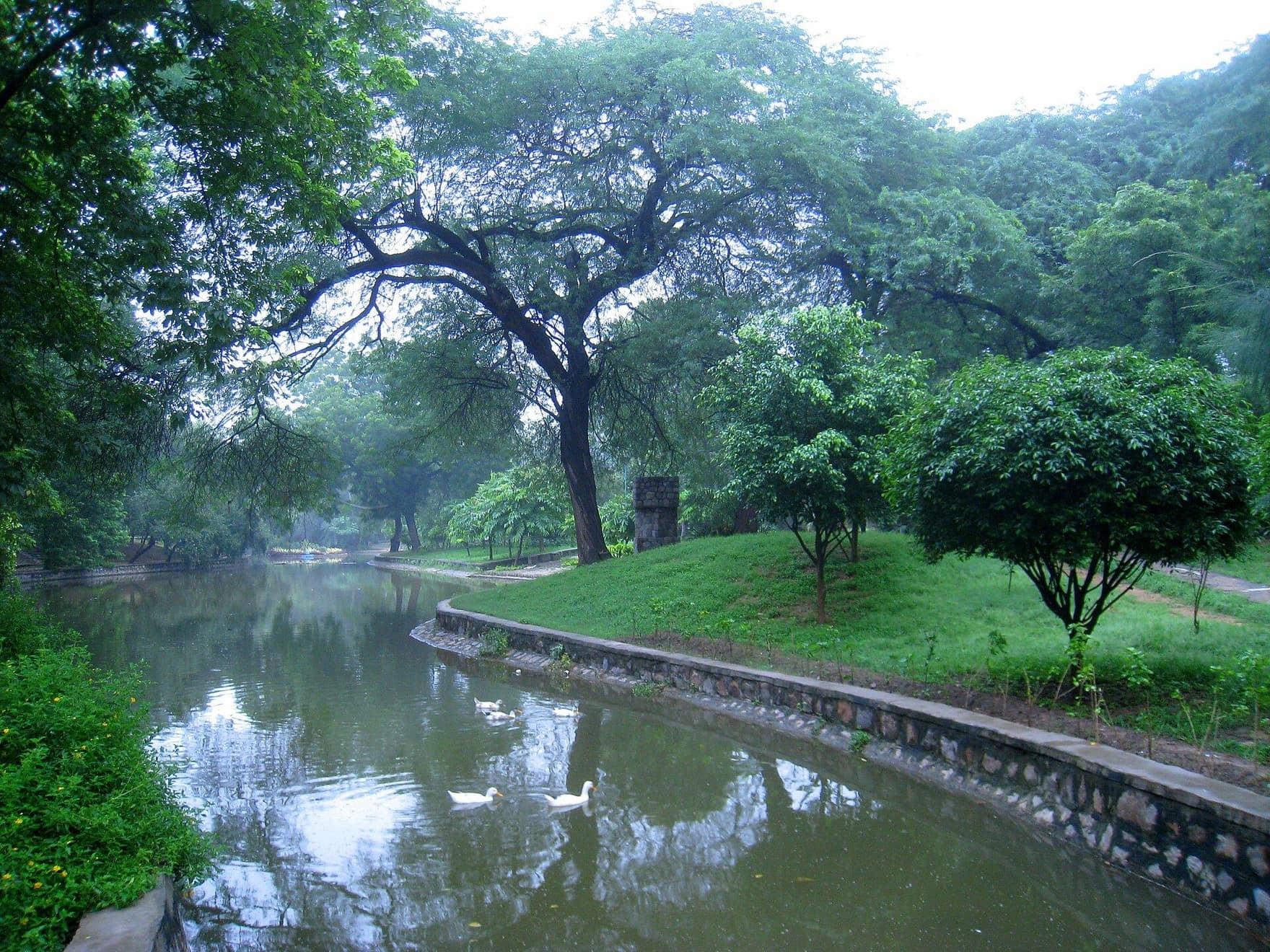
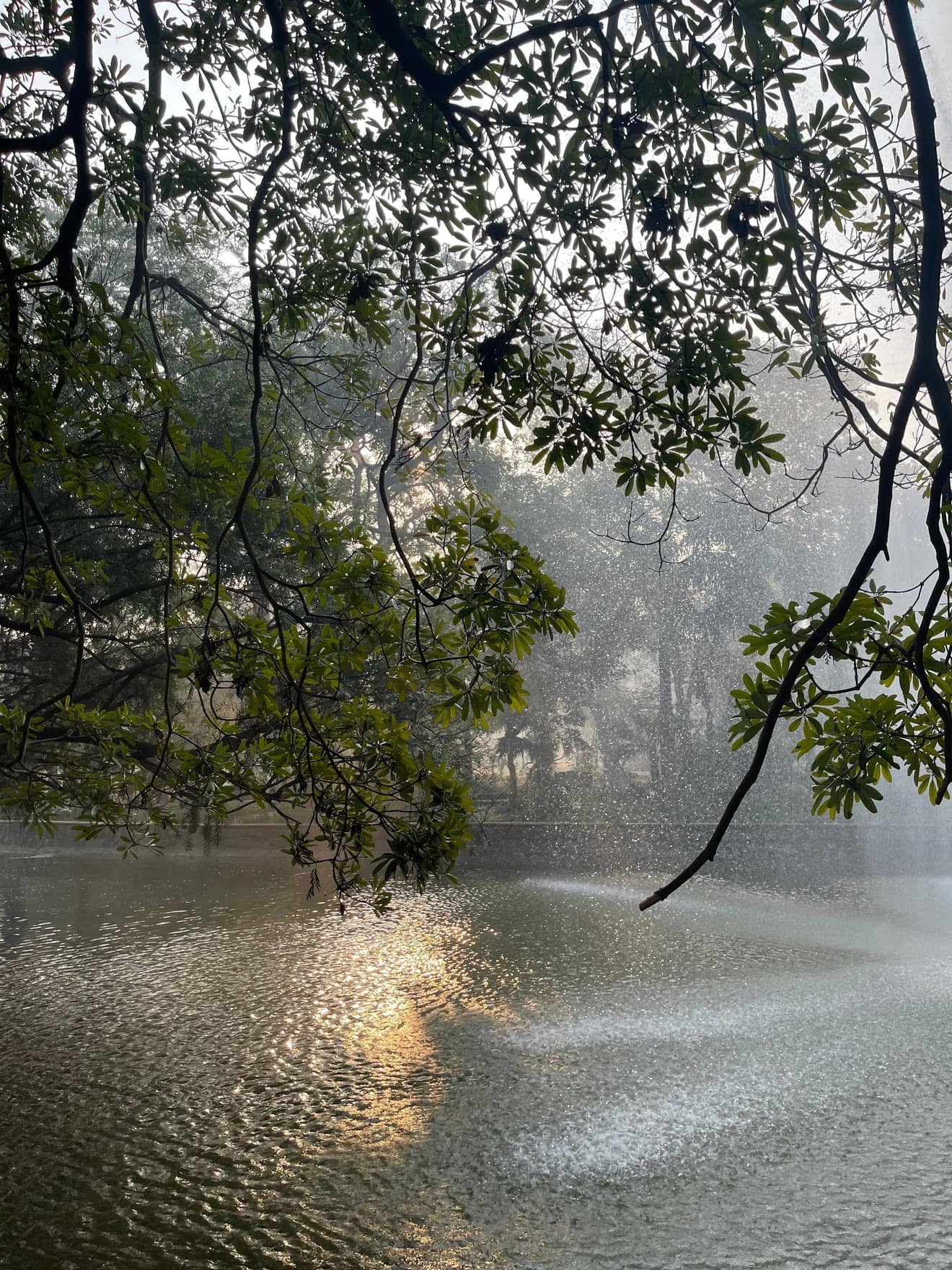
Lake
An old stream bed became a lake. The spiral lake of the 1968 relandscaping, probably along the old stream bed beside the tomb.
- 10
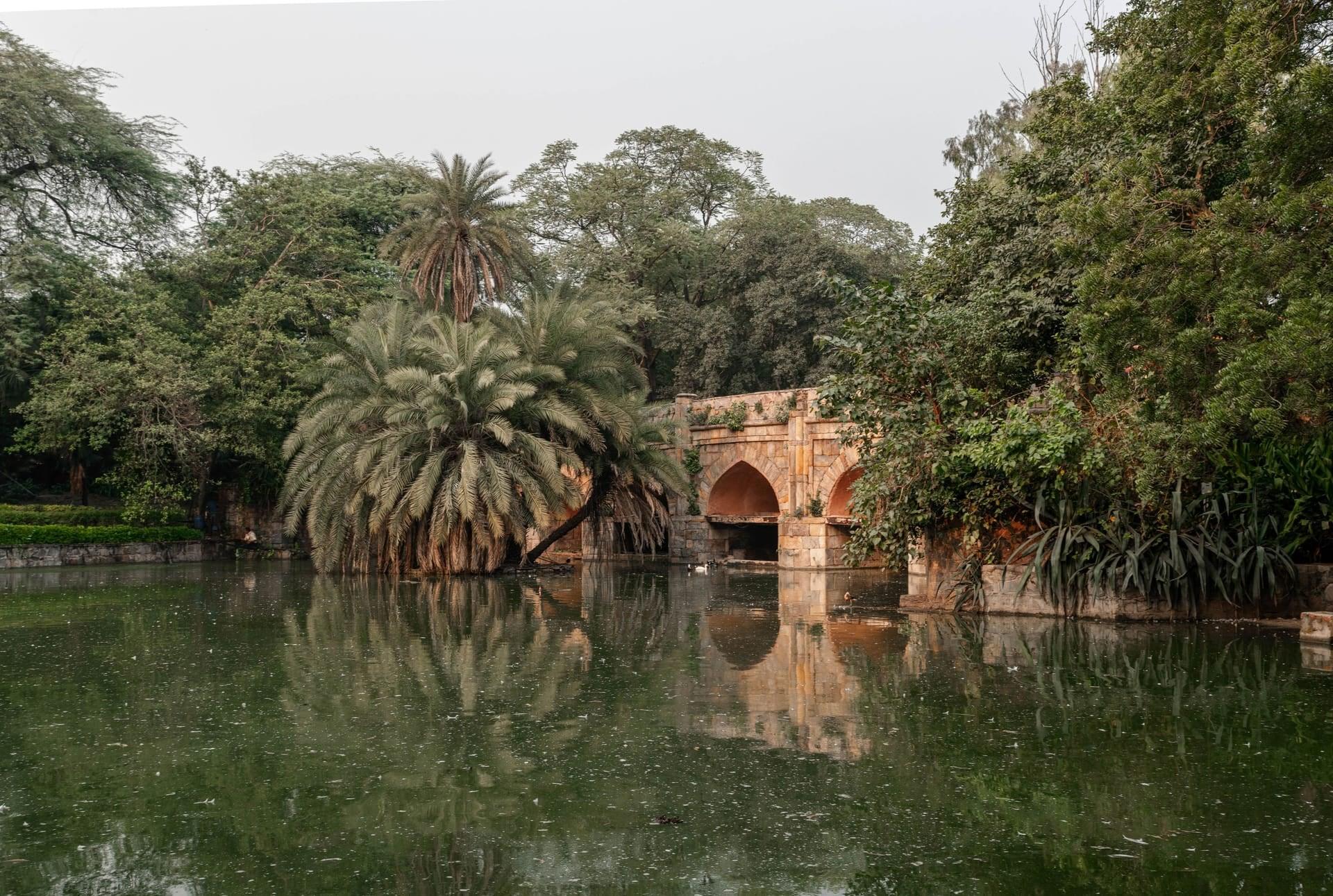
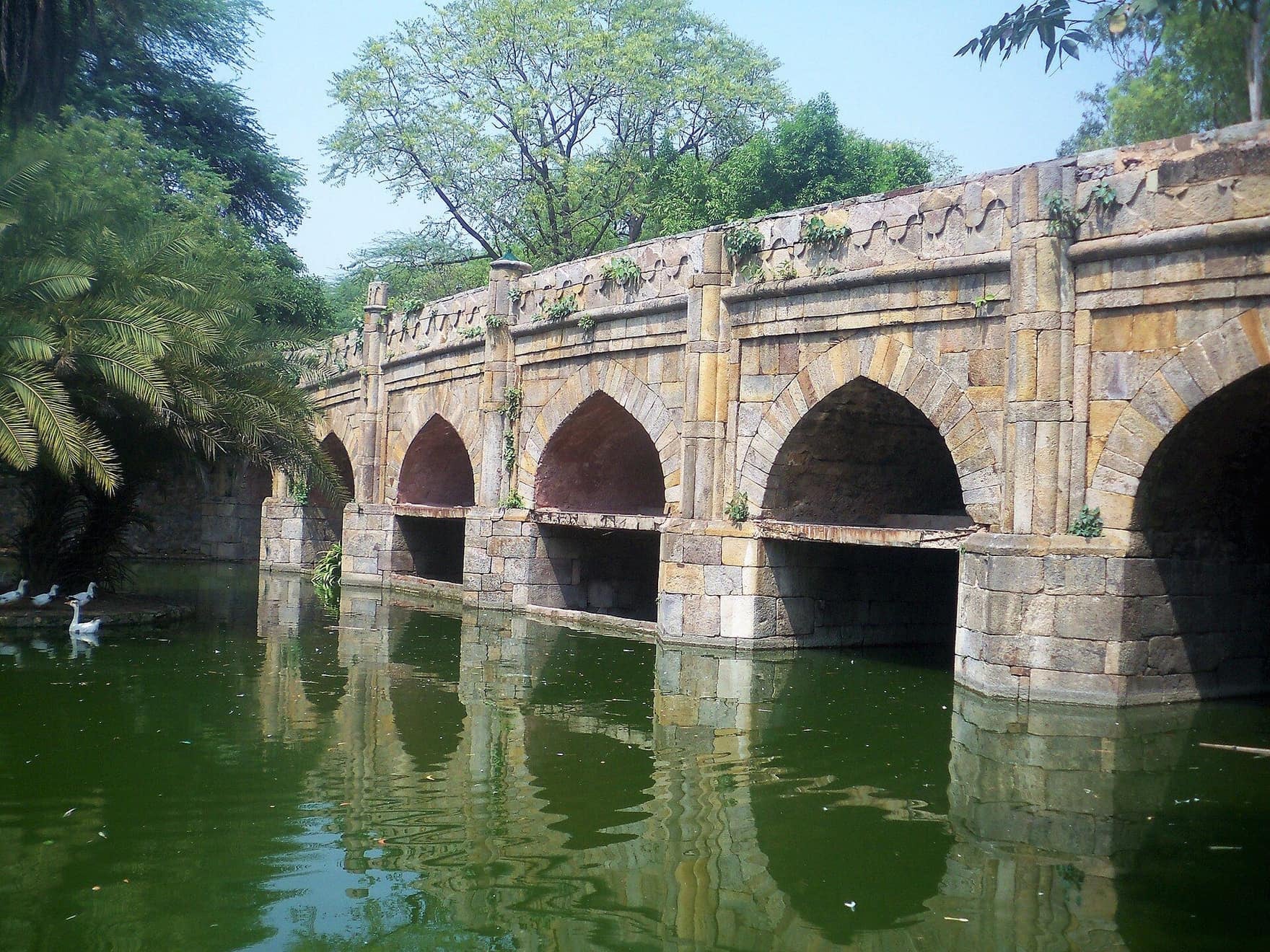
Athpula
Seven arches carry the Mughal bridge. The Athpula, 'eight piers', said to have been built by a nobleman who had been at Kabul; the route crosses it next.
- 11
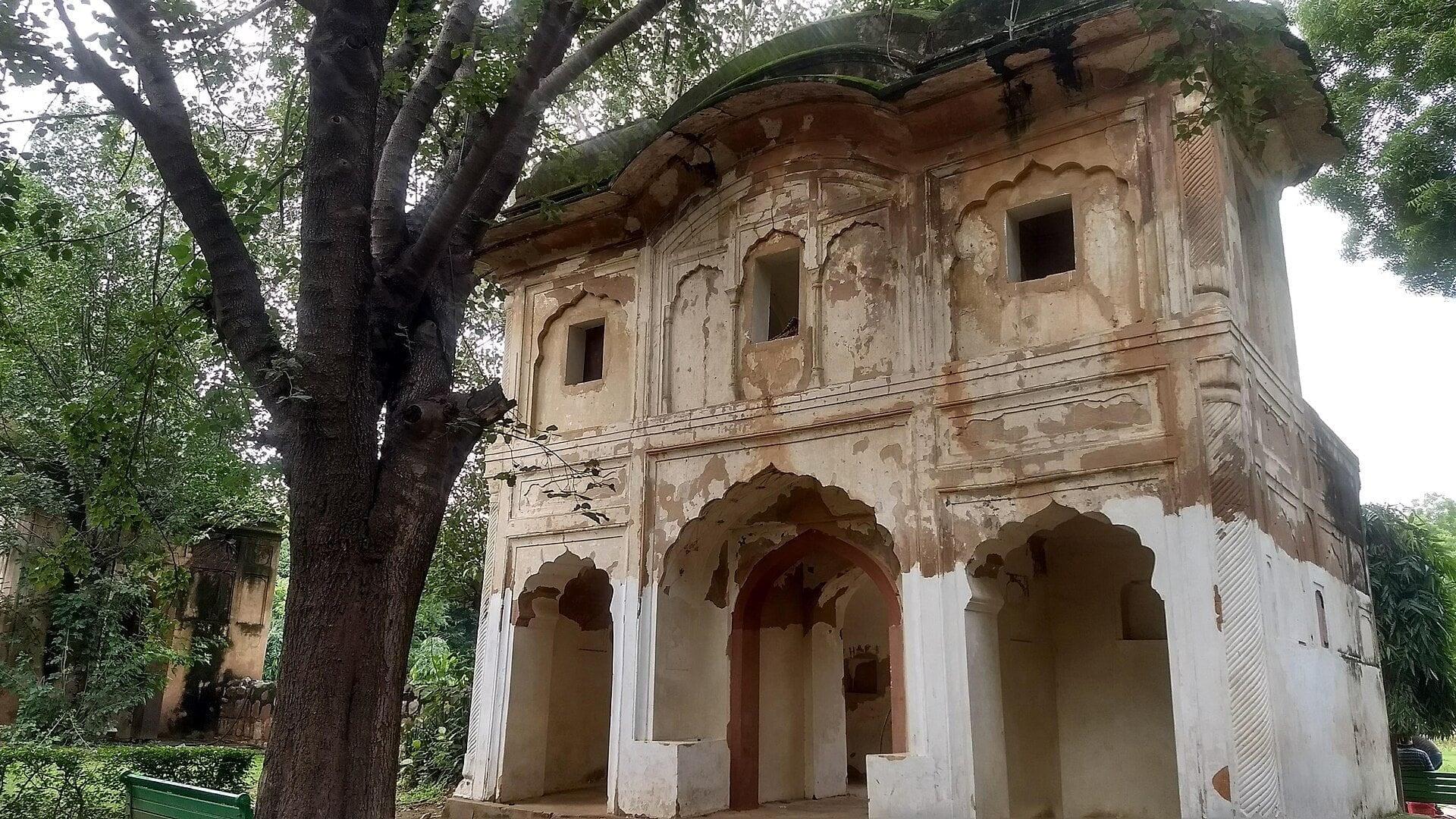
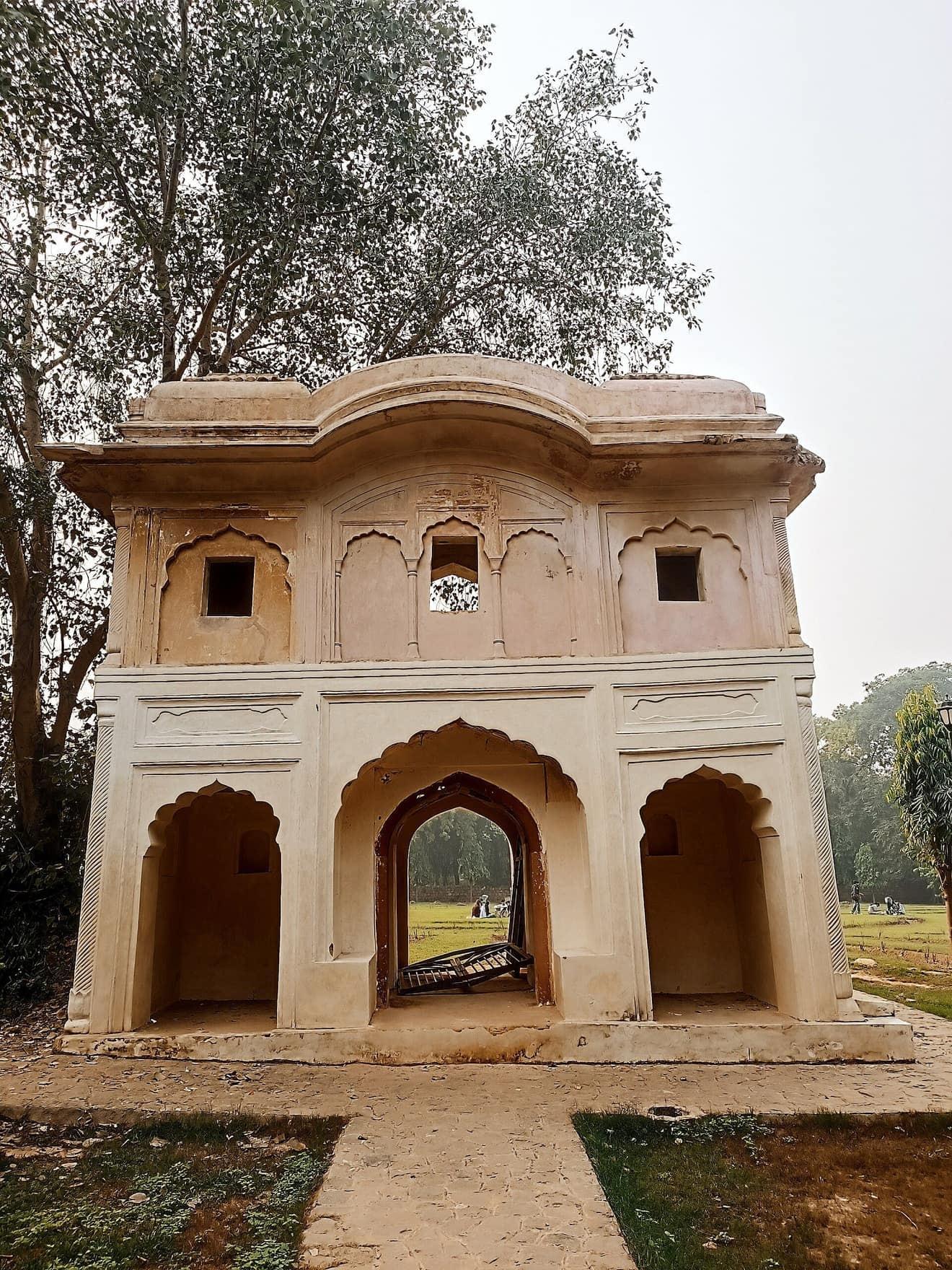
Mughal Gateway
A Mughal garden gate closes the sequence. The two-story gateway of a walled Mughal garden, with scalloped arches and twisted columns, now beside the park's rose garden, its brick mosque beyond.
Details
Best Time to Visit
Early morning or late afternoon, October to March. The park is free and open 6:00 AM to 8:00 PM from 1 October to 31 March and 5:00 AM to 8:00 PM from 1 April to 30 September, every day (NDMC Gardens page, capture of 17 July 2026). Mornings from 6:00 to 9:00 are busy with walkers and joggers, and December and January mornings are often foggy (fog on about 20 days a month, IMD Safdarjung normals 1991 to 2020), so late morning or mid-afternoon gives the clearest views across the lawns. Finish by sunset, as the woods at the north end darken first: sunset about 17:30 in mid-November, 17:24 on 1 December, 17:44 in mid-January and 18:10 in mid-February (computed). Checked 11 November 2026.
Pro Tips
- •Start at the glasshouse, about 40 m inside the south-west gate on Lodhi Road (the gate has 9 steps with handrails). Taxi, ride-hailing or auto-rickshaw: ask for 'Lodhi Garden, Lodhi Road gate'.
- •Getting there by metro: Jor Bagh station (Yellow Line) is about 850 m by road from the start, north up Aurobindo Marg and east along Lodhi Road; cross Lodhi Road only at a traffic signal. A signalled crossing is mapped about 100 m west of Gate 1, near the 'Lodhi Garden' bus stop. Station exits and lines from OSM and other public listings: DMRC's site could not be opened. Checked 11 November 2026.
- •Step-free or fallback start: Gate 1 on Lodhi Road (no steps mapped), then about 330 m west along the inside path to the glasshouse; the first leg east to Muhammad Shah's tomb is then a short re-walk.
- •Free: no ticket for the park or for any of its monuments. The tombs and the Bara Gumbad mosque's platform are walked by visitors by custom; the walk never needs you to go in. Sikandar Lodi's enclosure is entered by its south gate when open; its hours are not published.
- •Leaving: from the end (stop 11), take the other path back north (the one nearer the park's edge, not the arrival path), cross the Athpula again and leave by the north-east gate (about 270 m). Khan Market metro (Violet Line) is about 1 km east by road. The roads outside have zebra crossings but no signals: cross with care, or take an auto-rickshaw.
- •Next: Humayun's Tomb is about 2 km east and India Gate about 2 km north, a short taxi or auto-rickshaw ride either way.
Safety & Precautions
- •Traffic drives on the left, and drivers often do not stop at pedestrian crossings (Government of Canada travel advice for India, updated 6 November 2026: 'Be very careful when crossing the street, even at pedestrian crossings'). Inside the park there is no road on the route; outside, cross Lodhi Road only at a signal.
- •Air: in winter Delhi's air quality is often 'very poor'; GRAP Stage III was invoked across Delhi-NCR on 6 November 2026 at AQI 380 (All India Radio News). Check the day's AQI; a mask helps, and take care if you have asthma.
- •Fog: December and January mornings are often foggy (IMD Safdarjung normals, about 20 fog days a month). Fog hides the views across the lawns (the Bara Gumbad at stop 4 is about 110 m away), not the paths.
- •Dusk: the park closes at 8:00 PM, but the woods at stops 3, 5 and 8 to 11 darken soon after sunset and the turret at stop 5 is hard to see. Finish by sunset.
- •Respect: early mornings belong to walkers, joggers and yoga groups; families and couples come later. Ask before photographing anyone. Dress modestly at the tombs and the mosque; if anyone is praying at the Bara Gumbad mosque, do not walk in front of them. Drones are not allowed (central Delhi is a drone red zone).
- •If the small gate onto the Athpula is locked, finish at stop 10 and leave by the north-east gate beside it; the gateway at stop 11 can also be reached later from the park's east side.
- •Works: NDMC announced a 2.5 km gravel jogging track for Lodhi Garden (Millennium Post, 28 October 2025); no completion report was found, so expect possible work on some paths. Checked 11 November 2026.
Travel advisory: Exercise Increased Caution (Level 2).
Gallery
Related Reading
Go deeper on what you'll see, hear, and walk through.
Overview
Delhi Monument Tickets, Hours and Closures (Checked November 2026)
4 min
Overview
Delhi Travel Guide: How Many Days, Getting Around, Best Time, and Safety
5 min
Overview
One Day in Delhi: A Walkable Morning-to-Evening Itinerary
3 min
Thematic
Delhi's Garden Tombs: From the Lodis to Humayun, in Four Steps
5 min

Thematic
How to Read Delhi on Foot: Six Walks, Eight Centuries
4 min
Thematic
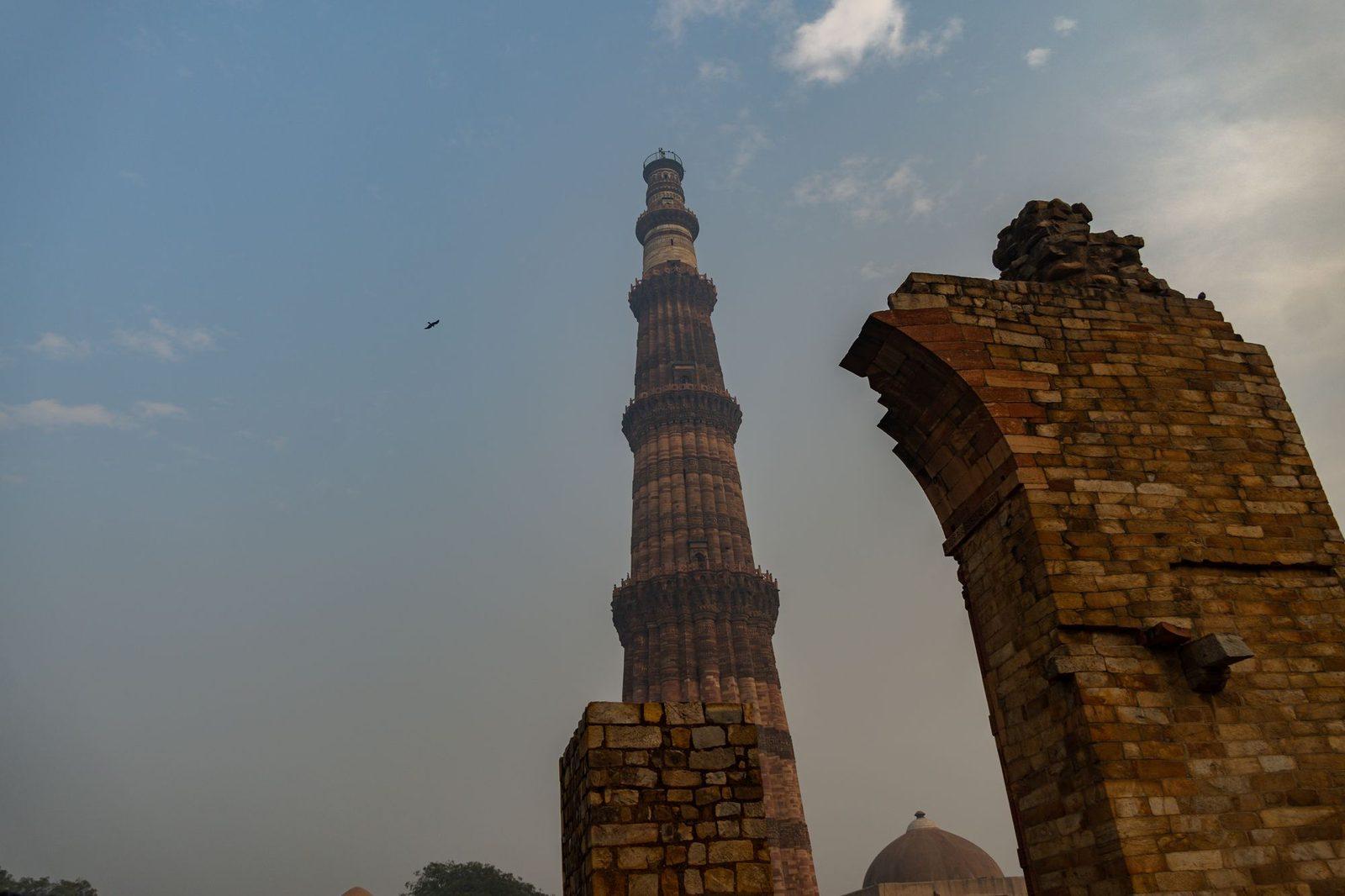
The Seven Cities of Delhi: A Tradition, Not a Count
4 min
Companion
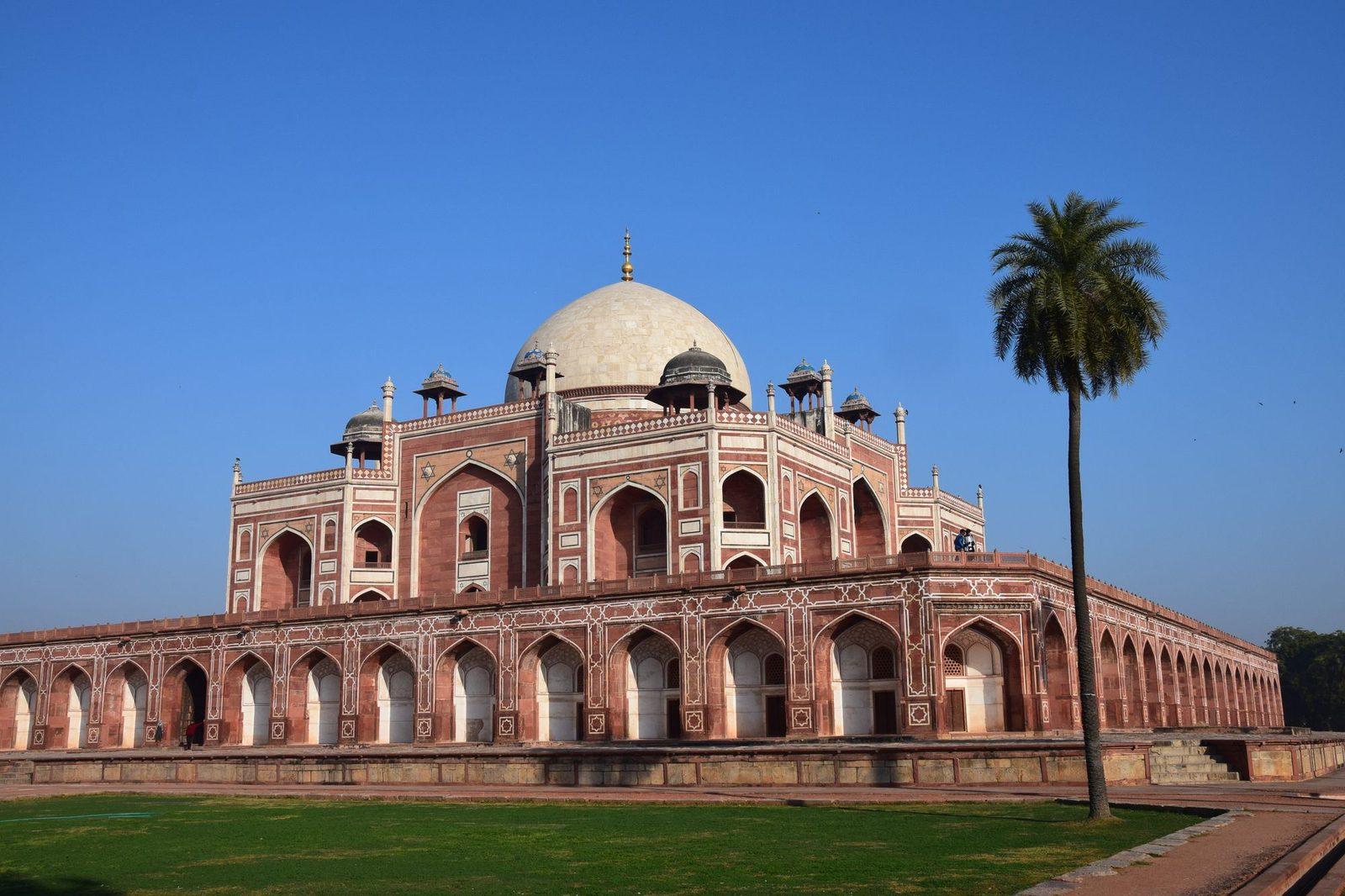
Humayun's Tomb: The Garden Tomb on the Road to the Taj
6 min
Companion
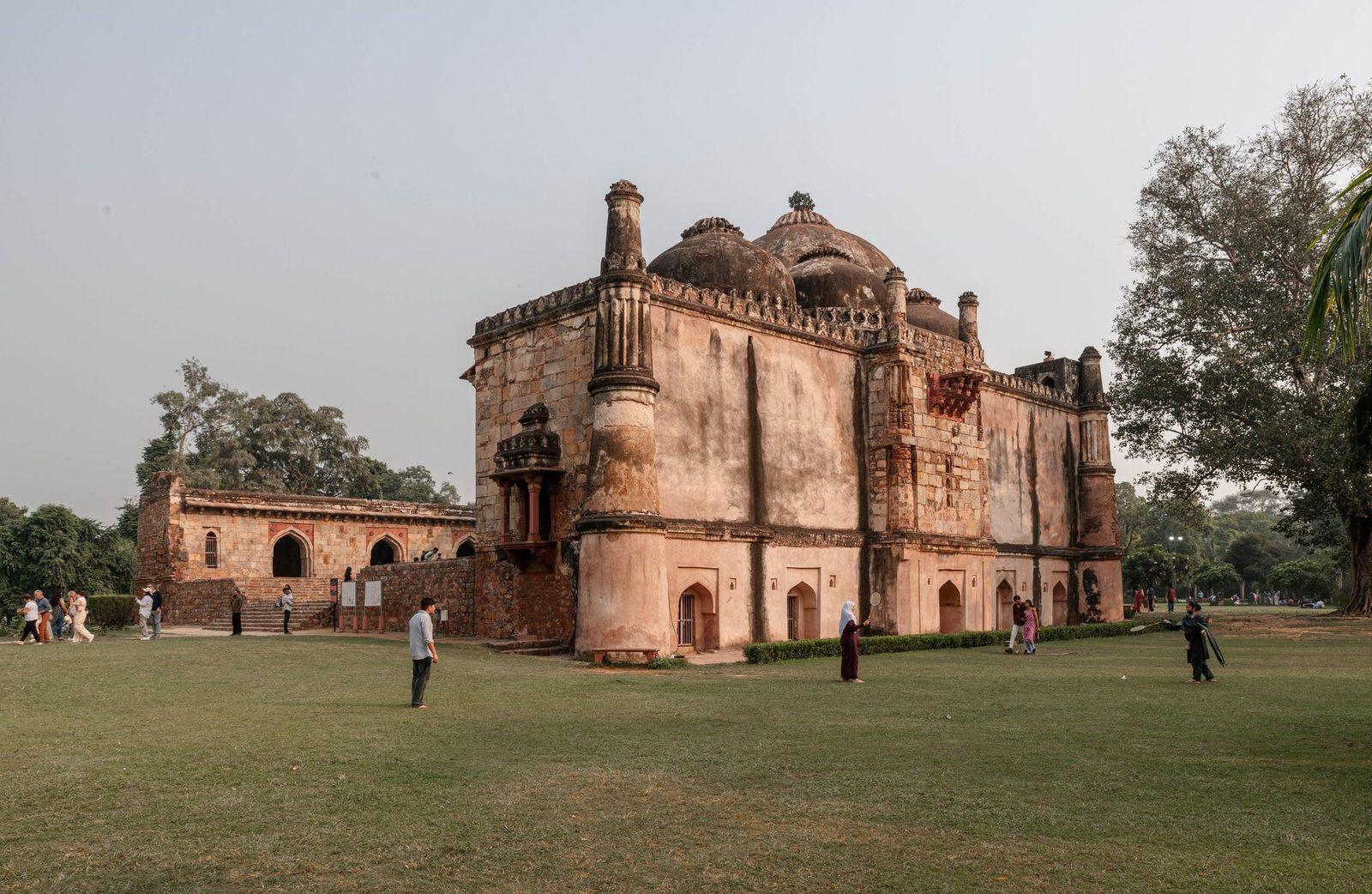
Lodhi Garden: A 1936 Park Around the Tombs of the Sultans
5 min
Read the walk
The full story of Lodhi Garden: Tombs of the Sultans, Oldest First, in words. Prefer to listen? Play it narrated, from home or on location.
Introduction
Lodhi Garden is a Delhi park made around tombs. Its lawns hold sultans' tombs of the fourteen hundreds and the early fifteen hundreds, a Mughal bridge and a Mughal garden gate, and the park was laid out round them in nineteen thirty six. This walk crosses it from the south west corner to the north east, and as you go, you go forward in time: the Sayyid kings first, then the Lodis, then the Mughals who came after them. On the way you will learn to tell a king's tomb from a noble's at a glance.
There are eleven stops over about one point seven kilometers, about a mile, and it takes about seventy minutes. The walk is flat and stays on the park's own paths, with no roads to cross.
The park is free. Between October and March it is open from six in the morning to eight at night, and from April it opens at five. Finish by sunset all the same, around half past five in December: the woods at the north end grow dark first.
If you arrive on the far side of Lodhi Road, cross at the traffic signal near Gate one. Traffic drives on the left, and drivers do not reliably stop at zebra crossings.
From December to February, mornings are cool and often foggy, and fog can hide the domes across the lawns. In winter the air can be very poor: check the day's air quality index; a mask helps, and take care if you have asthma.
Early mornings belong to walkers, joggers and yoga groups; families and couples come later. Ask before you photograph anyone, and dress modestly at the tombs and the mosque.
The walk finishes at a Mughal garden gate on the park's east side, a short way from the north east gate. When you arrive at the glasshouse, begin with stop one.
1. Glasshouse
Just ahead, through the trees, is the glasshouse, the newest building on this walk. It went up in December nineteen seventy, with help from the Ford Foundation, to keep indoor plants. Every other building on this walk is older than New Delhi itself, most of them by four or five centuries.
The park, though, is younger than the city around it. New Delhi was inaugurated in February nineteen thirty one. This park opened five years later, on the ninth of April nineteen thirty six, named at first for the wife of the British Viceroy. It was laid out on the land of a village called Khairpur, and the village was moved to make room. Later it was renamed Lodhi Garden, for the history it holds.
That history had been written down first. In nineteen nineteen, the Archaeological Survey of India published a list of Delhi's monuments. Under Khairpur it listed ten old buildings standing among the village fields, and it added a wish: "It is hoped that it will be eventually possible to surround the group of Lodi tombs with a small park." The park you are standing in is that wish, granted, on about ninety acres.
In nineteen sixty eight the park was reshaped by the American architect Joseph Allen Stein, and the city's own record of that work includes the lake you will reach near the end. The glasshouse came two years later, and that record does not name its designer.
The tombs ahead come in order. Two lines of sultans ruled Delhi in the fourteen hundreds, the Sayyids and then the Lodis, and the Mughals came after them. Walk north east through this park and you walk forward through all three.
Follow the route east along the park's southern edge. The first tomb opens up beside the path, on your left.
2. Muhammad Shah's Tomb
Turn to face the tomb across its square garden, on your left. This is the tomb traditionally held to be that of Muhammad Shah, the third king of the Sayyid line. He came to the throne in the fourteen thirties and died in the mid fourteen forties; the chroniclers disagree on the year. The nineteen nineteen survey says his son is said to have built the tomb, and a later university survey adds that no firm document proves whose tomb it is. So hold the name lightly.
Hold the shape firmly. The tomb is an octagon, eight sided, ringed by a low veranda. Count the arches on the face nearest you: three to each side. Above each face sits a small domed kiosk on eight pillars, and at the corners sloping buttresses lean in like props. The main dome stands on a drum of sixteen sides. It is built of the gray local stone, and inside the dome, verses from the Quran were worked in plaster.
The survey counted eight graves inside: two men, five women, and the one in the center, in all probability the king's.
Remember this shape. An architectural historian writing in nineteen forty two noticed that the royal tombs of this age are octagons like this one, with a veranda all round and a single story. He thought it probable that the octagon was the design for a king, and that the square, with no veranda, was kept for nobles. It is his reading, not a law, but this park lets you test it. You will meet a square tomb soon.
The king's reign, the survey says, was marked by an uninterrupted series of disturbances, and in the end the throne passed to the Lodi family, whose buildings come next.
Follow the route along the garden's south side and over a small footbridge into the trees.
3. Ruined Mosque
Slow down here and look into the trees beside the path, on your left. Somewhere in there, often half hidden by leaves, is a small ruined mosque.
Look first for a low, broken wall. It encloses a patch of ground that the nineteen nineteen survey thought had been a burial ground. Inside it the survey found a prayer room with a vaulted roof and three arched entrances, two of them closed up, the outside rendered in red plaster. If the leaves are thick, the wall may be all you see from the path, and that is enough.
This is the most modest building on the walk, and that is why it is here. The surveyors of nineteen nineteen went through Khairpur village and wrote down everything old they found. This one they could not name. They listed it as a nameless mosque of the Afghan period, their term for the age of the Lodis, called it ruinous, and marked its protection as unnecessary. In twenty twenty one it was still not on the national list of protected monuments.
So picture this ground before the park: a village, its fields, and old buildings standing among them that no one remembered building. Kings' tombs and nameless ruins stood side by side, and the villagers lived between them.
Follow the route on up this narrow path to the wide one. The great dome is waiting across the lawn.
4. Bara Gumbad
Turn toward the long open lawn, on your left, and look up it. At the far end stands the Bara Gumbad, which means the big dome. In dense winter fog it can vanish at this distance; you will be beside it soon.
It is a building whose purpose is still argued. Look at its doorways. There are openings on all four sides, each framed in a double recessed arch more than nine meters high, with black marble around the arch heads studded with white marble bosses, and panels of red sandstone. Above sits a drum of sixteen sides and a plain plastered dome. The nineteen nineteen survey quotes an earlier surveyor's figures: about nineteen meters square outside, and about twenty seven meters high, measured from the fields that surrounded it then.
To those surveyors it was a gateway, the grand entrance to the court of the mosque behind it. The survey calls it perhaps unequalled in the ruins of Delhi, save by the Alai Darwaza at the Qutub, a gate built almost two centuries earlier, which that earlier surveyor called its prototype. Our Qutub Minar walk stands in front of that original.
The architectural historian you met at the octagon saw it differently, and counted it among the square tombs. The surveys do not say what, if anything, lies inside it. So keep the question open as you go: a door, or a grave? You will see its court and its mosque from the other side.
Follow the route to the junction and up the east path, with the dome across the lawn.
5. Lone Turret
Here a side path leaves the main one, heading toward the park's eastern edge, on your right. Take a few steps along it. In the trees just to its right stands a round stone tower on a low base. It is a corner with no walls left. The nineteen nineteen survey thought it was one of…
Full narration for this stop unlocks with the tour.
6. Bara Gumbad Mosque
Across the raised platform on your left lies a courtyard, and this is the other side of the big dome's question. The building along the court's west side, ahead and to your left, is the mosque. The Bara Gumbad stands on the court's south side. Along the east side runs a long,…
Full narration for this stop unlocks with the tour.
7. Sheesh Gumbad
Across the lawn, on your right, stands the Sheesh Gumbad, the glass dome. The name comes from the glazed tiles, in two shades of blue, that once covered parts of its face. Look for what is left of them in the small niches and in the band below the top molding. Now set it beside…
Full narration for this stop unlocks with the tour.
8. Sikandar Lodi's Tomb
On your left is the gate of a walled garden. In the middle of that garden, out of sight from here, stands the tomb of Sikandar Lodi, the second Lodi king. He came to the throne in the late fourteen eighties, reigned, the nineteen nineteen survey says, successfully for twenty…
Full narration for this stop unlocks with the tour.
9. Lake
The water on your right is the park's lake, and the arches you can see across it, ahead and to the right, belong to the old bridge, the next stop. The lake belongs to the nineteen sixty eight work. The city's record describes it as a spiral, three hundred meters long and one…
Full narration for this stop unlocks with the tour.
10. Athpula
Ahead, where the path meets the water, is the Athpula. Count its arches: seven, the center one the widest, the others stepping down in size toward each bank. Between and beside them stand eight piers, set at an angle to the current so they cut the water, with fluted pilasters on…
Full narration for this stop unlocks with the tour.
11. Mughal Gateway
Just ahead, where the path bends toward the roses, stands a gateway two stories high. It is the entrance to a walled garden of the Mughal age, and it looks like nothing else on this walk. Look at its front. The arches are multifoil, scalloped like a row of petals. At the front…
Full narration for this stop unlocks with the tour.
- This is the first unidentified mosques situated near to Muhammad Shah's tomb in Lodi garden. — Indrajit Das, CC BY-SA 3.0 · source
- This turret is situated near to Bada Gumbad in Lodi garden built during Lodi period. — Indrajit Das, CC BY-SA 3.0 · source
- file title: Turret (Minar) of Lodhi era.jpg — Yash Paul Sharma, CC BY-SA 4.0 · source
- THIS BRIDGE IS IN LODHI GARDEN, VERY INTERESTING DESIGN — PULKIT TYAGI, CC BY-SA 4.0 · source
- file title: Mosque and four wall of an enclosed garden at Lodhi Garden 2.jpg — Yash Paul Sharma, CC BY-SA 4.0 · source
- An old Mughal-era gateway inside Lodhi Garden, Delhi. — Shadabgdg, CC BY-SA 4.0 · source
Images may be cropped or resized. Other photos via Unsplash and Pexels.