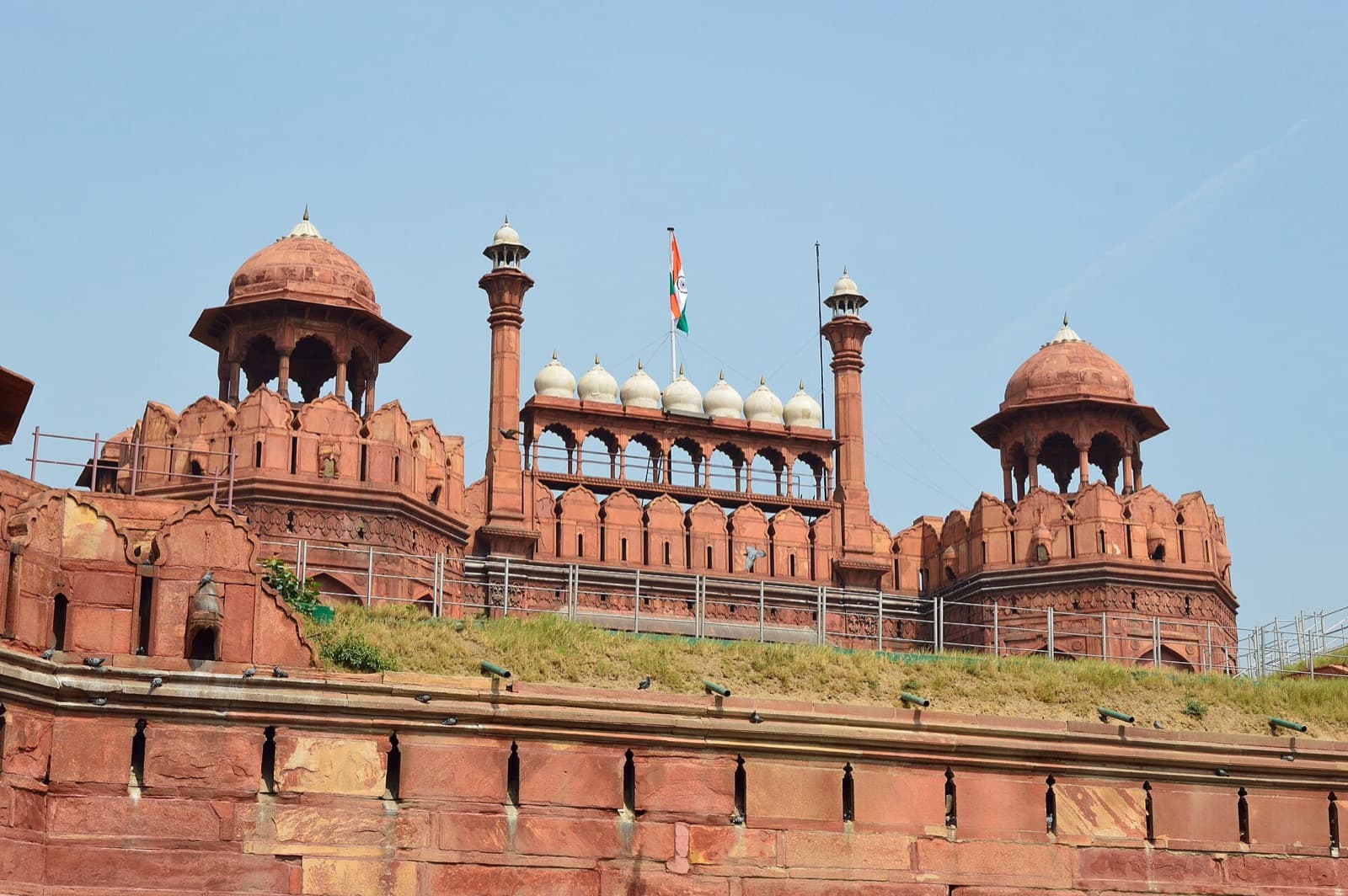
Old Delhi: The Last Mughal Capital
80 min · 3.3 km · moderate
Give Delhi three full days if it is your only stop, and four to five if you plan to use it as the base for the Golden Triangle. That is enough to walk Old Delhi's Shahjahanabad core, spend a slow morning inside the Red Fort, read the early Mughal garden-tombs at Nizamuddin, and still leave a day loose for the museums, markets, and the New Delhi that the British built. Below is the practical planning: how long to stay, how to move around, when to come, an honest word on safety, and what it costs. Every price and timing here was checked against 2026 sources.
How many days you need
Two days covers the headline monuments if you move efficiently. Three is the comfortable number, because Delhi is really two cities stacked on one another: the walled Mughal capital of Shahjahanabad in the north, and the wide colonial and post-independence New Delhi to the south, with the Nizamuddin tombs and Qutb complex further out again. Trying to do both in a day means a lot of time in traffic and very little time standing still.
A workable three-day shape: one day for Old Delhi (the Chandni Chowk walk through Shahjahanabad, then the Red Fort next door), one day for the garden-tombs and New Delhi (Humayun's Tomb, India Gate, the government quarter), and one day loose for Qutb Minar, a museum, or a return to whichever market pulled at you. If Delhi is a launchpad for Agra and Jaipur, add a day of buffer so the city does not get compressed to a single rushed morning.
How to get around
Hear a stop from this walk
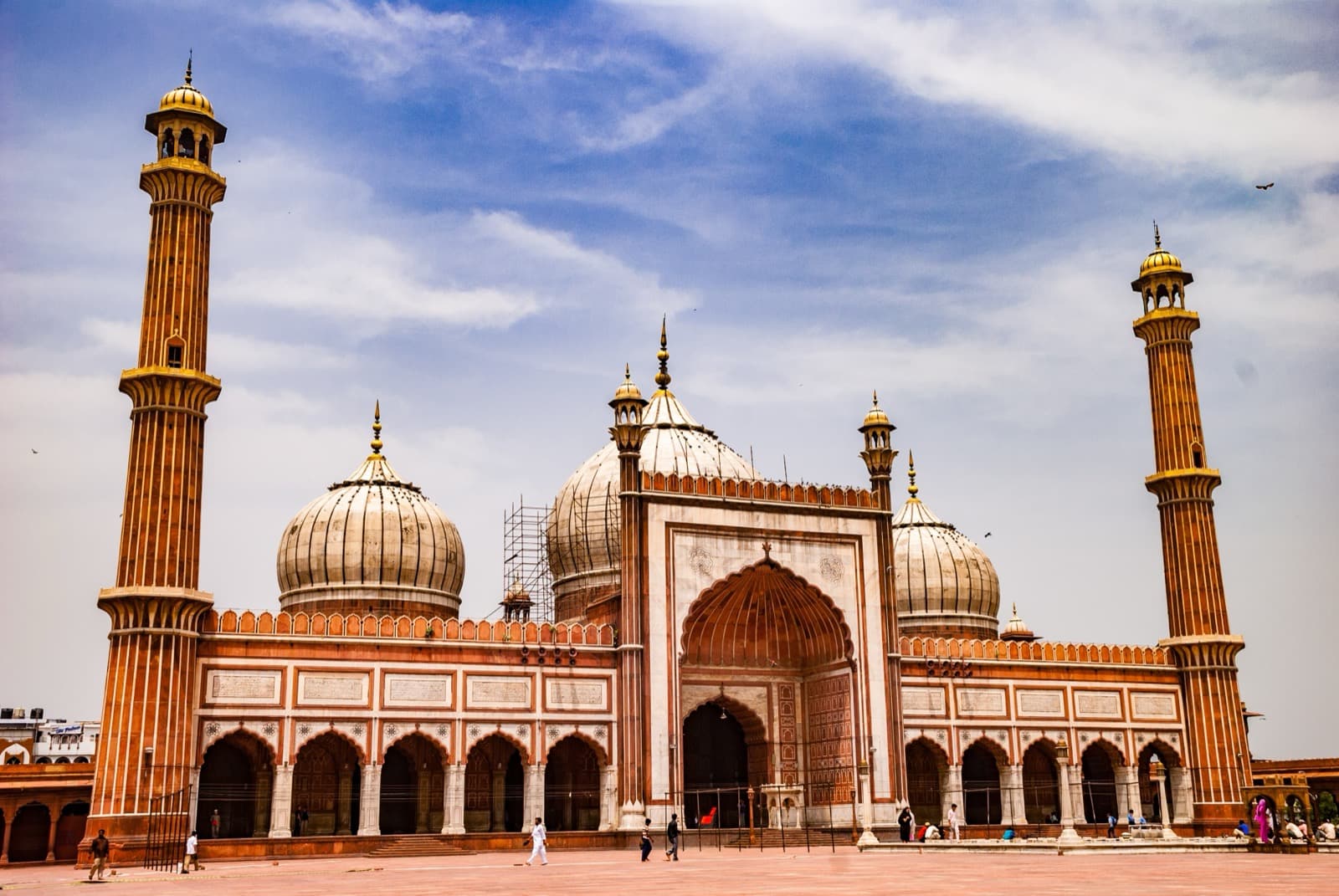
Jama Masjid: The Mosque Built to Crown the Capital
App-based cabs are the calm default. Uber and Ola quote the fare before you accept, track the ride, and remove the negotiation entirely, which is why most first-time visitors lean on them. Auto-rickshaws are cheaper and more fun for short hops, and they are legally required to run a digital meter. In practice many drivers claim the meter is broken and quote three to five times the real fare, so agree a price before you climb in or book through an app instead.
The Delhi Metro is the fastest way across the city and past the traffic. It is clean, air-conditioned, cheap, and signed in English, with a women-only carriage on every train. For arriving from the airport, the Airport Express (the Orange Line) runs from Indira Gandhi International to New Delhi station in about twenty minutes for roughly sixty rupees, far faster than a road taxi in traffic. Buy a smart card if you plan to ride the Metro more than a few times.
One route note from the tours themselves: Old Delhi's monuments cluster tightly enough to walk between (the Shahjahanabad walk covers a little over three kilometres, the Red Fort about one kilometre inside its walls), but Humayun's Tomb sits down in the Nizamuddin area, a short auto-rickshaw or cab ride south of the Old Delhi core. Plan that transfer rather than trying to walk it.
Best time to visit
Come between October and March. Delhi's cool season is the only stretch with genuinely pleasant weather, with daytime temperatures averaging around the mid-twenties Celsius and cool evenings, which is exactly the window you want for a day of walking monuments. February and March in particular tend to bring the cleanest air of the season.
Avoid the summer if you can. April warms up fast and May and June regularly push past forty-five degrees Celsius, which turns any open-air fort into an endurance test. The monsoon runs July into September, with August the wettest month. There is one wrinkle inside the good season: late November through January can bring heavy smog, so if air quality matters to you, aim for the October or the February-March ends of the window rather than the deep winter middle.
Is Delhi safe
Delhi is safe enough for ordinary tourism, including solo travel, if you handle it with the same street sense you would bring to any large, crowded capital. The real risks are overwhelmingly to your wallet and your patience, not your safety: overcharging by taxis and auto-rickshaws, fake "tourist information" offices near New Delhi Railway Station and Paharganj, the "your hotel is closed" redirect scam in that same area, fake guides at the monuments, and pickpocketing in dense markets like Chandni Chowk.
The fixes are simple and they clear most of it: book cabs through Uber or Ola so the fare is fixed and the ride is tracked, buy monument tickets only at the official counter or online, keep your bag in front of you in crowds, and politely decline unsolicited help steering you toward a shop or a "better" hotel. Solo female travelers report Delhi as manageable with normal caution: use the women-only Metro carriage, favor app cabs after dark, and share your live ride link with someone. Doing your monuments as a self-guided audio walk helps here too, because you are never handing yourself over to a stranger who then expects to route you through a cousin's emporium.
What it costs
Delhi is inexpensive by Western standards, and the monuments are the cheapest part. Foreign-tourist entry to the Red Fort is five hundred rupees (Indian nationals and visitors from SAARC and BIMSTEC countries pay thirty-five). Humayun's Tomb runs around five hundred to five hundred fifty rupees for foreign adults. Both are the kind of ticket that costs less than a coffee back home, and children under fifteen are generally free at ticketed Archaeological Survey sites. The Shahjahanabad street walk itself costs nothing: Chandni Chowk, the spice market at Khari Baoli, and the mosques and temples along the way are public or free to enter (a small camera fee sometimes applies).
Where money actually goes is transport, food, and lodging, all of which scale to your taste. App cab rides across the city are a few hundred rupees at most, street food in Old Delhi is pocket change, and you can eat and sleep at almost any budget you choose.
Two timing traps to plan around
The Red Fort is closed on Mondays and keeps short hours, roughly nine-thirty in the morning to four-thirty in the afternoon, so do not build a Monday around it. Humayun's Tomb, by contrast, is open every day of the week with long hours (roughly early morning to early evening), which makes it the natural Monday fallback and a good place to catch soft late-afternoon light on the sandstone. Pairing them the way the tours do (Old Delhi and the Red Fort on one day, the garden-tomb on another) sidesteps the Monday problem entirely.
Walk it at your own pace
Delhi rewards the traveler who can stop. The Old Delhi lanes are loud and dense, the touts are persistent, and a scheduled group tour pushes you through the very moments worth lingering on. A self-guided audio walk hands you the history stop by stop while leaving the clock in your hands. Start with the three core Delhi routes: the Chandni Chowk walk through Shahjahanabad, the Red Fort, and Humayun's Tomb. Browse all of them on the Delhi walking tours hub, or jump to the Delhi city page to plan the order.
Sources
Frequently asked questions
- How many days do you need in Delhi?
- Three days is the comfortable number. That lets you walk Old Delhi's Shahjahanabad core and the Red Fort on one day, the Nizamuddin garden-tombs and New Delhi on another, and keep a third day loose for Qutb Minar, a museum, or a market. Two days is enough for just the headline monuments, and add a buffer day if you are using Delhi as a base for Agra and Jaipur.
- What is the best way to get around Delhi?
- App-based cabs like Uber and Ola are the calmest default because the fare is fixed before you accept and the ride is tracked. The Delhi Metro is the fastest way across the city, clean and cheap with English signage and a women-only carriage. Auto-rickshaws are legally required to run a meter but many drivers avoid it, so agree a price first or book through an app.
- When is the best time to visit Delhi?
- October to March, when daytime temperatures average around the mid-twenties Celsius. February and March usually have the cleanest air. Avoid summer, when May and June push past forty-five degrees Celsius, and the July-to-September monsoon. Late November through January can bring heavy smog, so aim for the shoulders of the cool season if air quality matters to you.
- Is Delhi safe for tourists, including solo travelers?
- Delhi is safe enough for ordinary tourism with normal big-city caution. The main risks are financial: taxi and auto-rickshaw overcharging, fake tourist offices near New Delhi Railway Station and Paharganj, and pickpocketing in crowded markets. Booking cabs through Uber or Ola, buying tickets only at official counters, and declining unsolicited help clears most of it. Solo female travelers report it as manageable using the women-only Metro carriage and app cabs after dark.
- How much does it cost to visit Delhi's monuments?
- Very little. Foreign-tourist entry to the Red Fort is five hundred rupees, and Indian nationals plus SAARC and BIMSTEC visitors pay thirty-five. Humayun's Tomb runs around five hundred to five hundred fifty rupees for foreign adults, with children under fifteen generally free at Archaeological Survey sites. The Chandni Chowk street walk through Shahjahanabad is free to enter.
- Is the Red Fort closed on any day?
- Yes. The Red Fort is closed on Mondays and keeps short hours, roughly nine-thirty in the morning to four-thirty in the afternoon. Humayun's Tomb is open every day with long hours, so it makes a good Monday fallback. Pairing Old Delhi and the Red Fort on one day and Humayun's Tomb on another avoids the Monday closure entirely.
Ready to experience it?
Old Delhi: The Last Mughal Capital
80 min · 3.3 km · moderate
More from Delhi
Explore more at your own pace.
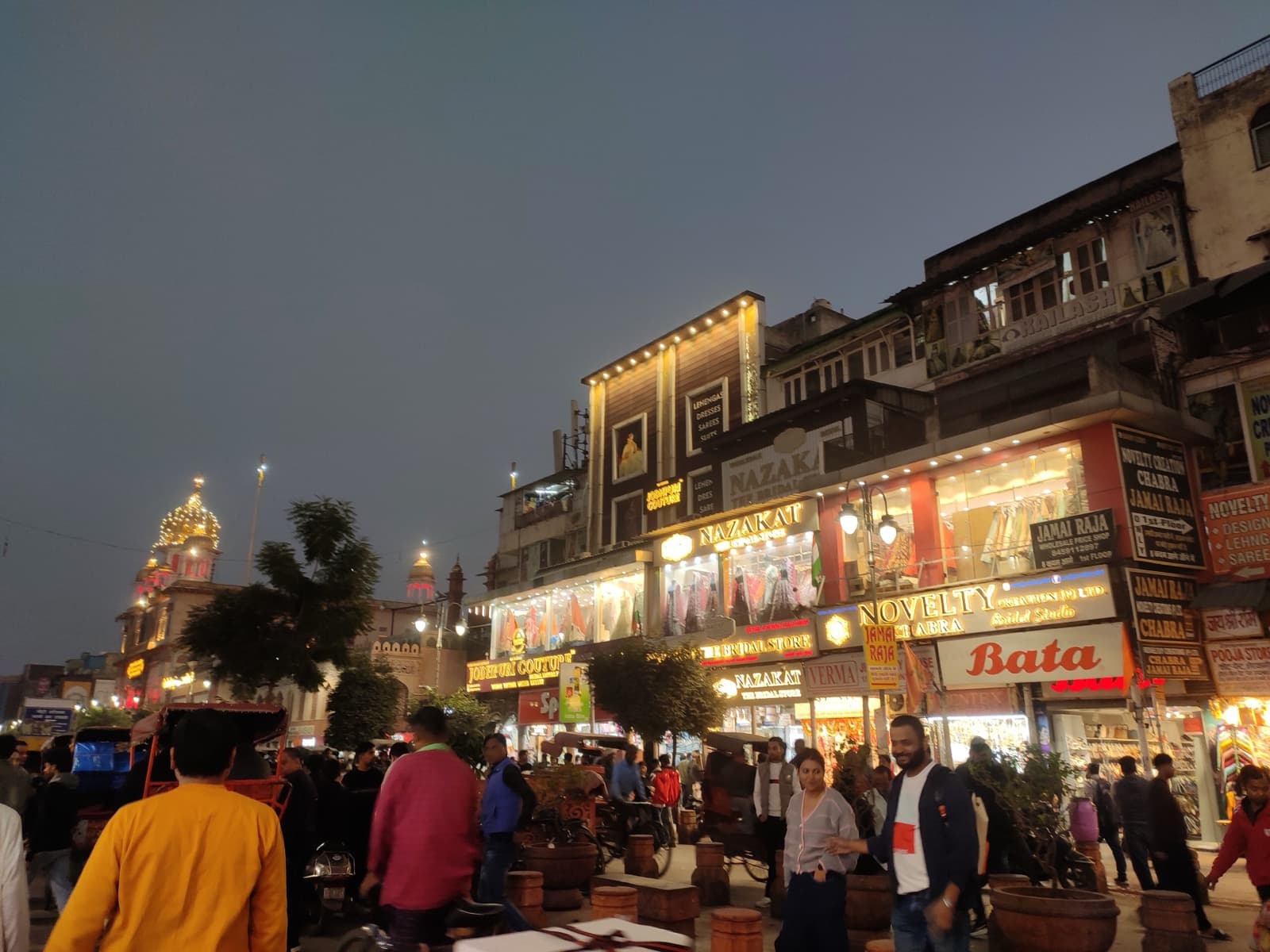
Chandni Chowk: How Delhi's Moonlit Avenue Holds an Entire Mughal Capital
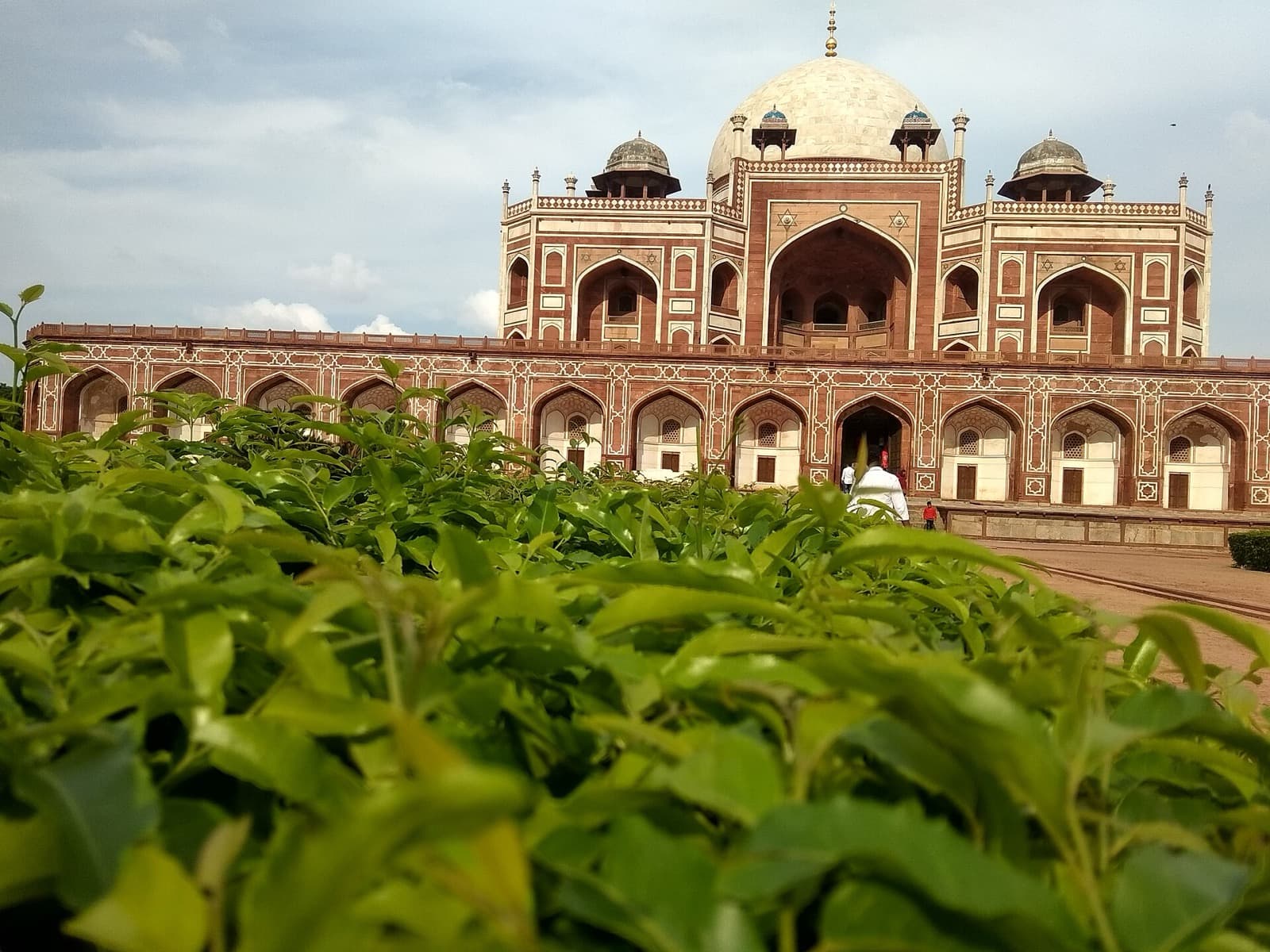
How Humayun's Tomb Drafted the Taj Mahal a Century Early
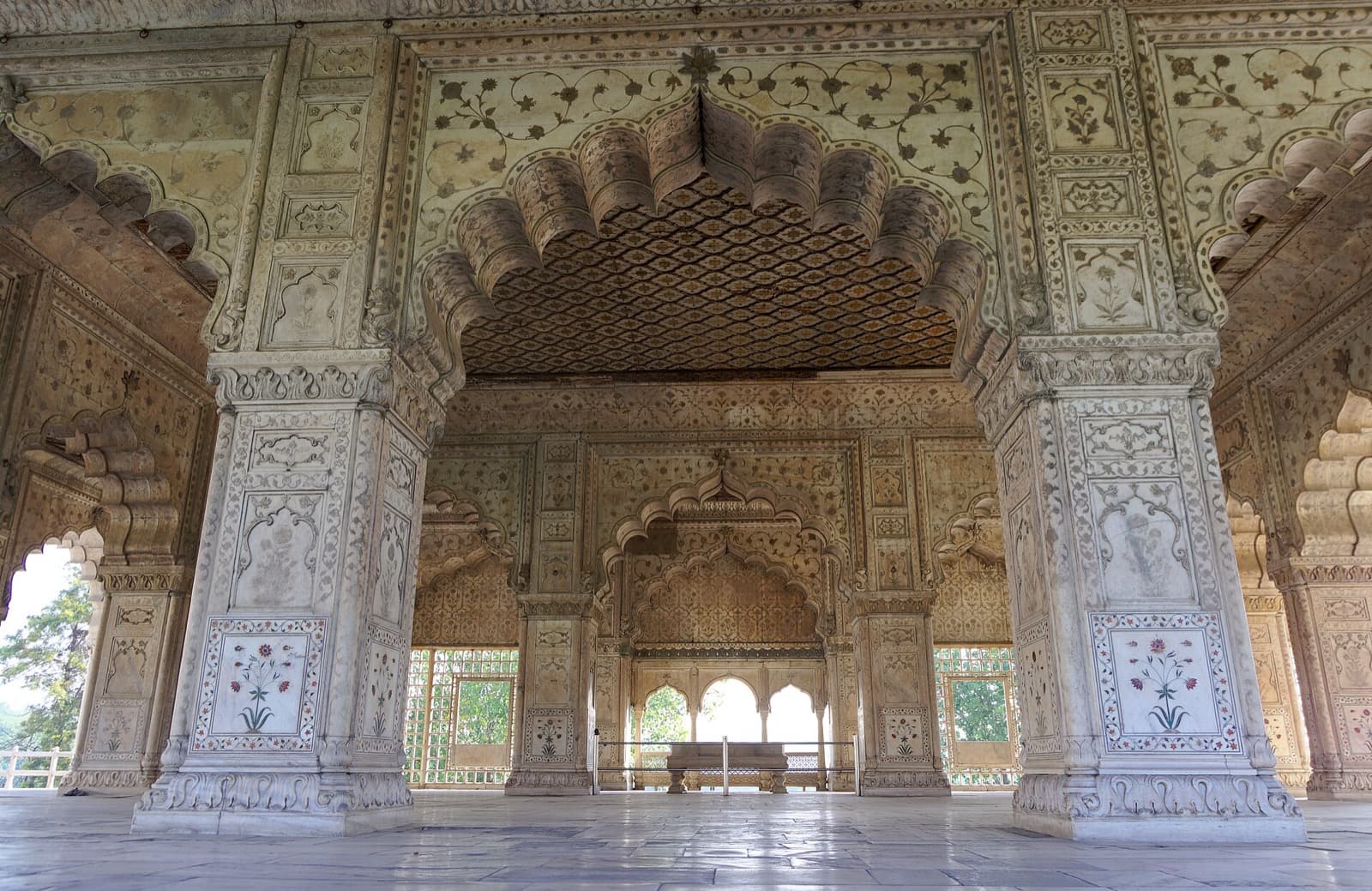
The Diwan-i-Khas at Delhi's Red Fort: The Hall That Called Itself Paradise and Lost Its Throne
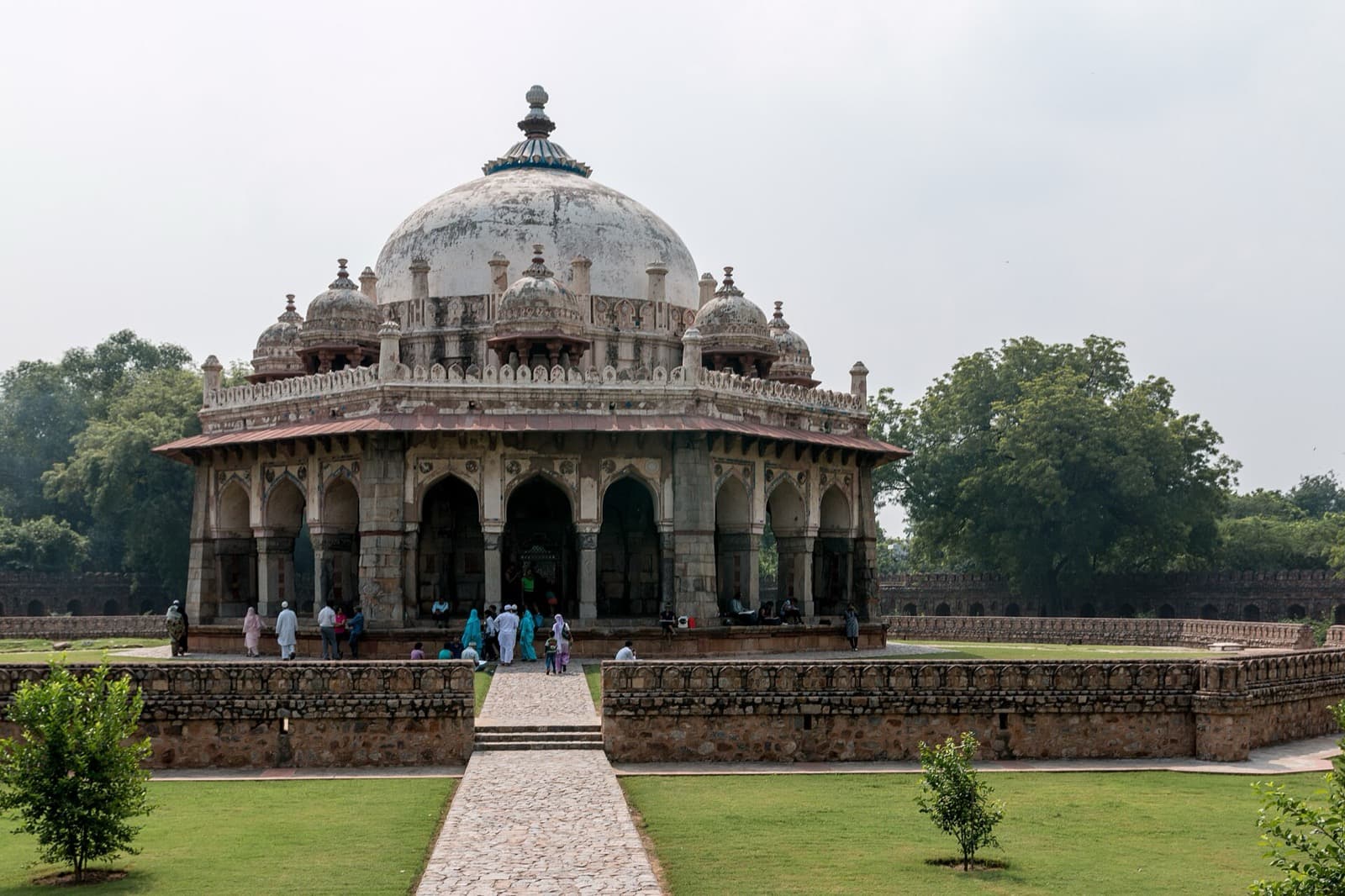
Isa Khan's Tomb and Mosque: The World Just Before the Mughals
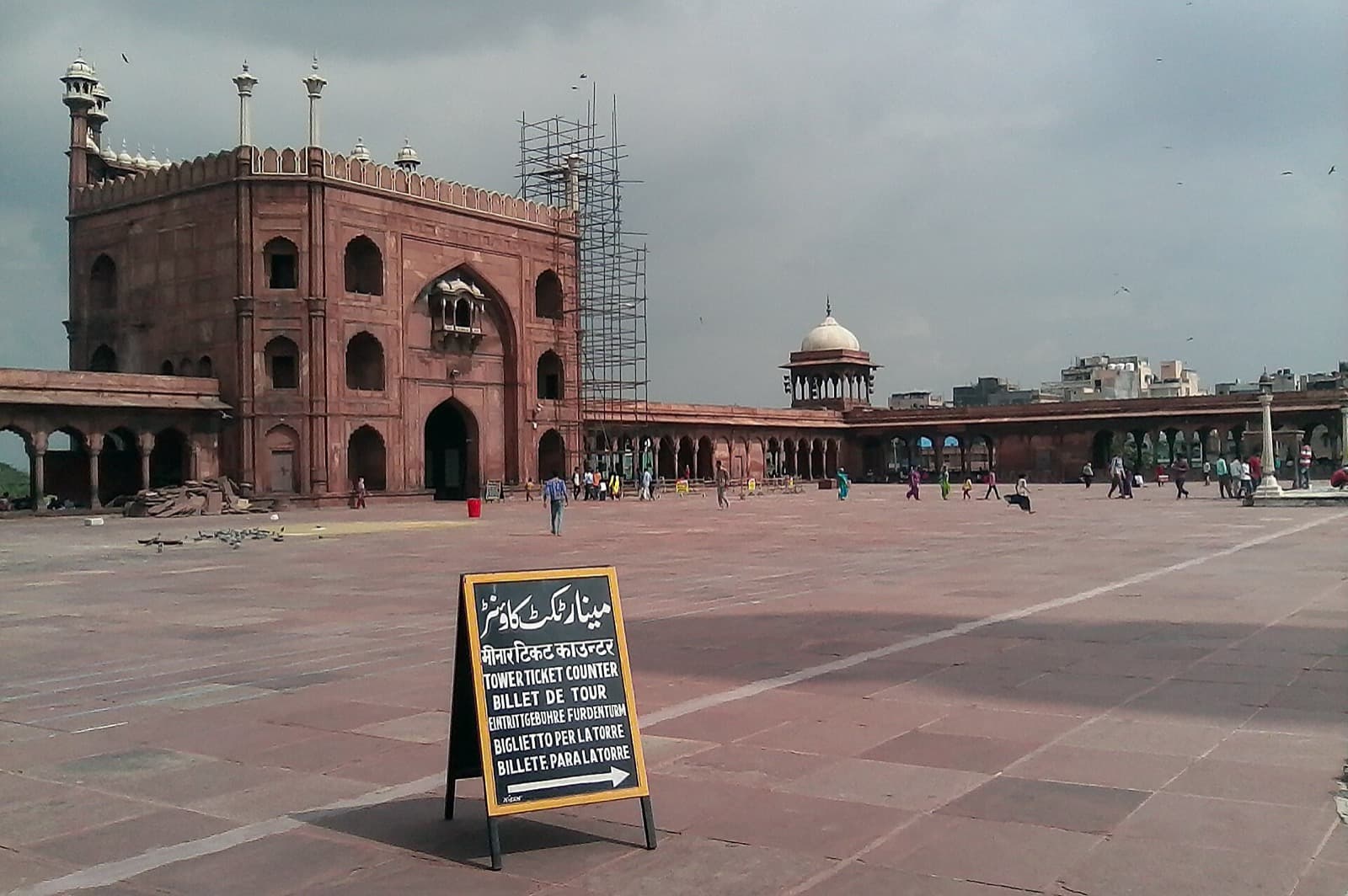
Jama Masjid: The Mosque Shah Jahan Built to Crown His Capital