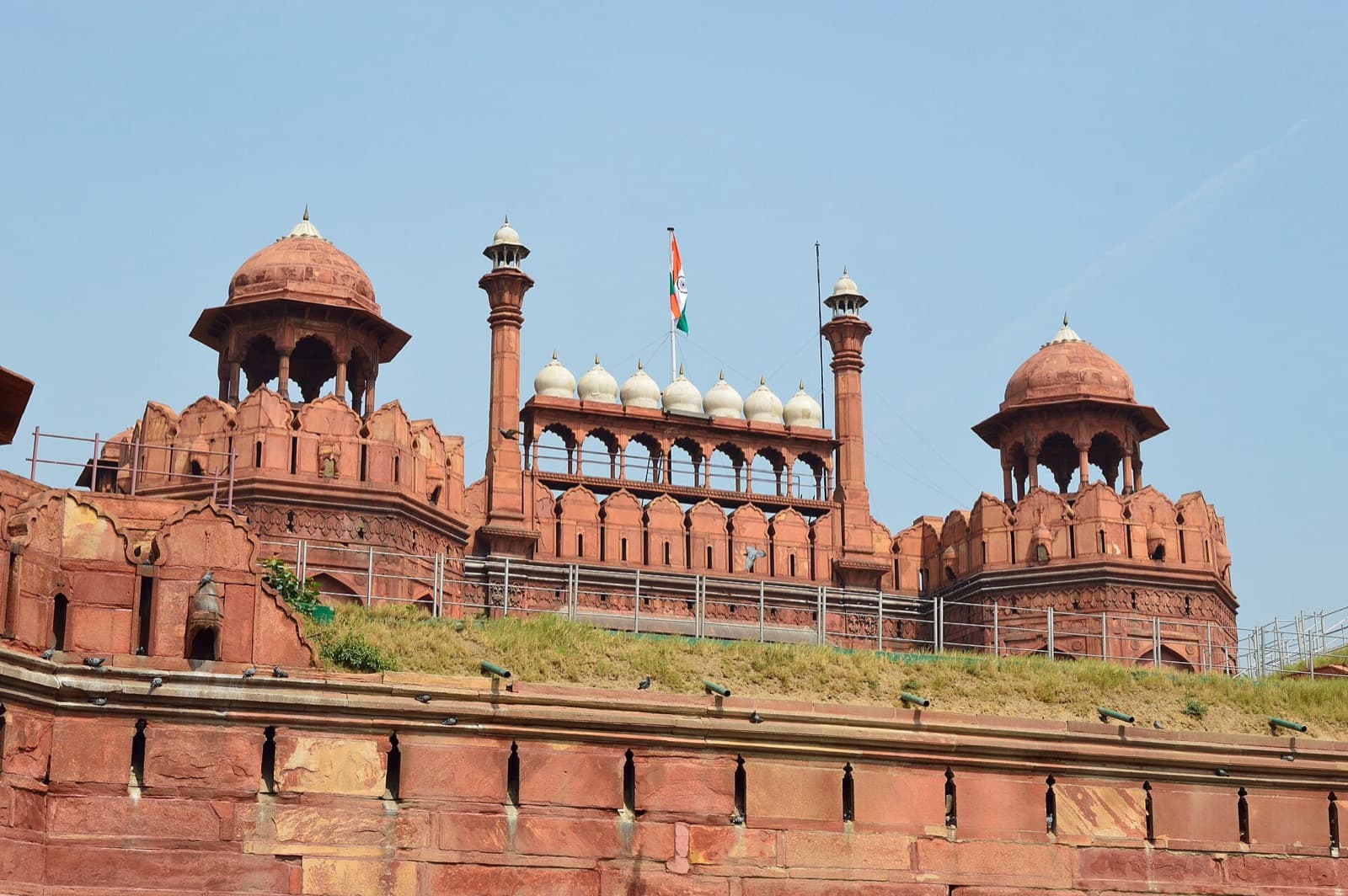
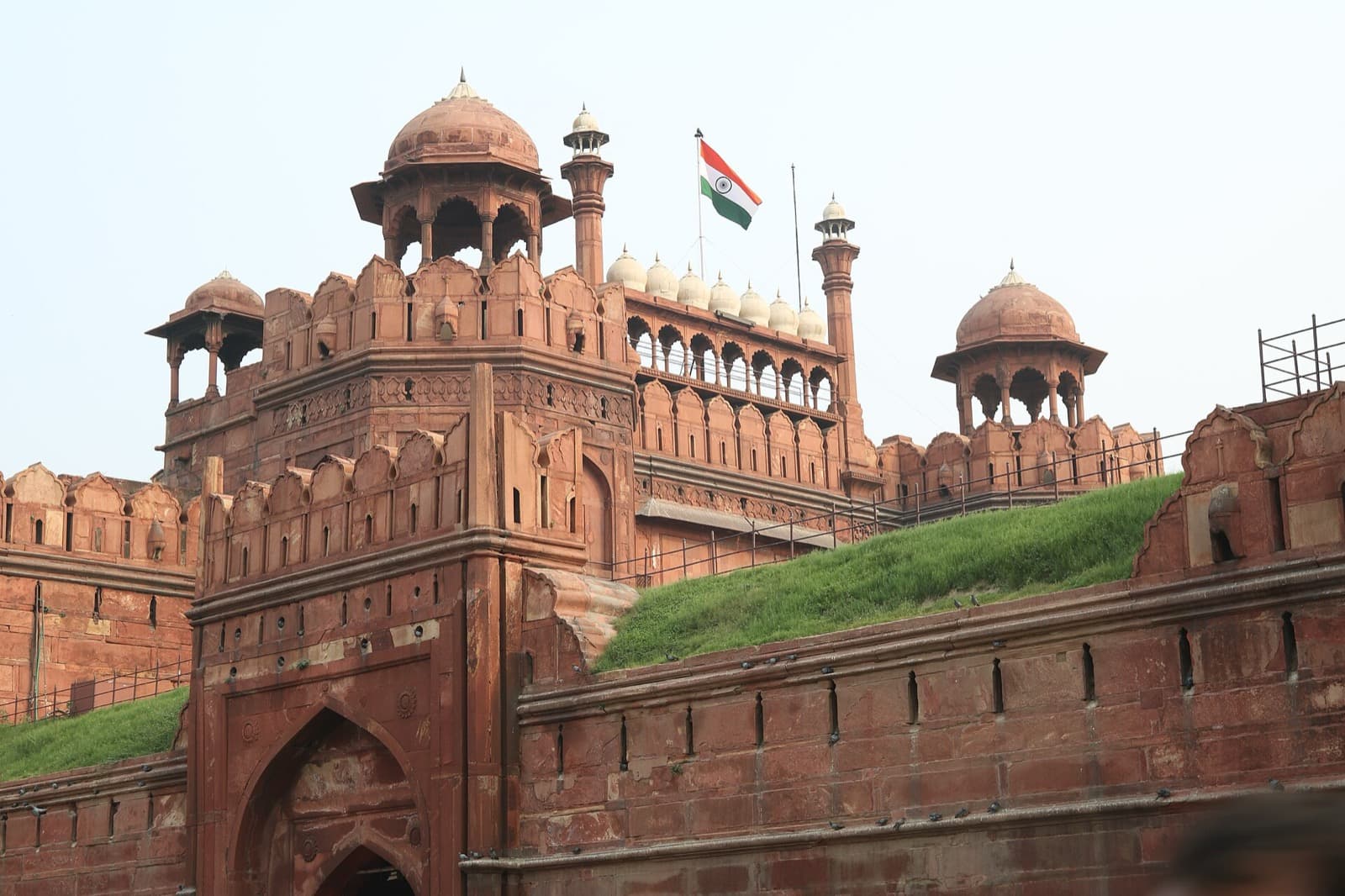
The Lahori Gate is the western entrance to Shah Jahan's Red Fort in Delhi, a red sandstone gate named for the city of Lahore that it faces, later altered by a barbican that his own son added, and turned since 1947 into the stage where India raises its national flag each Independence Day. Stand in front of it and you are reading three different centuries at once: the fortress of an emperor at his height, the defensive screen of the son who deposed him, and the platform of a republic that the men who built the gate could never have imagined. That layering is the one thing worth understanding here before you walk another step.
A gate named for a direction
The name is the plainest fact and the easiest to miss. Lahori Gate means the gate that faces toward Lahore, a city that today lies in Pakistan. Mughal builders often named gates for the road or the city they pointed toward, and this was the ceremonial western door of the whole palace-fortress. Behind it, the emperor's axis ran dead straight through a covered bazaar and a drum-house gate to the halls where the court did its business. Approaching from the west, you were meant to move along that line, deeper and deeper toward the throne. The gate was the mouth of a sequence.
The fortress it opens into is not small. Shah Jahan founded the Red Fort, or Lal Qila, in 1639 and completed it about 1648, and the architect credited with it, Ustad Ahmad Lahori, is the same builder associated with the Taj Mahal. The plan is an irregular octagon. Its perimeter runs about two and four-tenths kilometres, its walls rise anywhere from eighteen to thirty-three metres, and the whole enclosure covers roughly two hundred fifty-four acres. There are two main gates, this one to the west and the Delhi Gate to the south. Everything the fort was built to say, its scale, its symmetry, its command of the approach, begins at the point where you are standing.
The veil Aurangzeb set on the fort
Hear a stop from this walk
The Lahori Gate and the Ramparts
Look at the stone screen set in front of the arch. That wall is not part of Shah Jahan's original design. It is a barbican, a forward defensive screen about ten and a half metres high, added by the emperor Aurangzeb, who reigned from 1658 to 1707. Its purpose was practical: it pushed the direct approach to one side, so that no attacker, and no visitor, could charge straight down the axis into the fort. You now enter at an angle rather than head-on.
There is a story attached to that screen, and it is worth repeating with the caution it deserves. Tradition holds that Shah Jahan, by then held under house arrest in Agra by the same son who built the barbican, wrote that Aurangzeb had made the fort a bride and set a veil upon its face. It is a bitter, elegant complaint, a deposed father saying that his son had covered the beauty of his masterwork. Whether the old emperor actually said it is not settled fact, and honest history flags it as legend. But the screen in front of you is entirely real, and it did change how the fort meets the world. The story survives because the object survives to carry it.
From overawing subjects to addressing a nation
The Lahori Gate carries a weight now that has nothing to do with Mughal ceremony. From these ramparts the Prime Minister of India hoists the national flag and addresses the country every Independence Day, on the fifteenth of August. That tradition began in 1947, when the first prime minister raised the flag here, and it has repeated every year since. A gate built to overawe the emperor's subjects became, in a single generation, the place from which a free nation speaks to itself.
The recognitions followed. UNESCO records the Red Fort as a World Heritage Site, inscribed in 2007. The fort has appeared on India's five-hundred-rupee note, which means the western wall you are looking at has quietly circulated through hundreds of millions of hands. There is a neat historical irony in all of it. The gate is named for Lahore, a city now across an international border, and it flies the flag of the country that border helped define. The stone did not change. The meaning did, completely.
Standing in front of it
Give the gate a moment before you go under it. The best hours are early, near opening, or in the last couple of hours of the day, when the light is gentler and the crowds thinner; October through March is the kindest season. The fort now opens seven days a week, after the Archaeological Survey of India ended its long-standing Monday closure in early 2026, so check the current timings before you go rather than trusting an old guidebook. This is one of the most guide-crowded, tout-thick monuments anywhere, and the touts gather thickest right here at the entrance. A firm, polite no thank you is all you owe them. You have your own narrated map and your own clock, which is exactly the point of walking it this way.
When you look at the screen, try to hold the three layers together. The red sandstone arch is Shah Jahan's, built to project imperial confidence along a straight ceremonial axis. The barbican in front of it is Aurangzeb's, a son's defensive edit that a legend turned into a wound. And the ramparts above are modern India's, the stage of the fifteenth of August. Most visitors walk under the arch in ten seconds. The gate rewards ten minutes.
From here the Red Fort tour continues clockwise: through the Chatta Chowk, the emperor's covered bazaar, past the drum house where nobles dismounted, to the hall of public audience and then to the marble Diwan-i-Khas, where a Persian couplet still promises paradise on earth and where the jewelled Peacock Throne once stood before Nadir Shah carried it off in 1739. The Lahori Gate is stop one, and it sets the grammar for everything after it.
You can read the full sequence at your own pace on our self-guided Red Fort audio walk, part of our wider set of Delhi walking tours. For more on the city and its other routes, start at our Delhi page. Begin at the western gate, take it slowly, and let the crowds move past you.
Sources
- Lahori Gate, Red Fort, Delhi (Wikipedia): the gate's orientation toward Lahore, Aurangzeb's added barbican, and the flag-hoisting tradition.
- Red Fort (Wikipedia): the fort's foundation dates under Shah Jahan, its dimensions and octagonal plan, and its architect Ustad Ahmad Lahori.
- Archaeological Survey of India, World Heritage Red Fort: official record of the monument's structures and status.
- UNESCO World Heritage List, Red Fort Complex: the 2007 inscription and the significance of the site.
Ready to experience it?
Red Fort: The Peacock Throne's Fortress
80 min · 1 km · easy
More from Delhi
Explore more at your own pace.
Delhi Travel Guide: How Many Days, Getting Around, Best Time, and Safety
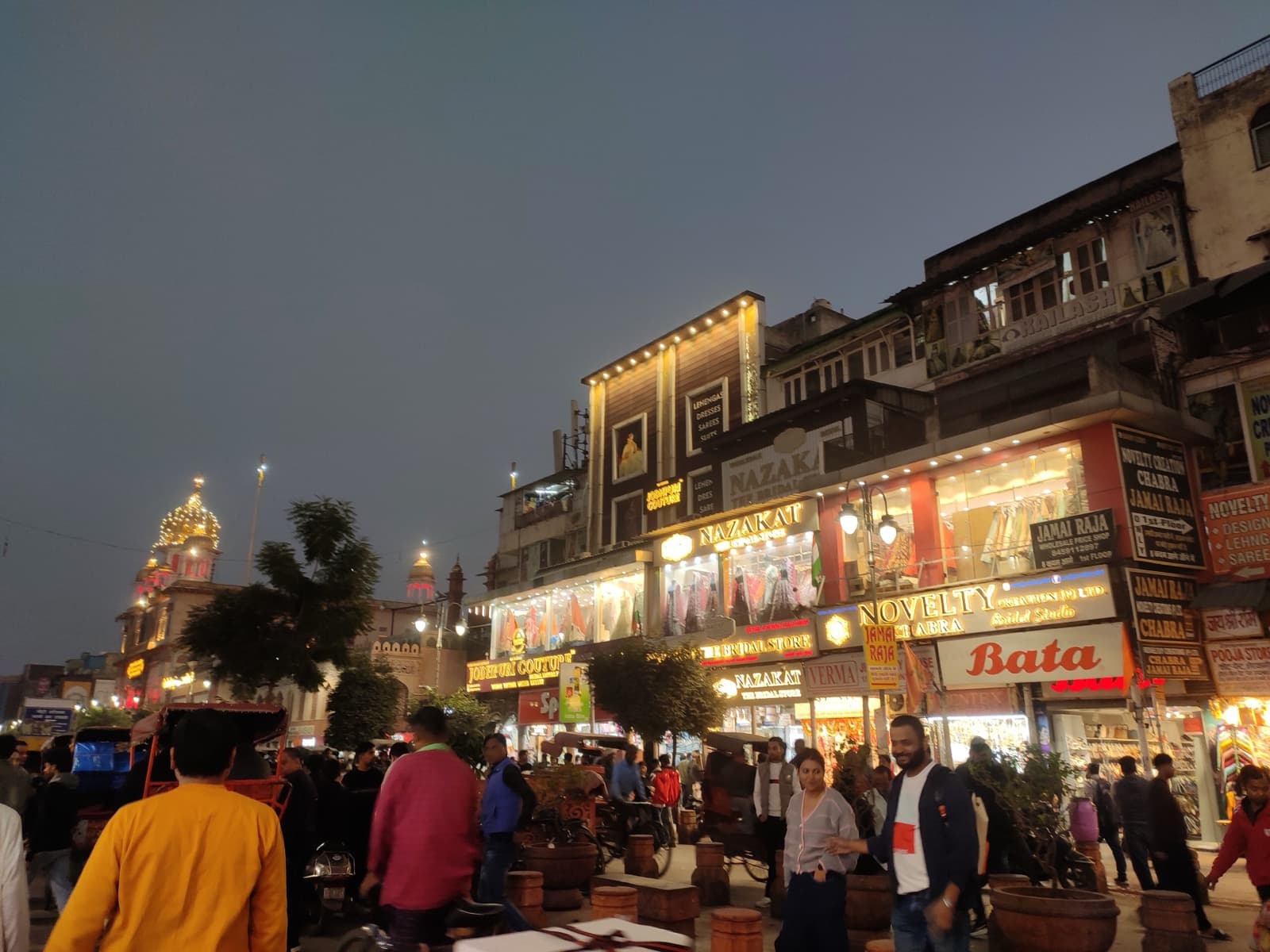
Chandni Chowk: How Delhi's Moonlit Avenue Holds an Entire Mughal Capital
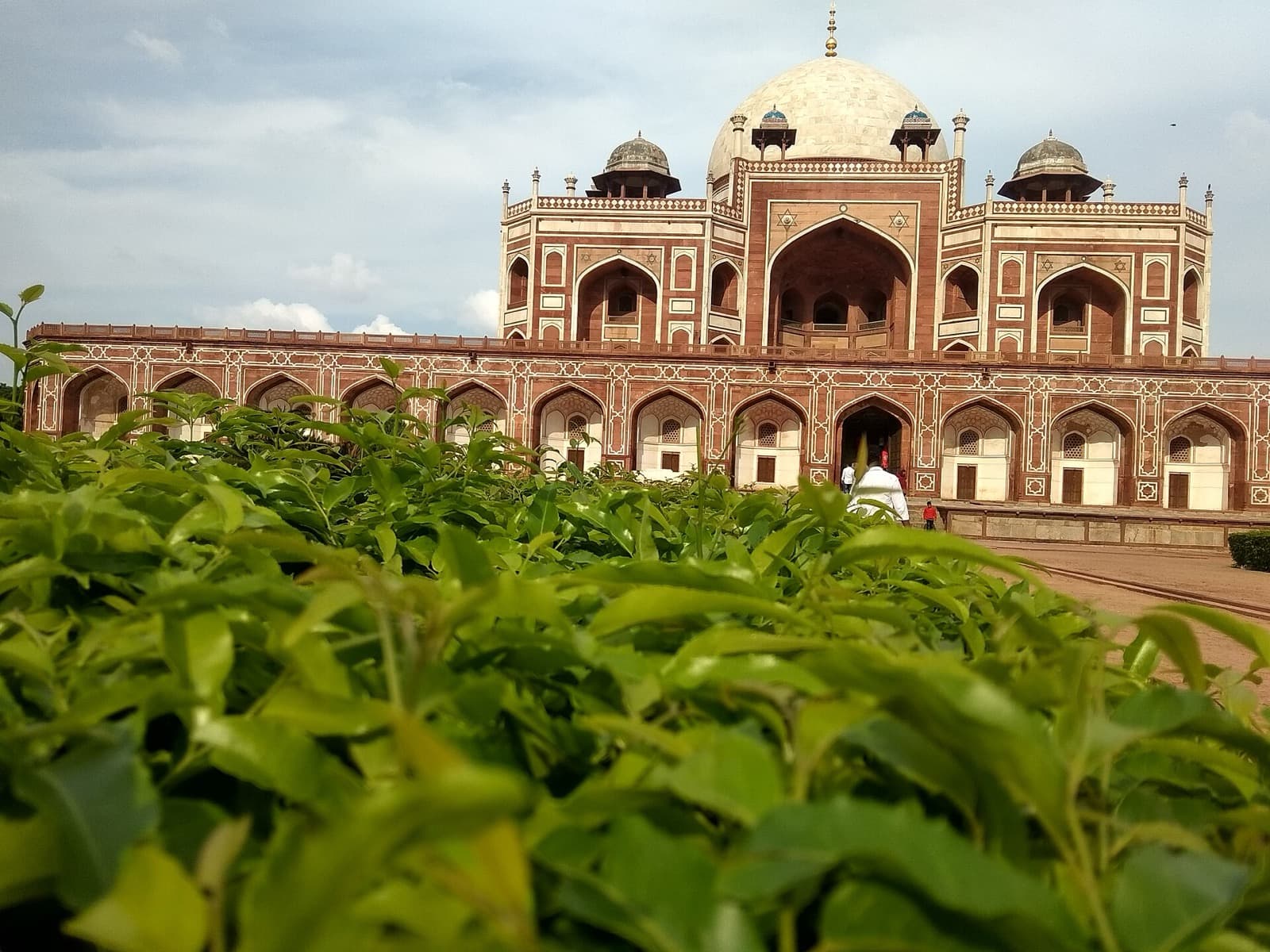
How Humayun's Tomb Drafted the Taj Mahal a Century Early
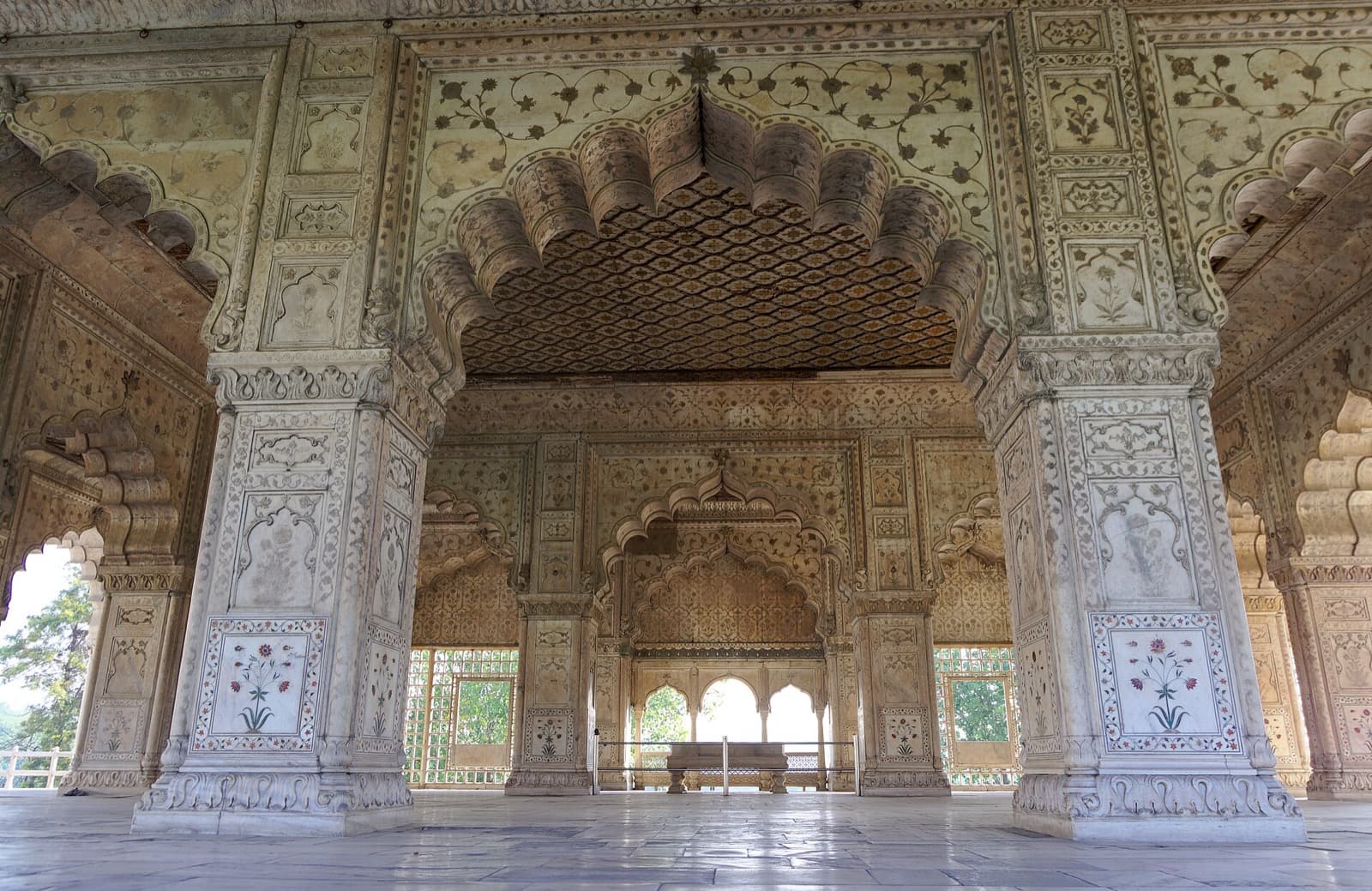
The Diwan-i-Khas at Delhi's Red Fort: The Hall That Called Itself Paradise and Lost Its Throne
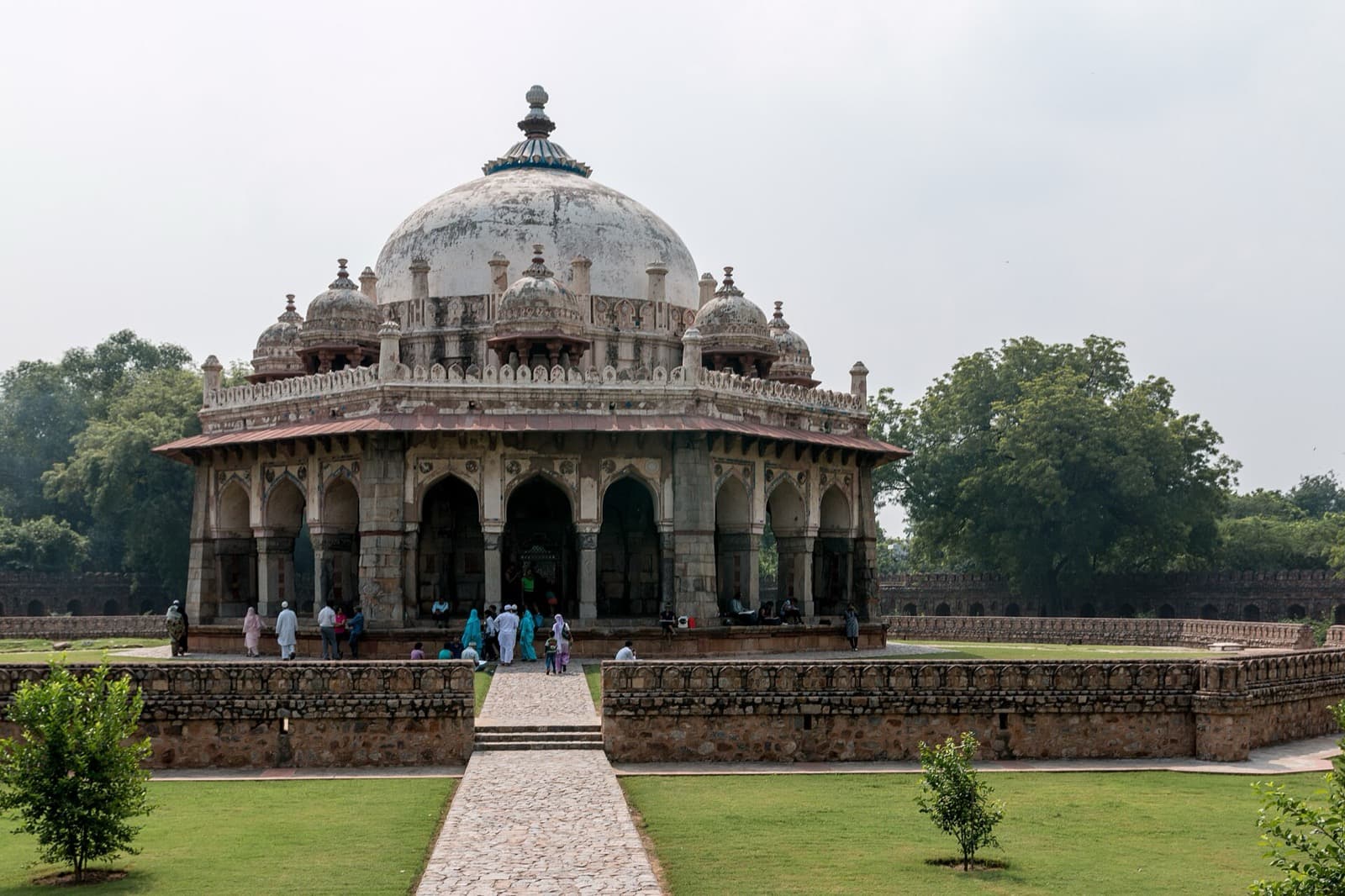
Isa Khan's Tomb and Mosque: The World Just Before the Mughals