Read Shah Jahan's red sandstone palace-fortress from its western gate to the marble hall where the jewelled Peacock Throne once stood, at your own quiet pace through one of Delhi's most crowded monuments.
Start · The Lahori Gate and the Ramparts
DirectionsStops
- 1
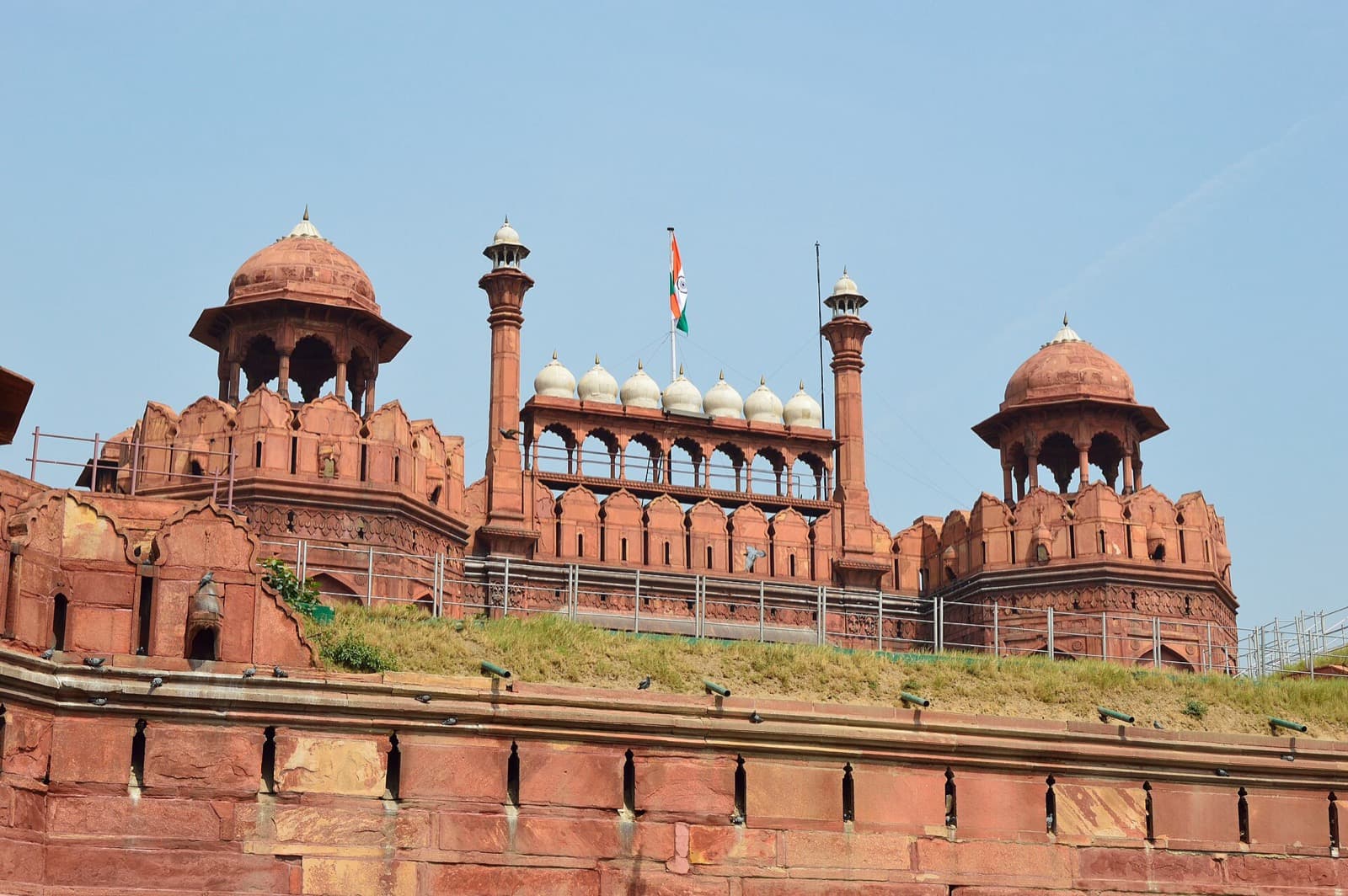
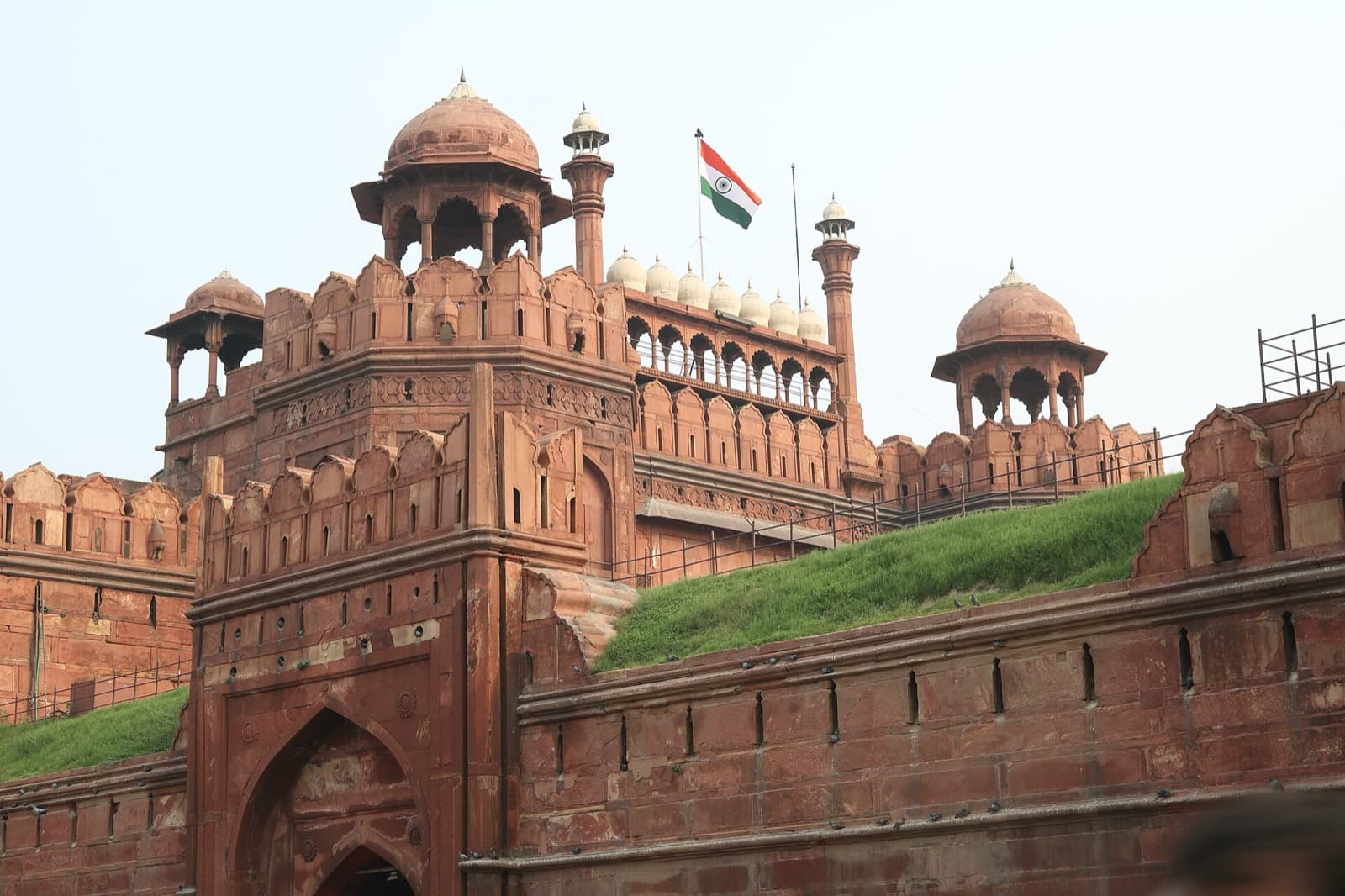
The Lahori Gate and the Ramparts
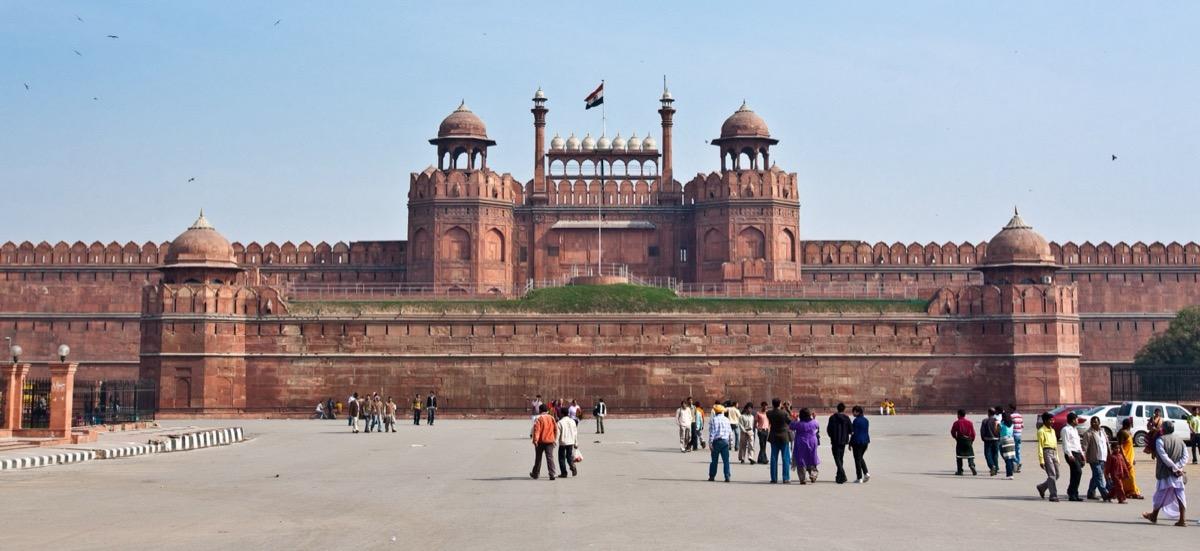
The fort's principal western gate, facing toward Lahore, where the Prime Minister raises the national flag every Independence Day.
- 2
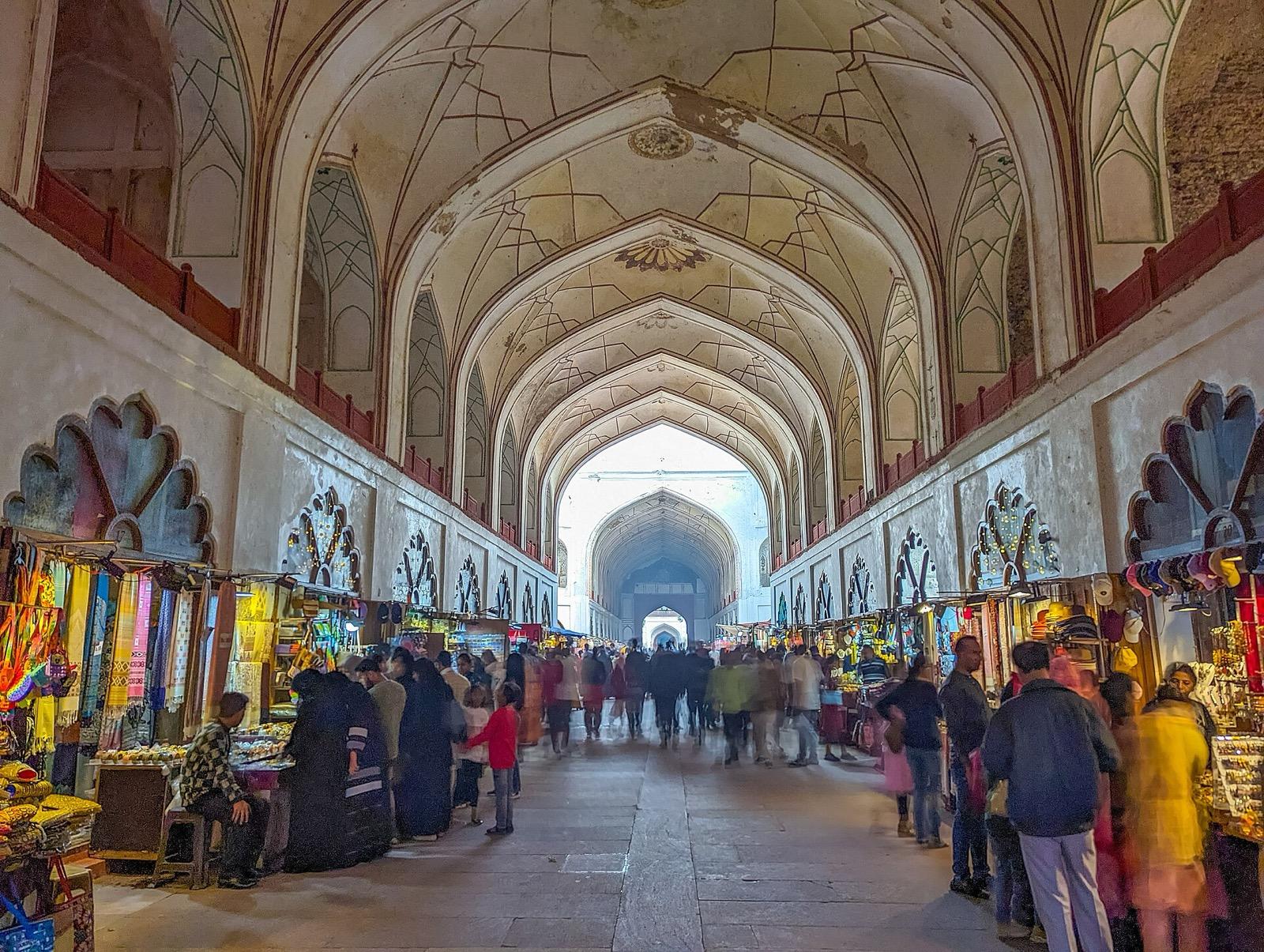
The Chatta Chowk: The Emperor's Covered Bazaar
A vaulted, arcaded market street of about thirty-two shop bays running directly behind the Lahori Gate, the emperor's own covered bazaar.
- 3
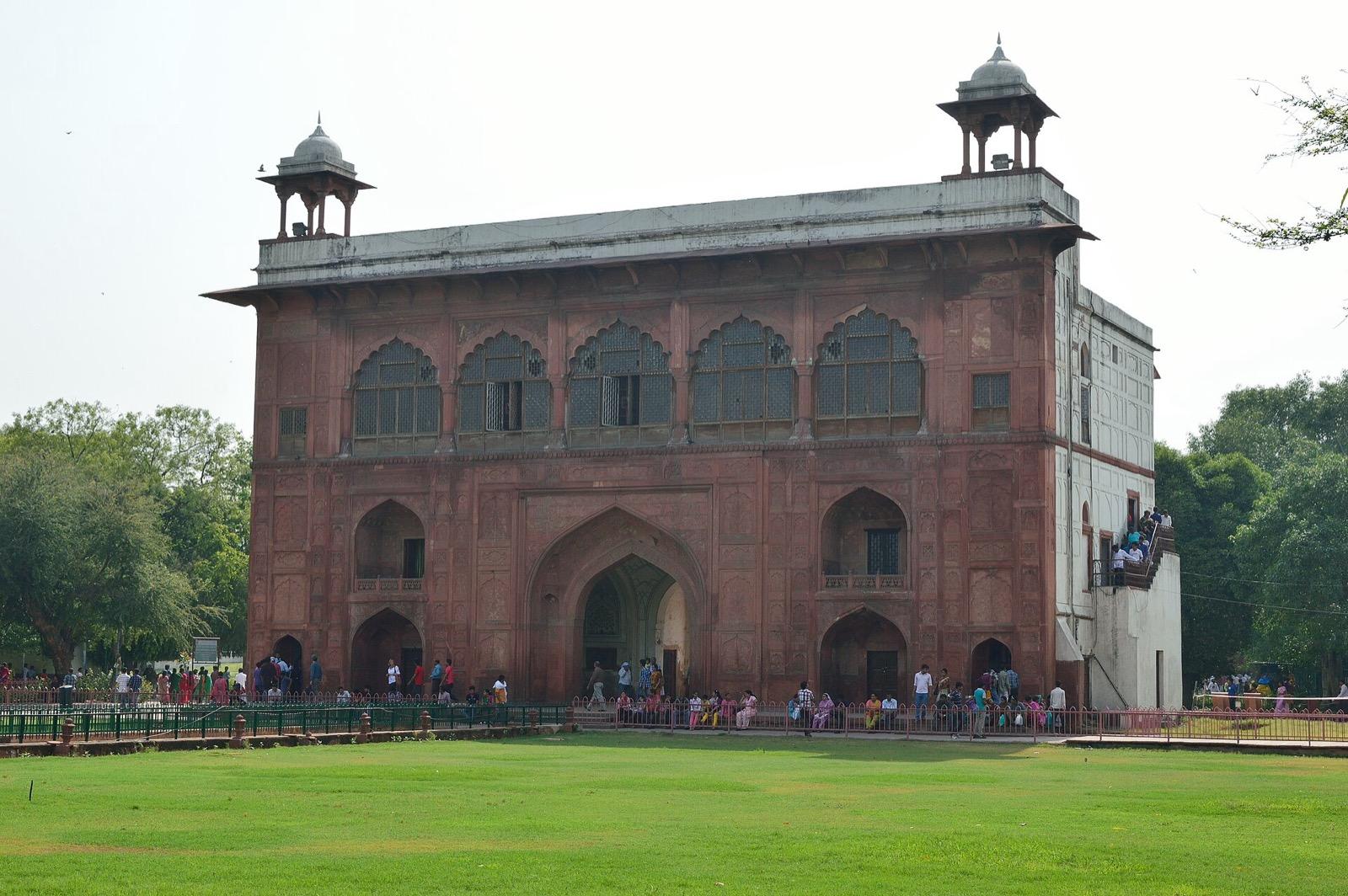
The Naubat Khana: The Drum House
The red sandstone drum-house gate between the outer and inner courts, where the hours were beaten out and all but royal princes had to dismount.
- 4
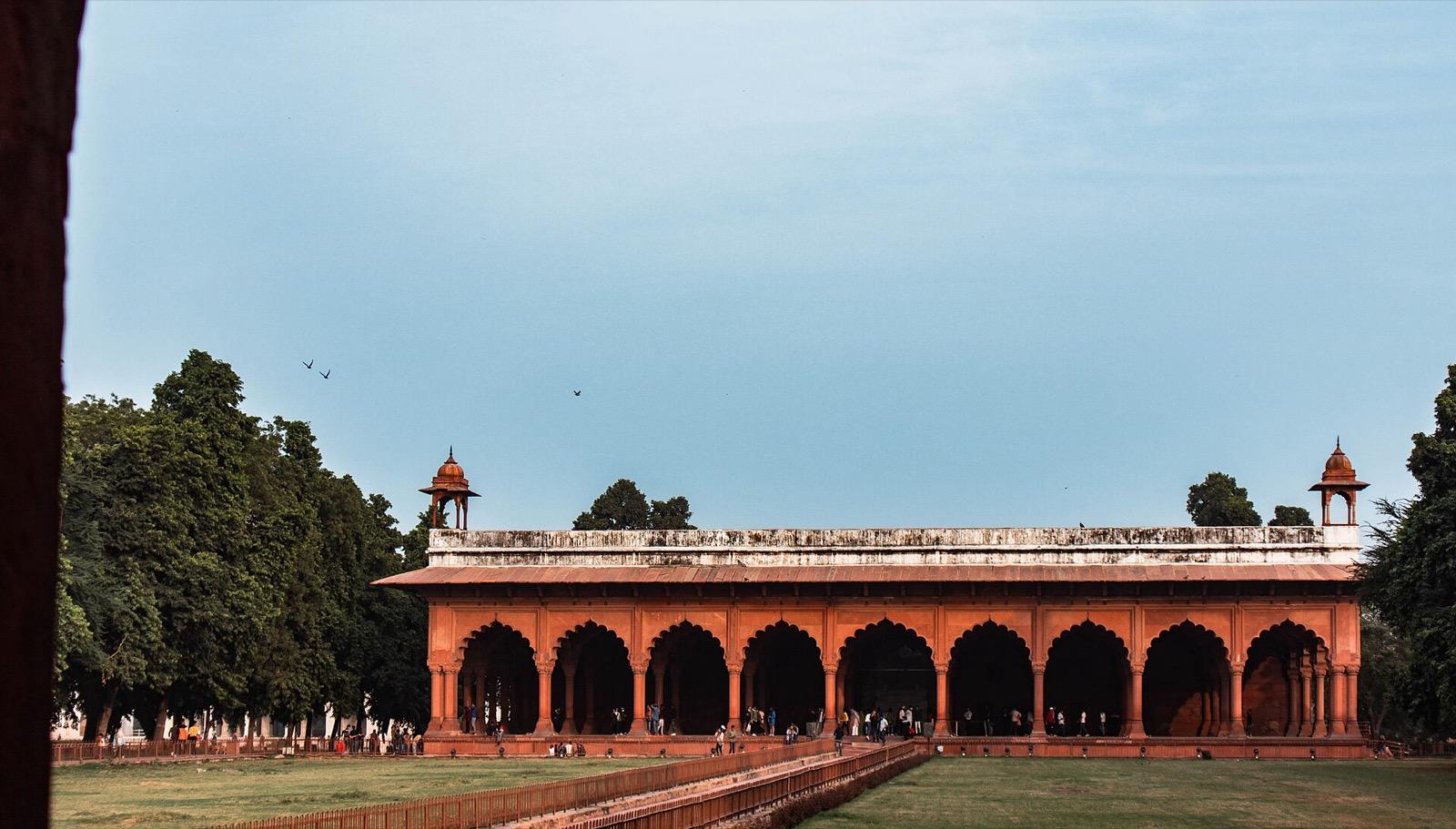
The Diwan-i-Am: The Hall of Public Audience
A red sandstone hall of nine arches where the emperor heard grievances each morning beneath a marble throne canopy inlaid with pietra dura panels.
- 5
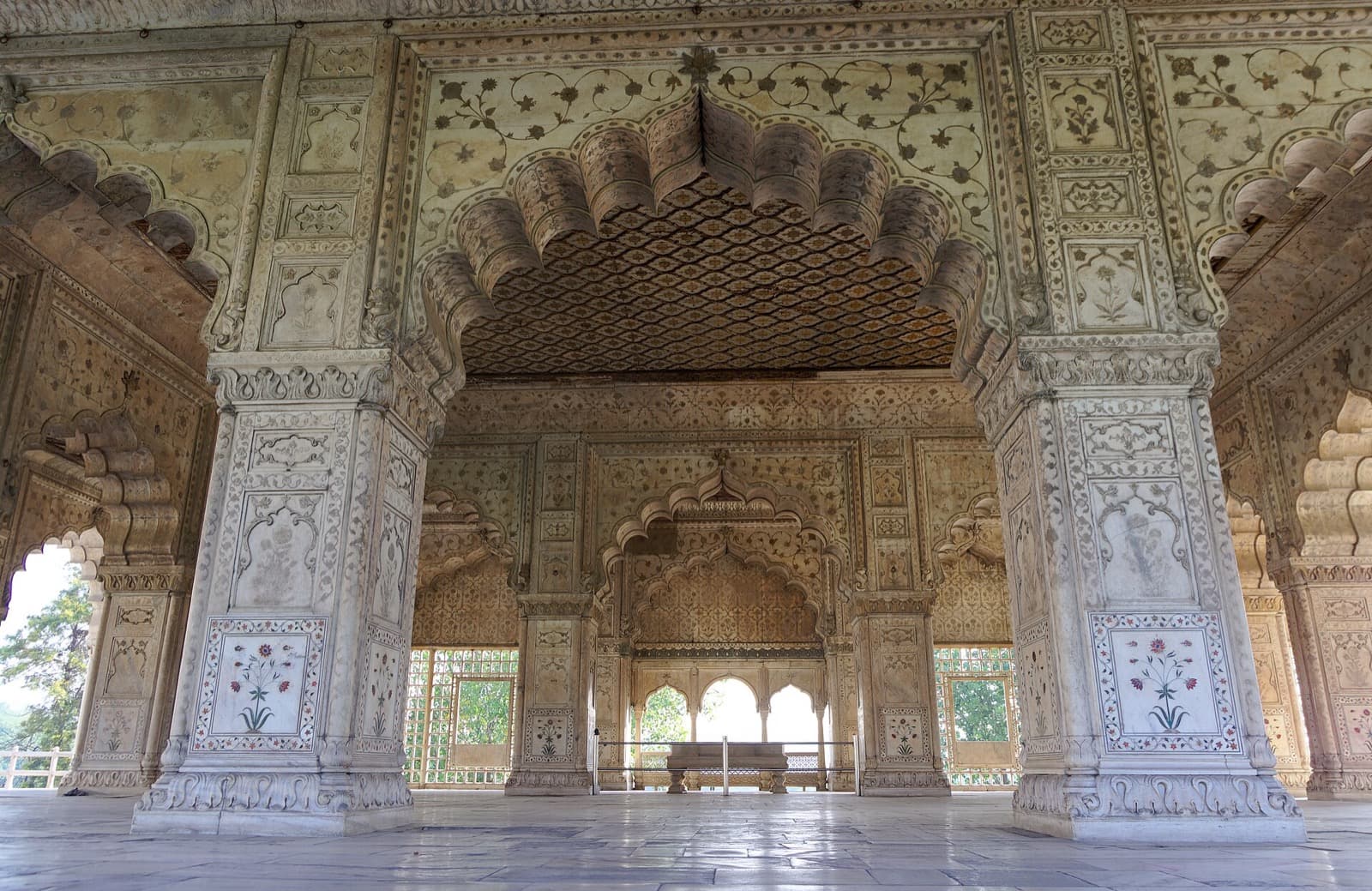
The Diwan-i-Khas and the Peacock Throne
The fort's richest pavilion, a white marble hall inscribed with a couplet promising paradise on earth, associated with the jewelled Peacock Throne carried off by Nadir Shah in seventeen thirty-nine.
- 6
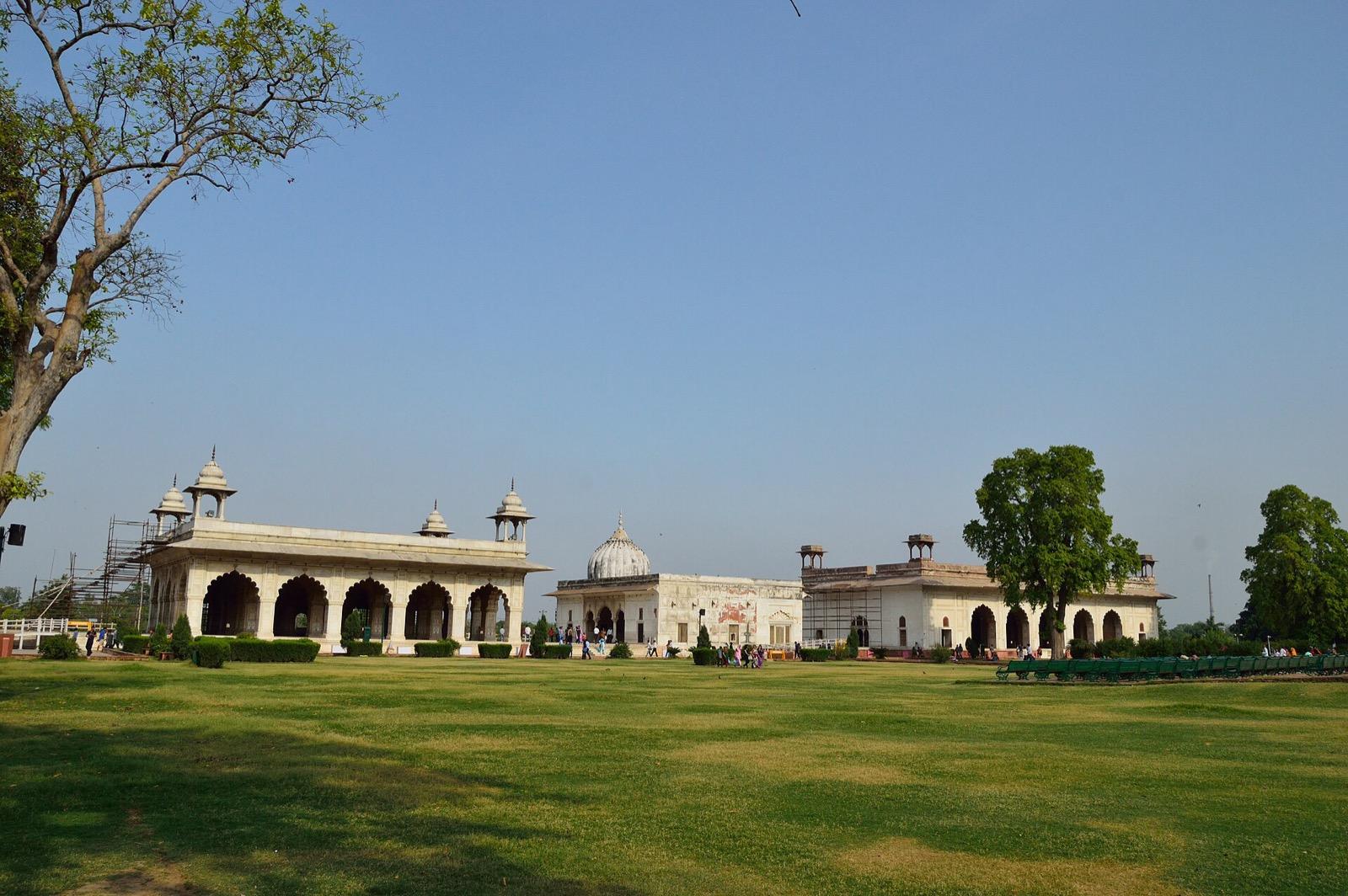
The Rang Mahal, Khas Mahal and the Stream of Paradise
The row of riverside marble palaces along the eastern wall, the harem's Palace of Colours and the emperor's private apartments, all linked by the cooling Stream of Paradise.
- 7
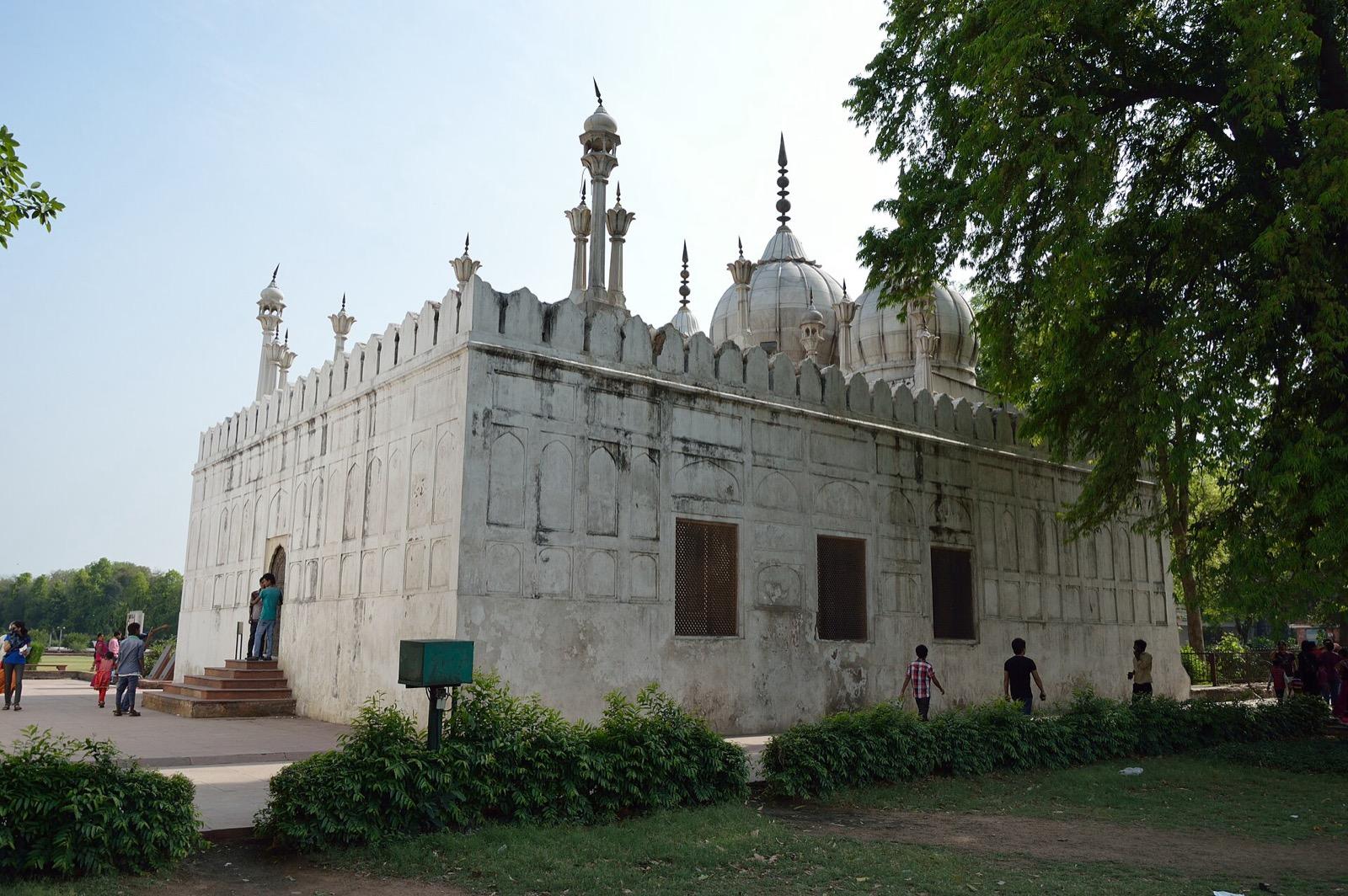
The Moti Masjid and the Hayat Bakhsh Bagh
Aurangzeb's white marble private mosque and the Life-Bestowing Garden with its monsoon-named pavilions, closing on prayer, water, and what survived the empire's fall.
Details
Best Time to Visit
Go at opening or in the last two hours before closing to escape the midday heat and the thickest crowds. October through March gives the kindest weather; the fort is closed on Mondays. A weekday morning is far quieter than a weekend, when Delhi families fill the lawns and halls.
Pro Tips
- •Buy your ticket online in advance where you can and use the machine-issued queue to skip part of the wait at the gate.
- •Go clockwise from the Lahori Gate along the central axis, then loop the eastern riverside palaces, so you finish at the Pearl Mosque and garden.
- •The Diwan-i-Khas is the highlight, so save your unhurried time for it rather than the crowded halls near the entrance.
- •Politely decline the guides and photo-touts at the gate with a firm no thank you; you have your own narrated map and set your own pace.
- •Carry small rupee notes for the ticket window, water, and the cloakroom, since card payment is not reliable here.
- •Visit early morning at opening or in the last two hours before closing to dodge both the harshest sun and the largest crowds.
Safety & Precautions
- •Security screening at the gate is tight and bags are restricted, so travel light and leave large backpacks, tripods, and prohibited items behind.
- •The fort is largely open red sandstone with little shade, so between April and June the heat is severe; carry water, wear a hat, and pace yourself.
- •The site draws dense crowds and persistent guide-touts, photo-touts, and hawkers, so keep valuables secure and feel free to keep walking without stopping.
- •At the Moti Masjid dress modestly, remove your shoes near the prayer area, and defer to anyone at worship; the fort is closed on Mondays, so check the day before you go.
Travel advisory: Exercise Increased Caution (Level 2).
Gallery
Related Reading
Go deeper on what you'll see, hear, and walk through.
Overview
Best Self-Guided Walking Tours in Delhi (2026)
3 min
Overview
Delhi Travel Guide: How Many Days, Getting Around, Best Time, and Safety
7 min
Overview
One Day in Delhi: A Walkable Morning-to-Evening Itinerary
7 min
Thematic
Best History Walking Tours in Delhi (2026)
2 min
Thematic
The Layered Capital: Reading Mughal Delhi on Foot
7 min
Companion
The Diwan-i-Khas at Delhi's Red Fort: The Hall That Called Itself Paradise and Lost Its Throne
6 min
Deep dive
The Lahori Gate: How a Mughal Fortress Became the Stage of Free India
6 min
Read
What to Eat in Delhi: The Dishes, Where They Come From, and How to Order
8 min
Read the walk
The full story of Red Fort: The Peacock Throne's Fortress, in words. Prefer to listen? Play it narrated, from home or on location.
Introduction
The Red Fort, called Lal Qila, is the palace-fortress that Shah Jahan raised at the heart of his new capital in Delhi, in India, in red sandstone, founded in sixteen thirty-nine and finished about sixteen forty-eight. For two centuries it was the seat of the Mughal emperors, an irregular octagon of walls with marble palaces along its eastern edge, cooled by a channel the builders called the Stream of Paradise. This walk has seven stops and covers a little over one kilometre inside the walls, roughly seventy-five to ninety minutes at an unhurried pace, longer if you linger. It moves from the great western gate through a covered bazaar and a drum-house gate to the hall where justice was given each morning, then to the marble hall where the jewelled Peacock Throne once stood beneath a couplet promising paradise on earth. It ends among the riverside palaces, a pearl-white mosque, and a garden. This is one of the most tout-thick, guide-crowded monuments on earth, so the quiet gift of this tour is your own map and your own clock. No group van, no schedule, no one steering you toward a shop. You can read the calligraphy slowly or press on, rest in the shade of an arch, or double back to a panel you liked. The narrator names the emperors and dates plainly and tells you clearly when a story is legend rather than settled fact. When you arrive at the Lahori Gate, the main western entrance, begin with stop one.
1. The Lahori Gate and the Ramparts
This is the Lahori Gate, the main western entrance to the Red Fort, and it takes its name because it faces toward the city of Lahore. Beyond it rises a fortress that Shah Jahan founded in sixteen thirty-nine and completed about sixteen forty-eight, built in red sandstone and designed by the architect Ustad Ahmad Lahori, the same builder credited with the Taj Mahal. The whole fort is an irregular octagon, its perimeter about two and four-tenths kilometres, its walls rising anywhere from eighteen to thirty-three metres, enclosing roughly two hundred fifty-four acres. There are two main gates, this one to the west and the Delhi Gate to the south. Notice the outer screen of stone set before the arch. The emperor Aurangzeb, who reigned from sixteen fifty-eight to seventeen oh-seven, added this barbican, a forward wall about ten and a half metres high. It is said, as tradition rather than settled fact, that Shah Jahan, by then held under house arrest in Agra by his own son, wrote that Aurangzeb had made the fort a bride and set a veil upon its face. Whether or not he said it, the screen is real, and it changed how you approach. This gate carries a modern weight too. From these ramparts the Prime Minister of India hoists the national flag and addresses the nation every Independence Day, the fifteenth of August, a tradition begun in nineteen forty-seven when the first prime minister raised the flag here. UNESCO records the Red Fort as a World Heritage Site since two thousand seven, and the fort appears on India's five-hundred-rupee note. A fortress built to overawe now speaks each year to a free nation. Take the gate at your own pace, and move in when you are ready.
2. The Chatta Chowk: The Emperor's Covered Bazaar
Passing under the gate, you enter the Chatta Chowk, a covered and vaulted market street that runs directly behind the Lahori Gate. It is a long arcade lined with two-storey ranges holding about thirty-two arched bays, each one a shop, roofed over so that the trade could go on out of the sun and the rain. It dates to the middle of the seventeenth century, built under Shah Jahan, and it has an origin story worth knowing. In sixteen forty-six Shah Jahan saw a covered bazaar in Peshawar, built by the noble Ali Mardan Khan, and he liked it so well that he had the plans sent to Makramat Khan, the supervisor of the fort's construction, to raise a similar arcade inside these walls. It is remembered as one of the earliest roofed shopping streets of its kind in India. Under the emperor this was not an open market for anyone. It was exclusive, trading silk, brocade, and velvet, gold and silverware, jewellery, gems, and precious stones for the imperial household. The site's history also records a women-only market here, a Meena Bazaar held by Shah Jahan's order, where women of rank could shop without leaving the fort. Today the same bays sell crafts and souvenirs to visitors, and the hawkers can be insistent. That is where your own clock earns its keep. You are under no obligation to stop, to bargain, or to be steered anywhere. Walk the length of the vault as slowly or as quickly as you please, look up at the arches the emperors passed beneath, and carry on toward the ceremonial heart of the fort when it suits you.
3. The Naubat Khana: The Drum House
At the far end of the bazaar stands the Naubat Khana, which means the drum house, also called the Naqqar Khana. It is a red sandstone gatehouse set at the threshold between the outer court and the inner court, and it served as the main entrance to the great hall of audience beyond. Built between about sixteen thirty-nine and sixteen forty-eight, it is a large three-storey building, faced in red sandstone and embossed with floral carving you can still trace along its walls. Its name comes from what happened above your head. Ceremonial music was played from a gallery here, drums and instruments sounding five times a day when the emperor was in residence, three times a day when he was travelling, and again on special occasions such as the emperor's birthday. The hours of the court were, in a sense, beaten out from this roof. This gate marked a boundary of rank as well as of walls. All but princes of royal blood had to dismount from their elephants and their horses at this point before going any further into the inner fort. That rule gave the gate its popular name, Hathiya Pol, the Elephant Gate. So even the great came down to walk from here, on foot, into the emperor's presence. Today the upper floor houses the Indian War Memorial Museum. Stand a moment under the arch and picture the drums marking the day, then carry on, on foot as the nobles did, toward the hall where the empire performed its justice.
4. The Diwan-i-Am: The Hall of Public Audience
This open hall is the Diwan-i-Am, the hall of public audience, where the emperor received the general public and heard grievances each morning. It is a rectangular hall three aisles deep, its front a facade of nine arches, built of red sandstone that was once shell-plastered to…
Full narration for this stop unlocks with the tour.
5. The Diwan-i-Khas and the Peacock Throne
This is the Diwan-i-Khas, the hall of private audience, the most richly decorated pavilion in the whole fort, also called the Shah Mahal, built about sixteen forty-eight. It is a white marble pillared hall, roughly ninety feet by sixty-seven feet, and it was made to dazzle. Its…
Full narration for this stop unlocks with the tour.
6. The Rang Mahal, Khas Mahal and the Stream of Paradise
Along the eastern wall of the fort runs a row of marble palaces, raised above the ground where the Yamuna river once flowed past. This side caught the river breeze, and it is where the emperor and his household actually lived. Here is the Khas Mahal, the emperor's private…
Full narration for this stop unlocks with the tour.
7. The Moti Masjid and the Hayat Bakhsh Bagh
The last two stops belong to prayer and to a garden. Here is the Moti Masjid, the Pearl Mosque, a small private mosque of white marble built inside the palace by the emperor Aurangzeb between about sixteen fifty-nine and sixteen sixty, completed in sixteen sixty-three, so that…
Full narration for this stop unlocks with the tour.