Old Delhi: The Last Mughal Capital
80 min · 3.3 km · moderate
Eat Old Delhi like a local by walking a short list of specific dishes to specific streets: fried stuffed paratha in Paranthe Wali Gali, crisp desi-ghee jalebi at the corner of Dariba Kalan, dahi bhalla and aloo tikki off Chandni Chowk, Mughlai kebabs and nihari in the lanes behind the Jama Masjid, and, if you come in winter, the milk-foam dessert called daulat ki chaat. Delhi's food splits cleanly into two traditions that grew up here side by side: Mughlai meat cookery (kebabs, korma, nihari, butter chicken) carried down from the imperial kitchens, and North Indian vegetarian street chaat and sweets sold from shops that have held the same corner for a century or more. This guide tells you what each dish is, where the tradition comes from, and how to order without getting steered.
The two food worlds of Delhi, in one sentence each
Mughlai cuisine is the rich, meat-forward court cooking the Mughal emperors brought to Delhi: kebabs, slow-cooked korma, biryani, and stews built on Persian, Central Asian, and local Indian techniques fused over generations in the royal kitchens. The other half of Delhi's plate is chaat and sweets: savoury, tangy, mostly vegetarian street snacks (fried, yoghurt-dressed, chutney-splashed) and syrup-soaked sweets, sold from small specialist shops that each do one or two things. Old Delhi, the walled city Shah Jahan founded around 1650, is where both traditions are densest, because the craft-lane structure of its market clustered trades (and later food) street by street. That is why "what to eat in Delhi" is really "which lane sells the thing." A calm, self-paced walk is the only sane way to work through it. Our Old Delhi: The Last Mughal Capital tour runs the spine of exactly this district, past the paratha lane and the spice market, so you can eat as you read the city.
Paratha: the fried stuffed flatbread with its own lane
Hear a stop from this walk
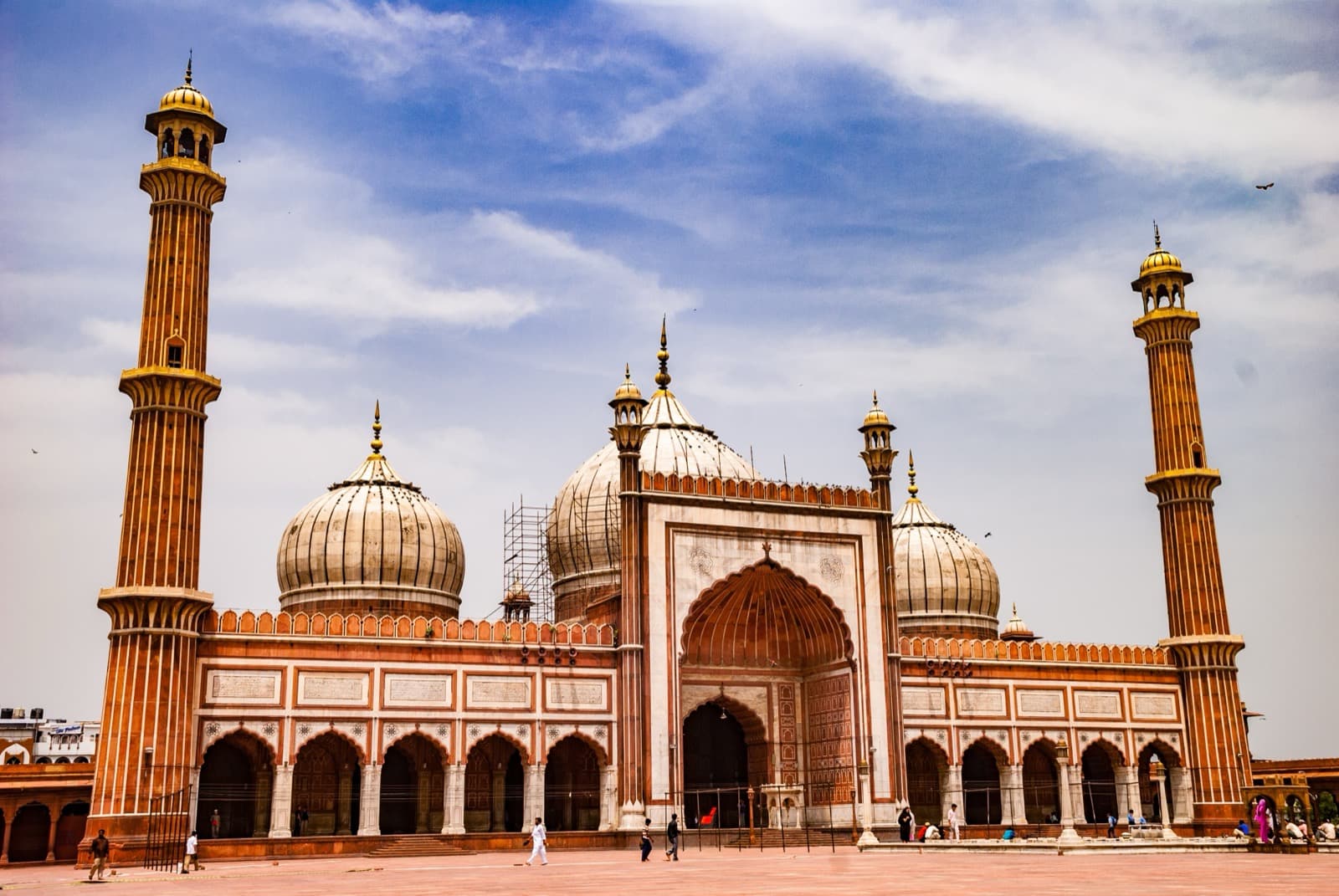
Jama Masjid: The Mosque Built to Crown the Capital
Start with the dish that gave a street its name. A paratha is a fried Indian flatbread, usually stuffed, and Paranthe Wali Gali (the paratha lane) off Chandni Chowk has sold little else for a century and a half. The oldest shop in the lane, run by the family of Pandit Gaya Prasad, was established in 1872, and the lane was already known as Paranthe Wali Gali by 1911. The parathas here are deep-fried rather than griddled, which makes them heavier and crisper than the home version, and the fillings run well past potato: paneer, mixed vegetables, and sweet ones stuffed with dried fruit or even a paper-thin filling of crushed papad. How to order like a local: sit down, ask what fillings are ready that day, and take the accompaniments (a little pickle, a sweet-and-sour chutney, a spiced pumpkin or potato side) that arrive with the plate rather than ordering them separately.
Chaat: dahi bhalla, aloo tikki, and the winter milk-foam
Chaat is the umbrella for Delhi's savoury street snacks, and the two you should prioritise are dahi bhalla and aloo tikki. Dahi bhalla is a soft lentil-flour dumpling soaked in whipped yoghurt and topped with sweet tamarind and green chutneys; aloo tikki is a shallow-fried spiced potato patty served the same way. Natraj Dahi Bhalle Wala, a small corner shop near the Chandni Chowk metro station that has been going since the 1940s, is the classic address for both. If you visit in winter (roughly December to February), look for daulat ki chaat, a seasonal-only dessert of sweetened milk foam so light it collapses on the tongue, traditionally made overnight in the cold air and sold in the mornings near Kinari Bazar before it melts away by midday. It genuinely does not exist in summer, so plan around the season. General chaat rule: order it fresh and eat it immediately, and don't accept it swimming in a watery chutney you didn't watch get made.
Jalebi: crisp orange spirals in ghee
The single most photographed sweet in Chandni Chowk is jalebi: a wheat-flour batter piped in coils into hot fat, fried crisp, then dunked in sugar syrup so it turns glassy and sticky. The shop to know is Old Famous Jalebi Wala, on the corner where Dariba Kalan meets Chandni Chowk, which has sold jalebi from the same spot since 1884 and is listed by Delhi's own tourism department. What sets it apart is that the jalebis are fried in desi ghee (clarified butter) rather than cheaper oil, which is why they cost more and taste richer. Eat them hot, standing up, within a minute or two of frying, when the shell still shatters. This corner sits right on the route of our Old Delhi walking tour, a few steps from the jewellers' lane of Dariba Kalan.
Chole bhature: the Partition dish of Paharganj
Chole bhature is a plate of spiced chickpeas (chole) with a large, puffed, deep-fried bread (bhatura), and in Delhi it carries the memory of Partition. Sita Ram Diwan Chand in Paharganj is the name locals give first: founded in 1947 by a refugee who came to Delhi from Lahore at Partition, it started from a cart before setting up beside the old Imperial Cinema, and it does essentially this one dish, in the Lahori style, and has done so ever since. This is a heavy, satisfying breakfast or early lunch, not a snack. Order it the way it comes (chickpeas, bhatura, a wedge of pickle, sliced onion, sometimes a small dish of tangy sauce), eat it hot, and don't expect a menu.
Mughlai meat: kebabs, korma, and nihari behind the Jama Masjid
For the Mughal court food, walk into the lanes behind the Jama Masjid, the district that has cooked this way since the empire. Karim's, in Gali Kababian near the mosque, was established in 1913 by Haji Karimuddin, whose family traced its cooking to the royal kitchen of the last Mughal emperor, Bahadur Shah Zafar. Its signatures are mutton korma (a slow-cooked, spiced gravy), seekh kebab (minced meat grilled on a skewer), and nihari, a slow-cooked meat-and-bone-marrow stew whose origins food historians place in Old Delhi around the seventeenth to eighteenth century. Nihari is traditionally a morning dish, eaten with khameeri roti, a soft leavened flatbread, so if you want it at its best, come early rather than at dinner. When you order Mughlai food, ask what the day's slow-cooked dish is (the korma and nihari are made in quantity and can sell out), and expect rich, buttery gravies meant to be scooped with bread.
Butter chicken: a Delhi invention with a court case
Butter chicken and its vegetarian cousin dal makhani (black lentils simmered with butter and cream) are both credited to one Delhi kitchen: Moti Mahal in Daryaganj, opened after 1947 by Kundan Lal Gujral, a cook who fled to Delhi at Partition. The origin story holds that leftover tandoori chicken was simmered in a tomato, butter, and cream sauce so it would not go to waste, creating the dish now eaten worldwide. Be aware the claim is contested: a rival Delhi restaurant, Daryaganj, disputes it, and the two are in an ongoing legal battle at the Delhi High Court over who actually invented butter chicken and dal makhani. Either way, this is the city where the dish became famous, and it is the thing to eat if you want one plate that explains how Mughlai cooking became global comfort food.
How to order, and how to eat safely
Ordering like a local mostly means fewer decisions: sit or stand where a crowd already is, ask what's fresh or ready, and take the standard accompaniments rather than customising. Carry small cash in rupees, because the lanes and stalls run on cash. On safety, be sensible rather than fearful. Delhi tap water is not safe for visitors, so drink only sealed bottled water, check the seal is intact before you accept a bottle, and skip ice and unbottled drinks. Favour food that is fried or cooked hot in front of you (deep-frying sterilises the surface), and be cautious with watery chutneys, cut fruit, and raw salads that may have been rinsed in tap water. Pick the busy stalls, because high turnover means fresher food. Pack oral rehydration salts from any pharmacy just in case. Come in the cooler months (October to March) and walk in the morning before the wholesale lanes hit their afternoon crush.
Turn the food into a walk
The dishes above are not scattered across the city; most sit within a few hundred metres of Chandni Chowk, which is why a single self-guided walk is the efficient way to eat them. The Old Delhi walking tour threads the paratha lane, Dariba Kalan (jalebi), the spice market of Khari Baoli, and the mosques whose lanes hold the kebab shops, all at your own pace with no group pulling you toward a particular stall. Browse the full set of Delhi walking tours to pair the food with the Red Fort and Humayun's Tomb, and see everything on offer on the Delhi city page.
Sources
- Gali Paranthe Wali, Wikipedia
- Old Famous Jalebi Wala, Delhi Tourism (Government of Delhi)
- Karim's, Wikipedia
- Who invented butter chicken? A court is expected to decide, CBS News
- Sita Ram Diwan Chand, Paharganj's chole bhature since Partition, ThePrint
- Daulat ki chaat, the winter milk-foam dessert of Old Delhi, The National
Frequently asked questions
- What food is Delhi most famous for?
- Delhi is best known for two food traditions: Mughlai meat cookery (kebabs, mutton korma, nihari, and butter chicken) descended from the Mughal royal kitchens, and North Indian street chaat and sweets like dahi bhalla, aloo tikki, jalebi, and chole bhature. Old Delhi around Chandni Chowk is where both are densest, sold from shops that have held the same corner for decades.
- Where can I eat the best parathas in Old Delhi?
- Paranthe Wali Gali (the paratha lane) off Chandni Chowk has specialised in deep-fried stuffed parathas since the 1870s. The oldest shop, run by the family of Pandit Gaya Prasad, was established in 1872, and the lane was already known by its paratha name by 1911. Fillings range from potato and paneer to sweet dried-fruit versions.
- Is Delhi street food safe to eat?
- It can be, with sensible precautions. Drink only sealed bottled water and check the seal is intact, skip ice and cut fruit, and favour food that is fried or cooked hot in front of you because deep-frying sterilises the surface. Choose busy stalls, since high turnover means fresher food, and carry oral rehydration salts from a pharmacy just in case.
- Where was butter chicken invented?
- Butter chicken is credited to Moti Mahal in Daryaganj, Delhi, opened after 1947 by Kundan Lal Gujral, who created it by simmering leftover tandoori chicken in a tomato, butter, and cream sauce. The claim is contested: a rival Delhi restaurant named Daryaganj disputes it, and the two are in an ongoing case at the Delhi High Court over who invented butter chicken and dal makhani.
- What is daulat ki chaat and when can I find it?
- Daulat ki chaat is a Delhi dessert of sweetened milk foam so light it dissolves on the tongue, traditionally churned and set overnight in the cold. It is available only in winter, roughly December to February, and sells in the mornings near Kinari Bazar in Chandni Chowk before it melts away by midday. You will not find it in summer.
- What is the best time of year to do a Delhi food walk?
- Come in the cooler months from October to March and start in the morning, before the wholesale lanes of Old Delhi reach their afternoon crush. Winter also unlocks the seasonal-only dessert daulat ki chaat. Avoid April to June, when Delhi's heat is severe and the crowded lanes offer little shade.
Ready to experience it?
Old Delhi: The Last Mughal Capital
80 min · 3.3 km · moderate
More from Delhi
Explore more at your own pace.
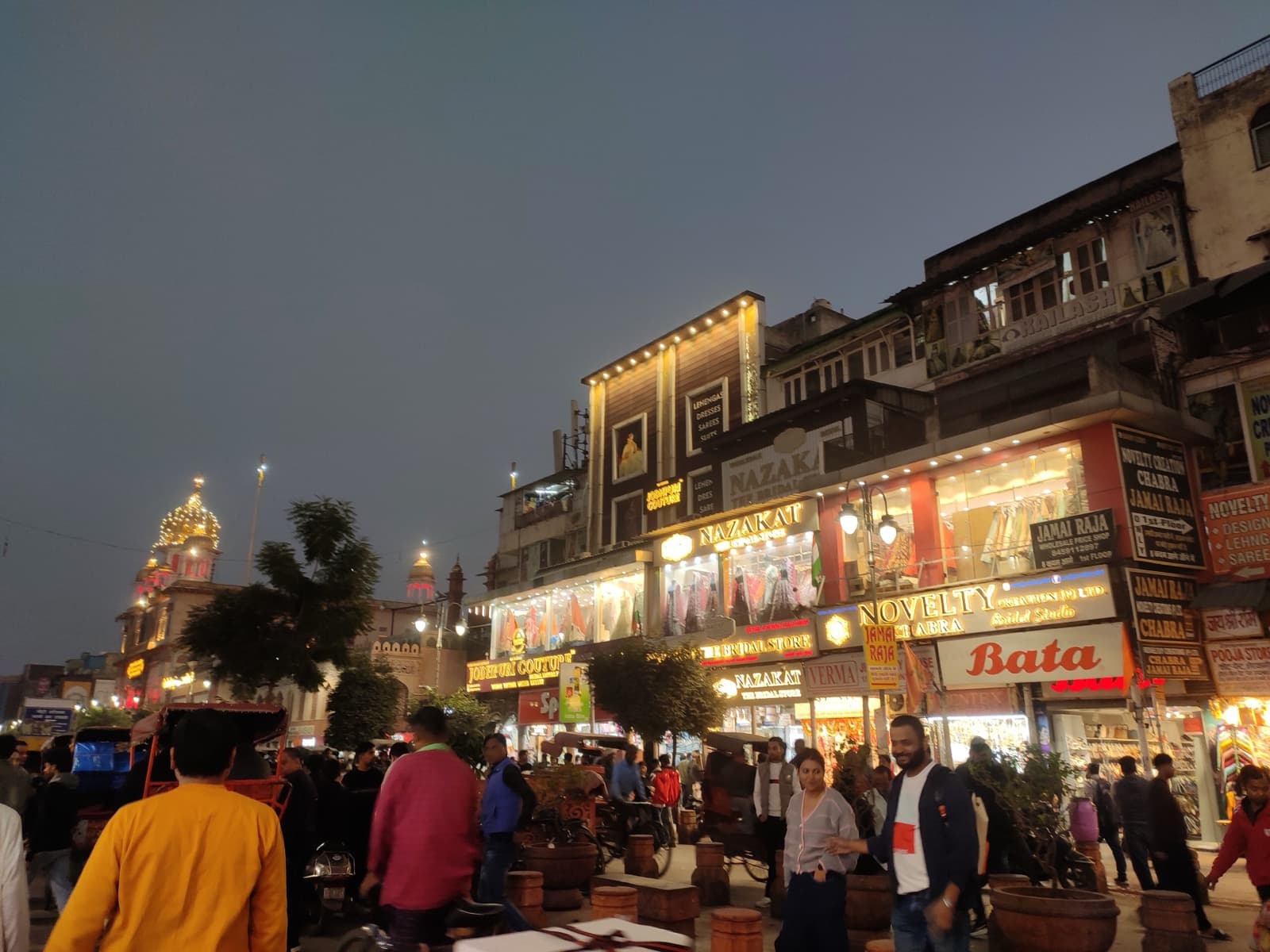
Chandni Chowk: How Delhi's Moonlit Avenue Holds an Entire Mughal Capital
How Humayun's Tomb Drafted the Taj Mahal a Century Early
The Diwan-i-Khas at Delhi's Red Fort: The Hall That Called Itself Paradise and Lost Its Throne
Isa Khan's Tomb and Mosque: The World Just Before the Mughals
Jama Masjid: The Mosque Shah Jahan Built to Crown His Capital