Old Delhi: The Last Mughal Capital
80 min · 3.3 km · moderate
One well-planned day in Delhi walks the last Mughal capital in the morning and the first great Mughal garden-tomb in the afternoon: start inside the Red Fort at opening, cross into the lanes of Chandni Chowk, then ride the Metro south to Humayun's Tomb for the quieter end of the day. The three sites cluster into two walkable zones connected by the Violet Line, so you spend the day on foot and only a short train ride in transit. Each zone maps to a Roamer self-guided audio tour, which means you set your own pace at every stop instead of chasing a group schedule. Below is the hour-by-hour plan, with entry fees and hours checked against current sources.
The short answer: two walkable zones, one Metro hop
Delhi's headline Mughal sites are not spread evenly across a giant city. Two of the three, the Red Fort and Chandni Chowk, sit side by side in Old Delhi and share one entrance to the Metro at Lal Qila station on the Violet Line. The third, Humayun's Tomb, is about six kilometres south near Nizamuddin and reachable on the same Violet Line (get off at JLN Stadium or Jangpura, then a short auto ride) or on the Pink Line at Sarai Kale Khan-Nizamuddin. That geography gives you a clean shape for the day: do all the Old Delhi walking in the cooler morning, break for lunch, then take the train to the garden-tomb when the afternoon light softens.
The whole day is roughly five kilometres of actual walking split into two comfortable blocks, plus one Metro ride. You can browse the full set of city tours on the Delhi walking tours hub, or jump straight to the Delhi city page.
Morning: the Red Fort at opening (about 90 minutes)
Hear a stop from this walk
Jama Masjid: The Mosque Built to Crown the Capital
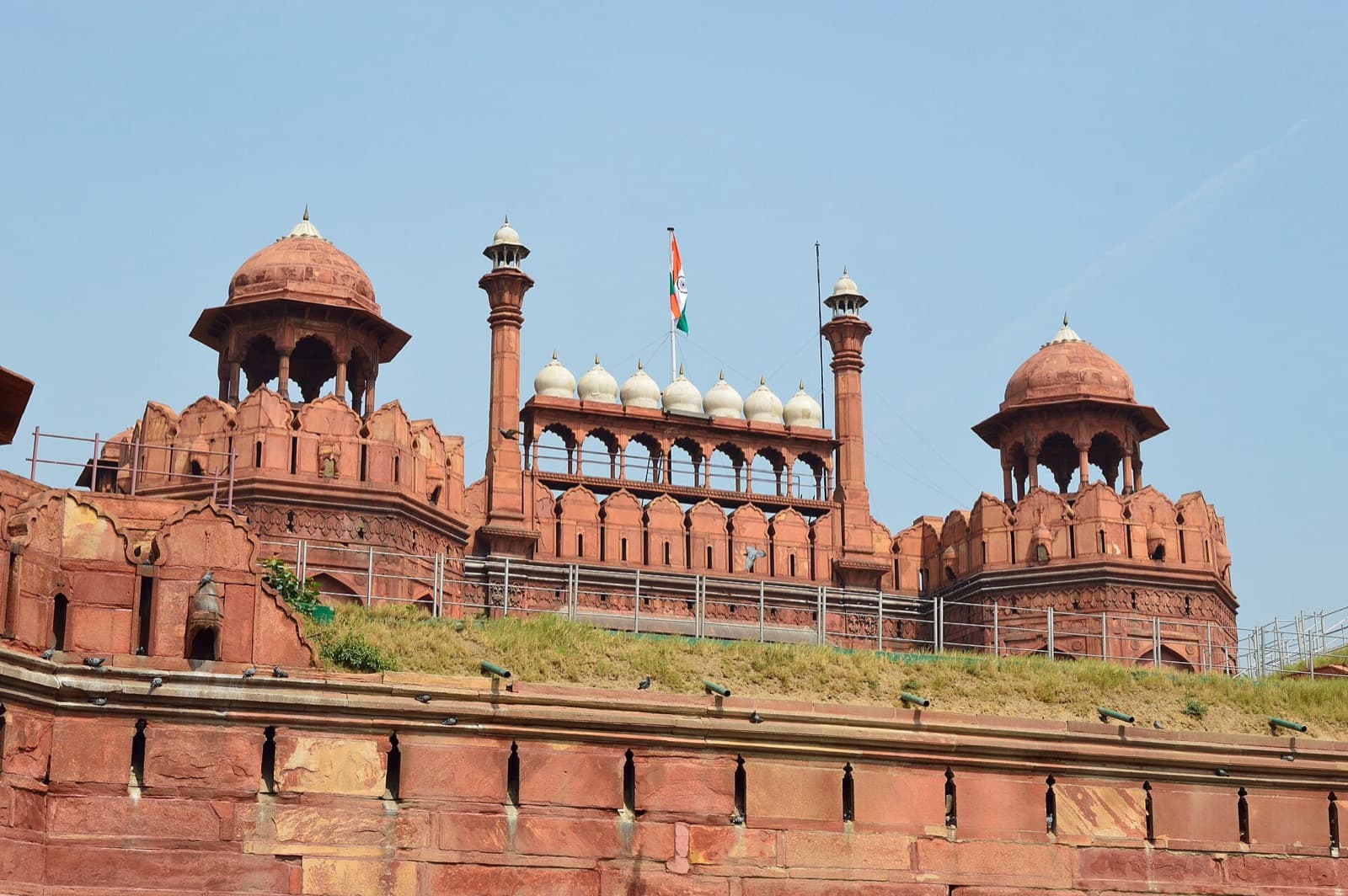
Begin at the Red Fort, which opens Tuesday through Sunday at 9:30 in the morning and closes at 4:30 in the afternoon. It is closed on Mondays, so if your one day falls on a Monday, flip the order and do the tomb and the street, saving the fort for another visit. Arriving at opening buys you the two things Delhi crowds take away: cooler air and thinner queues.
Entry is 35 rupees for Indian and SAARC or BIMSTEC visitors and 500 rupees for foreign nationals, with children under 15 free. Buy the ticket at the window or online in advance. The nearest Metro stop is Lal Qila on the Violet Line, a few minutes' walk from the main Lahori Gate.
Shah Jahan founded this red sandstone palace-fortress in 1639 and finished it around 1648, and it served as the seat of the Mughal emperors for two centuries. The self-guided Red Fort audio tour runs seven stops over a little more than a kilometre inside the walls: from the Lahori Gate through the covered Chatta Chowk bazaar and the Naubat Khana drum-house gate, to the Diwan-i-Am where the emperor heard grievances, and then the marble Diwan-i-Khas, the hall the jewelled Peacock Throne is associated with before the Persian ruler Nadir Shah carried it off in 1739. It ends among the riverside palaces, Aurangzeb's small white Moti Masjid, and the Hayat Bakhsh Bagh garden. Because it is your own audio guide, you can linger at the paradise couplet in the Diwan-i-Khas and skip the tout-heavy stretches near the gate.
Late morning: Chandni Chowk and its lanes (about 90 minutes)
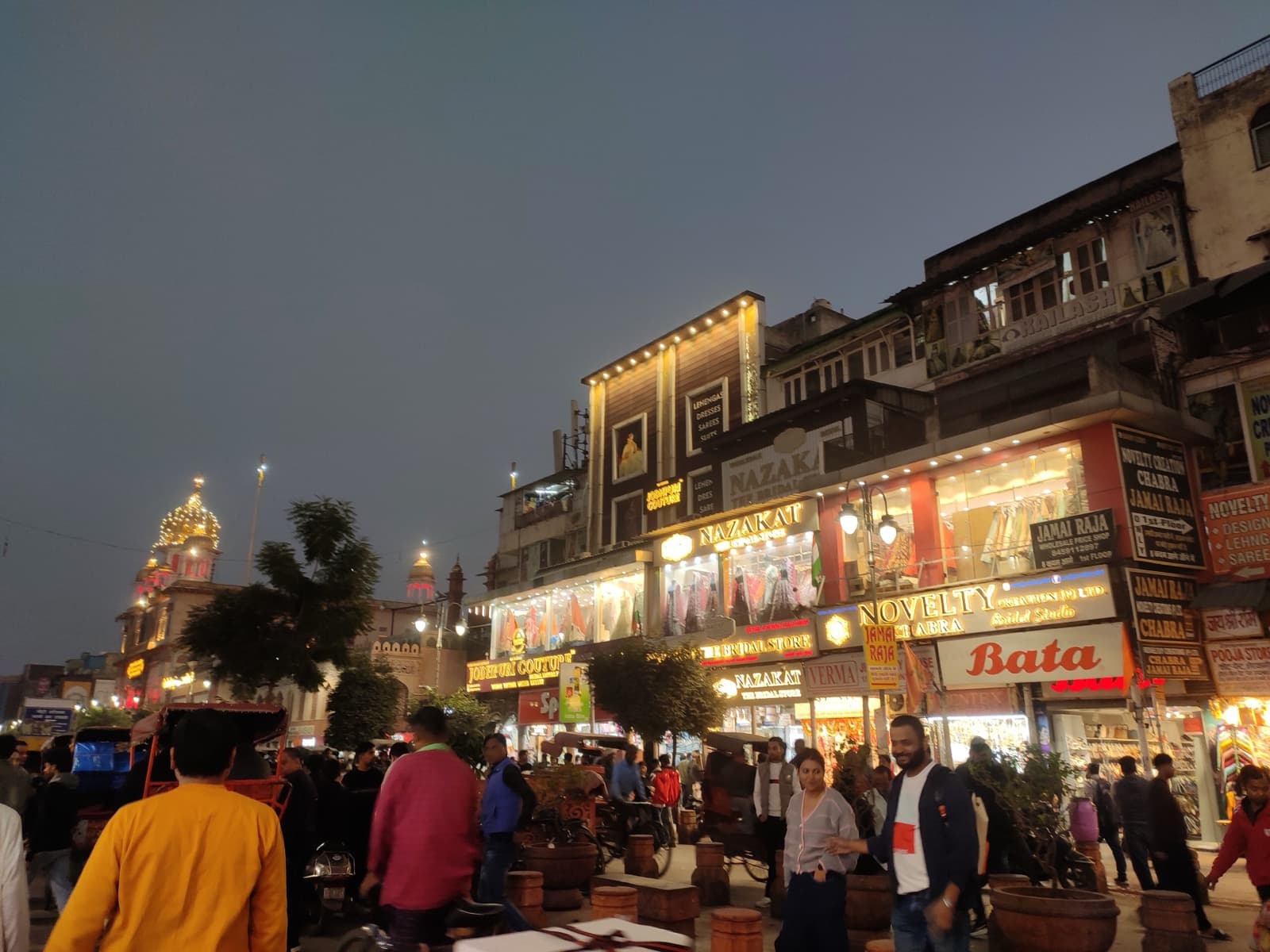
Walk straight out of the fort and you are at the head of Chandni Chowk, the ceremonial avenue Shah Jahan's daughter Jahanara Begum laid out with a water channel down its middle around 1650. The channel is long gone and the street is now one of the loudest markets in India, which is exactly why a self-guided approach helps: you choose your own line through the crowd.
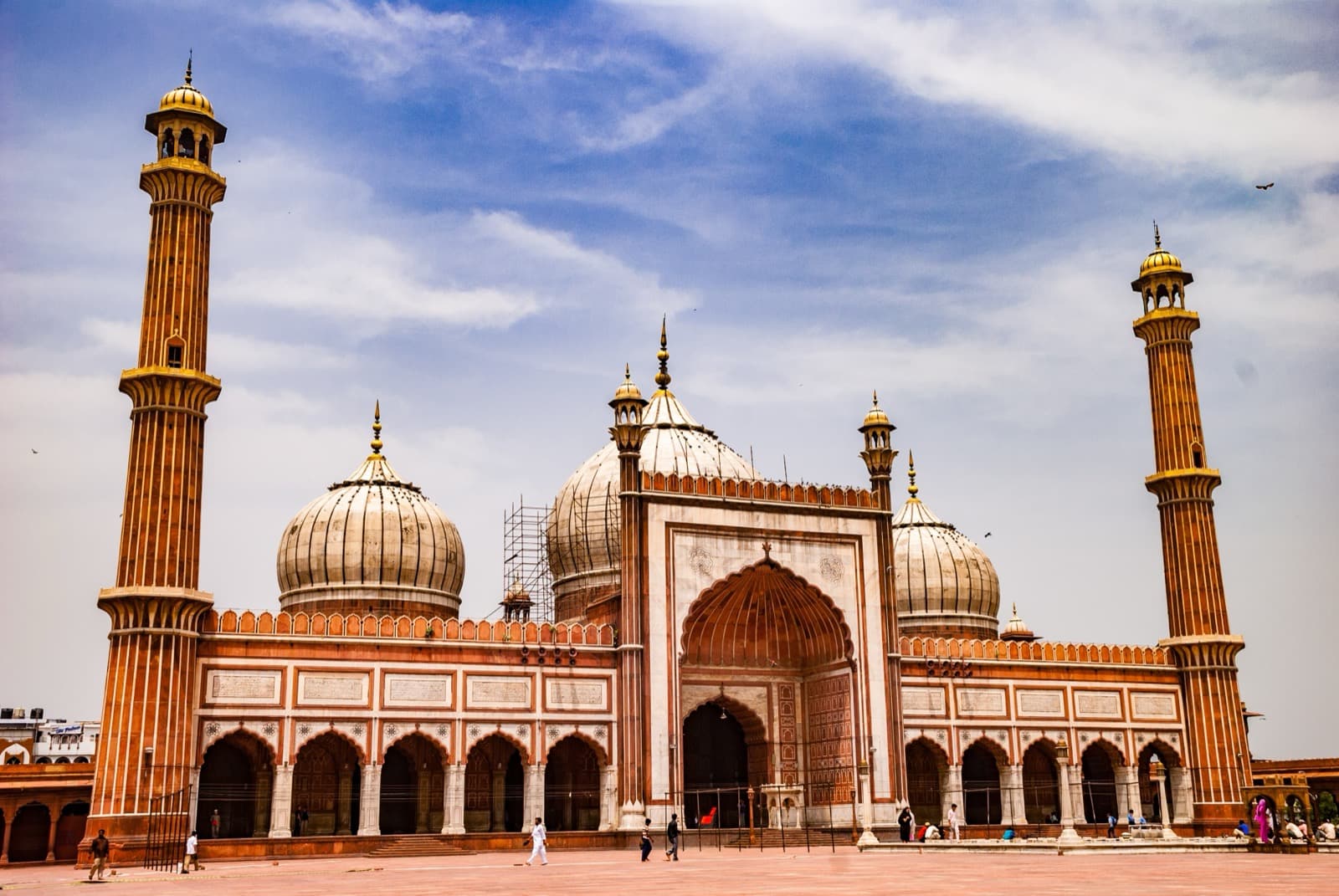
The Old Delhi audio tour threads seven stops along and around the avenue, and almost all of them are free to enter. It starts at the Sri Digambar Jain Lal Mandir, established in 1656, with its charity bird hospital behind, then reads the trade lanes: Dariba Kalan for silver, Kinari Bazaar for wedding trimmings, and Paranthe Wali Gali for fried flatbread. It reaches the Jama Masjid, the great congregational mosque Shah Jahan built between 1650 and 1656, then the Sikh shrine Gurudwara Sis Ganj Sahib, and finishes at the Fatehpuri Masjid and the Khari Baoli spice market at the western end.
One timing note worth planning around: the Jama Masjid closes to sightseeing during prayer, including the midday period, so if you want to stand in its courtyard, aim to reach it before roughly noon or after about 1:30 in the afternoon. Entry to the mosque is free, but there is a separate fee if you carry a camera or phone camera, and a further optional charge to climb one of the minarets. Everyone removes their shoes on the platform. Dress modestly for the mosques, the temple, and the gurudwara, and carry a scarf to cover your head at the Sikh shrine.
Lunch: eat where you already are
You do not need to travel for lunch. Paranthe Wali Gali, one of the stops on the Old Delhi walk, has served stuffed fried flatbread from this narrow lane for generations, and the food stalls of Chandni Chowk run on small cash in rupees. This is the practical midpoint of the day: refuel in Old Delhi before you head to the Metro.
Afternoon: the Metro to Humayun's Tomb (about 75 minutes of walking)
From Lal Qila or Jama Masjid station, take the Violet Line south. Get off at JLN Stadium or Jangpura for a short auto or e-rickshaw ride to the gate, or use the Pink Line to Sarai Kale Khan-Nizamuddin, the closest station to the complex. The whole hop is a short ride rather than a long trek.
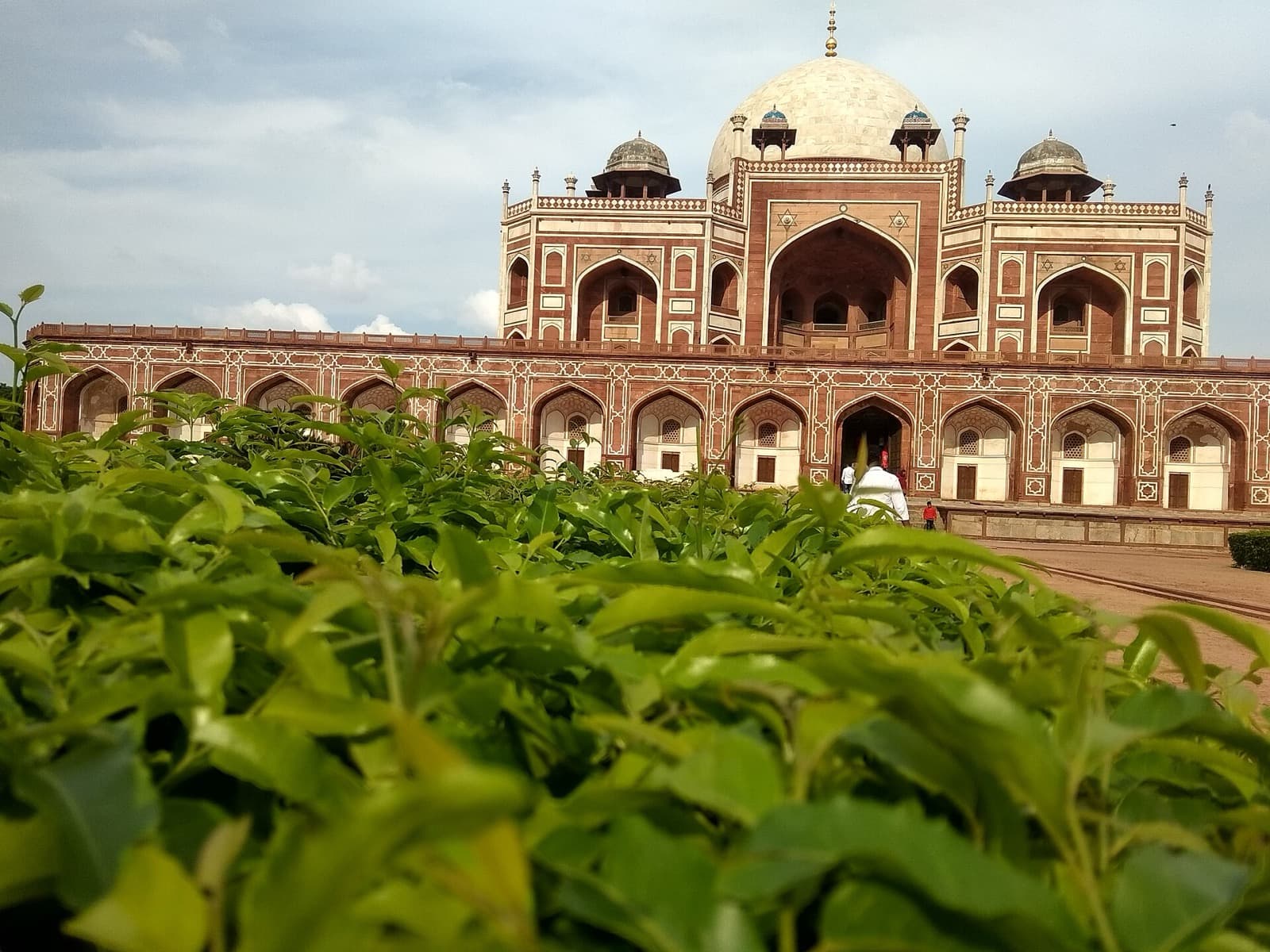
Humayun's Tomb is open daily from 6 in the morning to 6 in the evening, so it is your reliable afternoon anchor even on a Monday. Entry is about 40 rupees at the gate for Indian, SAARC, and BIMSTEC visitors and about 600 rupees for foreign nationals, with children under 15 free; buying online through the ASI portal is a little cheaper. Late afternoon is the kindest time here, when the low sun warms the red sandstone.
This is the calm counterweight to the morning. The Humayun's Tomb audio tour covers six stops over about a kilometre and a half inside the walled garden complex: Isa Khan's octagonal tomb and mosque, the west gate and the fourfold char bagh garden, the great domed Tomb of Humayun itself (India's first major garden-tomb and, in effect, an early draft of what the Taj Mahal would perfect a century later), the Barber's Tomb, and the blue-domed Nila Gumbad. After a morning in the din of Old Delhi, walking a quiet paradise garden as the day cools is a deliberate way to end.
Practical notes for the day
Delhi is most comfortable from October to March, and the walking day is genuinely punishing in the April-to-June heat, so carry water and start early in any season. Both Old Delhi tours are dense, crowded, and full of persistent guides and touts; keep valuables zipped away and feel free to keep walking without stopping. Card payment is unreliable at ticket windows and street stalls, so bring small rupee notes. Because all three tours are self-guided audio on your phone, download them before you go if you expect patchy signal in the lanes, and set the day's rhythm yourself: linger where a stop holds you, and move on when you are ready.
Sources
Frequently asked questions
- Can you see Delhi's main Mughal sites in one day?
- Yes. The Red Fort and Chandni Chowk sit side by side in Old Delhi, and Humayun's Tomb is about six kilometres south near Nizamuddin, reachable on the Violet Line of the Metro. A workable day does the Red Fort at its 9:30 morning opening, walks Chandni Chowk before lunch, then takes the train to Humayun's Tomb in the afternoon. Total walking is roughly five kilometres in two comfortable blocks plus one train ride.
- What are the Red Fort's opening hours and ticket prices?
- The Red Fort is open Tuesday through Sunday from 9:30 in the morning to 4:30 in the afternoon and is closed on Mondays. Entry is 35 rupees for Indian, SAARC, and BIMSTEC visitors and 500 rupees for foreign nationals, with children under 15 free. Tickets are sold at the gate or online in advance.
- Is Humayun's Tomb open every day, and what does it cost?
- Humayun's Tomb is open daily from 6 in the morning to 6 in the evening, including weekends and public holidays, which makes it a reliable afternoon stop even on a Monday when the Red Fort is closed. Gate entry is about 40 rupees for Indian, SAARC, and BIMSTEC visitors and about 600 rupees for foreign nationals, with under-15s free. Booking online through the ASI portal is slightly cheaper.
- Can tourists enter the Jama Masjid, and when?
- Visitors of all faiths are welcome at the Jama Masjid, but the mosque closes to sightseeing during prayer, including the midday period roughly from noon to 1:30 in the afternoon. Aim to visit before noon or after about 1:30. Entry to the mosque itself is free, but there is a separate fee if you carry a camera or phone camera, plus an optional charge to climb a minaret, and everyone removes their shoes on the platform.
- How do you get between Old Delhi and Humayun's Tomb?
- Both the Red Fort and Chandni Chowk are served by the Lal Qila and Jama Masjid stations on the Metro's Violet Line. Take the Violet Line south and get off at JLN Stadium or Jangpura for a short auto ride to Humayun's Tomb, or use the Pink Line to Sarai Kale Khan-Nizamuddin, the closest station to the complex.
- When is the best time of year to walk Delhi?
- October to March gives the most comfortable weather for walking. The April-to-June period brings severe heat with little shade in the Old Delhi lanes, so if you visit then, start early, carry water, and pace yourself. In any season, beginning at the Red Fort's opening helps you avoid both the strongest sun and the thickest crowds.
Ready to experience it?
Old Delhi: The Last Mughal Capital
80 min · 3.3 km · moderate
More from Delhi
Explore more at your own pace.
Chandni Chowk: How Delhi's Moonlit Avenue Holds an Entire Mughal Capital
How Humayun's Tomb Drafted the Taj Mahal a Century Early
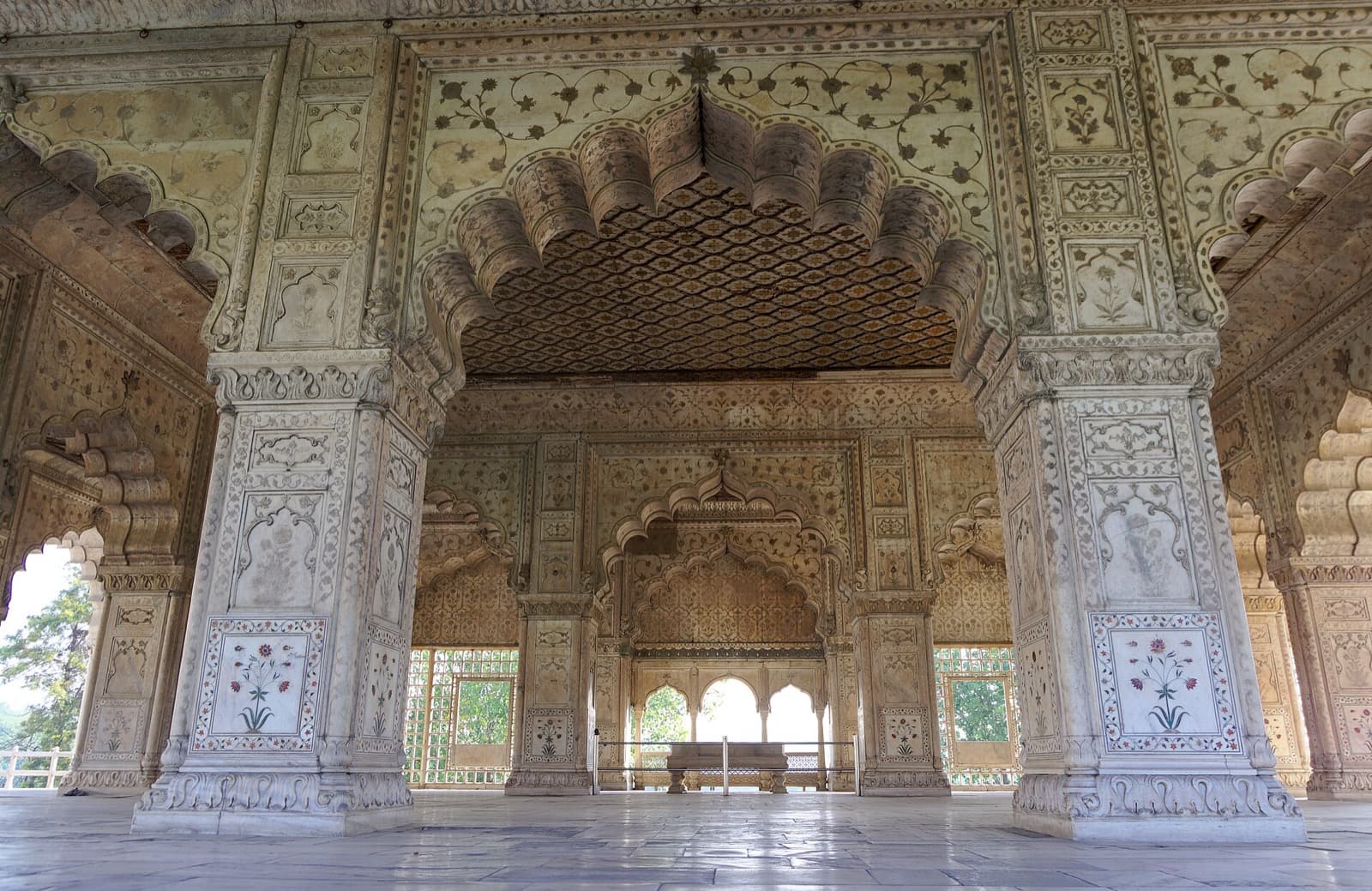
The Diwan-i-Khas at Delhi's Red Fort: The Hall That Called Itself Paradise and Lost Its Throne
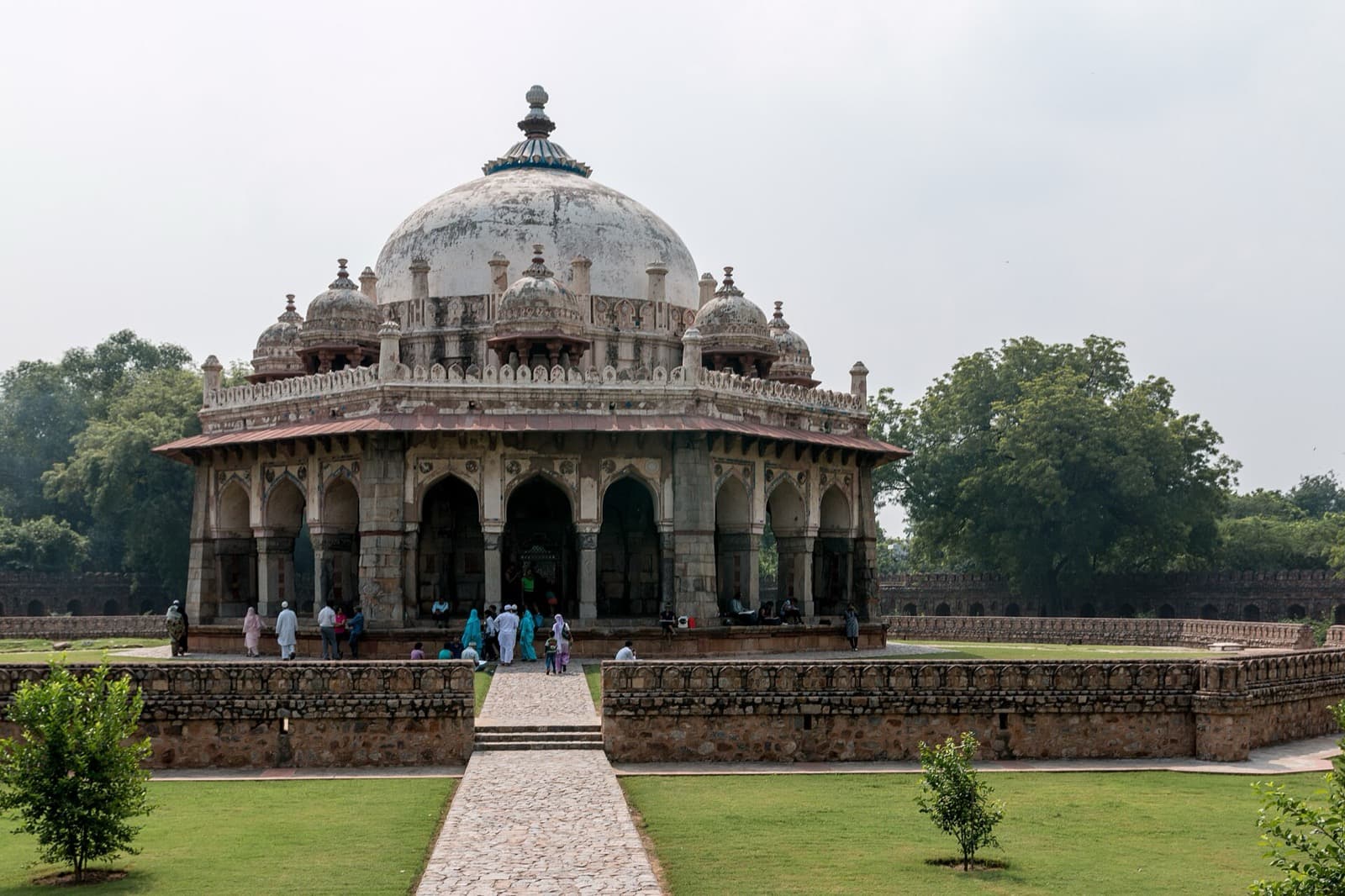
Isa Khan's Tomb and Mosque: The World Just Before the Mughals
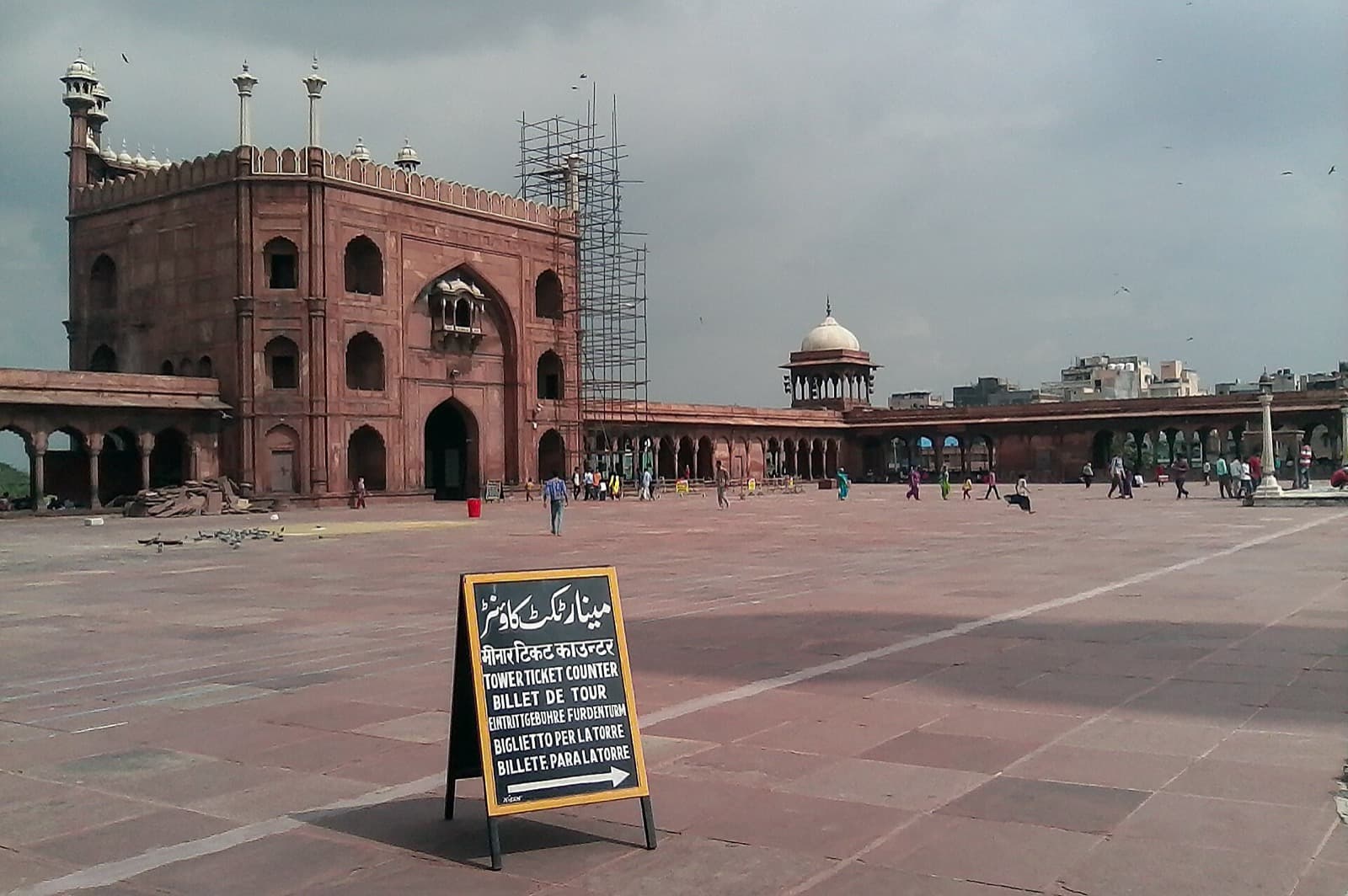
Jama Masjid: The Mosque Shah Jahan Built to Crown His Capital