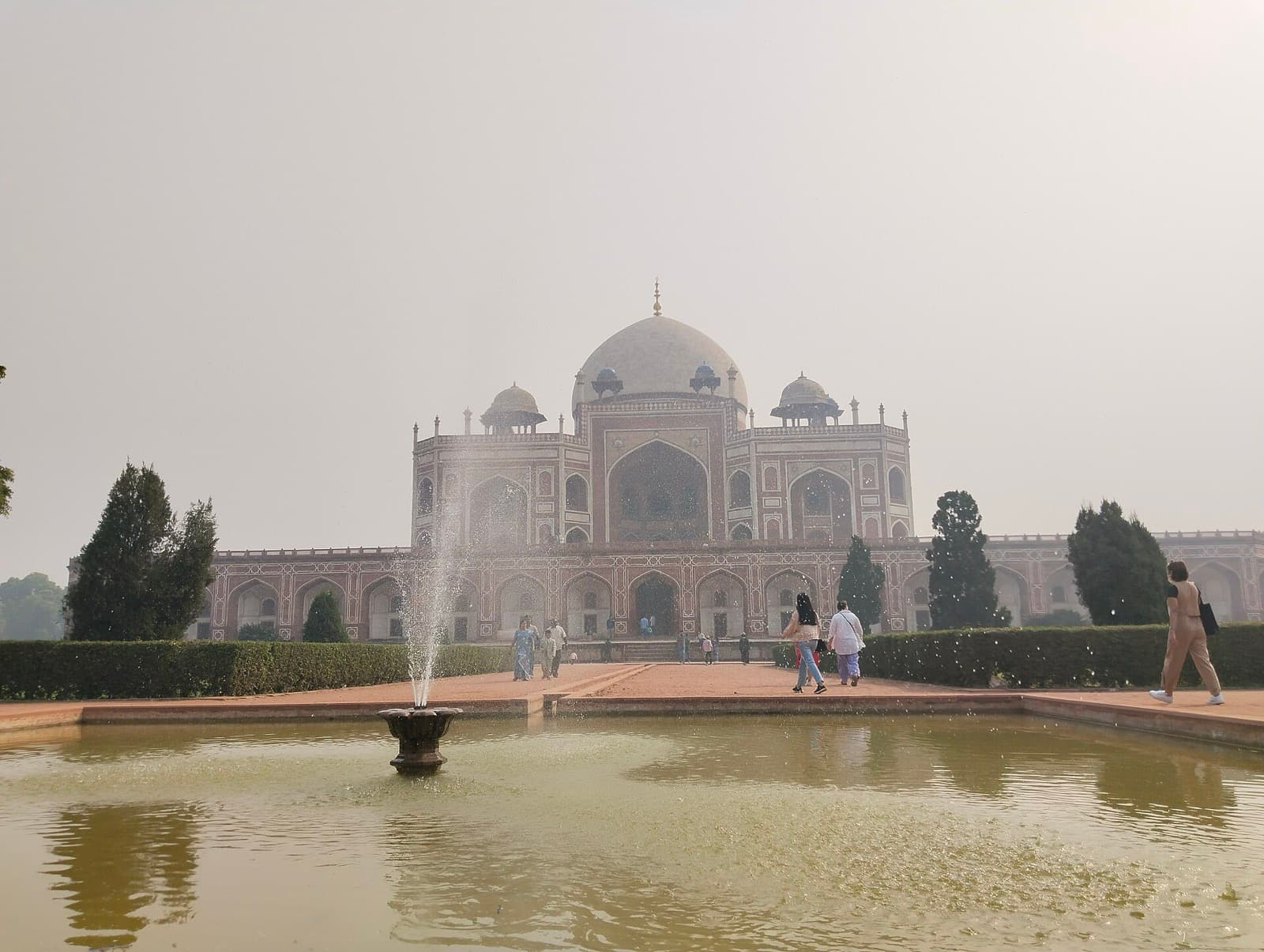
A quiet garden of the dead in Delhi where India's first great garden-tomb rose over a fourfold paradise garden, and where the Taj Mahal was, in effect, first drafted a century before Agra perfected it.
Start · Isa Khan's Tomb and Mosque: The World Before the Mughals
DirectionsStops
- 1
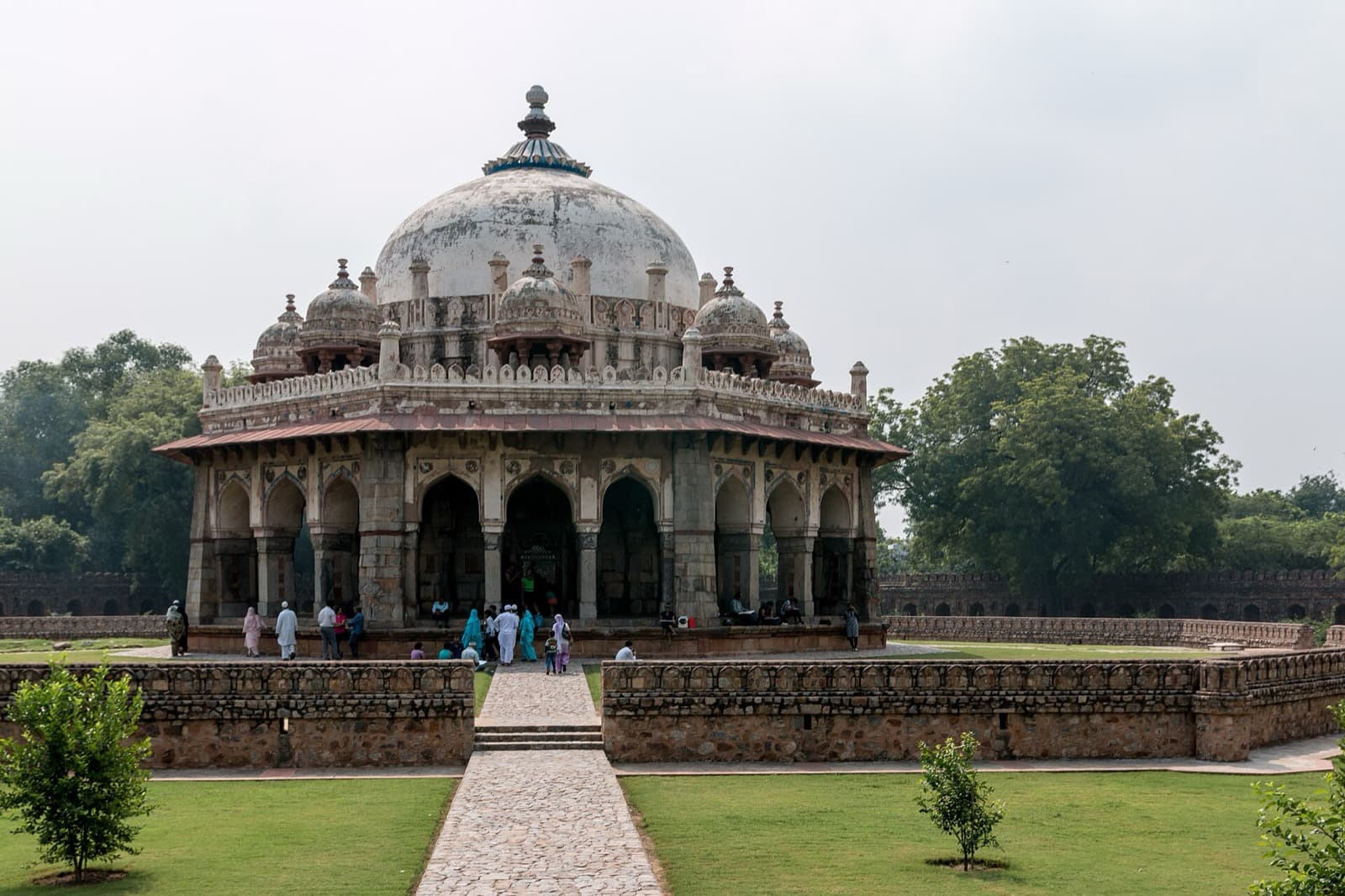
Isa Khan's Tomb and Mosque: The World Before the Mughals
An octagonal garden-tomb of the Sur dynasty, built about twenty years before Humayuns Tomb, showing what Indian tomb-building looked like just before the Mughal leap.
- 2
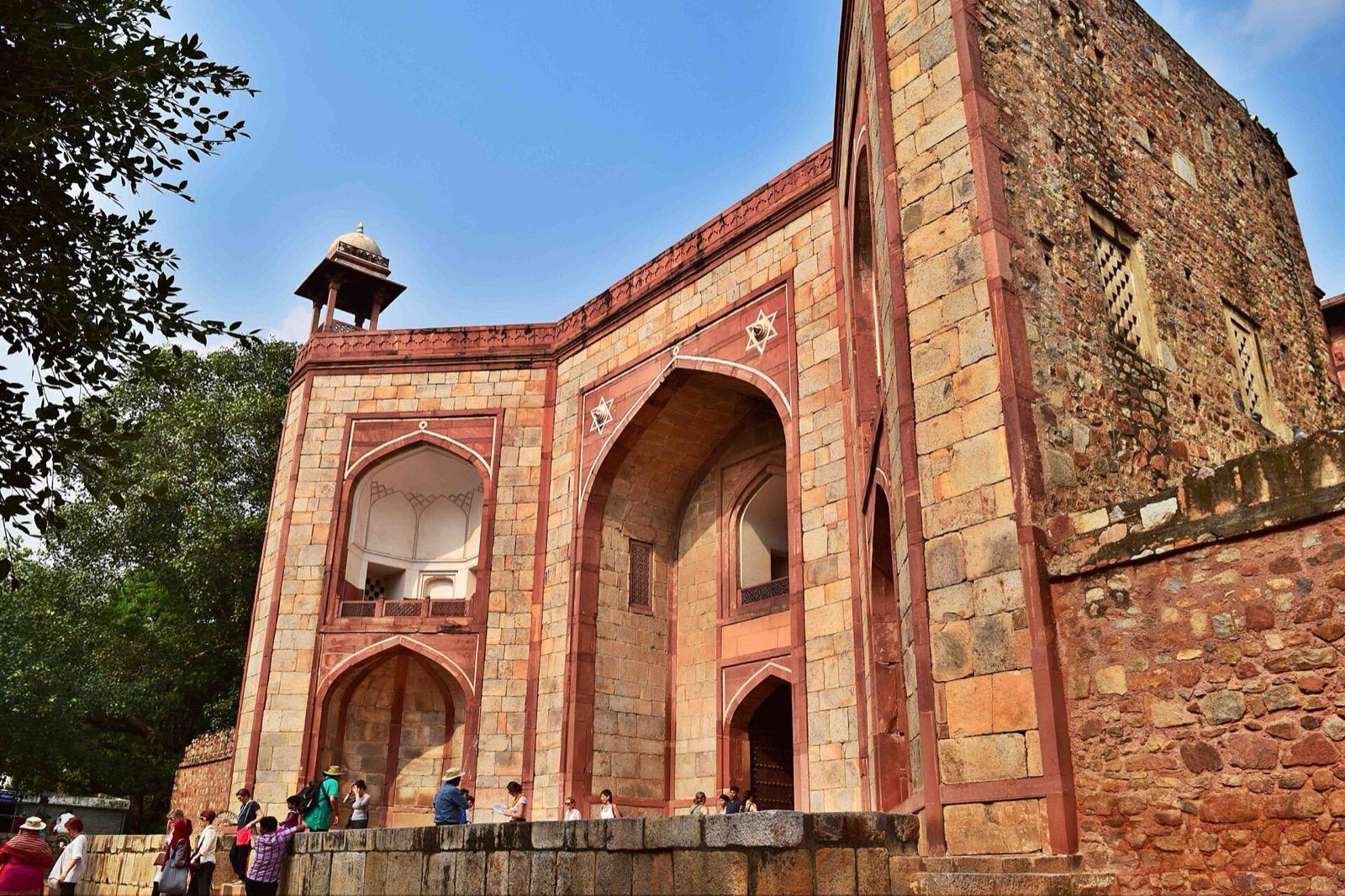
The West Gate and the Char Bagh: A Garden Built Around a Grave
The lofty gateway and the fourfold paradise garden through which the mausoleum first appears, framed at the end of a long water-lined axis.
- 3
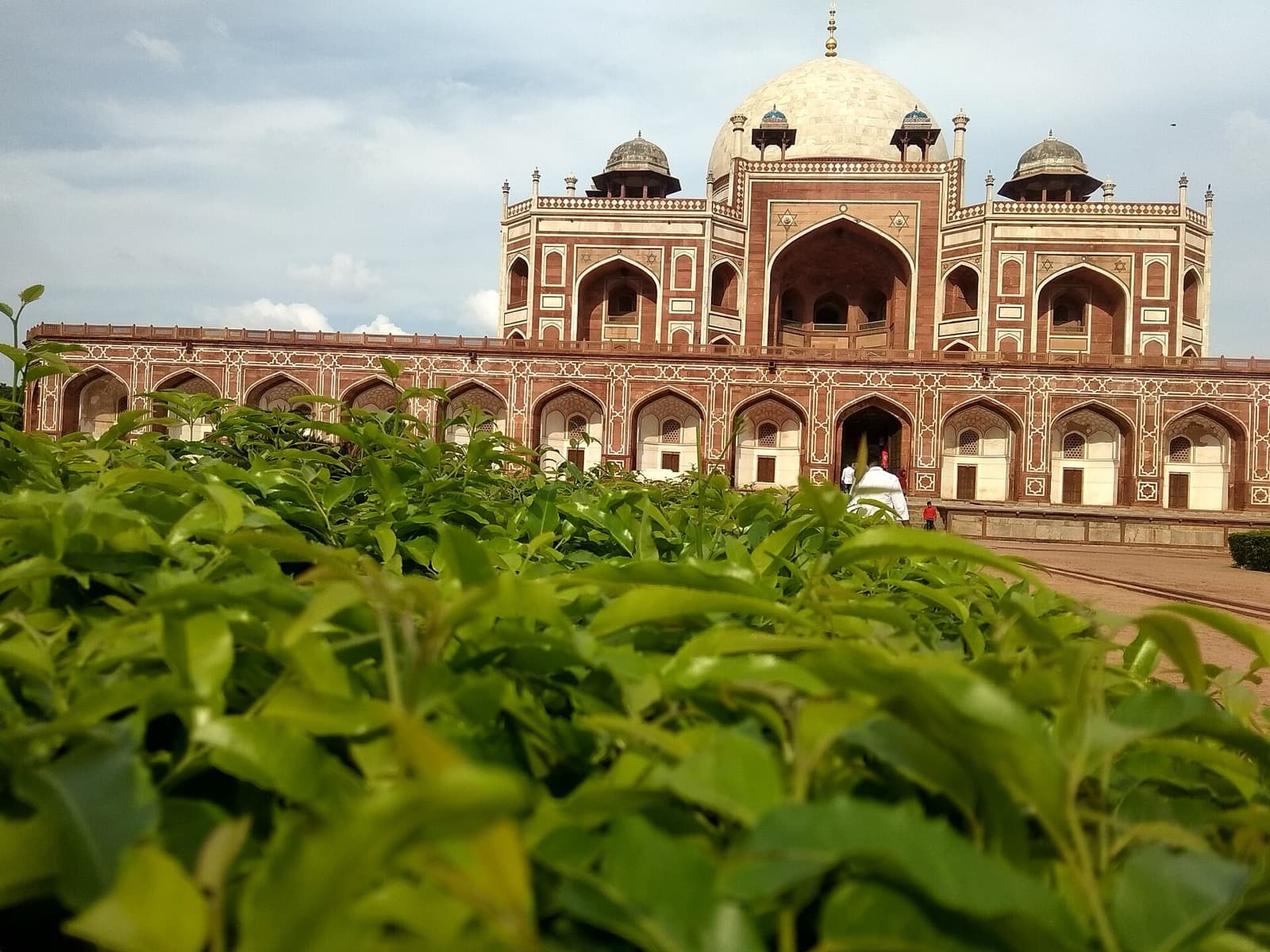
The Tomb of Humayun: The Blueprint for the Taj
The mausoleum of the second Mughal emperor, India's first garden-tomb and its first high double dome, the direct architectural ancestor of the Taj Mahal.
- 4
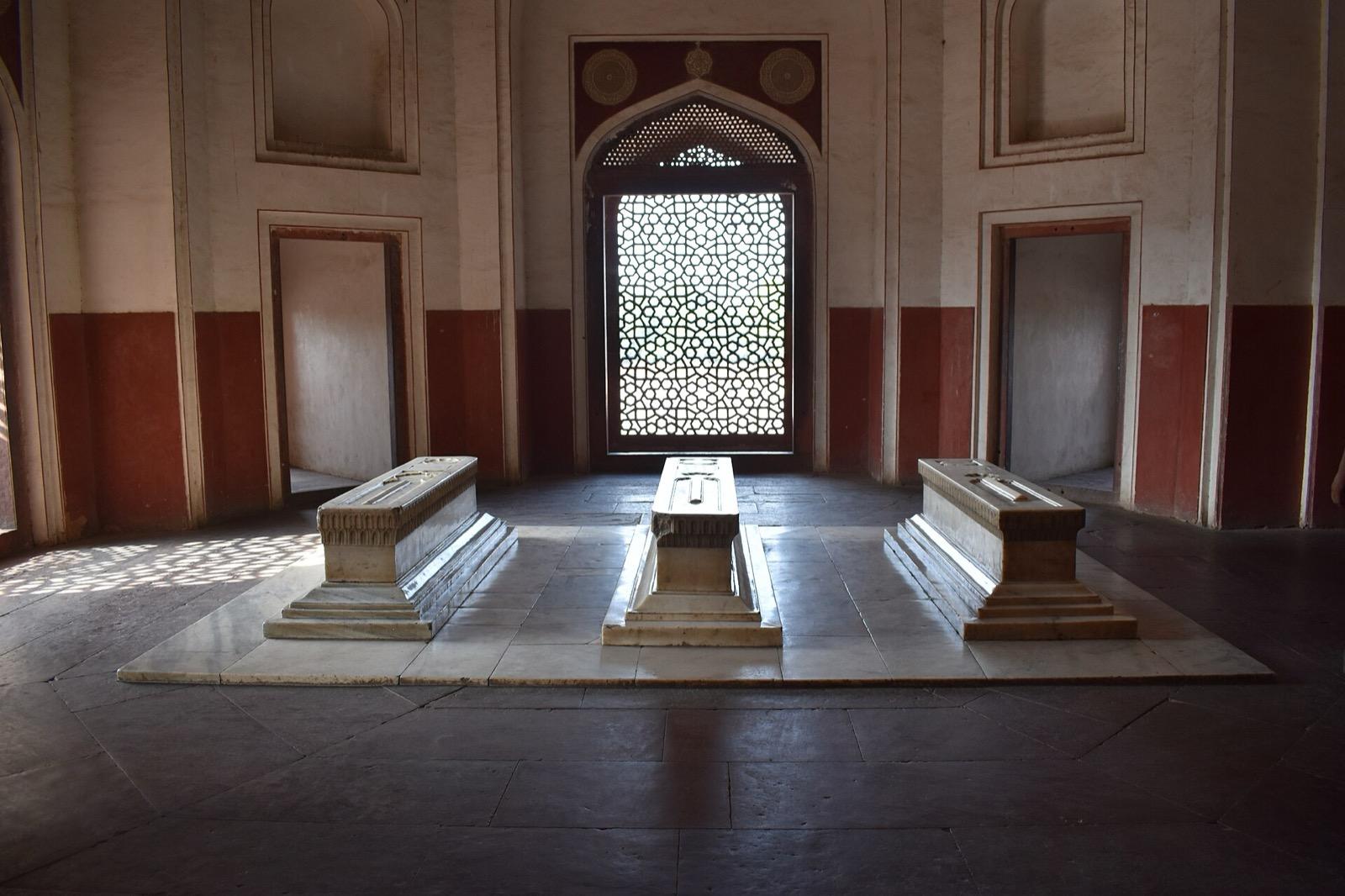
The Dormitory of the Mughals: Where the Dynasty Slept and Ended
The same building read from within, its many vaulted chambers crowded with later royal graves, and the spot where the last Mughal emperor was captured in eighteen fifty-seven.
- 5
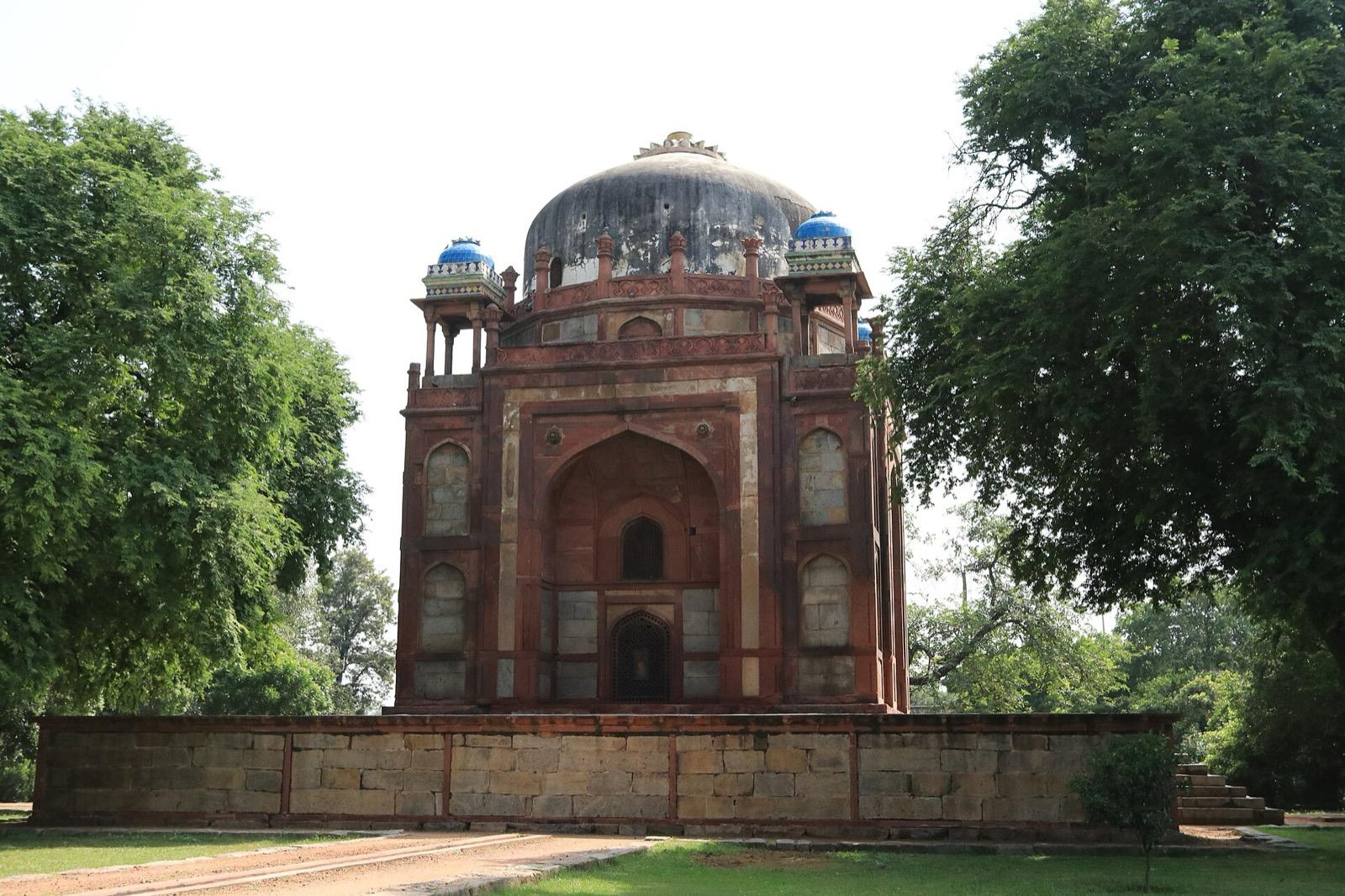
The Barber's Tomb: A Trusted Servant Inside the Emperor's Garden
A small square domed tomb in the southeast quarter of the garden, the only grave besides the emperor's built inside the walls, its occupant unknown.
- 6
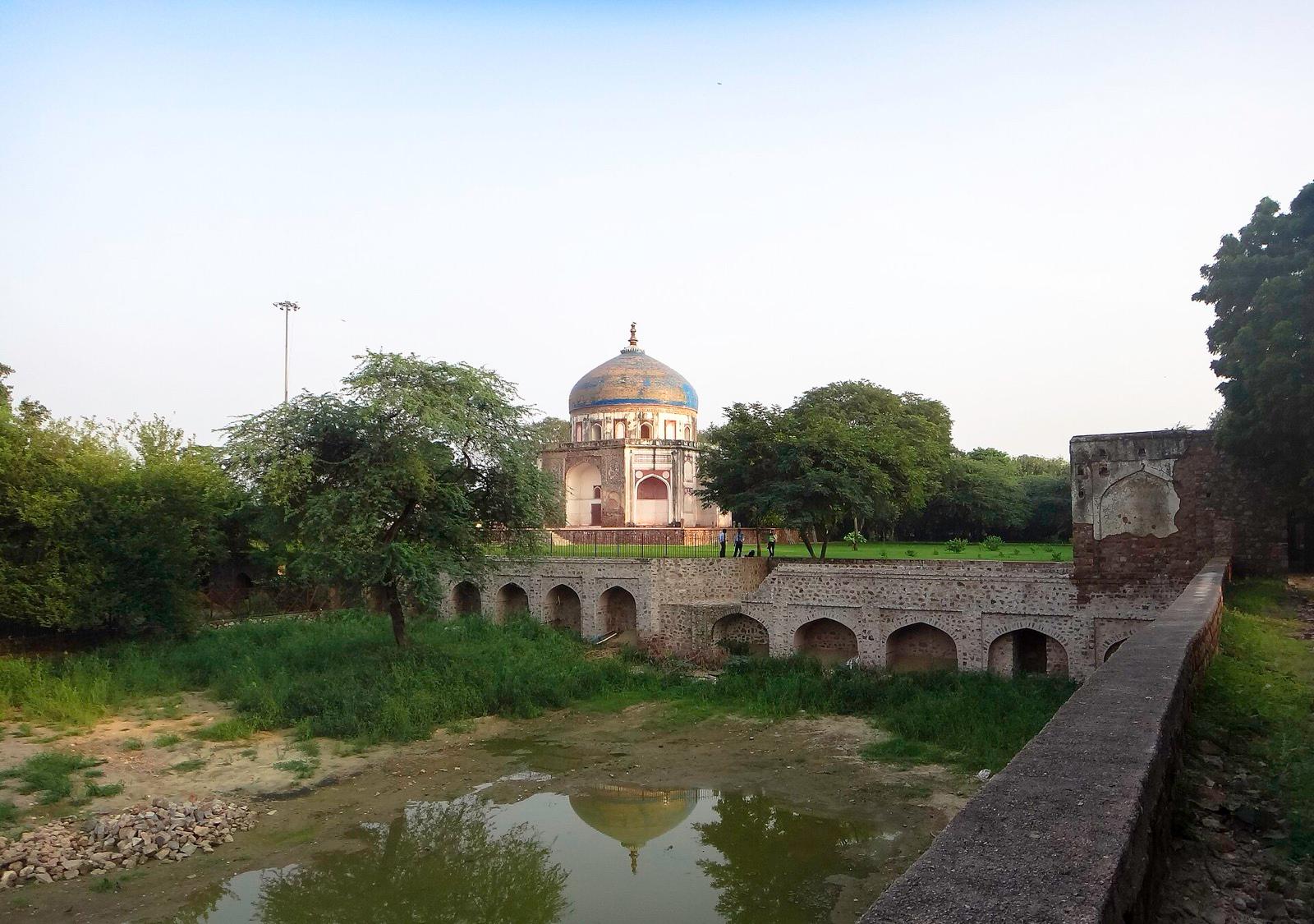
The Nila Gumbad and the Arab Serai: The Blue Dome and the Court of the Makers
A once turquoise-tiled tomb just beyond the eastern wall and a walled court built by the empress, the tiled and gated satellites at the edge of the paradise garden.
Details
Best Time to Visit
Come early in the morning soon after sunrise, or in the last hour or two before the gates close in the evening, when the light is soft on the red sandstone and the garden is at its quietest. The site stays open from sunrise to about nine in the evening. Avoid the harsh midday glare, especially in the hot months from April to June, when there is little shade among the causeways. Cooler, clearer weather from roughly October to March is the most comfortable, and weekday mornings are far calmer than weekend afternoons.
Pro Tips
- •Reach the complex by taxi or auto-rickshaw from the city center, in the Nizamuddin area near the Old Delhi core; agree the fare or insist on the meter before you set off.
- •Buy the single entry ticket at the gate: Indian nationals and visitors from SAARC and BIMSTEC nations pay only about forty rupees, foreign visitors pay about six hundred rupees, and children under fifteen enter free.
- •Enter through the West Gate, which is the one in use today, and pause under its arch for the framed first view of the tomb down the central axis.
- •Give yourself time inside the main tomb chamber to find the many graves, and look for the water channels slipping under the platform and out the far side.
- •Carry water and a hat: the causeways are open and sunny, and the garden is large, so there is little shade between stops.
- •Save the Nila Gumbad and Arab Serai on the eastern and western edges for last, and let the softer evening light finish the walk for you.
Safety & Precautions
- •The garden is open and largely shadeless: the sun is strong and the heat is severe from April to June, so bring water, sun cover, and pace yourself between stops.
- •This is a paid, ticketed site with security screening at the entrance, and bags may be checked, so travel light and keep your ticket handy.
- •Getting here means a short taxi or auto-rickshaw ride from the center; settle the fare or use the meter in advance, and keep valuables secure in Delhi traffic.
- •This is an active heritage and burial site as well as a monument: keep noise down inside the tomb chambers, dress modestly, and be respectful of other visitors and of the graves.
Travel advisory: Exercise Increased Caution (Level 2).
Gallery
Related Reading
Go deeper on what you'll see, hear, and walk through.
Overview
Best Self-Guided Walking Tours in Delhi (2026)
3 min
Overview
Delhi Travel Guide: How Many Days, Getting Around, Best Time, and Safety
7 min
Overview
One Day in Delhi: A Walkable Morning-to-Evening Itinerary
7 min
Thematic
Best History Walking Tours in Delhi (2026)
2 min
Thematic
The Layered Capital: Reading Mughal Delhi on Foot
7 min
Companion
How Humayun's Tomb Drafted the Taj Mahal a Century Early
6 min
Deep dive
Isa Khan's Tomb and Mosque: The World Just Before the Mughals
6 min
Read
What to Eat in Delhi: The Dishes, Where They Come From, and How to Order
8 min
Read the walk
The full story of Humayun's Tomb: The Blueprint for the Taj, in words. Prefer to listen? Play it narrated, from home or on location.
Introduction
This tour of Humayuns Tomb in Delhi, India, reads a single garden as the first draft of the Taj Mahal. Over about six stops and roughly ninety minutes, walking somewhere around one and a half kilometres of level paths, you move through an entire early Mughal necropolis: a garden-tomb, older graves, gateways, a small domed tomb, and a blue-tiled pavilion. The site sits in the Nizamuddin area, a short taxi or auto-rickshaw ride from the Old Delhi core, so make your way there first. That short ride is part of the pleasure of doing this on your own terms: your own auto-rickshaw, your own clock, a few rupees agreed at the meter, and no group van waiting to hurry you along. In fifteen sixty-five the widowed empress Bega Begum, also called Haji Begum, began a tomb for her husband, the second Mughal emperor Humayun. A Persian architect from Herat raised a high double dome over a red sandstone and white marble mausoleum at the heart of a vast fourfold garden cut by shallow water channels, an image of paradise on earth. The Archaeological Survey of India records it as the first garden-tomb built in India, and UNESCO inscribed it as a World Heritage Site in nineteen ninety-three. This is one of Delhi's calmest great monuments, so set your own pace: linger at the marble screens, or press on to the graves inside. When you arrive at the tomb of Isa Khan, just inside the complex from the entrance, begin with stop one.
1. Isa Khan's Tomb and Mosque: The World Before the Mughals
Before you reach the great dome at the center of this garden, this first tomb quietly answers a question you have not yet asked: what did an Indian tomb look like the moment before the Mughals reinvented one? This is the tomb of Isa Khan Niyazi, built about fifteen forty-seven and fifteen forty-eight, roughly twenty years before Humayuns Tomb rose beyond it. Isa Khan was a noble at the courts of Sher Shah Suri and Islam Shah Suri, rulers of the Sur dynasty, the line that briefly pushed the Mughals out of Delhi. His tomb belongs to an older tradition, the style of the Lodi dynasty before them: an eight-sided, or octagonal, chamber ringed by a low verandah, a single central dome, with smaller pillared kiosks set around it, all sunk into its own walled garden. The building is grey quartzite dressed with red sandstone, and if you look up under the eaves you can still find patches of glazed tile in blue and green, the surviving color of a five-hundred-year-old surface. Inside sit six cenotaphs, including Isa Khan's own in red sandstone and marble, and a small attached mosque completes the enclosure. Hold this shape in your mind: low, octagonal, single-domed, inward-looking. It is the deliberate before-image of this whole walk. The Aga Khan Trust for Culture, working with the Archaeological Survey of India, restored this tomb between twenty eleven and twenty fifteen. Everything that follows measures its distance from this quiet, older grave, and the moment just ahead when a Persian architect and a grieving empress would raise the pattern to something India had never seen.
2. The West Gate and the Char Bagh: A Garden Built Around a Grave
Passing from the older enclosure toward the heart of the complex, you enter through the West Gate, one of two lofty, double-storeyed gateways set into the high rubble wall. The southern gate, used in Mughal times, is closed now, so this western one is the way in today. Its deep vaulted recess, an iwan, carries a six-pointed star motif, a small marriage of Persian and Indian design. And then the reveal: through the arch, at the far end of a long central axis, the mausoleum appears, framed and complete, growing larger as you approach. That framed first sight is not an accident. It is the point of the whole layout. The tomb stands at the exact center of a great square garden, divided into four main plots by raised causeways, with shallow water channels running down each one. This is the char bagh, a fourfold Persian garden, and each quarter is subdivided again into smaller squares, more than thirty in all. The Archaeological Survey of India records this as the first garden-tomb built in India. The channels stand for the four rivers of paradise described in the Quran, the rivers said to flow beneath the Garden of Paradise. Watch how the water slips out of sight beneath the tomb's platform and reappears in a straight line on the far side, as if flowing under the building itself. The Aga Khan Trust for Culture, with the Archaeological Survey of India, rehabilitated these channels and replanted the garden. A century later, this same pattern, a central tomb set in a paradise garden, would be perfected at the Taj Mahal.
3. The Tomb of Humayun: The Blueprint for the Taj
Here, at the center of the garden, is the origin event of this whole walk. This is the tomb of Humayun, the second Mughal emperor, built between about fifteen sixty-five and fifteen seventy-two on the orders of his widow, the empress Bega Begum, also called Haji Begum. The…
Full narration for this stop unlocks with the tour.
4. The Dormitory of the Mughals: Where the Dynasty Slept and Ended
Read from the inside now, the same building tells a second story, one of endings. Behind these deep arches, the interior is honeycombed into a hundred and twenty-four vaulted chambers, and it holds more than a hundred graves. Humayun himself lies here, but so do scores of later…
Full narration for this stop unlocks with the tour.
5. The Barber's Tomb: A Trusted Servant Inside the Emperor's Garden
Off in the southeast quarter of the garden stands a puzzle: a small, square, domed tomb, raised on its own platform. It is called Nai ka Gumbad, which means the barber's dome, and here gumbad means simply dome. An inscription found inside dates the building to fifteen ninety and…
Full narration for this stop unlocks with the tour.
6. The Nila Gumbad and the Arab Serai: The Blue Dome and the Court of the Makers
The last part of the story sits at the garden's edge and just beyond it, in two buildings that the great tomb drew into its orbit. First, look east, past the wall, to a dome that was once a sheet of brilliant turquoise. This is the Nila Gumbad, the Blue Dome, and its name comes…
Full narration for this stop unlocks with the tour.