Gamcheon Culture Village: The Painted Hillside
90 min · 1.8 km · moderate
Busan is Korea's great port, and the Korean War is written into its hillsides, its cliffs, and its market aisles. The city sheltered the Republic of Korea's government as its temporary capital, its peacetime population of a few hundred thousand swelled toward a million as refugees poured south, and the places visitors now photograph for their color were built by those refugees on ground nobody else wanted. Walk Busan with that through-line and the city reads clearly: a painted refugee hillside at Gamcheon, a refugee cliff village at Huinnyeoul, the country's largest fish market at Jagalchi worked by women traders, and the markets of Nampo-dong that grew from the desperate trade of wartime refugees. The beauty is real. So is the hardship it was laid over. Three self-guided walks hold both at once.
The war set the grammar
During the Korean War, from 1950 to 1953, Busan became the temporary capital of the Republic of Korea. It served in that role for a combined total of 1,023 days, and the city filled with people who had nowhere to live. Its peacetime population of a few hundred thousand swelled toward a million, so that at times there were as many refugees in Busan as there were residents. People built where they could, up the hillsides and out onto the cliffs, and they traded whatever they could to survive. That single fact, a port city that became the country's refuge, is the key to the three walks below. Each one starts from a place people now come to photograph and works back to why it exists.
The painted hillside: Gamcheon
Hear a stop from this walk
Two Thousand Nine: The Art That Saved the Village
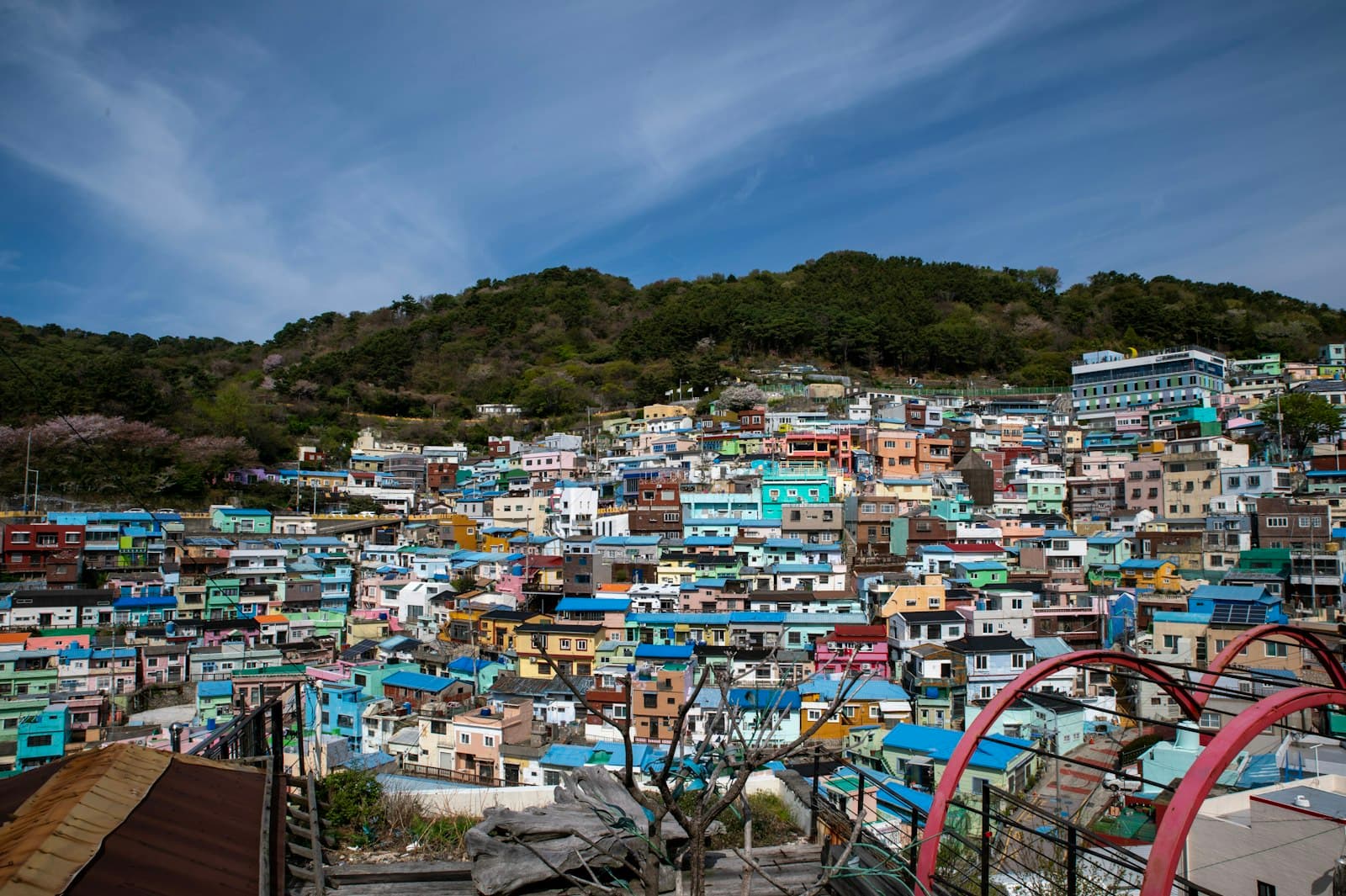
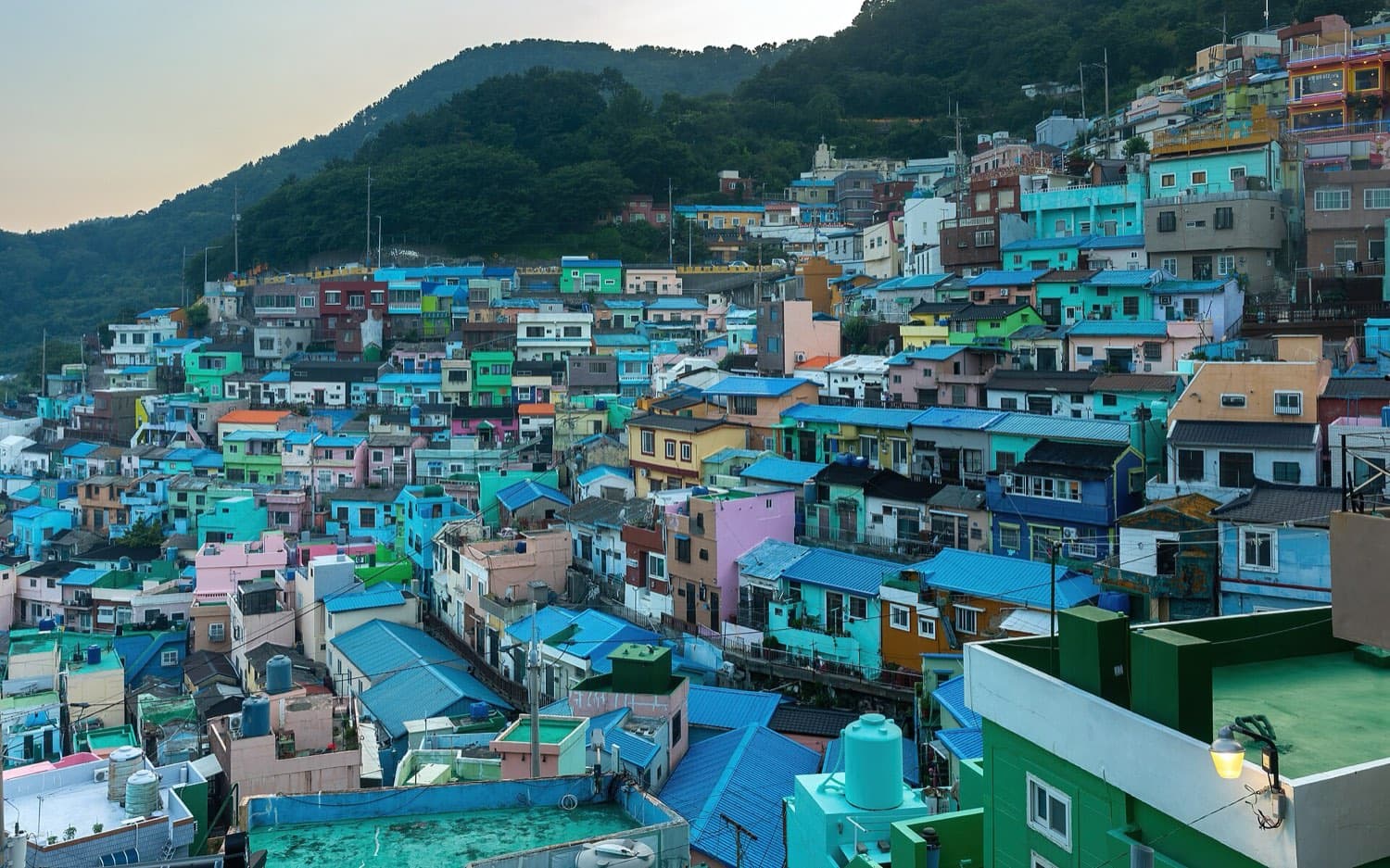
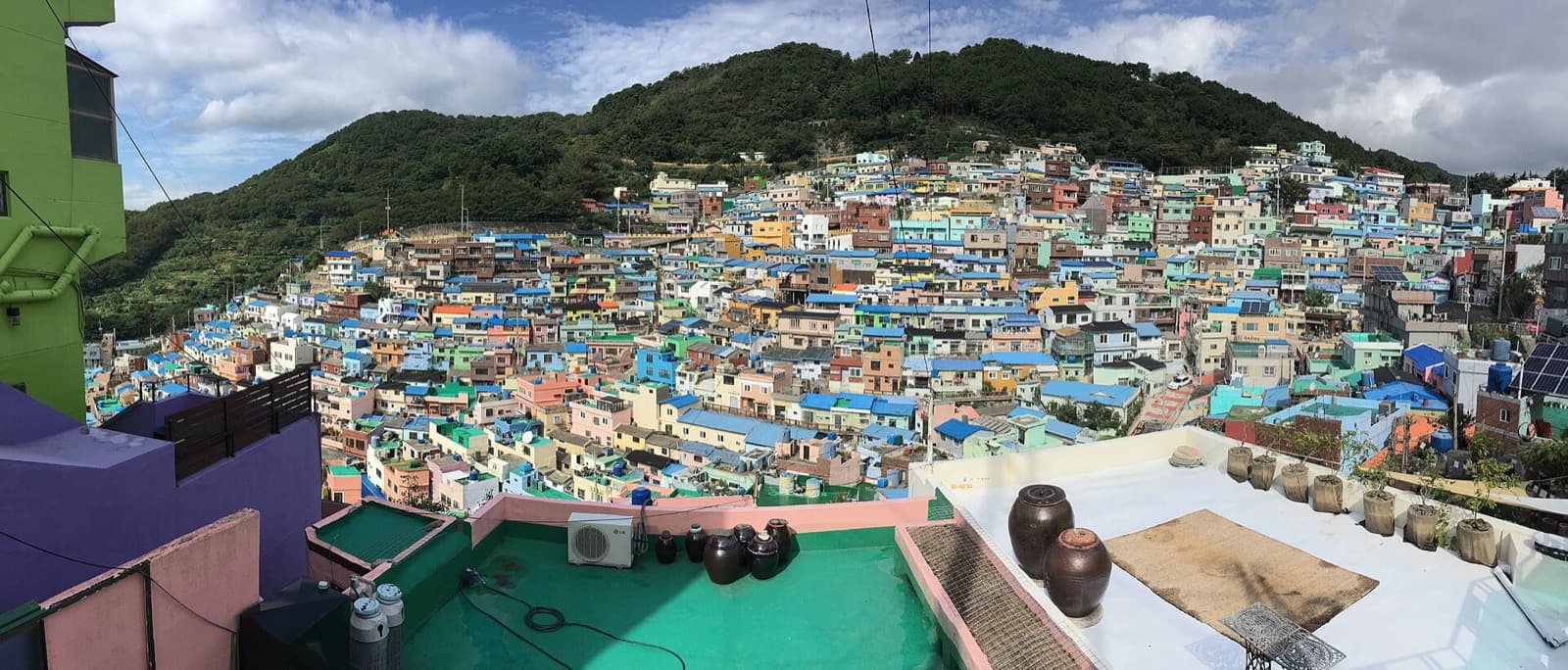
Gamcheon Culture Village is one of the most photographed places in Korea, a slope of pastel houses stacked in tiers above Gamcheon harbour and laced with murals down every stepped alley. You will hear it called the Santorini of Korea or the Machu Picchu of Busan. Those are marketing nicknames, not history, and the truth underneath is more interesting. This was a refugee neighbourhood. Displaced families built dense shanty homes up this slope during the war, and in 1955, during the hard years of recovery, around eight hundred families moved here and grew the Taegeukdo community, an ascetic Korean religious movement descended from Jeungsanism. It was the Taegeukdo who gave Gamcheon its planned, terraced shape. The houses were arranged so that no home fully blocks the sunlight or the downhill view of the one behind it, a rule that reflects a teaching about letting others prosper and also solves the plain problem of fitting many families onto a steep hill.
Many early houses were smaller than a modern studio apartment, and for years the village lacked proper water and sewerage. The color came much later. In 2009 the Ministry of Culture, Sports and Tourism, working with the Saha district office, ran a public-art project, remembered under names like Dreaming of Machu Picchu in Busan, that painted the murals and turned abandoned houses into galleries. What makes Gamcheon rare is that this happened without mass eviction. Residents stayed in their homes, and the art was layered around them. The walk ends at Gamcheon harbour, developed from 1978 as an auxiliary port to Busan's North Port, the working water the whole terraced village was built facing. Follow the full route on the Gamcheon painted hillside walk.
The cliff village: Huinnyeoul
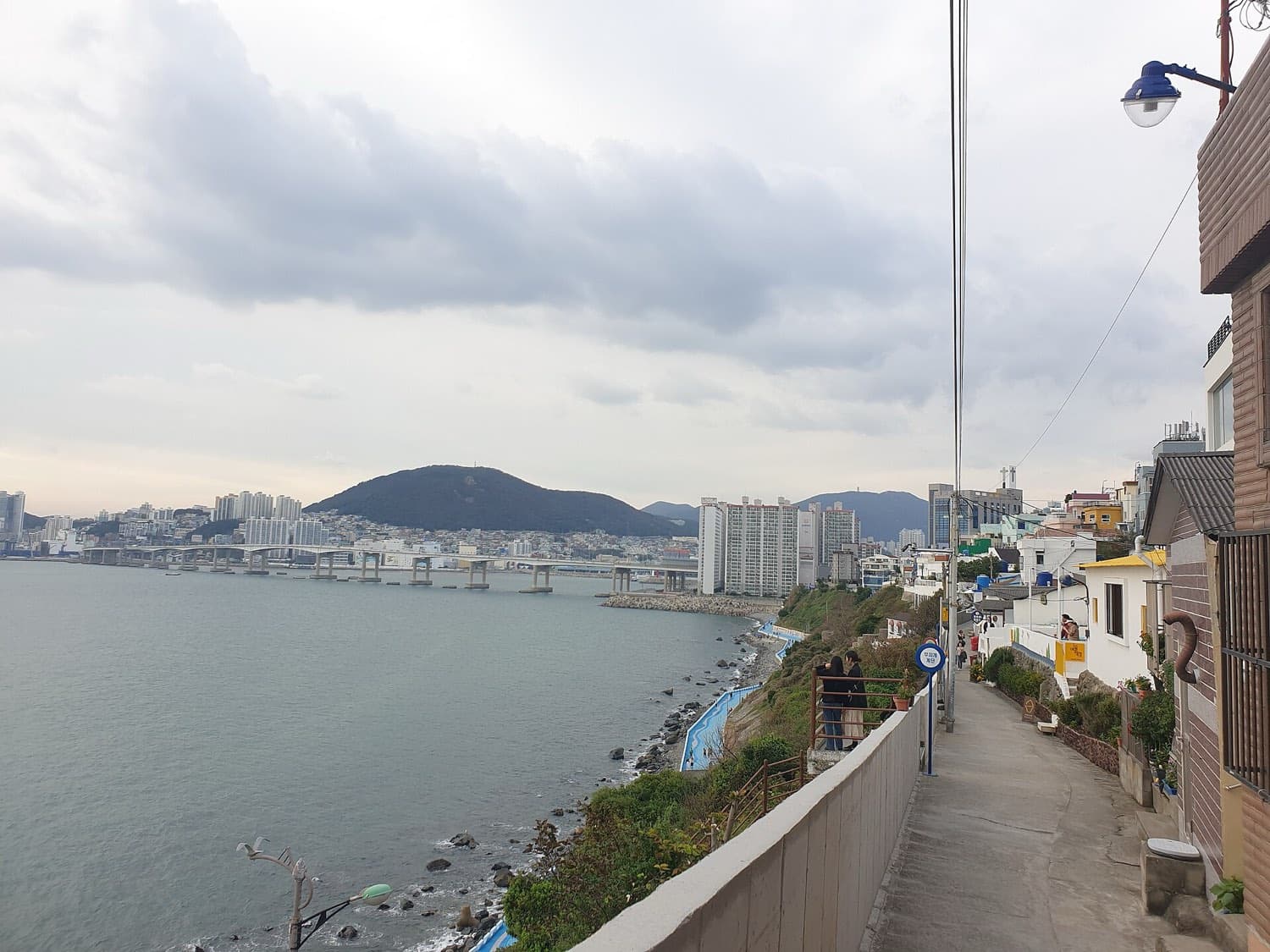
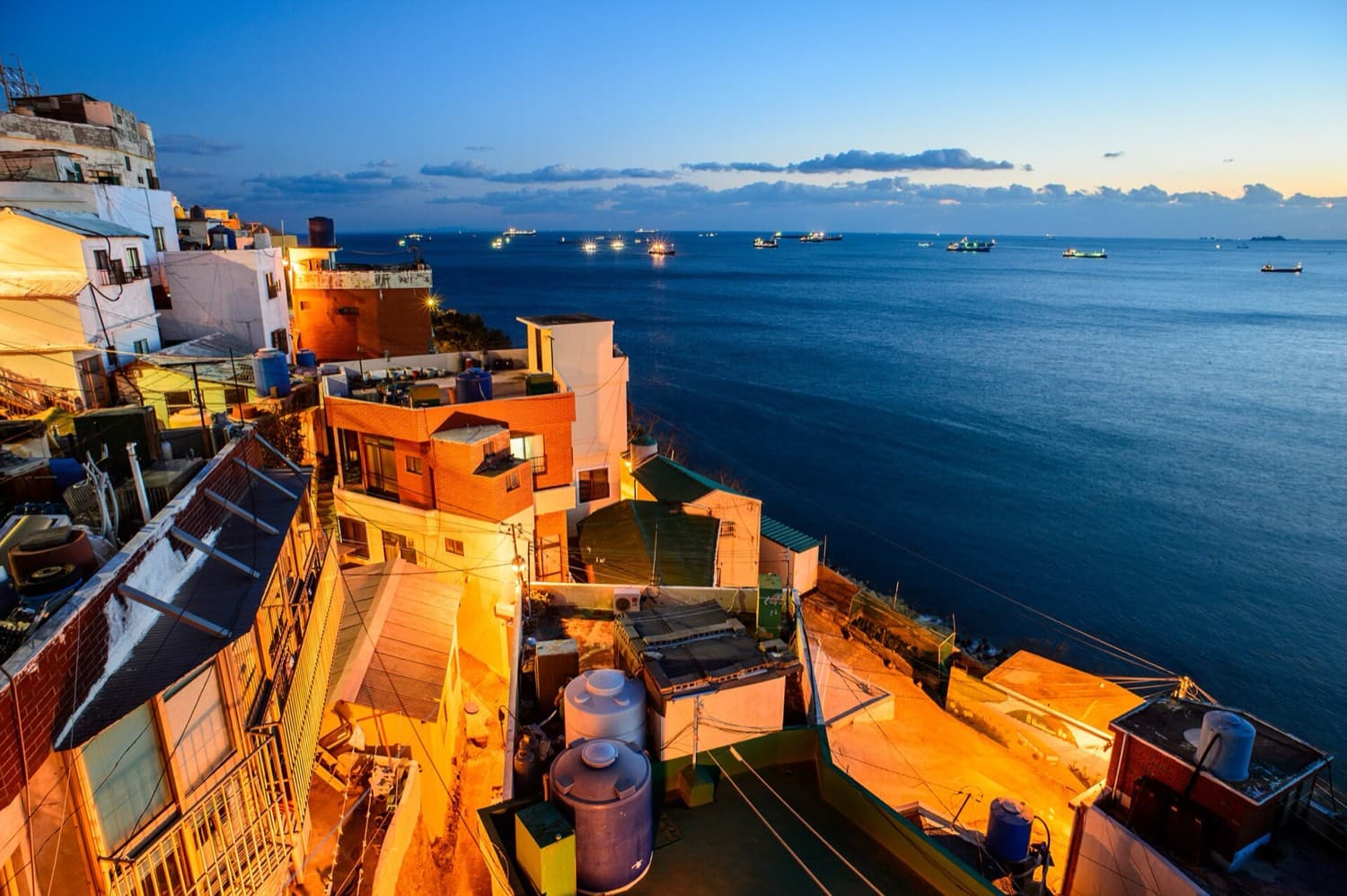
Across the harbour, on the island of Yeongdo, Huinnyeoul Culture Village carries the same shape of story on a sea cliff. Small white houses stand stacked on a narrow ledge between a high cliff and the open sea. The name means, roughly, white water, tied to a stream that once ran down from Bongnaesan mountain and foamed white as it met the shore. Huinnyeoul began as a modest fishing village, then densified during the war when refugees packed the steep coastal slope with makeshift homes because the flat land was already taken. A cliff was still ground. Here too you will hear the Santorini of Korea label, and here too it is aesthetic shorthand that says nothing about how the place came to be. The picturesque white houses and the hardship of their origin are the same walls.
The shore below is part of Busan's South Port, or Namhang, still worked by coastal and fishing boats, protected by the Namhang breakwater. Yeongdo also carries a heritage of haenyeo, women who free-dive for shellfish and seaweed without air tanks, a tradition rooted in Jeju divers who began settling here in the 1920s. The wider Culture of Jeju Haenyeo was inscribed on UNESCO's Representative List of the Intangible Cultural Heritage of Humanity in 2016. Around 2010 to 2011, local artists and residents remade Huinnyeoul into a culture-and-art village, and in December 2018 a seventy-metre coastal tunnel was cut through the rock to let older and less mobile visitors bypass a steep stair section. The walk continues along the Jeoryeong Coastal Walk, a roughly three-kilometre cliff trail that was a military-protected zone until it opened to walkers from 2001, and ends looking out at the shipping lanes into the Port of Busan, the largest and busiest port in South Korea, ranked sixth busiest container port in the world in 2023. The refugee village and the enormous port are the same sea. Walk it on the Huinnyeoul cliff path tour.
The port city's table: Jagalchi and Nampo-dong
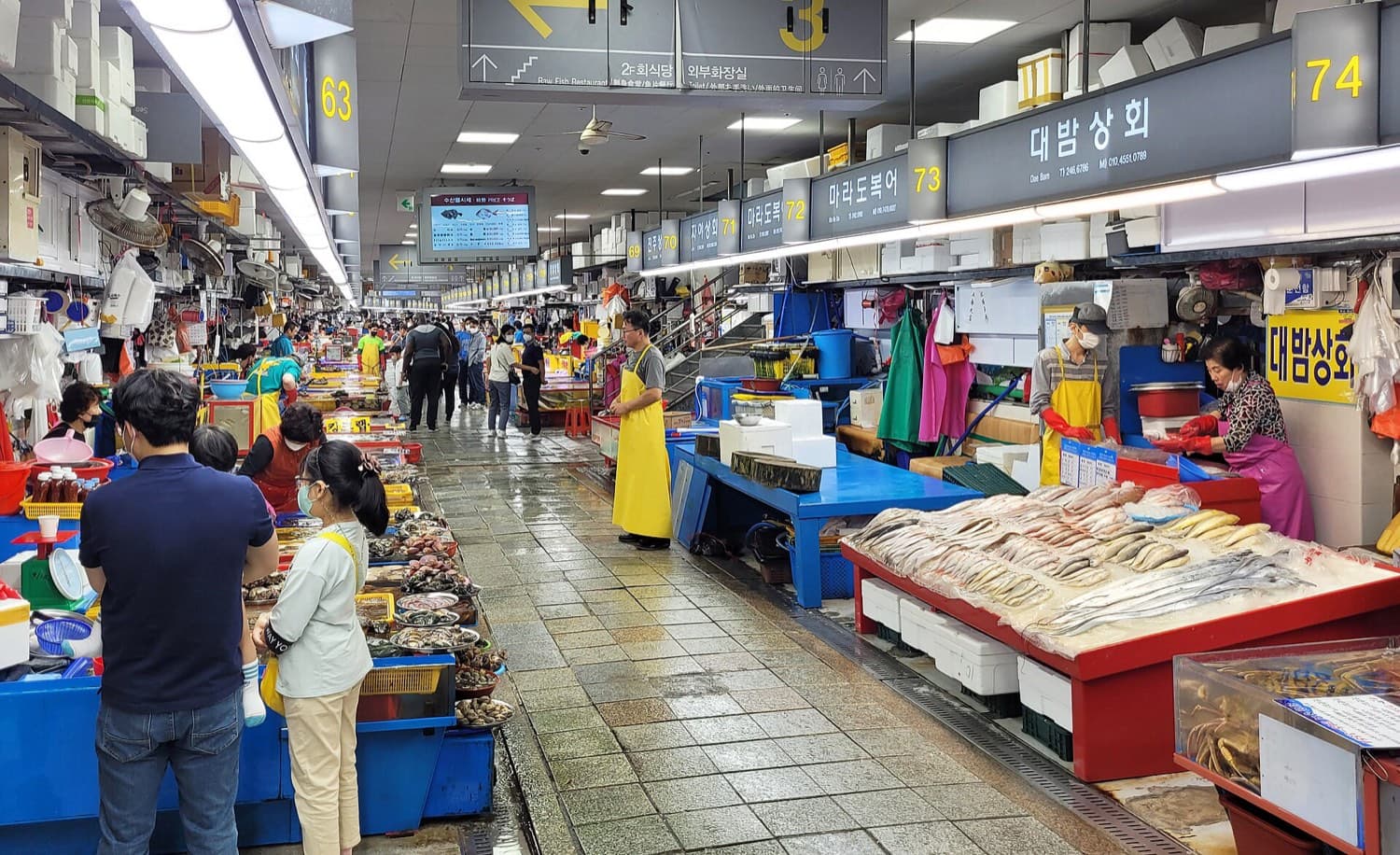
The third walk reads the war through food and trade. Jagalchi Market, along the Busan waterfront, is the largest fish market in South Korea, running roughly three kilometres from fresh seafood near the water to dried anchovies and sea laver further in. It is worked by the women traders known as the Jagalchi ajumma, and their tradition is not decorative: it traces to the period after the war, when women sold goods on these streets to keep their families going. The abundance grew, in part, out of that hard beginning.
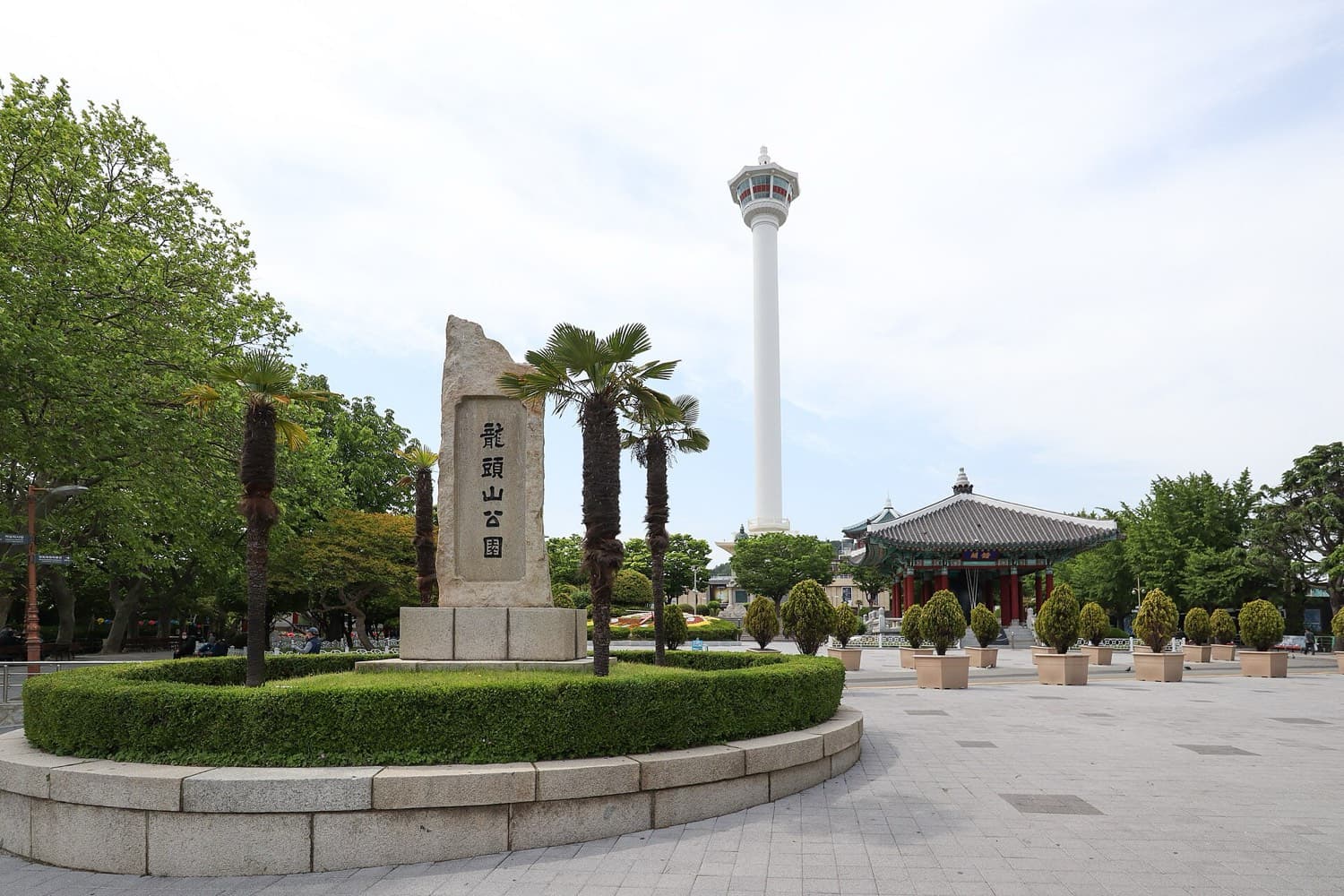
Nampo-dong holds two markets born the same way. Gukje Market, whose name means international, was founded in 1945 selling goods left by departing occupiers, then reshaped by the war when refugees and returnees from Japan set up stalls to survive, trading heavily in foreign merchandise. It sprawls now across a dense grid often described as six zones and twelve buildings. Beside it, Kkangtong Market, nicknamed for the Korean word for tin can, took its name from the stacks of canned surplus goods refugees sold here after the war; by day an ordinary market, from around seven thirty in the evening it becomes a celebrated night food market of carts and griddles. The walk lifts from the market floor at BIFF Square, a historic cinema district renamed in 1996 ahead of the first Busan International Film Festival, and climbs to Yongdusan Park, whose name means dragon's head mountain and whose hillside also held refugee shanties during the war. Above it stands Busan Tower, built in 1973, about 120 metres tall, a pure observation tower that gathers the whole harbour into one look. Yeongdo Bridge, Korea's first drawbridge with a single moveable section when it opened in 1934, sits on the route as its own war memory: a place where families separated by the conflict came searching, leaving written pleas along its handrails. Trace the whole table on the Jagalchi and Nampo-dong food walk.
One city, one through-line
These three walks are not three separate Busans. They are one port city read three ways: a hillside, a cliff, and a market floor, each one a place of survival that later became a place of beauty. Start with any of the Busan walking tours and the pattern holds. The color, the fish, the murals, and the view were all laid over the same wartime ground, and the honest pleasure of walking Busan is holding both at once.
Sources
- Gamcheon Culture Village tour narration and historical context, Roamer (facts fact-audited from the village's own history and Saha district records).
- Huinnyeoul Culture Village tour narration and historical context, Roamer (Yeongdo district and regional tourism records; UNESCO intangible-heritage listing for Jeju haenyeo).
- Jagalchi and Nampo-dong tour narration and historical context, Roamer (Jagalchi Market history, Gukje and Kkangtong market histories, Busan International Film Festival).
- UNESCO Representative List of the Intangible Cultural Heritage of Humanity, Culture of Jeju Haenyeo (inscribed 2016).
- Port of Busan container-throughput and global ranking records (2023 to 2024).
Frequently asked questions
- Why was Busan the temporary capital during the Korean War?
- During the Korean War from 1950 to 1953, Busan served as the temporary capital of the Republic of Korea for a combined total of 1,023 days. As a southern port far from the front, it sheltered the government and became the country's great refuge, its population swelling toward a million as refugees arrived.
- Was Gamcheon Culture Village really a refugee settlement?
- Yes. Gamcheon began as a wartime refugee hillside, and in 1955 around eight hundred families moved there and grew the Taegeukdo religious community, who gave it its terraced shape. The pastel colors and murals came much later, in a 2009 public-art project that revived the village without mass eviction. Residents still live there today.
- Why is Huinnyeoul called the Santorini of Korea?
- Huinnyeoul is called the Santorini of Korea because of its small white houses stacked on a sea cliff above blue water. The nickname is aesthetic marketing, not history. The village was actually a Korean War refugee settlement built on a cliff because the flat land was already taken, and people still live there.
- What is the connection between Nampo-dong's markets and the war?
- Both major Nampo-dong markets grew from wartime survival. Gukje Market, whose name means international, was reshaped when refugees and returnees from Japan set up stalls trading foreign goods. Kkangtong Market is nicknamed for the tin cans of surplus goods refugees sold after the war. Nearby Jagalchi Market's women traders, the Jagalchi ajumma, trace their tradition to postwar street selling.
- Which Busan walks cover this Korean War history?
- Three self-guided Roamer walks cover it: the Gamcheon painted hillside, the Huinnyeoul cliff path on Yeongdo island, and the Jagalchi and Nampo-dong market walk. Each starts at a place people photograph today and traces it back to the wartime hardship it was built on.
Ready to experience it?
Gamcheon Culture Village: The Painted Hillside
90 min · 1.8 km · moderate
More from Busan
Explore more at your own pace.
Busan Travel Guide: Days, Transport, Weather, Safety, Budget
Gamcheon's Refugee Origins: Reading Busan's Painted Hillside
Jagalchi Market: How Busan's Fish Market Explains the Whole Port City
The Stacked White Houses of Huinnyeoul: Busan's Cliff Village Beneath the Postcard
The Gamcheon Panorama Viewpoint: Reading a Refugee Slope Two Ways at Once