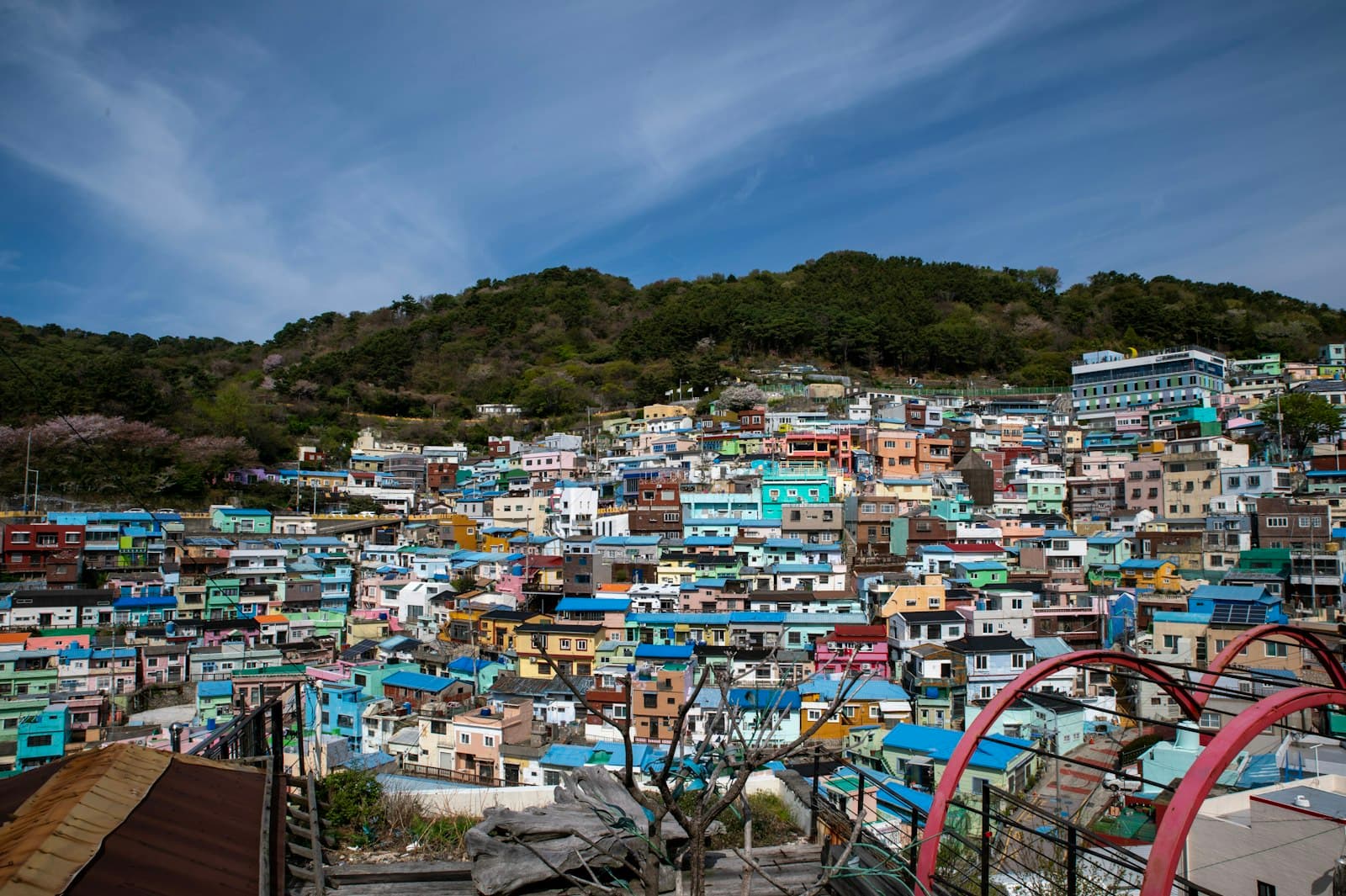
A slope of pastel houses stacked in tiers above a working harbour, where one of the most photographed places in Korea was born as a Korean War refugee settlement, and real people still live behind the painted walls.
Start · The Painted Hillside: Gamcheon's Terraced Panorama
DirectionsStops
- 1
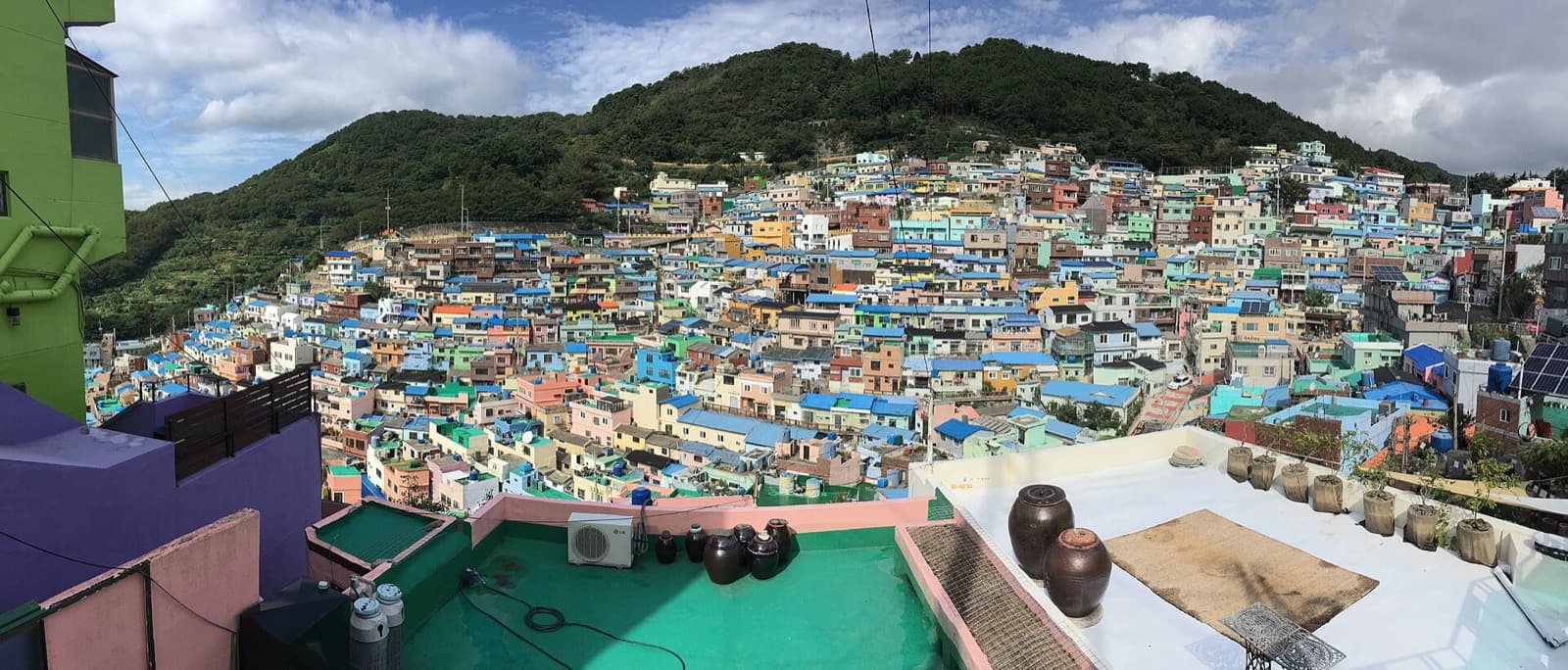
The Painted Hillside: Gamcheon's Terraced Panorama
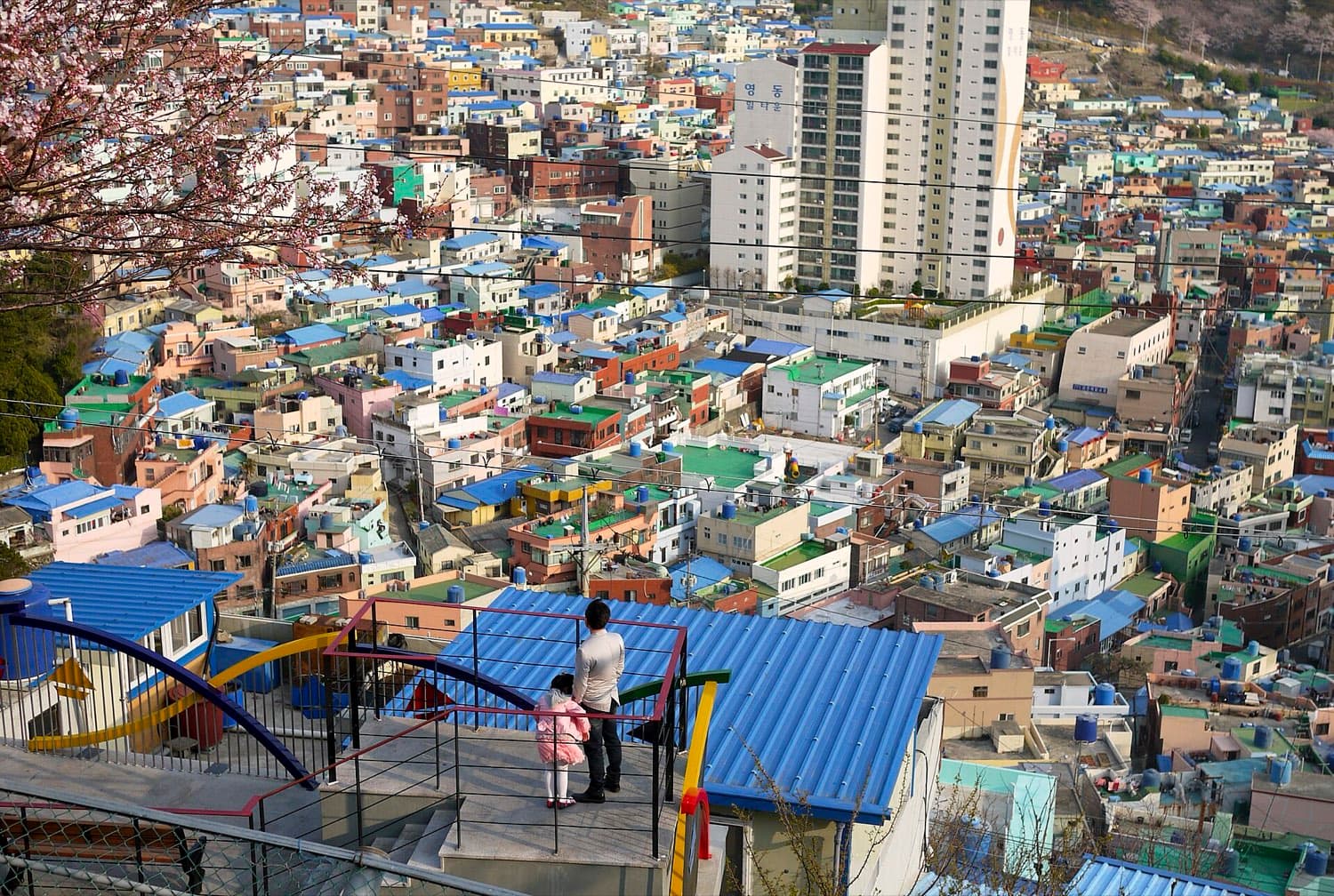
The classic vantage over the whole slope of pastel houses stacked in tiers above the harbour.
- 2
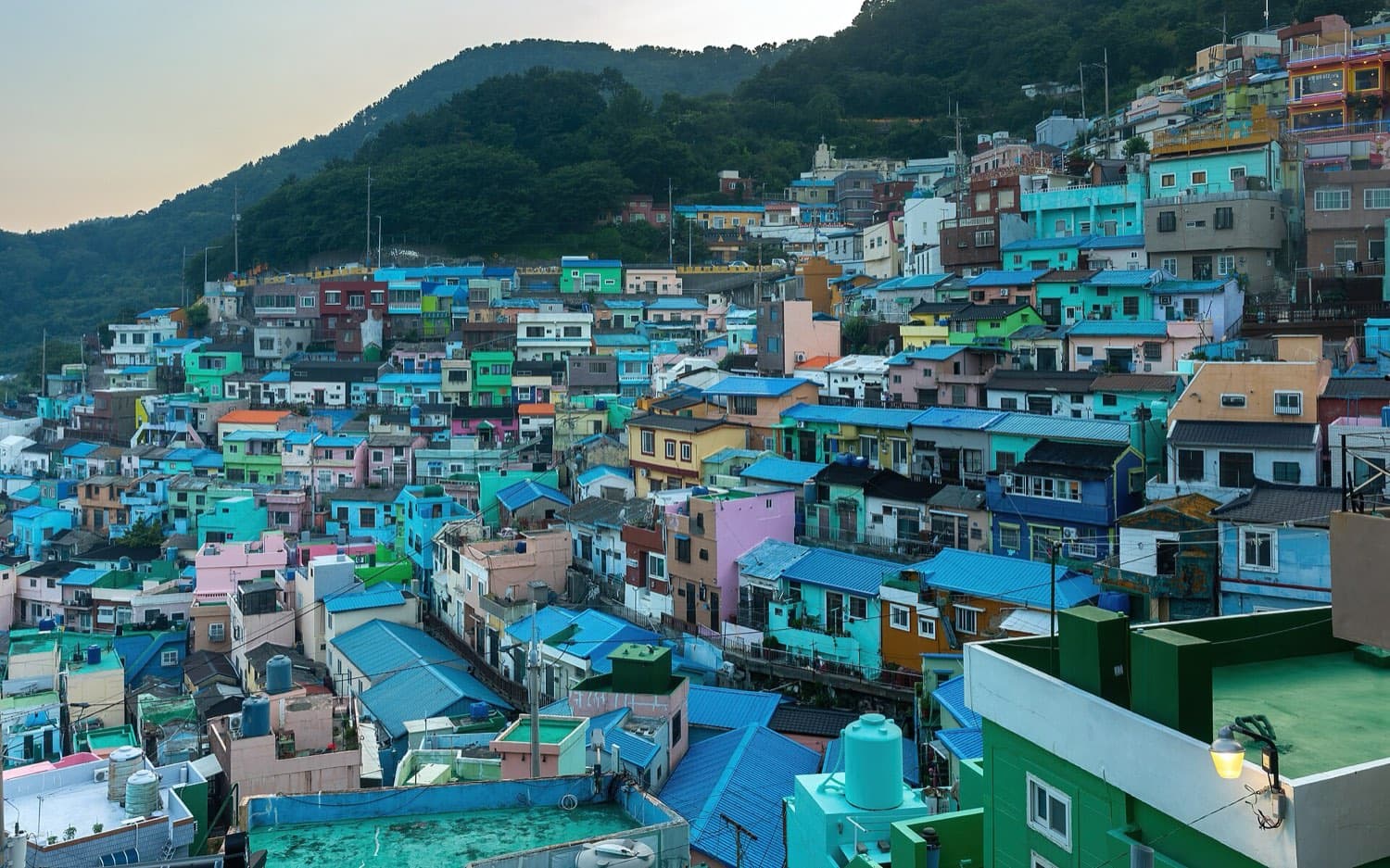
Refugees and the Taegeukdo Community: How Gamcheon Began
The sober origin: a Korean War refugee hillside and the ascetic Taegeukdo community who settled it.
- 3
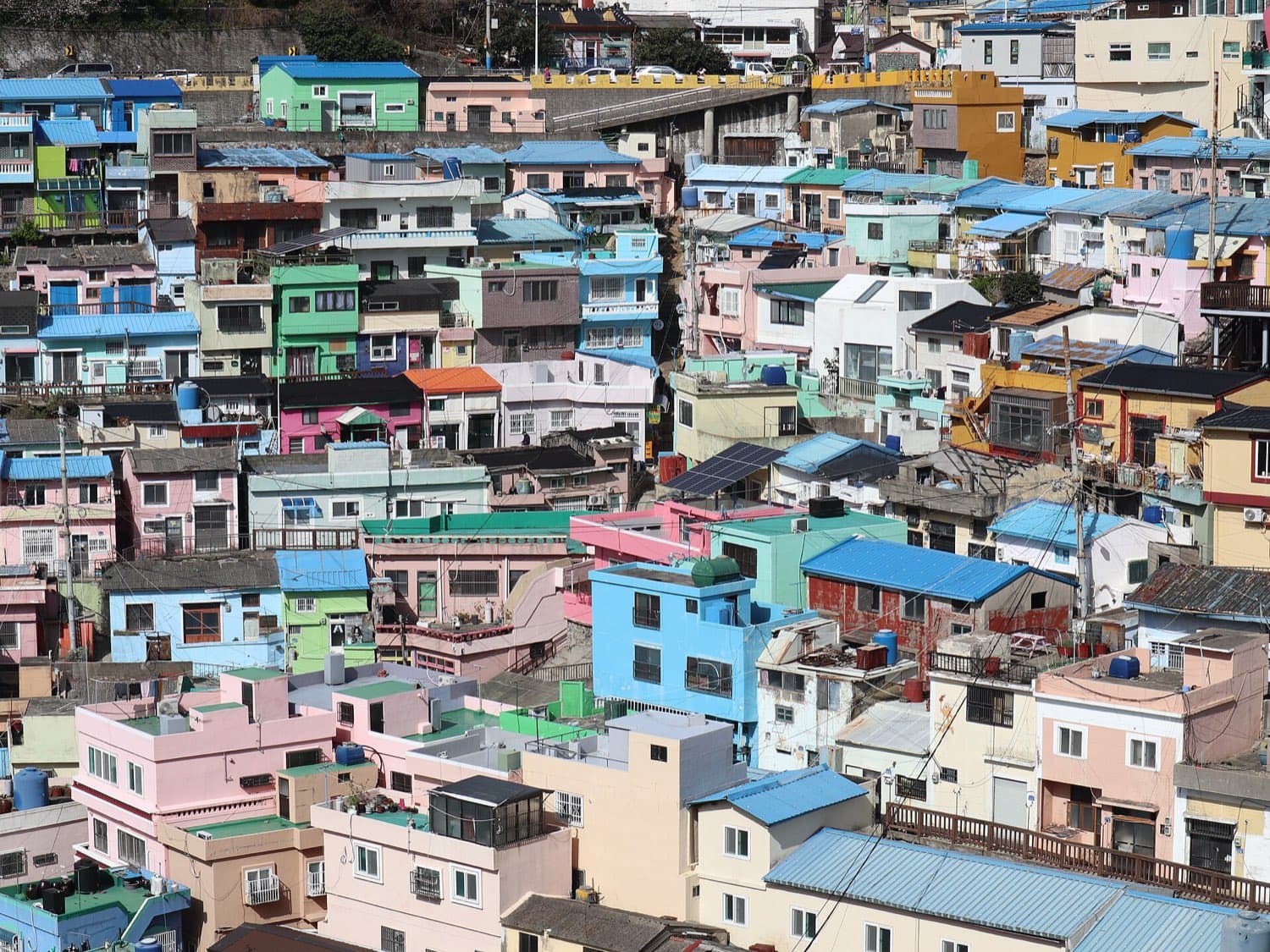
The Stacked Houses and the Alley Maze
A stepped-alley core where the tiered layout reveals a religious ethic and a response to hardship at once.
- 4
The Little Prince and the Fox
A sculpture of the Little Prince and his Fox on a wall above the rooftops, one of the village's most loved photo spots.
- 5
Haneul Maru: The Sky Deck Over the Rooftops
An observation deck at a high point of the village, opening a panorama over the whole slope toward the South Port of Busan.
- 6
Two Thousand Nine: The Art That Saved the Village
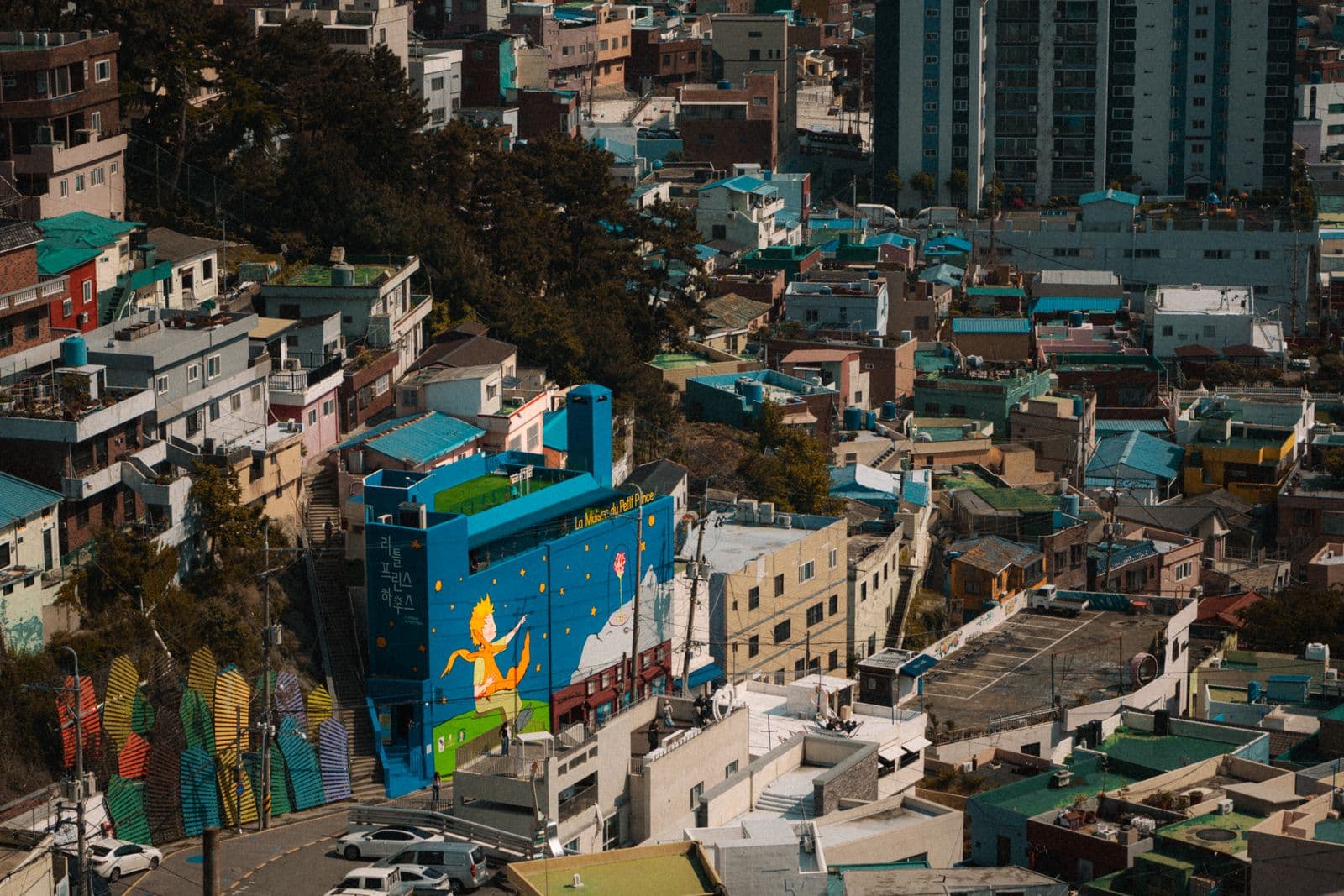
The lane of house-galleries born from the two thousand nine public-art project that revived the village without eviction.
- 7
Down to the Sea: Gamcheon Harbour
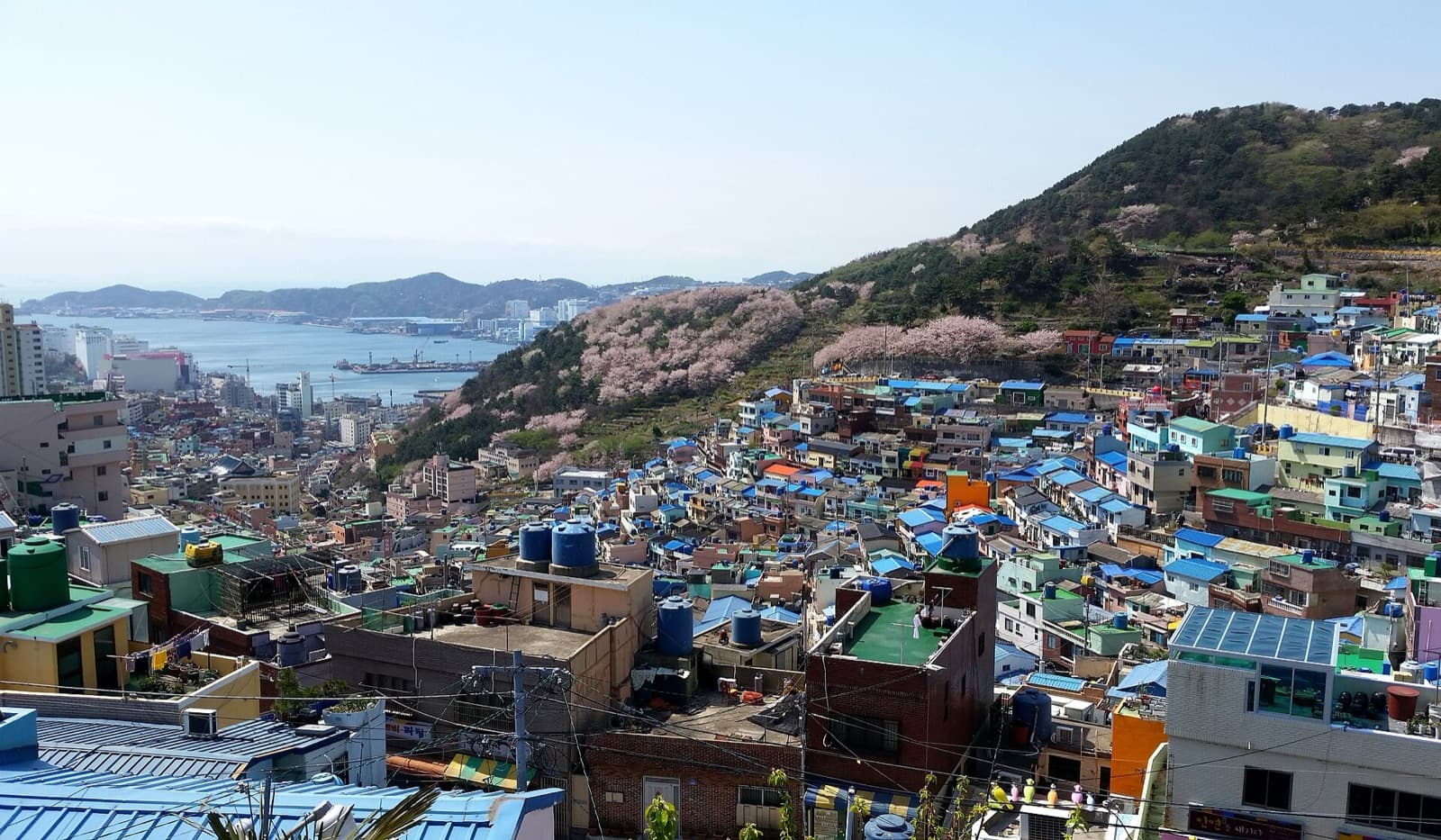
A seaward viewpoint where the painted hillside meets the working port the refugees first arrived to.
Details
Best Time to Visit
Late morning to mid-afternoon on a clear day, when the light is full on the pastel houses and the harbour view from the sky deck is sharpest. Weekday mornings are quieter and gentler on residents than crowded weekend afternoons. Avoid the hottest midday hours in summer, since the hillside is exposed and the climbing is steady.
Pro Tips
- •Reach the village with a rechargeable transit card, taking the Busan subway and then a local bus up the hill, since the final climb is steep and buses are the standard way up.
- •Wear proper walking shoes with grip. The route is almost entirely stepped alleys and staircases, and the surfaces can be uneven.
- •Carry water and start from the top, working downhill toward the harbour so you climb less and finish at the sea.
- •The village is free to enter, but a few individual house-galleries charge a small separate fee, so keep a little cash handy if you want to go inside one.
- •Use the public viewpoints, the Little Prince statue, and Haneul Maru for photos rather than pointing your camera down residential lanes or into homes.
- •Build in unhurried time at Haneul Maru and the seaward edge, since these open the widest views and are the natural pause points of the walk.
Safety & Precautions
- •This is a lived-in residential village. Keep your voice low in the alleys, do not peer into or photograph homes and windows, and step aside so residents can pass.
- •The slope is a maze of steep, narrow stepped alleys and staircases that can be slippery when wet, so watch your footing and take the stairs slowly.
- •The hillside is exposed with little shade, so protect yourself from sun and heat in warm months with water, a hat, and rest stops.
- •Near the seaward edge and the working harbour, keep to marked paths and public viewpoints and stay clear of any active port or industrial areas below.
Travel advisory: Exercise Normal Precautions (Level 1).
Gallery
Related Reading
Go deeper on what you'll see, hear, and walk through.
Overview
Best Self-Guided Walking Tours in Busan (2026)
3 min
Overview
Busan Travel Guide: Days, Transport, Weather, Safety, Budget
6 min
Overview
One Day in Busan: A Walkable Morning-to-Evening Itinerary
7 min
Thematic
Best Culture Walking Tours in Busan (2026)
2 min
Thematic
Busan's War-Made City: How a Port Refuge Became a Painted Coast
7 min
Companion
Gamcheon's Refugee Origins: Reading Busan's Painted Hillside
7 min
Deep dive
The Gamcheon Panorama Viewpoint: Reading a Refugee Slope Two Ways at Once
6 min
Read
What to Eat in Busan
7 min
Read the walk
The full story of Gamcheon Culture Village: The Painted Hillside, in words. Prefer to listen? Play it narrated, from home or on location.
Introduction
This is a walk through Gamcheon Culture Village, a hillside of pastel houses on the western edge of Busan, in South Korea. Over seven stops, across roughly two kilometres and about ninety minutes at your own pace, you will read a single slope two ways at once. It is one of the most photographed places in Korea, a tier of painted houses laced with murals and art down every lane. It was also born as a refugee settlement, built by some of the poorest survivors of the Korean War and by the Taegeukdo religious community on a steep slope above Gamcheon harbour. The houses were laid out in terraces so that no home fully blocks the light or the view of the one behind it. That order came partly from a religious teaching about letting others prosper, and partly from hardship on a cramped hill. In the year two thousand nine, a government art project turned a struggling, emptying village into a destination without evicting anyone, and residents still live here today. The stops are short and skippable, so linger where the color pulls you and move on where it does not. Remember, though, that this is a lived-in neighbourhood. Keep your voice low in the alleys, do not peer into or photograph homes, and let residents pass. The beauty is real. So is the poverty it came from. This walk holds both. When you arrive at the main village viewpoint near the entrance on Gamnae two-ro, begin with stop one.
1. The Painted Hillside: Gamcheon's Terraced Panorama
Start here, looking out over the whole slope. This is Gamcheon Culture Village, in Korean Gamcheon munhwa maeul, where maeul simply means village. It sits in Saha District on the western side of Busan, and the houses climb the hillside in tiers, each painted a different soft shade, blue and pink and mint and cream, so the eye never quite settles. Between them run hundreds of narrow stepped alleys. From up here you can read the shape of the place before you walk into it. The houses face down toward Gamcheon harbour, so the slope is really a great open amphitheatre turned toward the sea. You will hear this village called the Santorini of Korea or the Machu Picchu of Busan. Those are marketing nicknames, not history, and the truth underneath them is far more interesting than either. What you are actually looking at is a working refugee neighbourhood that became art. According to the village's own history, well over a million visitors now come in a recent year, and yet people still live in almost every one of these painted houses. That is the tension you will carry the whole way. The color is genuinely beautiful, and it was laid over real hardship. As you stand here, keep in mind that this is someone's home ground. Speak softly, and when you frame a photo of the panorama, keep the lens on the rooftops and the hillside rather than into anyone's window or doorway. Take your time. Let your eye follow one painted lane up the slope, then another. When you are ready, drop into the village and follow the story of how it began.
2. Refugees and the Taegeukdo Community: How Gamcheon Began
Pause here for the part of the story the color can make it easy to forget. During the Korean War, from the year nineteen fifty to the year nineteen fifty-three, Busan became the temporary capital of the Republic of Korea. For a combined total of more than one thousand days, this was where the government sheltered while the peninsula was at war. According to the records behind the wartime-capital sites, the city's population swelled from around three hundred thousand people toward one million as refugees poured in, hundreds of thousands of them, with nowhere to live. They built dense shanty neighbourhoods up the hillsides, and this slope was one of them. Then, in the year nineteen fifty-five, during the hard years of recovery, around eight hundred families moved to this village, growing the community of the Taegeukdo, an ascetic Korean religious movement, a branch of the faith known as Jeungsanism. It was they who gave Gamcheon its planned, orderly, terraced shape, which sets it apart from the scattered refugee villages nearby. Life here was not picturesque. Many early houses were smaller than a modern studio apartment, a good number without toilets, and for years the village lacked proper water and sewerage. Hold that plainly as you walk. The people who built this place were among the poorest survivors of the war, and they made a community on a bare steep hill. The beauty came much later, and it was laid over this. When you look at a painted wall further on, remember whose home it has always been. Move on gently when you are ready.
3. The Stacked Houses and the Alley Maze
Stand in one of the narrow stepped alleys and let your eye travel up and down the slope. This is the physical record of everything you just heard. The houses are built in tiers straight up the hillside, and they are laced together by hundreds of these narrow stepped lanes and footpaths, a slanted labyrinth where the streets are as often stairs as they are roads. Look closely at how the houses are set. According to the village's history, they were arranged in terraces so that no single house fully blocks the sunlight or the downhill view of the house behind it. That is a remarkable rule for a poor and crowded slope, and it comes from two places at once. It reflects a Taegeukdo teaching about allowing others to prosper, a communal ethic written into brick and stairs. And it was also simply practical, a way to fit many families onto one steep hill so that each still got a little light and a little of the sea below. The pastel colors you see came later, added during the art projects, but the shape beneath them is this older logic of shared light. Now, one thing matters more than any photograph here. People live in these houses right now. These alleys are their front paths, their stairs home, their route to carry groceries up the hill. So keep your voice down, do not lean into open doorways, and do not photograph inside homes or windows. If a resident needs to pass, step aside. Read the maze, admire the ingenuity of the shared-light rule, and move through it as a guest.
4. The Little Prince and the Fox
Here, seated on a wall above the rooftops, are the Little Prince and his Fox. They gaze out over the painted village toward Busan port and the sea beyond, and they have become one of the most loved spots in the whole hillside. The sculpture was installed as part of the village…
Full narration for this stop unlocks with the tour.
5. Haneul Maru: The Sky Deck Over the Rooftops
Climb to Haneul Maru, the sky deck. In Korean, haneul means sky, and maru carries a sense of a raised floor or a summit, so the name promises height, and it delivers. This is an observation deck and rest area near the highest accessible point of the village, and from here the…
Full narration for this stop unlocks with the tour.
6. Two Thousand Nine: The Art That Saved the Village
Walk the art lanes now, because this is where the two halves of the story meet. By the early two thousands, Gamcheon was emptying out and struggling, its population thinning, its houses falling vacant. Then, in the year two thousand nine, the Ministry of Culture, Sports and…
Full narration for this stop unlocks with the tour.
7. Down to the Sea: Gamcheon Harbour
End your walk facing the water. From this lower, seaward edge of the village, the slope drops away toward Gamcheon harbour, in Korean Gamcheon-hang, where hang means harbour or port. This is a working port, and it belongs to the same story as the painted houses above it.…
Full narration for this stop unlocks with the tour.