Gamcheon Culture Village: The Painted Hillside
90 min · 1.8 km · moderate
Plan two to three days in Busan to walk its markets, painted hillside villages, and coastal cliff paths at your own pace, get around almost entirely on the Busan Metro with a rechargeable transport card, aim for May or October weather, and treat the city as a low-crime place where the real risks are steep wet steps and summer typhoons rather than street crime. That is the short version. Here is the detail, ordered the way most people actually plan a trip.
How many days do you need in Busan?
Two to three days covers Busan comfortably for a first visit. With two days you can do the harbour markets and one hillside village and still have a beach evening. Three days lets you add a coastal walk and a second neighborhood without rushing. Five or more days makes sense only if you want day trips to Gyeongju or the cherry-blossom town of Jinhae, or if you plan to move slowly and eat your way through the markets.
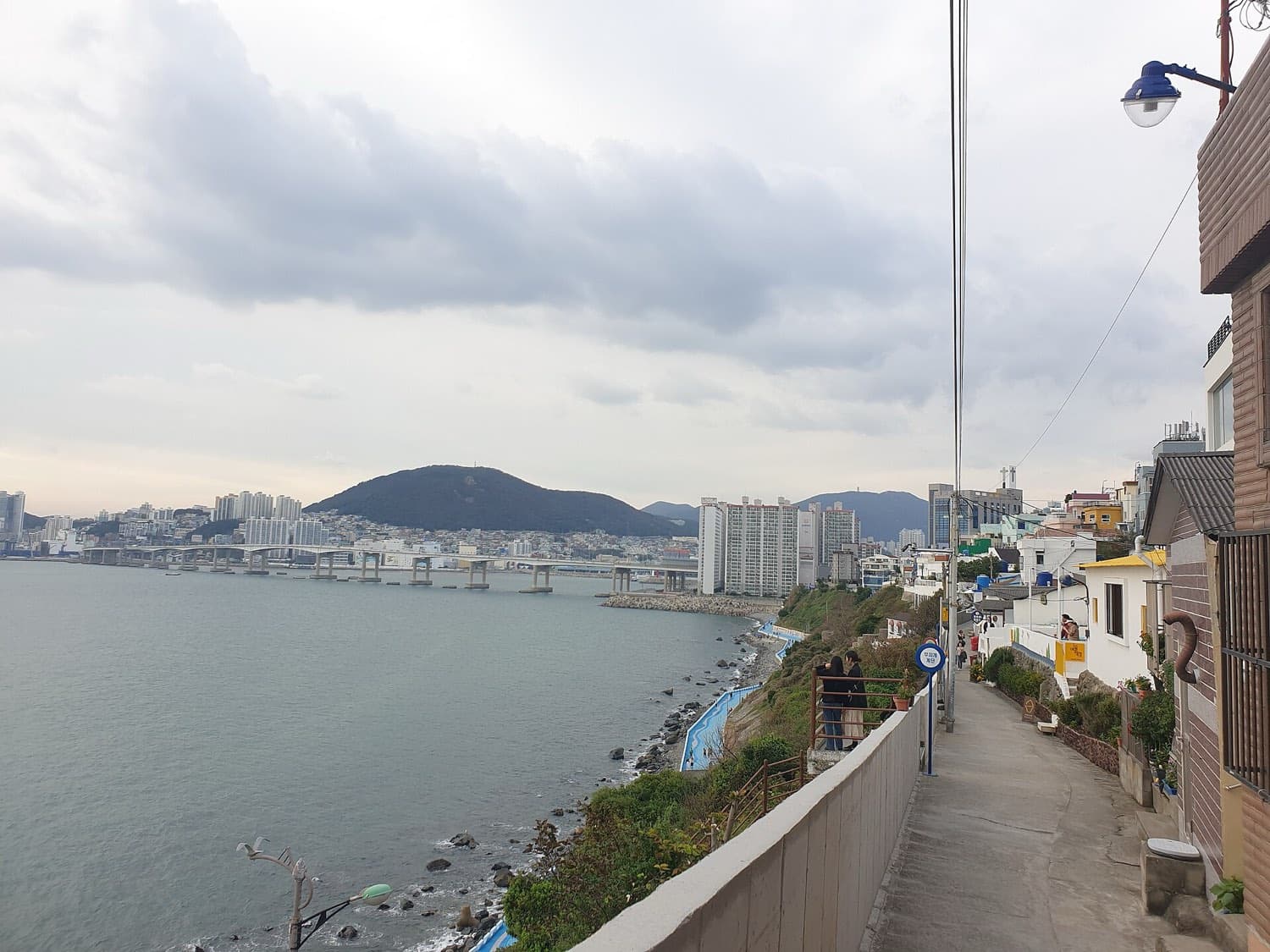
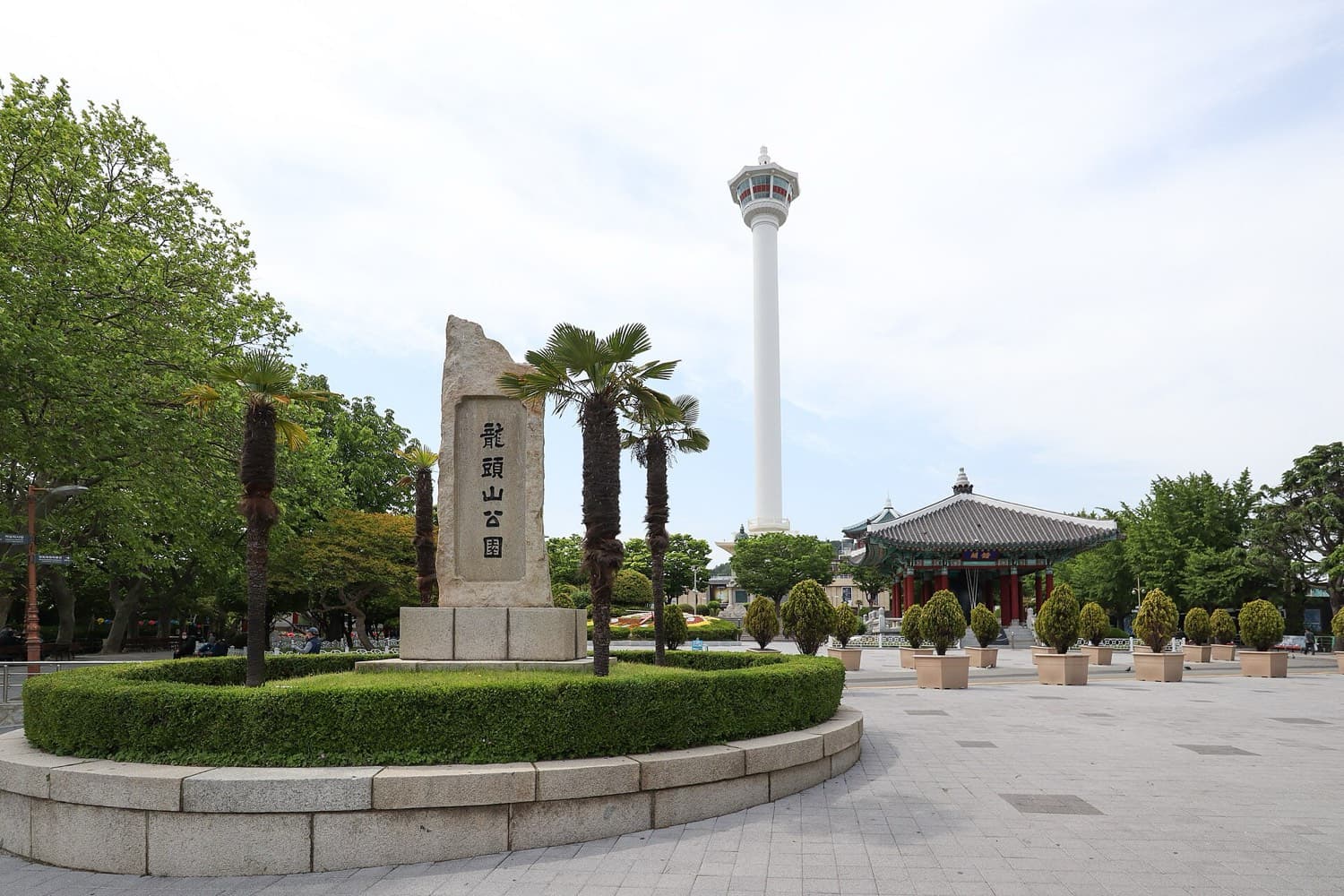
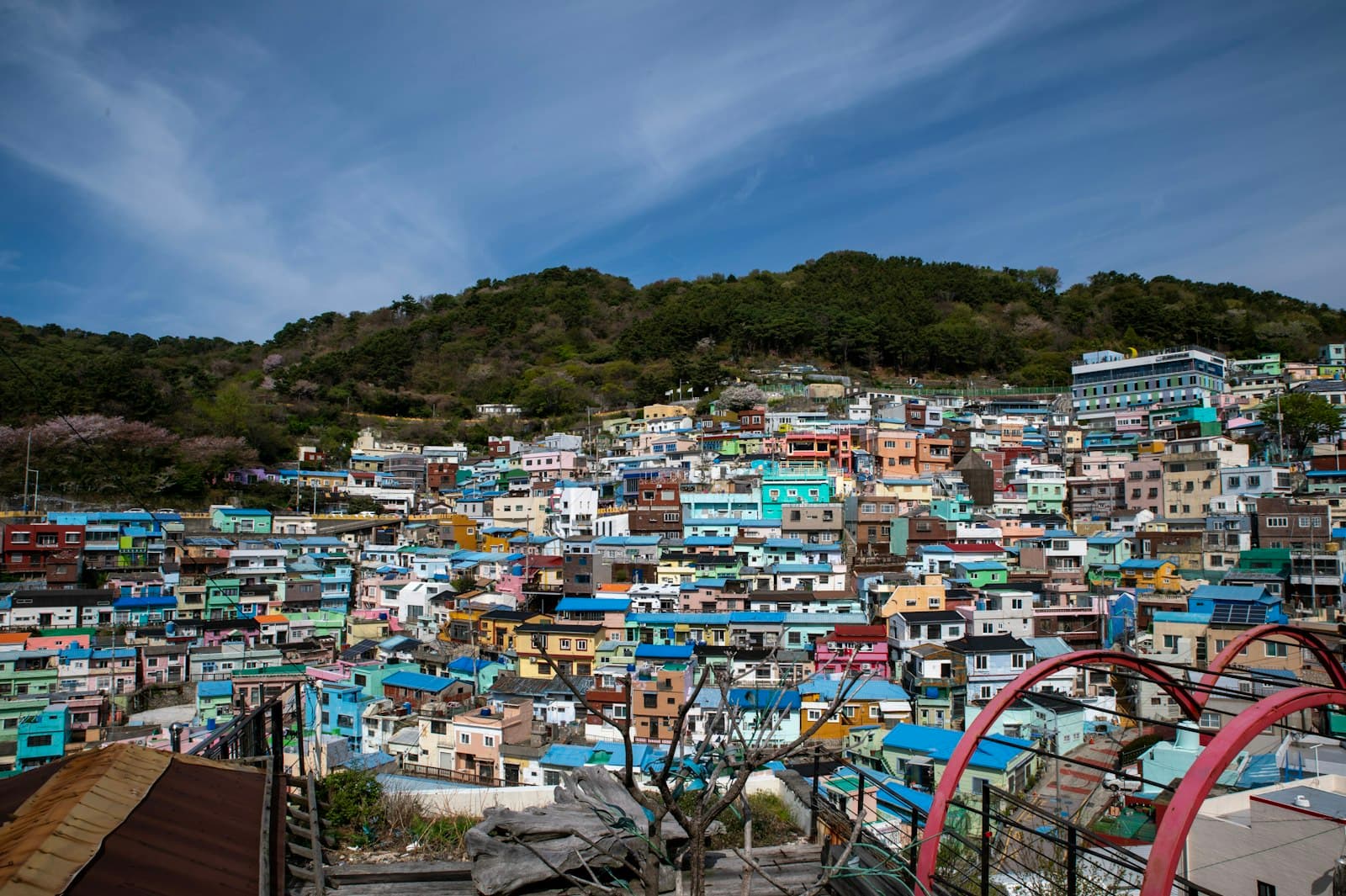
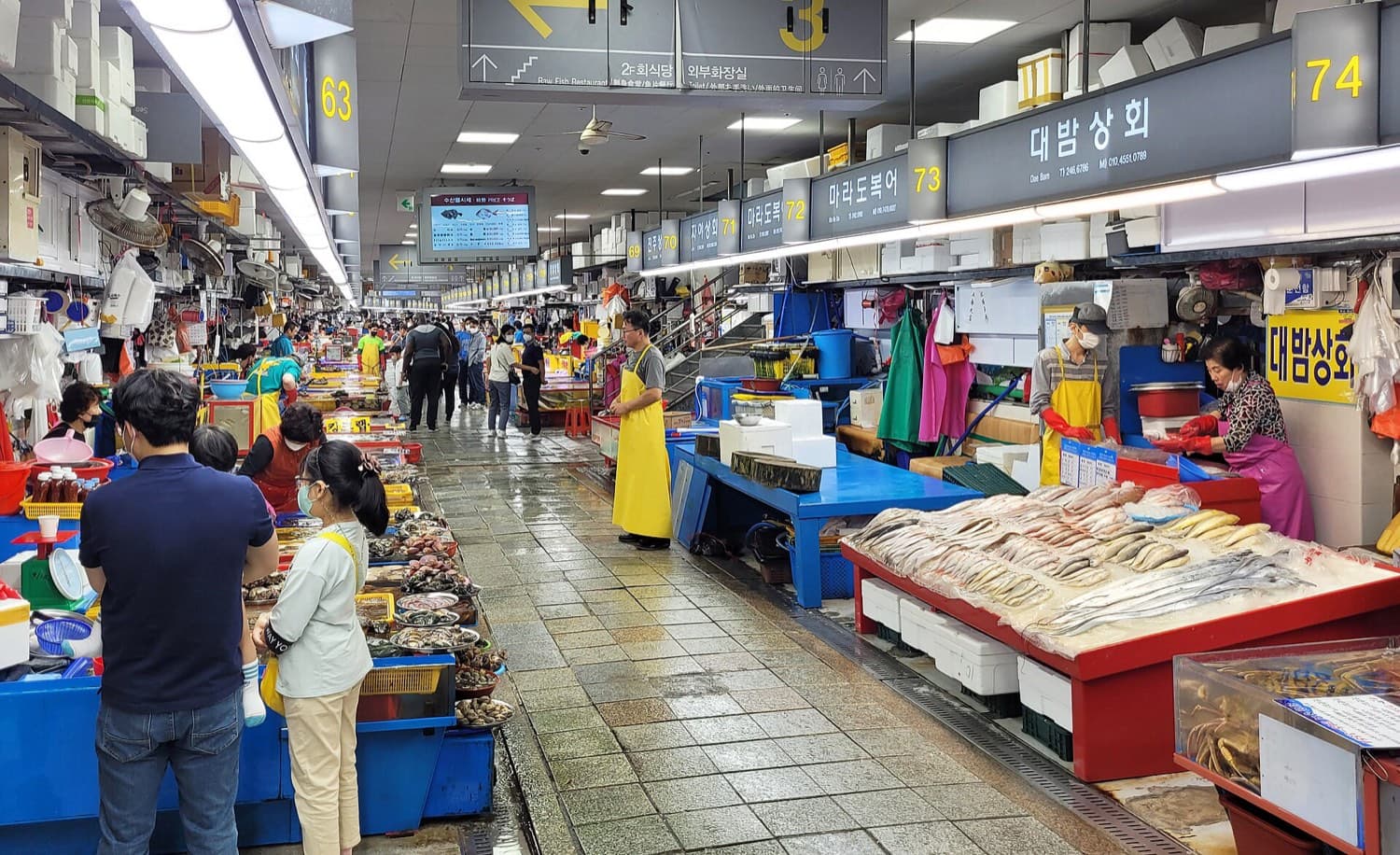
Busan rewards a walking pace more than a checklist. The three self-guided routes in the Roamer catalog are built to be short and skippable, so they slot into a two or three day plan without eating a whole day each. The Jagalchi and Nampo-dong market walk runs about 3.5 kilometers over roughly two hours and reads the port through fish, markets, film history, and a tower view. Gamcheon Culture Village is about 1.8 kilometers and 90 minutes up a slope of pastel refugee-era houses. Huinnyeoul is a shorter cliff-edge walk, under a kilometer, along the sea. You can browse all three on the Busan walking tours hub and fit them around beaches and food.
A workable three day shape: markets and Busan Tower on day one, Gamcheon plus a beach evening on day two, the Huinnyeoul coastal walk plus Yeongdo on day three.
How do you get around Busan?
Hear a stop from this walk
Two Thousand Nine: The Art That Saved the Village
The Busan Metro is the backbone, and a rechargeable transport card is the way to pay. Busan has four numbered subway lines plus the Busan-Gimhae Light Rail and the Donghae Line, and the trains reach almost everything a first-time visitor wants. Buy a card, tap in, and stop counting coins.
Fares are distance-based. With a transport card the base fare covers the first stretch of your ride and a small increment is added for longer trips, so most single rides within the city are inexpensive. Buying a paper single-journey ticket costs a little more than tapping a card, which is why a card pays for itself within a day or two.
On the card question: Busan's official card is the Hanaro Card, but the national cards T-money and Cashbee work interchangeably at Busan turnstiles, on city buses, and across other Korean cities. If you already have a T-money card from Seoul, it works here. If not, buy any of them at a convenience store or station machine and top it up with cash.
From Gimhae International Airport, the cheapest route into the city is the Busan-Gimhae Light Rail, transferring to Metro Line 2 at Sasang Station or Line 3 at Daejeo Station. An Airport Limousine bus also runs to the Haeundae beach area and takes about an hour. Taxis are metered and reasonable, with deluxe and larger taxis costing more.
One honest caveat for the walking routes: Gamcheon and Huinnyeoul are hillside and clifftop, so there are stairs and slopes. They are moderate, not strenuous, but wear real shoes and take the steps slowly when they are wet.
When is the best time to visit Busan?
May and October are the two best months: stable weather, clear skies, and comfortable temperatures for walking the markets and the coast. If you can only pick a window, pick one of those.
The rest of the year sorts out like this. Cherry blossoms usually peak from the last week of March into the first week of April, a few days ahead of Seoul, and the nearby town of Jinhae is the classic blossom day trip. Summer is the season to think twice about. The monsoon, called Jangma, brings heavy rain from late June through July, and typhoons can hit anywhere from July into early October, with September carrying the highest typhoon risk. July and August are also the hottest, most crowded, and most expensive. Winter is cold but drier and quiet, and Busan's winters are milder than Seoul's thanks to the coast.
If you come in summer, build flexibility into your days and watch weather warnings. The coastal walks in particular are best skipped in a storm.
Is Busan safe?
Busan is a very safe city for travelers, including solo and women travelers. Violent crime against visitors is rare, public transport is reliable and well used at night, and tourist areas are well lit and camera-heavy. That is the honest headline, not a sales pitch.
The real risks are ordinary ones. Petty theft can happen in crowded markets and nightlife areas, so keep a hand on your bag at Jagalchi or Gukje the way you would in any busy market anywhere. Beyond that, the most common problems are practical: slipping on steep steps after rain, losing something at a crowded beach, getting turned around on the bus network, or ignoring a typhoon warning. Keep your valuables close in crowds, take wet stairs carefully on the hillside walks, and check the forecast in summer, and you have covered the realistic hazards.
What does a day in Busan cost?
Busan is mid-range for Asia and cheaper than most of Western Europe or North America for daily spending. Public transport is the standout bargain: individual metro rides are inexpensive, and a topped-up transport card keeps a full day of stops and short bus hops to a modest sum.
Food is where Busan is genuinely good value. The markets on the Jagalchi and Nampo-dong route are pay-as-you-go, and street food, a bowl of noodles, or a plate of fresh seafood cost a fraction of a sit-down restaurant back home. Most of the walking routes themselves are free to enter: Gamcheon, Huinnyeoul, and the markets cost nothing to wander. The occasional paid extra is small, like the Busan Tower observation deck, which charges a modest admission, or a house-gallery in Gamcheon that asks a small fee. Budget the bulk of your money for food and a few paid viewpoints, and the walking is close to free.
To start planning routes around your days, browse the Busan walking tours and the city page at /south-korea/busan.
Sources
- Busan Metro Guide for Tourists: Lines, Tickets & Operating Hours (Trip.com)
- Preparing for a Trip: Transportation (Visit Busan, official city tourism)
- Busan climate: seasons, when to go, monthly averages (Climates to Travel)
- Four Seasons in Busan (Busan Metropolitan City, official)
- Is Busan Safe for Travel Right Now, 2026 Safety Rating (Travel Safe Abroad)
Frequently asked questions
- How many days do you need in Busan?
- Two to three days is enough for a first visit. Two days covers the harbour markets and one hillside village plus a beach evening, and three days adds a coastal walk and a second neighborhood without rushing. Five or more days makes sense only if you want day trips to Gyeongju or Jinhae.
- How do you get around Busan?
- The Busan Metro is the main way to get around, with four numbered lines plus the Busan-Gimhae Light Rail and the Donghae Line. Pay with a rechargeable transport card such as T-money, Cashbee, or the local Hanaro Card, which all work at turnstiles and on city buses. Fares are distance-based and inexpensive, and tapping a card is cheaper than buying paper single-journey tickets.
- What is the best time to visit Busan?
- May and October are the best months, with stable weather and comfortable temperatures for walking. Cherry blossoms peak from late March into early April. Avoid the summer monsoon (Jangma) from late June through July and the typhoon season that runs from July into early October, when September carries the highest typhoon risk.
- Is Busan safe for tourists?
- Yes. Busan is a very safe city, including for solo and women travelers, with rare violent crime and reliable, well-used public transport at night. The realistic risks are petty theft in crowded markets, slipping on steep wet steps in the hillside villages, and summer typhoons, so keep your bag close in crowds and check the forecast in summer.
- How do you get from Gimhae Airport to central Busan?
- The cheapest route is the Busan-Gimhae Light Rail, transferring to Metro Line 2 at Sasang Station or Line 3 at Daejeo Station. An Airport Limousine bus also runs to the Haeundae area and takes about an hour. Metered taxis are available, with deluxe and larger taxis costing more.
- Is Busan expensive to visit?
- Busan is mid-range and cheaper than most of Western Europe or North America for daily costs. Metro rides are inexpensive, most walking areas like Gamcheon, Huinnyeoul, and the markets are free to enter, and market food is pay-as-you-go and good value. Paid extras are small, such as the Busan Tower observation deck admission.
Ready to experience it?
Gamcheon Culture Village: The Painted Hillside
90 min · 1.8 km · moderate
More from Busan
Explore more at your own pace.
Busan's War-Made City: How a Port Refuge Became a Painted Coast
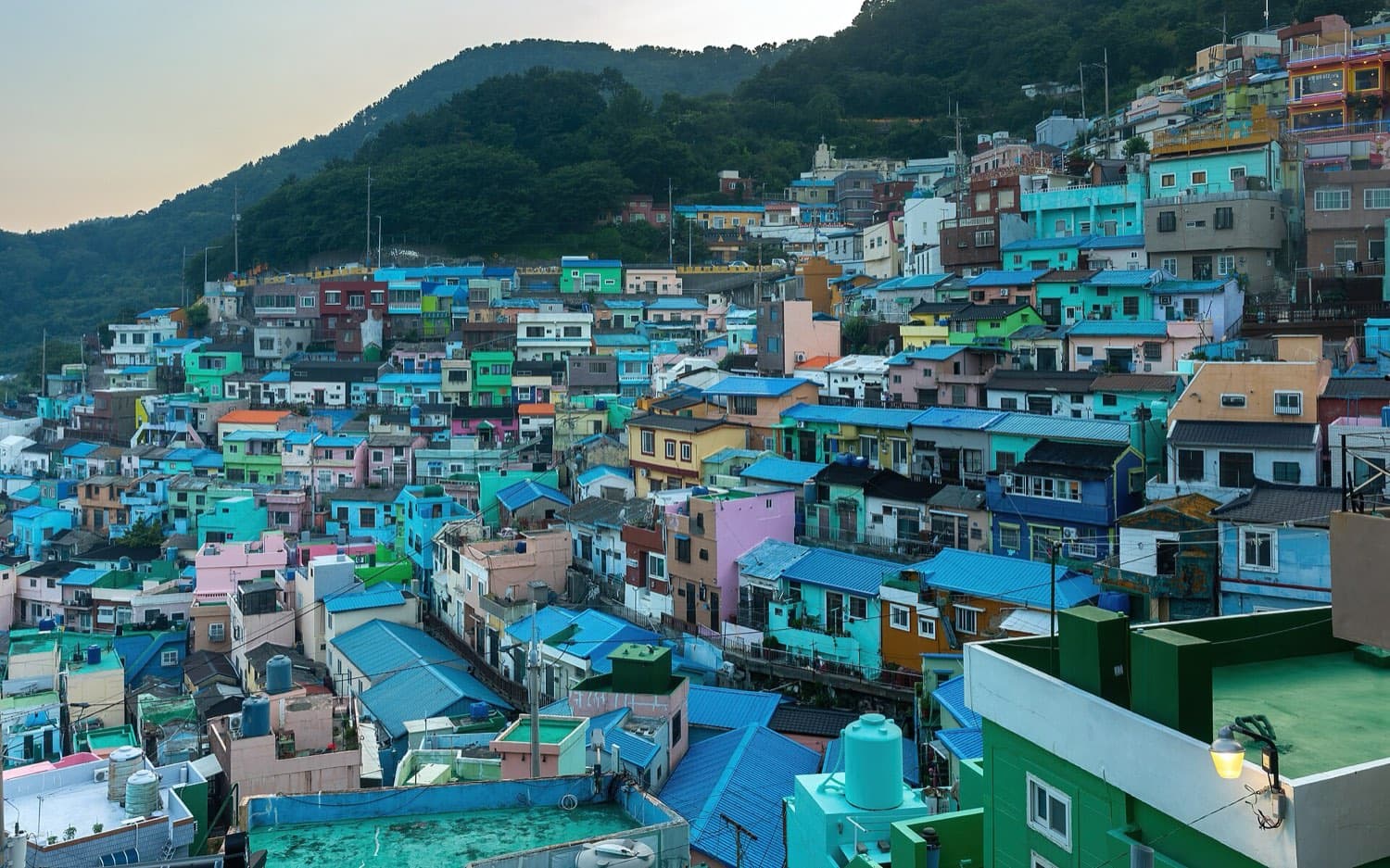
Gamcheon's Refugee Origins: Reading Busan's Painted Hillside
Jagalchi Market: How Busan's Fish Market Explains the Whole Port City
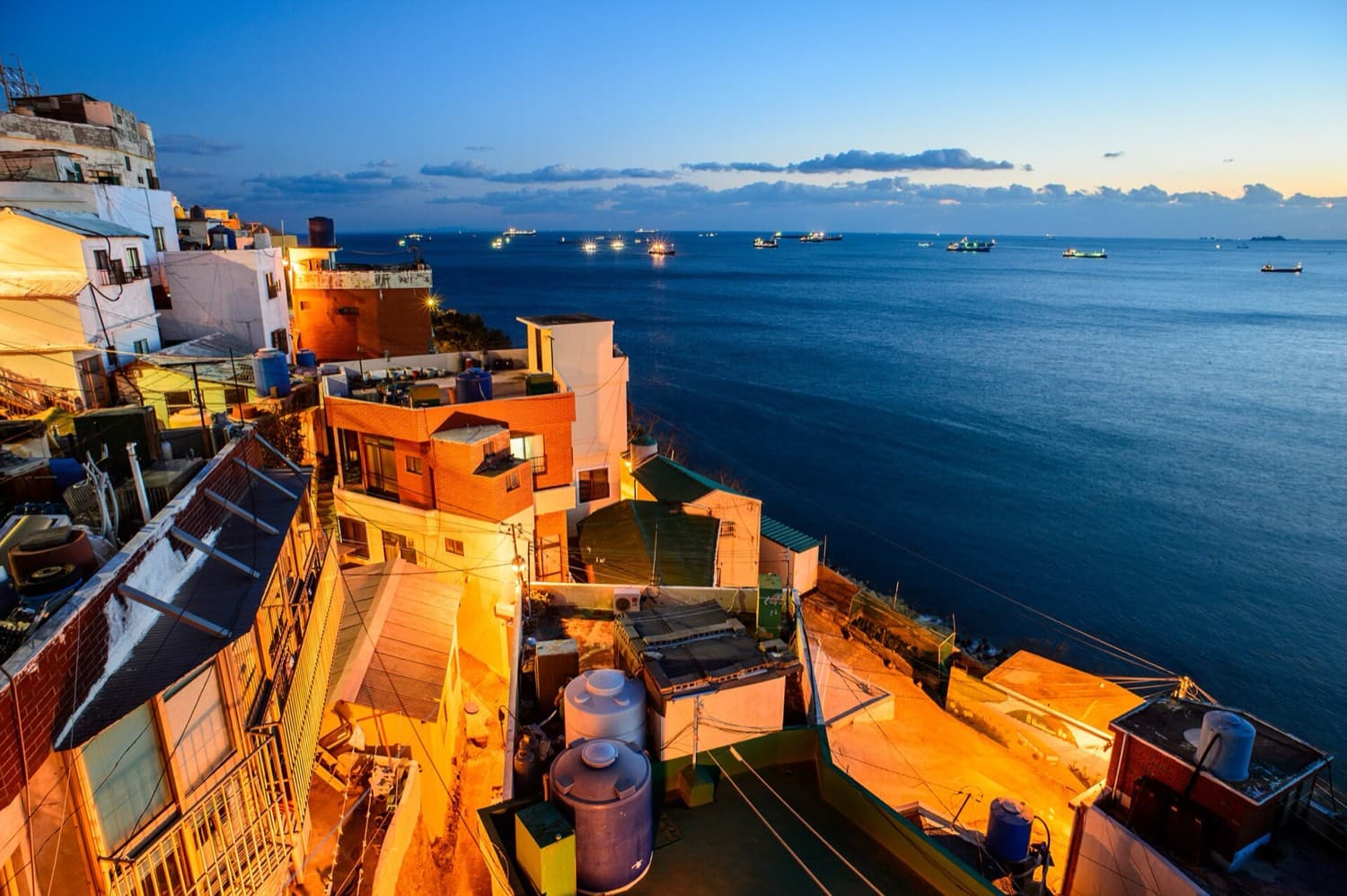
The Stacked White Houses of Huinnyeoul: Busan's Cliff Village Beneath the Postcard
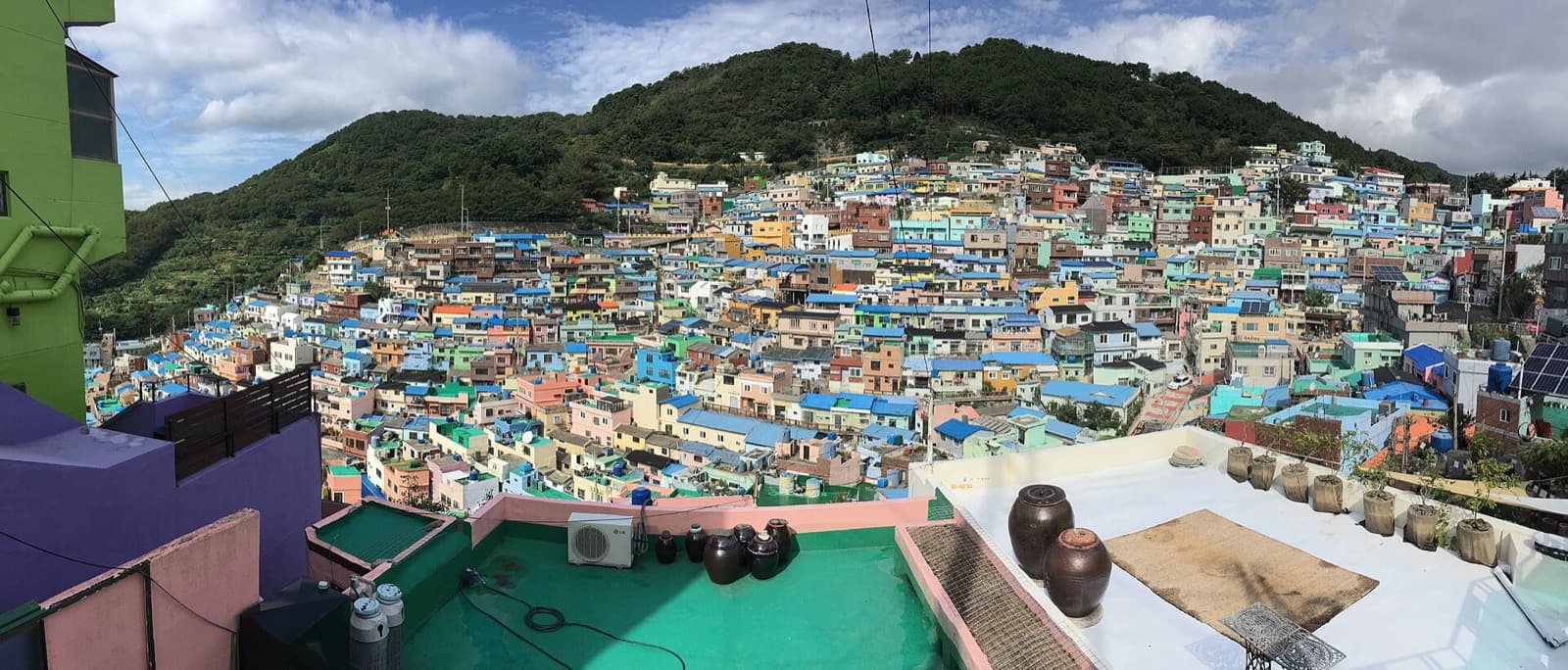
The Gamcheon Panorama Viewpoint: Reading a Refugee Slope Two Ways at Once