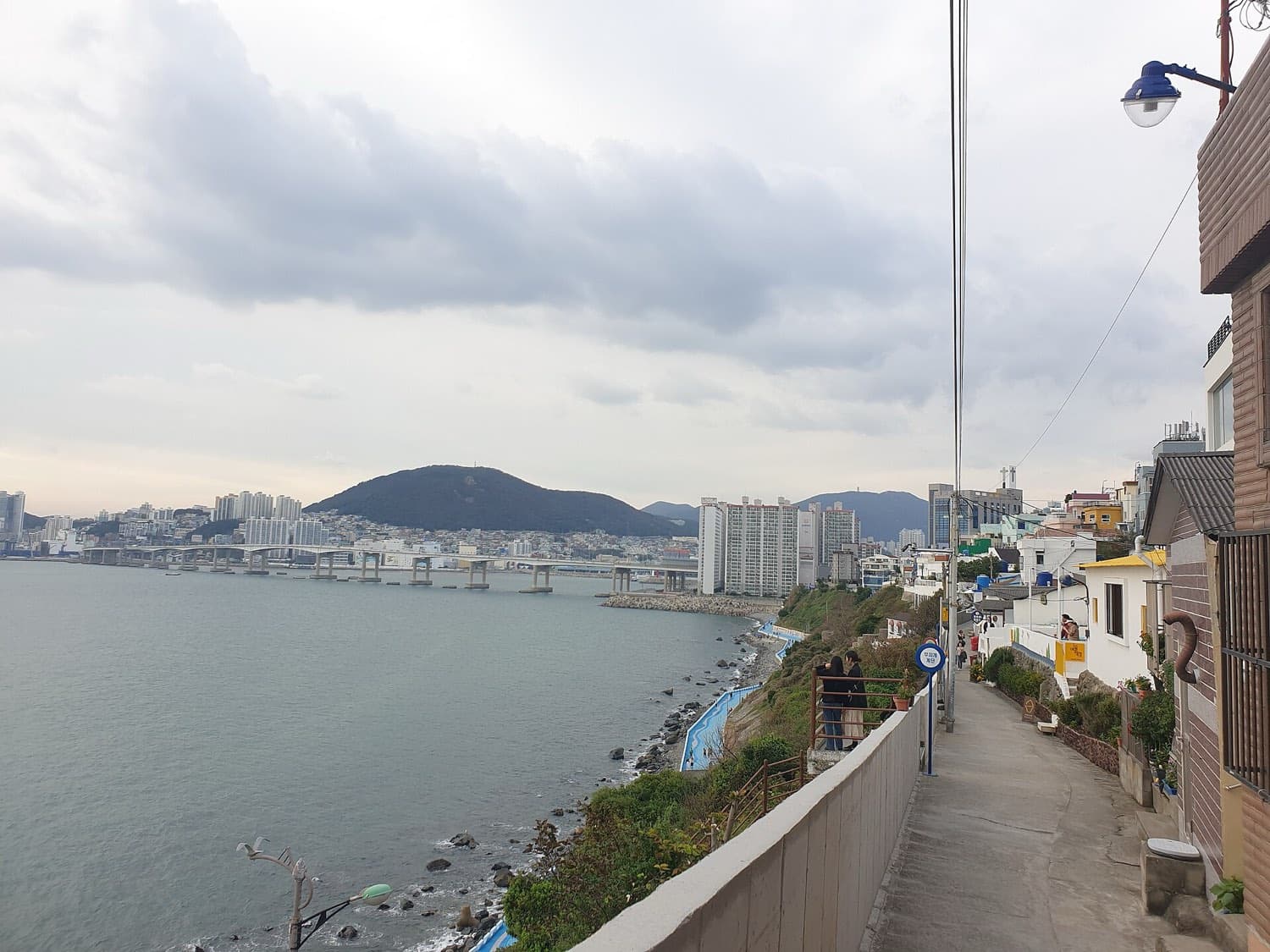
Busan is a port, and its port sets the terms for everything else: what people eat, how they trade, and how a city rebuilt itself out of a hard century. This walk reads the port through its table, and it begins at Jagalchi Market, the largest fish market in South Korea, where the sea is literally laid out on ice in front of you. From there the route climbs, stop by stop, through refugee-built market mazes, a can market that turns into a night food bazaar, a street of movie handprints, and finally a tower with the whole harbour spread out below. If you want to understand Busan quickly and honestly, you start at the fish tubs and follow your nose.
The market that teaches you to read the whole city
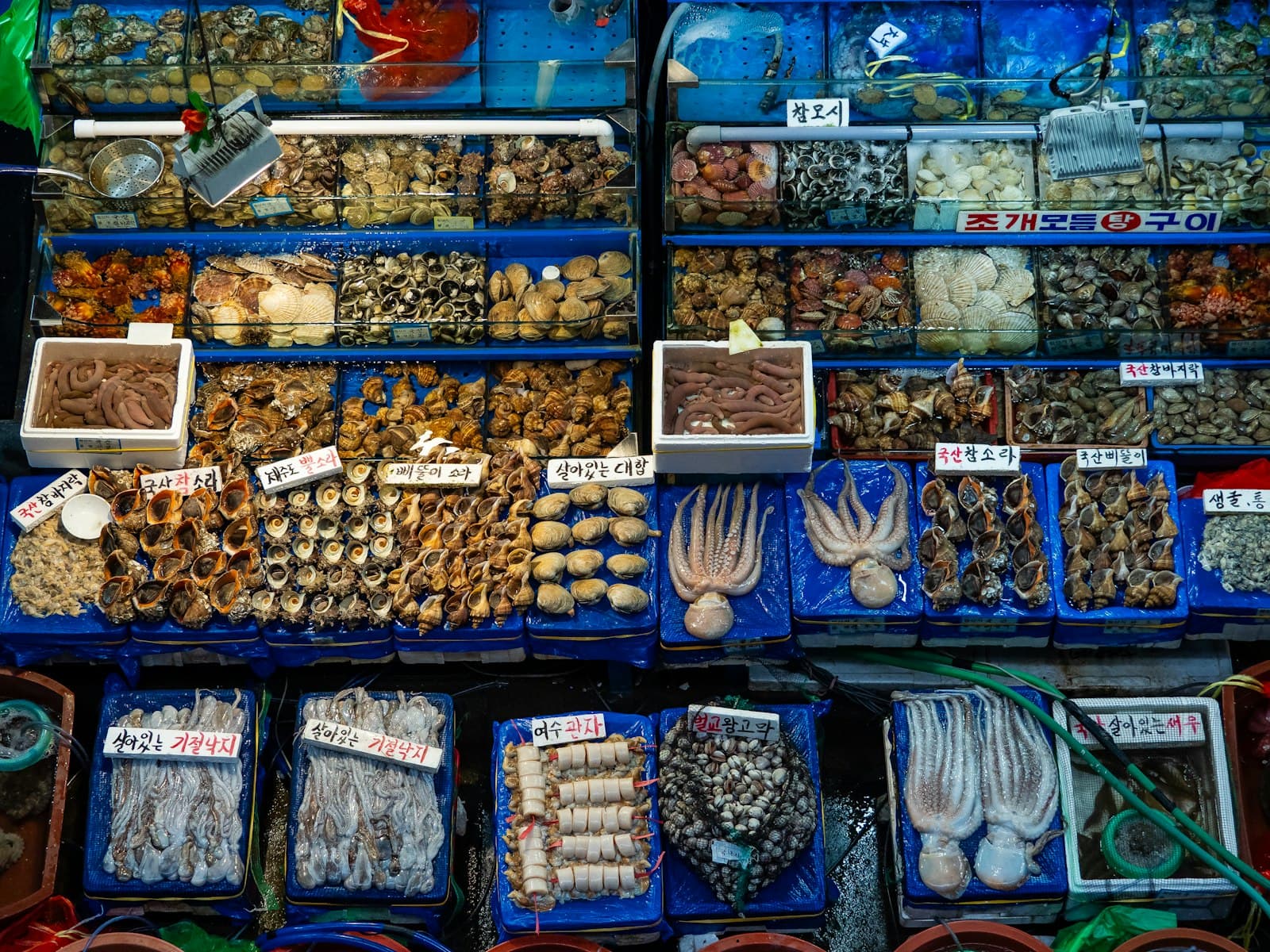
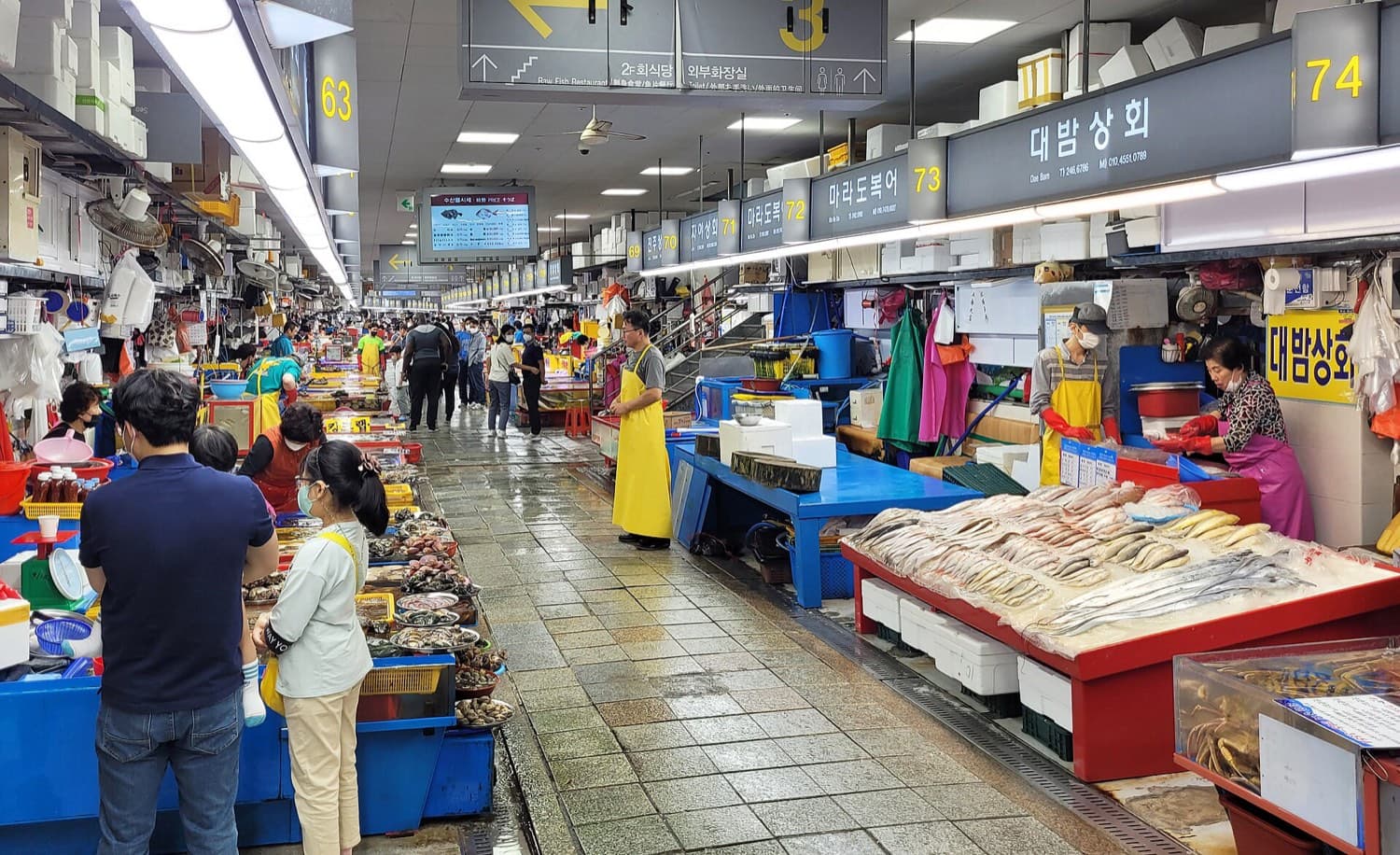
Stand at the edge of Jagalchi Market and it reaches you through your senses before you have registered a single building. Salt water and crushed ice. Dried anchovies. Sheets of dark sea laver hung and stacked in the dried-goods aisles. And over all of it, the carrying calls of the women behind the tubs. This is a sijang, which simply means market, running along the Busan waterfront at the edge of the port for roughly three kilometres, moving from fresh seafood near the water to dried anchovies, shellfish, and herbal goods further inland.
What you are hearing most of all are the ajumma. The women traders here are known as the Jagalchi ajumma, and their tradition is not decoration for tourists. According to the market's own history, the female-vendor culture traces to the years after the Korean War, when women sold goods on these streets to keep their families alive. That single fact is the key to the entire walk. The abundance in front of you, the tubs and the ice and the sheer variety, grew in part out of survival. Busan, South Korea's second-largest city, was the country's temporary capital for much of the war between 1950 and 1953, and it filled with refugees. A great deal of the trade you are about to pass through began as a way to simply stay alive.
Jagalchi holds both truths at once, which is exactly why it makes such a good starting point. The market is joyful now. The food is wonderful. And the history underneath it is sober and real. You do not need to buy anything to belong here. Walking the aisles is free. But if you are hungry, this is the place to point at what looks good and let someone cook it for you. Watch your footing near the working quays, where the floors are wet and the aisles are busy with people who are here to trade, not to sightsee. Once you have let the market set your pace, you carry its logic into every stop that follows.
From the water's edge to the markets refugees built
Hear a stop from this walk
Jagalchi Market: The Sea Laid Out on Ice
Leaving the fish market, the walk crosses toward Yeongdo Bridge, and here the survival story becomes personal. When it opened in 1934, this was the first drawbridge with a single moveable section ever built in Korea, a bascule bridge designed to lift so tall ships could pass beneath. During the war, when the city swelled with the displaced, the bridge became a known place where separated families came searching for one another, leaving written pleas on faded paper and torn cloth along the handrails. The deck stopped lifting in 1966 and stayed still for forty-seven years before its restoration reopened on the twenty-seventh of November, 2013. Today it rises again for about fifteen minutes on Saturday afternoons, free to watch from the waterfront. Seeing the road tilt toward the sky is a genuine pleasure. So is remembering what people once waited for at that railing.
Then come the two great market mazes of Nampo-dong, and they are where the walk's argument fully lands. Gukje Market carries its meaning in its name: gukje means international. Founded in 1945 in an empty lot selling goods left by departing occupiers, it was reshaped when war refugees and returnees from Japan set up stalls to earn a living, trading heavily in foreign merchandise. Today it is enormous and gleefully disorganised, often described as six zones and twelve buildings, and getting lost in it is the correct way to experience it. Right beside it sits Bupyeong Kkangtong Market, whose nickname says everything: kkangtong means tin can, and the name comes from the stacks of tinned surplus goods traders sold here after the war. By day it is an ordinary traditional market. From around seven thirty in the evening it becomes a celebrated night food market of carts and griddles, one of Korea's early markets of its kind, where the port city eats standing up: fish cakes bobbing in broth, tteokbokki in red sauce, hotteok blistering on the iron.
Where the port looks outward, and then looks back at itself
At BIFF Square the walk turns. Up to this point you have moved through fish and markets and the hard grammar of survival. Here the port steps onto the world's screens. This historic cinema district in Nampo-dong was renamed in 1996 ahead of the very first Busan International Film Festival, which launched that same September. The letters stand for that festival. Look down as you walk and you find bronze handprints and signatures of film figures set into the pavement, a red carpet turned into a sidewalk. Then look up and follow your nose to the square's signature bite, ssiat hotteok, a sweet griddle pancake stuffed with seeds and nuts and fried until it is crisp outside and warm within. The plaza is a free public street, and the food is pay as you go, so take a slow lap for the handprints, then eat a hotteok while it is still too hot.
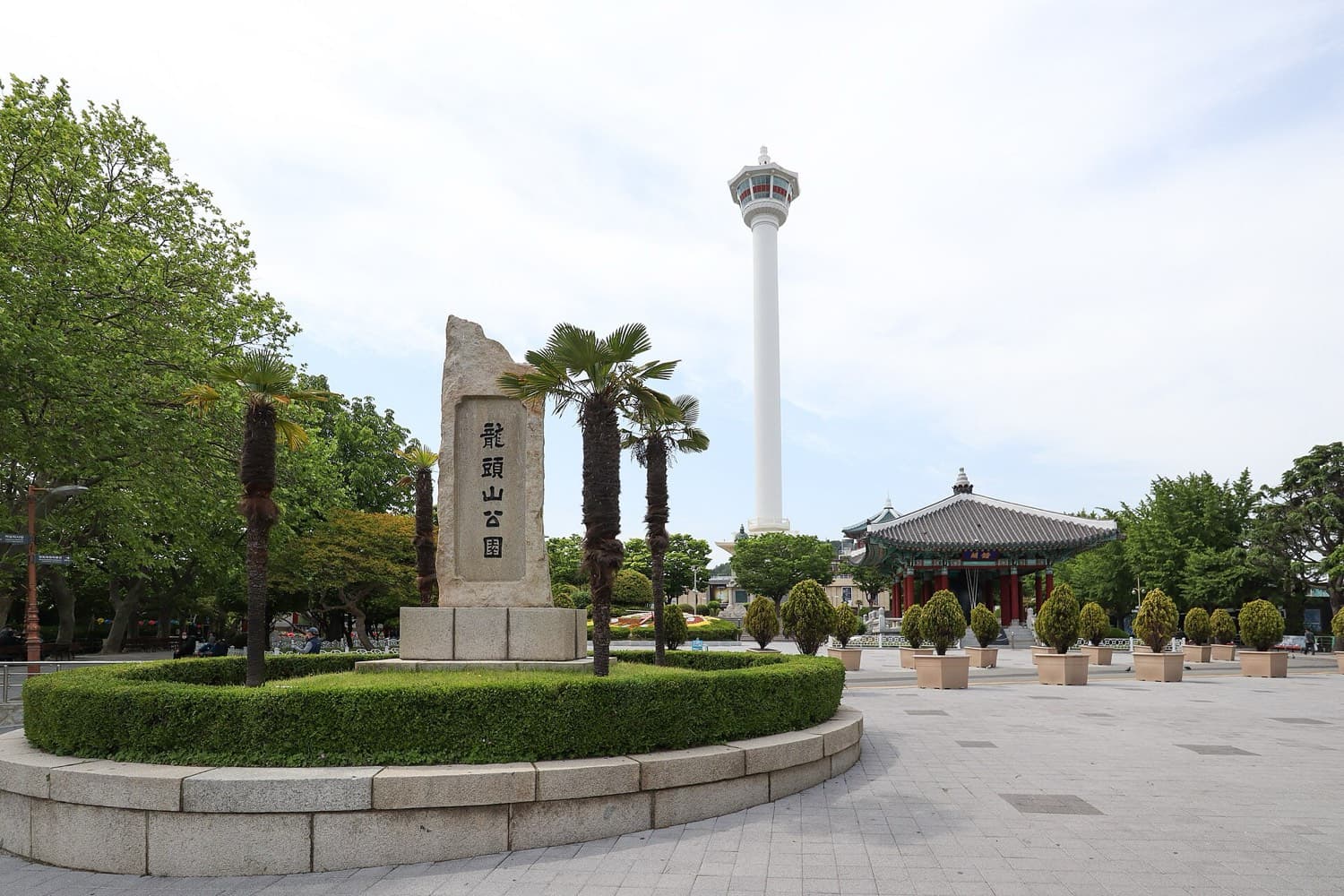
The route ends by climbing. Yongdusan Park, whose name means dragon's head mountain, sits on a hilltop above the market streets, reached by stairs or an escalator, and during the war its slopes held refugee shanty settlements. Near the top a statue of Admiral Yi Sun-sin, the sixteenth-century naval hero, keeps watch over the sea. Above it all rises Busan Tower, built in 1973 and standing about one hundred and twenty metres tall, a pure observation tower with no broadcasting function at all. The park is free. The deck charges a small admission, and here the walk resolves. From the top you see the harbour laid out whole: the quays, the water, the islands, the bridge, the working port that set the terms for everything you passed through, from the fish tubs at the edge of the sea to the ships at anchor beyond.
That is the whole shape of it. Six short, skippable stops across about three and a half kilometres, roughly two hours if you linger, best walked from late afternoon into the evening so the night markets and the tower lights land at the right moment. Come hungry, carry small cash, and let the sea keep the pace. When you are ready to walk the route in full, open the Port City's Table tour or start from the Busan city page, then open the audio and begin at Jagalchi Market.
Sources
- Jagalchi Market, Wikipedia. Confirms the market's scale, its roughly three-kilometre run along the waterfront, and the Jagalchi ajumma trading tradition dating to after the Korean War.
- Yeongdo Bridge coverage, Wikipedia and The Korea Herald ("Drawbridge restored in Busan after 47 years"). The 1934 opening as Korea's first single-leaf bascule bridge, the 1966 halt, and the reopening on 27 November 2013.
- Busan International Film Festival, Wikipedia. The first festival held 13 to 21 September 1996 and the naming of BIFF Square in Nampo-dong.
- Busan, Wikipedia. City ranking as South Korea's second-largest city and its role as wartime capital during the Korean War, 1950 to 1953.
- Gukje Market, Wikipedia. The 1945 founding, the meaning of the name, and the six-zones-and-twelve-buildings layout.
Ready to experience it?
Jagalchi Market: The Port City's Table
110 min · 3.5 km · easy
More from Busan
Explore more at your own pace.
Busan Travel Guide: Days, Transport, Weather, Safety, Budget
Busan's War-Made City: How a Port Refuge Became a Painted Coast
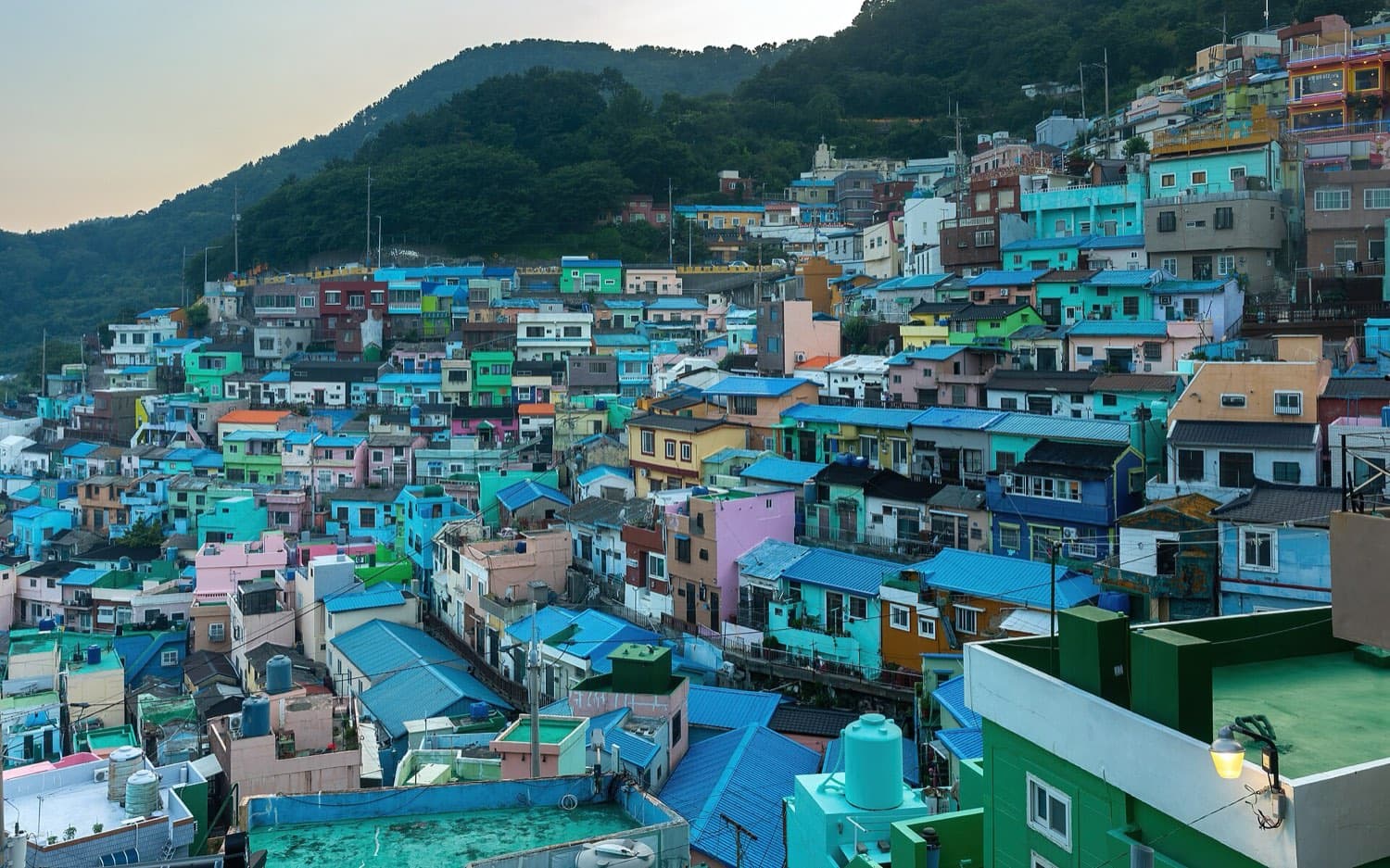
Gamcheon's Refugee Origins: Reading Busan's Painted Hillside
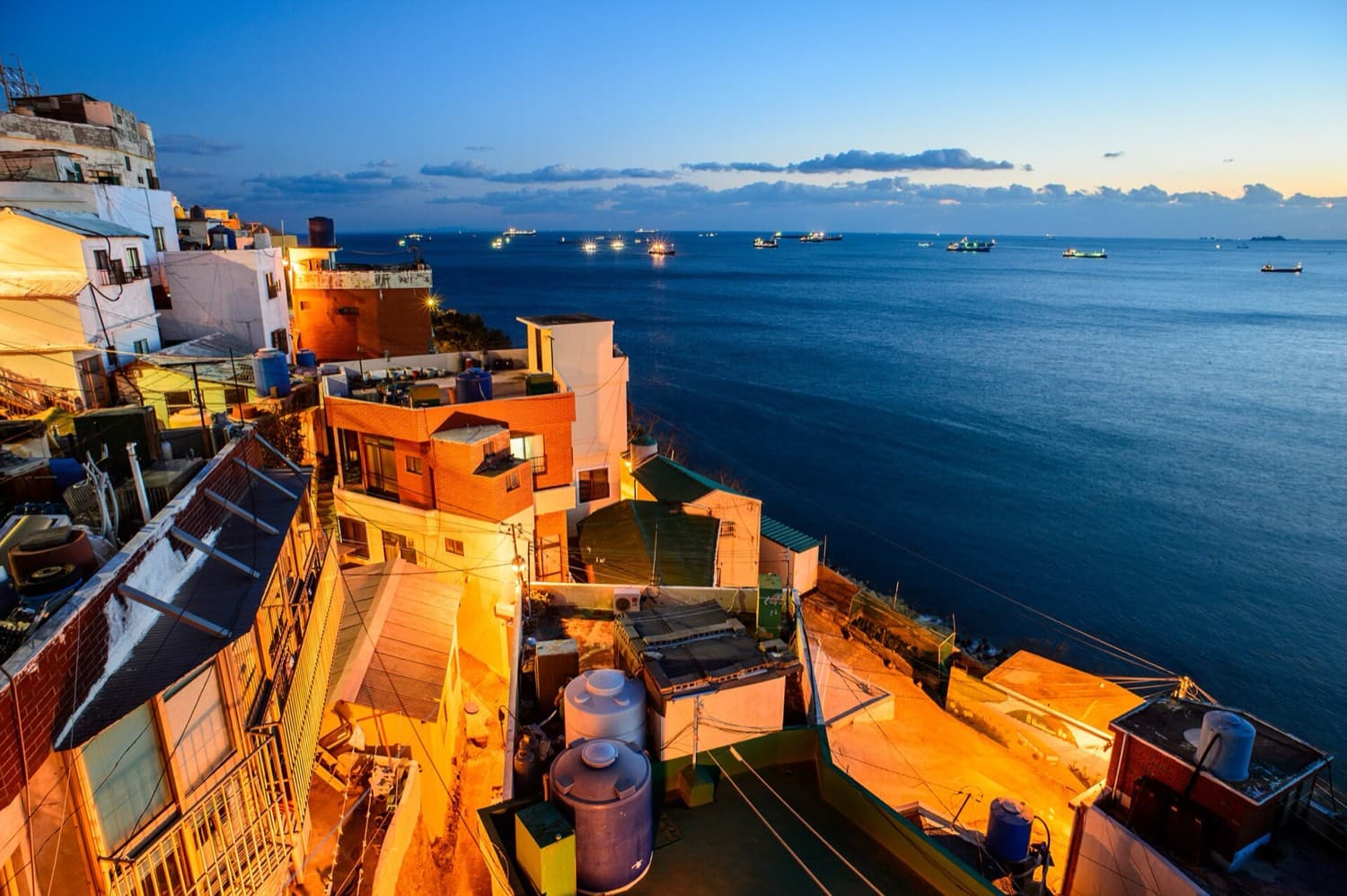
The Stacked White Houses of Huinnyeoul: Busan's Cliff Village Beneath the Postcard
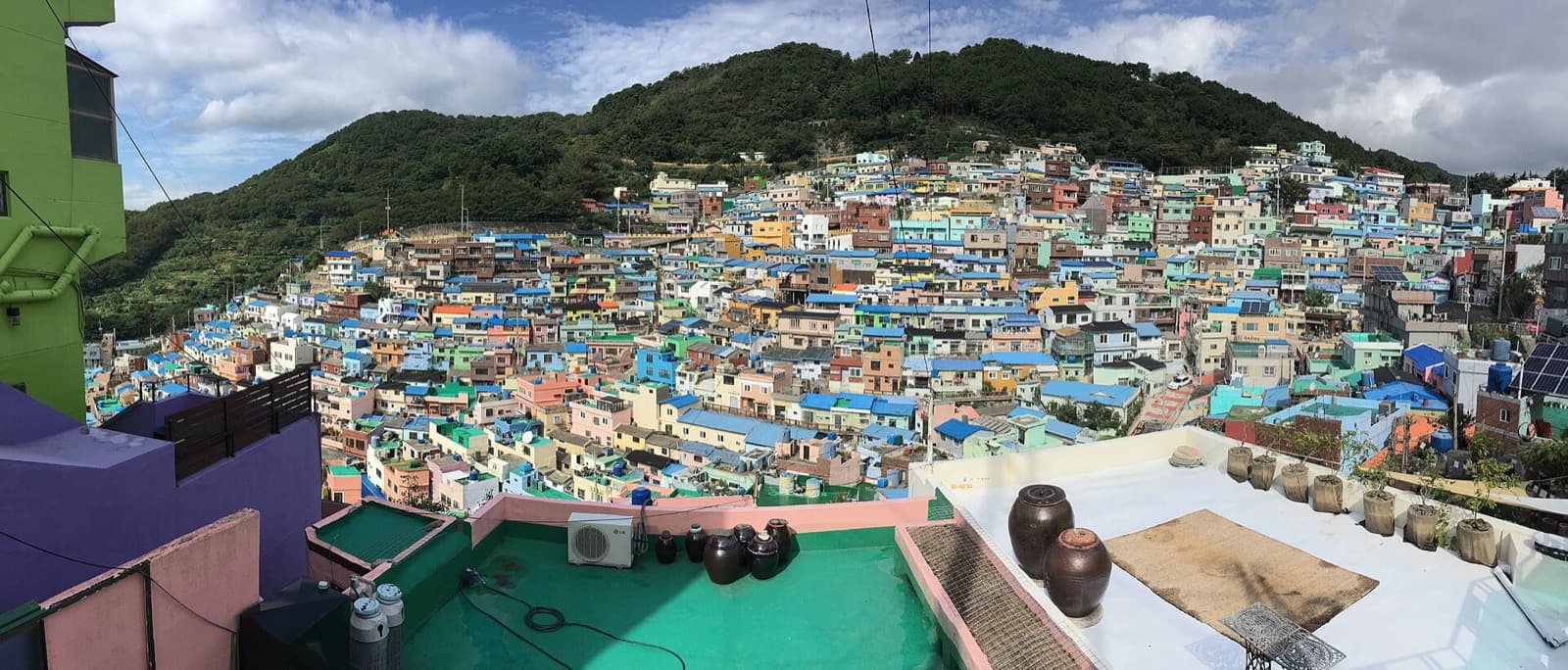
The Gamcheon Panorama Viewpoint: Reading a Refugee Slope Two Ways at Once