Gamcheon Culture Village: The Painted Hillside
90 min · 1.8 km · moderate
One day in Busan, morning to evening
A good one day in Busan walks the port city from a painted refugee hillside to a fish market to a tower over the harbour, and it is genuinely doable on foot with two short transit hops. Start high and colorful at Gamcheon Culture Village in the late morning, drop down to the markets and cinema streets of Nampo-dong for a long grazing afternoon, and finish either on the Busan Tower deck as the harbour lights come on or on the sea cliff of Huinnyeoul across the water. Each of Busan's three self-guided Busan walking tours covers one of these zones, so you can let audio carry the history while you keep your eyes on the streets.
This is a walking day, not a checklist sprint. The stops are short and skippable, the food is meant to be eaten standing up, and the pace is yours. Here is how the hours fit together.
Morning: the painted hillside at Gamcheon
Hear a stop from this walk
Two Thousand Nine: The Art That Saved the Village
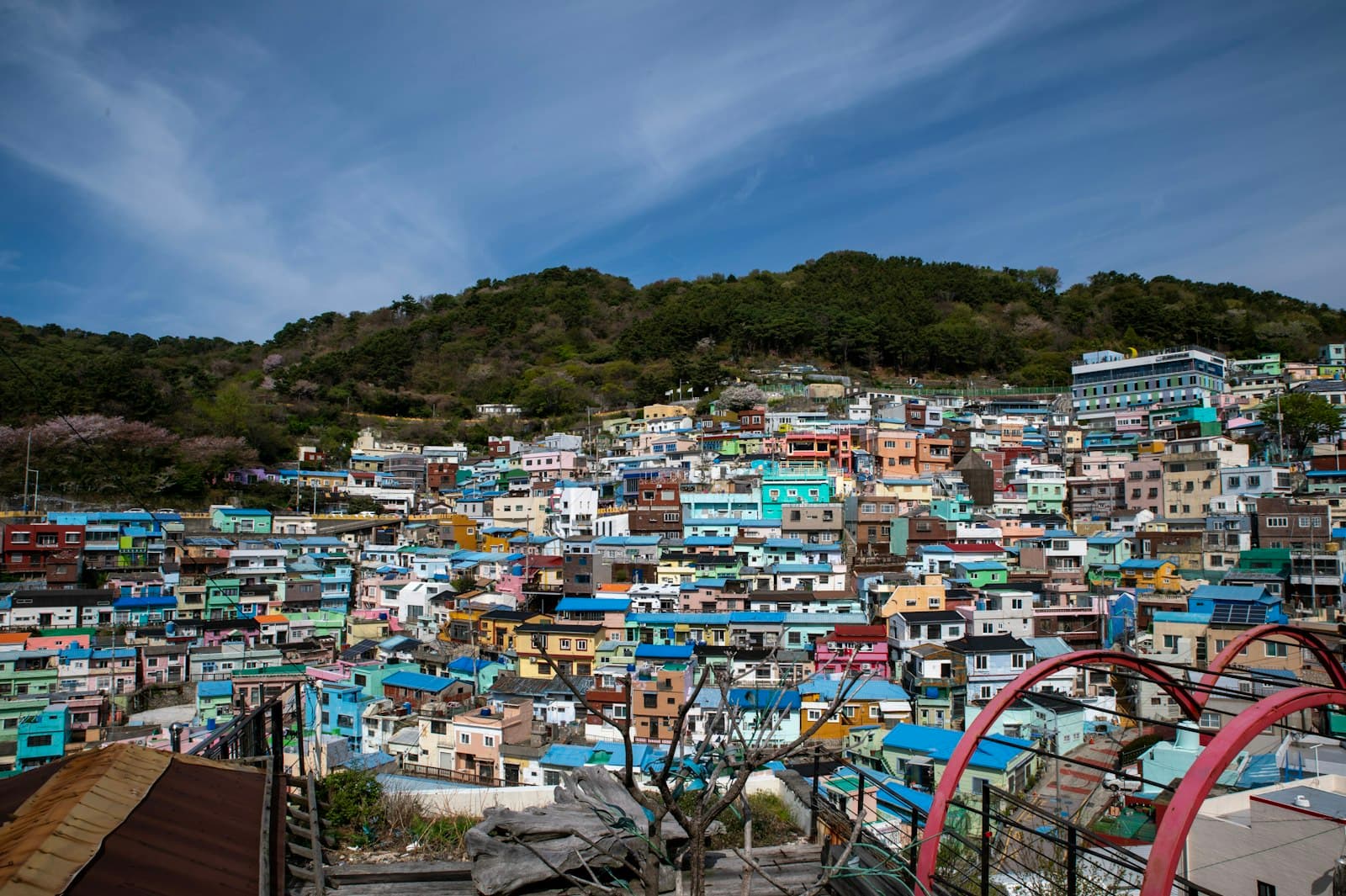
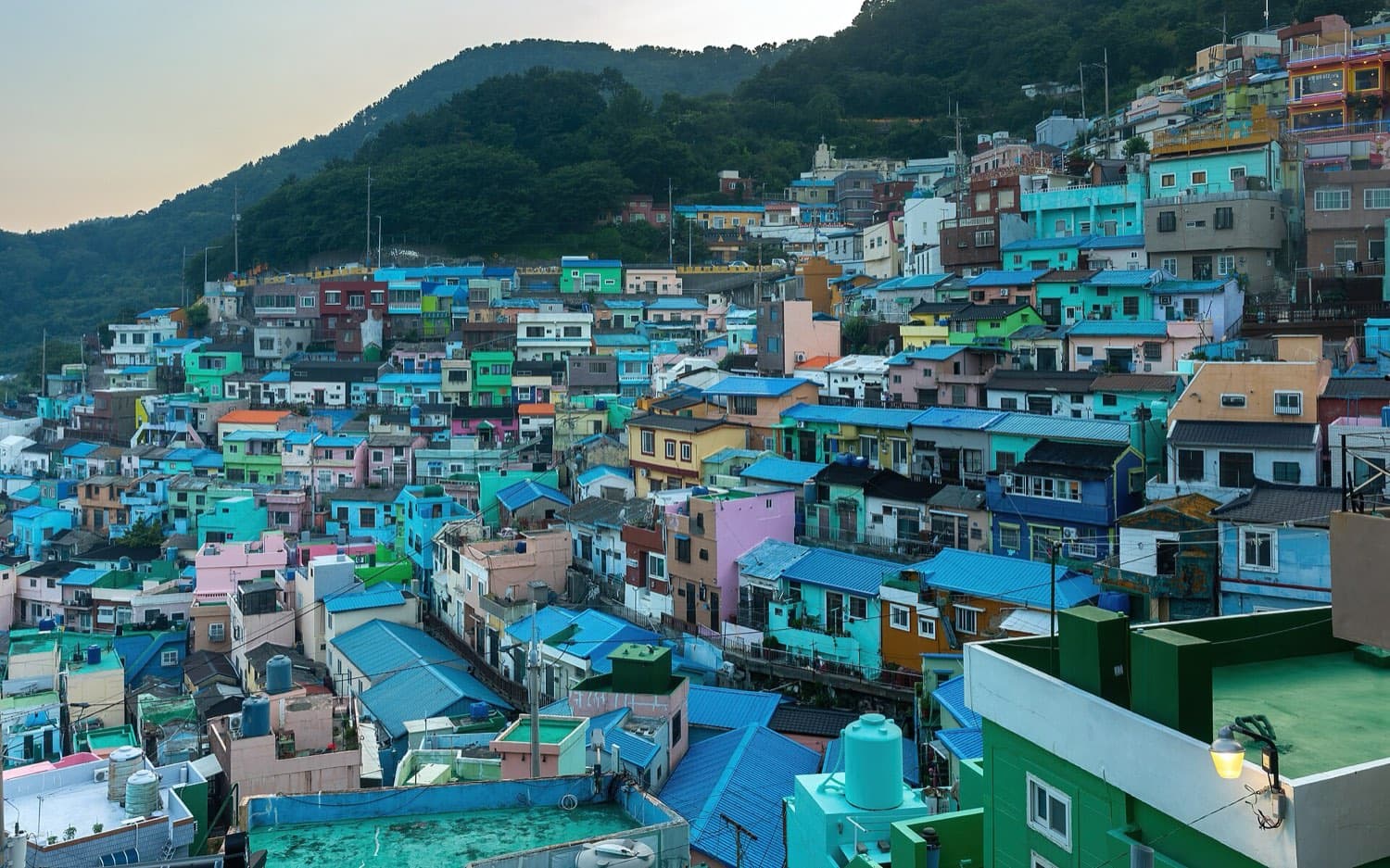
Begin at Gamcheon Culture Village, a slope of pastel houses stacked in tiers above the harbour on the western side of Busan. It is one of the most photographed places in Korea and, at the same time, a neighbourhood built by some of the poorest survivors of the Korean War and by the Taegeukdo religious community, who settled here around 1955 and gave the hillside its terraced, shared-light order. People still live behind the painted walls, so keep your voice low in the alleys and photograph rooftops and viewpoints, not homes.
Getting there sets the rhythm of the day. Take Busan Metro Line 1 (the orange line) to Toseong Station, leave from Exit 6, and catch a local village bus (routes are often signed as Saha 1-1, Seogu 2, or Seogu 2-2) for the roughly ten to fifteen-minute climb up the hill. A taxi from Nampo-dong or Busan Station runs about ten to twenty minutes. The village itself is free to enter and open daily, roughly 09:00 to 18:00 from March through October and 09:00 to 17:00 from November through February, with the hours after 6:00 in the evening treated as quiet non-visiting time out of respect for residents. Start early while the light is full and the crowds are thinner.
Work downhill rather than up: begin at the top viewpoints, pass the Little Prince and Fox sculpture and the Haneul Maru sky deck, thread the art lanes, and let the slope carry you toward the sea. Wear shoes with grip, because the route is almost entirely stepped alleys. A few individual house-galleries charge a small separate fee; the village and its main viewpoints do not. Budget roughly ninety minutes for the Gamcheon self-guided tour, longer if the color keeps pulling you into side lanes.
Midday: down to Nampo-dong and the markets
From Gamcheon, cross back to the bus stop near Gamcheon Elementary School and ride down to Toseong or Jagalchi Station, or grab a short taxi. Toseong, Jagalchi, and Nampo are all a stop or two apart on Line 1, so the transition into the market district is quick. This is where the sensory afternoon begins.
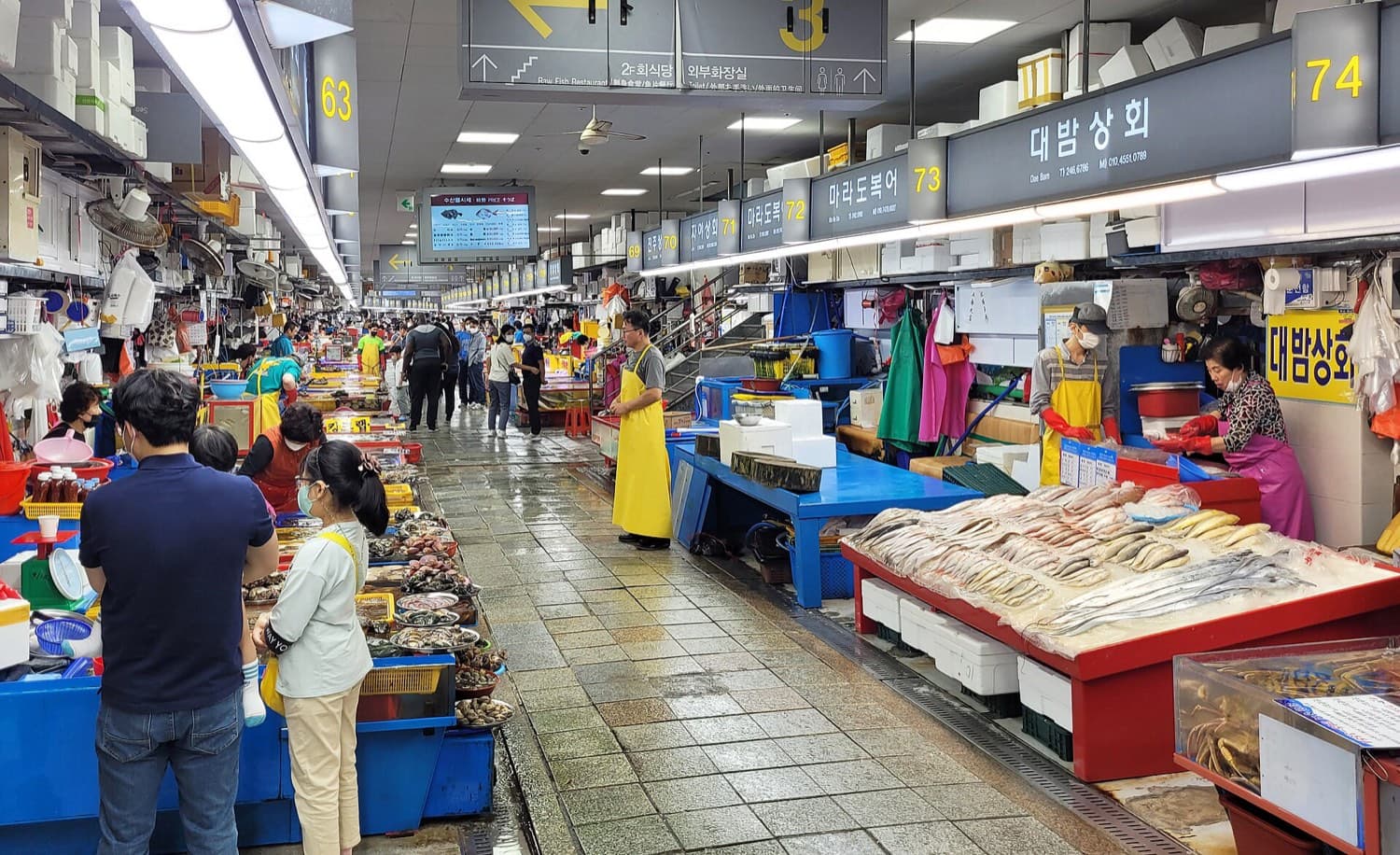
Anchor your midday at Jagalchi Market, the largest fish market in South Korea, spread along the waterfront and worked for generations by the women traders known as the Jagalchi ajumma. Walking the aisles is free; if you are hungry, point at what looks good and let someone cook it. The floors near the working quays are wet, so watch your footing and keep clear of traders who are there to work, not to pose. From here the second self-guided route strings together the markets and the cinema street a few minutes apart on foot: Gukje Market, whose name means international market and which grew from the desperate trade of Korean War refugees, and the neighbouring Bupyeong Kkangtong Market, the can market.
If it is a Saturday, time a detour to Yeongdo Bridge for the lifting ceremony. Korea's first drawbridge, opened in 1934, still raises its deck once a week: the city confirms it lifts every Saturday at 2:00 PM for about fifteen minutes, and it is free to watch from the waterfront. During the war this railing was a heartbreaking place where separated families searched for one another, so the tilt of the road toward the sky carries more weight than a photo opportunity.
Afternoon into evening: film handprints and the tower view
Follow the market walk into BIFF Square, a historic cinema district in Nampo-dong renamed in 1996 ahead of the very first Busan International Film Festival. Bronze handprints of film figures are set into the pavement underfoot, and the street is famous for ssiat hotteok, a sweet griddle pancake stuffed with seeds and nuts and fried until it blisters. Eat it too hot to be polite. Then climb, by stairs or escalator, to Yongdusan Park, a hilltop green space holding a statue of the sixteenth-century naval hero Admiral Yi Sun-sin.
Crowning the park is Busan Tower, a pure observation tower built in 1973 and standing about one hundred and twenty metres tall. The park is free; the observation deck charges admission (adult tickets are commonly around 12,000 won), and the deck typically runs from mid-morning until late evening, roughly 10:00 to 22:00, with last admission about half an hour before close, which makes it a strong sunset-into-night finale with the whole harbour laid out below. This is the natural end of the Jagalchi and Nampo-dong self-guided walk: the fish market at the water's edge, the refugee markets, the film street, and finally the port seen whole from above.
If Kkangtong Market's night food market is calling, note that its aisles fill with carts and griddles from around 7:30 in the evening. You can loop back down for fish cakes and tteokbokki after the tower, eating cart by cart, cash in small bills.
An alternative evening: the Huinnyeoul sea cliff
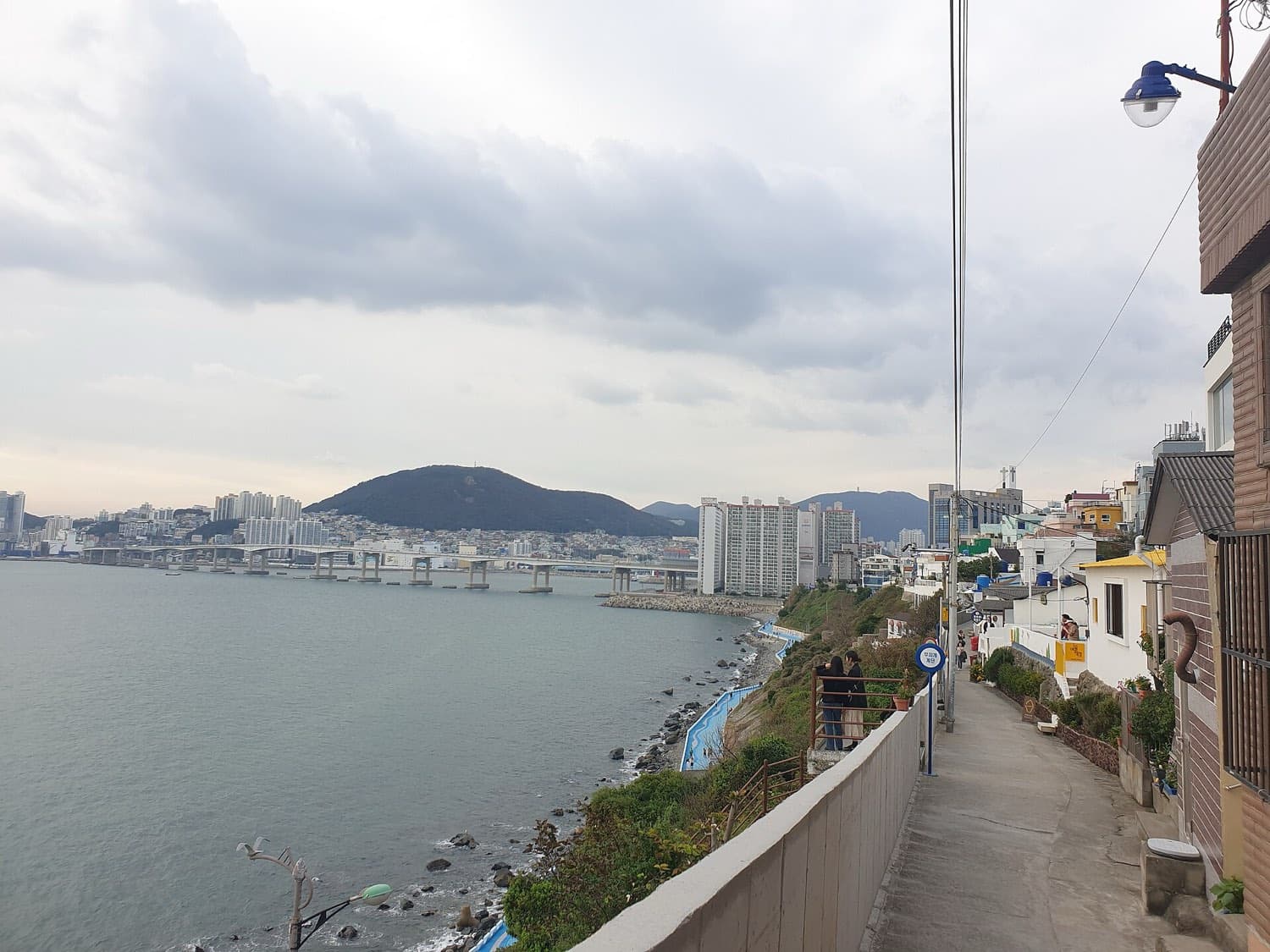
If you would rather end on quiet than on city lights, swap the tower for Huinnyeoul Culture Village, a row of small white houses built by refugees on a narrow ledge above a working fishing shore on Yeongdo island. From Nampo Station (Exit 6) local buses toward Yeongdo reach it in about ten to fifteen minutes. It is a short, roughly one-kilometre walk along the cliff path and through the Huin-yeoul coastal tunnel, all free, and it is even more of a lived-in residential lane than Gamcheon, so tread softly. Late afternoon light on the water here is the reward, and the Huinnyeoul self-guided coastal walk runs about an hour.
Whichever ending you choose, the shape of the day holds: painted hillside in the morning, markets and food through the afternoon, and the sea at your back by evening. Browse all three routes on the Busan walking tours hub and load the audio before you go, since the alleys of Gamcheon and Huinnyeoul are easier to enjoy when you are not staring at a map.
Practical notes for the day
Carry a rechargeable transit card and small bills. The subway links every zone in this itinerary, and market stalls and street-food carts prefer cash. Busan summers are hot and humid, and both the Gamcheon hillside and the Huinnyeoul cliff are exposed with little shade, so bring water and sun protection. All the outdoor stops on this route are free to walk; the only paid tickets you might buy are the Busan Tower deck and the occasional Gamcheon house-gallery. Safety here is ordinary big-city common sense: mind your footing on wet market floors and stepped alleys, keep your bag closed in crowded evening lanes, and stay to marked paths near the working port.
Sources
- Gamcheon Culture Village visitor guide and access, including hours and Toseong Station bus routes (KoreaToDo)
- Busan Tower observatory hours (10:00 to 22:00, last admission 21:30) and 12,000 won adult admission (VISITKOREA)
- Yeongdo Bridge lifting schedule, Saturday 2:00 PM for about 15 minutes (Busan Metropolitan City official news)
- Jagalchi Market, the largest fish market in South Korea (VISITKOREA)
- Huinnyeoul Culture Village access from Nampo Station Exit 6, buses 7, 71, or 508 (KoreaToDo)
Frequently asked questions
- Can you see Busan in one day on foot?
- Yes. A one-day Busan itinerary works well on foot if you group it by zone: the Gamcheon Culture Village hillside in the morning, the Nampo-dong markets and BIFF Square in the afternoon, and Busan Tower or the Huinnyeoul sea cliff in the evening. You only need two short subway or bus hops to connect the zones, and each area is compact enough to walk.
- How do you get from Gamcheon Culture Village to Nampo-dong?
- Take a village bus down from the Gamcheon Elementary School stop to Toseong or Jagalchi Station, or grab a taxi that runs about ten to twenty minutes. Toseong, Jagalchi, and Nampo stations are all a stop or two apart on Busan Metro Line 1, the orange line, so the transition into the market district is quick.
- How much does Busan Tower cost and what are its hours?
- Busan Tower's observation deck charges admission, with adult tickets commonly around 12,000 Korean won, while Yongdusan Park below it is free. The deck typically operates from mid-morning until late evening, roughly 10:00 to 22:00, with last admission about half an hour before close, which makes it a good sunset and city-lights finale. Confirm current pricing and hours on the official listing before you go.
- When does the Yeongdo Bridge lifting ceremony happen?
- The Yeongdo Bridge, Korea's first drawbridge, lifts its deck once a week. Busan Metropolitan City confirms the ceremony takes place every Saturday at 2:00 PM and lasts about fifteen minutes. It is free to watch from the waterfront, so arrive a little early on a Saturday to find a spot.
- Is Gamcheon Culture Village free to visit and what are its opening hours?
- Gamcheon Culture Village is free to enter, though a few individual house-galleries charge a small separate fee. It is open daily, roughly 09:00 to 18:00 from March through October and 09:00 to 17:00 from November through February. The hours after 6:00 in the evening are treated as quiet non-visiting time because people still live in the village.
- What should you know about visiting Busan's culture villages respectfully?
- Both Gamcheon and Huinnyeoul are lived-in residential neighbourhoods, not open-air attractions. Keep your voice low in the alleys, do not photograph into homes or windows, and step aside so residents can pass. Wear shoes with grip because the routes are stepped alleys and cliff paths, and carry water since the hillsides are exposed with little shade.
Ready to experience it?
Gamcheon Culture Village: The Painted Hillside
90 min · 1.8 km · moderate
More from Busan
Explore more at your own pace.
Busan's War-Made City: How a Port Refuge Became a Painted Coast
Gamcheon's Refugee Origins: Reading Busan's Painted Hillside
Jagalchi Market: How Busan's Fish Market Explains the Whole Port City
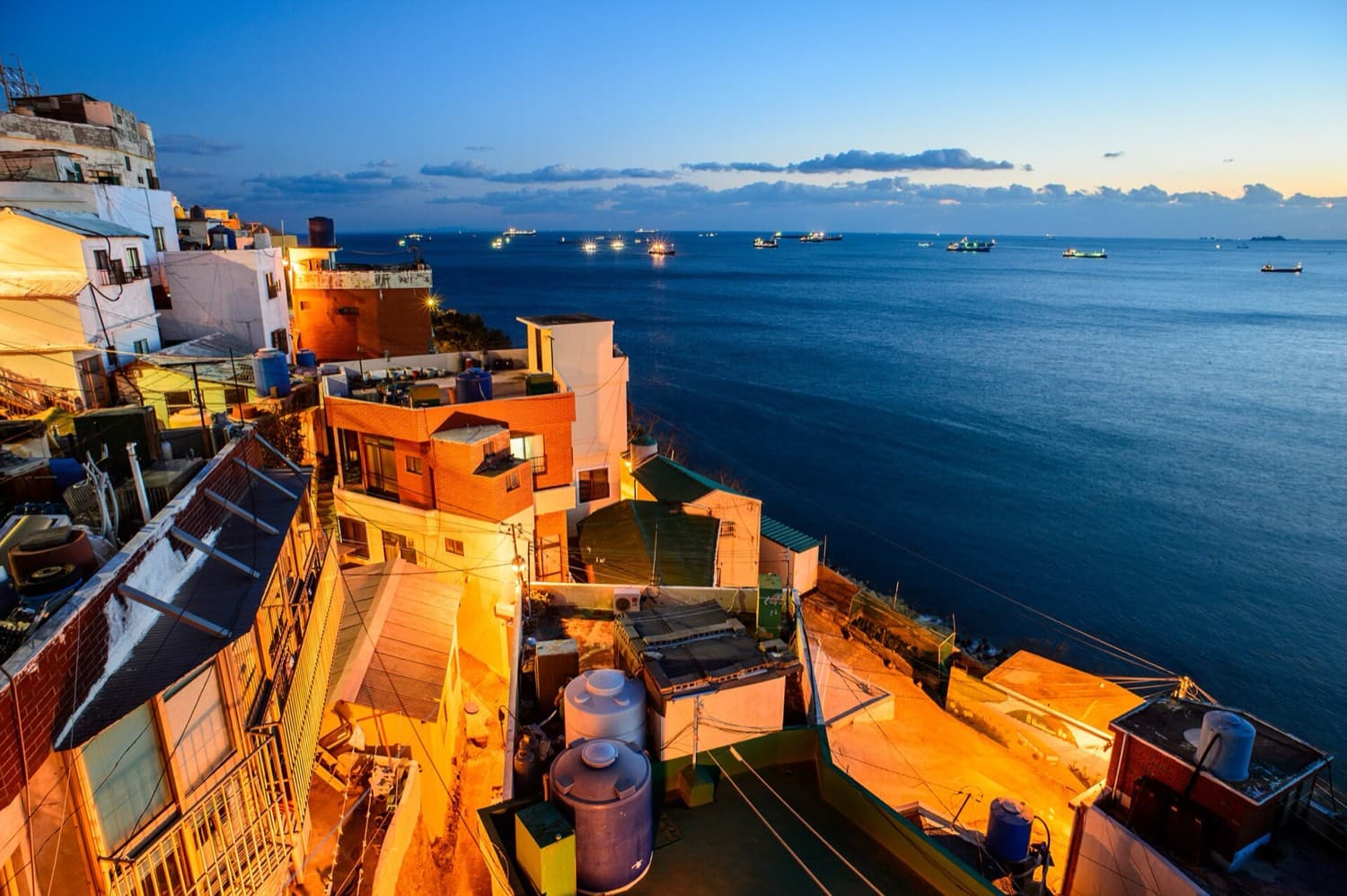
The Stacked White Houses of Huinnyeoul: Busan's Cliff Village Beneath the Postcard
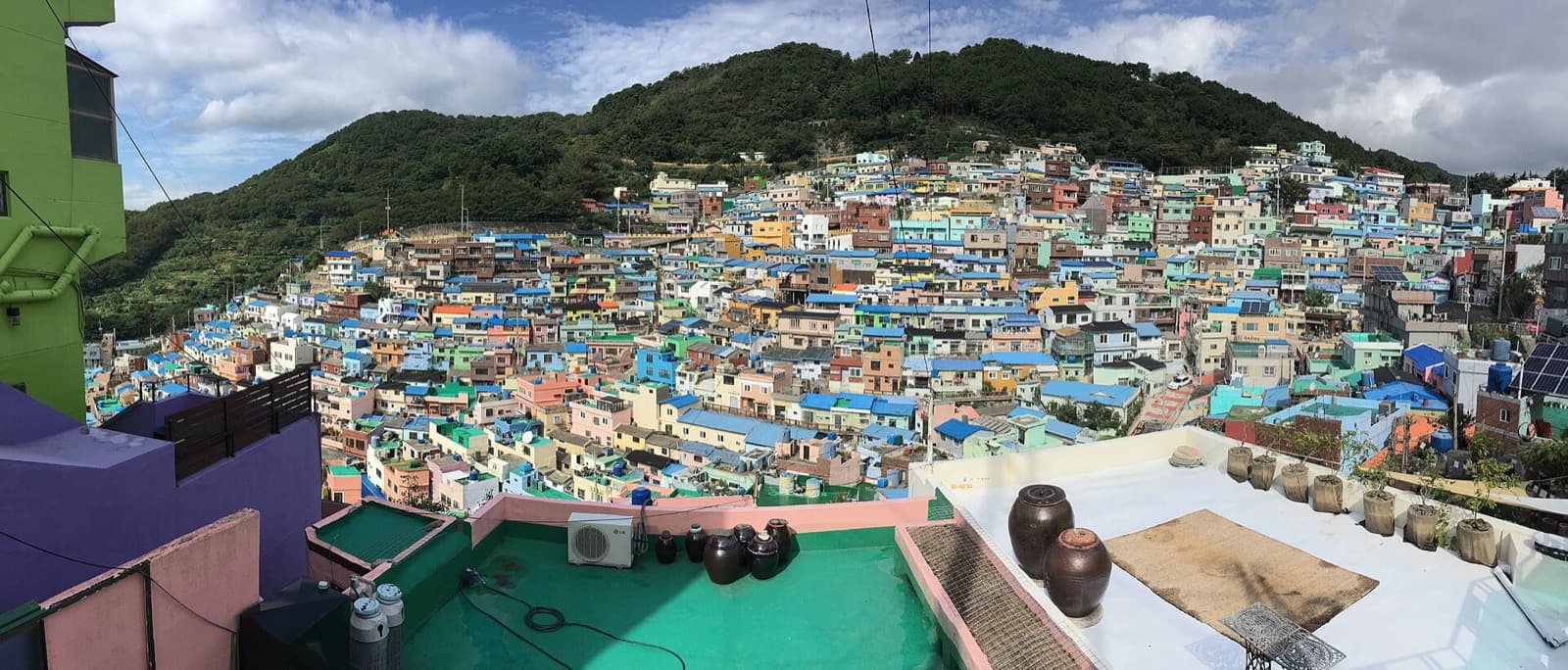
The Gamcheon Panorama Viewpoint: Reading a Refugee Slope Two Ways at Once