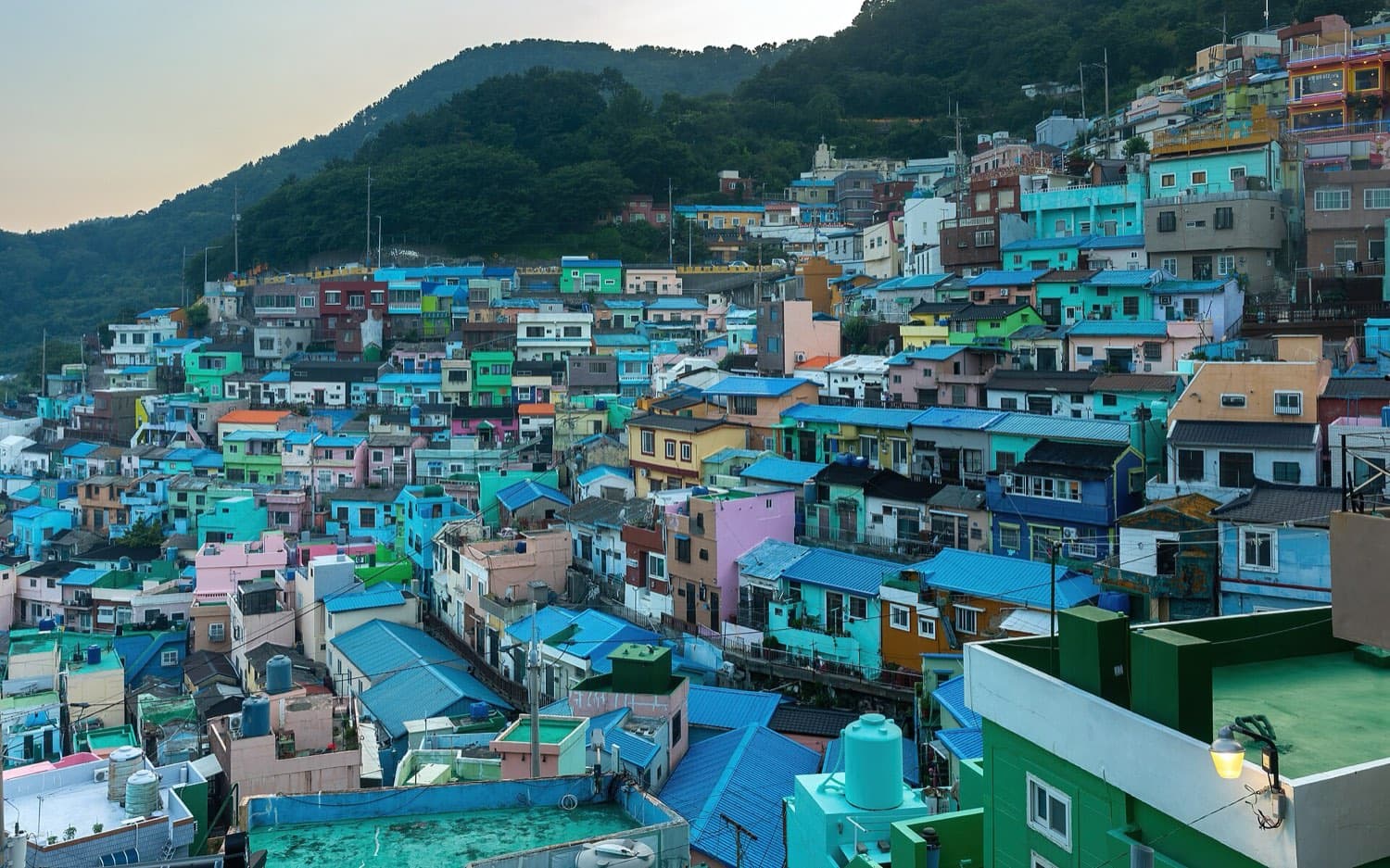
Gamcheon Culture Village is one of the most photographed places in Korea, a slope of pastel houses stacked in tiers above a working harbour in western Busan. It is also, first and before anything else, a Korean War refugee settlement. To understand why the color matters, you have to start where the settlement began: at the second stop of the walk, the Refugee and Taegeukdo Origins, where the painted surface gives way to the hardship it was laid over. That single stop is the key to the whole hillside, and it changes how you read every mural, every stepped alley, and every rooftop view you climb to afterward.
The origin the color hides
Most visitors arrive at Gamcheon for the postcard: soft blue, pink, mint, and cream houses climbing a hill above the sea, laced with hundreds of narrow stepped lanes. The nicknames sell that surface. You will hear the village called the Santorini of Korea or the Machu Picchu of Busan. Those are marketing lines, not history, and the truth underneath them is more interesting than either.
During the Korean War, from 1950 to 1953, Busan became the temporary capital of the Republic of Korea. It held that role for a combined total of one thousand and twenty-three days, sheltering the government while the peninsula was at war. As refugees poured in, the city's population swelled from around three hundred thousand people toward a million. Hundreds of thousands of them had nowhere to live, so they built dense shanty neighbourhoods straight up the hillsides. This slope above Gamcheon harbour was one of them.
Then came the settlement that gave the village its shape. In 1955, during the hard years of recovery, around eight hundred families moved here and enlarged the community of the Taegeukdo, an ascetic Korean religious movement descended from the faith known as Jeungsanism. It was the Taegeukdo who gave Gamcheon its planned, orderly, terraced form, the quality that sets it apart from the scattered refugee villages nearby. Life here was not picturesque. Many early houses were smaller than a modern studio apartment, a good number without toilets, and for years the village lacked proper water and sewerage.
The anchor stop asks you to hold that plainly. The people who built this place were among the poorest survivors of the war, and they made a community on a bare, steep hill. The beauty came much later, and it was laid over this. If you skip the origin, the whole village flattens into a color scheme. If you carry it, everything above and below it starts to mean something.
How one stop reframes the rest of the walk
Hear a stop from this walk
Two Thousand Nine: The Art That Saved the Village
The seven-stop route is built so that the origin story radiates outward. Once you have stood at the Refugee and Taegeukdo Origins, the tour's other stops stop being pretty and start being legible.
At the stacked houses and the alley maze, you can read a rule the Taegeukdo wrote into brick and stairs. The houses were arranged in terraces so that no single home fully blocks the sunlight or the downhill view of the house behind it. That is a remarkable rule for a poor and crowded slope. It reflects a Taegeukdo teaching about allowing others to prosper, a communal ethic, and it was also simply practical, a way to fit many families onto one hill so each still got a little light and a little of the sea. The pastel palette you photograph came later, during the art projects. The logic of shared light beneath it came from the community that arrived in 1955.
Climb to Haneul Maru, the sky deck near the highest accessible point of the village, and the origin gathers into one frame. Haneul means sky, and maru carries a sense of a summit, so the name promises height and delivers it. From up here the refugee slope, the terraced shared-light layout, the color added decades later, and the harbour the whole village faces all lie beneath you at once. Like the village itself, the deck is free to stand on, which fits a place that keeps its entry open and lets you take the widest view without a ticket.
The Little Prince and the Fox sit on a wall above the rooftops, part of the art project that turned the lanes into a gallery. The pair come from the story by the French writer and aviator Antoine de Saint-Exupery, first published in 1943, the tale of a small traveler who learns that what is essential is invisible to the eye. It is a fitting figure to sit above a village so many photograph for its surface and so few pause to understand underneath.
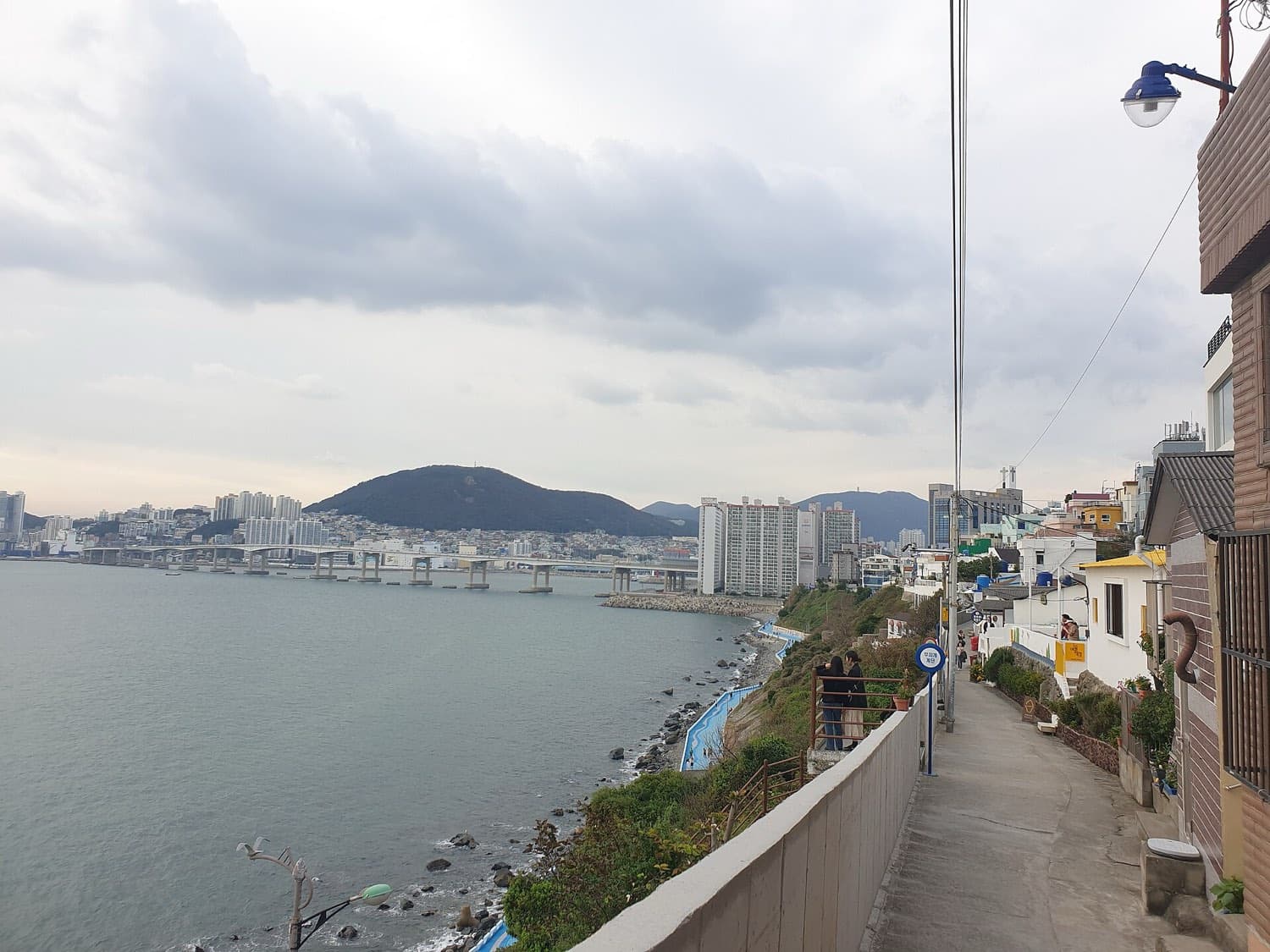
The walk ends at the seaward edge, facing Gamcheon harbour. This is a working port, developed from 1978 as an auxiliary port to Busan's larger North Port, today mostly a fishing base and a repair complex for small and medium ships. Notice that the terraced houses behind you all face this way. The village was built looking toward the harbour, so most homes catch at least a partial glimpse of the sea. That was not decoration. This is the water the refugees came to, and the fishing and shipping economy below is what a hillside of poor families lived beside and lived from.
The 2009 turn, and why it did not erase the people
The last piece the origin sets up is the art project itself. By the early two thousands, Gamcheon was emptying and struggling, its houses falling vacant. In 2009, the Ministry of Culture, Sports and Tourism and the Saha district office ran a public-art renovation to revive it. An early national bid of around ninety-three thousand dollars paid for the first murals and roughly ten art installations. In the years that followed, dozens more artworks went in and more than a dozen abandoned houses became galleries.
Here is the part that matters most, and the reason the origin stop is worth taking seriously. The artists and residents worked together, and this transformation happened without mass eviction. People were not pushed out to make room for the pretty village that tourists came to see. They stayed, and the art was layered around them. Around one point four million visitors came in a single recent year, and yet people still live in almost every one of these painted houses. That is why the alleys are still someone's front path, why you keep your voice low, and why you point your camera at the panorama rather than into a doorway.
If you want to see how this walk fits with the rest of the city, the Busan walking tours hub lays out the other routes, and the Busan city page collects them in one place. But start with Gamcheon, and start it at the origin. The beauty is real. So is the poverty it came from. The walk holds both, and the second stop is where you learn how.
Sources
- Gamcheon Culture Village, Wikipedia. Primary encyclopedia reference for the village's founding, the 1955 Taegeukdo settlement, the terraced shared-light layout, and the 2009 art project.
- Sites of the Busan Wartime Capital, UNESCO Tentative List. Documents Busan's wartime-capital role and refugee population surge that produced the hillside settlements.
- Gamcheon Culture Village Project, OBS Agenda21culture case study. Details the 2009 public-art regeneration, the funding, and the resident-inclusive approach without eviction.
- The Little Prince, Wikipedia and Britannica. Confirms Antoine de Saint-Exupery's authorship and the 1943 first publication of the story behind the rooftop sculpture.
- Port of Busan, Wikipedia. Background on Gamcheon harbour, developed from 1978 as an auxiliary port and now a fishing and ship-repair base.
Ready to experience it?
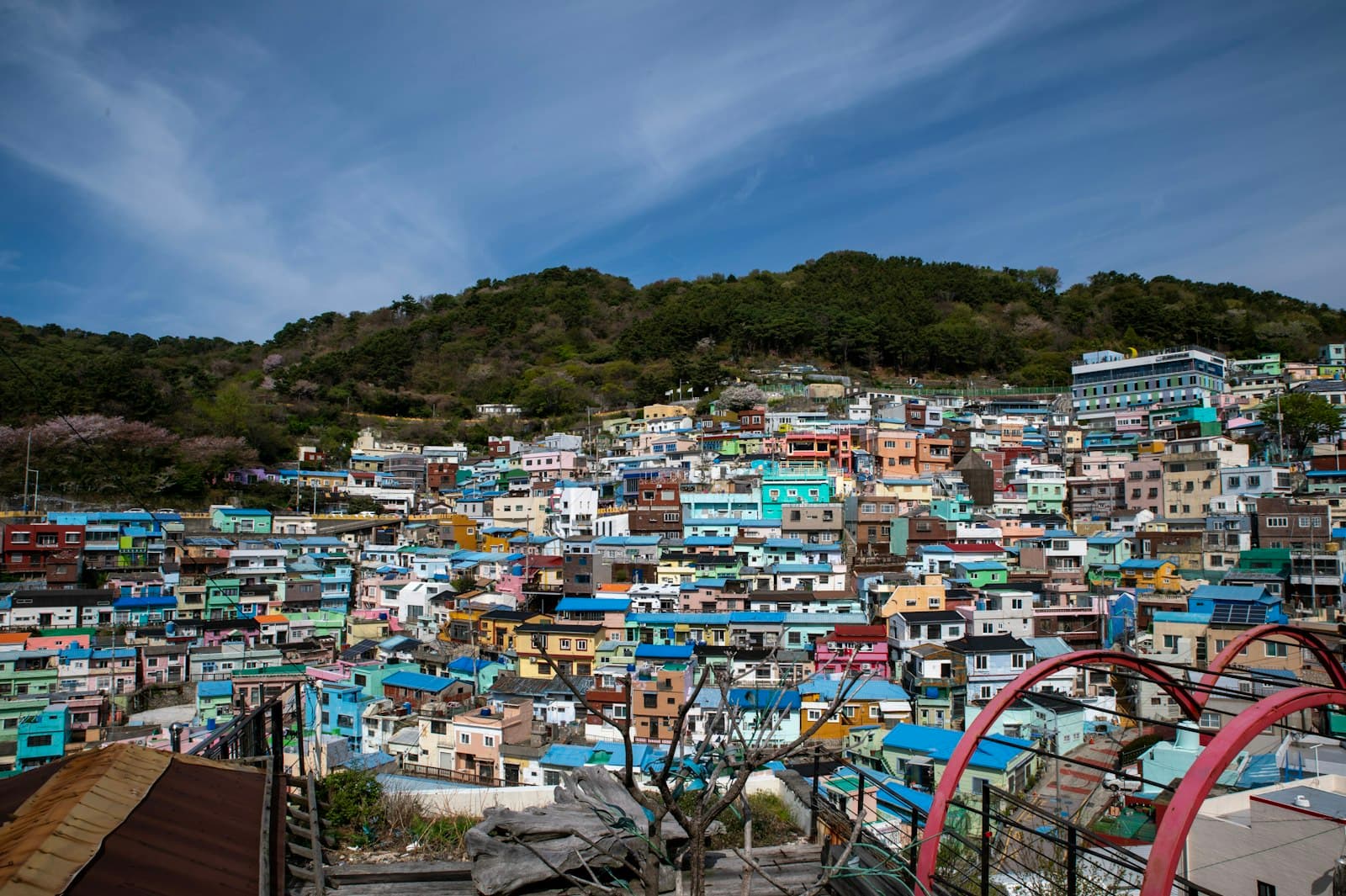
Gamcheon Culture Village: The Painted Hillside
90 min · 1.8 km · moderate
More from Busan
Explore more at your own pace.
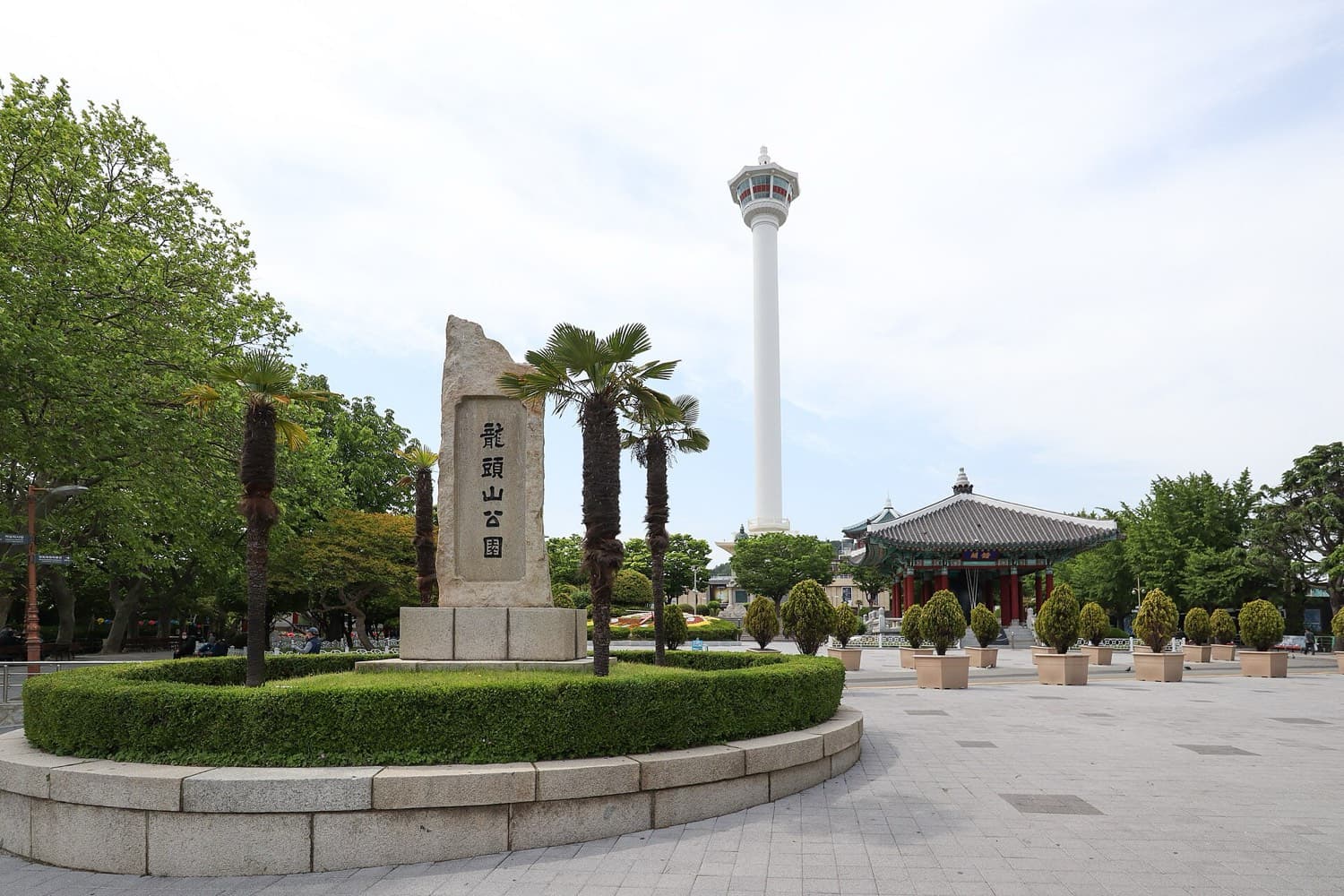
Busan Travel Guide: Days, Transport, Weather, Safety, Budget
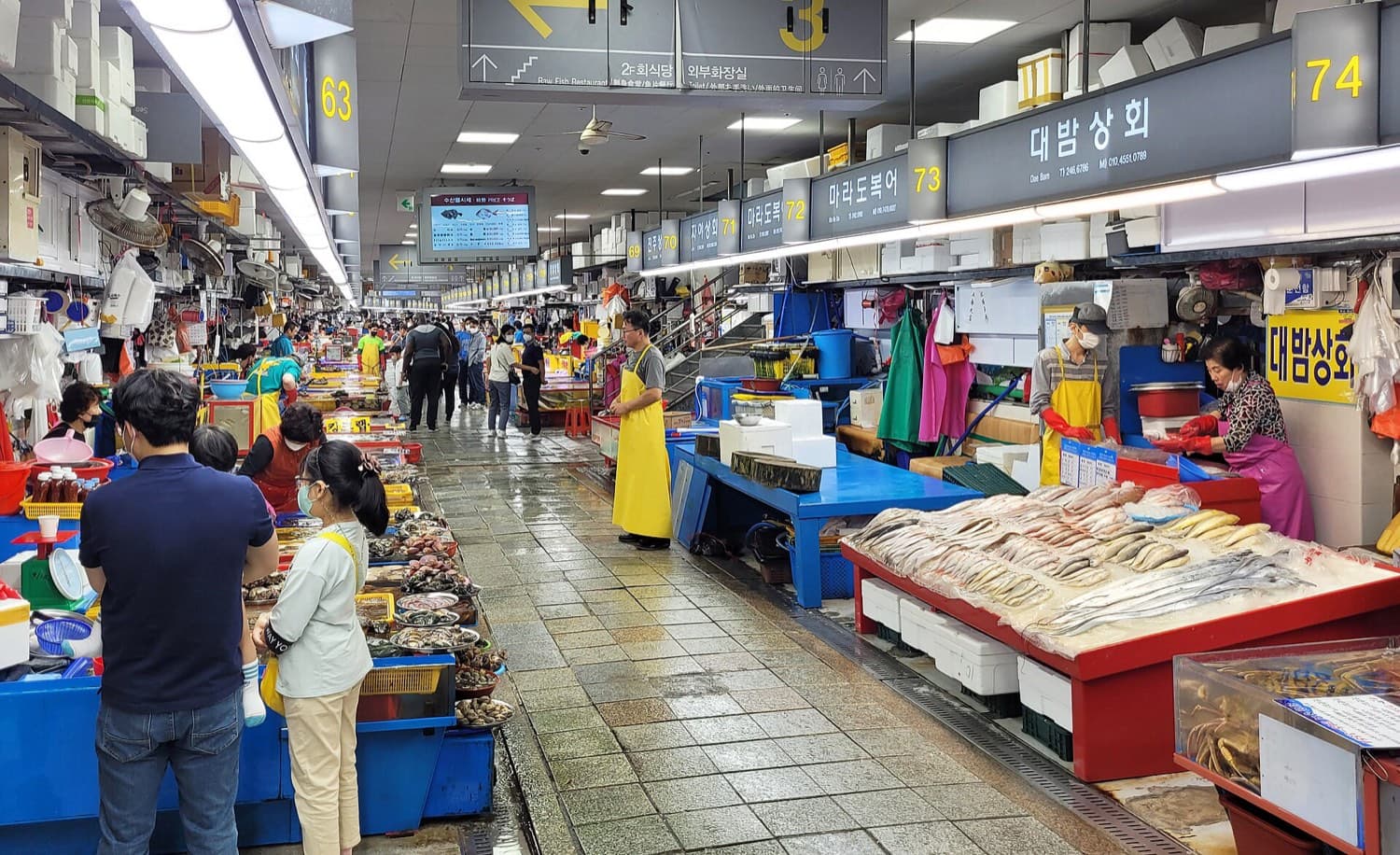
Busan's War-Made City: How a Port Refuge Became a Painted Coast
Jagalchi Market: How Busan's Fish Market Explains the Whole Port City
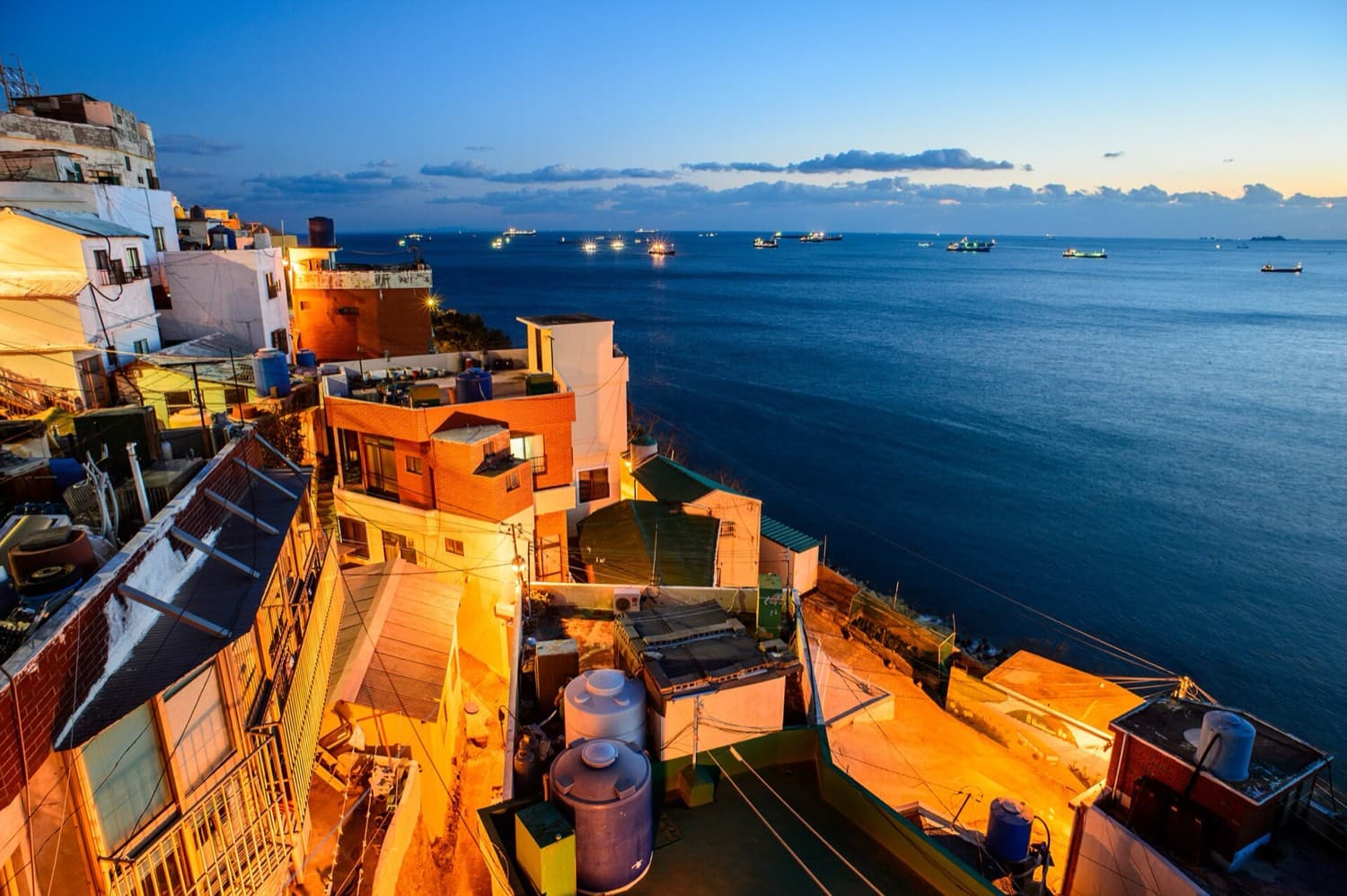
The Stacked White Houses of Huinnyeoul: Busan's Cliff Village Beneath the Postcard
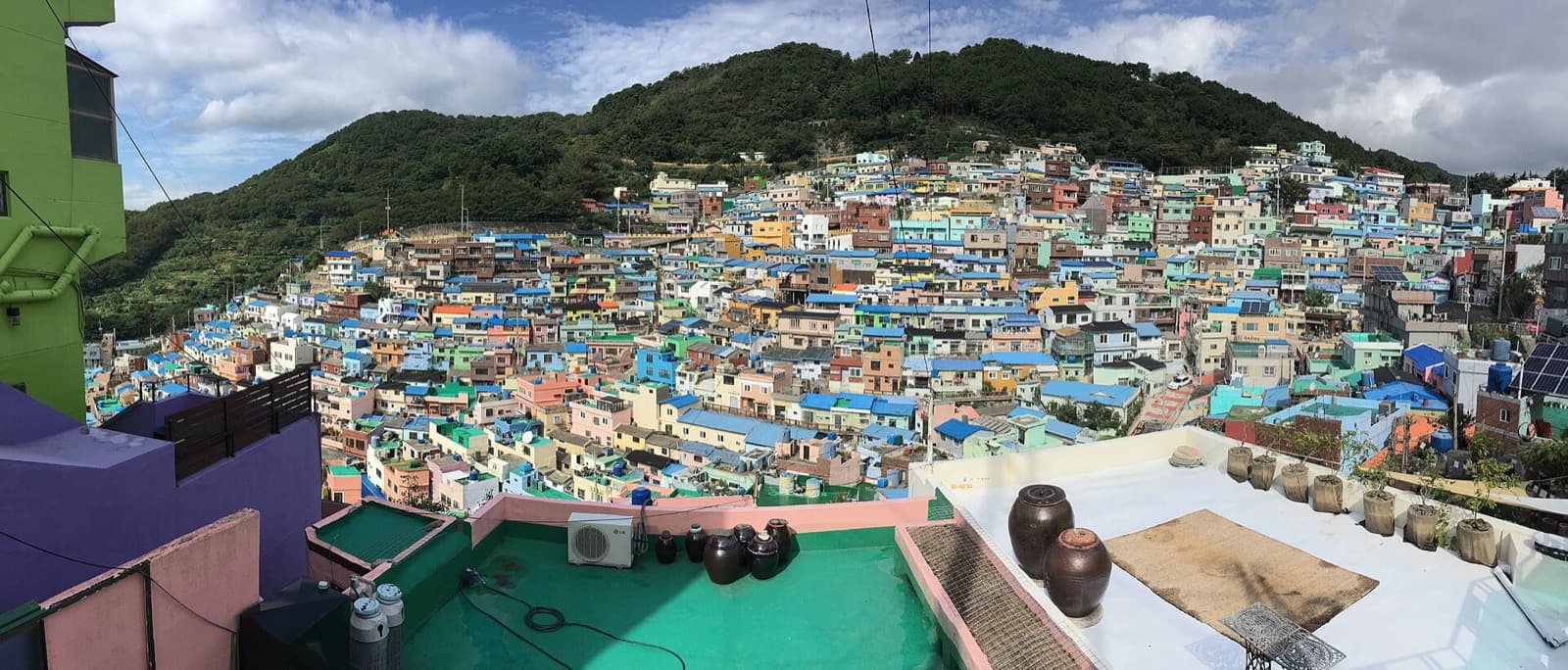
The Gamcheon Panorama Viewpoint: Reading a Refugee Slope Two Ways at Once