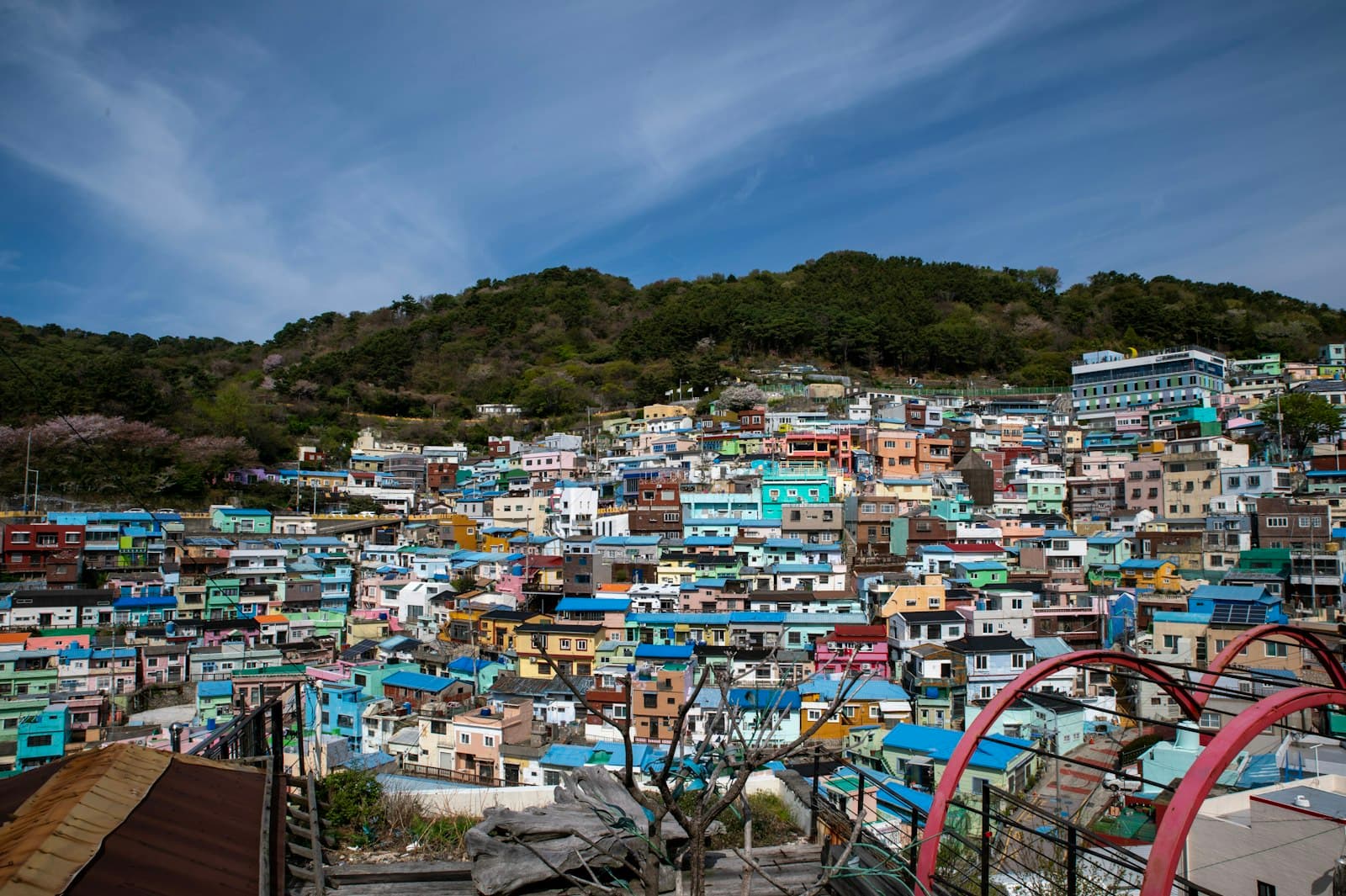
Gamcheon Culture Village: The Painted Hillside
90 min · 1.8 km · moderate
Eat Busan the way the port built it: start with a bowl of dwaeji gukbap, the pork and rice soup that refugees created after the Korean War, then work through cold milmyeon wheat noodles, fresh hoe pulled straight from Jagalchi Market, eomuk fish cakes from a city that has fried them since the 1950s, and a seed-stuffed ssiat hotteok on the film-festival street. Busan is a port, and almost every dish here traces back to what the sea, the war, and cheap aid flour made possible. This is what to order, where the tradition comes from, and how to do it like a local.
The one dish to eat first: dwaeji gukbap
If you eat only one thing in Busan, make it dwaeji gukbap, a pork and rice soup whose name translates almost literally to pork, soup, rice. A milky pork-bone broth arrives over rice with sliced pork, and you finish it yourself at the table.
The origin is honest and a little heavy. The dish took shape in the 1950s, when refugees who had fled south during the Korean War could not afford cuts of meat and cooked with pork bones and scraps, including bones discarded by the United States military stationed nearby. What began as a way to stretch almost nothing became the city's signature bowl, and it spread from Busan across Gyeongsang province and eventually the whole country.
How to order like a local: the broth comes deliberately mild. On the table or on the side you will find dadaegi, a spicy red chili paste, plus salted shrimp (saeujeot), chopped green onion, and sometimes chives. Add the salted shrimp for salt rather than reaching for soy sauce, stir in a small spoon of dadaegi, taste, then add more. Busan even has a stretch of the Seomyeon district known informally as a gukbap alley, a run of shops near Seomyeon Station all cooking the same bowl slightly differently. The local heuristic for choosing among them is simple: walk into the one with the most people already eating.
Milmyeon: the noodle a war invented
Hear a stop from this walk
Two Thousand Nine: The Art That Saved the Village
Busan's summer dish is milmyeon, a cold wheat noodle in chilled broth. The name compresses two words, mil (wheat) and naengmyeon (cold noodles), and the swap in that name is the whole story.
Naengmyeon is a northern dish, associated with Pyongyang and Hamheung, traditionally made from buckwheat and potato starch. When North Korean refugees settled in Busan during the Korean War and opened noodle shops, those ingredients were hard to find. Wheat flour, on the other hand, was arriving cheaply as wartime aid. So they made the same idea from what they had, and milmyeon was born. Today many of the city's well-known milmyeon houses are run by descendants of those refugees or by locals who inherited the recipes.
Order it two ways. Mul-milmyeon is the noodle sitting in cold broth, refreshing and mild. Bibim-milmyeon comes without soup, tossed in a sweet-spicy sauce. Both usually arrive with a small pair of scissors so you can cut the long, chewy noodles, and a splash of vinegar and a dab of mustard oil are yours to add to taste.
Jagalchi Market: buy downstairs, eat upstairs
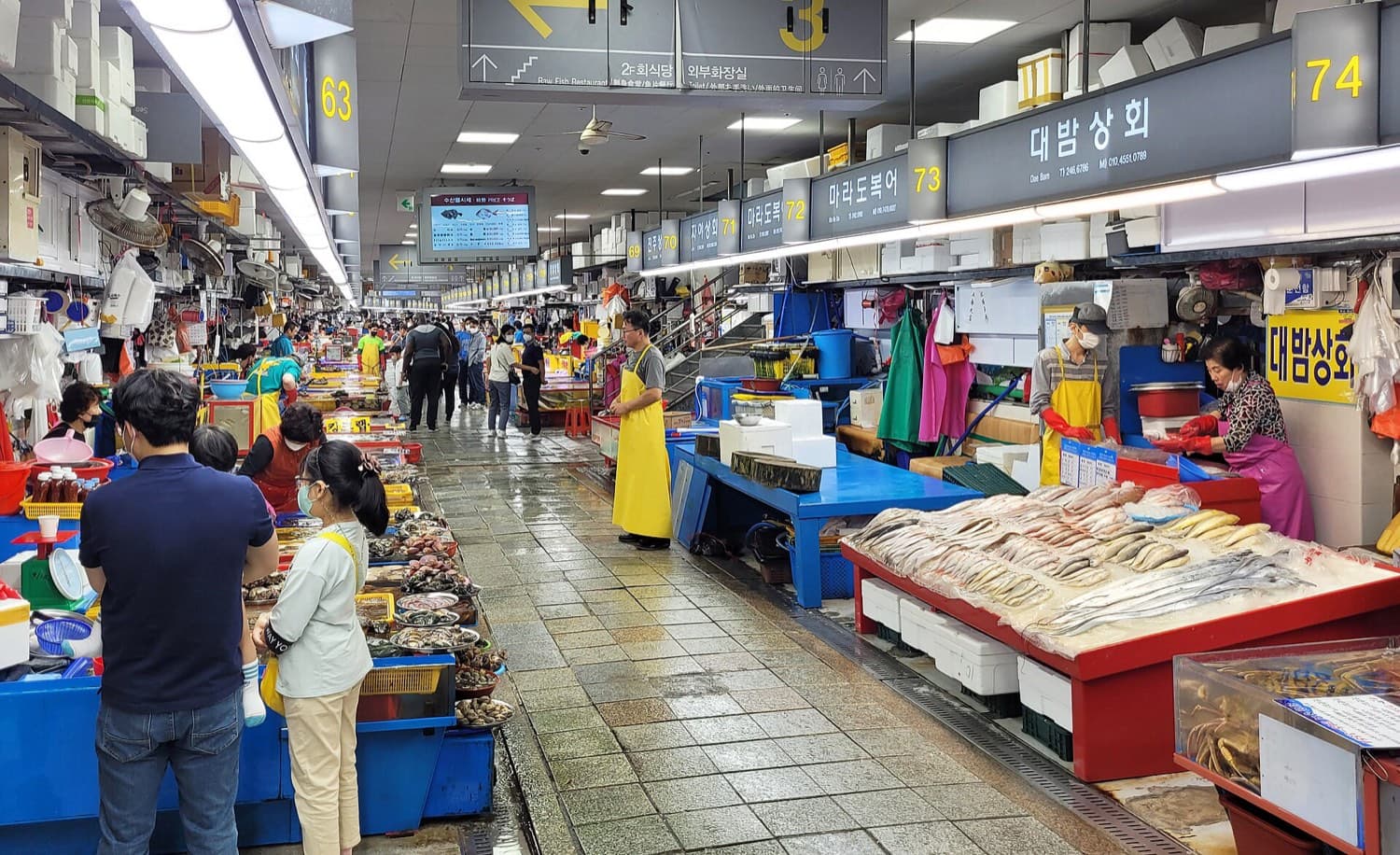
Jagalchi Market is the largest fish market in South Korea, and it is the reason so much of Busan's table is seafood. It runs along the waterfront in Jung District, and its trade has long been carried by the women vendors known as the Jagalchi ajumma, a tradition tied, like so much here, to women selling on these streets to survive after the war. This is the opening stop of our self-guided Jagalchi and Nampo-dong walk.
The move most visitors miss is how you actually eat here. Walk the ground-floor tanks, point at a live fish, crab, or shellfish, and agree the weight and price before anything is cut. The vendor sends it upstairs, where a restaurant slices it into hoe (Korean raw fish) for a small per-person table charge that covers the side dishes. Hoe is not Japanese sashimi. You dip it in chogochujang, a sweet-and-spicy red chili sauce, or wrap it in a perilla leaf with garlic. When the fish is gone, the frame goes into a spicy stew called maeuntang so nothing is wasted. Walking the aisles costs nothing, the floors near the working quays are wet, and the traders are there to work, so mind your footing and stay out of the wet lanes.
Eomuk: the fish cake Busan perfected
Busan is Korea's fish cake city, and Busan eomuk is widely considered the country's best: thicker, denser, and richer than versions made elsewhere. It is pollock ground with salt and starch, shaped, and fried, a cheap and portable protein that spread through the port after the Korean War.
The name to know is Samjin Amook, founded in 1953 and recognized as the oldest fish cake maker in Busan, now run across multiple generations with a small history museum in the city. You do not need the brand to eat well, though. On the street, the classic is a skewer of fish cake pulled from a pot of hot anchovy or kelp broth, and at most stalls the broth in the paper cup is free and self-serve. Drink it between bites, especially on a cold evening.
Ssiat hotteok: the seed pancake of the film street
End on something sweet at BIFF Square, the old cinema district in Nampo-dong renamed for the Busan International Film Festival. Its signature bite is ssiat hotteok, a Busan twist on a nationwide griddle pancake. Ordinary hotteok is a fried dough pocket filled with melting brown sugar. The ssiat (seed) version is split open after frying and packed with a crunchy mix of sunflower, pumpkin, and sesame seeds plus crushed nuts, so it is crisp outside, molten and nutty inside.
You will see the queues before you see the stall. Order one, hold it in the paper cup you are handed, and eat it standing while it is almost too hot, which is the correct temperature. Expect a couple of thousand won, cash, per pancake.
How to eat across a day, and pay for it
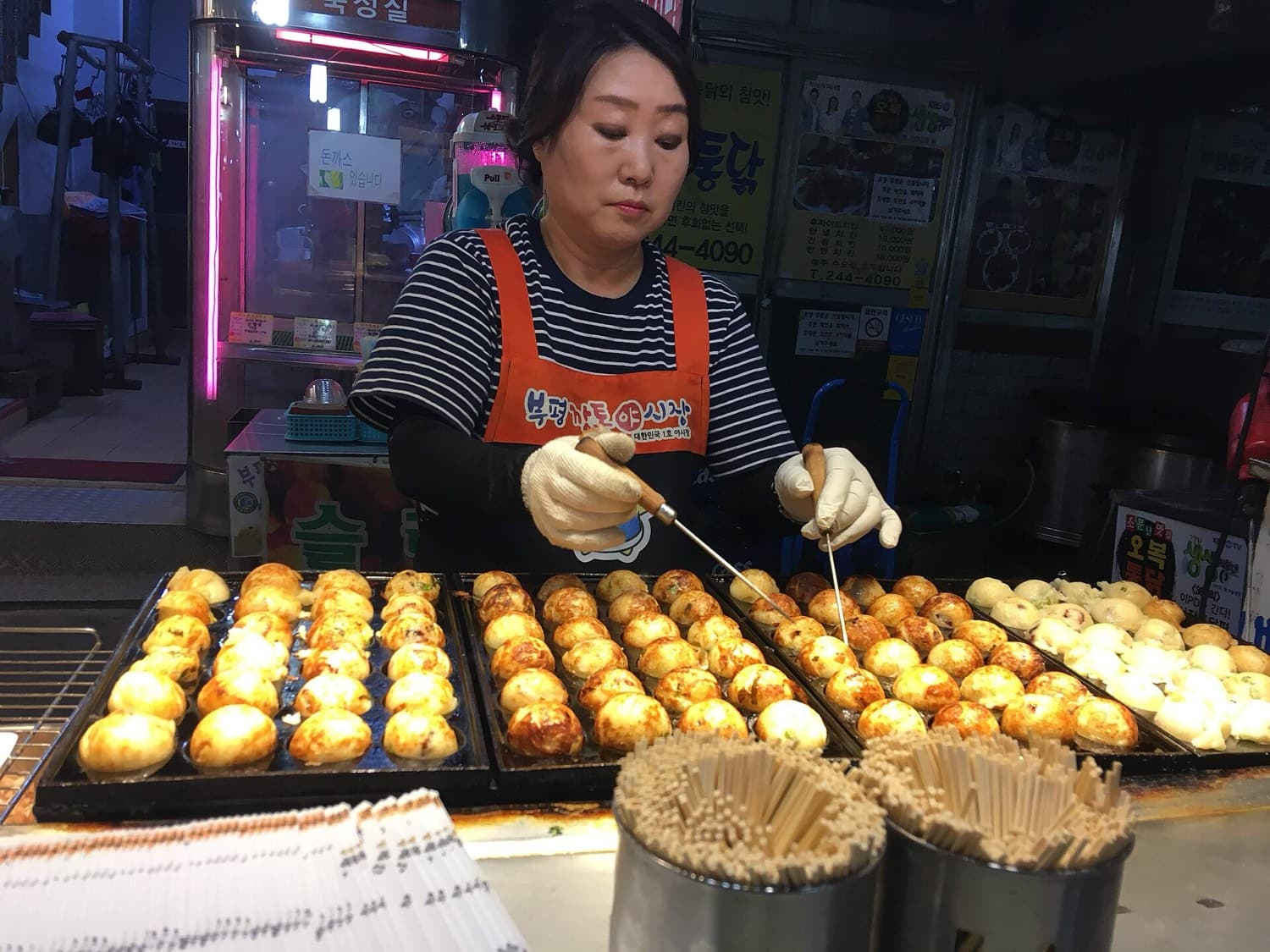
Think of Busan eating as grazing, not sitting down for one big meal. A local rhythm: dwaeji gukbap for an early lunch, milmyeon to cool off in the afternoon heat, hoe at Jagalchi or fish cakes on the street through the evening, and a ssiat hotteok as you climb toward Yongdusan Park. The night food carts at nearby Bupyeong Kkangtong Market fire up from around 7:30 in the evening, which is when to time the sweet-and-savory stalls.
Two practical notes. Carry cash in small bills, because market stalls and street carts often prefer it and it makes stall-by-stall grazing far simpler. And use the subway: Jagalchi and Nampo stations put you right at the food. The markets and BIFF Square get densely crowded after dark, so keep your bag closed and in front of you.
For a route that strings the fish market, the film street, and the night market into one self-paced walk with audio narration, see the Busan city page. Every stop is short and skippable, so you can stop and eat whenever something smells right.
Sources
Frequently asked questions
- What is Busan's most famous food?
- Dwaeji gukbap, a pork and rice soup in a milky pork-bone broth, is Busan's signature dish. It was created in the 1950s by Korean War refugees who cooked with cheap pork bones and scraps. It later spread from Busan across the rest of South Korea.
- What is milmyeon and how is it different from naengmyeon?
- Milmyeon is a Busan cold noodle dish served in chilled broth. It was created during the Korean War when North Korean refugees substituted cheap aid wheat flour for the buckwheat and potato starch used in northern naengmyeon. The name literally combines mil (wheat) and naengmyeon (cold noodles). You can order it in broth (mul-milmyeon) or tossed in spicy sauce (bibim-milmyeon).
- How do you order raw fish (hoe) at Jagalchi Market?
- Choose a live fish or shellfish from the ground-floor tanks and agree the weight and price before anything is cut. The vendor sends it to a restaurant upstairs, which slices it into hoe for a small per-person table charge that includes side dishes. Hoe is eaten with chogochujang, a sweet-spicy red chili sauce, or wrapped in perilla leaf with garlic, and the leftover bones become a spicy maeuntang stew.
- What is ssiat hotteok and where do you find it in Busan?
- Ssiat hotteok is a fried sweet pancake split open and stuffed with sunflower, pumpkin, and sesame seeds plus crushed nuts, crisp outside and molten inside. It is the signature street food of BIFF Square in Nampo-dong, the district named for the Busan International Film Festival. Vendors sell it in a paper cup for a couple of thousand won, usually cash.
- Why is Busan known for fish cake (eomuk)?
- Busan is a port city whose eomuk, made from ground pollock, salt, and starch, is widely regarded as the best in Korea, thicker and richer than versions elsewhere. Small workshops rose after the Korean War to supply cheap portable protein. Samjin Amook, founded in 1953, is recognized as the oldest fish cake maker in Busan.
- Do you need cash to eat in Busan's markets?
- Cash is strongly recommended for market stalls and street-food carts, which often prefer small bills and where paying stall by stall is easier with cash. Sit-down restaurants generally accept cards. Bring small denominations so you can graze across several vendors.
Ready to experience it?
Gamcheon Culture Village: The Painted Hillside
90 min · 1.8 km · moderate
More from Busan
Explore more at your own pace.
Busan's War-Made City: How a Port Refuge Became a Painted Coast
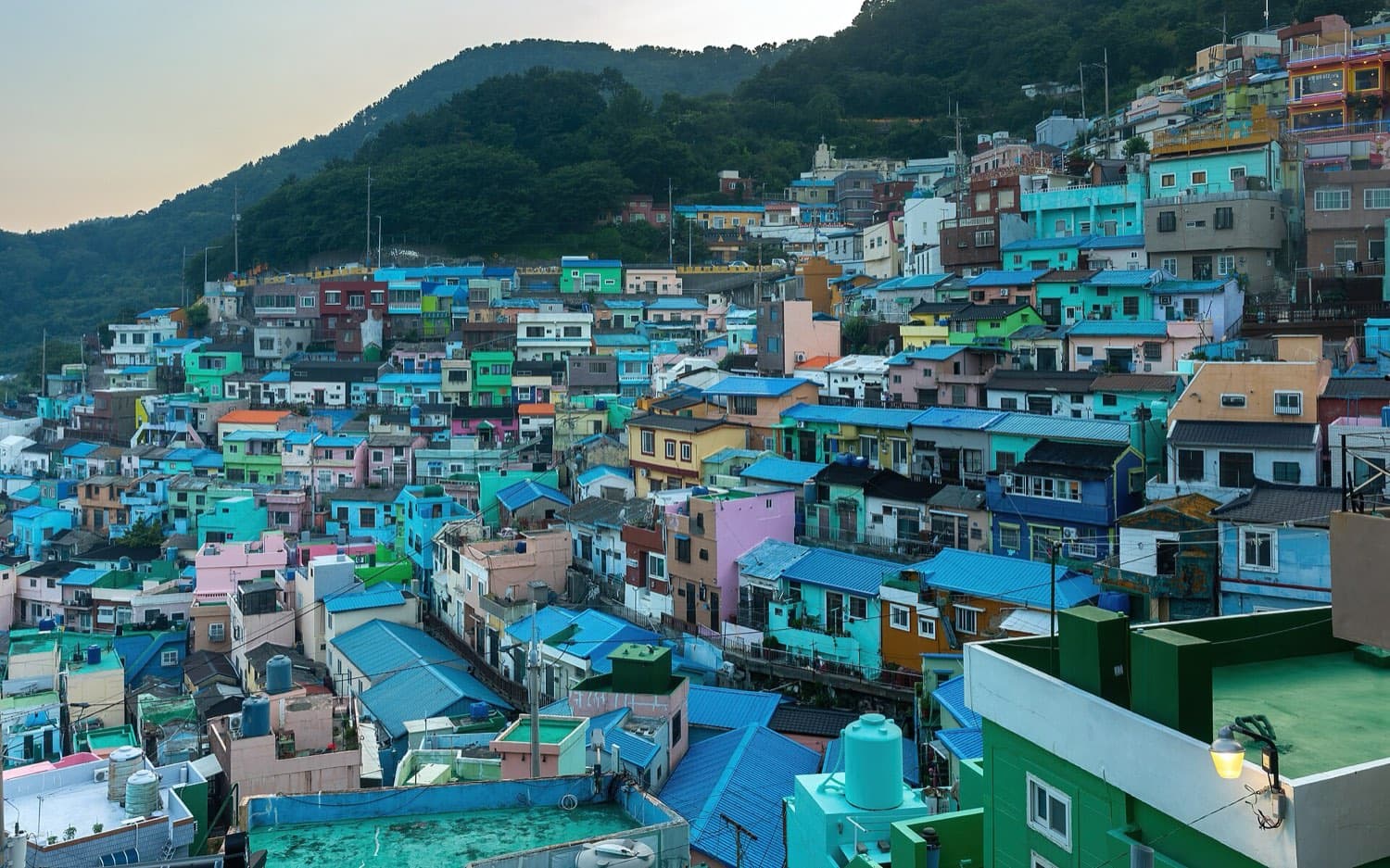
Gamcheon's Refugee Origins: Reading Busan's Painted Hillside
Jagalchi Market: How Busan's Fish Market Explains the Whole Port City
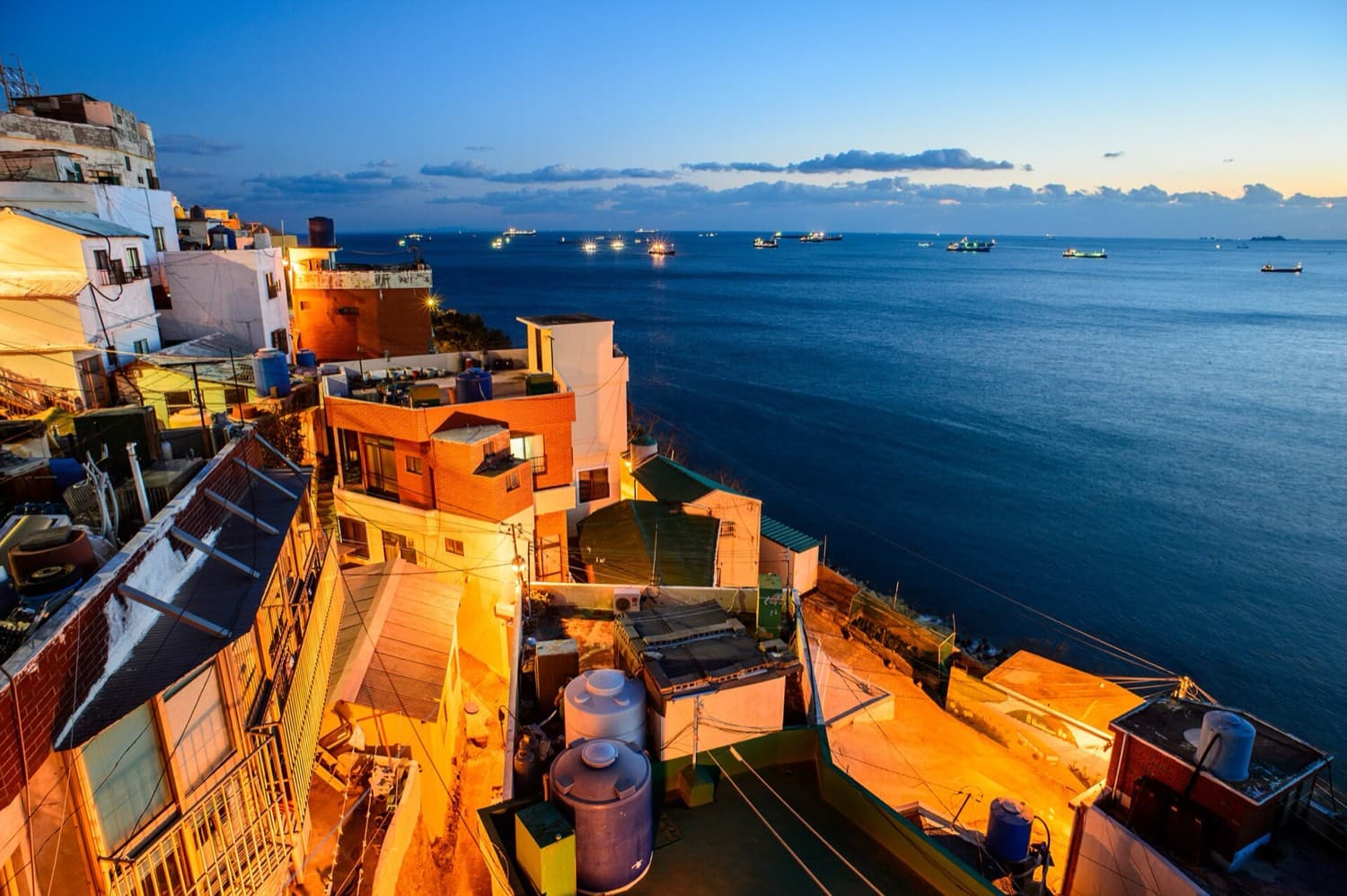
The Stacked White Houses of Huinnyeoul: Busan's Cliff Village Beneath the Postcard
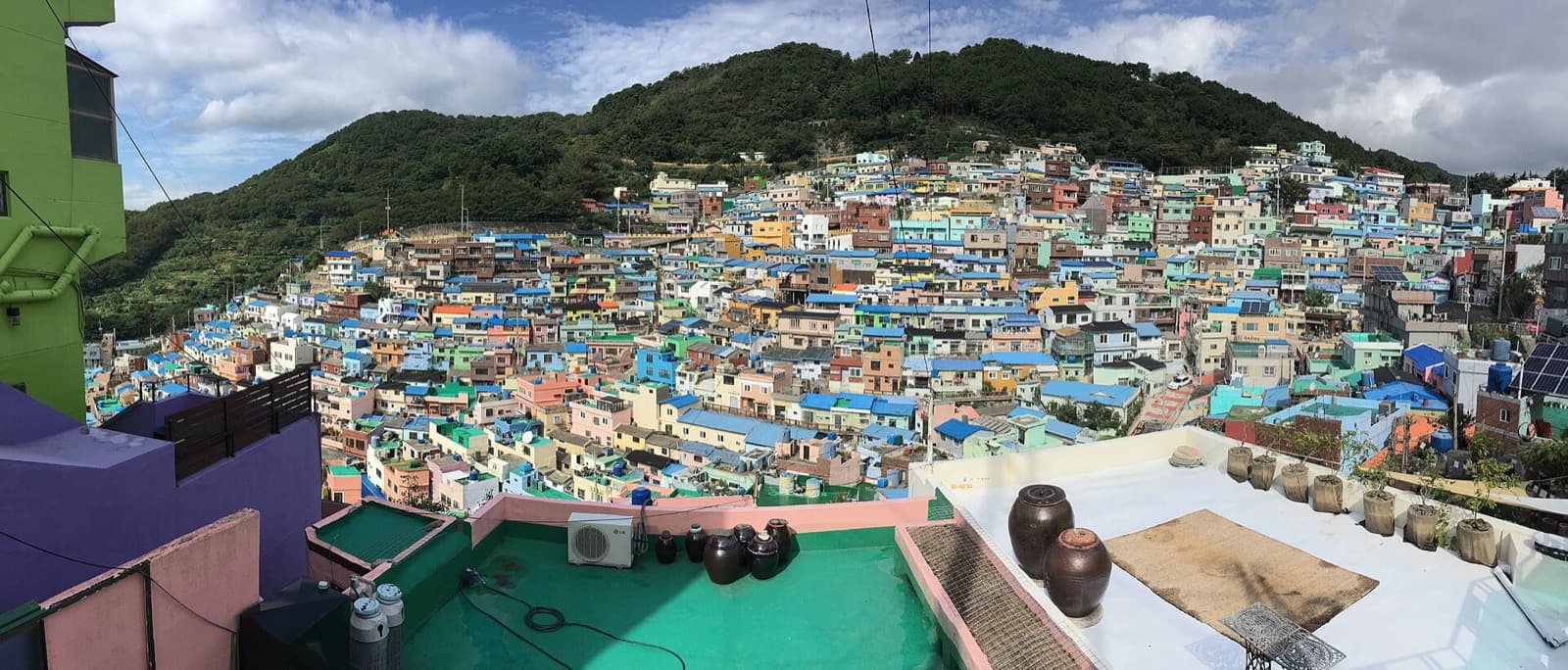
The Gamcheon Panorama Viewpoint: Reading a Refugee Slope Two Ways at Once