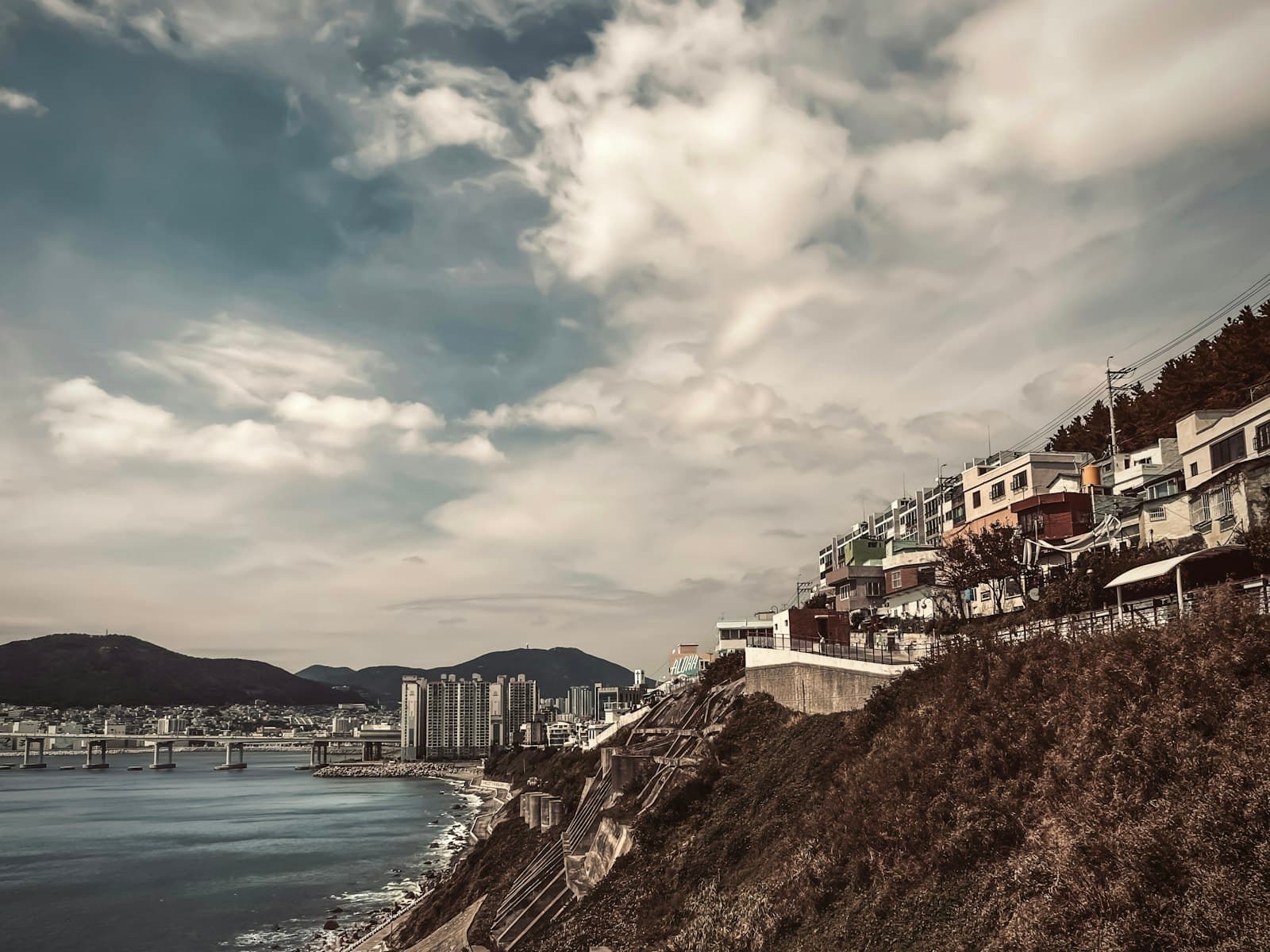
A quiet walk along a Busan sea cliff, where refugees built small white houses on a ledge above a working fishing shore, and the postcard hides a harder truth.
Start · The Cliff-Top Lane: Huinnyeoul Culture Village Entrance
DirectionsStops
- 1
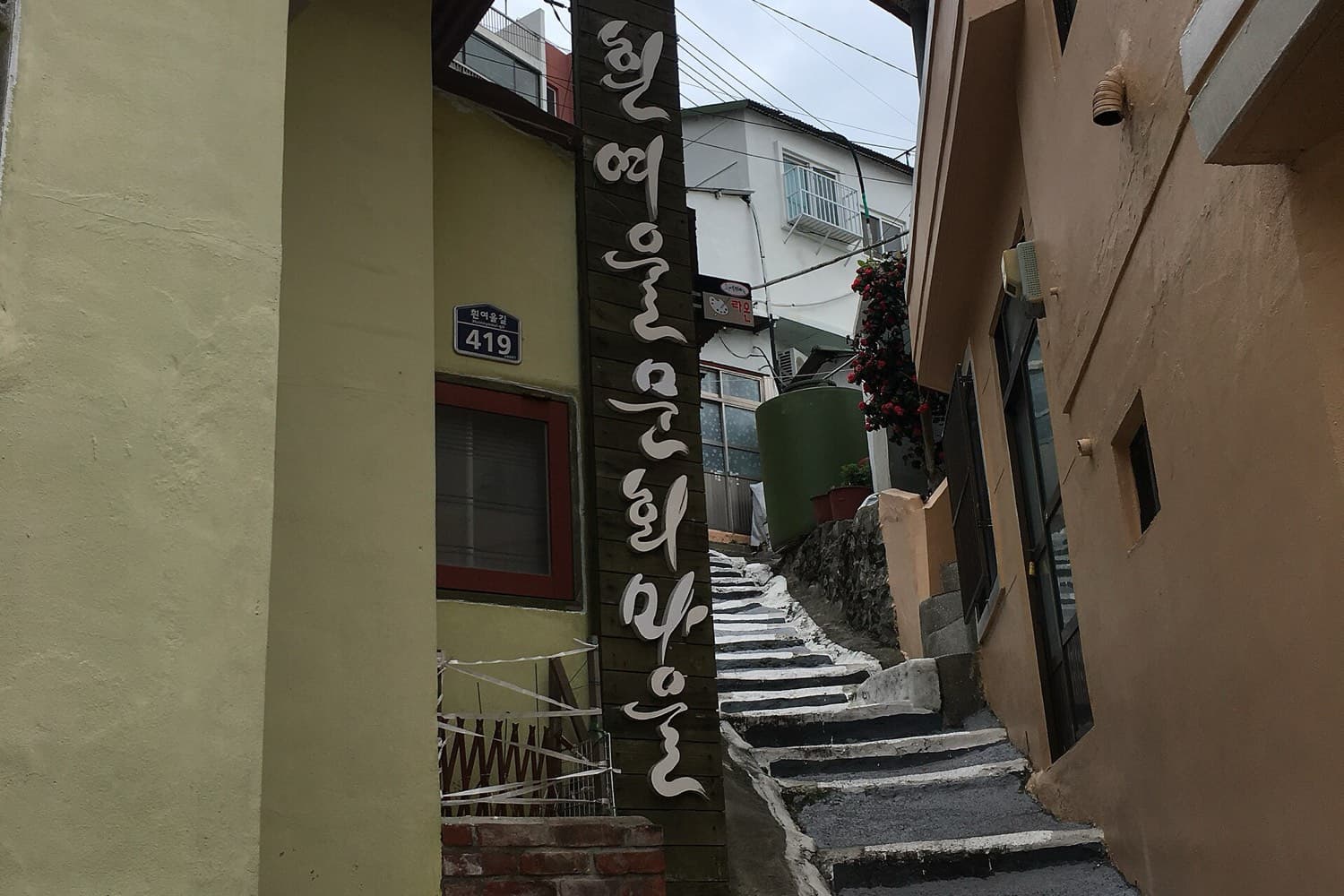
The Cliff-Top Lane: Huinnyeoul Culture Village Entrance
The clifftop lane where a Korean War refugee settlement clings to the sea cliff on Yeongdo island.
- 2
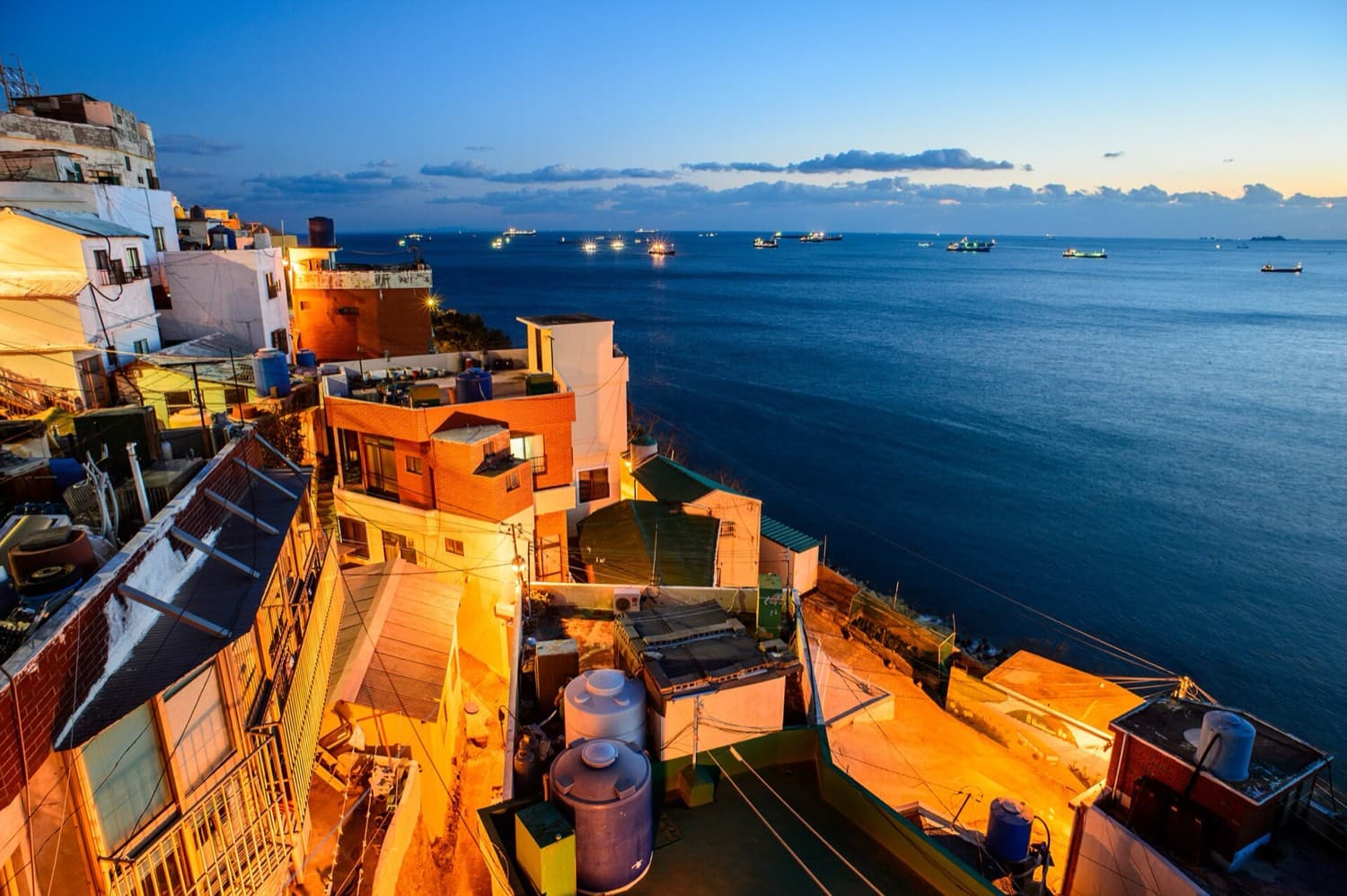
White Water: The Name and the Stacked Houses
The meaning of Huinnyeoul, white water, and the truth beneath the postcard of stacked white houses.
- 3
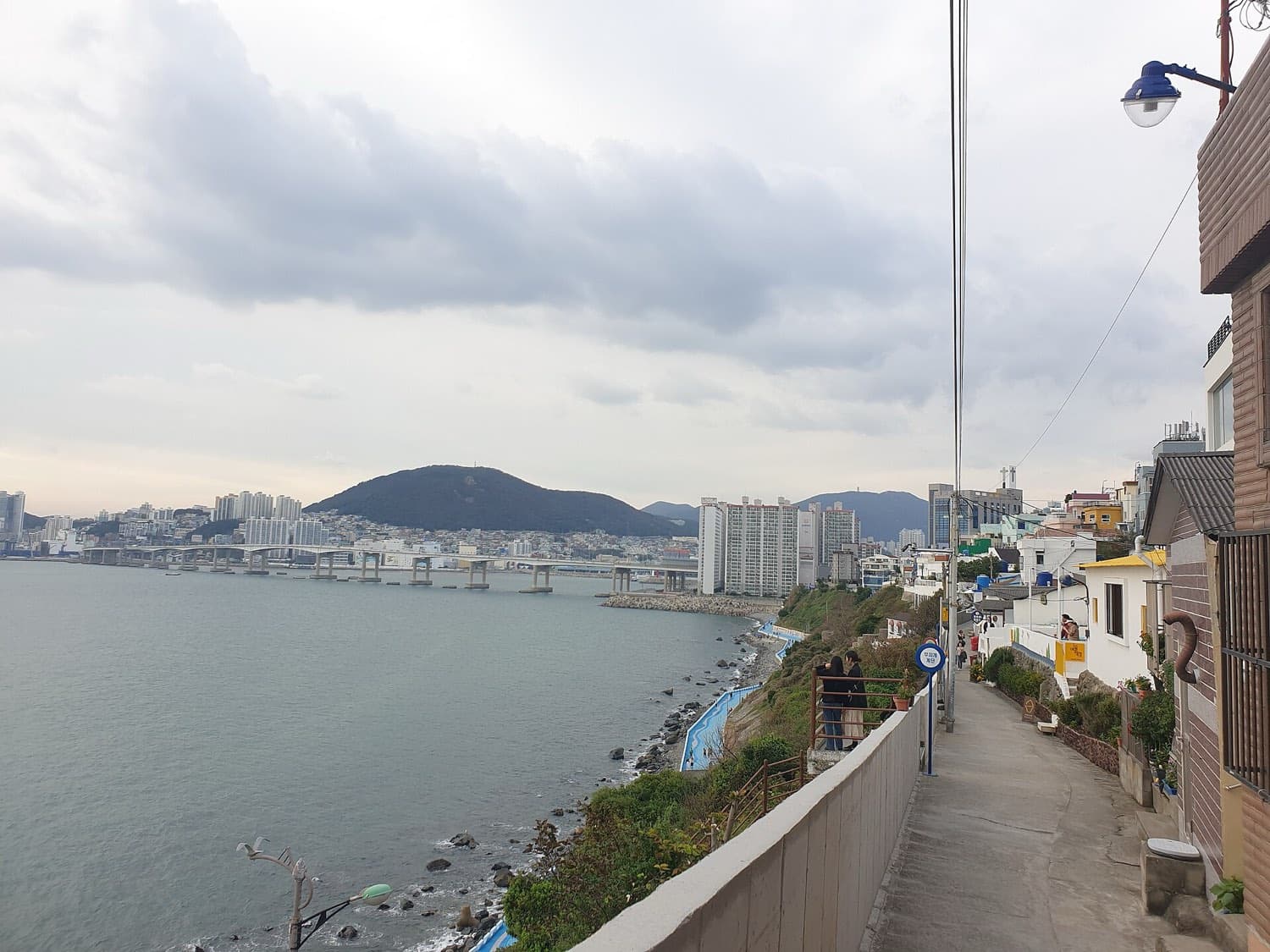
Down to the Water: The Seaside Path and Its Tunnel
Where the clifftop lane drops to the shore through a short coastal tunnel cut for accessibility.
- 4
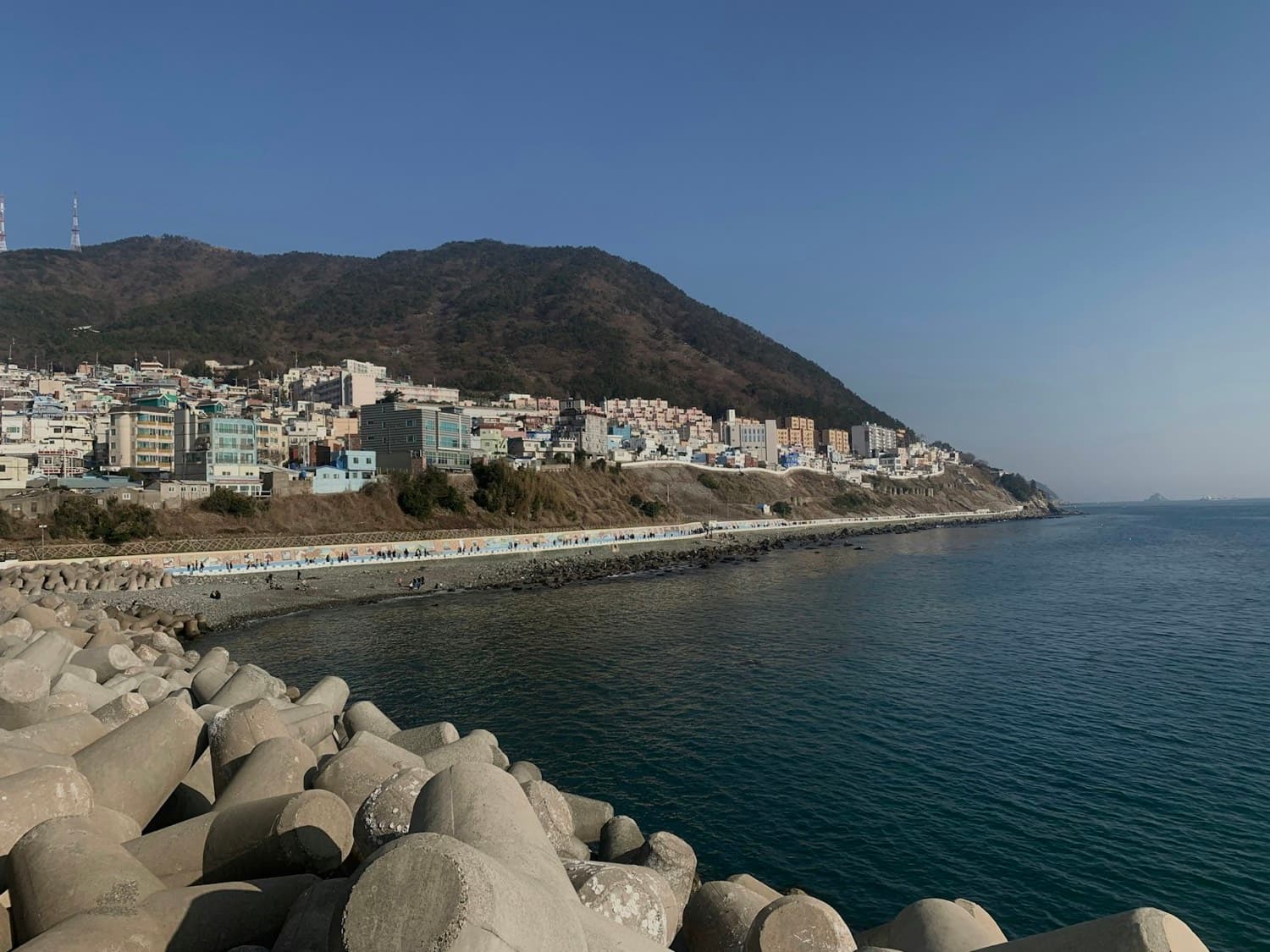
The Working Shore: Breakwater and Fishing Boats
The lived-in fishing shore below the village, part of Busan's South Port with its breakwater.
- 5
Along the Cliff: The Jeoryeong Coastal Walk
A roughly three-kilometre cliffside coastal trail, once a restricted military zone, now open to walkers.
- 6
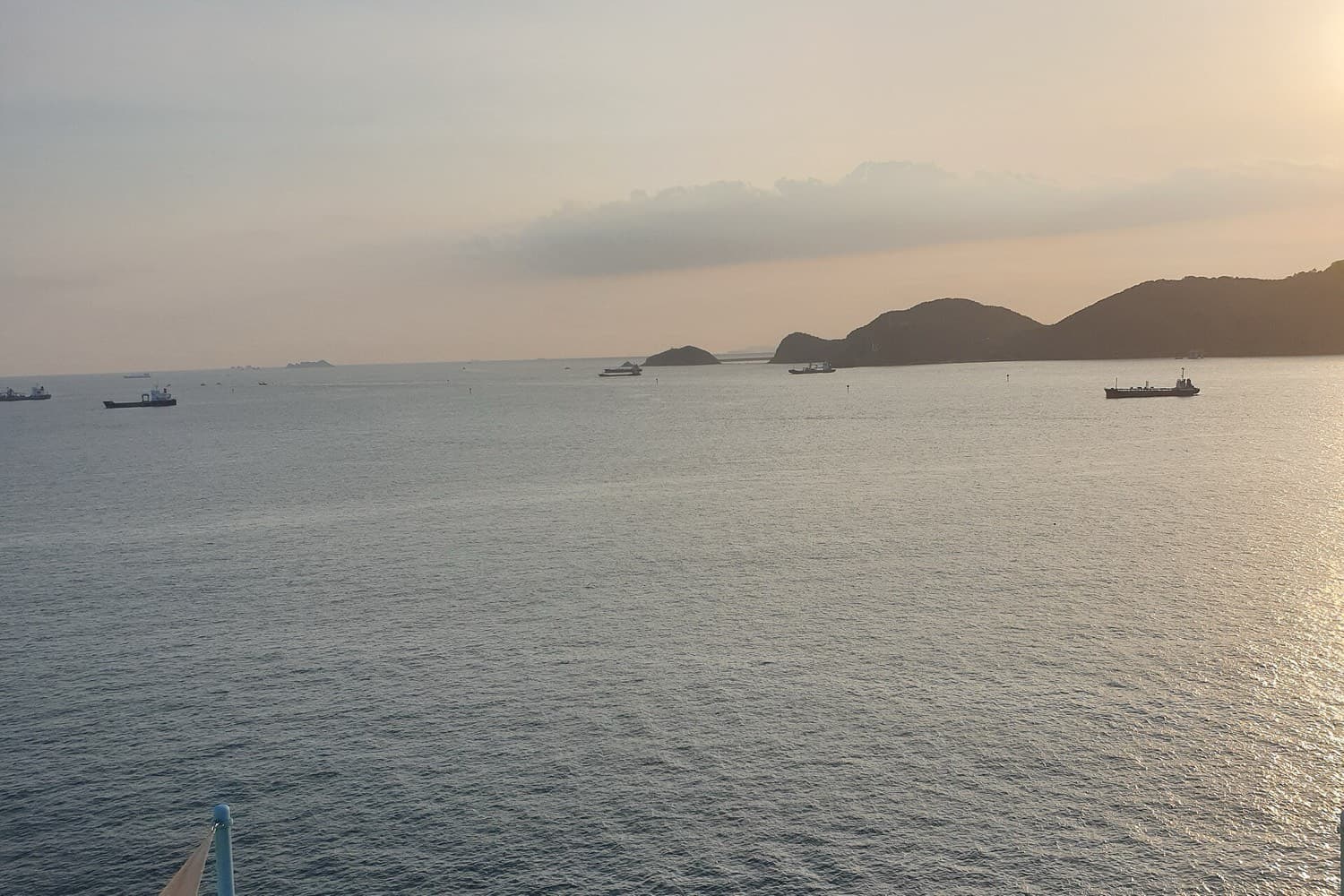
The Open Sea: Overlook Toward the Harbour
A cliff overlook where the coastal path opens toward the sea lanes into one of the world's busiest ports.
Details
Best Time to Visit
Late afternoon into early evening is the finest window: the light softens on the white houses and the sea, the heat eases on the exposed cliff, and the coastal tunnel is lit from nine in the morning until eleven at night. Weekday mornings are quietest and kindest to the residents. Clear days give the widest views of the shipping lanes; avoid the trail in rain or high wind, when the coastal rocks turn slick and the cliff edges become genuinely dangerous.
Pro Tips
- •Reach Yeongdo island with a rechargeable transit card, taking the Busan subway and then a local bus, since the hillside and cliffside villages are not directly on a subway line.
- •Wear proper walking shoes with grip: the lanes have steep stairs and the coastal trail runs over natural rock that can be uneven and slippery.
- •Carry water and a hat or sunscreen, because both the clifftop lane and the open shore path give almost no shade.
- •Use the Huin-yeoul Coastal Tunnel if steep stairs are difficult; it was built as an accessible route around a steep stair section and is lit until eleven at night.
- •Everything on this walk is free to enter: the village, the tunnel, and the Jeoryeong Coastal Walk, so budget your day around transit and food rather than tickets.
- •Set aside a little under two kilometres and about ninety minutes to two hours so you can move slowly and skip stops as you like, since the route is linear along the coast.
Safety & Precautions
- •This is a lived-in residential village: keep your voice low in the lanes, do not peer into or photograph people's homes, and respect residents' privacy at all times.
- •The coastal cliff path runs over natural rock beside real drop-offs; edges and wet stone can be slippery, so stay on the marked path and watch your footing, especially in rain or wind.
- •The clifftop lane and the exposed shore offer little shade, so protect yourself from sun and heat with water, a hat, and sunscreen, particularly in summer.
- •Below the cliff is a working fishing shore and part of Busan's South Port; keep clear of active breakwaters, quays, and boats, and do not stray onto working port areas.
Travel advisory: Exercise Normal Precautions (Level 1).
Gallery
Related Reading
Go deeper on what you'll see, hear, and walk through.
Overview
Best Self-Guided Walking Tours in Busan (2026)
3 min
Overview
Busan Travel Guide: Days, Transport, Weather, Safety, Budget
6 min
Overview
One Day in Busan: A Walkable Morning-to-Evening Itinerary
7 min
Thematic
Best Culture Walking Tours in Busan (2026)
2 min
Thematic
Busan's War-Made City: How a Port Refuge Became a Painted Coast
7 min
Companion
The Stacked White Houses of Huinnyeoul: Busan's Cliff Village Beneath the Postcard
6 min
Deep dive
The Jeoryeong Coastal Walk: Busan's Off-Limits Shore, Now Yours to Walk
6 min
Read
What to Eat in Busan
7 min
Read the walk
The full story of Huinnyeoul Culture Village: The Cliff Path, in words. Prefer to listen? Play it narrated, from home or on location.
Introduction
Some places wear their beauty on the surface and keep their story underneath. Huinnyeoul Culture Village, on the island of Yeongdo in Busan, South Korea, is one of those places. Small white houses stand stacked on a narrow ledge between a high cliff and the open sea. Visitors come for the view. Fewer come knowing that these houses were built by refugees who had nowhere else to go, on a cliff nobody else wanted. This tour has six stops. Give yourself about an hour, a little longer if you linger, and expect to cover under a kilometre in all. It is a mostly linear route, so you can move at your own pace, pausing where the sea pulls you and skipping what you like. The walk begins high on the clifftop lane, then drops through a short tunnel to the shore, follows a working fishing breakwater, climbs the coastal boardwalk along the rock, and ends at an overlook where the sea opens toward one of the busiest ports on earth. One thing to carry with you the whole way: people still live here. This is a lived-in residential village, not a film set. Keep your voice low in the lanes, do not photograph into homes, and let the quiet be part of what you notice. The beauty and the hardship here are the same houses. Hold both. When you arrive at the entrance to Huinnyeoul Culture Village on the clifftop lane, begin with stop one.
1. The Cliff-Top Lane: Huinnyeoul Culture Village Entrance
Stand at the top of the cliff, where the lane runs level and the ground drops away to the sea. This is the entrance to Huinnyeoul Culture Village, a maeul, or village, in the Yeongdo district of Busan. The word do means island, and Yeongdo is Busan's island across the harbour. Huinnyeoul began as a small fishing village. Then came the Korean War, from nineteen fifty to nineteen fifty-three, and everything changed. Refugees fled south with nowhere to settle, and they packed this steep coastal slope with makeshift homes, narrow alleys threading between them, the whole cluster clinging to the cliff above the water. To understand why so many came here, look wider. During the war Busan served as the temporary capital of the Republic of Korea for one thousand and twenty-three days, and it became the great refuge of the country. A city whose peacetime population was only a few hundred thousand swelled to around a million people as displaced families poured in, so that at times there were as many refugees in Busan as there were residents. People built where they could. A cliff was still ground. The lane you are on, Huinnyeoul-gil, runs along the top of the cliff, and gil simply means lane. Steep stairs and narrow alleys drop from here toward the shore. Later, around twenty ten and twenty eleven, local artists and residents remade this into a culture-and-art village, renovating houses and painting murals. Entry is free, and it is open every day. But remember what you are walking through. This is someone's home. Keep your voice down here, do not point your camera into windows or doorways, and let the residents have their quiet. Then look out at the sea, and let it be as plain as it is: a hard beginning, still lived in.
2. White Water: The Name and the Stacked Houses
Walk a little further along the clifftop lane and let the name of this place explain itself. Huinnyeoul means, roughly, white water, or white rapids. Huin is white. The story, told by the region's tourism records, is that a stream once flowed down from Bongnaesan, the mountain at the centre of Yeongdo island, and foamed white as it tumbled toward the sea. San means mountain. White water, running to the shore. Now look at the houses. Small homes stacked close together on the narrow ledge between the cliff and the water, reached by steep stairs and thin alleys. From a certain angle, in a certain light, with white walls above a blue sea, they photograph beautifully, and you will hear this place called the Santorini of Korea. Be careful with that. It is a popular description, a piece of marketing, not a fact. The comparison is about how it looks. It says nothing about how it came to be. And what it came to be from is this: people with nothing built these houses on a cliff because the flat land was already taken. The picturesque form and the hardship of its origin are not two different things. They are the same walls. The same stacked houses that make the postcard are the ones a refugee family raised by hand. That is the quiet truth beneath the view. So take your photograph if you like, gently and without aiming into anyone's home. But hold the other thing too, the harder thing, because it is the more honest one. The white houses are lovely. They were also a last resort.
3. Down to the Water: The Seaside Path and Its Tunnel
Here the walk turns downward. From the clifftop lane, stairways drop toward the shore path at the base of the village, and the sea comes closer with every step. Several of these stairways connect the top of the cliff to the coastal walk below, and some of them are painted,…
Full narration for this stop unlocks with the tour.
4. The Working Shore: Breakwater and Fishing Boats
Down at the water now, look at what is actually here. This is not just a backdrop. The shore directly below the village is part of Busan's South Port, called Namhang, and hang means harbour, or port. This stretch is mainly used by coastal and fishing vessels, with the Namhang…
Full narration for this stop unlocks with the tour.
5. Along the Cliff: The Jeoryeong Coastal Walk
Further along the cliff path, the shore route becomes the Jeoryeong Coastal Walk, a cliffside trail that runs roughly three kilometres along the rocky southern coast of Yeongdo, connecting the base of Huinnyeoul toward the Taejongdae area. This part of the walk carries its own…
Full narration for this stop unlocks with the tour.
6. The Open Sea: Overlook Toward the Harbour
The walk ends here, on the cliff, where the coastal path opens fully to the sea. Look out at the water and the lanes of ships moving across it. Those ships are heading into the Port of Busan, which is the largest and busiest port in South Korea and one of the busiest container…
Full narration for this stop unlocks with the tour.