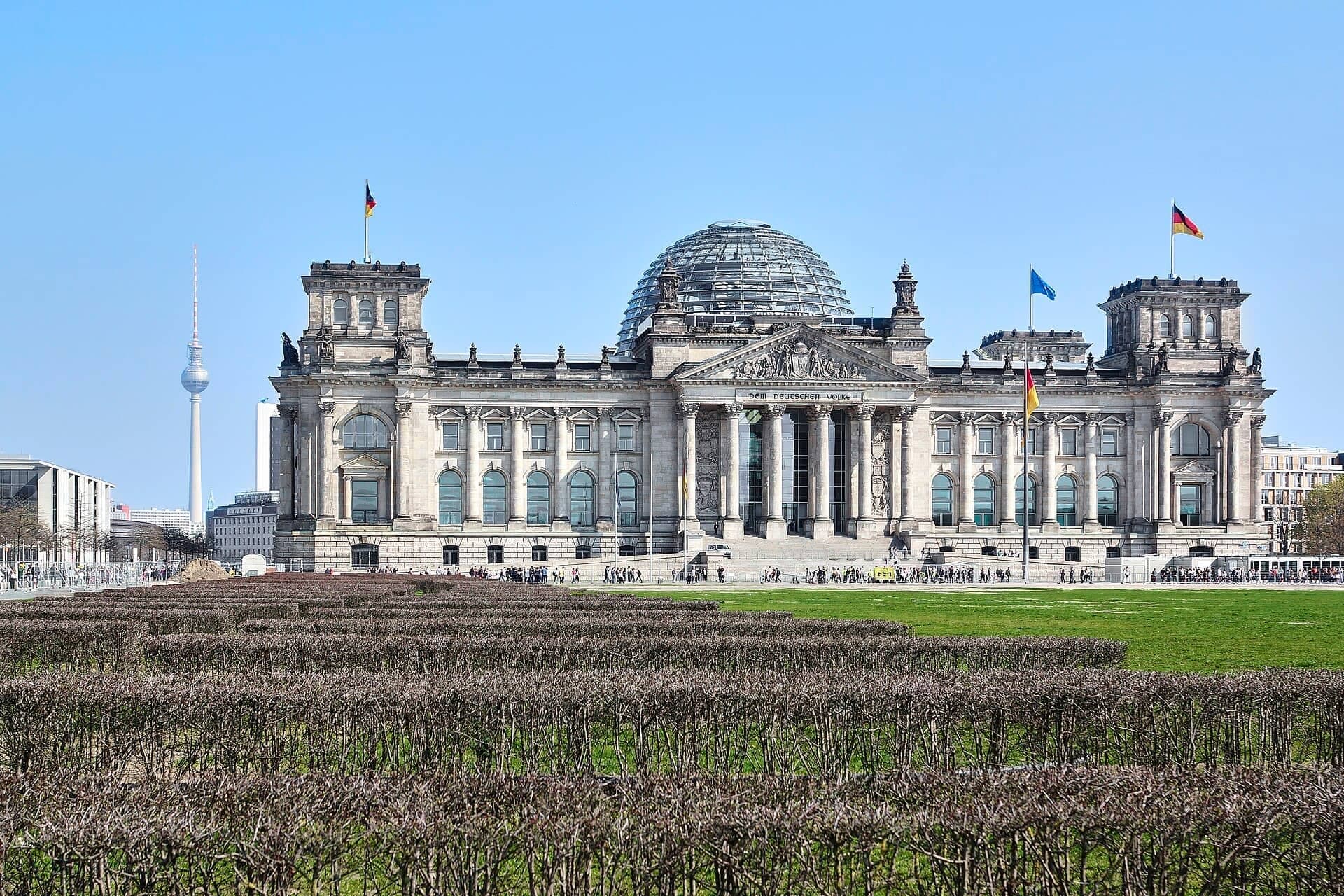
Brandenburg Gate and Reichstag: A Gate, a Park, a Parliament
90 min · 2.9 km · easy
Berlin is a city that a wall cut in two for twenty-eight years, and it never stopped reading its own scar. It went up overnight on the thirteenth of August, nineteen sixty-one, and the crossings did not open again until the ninth of November, nineteen eighty-nine. In between, the same barrier that stranded a triumphal gate in no-man's-land also sealed off a working-class district on three sides, and both wounds turned into something the reunited city chose to keep visible. Rather than pave over its worst history or bury the line of the border, Berlin engineered its own discomfort: it left the evidence in plain sight, marked the vanished wall in cobblestones, and let a walled-in dead end fill with the people the divided city had least room for. Roamer's Berlin walks trace that decision, from the preserved border strip on Bernauer Strasse and the memorial landscape of Mitte to the painted concrete along the Spree and the old canal streets of Kreuzberg.
The scar kept visible
The clearest expression of Berlin's method is the line of the wall itself. Across the city centre, a double row of cobblestones runs through the streets, tracing the exact route the barrier once followed, so the line survives even where the concrete is gone. The regime called that barrier the Antifaschistischer Schutzwall, the antifascist protection rampart, a euphemism for a fortification built to stop its own citizens from leaving. It ran about one hundred fifty-five kilometres around West Berlin, and between its outer and inner walls lay the Todesstreifen, the death strip: raked sand that showed every footprint, a lit patrol road, signal fences, and watchtowers. According to the Berlin Wall Foundation, at least one hundred forty people died at this wall between nineteen sixty-one and nineteen eighty-nine.
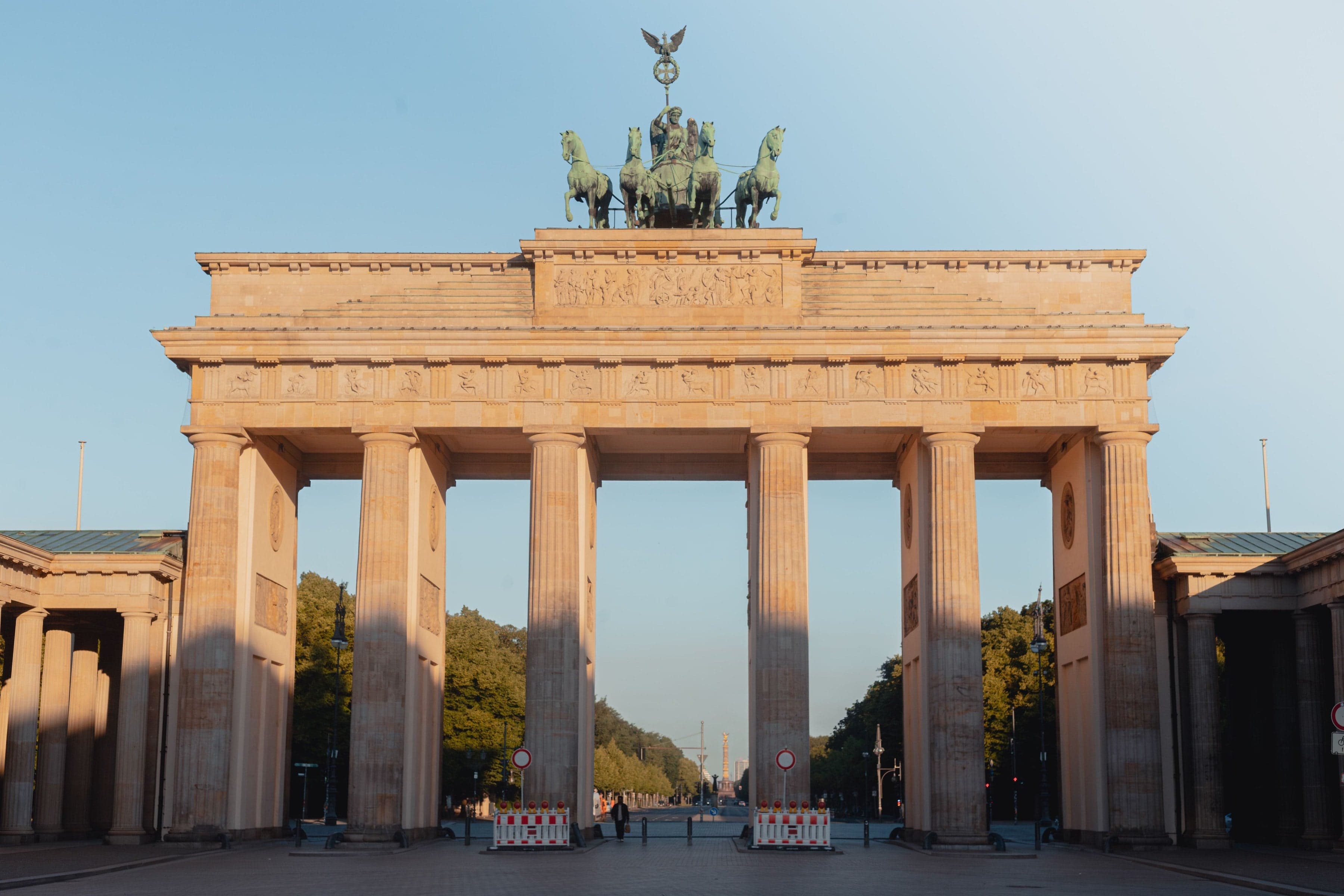
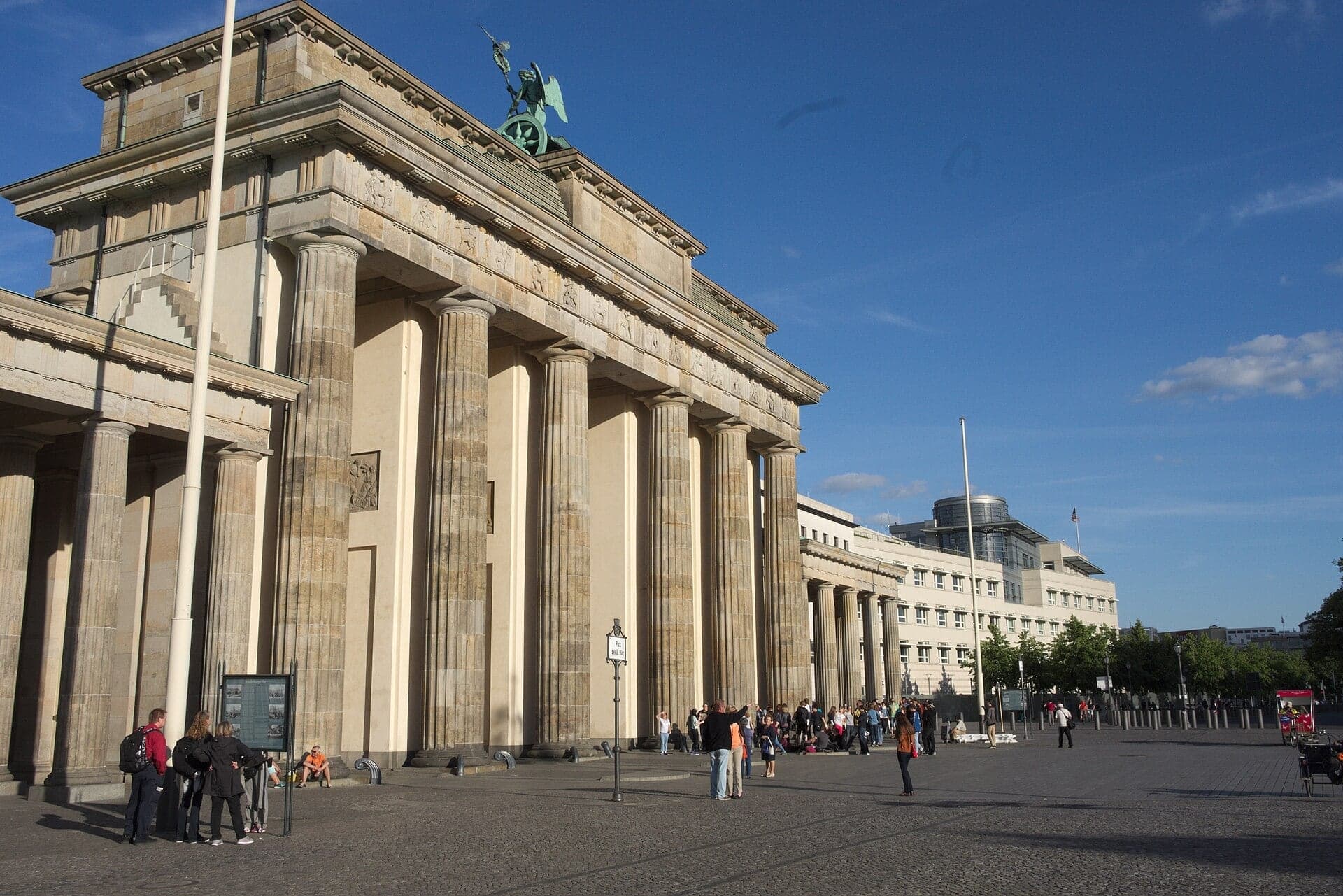
The paradox Berlin's wall walks turn on is that a thing built to erase movement became the object the city most deliberately remembers. At the Gedenkstätte Berliner Mauer on Bernauer Strasse, the ground of the Berlin Wall Memorial walk and the only place where a full roughly sixty-metre section survives with its death strip intact, the border ran along the fronts of apartment buildings, and people once escaped by climbing out of their own windows into the West before the state sealed and demolished the houses. The Brandenburger Tor, the second stop on Brandenburg Gate and Reichstag, was built between seventeen eighty-eight and seventeen ninety-one and spent those years marooned in the death strip, visible but unreachable from both sides at once. It reopened on the twenty-second of December, nineteen eighty-nine, weeks after the crossings did, when the symbol of the divided city became the symbol of the reunited one.
From worst crimes to open evidence
Hear a stop from this walk
Pariser Platz: A Square Named for Paris
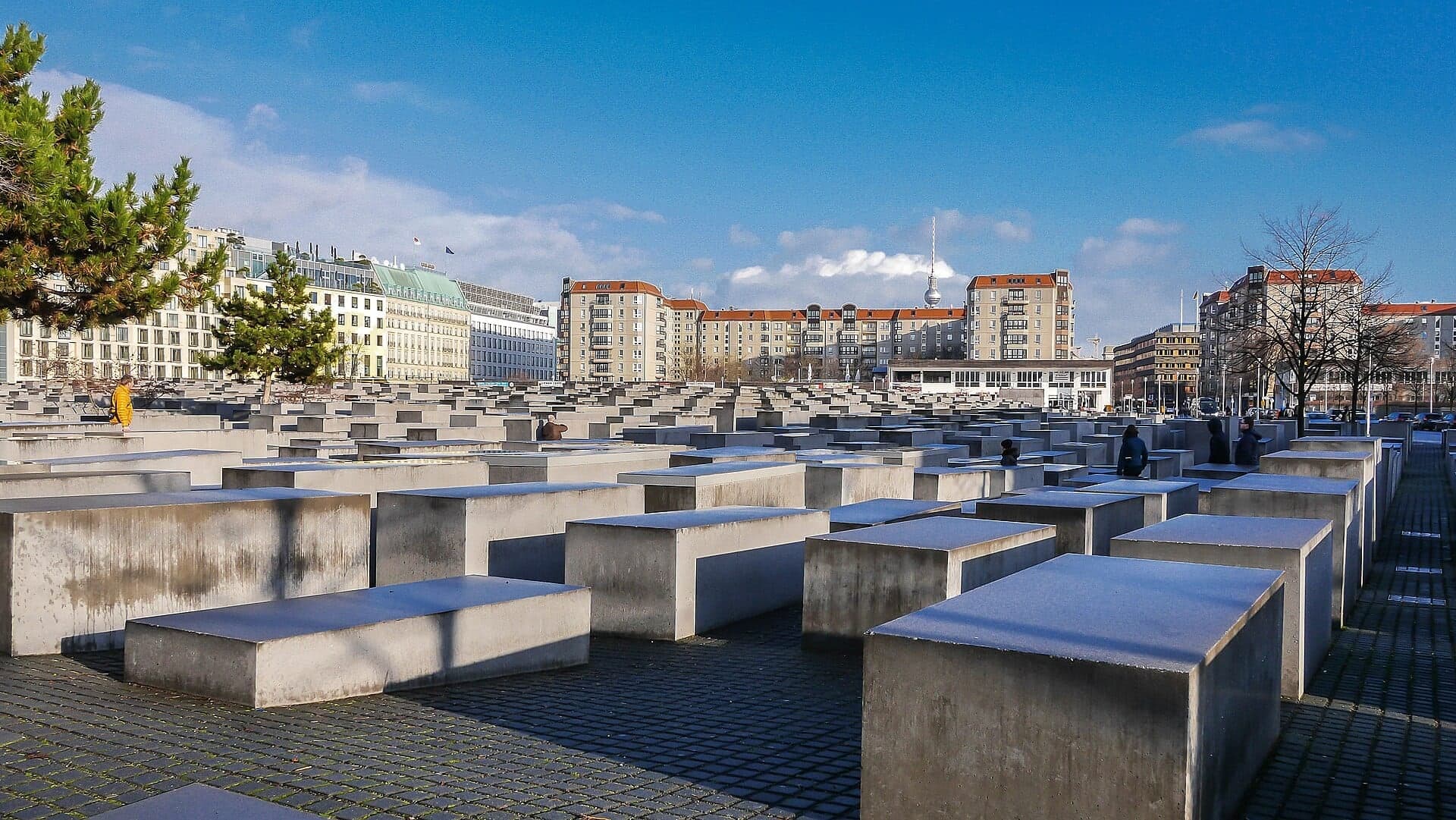
Berlin applied the same logic to a history far older and darker than the wall. On Checkpoint Charlie and the Topography of Terror, the memorial quarter of Mitte holds the evidence of the Nazi era where anyone can stumble on it. The Memorial to the Murdered Jews of Europe, dedicated on the tenth of May, two thousand five, lays out two thousand seven hundred eleven concrete stelae by the architect Peter Eisenman across sloping ground, with no inscription and no comforting symbol, on land the wall's death strip once crossed. Its underground Place of Information records the names of roughly three million individual victims.
The city's most striking choice is a refusal to build a monument at all. The site of the Führerbunker, where Adolf Hitler killed himself on the thirtieth of April, nineteen forty-five, is a plain residential car park, kept deliberately anonymous so it never becomes a shrine; a single modest information board was installed only on the eighth of June, two thousand six. At the Topographie des Terrors, a free documentation centre opened on the sixth of May, two thousand ten, on the ruined headquarters of the Gestapo and SS, the longest surviving stretch of the outer wall runs along the edge, so two systems of unfreedom sit stacked on one patch of ground. On Museum Island and Unter den Linden, at Bebelplatz, where Nazi students burned around twenty thousand books on the tenth of May, nineteen thirty-three, Micha Ullman's Empty Library shows a subterranean room of vacant white shelves through a pane of glass in the pavement. The Stolpersteine, small brass stones set at victims' last freely chosen homes, had passed one hundred thousand across more than twenty countries by two thousand twenty-three. That walk also passes the Neue Wache, where Käthe Kollwitz's grieving mother sits beneath an open oculus so rain and snow fall on her, exactly as war reaches ordinary people who never chose it.
The island that became the heart
The wall did not only strand monuments; it walled in a whole district, and that is where Berlin's habit of turning liability into character shows most clearly. On the Kreuzberg walk, you cross a district the border pressed into a dead end on three sides. Isolation usually empties a neighbourhood. Here it did the opposite. Cheap and forgotten, the quarter filled with Turkish guest workers recruited under the recruitment agreement West Germany and Turkey signed in Bonn on the thirtieth of October, nineteen sixty-one, with young men avoiding the West German draft that did not apply in Allied-administered West Berlin, and with artists and squatters.
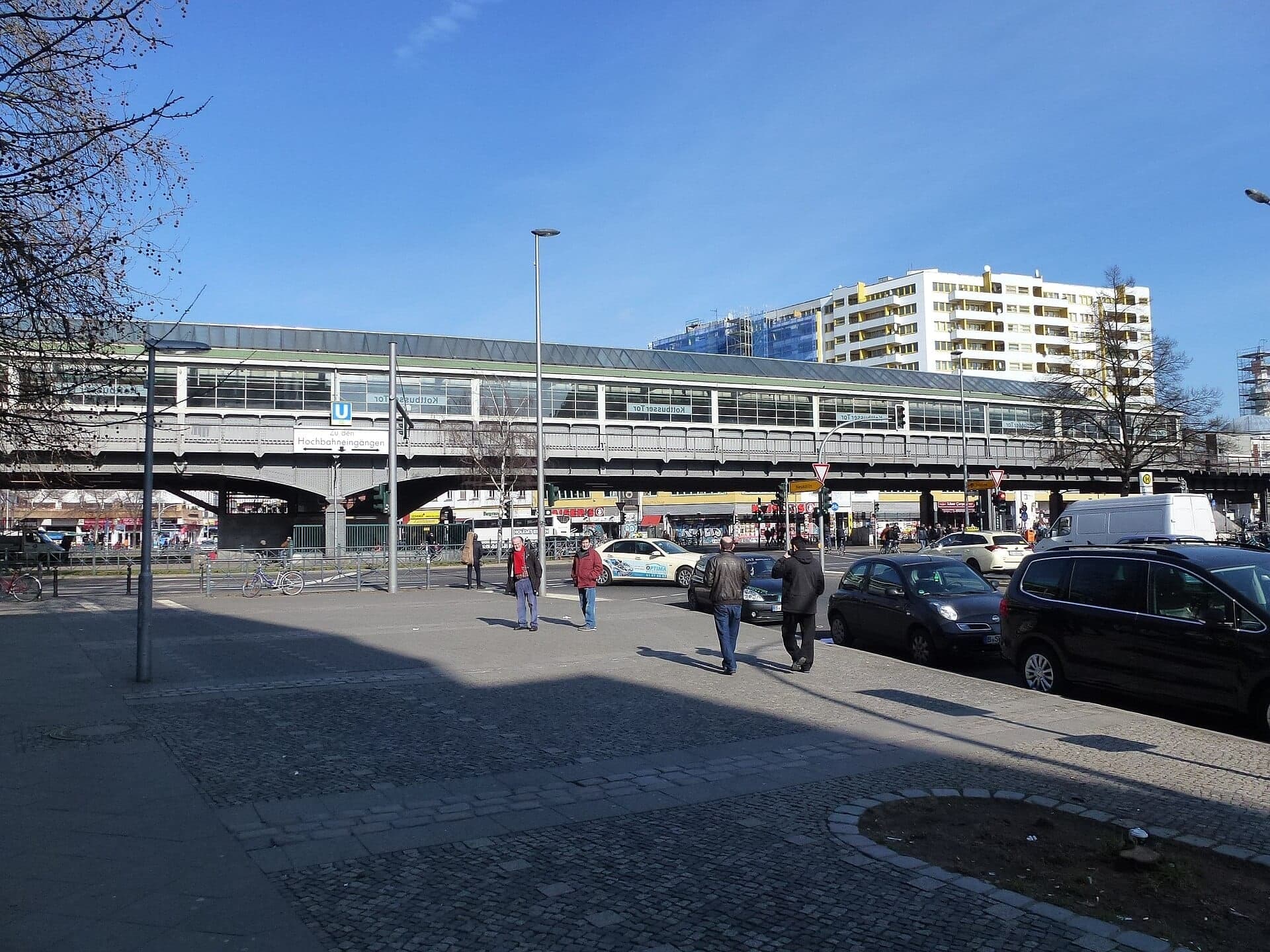
Each apparent weakness became a source of life. At Kottbusser Tor, the Neues Kreuzberger Zentrum, a concrete block built between nineteen sixty-nine and nineteen seventy-four that many tenants soon left, filled instead with immigrant and working-class life and became a symbol of the district. The two-year limit on guest workers was abolished in nineteen sixty-four, families came, and by the nineteen nineties Kreuzberg was perceived as small Istanbul; the twice-weekly Turkish market on the Maybachufer is the everyday face of that community. The venue SO36, managed from nineteen seventy-nine by the artist Martin Kippenberger, grew out of the counterculture the walled city concentrated, drawing on the roughly fifty thousand young men reported to have moved to West Berlin in part to sidestep the draft. Goerlitzer Park, once a rail yard whose station opened on the thirteenth of September, eighteen sixty-six, was reclaimed as green space by squatter and civic campaigns from the early nineteen eighties. Off the route to the west rises the Kreuzberg itself, at sixty-six metres the highest natural point in inner Berlin, crowned by the iron cross on Karl Friedrich Schinkel's monument inaugurated in eighteen twenty-one, the cross that named the hill and then the whole district.
Reading the whole scar
These walks share one grammar. Along the Spree, on the East Side Gallery walk, the ugliest structure in the city was reborn as its most celebrated canvas: the East Side Gallery, about one point three kilometres painted in the spring of nineteen ninety by one hundred eighteen artists from twenty-one countries. In Mitte, the worst crimes are kept in open view rather than tidied away. In Kreuzberg, confinement produced the most alive quarter in the reunited city. Berlin turned its scar into its map, and walking any of these routes is walking the proof that a city can look straight at what happened to it. Start with the Berlin walking tours hub and pick the thread that pulls at you.
Sources
- Stiftung Berliner Mauer (Berlin Wall Foundation), documented record of deaths at the wall and the Bernauer Strasse memorial: https://www.stiftung-berliner-mauer.de/en
- Stiftung Denkmal für die ermordeten Juden Europas (Memorial to the Murdered Jews of Europe and Place of Information): https://www.stiftung-denkmal.de/en/
- Topographie des Terrors documentation centre, history of the Gestapo and SS site: https://www.topographie.de/en/
- German Federal Foreign Office (Auswärtiges Amt), West Germany-Turkey recruitment agreement of nineteen sixty-one and guest-worker figures: https://www.auswaertiges-amt.de/en
- Stiftung Stadtmuseum Berlin and district histories of Kreuzberg, guest-worker settlement and the naming of the Kreuzberg hill: https://www.stadtmuseum.de/en
Frequently asked questions
- How long was Berlin divided by the wall?
- The Berlin Wall stood for twenty-eight years. It went up overnight on the thirteenth of August, nineteen sixty-one, and its crossings did not open again until the ninth of November, nineteen eighty-nine. The barrier ran about one hundred fifty-five kilometres around West Berlin.
- How many people died at the Berlin Wall?
- According to the Berlin Wall Foundation, at least one hundred forty people died at the wall between nineteen sixty-one and nineteen eighty-nine. Some were shot trying to flee, others died by accident or suicide, and eight were East German border soldiers. The Foundation maintains the documented record.
- Why is Kreuzberg so associated with Berlin's Turkish community?
- West Germany and Turkey signed a labour recruitment agreement in Bonn on the thirtieth of October, nineteen sixty-one, and many guest workers settled in walled-in, low-rent Kreuzberg because it was one of the few affordable corners of West Berlin. After the two-year stay limit was abolished in nineteen sixty-four, families came and stayed, and by the nineteen nineties the district was perceived as small Istanbul.
- What is the Memorial to the Murdered Jews of Europe?
- It is Germany's central Holocaust memorial, one block south of the Brandenburg Gate, dedicated on the tenth of May, two thousand five. The architect Peter Eisenman laid out two thousand seven hundred eleven concrete stelae across sloping ground, with no inscription. Its underground Place of Information records the names of roughly three million individual victims.
- Why is the site of Hitler's bunker just a car park?
- The Führerbunker, where Adolf Hitler killed himself on the thirtieth of April, nineteen forty-five, lies beneath an ordinary residential car park that Berlin deliberately kept anonymous so the site could never become a shrine. No marker stood there for decades, and only on the eighth of June, two thousand six, was a single modest information board installed as a plain historical record.
Ready to experience it?
Brandenburg Gate and Reichstag: A Gate, a Park, a Parliament
90 min · 2.9 km · easy
More from Berlin
Explore more at your own pace.
Best Architecture Walking Tours in Berlin (2026)
Best Culture Walking Tours in Berlin (2026)
Little Istanbul at Kottbusser Tor: How Guest Workers Made Kreuzberg
The Memorial to the Murdered Jews of Europe: How Berlin Reads Its Own Reckoning
Brandenburg Gate: The Triumphal Arch Marooned by the Berlin Wall