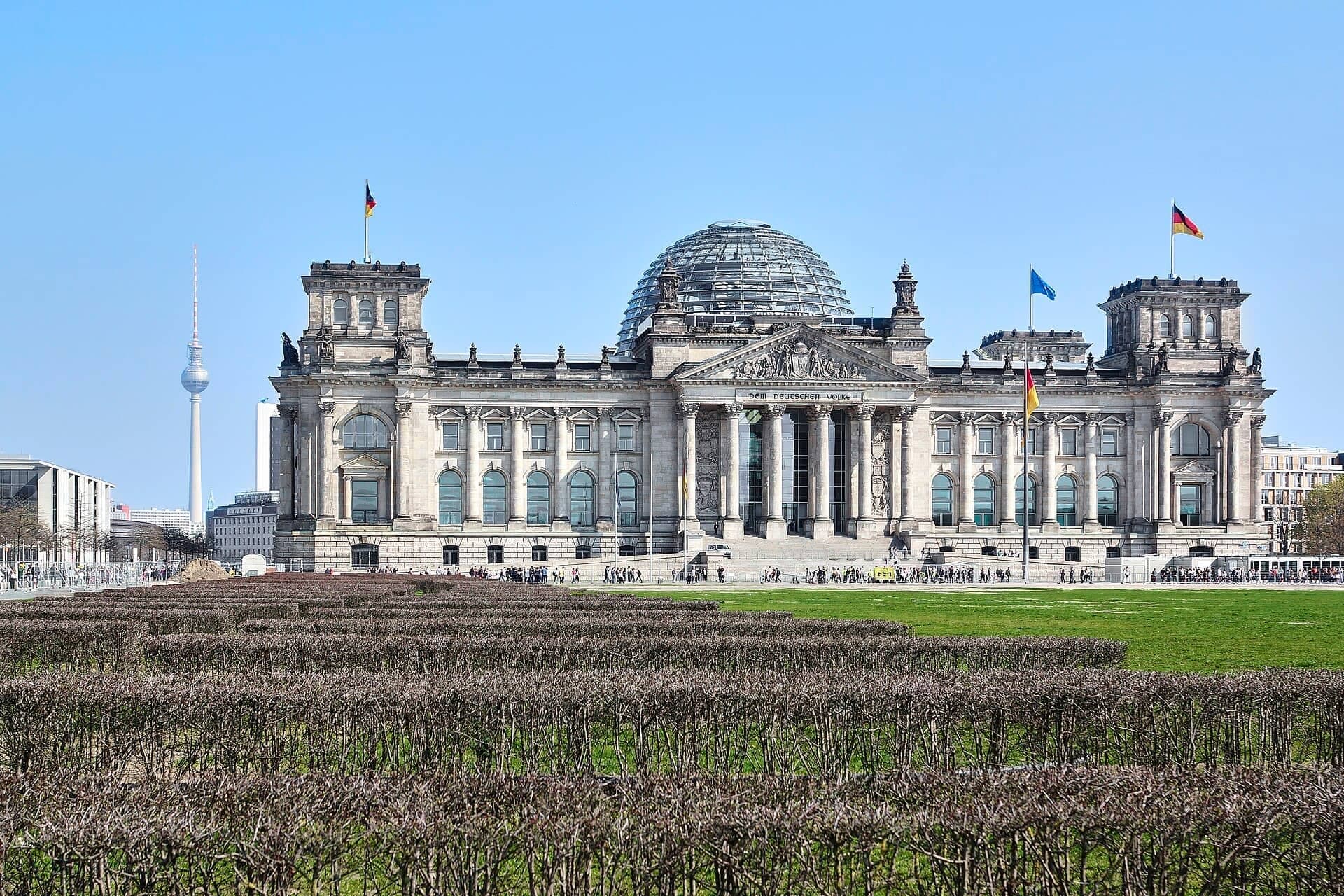
Brandenburg Gate and Reichstag: A Gate, a Park, a Parliament
90 min · 2.9 km · easy
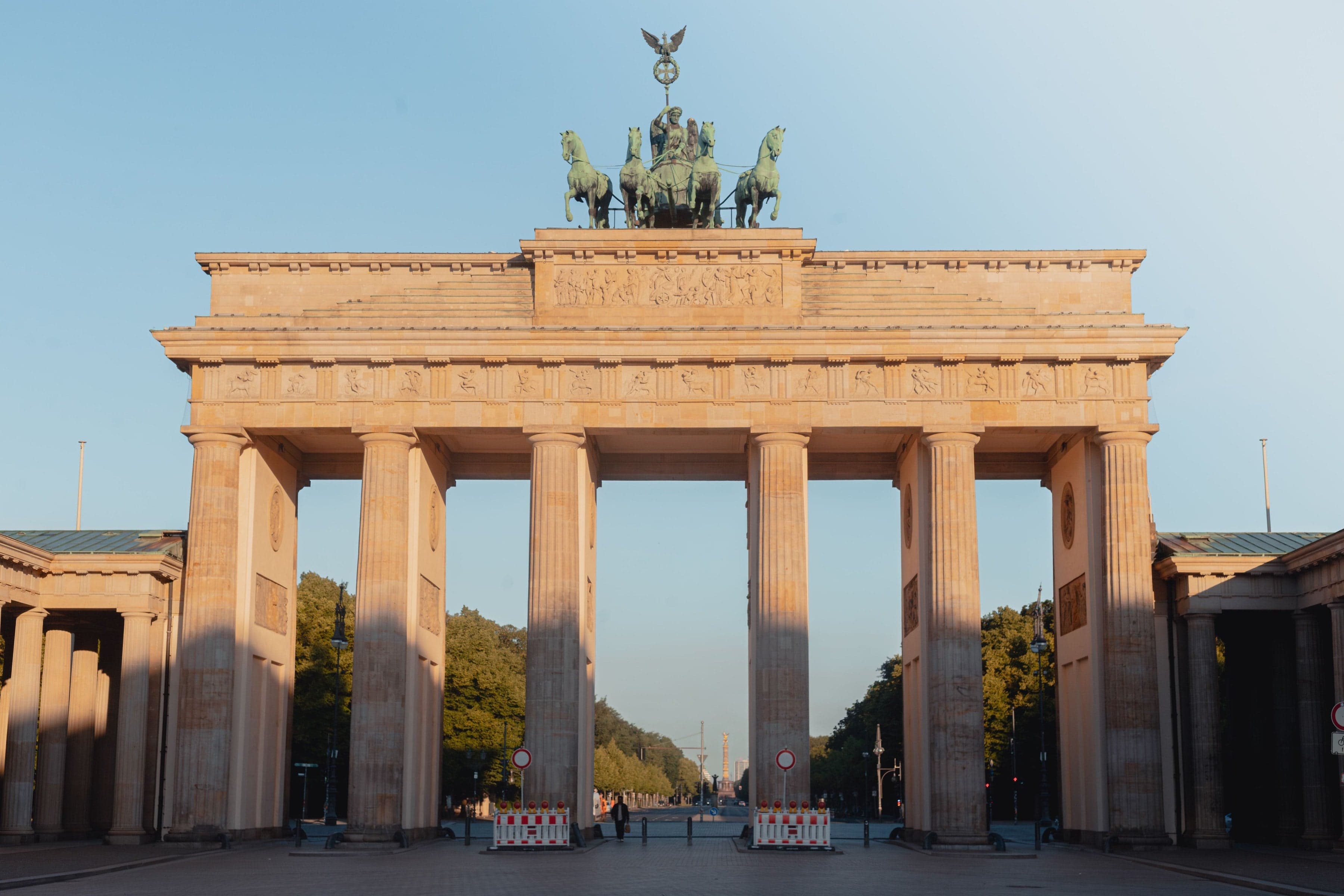
A triumphal arch is built to be walked through. For twenty-eight years, the Brandenburg Gate could not be. When the Berlin Wall went up in 1961, the barrier ran directly along the western face of this neoclassical gate, and the most photographed monument in the city was left stranded inside the death strip: visible from both East and West, reachable from neither. That is the paradox to hold onto while you stand in front of it. The gate that was designed as an entrance became, for most of a generation, a thing you could only look at across a killing ground. Understanding how that happened, and why the gate ended up carrying the whole weight of Berlin's division and its healing, is the one thing worth grasping here.
A gate built for peace, crowned with victory
Start with the stone itself, because its meaning was contested long before the Cold War. The Brandenburg Gate was built between 1788 and 1791 under the architect Carl Gotthard Langhans, who modeled it on the monumental gateways of ancient Greece. It was commissioned as a monument to peace under Frederick William the Second. On top rides the Quadriga, a chariot pulled by four horses, sculpted by Johann Gottfried Schadow.
Look closely at the figure driving that chariot, because she has changed jobs. She was first conceived as Eirene, the Greek goddess of peace. Only later, after the Napoleonic Wars, was she redesignated Victoria, the goddess of victory. The Quadriga's biography is itself a small history of Europe: Napoleon carried it off to Paris, and it was returned to Berlin in 1814, at which point the driving goddess was recast from peace to triumph. Peace, then victory, on the same set of reins. That flicker between the two, an arch that cannot quite decide whether it celebrates harmony or conquest, is worth carrying with you, because the twentieth century would ask the gate to mean both again.
Marooned in no-man's-land
Hear a stop from this walk
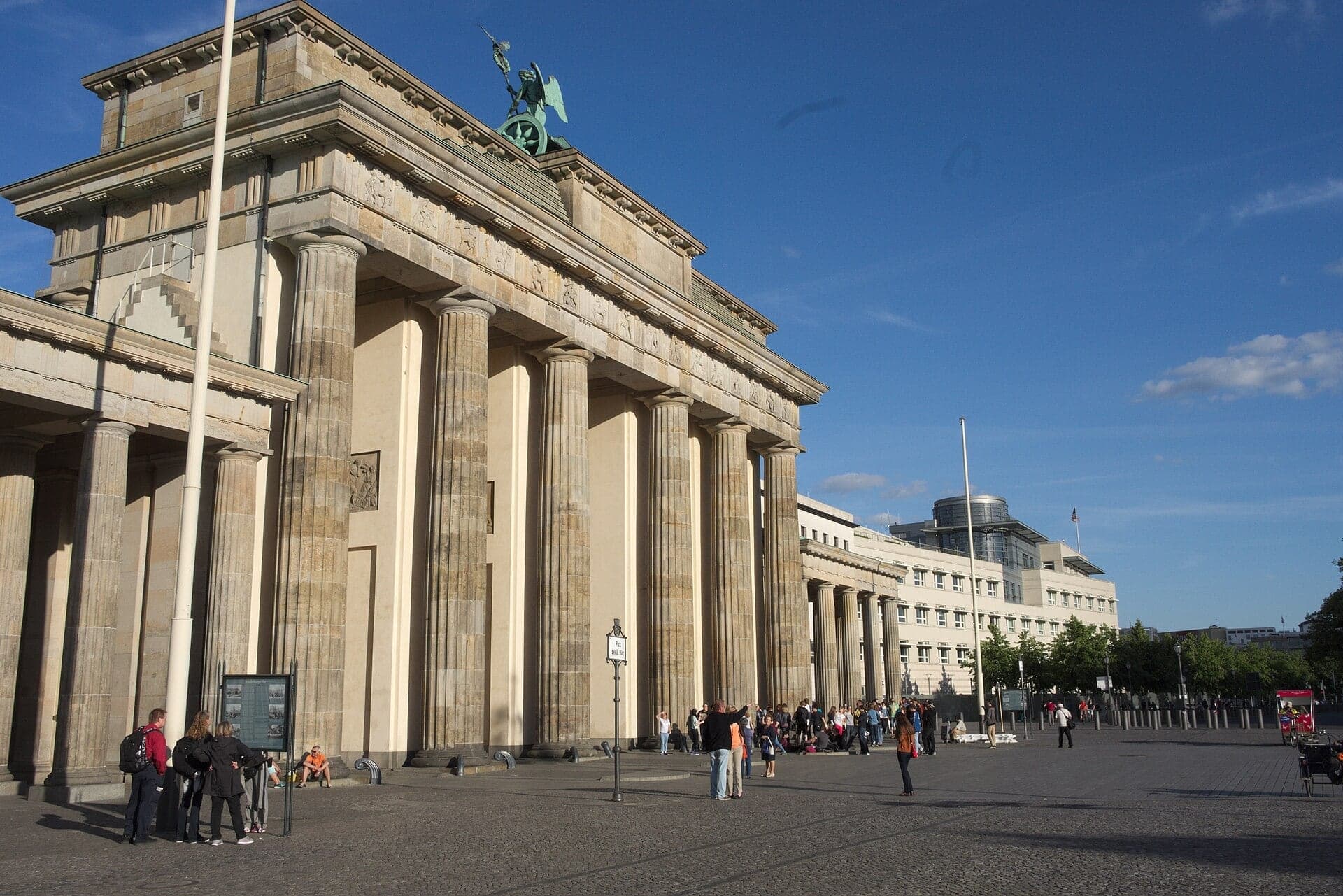
Pariser Platz: A Square Named for Paris
Now set that history against what happened on the ground here. When the barrier went up overnight on the thirteenth of August, 1961, it did not simply pass near the gate. It ran along the gate's western side, folding the monument into the death strip, the raked band of sand and patrol road that the East German state kept deliberately open so that anyone crossing had no cover.
The result was an absurdity that the city has never forgotten. East German guards patrolled the sand directly in front of the arch. Westerners could see it only from wooden observation platforms built across the barrier, climbing up for a look at a monument a few dozen meters away and a world apart. The gate belonged to no one. It was not on the eastern side of the wall the way most of central Berlin's landmarks were, and it was not in the West either. It sat in the seam, unreachable from both sides at once. A structure whose entire purpose is passage had been converted, by concrete and sand, into the purest possible symbol of a passage denied.
This is the detail that makes the Brandenburg Gate different from the other stops along the wall's line. Checkpoint Charlie was a crossing that functioned, tense as it was. Potsdamer Platz was a square cut in two. The gate was neither cut nor crossed. It was simply suspended, a triumph made untouchable, which is exactly why photographers on both sides kept aiming their lenses at it. It gave the abstraction of a divided city a single, legible image.
The date most people get wrong
Here is the fact that surprises even people who know their Cold War history. The crossings of the Berlin Wall opened on the ninth of November, 1989, the night the world watched crowds pour through and begin pulling the barrier apart by hand. But the Brandenburg Gate itself did not reopen that night. It stayed closed for another six weeks.
The gate was not reopened until the twenty-second of December, 1989, when roughly one hundred thousand people gathered to pass beneath it again. Think about the sequence. The wall's ordinary crossings gave way first, in the chaos of that November night. The great symbolic arch, the one every camera had been trained on for decades, was held back and then opened as a deliberate act, a ceremony rather than a breach. On that December day the monument completed its strange arc: the emblem of the divided city became, in a single afternoon, the emblem of the reunited one. The gate that had stood for what could not be crossed became the place where a hundred thousand people chose to walk through together.
What to understand standing here
So when you stand in front of the Brandenburg Gate today, past the tour groups and the buskers, the one thing to understand is that its ordinariness is the whole point. You can walk under it slowly, at your own pace, in either direction, and nothing stops you. For most of a generation, no one could. The freedom of that unremarkable stroll is precisely the thing the wall took away and reunification gave back.
The gate has always been a device for meaning: peace refashioned into victory, a monument commandeered by empires, a triumphal arch turned into a symbol of confinement, and finally the site where a sealed city announced it was whole again. It absorbs whatever the era needs it to say. What it says now is quiet: this is a gate, and you may pass through it.
That is why the Brandenburg Gate is where the divided city's central paradox sits most plainly: the triumph made unreachable and then handed back. If you want to stand in it yourself, on foot and at your own pace, Roamer's self-guided Brandenburg Gate and Reichstag walk starts on Pariser Platz, passes through the gate into the Tiergarten and ends at the White Crosses on the Spree, where the river was the border. For the preserved death strip itself, the Berlin Wall Memorial walk follows the border along Bernauer Strasse. Both sit in the Berlin walking tours collection, and you can start planning from the Berlin city page and walk the reunited center on your own schedule.
Sources
- Brandenburg Gate, Wikipedia. Construction dates (1788 to 1791), architect Carl Gotthard Langhans, the Schadow Quadriga, and the December 1989 reopening.
- Brandenburg Gate, Berlin.de official tourism site. Background on the gate's neoclassical design and its role as a symbol of division and reunification.
- The Berlin Wall, Berlin Wall Foundation (Stiftung Berliner Mauer). The death strip system and the wall's route through central Berlin.
- Quadriga history, Berlin.de and Wikipedia. The figure's shift from Eirene (peace) to Victoria (victory) and the sculpture's removal to Paris and return in 1814.
Ready to experience it?
Brandenburg Gate and Reichstag: A Gate, a Park, a Parliament
90 min · 2.9 km · easy
More from Berlin
Explore more at your own pace.
Berlin: The City That Reads Its Own Scar
Best Architecture Walking Tours in Berlin (2026)
Best Culture Walking Tours in Berlin (2026)
Little Istanbul at Kottbusser Tor: How Guest Workers Made Kreuzberg
The Memorial to the Murdered Jews of Europe: How Berlin Reads Its Own Reckoning