The Ciutadella is a fortress turned inside out. A citadel built after 1714 to hold Barcelona down was handed to the city in 1869 on condition that it become a park, and the master builder Josep Fontserè made it a science garden on the model of the Jardin des Plantes in Paris. So its living things, its three surviving fortress buildings and its 1888 science row all read as one lesson, laid over a wound. Most people cross it on the way to somewhere else. Walk it slowly and every piece of it fits.
The wound underneath
Start with what the ground cost. After Barcelona surrendered on the eleventh of September 1714, the Bourbon king ordered a five-pointed citadel on the edge of the old city. The city's own history of the park records that a stretch of the walls and 1,262 houses of the Ribera neighbourhood were pulled down to make room for it. The Parliament of Catalonia, which now sits inside the old arsenal, is blunt about the result: the fortress never served to defend the city, but it proved very useful for repressing it.
In 1869 General Joan Prim's government handed the citadel over, and the city's history says he set one condition: the land must become a public park. Volunteers pulled the walls down. Fontserè won the layout in 1872 with a line the city still quotes, that gardens do for a city what lungs do for a body.
Living things first
Hear a stop from this walk
The Arc de Triomf
The walk begins with what is alive, because that is what Fontserè was planting. Monk parakeets now shout from the palms by the lake. The city's zoology museum logged the first two in 1975, beside the Zoo's aviary, and they have rebuilt their big stick nests every time they were cut down. Herons and cattle egrets work the water's edge. On the south shore, seven bald cypresses stand in the lake and drop their needles every autumn, a conifer that keeps time. Along the paths, river sheoaks from Australia and chir pines from the Himalaya are labelled as trees of local interest.
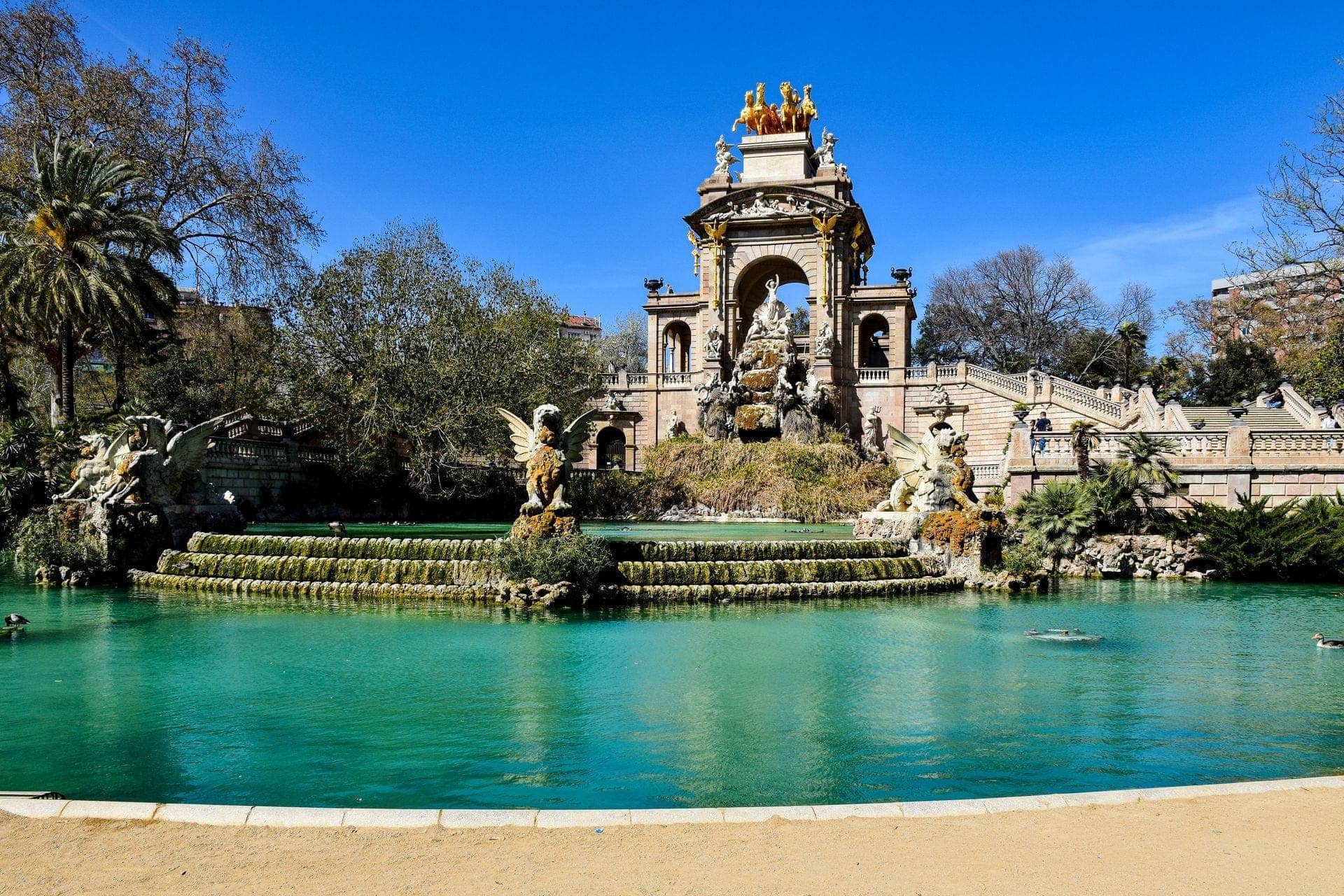
Then the Cascada, the monumental waterfall Fontserè drew in 1875 and opened in 1881. None of its rock is a real cliff. It was built, piled and shaped to look wild, and the city's history of the park says the rockwork has been attributed to his very young assistant, Antoni Gaudí. A little further on, a life-size concrete mammoth unveiled in 1907 was meant as the first of a series of open-air prehistoric models. The series stopped at one.
Three buildings the demolition spared
When the fortress came down, three buildings were left: the arsenal, the governor's palace and the chapel. The arsenal is now the Parliament, redressed with sgraffito and balconies in 1889 for a royal palace the queen regent declined. The governor's palace, the house of the man who held the city down, is a secondary school. The chapel, designed in 1728 by Próspero de Verboom, the engineer of the whole citadel, is still a military parish. Picture the star-shaped walls around them and the park's flat lawns suddenly look like what they are: a demolition site made green.
The science row
Along the main avenue, Fontserè's science-garden idea becomes architecture. The Umbracle, his shade house of 1883, filters the sun through wooden slats on iron girders, the opposite of a greenhouse. The Hivernacle, the iron-and-glass winter garden built for the Universal Exposition of 1888 by Josep Amargós, holds the warmth in. Between them stands the Museu Martorell, opened in 1882 to house a naturalist's bequest, which its curators call the first public museum in Barcelona built for that purpose. Shade, glass and collection, side by side.
The 1888 fair then dressed the park's edge for the world. Lluís Domènech i Montaner designed its café as a brick castle with corner towers, the Castell dels Tres Dragons: in a park made on a demolished fortress, the restaurant dressed up as one. Outside the gate, the Saló de Sant Joan promenade runs straight up to the red brick Arc de Triomf, opened by the queen regent on the twentieth of May 1888. It celebrates no battle. It was a front door for visitors.
Walking it yourself
This is a park to take at your own speed: stop for the parakeets, sit by the Cascada, step into the Hivernacle on a cold day, skip what you like. It is twelve stops over about 1.3 kilometres on flat paths, in about an hour, from the lake to the arch, all of it on Ciutadella Park: From Fortress to Pleasure Garden, which ends at stop 12, the Arc de Triomf. Start from the El Born walk next door if you want the lost streets first, and see the Barcelona city page for more.
Sources
- Ajuntament de Barcelona, Parc de la Ciutadella: https://www.barcelona.cat/en/what-to-do-in-bcn/parks-and-gardens/parc-de-la-ciutadella-92086011921 . The 1714 surrender, the 1,262 Ribera houses demolished, Prim's 1869 condition, Fontserè's 1872 layout and "lungs" slogan, the Cascada of 1875 to 1881 and the rockwork attributed to Gaudí, the 1888 Exposition café.
- Museu de Ciències Naturals de Barcelona, Hivernacle: https://museuciencies.cat/el-nat/les-seus/hivernacle/ . The greenhouse as a building of the 1888 Universal Exposition, built by Josep Amargós.
- The tour's audited research (Roamer Ciutadella park rebuild, October 2026): the Parliament of Catalonia's history of its palace, the city's trees-of-local-interest records, the zoology museum's parakeet records and curators' papers on the mammoth and the Museu Martorell.
Ready to experience it?
Ciutadella Park: From Fortress to Pleasure Garden
60 min · 1.3 km · easy
More from Barcelona
Explore more at your own pace.
Barceloneta and Port Vell: Walking the City's Moving Edge of the Sea
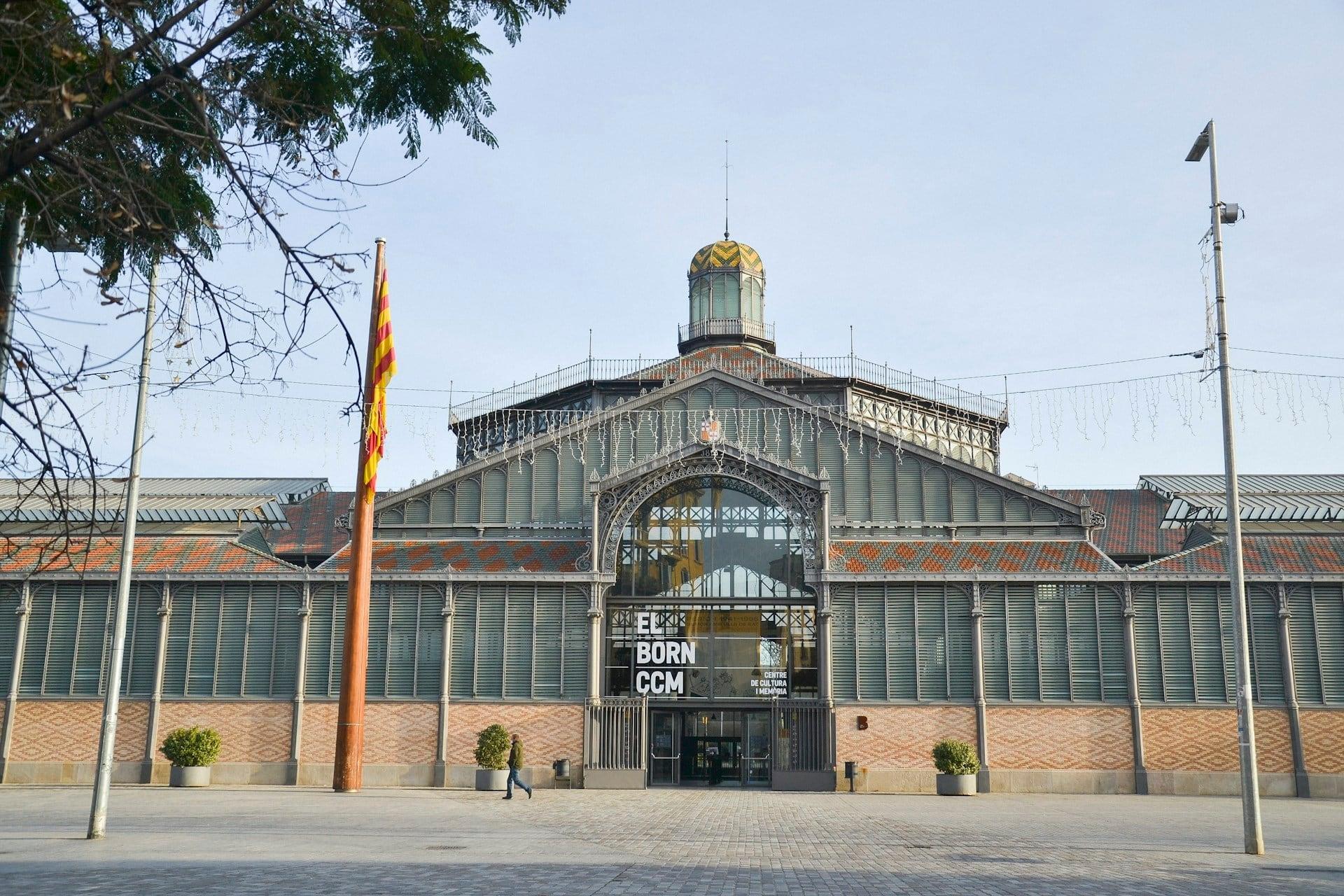
El Born: The Sea Quarter That Paid for Its Landmarks and Lost Its Streets
Gràcia to Park Güell: How a Town of Private Developments Ended in Gaudí's Failed Estate
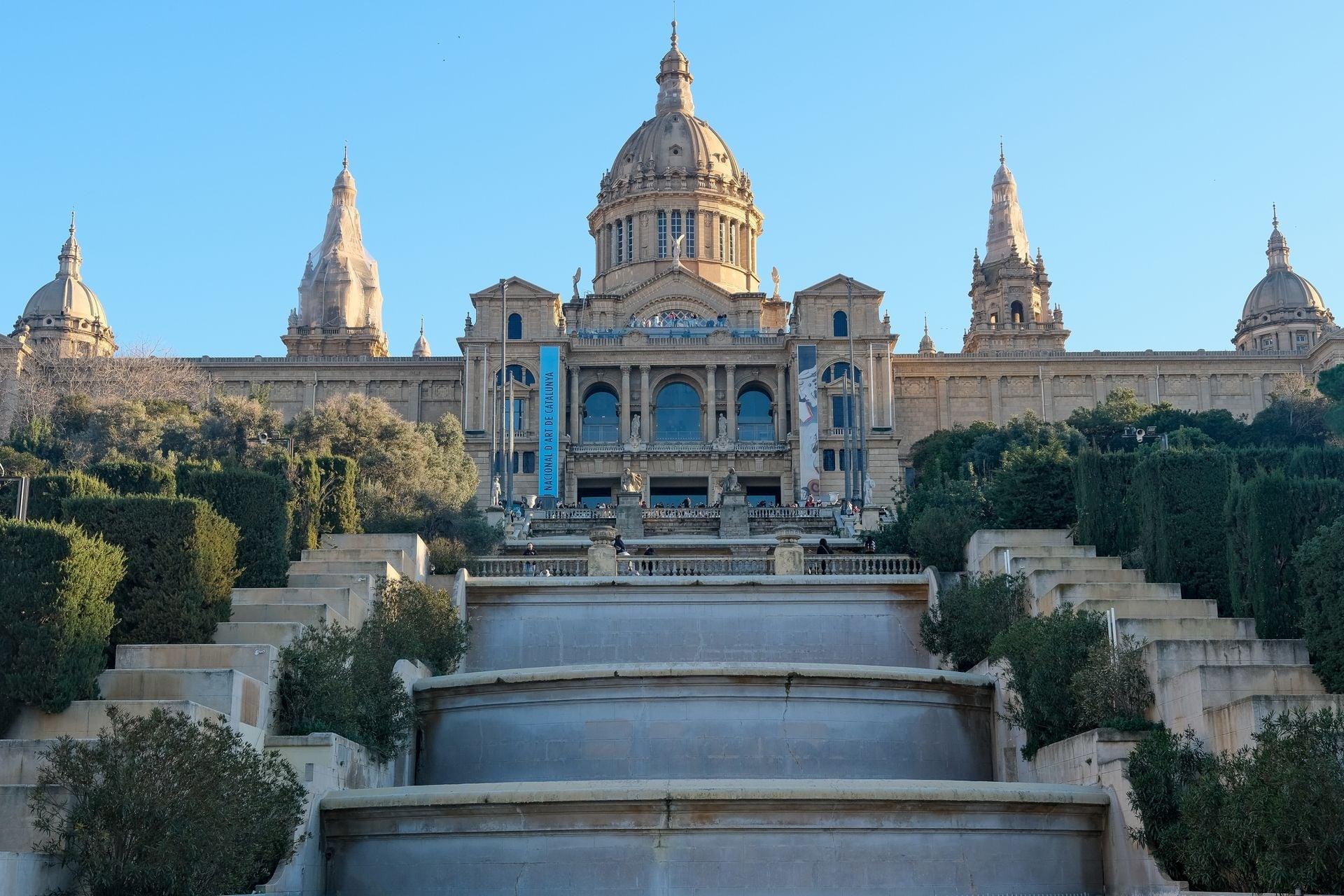
Montjuïc's World's Fair Stage: Reading the 1929 Axis From Gate to Palace
Sagrada Família and Sant Pau: Reading a Basilica One Side at a Time, Then Walking to the Hospital