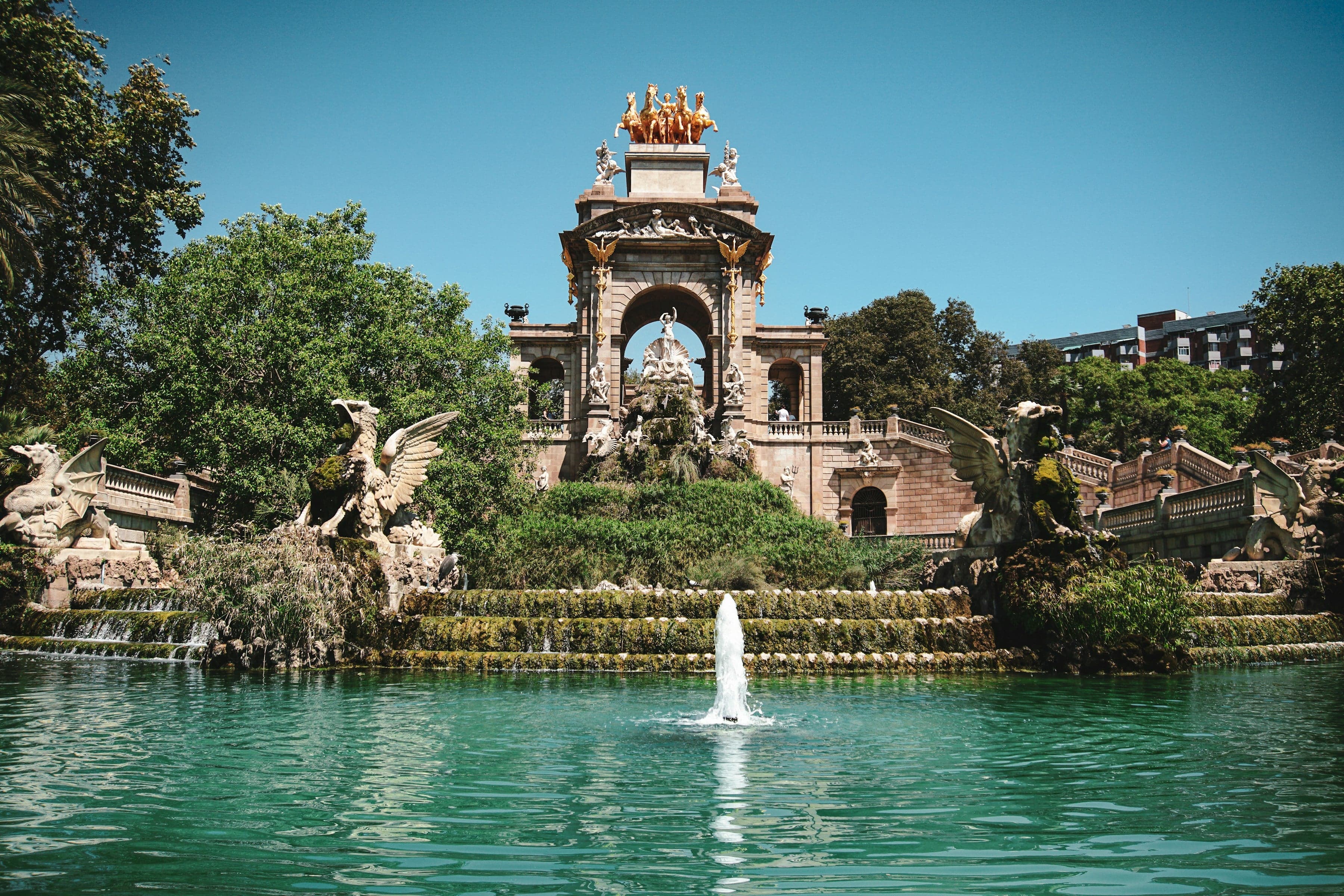
Walk the Parc de la Ciutadella from its parakeet palms, Cascada and Ice Age mammoth past the old citadel's arsenal and chapel to the 1888 Exposition's science row and the Arc de Triomf.
Start · The Lake and the Parakeets
DirectionsStops
- The LakeFontserè's water garden and its trees
- 1
The Lake and the Parakeets
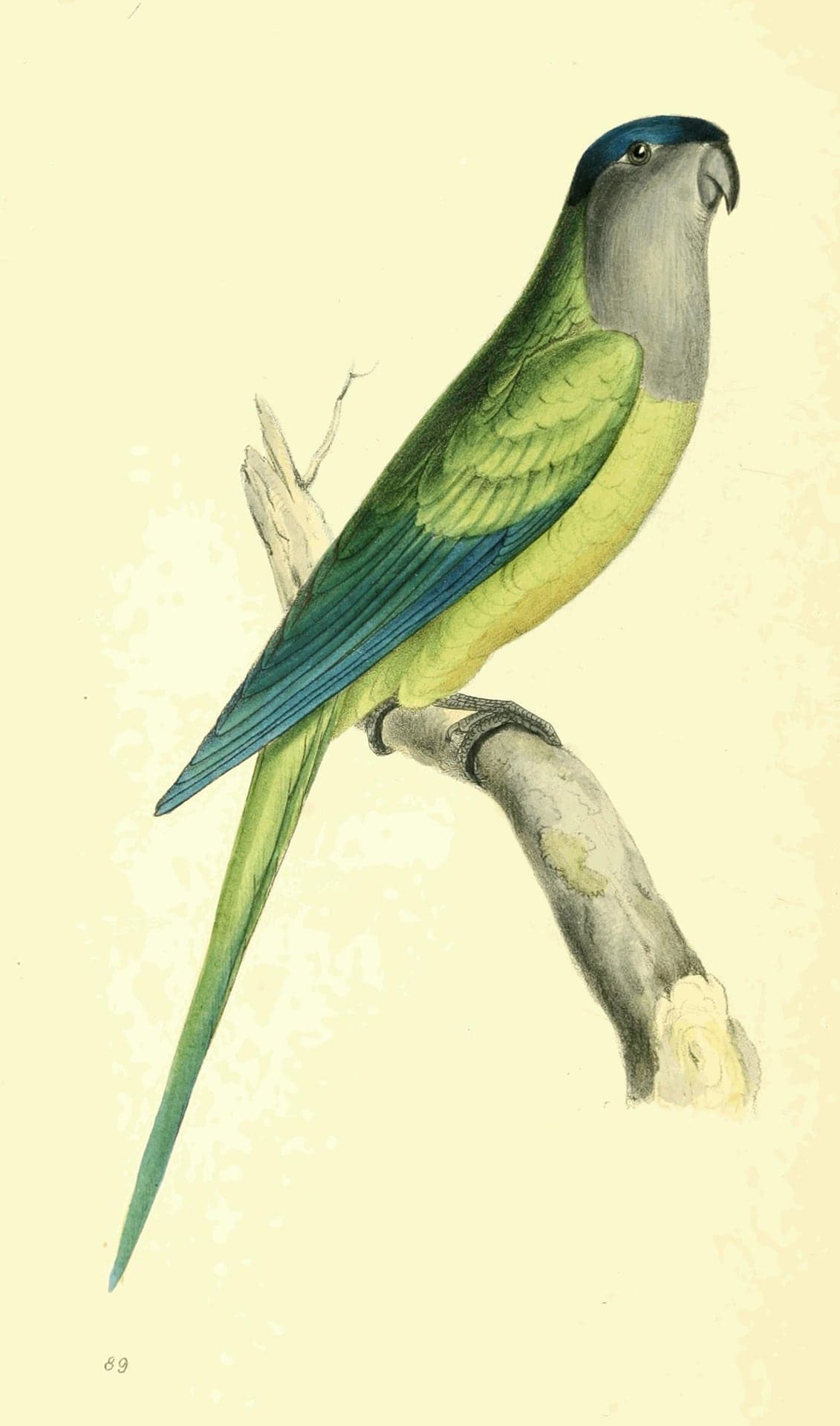
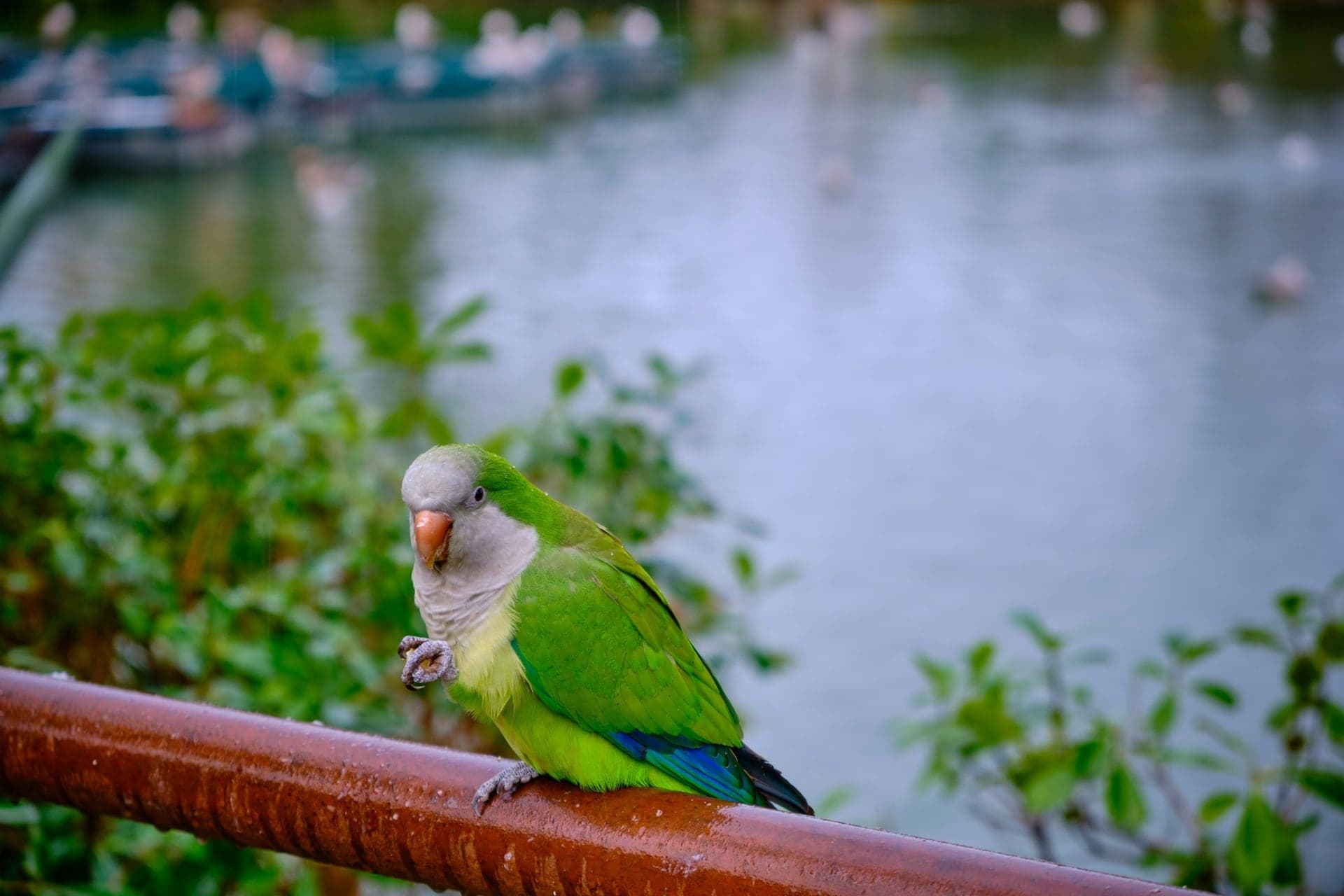
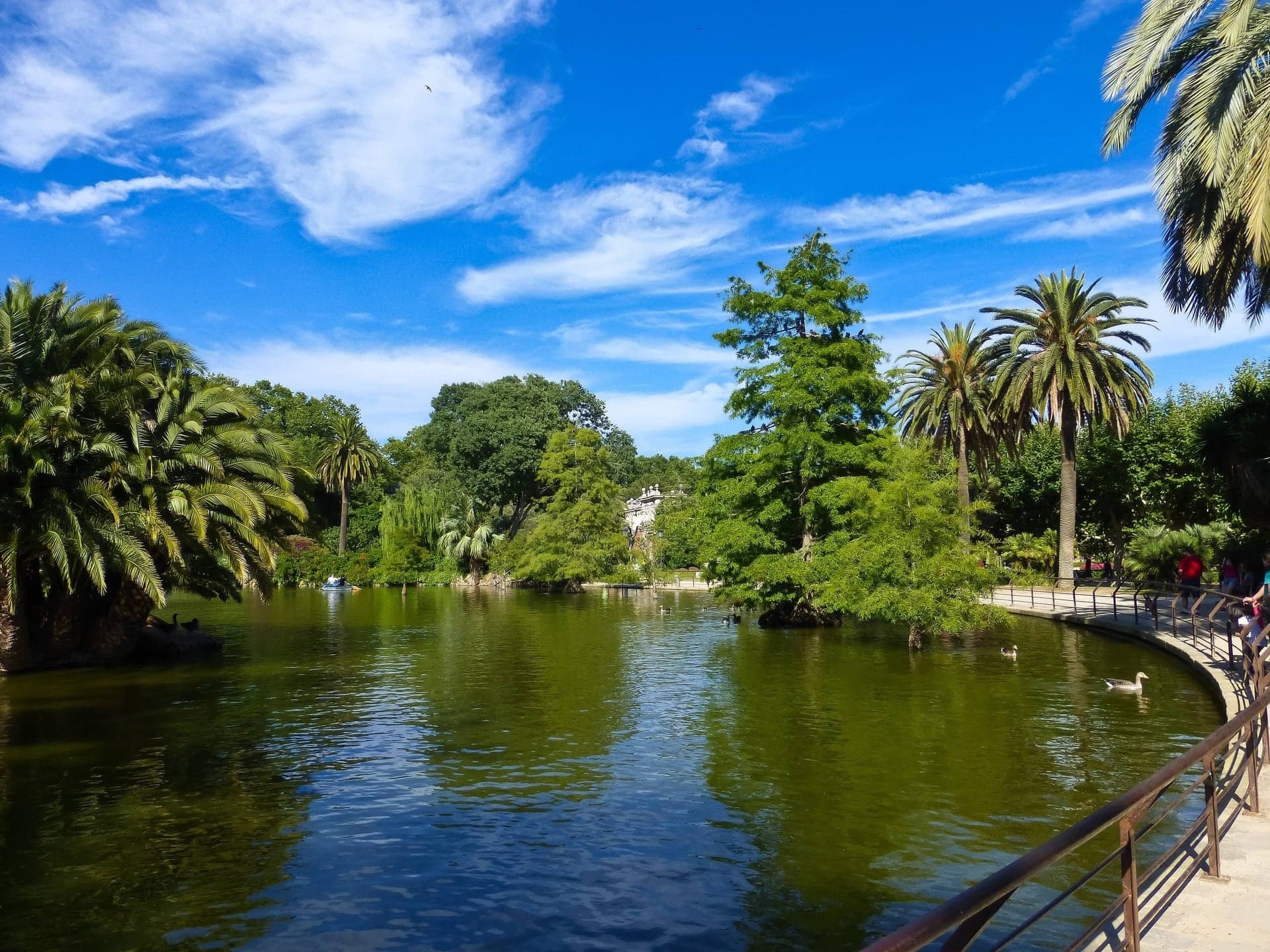
Wild parakeets were first recorded in Barcelona here, in 1975, in the palms around the boating lake.
- 2
The Cascada
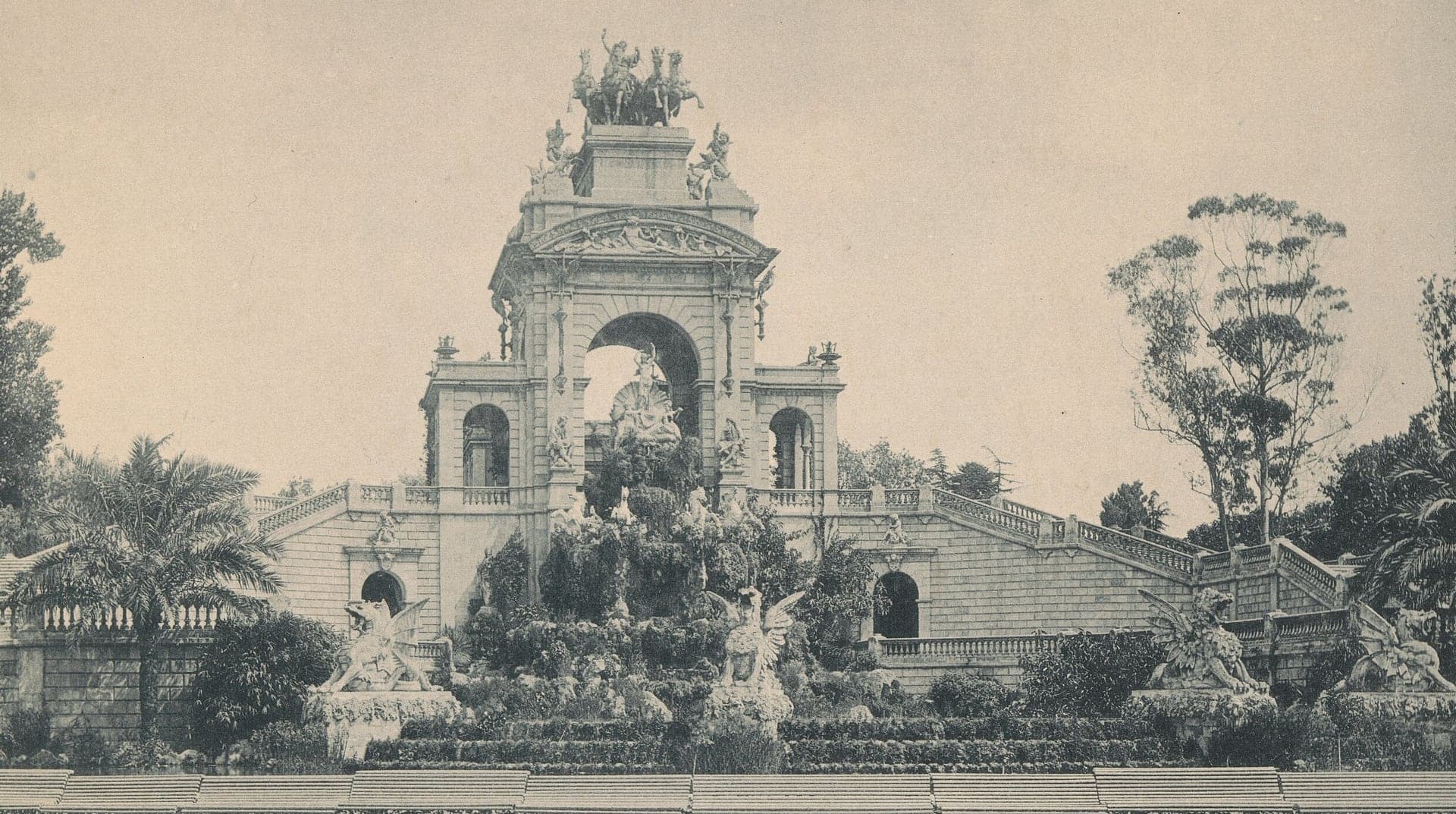
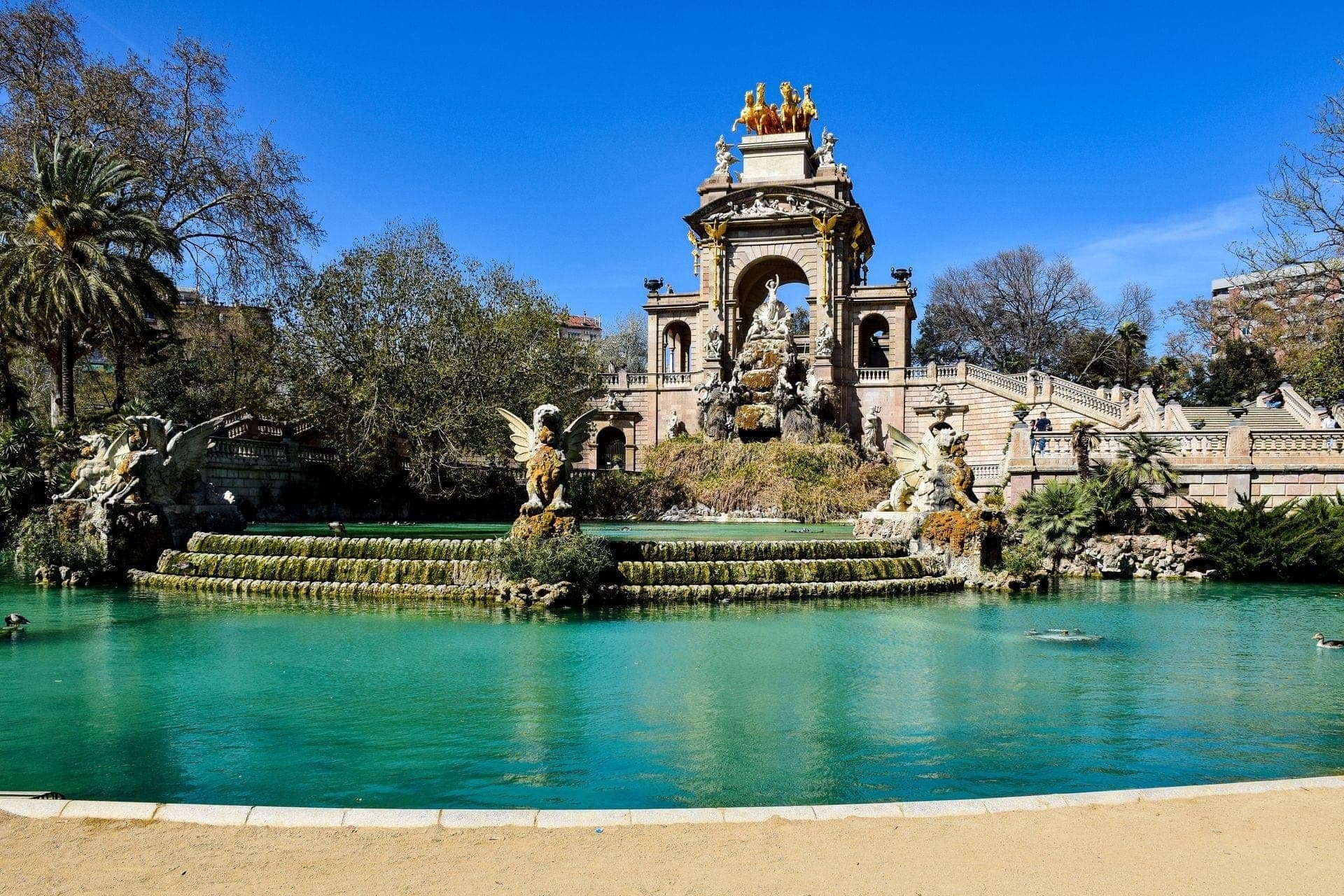
The park's showpiece waterfall, designed in 1875 by Josep Fontserè with a young Gaudí in his office.
- 3
The Mammoth
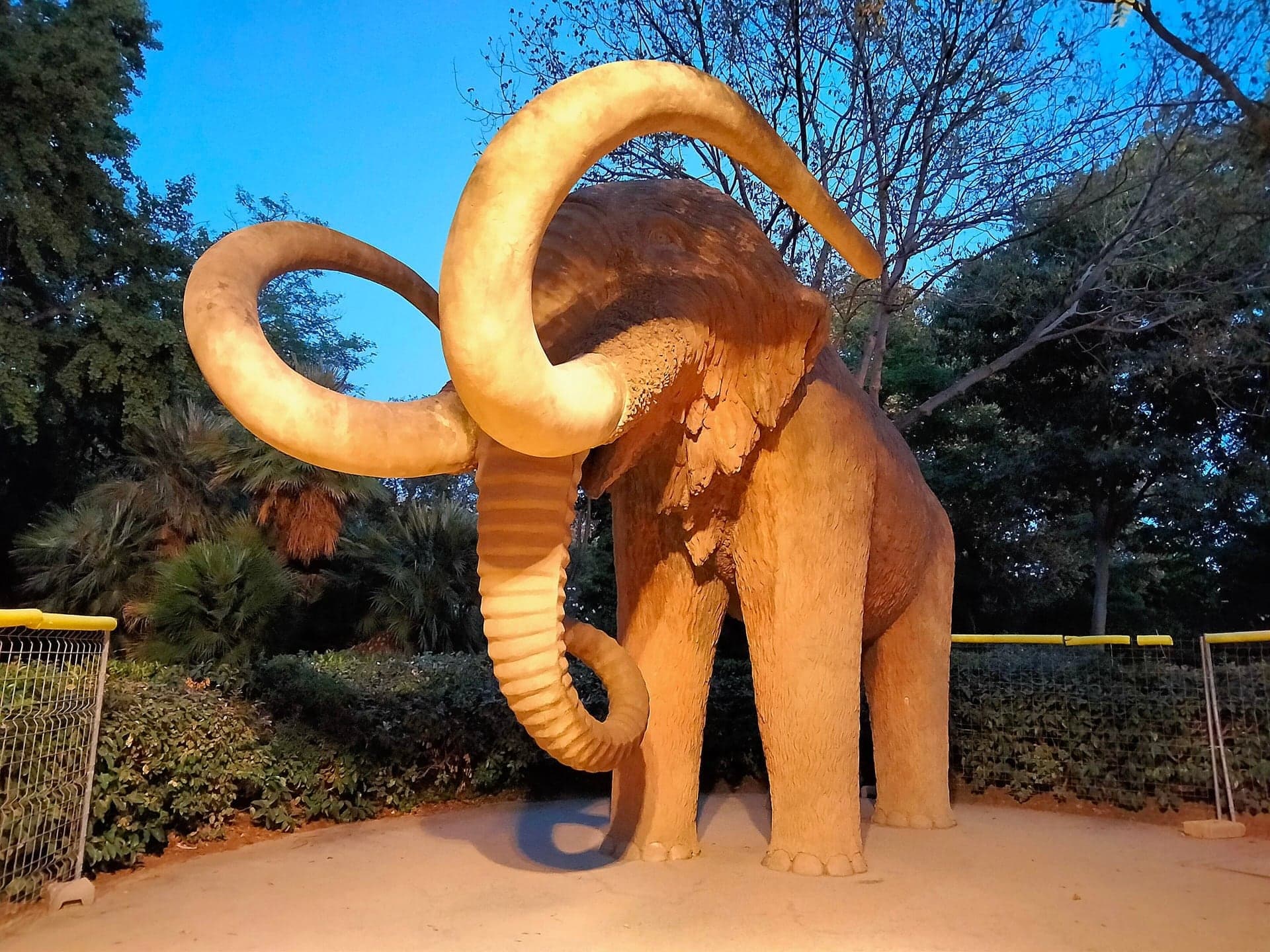
A life-size concrete mammoth from 1907, the only beast ever built of a planned Ice Age series.
- 4
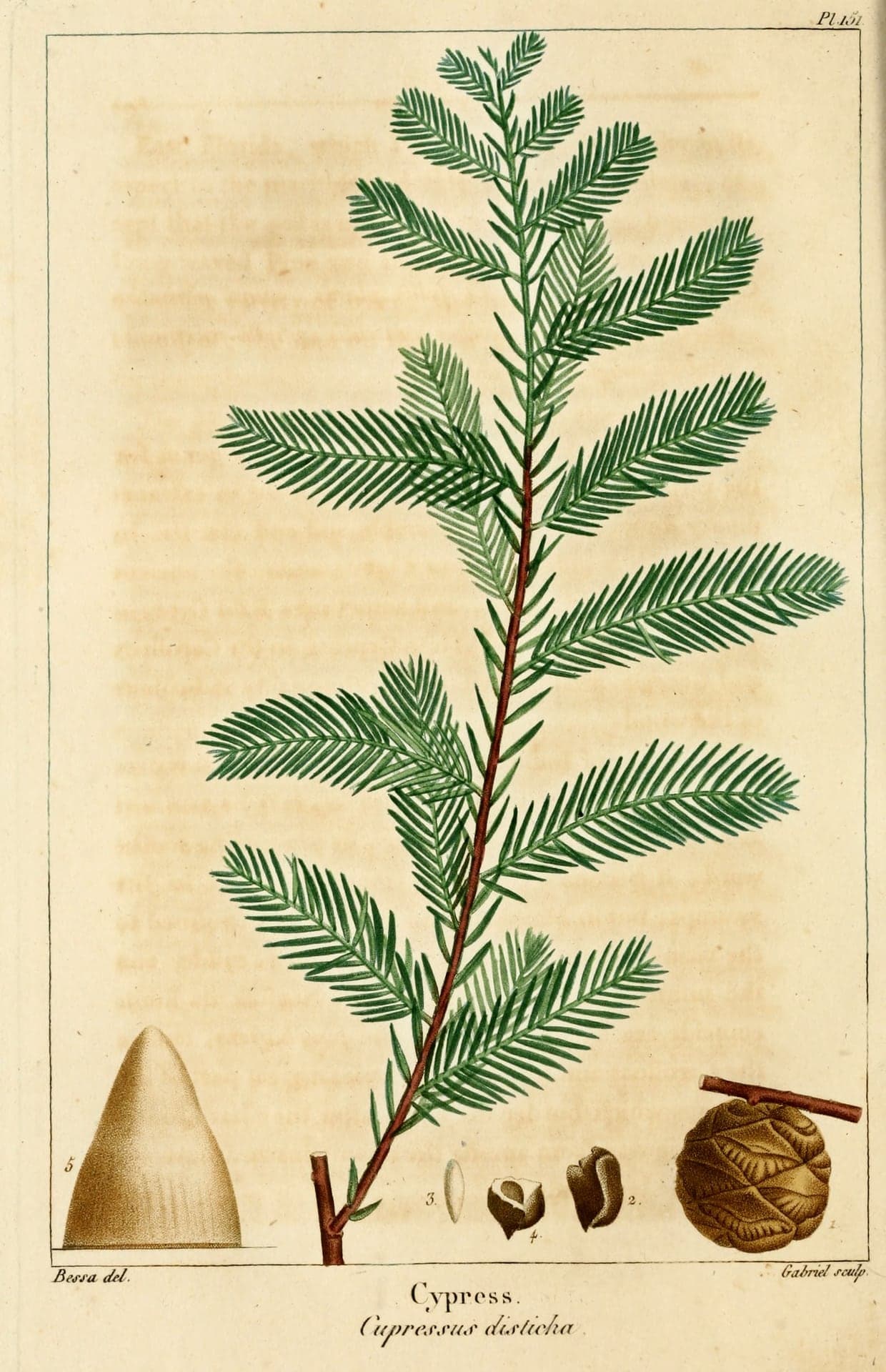
The Lake's South Shore
Seven swamp cypresses stand in the water, near where the fortress kept its prison tower.
- The Citadelwhat is left of the 1716 fortress
- 5
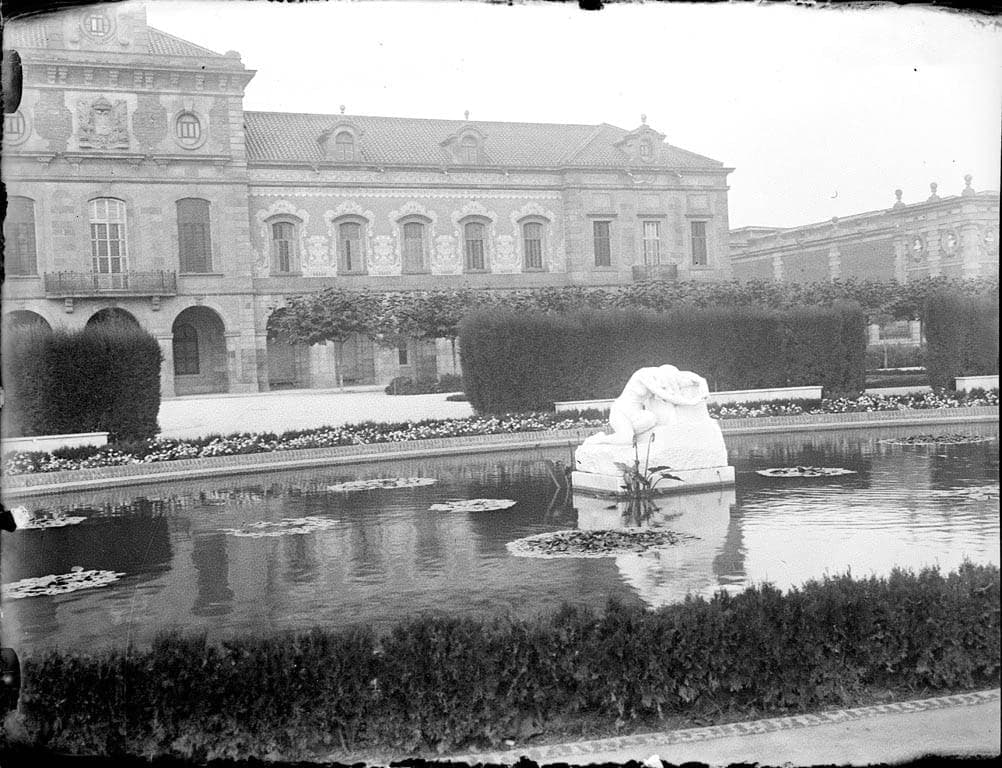
Plaça d'Armes and the Parliament
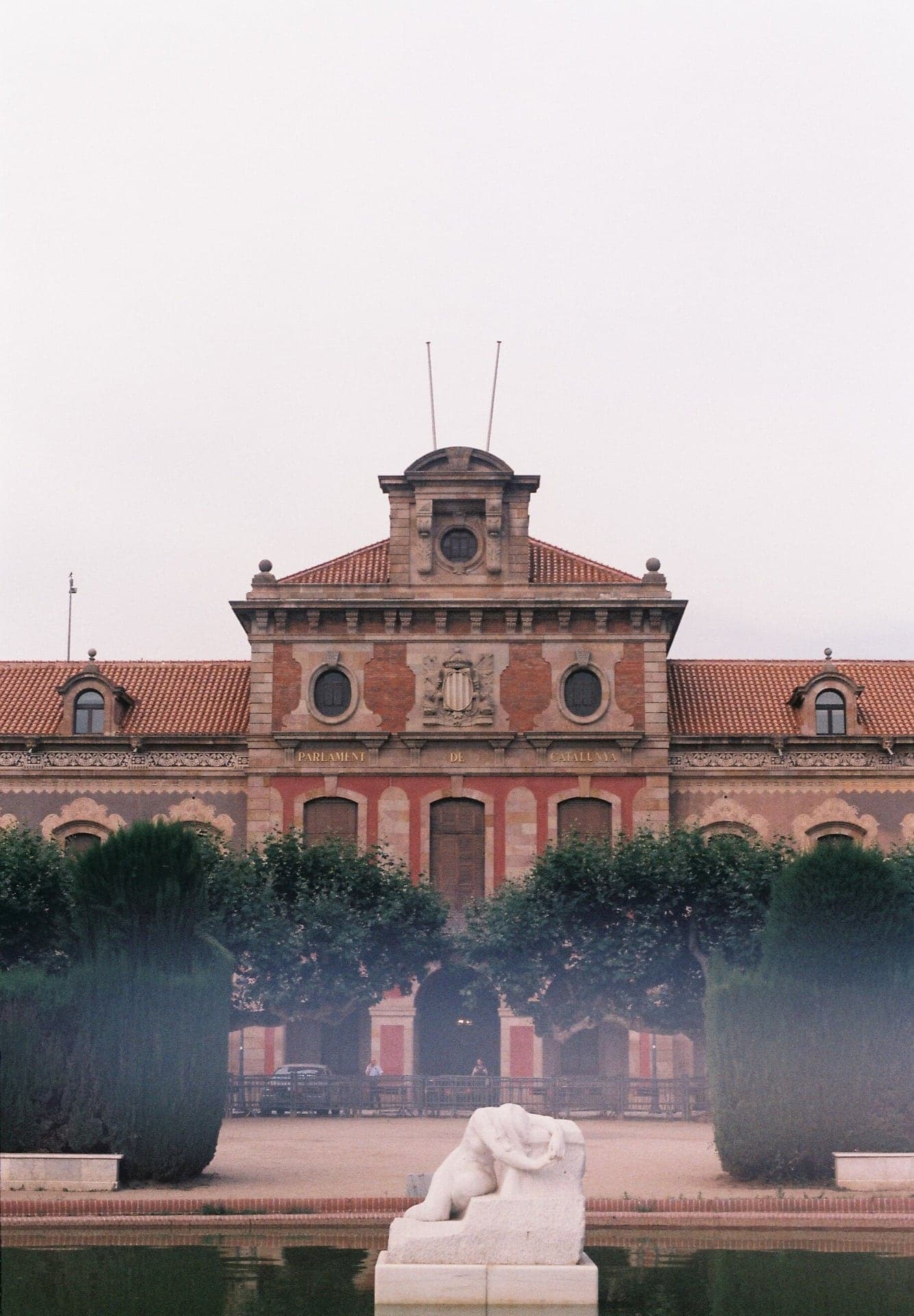
The citadel's arsenal stands across a formal garden, the home of Catalonia's Parliament since 1980.
- 6
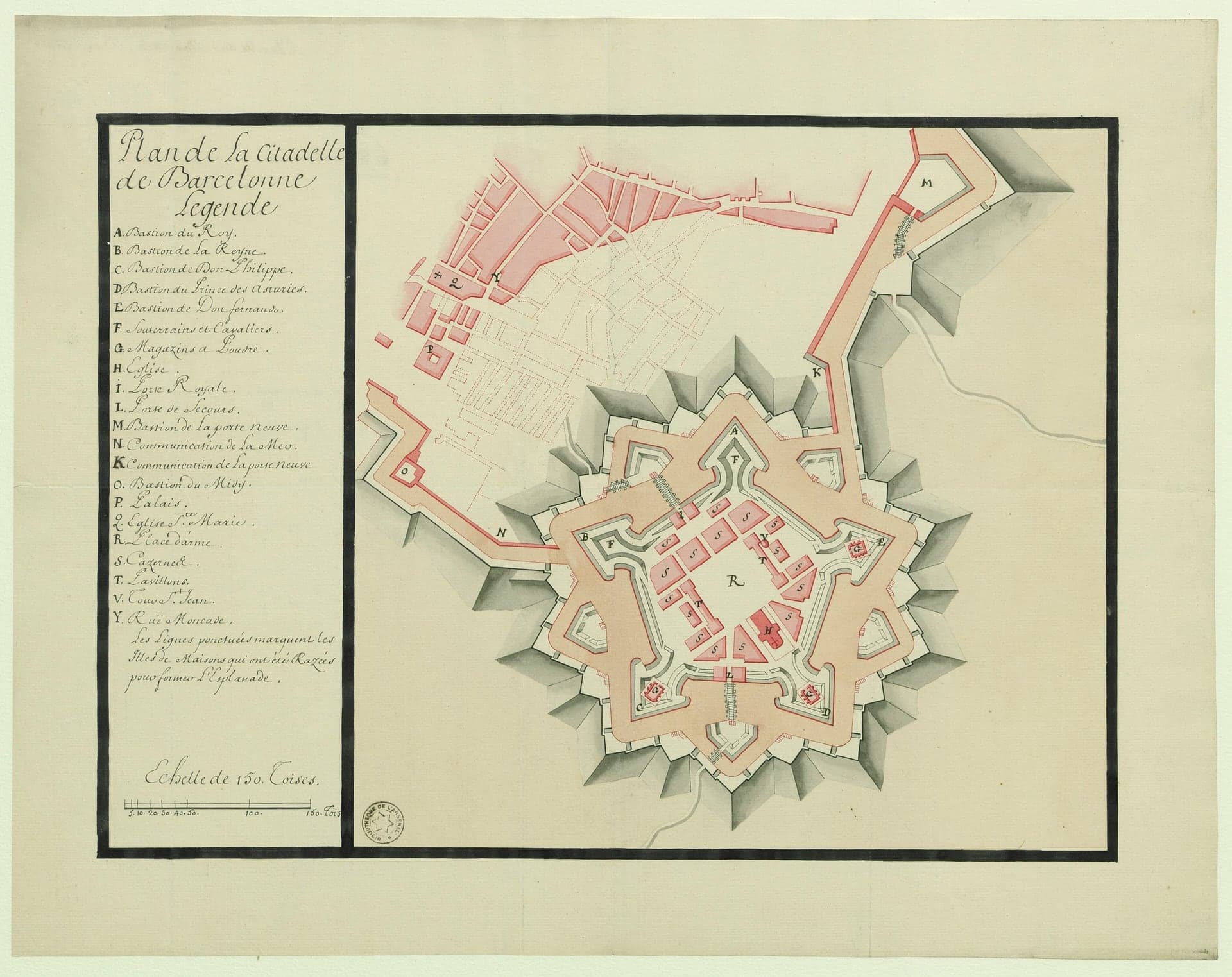
The Governor's Palace and the Fortress Chapel
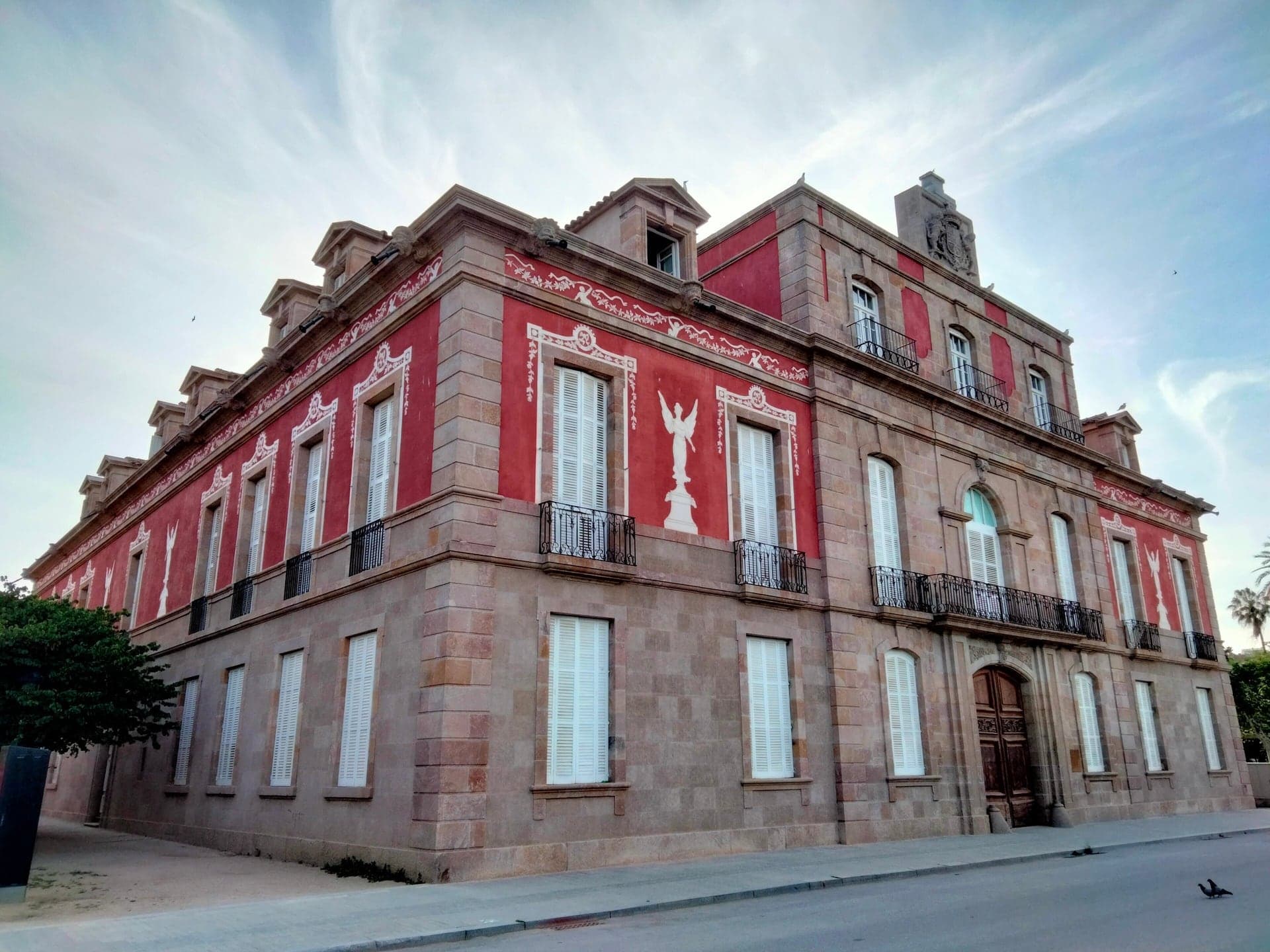
Two of the three citadel buildings that survived the demolition, a school and a military church today.
- 7
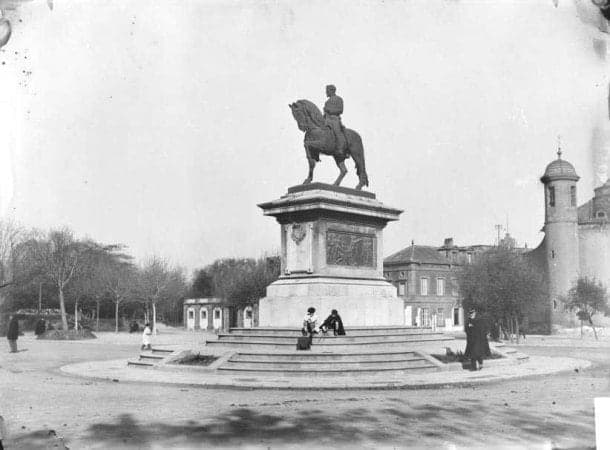
General Prim and the Fall of the Citadel
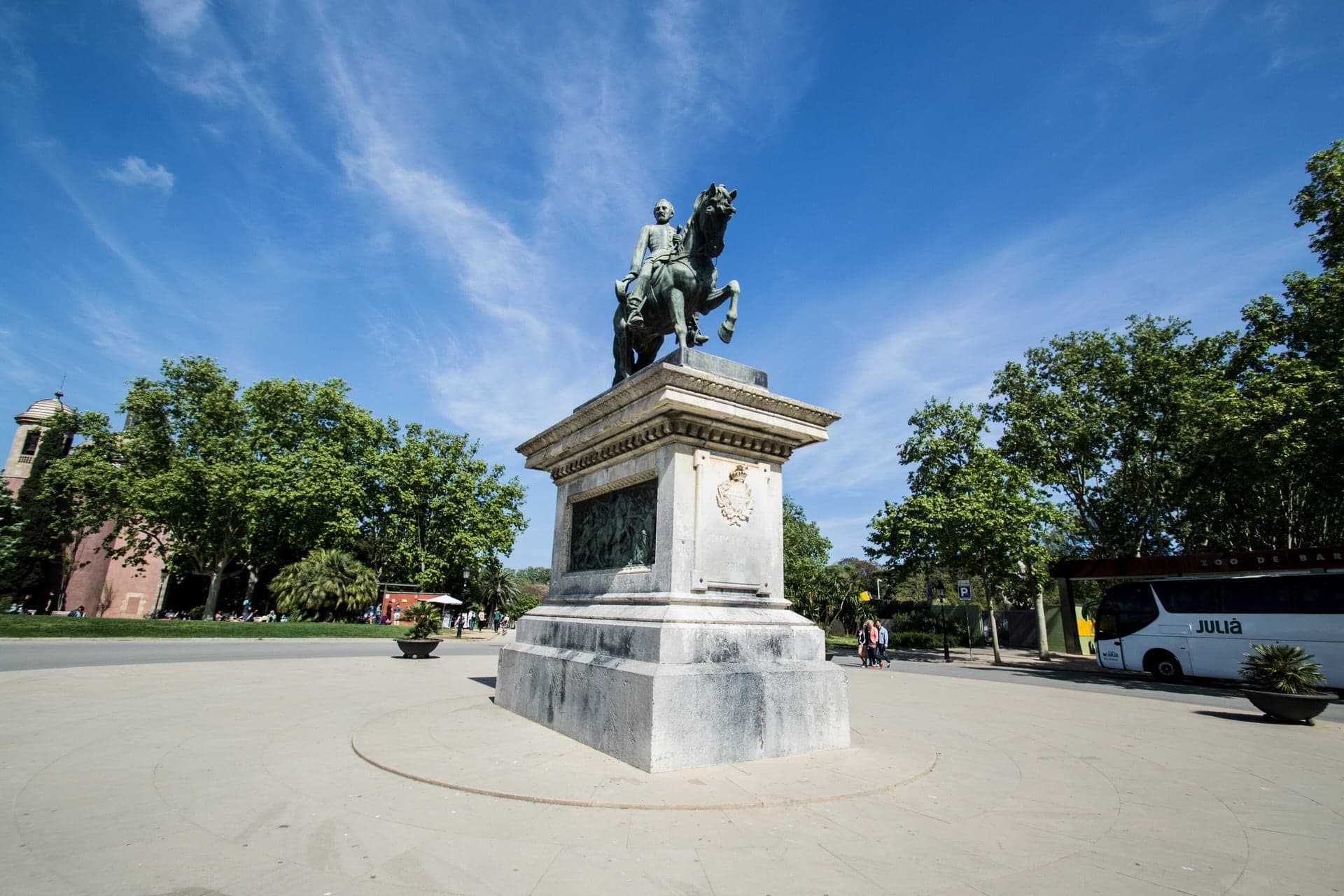
The general whose government gave the fortress to Barcelona, on condition it became a park.
- The 1888 Expositionthe science row out to the Arc
- 8
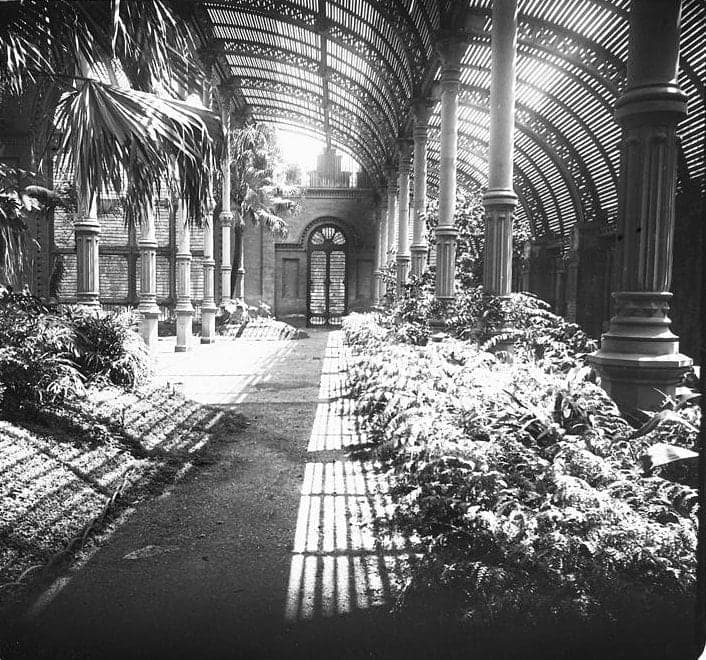
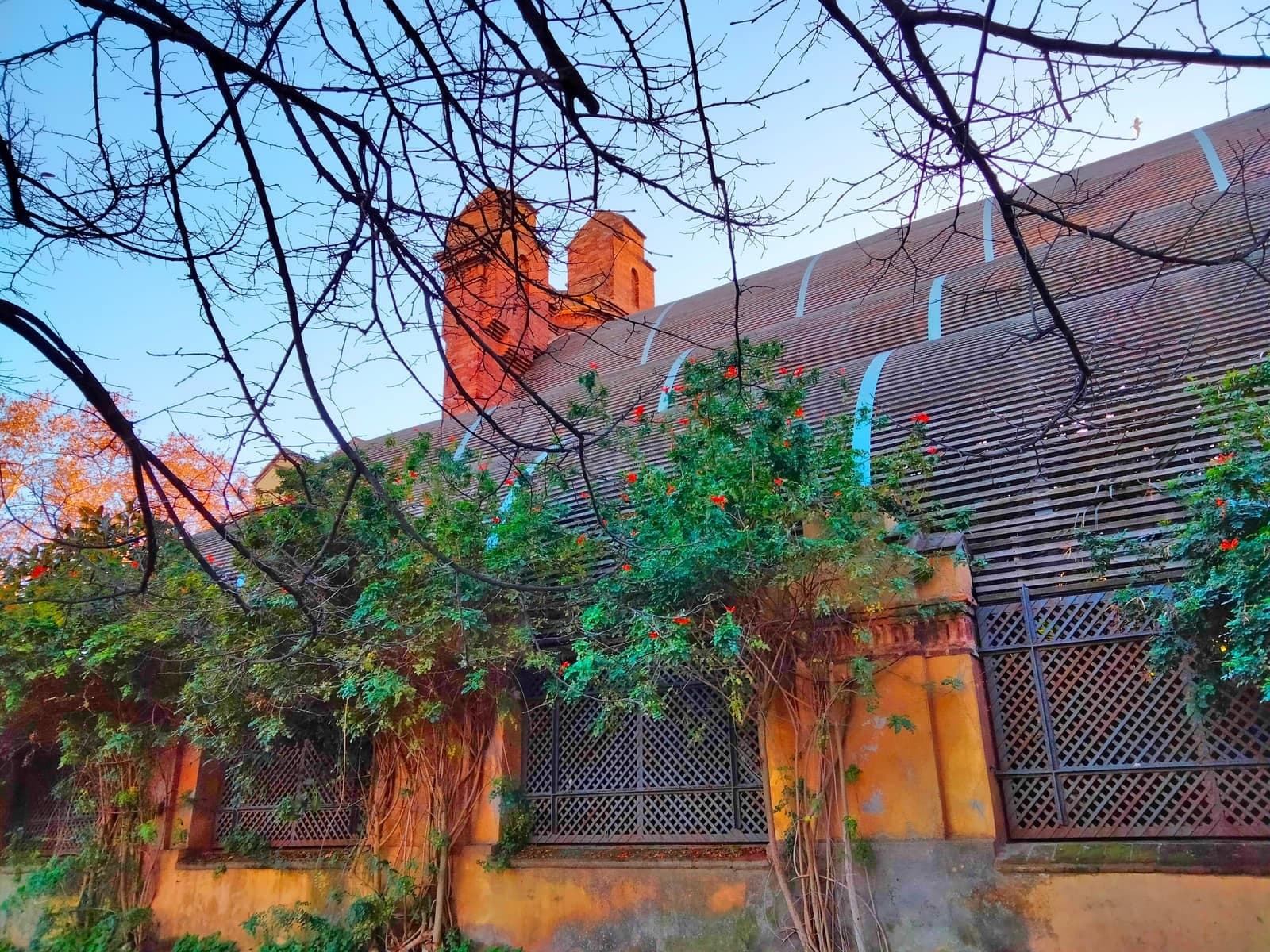
The Umbracle
Fontserè's 1883 shade house, built of brick, cast iron and wooden slats to keep sun off tropical plants.
- 9
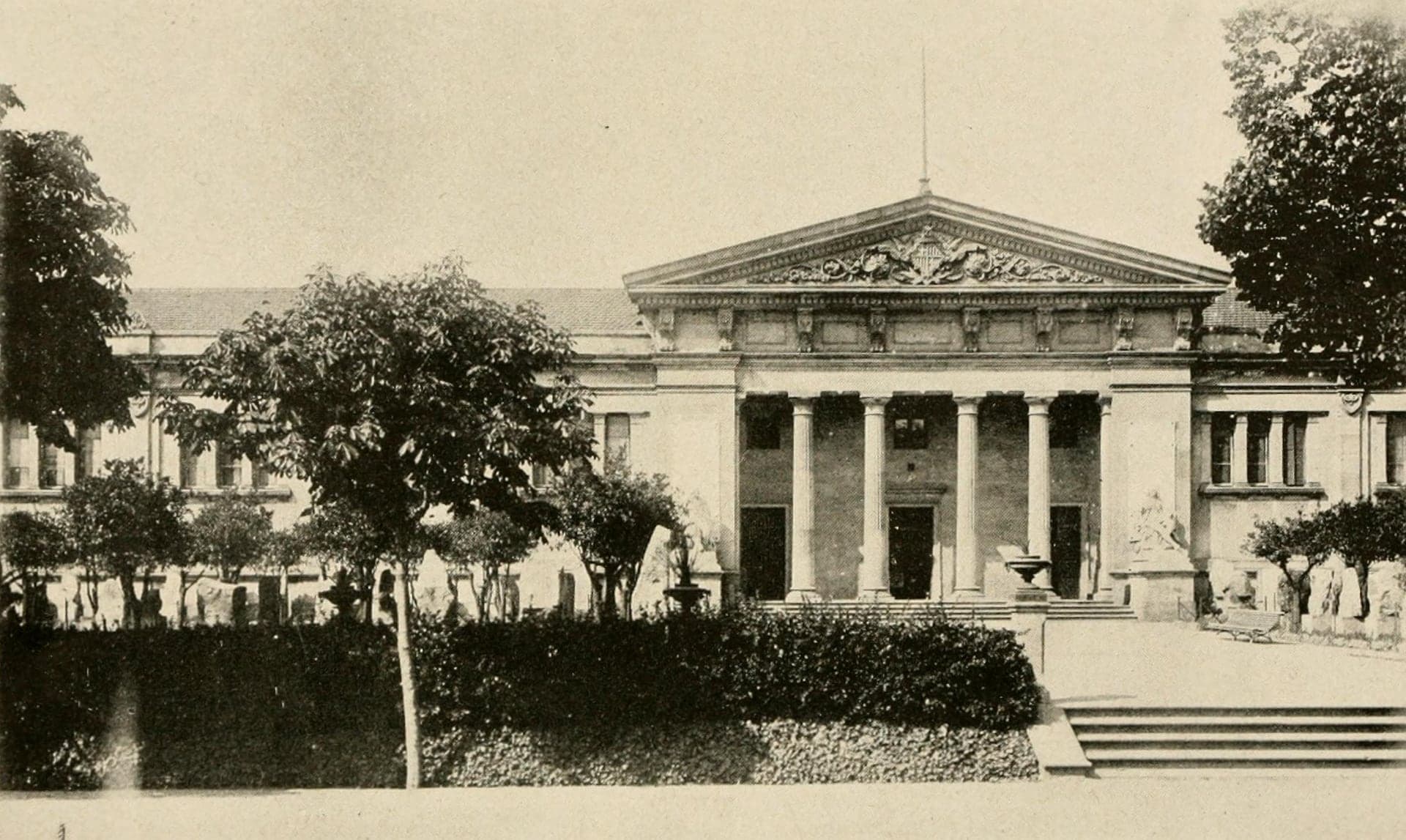
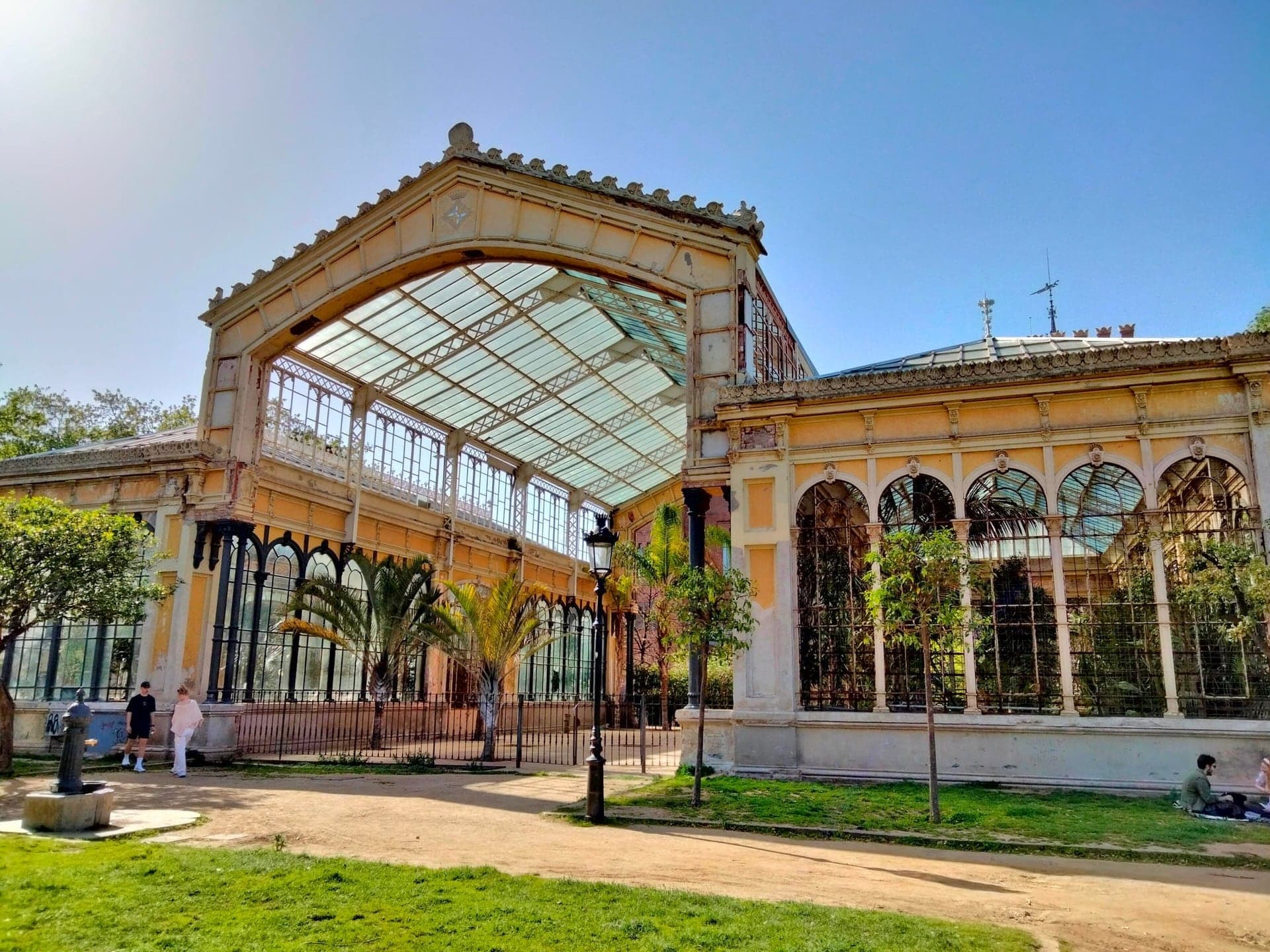
The Hivernacle and the Museu Martorell
An iron-and-glass greenhouse from the 1888 Exposition stands beside the museum its curators call Barcelona's first built for the purpose.
- 10
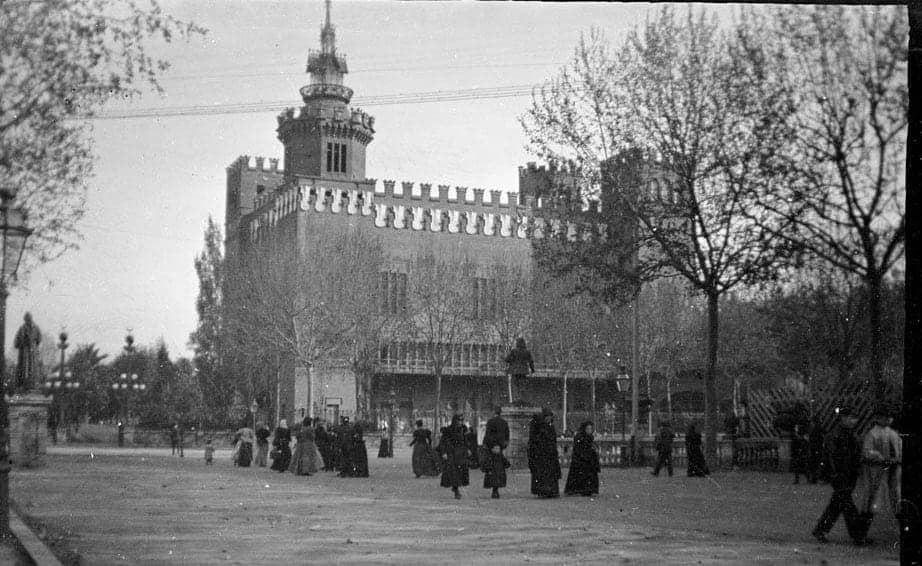
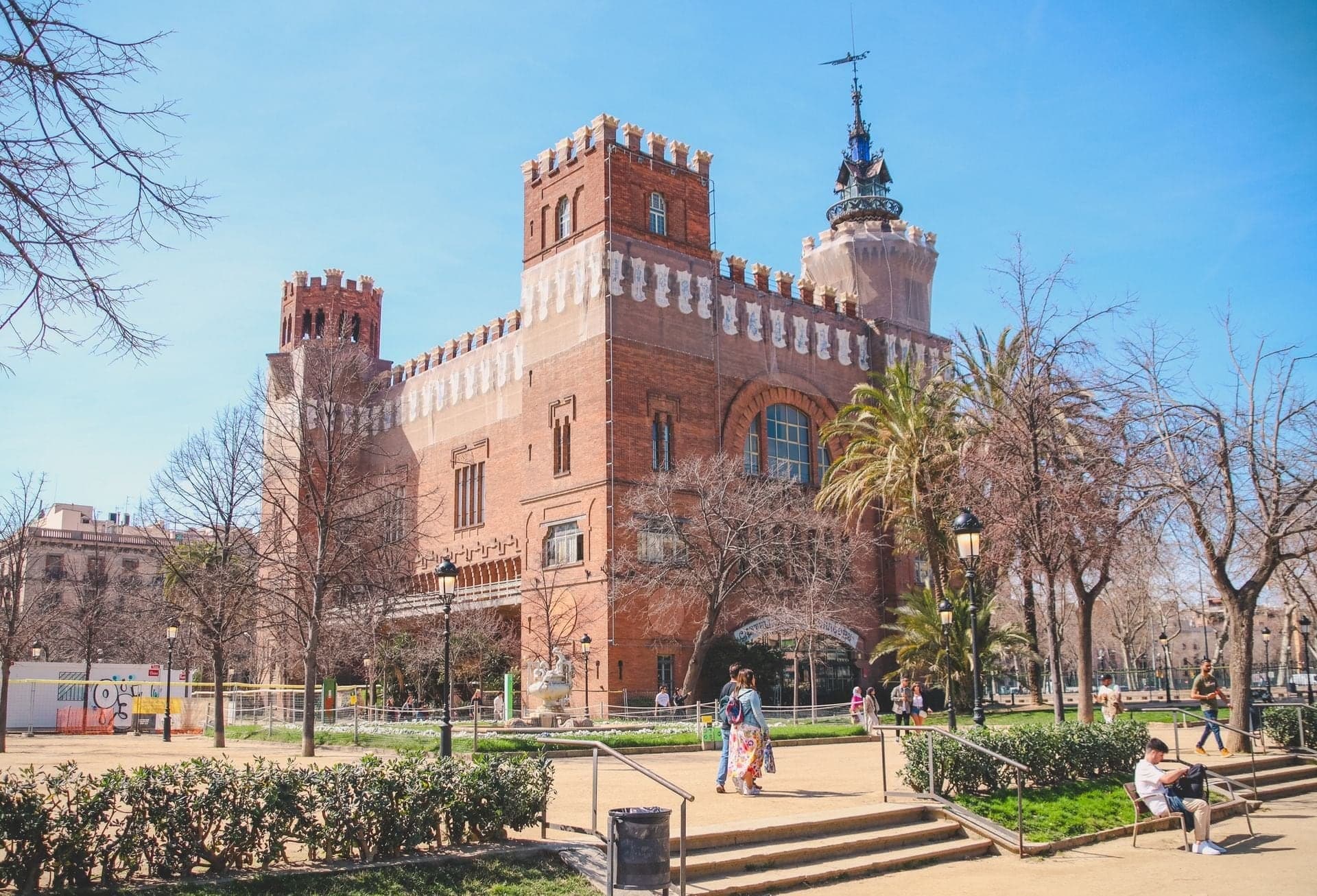
The Castell dels Tres Dragons
Domènech i Montaner's brick castle, built as the café-restaurant of the 1888 Exposition.
- 11
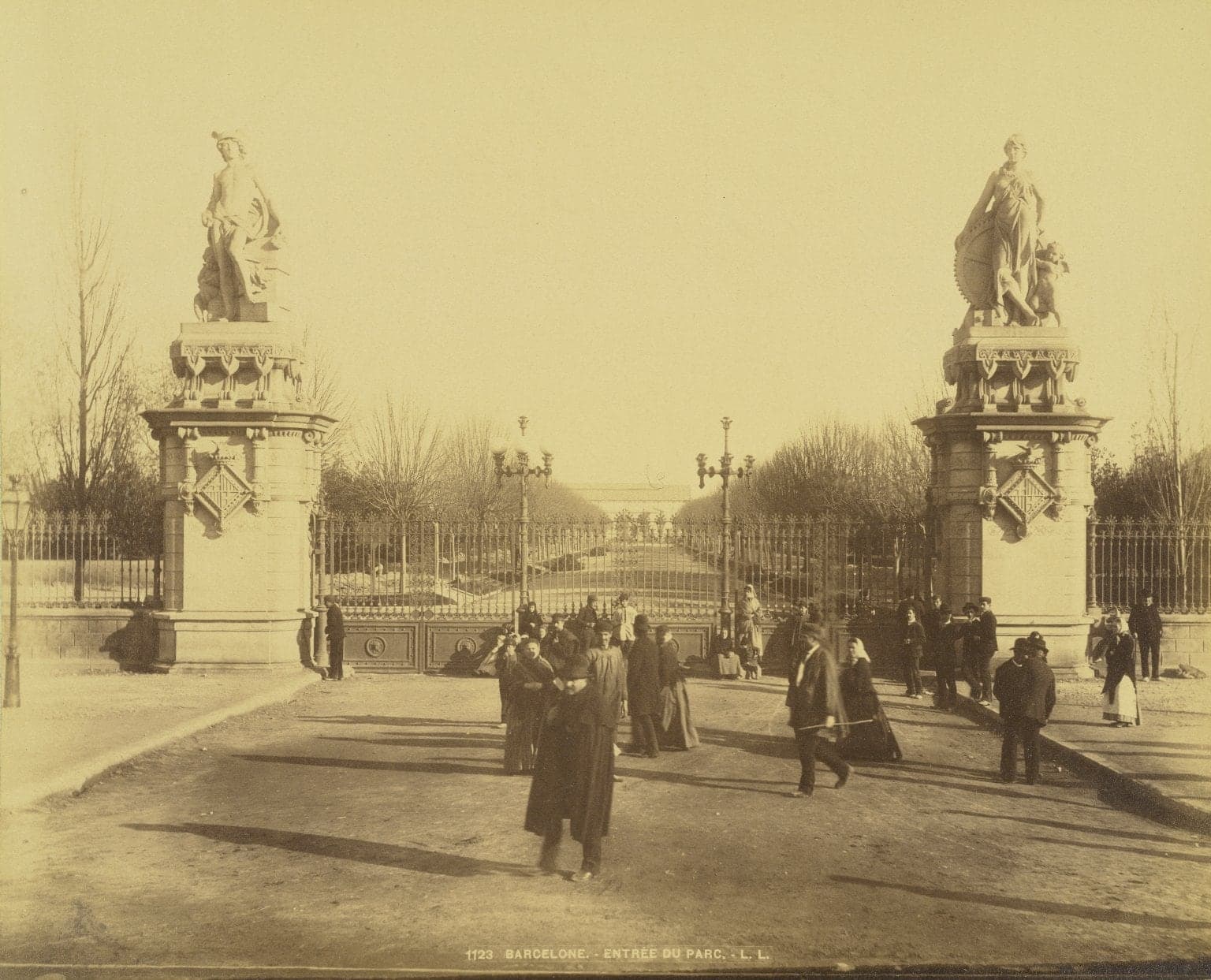
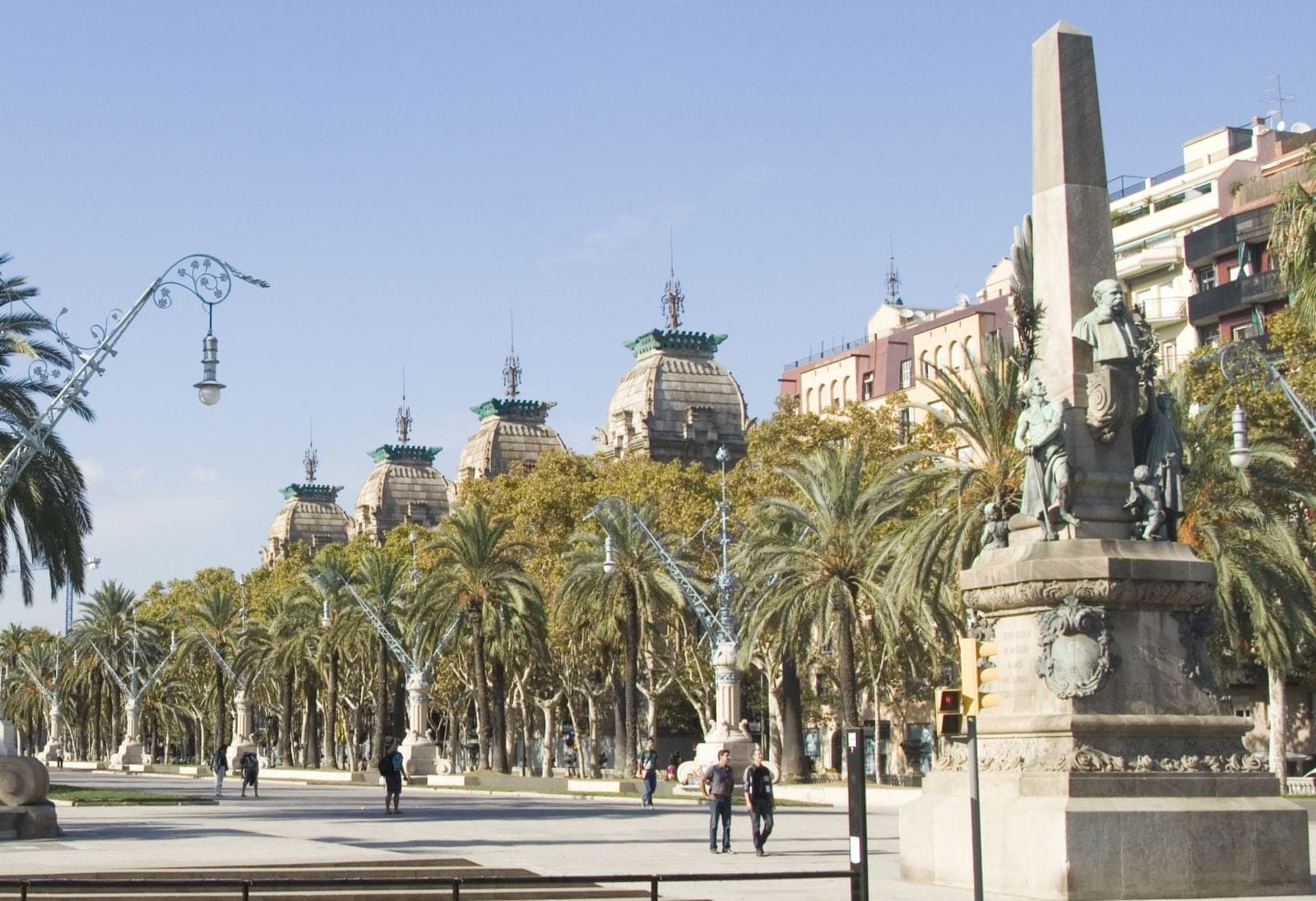
The Exposition's Front Door
The promenade every visitor to the 1888 Universal Exposition walked from the arch to the park gate.
- 12
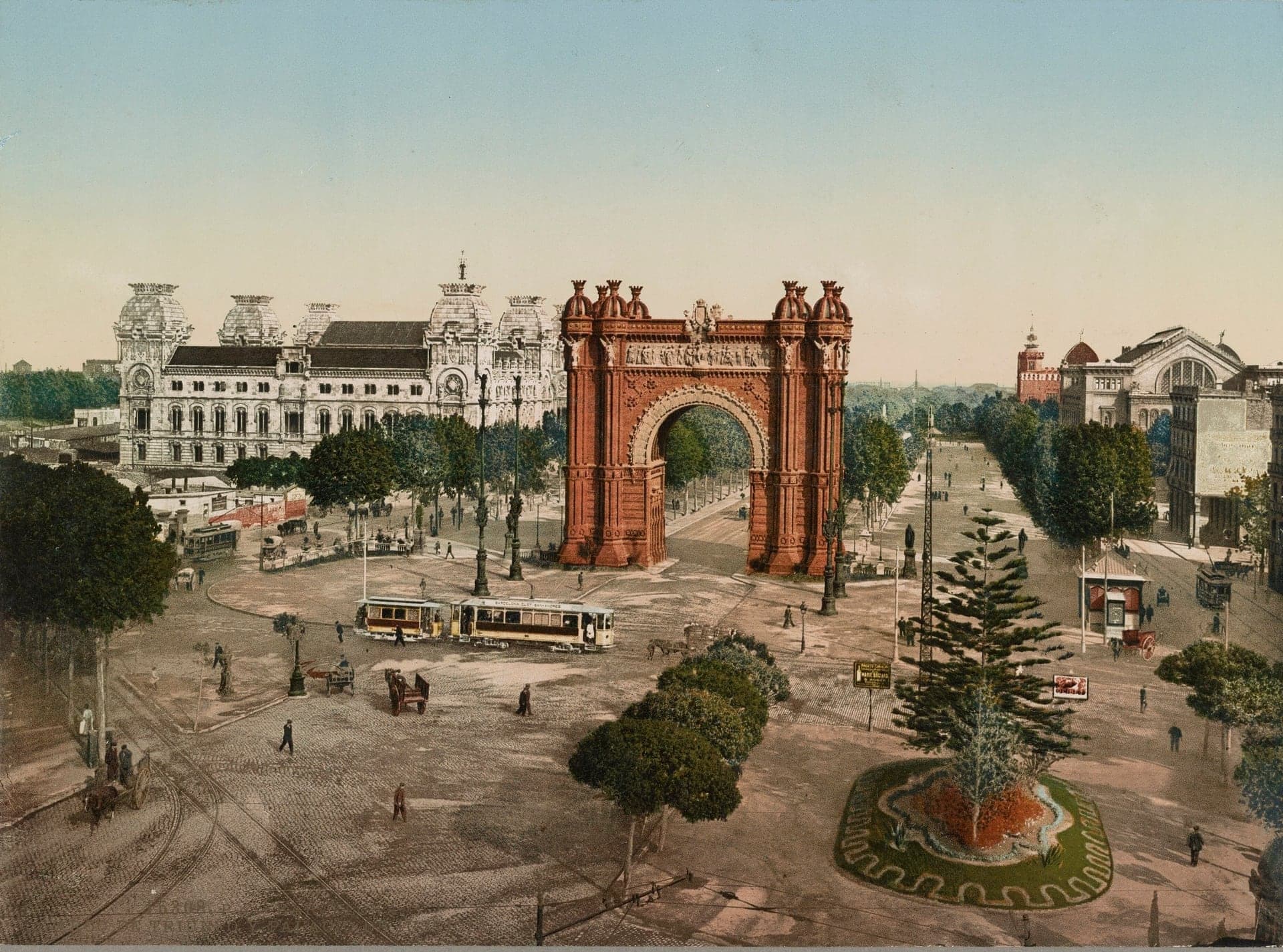
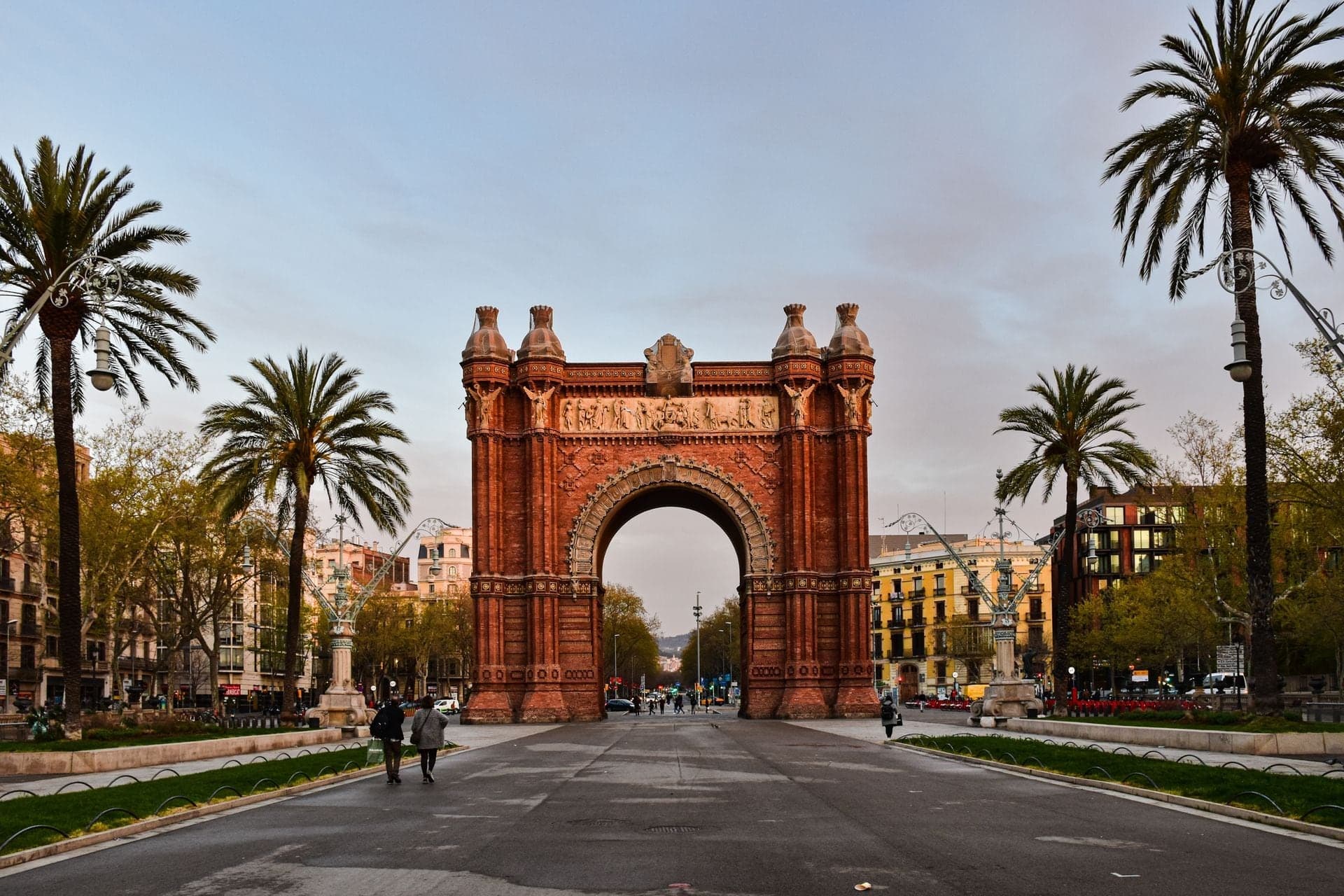
The Arc de Triomf
Josep Vilaseca's brick arch, the main gate of the 1888 Universal Exposition, opened by the queen regent.
Details
Best Time to Visit
Any day, any season: the park is free and opens at 7am. A weekday morning is quietest; the Cascada square is busiest on weekend afternoons. The Hivernacle greenhouse is open daily 10am to 8pm, free, and is the place to be on a cold day. In late autumn the bald cypresses in the lake turn rusty before dropping their needles; in winter they stand bare. The Cascada is lit after dark. Checked 12 October 2026.
Pro Tips
- •Getting to the start: stop 1 is at the north-west corner of the boating lake, by the footbridge and the kiosk bar just south of the Cascada. From Metro Arc de Triomf (line 1, and Rodalies local trains), walk down Passeig de Lluís Companys, enter by the main gate and walk on to the lake. Tram T4 Wellington is about 230 m away; The Ciutadella | Vila Olímpica tram stop and Barcelona-Estació de França are about 500 m; Metro Ciutadella | Vila Olímpica (line 4) about 600 m. From our El Born walk, enter by the gate on Passeig de Picasso. Checked 12 October 2026.
- •Park hours: the city's park page gives every day from 7am until dusk; its list of park hours gives the Ciutadella's closing time as from 10.30pm. Plan to be out by dusk in winter to be safe. Checked 12 October 2026 at barcelona.cat.
- •Rowing boats on the lake: 1 April to 30 September daily 10am to 8pm, 1 October to 31 March 10am to 6pm; half an hour 7 EUR for one or two people, 10 EUR for three, 11 EUR for four or five (city listing, undated). Checked 12 October 2026.
- •The Hivernacle greenhouse (stop 9) is free, daily 10am to 8pm, closed 1 January, 25 and 26 December. The Centre Martorell museum beside it is ticketed (6.50 EUR, free on the first Sunday of the month and every Sunday from 3pm). Checked 12 October 2026 at museuciencies.cat.
- •The Umbracle (stop 8): the city lists it open daily 10am to 8pm in summer and 10am to 5.30pm in winter, but it is under restoration in 2026 and 2027 and may be closed. Checked 12 October 2026.
- •Public toilets are inside the kiosk bar on the Cascada square, beside stops 1 and 2.
- •Step-free: two short flights of steps with handrails, after stop 6 and just before stop 10. A path is mapped beside the first; a step-free way round the second is not confirmed, so check at the gate.
Safety & Precautions
- •The Cascada (stop 2) is drained for cleaning twice a year for about ten days, and the city listed it as stopped for cleaning on 12 October 2026: the water may be off. Checked 12 October 2026.
- •Works: the city is renovating the park (paths, drainage, fountains) in 2026, and the Castell dels Tres Dragons (stop 10, into 2027), the Umbracle (stop 8) and the Centre Martorell's front (stop 9, from September 2026) are under restoration. Expect fences, scaffolding and diversions; follow the signs round any closed path.
- •The Cascada square is the busiest corner of the park: keep bags closed and in front of you there and at the Arc de Triomf.
- •Please do not feed the parakeets or pay for photos with them: both species are listed invasive species in Spain.
- •At stop 5 the route walks a lane used by park and Parliament vehicles, with no separate pavement: keep to the side. The Parliament grounds, the Zoo, the governor's palace (a school) and the chapel are not open to walk into on this route.
- •Leaving the park after stop 10, the route crosses Passeig de Pujades, a busy road, at traffic lights, then a cycle lane. On Passeig de Lluís Companys, bikes use the lanes either side of the central walk.
Travel advisory: Exercise Increased Caution (Level 2).
Gallery
Related Reading
Go deeper on what you'll see, hear, and walk through.
Read the walk
The full story of Ciutadella Park: From Fortress to Pleasure Garden, in words. Prefer to listen? Play it narrated, from home or on location.
Introduction
Barcelona, the capital of Catalonia in Spain, made its first public park out of a fortress that was built to hold the city down. After Barcelona surrendered on the eleventh of September, seventeen fourteen, the Bourbon king ordered a five-sided citadel here, and more than twelve hundred houses were pulled down for it. In eighteen sixty-nine the fortress was handed to the city, on one condition: that it become a park.
Three people matter here. Próspero de Verboom, the engineer who built the citadel. General Joan Prim, who gave it away. And Josep Fontserè, the master builder who turned its ground into gardens, a lake and a waterfall, and who said that gardens do for a city what lungs do for a body.
The walk takes the living things first, then what is left of the fortress, then the science buildings and grand promenade of the eighteen eighty-eight Exposition. There are twelve stops over about one point three kilometers, about three quarters of a mile, on flat paths with two short flights of steps. With time to look, it takes about an hour, and it ends at the Arc de Triomf, by the Metro.
Stop one is at the north-west corner of the boating lake, by a small footbridge and a kiosk bar. From our El Born walk, enter by the Passeig de Picasso gate and walk on past the Umbracle to the lake.
1. The Lake and the Parakeets
Welcome to the Parc de la Ciutadella. Walk on to the corner of the lake by the little footbridge, where the water opens out, and listen for a moment.
The loudest voices in this park are parrots. Look up into the crowns of the tall palms around the lake for bright green birds and, often, a big untidy bundle of sticks wedged among the leaves. That bundle is a nest, and it is the mark of the monk parakeet, a green bird with a gray face and breast. Monk parakeets build those nests together, as a colony.
The city's museum of zoology recorded how they arrived. In nineteen seventy-five, two of them were seen for the first time in Barcelona, sitting in date palms beside the Zoo's aviary, right here in the Ciutadella. By nineteen eighty-one there were twelve, and by nineteen eighty-five, forty-four, nesting in ten palms. In August nineteen eighty-two the park's pruners cut their nests down, and within a month the birds had built them again. A second species, the slimmer rose-ringed parakeet, turned up here as a pair in nineteen seventy-six. Spain lists both as invasive species, animals brought in by people that spread at the expense of native nature. Please don't feed them.
Watch the water's edge and the sky over the Zoo fence, too. Grey herons and small white cattle egrets come and go all day. They are wild birds, and since nineteen seventy-four the herons have nested in the gardens of the Zoo, just beyond that fence.
Follow the route up from the water, a short walk, to the great waterfall.
2. The Cascada
Walk on into the square and stop on its near side, with the whole waterfall in front of you across its basin.
This is the Cascada, the cascade, and it was built to be seen exactly like this, whole, as a stage set. Josep Fontserè, the master builder who designed the park, drew it in eighteen seventy-five, and it opened in eighteen eighty-one. The sculpture came afterwards. In the middle stands the Birth of Venus. On top is the Quadriga of Aurora, the chariot of the dawn, drawn by four horses abreast. Lower down, four winged griffins guard Venus. And at each end, steps climb to an upper gallery, a kind of temple for looking out over the park.
Now look at the rock itself. None of it is a real cliff: it is built, piled and shaped to look wild. Fontserè had a very young assistant, Antoni Gaudí, and the city's own history of the park says the rockwork and some of the decoration have been attributed to him.
The water may not be running. The basin is drained and scrubbed twice a year, for about ten days at a time. In twenty thirteen the city's water managers said the water was pumped from a well beside the park, on Carrer de Wellington. After dark the cascade is lit.
On the path you just walked up from the lake, on the side away from the kiosk bar, grows a tree the city catalogues as the only Mexican white oak in Barcelona. Unlike most oaks, its leaves have no lobes.
This square is the busiest corner of the park. Keep your bag closed and in front of you.
Follow the route across the square and down the lake's far shore, toward a very large animal.
3. The Mammoth
Walk on along the shore path and stop when the mammoth stands beside you.
It is life-size, painted, and it is not stone. In nineteen oh seven the city's natural sciences board voted a quarter of its budget for that year to a series of full-size models of extinct giant mammals, copying the prehistoric beasts in the park at Sydenham, by the Crystal Palace in London. The mammoth was chosen first. The sculptor Miquel Dalmau modeled it, then built it full size in wood, right here in the park, and a building firm replaced the wood with reinforced concrete. It was unveiled on the twelfth of December, nineteen oh seven, beside the bridge at the Cascada square, where the path round the lake began. It stood in a little grove of firs, meant to suggest the cold forest it once lived in. The firs are gone.
Its tiled sign told the public that the mammoth had been discovered in Siberia in seventeen ninety-nine, and that it had lived in Catalonia during the Ice Age. That was the point: a lesson in the open air, free, for anyone walking past. The series stopped there. Other animals were planned and never built, and this is the only one.
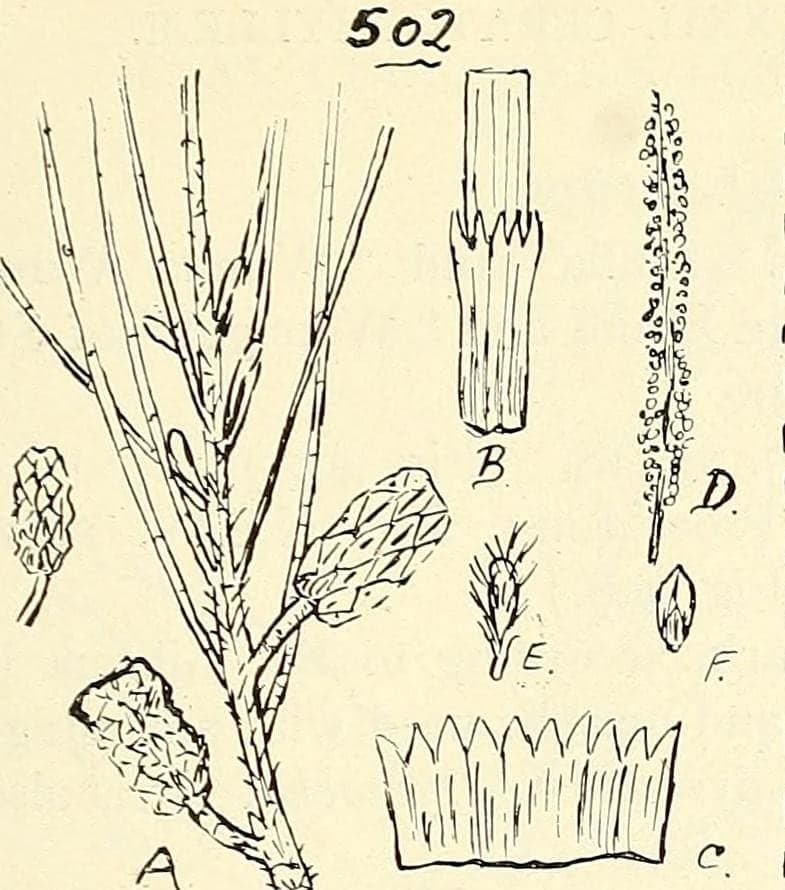
Now look at the trees along the shore around you. Several are river sheoaks, from Australia. They look like conifers, with long drooping needles, but they are not related. Take one needle gently between your fingers: it is a tiny jointed twig, and the real leaves are the minute teeth at each joint.
Follow the route on along the shore to the lake's far end.
4. The Lake's South Shore
Walk on round the end of the lake and stop where the path bends, with tall conifers standing out in the water.
Those are bald cypresses, a swamp tree. The city counts seven of them in the lake, of different sizes, and catalogues them together as trees of local interest. Look at them in any season and they tell you the time of year, because a bald cypress does something few conifers do: it drops its needles. In spring and summer they are soft, flat and feathery green. Late in autumn they turn a rusty brown, and then they fall, and in winter the trees stand bare in the water until new green comes in spring.
Look at the water around their feet. A tree standing in water has a problem: its roots cannot breathe. The city's description of these trees says their roots rise up out of the water to get oxygen, and swamp cypresses are known for these knobbly breathing roots, called knees. You may see them breaking the surface near the trunks.
Now picture this ground before the park. You are standing on the old citadel's ground. Somewhere near this lake stood the Torre de Sant Joan, the fortress prison that people called the Catalan Bastille. The Parliament of Catalonia's own history says that between seventeen nineteen and eighteen sixty-six, thousands of political prisoners passed through its cells. The tower is gone, and the lake and its trees were laid over the fortress ground.
Follow the route away from the water, toward a formal garden and a long stone building.
5. Plaça d'Armes and the Parliament
Walk on to the edge of the formal garden and stop there, beside the lane. Park and Parliament cars use it, so keep to the side. The long building beyond the garden is the Parliament of Catalonia, and it began as the citadel's arsenal, its store of arms. Work on the fortress…
Full narration for this stop unlocks with the tour.
6. The Governor's Palace and the Fortress Chapel
Walk on to the top of a short flight of steps and stop there, between a palace on one side and a small church on the other. When the fortress came down, three buildings were left standing. The arsenal, which you have just seen. The governor's palace, beside you. And the chapel.…
Full narration for this stop unlocks with the tour.
7. General Prim and the Fall of the Citadel
Walk on to the edge of the round garden, where a general sits on horseback. This is General Joan Prim, and he is here because of a deal. In eighteen sixty-nine his government handed the citadel over to Barcelona, and a law ordered it torn down. The city's history of the park…
Full narration for this stop unlocks with the tour.
8. The Umbracle
Walk on along the avenue and stop when a long, low brick building stands beside it, with a roof of wooden slats. This is the Umbracle, from the Catalan for a shade house. Josep Fontserè, the park's master builder again, designed it in eighteen eighty-three, and it is a building…
Full narration for this stop unlocks with the tour.
9. The Hivernacle and the Museu Martorell
Walk on along the avenue and stop where a long hall of iron and glass stands just ahead beside the path, with a classical stone museum set back on the same side. The greenhouse is free to walk into. The museum is ticketed. Start with the museum. In eighteen seventy-eight a…
Full narration for this stop unlocks with the tour.
10. The Castell dels Tres Dragons
Walk on toward the park's main gate, up a few steps with a handrail, and stop just inside the gate. Look for the brick castle with towers nearest the gate, standing back among the trees. It is the Castell dels Tres Dragons, the Castle of the Three Dragons, and it was never a…
Full narration for this stop unlocks with the tour.
11. The Exposition's Front Door
Stop here on the central walk, a little beyond the tall monument you have just passed. In eighteen eighty-eight this promenade was the Saló de Sant Joan, the Saint John promenade, and it was the grand approach to the Universal Exposition. Visitors came in through the brick arch…
Full narration for this stop unlocks with the tour.
12. The Arc de Triomf
Walk on to the foot of the arch and stop a little short of it, where you can take it all in. This is the Arc de Triomf, and it celebrates no battle. The architect Josep Vilaseca built it as the main gate of Barcelona's Universal Exposition, and it was opened on the twentieth of…
Full narration for this stop unlocks with the tour.
- Mamut del parc de la Ciutadella (Barcelona) — Enric, CC BY-SA 4.0 · source
- Parque Jardín de la Ciudadela — D.Rovchak, CC BY-SA 4.0 · source
- Institut Verdaguer, antic Palau del Governador, parc de la Ciutadella (Barcelona) — Enric, CC BY-SA 4.0 · source
- Estatua ecuestre dedicada a la memoria del general Joan Prim i Prats. — Magnificus, CC BY-SA 3.0 ES · source
- Umbracle del parc de la Ciutadella (Barcelona), façana est — Enric, CC BY-SA 4.0 · source
- Hivernacle (Barcelona) — Enric, CC BY-SA 4.0 · source
- Barcelona - Passeig de Pujades - View NW on Passeig de Lluís Companys, Tribunal Superior de Justícia de Catalunya & Francesc Rius i Taulet m — Txllxt TxllxT, CC BY-SA 4.0 · source
Images may be cropped or resized. Other photos via Unsplash and Pexels.