Rattanakosin: The Royal Island
120 min · 5.5 km · moderate
Bangkok was founded in seventeen eighty-two as a deliberate reincarnation of a burned capital, and it grew afterward not by erasing what came before but by layering: a royal island rebuilt to copy the Ayutthaya the Burmese had destroyed, an older Chinese quarter downriver that financed the young kingdom, and a first paved road that turned a water city into a land city. Read the three Roamer tours together and the capital stops being a jumble of temples and traffic. It becomes a stack of layers, each one still open for business.
The founding logic is a copy. In seventeen sixty-seven the Burmese burned Ayutthaya, the four-century capital of the Thai kingdom, to the ground. Fifteen years later King Rama the First laid out a new capital on a bend of the Chao Phraya, and he rebuilt rather than invented. He cut man-made canals to make the same fortified island, raised the same royal chapel around a sacred image, and followed the same cosmological plan so the new dynasty would read as a restoration. The Royal Island walks this act of resurrection outward through the concentric rings the founders drew. It begins at Lak Muang, the city pillar, raised before there was a wall or a palace. The founding chronicle records the exact minute it went up, forty-five minutes past six in the morning on the twenty-first of April, seventeen eighty-two, with a horoscope for the entire city sealed inside. A capital was given a birth chart before it existed.
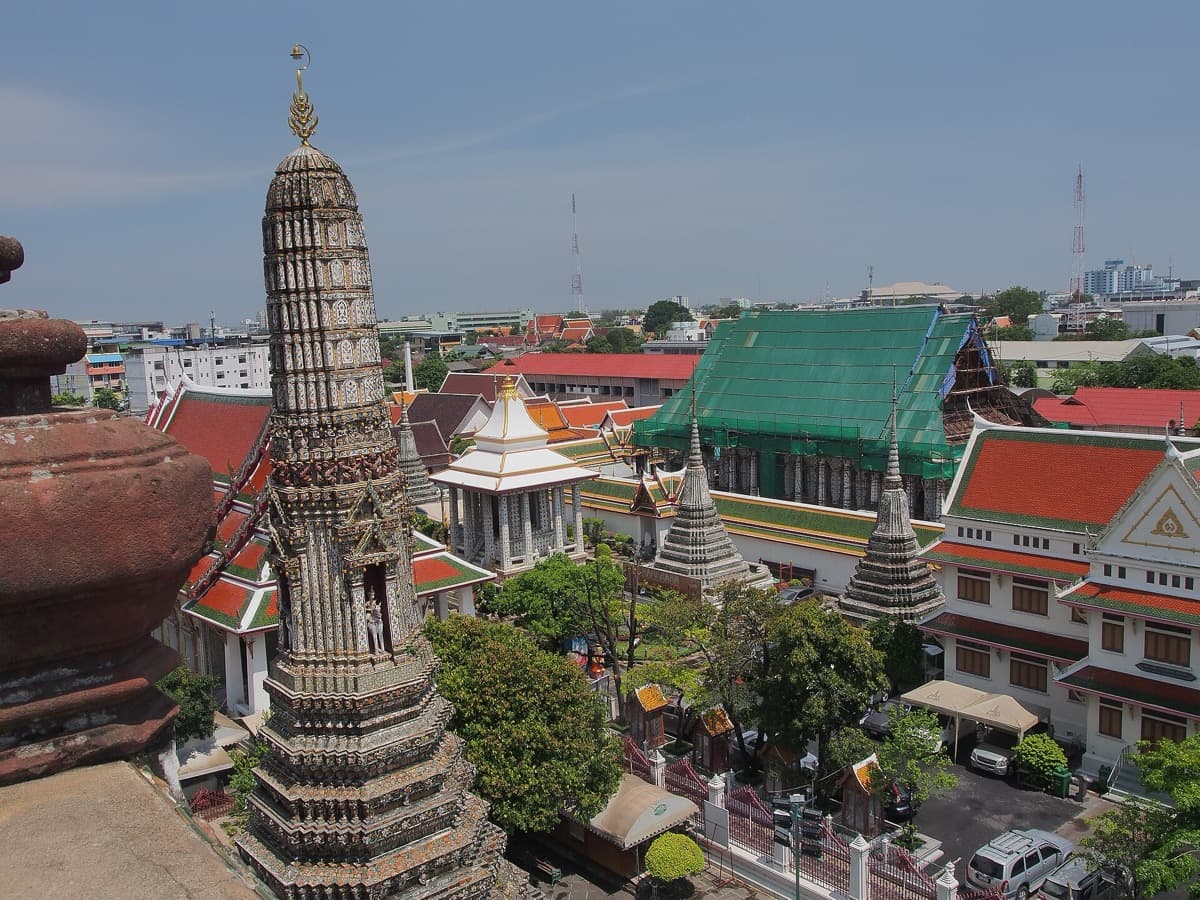
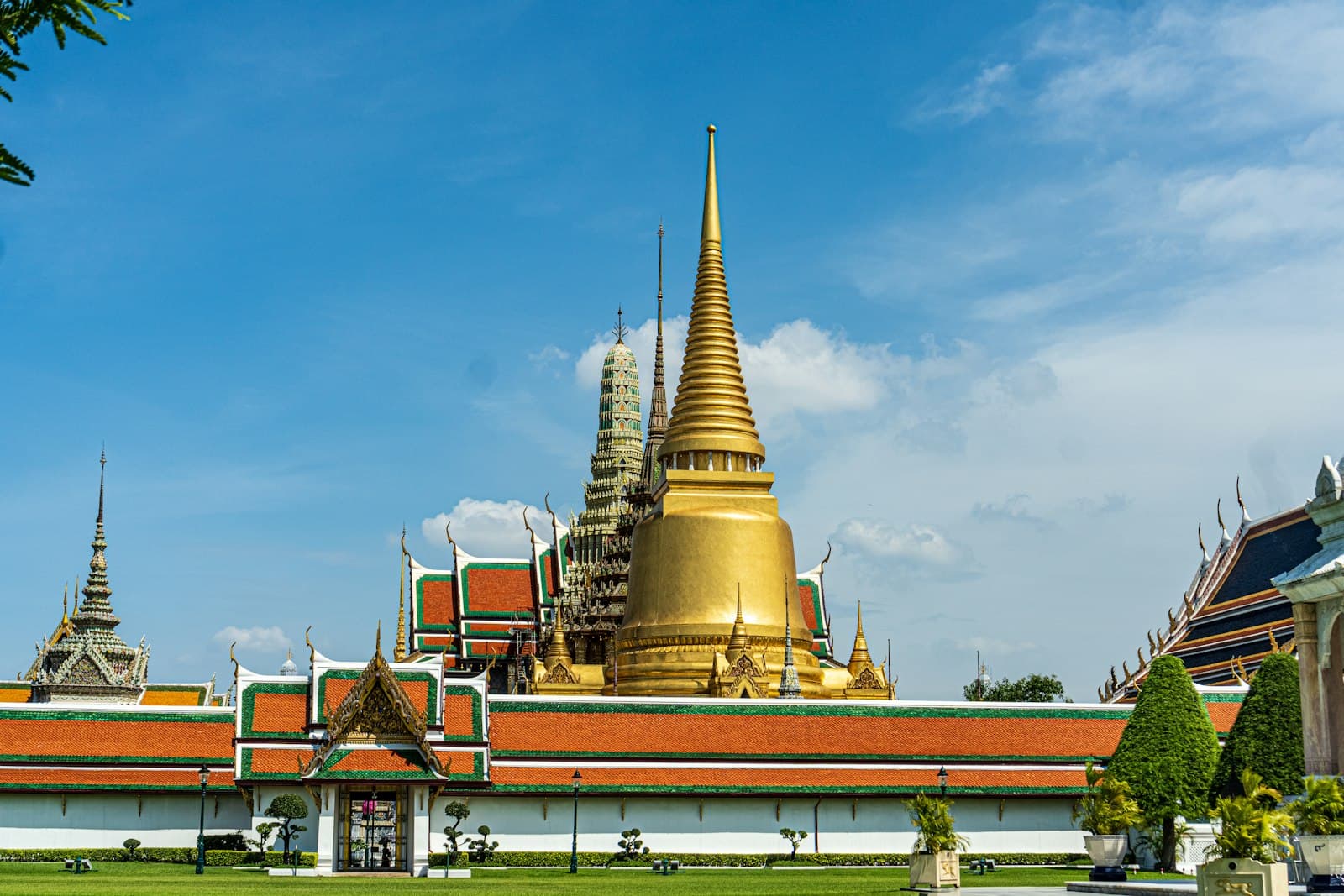
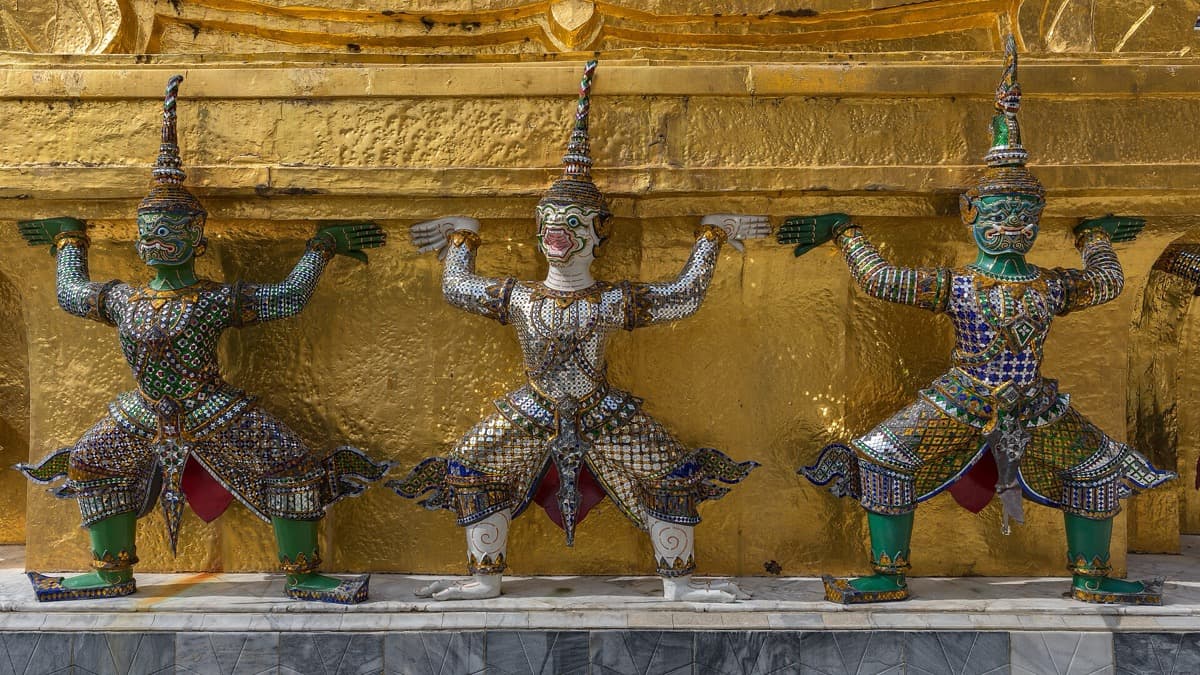
The layer at the center is a transferred soul. Wat Phra Kaew, established under Rama the First and completed in seventeen eighty-five when the Emerald Buddha arrived, has no resident monks. None live there. It was built as a royal chapel to house a sacred image and legitimize a dynasty, exactly as Ayutthaya's royal chapel once did. The Emerald Buddha itself is only about sixty-six centimetres tall, usually described as jade rather than emerald, venerated as the palladium of the whole realm. Around it the founders left a deliberate emptiness, Sanam Luang, the royal field, about seventy-four and a half rai of open grass where kings are cremated and sacred oxen are led across the earth each year in the Royal Ploughing Ceremony. Ending and beginning staged on the same ground. Wat Pho, reconstructed from seventeen eighty-eight and enlarged under Rama the Third over a labor recorded as sixteen years and seven months, holds a reclining Buddha about forty-six metres long and doubles as the city's first public university, its walls inscribed with medicine, astrology, and literature so anyone could learn by looking. Cross the river to Wat Arun and the copy starts to complicate itself: a temple older than Bangkok, encrusted not in gold but in broken Chinese porcelain that arrived as ship ballast, the debris of trade pressed into a sacred tower. The walk closes at Museum Siam, inside a former Ministry of Commerce building designed by an Italian architect, its permanent exhibition titled Decoding Thainess. A capital built as a copy ends at a museum asking whether copying is what a nation actually is.
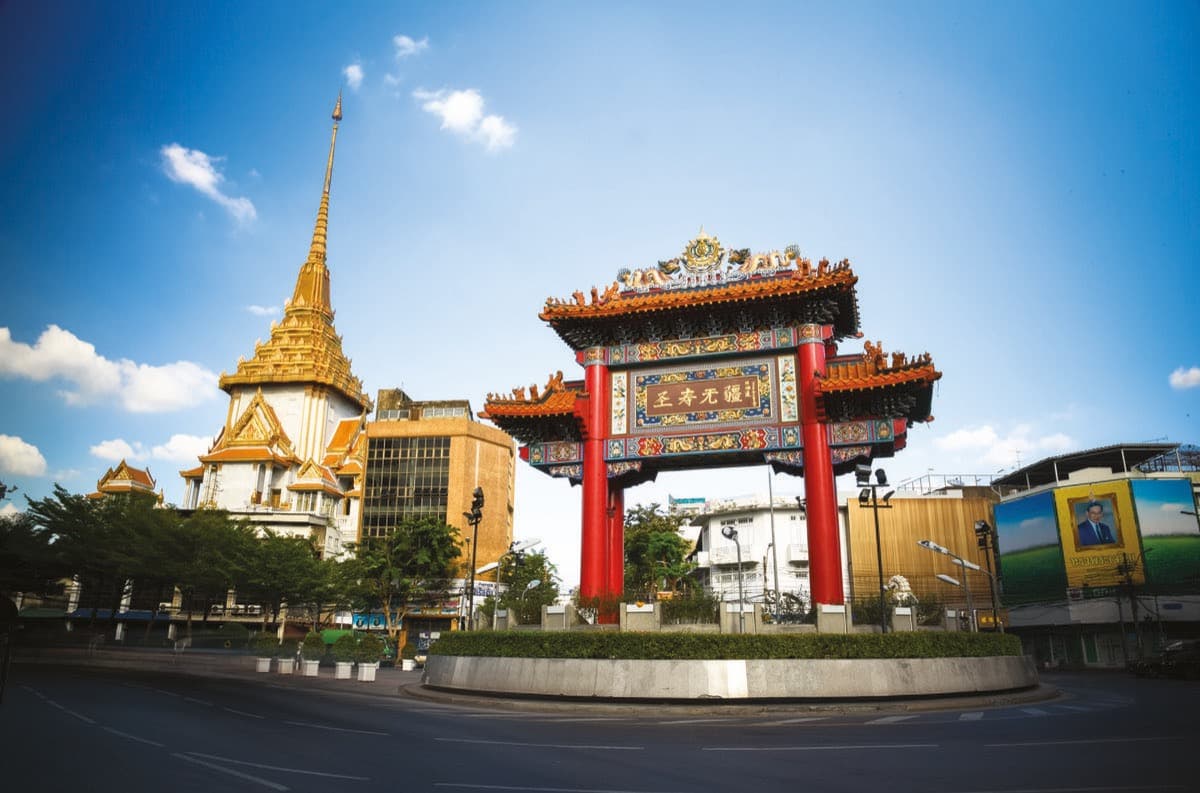
That question of borrowed wealth belongs to the second layer, and it starts with an eviction. When Rama the First took the riverbank for his palace in seventeen eighty-two, the Chinese community already living there was moved downstream. On that filled-in ground they built the commercial engine that helped bankroll the kingdom. The Golden Mile peels Chinatown back layer by layer, from spectacle to origin. It opens at Wat Traimit, whose seated Golden Buddha stands three metres tall and weighs five and a half tonnes of solid gold, recognized as the world's largest solid gold sculpture. For roughly two hundred years nobody knew it was gold. It sat under plain plaster until nineteen fifty-five, when ropes moving it snapped and the plaster chipped to reveal the metal underneath. That is the whole neighborhood in one object: the dazzle on the surface, the real value waiting one layer down.
Follow Yaowarat Road, cut through the district by King Chulalongkorn in the eighteen nineties and lined with gold shops, and the layering becomes literal. The grand boulevard was laid over a settlement more than a century older than the road. Turn off it into Talat Mai, the New Market, ironically named because it is over two hundred years old, a lane roughly four metres wide. One lane further sits Wat Mangkon Kamalawat, the largest Chinese Mahayana temple in Bangkok, founded in eighteen seventy-one, where Buddhist, Taoist, and Confucian worship share the same courtyards. Then Sampeng, officially Soi Wanit One, the founding commercial spine, in places barely wide enough for two people to pass. A community evicted, arrived with nothing, and financed a kingdom, built its first street on a scale you can touch with both hands. The walk ends at the So Heng Tai Mansion in Talat Noi, a Hokkien courtyard house over two hundred years old built by a bird's-nest tax farmer who rose into the nobility under Rama the Third. The gold at the start and the family house at the end are the same immigrant wealth, one displayed on the avenue, one lived in by the river.
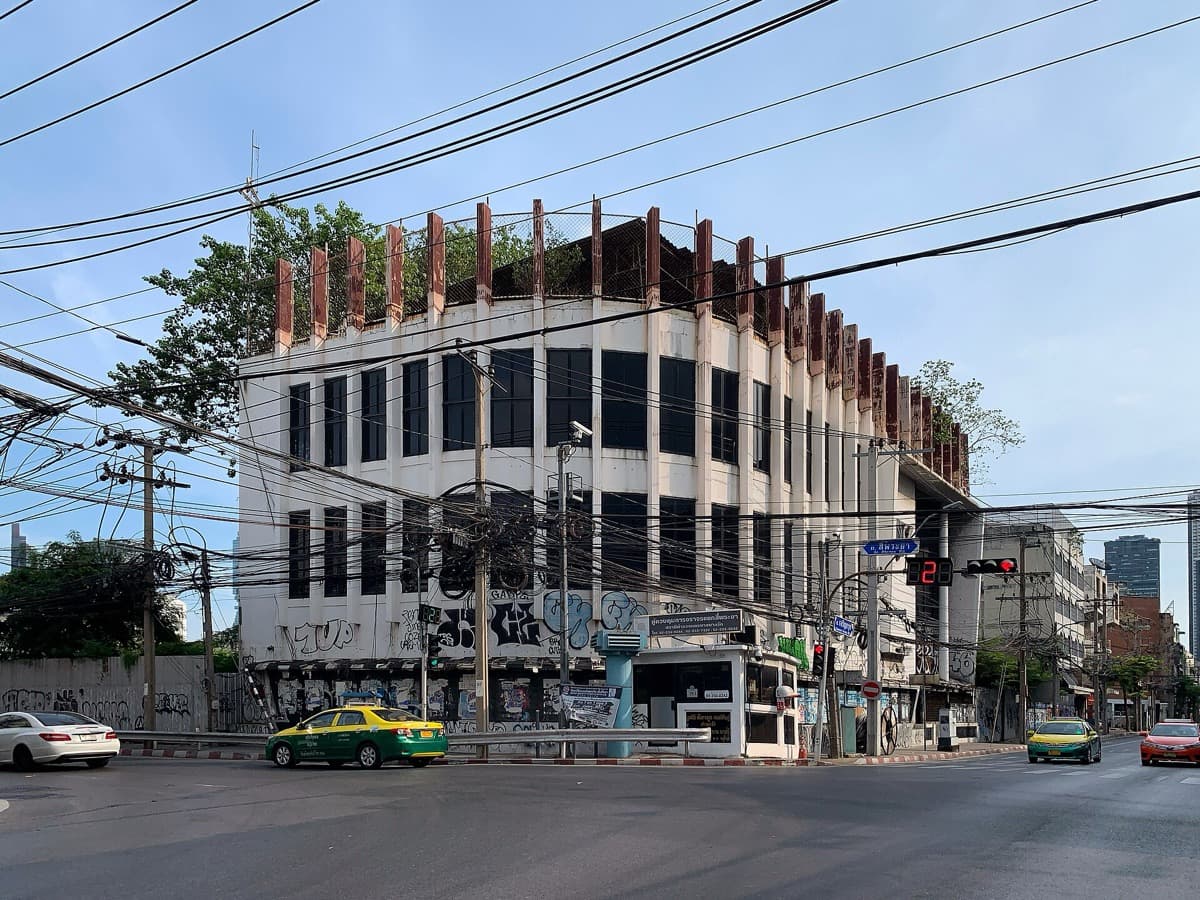
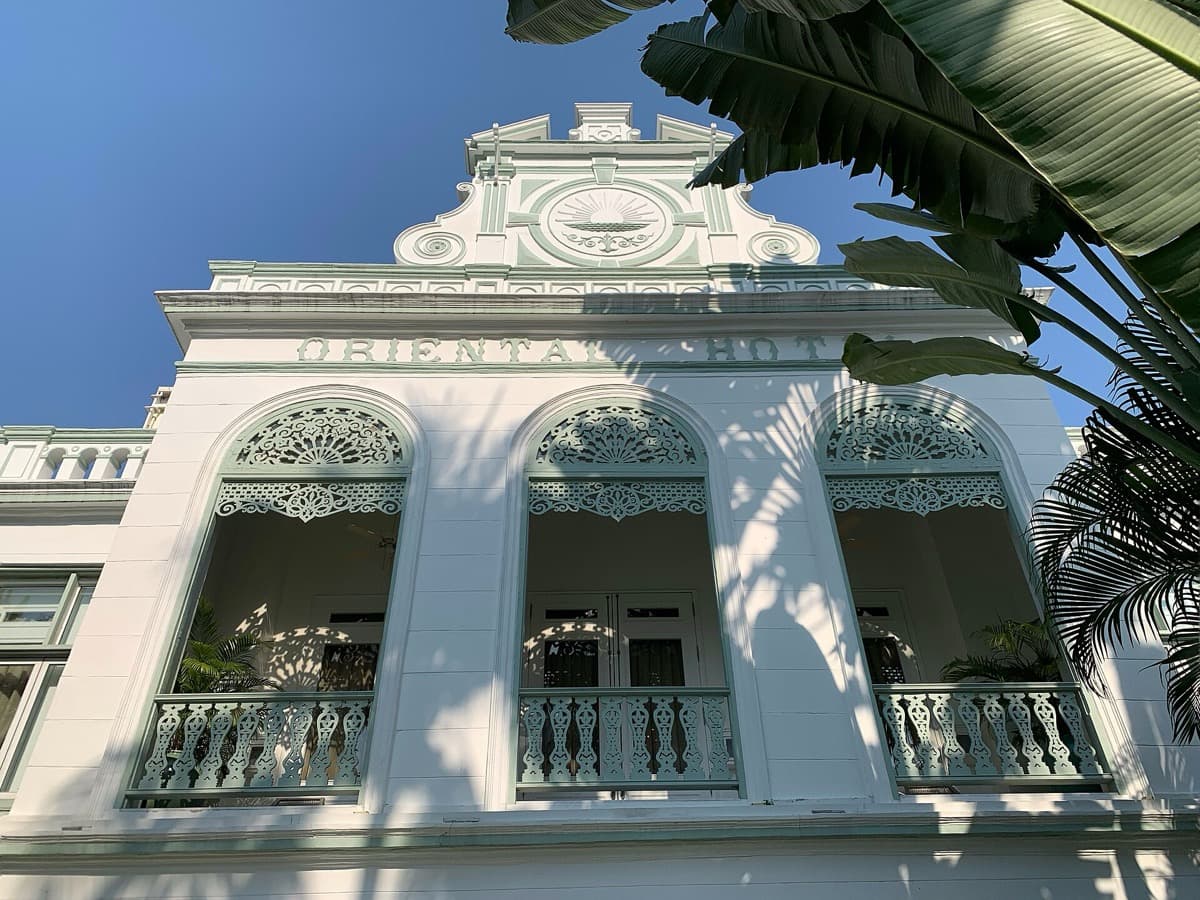
The third layer changed how the whole city moves. Into the eighteen sixties Bangkok was a water city with almost no paved roads. The First Road follows Charoen Krung through Bang Rak, the first road in Siam built by modern methods, constructed between eighteen sixty-two and eighteen sixty-four under King Mongkut. Its origin is almost comic: in eighteen sixty-one Western consuls petitioned the king complaining they had nowhere to ride their horses. The king approved, and the road that let the West in became the spine of a modernizing state that was never colonized. Along it the layers of that negotiated encounter still stand. The General Post Office of nineteen forty rose on the former site of the British Legation, a Thai state monument on ground the British once held. Assumption Cathedral, the principal Catholic church of Thailand, sits where a French mission church stood from eighteen twenty-one, tolerated by a Buddhist kingdom secure in its own sovereignty. The Danish East Asiatic Company's trading house and the Mandarin Oriental, recognized as the first hotel built in Thailand and dated to eighteen seventy-six, handled the money and housed the arrivals. And the Old Customs House of eighteen eighty-eight, now a photogenic ruin, is where the kingdom taxed every ship that entered, charging admission at its own front door.
The walk ends at Haroon Mosque, founded in eighteen thirty-seven, decades before the consuls and their road. In eighteen ninety-nine the government moved it about five hundred metres inland to build the customs pier. Bang Rak was a mixed trading world long before the West formalized it, and the newest layer literally pushed the older one back from the water. That is the through-line of all three tours: Bangkok answered a fire by copying a lost city, funded itself with the wealth of a community it had evicted, and modernized on a road it built for foreigners while keeping the country free. Each layer sits on the last, and every one is still trading, praying, and open for business. To plan the full stack, start with the Bangkok walking tours hub.
Sources
- Roamer tour transcript, The Royal Island (Rattanakosin): Lak Muang, Wat Phra Kaew, Sanam Luang, Wat Pho, Wat Arun, Museum Siam.
- Roamer tour transcript, The Golden Mile (Yaowarat): Wat Traimit, Yaowarat Road, Talat Mai, Wat Mangkon Kamalawat, Sampeng, So Heng Tai Mansion.
- Roamer tour transcript, The First Road (Charoen Krung): Charoen Krung, General Post Office, Assumption Cathedral, East Asiatic Building, Mandarin Oriental, Old Customs House, Haroon Mosque.
- Museum Siam, "Decoding Thainess" permanent exhibition, former Ministry of Commerce building, Rattanakosin.
- Guinness World Records / Wat Traimit, Golden Buddha (Phra Phuttha Maha Suwanna Patimakon), largest solid gold sculpture.
Frequently asked questions
- Why was Bangkok founded, and when?
- Bangkok was founded in seventeen eighty-two by King Rama the First after the Burmese burned the previous capital, Ayutthaya, in seventeen sixty-seven. Rather than invent a new city, the founders deliberately rebuilt Ayutthaya's form: they cut man-made canals to make a fortified island, raised a royal chapel around a sacred image, and followed the same cosmological plan so the new dynasty would read as a restoration.
- What is the oldest part of Bangkok's Chinatown?
- Sampeng, officially Soi Wanit One, is the founding commercial spine of Bangkok's Chinatown, settled after the Chinese community was relocated downriver in seventeen eighty-two when Rama the First took the riverbank for his palace. It predates the famous Yaowarat Road by more than a century and remains so narrow that in places two people can barely pass, now serving as a wholesale market.
- What was the first road in Bangkok?
- Charoen Krung, originally called New Road, was the first road in Siam built by modern methods, constructed between eighteen sixty-two and eighteen sixty-four under King Mongkut. It was prompted by an eighteen sixty-one petition from Western consuls who complained they had nowhere to ride their horses, and it turned Bangkok from a water city moving by canal into a land city.
- Is the Emerald Buddha actually made of emerald?
- No. The Emerald Buddha at Wat Phra Kaew is a single image usually described as jade rather than emerald, despite its popular English name. It is only about sixty-six centimetres tall, clothed in gold, and venerated as the palladium of the kingdom. Wat Phra Kaew has no resident monks; it is a royal chapel where monks are invited in to perform rituals and then leave.
- What are the three self-guided walking tours of Bangkok about?
- The Royal Island reads the Rattanakosin core as a deliberate copy of Ayutthaya, from the city pillar to Museum Siam. The Golden Mile peels back Chinatown's Yaowarat district from a five and a half tonne solid gold Buddha to a two-hundred-year-old family mansion by the river. The First Road follows Charoen Krung through Bang Rak, the quarter where a water city became a land city.
Ready to experience it?
Rattanakosin: The Royal Island
120 min · 5.5 km · moderate
More from Bangkok
Explore more at your own pace.
Bangkok Travel Guide 2026: Days, Transport, Season, Safety, and Budget
Charoen Krung Road: How Siam's First Modern Street Built a Colonial-Looking Quarter That Was Never a Colony
The Emerald Buddha and the Palace: How Bangkok Was Built to Replace a City That Burned
The Golden Buddha of Wat Traimit: The Statue That Hid Its Own Gold for Two Centuries
The Oriental Hotel in Bangkok: How Danish Sea Captains Built Thailand's First Hotel