Wat Phra Kaew and the Grand Palace are usually described as the glittering high point of a Bangkok sightseeing day. They are something stranger and more deliberate than that. They are the transferred soul of a capital that was rebuilt, on purpose, to replace one the fire took. In 1767 the Burmese burned Ayutthaya, the Thai capital, to the ground. Fifteen years later a new king laid out a new city on a bend of the Chao Phraya river and rebuilt the thing that had burned: the same canals, the same fortified island, the same royal chapel around a sacred image. The Emerald Buddha, only about 66 centimetres of green stone, sits at the exact center the founders drew everything else around. Reading it as an act of resurrection rather than a photo stop is what turns a temple visit into an argument, and that argument is the whole Rattanakosin walk.
A jade image at the center of everything
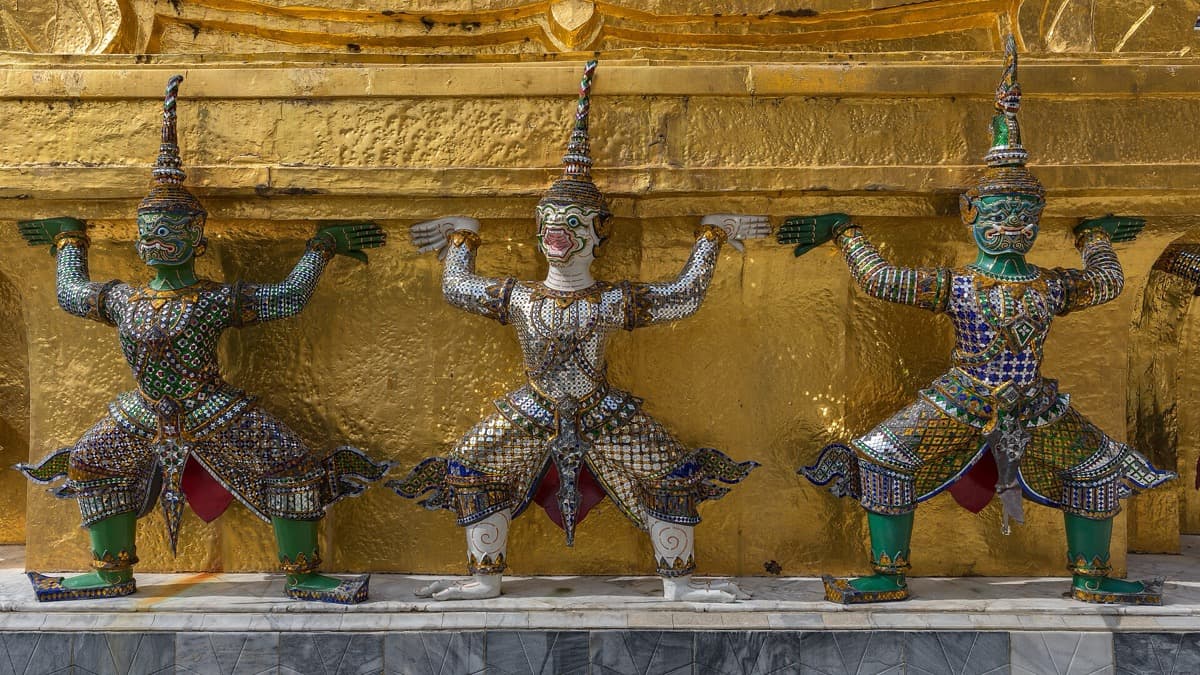
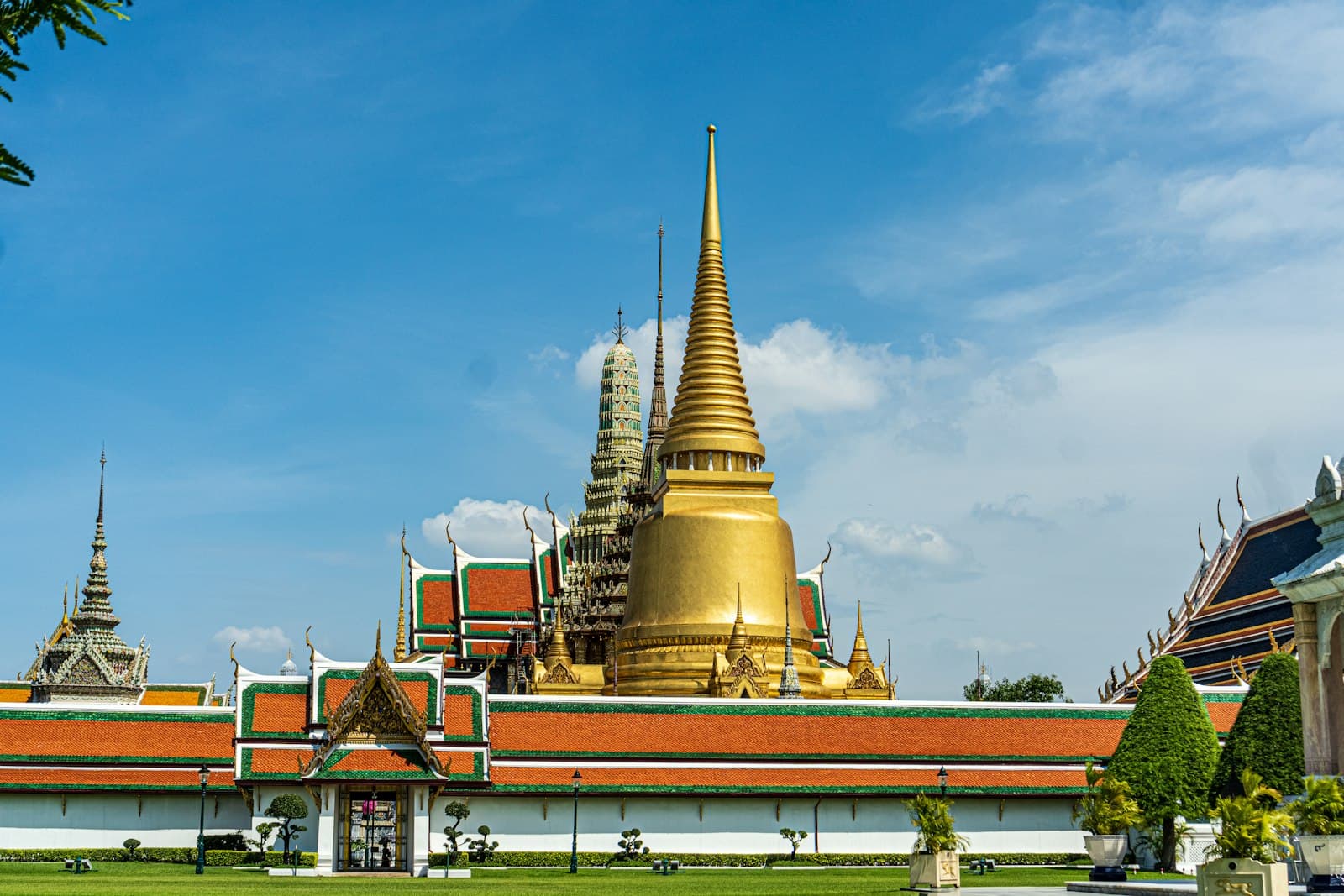
Wat Phra Kaew, the temple of the Emerald Buddha, was established under King Rama the First, founder of the Chakri dynasty. Construction is dated to 1783, and it was finished in 1785, when the Emerald Buddha arrived and took its place high on the altar. Everything in this compound glitters, and it is meant to: gold spires, mirrored glass, and along the gallery walls one hundred and seventy-eight painted panels telling the Ramakien, the Thai version of a great epic.
The object that actually matters is small, dark, and easy to miss. The Emerald Buddha is a single image of green semi-precious stone, usually described as jade rather than emerald, only about sixty-six centimetres tall and clothed in gold. It is venerated as the palladium of the kingdom, the protective image of the whole realm, and the reigning king traditionally changes its seasonal golden robes himself.
Then there is the detail that gives away the logic of the place. Wat Phra Kaew has no resident monks. None live here. It is a royal chapel, so monks are invited in from other temples to perform rituals and then they leave. This was never a monastery. It was built to house a sacred image and to legitimize a dynasty, the same way Ayutthaya's royal chapel once did. The soul of kingship was carried into a new body. That is the sentence to keep in mind for the rest of the day.
The city as a horoscope driven into mud
Hear a stop from this walk
Museum Siam: Decoding Thainess
The founders did not begin with the palace. They began with a stake in the ground. A short walk from the palace wall stands the Lak Muang, the City Pillar Shrine, and the founding chronicle records its raising to an astonishing precision: Sunday, the twenty-first of April, 1782, at forty-five minutes past six in the morning, when King Rama the First raised the city pillar. Inside it the founders sealed a horoscope for the new city, an astrological chart meant to fix a lucky fate onto a capital that did not yet exist. Consider the nerve. Ayutthaya had been a glittering island city for four centuries and it had burned. This was a swampy river bend. The king drove a stake into the mud at an auspicious minute and asked the heavens to bless it.
The pillar standing today is not the original. King Mongkut, Rama the Fourth, ordered a taller replacement of about five metres, and the new shrine was completed on Sunday, the first of May, 1853. The shrine and the temple face the same open ground, and that is not an accident.
The deliberate emptiness
North of the palace opens Sanam Luang, the royal field, a vast green void kept, on purpose, at the center of a dense city. Every cosmological capital needs open ground where the sacred and the civic can be staged, and this is Bangkok's. It has served royal functions since the reign of Rama the First. Its older name was blunter: Thung Phra Men, the royal cremation ground, until Rama the Fourth renamed it in 1855. This is where kings and queens are cremated. Within living memory, King Bhumibol Adulyadej, Rama the Ninth, was cremated here on the twenty-sixth of October, 2017, and much of the country stood on this grass in mourning. The same field also hosts the annual Royal Ploughing Ceremony, where sacred oxen are led across turned earth to forecast the harvest. Cremation and planting, ending and beginning, on one open stage of roughly one hundred and nineteen thousand square metres.
The temple that taught the city
Then the recreated city did something the burned original had not fully done: it gave knowledge away. Wat Pho, also known as Wat Phra Chetuphon, was rebuilt under Rama the First from 1788 and greatly enlarged under Rama the Third from the eighteen thirties, a labor the chronicles record as taking sixteen years and seven months. Its reclining Buddha is about forty-six metres long, its feet inlaid with mother-of-pearl in one hundred and eight auspicious panels. Rama the Third had the temple inscribed with medicine, astrology, literature, and history so that anyone could learn simply by looking at the walls. Wat Pho is regarded, by long reputation, as Thailand's first public university, and traditional Thai massage, still taught there, is now inscribed on the UNESCO list of intangible cultural heritage.
The edge, the older temple, and the question
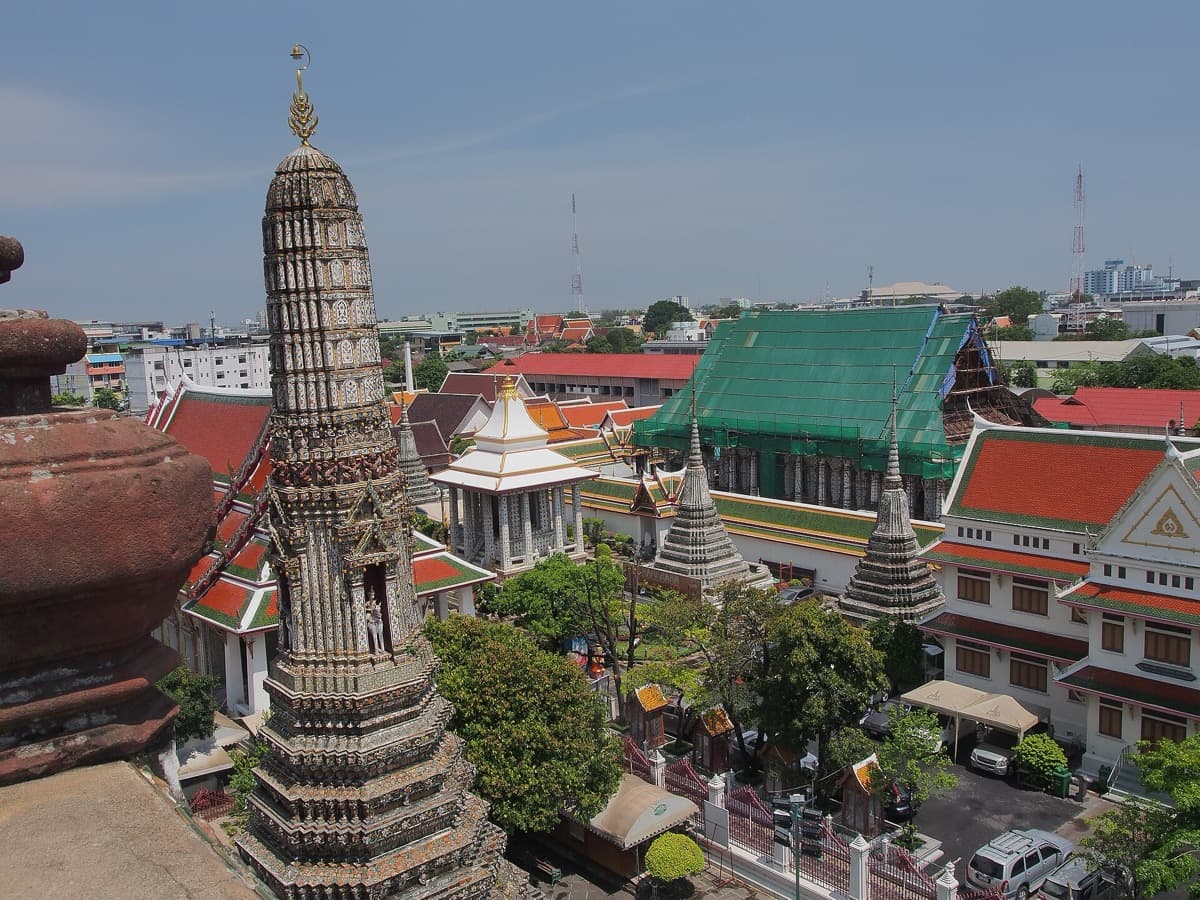
The walk then runs to the water at Tha Tien Pier, the literal edge of the island the founders made by cutting canals inland, a moat of engineering so the new capital could sit on water the way Ayutthaya once did. A short cross-river ferry, about seven baht, carries you to Wat Arun, the temple of dawn, which belongs to an older story. It existed in the Ayutthaya era, and King Taksin renamed it Wat Chaeng when nearby Thonburi was briefly the capital. Its towering prang, symbolizing Mount Meru, is encrusted not in gold but in thousands of pieces of broken Chinese porcelain that arrived as ship ballast. The old royal order glittered in gold; this tower glitters in the debris of trade.
The loop closes at Museum Siam, inside the former Ministry of Commerce building completed in 1922 and designed by an Italian architect, Mario Tamagno. Its permanent exhibition is titled Decoding Thainess, and it asks outright what you have been circling all day. A capital copied from Ayutthaya, a jade image called emerald, a temple in Chinese porcelain, a ministry drawn by an Italian: resurrection, or reinvention. The city spends this whole walk refusing to choose.
Start early, before the heat and the crowds. You can see the walk laid out among the other Bangkok walking tours, or begin from the Bangkok city page and let the Emerald Buddha be your way in.
Sources
- Emerald Buddha, Wikipedia: dimensions, jade description, and palladium status of the image.
- Wat Phra Kaew, Wikipedia: royal chapel history, Ramakien gallery, and absence of resident monks.
- Wat Pho and Wat Arun, Wikipedia: reconstruction dates, the reclining Buddha, and the porcelain-clad prang.
- Sanam Luang and the funeral of Bhumibol Adulyadej, Wikipedia: the royal field's functions and the 2017 cremation.
- Museum Siam, Tourism Authority of Thailand: the Ministry of Commerce building and the Decoding Thainess exhibition.
Ready to experience it?
Rattanakosin: The Royal Island
120 min · 5.5 km · moderate
More from Bangkok
Explore more at your own pace.
Bangkok Travel Guide 2026: Days, Transport, Season, Safety, and Budget
Bangkok in Layers: A Capital Founded as a Copy, Still Open for Business
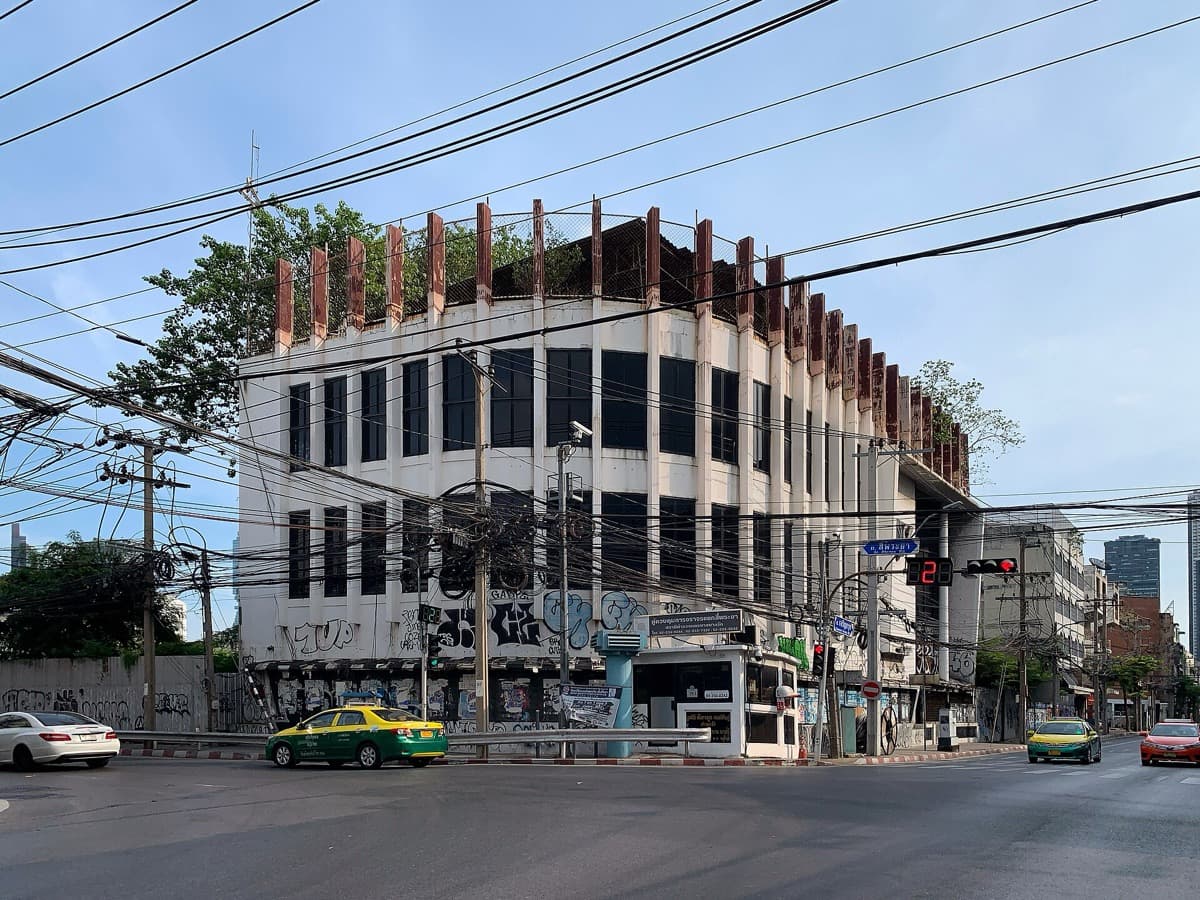
Charoen Krung Road: How Siam's First Modern Street Built a Colonial-Looking Quarter That Was Never a Colony
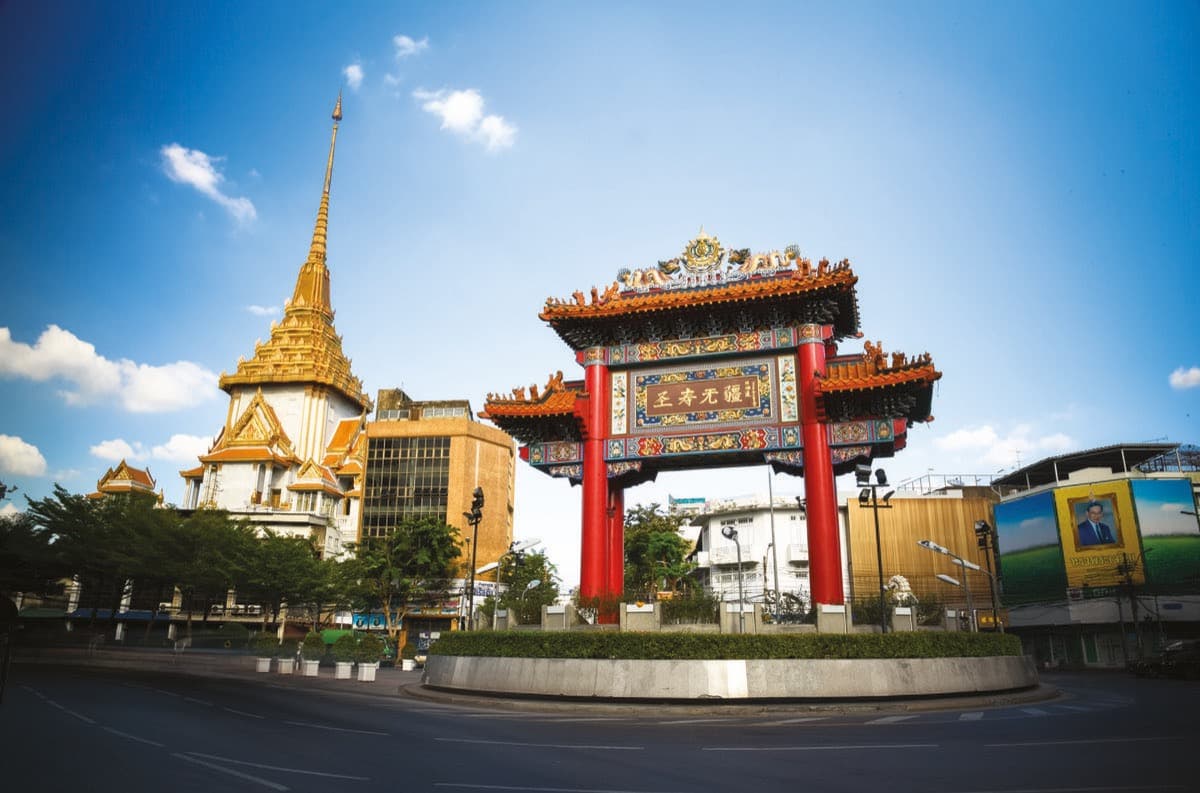
The Golden Buddha of Wat Traimit: The Statue That Hid Its Own Gold for Two Centuries
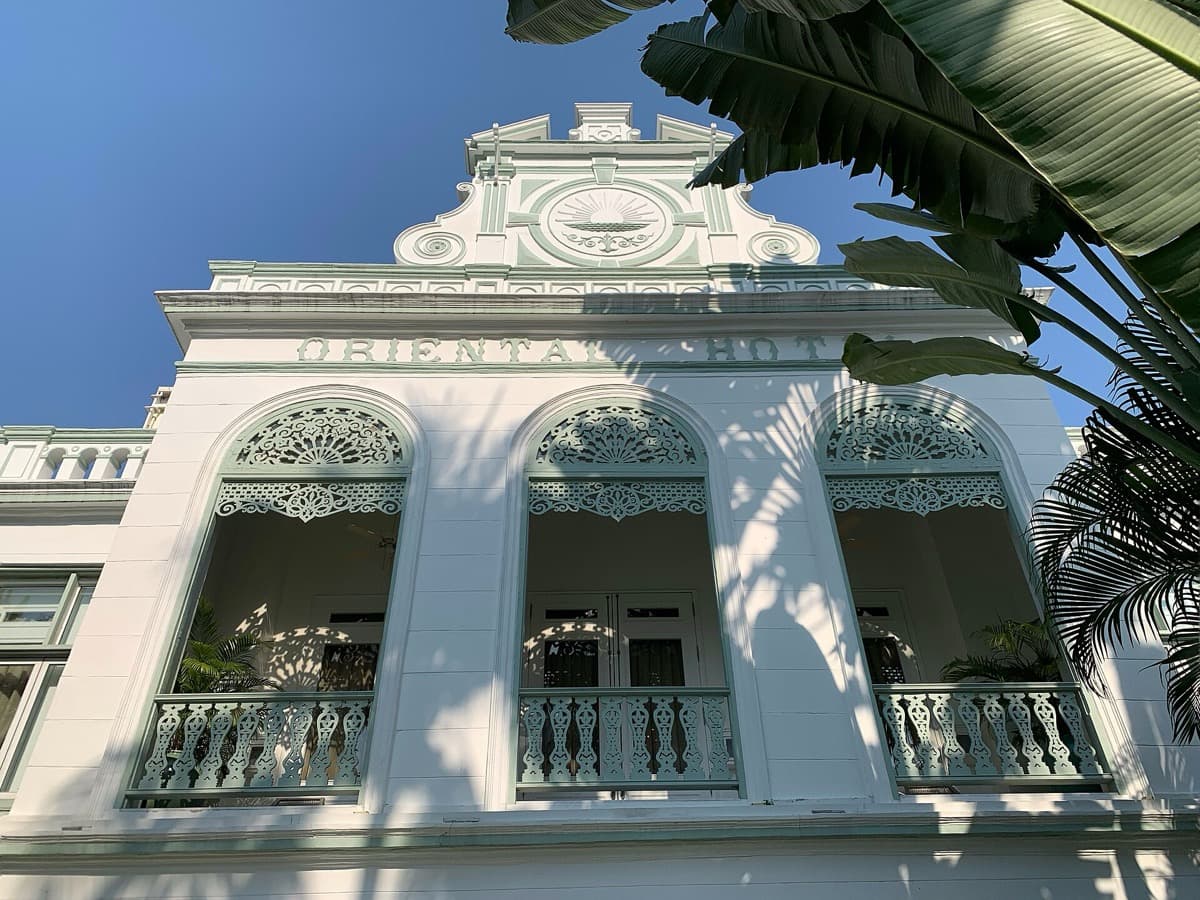
The Oriental Hotel in Bangkok: How Danish Sea Captains Built Thailand's First Hotel