The Golden Buddha at Wat Traimit is a three metre seated figure of solid gold, recognized as the world's largest solid gold sculpture, and for roughly two centuries nobody knew the gold was there. The statue sat under plain plaster, treated as an ordinary stucco image, and its value was revealed only by accident when a rope snapped in 1955 and the covering chipped away. That single fact is why this temple, at the eastern edge of Bangkok's Chinatown, is worth understanding standing in front of it: the concealment is the whole story, and everything the neighborhood around it has done for two hundred years works the same way.
What you are actually looking at
Inside the hall of Wat Traimit, whose name means Temple of the Triple Gems, sits a Buddha that at first glance simply looks beautiful. It is far more than that. The seated figure stands three metres tall and weighs five and a half tonnes, and it is cast in solid gold. Its official name is Phra Phuttha Maha Suwanna Patimakon. According to Wikipedia and Guinness World Records, it is the largest solid gold sculpture in the world.
The craftsmanship follows the Sukhothai style of the thirteenth and fourteenth centuries, though the figure may have been made somewhat later. It was assembled from about nine to ten interlocking parts using the lost-wax technique, a method where a wax model is encased in mould material, then melted out so molten metal can take its place. Fitted together, those parts form one seamless figure.
Here is a detail that reframes the whole object. The gold layer is only about one to one and a half centimetres thick, yet the statue still weighs five and a half tonnes. This is not gold leaf over a base of something cheaper. It is solid metal, dense enough that a thin outer skin already accounts for that staggering mass. When you stand in front of it, you are looking at one of the most concentrated displays of material wealth on public view anywhere, and the entry fee to reach the hall is only a few baht.
The two centuries of plaster
Hear a stop from this walk
Talat Noi and the So Heng Tai Mansion: Wealth Lived In
The reason the Golden Buddha stops people is not its size. It is its disguise. For roughly two hundred years, nobody knew the figure was gold at all. It was covered in plaster and treated as an ordinary stucco Buddha, the kind of image you might find in any temple.
The statue arrived at Wat Traimit in 1935, moved here from an abandoned temple, still wearing that plaster shell. For twenty years it sat in Chinatown as a plain, unremarkable icon. Then, on the twenty-fifth of May, 1955, workers were relocating it when the ropes gave way and the figure fell. The plaster cracked and chipped, and gold showed through underneath. What had looked like common stucco was one of the largest masses of worked gold on earth.
Tradition holds that the gold was hidden deliberately, plastered over to protect it from invaders who might have stripped or seized it. That explanation is plausible and often repeated, but the true reason is not documented, and neither is the exact date the figure was cast. The Sukhothai attribution is a stylistic reading of the way the figure sits and is proportioned, not a dated record. So even the origin story of the object carries its own layer of uncertainty. What is certain is the moment of revelation: a snapped rope, a fall, and gold under plaster.
The one thing to understand standing here
If you take one idea from this stop, let it be this. The value here was concealed for two centuries by the very community that made it, and revealed only by accident. That is not just a curious anecdote about a statue. It is the operating logic of the entire neighborhood you are about to walk into.
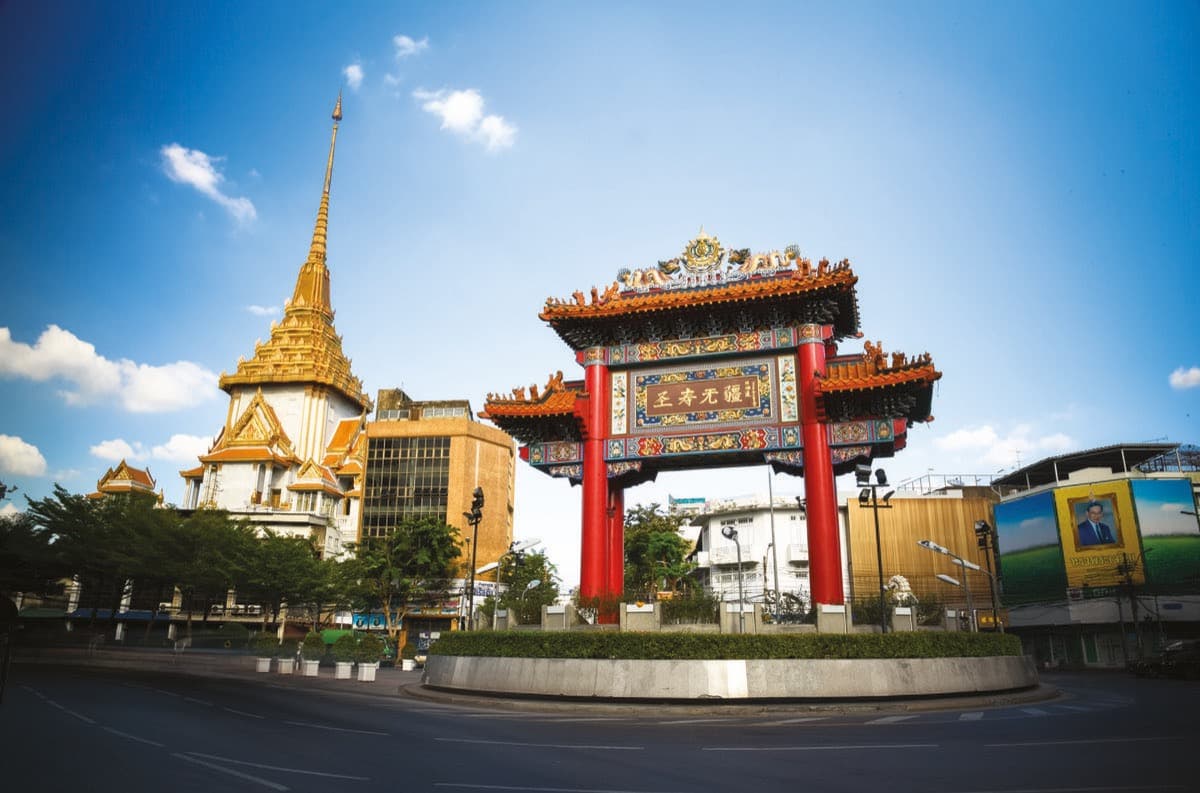
Wat Traimit sits at the eastern gateway to Chinatown, near the site of the old Hua Lamphong railway area, and it is where a descent west through the district begins. The dazzle is on the surface. Just past here, Yaowarat Road runs as the gold mile, holding what a 2002 count described as the greatest concentration of gold shops in the world, glowing with neon after dark. That surface spectacle is real, but it is only the top layer. Turn down any lane branching off the main road and you reach something older and quieter: markets two centuries old, a Chinese temple braiding three faiths together, and a founding alley barely wide enough for two people to pass.
The Chinese community that built all of it was relocated to this ground after 1782, when the founding king took the riverbank downstream for his Grand Palace. They arrived on low, filled-in land with nothing, and financed a young kingdom from a swamp. The Golden Buddha is that story in miniature. Wealth made by an evicted community, hidden under a plain surface, holding its value quietly until the plaster chipped. The real story of Chinatown, like the real weight of this statue, sits underneath and waits to be noticed.
Walking it yourself
Wat Traimit rewards patience. Take your time in the hall, notice the seams where the interlocking parts meet, and let the sheer density of the object register. A small museum on the site, with a separate admission of around one hundred baht, tells the fuller story of the statue and the community, while reaching the Buddha hall itself costs only a few baht. Early morning, roughly eight to ten once the site opens, is the calmest and coolest window before the heat and crowds build. Cover your shoulders and knees, remove your shoes before entering the prayer hall, and keep your voice low. Do not point your feet toward the Buddha image.
The Golden Buddha is the opening note of a longer walk that descends from spectacle to origin, from this ridge of gold and neon down to the river where the community first landed. If you want to follow the whole thread, from the ceremonial Chinatown gate to the oldest courtyard mansions on the riverbank, the self-guided Bangkok walking tours collection covers it stop by stop at whatever pace you choose. You can plan the route and the rest of your visit from the Bangkok city page. Start at Wat Traimit, hold the idea of gold under plaster in your mind, and let the neighborhood chip away the rest.
Sources
- Golden Buddha (statue), Wikipedia. Primary reference for the figure's dimensions, weight, Sukhothai attribution, lost-wax construction, the 1935 relocation, and the 1955 discovery.
- Largest solid gold sculpture, Guinness World Records. Confirms the Golden Buddha as the world's largest solid gold sculpture and its official name Phra Phuttha Maha Suwanna Patimakon.
- Yaowarat Road, Wikipedia. Background on the surrounding Chinatown gold trade and the district's development around the temple.
- Roamer tour "The Golden Mile: Bangkok's Chinatown, East to River," fact-audited stop narration for Wat Traimit and the wider walk.
Ready to experience it?
Chinatown (Yaowarat): The Golden Mile
120 min · 7 km · moderate
More from Bangkok
Explore more at your own pace.
Bangkok Travel Guide 2026: Days, Transport, Season, Safety, and Budget
Bangkok in Layers: A Capital Founded as a Copy, Still Open for Business
Charoen Krung Road: How Siam's First Modern Street Built a Colonial-Looking Quarter That Was Never a Colony
The Emerald Buddha and the Palace: How Bangkok Was Built to Replace a City That Burned
The Oriental Hotel in Bangkok: How Danish Sea Captains Built Thailand's First Hotel