Rattanakosin: The Royal Island
120 min · 5.5 km · moderate
If you have one day in Bangkok and want to walk it, spend the morning inside the old royal island of Rattanakosin, cross the river at midday for the Temple of Dawn, then follow the afternoon and evening into Chinatown for street food and lantern light. That route stitches the founding heart of the city to its self-made gold artery, and almost all of it moves on foot, on short river ferries, and on one Blue Line metro stop. It is a full day, so start early: the Grand Palace shuts its gates in the early afternoon, and the temples reward the cooler morning hours.
Here is the direct answer, then the detail. Begin at the Grand Palace and Wat Phra Kaew when they open, walk south to Wat Pho, take the small cross-river ferry to Wat Arun, and end the day in Yaowarat. The three self-guided audio tours in the Roamer app map cleanly onto this arc, so you can hand the narration off to the neighborhood you are standing in. Browse them all on the Bangkok walking tours hub, or jump straight to /thailand/bangkok.
Morning: the founding island (Rattanakosin)
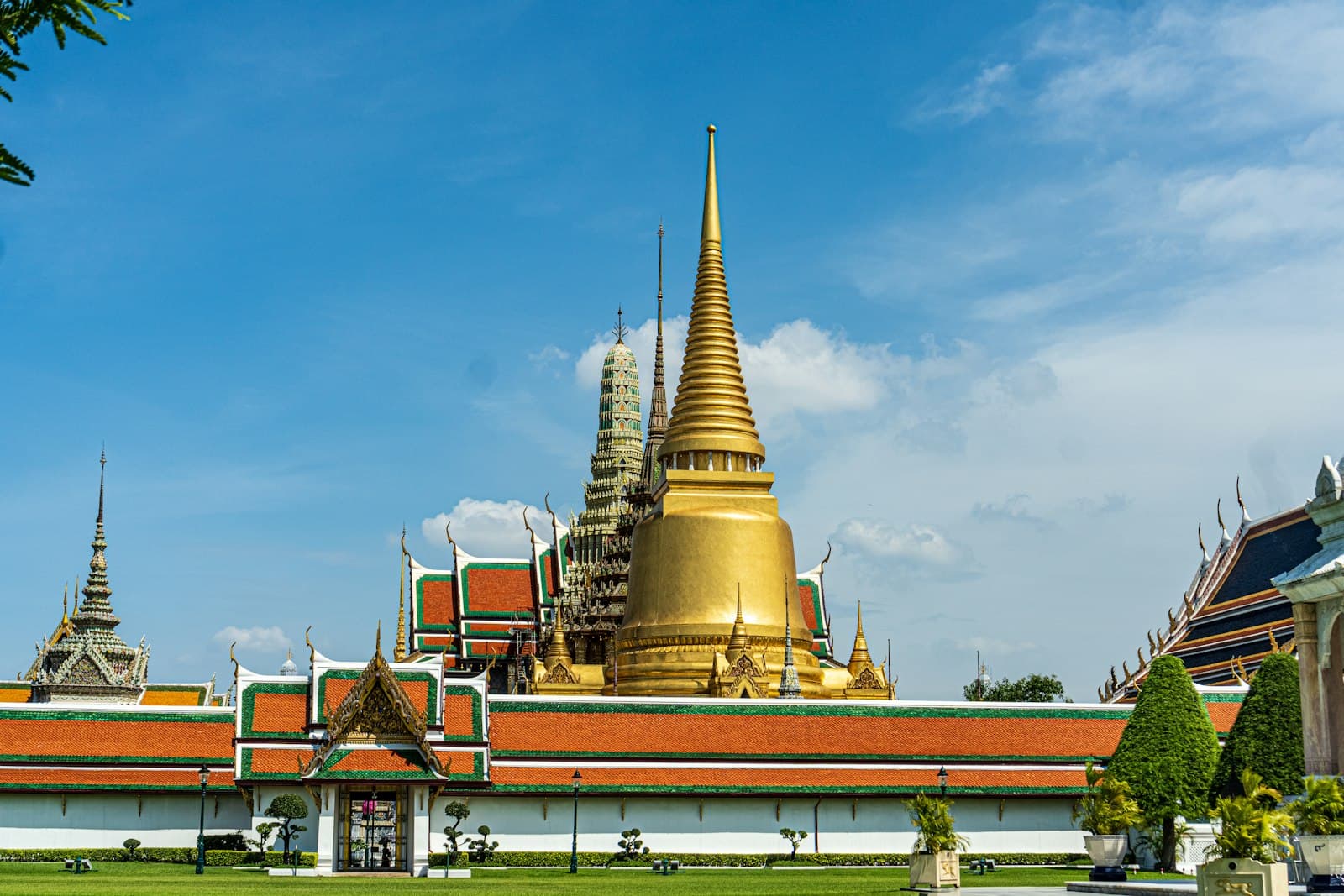
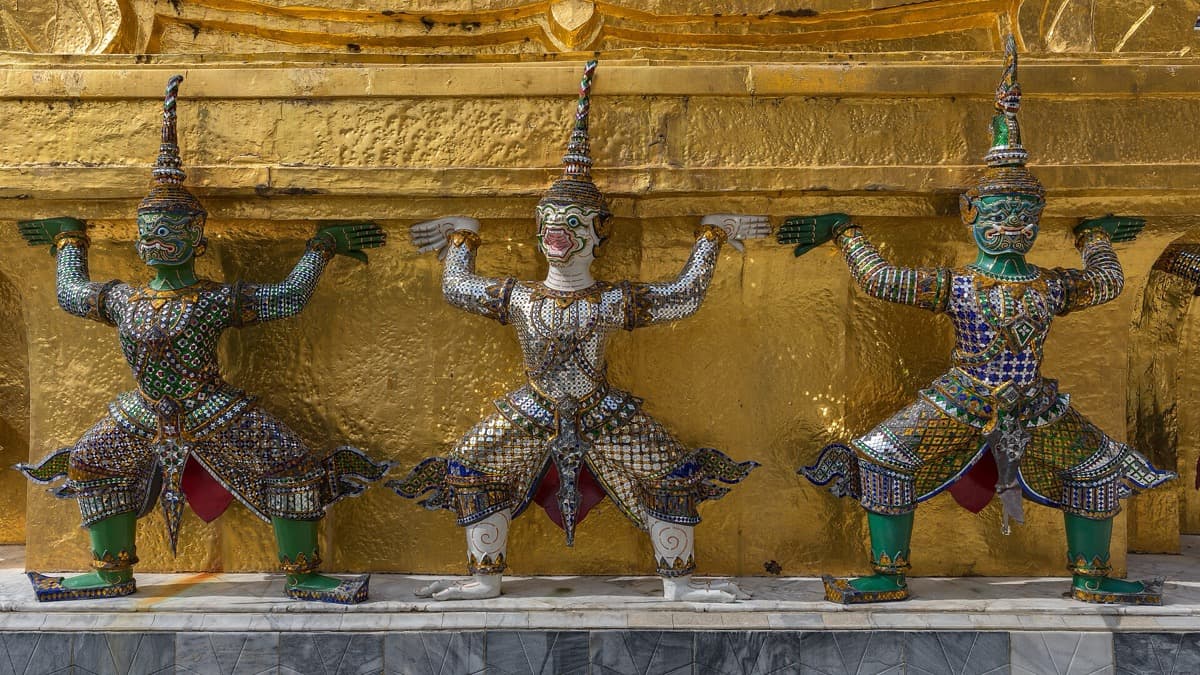
Get to the old city early. The Grand Palace and its Temple of the Emerald Buddha (Wat Phra Kaew) open daily at 8:30 a.m. and stop admitting visitors mid-afternoon, so arriving near opening gives you room before the heat and the tour groups. Entry for foreign visitors is 500 baht, which covers the whole palace complex including Wat Phra Kaew. The dress code is enforced at the gate: shoulders and knees covered, closed shoes. Sarongs and shawls are available to borrow if you arrive underdressed.
One thing to know before you leave your hotel: the "Grand Palace is closed today" line, delivered by a friendly stranger who then offers a tuk-tuk tour, is a well-documented scam that ends at gem and tailor shops. The palace is open every day within its posted hours. Walk past anyone who tells you otherwise and check the gate yourself.
From the palace, it is a short walk (roughly 700 meters south) to Wat Pho, home of the reclining Buddha. Wat Pho opens at 8:00 a.m. and stays open into the evening, with entry for foreign visitors around 300 baht. If you are arriving by metro rather than on foot, the MRT Blue Line stops at Sanam Chai station, which sits within a few minutes' walk of Wat Pho. This whole cluster (the city pillar shrine, the palace, Sanam Luang, Wat Pho, and the riverside museum) is the ground the Rattanakosin origin tour covers, and it is the piece of the day where an audio guide earns its keep, because the history here is dense and the crowds make signage hard to read.
Midday: cross the river to Wat Arun
Hear a stop from this walk
Museum Siam: Decoding Thainess
At Wat Pho, walk down to Tha Tien Pier and take the cross-river ferry to Wat Arun, the Temple of Dawn. The crossing is short, runs frequently through the day, and costs only a few baht each way, which makes it one of the best-value moments in the city. Wat Arun is open daily from 8:00 a.m., with entry for foreign visitors in the region of 200 baht (posted fees have shifted in recent years, so treat that as a guide and confirm at the gate). You can climb the lower terrace of the central spire for a river-level view back toward Rattanakosin. This river crossing is the closing beat of the Rattanakosin tour, so you can let the narration carry you across and into the temple.
By early afternoon you have seen the founding monuments. This is a natural point to slow down, find lunch near the river, and rest before the heat peaks. If you would rather keep the pace gentle, the riverside Charoen Krung / Bang Rak tour is a shorter, flatter walk (about 2.5 km) through the quarter where Bangkok first built a real road, past the old post office, Assumption Cathedral, and the grand river hotels. It is an easy way to fill a mid-afternoon without another temple queue.
Afternoon into evening: Chinatown (Yaowarat)
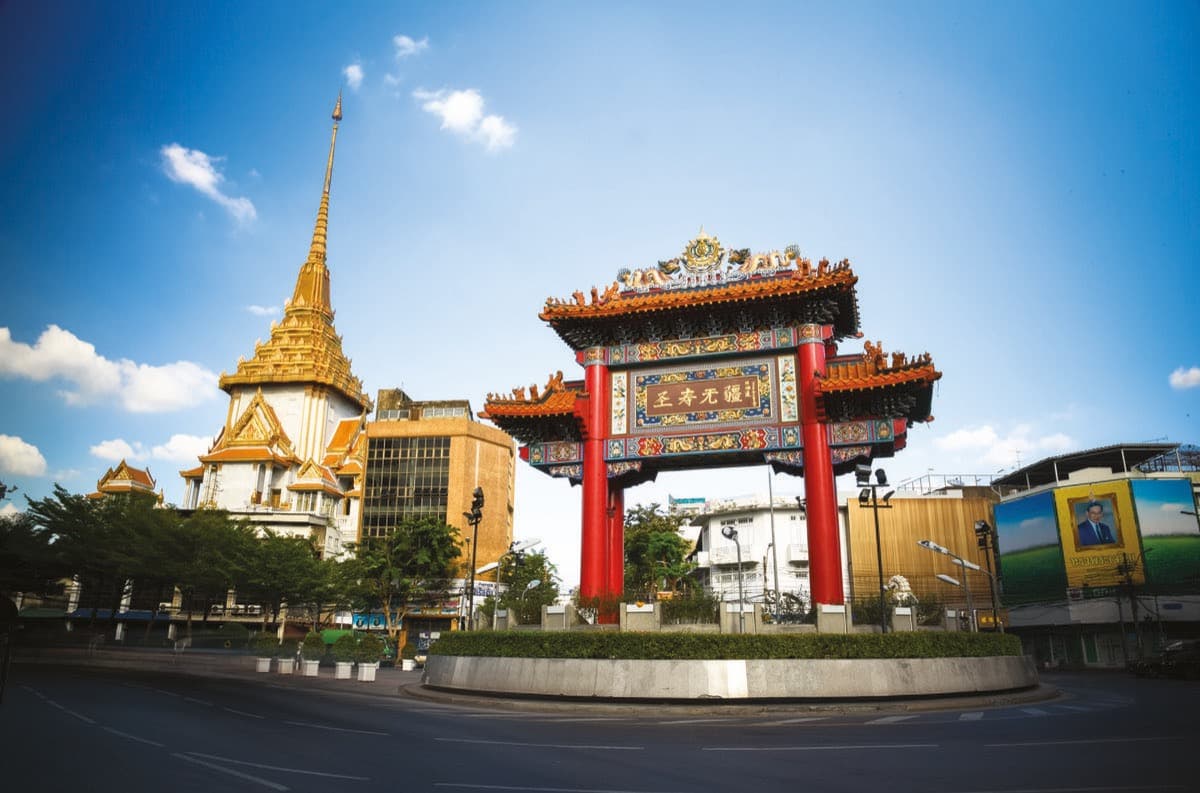
End the day in Chinatown, because Yaowarat is a place that improves as the light drops. Start at Wat Traimit, which holds a Buddha of more than five tonnes of solid gold, recognized by Guinness World Records as the largest solid gold sculpture. The temple is open through the day and closes in the late afternoon; the Buddha hall carries a small entry fee, with the history museum charging a bit more (around 100 baht). From there you can follow Yaowarat Road and the narrow market lanes on foot.
Two of those lanes are the point of coming here. Sampeng Lane and the market alleys around Talat Mai are barely wide enough for two people to pass, packed with dried goods, gold shops, and vendors, and they are free to walk. As evening falls, Yaowarat's street-food stalls light up along the main road. This layered walk, from the gold Buddha to the tightest lane in the district, is the Yaowarat hidden-layer tour, and it is designed to be done slowly, stop to stop, which suits a self-guided pace. Save your appetite for the end of the walk.
Getting around, honestly
You can walk the core of this day, but a few links help. The Chao Phraya Tourist Boat (blue flag) runs the river between the main piers roughly every half hour through the day and into the evening, with a single trip around 40 baht or a day pass around 150 baht as of mid-2026. The MRT Blue Line reaches the old city at Sanam Chai and reaches Chinatown at Wat Mangkon station, which makes the metro the cleanest way to jump between the morning and evening halves of this itinerary without haggling. For point-to-point trips, the Grab app gives you a fixed fare and skips the negotiation.
On safety: Bangkok is a low-violence city for visitors, and walking the busy areas by day is comfortable. The real risk is financial, not physical, and it clusters around a handful of scams (the "closed temple" tuk-tuk detour, gem-shop pressure tours, and pickpocketing in crowded transit at rush hour). Keep your phone and wallet secure in packed lanes, agree on any tuk-tuk price before you get in, and default to the metro, the river boats, or Grab. None of that should make you nervous; it just keeps the day about the city rather than about a scam.
What one day gives you, and what it leaves
One well-planned day lets you walk the founding island, cross to the Temple of Dawn, and eat your way through Chinatown after dark. What it cannot do is give any single neighborhood its full depth, which is exactly where a self-guided audio tour helps: you keep the map and the pace, and the narration fills the walk between stops. Pick the neighborhood that pulled at you most and go back into it properly with the Bangkok walking tours, or start planning from /thailand/bangkok.
Sources
Frequently asked questions
- Can you see the Grand Palace, Wat Pho, and Wat Arun in one day?
- Yes, and on foot. The Grand Palace and Wat Pho sit about 700 meters apart in the old city, and Wat Arun is a short cross-river ferry from Wat Pho's Tha Tien Pier. Start at the Grand Palace near its 8:30 a.m. opening, since it stops admitting visitors in the early afternoon, then work south and across the river before the day heats up.
- How much does it cost to enter Bangkok's main temples?
- For foreign visitors in 2026, the Grand Palace and Wat Phra Kaew charge 500 baht combined, Wat Pho charges around 300 baht, and Wat Arun is in the region of 200 baht. Wat Traimit's Golden Buddha hall carries a small fee with the history museum costing extra, around 100 baht. Posted fees can change, so confirm at each gate.
- Is the Grand Palace ever closed to tourists?
- The Grand Palace is open every day within its posted hours, roughly 8:30 a.m. to 3:30 p.m. The common "it's closed today" claim from a stranger near the gate is a scam that steers you into a tuk-tuk tour ending at gem and tailor shops. Walk to the ticket office and check for yourself.
- What is the best way to get around this Bangkok itinerary?
- Walk the core, then use short links. The MRT Blue Line reaches the old city at Sanam Chai station and Chinatown at Wat Mangkon station. The Chao Phraya Tourist Boat runs the river roughly every 30 minutes with single trips around 40 baht. For fixed-fare point-to-point trips, use the Grab app rather than negotiating a tuk-tuk.
- Is it safe to walk around Bangkok as a tourist?
- Yes, walking the busy areas by day is comfortable, and violent crime against visitors is rare. The main risks are financial: the closed-temple tuk-tuk detour, gem-shop pressure tours, and pickpocketing in crowded transit at rush hour. Keep valuables secure in packed lanes, agree tuk-tuk prices in advance, and default to the metro, river boats, or Grab.
- How should you dress to visit temples in Bangkok?
- Cover your shoulders and knees and wear closed shoes, especially at the Grand Palace and Wat Phra Kaew, where the dress code is enforced at the gate. If you arrive underdressed, the Grand Palace lends sarongs and shawls near the entrance. The same modest dress is expected at Wat Pho, Wat Arun, and Wat Traimit.
Ready to experience it?
Rattanakosin: The Royal Island
120 min · 5.5 km · moderate
More from Bangkok
Explore more at your own pace.
Bangkok Travel Guide 2026: Days, Transport, Season, Safety, and Budget
Bangkok in Layers: A Capital Founded as a Copy, Still Open for Business
Charoen Krung Road: How Siam's First Modern Street Built a Colonial-Looking Quarter That Was Never a Colony
The Emerald Buddha and the Palace: How Bangkok Was Built to Replace a City That Burned
The Golden Buddha of Wat Traimit: The Statue That Hid Its Own Gold for Two Centuries