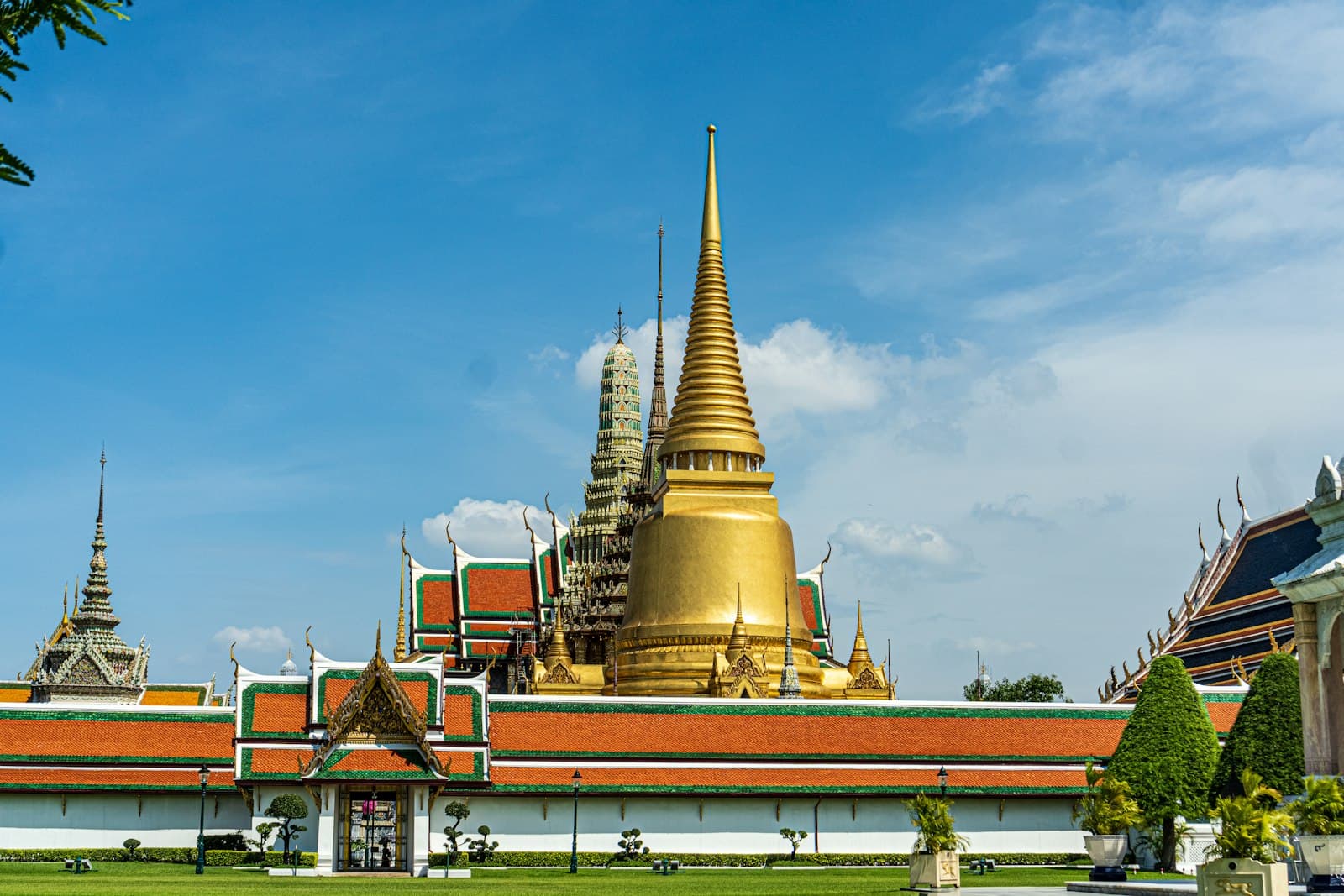
A walk across the founding heart of Bangkok that reads the birth of modern Thailand as an act of resurrection: a new capital deliberately built to replace the one the fire took. Seven stops trace a city that answered a burned Ayutthaya by copying the thing that burned.
Start · Lak Muang: The City Pillar Shrine
DirectionsStops
- 1
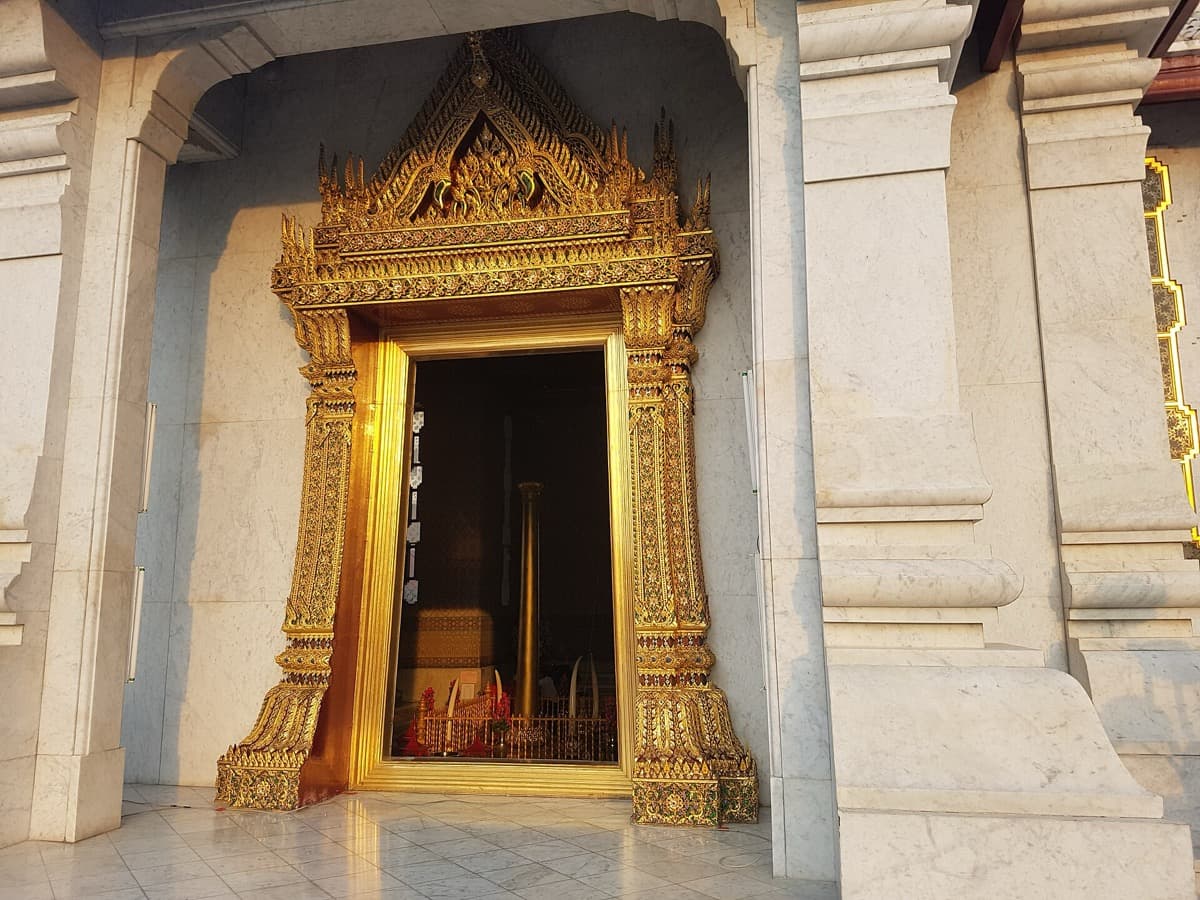
Lak Muang: The City Pillar Shrine
The first structure raised in the new capital, a pillar holding the city's horoscope and, by tradition, its guardian spirit.
- 2
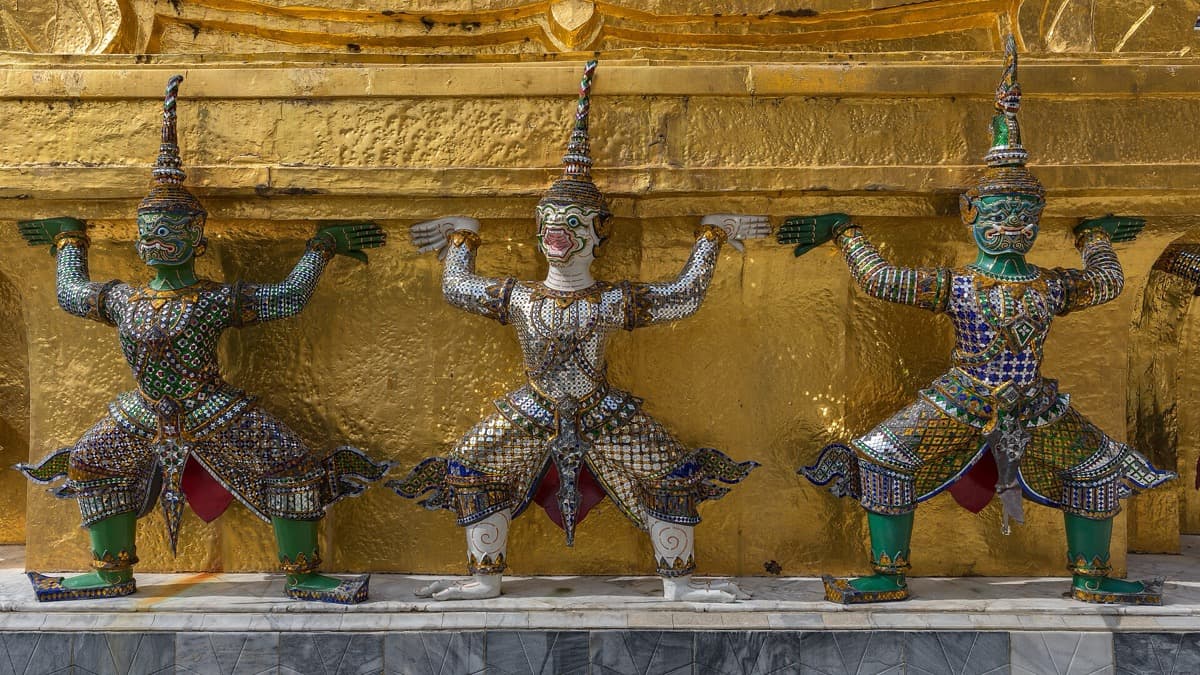
Wat Phra Kaew and the Grand Palace: The Sacred Center
The royal chapel of the Emerald Buddha, home to the kingdom's most venerated image, with no monks living inside.
- 3
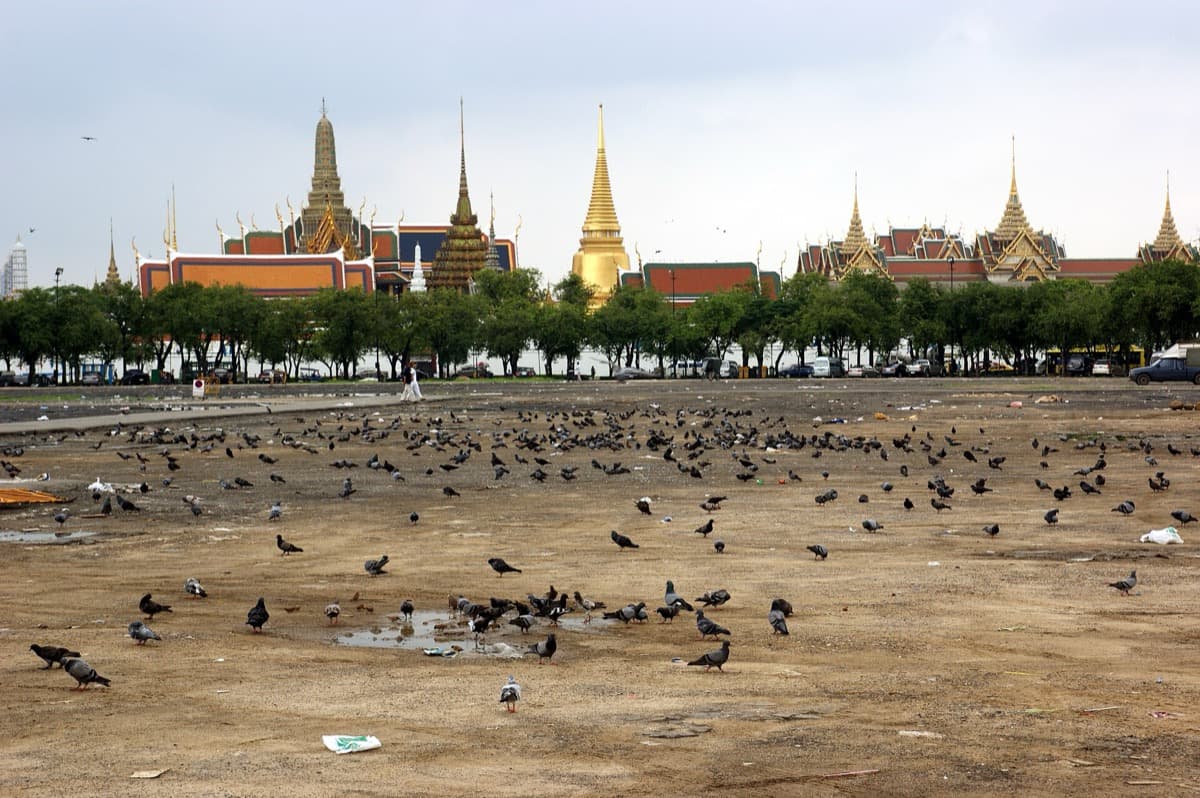
Sanam Luang: The Royal Field
The great open ground before the palace, used for royal cremations and the annual ploughing ceremony.
- 4
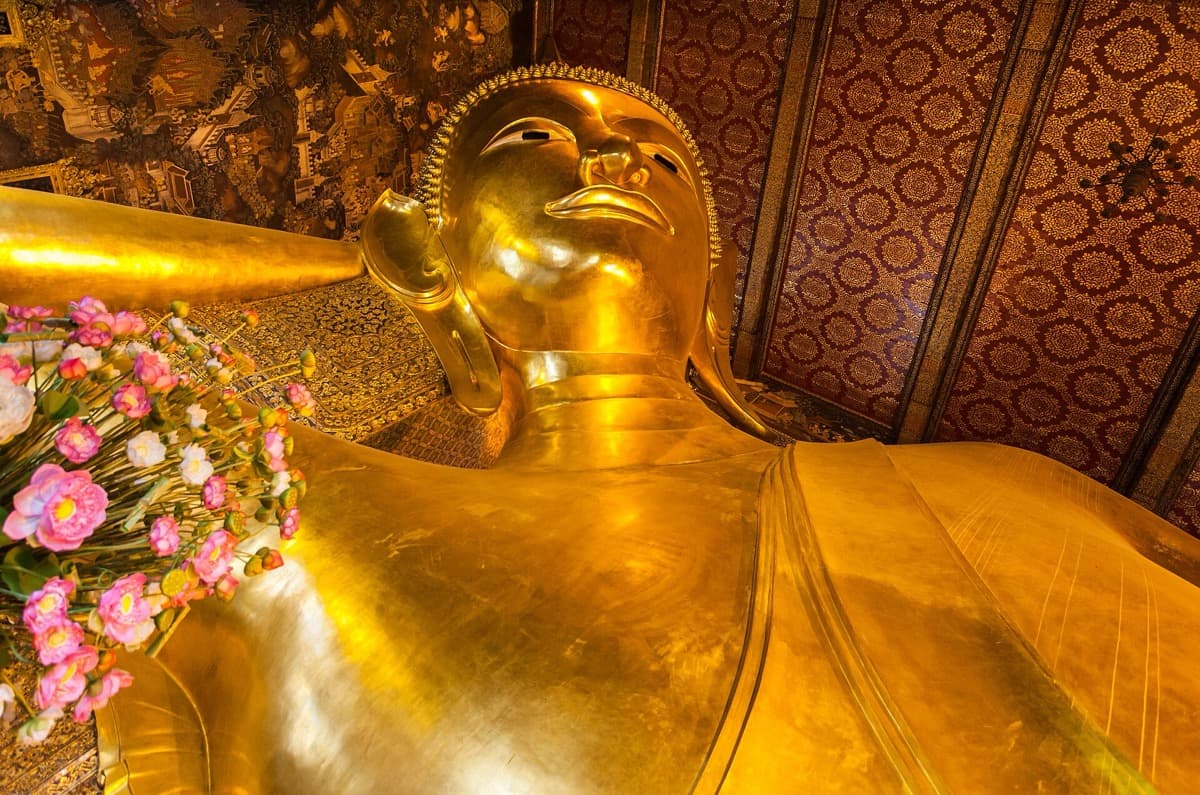
Wat Pho: The Reclining Buddha and the First Public University
A vast temple famous for its enormous reclining Buddha and its reputation as the country's first public university.
- 5
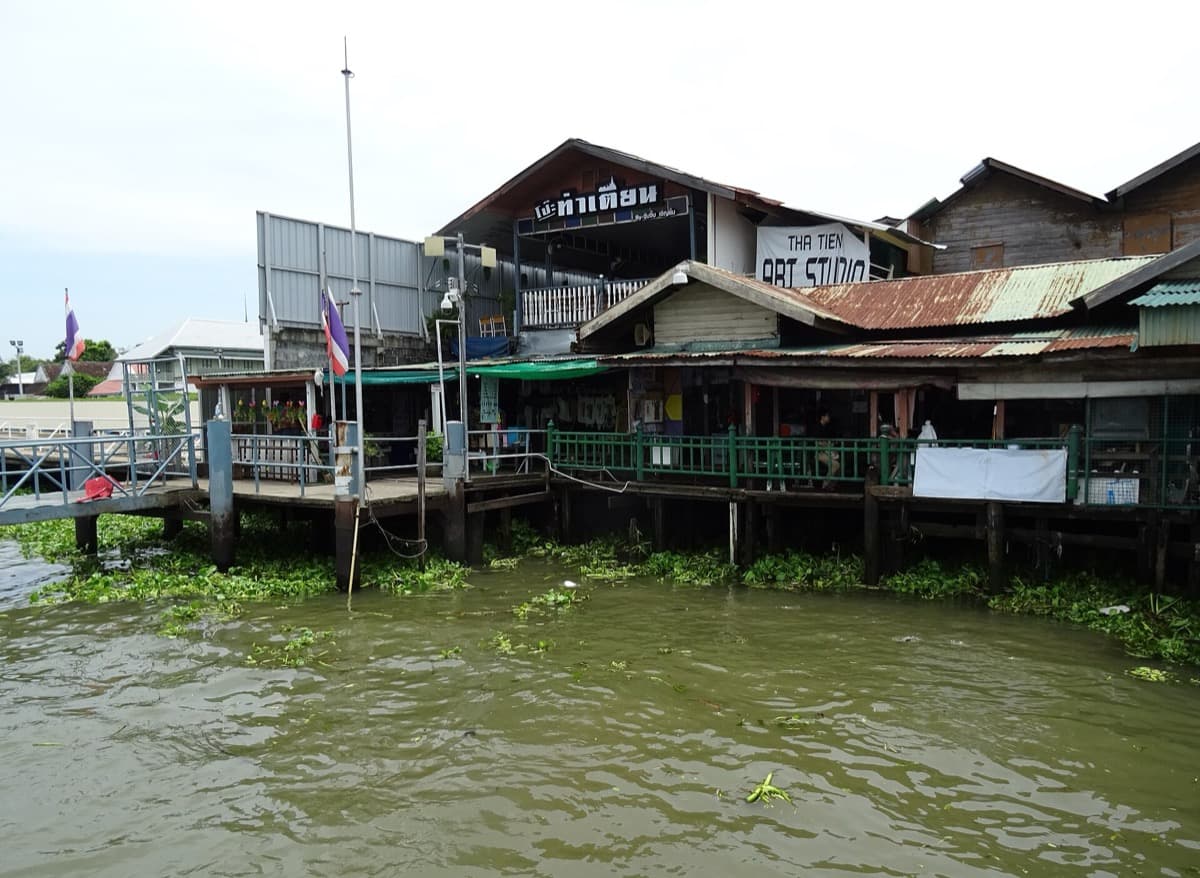
Tha Tien Pier: The Edge of the Island
A historic riverside pier and market quarter at the western edge of the royal island, facing the Temple of Dawn across the water.
- 6
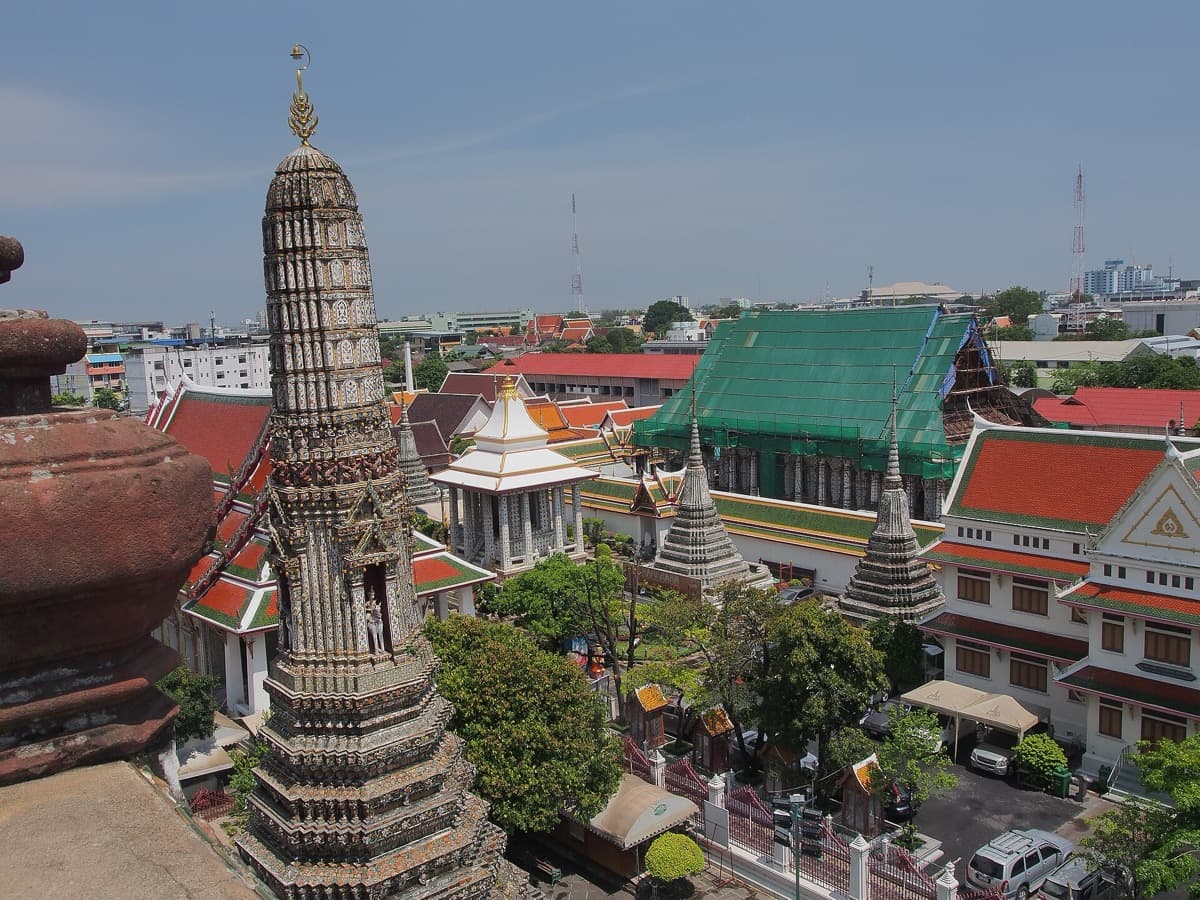
Wat Arun: The Temple of Dawn
A towering riverside prang encrusted in broken Chinese porcelain, belonging to the older capital the new Bangkok displaced.
- 7
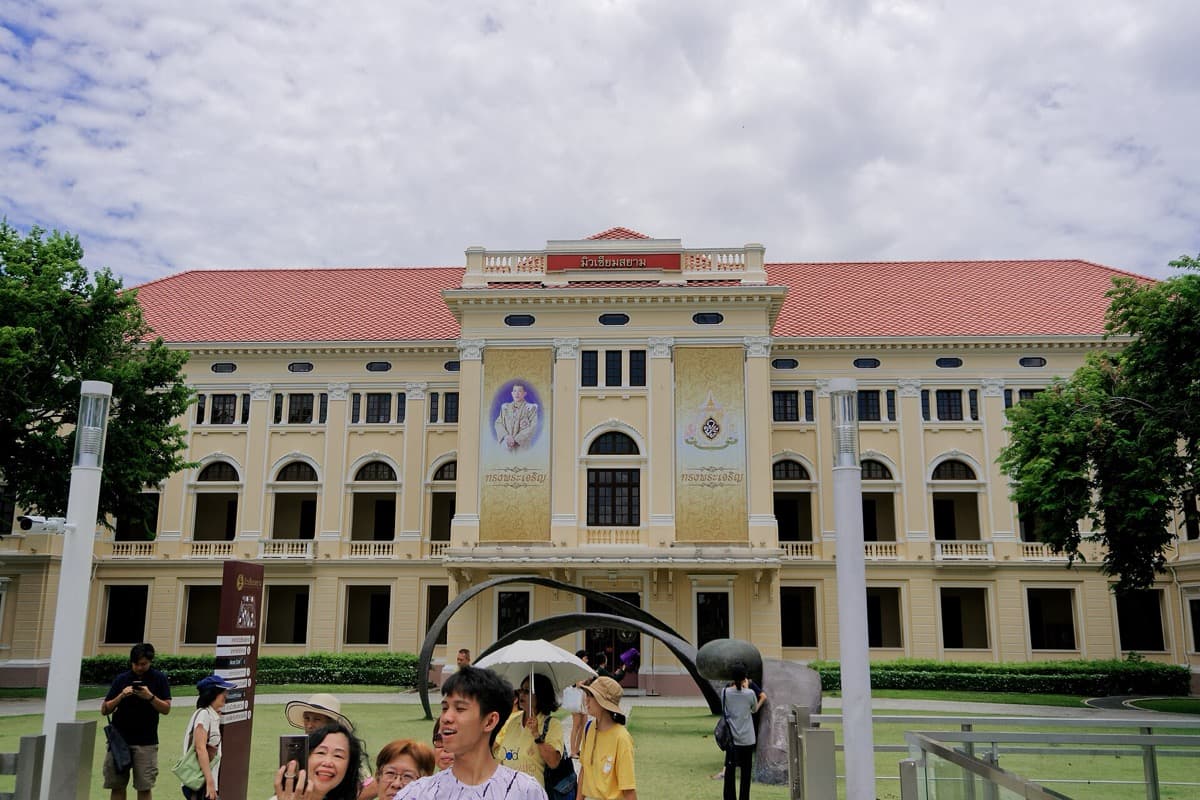
Museum Siam: Decoding Thainess
A museum in a former ministry building that asks outright what it means to be Thai, closing the loop of the walk.
Details
Best Time to Visit
Start early, ideally soon after the sites open in the morning, both to beat the fierce midday heat and to move through the royal temples before the crowds thicken. Late afternoon is the other good window, when the light softens and the cross-river view of the Temple of Dawn glows near sunset. Avoid the hottest hours around noon to early afternoon if you can, and check whether any royal ceremony is scheduled at the royal field, which can close parts of the ground.
Pro Tips
- •Carry small baht notes and coins. The cross-river ferry, temple entries, and water are all easier with cash, and the ferry fare is only a few baht.
- •Wear slip-on shoes. You will remove them to enter the hall of the reclining Buddha and other shrine buildings, so sandals or easy shoes save you fumbling with laces.
- •Bring a refillable water bottle and drink constantly. The heat and humidity are intense, and shade is limited on the open royal field.
- •Buy the palace ticket on the day at the official booth and ignore anyone on the street who tells you a temple is closed and offers to take you elsewhere. That is a common redirection.
- •Go at your own pace and treat the stops as skippable. If a temple queue is long or the heat is high, you can linger at the river, cross early, or come back to a stop later.
- •Keep a light scarf or sarong in your bag. It doubles as sun cover on the open ground and as a quick shoulder or knee cover if your clothing falls short of temple dress rules.
Safety & Precautions
- •Dress modestly for the temples and shrines. Shoulders and knees must be covered at the Grand Palace, Wat Phra Kaew, Wat Pho, and Wat Arun, and staff will turn away visitors in shorts, short skirts, or sleeveless tops. Remove your shoes where signs or attendants indicate.
- •Respect the sacred and royal nature of these sites. This is an active shrine, working temples, and the ground where kings are cremated. Keep your voice low, do not point your feet at Buddha images, and follow posted rules about photography and behaviour.
- •Prepare for heat, humidity, and strong sun. There is little shade on the royal field and along the river, so use sunscreen, a hat, and frequent water, and rest in shade if you feel lightheaded.
- •Watch for sudden monsoon downpours and slick surfaces. Rain can arrive fast and heavily, making pier steps, ferry gangways, and temple stones slippery, so move carefully near the water and mind traffic when crossing busy roads around the island.
- •Ignore anyone near the Grand Palace, Wat Pho, or the piers who says a temple is closed today for a ceremony or holiday and offers a cheap tuk-tuk to see it later. The temples keep posted public hours, and that ride tends to end at a gem, tailor, or jewelry shop. Buy tickets only at the official on-site booths, and agree a fare or insist on the meter before any tuk-tuk or taxi ride.
Travel advisory: Exercise Normal Precautions (Level 1).
Gallery
Related Reading
Go deeper on what you'll see, hear, and walk through.
Overview
Bangkok Travel Guide 2026: Days, Transport, Season, Safety, and Budget
7 min
Overview
Best Self-Guided Walking Tours in Bangkok (2026)
3 min
Overview
One Day in Bangkok: A Walkable Itinerary from Temples to Chinatown
7 min
Thematic
Bangkok in Layers: A Capital Founded as a Copy, Still Open for Business
7 min
Companion
The Emerald Buddha and the Palace: How Bangkok Was Built to Replace a City That Burned
7 min
Deep dive
Wat Arun: The Temple of Dawn Built From the Debris of Trade
7 min
Deep dive
Wat Pho's Reclining Buddha: The Temple That Chose to Teach
6 min
Read
What to Eat in Bangkok: The Dishes, Their Origins, and How to Order Like a Local
6 min
Read the walk
The full story of Rattanakosin: The Royal Island, in words. Prefer to listen? Play it narrated, from home or on location.
Introduction
In the year seventeen sixty-seven, the Burmese burned Ayutthaya, the capital of the Thai kingdom, to the ground. Fifteen years later, a new king laid out a new capital on a bend of the Chao Phraya river in Bangkok, Thailand, and he did something quietly astonishing. He did not simply build. He rebuilt. He cut the same man-made canals to make the same fortified island, raised the same royal chapel around a sacred image, and followed the same cosmological plan, so that the new city would feel like the old one and the new dynasty would feel like a restoration rather than an invention. This walk reads that founding as a resurrection, and it keeps asking one honest question along the way: was the new Bangkok an original creation, or a conscious copy, and does it matter. You will move outward through the concentric rings of the recreated city, from the first stone driven into the ground, to the jade image at the sacred center, to the royal field, to a temple that taught the city, then to the river's edge and across the water to an older temple the new capital displaced, and finally to a museum that asks outright what it means to be Thai. There are seven stops. Plan for roughly three hours of walking and looking at your own pace, spread across about five and a half kilometres, including a short ferry across the river, with short stops you can linger on or skip as you like. When you arrive at Lak Muang, the City Pillar Shrine opposite the Grand Palace, begin with stop one.
1. Lak Muang: The City Pillar Shrine
Before there was a palace, before there was a wall, there was this pillar. The founding chronicle records that on Sunday, the twenty-first of April, in the year seventeen eighty-two, at forty-five minutes past six in the morning, King Rama the First raised the city pillar here. That precise hour is what the chronicle records, and it tells you something important about the moment. This was not just construction. It was a horoscope made physical. Inside the pillar, the founders placed a horoscope for the new city, an astrological chart to fix a lucky fate onto a capital that did not yet exist. Think about the nerve that took. The old capital, Ayutthaya, had been a glittering island city for four centuries, and it had burned. This was a swampy river bend. So the king drove a stake into the mud at an auspicious minute and asked the heavens to bless it. By tradition, the shrine also houses Chao Pho Lak Muang, the guardian spirit of the city, though that belief is devotion rather than record. The pillar you may see is not quite the original. King Mongkut, Rama the Fourth, ordered a replacement installed in the year eighteen fifty-two, a taller pillar of about five metres, and the new shrine was completed on Sunday, the first of May, eighteen fifty-three. Stand here a moment and notice where you are. Across the way rises the Grand Palace. Behind you opens the great royal field. You are standing at the exact point the founders chose as the beginning of everything, the navel of a city built to answer a fire. Entry to the shrine is free.
2. Wat Phra Kaew and the Grand Palace: The Sacred Center
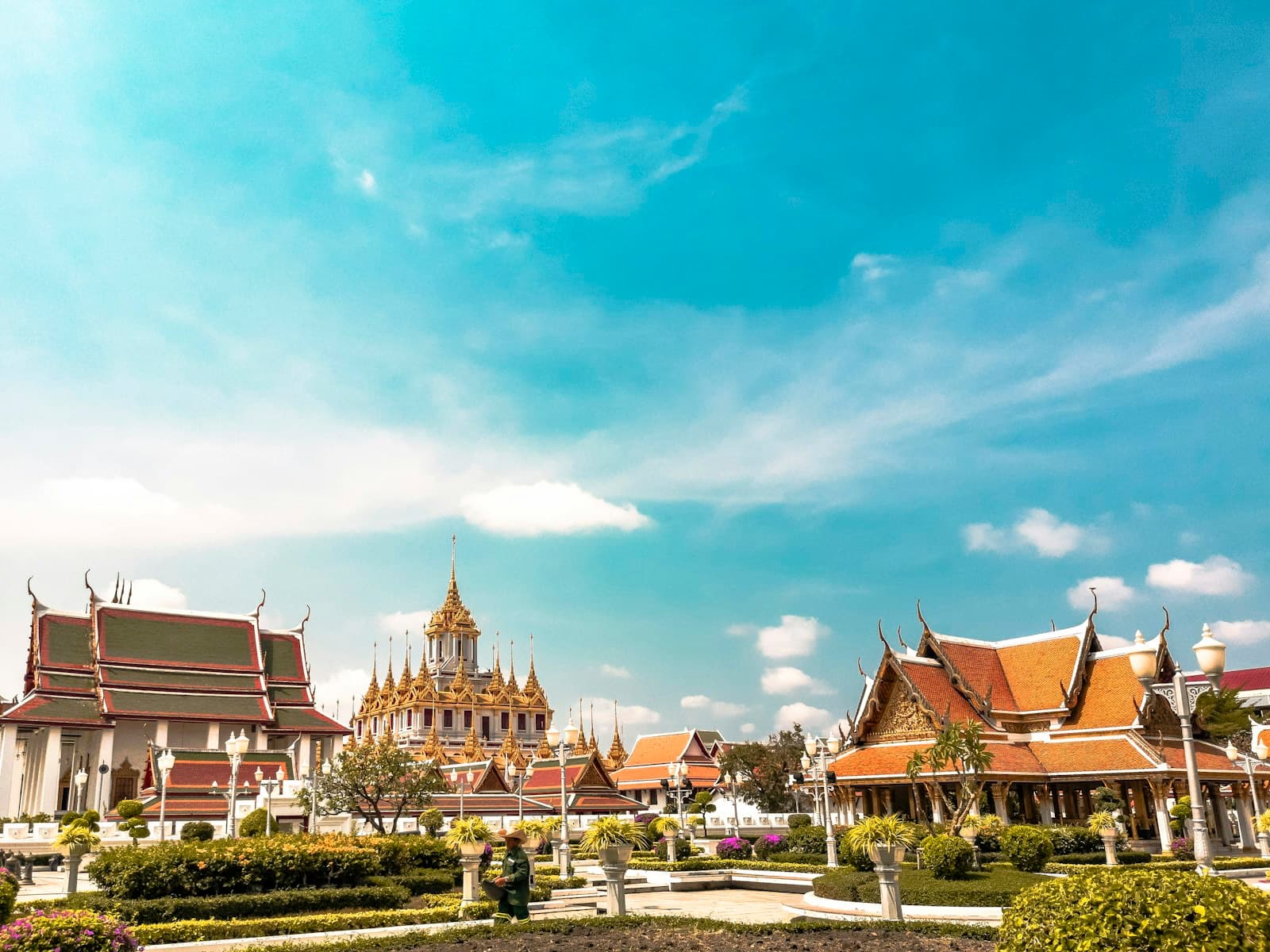
If the pillar was the city's birth chart, this is its transferred soul. Wat Phra Kaew, the temple of the Emerald Buddha, was established under King Rama the First, founder of the Chakri dynasty. Construction is dated to the year seventeen eighty-three, and it was completed in seventeen eighty-five, when the Emerald Buddha arrived and took its place at the sacred center. Everything glitters here, and it is meant to. Gold spires, mirrored glass, and along the gallery walls, one hundred and seventy-eight painted panels telling the Ramakien, the Thai telling of a great epic. But the object that matters is small and dark and easy to miss high on its towering altar. The Emerald Buddha is a single image of green semi-precious stone, usually described as jade, only about sixty-six centimetres tall, clothed in gold. It is venerated as the palladium of the kingdom, the protective image of the whole realm. Now, here is the detail that reveals the whole logic of this place. Wat Phra Kaew has no resident monks. None live here. It is a royal chapel, so monks are invited from other temples to perform rituals and then they leave. This was never a monastery. It was built to house a sacred image and to legitimize a dynasty, the same way Ayutthaya's royal chapel once did. The soul of kingship was carried into a new body. The Grand Palace complex was the royal residence, and admission for foreign visitors is five hundred baht, which includes this temple. Whether you go in or simply stand at the wall, you are at the heart the founders drew everything else around.
3. Sanam Luang: The Royal Field
Step out into the open now. This vast green field is Sanam Luang, which means the royal field, or the royal ground. It has served royal functions since the reign of Rama the First, and it is the ceremonial lung of the whole plan, a deliberate emptiness at the center of a crowded city. Every great cosmological capital needs open ground where the sacred and the civic can be staged, and this is Bangkok's. It was not always called by a gentle name. This field was formerly known as Thung Phra Men, the royal cremation ground, and it was King Mongkut, Rama the Fourth, who renamed it in the year eighteen fifty-five. That older name tells you what this ground is for. This is where kings and queens are cremated, their bodies given back to the sky in enormous ceremonial pyres. Within living memory, King Bhumibol Adulyadej, Rama the Ninth, was cremated here on the twenty-sixth of October, in the year twenty seventeen, and much of the country stood on this grass in mourning. But the field is not only about death. Each year it also hosts the Royal Ploughing Ceremony, an ancient rite where sacred oxen are led across the turned earth to divine the coming harvest. Cremation and planting, ending and beginning, on the same open ground. It is about seventy-four and a half rai, roughly one hundred and nineteen thousand square metres of grass, and it is an open public ground, free to enter. Stand in the middle and turn slowly. The palace, the temples, the shrine, they all face this emptiness. The founders left the heart of their reincarnated city deliberately open, a stage for the moments when the kingdom talks to the heavens.
4. Wat Pho: The Reclining Buddha and the First Public University
This temple is where the reincarnated city began to teach itself. Wat Pho, also known as Wat Phra Chetuphon, was reconstructed under King Rama the First from the year seventeen eighty-eight, built up on the site of a dilapidated earlier temple. Then, under King Rama the Third…
Full narration for this stop unlocks with the tour.
5. Tha Tien Pier: The Edge of the Island
Here the recreated island runs out. Tha Tien is the riverside pier at the end of Thai Wang Road, on the east bank of the Chao Phraya, and beyond it there is only water and, across that water, another temple. This is the edge. Remember what the founders did. They cut man-made…
Full narration for this stop unlocks with the tour.
6. Wat Arun: The Temple of Dawn
Now you are on the other side of the story. Wat Arun, the temple of dawn, stands on the west bank, and it does not belong to the reincarnation you have been walking. It is older. This temple existed back in the Ayutthaya era, and when King Taksin made nearby Thonburi his…
Full narration for this stop unlocks with the tour.
7. Museum Siam: Decoding Thainess
You have walked a city built as a resurrection, and this last stop asks whether resurrection is even the right word. Museum Siam sits on Sanam Chai Road, on the southern part of the Rattanakosin island, inside the former building of the Ministry of Commerce, a handsome structure…
Full narration for this stop unlocks with the tour.