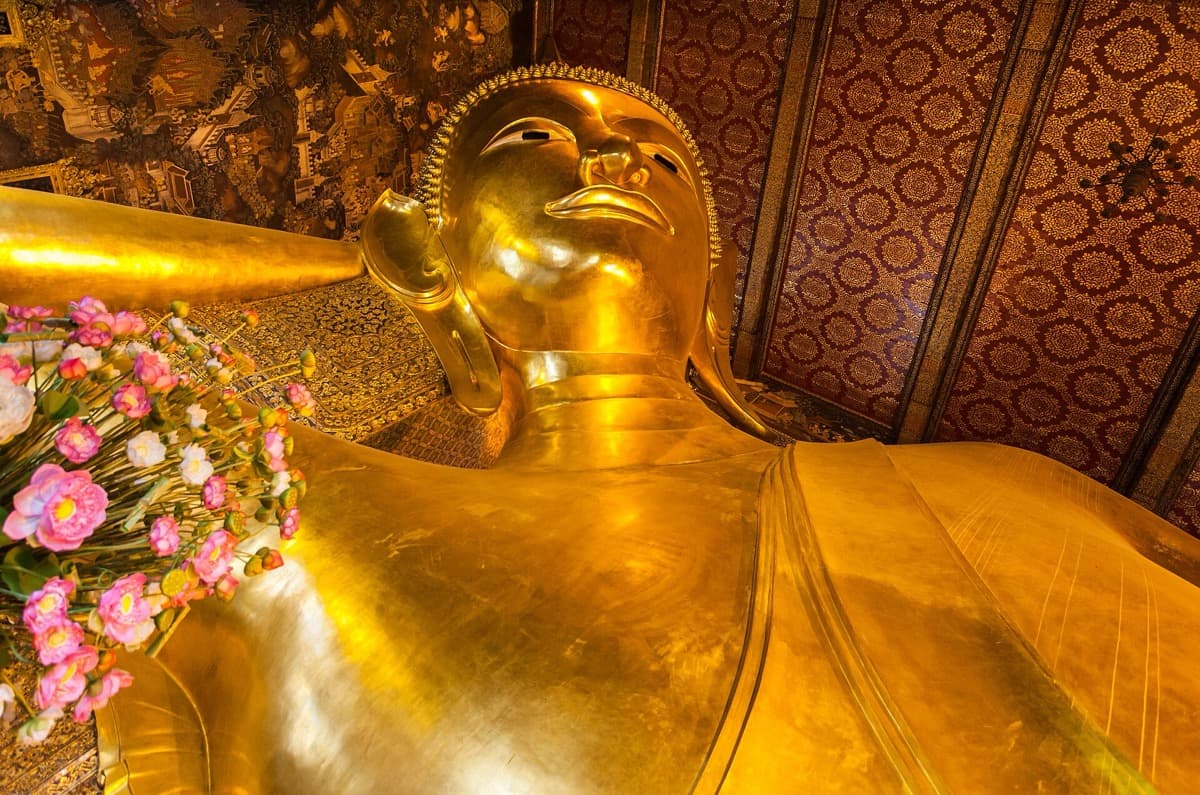
Wat Pho's Reclining Buddha is the image most visitors come for, a gilded figure lying on its side, forty-six metres long and fifteen metres tall, so large you cannot take it in from any single spot. But the temple around it was built to do something the golden figure only hints at. Wat Pho was designed to teach. Its walls were inscribed and painted with knowledge so that ordinary people, not only the court, could learn simply by looking. That intention, more than the scale of the Buddha, is what makes this stop the moment a young capital began instructing itself, and it is why the temple is remembered by long reputation as the first public university in Thailand.
A temple rebuilt on a ruin
Wat Pho, formally Wat Phra Chetuphon, was reconstructed under King Rama the First beginning in the year seventeen eighty-eight, raised on the site of a dilapidated earlier temple. That date matters to the larger story of Bangkok. The new capital had been laid out only a few years before, a deliberate reincarnation of Ayutthaya, the glittering island city the Burmese had burned in seventeen sixty-seven. The founders were not simply building. They were rebuilding, copying the cosmological plan of a lost capital so the new dynasty would feel like a restoration. Wat Pho belongs to that project. It was one of the principal temples of early Bangkok, raised under royal patronage as the recreated city took shape.
Then, under King Rama the Third from the eighteen thirties, the temple was renovated and greatly enlarged. The chronicles record that this labor took sixteen years and seven months, a figure precise enough to suggest how carefully the work was tracked. What that long effort produced is the Wat Pho a visitor walks through today: not a single monument but a dense compound of halls, spires, and courtyards, with the reclining figure as its most spectacular single object.
Reading the reclining figure
Hear a stop from this walk
Museum Siam: Decoding Thainess
The Reclining Buddha represents the moment the Buddha enters parinirvana, the passing beyond the cycle of rebirth. Standing beside it, you cannot see the whole thing at once, which is part of the effect. You walk its length instead, from the head to the feet, and the scale reveals itself piece by piece.
The soles of the feet reward the walk. Each is about four and a half metres long and inlaid with mother-of-pearl arranged into one hundred and eight panels. One hundred and eight is a significant number in Buddhist tradition, and each panel depicts one of the auspicious signs, the marks by which a Buddha is recognized. It is worth slowing down here. The mother-of-pearl work turns the bottom of the feet, a part of the body Thai custom treats as the lowest and least respectful, into one of the most finely decorated surfaces in the entire temple. You remove your shoes to enter the hall, which puts your own bare feet on the same floor as the gilded ones you have come to see.
The temple that gave knowledge away
Here is the detail that changes how you read the place. Under Rama the Third, Wat Pho was inscribed and painted with a curriculum. Medicine, astrology, literature, history: the temple's walls and stone tablets were turned into a public archive of Thai knowledge, laid out so that anyone who could read could come and learn by looking. This was not a library reserved for scholars or a manuscript hall closed to the public. It was open text on open walls.
That is the reasoning behind the temple's reputation as the first public university in Thailand. The word university needs a light hand. There were no lectures, no degrees, no enrollment. What Wat Pho offered was closer to a permanent open-air encyclopedia, a body of learning made visible and free to consult. In a city built to copy a lost capital's grandeur, the founders also chose to build a place that gave its knowledge away, and that choice sits at the center of what makes this temple more than a photograph.
The teaching tradition did not fossilize. Wat Pho remains the foremost institution for training in traditional Thai medicine and massage. The temple runs a renowned school where the practice is still taught, a direct living line back to the medical knowledge inscribed on these walls almost two centuries ago. In the year twenty nineteen, traditional Thai massage, known as Nuad Thai, was inscribed on the UNESCO Representative List of the Intangible Cultural Heritage of Humanity. The temple that once painted anatomy on stone so ordinary people could study it now stands behind an art the world has formally recognized.
The one thing to understand standing here
The Reclining Buddha will pull your eye first, and it should. But the understanding to carry away is that Wat Pho is a temple built to teach as much as to venerate. Every other stop on the founding walk of Bangkok is about power, ritual, or protection: a pillar to bless the city, a chapel to house the kingdom's sacred image, a field where kings are cremated. Wat Pho is where the reincarnated city turned outward and decided its knowledge should belong to everyone. The gilded figure is the draw. The instruction on the walls is the meaning.
Practical notes for the visit: foreign entry is three hundred baht, and you remove your shoes to enter the hall of the Reclining Buddha. Shoulders and knees must be covered, as at the other royal temples nearby, so carry a light scarf or sarong if your clothing falls short. Wear slip-on shoes to save yourself fumbling at every shrine, and go early, both to beat the fierce midday heat and to walk the length of the Buddha before the crowds thicken.
Wat Pho sits at the fourth stop of Roamer's self-guided walk through the founding heart of Bangkok, a route that reads the birth of the modern city as an act of deliberate resurrection. The tour moves from the city pillar driven into the mud to the jade image at the sacred center, then to Wat Pho and the river's edge, and finally to a museum that asks outright what it means to be Thai. If you want the full arc, browse the other Bangkok walking tours or start planning from the Bangkok city page, then let the audio carry you along the gilded length of the Reclining Buddha at your own pace.
Sources
- Wat Pho, Wikipedia. Core facts on the reclining figure's dimensions, the temple's reconstruction under Rama the First and enlargement under Rama the Third, and its reputation as a first public university.
- Wat Phra Chetuphon official history (watpho.com). The temple's own account of its founding, royal patronage, and role as a center of traditional Thai medicine.
- Nuad Thai, traditional Thai massage, UNESCO Intangible Cultural Heritage listing. Confirms the 2019 inscription of traditional Thai massage on the Representative List.
- Roamer tour transcript, "The Royal Island," fact-audited (audit score 96). Primary verified source for the Wat Pho stop, including the one hundred and eight mother-of-pearl panels and the sixteen-year, seven-month enlargement figure.
Ready to experience it?
Rattanakosin: The Royal Island
120 min · 5.5 km · moderate
More from Bangkok
Explore more at your own pace.
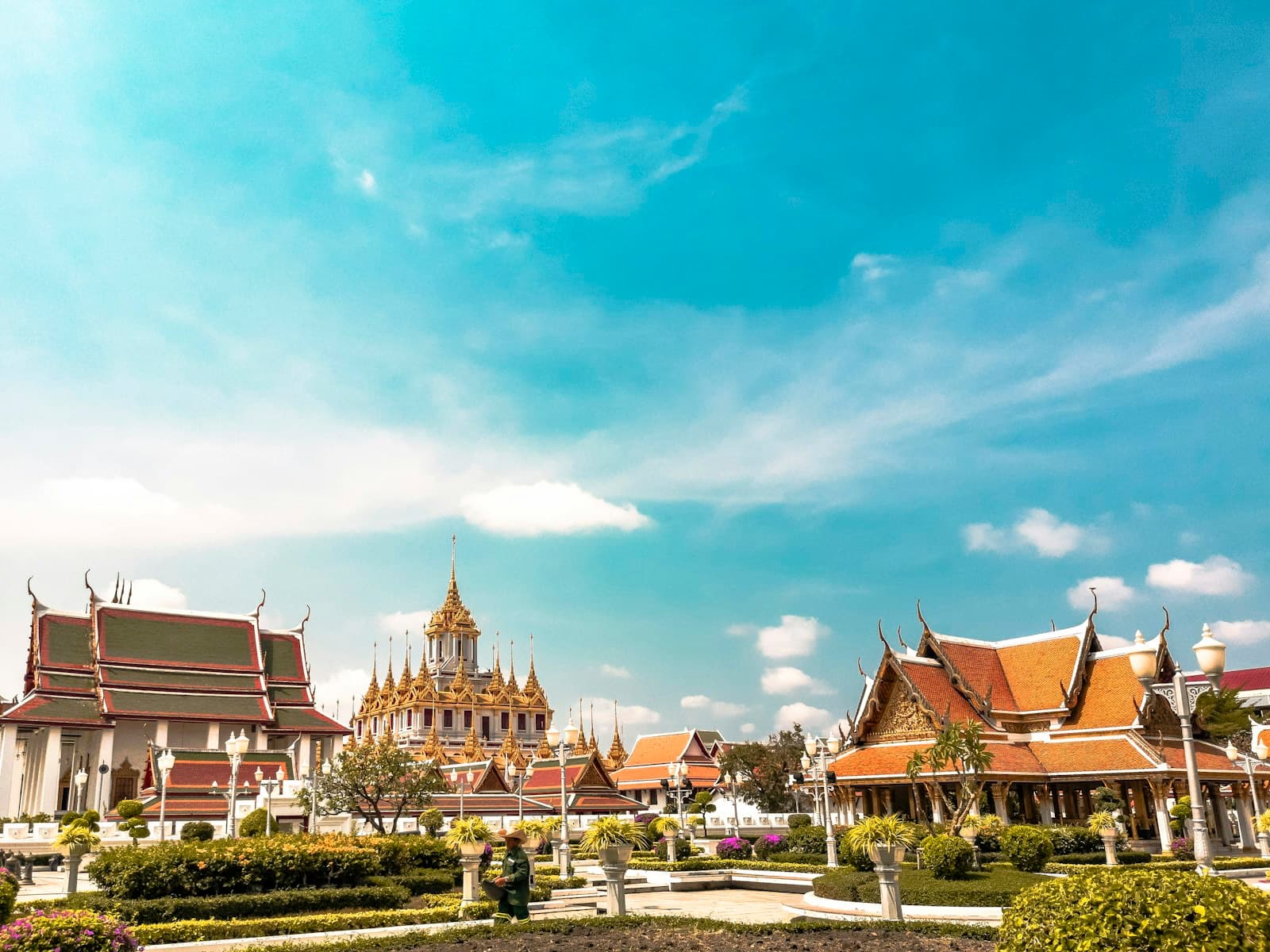
Bangkok Travel Guide 2026: Days, Transport, Season, Safety, and Budget
Bangkok in Layers: A Capital Founded as a Copy, Still Open for Business
Charoen Krung Road: How Siam's First Modern Street Built a Colonial-Looking Quarter That Was Never a Colony
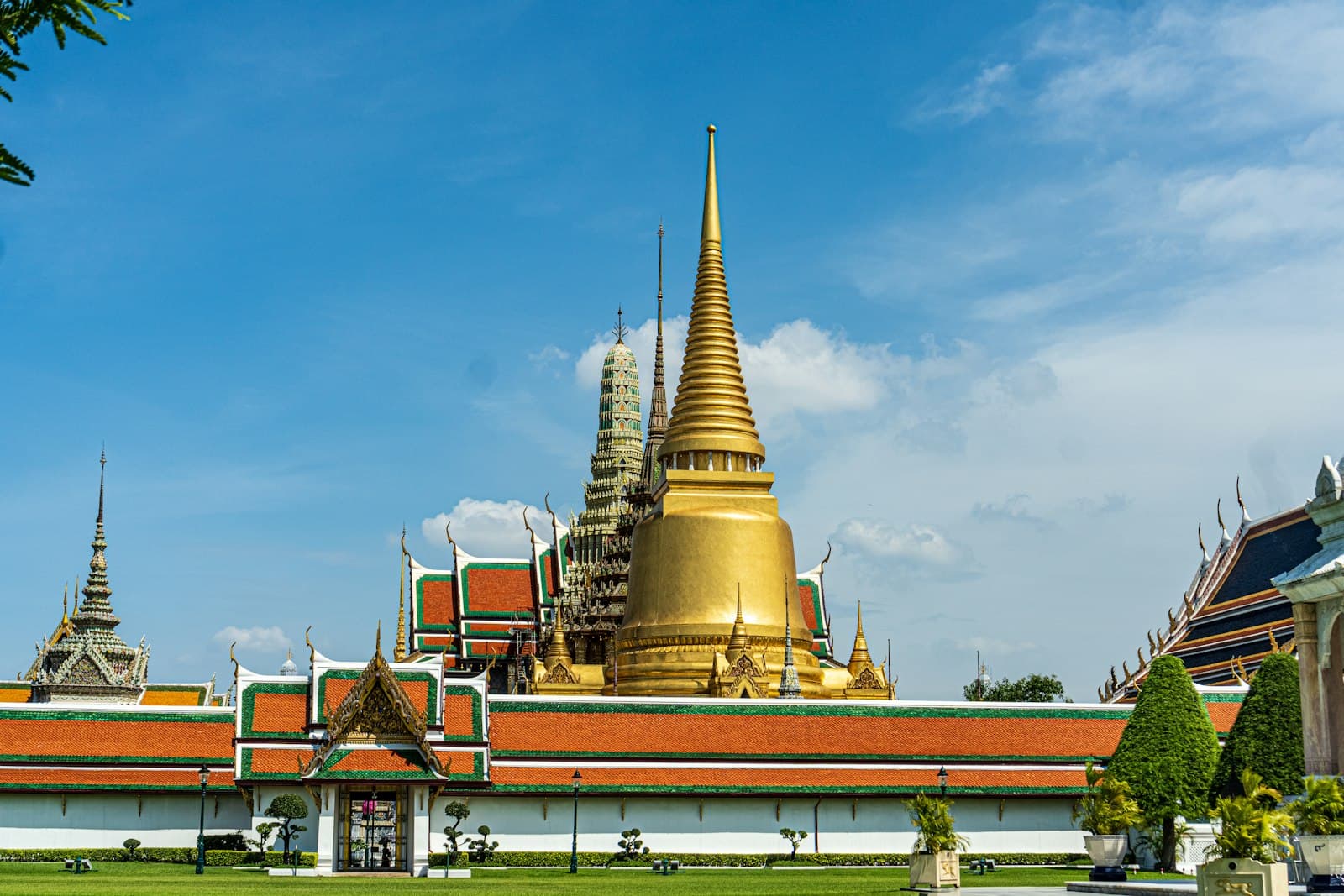
The Emerald Buddha and the Palace: How Bangkok Was Built to Replace a City That Burned
The Golden Buddha of Wat Traimit: The Statue That Hid Its Own Gold for Two Centuries