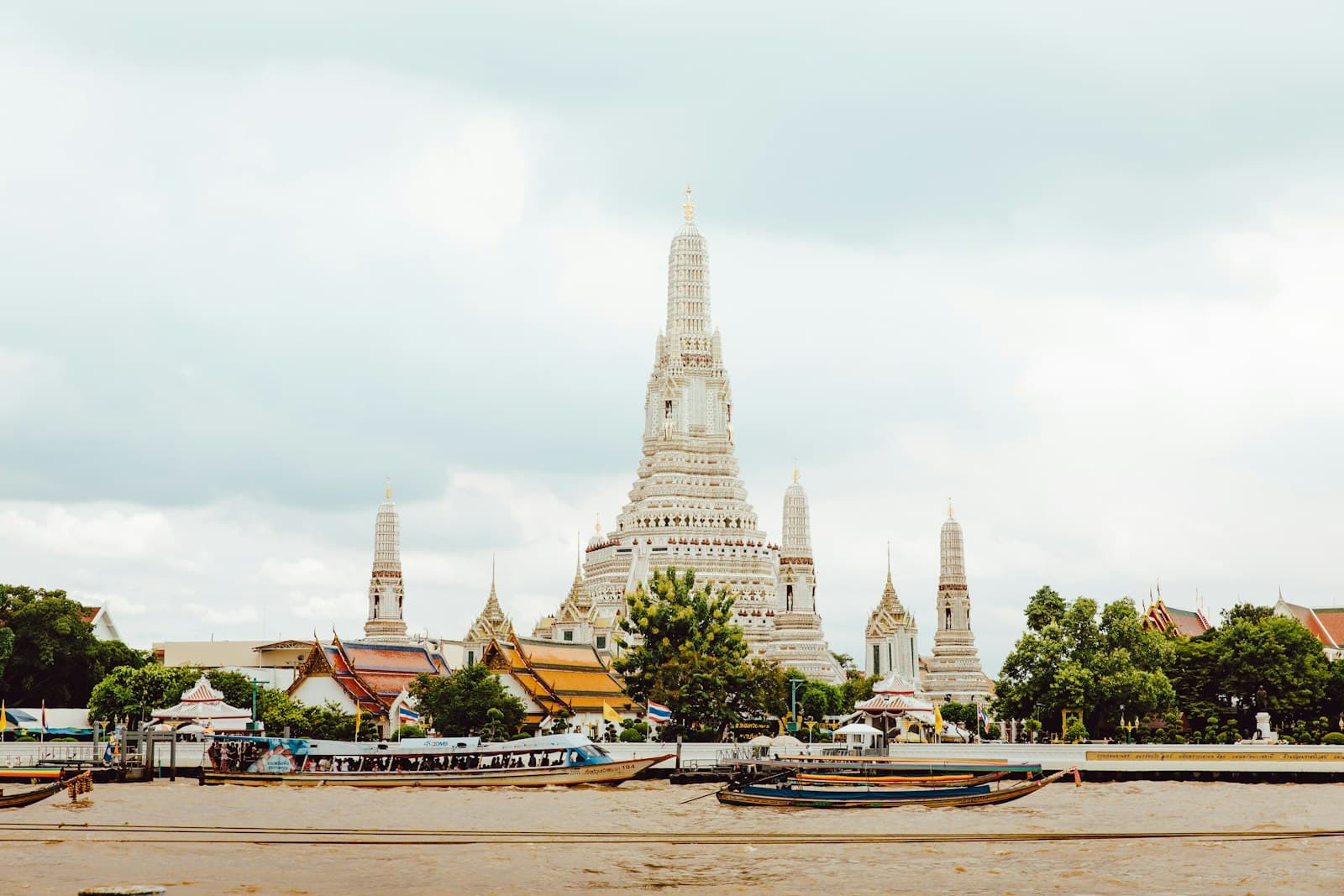
Follow the old New Road through Bang Rak, the riverside quarter where Bangkok stopped being a water city and began to become a land one, a place that looks colonial yet belongs to a kingdom that was never a colony.
Start · Charoen Krung Road: The First Road
DirectionsStops
- 1
Charoen Krung Road: The First Road
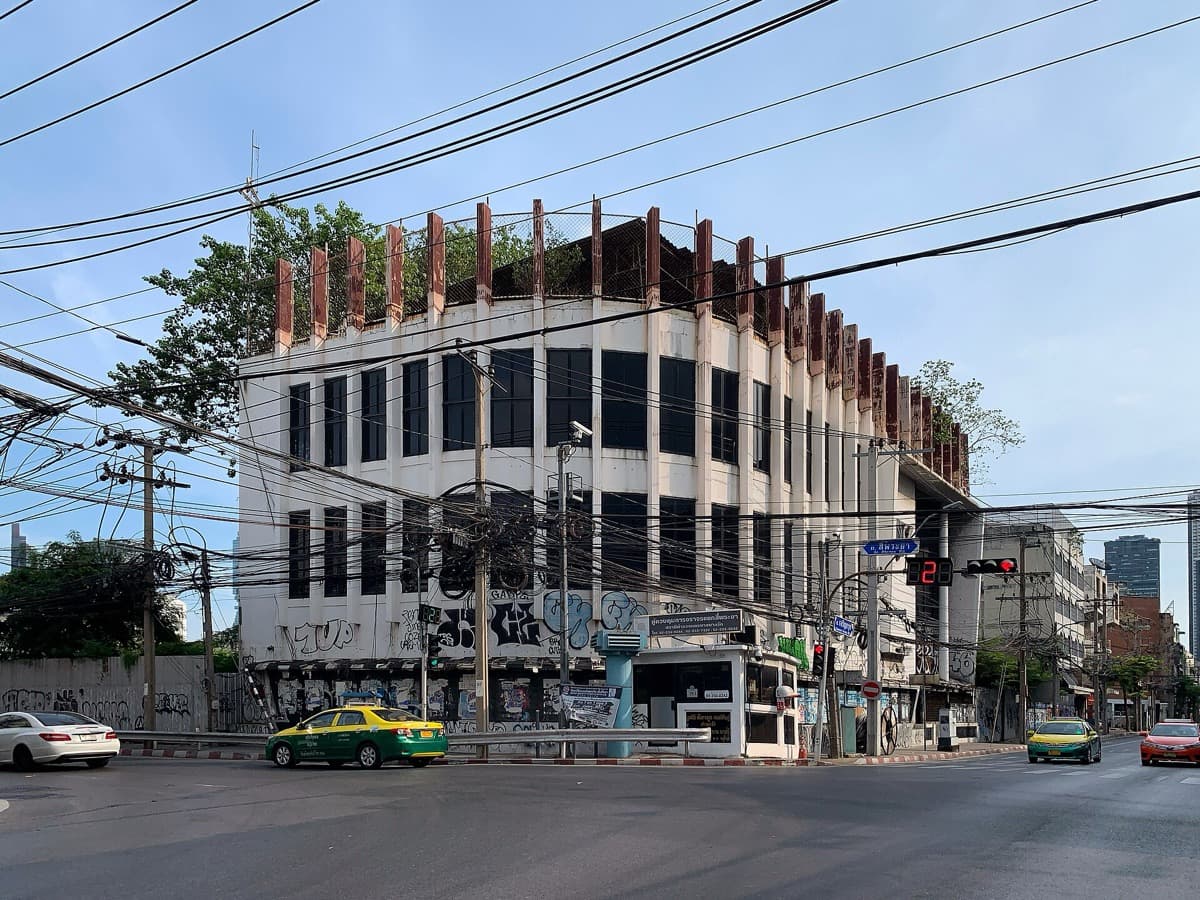
The first road in Siam built by modern methods, the strip of pavement where the water city began to become a land city.
- 2
The General Post Office
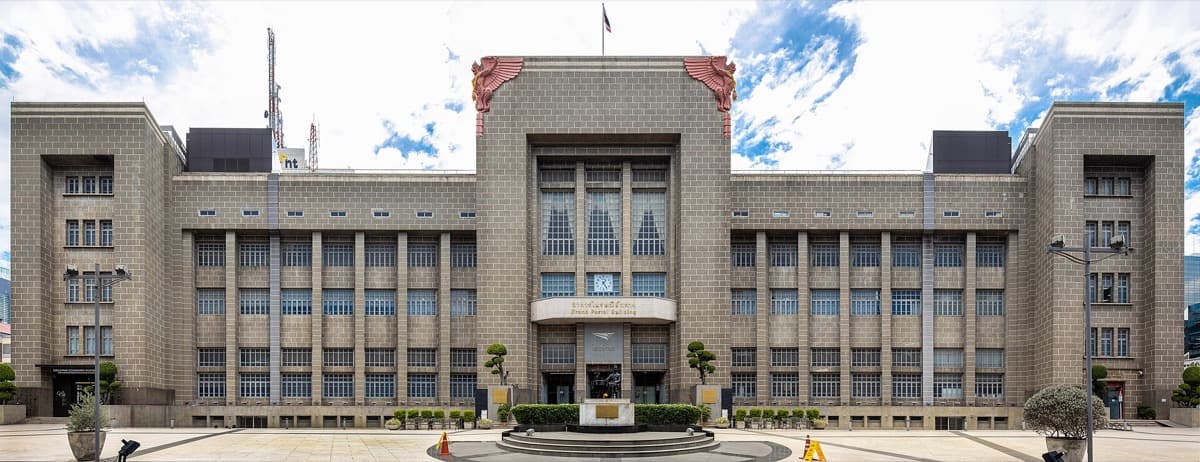
A monumental government building of nineteen forty that shows Siam building its own modern institutions on the road the consuls opened.
- 3
Assumption Cathedral
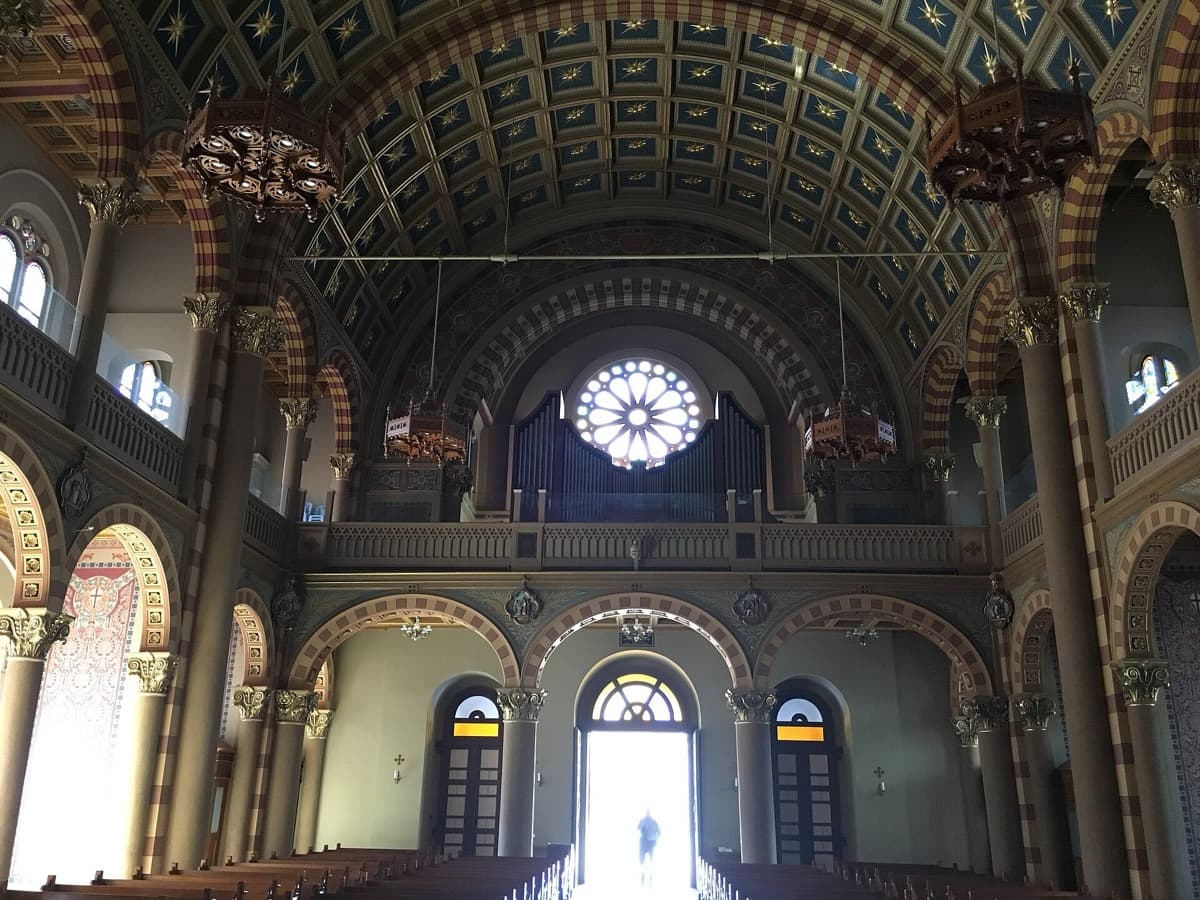
The principal Catholic church of Thailand, an invited European faith standing at the heart of the old foreign quarter.
- 4
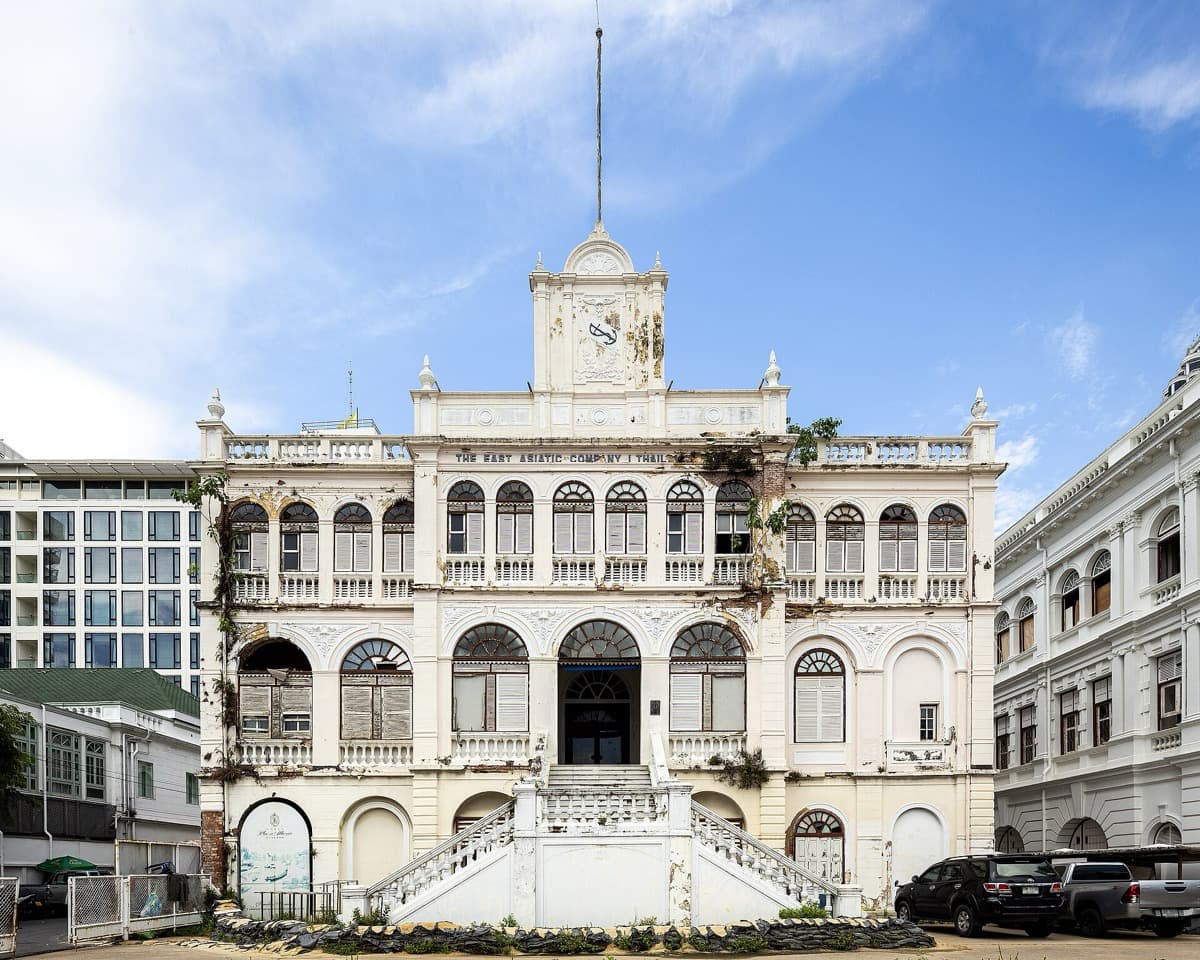
The East Asiatic Building
The riverside headquarters of a great Danish trading house, European capital operating under Siamese sovereignty.
- 5
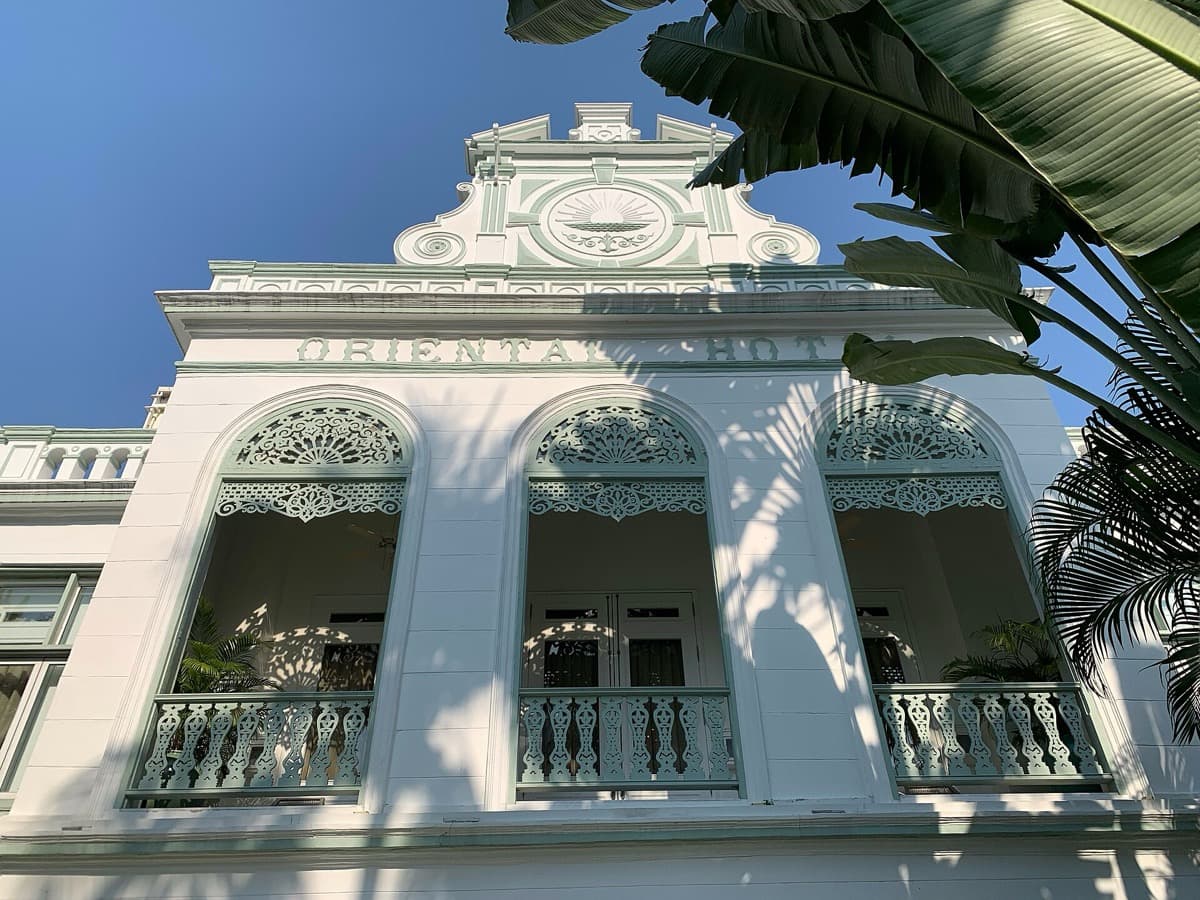
The Oriental Hotel: Mandarin Oriental
The first hotel built in Thailand, the river address where Western travelers and writers arrived in Bangkok.
- 6
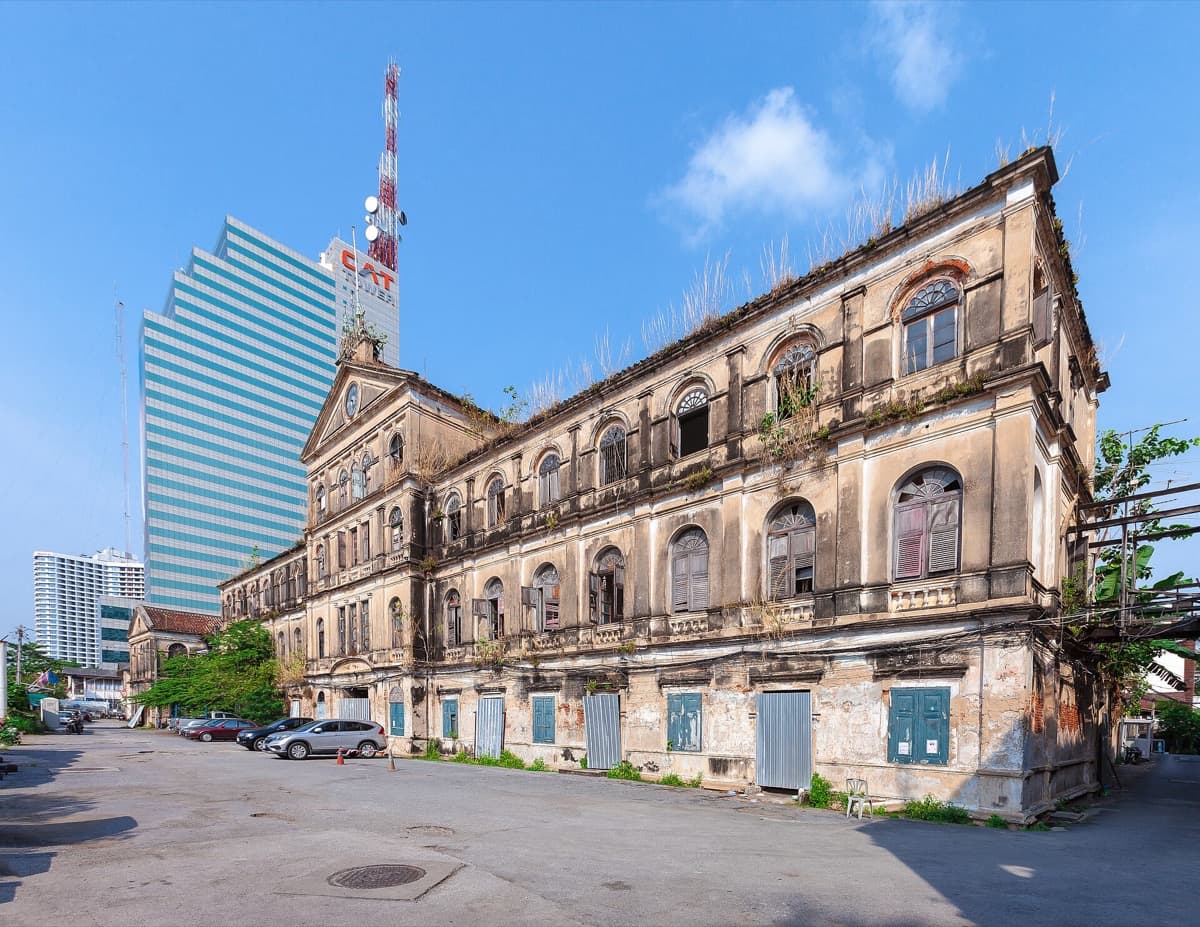
The Old Customs House
The derelict river gate where the kingdom taxed every ship, the counting-house of the negotiated encounter with the West.
- 7
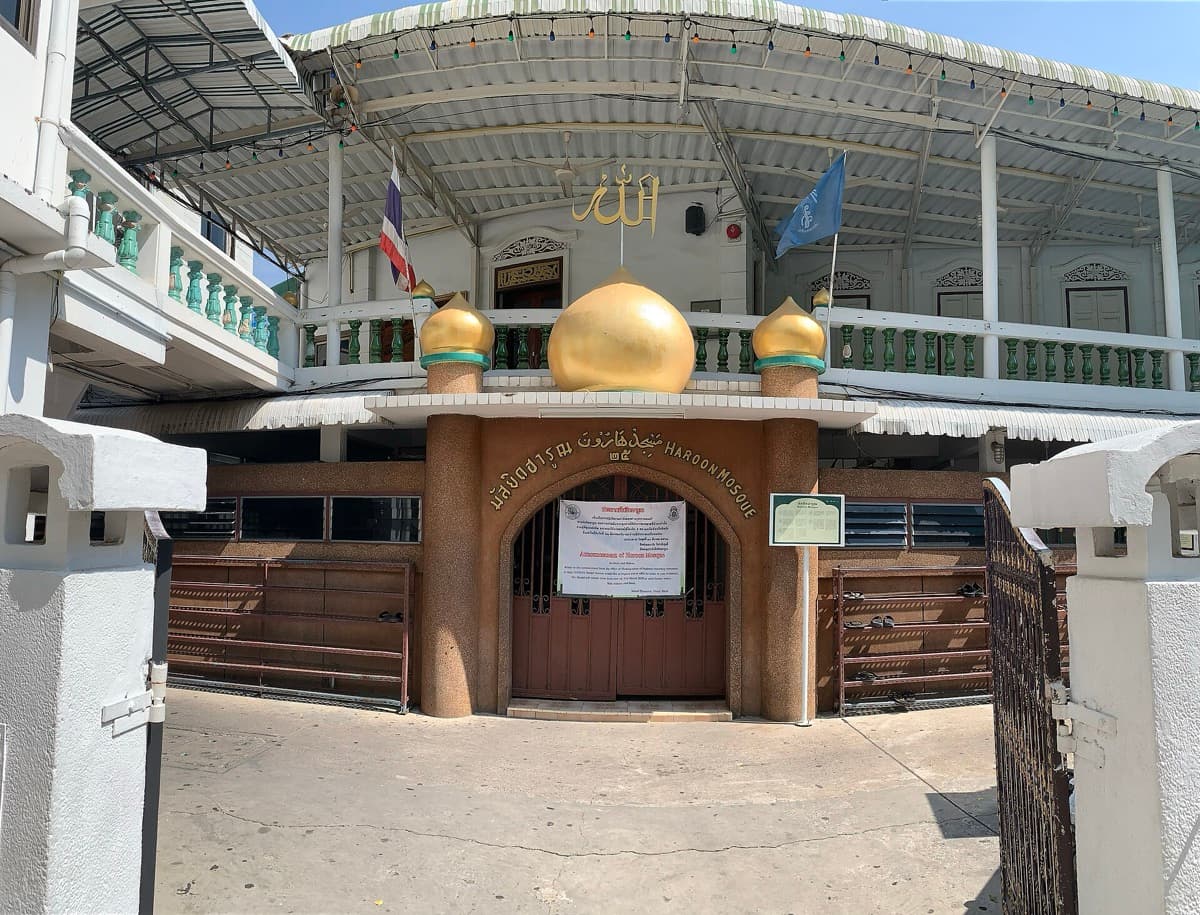
Haroon Mosque and Its River Community
An older, mixed Muslim trading community that predates the consuls' road and was pushed inland by the modern port.
Details
Best Time to Visit
Late afternoon is ideal, roughly three to six in the evening, when the fierce midday heat eases and the low sun lights the river frontage and the red brick of the cathedral. The lanes stay cooler in the shade of the old buildings, and the Old Customs House looks its most dramatic near golden hour. Mornings before ten are a good second choice for softer light and thinner crowds. Avoid the peak heat of noon to two, and if you can, come outside the heaviest monsoon downpours between about June and October.
Pro Tips
- •Go entirely at your own pace. Every stop is short and self contained, so linger where the story pulls you in and move on quickly where it does not.
- •Wear light, breathable clothing that also covers your shoulders and knees, so you can step respectfully into the cathedral and the mosque without needing to cover up separately.
- •Carry water and refill often. The walk is only about two kilometres, but Bangkok's heat and humidity make even a short stroll tiring if you are not hydrated.
- •Time your visits to the cathedral and mosque for quiet hours, outside services and prayer times, and lower your voice as you approach both.
- •Duck into the riverside piers and hotel frontage for open views of the Chao Phraya; the river is the real thread of this walk, and the water reframes every building you pass.
- •Step into the post office lobby and, if it is open, the creative center inside; the scale of the interior is part of the story and easy to miss from the street.
Safety & Precautions
- •Bangkok's heat and humidity are serious. Pace yourself, seek shade between stops, drink water steadily, and use sun protection, since much of the riverside walk is exposed.
- •The mosque and the cathedral are active places of worship. Dress modestly with shoulders and knees covered, remove your shoes where asked at the mosque, keep quiet, and always ask before entering or photographing interiors.
- •During the monsoon months, roughly June to October, sudden heavy rain can flood streets quickly. Carry a light rain layer, watch your footing on slick pavement, and be ready to shelter.
- •Traffic on and around Charoen Krung is dense and fast. Cross only at marked crossings, look both ways carefully, and stay alert to motorbikes weaving along the edges of the road.
- •Keep bags zipped and worn across your body on the side away from traffic. In crowded riverside stretches and along the roadside, motorbike bag snatching and pickpocketing do happen in busy tourist areas, so keep your phone in a front pocket and your bag close in tight lanes and market crowds.
Travel advisory: Exercise Normal Precautions (Level 1).
Gallery
Related Reading
Go deeper on what you'll see, hear, and walk through.
Overview
Bangkok Travel Guide 2026: Days, Transport, Season, Safety, and Budget
7 min
Overview
Best Self-Guided Walking Tours in Bangkok (2026)
3 min
Overview
One Day in Bangkok: A Walkable Itinerary from Temples to Chinatown
7 min
Thematic
Bangkok in Layers: A Capital Founded as a Copy, Still Open for Business
7 min
Companion
Charoen Krung Road: How Siam's First Modern Street Built a Colonial-Looking Quarter That Was Never a Colony
7 min
Deep dive
The Oriental Hotel in Bangkok: How Danish Sea Captains Built Thailand's First Hotel
6 min
Read
What to Eat in Bangkok: The Dishes, Their Origins, and How to Order Like a Local
6 min
Read the walk
The full story of Bang Rak (Charoen Krung): The First Road, in words. Prefer to listen? Play it narrated, from home or on location.
Introduction
For most of its history Bangkok, in Thailand, was a water city. Into the eighteen sixties you moved by boat along canals, and the kingdom had almost no paved roads at all. Then, in the mid eighteen sixties, King Mongkut, Rama the Fourth, ordered a road built by modern methods, the first of its kind in Siam. Its Thai name meant simply New Road, and in English that name has lasted ever since. This walk of seven stops takes about ninety minutes and covers roughly two and a half kilometres, all of it along or beside that old New Road through Bang Rak, the quarter where foreign traders and consuls once gathered by the Chao Phraya river. Go entirely at your own pace. Every stop is short, and you can linger at the ones that pull you in and pass over the rest. What makes this quarter strange is a single fact you should carry the whole way. Bang Rak looks like a colonial district, a strip of cathedral and trading house and grand hotel, built in the very decades when European empires were swallowing the rest of Southeast Asia. Yet Siam alone was never colonized. The road that let the West in was also the instrument that let the kingdom modernize on its own terms and stay free. Hold both readings at once as you go, and let the street tell you which one it prefers. When you arrive at Charoen Krung Road near the General Post Office, begin with stop one.
1. Charoen Krung Road: The First Road
Stand on this pavement for a moment and consider how unlikely it once was. For most of Bangkok's history there was almost nothing like it. People moved by boat, along a web of canals, and the city was a water city in the truest sense. The street beneath your feet, Charoen Krung, was the first road in Thailand built using modern construction methods. According to the Wikipedia record, it was built between eighteen sixty-two and eighteen sixty-four, under King Mongkut, Rama the Fourth, and it opened to traffic on March sixteenth, eighteen sixty-four. The reason it exists is almost comic. On August nineteenth, eighteen sixty-one, a group of Western consuls petitioned the king, complaining that they had no proper roads for riding in carriages or exercising their horses, and that their health suffered for it. The king approved, and this road was the answer. Its first Thai name meant simply New Road, which is why English speakers still call it that. Mongkut later renamed it Charoen Krung, meaning prosperity of the city. Notice the paradox already forming under your feet. This road was requested by foreigners, for foreign comfort, and yet it became the spine of a modernizing Siamese state. The kingdom studied the West closely, adopted the useful parts, and used exactly that knowledge to avoid being colonized like its neighbors. The road that let the West in was also, in its way, what kept the West out. Everything else on this walk, the cathedral, the trading house, the hotel, the customs gate, was built along this line, in the decades after the pavement was laid. You are standing at the beginning of the land city.
2. The General Post Office
Look up at this building, all clean geometry and confident mass. It is the General Post Office, and it tells a different chapter of the same story as the road. According to the Wikipedia record, it opened on June twenty-fourth, nineteen forty, on Charoen Krung, in the heart of Bang Rak. Its style is a blend of Art Deco and what was then called International Style, designed by two architects, Sarot Sukkhayang and Mew Aphaiwong. It was built under the People's Party government, the group that had ended absolute monarchy in the constitutional change of nineteen thirty-two, and the building was meant to look like exactly that: a modern, forward facing, self governing state. Here is the detail worth pausing on. It stands on the former site of the British Legation. So on the very street the Western consuls asked to have built, a Siamese government put up a monument to its own administrative power, on ground the British had once occupied. If the first stop was about the road letting the West in, this stop is about the kingdom answering back in the same architectural language, and doing it on its own account. The modern state that the road made possible is written into this facade. Today the building has a second life. Since twenty seventeen it has housed a creative and design center, while a working post office branch still operates inside, so the place that once projected national authority now hosts exhibitions and designers. You can step into the lobby and feel the scale of it, the ambition of a country insisting on its own modernity, on its own terms, right at the center of the foreign quarter.
3. Assumption Cathedral
Step into the small square in front of this church and let the red brick rise over you. This is Assumption Cathedral, and according to the Wikipedia record it is the principal Catholic church of Thailand and the main church of the Archdiocese of Bangkok. There has been a Catholic presence on this ground for a very long time. A French mission church first stood here from eighteen twenty-one, built during the reign of Rama the Second, after a French missionary requested the site. The building you see now, in its warm Romanesque brick, was rebuilt roughly between nineteen ten and nineteen eighteen. The Wikipedia record credits the work to a French architect without naming him, and some other accounts attach the names of Italian architects to it, so treat any single attribution as likely rather than certain. Consider what this cathedral represents. A Catholic mission, European in faith and in form, was permitted to plant itself at the center of Bangkok by a Buddhist kingdom. That toleration was not weakness. It was part of a deliberate strategy of openness, of admitting the West selectively and on Siamese terms, the same instinct that lay behind the road itself. The kingdom could hold a foreign cathedral in its capital precisely because it felt secure in its own sovereignty. The cathedral carries its own layers of the last century. Nearby buildings were destroyed by Allied bombing during the Second World War, which seriously damaged the church, and in later decades it received visits from two popes. Whatever your own beliefs, stand quietly here, especially if a service is underway. The building asks for it, and so does the community that keeps it.
4. The East Asiatic Building
Beside the cathedral, facing the river, stands a handsome pale building with arched windows and a central porch that once carried a company insignia. This is the East Asiatic Building, and it is the commercial heart of the old foreign quarter. According to the Wikipedia record,…
Full narration for this stop unlocks with the tour.
5. The Oriental Hotel: Mandarin Oriental
Follow the riverbank to the grand hotel at the water's edge. This is the Mandarin Oriental, known for most of its life simply as The Oriental, and according to the Wikipedia record it is recognized as the first hotel built in Thailand and the oldest hotel in Bangkok. The hotel…
Full narration for this stop unlocks with the tour.
6. The Old Customs House
A little further along the water you reach a grand, weathered ruin facing the river, its columns streaked and its windows empty. This is the Old Customs House, and it may be the most eloquent building on the walk. According to the Wikipedia record, it was built in eighteen…
Full narration for this stop unlocks with the tour.
7. Haroon Mosque and Its River Community
Turn away from the river now, into the quiet lanes behind the customs house, and you arrive at the Haroon Mosque, at the close of the walk and, in a sense, before its beginning. According to the mosque's own history as recorded by Wikipedia, it was founded in eighteen…
Full narration for this stop unlocks with the tour.