Plaka and Anafiotika: The Island Under the Rock
75 min · 1.6 km · moderate
Athens is the ground floor of the Western city. Climb the postcard rock and you see the temples, but the ideas that shaped the European city were argued into being down on the flat, unglamorous ground below it: citizens governing themselves in a marketplace, island masons quietly rebuilding their Aegean home against the sacred slope, and a bazaar where the ancient city, the Ottoman market, and modern street life pile up on one patch of earth. Three of our self-guided walks read this pile-up one layer at a time. Together they make the argument that Athens is best understood not as a single monument but as a set of stacked floors you can physically walk through.
The ground floor of self-government
Everyone climbs to the Parthenon. Democracy, though, was invented down on the flat. The Ancient Agora walk reads the old marketplace as the literal machinery of self-rule, and the buildings back the claim up. On the western edge stood the Tholos, a round building from about 470 B C where the standing committee of the Council of Five Hundred was fed at public expense, and where at least seventeen of them slept every single night so the state was never left without officials on duty. Those five hundred council members were chosen by lottery, not elected, so nearly any citizen might govern at some point in his life. A few steps uphill sat the Bouleuterion, the council house, later repurposed as the Metroon, the city's archive.
The Agora also holds the odd, sharp edges of that system. The Monument of the Eponymous Heroes was the city's official noticeboard: proposed laws, military muster rolls, and jury summonses were posted beneath the statue of each citizen's own tribal hero, so you walked to your hero and read whether the state wanted you this week as a soldier or a juror. Nearby, once a year, Athenians could hold an ostracism, each man scratching the name of a fellow citizen onto a potsherd; if six thousand votes were cast, the leading name was exiled for ten years, though he kept his citizenship and his property. This is not legend taken on faith. More than eleven thousand inscribed voting sherds have been dug from the Agora and the nearby Kerameikos, including a single deposit of roughly nine thousand found in the nineteen sixties, many bearing identical names.
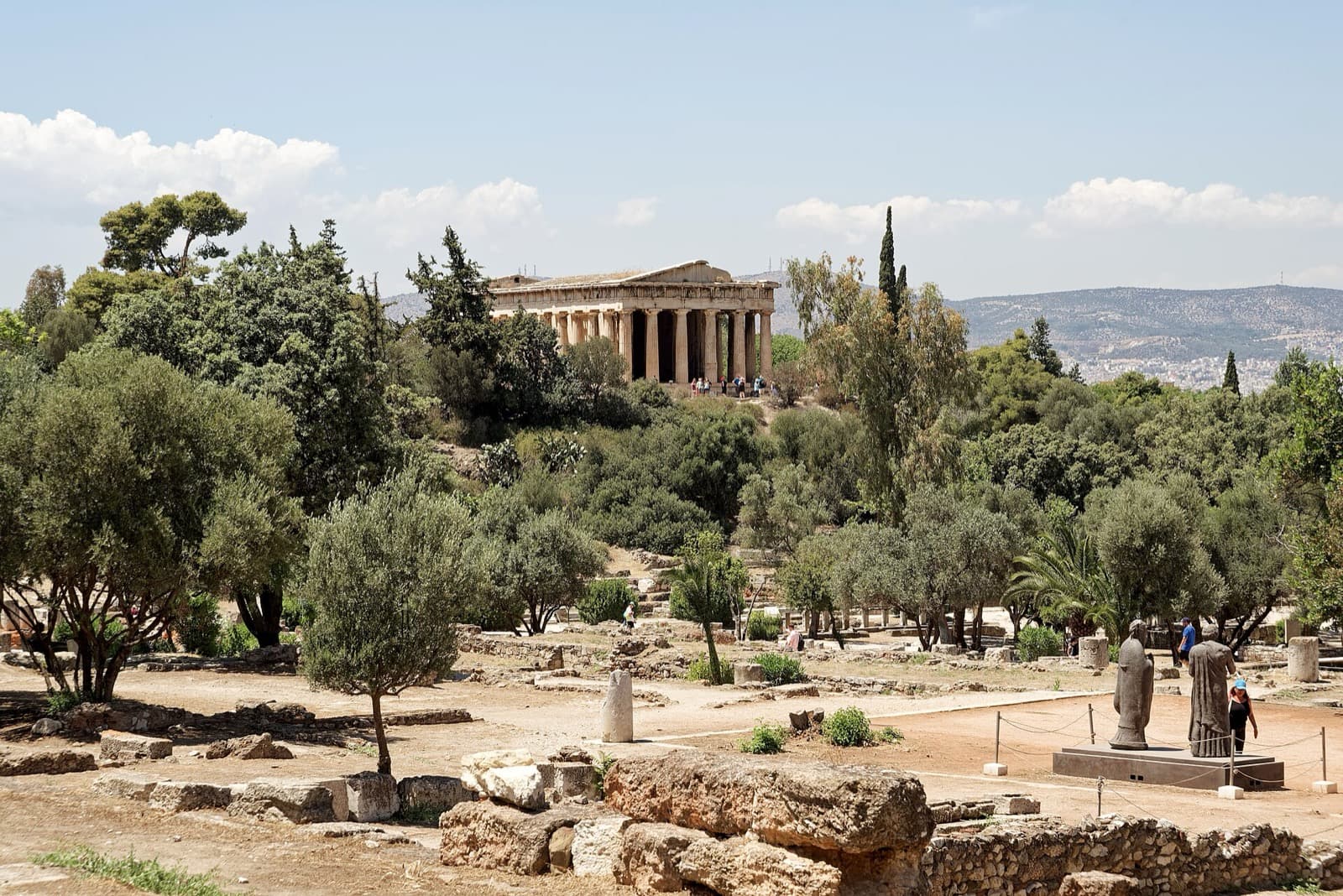
Two things survived when the rest crumbled, and both survived by being reused. The Temple of Hephaestus, widely regarded as the best-preserved ancient Greek temple still standing, lived on because it served as the Orthodox church of Saint George Akamates from about the seventh century until 1834. The little Church of the Holy Apostles, built around the year 1000, was one of only two monuments spared when archaeologists demolished a whole later neighbourhood to excavate the buried civic centre. End on the Areopagus, the bare rock outside the fence, and you see both floors at once: the flat ground of self-government below, the postcard Acropolis rising behind.
An island transplanted under the rock
Hear a stop from this walk
Agios Georgios tou Vrachou: Saint George of the Rock
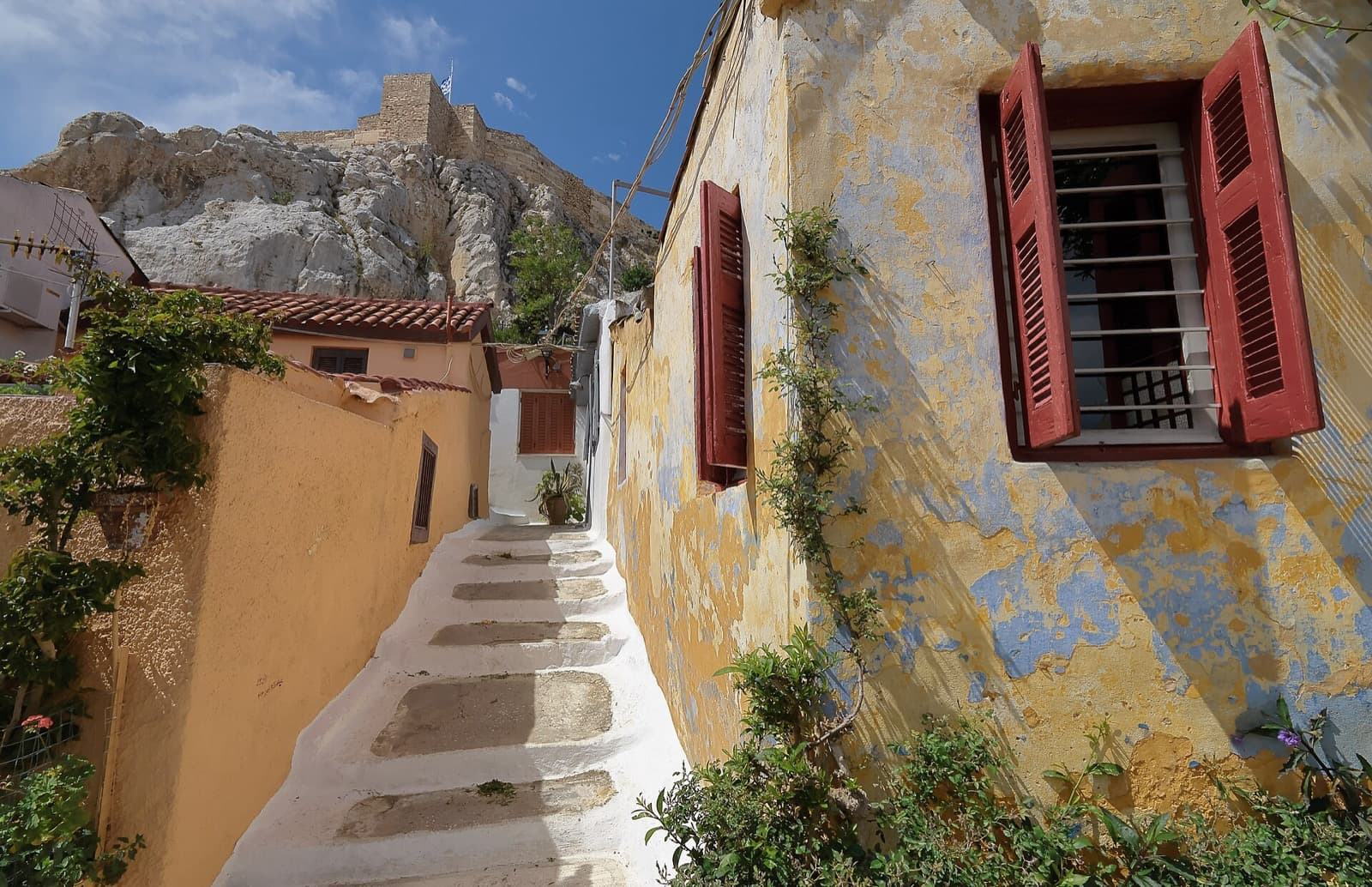
The second floor is domestic, and it does not belong here at all. The Plaka and Anafiotika walk climbs to a cluster of whitewashed cubic houses pressed against the northeast slope of the Acropolis: an Aegean island village built into a landlocked capital. When King Otto needed a new royal capital raised in the eighteen thirties, construction workers came from the islands, many from Anafi in the Cyclades. From the early eighteen forties onward they settled on the slope and built in the only style they knew. The streets still have no names; houses are simply numbered Anafiotika one, Anafiotika two, the way a small island village never needed formal addresses. Only about forty-five of the original houses remain, and the Greek state began buying them up in 1970 to protect the quarter. The first two recorded residents were a carpenter, G. Damigos, and a construction worker, M. Sigalas: the very trades that built modern Athens.
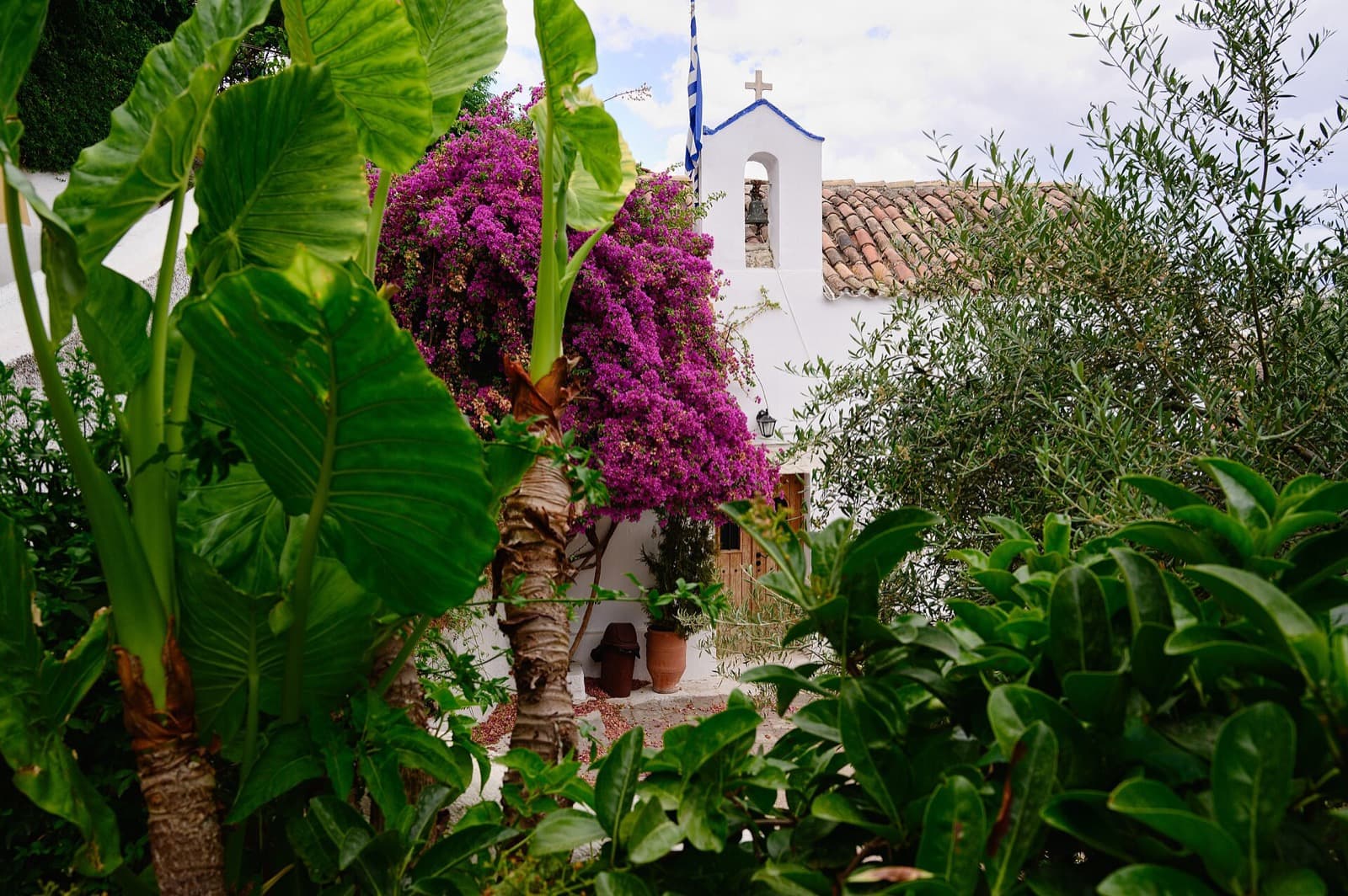
The settlers brought their faith as well as their masonry. The small church of Agios Georgios tou Vrachou was rebuilt in the nineteenth century by the residents themselves, in the same Cycladic style, and its companion Agios Simeon keeps a revered copy of the Panagia Kalamiotissa icon carried here from Anafi. Below the island lanes, Plaka stacks its other layers: the Choragic Monument of Lysicrates, erected in 335 to 334 B C to display a chorus-victory tripod and carrying what is widely recognised as the first known use of the Corinthian order on the exterior of a building; the octagonal Tower of the Winds, which told time three ways at once and later served as a lodge for Qadiri dervishes between 1751 and 1821. Highest of the modern layers is the Kleanthis House on Tholou Street, an Ottoman-era home where King Otto founded the University of Athens on the third of May 1837. A country that had won independence only a few years earlier planted its first university not in a palace but in a repurposed Ottoman house among the ruins.
Where the layers refuse to sort themselves
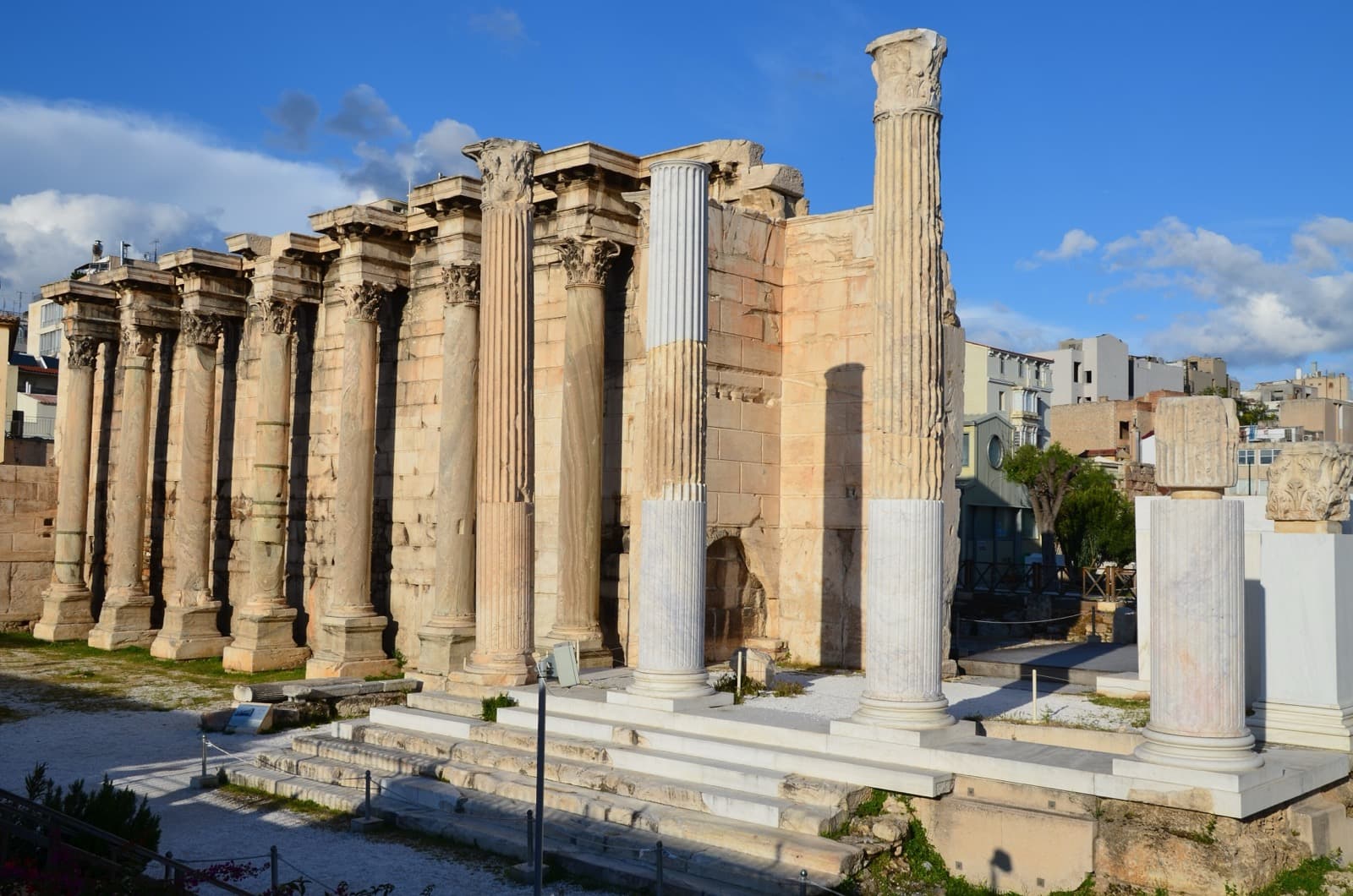
The third floor is the loud one, and here the layers do not stack neatly, they collide. The Monastiraki and Psyrri walk reads the bazaar quarter through smell, sound, and colour, because the pile-up is the whole point. Monastiraki Square puts four ages of the city in one sweep of the head: the tenth-century Church of the Pantanassa (whose name, little monastery, gave the whole neighbourhood its name), the Tzistarakis Mosque built in 1759 under the Ottoman governor Mustapha Agha Tzistarakis, the modern metro rumbling underneath, and the Acropolis rising over the rooftops. Just off the square, the surviving west facade of Hadrian's Library, built around 132 A D, edges the crowds with Corinthian columns of Karystos marble.
From there the walk peels the trades back. Ifestou Street, the metalworkers' lane, is named for Hephaestus, god of the forge, and really did house the city's blacksmith shops in an area once called Gyftika; his ancient temple stands within sight in the Agora nearby. Avissynias Square is the antique heart of the flea market, busiest on Sundays, where the old nickname Yussuroum recalls Elias Yussuroum, a dealer from Smyrna who opened the first Monastiraki antique shop at the end of the nineteenth century. The sensory climax is the Varvakios Agora, the covered meat and fish market inaugurated in 1884, an iron-and-glass hall in the same family as the old Les Halles in Paris, funded by the benefactor Ioannis Varvakis. Then Psyrri, one of the oldest quarters, home to coppersmiths and tanners and once ruled in the eighteen seventies by the koutsavakides street toughs, whose grip broke in 1893 when police chief Dimitrios Bairaktaris arrested the gang in about a month. The walk lets out its breath at Agia Irini Square, once the city's flower market, laid out between 1855 and 1857, its church built from 1846 and briefly the metropolitan cathedral when the capital moved to Athens.
Reading the city as stacked floors
Put the three walks side by side and the through-line holds. Athens is not one thing preserved under glass. It is a set of floors that were reused rather than cleared: a temple saved by becoming a church, an Ottoman house that became a university, an ancient timepiece that became a dervish lodge, a Roman market that shares its ground with a mosque. The reuse is why so much survives, and it is why the city rewards walking at ground level rather than only climbing to the rock. Plan the three as a loose cluster over a day or two, each stop self-contained, and let the pile-up be the star. Browse all our Athens walking tours to build the route that fits your pace.
Sources
- Ancient Agora of Athens, American School of Classical Studies at Athens (Agora Excavations): history of the Stoa of Attalos, Tholos, Bouleuterion, and ostracism finds.
- Hellenic Ministry of Culture (Odysseus cultural portal): Ancient Agora, Roman Agora, Tower of the Winds, and Hadrian's Library site records.
- Athens University History Museum: founding of the University of Athens in the Kleanthis House, 1837 to 1841.
- Museum of Greek Folk Art: Tzistarakis Mosque and its ceramics collection.
- City of Athens cultural heritage records: Anafiotika settlement, Varvakios Agora, and Agia Irini Square histories.
Frequently asked questions
- Where in Athens was democracy actually invented?
- Not on the Acropolis but on the flat ground of the Ancient Agora below it. There the Council of Five Hundred met in the Bouleuterion, its standing committee ate and slept in the round Tholos, and citizens voted to exile fellow citizens by ostracism. More than eleven thousand inscribed voting sherds have been excavated from the Agora and the nearby Kerameikos.
- What is Anafiotika and why does it look like a Greek island?
- Anafiotika is a cluster of whitewashed cubic houses built into the northeast slope of the Acropolis in the early eighteen forties. Construction workers from the Cyclades, many from the island of Anafi, came to build modern Athens and rebuilt in their home island's Cycladic style. Only about forty-five original houses remain, and its streets have no names: houses are numbered Anafiotika one, Anafiotika two.
- Why is the Temple of Hephaestus so well preserved?
- It survived because it stopped being a pagan temple and became a Christian one. It served as the Greek Orthodox church of Saint George Akamates from about the seventh century until 1834, so it was maintained and roofed for over a thousand years while neighbouring buildings were quarried for stone. It is widely regarded as the best-preserved ancient Greek temple still standing.
- What makes Monastiraki and Psyrri worth walking?
- The appeal is the pile-up of eras in one quarter. Monastiraki Square alone holds a tenth-century Byzantine church, the Tzistarakis Mosque of 1759, a modern metro, and a view up to the Acropolis. Nearby you can walk Hadrian's Library from around 132 A D, the Varvakios covered market from 1884, and Psyrri, a working-class quarter of coppersmiths and rebetiko music.
- How much time do I need for the three Athens walks?
- Each walk runs about ninety minutes to two hours at an unhurried pace, so plan the three as a loose cluster over a day or two. Every stop is self-contained, so you can skip freely and wander between sites in any order. Start archaeological sites early or in the last two hours before closing to avoid midday sun, since they offer almost no shade.
Ready to experience it?
Plaka and Anafiotika: The Island Under the Rock
75 min · 1.6 km · moderate
More from Athens
Explore more at your own pace.
Anafiotika: The Cycladic Island Village Hiding on the Acropolis Slope
Hadrian's Library: The Roman Wall That Anchors Monastiraki
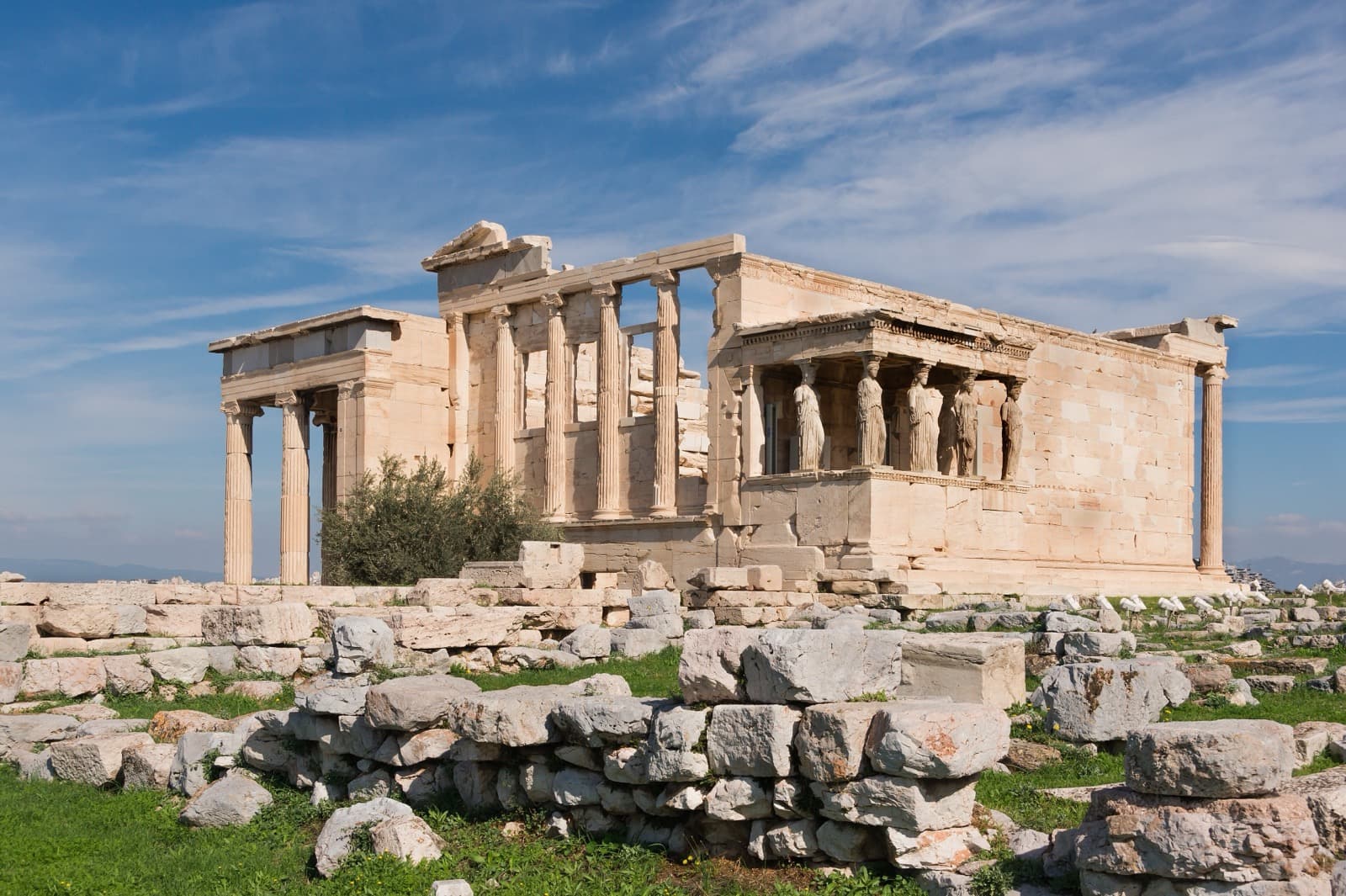
The Caryatids: The Maidens of the Erechtheion
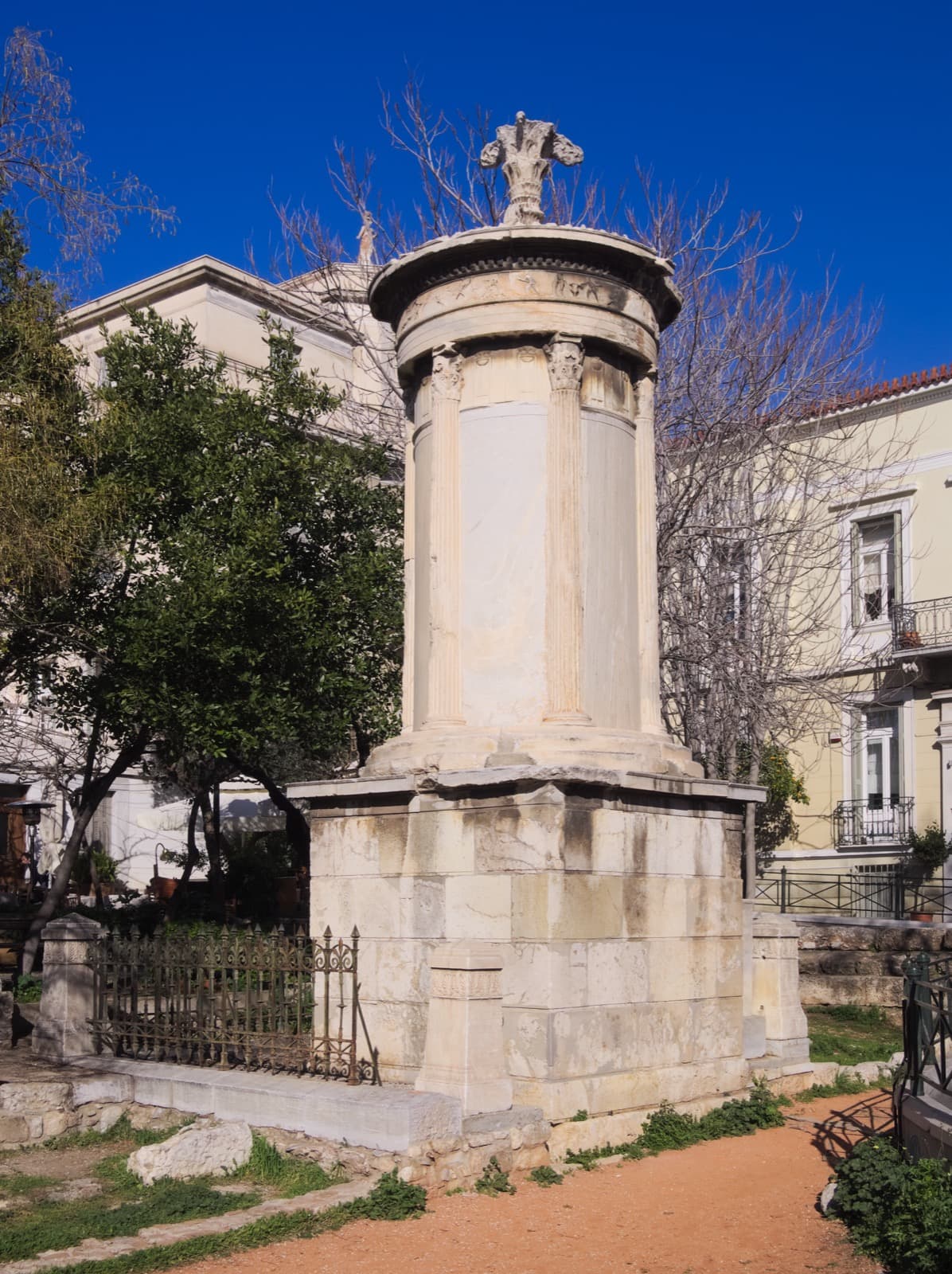
The Choragic Monument of Lysicrates: A Trophy Case That Changed Architecture
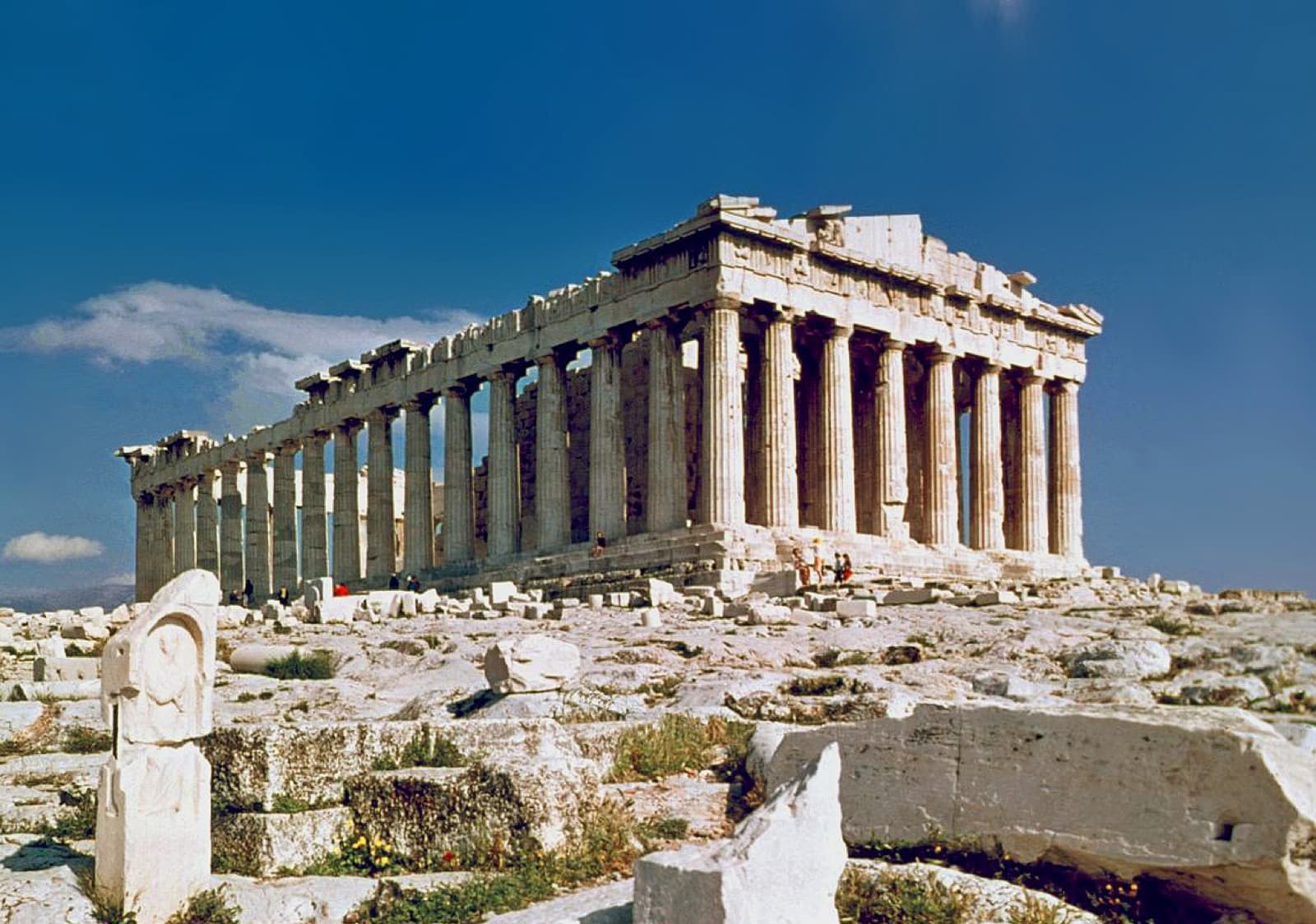
The Parthenon: The Temple That Set the Standard