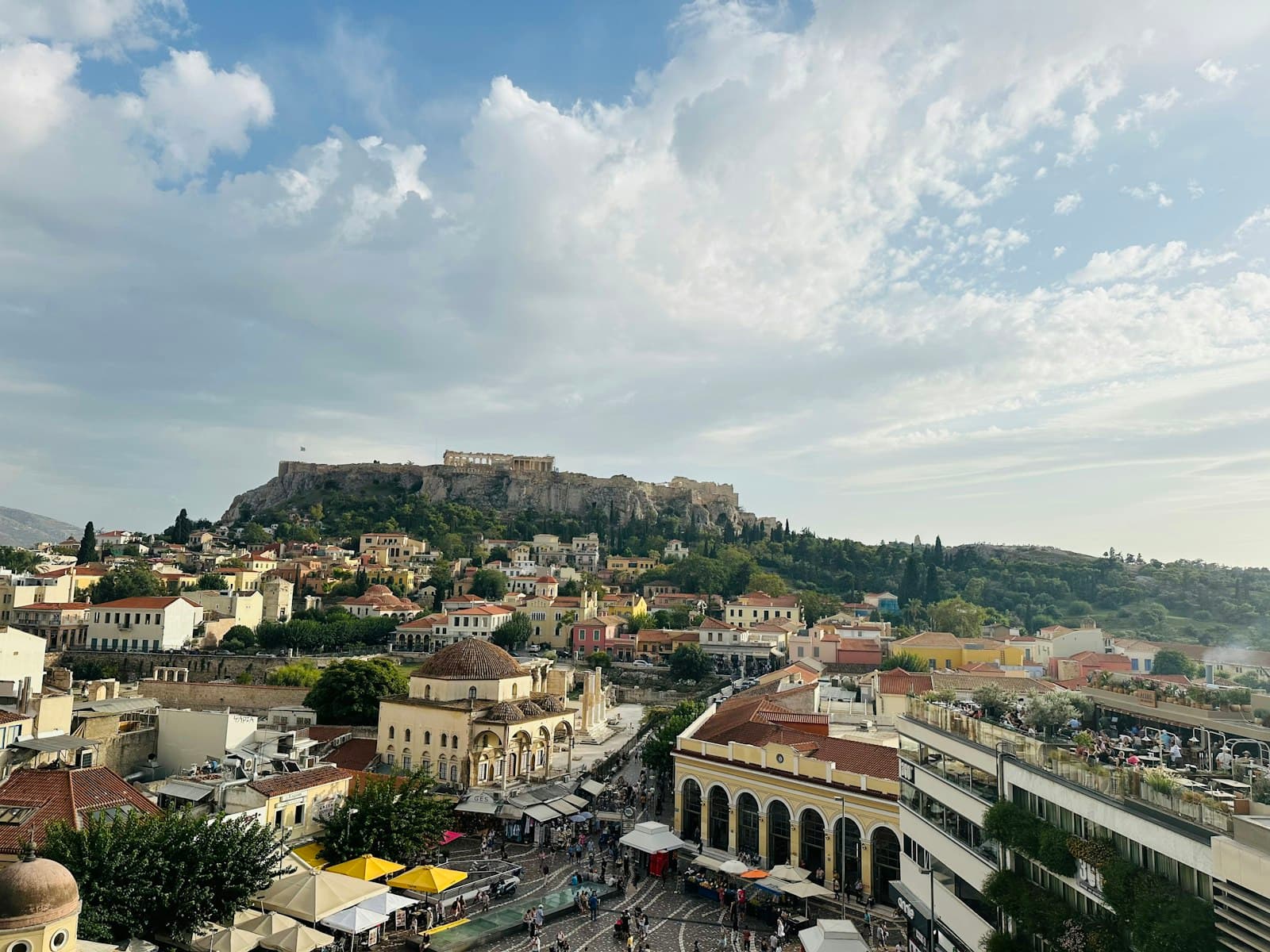
A sensory walk through Monastiraki and Psyrri, the raucous bazaar heart of Athens where the ancient city, the Ottoman market, and modern street life pile up on top of one another. Read the quarter through smell, sound, and colour: leather and spice, grilling meat and coffee, the ring of a coppersmith's hammer, spray paint and rebetiko.
Start · Monastiraki Square: the crossroads of the layered city
DirectionsStops
- 1
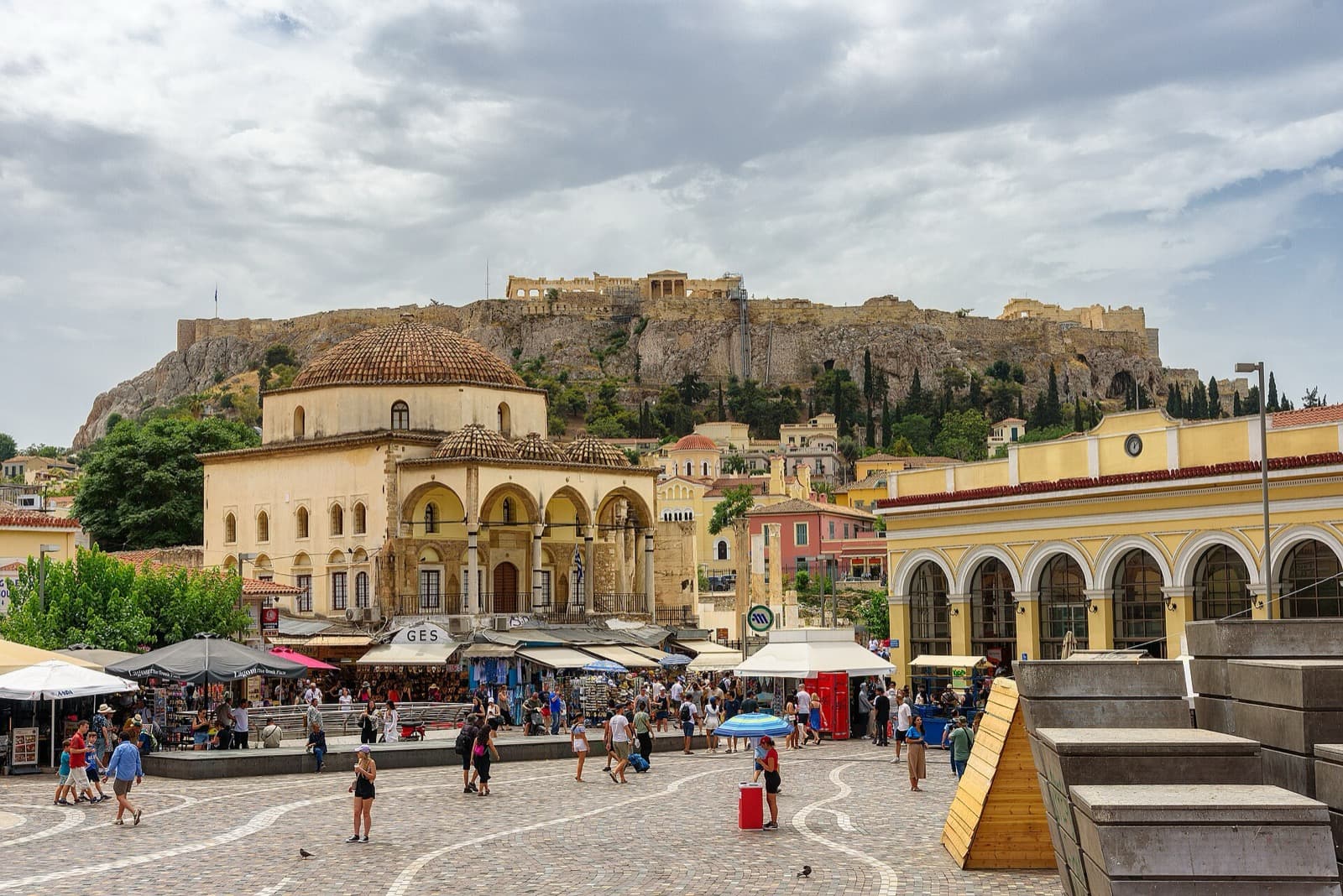
Monastiraki Square: the crossroads of the layered city
The central crossroads of the quarter, where a tenth-century church, an Ottoman mosque, and the modern city stack up in a single glance.
- 2
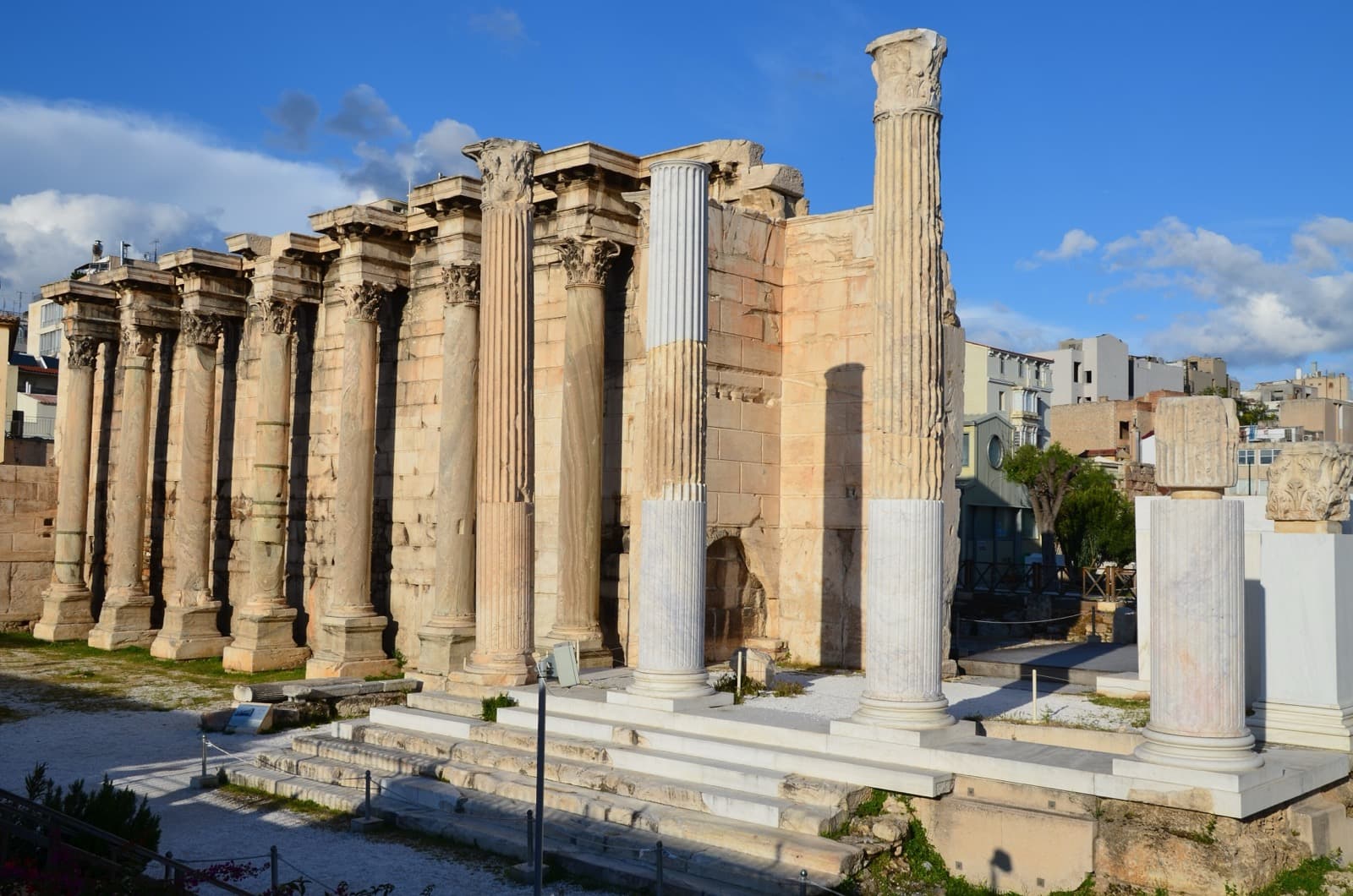
Hadrian's Library: the Roman wall on the square
The surviving west facade of a grand Roman cultural complex built by the emperor Hadrian, edging the modern square with Corinthian columns.
- 3
Ifestou Street: the metalworkers' lane
The pedestrian spine of the flea market, named for the Greek god of the forge and once lined with the city's blacksmith and craft workshops.
- 4
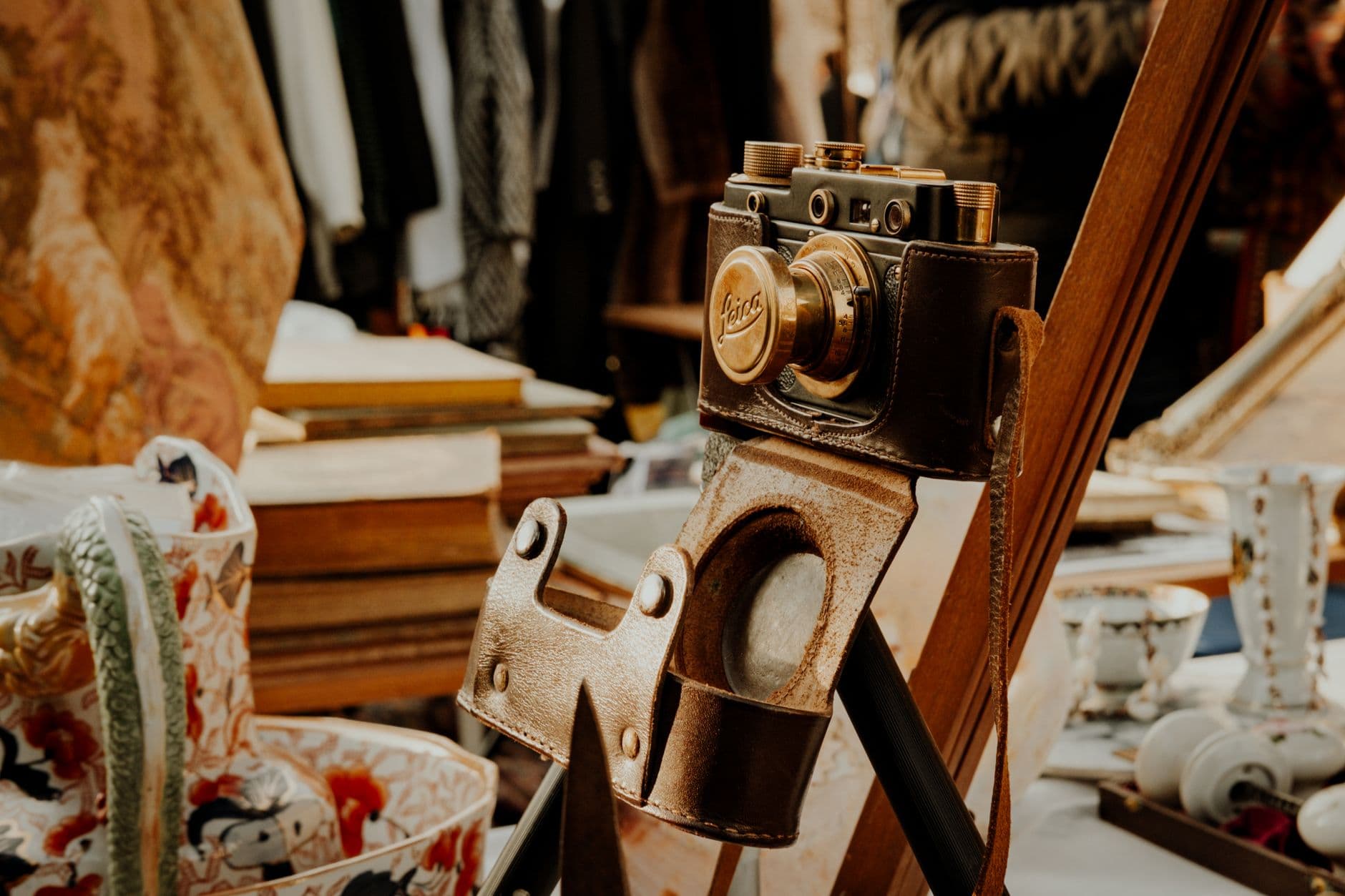
Avissynias Square: the flea market's antique heart
The dusty, brass-and-old-wood epicentre of the Athens antique trade, busiest on Sundays as the famous open-air flea market.
- 5
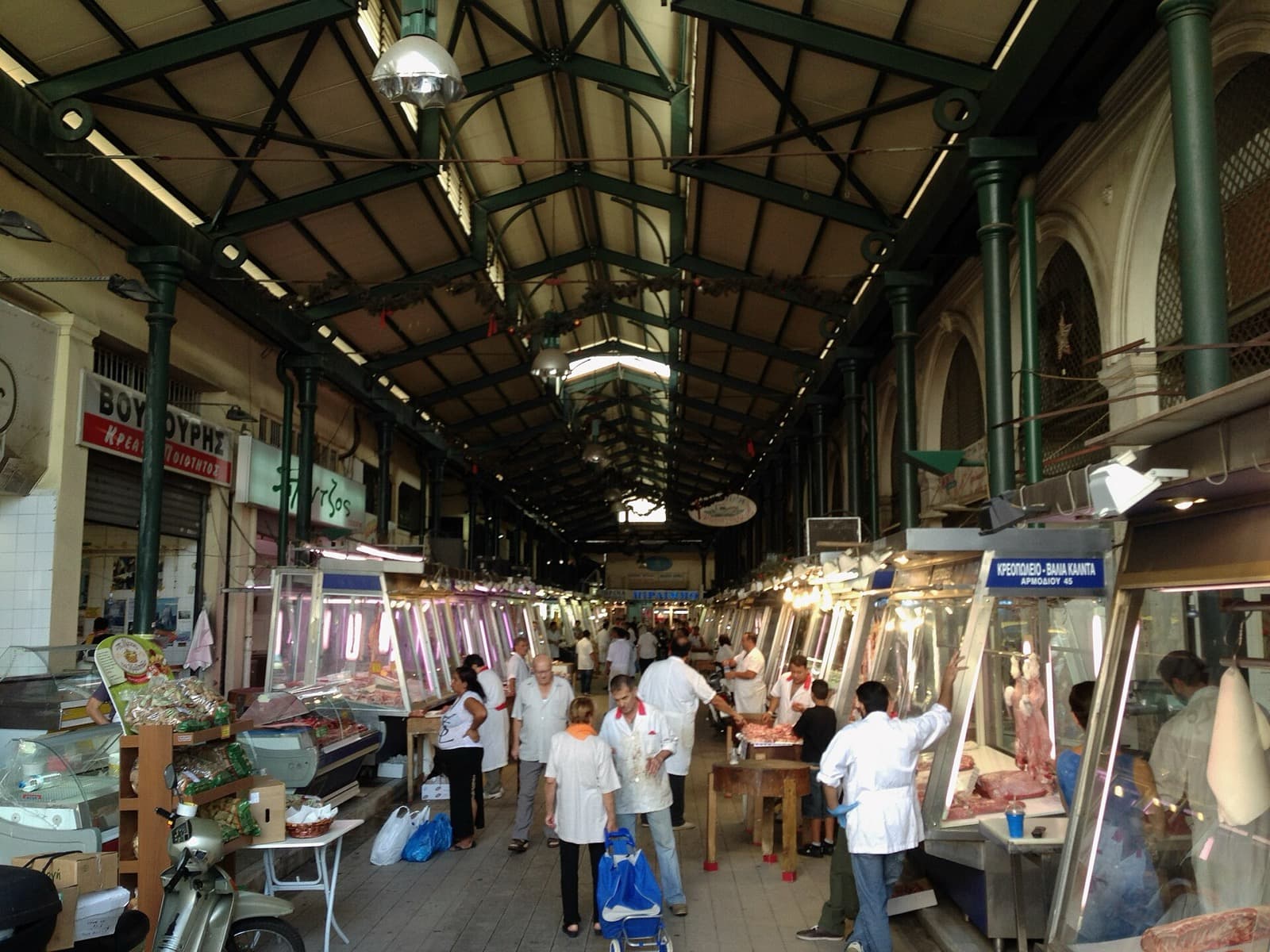
Athinas Street and the Varvakios Market: the belly of Athens
The broad central market street and its great covered meat-and-fish market, the loudest, fullest, most sensory room of the whole quarter.
- 6
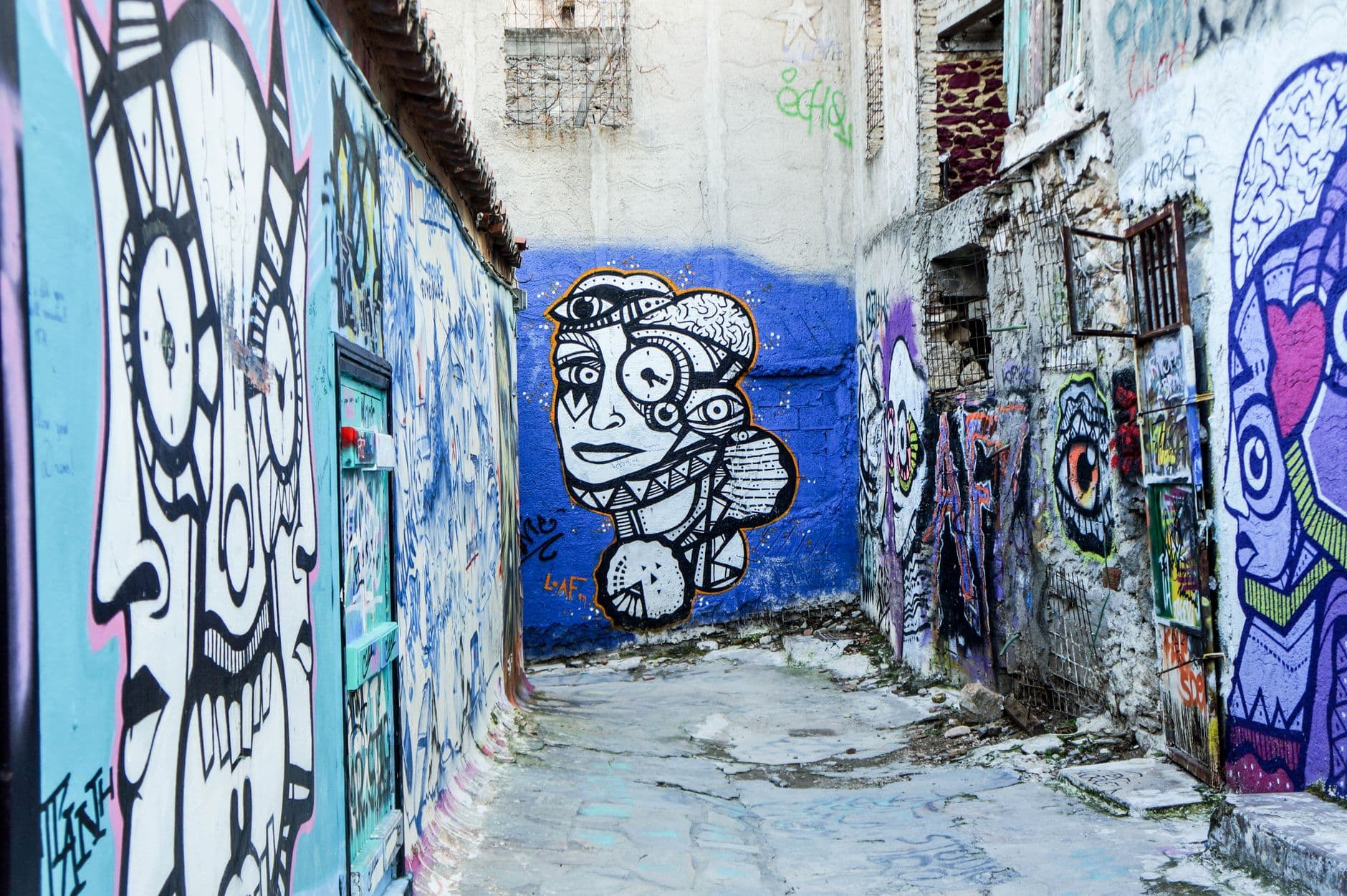
Psyrri: tanners, toughs, and rebetiko
One of the oldest quarters of Athens, a working-class district of craftsmen and coppersmiths, once ruled by street toughs, now alive with street art and music.
- 7
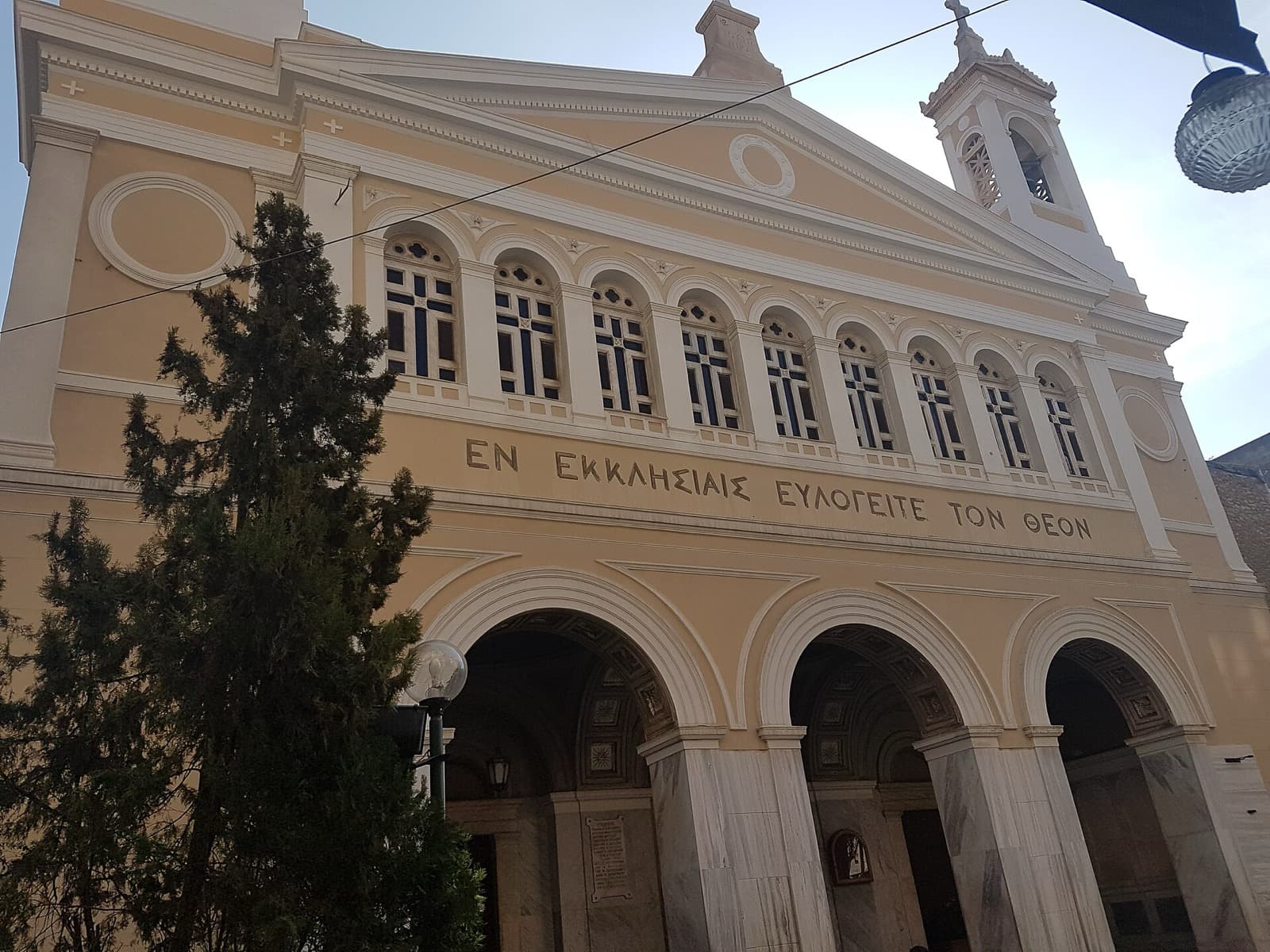
Agia Irini Square: the old flower market
A quieter, greener square built around the Church of Saint Irene, once the city's flower market and now a calm cafe-ringed edge of the bazaar.
Details
Best Time to Visit
Late morning to early afternoon is the sensory peak, when the Varvakios market and Athinas Street trades are in full swing. For the antique flea market at Avissynias Square, come on a Sunday, its busiest and best day. Come earlier in the day in high summer to beat the worst of the heat, and note that the covered food market winds down by mid-afternoon and is closed on Sundays.
Pro Tips
- •Do the walk hungry: the sensory heart is the food market, and the meze tavernas of Psyrri reward an appetite, so save room rather than filling up early.
- •If antiques are your draw, plan for a Sunday, when Avissynias Square becomes the famous open-air flea market and the whole quarter is at its liveliest.
- •The Church of the Pantanassa on Monastiraki Square and the Church of Saint Irene at the end are both working Orthodox churches, so step in quietly and dress modestly if you want a look inside.
- •Hadrian's Library can be entered for about six euros in summer or three in winter, and it is included in the combined multi-site ticket, so buy that pass if you plan to see several ancient sites.
- •Wear closed, comfortable shoes with grip: the flea-market and Psyrri lanes are narrow, uneven, and often slick with market runoff or spilled produce.
- •Go at your own pace and skip freely. Every stop is self-contained, so if the covered market feels overwhelming, step back out to the street and rejoin the walk when you are ready.
Safety & Precautions
- •The flea market, the Varvakios food market, and Athinas Street get densely crowded, and pickpockets work busy market lanes: carry your bag in front, keep your phone and wallet secured, and stay aware in the tightest crush.
- •Footing is uneven throughout: cobbled and stepped lanes, wet market floors slick with ice-melt and produce, and archaeological ground at Hadrian's Library. Watch your step and wear proper shoes rather than open sandals in the food market.
- •Athens summers are hot and dry with little shade in the open squares and market streets, so carry water, wear sun protection, and pace yourself, especially in the midday heat.
- •Psyrri is a lived-in, working neighbourhood as much as a nightlife quarter, so respect residents' privacy, keep your voice down in the quieter side lanes, and remember that its churches and workshops are places of worship and work, not just photo stops.
Travel advisory: Exercise Normal Precautions (Level 1).
Gallery
Related Reading
Go deeper on what you'll see, hear, and walk through.
Overview
Athens Travel Guide: How Many Days, Getting Around, and Safety
7 min
Overview
Best Self-Guided Walking Tours in Athens (2026)
4 min
Overview
One Day in Athens: A Walkable Morning-to-Night Itinerary
7 min
Thematic
Athens: The Ground Floor of the Western City
7 min
Thematic
Best Culture Walking Tours in Athens (2026)
2 min
Companion
The Varvakios Central Market: How to Read the Belly of Athens
6 min
Deep dive
Hadrian's Library: The Roman Wall That Anchors Monastiraki
6 min
Read
What to Eat in Athens: Dishes, Origins, and How to Order
6 min
Read the walk
The full story of Bazaar of the Coppersmiths, in words. Prefer to listen? Play it narrated, from home or on location.
Introduction
This is a walk through the market heart of Athens, in Greece, where the whole appeal is the mess. Ancient ruins, an Ottoman mosque, and old blacksmith lanes sit right on top of one another, and the sensory chaos is the point, not any single monument. So we are going to read this quarter through smell, sound, and colour: leather and spice, grilling meat and coffee, the ring of a coppersmith's hammer, spray paint and rebetiko music drifting out of a doorway. There are seven stops. Plan on about two hours if you linger, and about two kilometres of easy walking, though the lanes are narrow and the crowds are thick, so go at your own pace. Stop one opens on the central crossroads, where three layers of the city meet at once. From there we peel the layers back, one by one: a Roman library wall, a lane named for the god of the forge, and the antique heart of the flea market. Then we reach the loudest, fullest room of all, the great covered meat and fish market, before turning into the tough, painted, musical underbelly of the quarter. We finish somewhere quieter, a former flower square that marks the calm edge of the bazaar. Nothing here asks you to hurry. Skip a stop that does not pull you in, double back for one that does, and let the pile-up be the star. When you arrive at Monastiraki Square, begin with stop one.
1. Monastiraki Square: the crossroads of the layered city
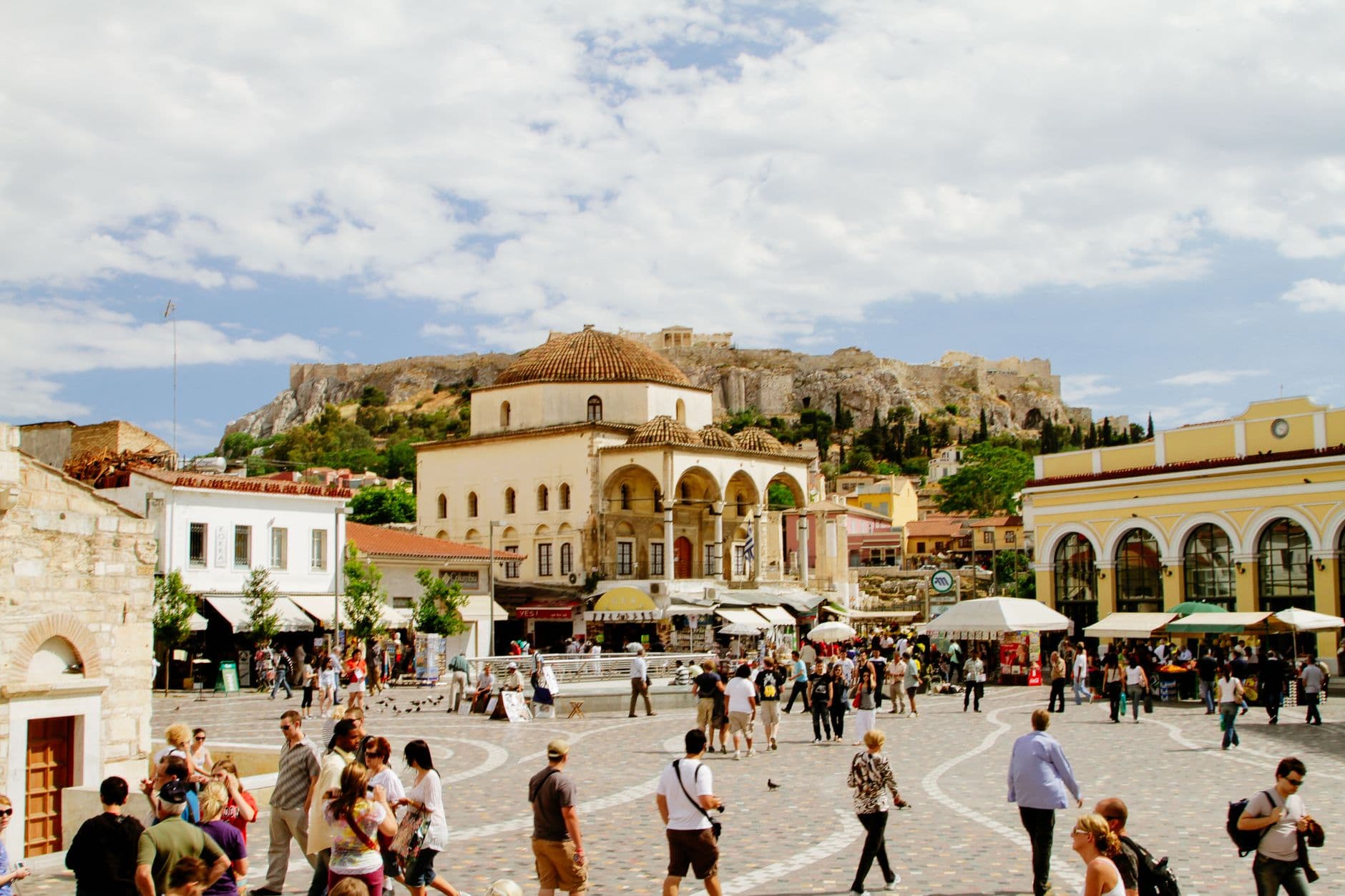
Stand still a moment and let the square work on you. Feet on stone, the rumble of the metro underneath, coffee and warm bread in the air, and a hundred conversations at once. This is the hub of the whole flea-market quarter, and the name itself tells you why the layers matter. Monastiraki means little monastery. It comes from the small barrel-vaulted church you can see here, the Church of the Pantanassa, a Byzantine monument that dates to the tenth century. According to the record of the church, it was once the katholikon, the main church, of a vanished monastery known as the Great Monastery. Over time people shrank the name to the little monastery, and that name spread to cover the whole area. It is still an active church, so keep your voice down if you step inside. Now lift your eyes to the other layer. The domed building on the edge of the square is the Tzistarakis Mosque, built in seventeen fifty-nine by Mustapha Agha Tzistarakis, the Ottoman governor of Athens. Greece was under Ottoman rule then, and this mosque is simply part of the city's layered story, not a curiosity. Today it holds a ceramics collection as an annex of the Museum of Greek Folk Art. Church, mosque, metro, and beyond the rooftops, if you turn, the Acropolis rising over it all. Four ages of the city in one sweep of the head. That pile-up is not a flaw here. It is the entire character of the place, and everything on this walk is a variation on it. Take your time. The flea-market streets fan out from right where you stand.
2. Hadrian's Library: the Roman wall on the square
Just off the square, a long wall of tall columns edges the crowds, older and quieter than anything trading around it. This is what survives of Hadrian's Library, one of the great building projects the Roman emperor Hadrian raised in Athens, around one hundred and thirty-two A D. The word library undersells it. This was a whole cultural complex, laid out like a Roman forum: a single grand entrance, an outer wall lined with niches, and inside, a broad courtyard with a decorative pool at its centre. There were gilded wooden ceilings, marble floors, and painted walls. It held papyrus scrolls, kept on the eastern side, and around the corners sat reading rooms and lecture halls. Think of it less as a book depot and more as a place to read, to study, and to hear a lecture, a monument to learning dropped into the heart of the city. What you see now is mostly the west facade, and it is worth a slow look. The columns are cut from Karystos marble, and the capitals crowning them are carved in the Corinthian order, the most ornate of the classical styles, all curling acanthus leaves. Run your eye along the line of them and you can feel the scale of the original wall. You can walk into the site if you like. Entry runs about six euros in the summer season and three euros in winter, and it is included in the combined ticket that covers several ancient sites. Or simply stand at the railing and let it be what it is right here: the Roman layer of the pile-up, sitting calm and grand while the bazaar clatters on around it.
3. Ifestou Street: the metalworkers' lane
Turn into the lane running west off the square and the crowd tightens around you. Souvenirs, jewelry, folk art, racks of vintage clothing, army surplus, and rows of handmade leather sandals hung up like garlands. This is Ifestou Street, and its name reaches back to metal and fire. In Greek myth, Ifestos, or Hephaestus, was the god of metalworking and the forge, the divine blacksmith who hammered at his anvil. That is a story the ancients told, not history, but it fits this street perfectly, because this is where Athens once did its metalwork for real. The whole area was known as Gyftika, named for itinerant metalworkers who settled here long before the Ottoman period, and the lane was lined with the city's blacksmith shops. Close your eyes for a second and imagine the sound it would have had: not this bright chatter of the market, but the steady ring of hammers on hot iron, sparks and smoke, the smell of coal and scorched metal. For years these workshops made handmade goods, leaning first toward shoes and leather. That heritage is still here in the sandals and the leather stalls, even as the trade has turned toward tourists. And there is a fitting echo close by. Just to the west, in the Ancient Agora, stands the Temple of Hephaestus, an ancient temple to the very same god of the forge, one of the best-preserved in the Greek world. I would not overclaim a straight line between the two, but it is a lovely coincidence that a street of blacksmiths carries the forge god's name within sight of his temple. Let the leather and the metal set the register here. This is the craft layer of the quarter.
4. Avissynias Square: the flea market's antique heart
Duck down a narrow lane off the metalworkers' street and you land in the antique heart of the flea market, Avissynias Square. The register changes at once. Less bright souvenir, more dust and old wood, the dull shine of brass, the smell of furniture polish and time. This little…
Full narration for this stop unlocks with the tour.
5. Athinas Street and the Varvakios Market: the belly of Athens
This is the loudest room on the walk, so brace for it. Athinas Street is the broad central market street running from Monastiraki toward Omonia Square, and it is lined end to end with the working trades: hardware and tools, food, spices, olives, second-hand everything. Follow it…
Full narration for this stop unlocks with the tour.
6. Psyrri: tanners, toughs, and rebetiko
Turn into Psyrri and the walls start talking. Spray-painted murals climb every surface, bouzouki and rebetiko music leak out of doorways, meze sizzles on grills, and somewhere down a side lane you can still catch the tap of a coppersmith's hammer. This is one of the oldest…
Full narration for this stop unlocks with the tour.
7. Agia Irini Square: the old flower market
After all that noise, this is where the walk lets out its breath. Agia Irini Square is a leafier, calmer space, ringed with outdoor cafes and centred on a handsome church. Agia Irini means Saint Irene, and Irene means peace, a fitting name for the quiet edge of the bazaar. The…
Full narration for this stop unlocks with the tour.