Plaka and Anafiotika: The Island Under the Rock
75 min · 1.6 km · moderate
A genuinely walkable one day in Athens moves in a tight loop through the old center, and you can cover it entirely on foot without a car, a bus, or a bike. Start early on the flat ground of the Ancient Agora, climb the Acropolis before the heat and the crowds, then spend the afternoon and evening wandering down through Plaka's stacked lanes and the market streets of Monastiraki and Psyrri. Every place named below sits within a compact triangle you can cross in about fifteen minutes end to end, which is exactly why Athens rewards slow walking over a packed sightseeing bus.
Here is the shape of the day, morning to night, with the tickets, hours, and distances checked against current 2026 information. Our three self-guided audio walks map onto it directly, so you can hand the narration the parts that reward standing still and listening. Browse them on the Athens walking tours hub or from the /greece/athens city page.
The short answer: one loop, three tours, no car
Base yourself near Monastiraki or Syntagma. Both sit on the metro and put you a ten minute walk from almost everything on this itinerary. From the airport, Metro Line 3 (the blue line) runs to Syntagma in about 40 minutes and one stop further to Monastiraki, for a single fare of 9 euros as of 2026. Once you are in the center, you will not need transport again all day.
The walking order that works best: Ancient Agora at opening, then up to the Acropolis, then a long lunch and drift through Plaka, then the markets and squares of Monastiraki and Psyrri as the light drops. The total on-foot distance across the whole day is roughly five to six kilometers, spread across many hours, so it reads as a series of short strolls rather than a march.
Morning: the Ancient Agora at opening
Hear a stop from this walk
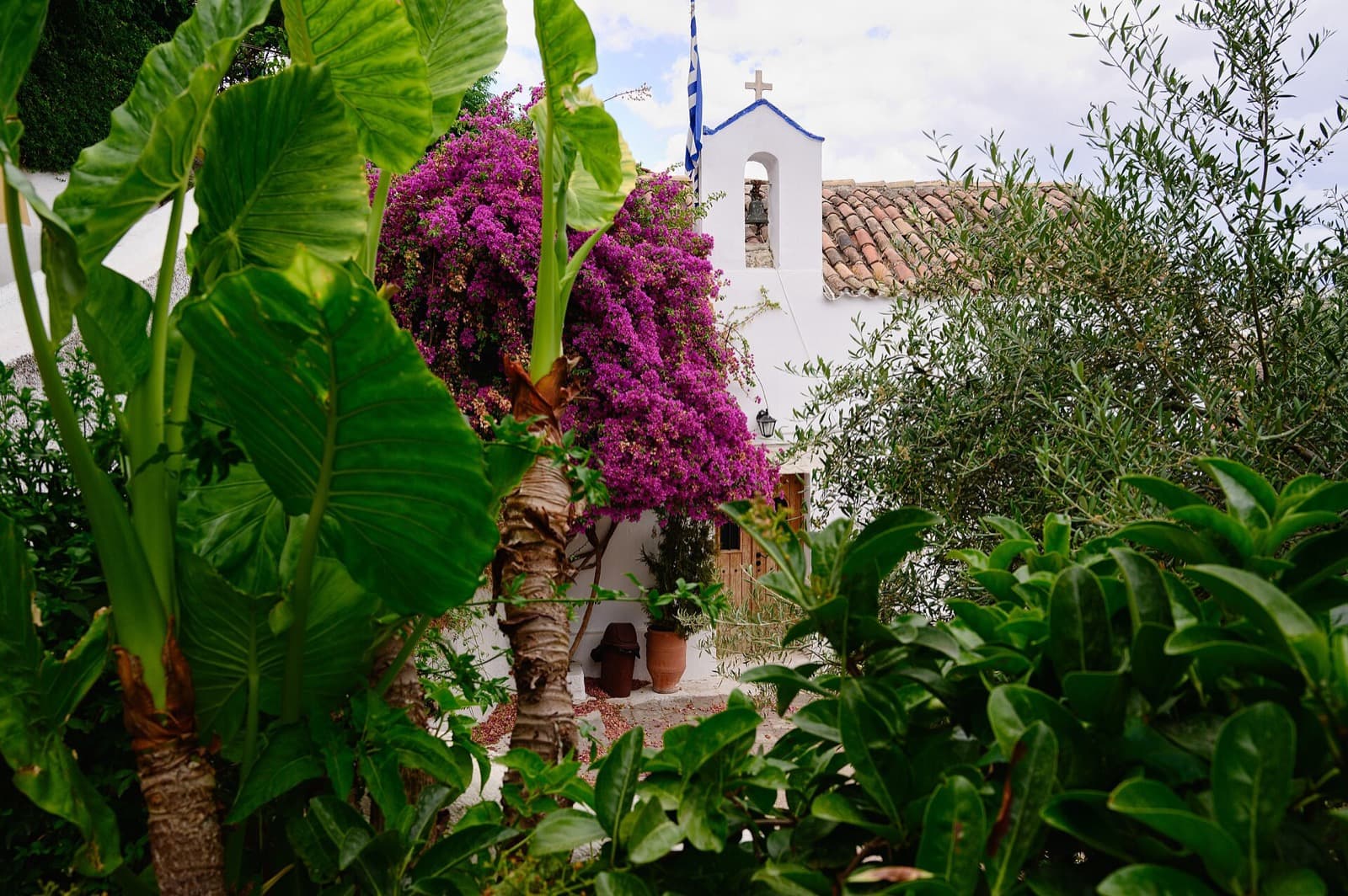
Agios Georgios tou Vrachou: Saint George of the Rock
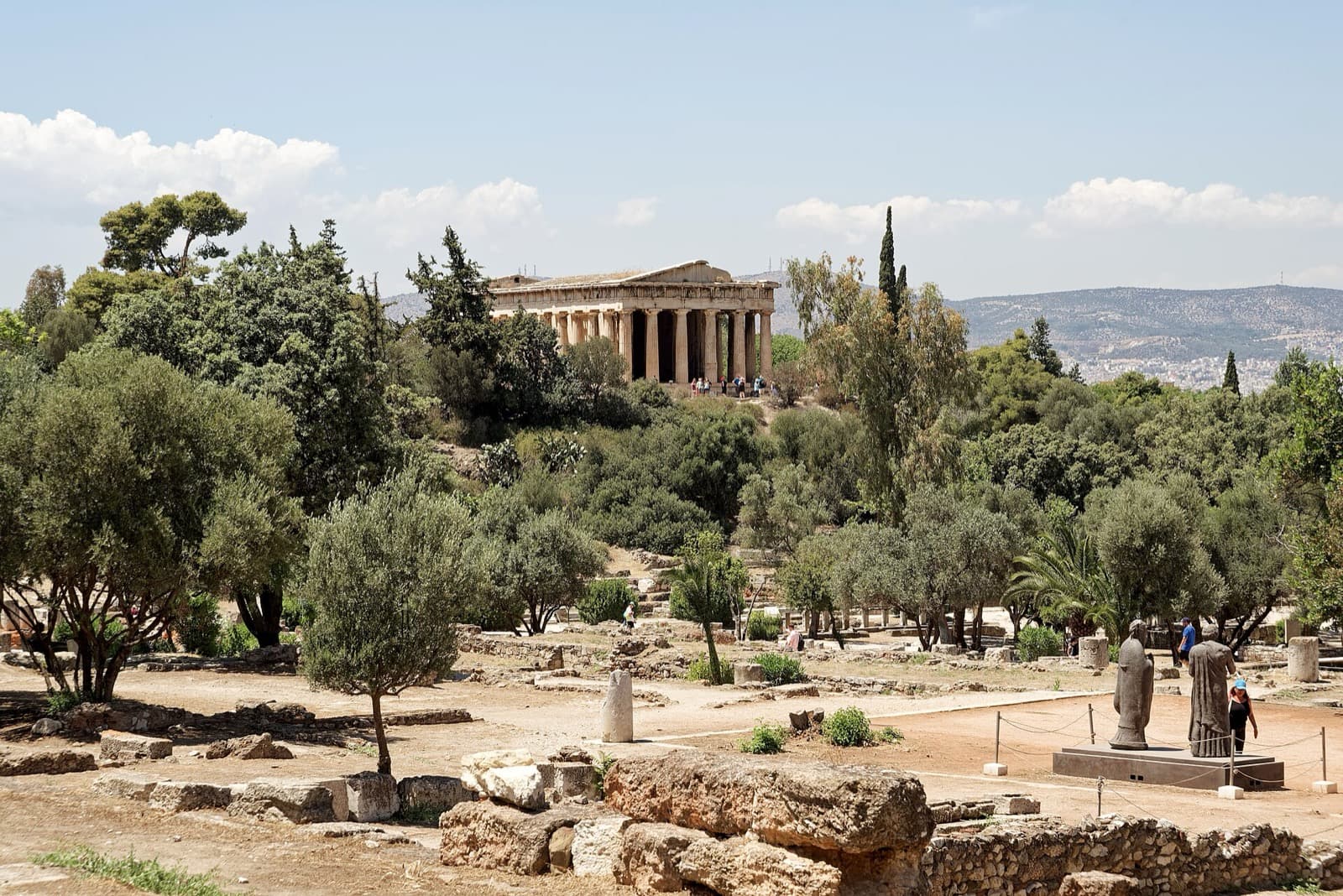
Begin where the idea of the citizen began. The Ancient Agora is the flat marketplace below the Acropolis where Athenians argued, voted, and governed. It opens at 8:00 in the morning and closes at 8:00 in the evening in summer, dropping to a 5:00 close in winter, with the last entry about twenty minutes before closing. Adult admission is 10 euros; entry is free for EU residents under 25 and children under six.
Go here first, before the Acropolis, for one practical reason: shade and quiet. The best surviving building in the whole complex is the Temple of Hephaestus, a Doric temple on the western rise that is among the most complete ancient Greek temples still standing. From there the reconstructed Stoa of Attalos, now the site museum, gives you a cool interior and a sense of what a covered civic hall felt like. This is the stretch our Ancient Agora audio walk narrates: eight stops from the Stoa across the Panathenaic Way to the Areopagus, the rocky outcrop just outside the fence that you can climb for free at any hour.
Late morning: up to the Acropolis
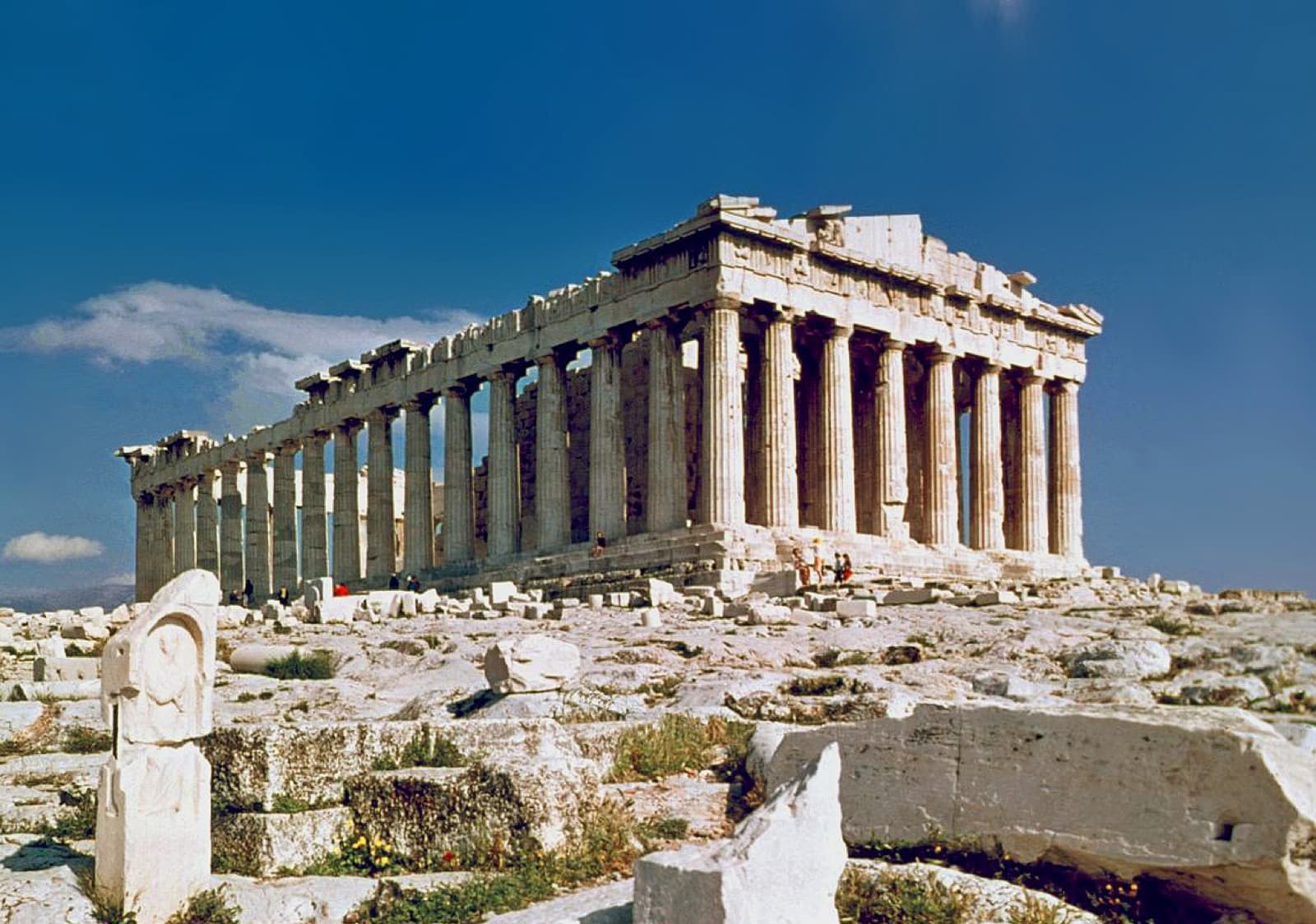
From the Agora it is a short uphill walk to the Acropolis entrance. This is the one stop of the day that needs planning ahead. As of 2026 the Acropolis uses a timed entry system all year, so you book a slot online in advance rather than turning up and queueing. In the summer season (April through October) the site is open 8:00 in the morning to 8:00 in the evening, with last entry at 7:30; in winter (November through March) it closes at 5:00. A standard adult ticket is 30 euros, and there is no longer a reduced winter rate.
Book an early slot if you can, ideally two to three weeks ahead for July and August, and carry water and a hat. The marble underfoot is slick and there is almost no shade on top. If you would rather save the 30 euros and the climb, the view of the Parthenon from the Areopagus or from Philopappou Hill is free, and the day still holds together without going up.
Midday: down through Plaka's layers
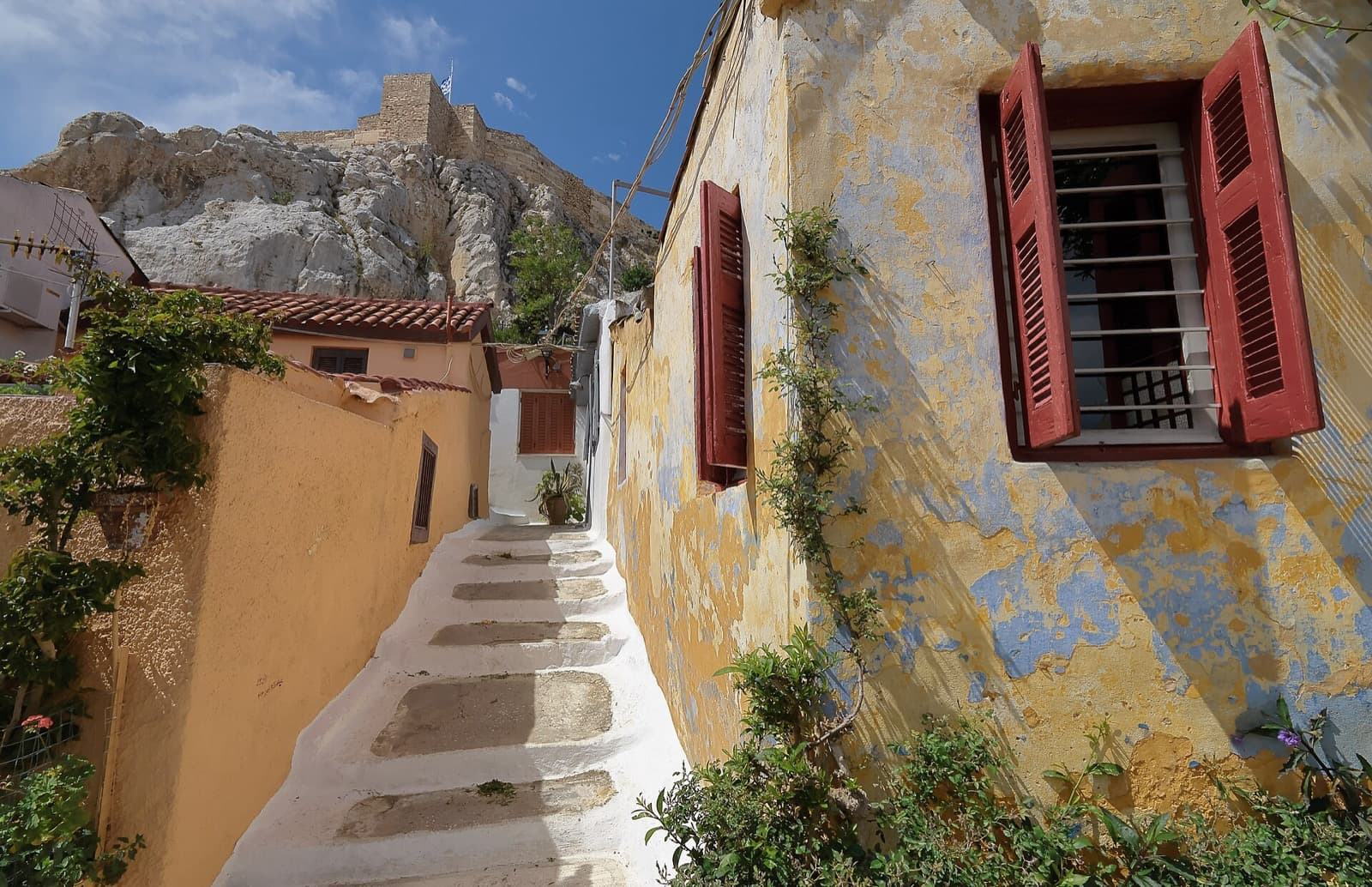
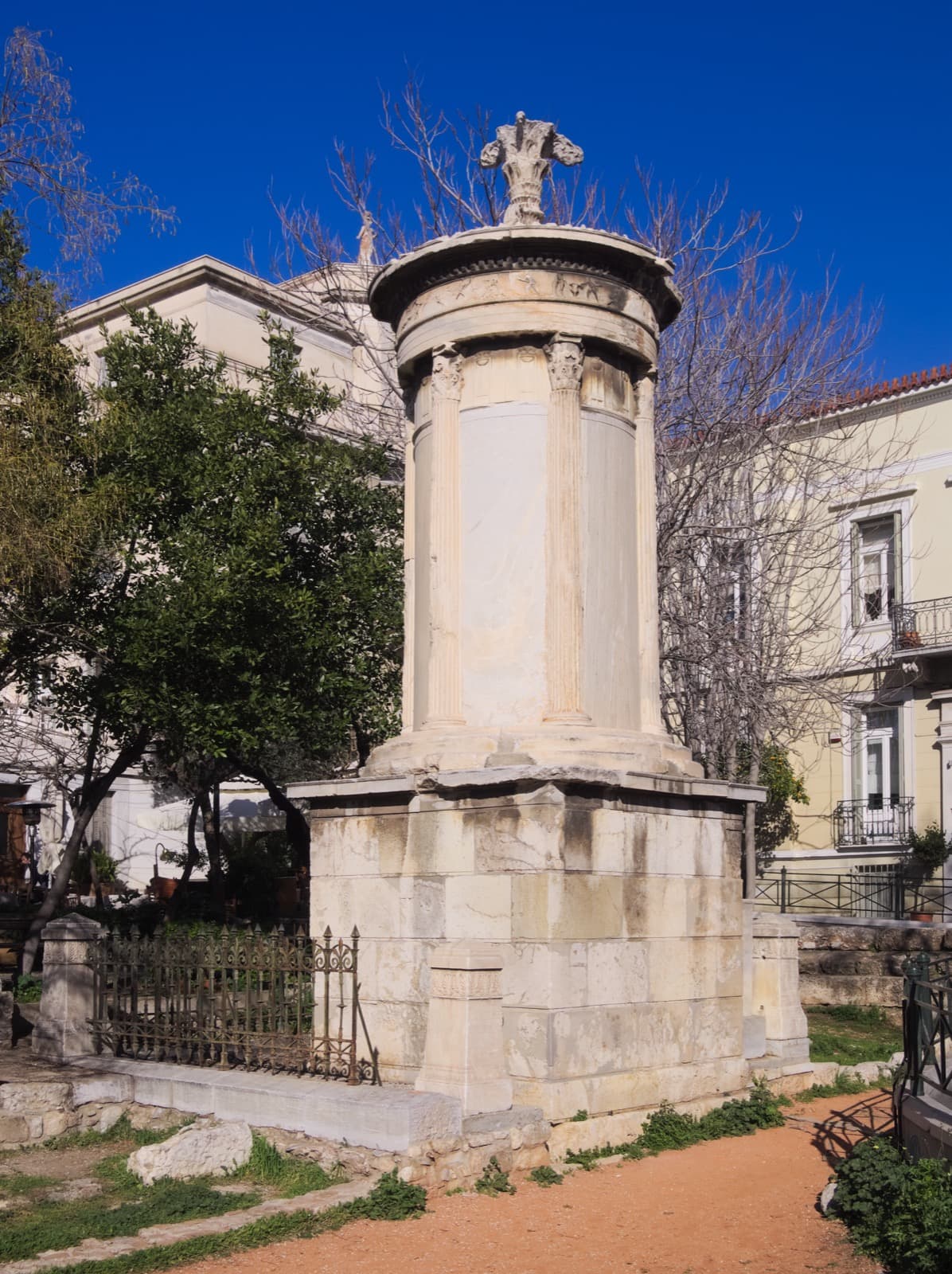
Come off the hill into Plaka, the old quarter that wraps the northern and eastern slopes. This is the part of Athens to slow right down. On the rock itself is Anafiotika, a cluster of whitewashed, cube shaped houses built by island stonemasons from Anafi in the nineteenth century, so that one corner of the city looks like a Cycladic village folded into the capital. From there you thread past the Choragic Monument of Lysicrates, a small marble rotunda from the fourth century BC, and the Tower of the Winds, an octagonal marble clock tower.
The Tower of the Winds sits inside the Roman Agora, a separate walled site with its own ticket of about 8 euros. It keeps shorter hours than the main sites: roughly 8:00 in the morning to 8:00 in the evening in high summer, and only to 3:00 in the afternoon from November through March. Our Plaka and Anafiotika audio walk is built for exactly this stretch, seven stops that read the neighborhood as stacked layers, from the island houses down through Roman and Ottoman Athens to the house where the young Greek state placed its first university.
Plaka is where you eat. Sit down, take an hour, and let the middle of the day pass. Most of the walking here is on car free lanes, so the pace is entirely yours.
Afternoon and evening: markets, then Monastiraki and Psyrri
Spend the back half of the day in the loud, trading half of the old town. If it is a weekday or Saturday, walk up Athinas Street to the Varvakios Central Market, the covered meat and fish halls that have fed Athens since 1886. It runs Monday to Saturday, roughly 7:00 in the morning to 6:00 in the evening, and is closed Sundays and public holidays; the meat and fish aisles are liveliest and freshest before mid afternoon, so aim to arrive by early afternoon at the latest.
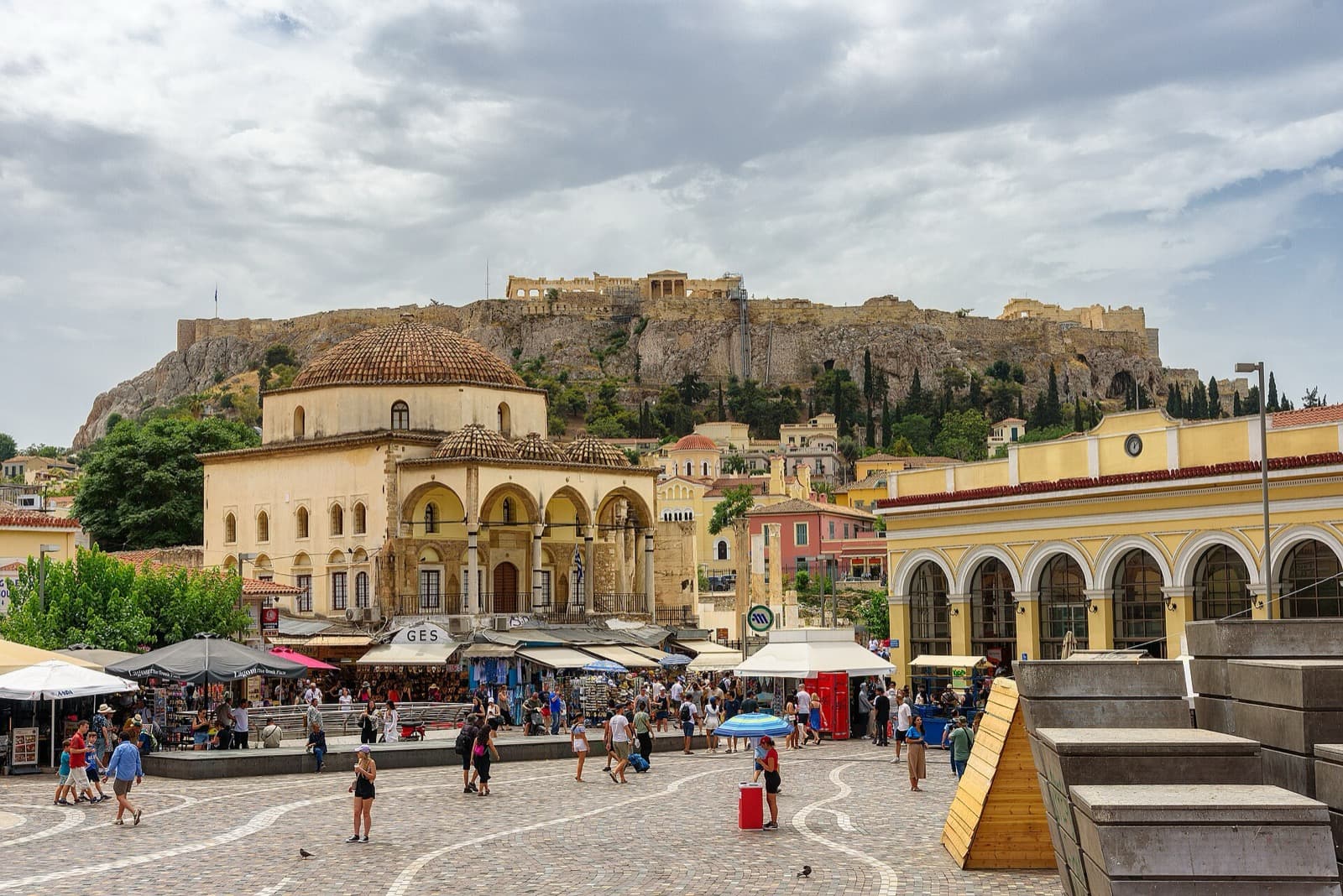
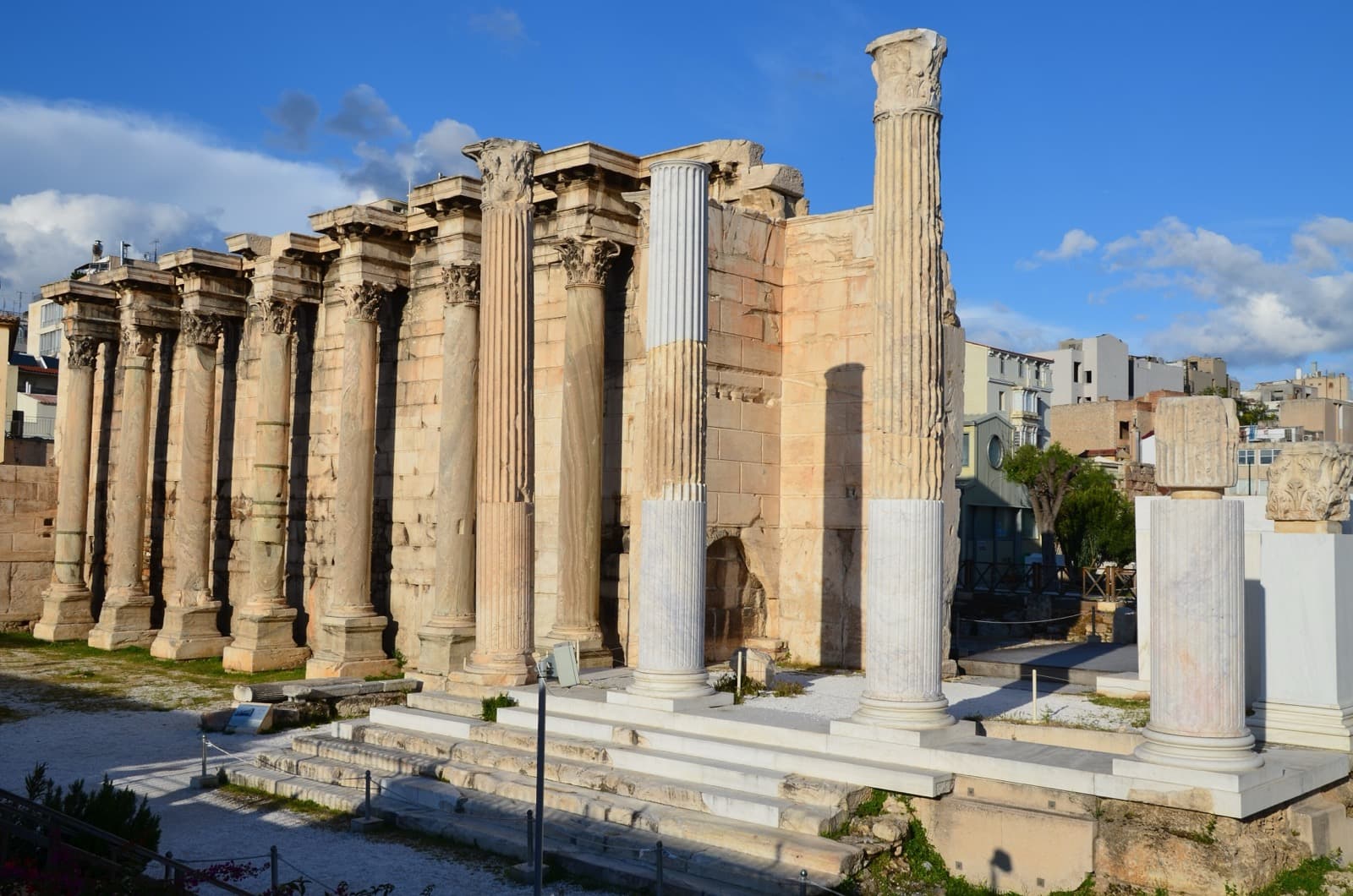
From the market, drop back down into Monastiraki and Psyrri. Monastiraki Square gathers an Ottoman mosque, a Byzantine church, and the wall of Hadrian's Library at one intersection; Ifestou Street and the flea market around Avissynias Square sell copper, records, and secondhand everything; Psyrri fills after dark with small tavernas and rebetiko bars. This is the ground our Monastiraki and Psyrri audio walk covers as a sensory route, seven stops keyed to smell, sound, and color rather than dates and kings.
On safety: central Athens is busy and generally comfortable to walk in the evening, especially the well trafficked squares of Monastiraki, Syntagma, and Psyrri where people are out late. The honest cautions are ordinary ones. Pickpocketing happens in crowded metro cars and around the Monastiraki station at rush hour, so keep your bag in front of you. The blocks immediately around Omonoia Square, a few streets north, feel rougher late at night, so if you are heading back that way after dinner, stick to the main lit avenues. None of this should keep you off the streets; it just shapes which ones you choose after dark.
How the audio walks fit the day
The three tours are self guided, so you play each one where it belongs and skip the rest. Take the Ancient Agora walk with your morning ticket, save the Plaka and Anafiotika walk for the slow midday descent, and run the Monastiraki and Psyrri walk into the evening. Each is a paid tour that plays the introduction and first stop in full and a short preview of every later stop, so you can hear the voice before you commit. Together they turn a one day loop into something you actually understand rather than just photograph. Start from the Athens walking tours hub or the /greece/athens page and pick your morning tour before you leave the hotel.
Sources
- Buying Acropolis Tickets 2026: Everything You Need to Know, Archaeology Travel
- Ancient Agora of Athens visitor guide (2026): Tickets, prices, hours, PlanetWhitley
- Roman Agora, opening hours, price and location, Introducing Athens
- Athens Central Market (Varvakios Agora): Complete 2026 Guide, Athens Tourism Guide
- Coming from the Airport, The Official Athens Guide (This Is Athens)
Frequently asked questions
- Can you see Athens in one day on foot?
- Yes. The main sights sit inside a compact triangle in the old center, and the whole day is roughly five to six kilometers of walking spread across many hours. A workable order is the Ancient Agora at opening, the Acropolis mid-morning, Plaka at midday, then Monastiraki and Psyrri in the evening, with no car or bus needed.
- What are the Acropolis opening hours and ticket price in 2026?
- In summer (April through October) the Acropolis is open 8:00 in the morning to 8:00 in the evening, with last entry at 7:30; in winter (November through March) it closes at 5:00. A standard adult ticket is 30 euros, and as of 2026 you must book a timed entry slot online in advance, ideally two to three weeks ahead for July and August.
- How much does the Ancient Agora cost, and should I go before the Acropolis?
- Adult admission to the Ancient Agora is 10 euros, with free entry for EU residents under 25 and children under six. It opens at 8:00 in the morning and closes at 8:00 in the evening in summer, dropping to a 5:00 close in winter, with last entry about 20 minutes before. Going first is smart because it is quieter and cooler early, and the Areopagus rock just outside the fence is free to climb at any hour.
- Is the Varvakios Central Market open every day?
- No. The Varvakios Central Market runs Monday to Saturday, roughly 7:00 in the morning to 6:00 in the evening, and is closed on Sundays and Greek public holidays. The meat and fish halls are freshest and busiest before mid-afternoon, so arrive earlier in the day if you can.
- How do I get from Athens airport to the city center?
- Metro Line 3 (the blue line) runs from Athens International Airport to Syntagma in about 40 minutes and one stop further to Monastiraki, for a single adult fare of 9 euros as of 2026. Both stations put you within a ten-minute walk of most of this itinerary, so you will not need further transport once you arrive.
- Is it safe to walk around central Athens at night?
- Central Athens is busy and generally comfortable to walk in the evening, especially the well-trafficked squares of Monastiraki, Syntagma, and Psyrri. The realistic cautions are ordinary: watch for pickpockets in crowded metro cars around Monastiraki station, and the blocks immediately around Omonoia Square a few streets north feel rougher late at night, so stick to main lit avenues there after dark.
Ready to experience it?
Plaka and Anafiotika: The Island Under the Rock
75 min · 1.6 km · moderate
More from Athens
Explore more at your own pace.
Athens: The Ground Floor of the Western City
Anafiotika: The Cycladic Island Village Hiding on the Acropolis Slope
Hadrian's Library: The Roman Wall That Anchors Monastiraki
The Caryatids: The Maidens of the Erechtheion
The Choragic Monument of Lysicrates: A Trophy Case That Changed Architecture