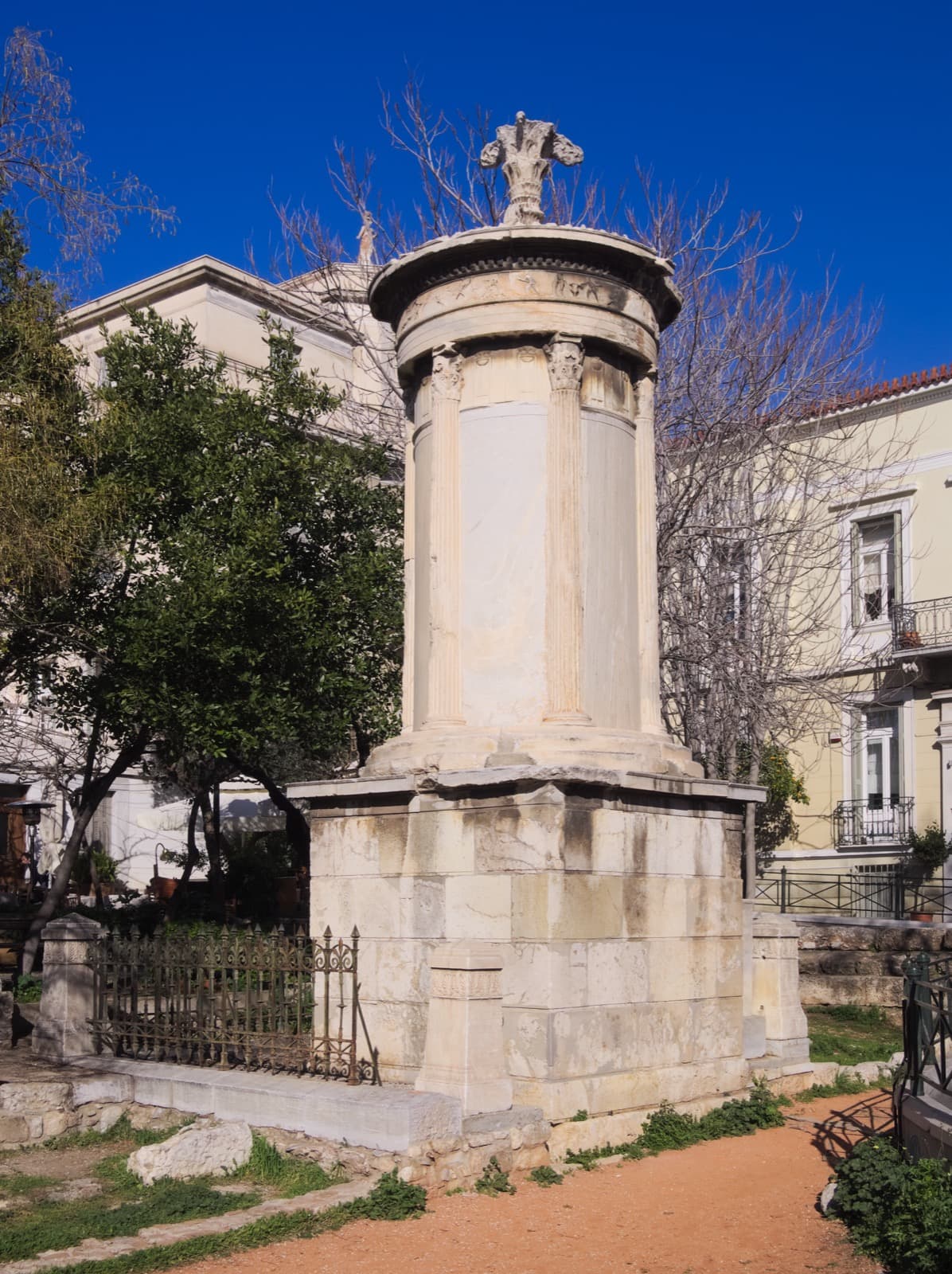
On a quiet corner where Tripodon Street meets a small square in Plaka stands a round marble drum, easy to walk past, that carries the earliest known Corinthian columns ever placed on the exterior of a building. This is the Choragic Monument of Lysicrates, and it was built to show off a prize. A wealthy Athenian named Lysicrates paid for a chorus that won a competition, and rather than tuck the trophy away, he raised this monument on the ancient road so everyone would see it. The delicate columns that decorate it, crowned with carved acanthus leaves, became one of the most copied ideas in Western architecture. It all started as a trophy case for a winning chorus of boys.
What you are actually looking at
The monument is small, only about ten metres tall counting the stone pedestal it sits on, and its circular upper body is ringed by six engaged Corinthian columns of Pentelic marble, the same fine white stone quarried for the Parthenon. An inscription carved into the base gives it a precise birthday: it was erected in 335 to 334 BC. That inscription is not vague dedication language. It names the whole cast of the win, and reading it is the closest you will get to standing inside a fourth-century BC awards ceremony.
Here is who it names. Lysicrates, son of Lysitheides, of the deme Kikynna, was the sponsor. Theon played the pipes. Lysiades of Athens trained the chorus. Euainetos was the archon, the chief magistrate whose year of office dates the whole event. And the winning group was a boys' chorus of the tribe Akamantis, one of the ten civic tribes of ancient Athens, which took first prize in a dithyramb, a sung and danced hymn performed at the City Dionysia festival.
To understand why a private citizen built a marble monument over a competition result, you need the word choregos. In classical Athens, the state did not fully fund its great dramatic and musical festivals. Instead, it assigned wealthy citizens the honour, and the expense, of training, costuming, and feeding a chorus. That citizen was the choregos, and the role was part civic duty, part public flex. Winning was prestige, and a winning choregos was awarded a bronze tripod. Lysicrates built this monument as a permanent display case for the tripod he was given, and he was not alone. This whole street was once lined with monuments like it.
The Street of the Tripods
Hear a stop from this walk
Agios Georgios tou Vrachou: Saint George of the Rock
The road the monument sits on is Tripodon Street, the ancient Street of the Tripods, and it earned that name honestly. In antiquity it curved around the east slope of the Acropolis toward the Theatre of Dionysus, and along it stood a row of choragic monuments, each one raised by a victorious sponsor to hold the bronze tripod he had won. Picture a walk of trophies, one after another, each announcing a name and a festival triumph. The Lysicrates monument is the best-preserved survivor of that whole tradition, which is part of what makes it so valuable. Most of its neighbours are gone, so this single drum has to speak for an entire vanished streetscape of Athenian ambition.
There is a small carved story running around the top of the monument too. The frieze depicts the god Dionysus and an episode from myth in which Tyrrhenian pirates who tried to seize him are driven into the sea and transformed into dolphins. It is a fitting subject for a monument tied to a Dionysian festival, and it rewards a slow look upward.
Why architects still stop here
Walk past the columns and you have just seen a first. This is widely recognised as the earliest known use of the Corinthian order on the outside of a building. The Corinthian order is the most ornate of the classical column styles, distinguished by its capital carved to look like a cluster of acanthus leaves, and before this monument it seems to have been used only inside buildings, if at all. Here it steps outdoors, onto a public monument on a public street, for anyone to see. From this modest drum the idea travelled. Roman builders fell in love with the Corinthian order and spread it across their empire, from temples to triumphal arches, and it carried forward through the Renaissance into the columns you can still find on banks, courthouses, and museums today. A single Athenian sponsor's trophy case became a template for two thousand years of facades.
The long life of a small monument
The monument did not sit undisturbed. In 1669 a French Capuchin monastery that had settled beside it purchased the structure, and over the following years it was absorbed into monastery life, at one point serving as part of the monastery library. That connection gave the monument a literary footnote: Lord Byron stayed at the Capuchin monastery during his second visit to Greece, so the drum stood in the courtyard of a house that hosted one of the most famous philhellenes of the age. In 1821, as the Greek War of Independence broke out, the convent was burned and later demolished, and the monument was left exposed to the weather. French archaeologists eventually cleared the rubble, and restoration work followed in the late nineteenth century. Over the centuries the monument picked up two popular nicknames, the "Lantern of Demosthenes" and the "Lantern of Diogenes," both charming and both wrong about what it actually was, since it never had anything to do with either man.
Standing in front of it
The one thing to carry away, standing on Tripodon Street, is scale versus consequence. This is a small object. It cost one man his festival budget and a stretch of pride, and it commemorates a boys' chorus that sang well one afternoon roughly twenty-four centuries ago. Yet the decorative idea carved into its columns outlived the festival, the sponsor, the tribe, the monastery, and every empire that passed through Athens afterward. Few objects this modest have echoed so far.
The monument sits on a compact cluster of Plaka stops that reward a slow, self-guided walk: the whitewashed island lanes of Anafiotika above, the Roman Agora and the Tower of the Winds a short way off, and the house where modern Greece founded its first university. You can explore the full route and hear the monument's story in place on the Athens walking tours collection, and browse everything on offer in Athens.
Sources
- Choragic Monument of Lysicrates, Wikipedia: primary reference for the inscription, the 335 to 334 BC date, the Corinthian order first, the Capuchin monastery purchase in 1669, Byron's stay, the 1821 fire, and the "Lantern of Demosthenes" nickname.
- Greek Cultural Institute, "The Choragic Monument of Lysicrates": details on the six Pentelic marble columns, the roughly ten-metre height with pedestal, and the Dionysus and Tyrrhenian pirates frieze.
- Encyclopaedia Romana (University of Chicago), "Monument of Lysicrates": on the choregos system, the Street of the Tripods, and the monument's place in the choragic tradition.
- Roamer tour "The Island Under the Rock" (athens-plaka-anafiotika), fact-audited transcript: the dedicatory inscription naming Lysicrates, Theon, Lysiades, and Euainetos, and the tribe Akamantis boys' chorus victory at the City Dionysia.
Ready to experience it?
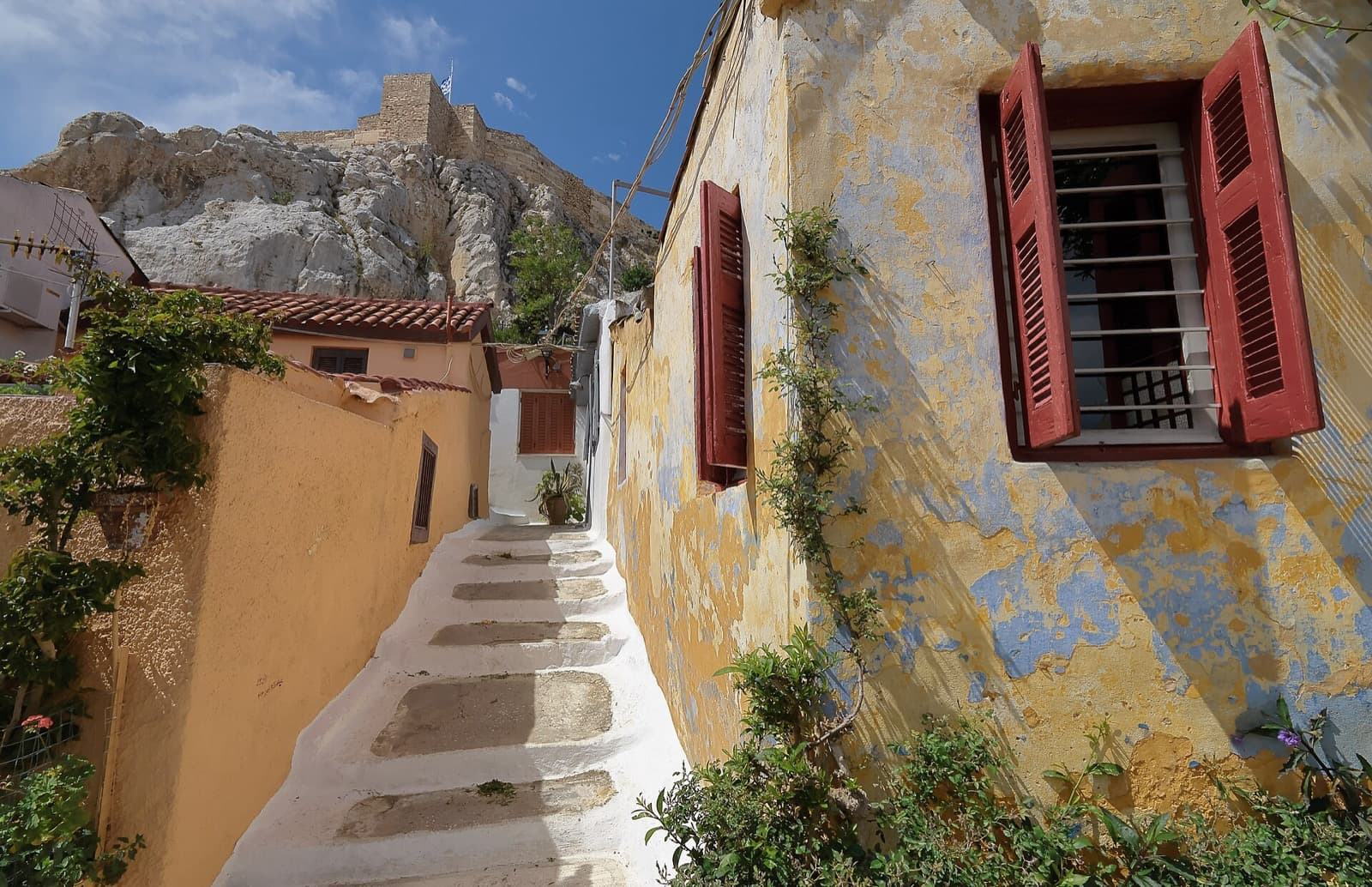
Plaka and Anafiotika: The Island Under the Rock
75 min · 1.6 km · moderate
More from Athens
Explore more at your own pace.
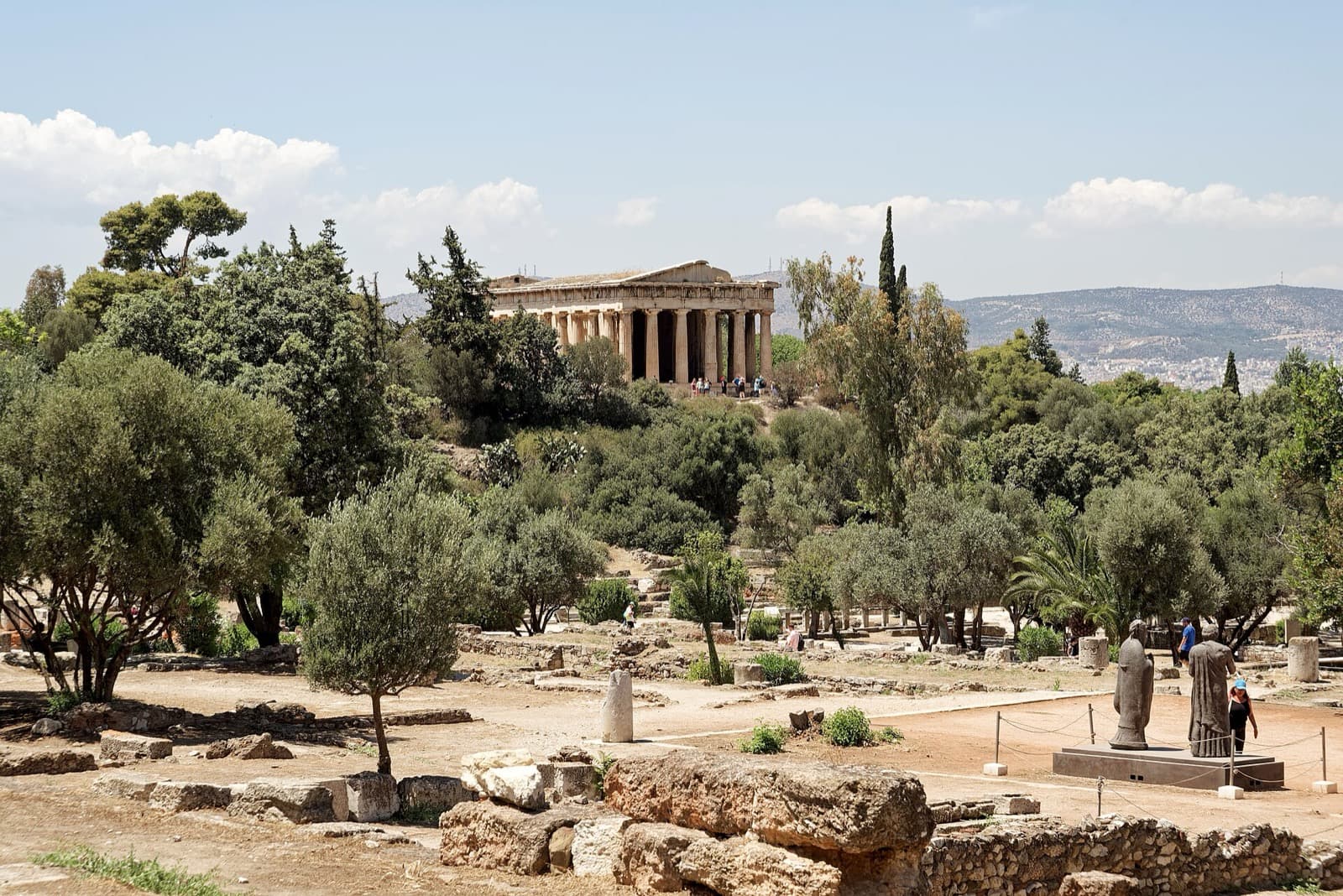
Athens: The Ground Floor of the Western City
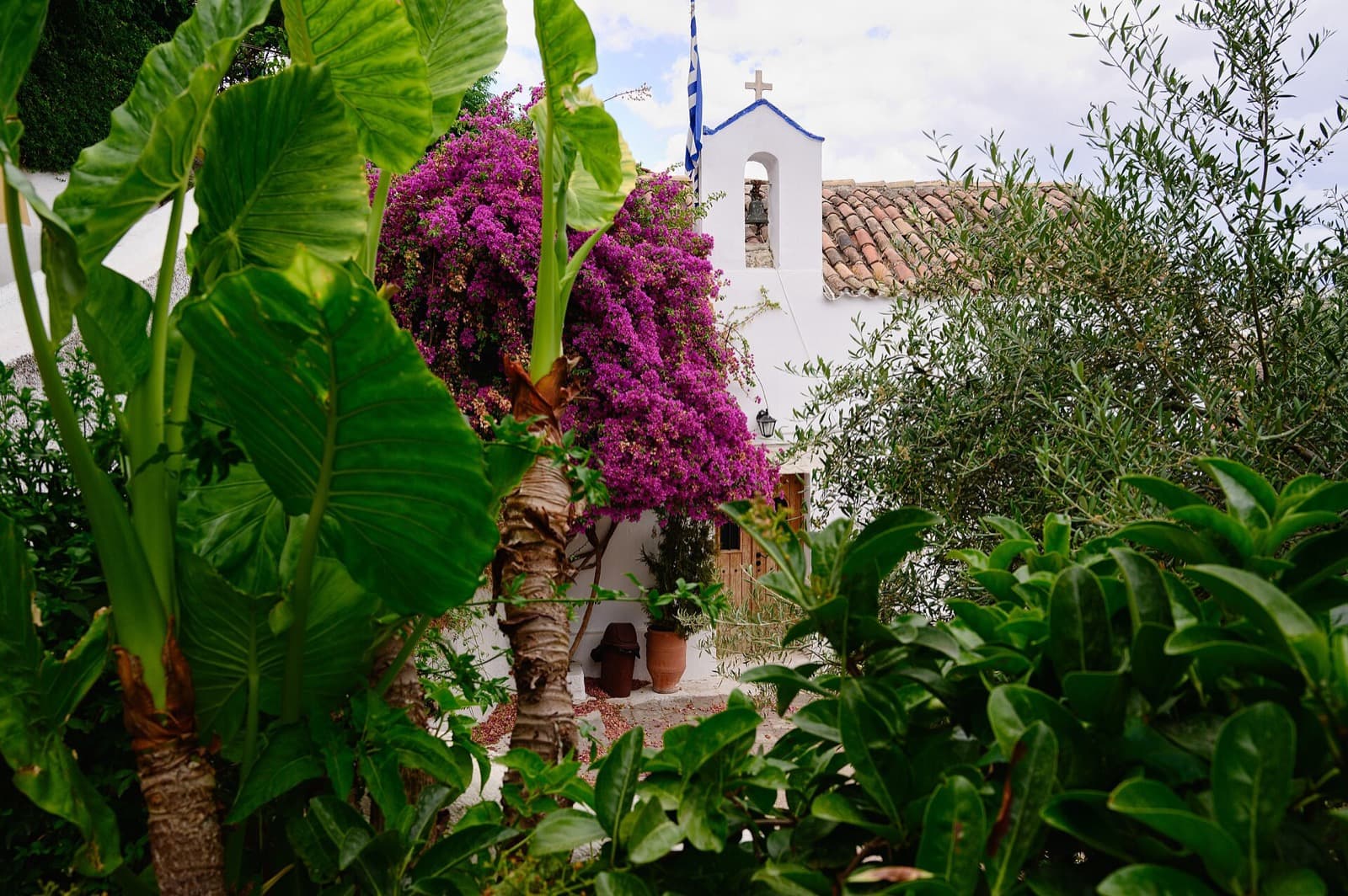
Anafiotika: The Cycladic Island Village Hiding on the Acropolis Slope
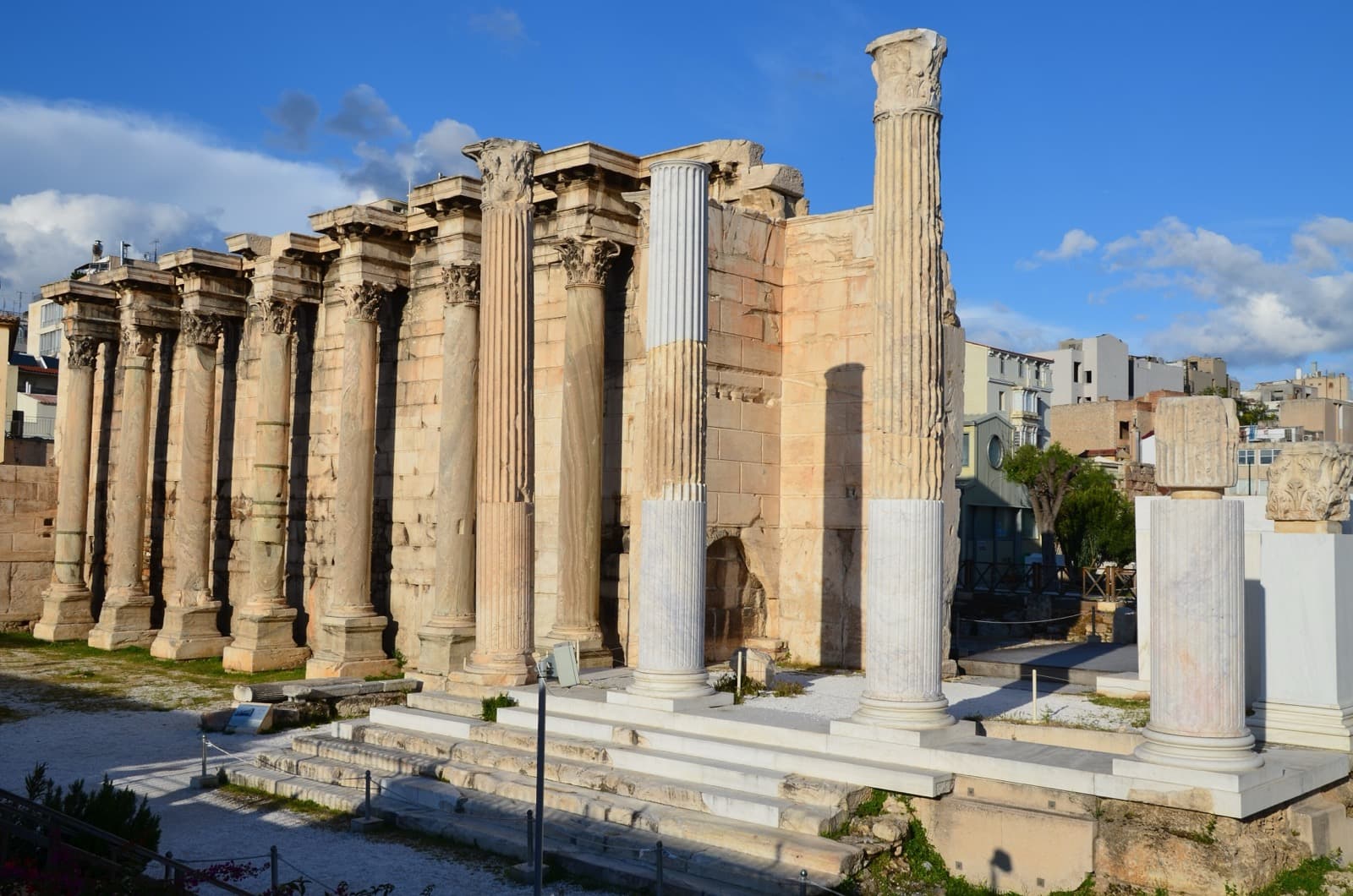
Hadrian's Library: The Roman Wall That Anchors Monastiraki
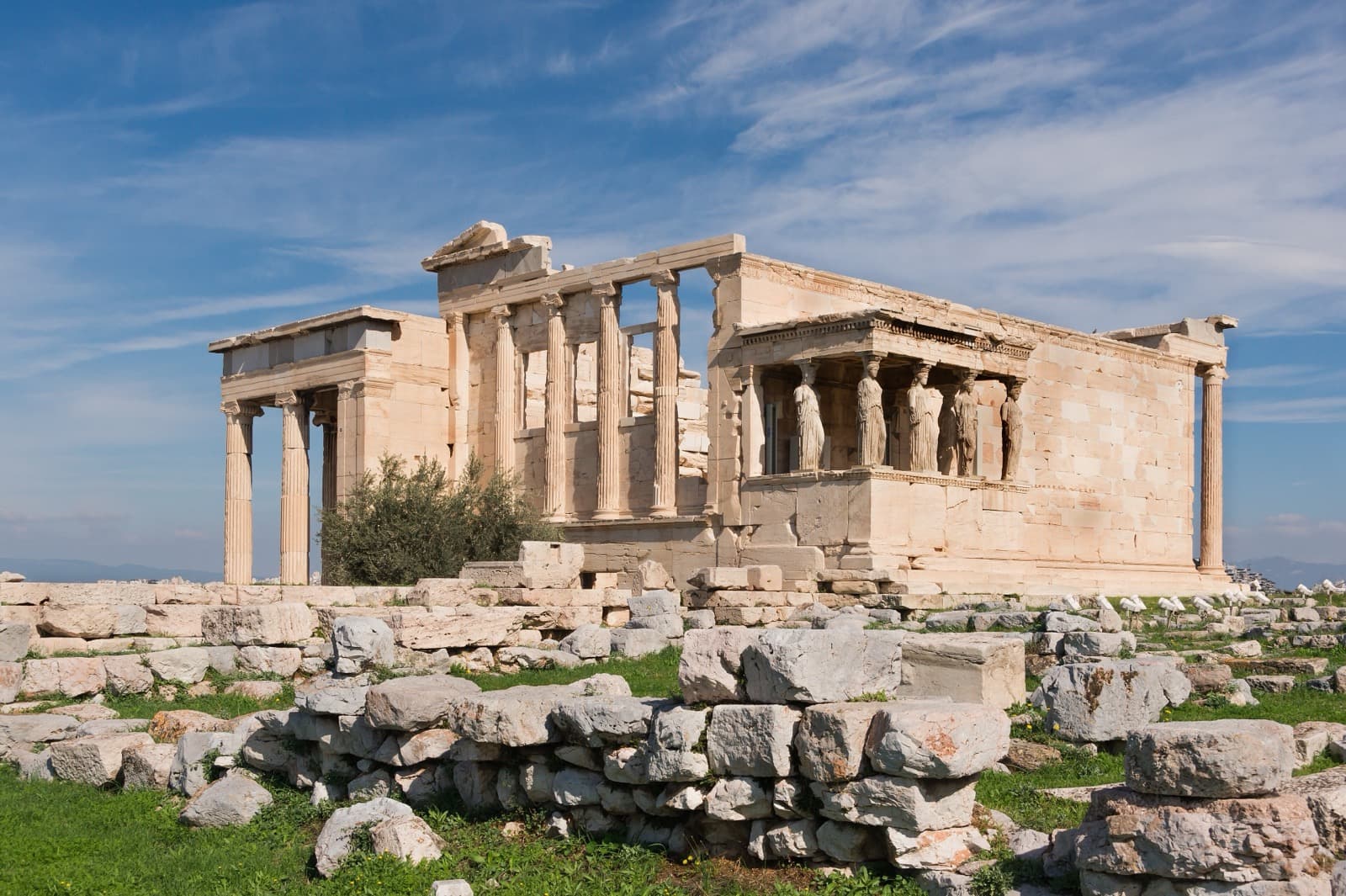
The Caryatids: The Maidens of the Erechtheion
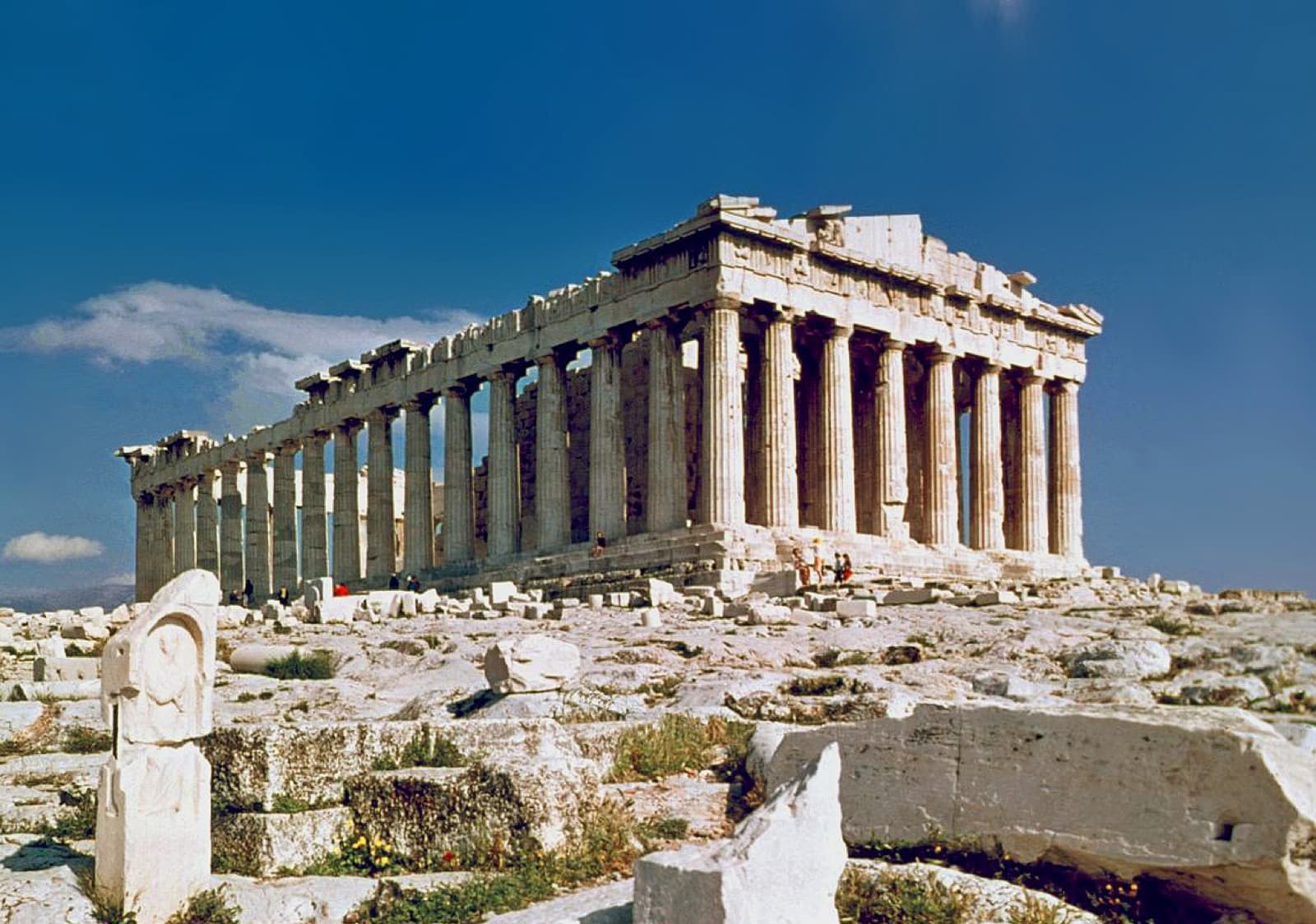
The Parthenon: The Temple That Set the Standard