A slow climb through Plaka's stacked layers, from a whitewashed Aegean island village hidden on the Acropolis slope down through Roman monuments, an Ottoman mosque, and the house where a young nation built its first university.
Start · Anafiotika: The Island Under the Rock
DirectionsStops
- 1
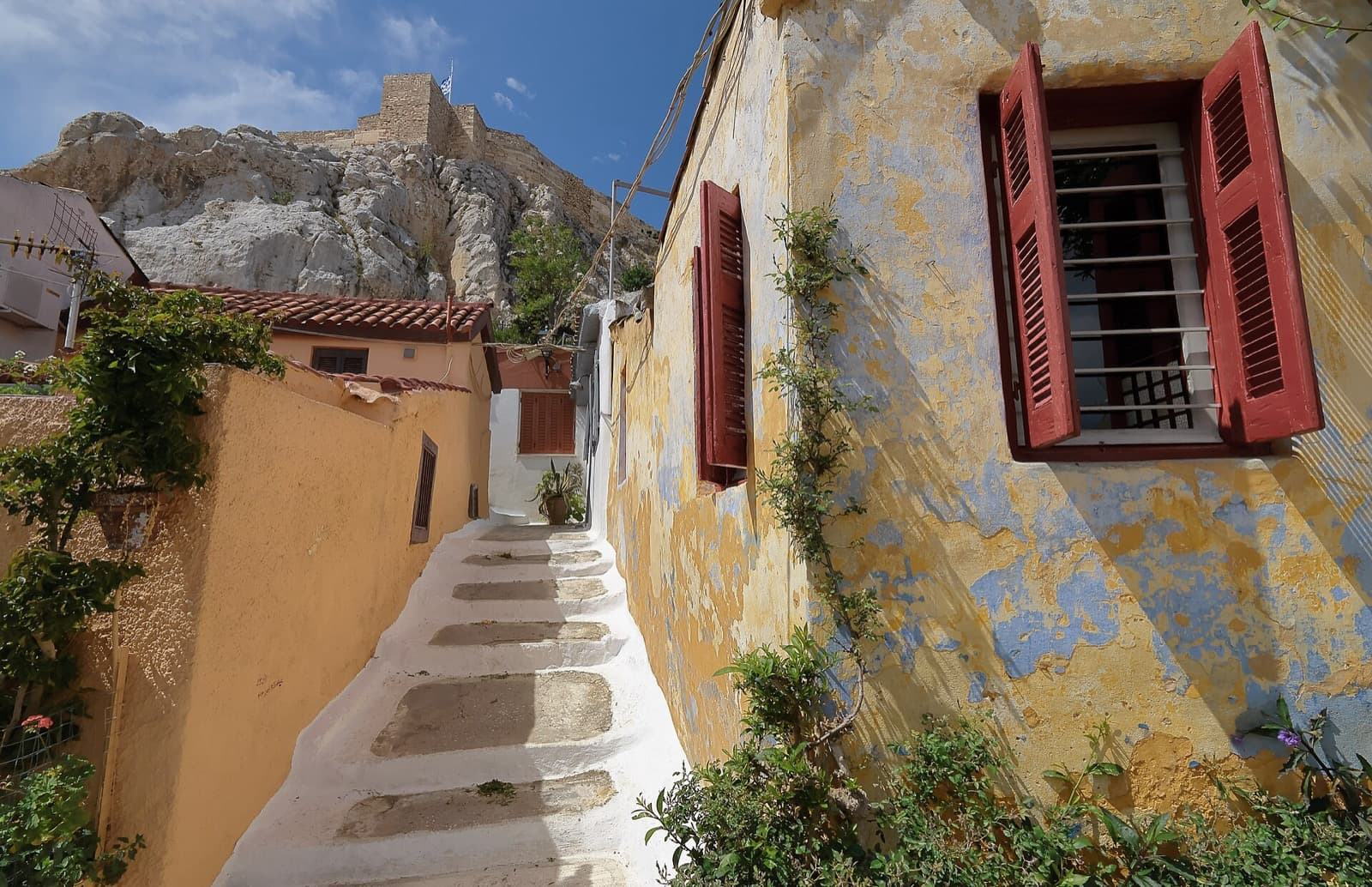
Anafiotika: The Island Under the Rock
A tiny cluster of whitewashed Cycladic houses built into the northeast slope of the Acropolis by island workers who came to build modern Athens.
- 2
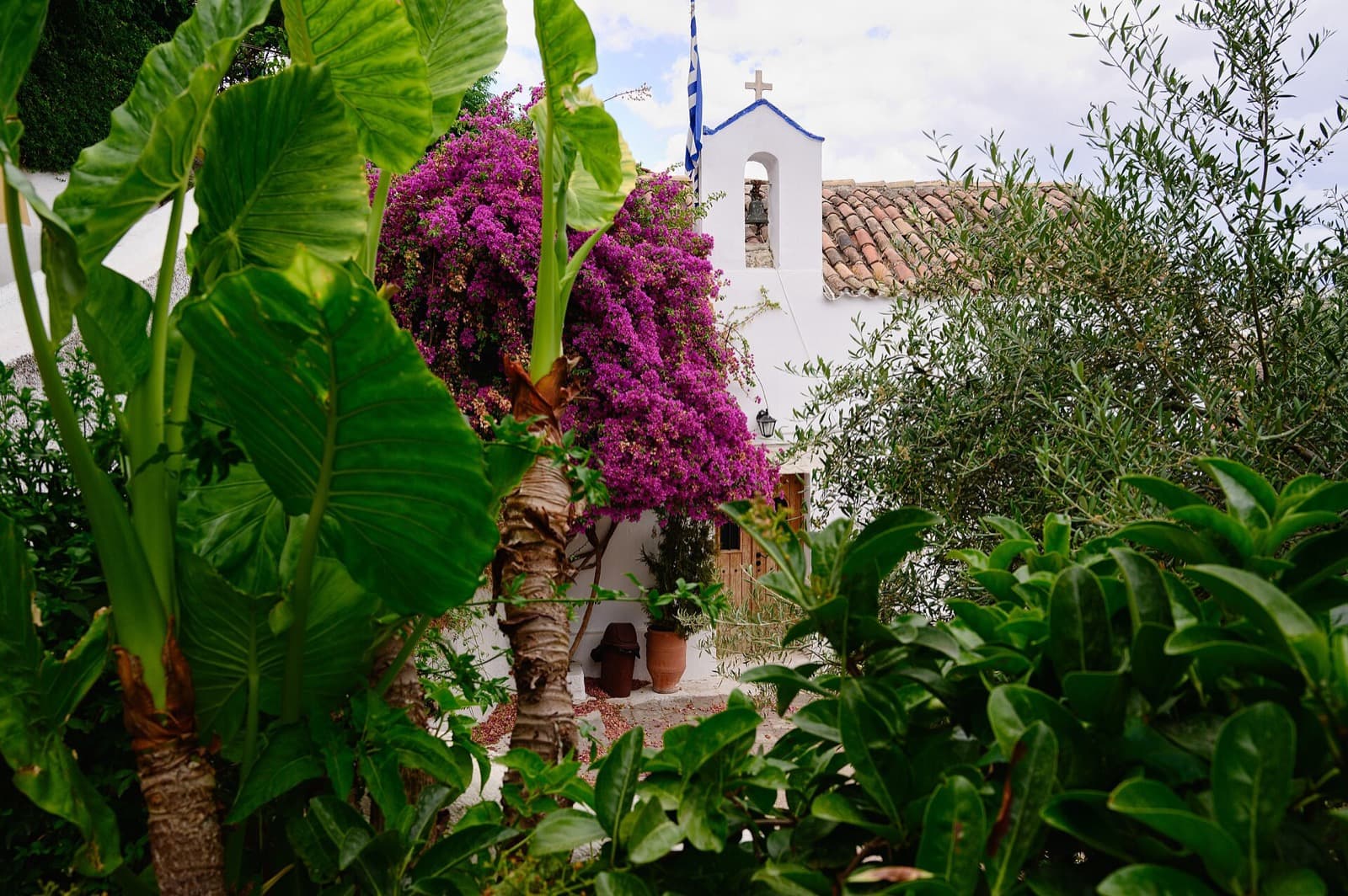
Agios Georgios tou Vrachou: Saint George of the Rock
A small whitewashed church on a rocky spur beneath the Acropolis, rebuilt in Cycladic style by the island settlers of Anafiotika.
- 3
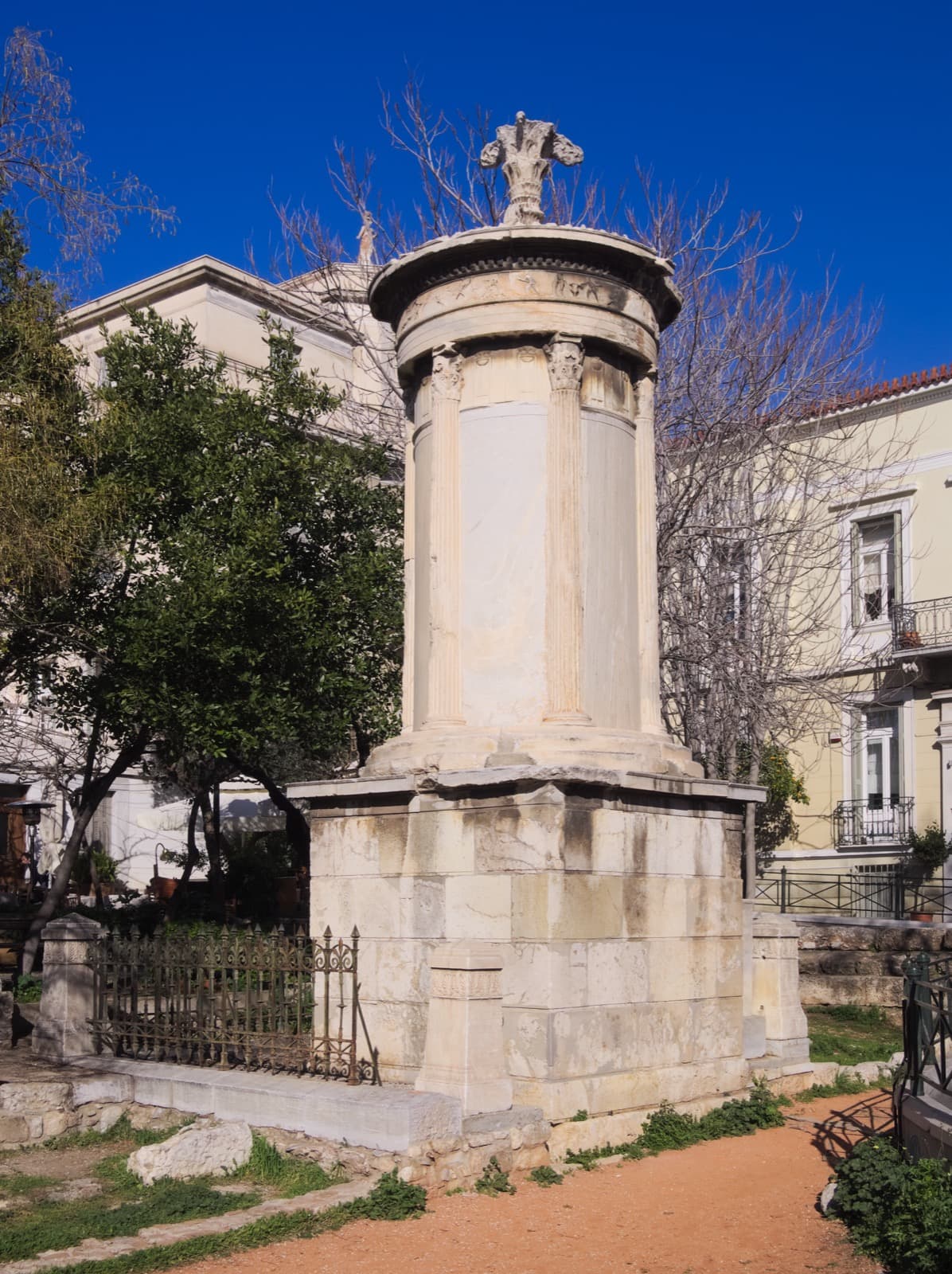
The Choragic Monument of Lysicrates
A small round marble monument on the ancient Street of the Tripods, raised to mark a victorious chorus and bearing the earliest known Corinthian columns on a building's exterior.
- 4
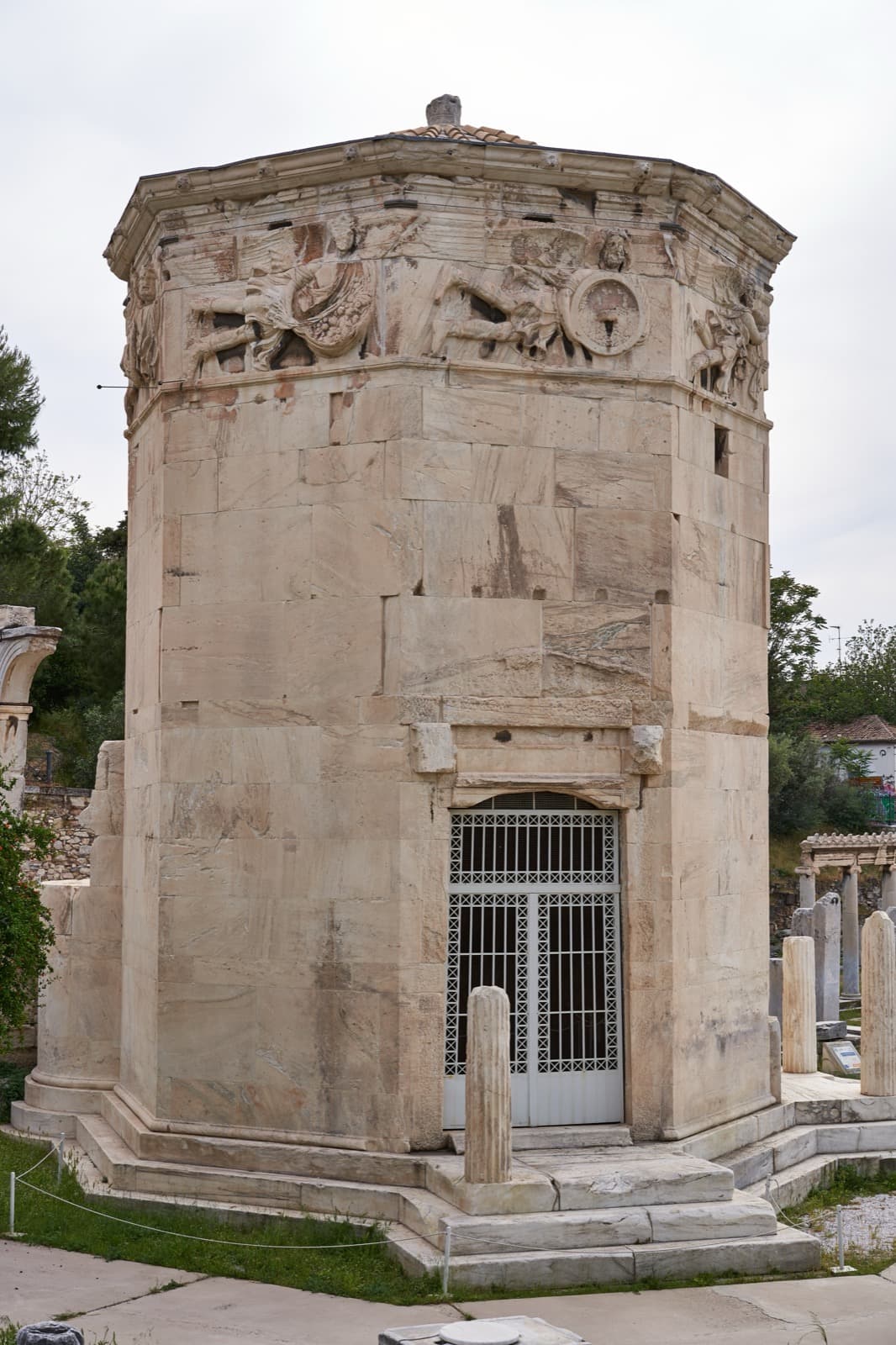
The Tower of the Winds: Horologion of Andronikos
An octagonal marble tower that once told the time by sun, water, and wind, later used as a dervish lodge.
- 5
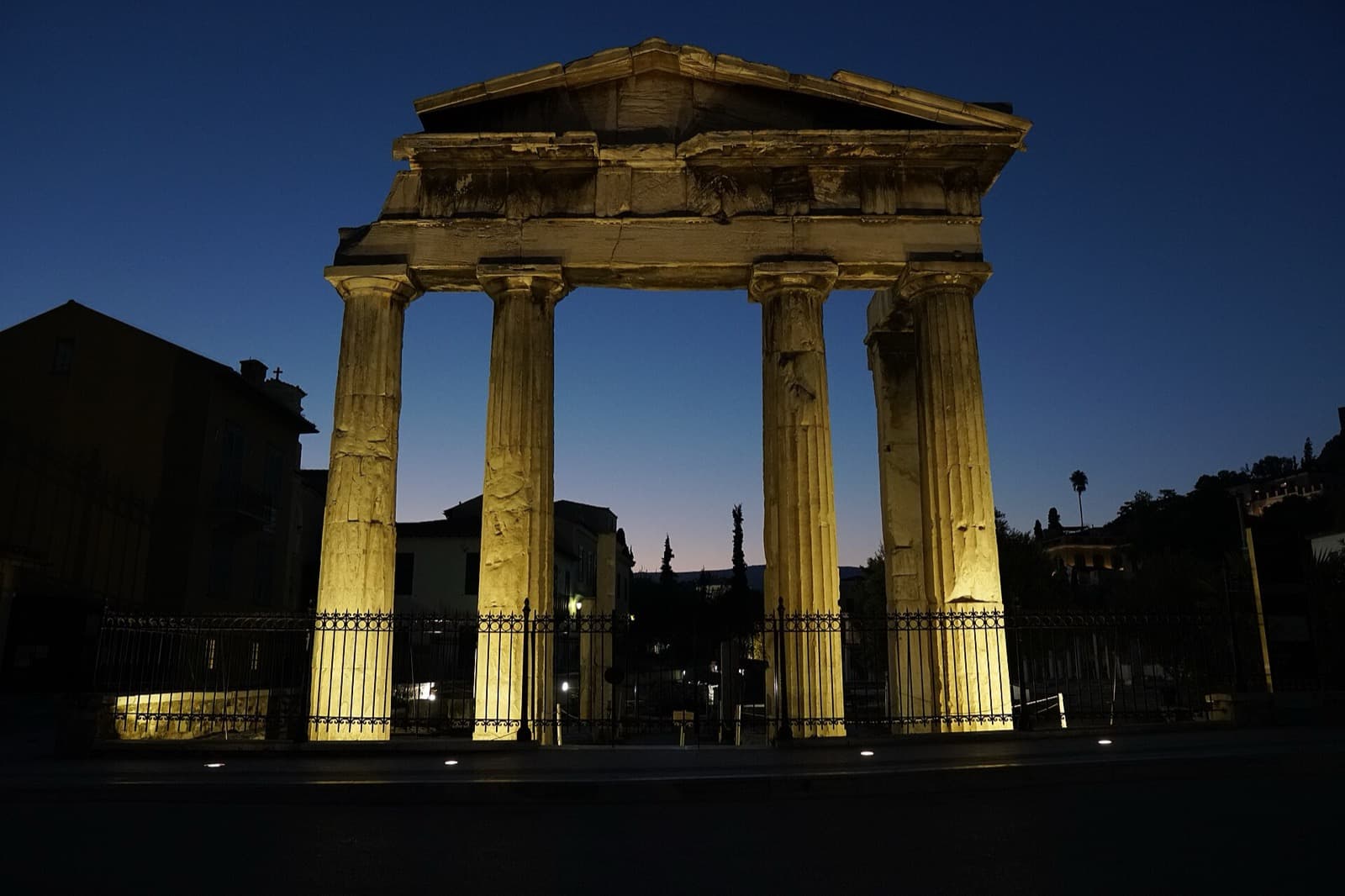
The Roman Agora and the Fethiye Mosque
The marketplace Augustus built for Athens, sharing its ground with an Ottoman mosque, two empires layered on one site.
- 6
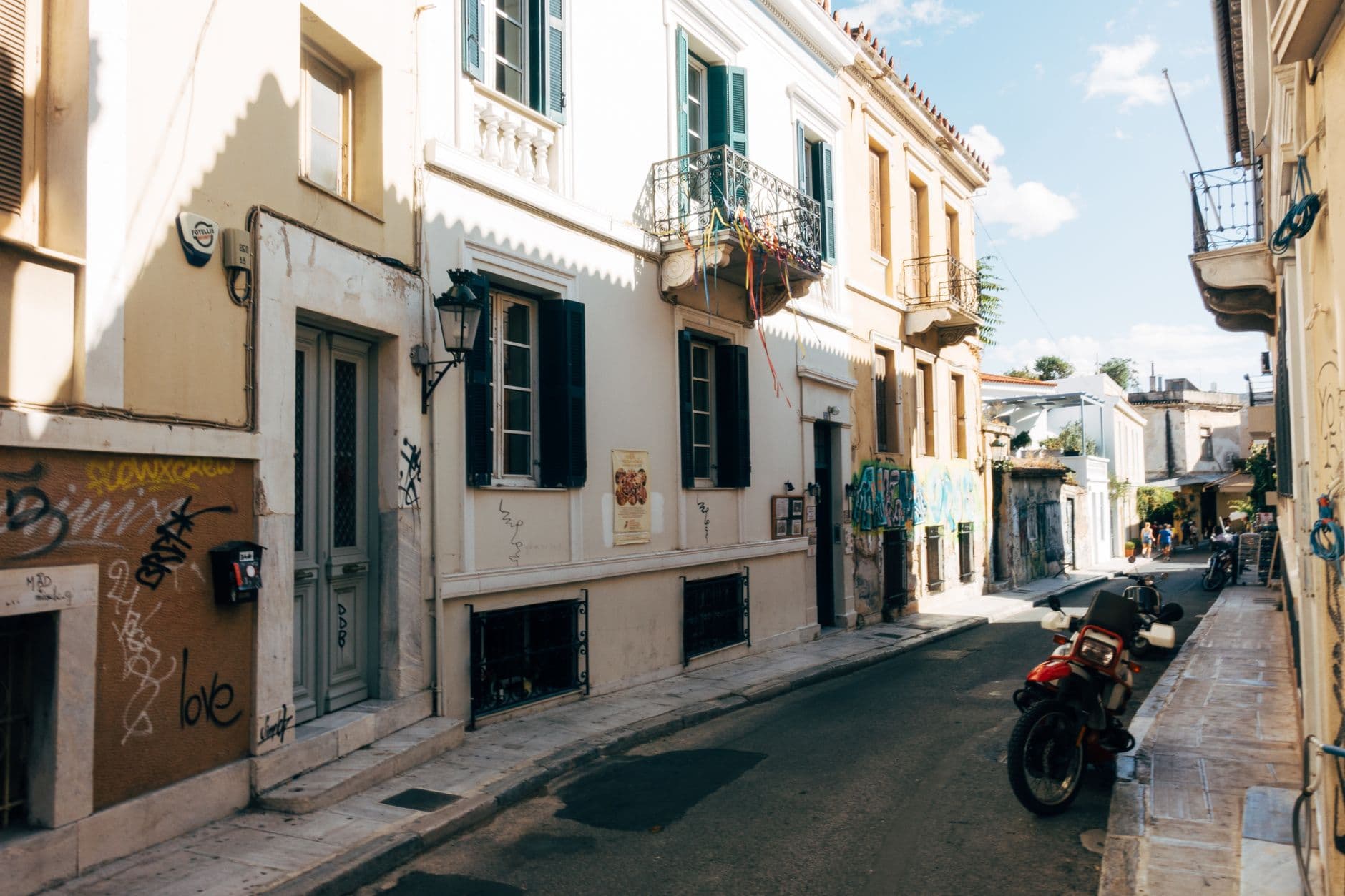
Odos Adrianou: The Spine of Plaka
Plaka's long thread, named for the philhellene emperor Hadrian and commonly held to follow an ancient street line.
- 7
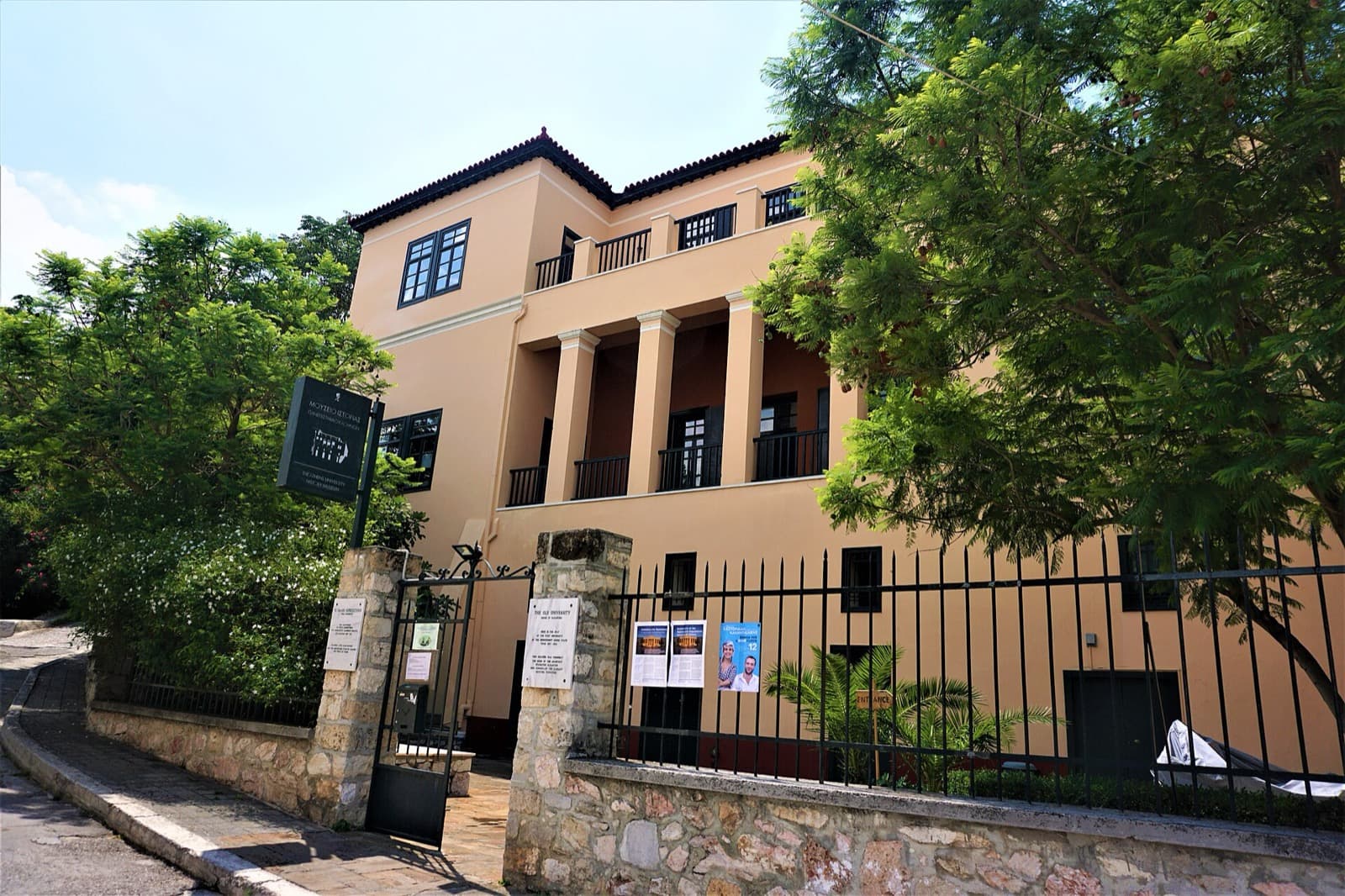
The First University on Tholou Street
An Ottoman-era house that became the very first home of the University of Athens, now the Athens University History Museum.
Details
Best Time to Visit
Early morning, right when the archaeological sites open, or in the last two hours before sunset. Plaka's stepped lanes and the Roman Agora offer little shade, so the midday summer sun is punishing on the open sites. Morning light is soft on the whitewashed houses of Anafiotika and the crowds are thin, which matters most in the lived-in lanes where you want to move quietly. Spring and autumn are gentlest overall.
Pro Tips
- •Start at the top of Anafiotika and work downhill: the island lanes are the steepest climb, so tackle them fresh and let gravity help you toward the Roman sites below.
- •Buy the Acropolis combined ticket if you plan to see several sites, since it covers the Roman Agora, where both the Tower of the Winds and the Fethiye Mosque stand, and confirm current prices at the gate.
- •Wear proper shoes with grip: the stepped lanes of Anafiotika and Plaka are marble-smooth in places and slick after any rain.
- •Go early or late to walk Anafiotika when it is quiet, both for the soft light on the white houses and out of respect for the residents whose doorsteps you are passing.
- •Carry water and a hat: the Roman Agora and the open archaeological sites have almost no shade, and Athens sun is fierce from late spring through early autumn.
- •Since Plaka is a maze, let yourself get a little lost between stops. Each stop on this walk stands alone, so you can wander in any order without missing the thread.
Safety & Precautions
- •Anafiotika and much of Plaka are steep, stepped, and uneven, with narrow lanes and smooth marble underfoot: take the stairs slowly, and note that these lanes are not accessible for wheelchairs or strollers.
- •These are lived-in neighbourhoods and working churches, not attractions: keep your voice down, stay on the public lanes, do not enter courtyards or photograph into homes, and dress and behave modestly and quietly inside any church that is open.
- •The Roman Agora is an open archaeological site with loose, uneven footing and very little shade: watch your step among the ruins, carry water, and be ready for full sun, especially in the hot, dry Athens summer.
- •Check opening hours before you go, as the archaeological sites and the university museum keep set hours and may close early off-season, and keep an eye on your bag in any crowded lane or nearby market.
Travel advisory: Exercise Normal Precautions (Level 1).
Gallery
Related Reading
Go deeper on what you'll see, hear, and walk through.
Overview
Athens Travel Guide: How Many Days, Getting Around, and Safety
7 min
Overview
Best Self-Guided Walking Tours in Athens (2026)
4 min
Overview
One Day in Athens: A Walkable Morning-to-Night Itinerary
7 min
Thematic
Athens: The Ground Floor of the Western City
7 min
Thematic
Best Culture Walking Tours in Athens (2026)
2 min
Companion
Anafiotika: The Cycladic Island Village Hiding on the Acropolis Slope
7 min
Deep dive
The Choragic Monument of Lysicrates: A Trophy Case That Changed Architecture
7 min
Read
What to Eat in Athens: Dishes, Origins, and How to Order
6 min
Read the walk
The full story of Plaka and Anafiotika: The Island Under the Rock, in words. Prefer to listen? Play it narrated, from home or on location.
Introduction
Plaka is often called the oldest continuously inhabited quarter of Athens, its lanes wrapped around the north and east slopes of the Acropolis, still following street lines laid down in antiquity. Most people pass through it in a hurry on their way up to the Parthenon. This walk asks you to slow down and read it as something stranger and more human: stacked layers you can physically climb through. An ancient street grid. Roman monuments. An Ottoman mosque and a dervish tower. An early Greek nation building its first university among the ruins. And highest of all, hidden right against the sacred rock, a whole Aegean island transplanted into the capital: a cluster of white cubic houses built in the eighteen forties by island builders, most of them from Anafi, who came to raise a new capital and quietly recreated their home. This is a self-guided walk of seven stops, here in Athens, Greece. Plan on roughly two hours at your own pace, more if you linger, covering a little over one and a half kilometres of stepped lanes and open archaeological sites. It is a cluster, not a straight line, so each stop stands on its own and you can wander between them however you like. A gentle reminder before we start: parts of this route run through people's front doorsteps. These are real homes and working churches. Keep your voice down, stay on the public lanes, and let the quarter stay quiet. When you arrive in Anafiotika, on the northeast slope of the Acropolis, begin with stop one.
1. Anafiotika: The Island Under the Rock
Stand still for a moment and look at where you are. The Acropolis rises directly above you, and pressed against its northeast slope is something that has no business being in a landlocked capital: an Aegean island village. White cubic houses. Narrow stepped lanes. Bougainvillea spilling over low walls. This is Anafiotika, and it was built by people who missed home. When King Otto, Greece's first modern king, needed a new royal capital raised out of a small town in the eighteen thirties, construction workers came from the islands, many from Anafi in the Cyclades, along with others from nearby islands. From the early eighteen forties onward they settled here on the slope and built in the only way they knew: the Cycladic style of their home. The first two named inhabitants recorded here were G. Damigos, a carpenter, and M. Sigalas, a construction worker. Refugees from Asia Minor added to the population in nineteen twenty-two. It has never been a museum. It is a protected, still-lived-in neighbourhood, and only about forty-five houses remain. Part of it was cleared in nineteen fifty for archaeological excavation, and the Greek state began buying up houses in nineteen seventy. Here is a detail that tells you everything: the streets have no names. Houses are simply numbered Anafiotika one, Anafiotika two, and so on, the way a small island village never needed formal addresses. So walk softly. Behind these blue doors and painted shutters are people's kitchens and courtyards. Keep your voice low, stay on the lanes, and let the island keep its quiet.
2. Agios Georgios tou Vrachou: Saint George of the Rock
Tucked among the white houses is a small church, single-naved and barrel-vaulted, whitewashed like everything around it, sitting on a rocky spur directly beneath the great rock of the Acropolis. This is Agios Georgios tou Vrachou, Saint George of the Rock. Agios simply means saint. It is one of the two little churches that anchor this island quarter. The other, Agios Simeon, sits to the west. Both were rebuilt in the nineteenth century by the residents of Anafiotika themselves, in the same Cycladic style they used for their homes, so the church looks less like a grand Athenian basilica and more like a chapel you would find on a whitewashed island lane. That resemblance is not an accident. Agios Simeon holds a revered copy of the Panagia Kalamiotissa icon, an image of Panagia, the Virgin Mary, carried here from the island of Anafi. In other words, the settlers did not only bring their building style. They brought their patron and their devotion, tying this slope of the Acropolis to the faith of their home island. This little church of Saint George has a flowered courtyard and, over its south door, a whitewashed marble lintel thought to have been salvaged from an earlier structure. It is cared for under the oversight of a nearby parish and opens on the church's name day, when Saint George is honoured in late April, and on special occasions. By Orthodox tradition his death is dated to three hundred and three A D. Most days you will find it quietly closed. Admire it from the courtyard, and remember it is a working church in the middle of people's homes.
3. The Choragic Monument of Lysicrates
Here is a small round monument in white marble, delicate and precise, standing where an ancient road once ran. This is the Choragic Monument of Lysicrates, and it sits on Tripodon Street, the ancient Street of the Tripods, which in antiquity led toward the Theatre of Dionysus on the far slope of the Acropolis. It was erected in three hundred and thirty-five to three hundred and thirty-four B C, and it commemorates a competition. In classical Athens, wealthy citizens called choregoi paid to train and outfit choruses for the great dramatic and musical festivals. A choregos named Lysicrates sponsored a boys' chorus of the tribe Akamantis, and that chorus won first prize in a dithyramb competition at the City Dionysia. To display the bronze victory tripod he was awarded, Lysicrates built this monument. The carved inscription still names the players: Lysicrates son of Lysitheides of Kikynna, the sponsor; Theon, the pipe-player; Lysiades of Athens, who trained the chorus; and Euainetos, the archon of that year. And here is what makes archaeologists linger. This is widely recognised as the first known use of the Corinthian order on the exterior of a building, those slender columns crowned with carved acanthus leaves that would later spread across the Roman world and far beyond. So this modest little drum, easy to walk past, is where one of the most influential decorative ideas in Western architecture makes its first outdoor appearance. It began, of all things, as a trophy case for a winning chorus of boys.
4. The Tower of the Winds: Horologion of Andronikos
Look up at this eight-sided tower of pale marble, about twelve metres tall, and you are looking at one of the cleverest machines of the ancient world. Its formal name is the Horologion of Andronikos of Kyrrhos. Horologion simply means timepiece. It was designed by the astronomer…
Full narration for this stop unlocks with the tour.
5. The Roman Agora and the Fethiye Mosque
This open square of marble foundations and standing columns is the Roman Agora, the marketplace and civic centre that Rome gave to Athens. It was funded by the emperor Augustus, fulfilling a pledge that Julius Caesar had made before him, and built roughly between twenty-seven B…
Full narration for this stop unlocks with the tour.
6. Odos Adrianou: The Spine of Plaka
You are standing on the long thread that stitches Plaka together: Odos Adrianou, Hadrian Street. Odos simply means street. It carries the name of the Roman emperor Hadrian, a great lover of Greek culture who in the second century A D expanded and beautified Athens on a lavish…
Full narration for this stop unlocks with the tour.
7. The First University on Tholou Street
On this quiet corner of Tholou Street stands a modest house that once held the ambitions of a whole nation. Known as the Kleanthis House, at Tholou five, it is an Ottoman-era residence, some of the oldest domestic fabric surviving in Athens. In the eighteen thirties it was…
Full narration for this stop unlocks with the tour.