Plaka and Anafiotika: The Island Under the Rock
75 min · 1.6 km · moderate
If you want to eat well in Athens, anchor your day around a few specific things: a pork souvlaki (Athenians call the skewer a kalamaki), a gyros wrapped in pita, spiced soutzoukakia meatballs, a sesame koulouri from a street cart, and something sweet like galaktoboureko or loukoumades. Most of these dishes carry a clear origin, many of them arriving with refugees from Asia Minor in 1922, and each has a way locals order it. This guide walks through what to eat, where the tradition comes from, and how to ask for it without getting the tourist version.
Start with souvlaki (and know it as kalamaki here)
Souvlaki is the workhorse of Athenian street food: small cubes of grilled meat, usually pork or chicken, cooked on a skewer. In Athens specifically, the plain skewer is called a kalamaki, from the Greek word for a small reed or straw. If you order "a souvlaki" in the city, you will often get the full handheld version instead, which locals call a pita wrap. The wrap (the word you will see is tylichto, meaning "wrapped") packs the meat, fries, tzatziki, raw onion, and tomato inside a soft grilled pita. That combination, meat plus fries inside the bread, is the standard Athenian format, not an upsell.
The tradition runs deep and shallow at once. Cooking meat on spits in Greece dates to the Bronze Age: excavations on Santorini uncovered stone cooking supports used before the Thera eruption in the 17th century BC. The modern skewered fast food, though, only spread widely after the Second World War, sold on the street from the 1960s onward by vendors from Boeotia, the region northwest of Athens.
How to order like a local: decide between the skewer on its own (kalamaki, usually with a small bit of bread) and the full wrap (ask for "pita" or "tylichto"). Pork is the default and the most traditional. A squeeze of lemon over the meat is normal.
Gyros, kebab, and the 1922 story
Hear a stop from this walk
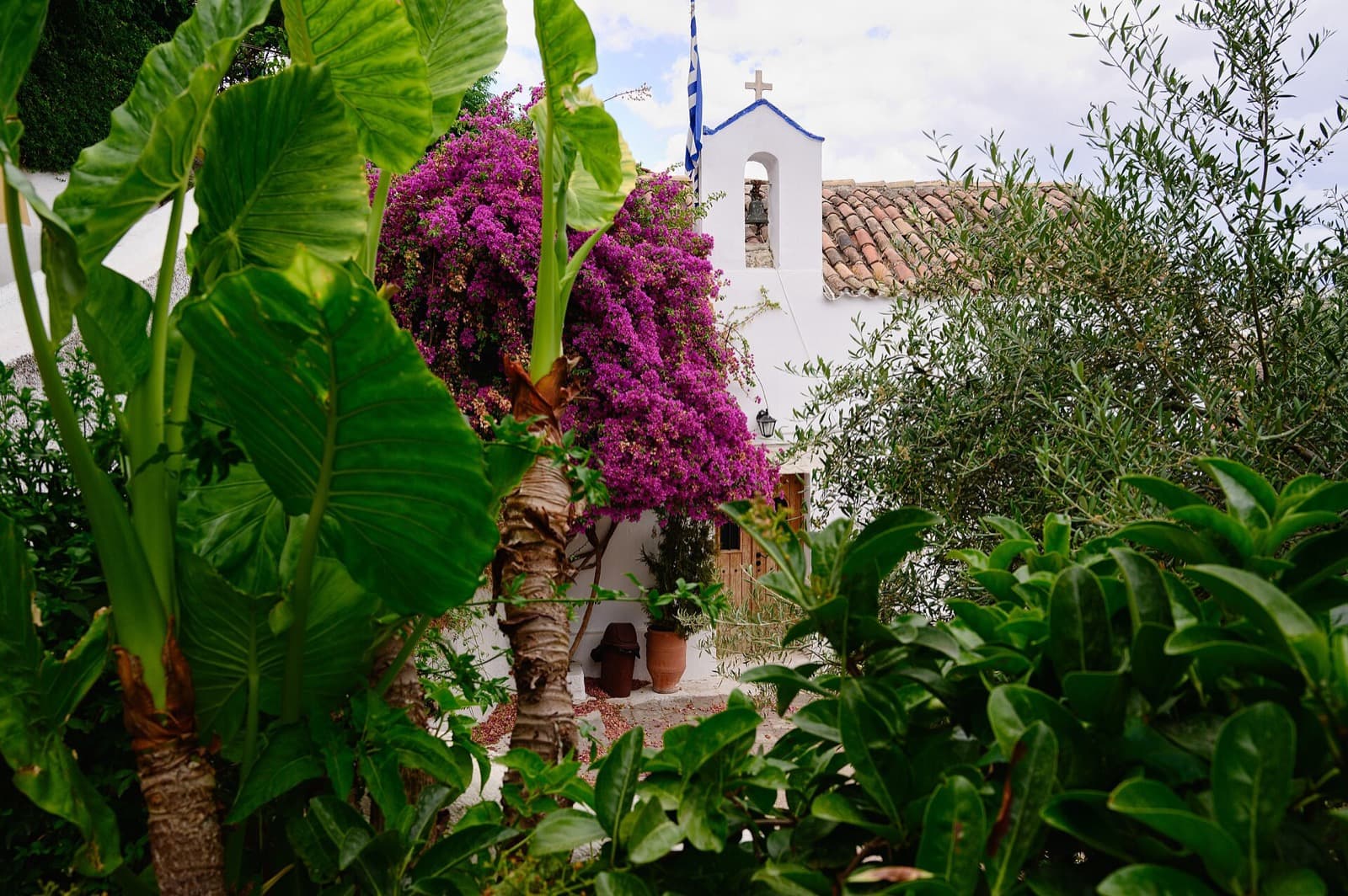
Agios Georgios tou Vrachou: Saint George of the Rock
Gyros is the other pillar: seasoned meat stacked on a vertical rotisserie and shaved off as it turns. The name comes from the Greek verb gyrnao, "to spin," and the dish is a Greek adaptation of the Ottoman doner. It arrived with the hundreds of thousands of Greek and Armenian refugees who came to Greece after the Asia Minor Catastrophe of 1922, many from Smyrna (today Izmir) and Constantinople. Those refugees opened small shops and built the dish into everyday Athenian eating.
That same 1922 migration reshaped the whole menu. Soutzoukakia Smyrneika, oblong meatballs heavy with cumin and garlic and simmered in tomato sauce, are named for Smyrna: "Smyrneika" means "in the Smyrna style." Order them in a taverna as a cooked plate, not a street snack. The kebab you see in Athens, sausage-shaped minced-meat patties spiced with cumin and garlic, came through the same Asia Minor route.
Koulouri and breakfast on the move
The cheapest, most Athenian breakfast is a koulouri: a ring of bread crusted with toasted sesame seeds, sold from carts and kiosks all over the center for pocket change. Its lineage is genuinely ancient, tracing back to a circular bread called kollyra eaten in antiquity, with the diminutive form koulouri emerging in medieval Greek. The version you eat today became a street-food fixture after the 1922 refugees, and it is strongly associated with Thessaloniki, where it is often sold as "koulouri Thessalonikis." Buy one from a cart, eat it walking, and you have joined a very old routine.
Where to see the food before it's cooked: Varvakios Market
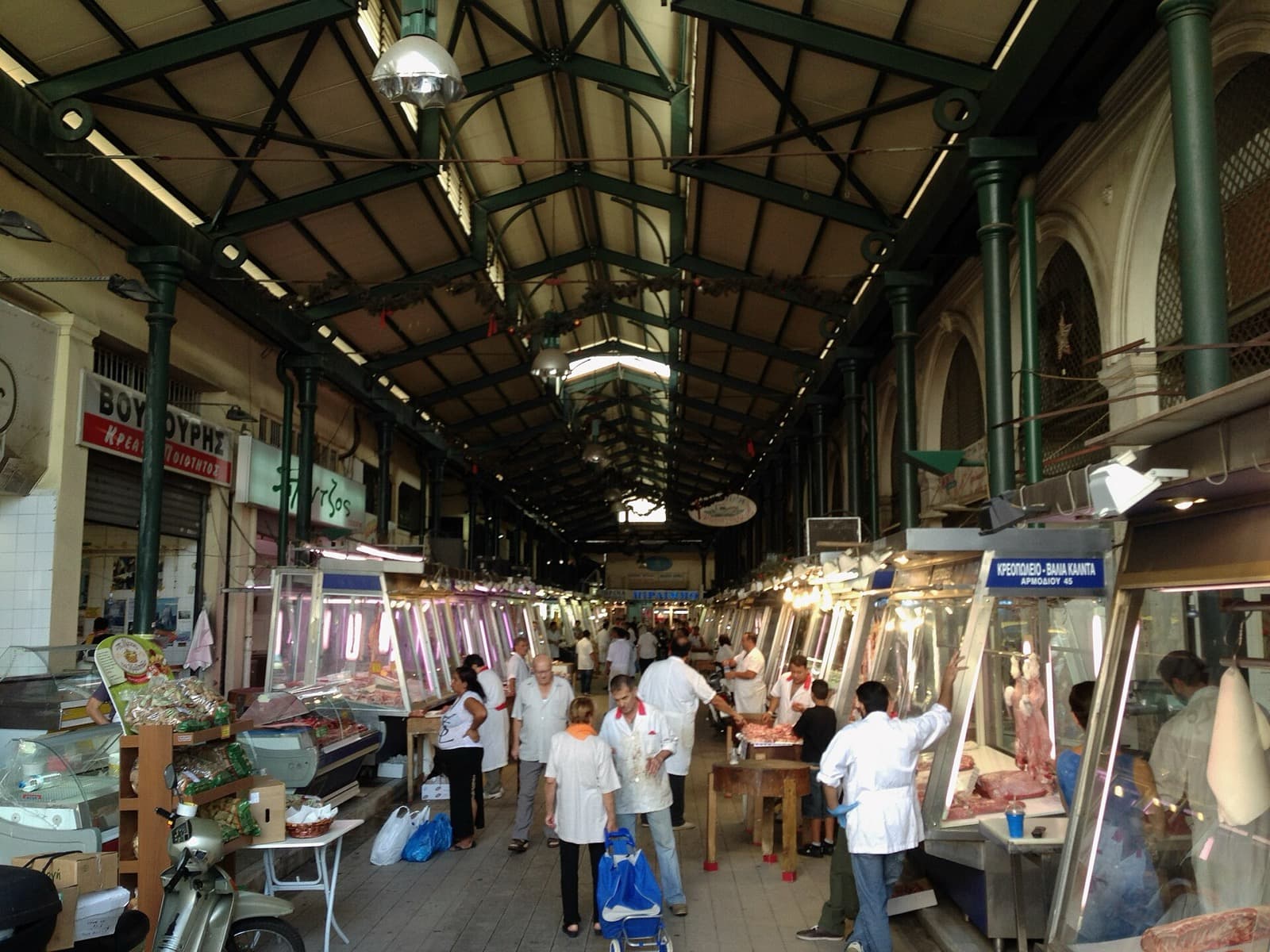
To understand Athenian food, walk through the Varvakios Central Market (Varvakeios Agora) on Athinas Street, between Monastiraki and Omonia. This is a working market, not a showpiece: home cooks and restaurant chefs shop here daily among more than a hundred butcher stalls and roughly a hundred and fifty fish stalls, plus fruit and vegetable stands nearby. It is open Monday to Saturday, roughly 7:00 in the morning to 6:00 in the evening, and closed on Sundays and Greek public holidays. Go between 8:00 and 1:00 for the full noise and volume, since the meat and fish halls wind down by mid-afternoon.
Inside and around the market are old-school tavernas, the kind called a magirio, serving patsas, a slow-cooked tripe soup that Athenians eat as a hangover cure and a cold-weather staple. It is not for everyone, but it is one of the most honestly local things you can order in the city.
Sweets: galaktoboureko, bougatsa, loukoumades
Save room. Galaktoboureko is a semolina custard baked in phyllo and drenched in syrup; the tradition traces to the Greek communities of Asia Minor, Smyrna in particular, and to Ottoman-era pastry-making. Bougatsa, a custard (or cheese) pastry, comes from Northern Greece, especially Serres and Thessaloniki, and is a common breakfast. Loukoumades are small fried dough balls soaked in honey and cinnamon, one of the oldest recorded sweets in Greek history; by tradition, versions of these honey cakes were given to victors at the ancient Olympic Games.
How to order and eat like a local
A few practical rules. Ouzo and tsipouro, the anise and grape-pomace spirits, are not aperitifs or nightcaps in Greek custom: they are drunk during the meal, sipped slowly while small plates of meze keep arriving. The food is the point, and it keeps the table together for hours. Dinner runs late by northern-European standards, commonly 8:00 to 9:00 in the evening and often later, with many kitchens open past midnight. If you sit down at 6:30 expecting a full room, you will be early.
On safety and logistics, keep it simple. Athens tap water is safe to drink and meets European Union standards, sourced from Mount Parnitha and Lake Marathon, so you do not need to buy bottled water at every meal. Some travelers notice a faint mineral or chlorine taste, which is normal. The market and the eating districts are busy and generally fine to walk during the day and evening; use ordinary city awareness in dense crowds and around transit hubs, the same as any large capital.
Turn a meal into a walk
The best way to eat Athens is to fold it into a walk, so the food has context. The market and the eating streets of Psyrri and Monastiraki are stitched into our self-guided Athens walking tours, which move at your pace with no fixed lunch slot and no group waiting on you. The Psyrri and Monastiraki route in particular passes the Varvakios market and the tavernas around it, so you can pause, eat, and pick the audio back up when you are ready. Browse the full set of routes on the Athens city page and build a day around food, not around a schedule.
Sources
- Souvlaki, Wikipedia
- Smyrna meatballs (Soutzoukakia), Wikipedia
- Everything You Need to Know About Souvlaki in Athens, This is Athens (official city guide)
- Athens Central Market (Varvakios Agora): Complete 2026 Guide, Athens Tourism Guide
- Galaktoboureko, Wikipedia
- Can You Drink Tap Water in Athens, Greece?, Athenian Tours
Frequently asked questions
- What is the difference between souvlaki, kalamaki, and gyros in Athens?
- In Athens, kalamaki is the plain grilled meat skewer, usually pork or chicken, often served with a small piece of bread. What visitors call souvlaki is frequently the full pita wrap (tylichto) holding the skewer meat, fries, tzatziki, onion, and tomato. Gyros is different: seasoned meat stacked on a vertical rotisserie and shaved off as it turns, then wrapped in the same style of pita.
- What are soutzoukakia and where do they come from?
- Soutzoukakia Smyrneika are oblong meatballs seasoned heavily with cumin and garlic and cooked in tomato sauce. The name means 'in the Smyrna style,' referring to Smyrna (modern Izmir). They were brought to Greece by refugees from Asia Minor after 1922 and are eaten as a cooked taverna plate rather than street food.
- Is the Varvakios Central Market open, and when should I go?
- The Varvakios Central Market (Varvakeios Agora) on Athinas Street is open Monday to Saturday, roughly 7:00 in the morning to 6:00 in the evening, and closed on Sundays and Greek public holidays. Go between 8:00 and 1:00 for the busiest hours, since the meat and fish halls slow down by mid-afternoon.
- What is a koulouri and when do Athenians eat it?
- A koulouri is a ring of bread crusted with sesame seeds, sold cheaply from carts and kiosks across central Athens. It has ancient roots in a circular bread called kollyra and became a street-food staple after the 1922 Asia Minor refugee migration. Athenians grab one as a quick breakfast or snack while walking.
- Can you drink the tap water in Athens?
- Yes. Athens tap water is safe to drink and meets European Union standards. It is sourced from Mount Parnitha and Lake Marathon and undergoes regular testing. Some visitors notice a slight mineral or chlorine taste, but there is no need to buy bottled water at every meal.
- When do people eat dinner in Athens?
- Dinner in Athens is late by northern-European standards, commonly around 8:00 to 9:00 in the evening and often later, with many kitchens open past midnight. Ouzo and tsipouro are sipped during the meal alongside small meze plates, not before or after, which keeps people at the table for hours.
Ready to experience it?
Plaka and Anafiotika: The Island Under the Rock
75 min · 1.6 km · moderate
More from Athens
Explore more at your own pace.
Athens: The Ground Floor of the Western City
Anafiotika: The Cycladic Island Village Hiding on the Acropolis Slope
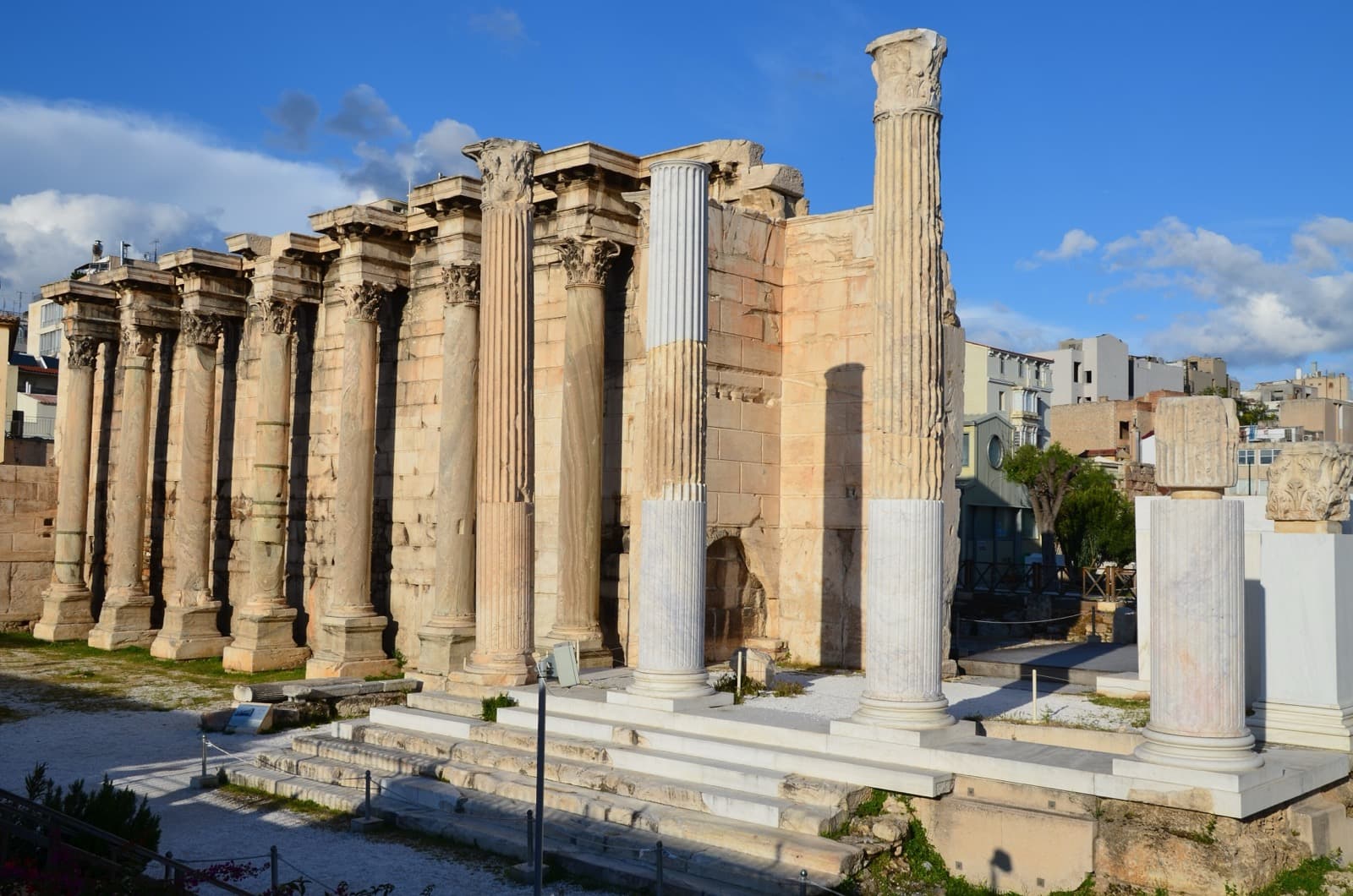
Hadrian's Library: The Roman Wall That Anchors Monastiraki
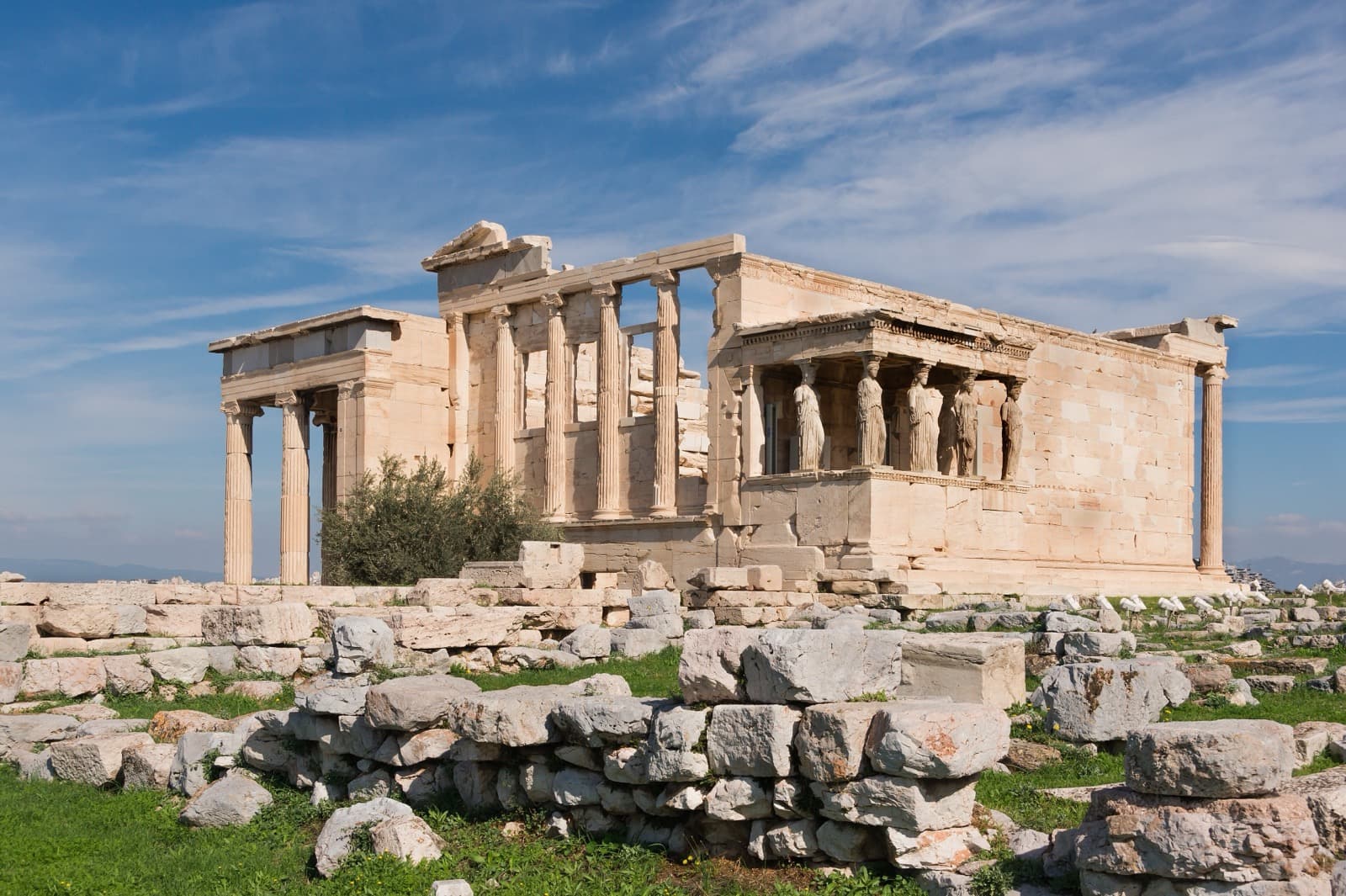
The Caryatids: The Maidens of the Erechtheion
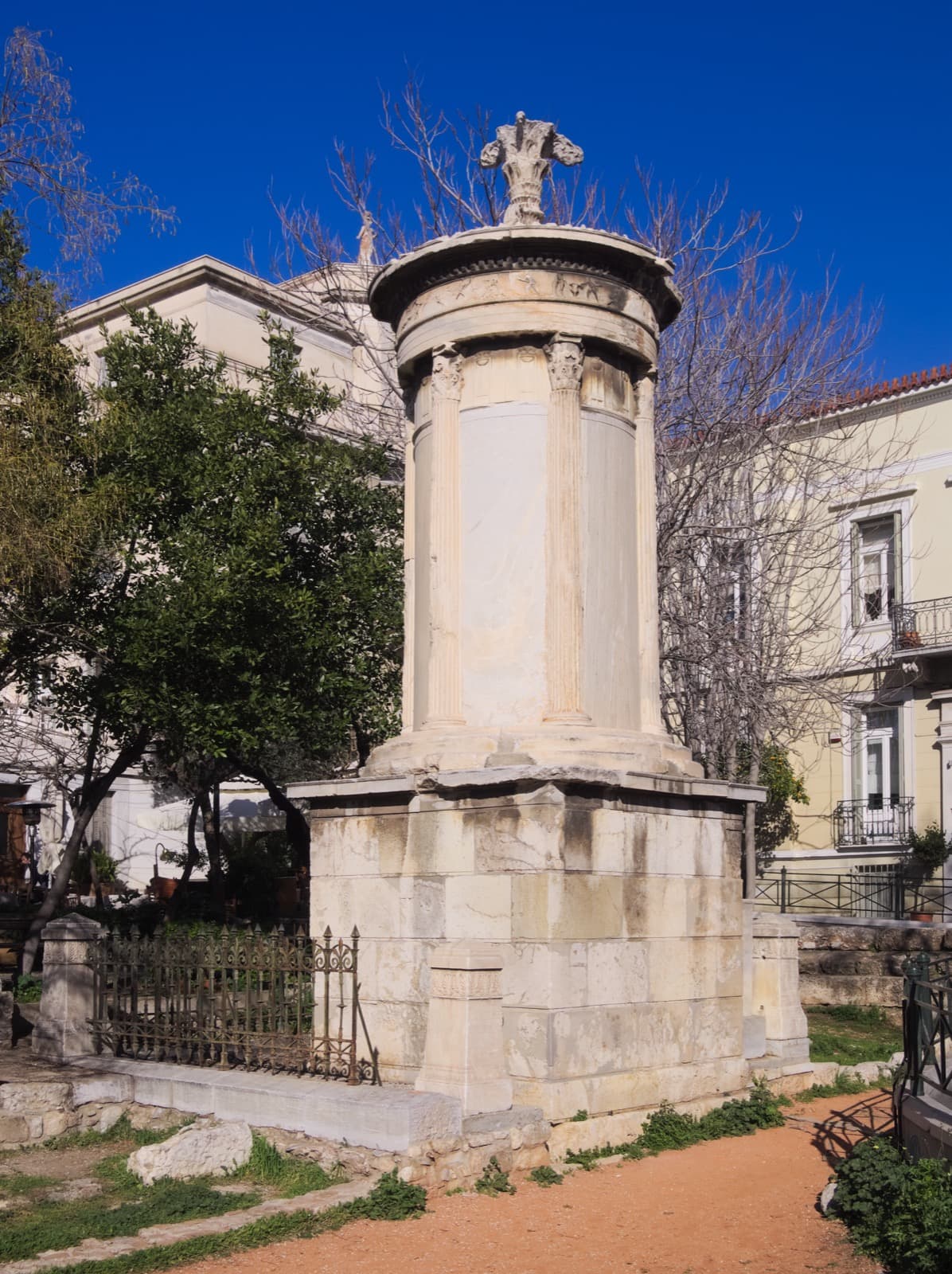
The Choragic Monument of Lysicrates: A Trophy Case That Changed Architecture