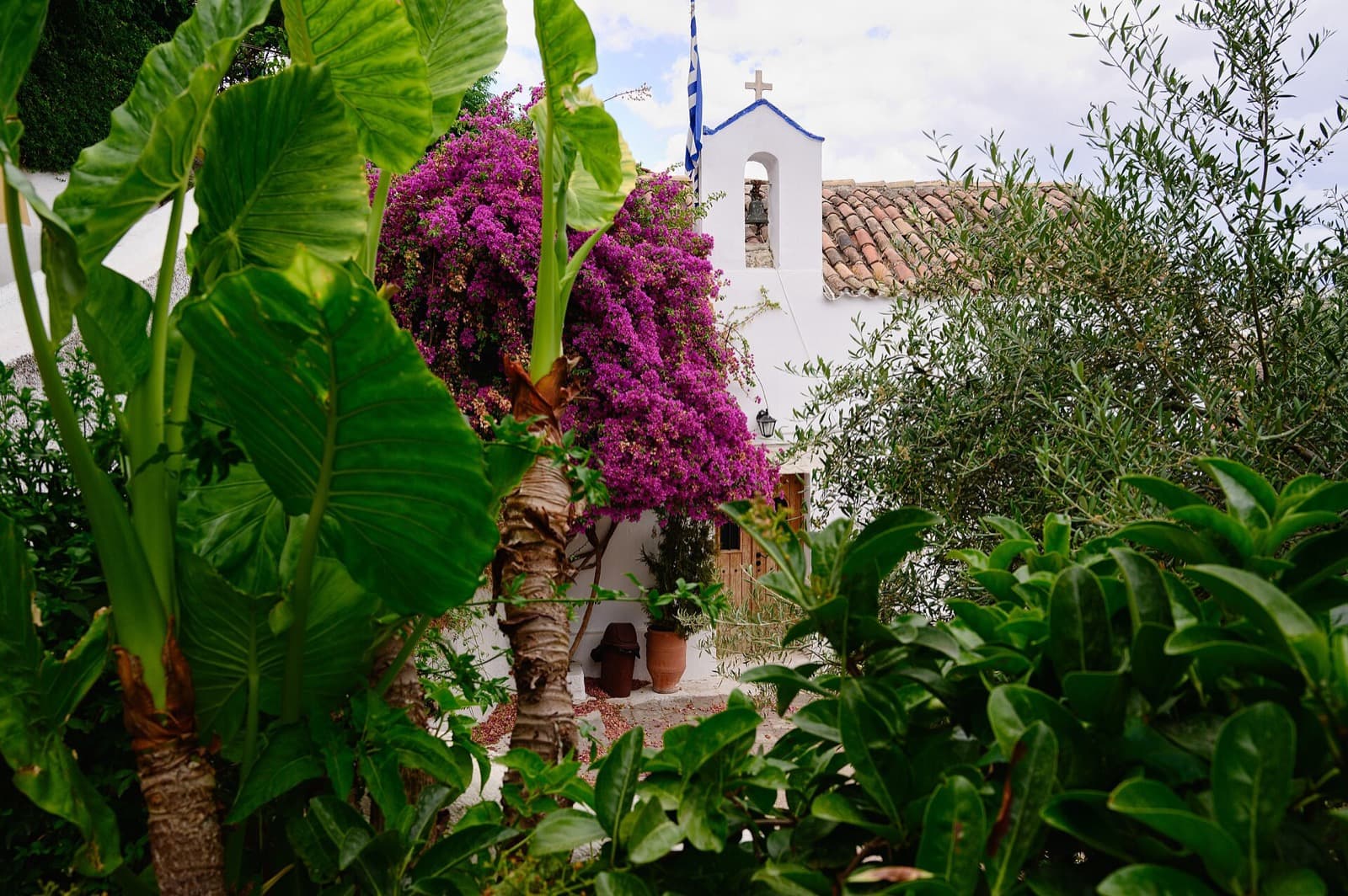
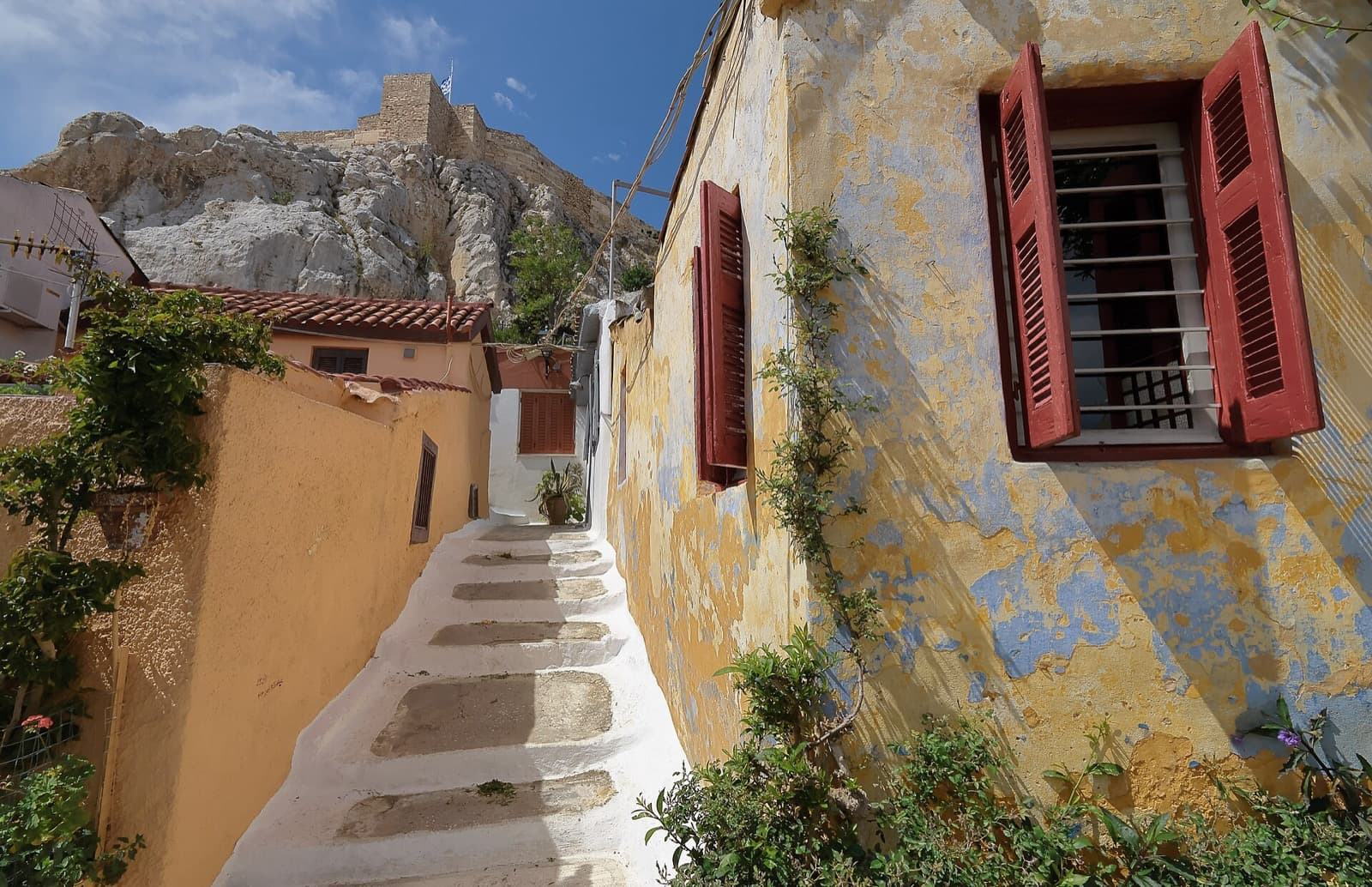
Pressed against the northeast slope of the Acropolis is a cluster of whitewashed cubic houses, narrow stepped lanes, and blue doors that belong to an Aegean island, not a landlocked capital. This is Anafiotika, and it was built by people who missed home. Understanding why island houses climb the sacred rock is the way into the whole of Plaka, because once you see Anafiotika as a transplant, you start reading the entire quarter the same way: not as one uniformly old neighborhood, but as stacked layers you can physically climb through, from a Cycladic village down past Roman monuments, an Ottoman mosque, and the house where a young Greek nation planted its first university.
Why an island village grew on the sacred rock
When King Otto, Greece's first modern king, needed a new royal capital raised out of a small town in the eighteen thirties, construction workers came from the islands. Many were from Anafi in the Cyclades, along with others from nearby islands, and from the early eighteen forties onward they settled here on the slope. They built in the only style they knew: the whitewashed, cubic Cycladic vernacular of their home, rather than the neoclassical style rising in the city below.
The details reward slow looking. The first two named inhabitants recorded here were G. Damigos, a carpenter, and M. Sigalas, a construction worker, the very trades that built modern Athens. The streets have no names at all. Houses are simply numbered Anafiotika one, Anafiotika two, and so on, the way a small island village never needed formal addresses. Only about forty-five of the original houses still stand. Part of the quarter was cleared in nineteen fifty for archaeological excavation, and the Greek state began buying up houses in nineteen seventy to protect it. Refugees from Asia Minor added to the population in nineteen twenty-two.
This is not a museum. It is a protected, still-lived-in neighborhood, so walk softly. Behind the painted shutters are people's kitchens and courtyards. Keep your voice low and stay on the public lanes.
The island brought its faith too
Hear a stop from this walk
Agios Georgios tou Vrachou: Saint George of the Rock
The settlers did not only carry their building style. Among the white houses sits Agios Georgios tou Vrachou, Saint George of the Rock, a small single-naved, barrel-vaulted church on a rocky spur directly beneath the Acropolis. It was rebuilt in the nineteenth century by the residents of Anafiotika themselves, in the same Cycladic style they used for their homes, which is why it looks less like a grand Athenian basilica and more like a chapel on a whitewashed island lane. Its companion church nearby, Agios Simeon, keeps a revered copy of the Panagia Kalamiotissa icon, an image of the Virgin Mary carried here from the island of Anafi. The community brought its patron and its devotion along with its trowels. Most days you will find Saint George quietly closed, so admire it from its flowered courtyard and remember it is a working church in the middle of people's homes.
Climbing down through the older layers
Once Anafiotika has taught you to read for layers, the rest of the walk opens up. On Tripodon Street, the ancient Street of the Tripods, stands the Choragic Monument of Lysicrates, a small round marble monument raised in three hundred and thirty-five to three hundred and thirty-four B C. In classical Athens, wealthy citizens called choregoi paid to train and outfit choruses for the great festivals. A sponsor named Lysicrates backed a winning boys' chorus and built this monument to display his bronze victory tripod. Its carved inscription still names the whole team, from the pipe-player Theon to the chorus trainer Lysiades. What makes archaeologists linger is that this modest drum carries the earliest known use of the Corinthian order on the exterior of a building, a decorative idea that would later spread across the entire Roman world. It began, of all things, as a trophy case for a chorus of boys.
A short wander brings you to the Tower of the Winds, formally the Horologion of Andronikos of Kyrrhos, an eight-sided marble tower about twelve metres tall, designed by the astronomer Andronicus of Cyrrhus and completed by about fifty B C at the latest. Each of its eight faces carries a carved wind deity, and the tower once told time three ways at once: eight sundials outside, a water clock inside fed from the Klepsydra spring on the Acropolis slope, and a bronze Triton weather vane on top. Then hold one more layer in mind. Between seventeen fifty-one and eighteen twenty-one, this ancient pagan timepiece served as a tekke, a lodge for Qadiri dervishes, part of the Ottoman city that Athens then was.
Two empires on one patch of earth
The layering reaches its clearest form at the Roman Agora, the marketplace funded by the emperor Augustus to complete a promise first made by Julius Caesar, built roughly between twenty-seven B C and seventeen B C. Its western entrance, the Gate of Athena Archegetis, Athena the Leader, still stands. Turn to the north side of the square and the centuries change again: there stands the Fethiye Mosque, the Mosque of the Conquest, the building you see raised about sixteen sixty-eight to sixteen seventy over an earlier mosque tied to the Ottoman conquest of Athens. After independence it lived humbler lives as barracks, a military prison, a bakery, and a storehouse for Agora finds, before its restoration and reopening for cultural use in twenty seventeen. Roman market and Ottoman mosque, one patch of earth.
The last layer: a young nation
The walk closes on Tholou Street at the Kleanthis House, an Ottoman-era residence bought in the eighteen thirties by two architects shaping the new capital, Stamatios Kleanthis and Eduard Schaubert. Here the University of Athens was born. King Otto founded it as the Othonian University on the third of May eighteen thirty-seven, and it was housed in these rooms from eighteen thirty-seven to eighteen forty-one, opening with four faculties: Theology, Law, Medicine, and Arts and Philosophy. A country that had won independence only a few years earlier chose to plant a university not in a palace but in a repurposed Ottoman house among the ruins. The building now holds the Athens University History Museum, opened in nineteen eighty-seven.
That is the argument of the walk in miniature: an island village, then Roman marble, then Ottoman prayer, then a nation learning to build a future among all the pasts stacked on this slope. It is a cluster of seven stops rather than a straight line, a little over one and a half kilometres, roughly two hours at your own pace. For more routes across the city, see our Athens walking tours, or browse everything on offer in Athens. Start at the top, in Anafiotika, and read the quarter one climb at a time.
Sources
- Anafiotika, Wikipedia: founding by island builders in the eighteen forties, the unnamed numbered houses, and the roughly forty-five surviving homes.
- Choragic Monument of Lysicrates, Wikipedia: the three hundred and thirty-five to three hundred and thirty-four B C date and the earliest exterior Corinthian order.
- Tower of the Winds, Wikipedia: the octagonal design, its three timekeeping systems, and its later use as a dervish tekke.
- Roman Agora and Fethiye Mosque, Wikipedia: Augustus and Caesar's patronage and the mosque's afterlife and twenty seventeen reopening.
- National and Kapodistrian University of Athens, Wikipedia: the eighteen thirty-seven founding as the Othonian University and its first home in the Kleanthis House.
Ready to experience it?
Plaka and Anafiotika: The Island Under the Rock
75 min · 1.6 km · moderate
More from Athens
Explore more at your own pace.
Athens: The Ground Floor of the Western City
Hadrian's Library: The Roman Wall That Anchors Monastiraki
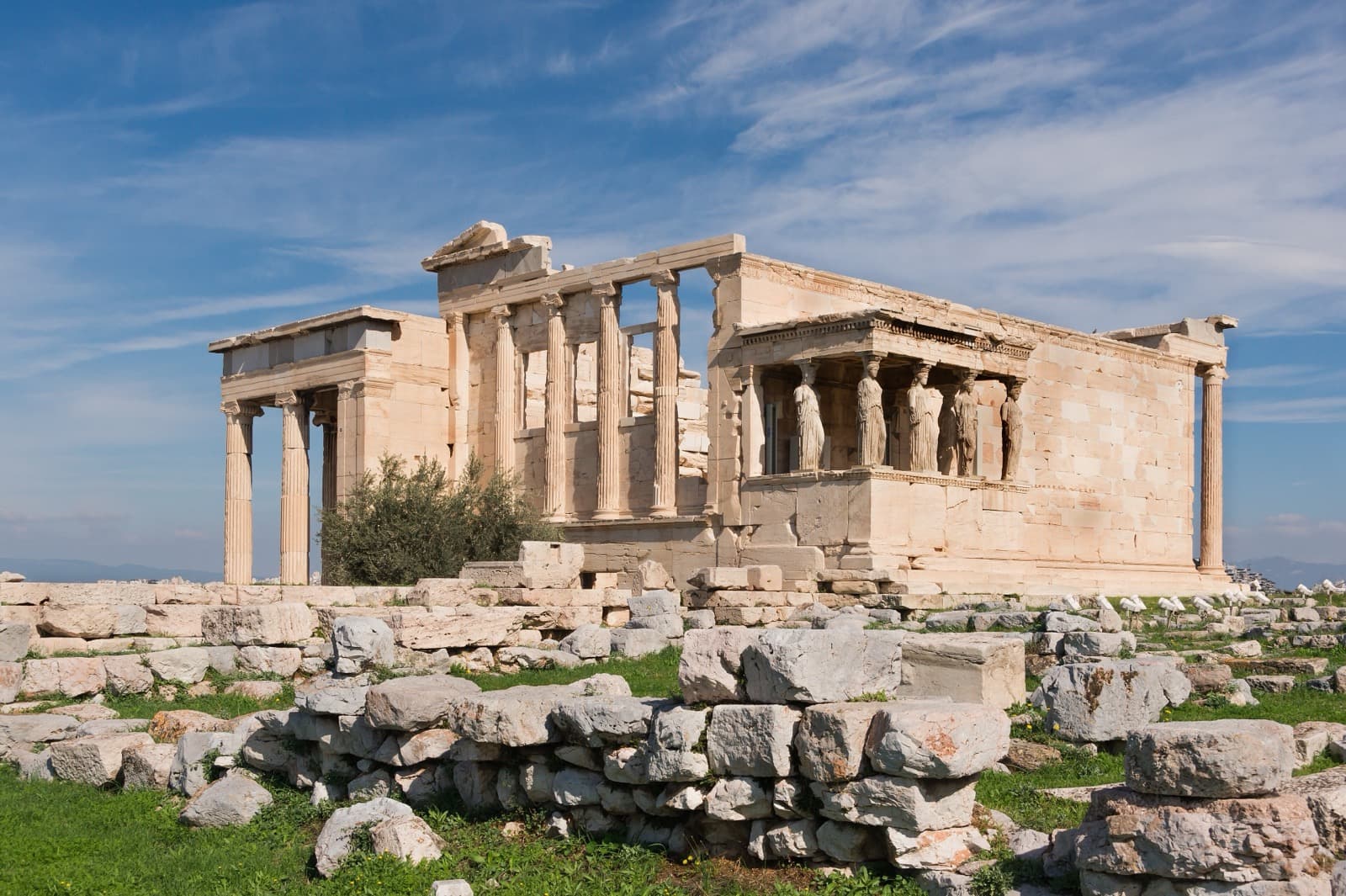
The Caryatids: The Maidens of the Erechtheion
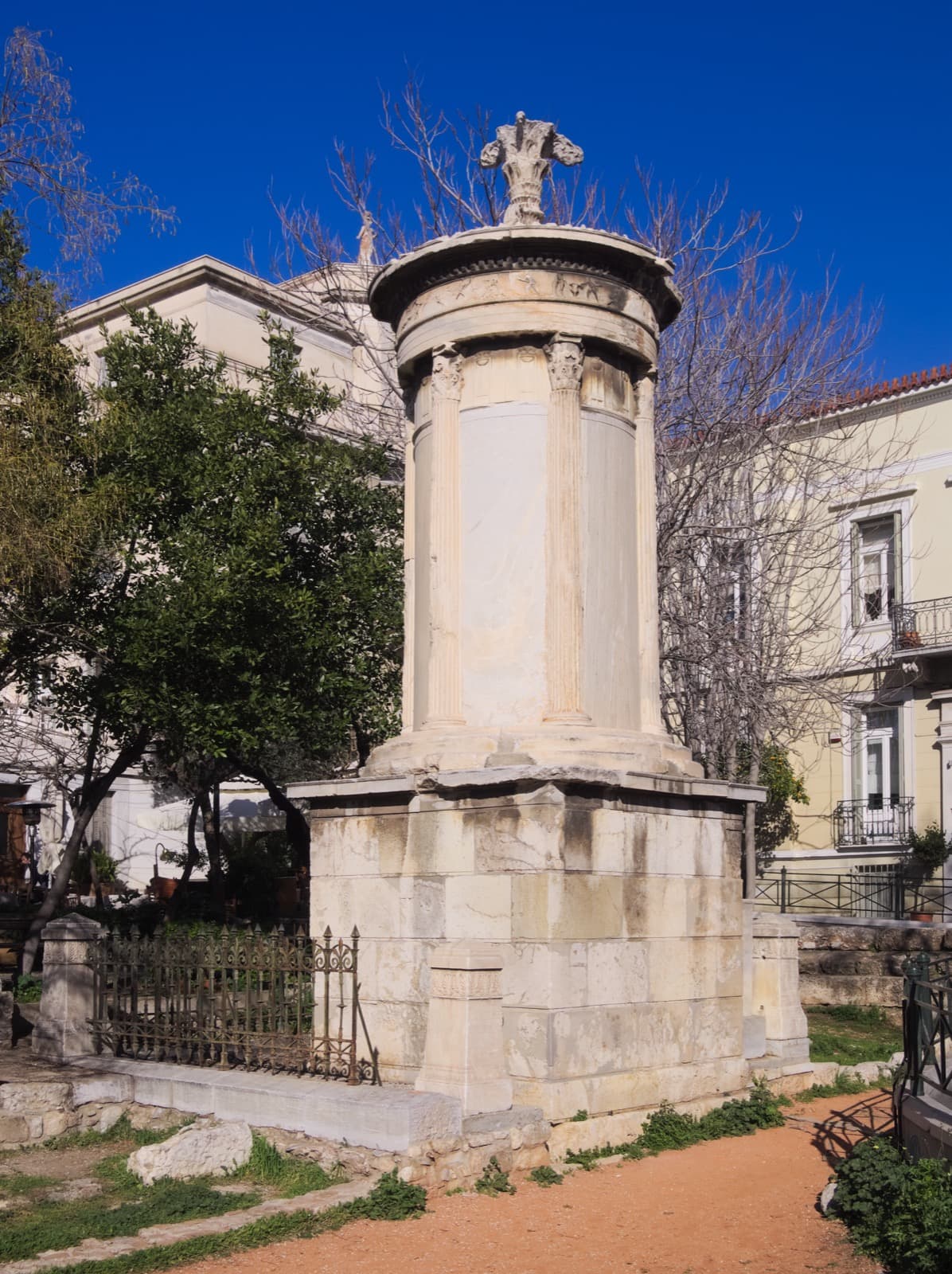
The Choragic Monument of Lysicrates: A Trophy Case That Changed Architecture
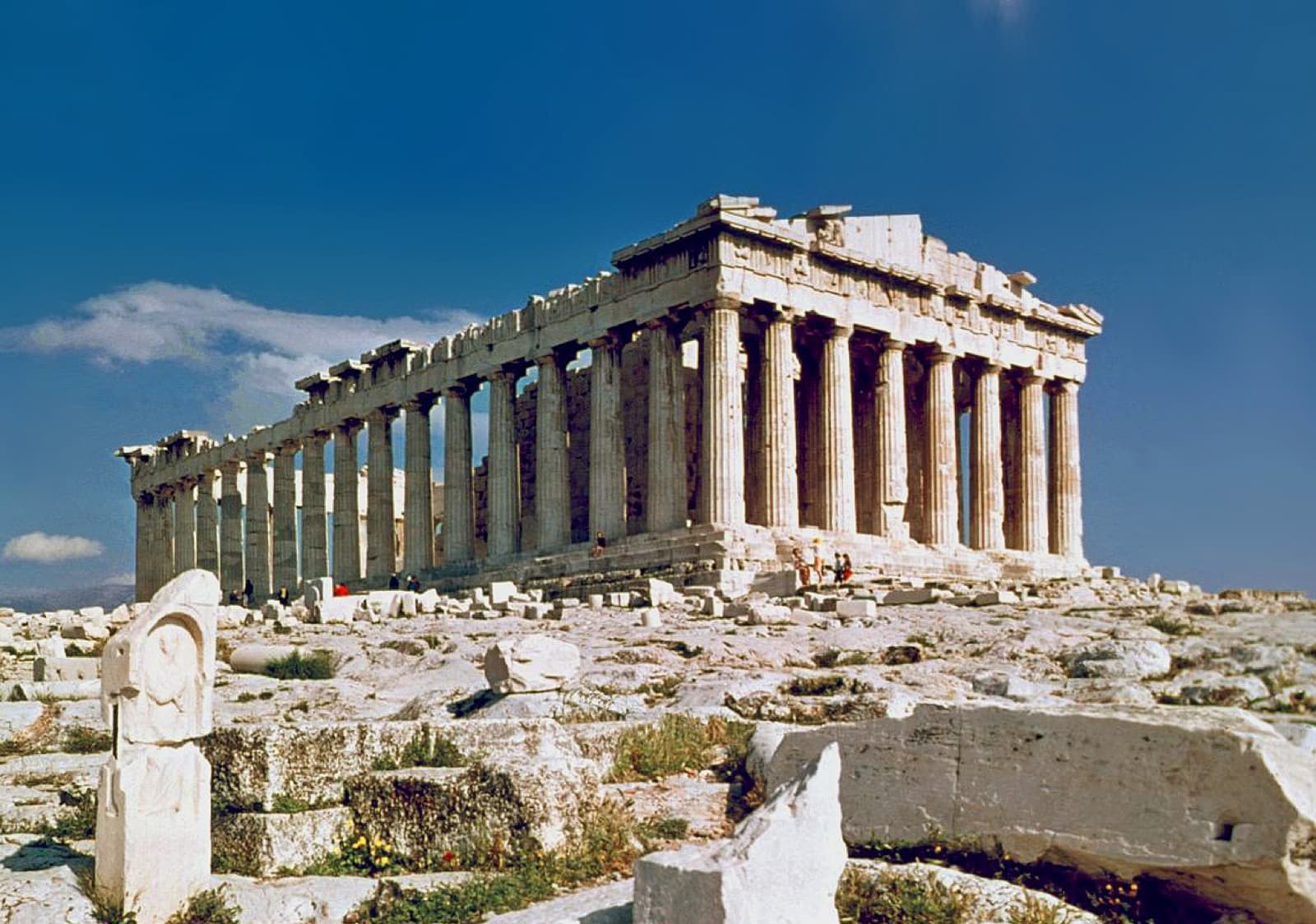
The Parthenon: The Temple That Set the Standard