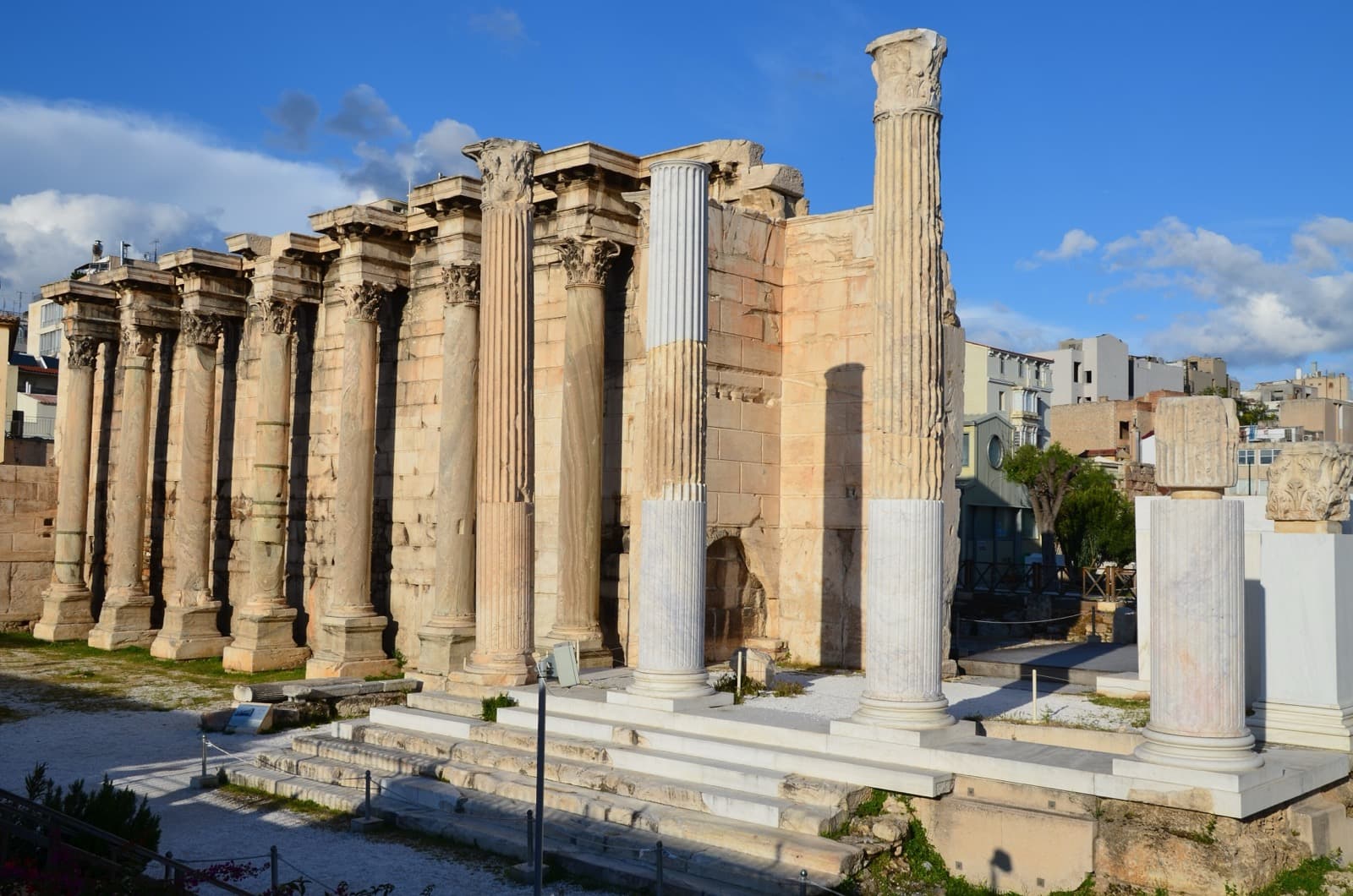
The tall columned wall on the edge of Monastiraki Square is the surviving west facade of Hadrian's Library, a Roman cultural complex the emperor Hadrian built around AD 132. Most people walking past read it as a temple or a stretch of old fortification, because it sits quiet and grand while the flea market clatters around it. It is neither. It was a place to read, to study, and to hear a lecture, and understanding that one fact changes how the whole ruin looks when you stand at the railing.
The word "library" undersells it
Call something a library today and you picture shelves and a reading desk. The Roman version was bigger and more social. Hadrian laid this out like a forum: a single grand entrance, an outer wall lined with niches, and inside, a broad rectangular courtyard with a decorative pool set at its centre. The ceilings were gilded wood, the floors were marble, the walls were painted. Papyrus scrolls were stored on the eastern side, but the scrolls were only part of the point. Around the corners of the complex sat reading rooms and lecture halls. Think of it as a cultural centre dropped into the city, a place where Athenians and visitors came to think out loud, not just to check out a text and leave.
That distinction matters when you look at the scale of what survives. The wall in front of you is long, and it was only ever one side of a large enclosed space. The pool, the courtyard, the halls all sat behind it. What you see is the front door and its flank, not the building.
What to look at while you are standing there
Hear a stop from this walk
Agia Irini Square: the old flower market
Give the columns a slow read. They are cut from green Karystos marble, quarried on the island of Euboea to the north, and the capitals crowning them are carved in the Corinthian order, the most ornate of the classical styles, all curling acanthus leaves. Corinthian was the showy choice, the one a Roman patron picked when he wanted the building to announce culture and money at once. Run your eye along the line of columns and you can feel the length of the original wall and, from that, guess at the size of the courtyard hidden behind it.
Notice too how low the ground sits relative to the modern square. You are looking at the Roman layer of a city that kept building on top of itself. The bazaar streets, the metro, the tenth-century church across the way, the Ottoman mosque on the square's edge: all of it accumulated above and around this wall over nineteen centuries. Hadrian's Library is simply the oldest slab in that pile.
The long afterlife most visitors miss
The single most interesting thing about this site is not that it was built. It is what happened to it afterward, because the ruin you are looking at has been at least four different buildings.
The library was seriously damaged in the Herulian invasion of 267, when a Germanic people sacked much of Roman Athens. It sat wounded for well over a century until the prefect Herculius repaired it, sometime between 407 and 412. Then the site changed religion. In the fifth century a large tetraconch church, a church with four apses arranged around a central hall, was raised inside the old courtyard. That church was destroyed by the end of the sixth century and replaced in the seventh by a three-aisled basilica. Later still, around the eleventh or twelfth century, a church called the Megali Panagia rose on the same footprint, and it served as the first cathedral of Athens.
So the courtyard that once held a Roman reading pool became, in turn, a pagan-era cultural monument, then a Byzantine church, then another, then the city's cathedral. When you look through the facade into the open ground beyond, you are looking at the overlapping foundations of all of them. That layering is the real subject of this stop, and it is the same layering that defines the whole quarter around you.
Standing at the railing versus going in
You have two honest ways to experience this. You can stand at the railing on the square and let the facade be what it is: a calm, grand Roman wall holding its ground against the noise. That costs nothing and takes five minutes, and for many visitors it is enough.
Or you can go inside the fenced site. Entry runs about 6 euros in the summer season and 3 euros in winter, and it is usually covered by the combined ticket that spans several of Athens' ancient monuments, so if you plan to see the Acropolis, the Ancient Agora, and the others, check whether a combined pass makes this stop effectively free. Inside, you get closer to the exposed foundations of the courtyard, the pool, and the church remains, and the long habit of this city, building on top of itself, becomes something you can walk across rather than squint at from the street.
Either way, the thing to carry away is the correction. This is not a temple and not a fort. It is a Roman monument to learning, damaged and repaired and re-consecrated over and over, still edging a market square where people have been trading and arguing and reading for a very long time.
Hadrian's Library is the second stop on the Bazaar of the Coppersmiths walk, a self-guided audio tour through Monastiraki and Psyrri that reads the whole quarter through smell, sound, and colour: the Ottoman mosque, the coppersmiths' lanes, the antique flea market, and the roaring covered food market a few streets north. If you want the full layered picture, browse the Athens walking tours or start from the Athens city page and let the audio guide you stop to stop at your own pace.
Sources
- Hadrian's Library, Wikipedia: AD 132 date, Karystos marble columns, Corinthian propylon, the Herulian sack of 267, the Herculius repair of 407 to 412, and the tetraconch, basilica, and Megali Panagia church sequence.
- The Library of Hadrian, Athens, World History Encyclopedia: the forum-style plan, the courtyard pool, reading rooms, lecture halls, and the seven Corinthian columns in green Karystos marble.
- The Churches in the Library of Hadrian, Acropolis of Athens: the fifth-century tetraconch, the seventh-century basilica, and the Megali Panagia as Athens' first cathedral.
- Cipollino marble, Wikipedia: Karystian (cipollino) marble quarried on the island of Euboea between Styra and Karystos.
- Roamer tour "Bazaar of the Coppersmiths" (athens-psyrri-monastiraki), fact-audited stop transcript for Hadrian's Library: entry pricing, combined ticket, and on-site orientation.
Ready to experience it?
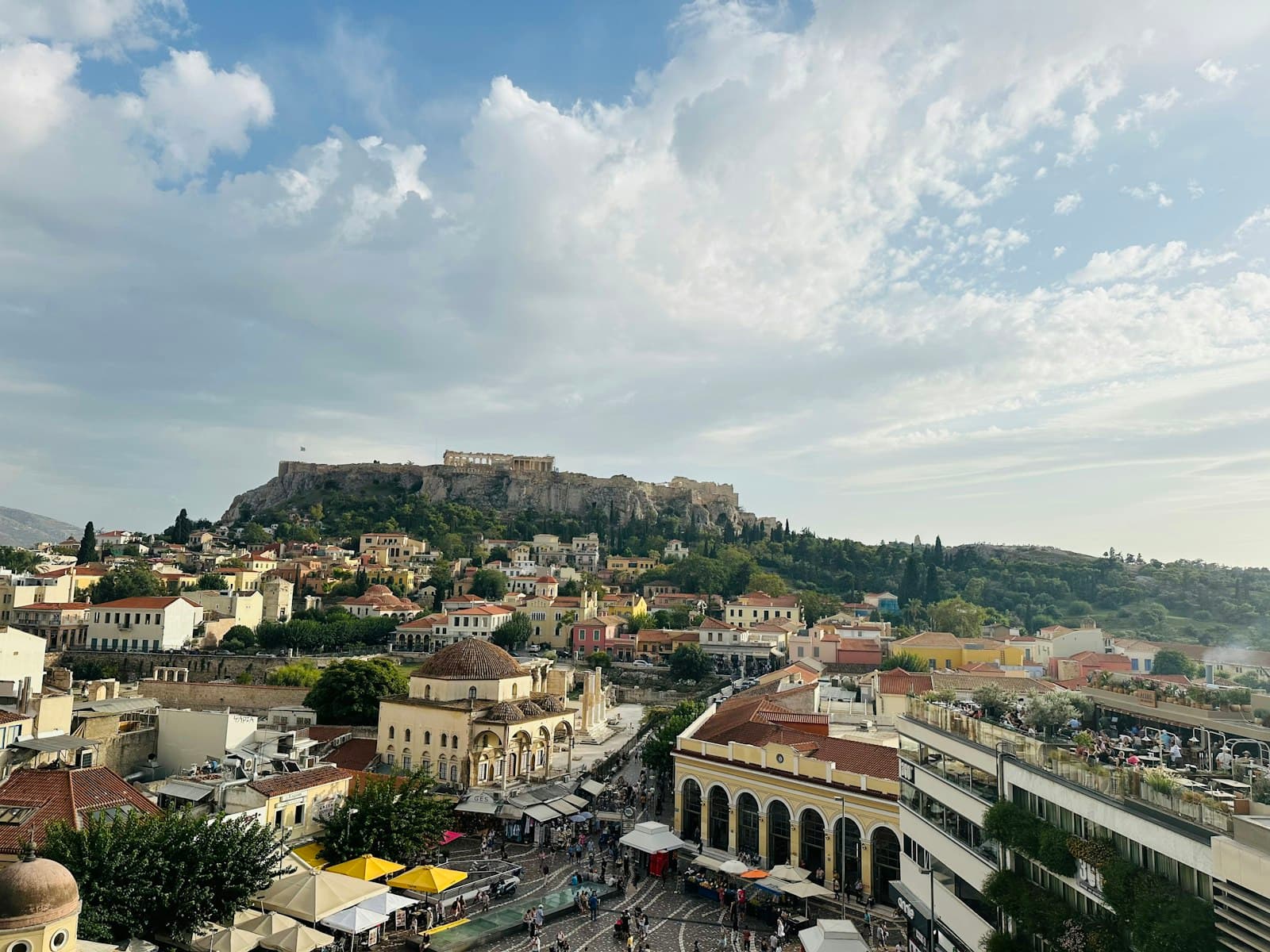
Bazaar of the Coppersmiths
80 min · 2.1 km · easy
More from Athens
Explore more at your own pace.
Athens: The Ground Floor of the Western City
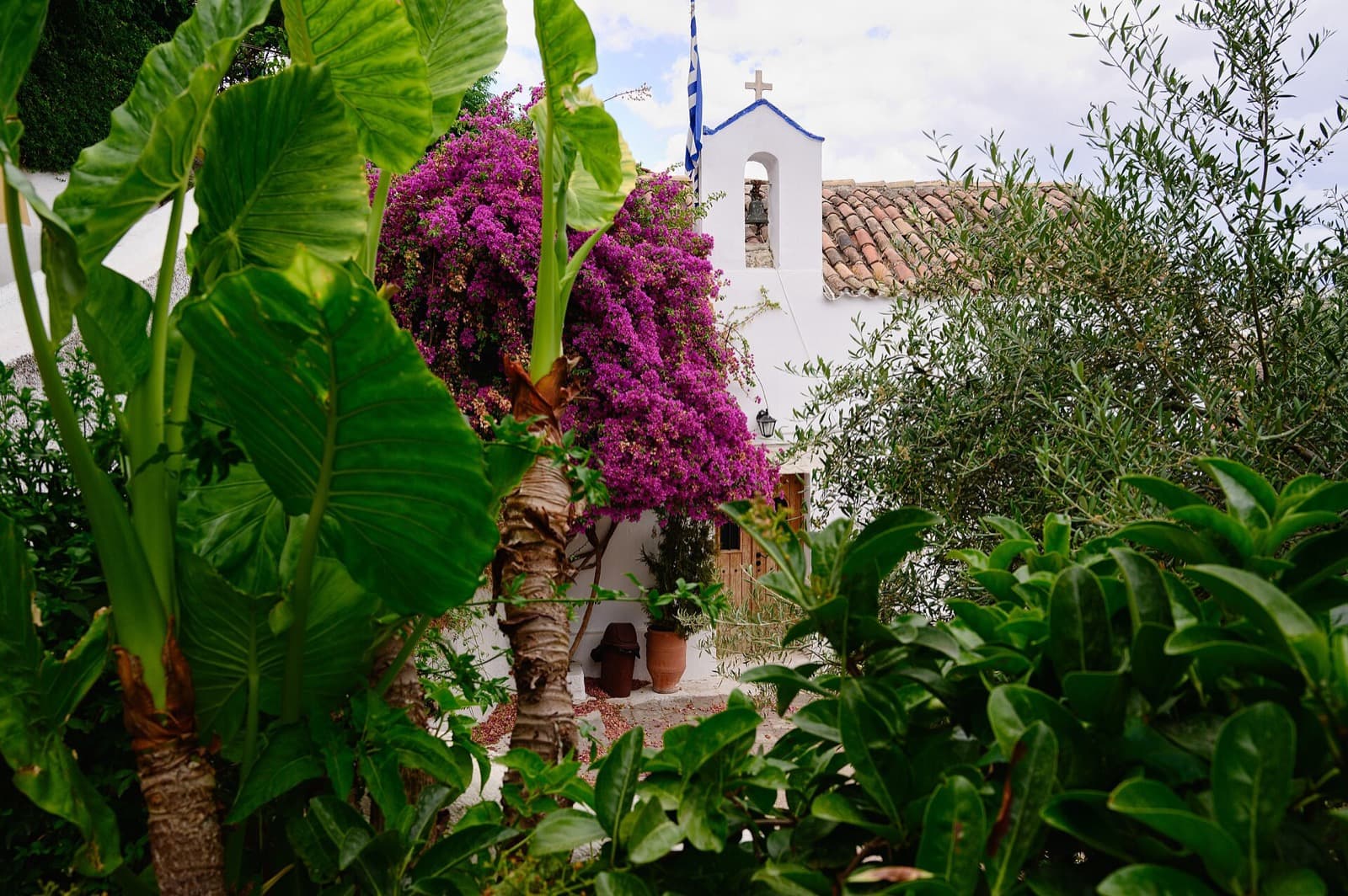
Anafiotika: The Cycladic Island Village Hiding on the Acropolis Slope
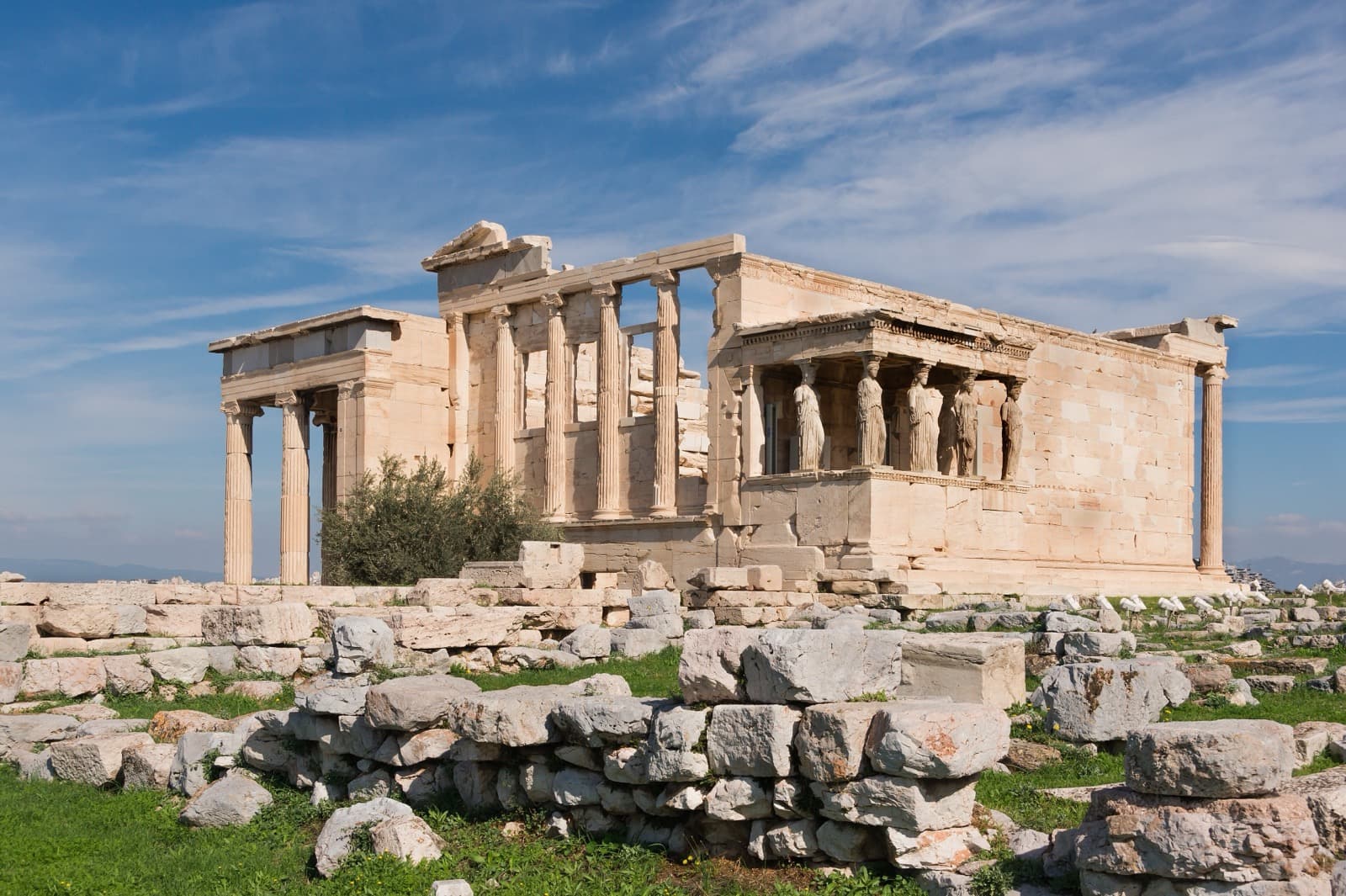
The Caryatids: The Maidens of the Erechtheion
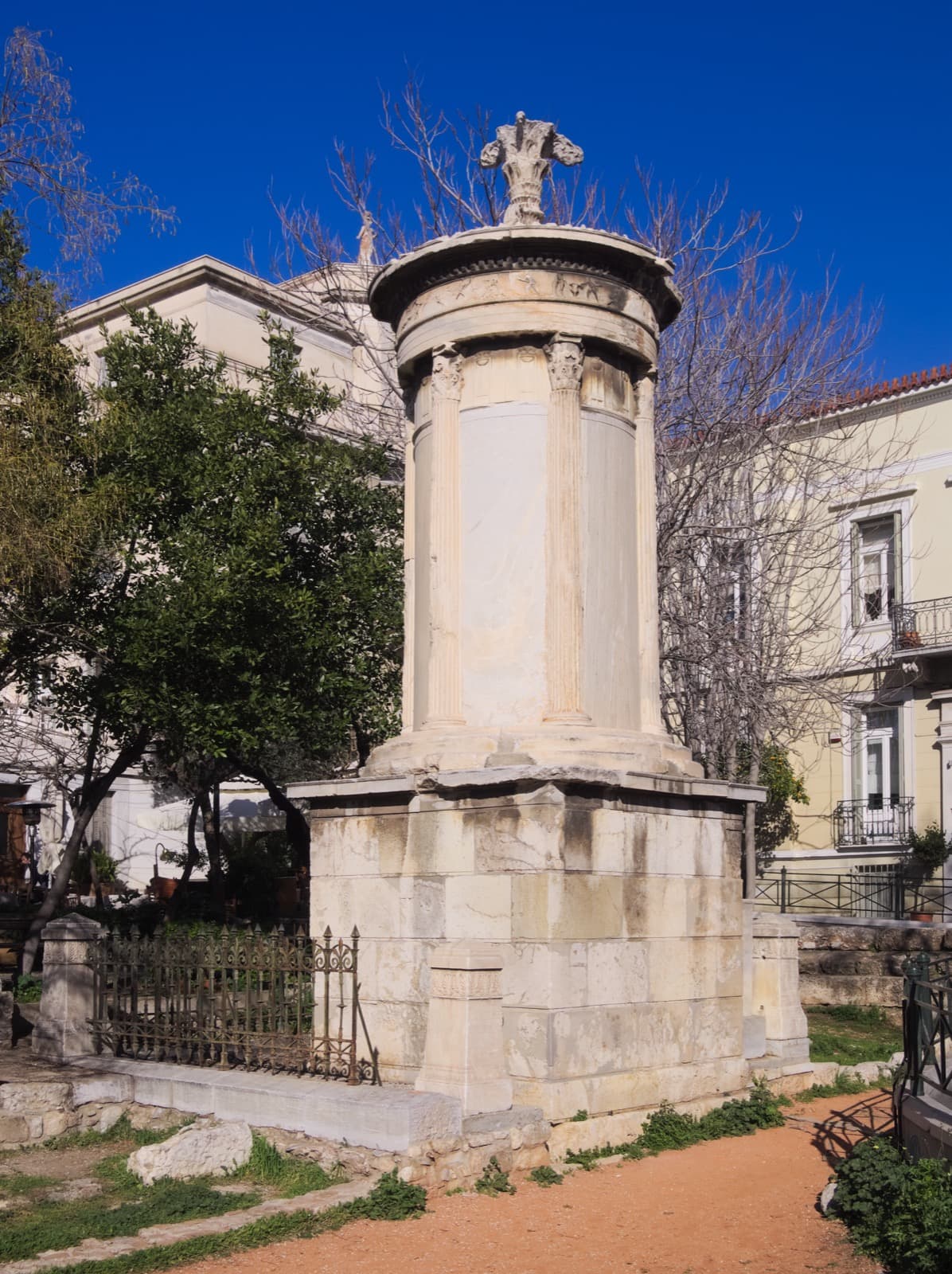
The Choragic Monument of Lysicrates: A Trophy Case That Changed Architecture
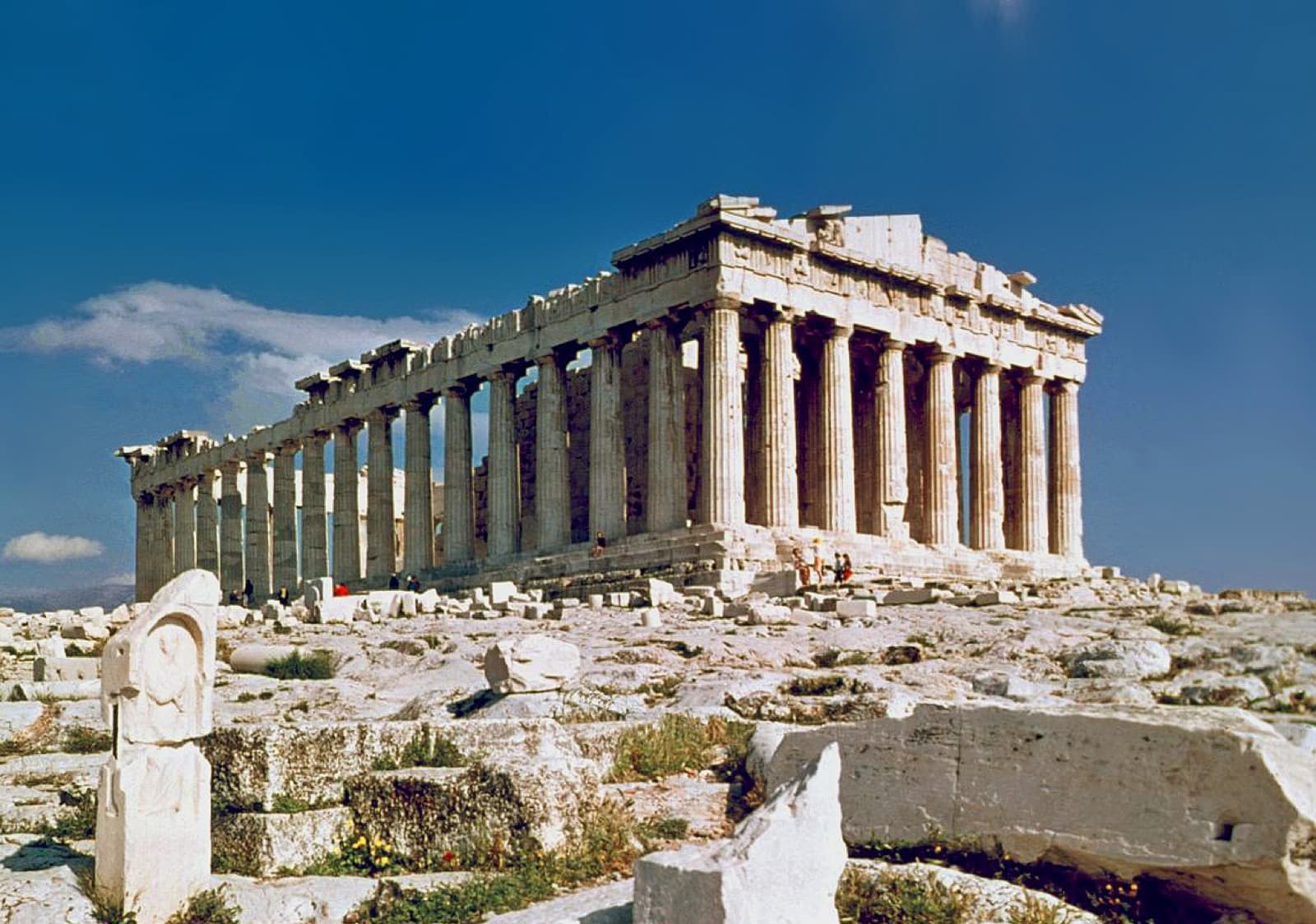
The Parthenon: The Temple That Set the Standard