Everyone climbs to the Parthenon, but democracy was invented down here on the flat ground of the Ancient Agora, where citizens argued, voted, and governed themselves. This walk reads the marketplace as the literal ground floor of the Western idea of the citizen.
Start · Stoa of Attalos: The Restored Colonnade
DirectionsStops
- 1
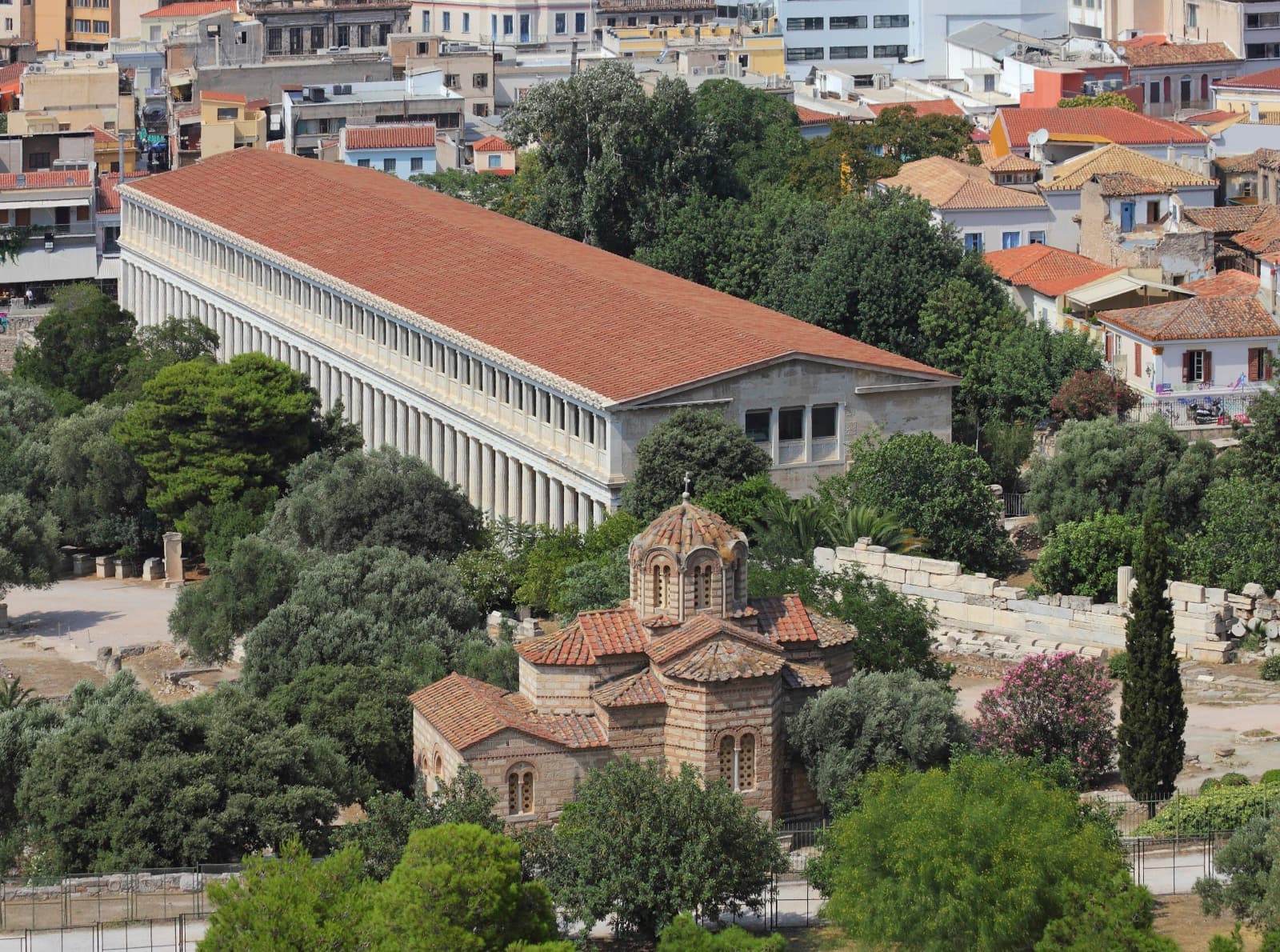
Stoa of Attalos: The Restored Colonnade
The long two-storey colonnade on the Agora's eastern edge, rebuilt in the nineteen fifties and now the site's museum.
- 2
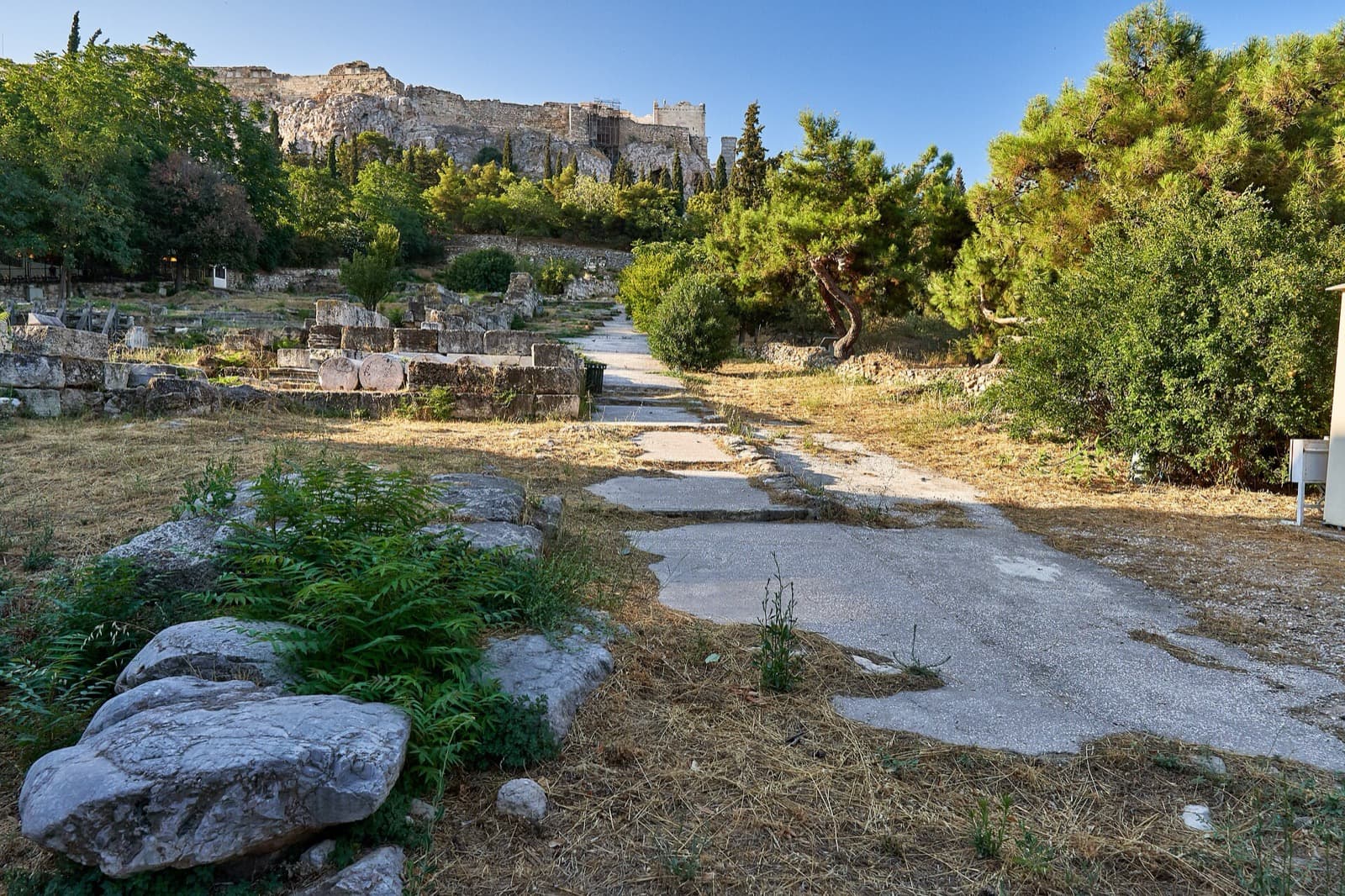
The Panathenaic Way: The Processional Road
The broad ancient road that crossed the Agora diagonally and climbed to the Acropolis, route of the city's greatest festival.
- 3
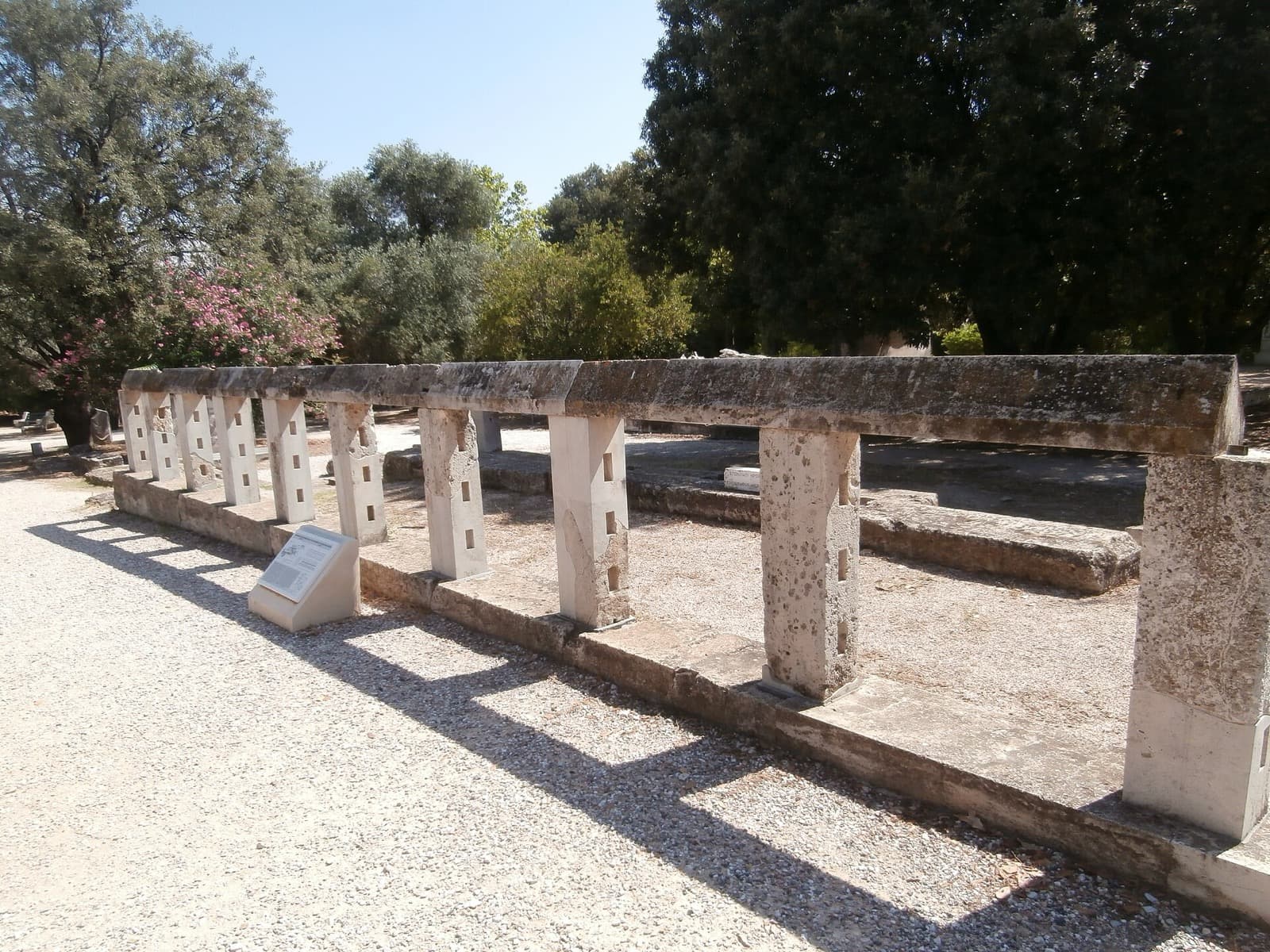
Monument of the Eponymous Heroes: The City Noticeboard
A long marble base on the Agora's west side that held ten bronze statues and served as the city's official public noticeboard.
- 4
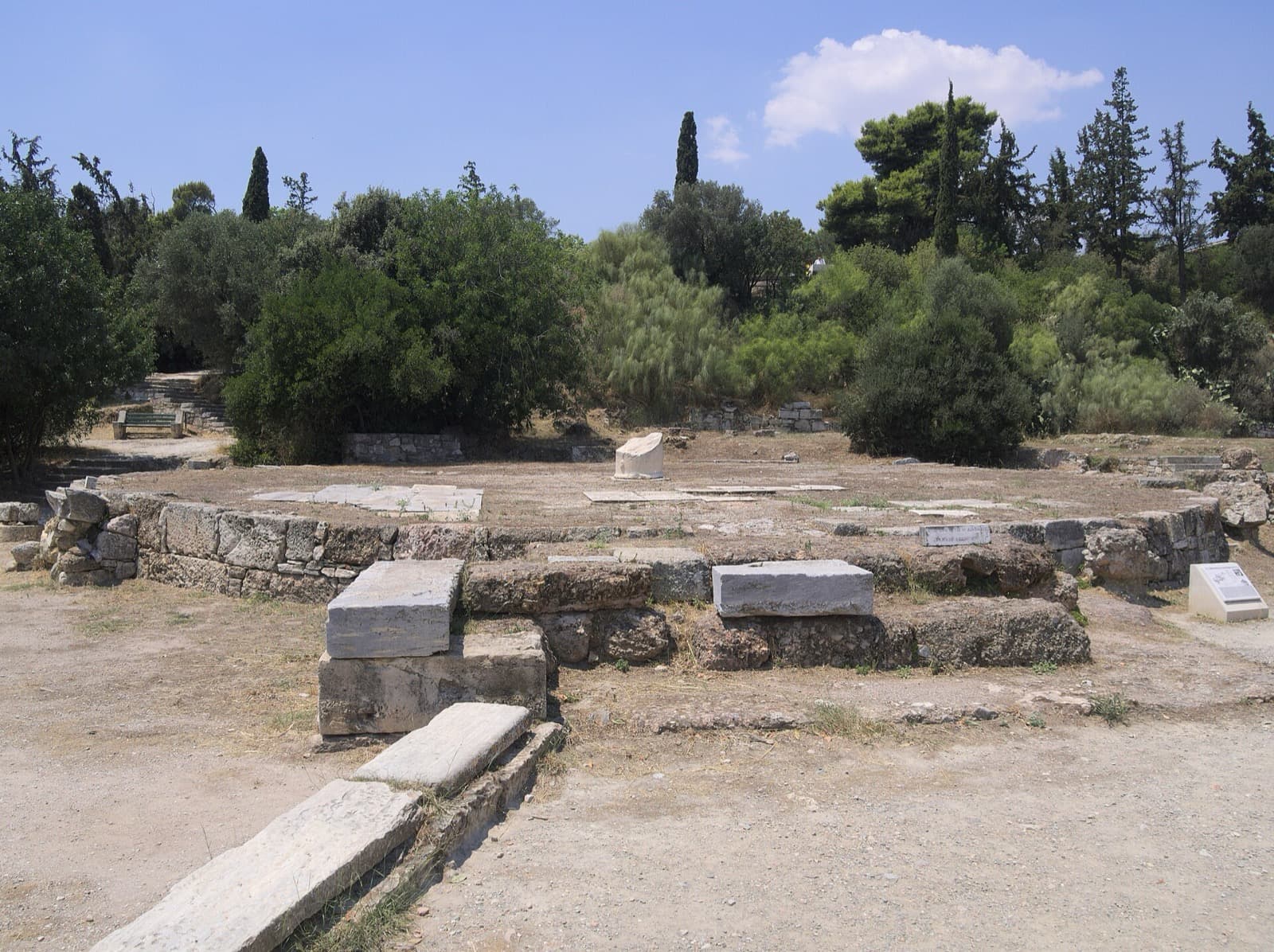
The Tholos and the Bouleuterion: The Machinery of Democracy
The round building where the city's standing committee dined and slept, beside the council house where five hundred citizens met.
- 5
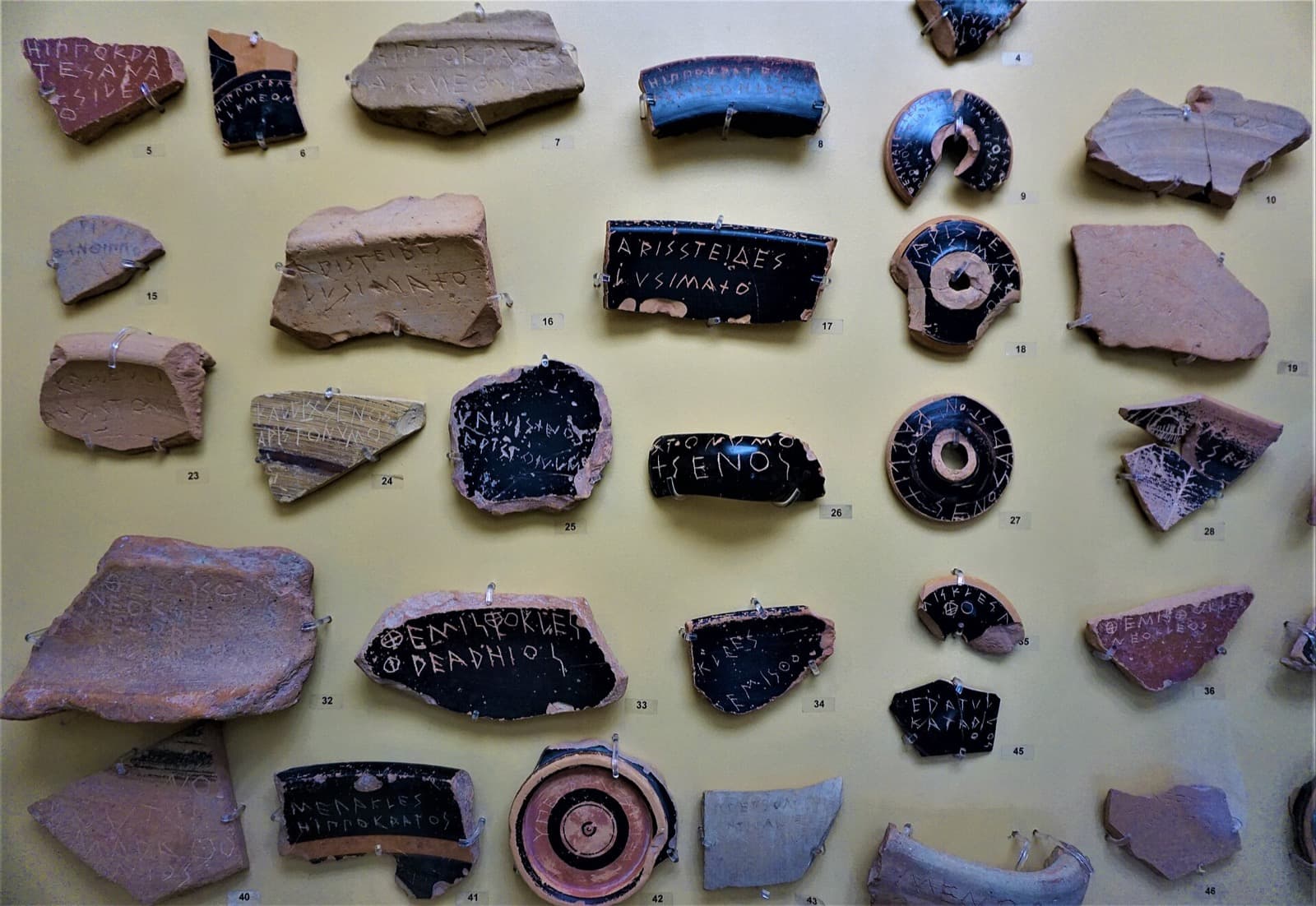
Ostracism and the Law Courts: Rule by the Many
The open ground where Athenians voted to exile fellow citizens on scraps of pottery, near the popular jury courts.
- 6
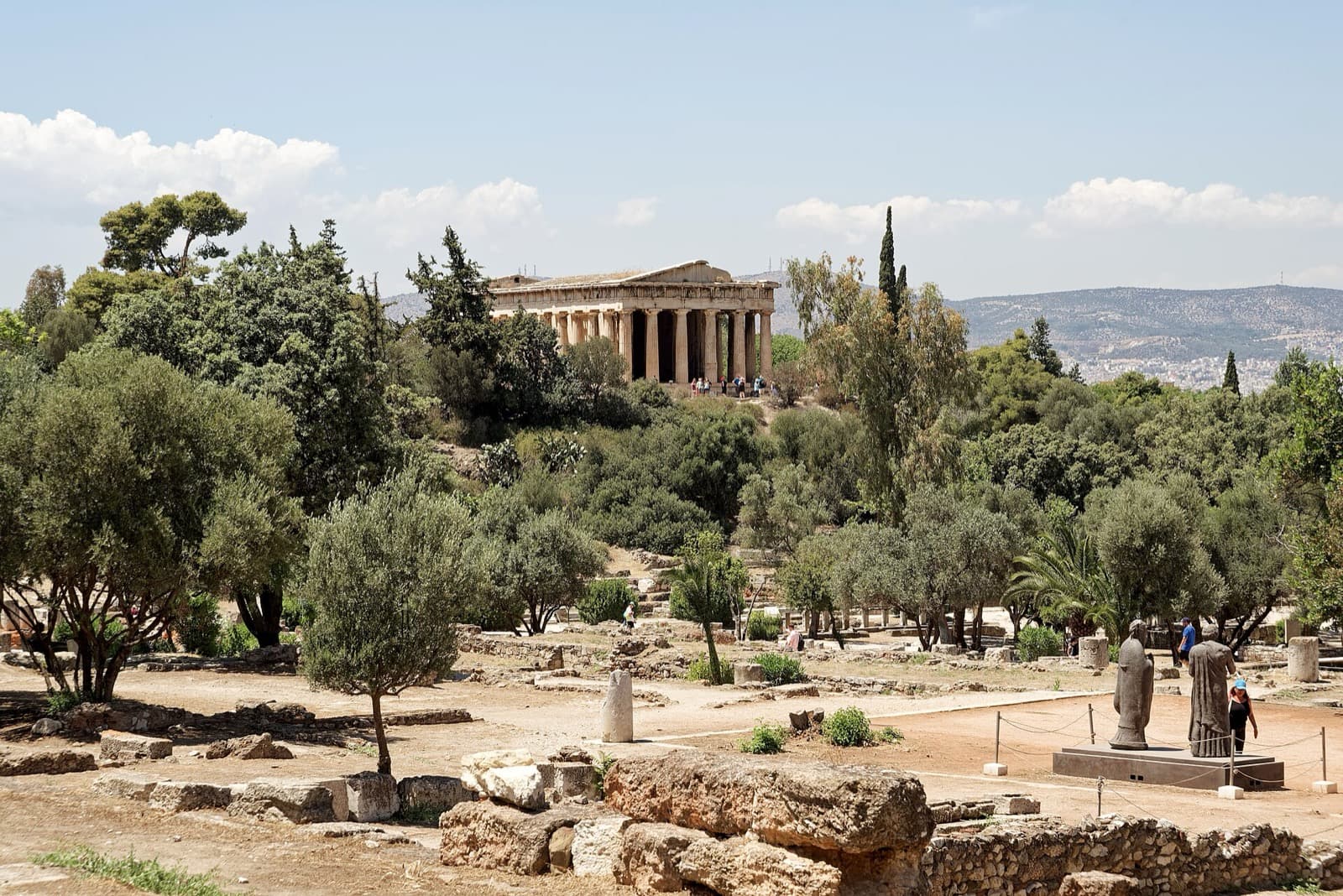
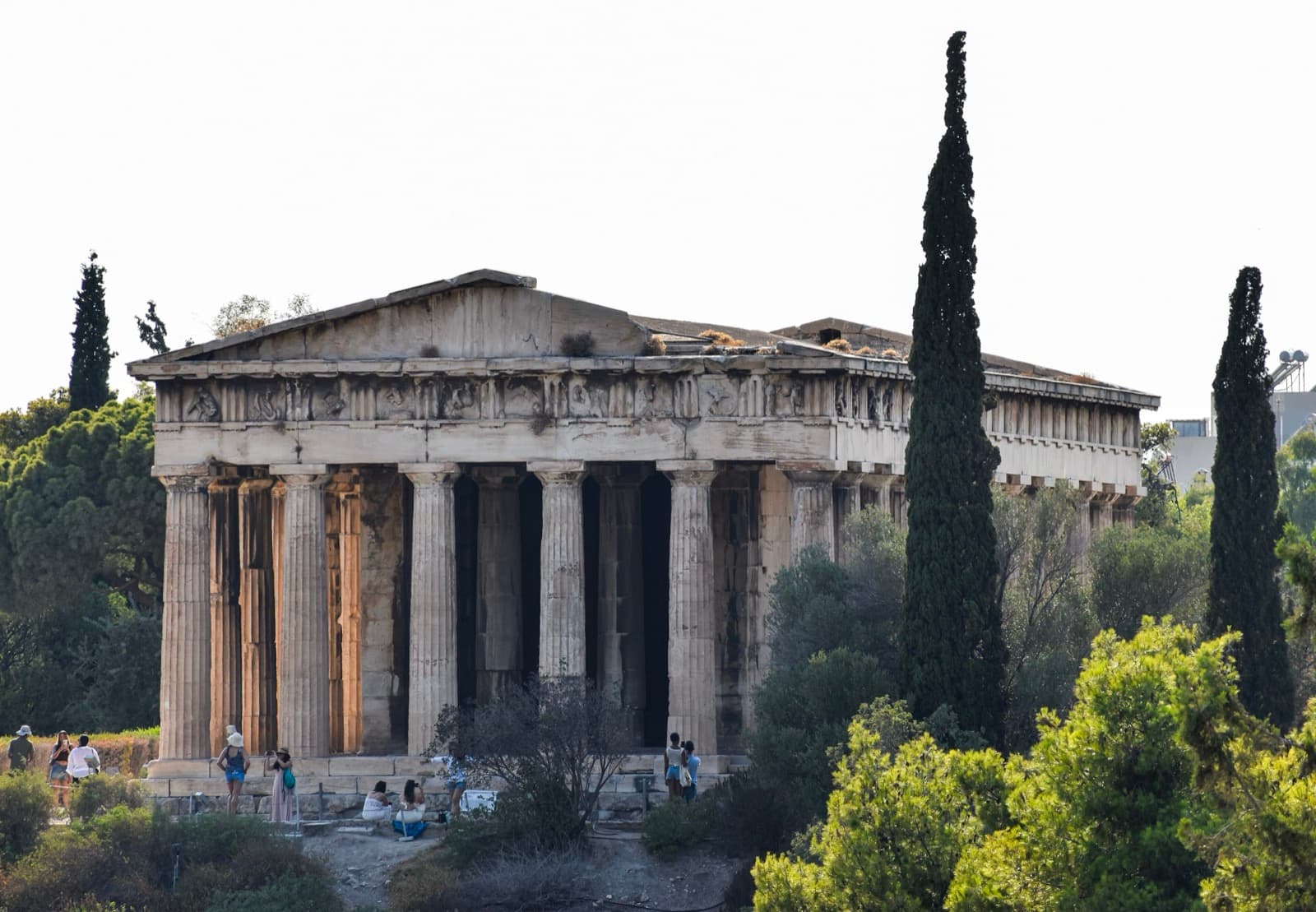
Temple of Hephaestus: The Temple That Survived Whole
The Doric temple on the low western hill, the best-preserved ancient Greek temple, saved by centuries as a church.
- 7
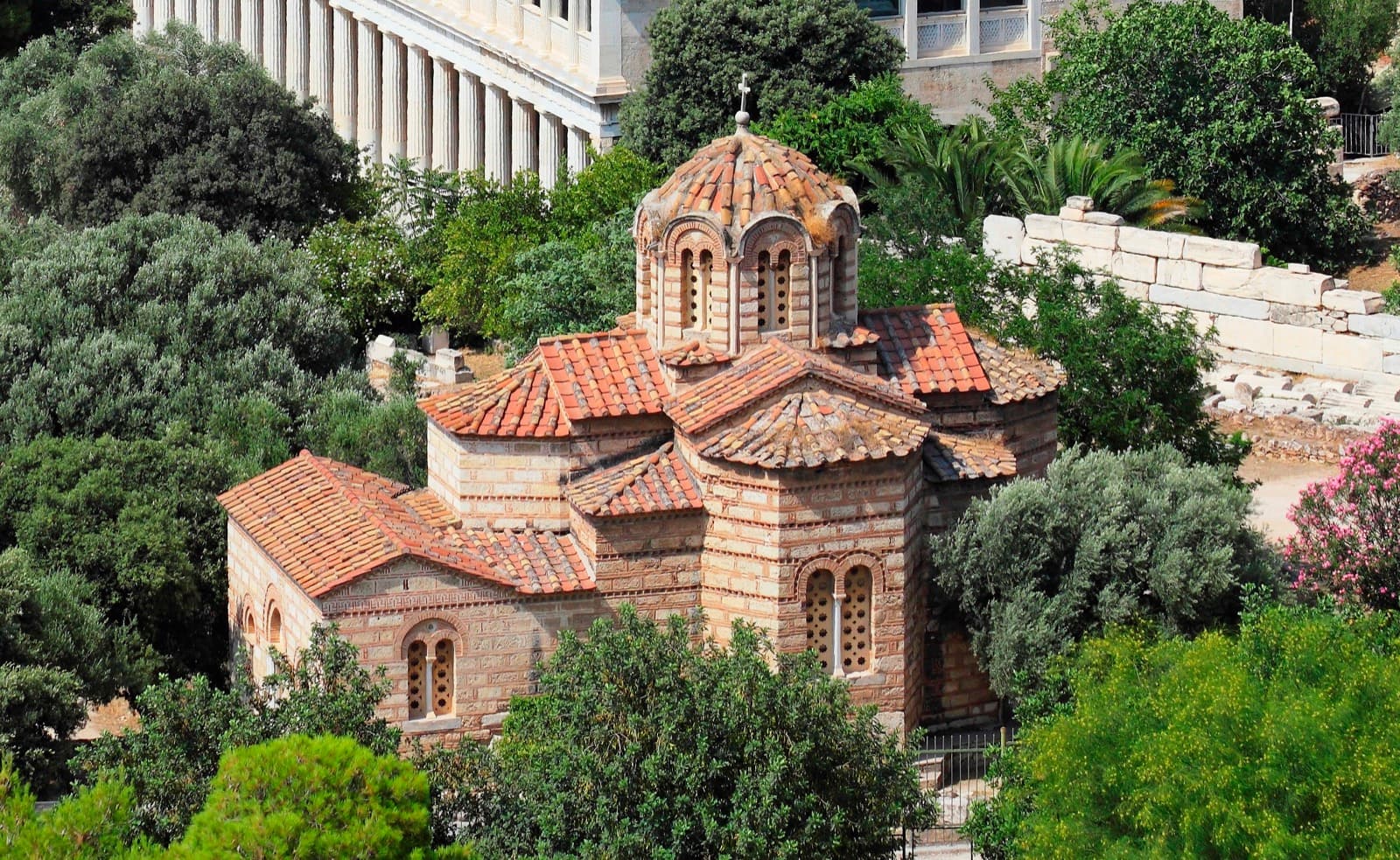
Church of the Holy Apostles: The Byzantine Layer
A small Byzantine church of around the year one thousand, one of only two Agora buildings spared when the district was cleared.
- 8
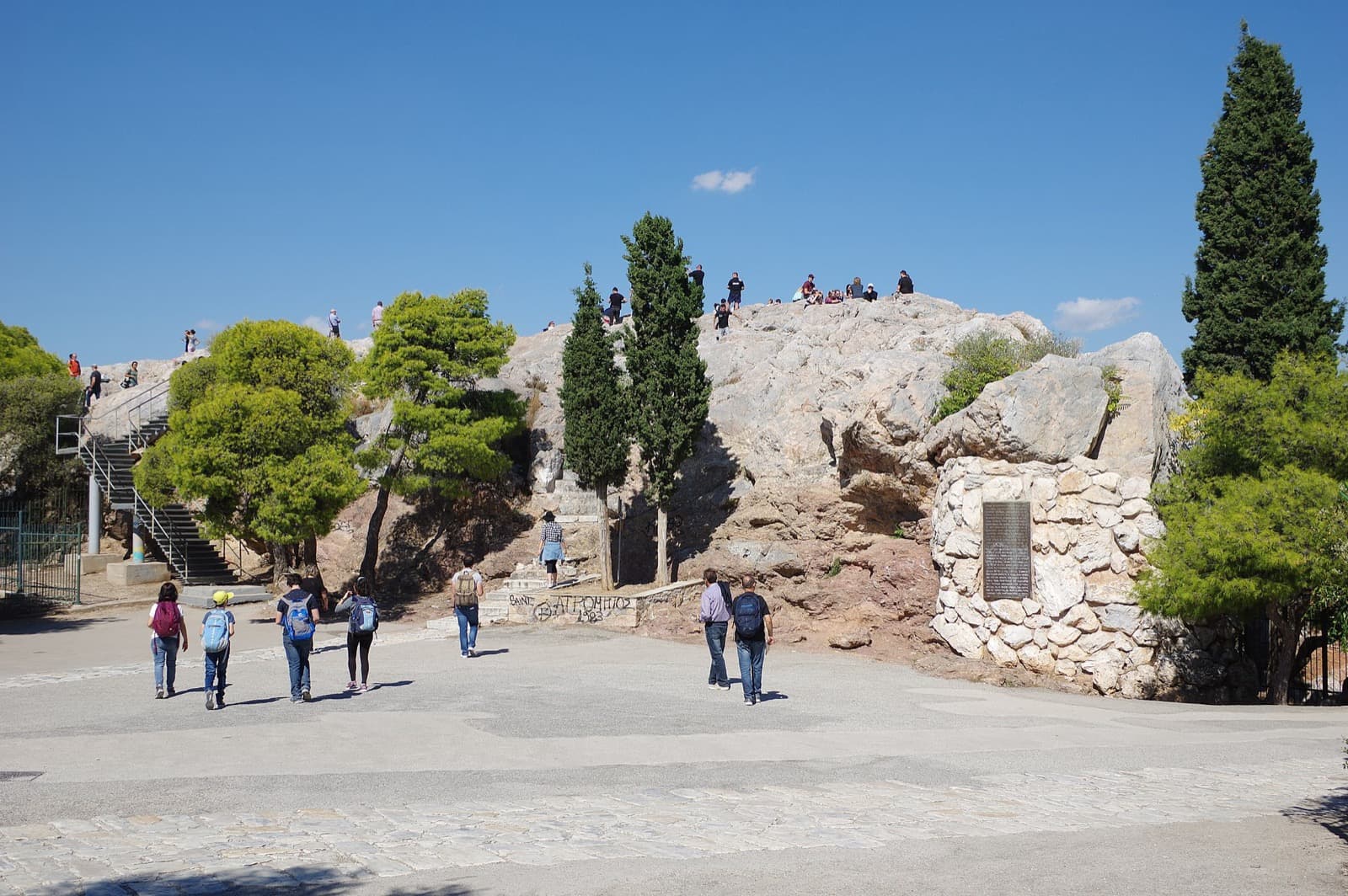
The Areopagus: The Hill of Justice
A bare rock northwest of the Acropolis, home of an ancient court, with a sweeping view back over the whole Agora.
Details
Best Time to Visit
Early morning right at opening or the last two hours before closing, when the low sun softens the marble and the open Agora is coolest and least crowded. Spring and autumn are ideal; the site offers almost no shade, so avoid the midday hours in summer. A clear late afternoon gives the finest light on the Temple of Hephaestus and the view from the Areopagus.
Pro Tips
- •The Ancient Agora is ticketed for adults, with a reduced rate for eligible visitors and free entry for European Union residents under twenty-five; prices shift periodically, so check the official Hellenic Heritage e-ticket site before you go.
- •Start at the Stoa of Attalos and step inside its museum first, both for orientation and because it holds the ostraka, the water clock, and the finds that make the empty foundations outside come alive.
- •Wear proper closed shoes with grip; you are walking on ancient marble paving, loose gravel, and worn stone, not smooth modern paths.
- •Carry a full bottle of water and a hat or sunshade, since the open Agora and the Areopagus have almost no cover and the sun is strong for most of the year.
- •The Areopagus rock sits outside the fenced Agora and needs no ticket, so you can climb it before or after your visit, or in the evening for the view without paying again.
- •Give yourself about ninety minutes to two hours to walk it unhurried, and treat the stops as skippable; sit on a shaded step whenever your feet ask.
Safety & Precautions
- •The Areopagus rock is polished smooth by centuries of feet and is genuinely slippery, especially when damp; use the modern metal staircase, watch your footing, and take particular care with children and in wet weather.
- •Footing across the Agora is uneven archaeological ground, with worn paving, gravel, and low ruins; walk slowly, and note there is very little shade, so heat and full sun are the main hazards on hot dry summer days.
- •Check the site's opening hours and current ticket price before you go, as they shift by season and on holidays; the former multi-site combined Acropolis ticket was discontinued, so each site now needs its own ticket, and the booth can have queues at midday.
- •Inside the Church of the Holy Apostles, and at any Orthodox site, dress modestly, keep your voice low, and be discreet with photography, remembering these remain living places of worship rather than museum exhibits.
Travel advisory: Exercise Normal Precautions (Level 1).
Gallery
Related Reading
Go deeper on what you'll see, hear, and walk through.
Overview
Athens Travel Guide: How Many Days, Getting Around, and Safety
7 min
Overview
Best Self-Guided Walking Tours in Athens (2026)
4 min
Overview
One Day in Athens: A Walkable Morning-to-Night Itinerary
7 min
Thematic
Athens: The Ground Floor of the Western City
7 min
Thematic
Best History Walking Tours in Athens (2026)
2 min
Companion
The Tholos and Bouleuterion: Where Athenian Democracy Actually Ran
7 min
Deep dive
The Temple of Hephaestus: Why This One Ancient Temple Survived Whole
7 min
Read
What to Eat in Athens: Dishes, Origins, and How to Order
6 min
Read the walk
The full story of The Ancient Agora: Where the Citizens Stood, in words. Prefer to listen? Play it narrated, from home or on location.
Introduction
The postcard pulls your eyes upward. The Acropolis, the Parthenon, the sacred rock crowning the city of Athens, in Greece. But the invention that changed the world did not happen up on that rock. It happened down here, on the flat, unglamorous ground most people cross in a hurry on their way to the temple. This is the Ancient Agora, the marketplace and civic centre at the foot of the Acropolis. This is where citizens gathered, argued, served on juries, and voted men into exile with broken pottery. This is where Socrates talked, and where he was tried. Over the next eight stops, across roughly two kilometres and about ninety minutes at your own pace, you will read this ground as the machinery of self-government: the council house, the round building where the presidents lived and dined, the law courts, the public noticeboard, the long colonnades, a temple that still stands almost whole, a Byzantine church, and a rock of justice with a view back over everything. Take it slowly. Sit when a bench or a shaded step invites you. Skip a stop if your feet ask you to. The stones here are less about beauty than about an idea: that ordinary people could rule themselves. When you arrive at the Stoa of Attalos, the long two-storey colonnade on the eastern edge of the site, begin with stop one.
1. Stoa of Attalos: The Restored Colonnade
Start here, in the shade of a colonnade. That word, stoa, simply means a colonnade, a long covered walkway open along one side. This one, the Stoa of Attalos, is your best orientation point, running about one hundred and fifteen metres down the eastern edge of the Agora. Doric columns below, Ionic above, Pentelic marble and limestone. It looks impossibly crisp for something ancient, and that is because most of what you see was rebuilt in the nineteen fifties. The American School of Classical Studies at Athens reconstructed it between nineteen fifty-two and nineteen fifty-six, funded largely by a gift from John D. Rockefeller Junior, and dedicated it on the third of September, nineteen fifty-six. But the original was a genuine gift too. It was given to the city by King Attalos the Second of Pergamon, who ruled between one hundred and fifty-nine and one hundred and thirty-eight B C, and built it around one hundred and fifty B C. Attalos had studied philosophy in Athens as a young man, and this grand shelter was his thank-you to the city that taught him. In its day it was a shopping arcade and a place to stroll out of the sun or the rain, lined with shops on the ground floor. Beneath its eastern side once stood a law court known as the Square Peristyle. Today the stoa holds the Museum of the Ancient Agora: pottery, sculpture, coins, and inscriptions pulled from the ground you are about to walk. Step inside for a few minutes if you like, then come back out and face the open field. Everything that follows is scattered across it.
2. The Panathenaic Way: The Processional Road
Look for the broad band of worn paving cutting diagonally across the open ground. This is the Panathenaic Way, the great processional road of ancient Athens. It ran about one and a half kilometres, from the Dipylon Gate in the northwest of the city, straight through the Agora, and up to the Propylaea, the monumental gateway of the Acropolis. From about five hundred and fifty B C onward, this was the route of the city's biggest religious festivals. And the greatest of them was the Great Panathenaia, held every four years in honour of Athena, the city's patron goddess. Picture the day. The whole procession set out from the gate and moved along this very road: priests at the front, then musicians, then magistrates and cavalry, then the ergastinai, the young women who had spent months weaving a new peplos, a robe, for the ancient wooden statue of Athena. Behind them came the sacrificial animals, driven up toward the altar on the rock above. The road you are standing on carried all of it, generation after generation. It is worth pausing to notice that this festival ground and this civic ground are the same ground. The Athenians did not separate their religion, their politics, and their daily marketing into different parts of town. Prayer, commerce, and self-government all happened here, side by side, along a single road. Follow the ancient way with your eyes as it climbs toward the Acropolis, then bring your attention back down to the flat. The next stops are all about what happened at ground level, where the citizen met the state.
3. Monument of the Eponymous Heroes: The City Noticeboard
On the western side of the open ground stood a long marble base, more than sixteen metres of it, once topped by ten bronze statues standing in a row. These were the Eponymous Heroes, the ten legendary figures for whom the ten Athenian tribes were named. Here is why they mattered. In five hundred and eight or five hundred and seven B C, the reformer Cleisthenes reorganised the whole population of Athens into ten new tribes, the phylai, deliberately mixing people from different districts so old loyalties could not dominate. That reform is often called the birth of Athenian democracy. And each of those ten tribes took its name from one of these heroes. So this monument was not just decoration. It was the official public noticeboard of the city. If you were an Athenian citizen, you came here to read the news that governed your life. Proposed laws and decrees were posted here for everyone to see and argue about before a vote. And crucially, the practical lists went up here too: military muster rolls telling you if your tribe was being called up for war, and jury lists telling you if you were wanted in court. And here is the elegant part. Announcements for a specific tribe were posted directly beneath that tribe's own hero. So you walked to your hero, looked below him, and found out whether the state needed you this week as a soldier or a juror. This was the daily interface between the citizen and the government. No screens, no newspapers, just bronze men and whitewashed boards, right here in the middle of the marketplace, where you were already standing.
4. The Tholos and the Bouleuterion: The Machinery of Democracy
Now you reach the working heart of the democracy: two buildings, close together on the western side. First, the round one. This is the Tholos, built about four hundred and seventy B C, and it is where the government of Athens quite literally never slept. Athens was run day to…
Full narration for this stop unlocks with the tour.
5. Ostracism and the Law Courts: Rule by the Many
Here is where democracy shows its sharpest, strangest edge. Once a year, the Athenians could hold something called an ostracism. Citizens gathered in a roped-off part of the Agora, and each man handed in a potsherd, a broken piece of pottery called an ostrakon, scratched with…
Full narration for this stop unlocks with the tour.
6. Temple of Hephaestus: The Temple That Survived Whole
Turn now to the low hill on the western edge of the Agora, called Agoraios Kolonos, and to the building crowning it. This is the Temple of Hephaestus, and after all the vanished institutions you have been imagining, here is something that actually still stands, columns, walls,…
Full narration for this stop unlocks with the tour.
7. Church of the Holy Apostles: The Byzantine Layer
Not everything ancient here is classical Greek. Near the southern edge of the site stands a small, gracefully domed church, the Church of the Holy Apostles, known locally as Agioi Apostoloi Solaki. That word, agioi, means saints. This church was built in the late tenth century,…
Full narration for this stop unlocks with the tour.
8. The Areopagus: The Hill of Justice
End on the rock. Just outside the fenced Agora rises a bald, polished outcrop called the Areopagus. The name means the hill of Ares, the god of war. And this hill gave its name to one of the oldest institutions in Athens, an ancient council of elders that met here. Over time…
Full narration for this stop unlocks with the tour.