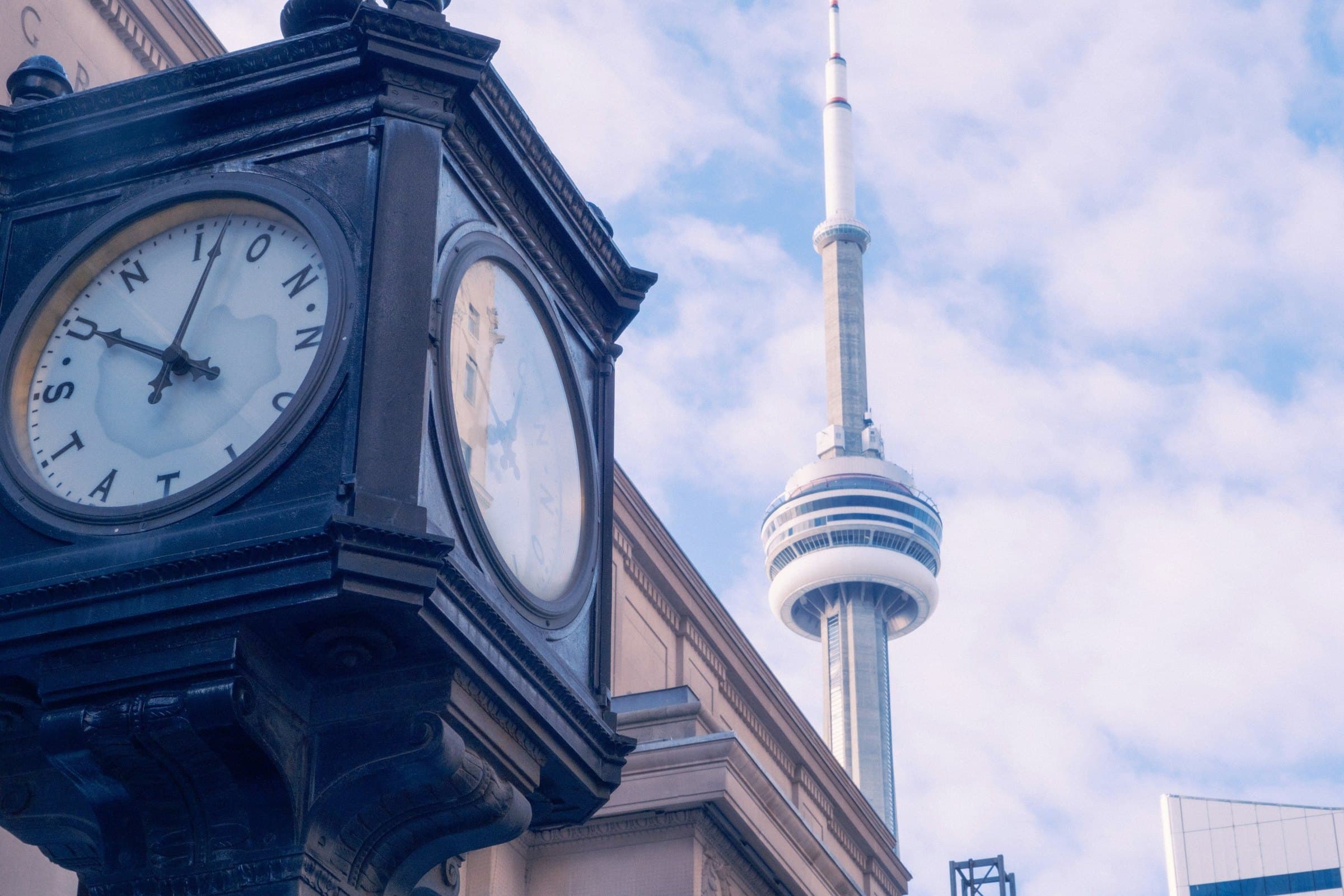
Walk from Union Station's columns past the CN Tower, a 1929 roundhouse and the SkyDome, under the expressway to the harbour's wooden waves, Harbourfront Centre and the ferry docks facing the Toronto Islands.
Start · Union Station: The Station a Plan Would Have Demolished
DirectionsStops
- 1
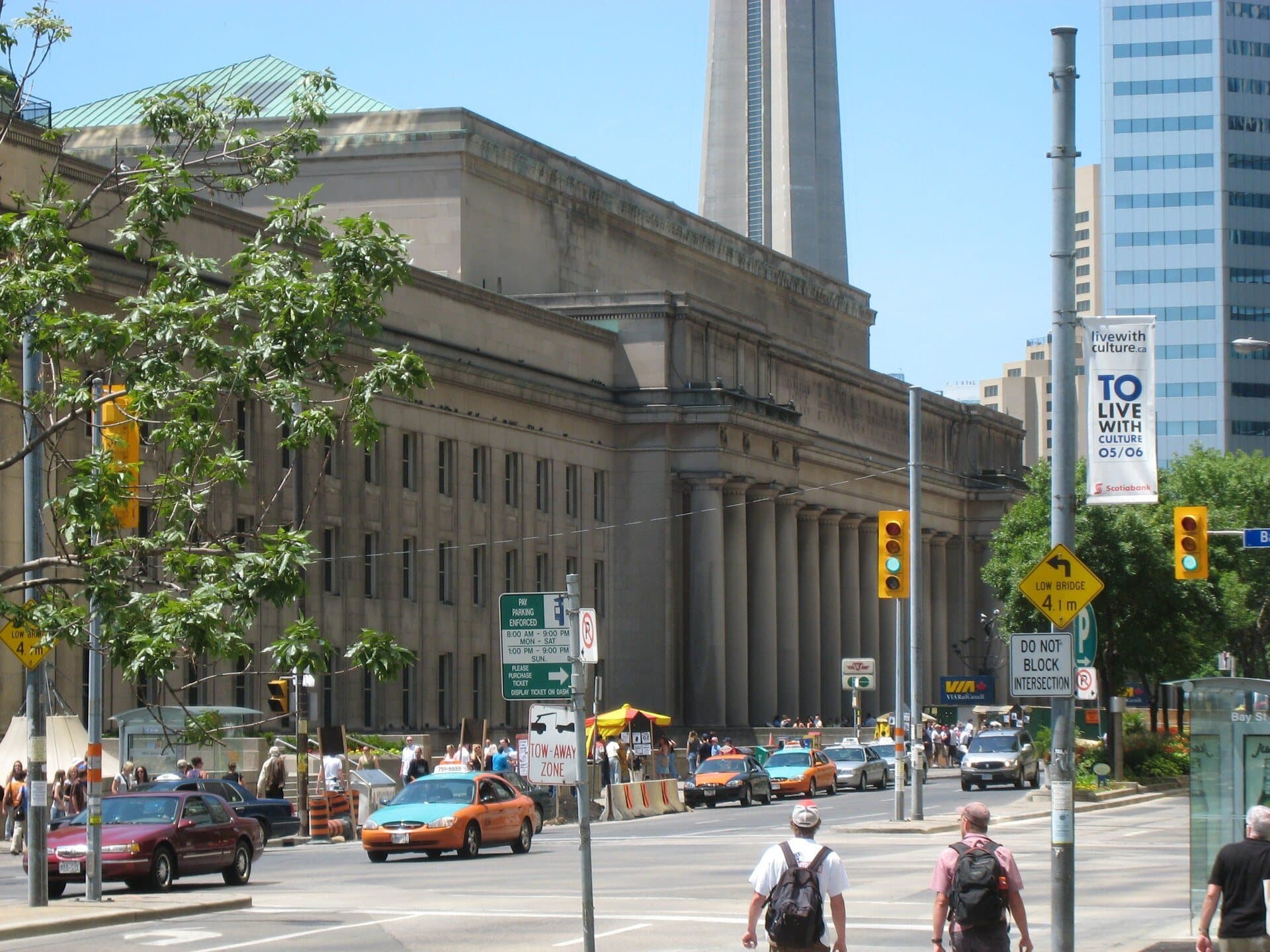
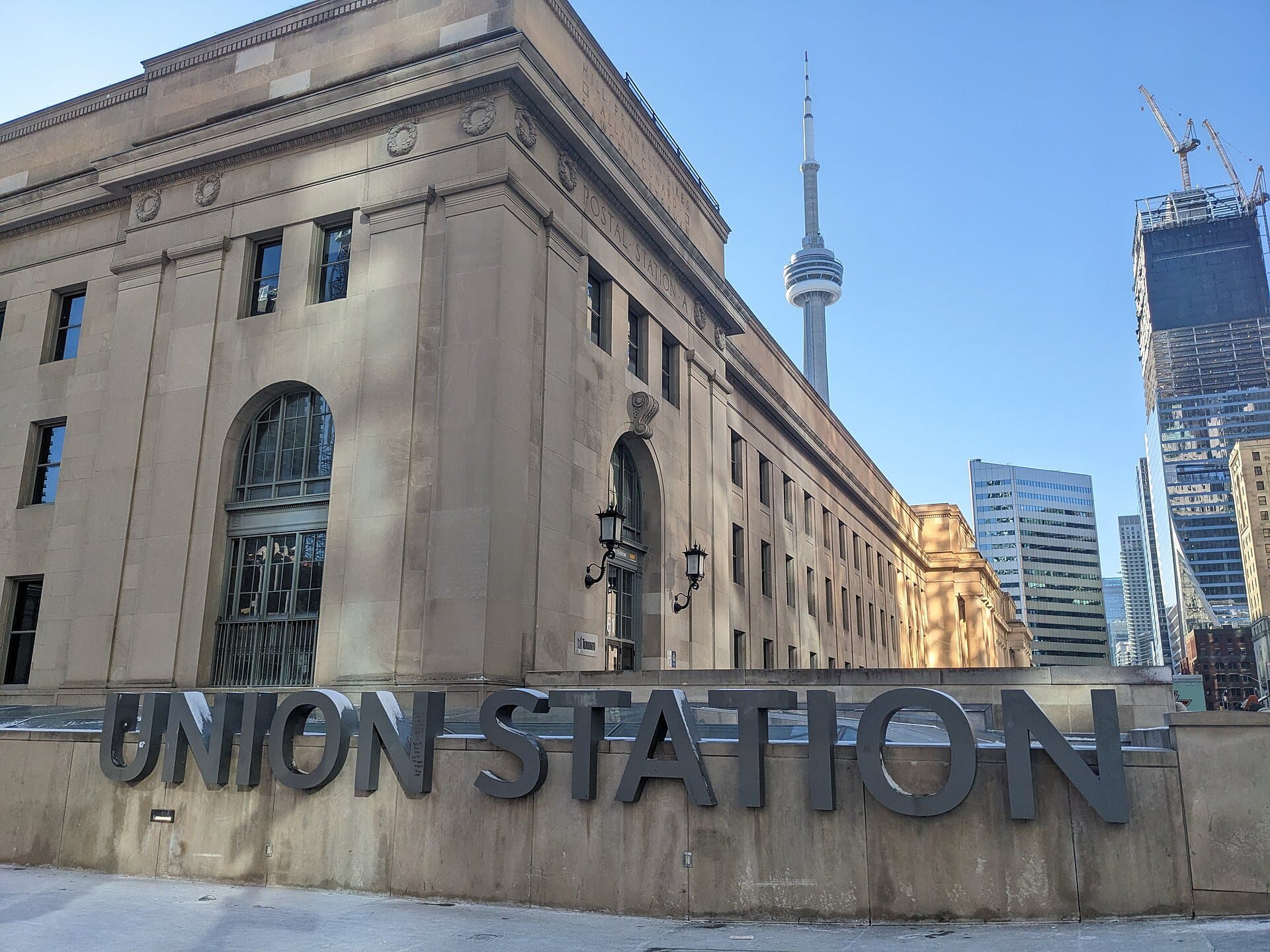
Union Station: The Station a Plan Would Have Demolished
A station a 1968 plan would have torn down. Its twenty-two limestone columns face Front Street, and a 1930 train shed runs behind it.
- 2
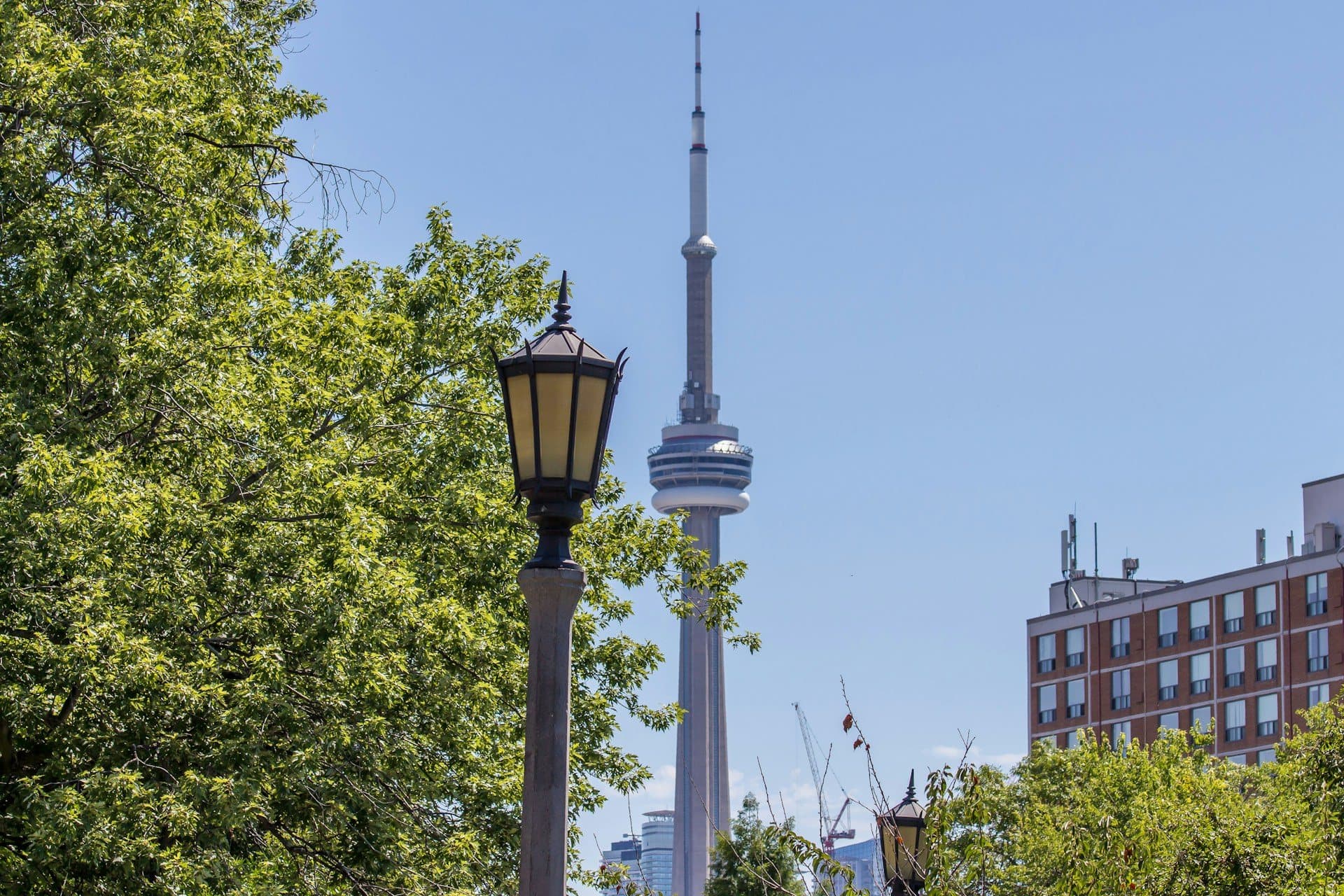
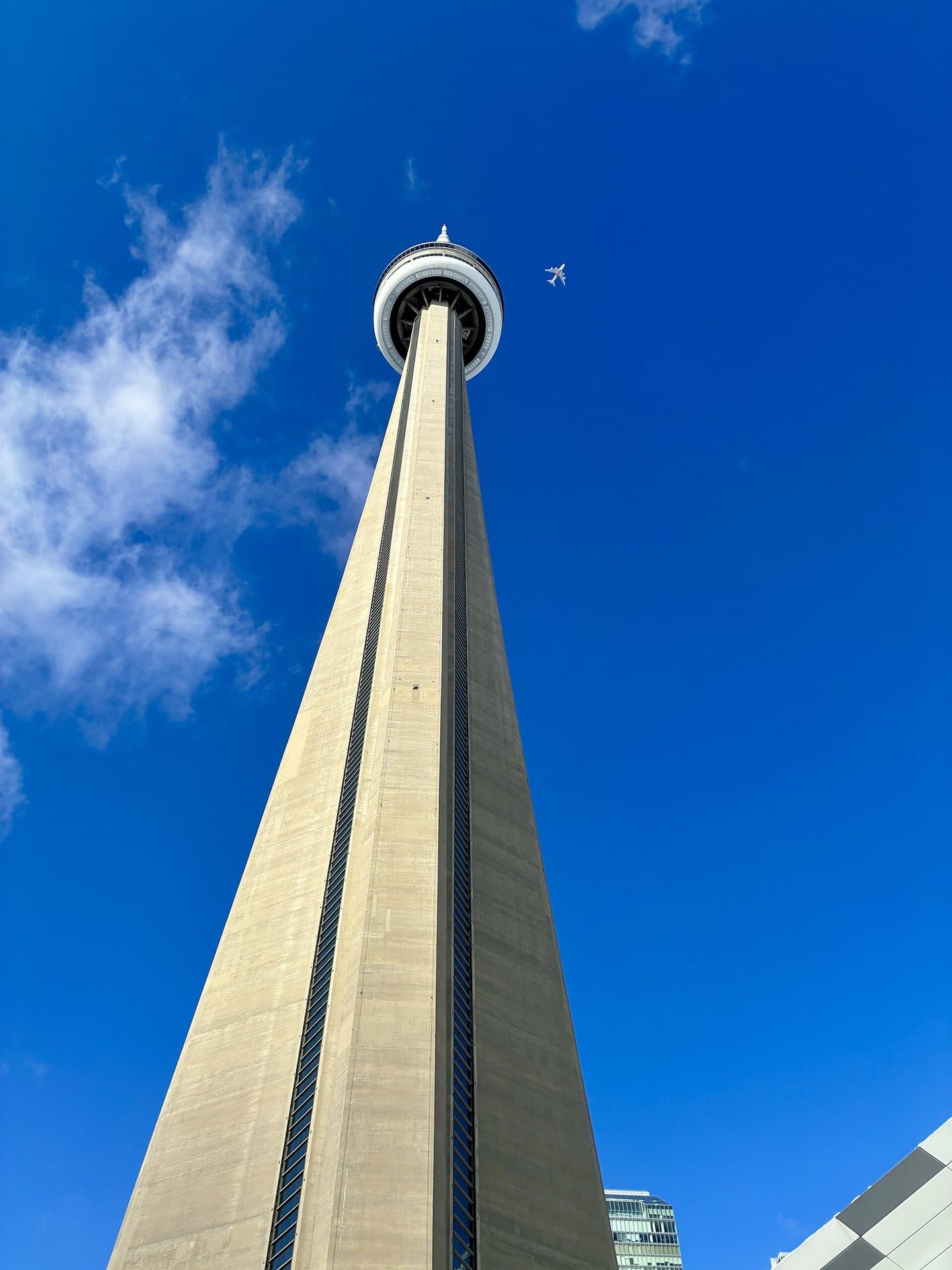
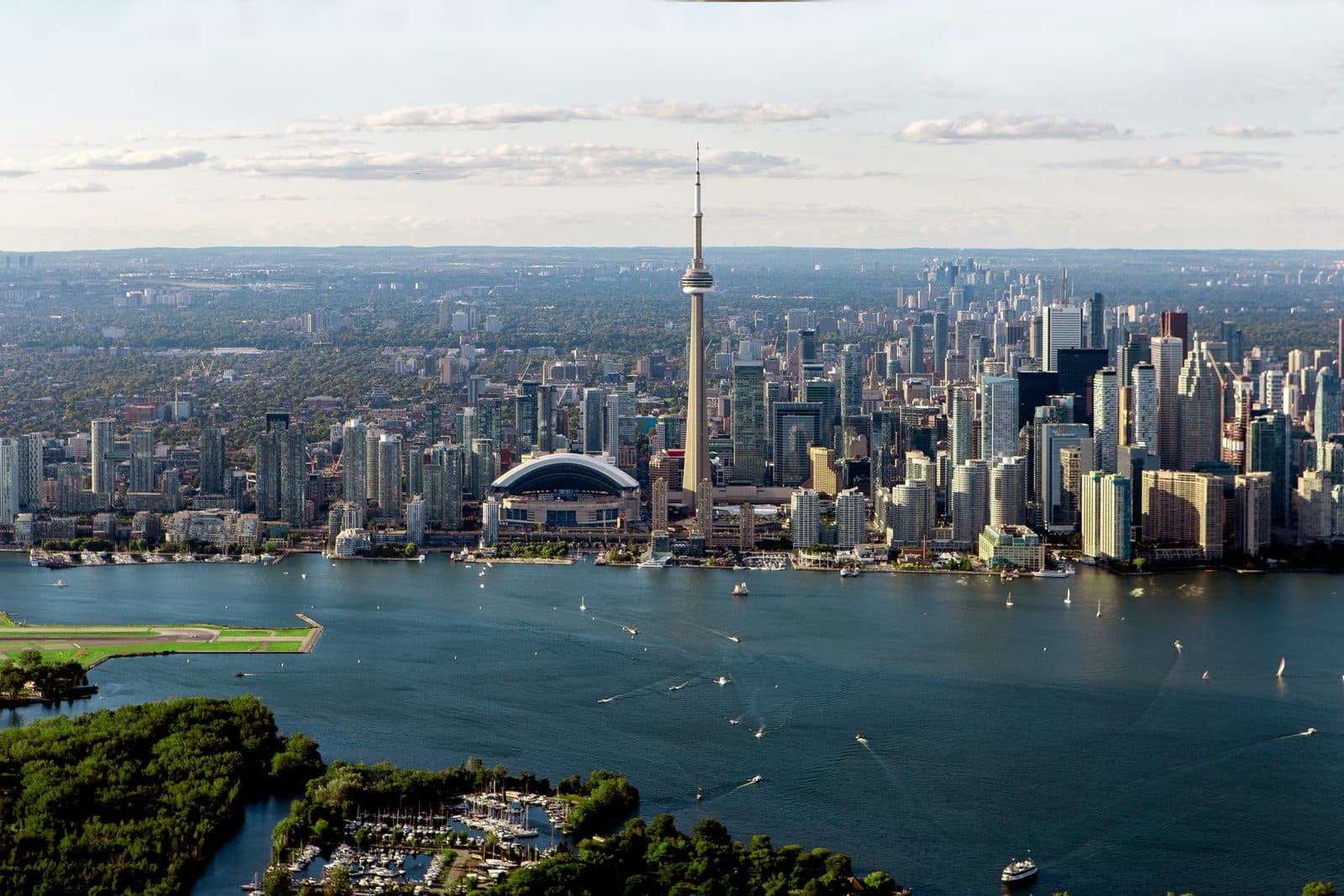
CN Tower: Built to Clear the Skyline
The railway built this tower to beam signals over downtown. For more than three decades it was the tallest free-standing structure in the world.
- 3
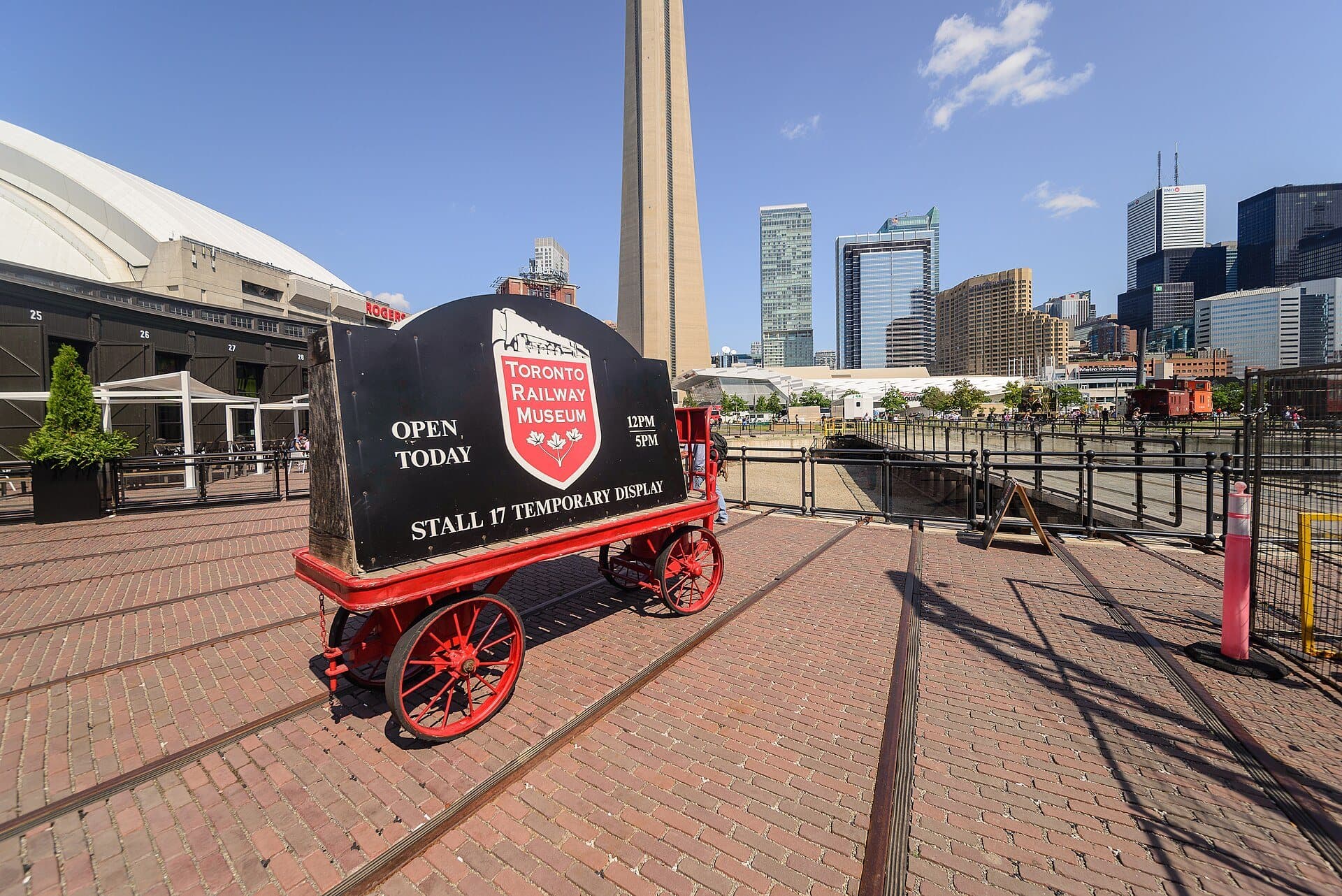
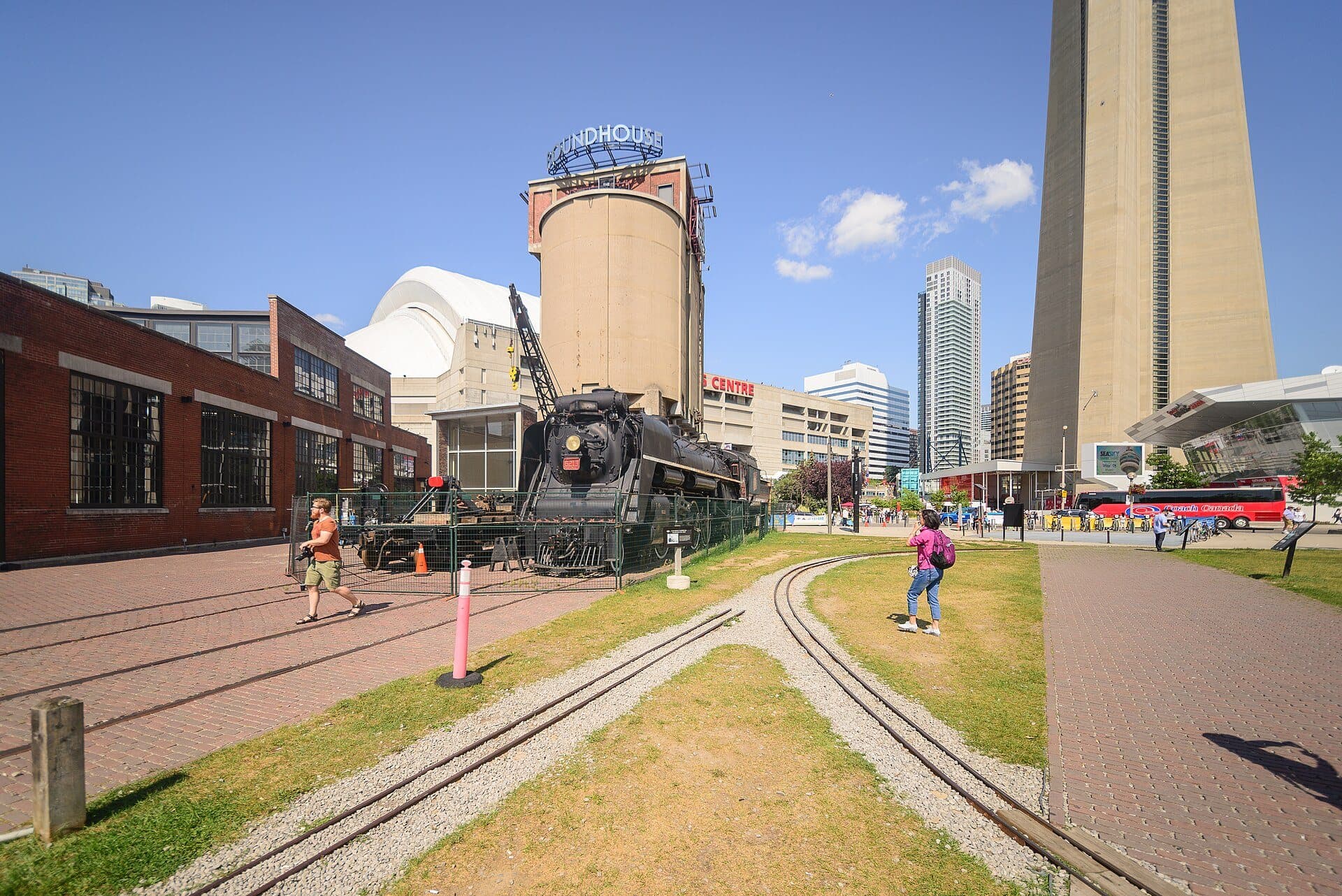
Roundhouse Park: Where Steam Engines Turned
Steam engines swung on this turntable into 32 brick stalls. Parks Canada calls it the best surviving roundhouse in Canada, and the park is free.
- 4
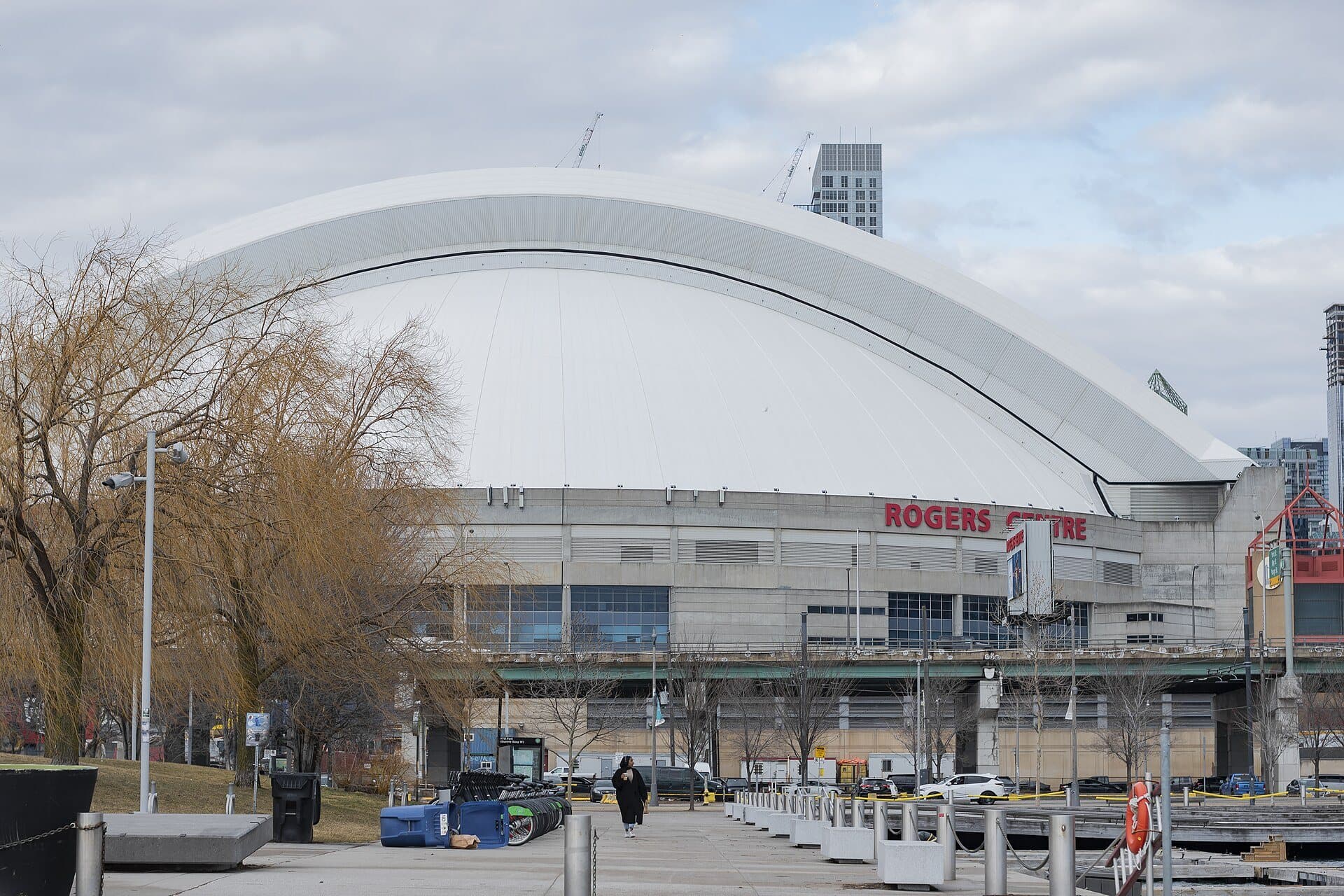
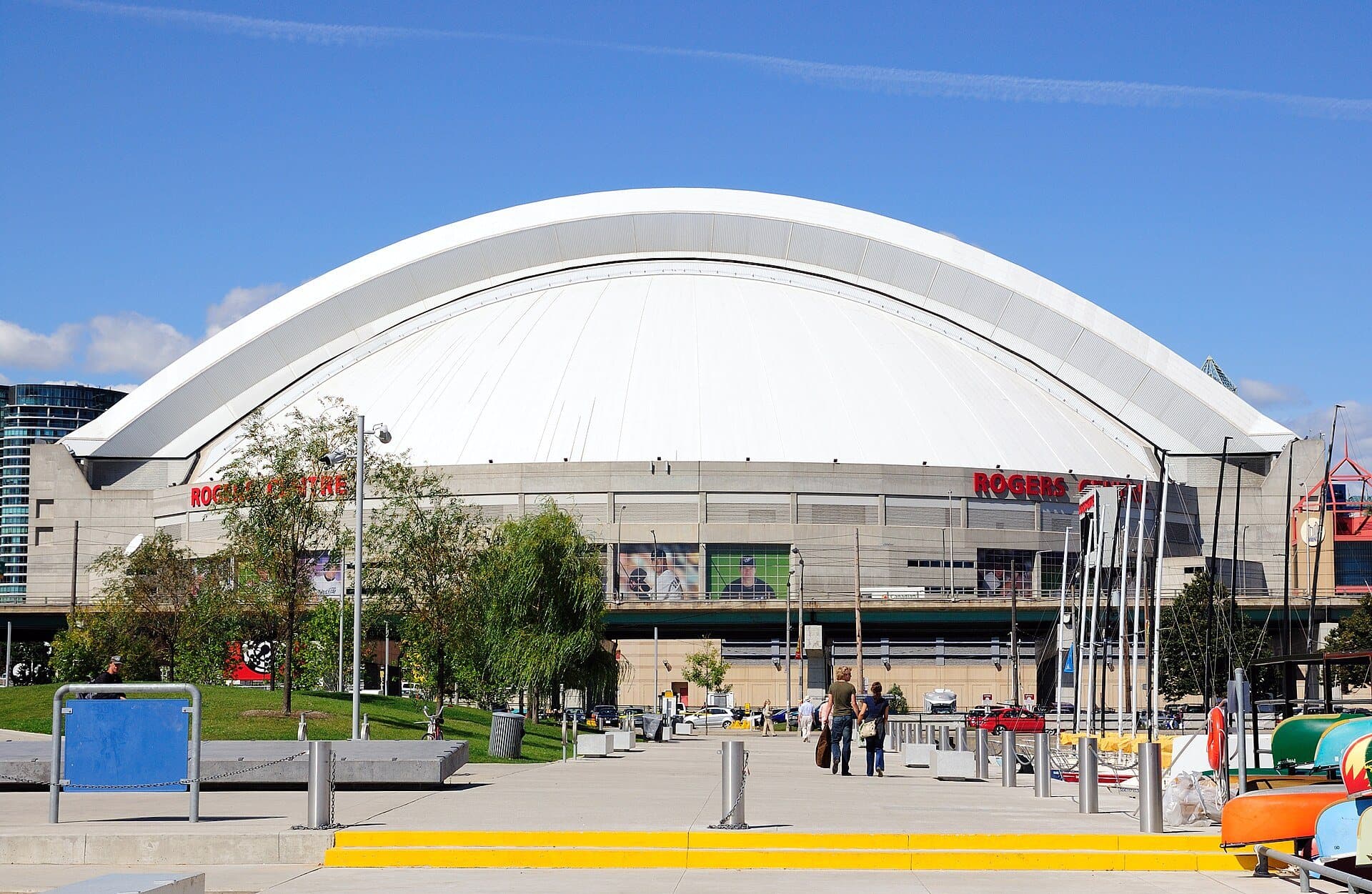
Rogers Centre: The SkyDome and Its Rolling Roof
The SkyDome's roof of four panels opens in about 25 minutes. It opened in 1989, and the Blue Jays won the 1993 World Series inside.
- 5
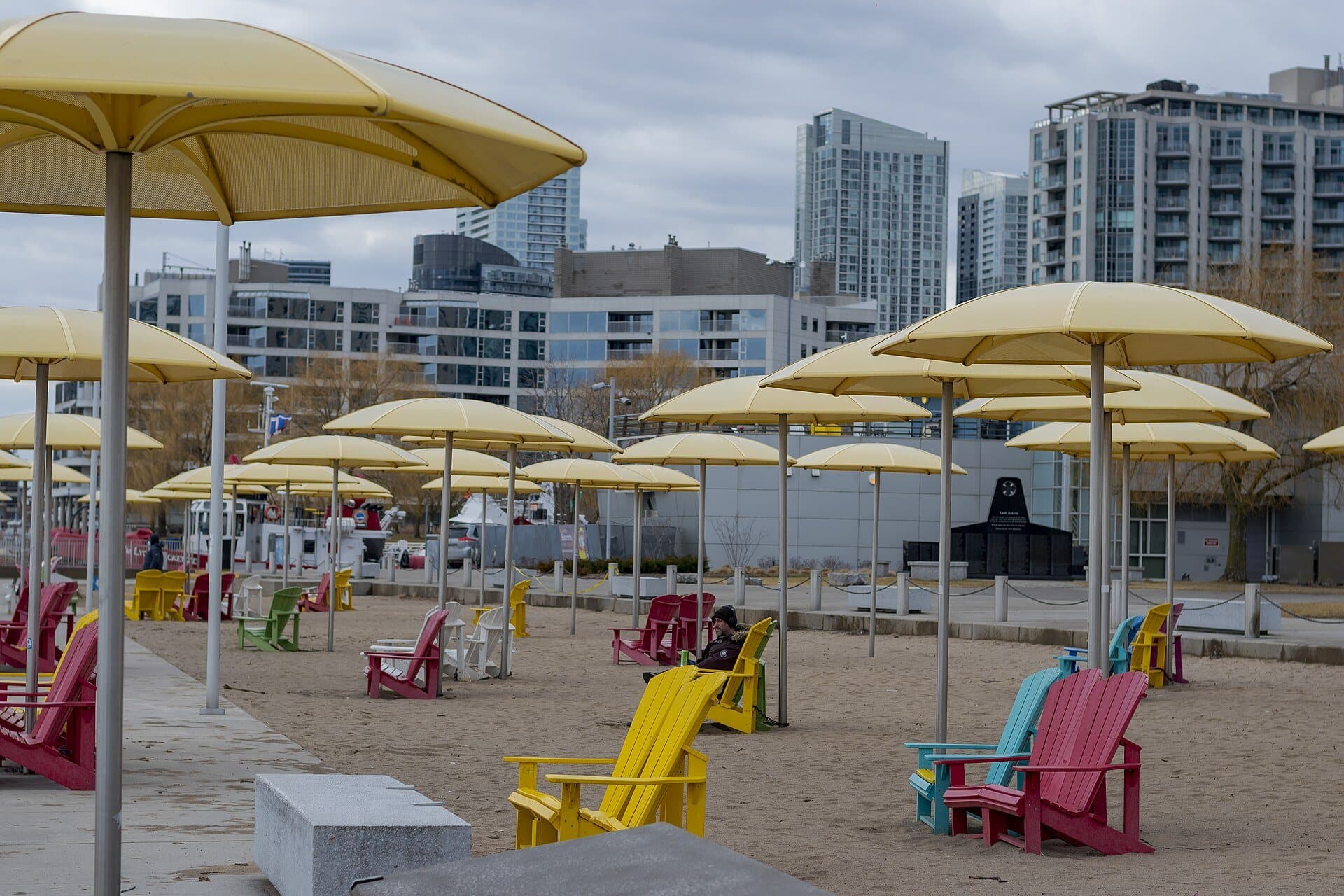
HTO Park and the Rees WaveDeck: A Beach on an Old Quay
A wooden deck rolls in waves by the beach. Beyond it, Claude Cormier's yellow umbrellas stand on an old concrete quay.
- 6
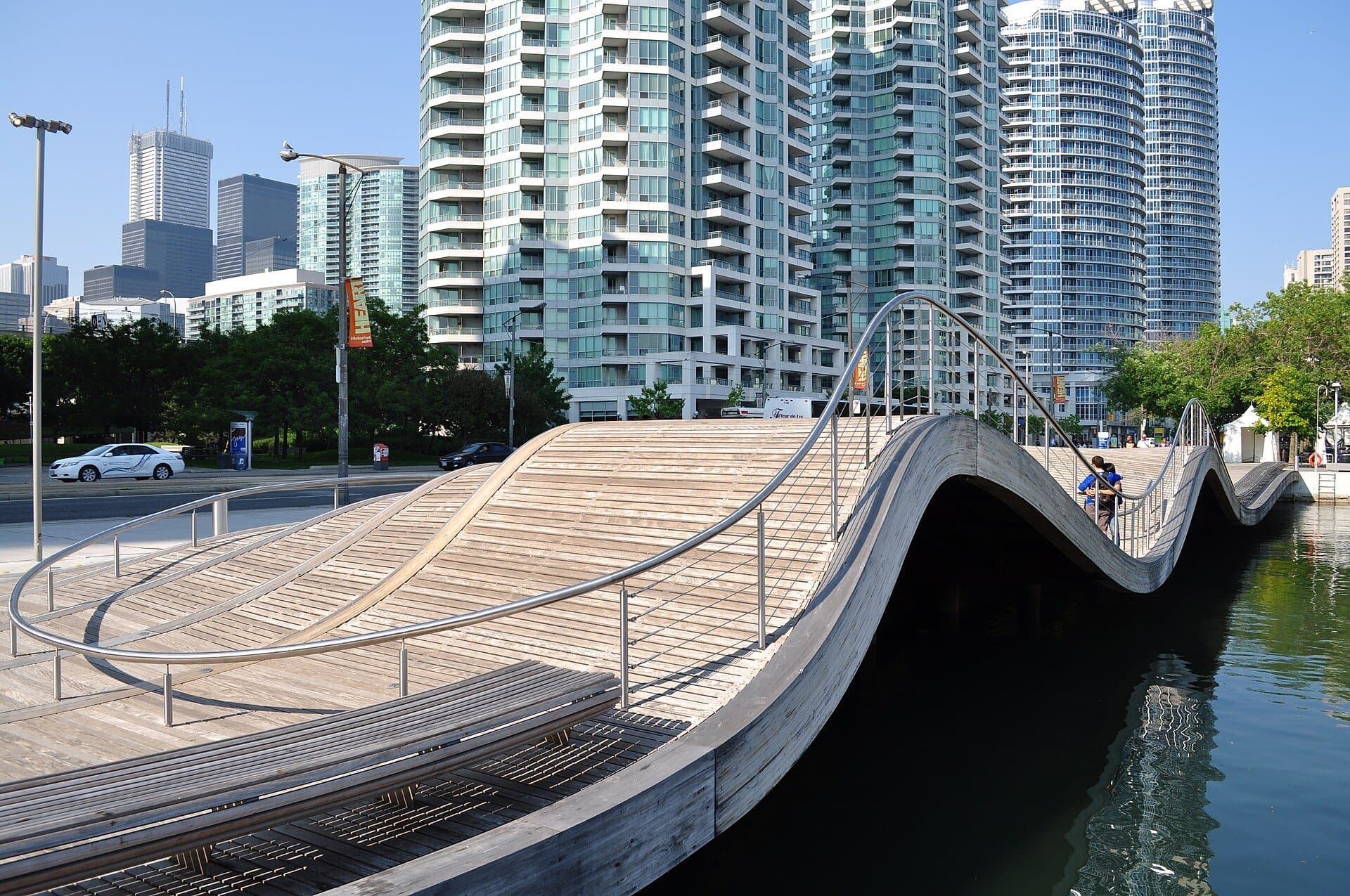
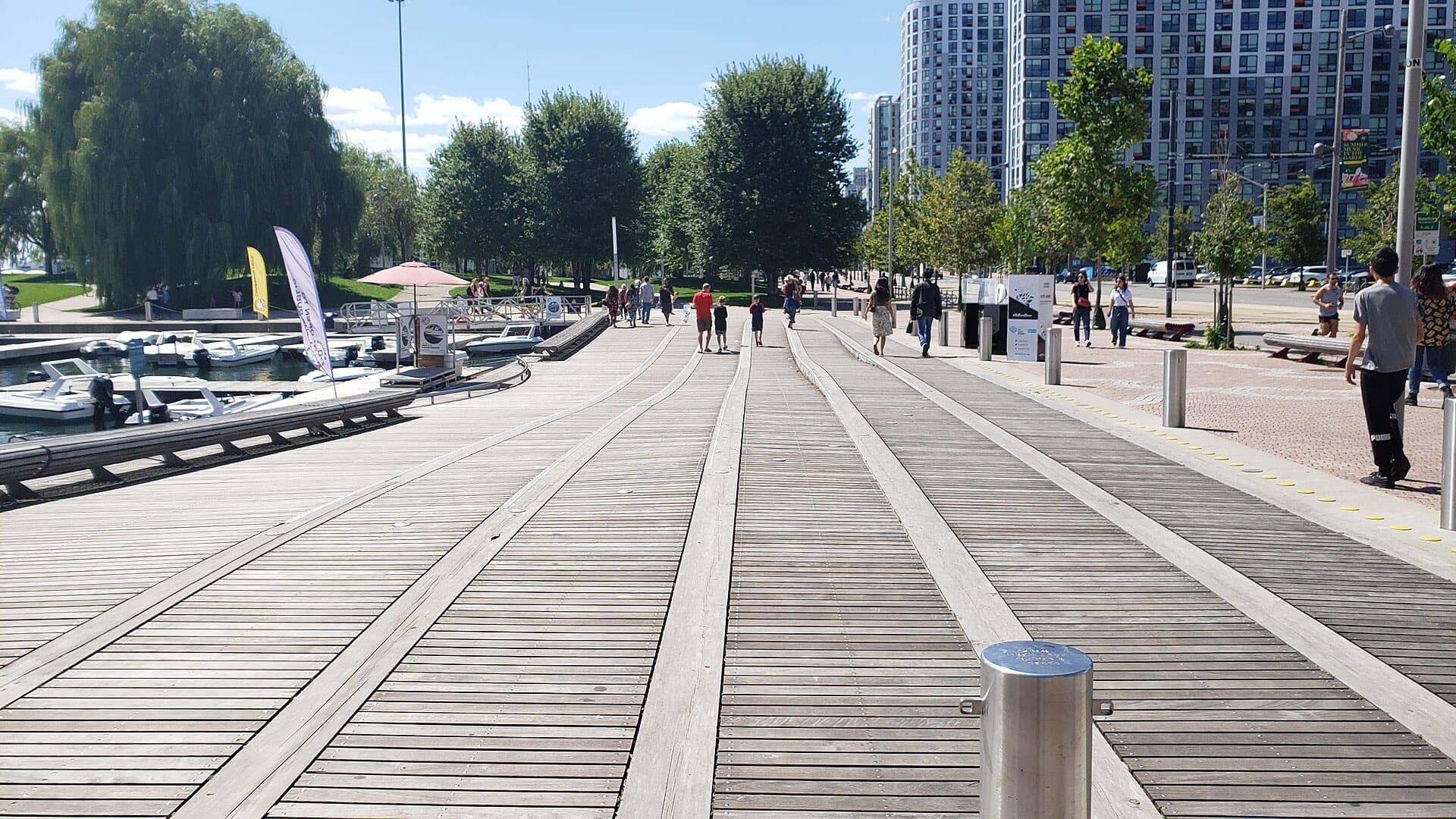
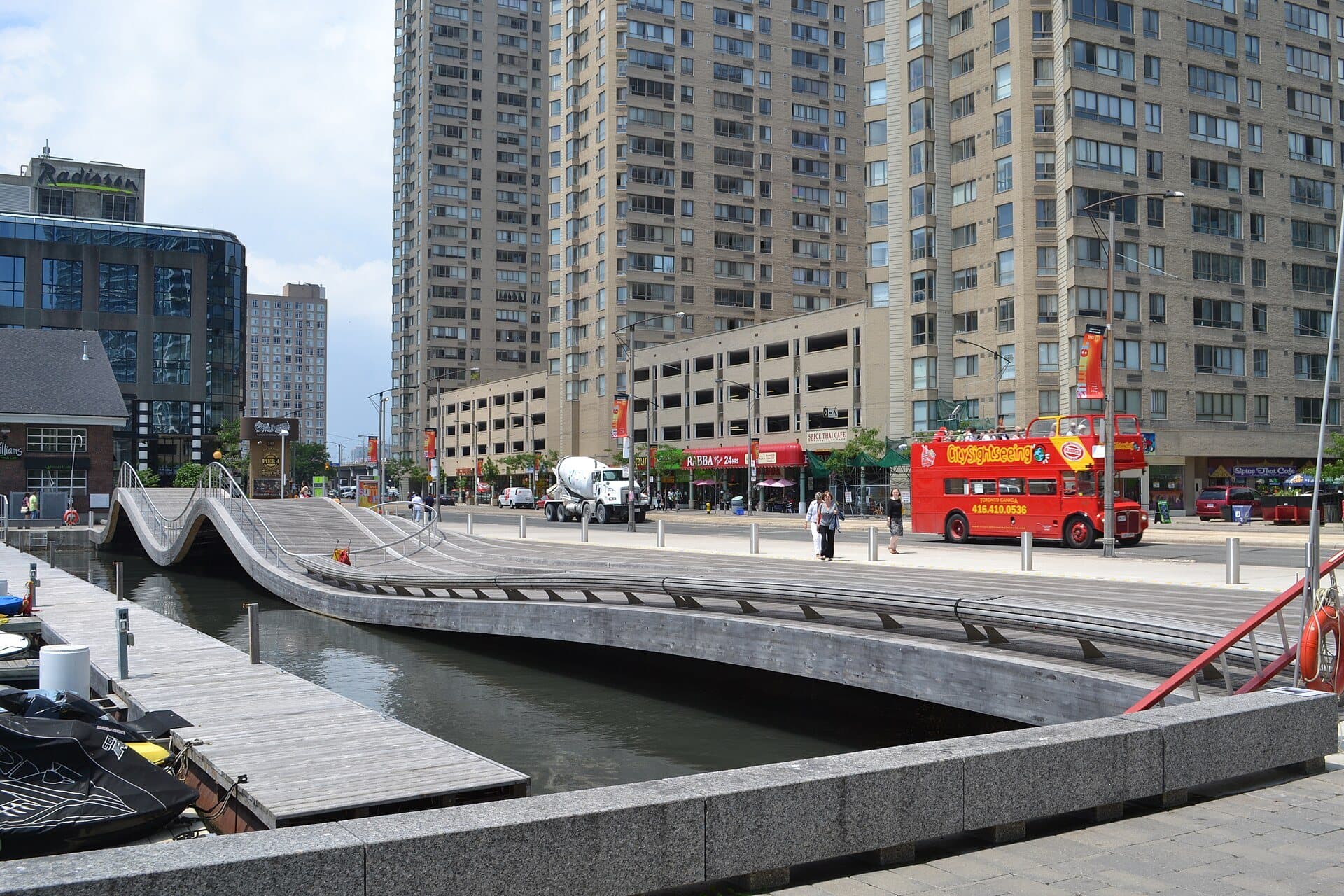
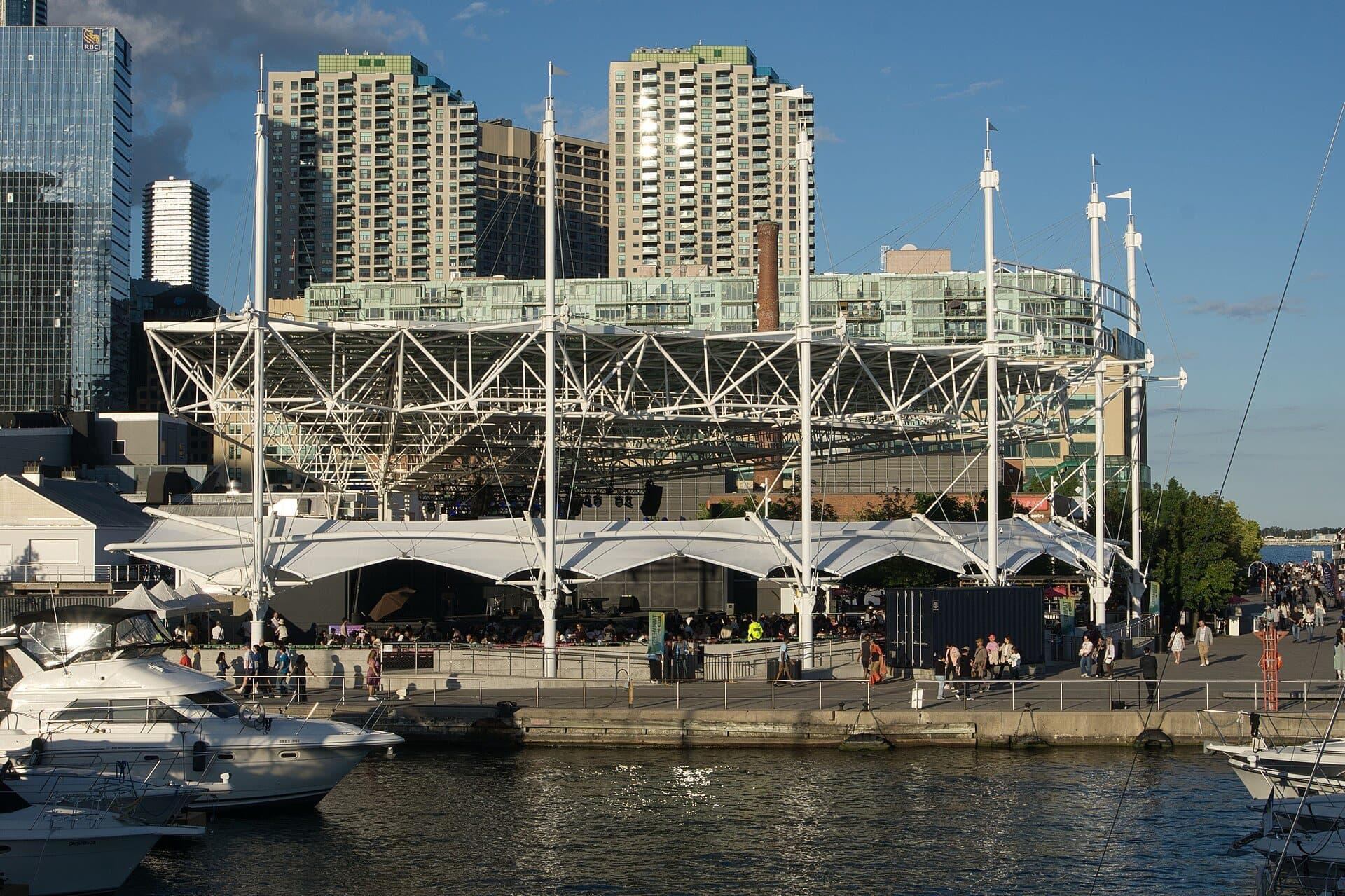
Simcoe WaveDeck: A Shoreline in Wood
Wooden waves rise here high enough to sit in like an amphitheatre. Beside them, Queens Quay was rebuilt with granite paving in maple leaves.
- 7
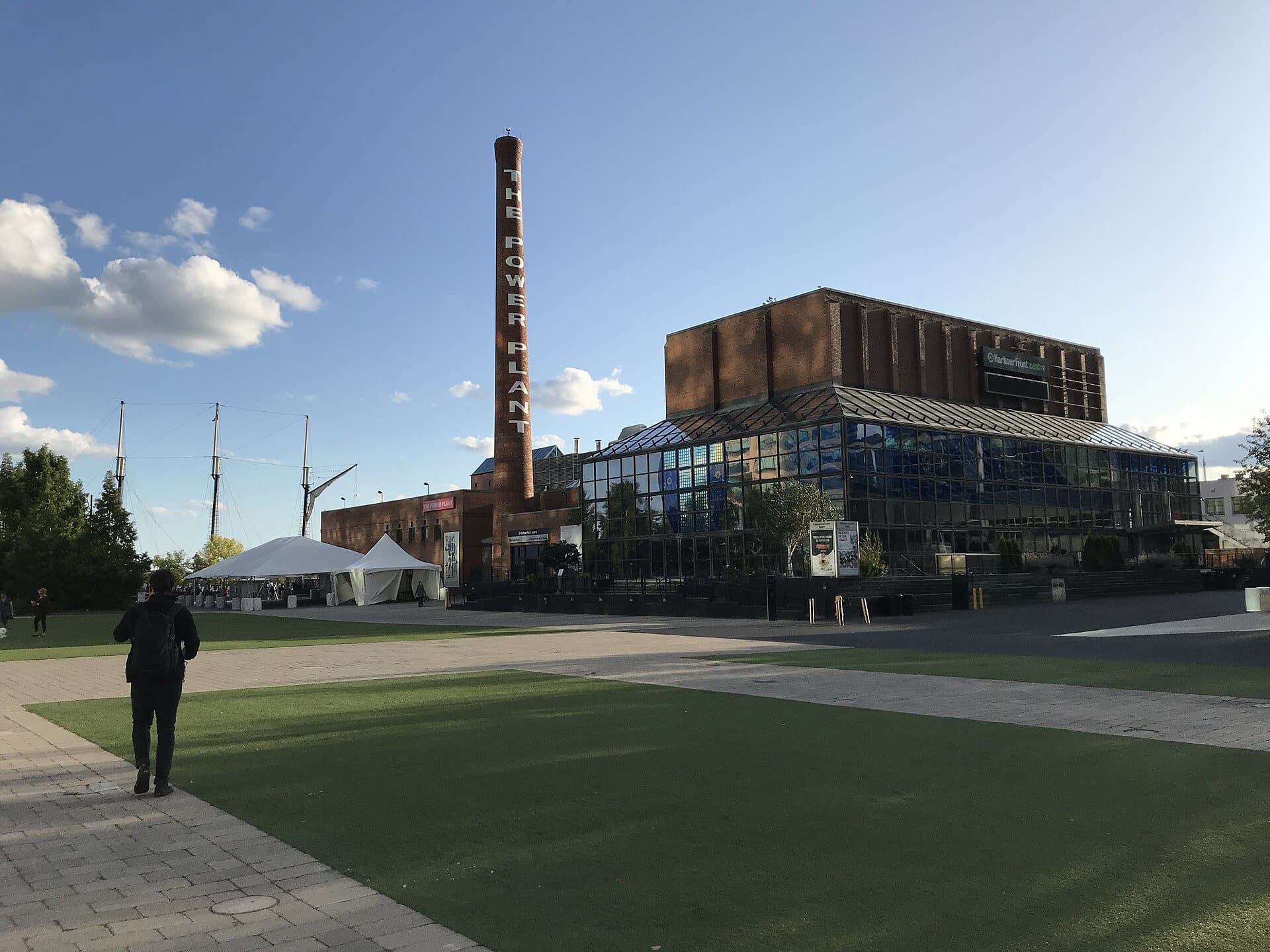
Harbourfront Centre: The Power Plant's Chimney
This 1926 chimney once made heat and cold for the warehouse. The powerhouse below it is now a free gallery of contemporary art.
- 8
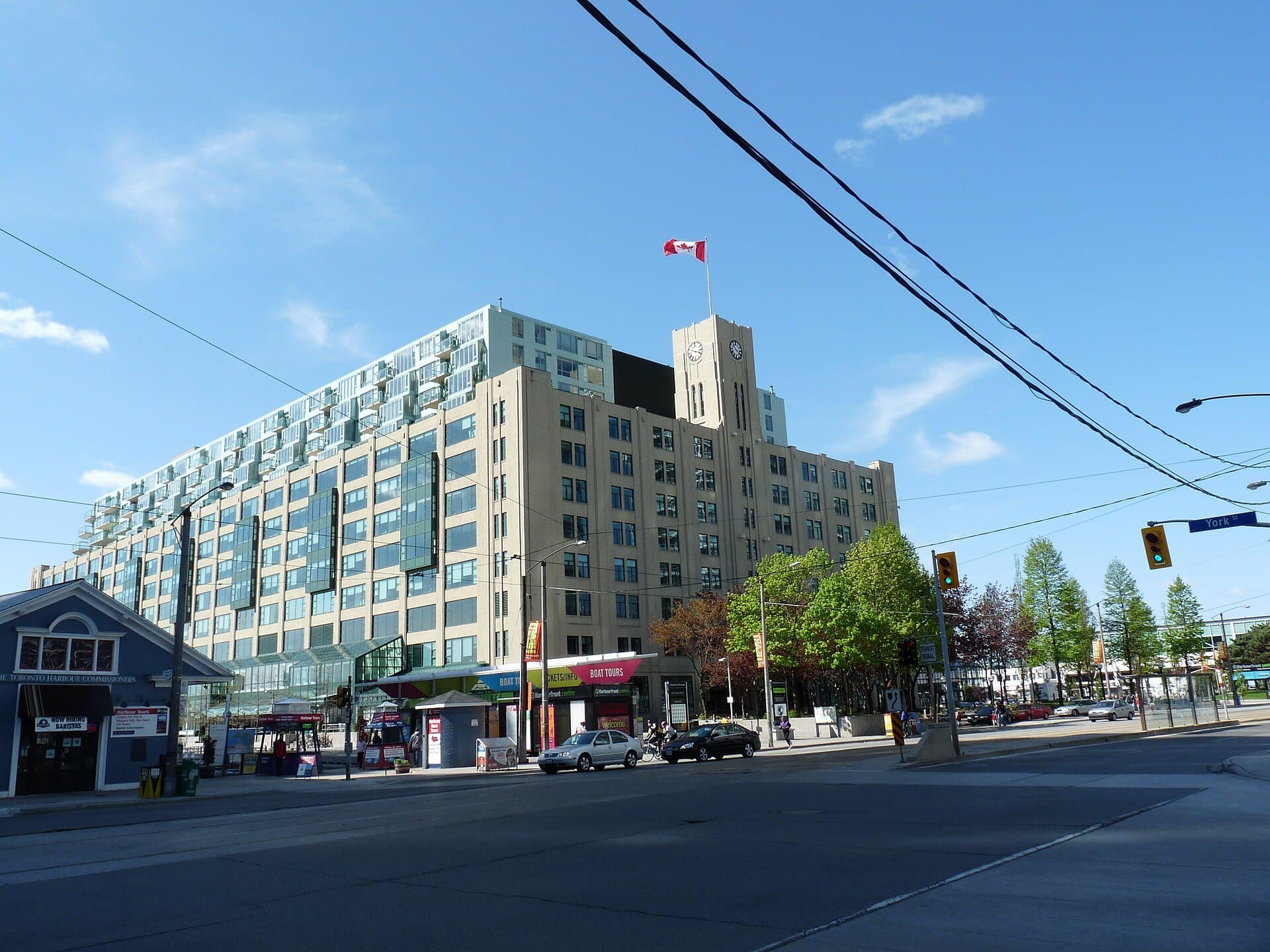
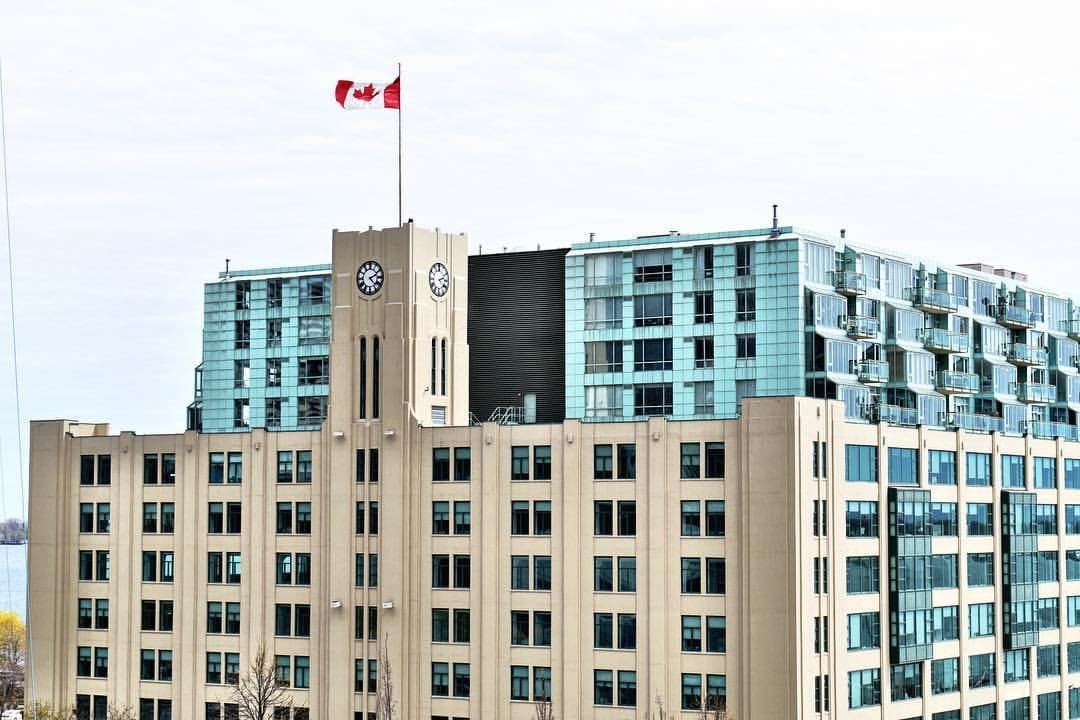
Queens Quay Terminal: The Warehouse That Grew a Glass Crown
A 1927 warehouse that became homes, under four glass storeys. Look for its Art Deco clock tower on the Queens Quay side.
- 9
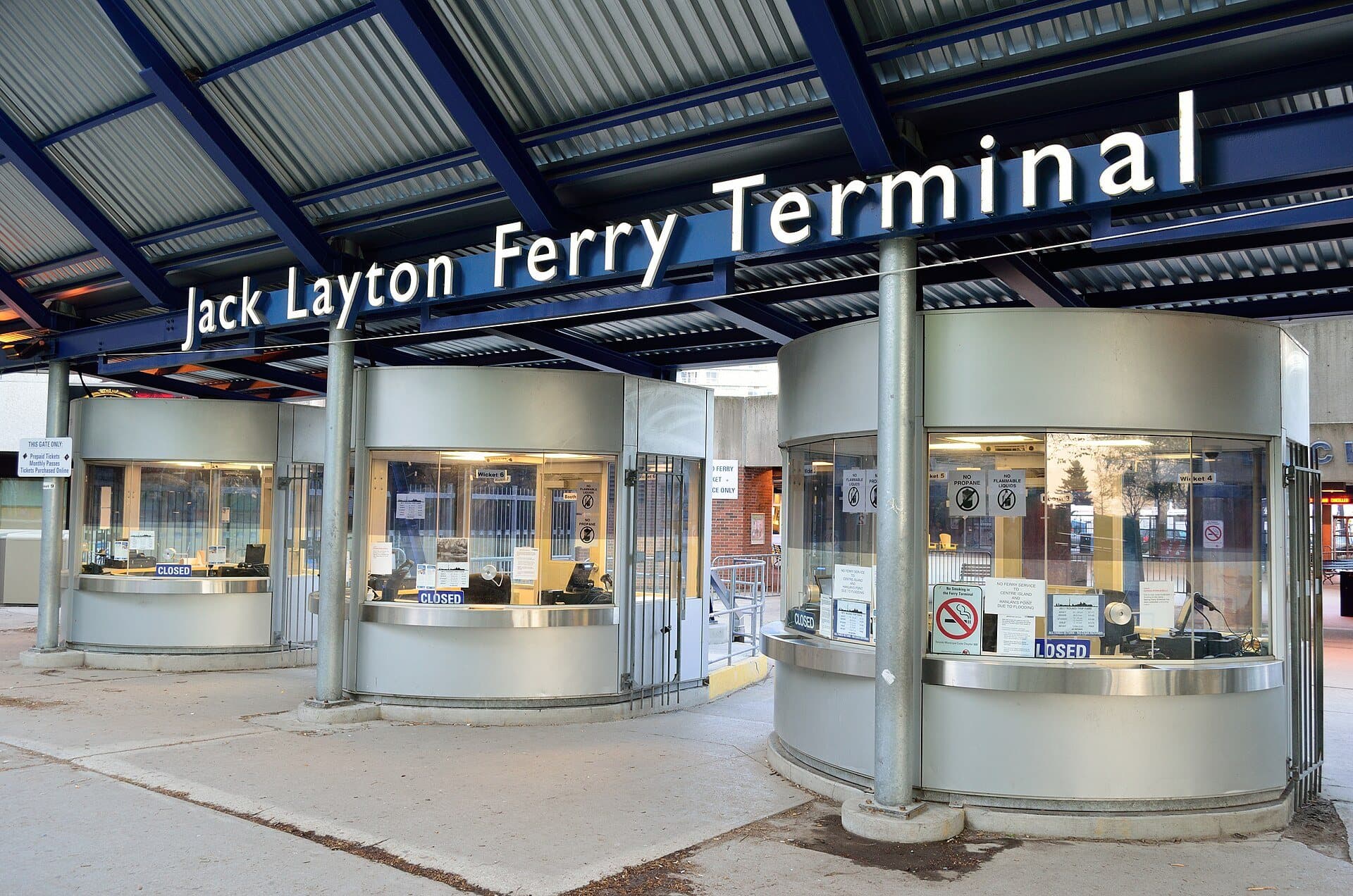
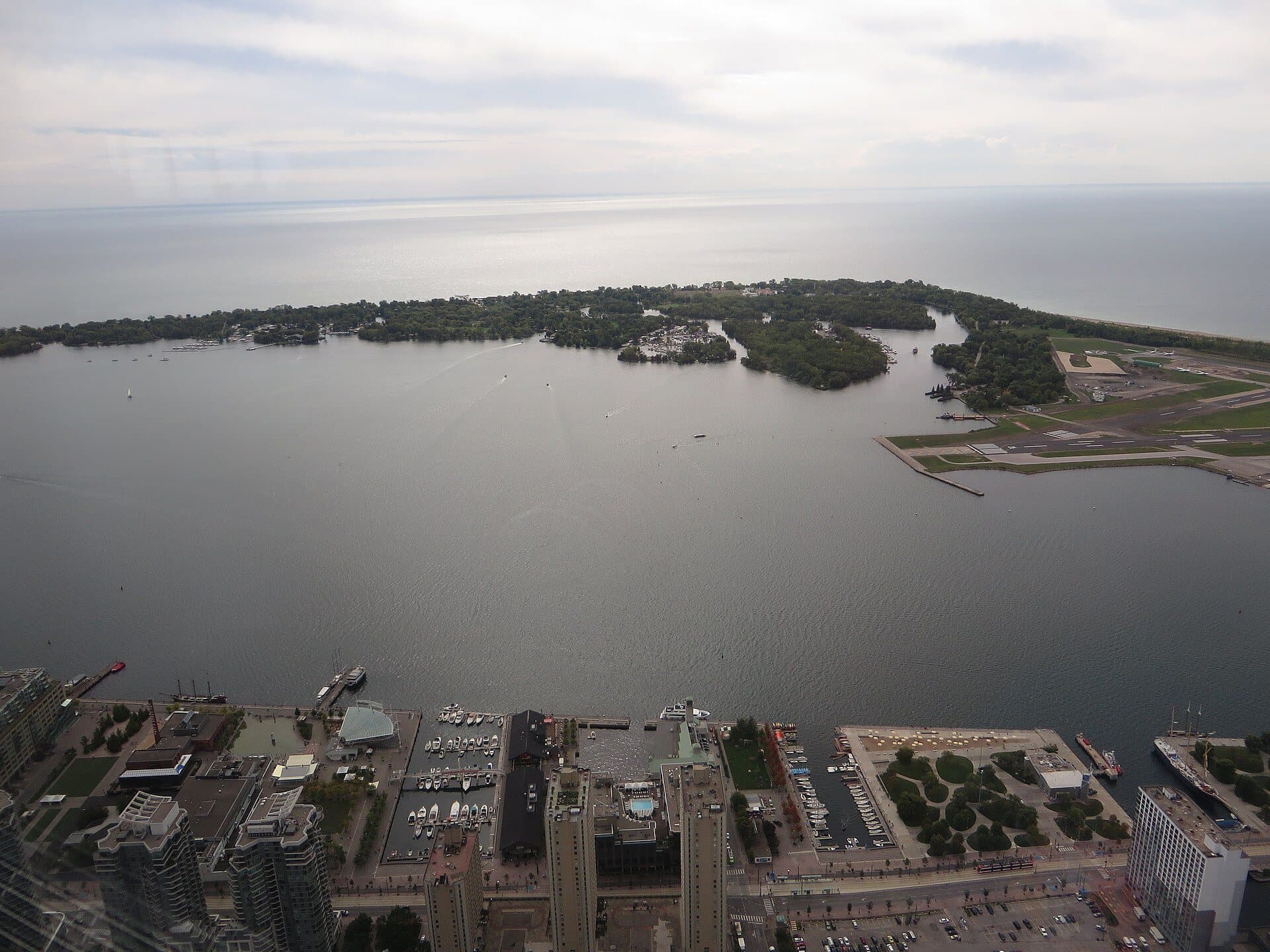
Jack Layton Ferry Terminal: The Islands Across the Bay
The walk ends at the ferry docks facing the Toronto Islands. A bronze Jack Layton waits on a tandem bicycle with the front seat free.
Details
Best Time to Visit
Pick a clear day, for the view from the tower and across to the islands. Wednesday to Sunday after noon lets you add the Toronto Railway Museum, which opens at 12:00 outside the summer season (checked 2 October 2026). On Blue Jays game days Bremner Boulevard fills with crowds before and after the game, so a morning or a non-game day is calmer.
Pro Tips
- •Book CN Tower tickets online for a timed entry, up to 30 days ahead, and go on a clear day: the views reach about 160 kilometres when it is clear (checked 2 October 2026).
- •The island ferries leave from the Jack Layton Ferry Terminal where the walk ends. Round-trip fares: adult (20 to 64) $9.57, older adult (65+) and youth (15 to 19) $6.15, junior (2 to 14) $4.51, under 2 free; tickets online or at the terminal booths. From 16 September to 13 October 2026 the last departures from the city are 11:00 p.m. to Centre Island, 11:30 p.m. to Ward's Island and 10:30 p.m. to Hanlan's Point; a new schedule starts after 13 October, so check the City of Toronto ferry page (checked 2 October 2026).
- •Ward's Island is about a 35-minute walk from Centre Island, so pick the island you want before you board.
- •Michael Snow's The Audience, gold-painted sculptures of cheering fans (1989), sits above the north-east and north-west entrances of the Rogers Centre, on the stadium's far side from the walk: a short detour round the building.
- •The Chinese Railway Workers' Memorial, honouring the labourers who built the Canadian Pacific line through the Rockies, stands at 4 Blue Jays Way on the far side of the stadium, a short detour from stop 4.
- •Rogers Centre ballpark tours were not on sale when this walk was checked: the Blue Jays' tours page said more information was coming soon (checked 2 October 2026).
- •The Power Plant gallery at Harbourfront Centre is free, but closed for installation until Saturday 24 October 2026.
- •Union Station, where the walk began, is a short walk back up Bay Street from the ferry terminal.
Safety & Precautions
- •In 2026 Union Station is in the middle of a long rebuilding, with construction between Bay and York Streets; expect hoarding and follow the signed sidewalks.
- •The walk passes under the rail corridor on Lower Simcoe Street and under the Gardiner Expressway on Rees Street; GPS can drift in the short covered stretches.
- •Crossing Lake Shore Boulevard and Rees Street under the expressway takes several signalled stages with traffic islands; wait for each light.
- •The Martin Goodman Trail along Queens Quay is a busy two-way cycle path; look both ways before stepping across it.
- •The locomotives in Roundhouse Park sit on display tracks; keep off the tracks unless signs say otherwise.
- •In 2026 the shoreside works for the new electric ferries put fencing near the slips at the Jack Layton Ferry Terminal.
- •The waterfront is exposed and can be much colder and windier than downtown; bring a layer in spring, autumn and winter.
Travel advisory: Exercise Normal Precautions (Level 1).
Gallery
Related Reading
Go deeper on what you'll see, hear, and walk through.
Overview
Best Self-Guided Walking Tours in Toronto (2026)
4 min
Overview
How to See Toronto: A City Built by Adding On
6 min
Overview
One Day in Toronto: A Walkable Downtown Itinerary (2026)
5 min
Overview
Toronto Travel Guide: How Many Days, Getting Around, When to Go (2026)
5 min
Thematic
Best History Walking Tours in Toronto (2026)
2 min
Thematic
Toronto-Dominion Centre: The Last Sentence in Mies's Grammar
4 min
Thematic
Two Downtowns, Stacked: Toronto's Towers and the PATH Beneath Them
4 min
Thematic
Ward's and Algonquin: The Island Village That Refused to Leave
4 min
Thematic
What to Eat in Toronto: A Food Guide (2026)
4 min
Companion
Who Got to Decide: Toronto's Waterfront and the Island Community That Stayed
6 min
Deep dive
CN Tower: Built Because the Skyline Blocked the Signal
4 min
Deep dive
John Street Roundhouse: The Best Survivor of the Steam Age
4 min
Read the walk
The full story of CN Tower and the Waterfront: From the Railway Lands to the Lake, in words. Prefer to listen? Play it narrated, from home or on location.
Introduction
Toronto, in Canada, sits on the north shore of Lake Ontario, and its shore has not stayed put. The original edge of the lake ran roughly along what is now Front Street, where this walk begins. Since the eighteen fifties the city has filled in the lake almost a kilometre further south, first for railways and docks, and only much later turned into parks and promenades.
Over nine stops and about two and a half kilometres, this walk follows that made ground down to the water. It starts at Union Station, passes the CN Tower, a roundhouse where steam engines were turned and serviced, and the SkyDome, now the Rogers Centre, then goes under the expressway to the harbour. From there it runs along wooden waves and a city beach, past an old powerhouse and a giant warehouse, to the ferry docks, looking across at the islands. It takes about an hour and a half at an easy pace, longer if you go up the tower, which is ticketed.
Three names to listen for: Rod Robbie and Michael Allen, who designed the SkyDome and patented its rolling roof; Claude Cormier, who put a beach on an old quay; and Jack Layton, who rides a bronze bicycle at the very end.
As you go, keep an eye on the concrete: a tower, a dome and a warehouse, each poured to do one job.
1. Union Station: The Station a Plan Would Have Demolished
Welcome to Toronto, and to Union Station, the start of the walk. Here, along Front Street, is a full city block of pale stone, with a row of giant columns at its centre. Look along it, toward the columns, to take in the whole length.
There are twenty-two columns. Each is Bedford limestone, forty feet high and seventy-five tons. The design follows the grand manner of the École des Beaux-Arts in Paris: a station built like a temple to arrival. Two railways built it together, the Canadian Pacific and the Grand Trunk, and the Grand Trunk's name is still on the front. Work began just before the First World War, and the Prince of Wales cut the ribbon in nineteen twenty-seven.
Across Front Street, the hotel with the steep green copper roofs is the Royal York. The Canadian Pacific opened it in nineteen twenty-nine, and at the time it was the largest building in Toronto and the largest hotel in the British Commonwealth.
In nineteen sixty-eight a plan called Metro Centre proposed to rebuild a hundred and eighty-seven acres of waterfront land, and Union Station was to be torn down with it. After a public fight, the railways dropped the plan in nineteen seventy-five. That same year, Parks Canada named the station a National Historic Site.
Behind the station, over the platforms, runs its train shed, finished in nineteen thirty. Its roof had long smoke ducts directly above the tracks, to carry off the smoke from steam engines. The Canadian Register of Historic Places calls it the only shed of its kind on the continent built for trains to run straight through. You cannot see it from the street, but you are about to walk under its tracks.
Follow the route along Front Street, across York Street at the lights, and down Lower Simcoe Street, under the railway. Where there is construction, follow the signed sidewalk. Next, the CN Tower.
2. CN Tower: Built to Clear the Skyline
Walk on to the corner of Bremner Boulevard and Lower Simcoe Street, and stop there. The CN Tower is ticketed, and on a clear day it is worth going up. Prices and hours are on this stop's card, and the stop works from here.
Find it above the low roofs along Bremner: a single grey concrete shaft, tapering as it rises, with a doughnut-shaped pod near the top, a smaller pod above that, and a thin mast. It stands five hundred and fifty-three point three three metres tall, and for more than three decades it was the tallest free-standing structure in the world.
The reason was practical. Toronto's tall new office buildings were bouncing radio and television signals away from the people trying to receive them, and the old transmission towers were not high enough to broadcast over them. So Canadian National, the railway, built higher than all of them. It employed more than fifteen hundred workers for forty months. Crews arrived in February nineteen seventy-three, and a year later it was already the tallest structure in Canada.
Now look at the shape of the shaft. Its core is hexagonal, braced by three curved arms. The concrete was poured into a huge mould called a slipform, which climbed on hydraulic jacks as the concrete hardened, and grew smaller as it rose. In March nineteen seventy-five a giant Sikorsky helicopter called Olga lifted the thirty-nine pieces of the antenna into place. It was finished in April nineteen seventy-five and opened to the public in June nineteen seventy-six.
The main pod is three hundred and forty-six metres up. Around its rim runs EdgeWalk, where people walk the outside ledge in a harness attached to an overhead trolley. The long low roof at the tower's foot is Ripley's Aquarium, also ticketed.
Follow the route across Bremner at the lights and into Roundhouse Park. Next, a turntable for steam engines.
3. Roundhouse Park: Where Steam Engines Turned
Walk on into Roundhouse Park, to the path beside the turntable, and stop there. The park and the old engines on display are free. The Toronto Railway Museum inside the roundhouse is ticketed; its prices and hours are on this stop's card.
Start with the turntable, the long steel bridge across the shallow pit in front of you. A steam engine rolled onto the bridge, the bridge swung round, and the engine rolled off onto one of the tracks that fan out toward the curved brick building beyond. That building is the roundhouse, and each tall door in its curve was a stall for one locomotive. There were thirty-two. Heritage Toronto calls this, at over thirty-six metres, Canada's longest twin span turntable.
The Canadian Pacific Railway built the complex in nineteen twenty-nine to service the steam engines of its passenger trains at Union Station. Its plaque from Parks Canada says its direct steaming system was the first of its kind in Canada: workers pumped steam straight into an engine's boiler, which made the work faster and cheaper, and the building smokeless. Look along the roundhouse roof for the raised strip of windows. That is a monitor roof, built to flood the stalls with daylight. The tall concrete tower is the old sand and coaling tower.
In nineteen forty-three the crew here prepared a locomotive to haul the American president's train. But the railway finished switching from steam to diesel by nineteen sixty, and that spelled the end for roundhouses across Canada. This one closed in the nineteen eighties. Parks Canada calls it the best surviving example of a roundhouse in Canada. The small yellow brick station is Don Station, built in eighteen ninety-six and moved here.
Over the coaling tower you can see the curve of a huge grey roof. That is the next stop.
Follow the route out of the park to Bremner Boulevard. Next, the SkyDome.
4. Rogers Centre: The SkyDome and Its Rolling Roof
Walk on to the corner of Bremner Boulevard and Rees Street, and stop there, with the stadium across the road. This is the SkyDome, renamed the Rogers Centre in two thousand and five, home of the Toronto Blue Jays. Inside is for ticket holders; the famous part is the…
Full narration for this stop unlocks with the tour.
5. HTO Park and the Rees WaveDeck: A Beach on an Old Quay
Walk on to the wooden deck at the water's edge, and stop there. The made ground you have been walking on since Front Street ends at this wall. The narrow inlet of water in front of you is a slip, one of many narrow slips along the dockwall here, most of it built between nineteen…
Full narration for this stop unlocks with the tour.
6. Simcoe WaveDeck: A Shoreline in Wood
Walk on to the next wooden deck, where the waves climb high, and stop there. This is the Simcoe WaveDeck. Its curves rise up to two point six metres above the lake, high enough to sit in like the steps of an amphitheatre, with a thirty-metre bench built into it. The first of…
Full narration for this stop unlocks with the tour.
7. Harbourfront Centre: The Power Plant's Chimney
Walk on into the square at Harbourfront Centre, and stop by the tall brick chimney. The chimney belongs to the Power Plant, and it tells you what the building was for. It was built in nineteen twenty-six to make heat and cold: the heating and the refrigeration for the giant…
Full narration for this stop unlocks with the tour.
8. Queens Quay Terminal: The Warehouse That Grew a Glass Crown
Walk on toward the corner of the long concrete warehouse, and stop where you can see two of its sides. This is Queens Quay Terminal, built as the Toronto Terminal Warehouse and completed in nineteen twenty-seven. Read it from the bottom up. Eight storeys of pale concrete, with…
Full narration for this stop unlocks with the tour.
9. Jack Layton Ferry Terminal: The Islands Across the Bay
Walk on through the park to the water's edge by the ferry docks, and stop there. This is the end of the walk, at the Jack Layton Ferry Terminal, looking across the harbour at the Toronto Islands. The walk stays on this side of the water, but the island ferries leave from right…
Full narration for this stop unlocks with the tour.