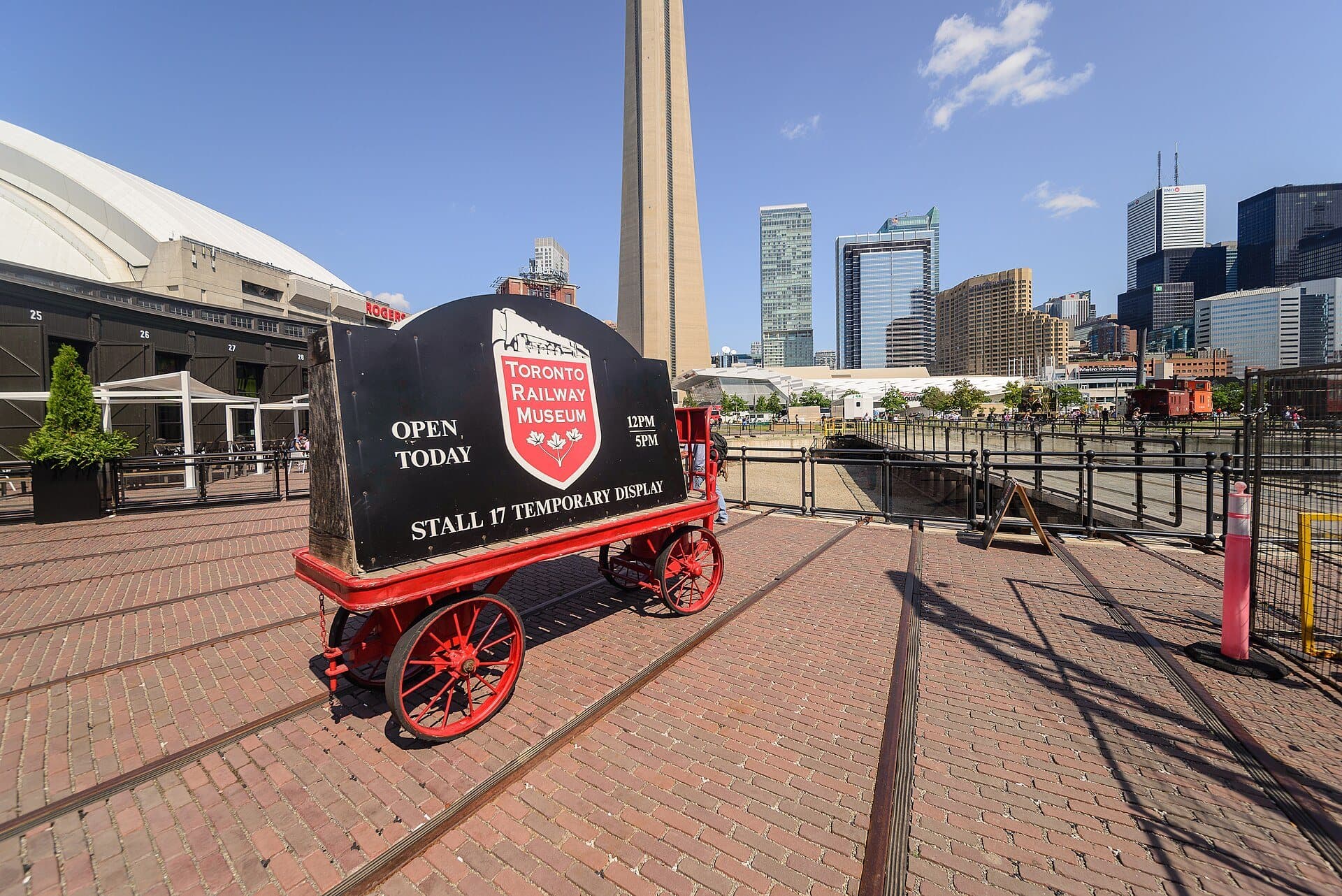
In the shadow of the CN Tower, a long curved brick building wraps around a shallow pit with a steel bridge across it. Most people walk past on their way to the stadium. It is worth stopping, because this is the John Street Roundhouse, and every part of its shape was decided by the engines it was built to serve.
A building shaped like the work it did
A steam locomotive is long, heavy and awkward to turn around. A roundhouse solves that with a turntable in the middle and a fan of stalls around it. An engine rolls onto the bridge, the bridge swings round to face an empty stall, and the engine rolls off into it.
The Canadian Pacific Railway built this complex in 1929 to service the steam locomotives of its passenger trains using nearby Union Station. The Canadian Register names J.M.R. Fairbairn, the railway's chief engineer, as designer, and dates the work from 1929 to 1931. The roundhouse had 32 stalls, one behind each tall door in the curve. Heritage Toronto calls the turntable, at over 36 metres long, Canada's longest twin span turntable.
Look along the roof for the raised strip of windows. That is a monitor roof, built with the large windows below it to flood the stalls with daylight. The tall concrete tower to the west is the old sand and coaling tower, which loaded engines before they went back out.
The smokeless roundhouse
Hear a stop from this walk
Jack Layton Ferry Terminal: The Islands Across the Bay
The Parks Canada plaque explains what made John Street modern. Its direct steaming facility was the first of its kind in Canada. Heritage Toronto puts it plainly: workers emptied a locomotive of coal and pumped steam directly into the boiler. That made the work faster and cheaper, and it made the building smokeless.
More than 40 Canadian Pacific trains a day into Union Station were serviced from here, according to the Canadian Encyclopedia. In 1943 the shop crew prepared locomotive No. 2337 to haul the train of the American president, Franklin D. Roosevelt.
The end of steam
Then the engines changed. The Canadian Pacific had finished switching from steam to diesel by 1960, and, as the Parks Canada plaque says, that spelled the end for Canadian roundhouses. John Street closed in the 1980s (sources give different years). On 23 February 1990 it was designated a National Historic Site because it is the best surviving example of a roundhouse in Canada.
The building found new work. The Toronto Railway Museum opened inside in 2010, and Steam Whistle Brewing has brewed in part of the roundhouse since the early 2000s. Toronto Hydro's Copeland Transformer Station, opened in 2019, sits partly underground beneath the former machine shop.
The park around it
Roundhouse Park keeps locomotives and coaches on short tracks around the turntable, and the small yellow-brick Don Station, built in 1896 and moved here for the museum. The park and its outdoor exhibits are free. The museum inside the roundhouse is ticketed, and the miniature train runs on a published seasonal schedule (in October, weekends only, and not at all from November to mid-May), so check the museum's site before you go.
On the walk
The roundhouse is stop three of the CN Tower and the Waterfront walk, nine stops over about two and a half kilometres from Union Station to the ferry docks, about 85 minutes at an easy pace. It comes straight after the tower itself, told in CN Tower: Built Because the Skyline Blocked the Signal, and before the SkyDome next door. For every walk in the city, see the Toronto walking tours guide, or start from Toronto.
Stand by the turntable and look at the curve of doors. Thirty-two engines once waited here to be turned. The bridge and the stalls are still where the railway put them.
Ready to experience it?
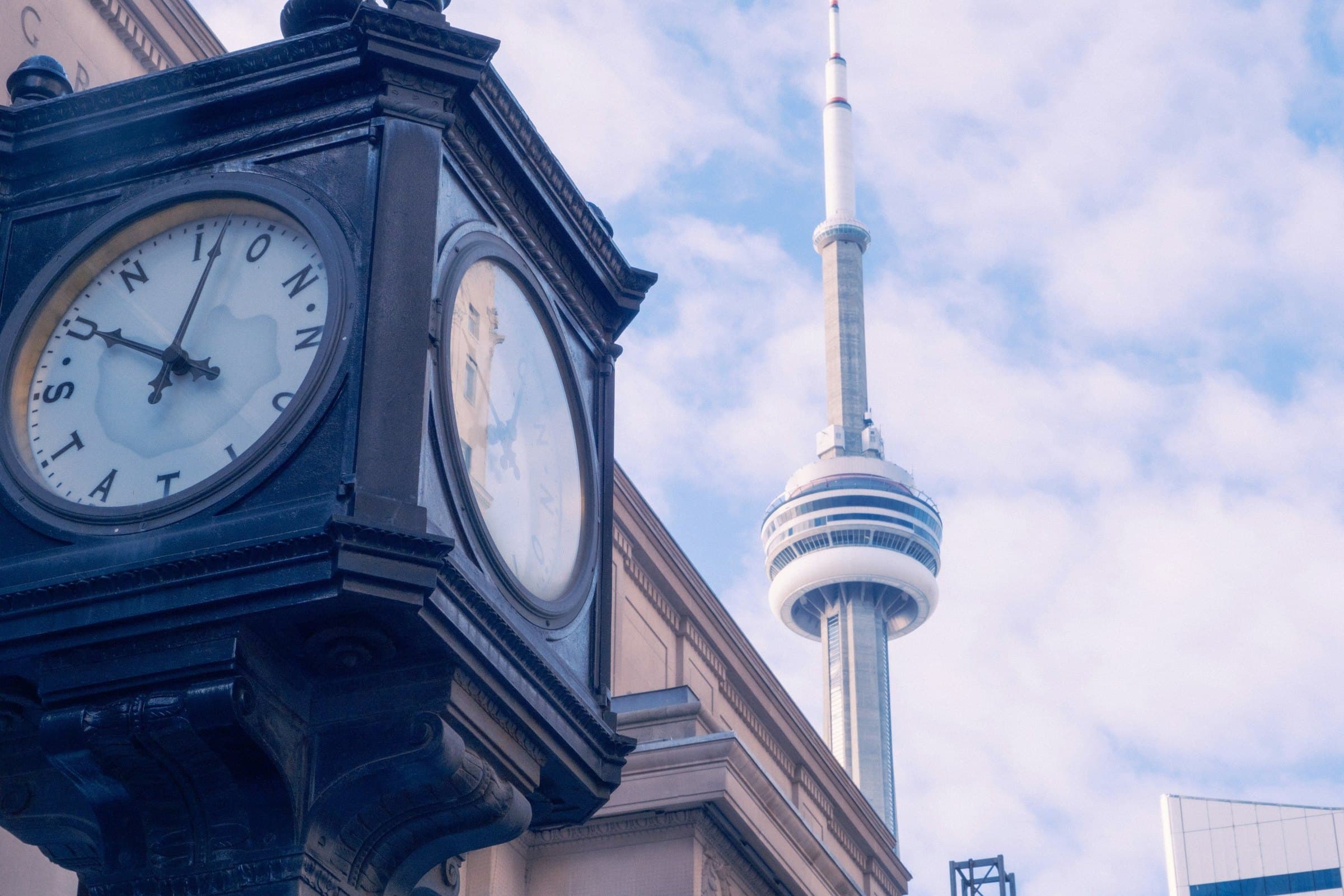
CN Tower and the Waterfront: From the Railway Lands to the Lake
85 min · 2.4 km · easy
More from Toronto
Explore more at your own pace.
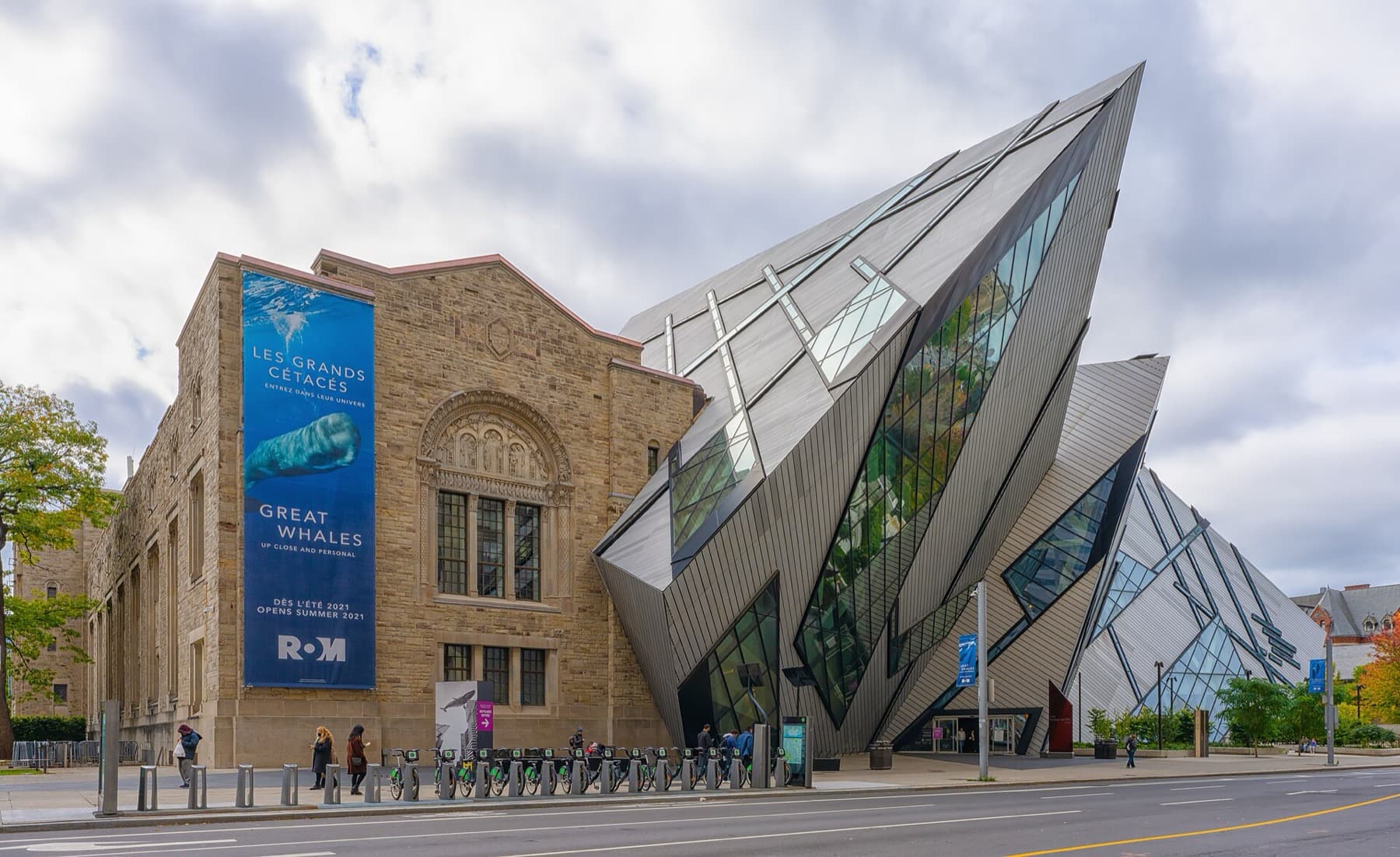
Royal Ontario Museum: What to See, Floor by Floor
The ROM Crystal: Daniel Libeskind's Shard on Bloor Street
The ROM's Totem Poles: Crest Poles Built Into the Building
Zuul: The ROM's Armoured Dinosaur, Skin and All
Garrison Creek: The Buried River Under Trinity Bellwoods