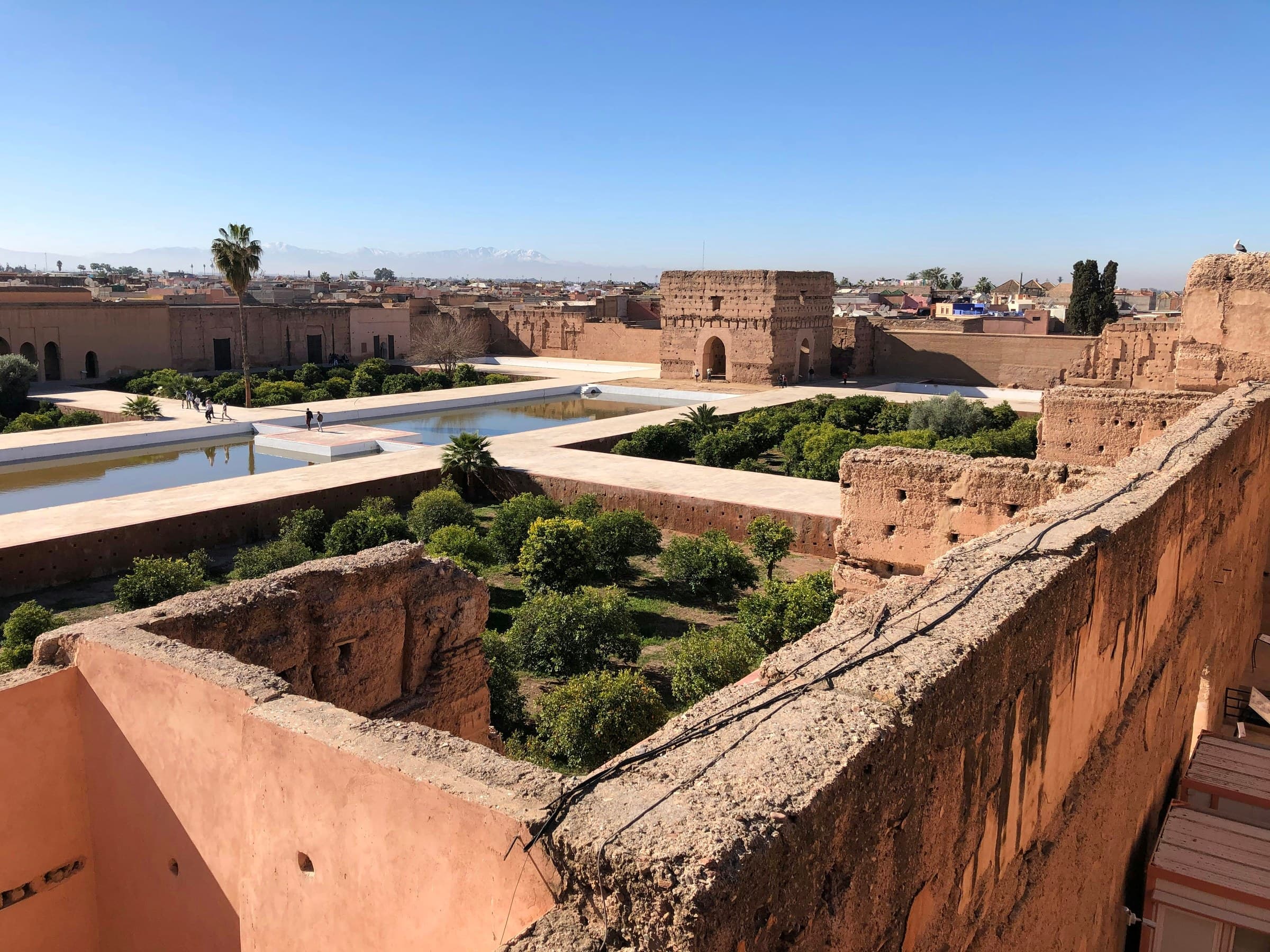
Sixteen stops through the Marrakech medina, from the Koutoubia to the palaces, Jemaa el-Fnaa and the souks. Learn to read what the red walls hide: carved plaster, cut tile, painted cedar and secret gardens.
Start · The Koutoubia: A Tower With Four Different Faces
DirectionsStops
- 1
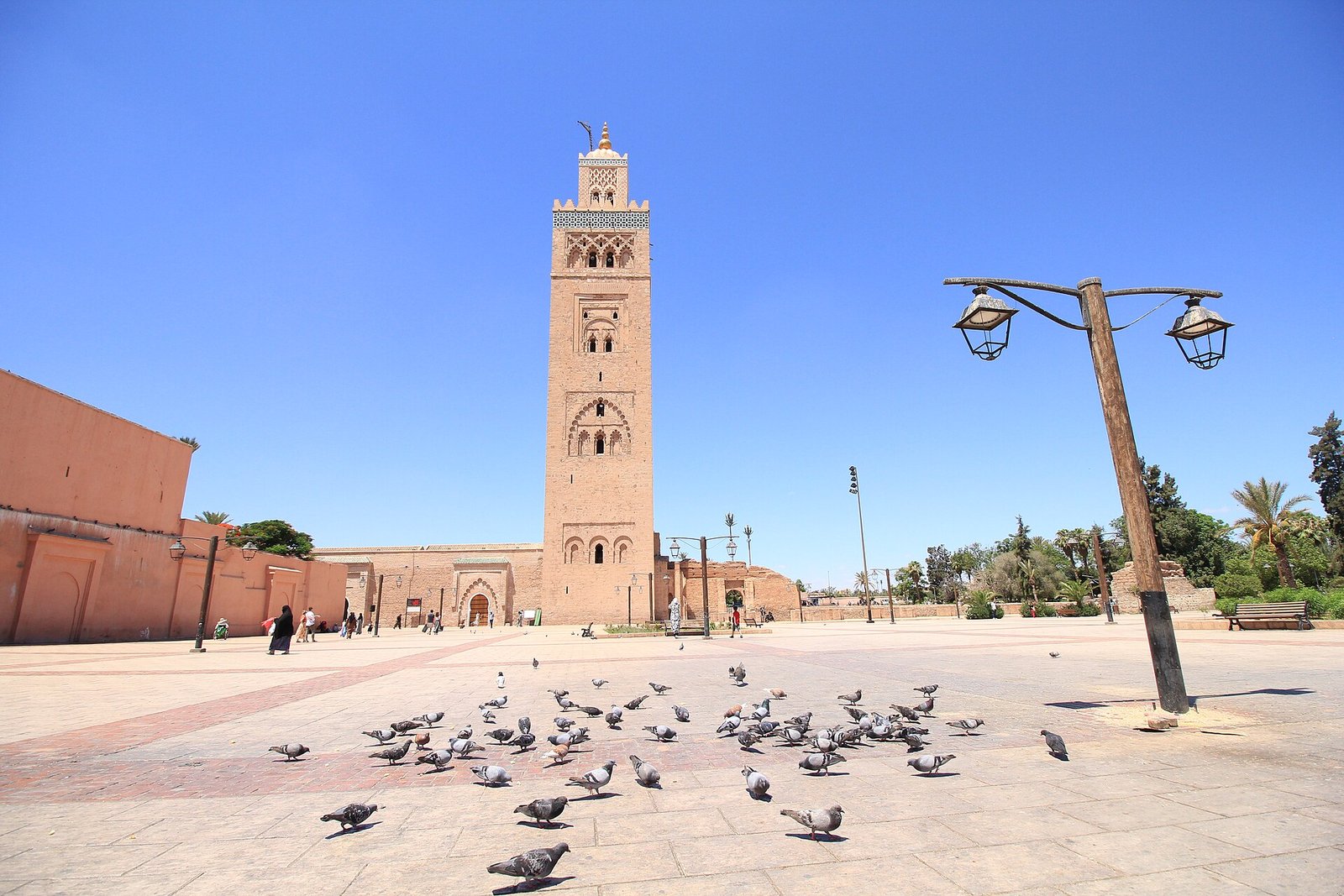
The Koutoubia: A Tower With Four Different Faces
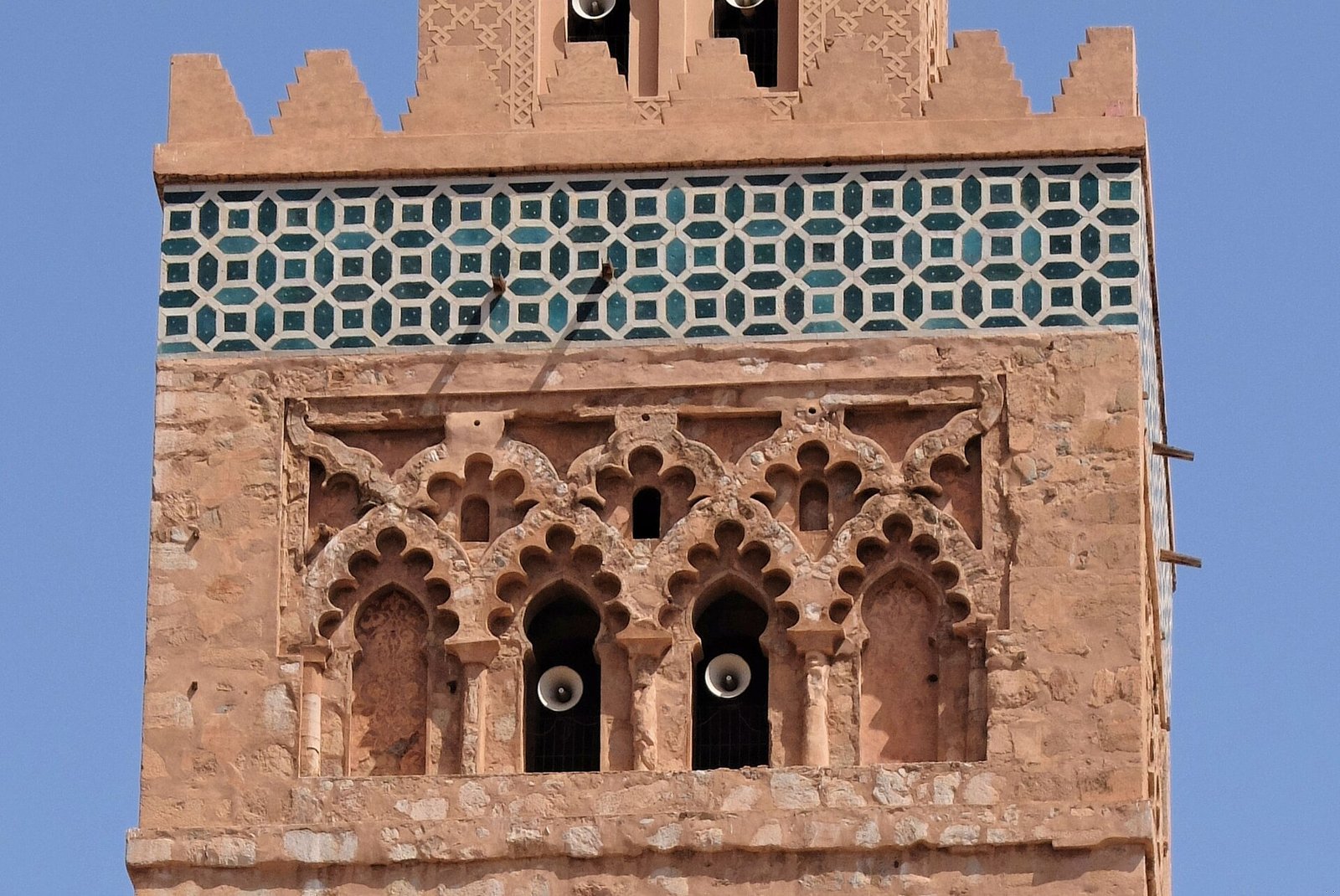
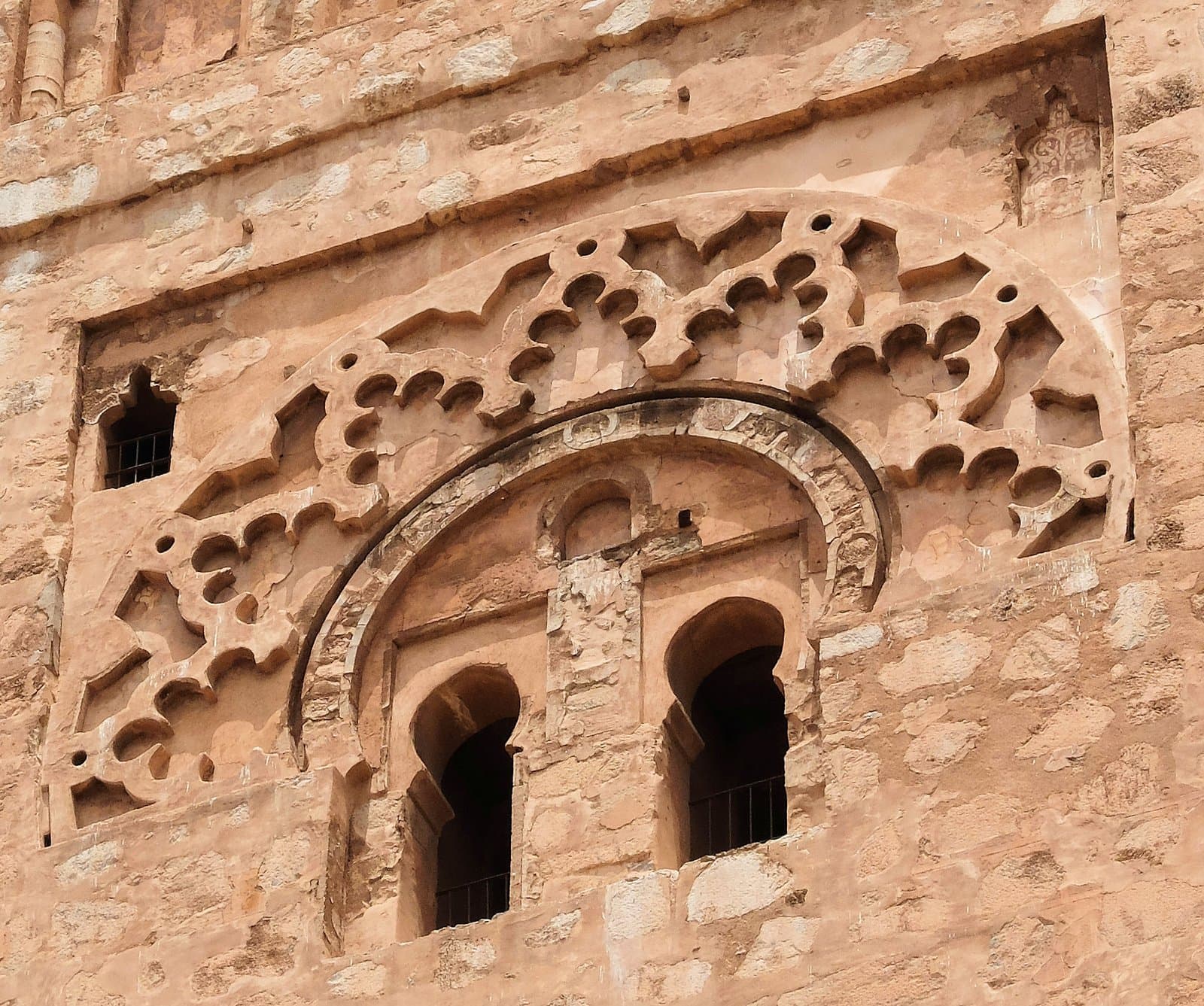
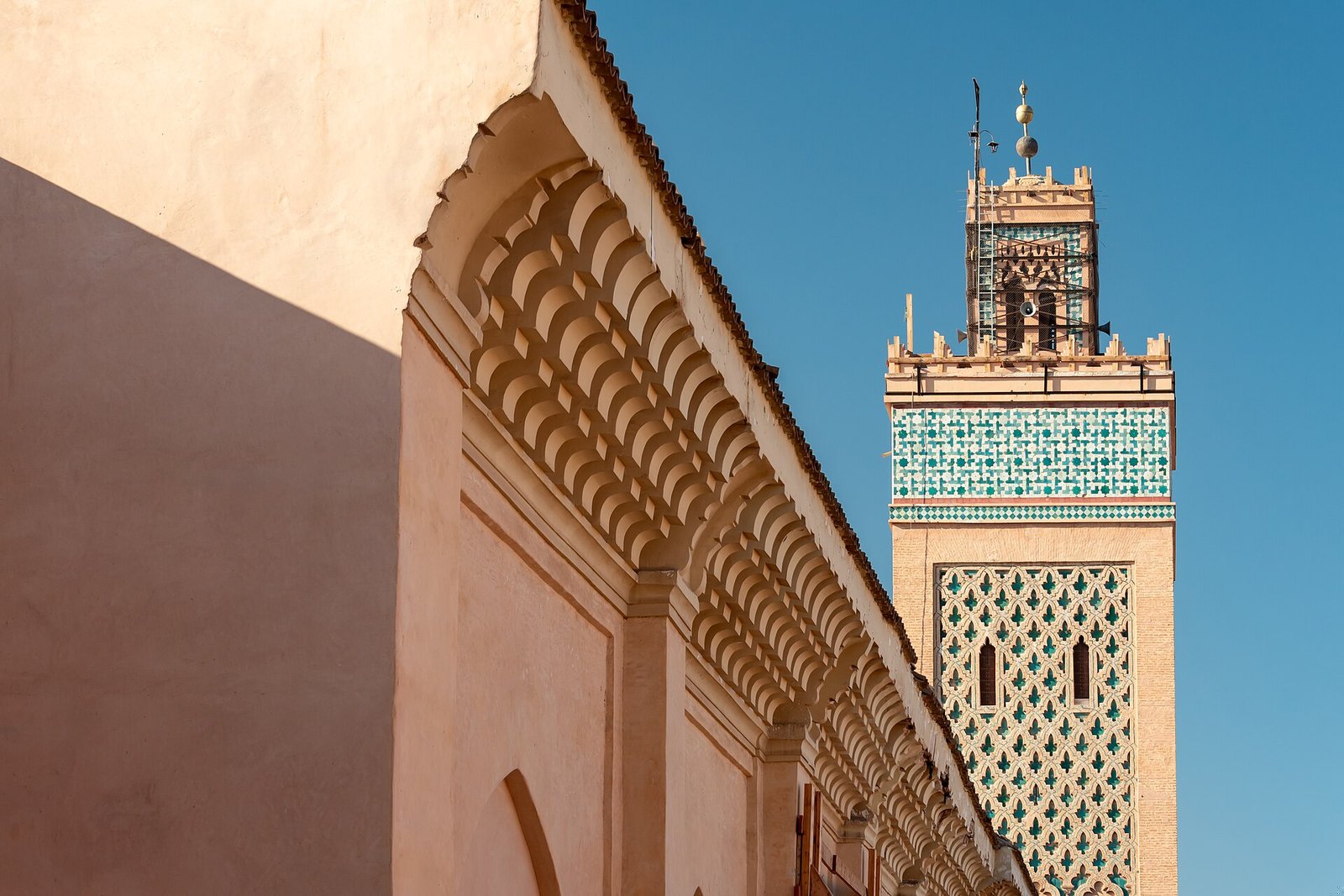
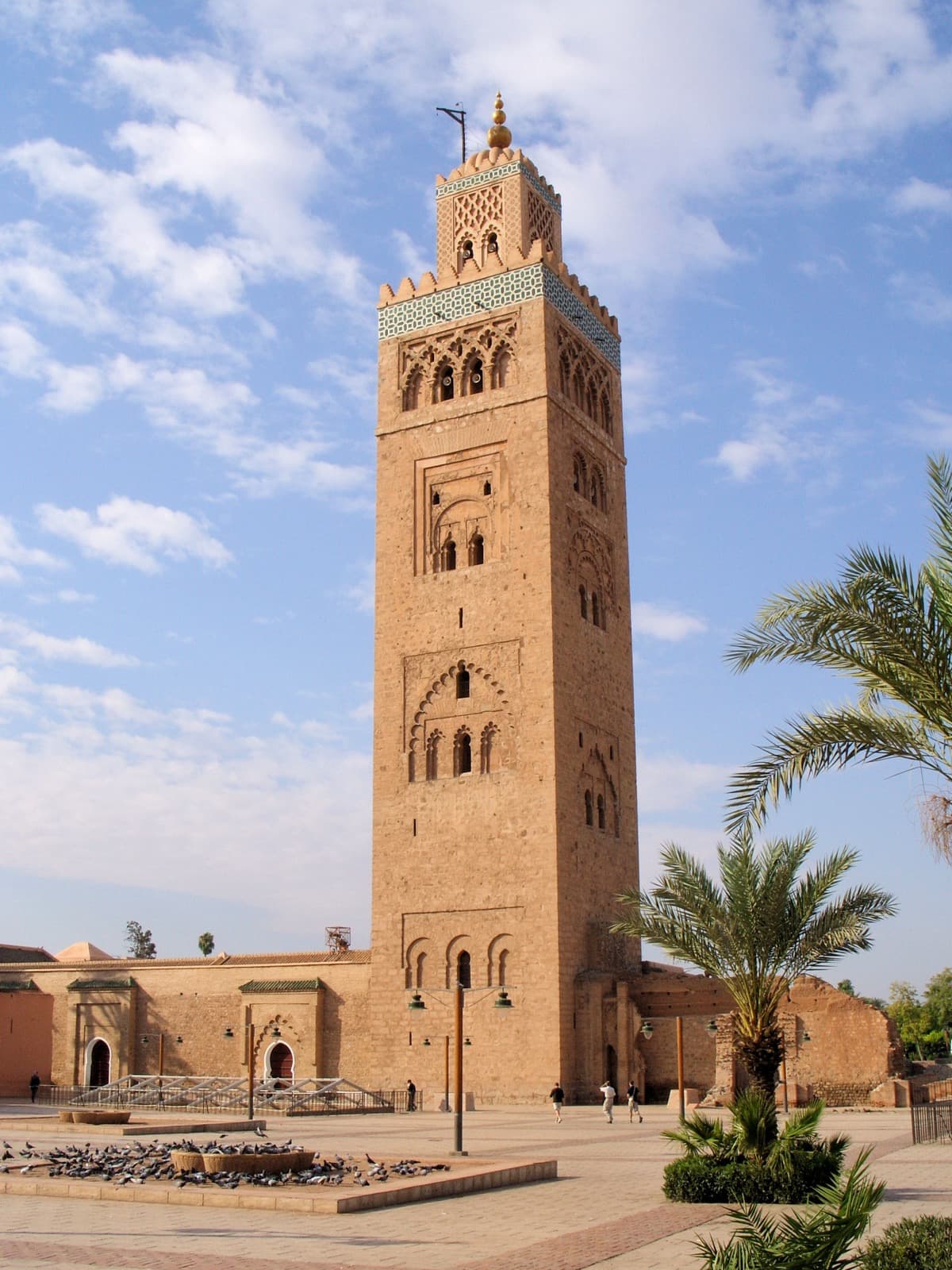
The landmark tower you learn to read first. Carved arches that differ on every face, a net of diamonds in stone, a band of green-and-white tile, and no figures anywhere.
- 2
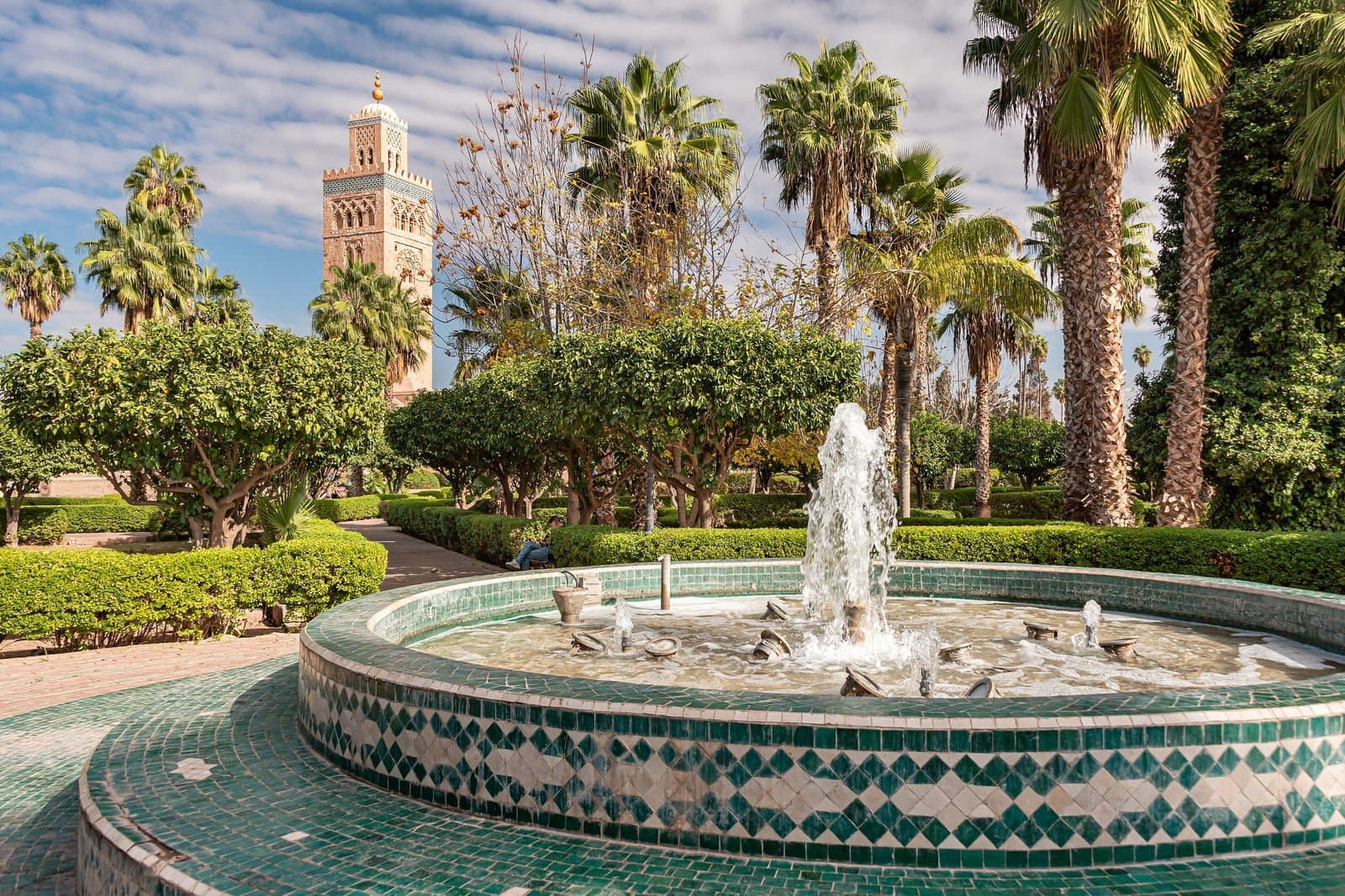
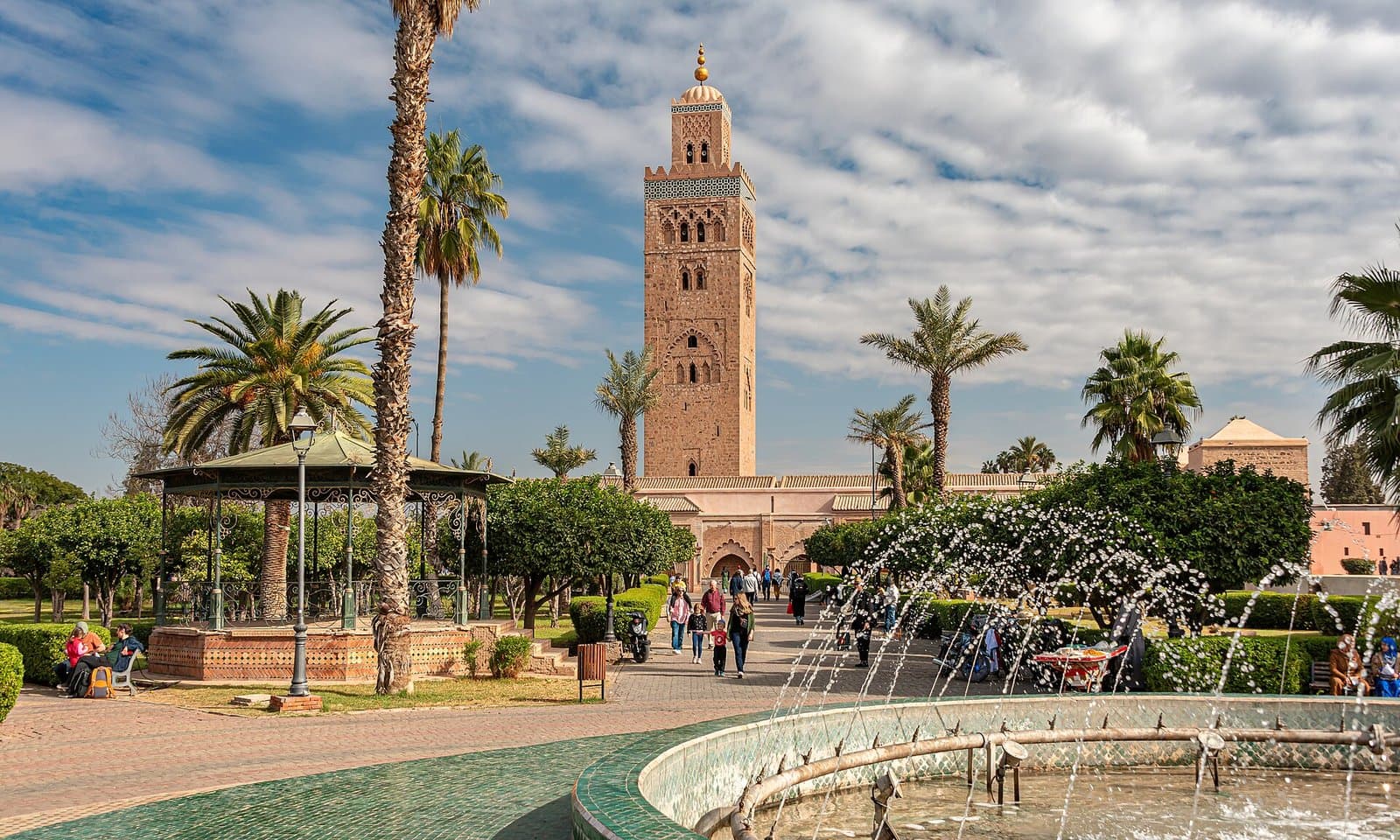
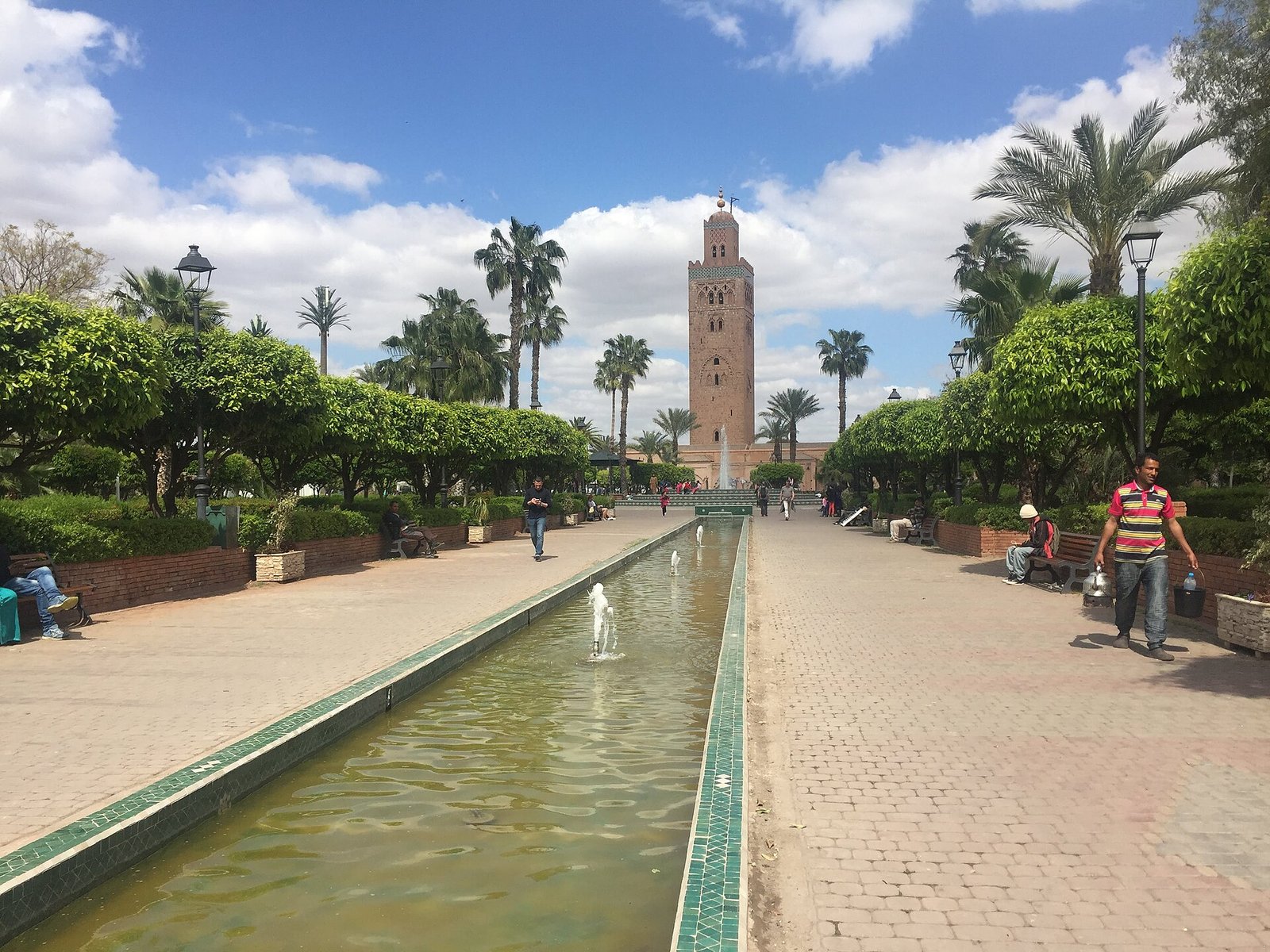
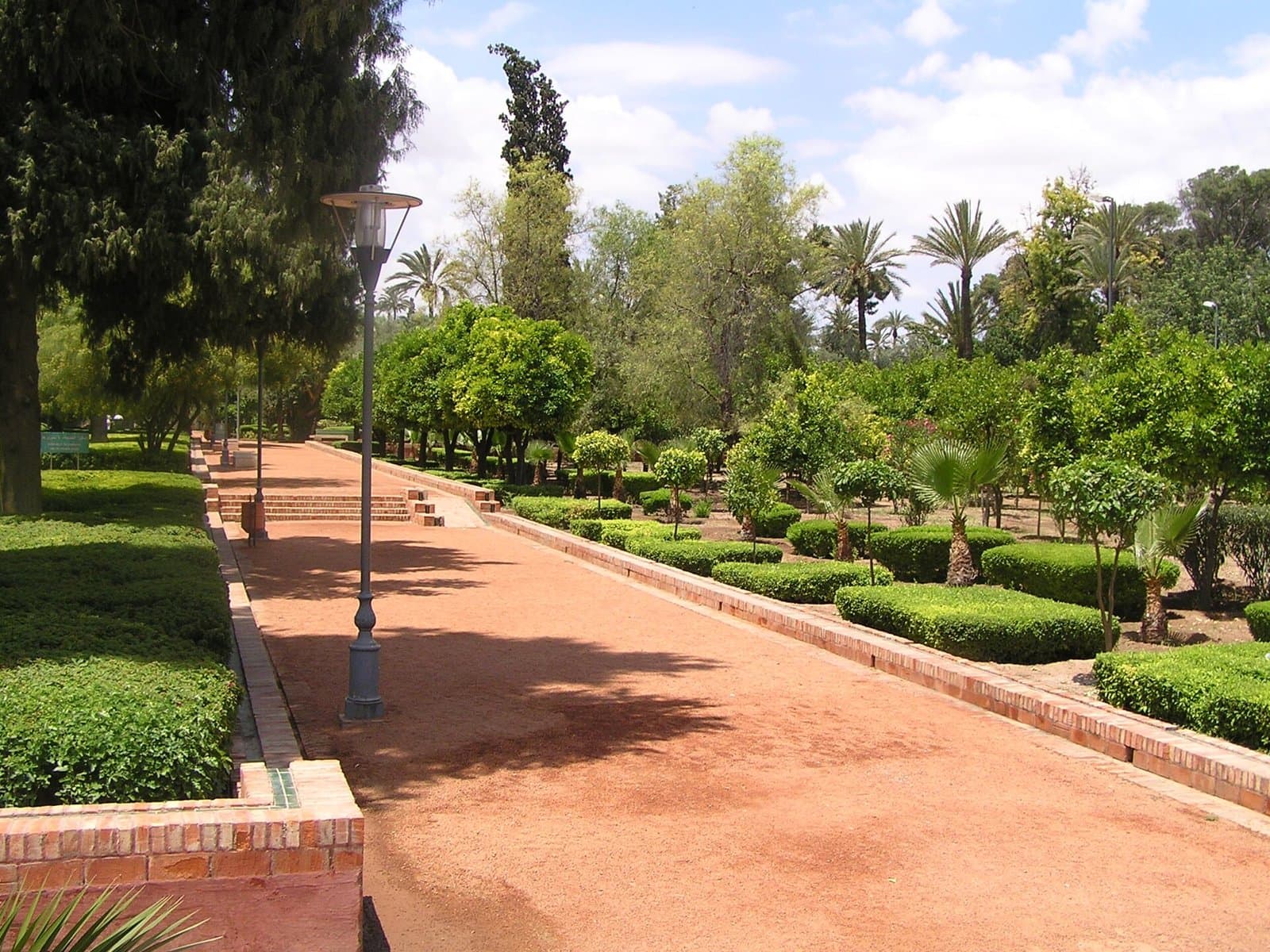
Parc Lalla Hasna: A Garden Laid Out for the View
A modern public garden facing the Koutoubia: rose-lined paths, palms, fountains and flowering shrubs, and a place to see the whole tower at once.
- 3
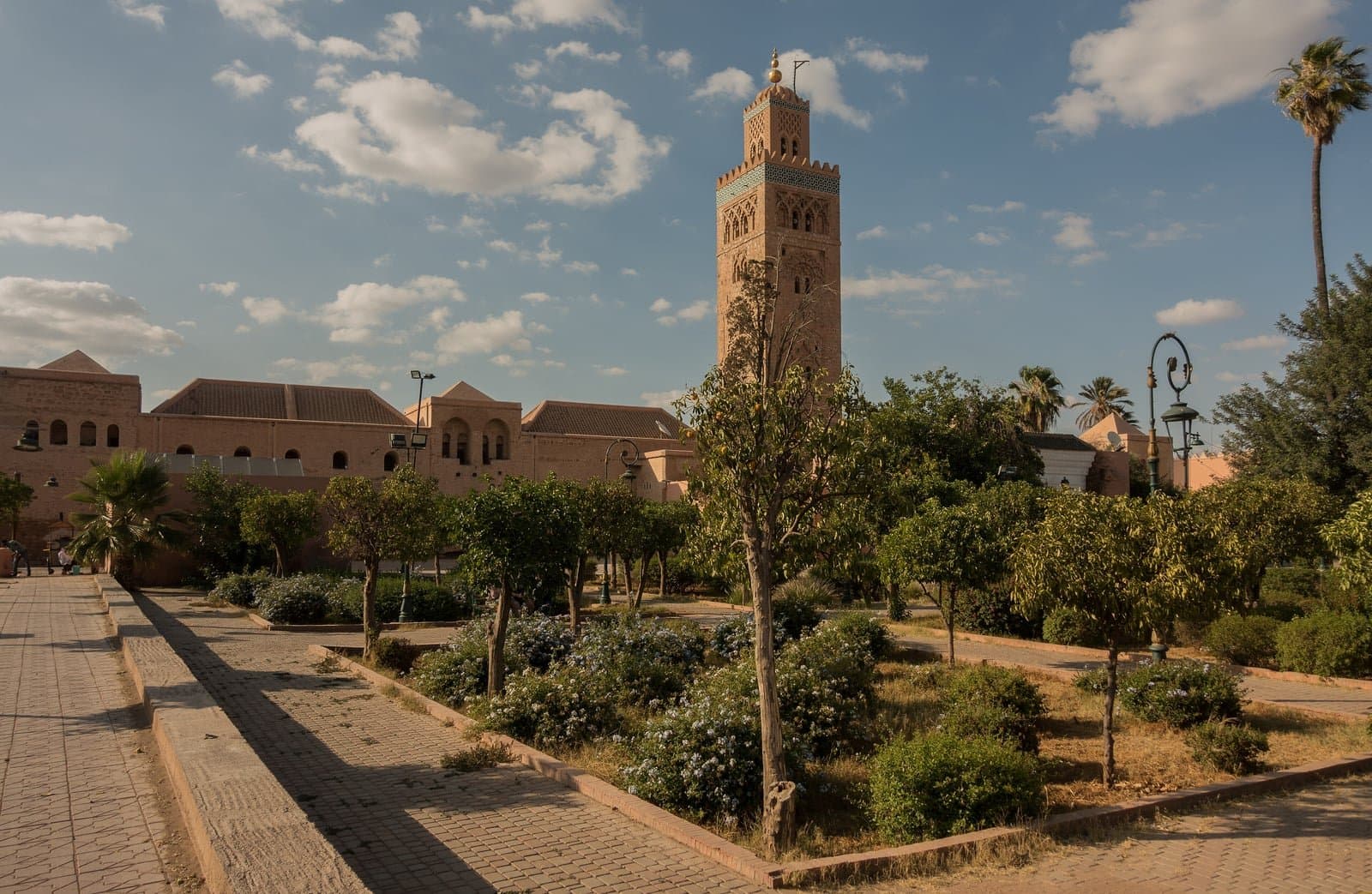
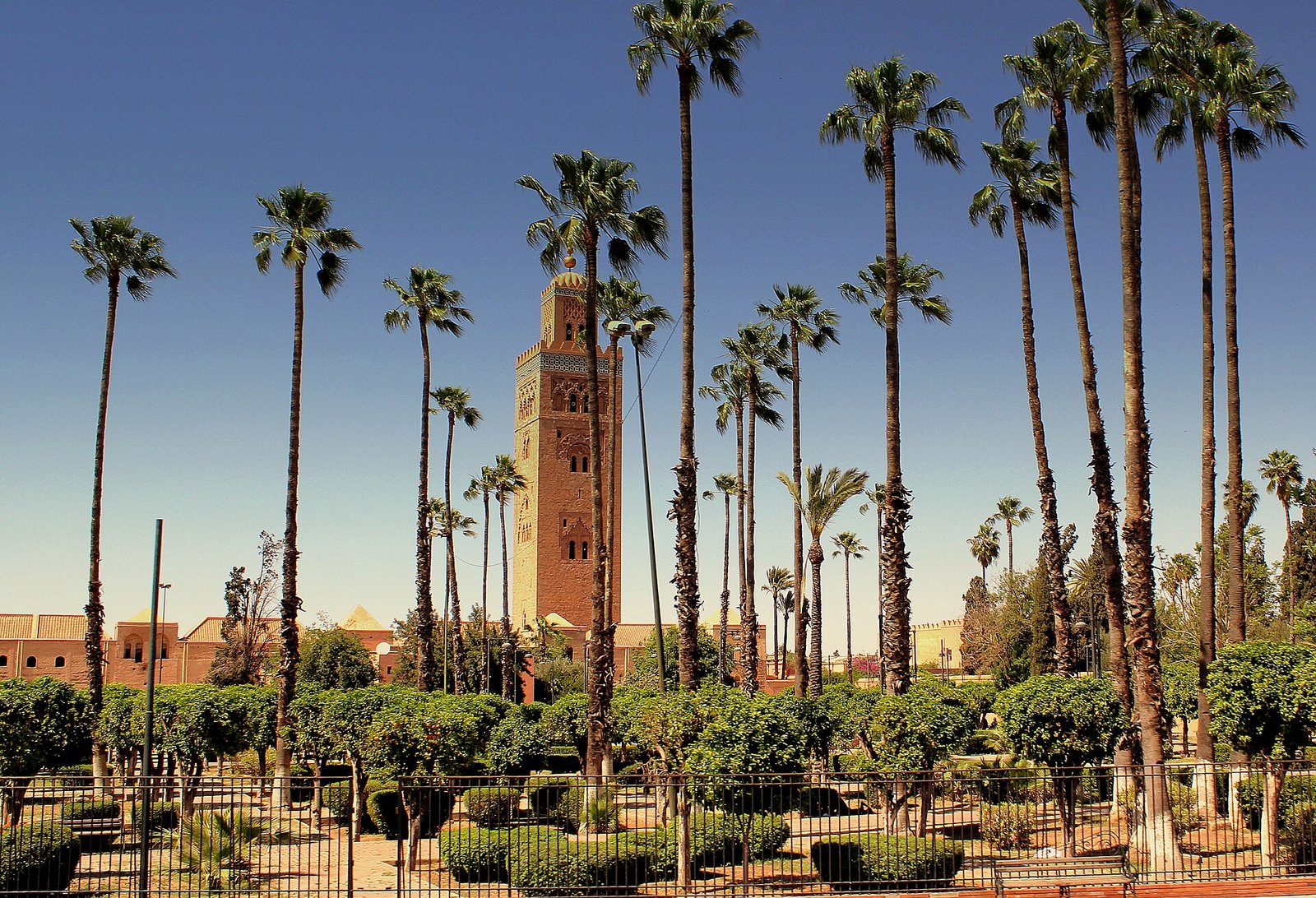
Koutoubia Gardens: Near Morocco's Earliest Four-Part Garden
A garden of orange trees, palms and roses beside the mosque. A few steps from where Morocco's earliest known four-part garden was laid out, and the water that made a garden city possible.
- 4
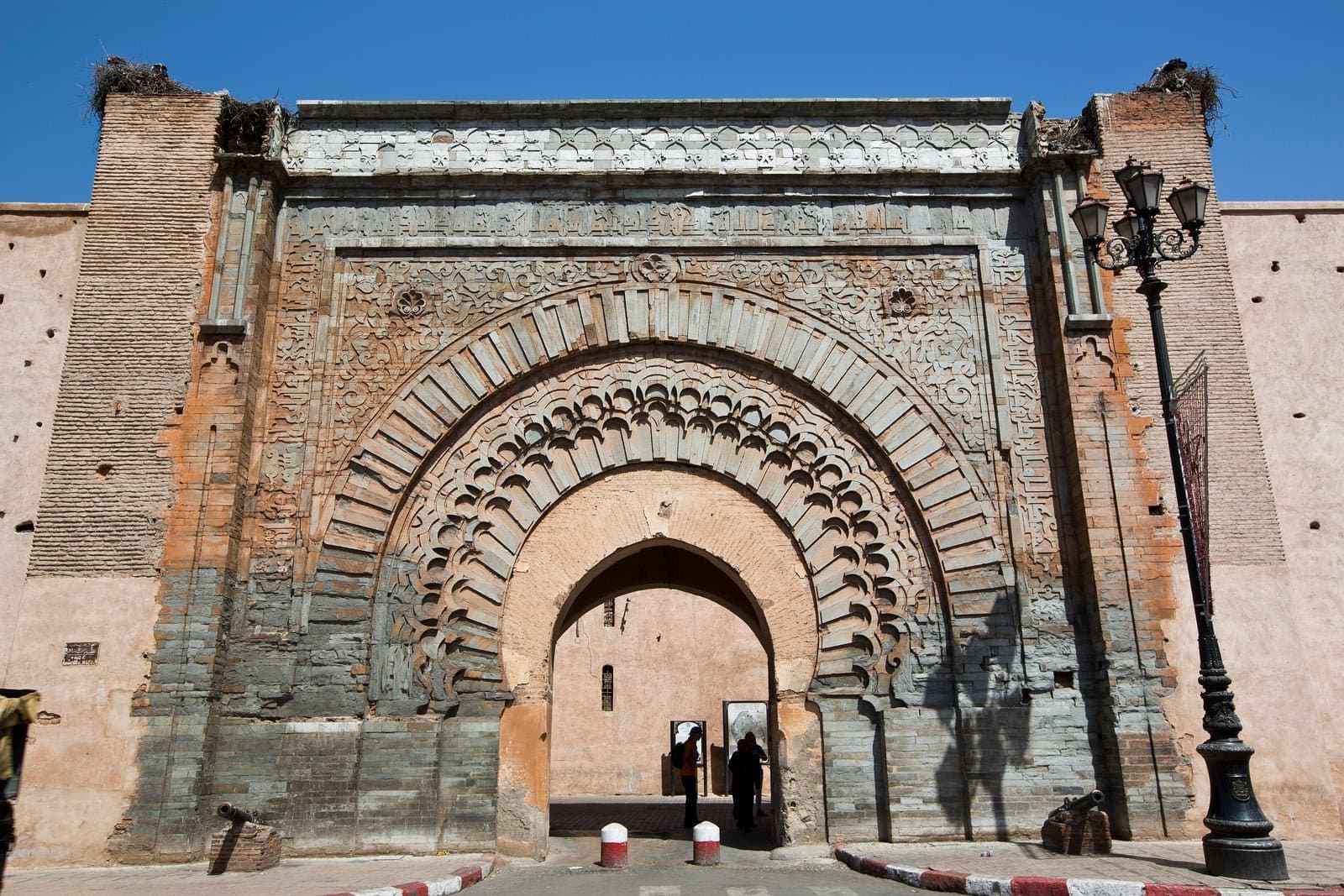
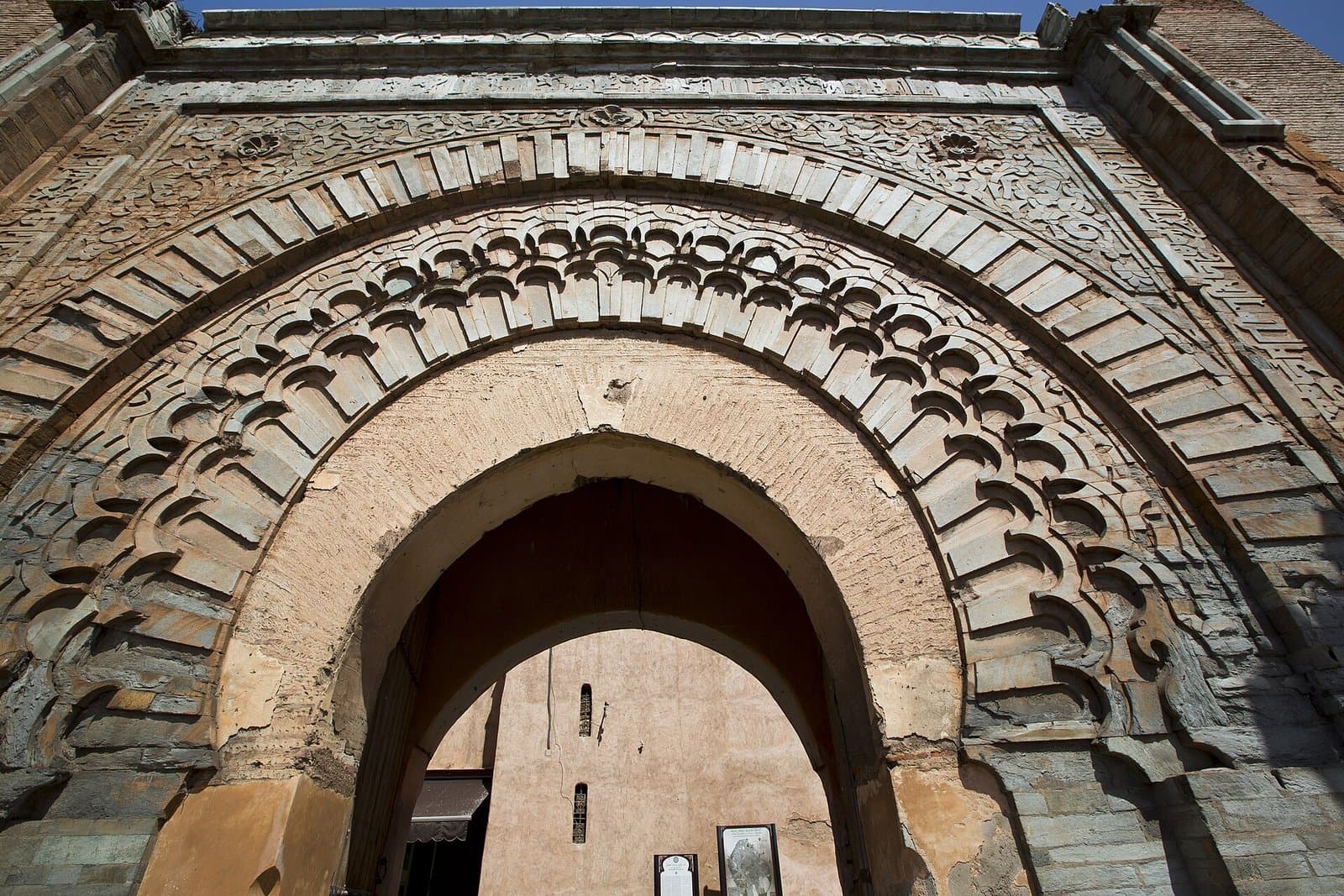
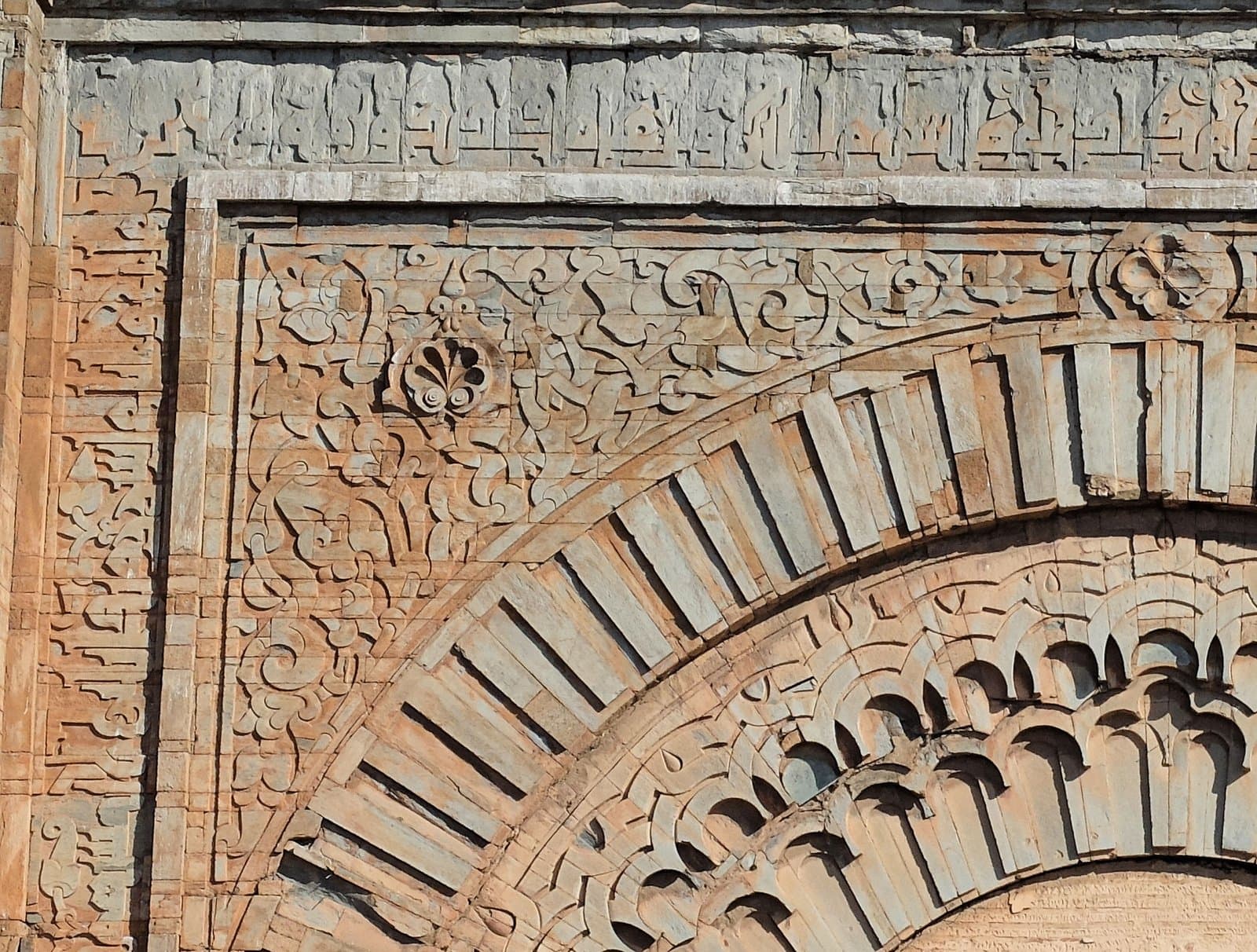
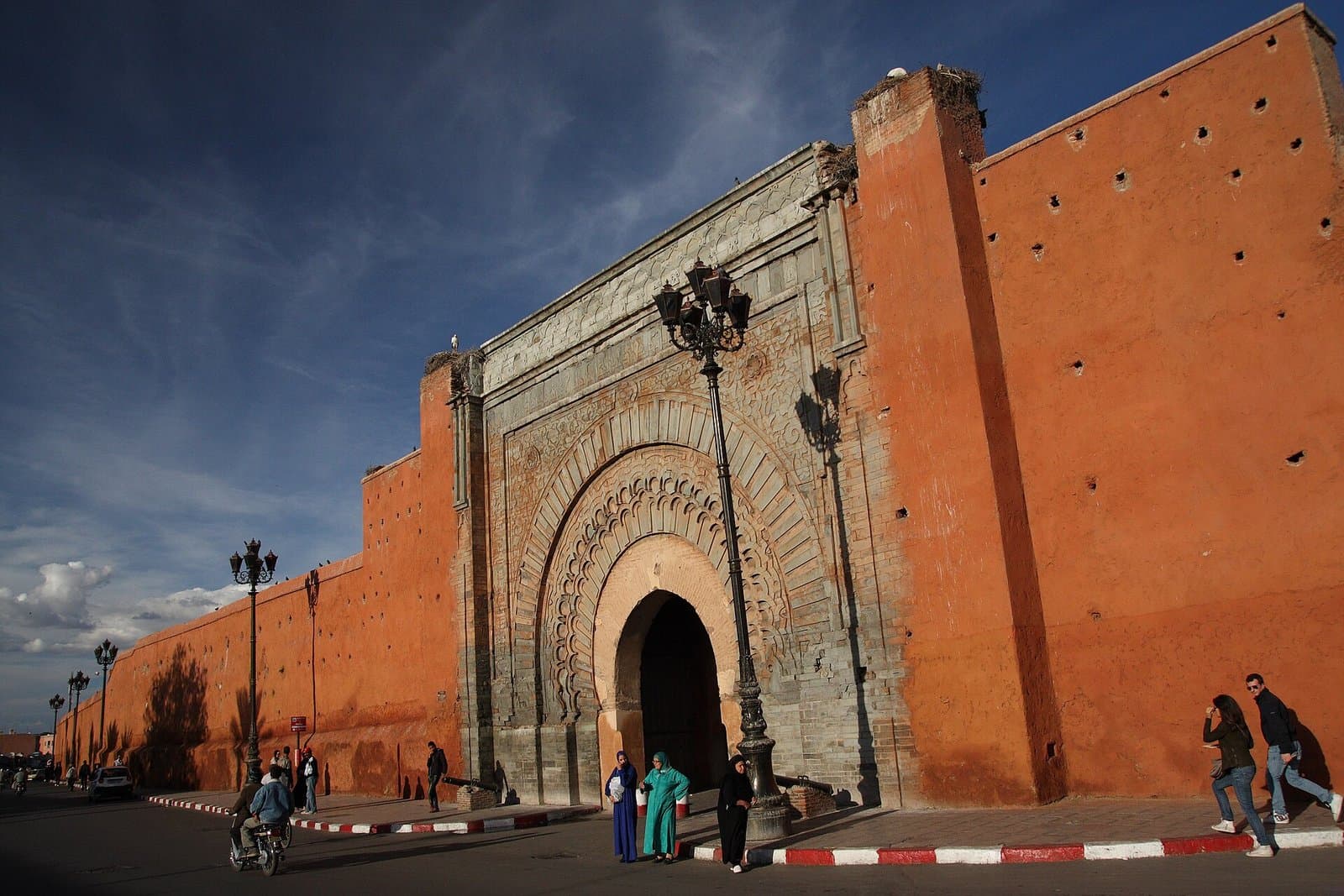
Bab Agnaou: Carved Shells and Leafy Script
The carved stone gate of the old royal quarter: frames of pattern, a shell in each corner, script whose letters end in leaves, and beside it the red earth walls that give the city its colour.
- 5
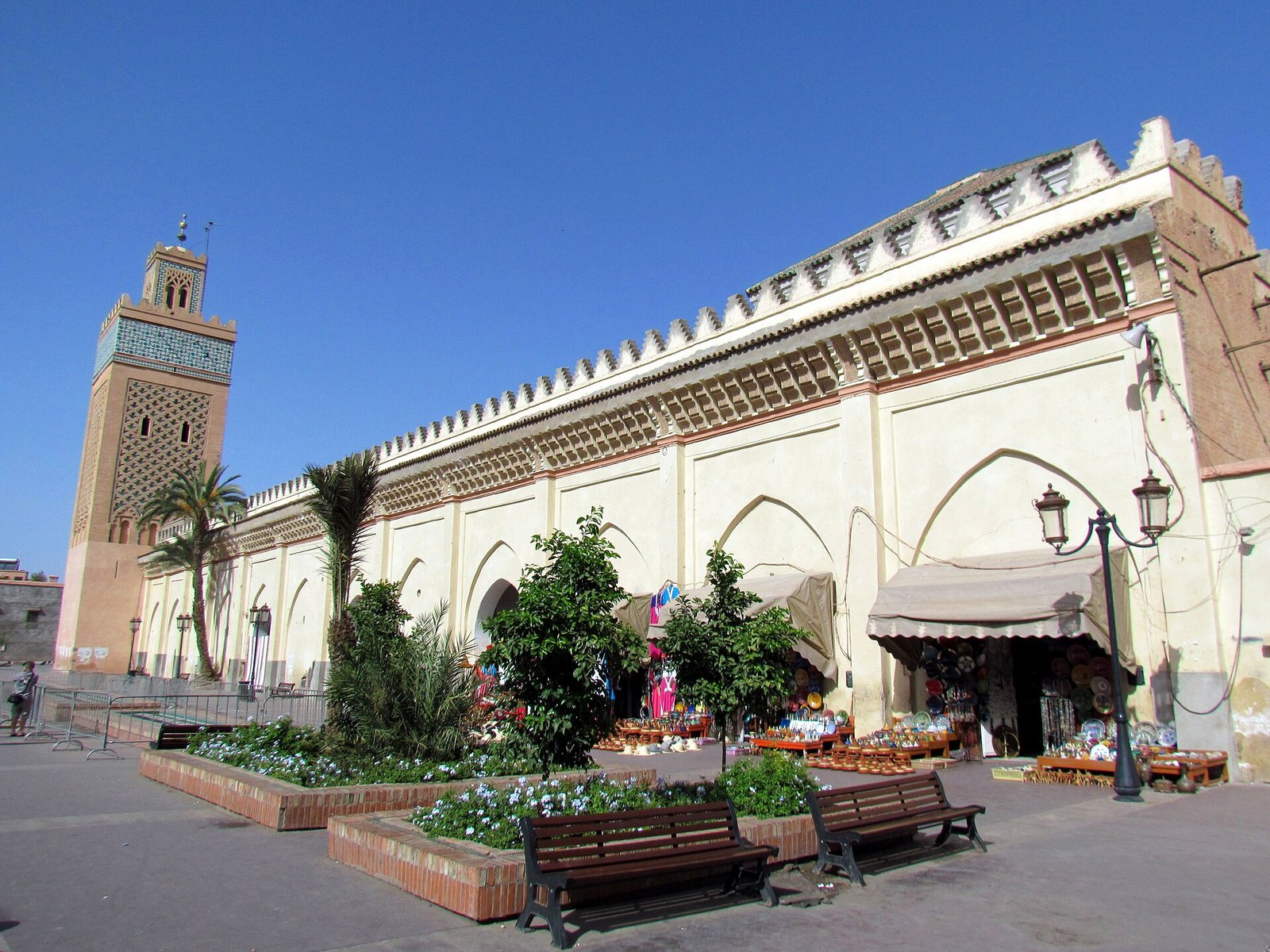
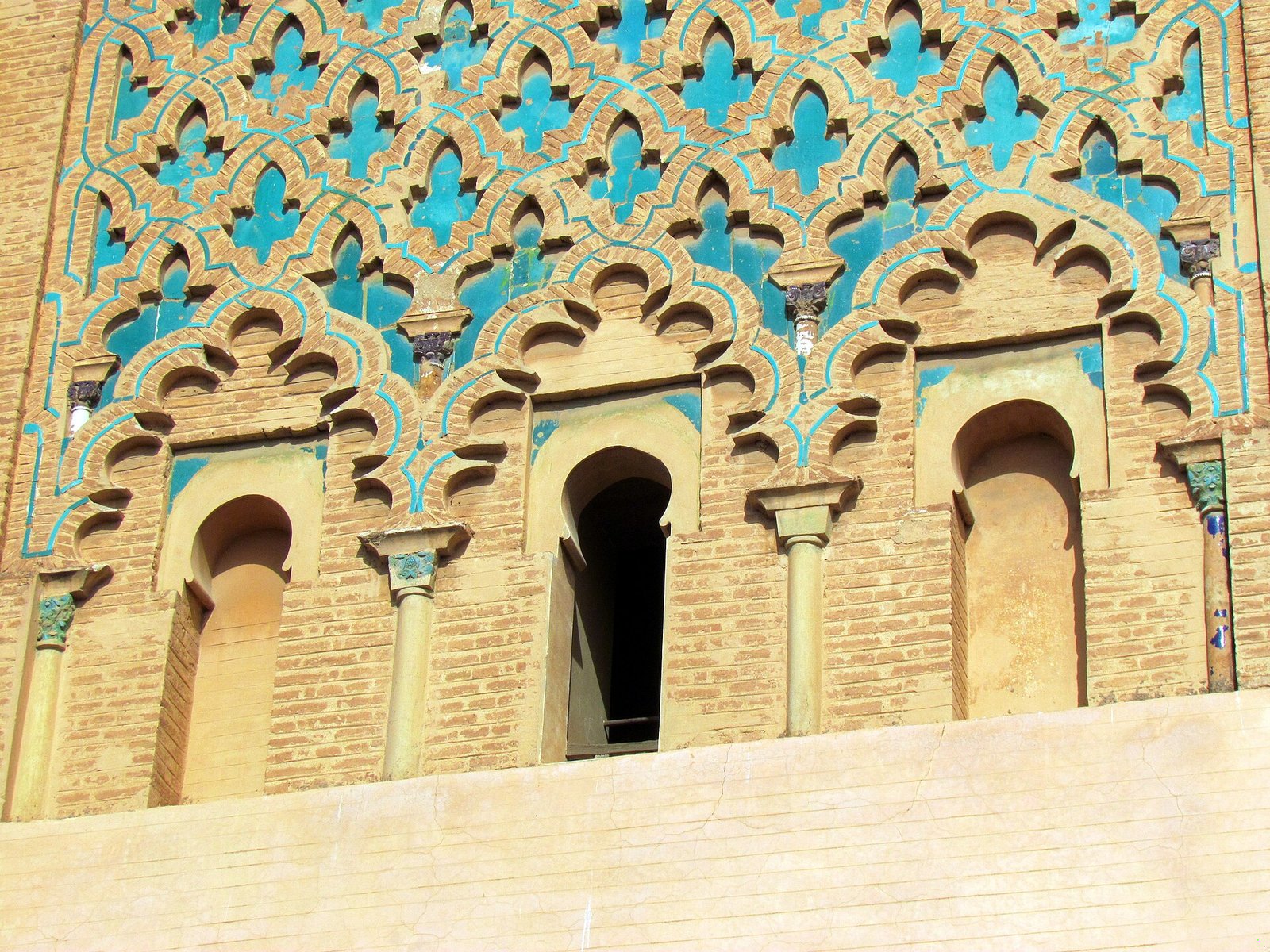
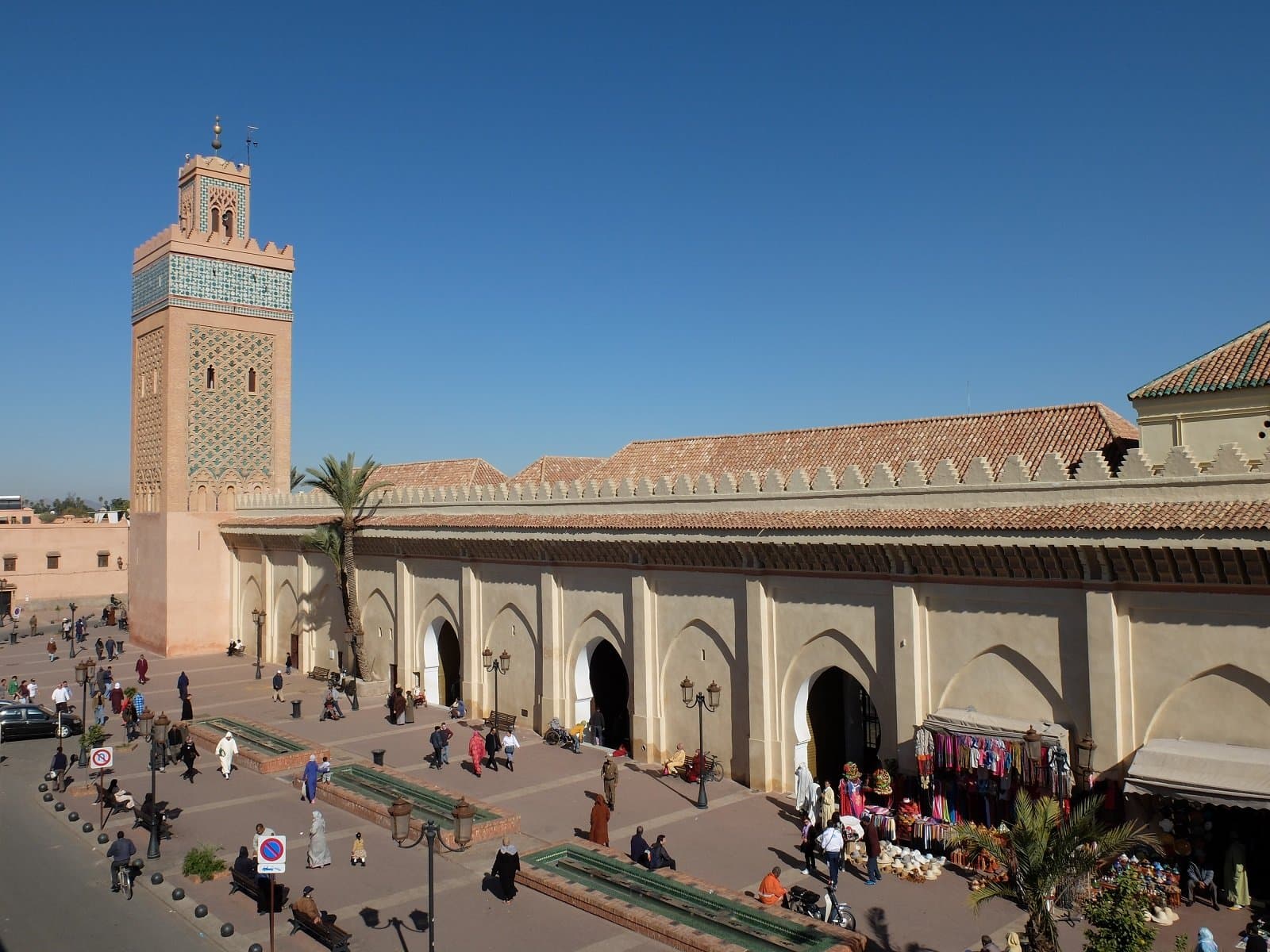
The Kasbah Mosque: A Net of Brick and Green Tile
A minaret built in brick on a stone base, carved into a net of diamonds and filled with green glazed tile, including the oldest surviving tile of its kind on any building here.
- 6
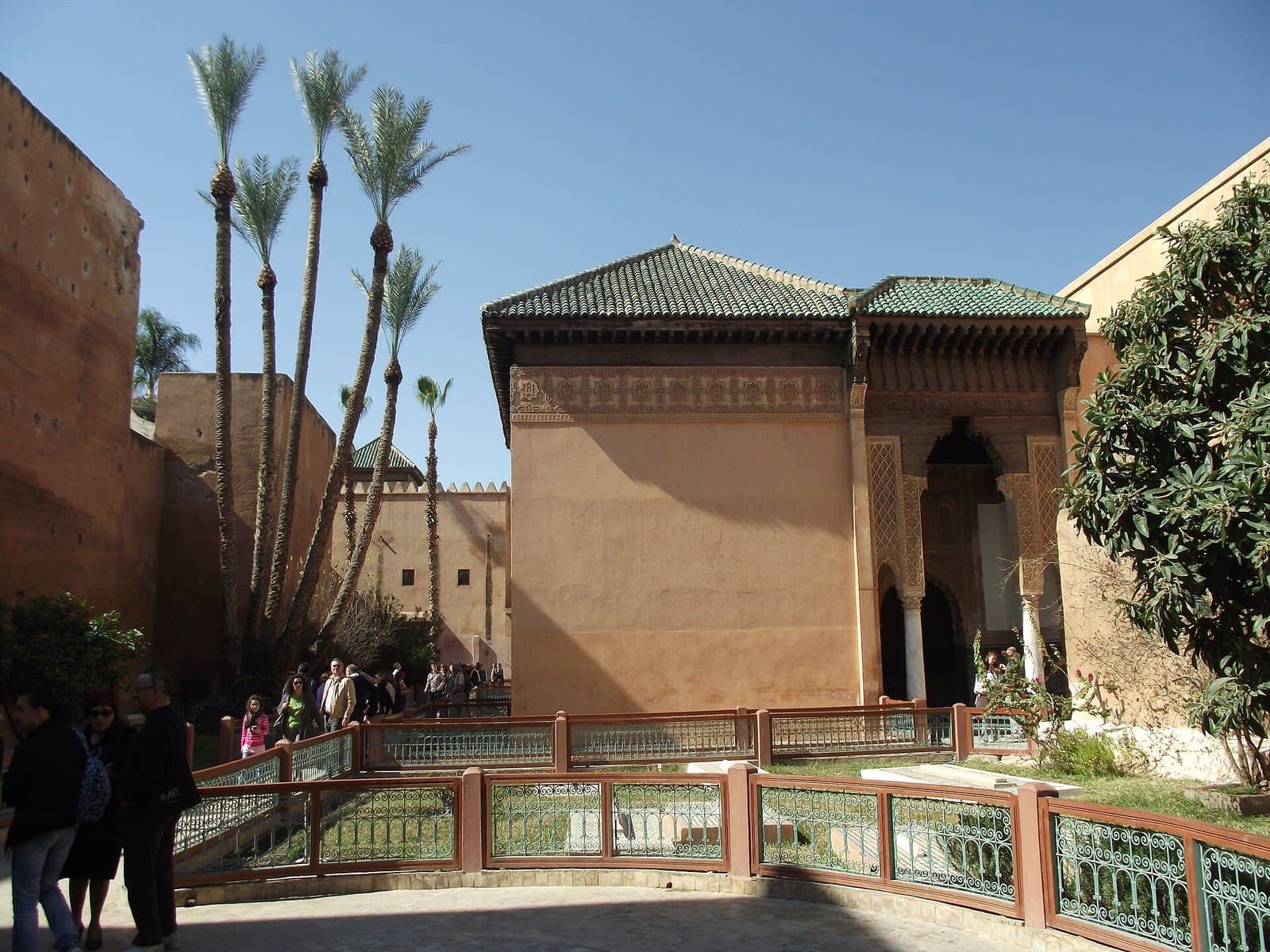
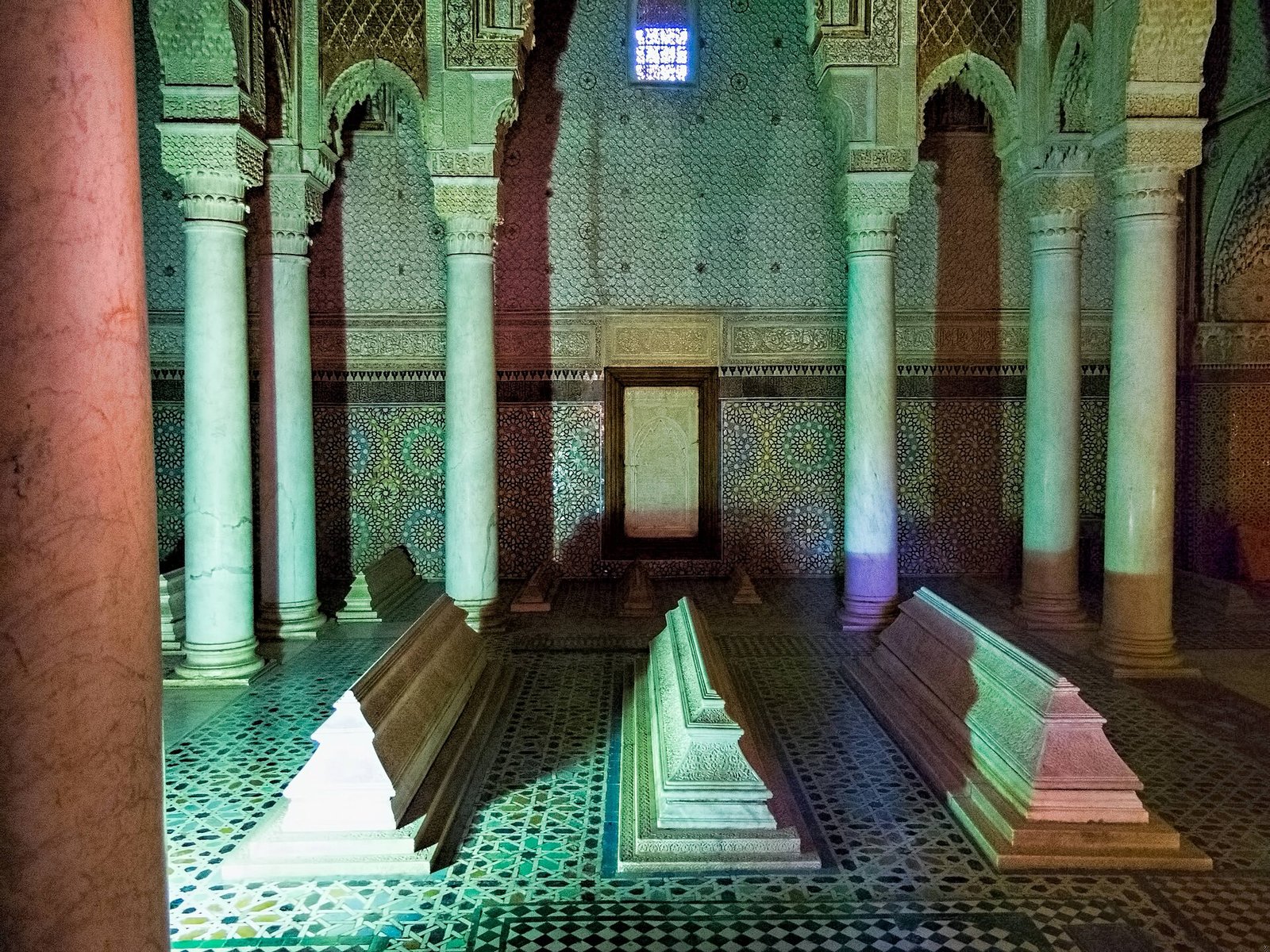
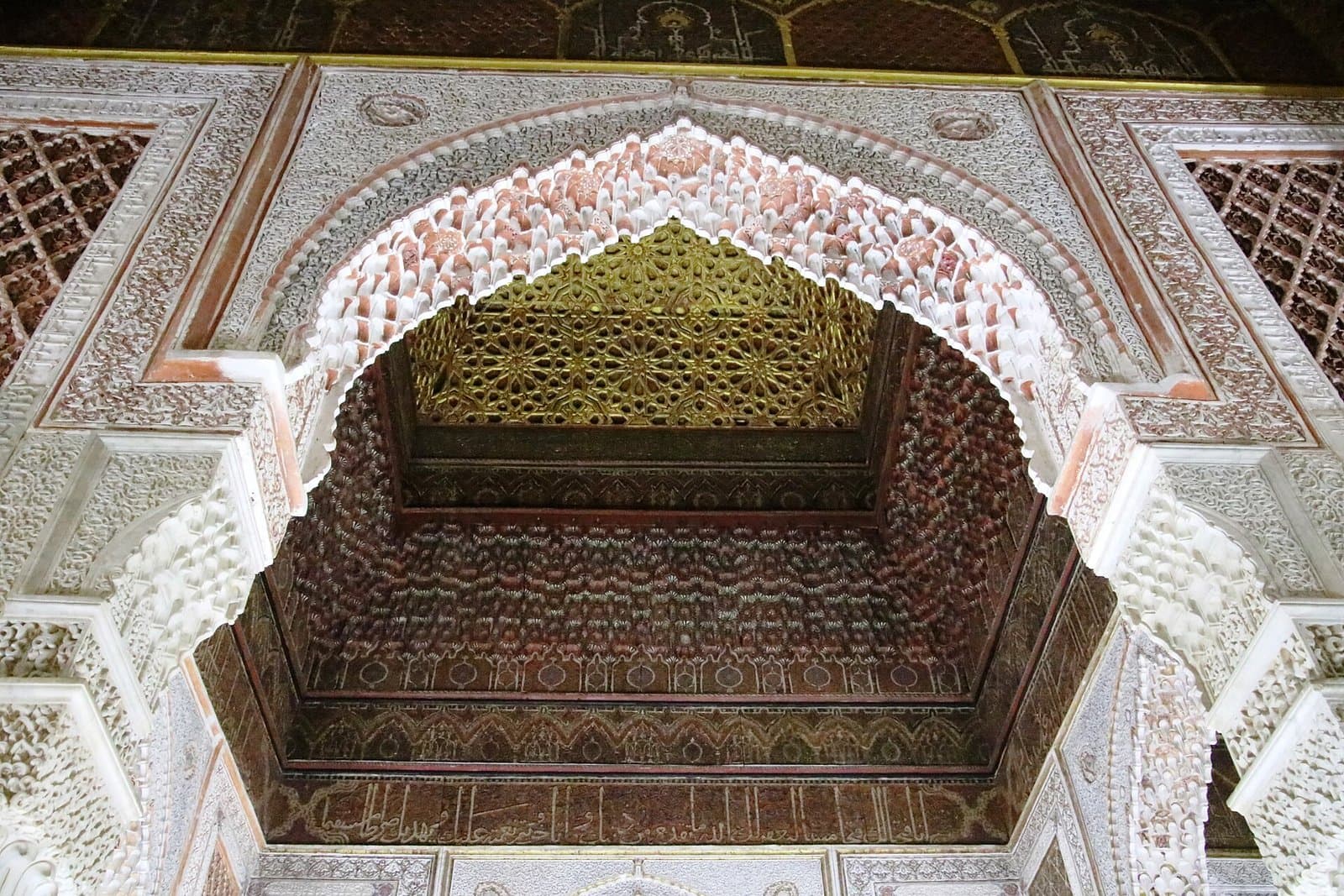
The Saadian Tombs: Twelve Marble Columns Behind a Blank Wall
A royal burial ground behind a blank wall. Ticketed: a hall of twelve marble columns, a carved cedar ceiling, and gardens of tiled graves.
- 7
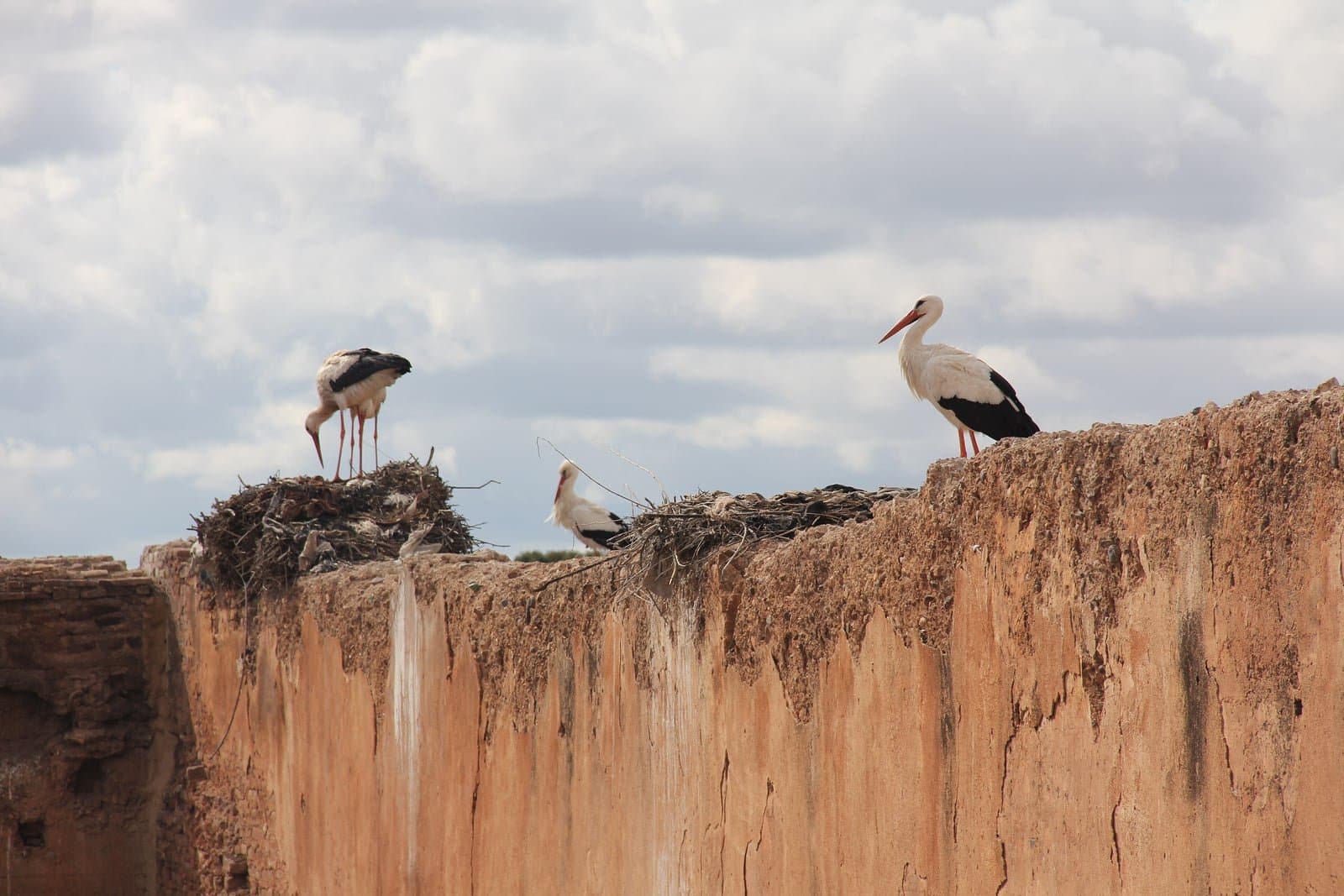
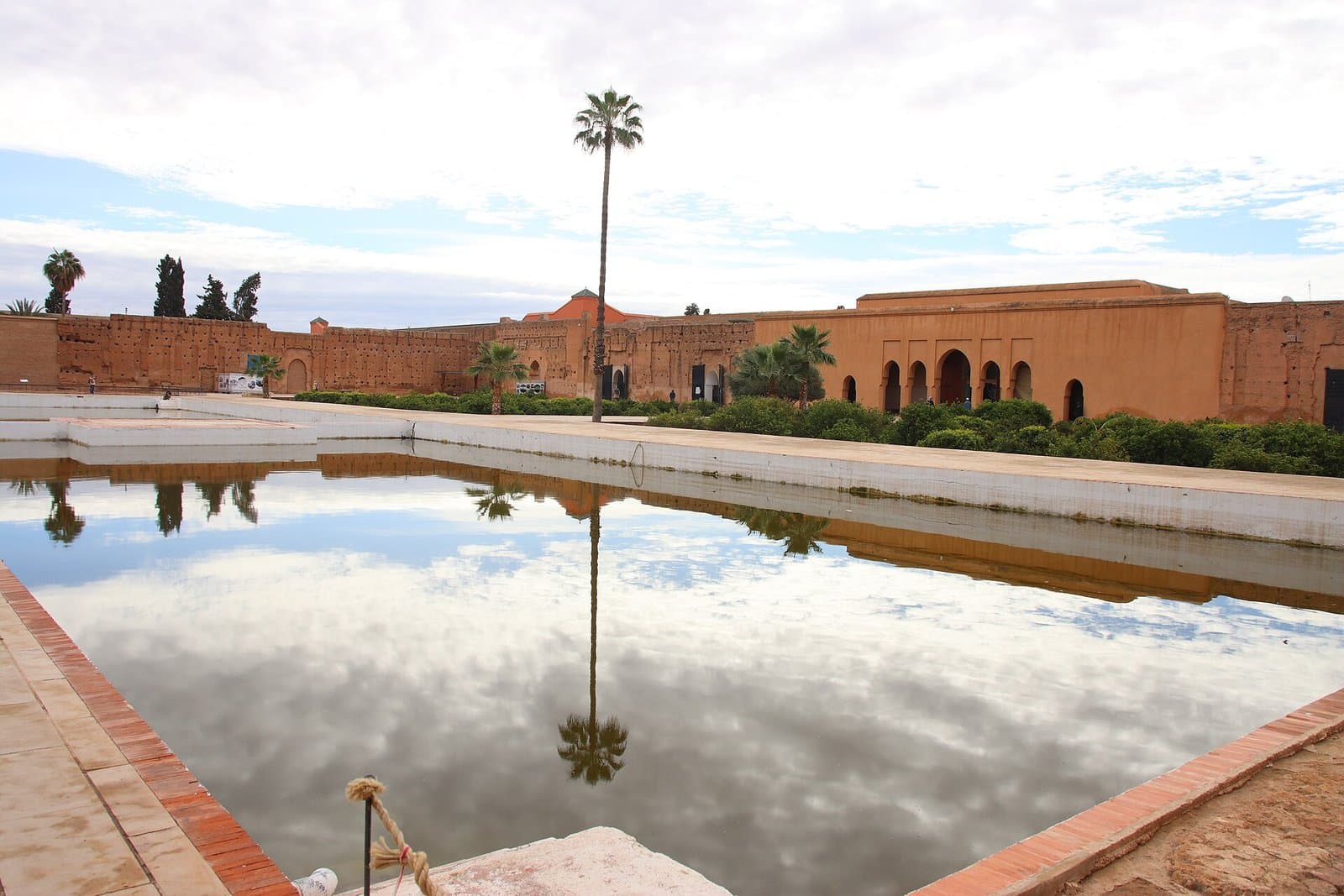
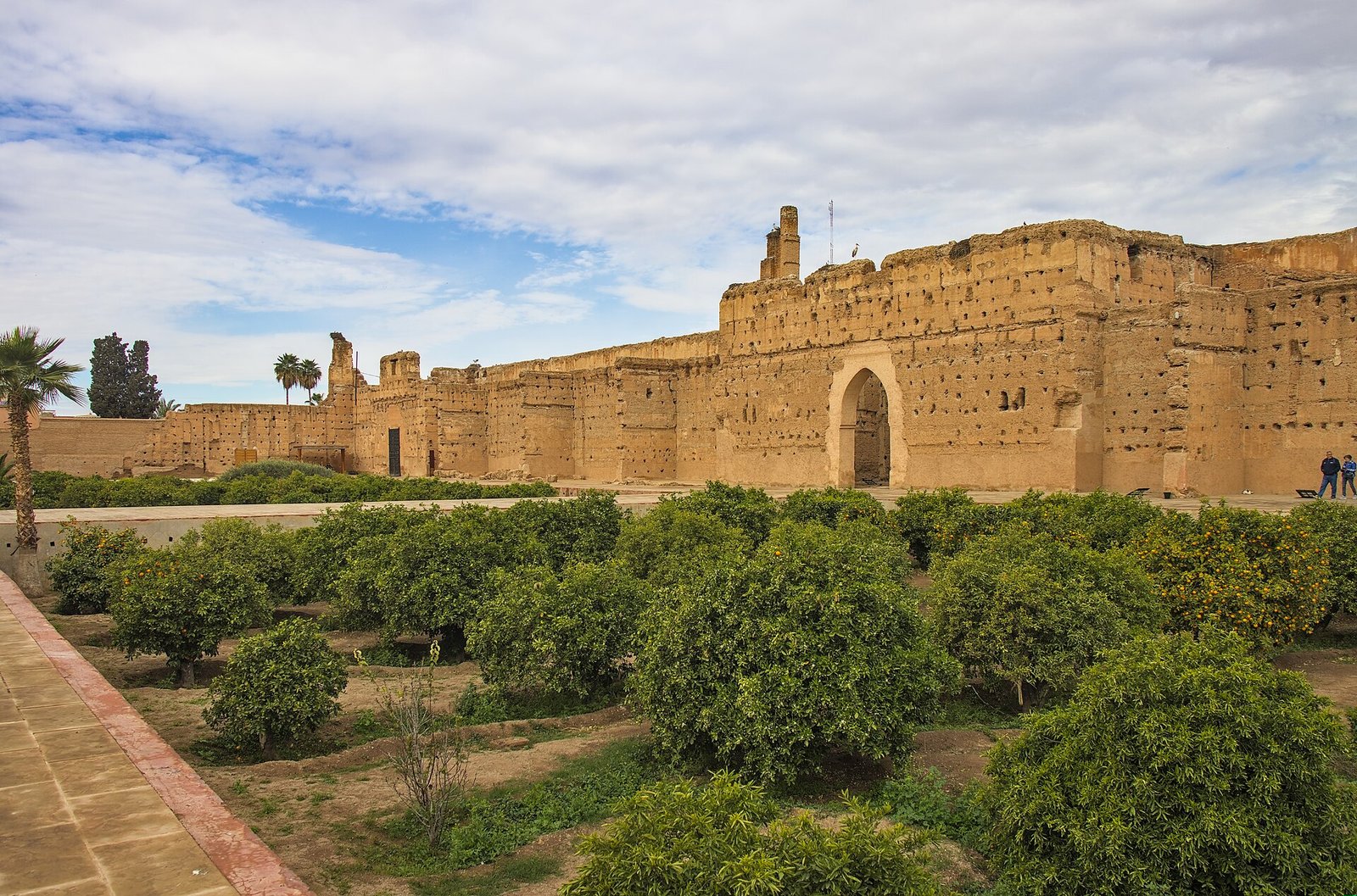
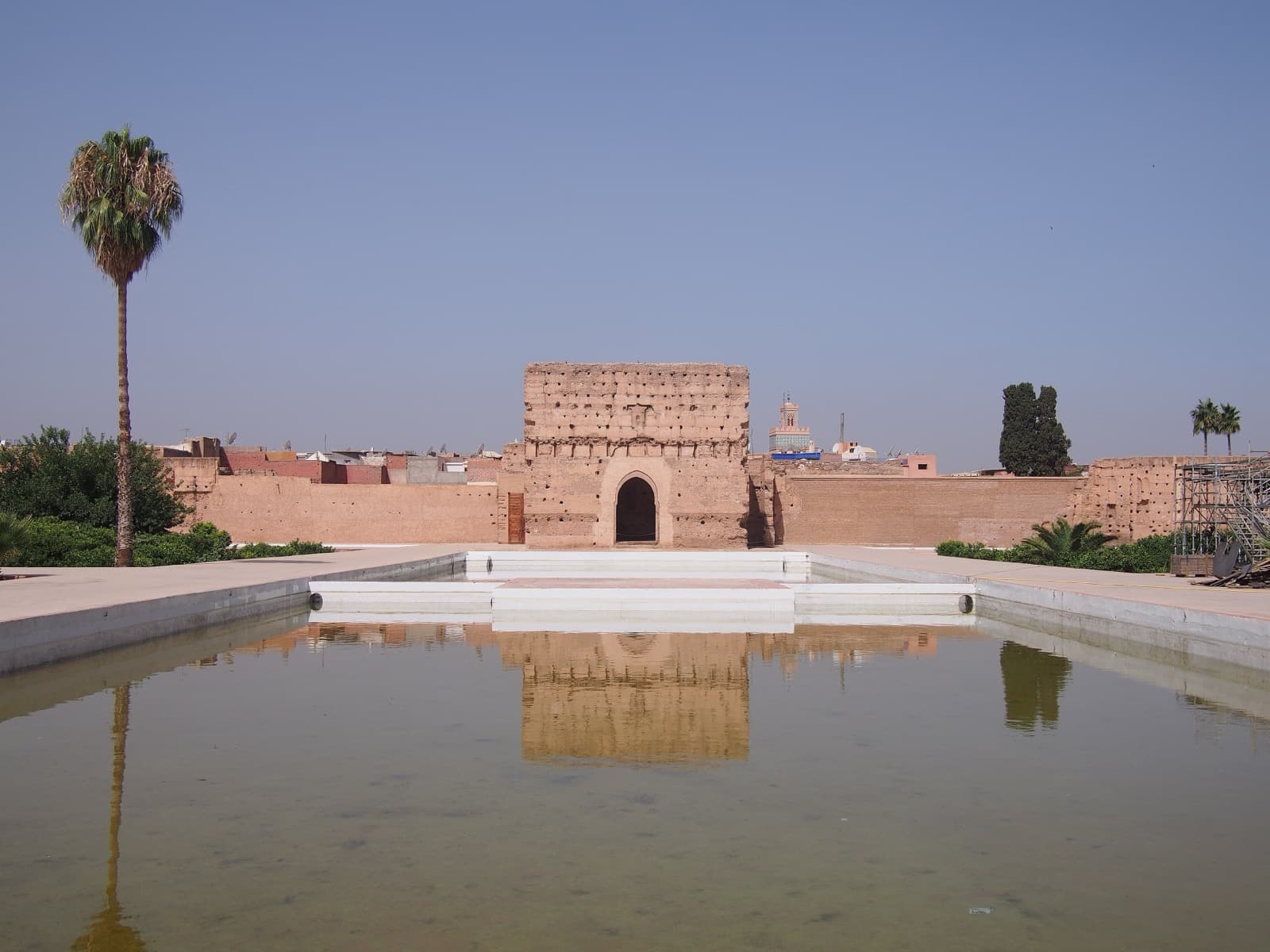
El Badi Palace: Earth Walls That Once Wore Marble
Bare earth walls of the Incomparable palace. Ticketed: a vast court of sunken gardens and pools, stripped of its marble around 1700, now home to storks.
- 8
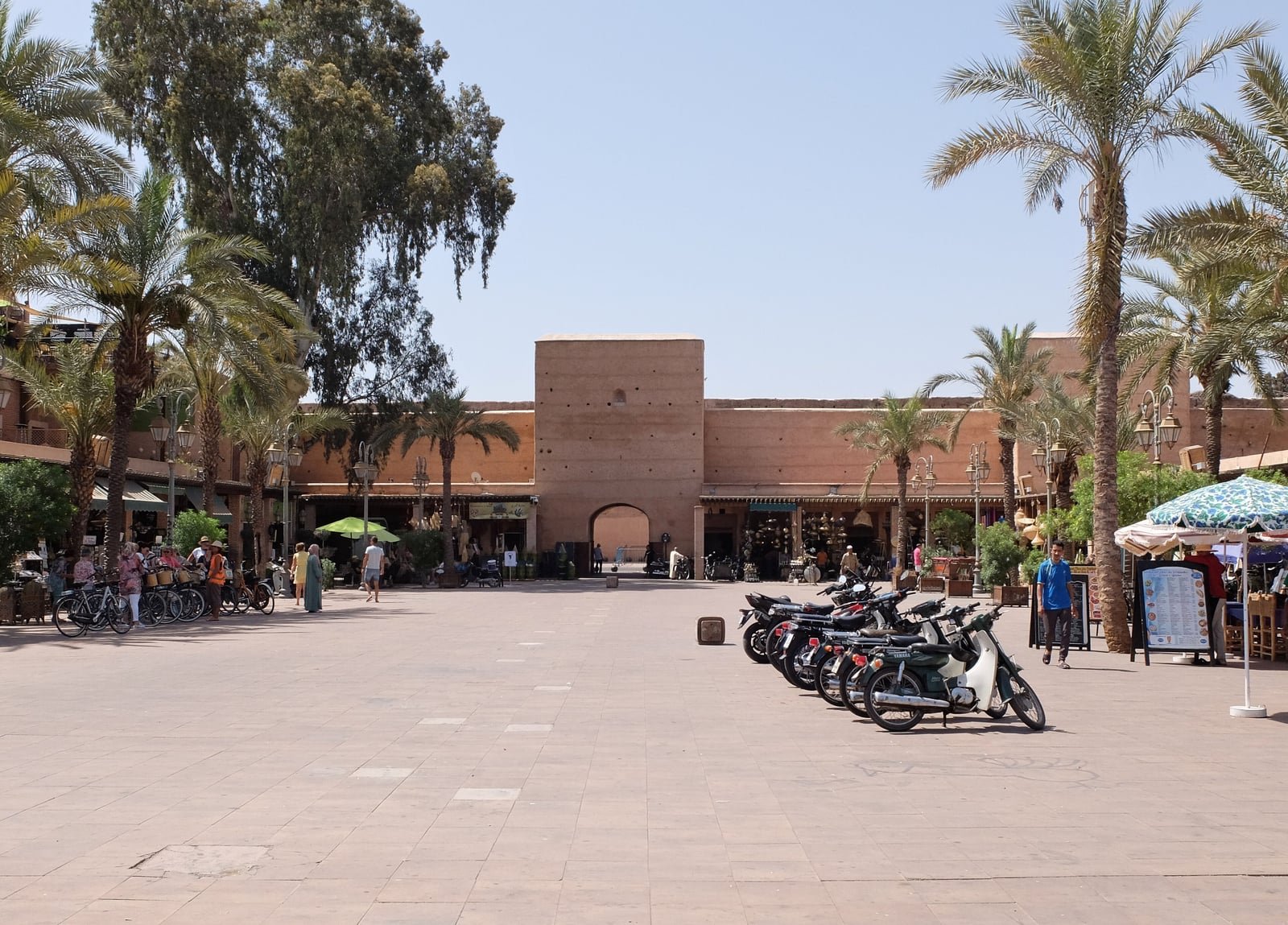
Tinsmiths' Square: Pierced Metal and Light
Where the old city meets the royal quarter: a paved square with a few metal workshops, pierced lanterns that throw star patterns, and the Jewish quarter beginning just beyond.
- 9
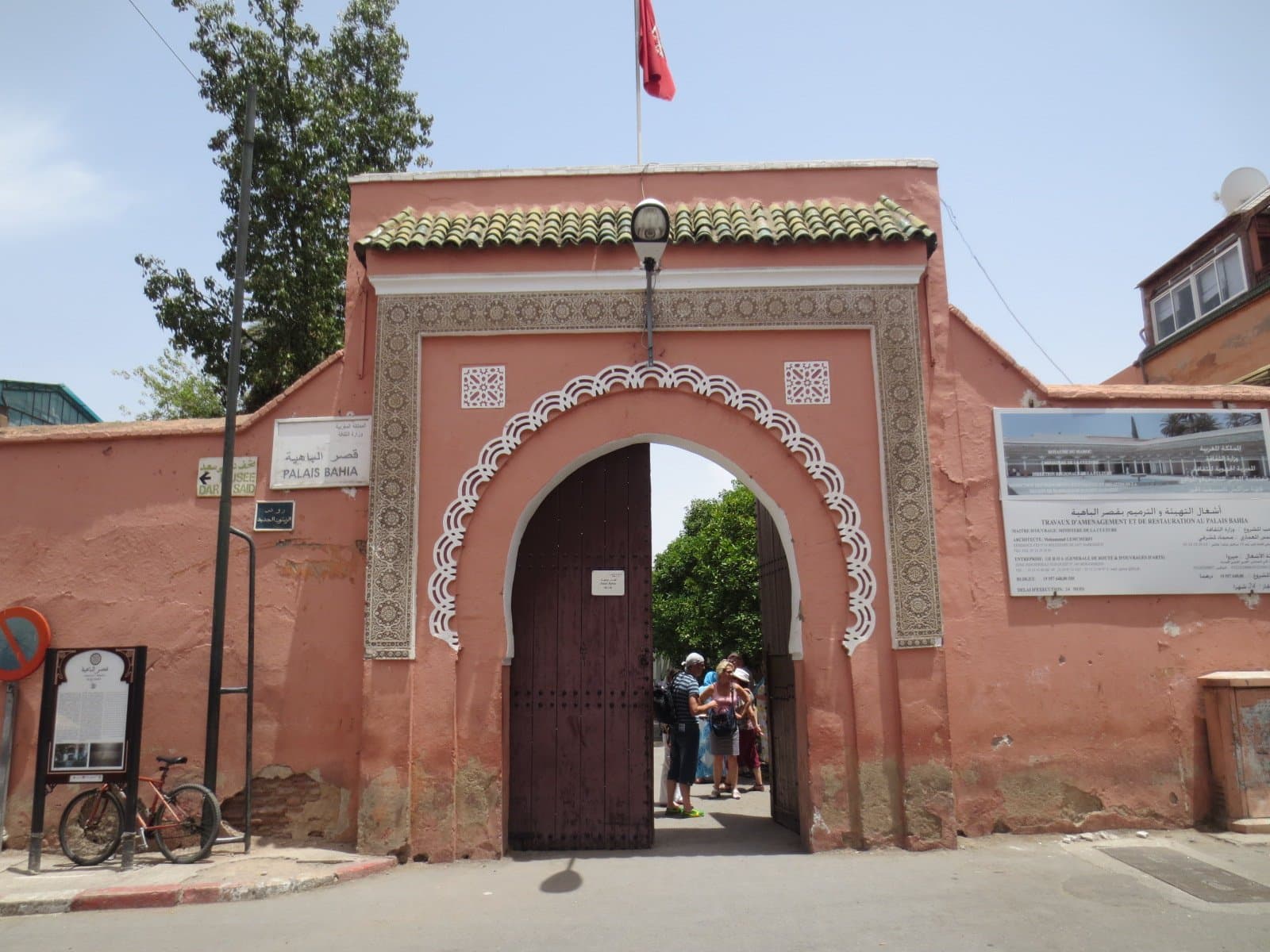
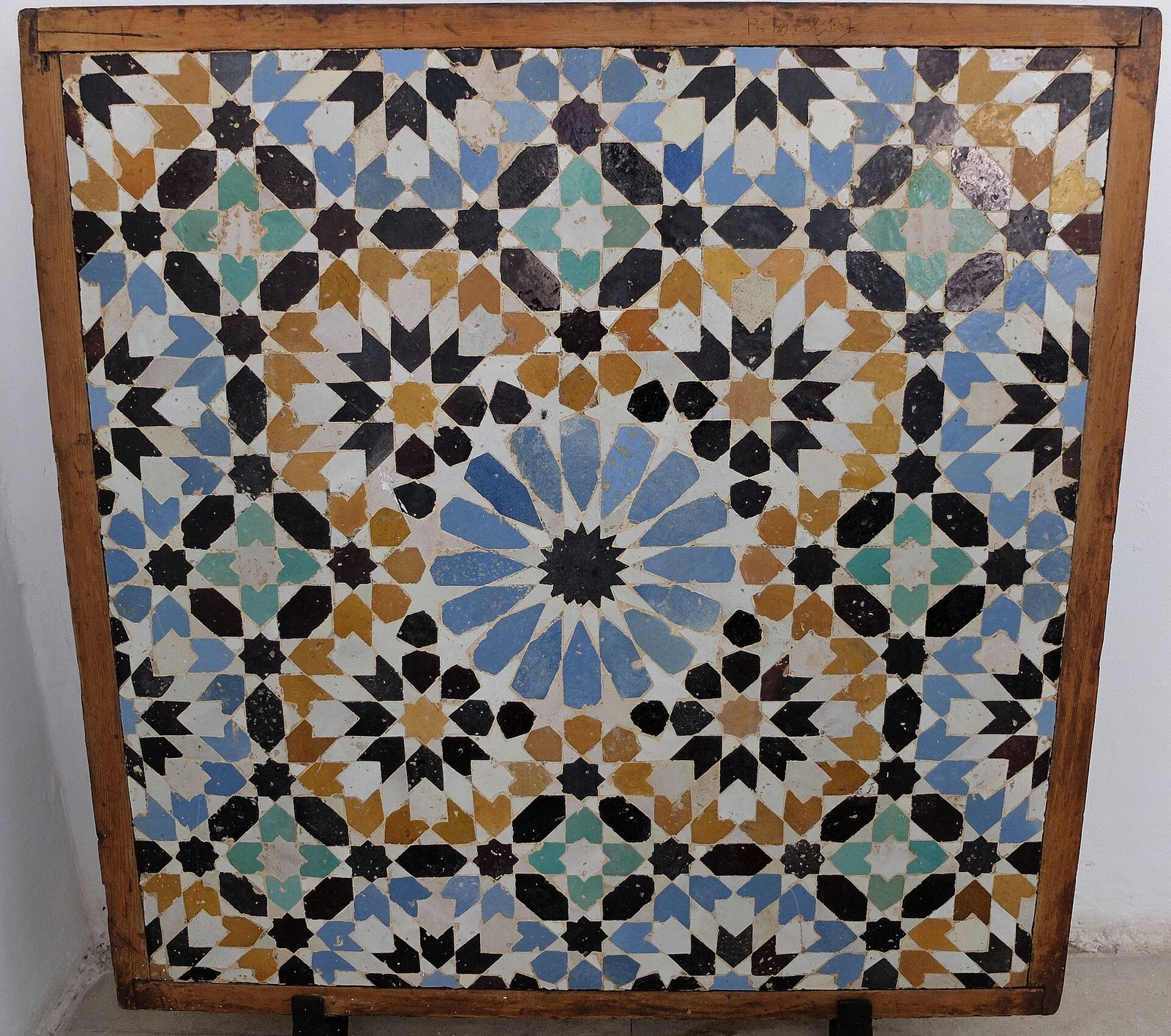
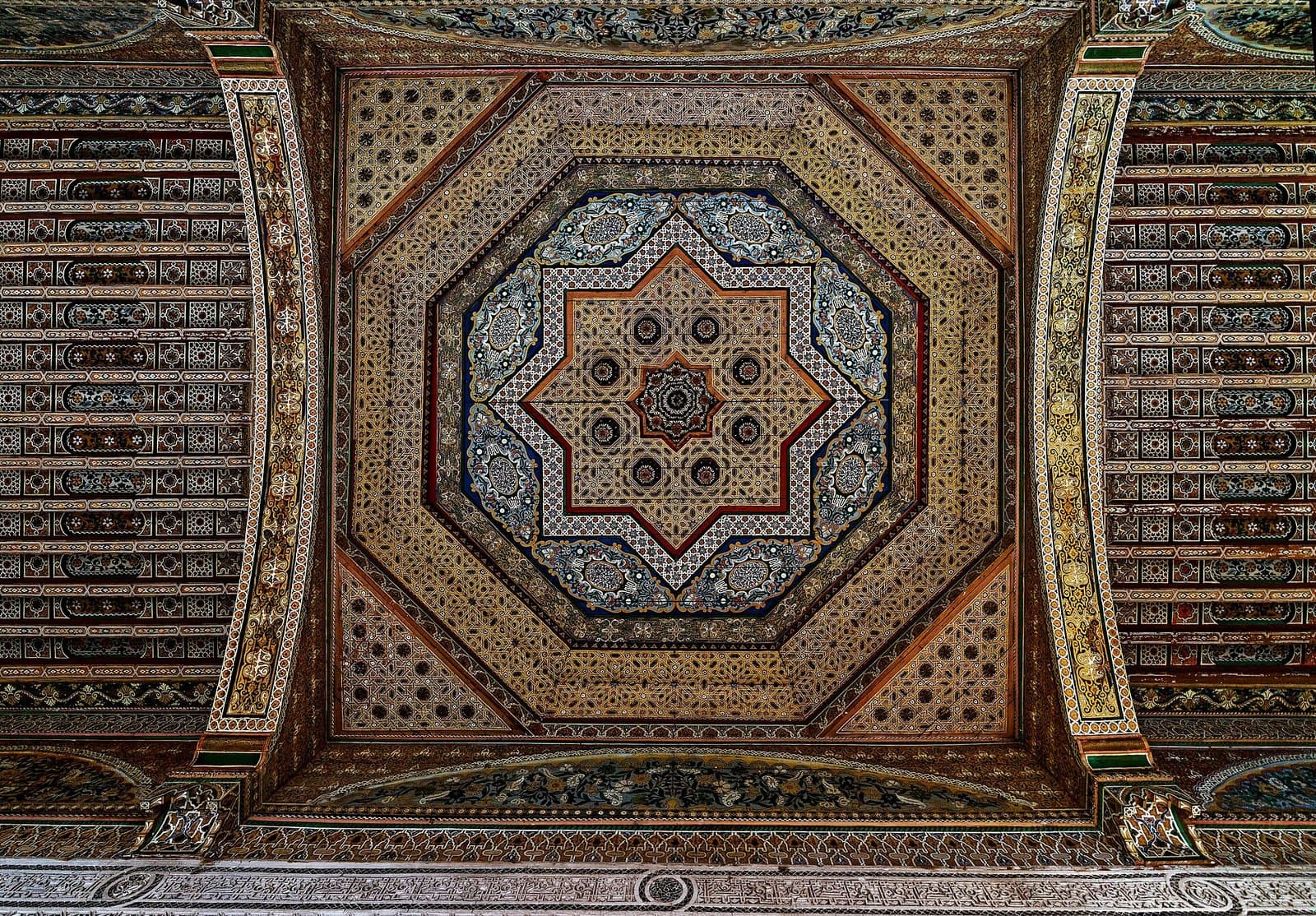
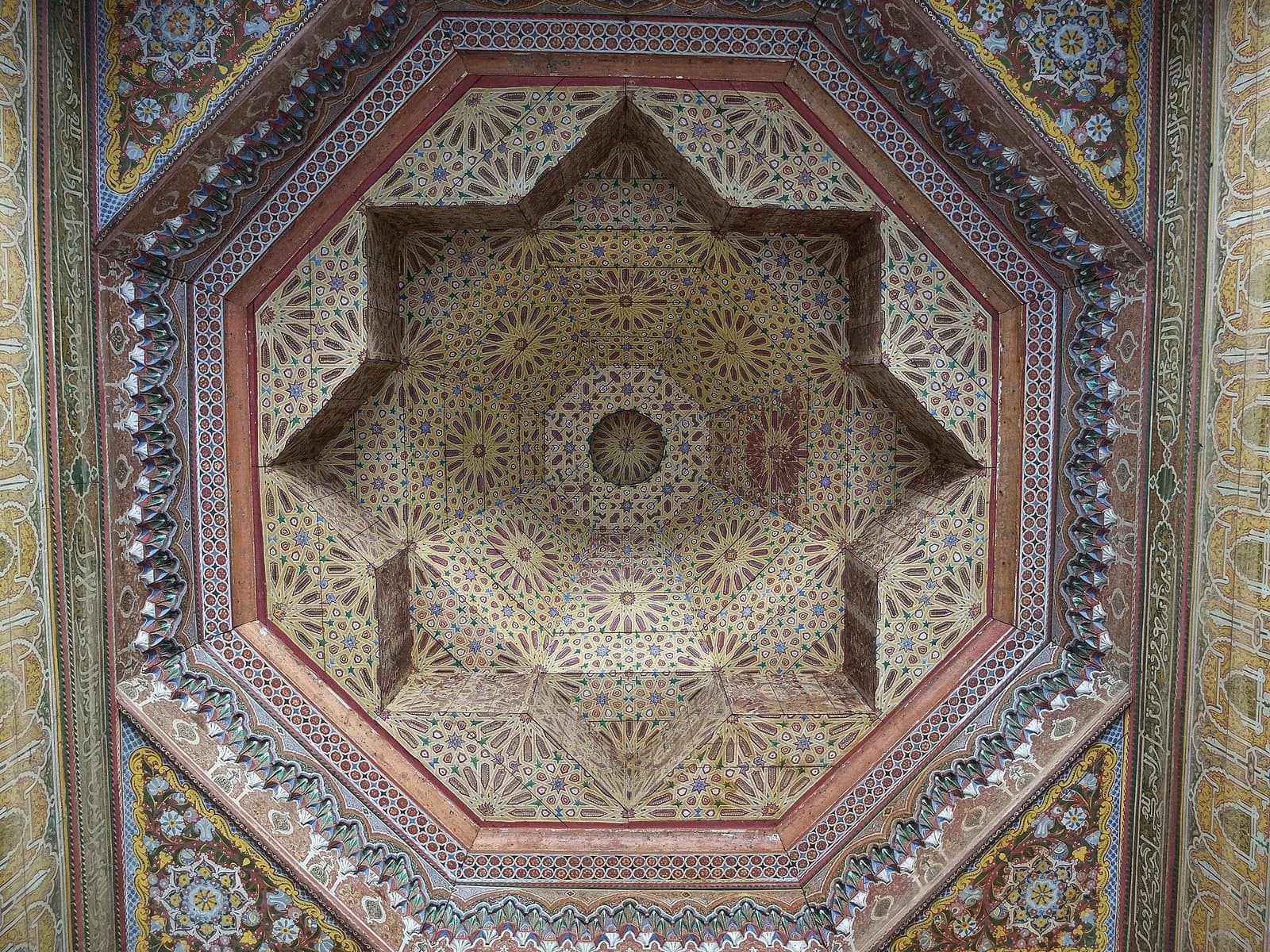
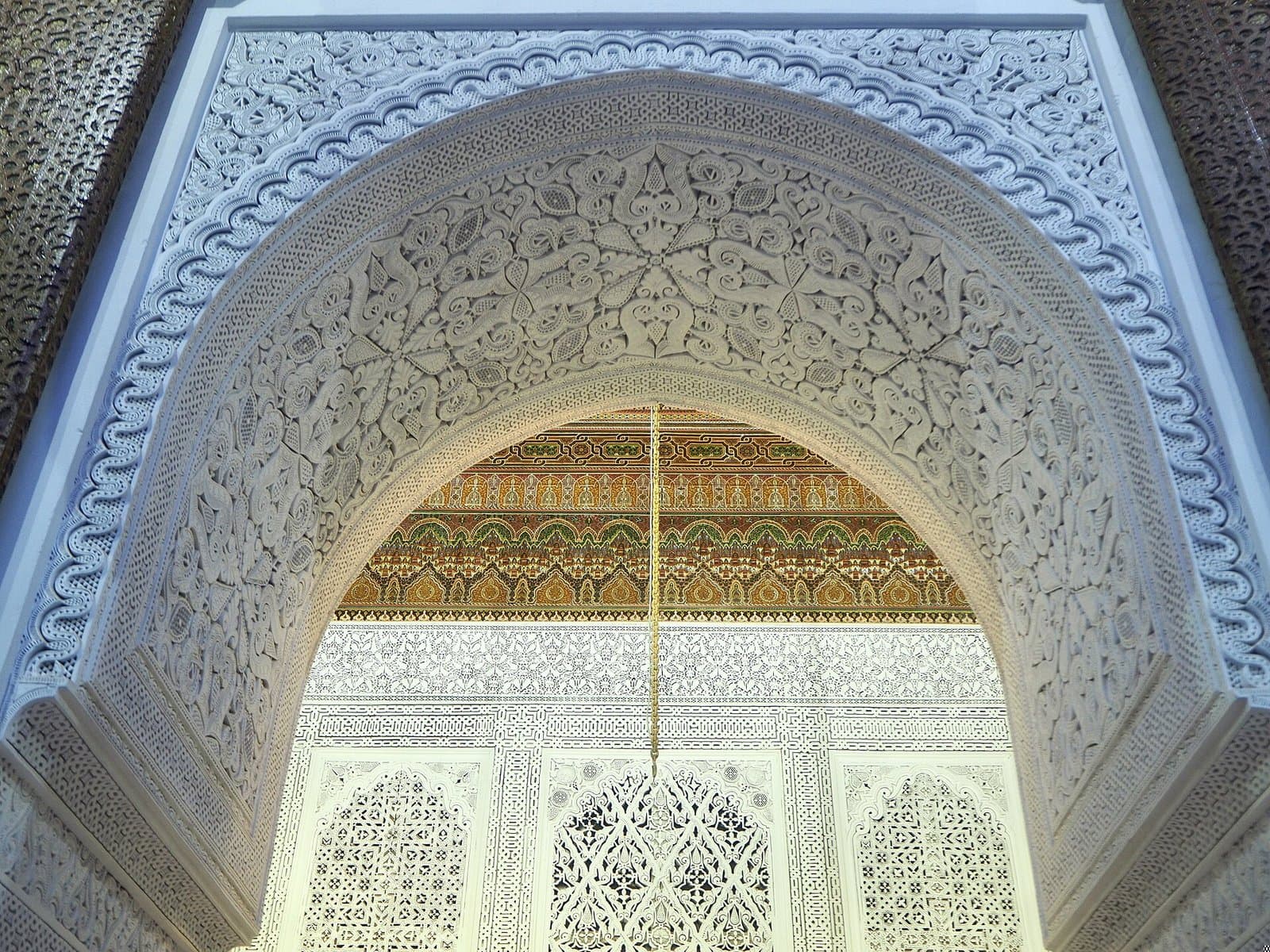
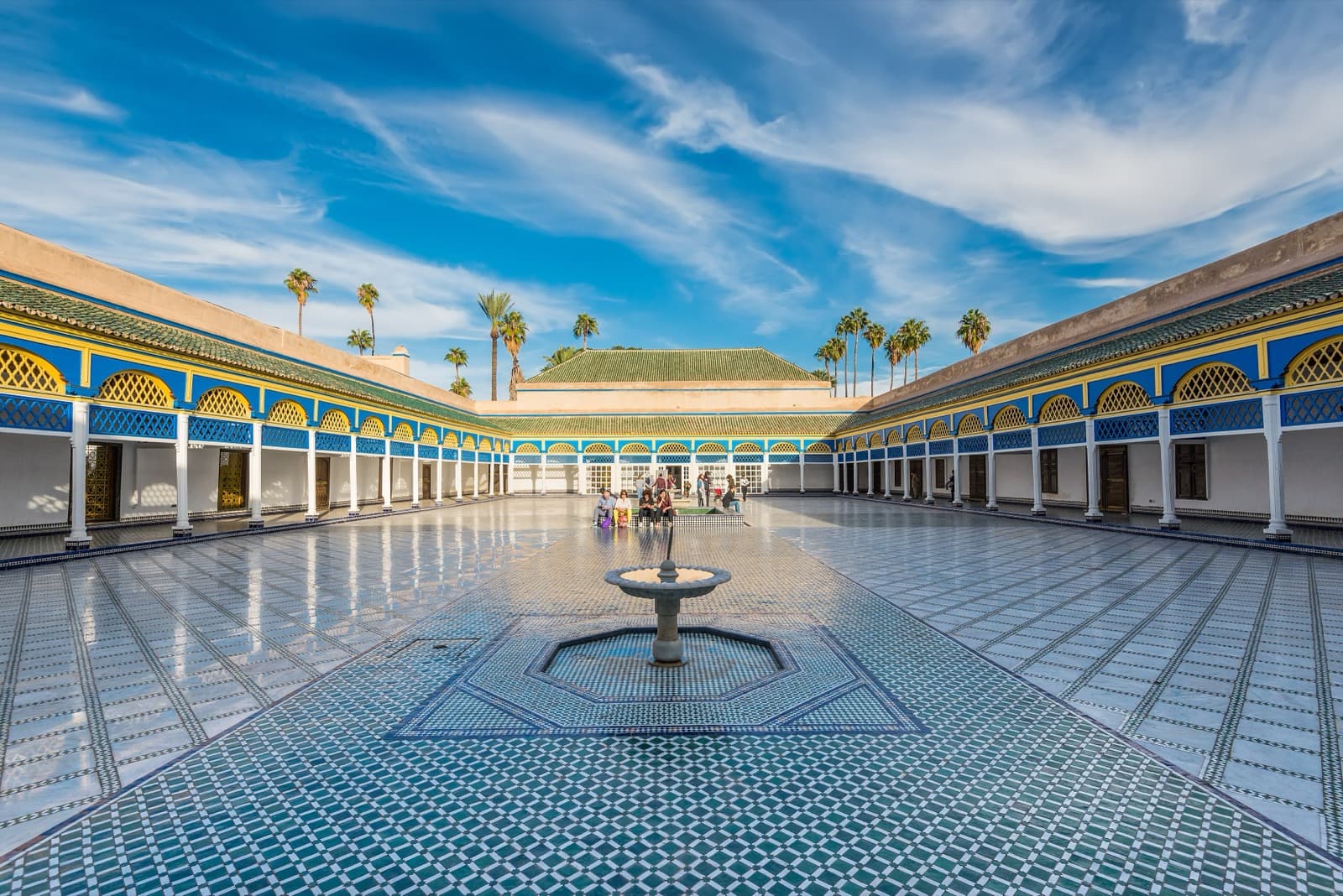
Bahia Palace: Tile, Plaster and Cedar, Bottom to Top
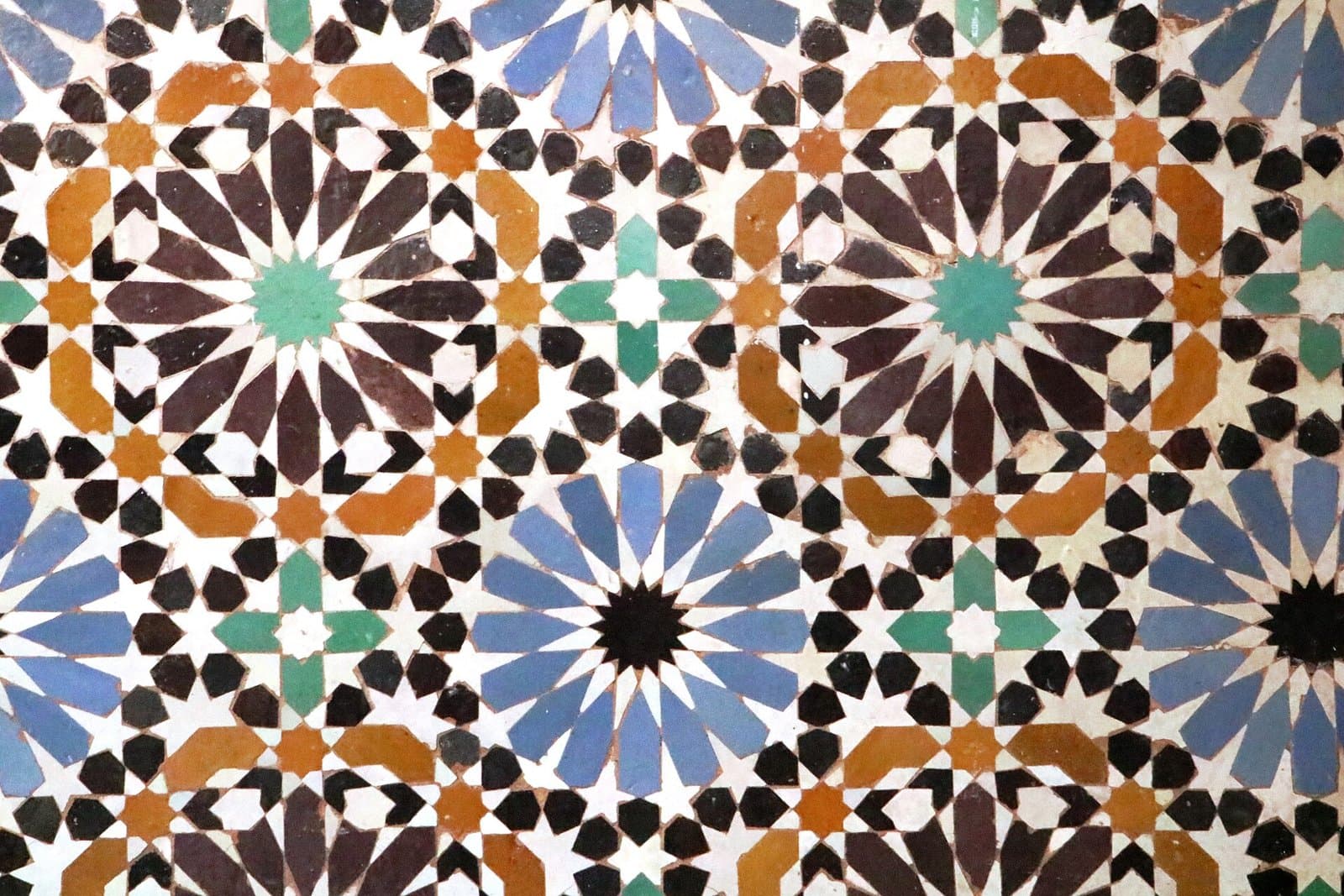
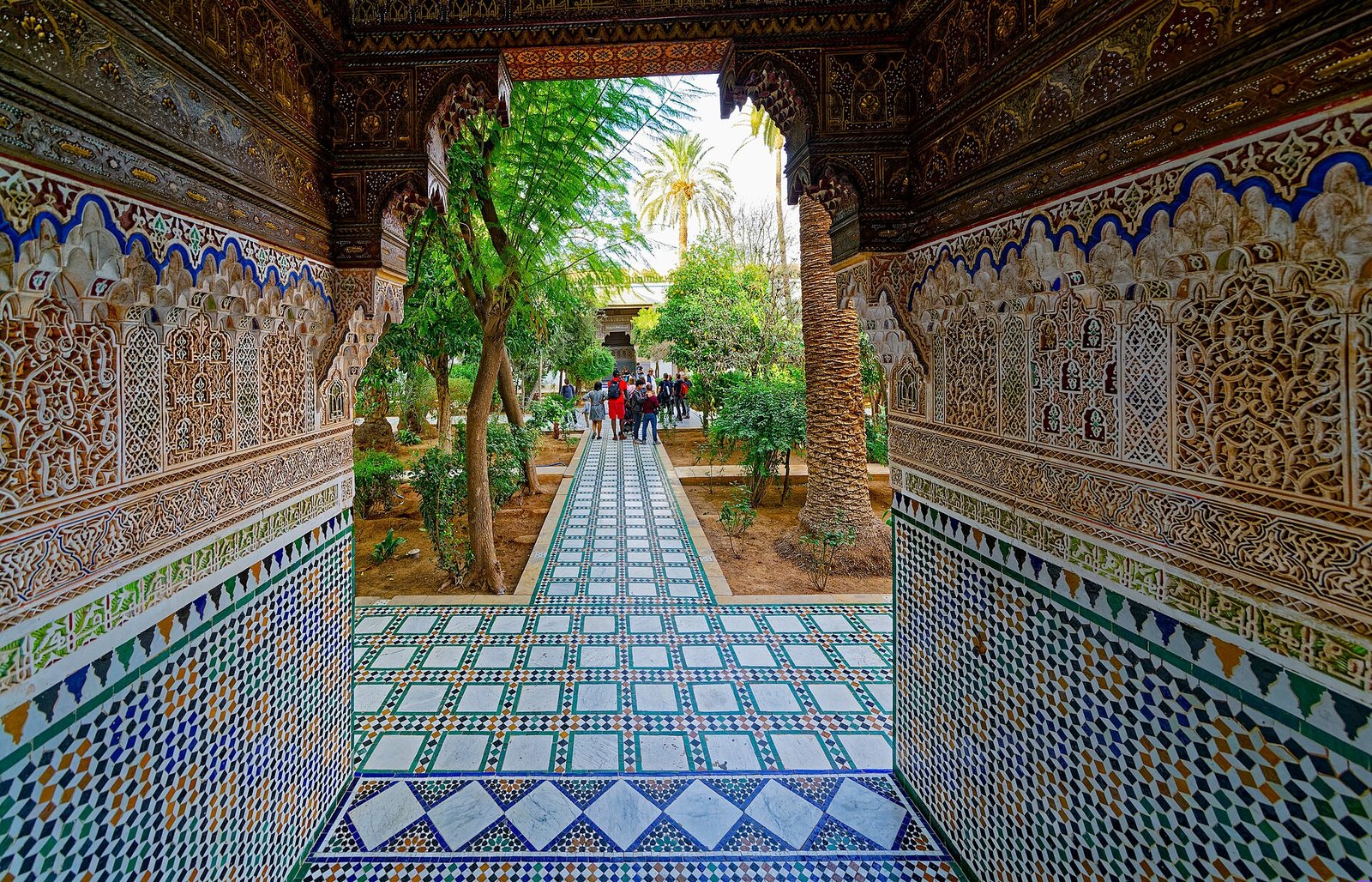
A palace that teaches Moroccan decoration. Ticketed: marble and tile underfoot, carved plaster on the walls, painted cedar overhead, brought from across Morocco.
- 10
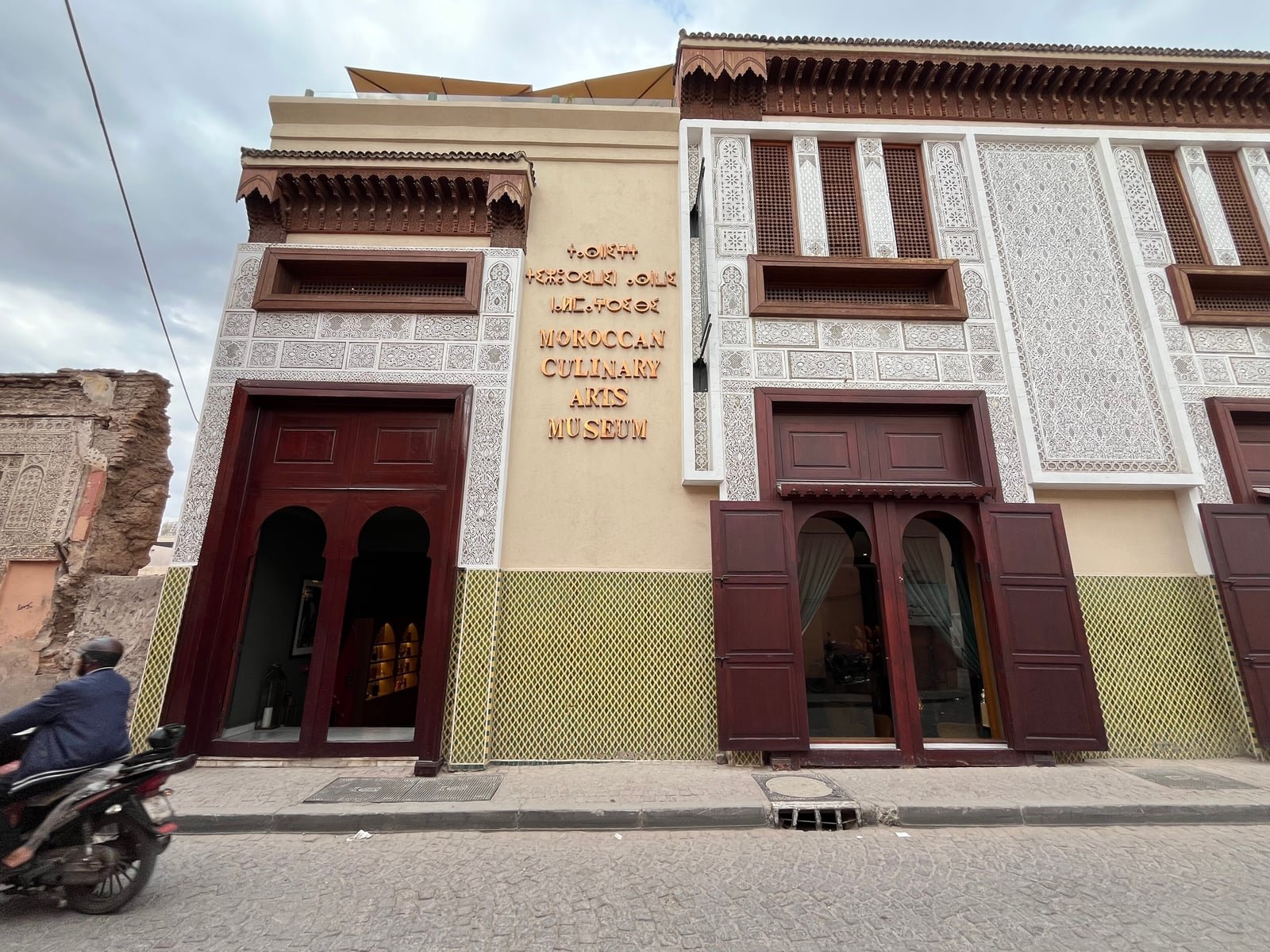
Dar Zniber: Inside a Courtyard House
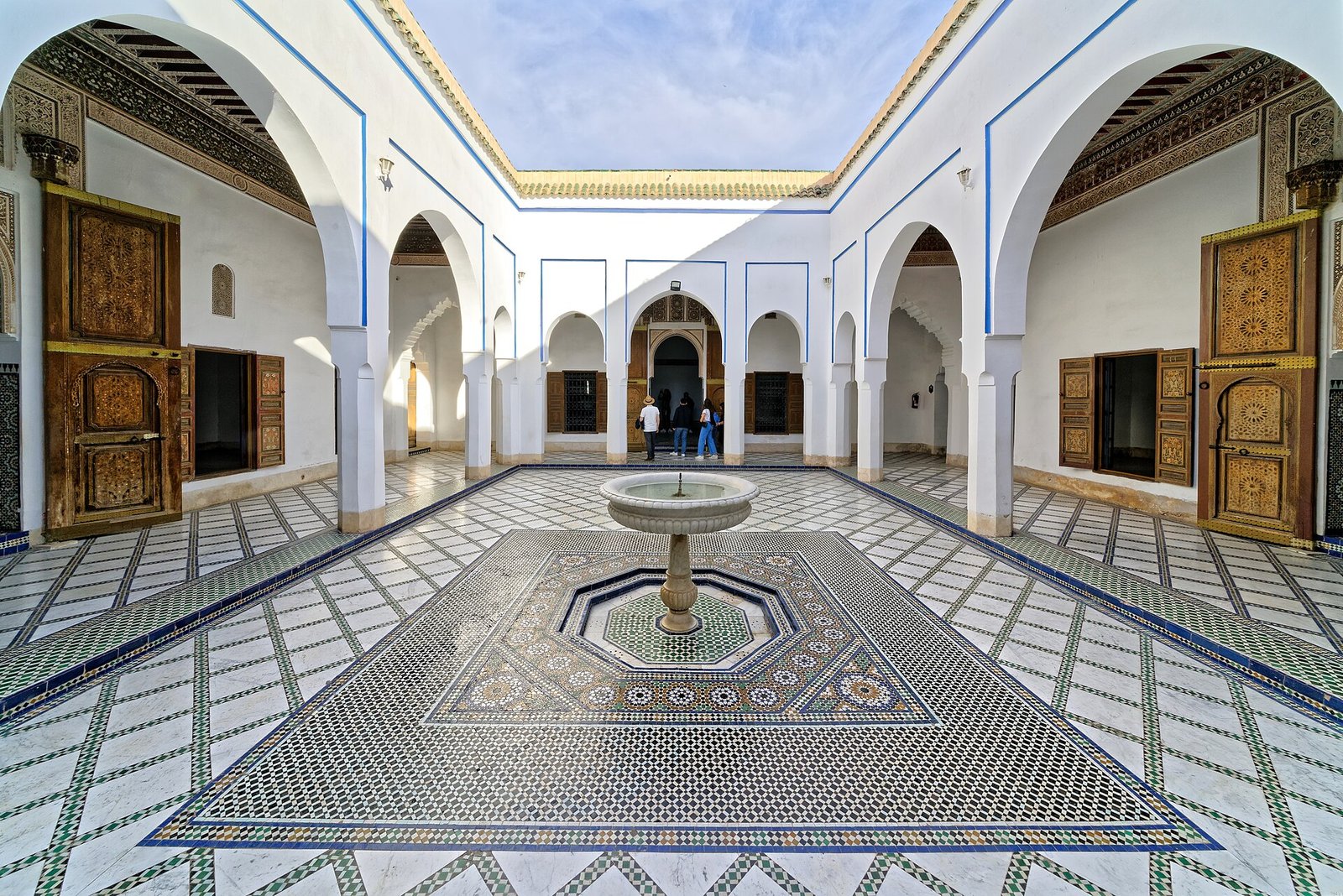
A courtyard house turned museum of Moroccan cooking. Ticketed, and the place to learn how a Marrakech house works: blank front, hidden courtyard, fountain and olive trees.
- 11
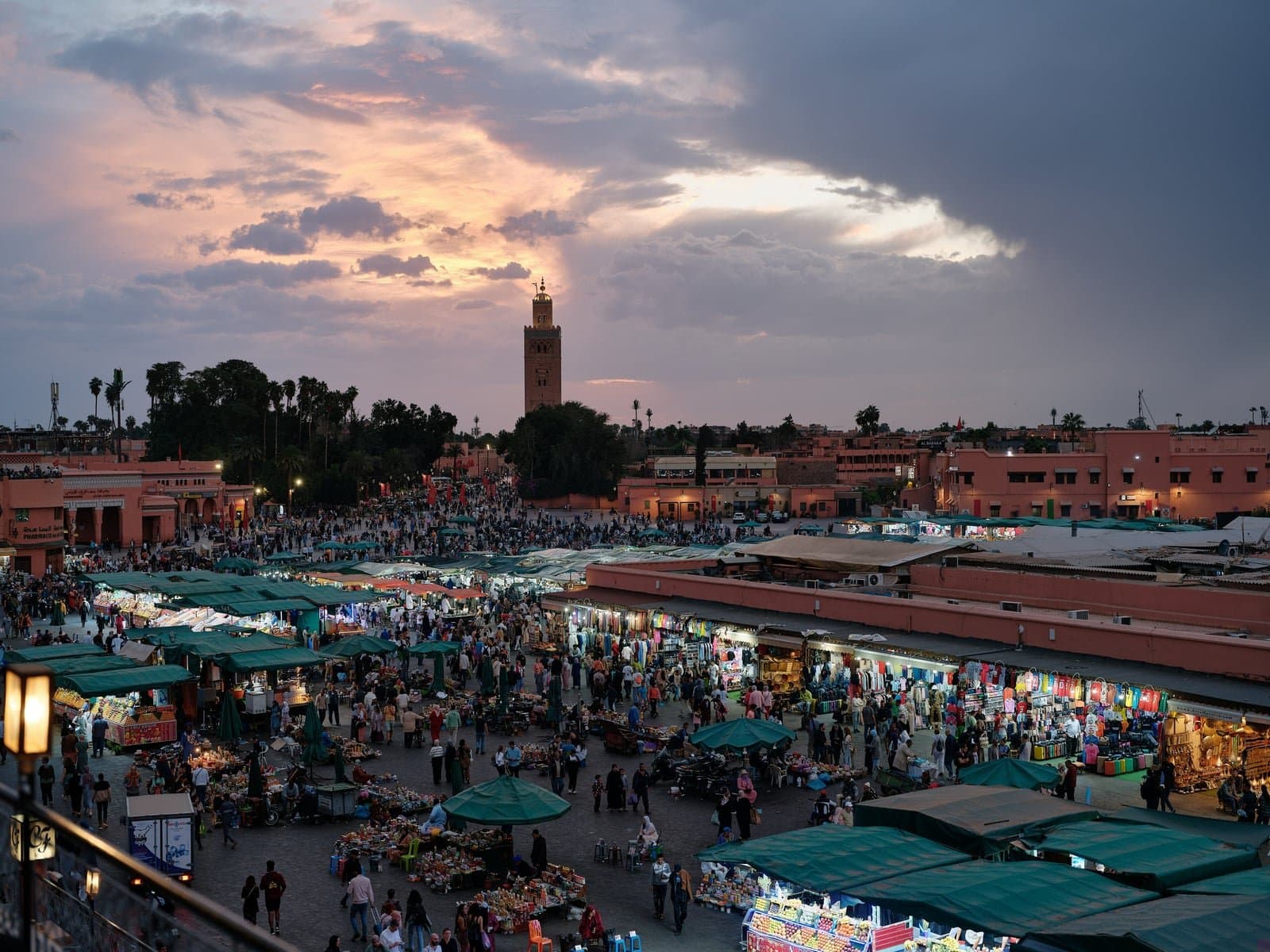
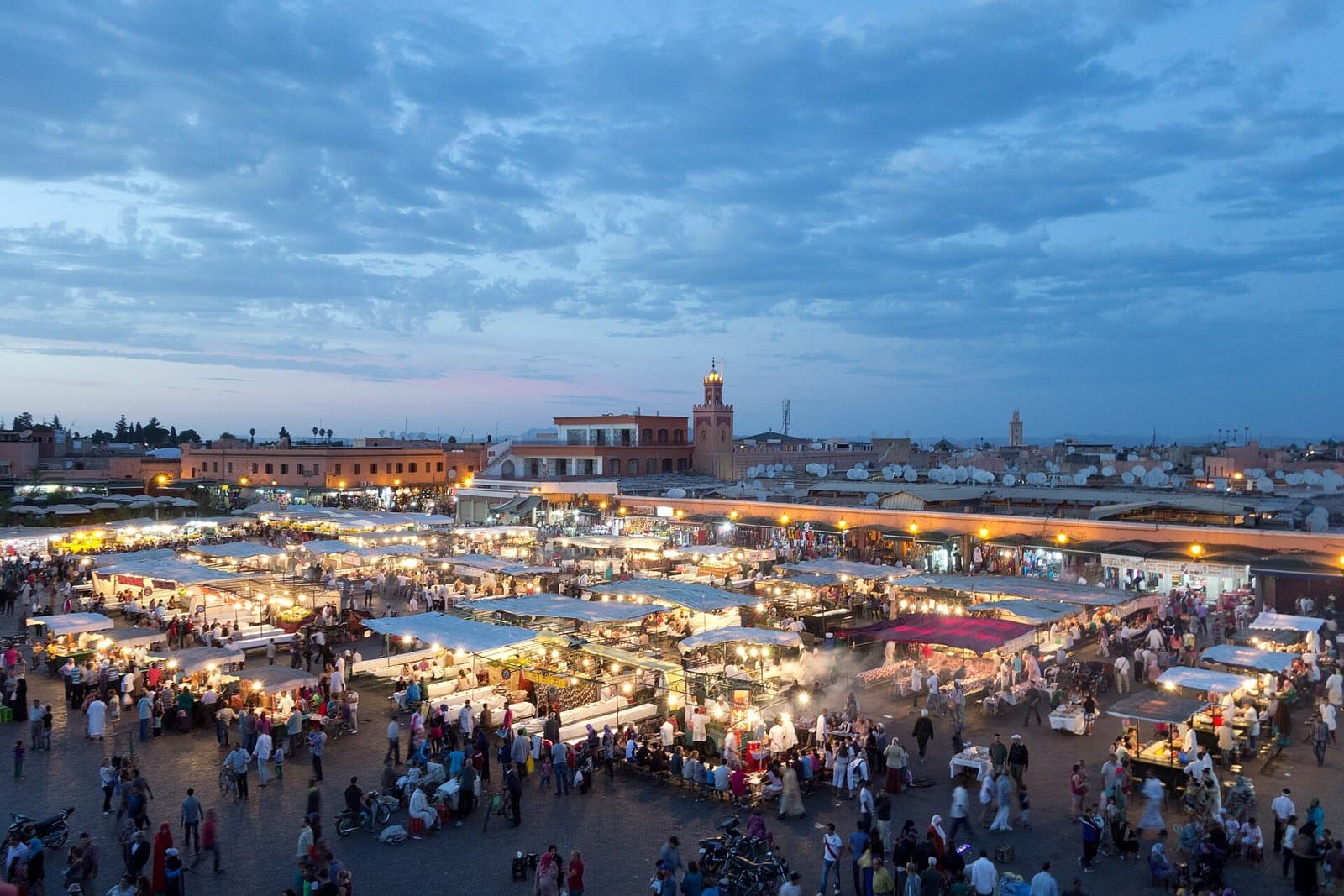
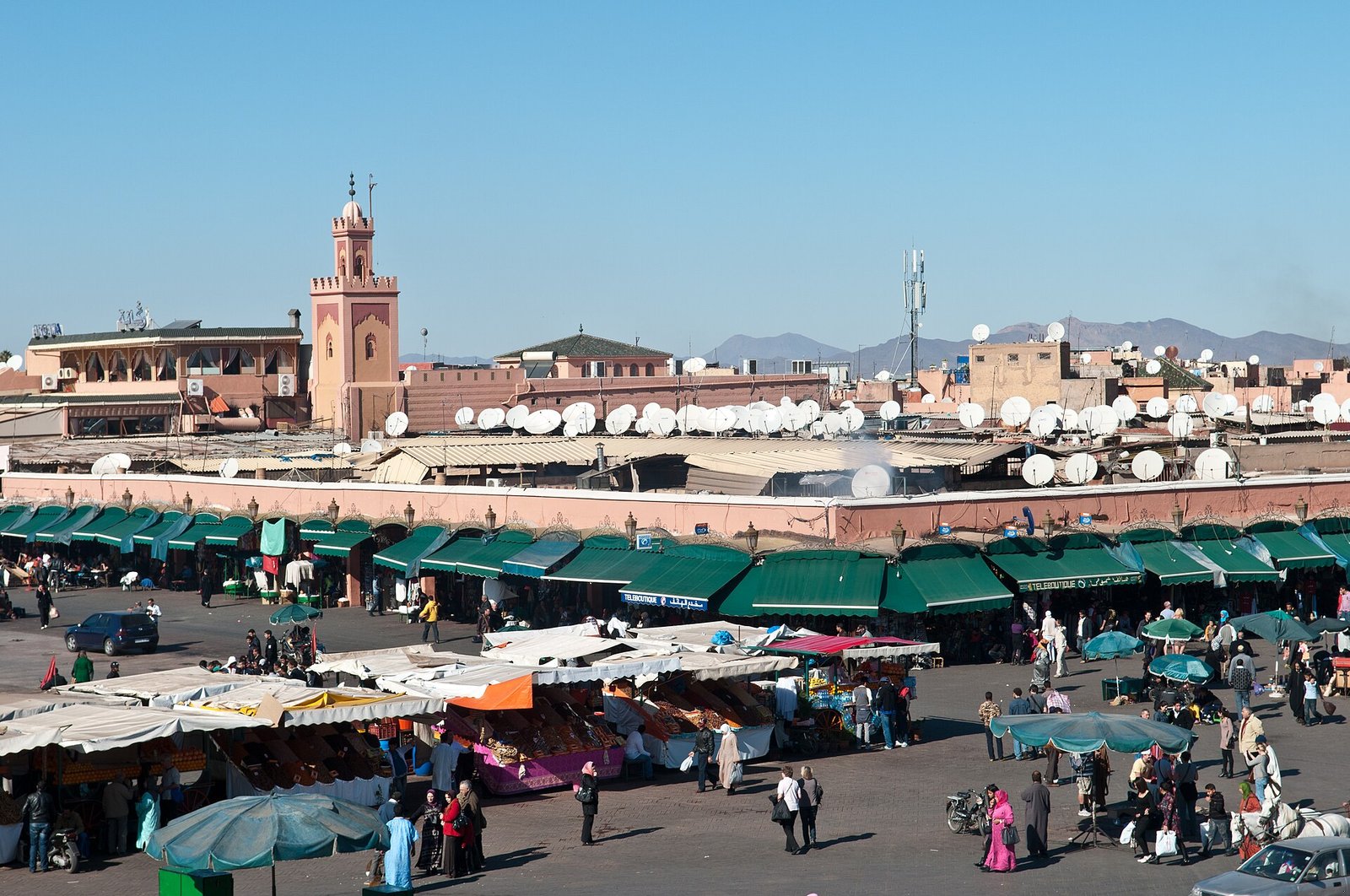
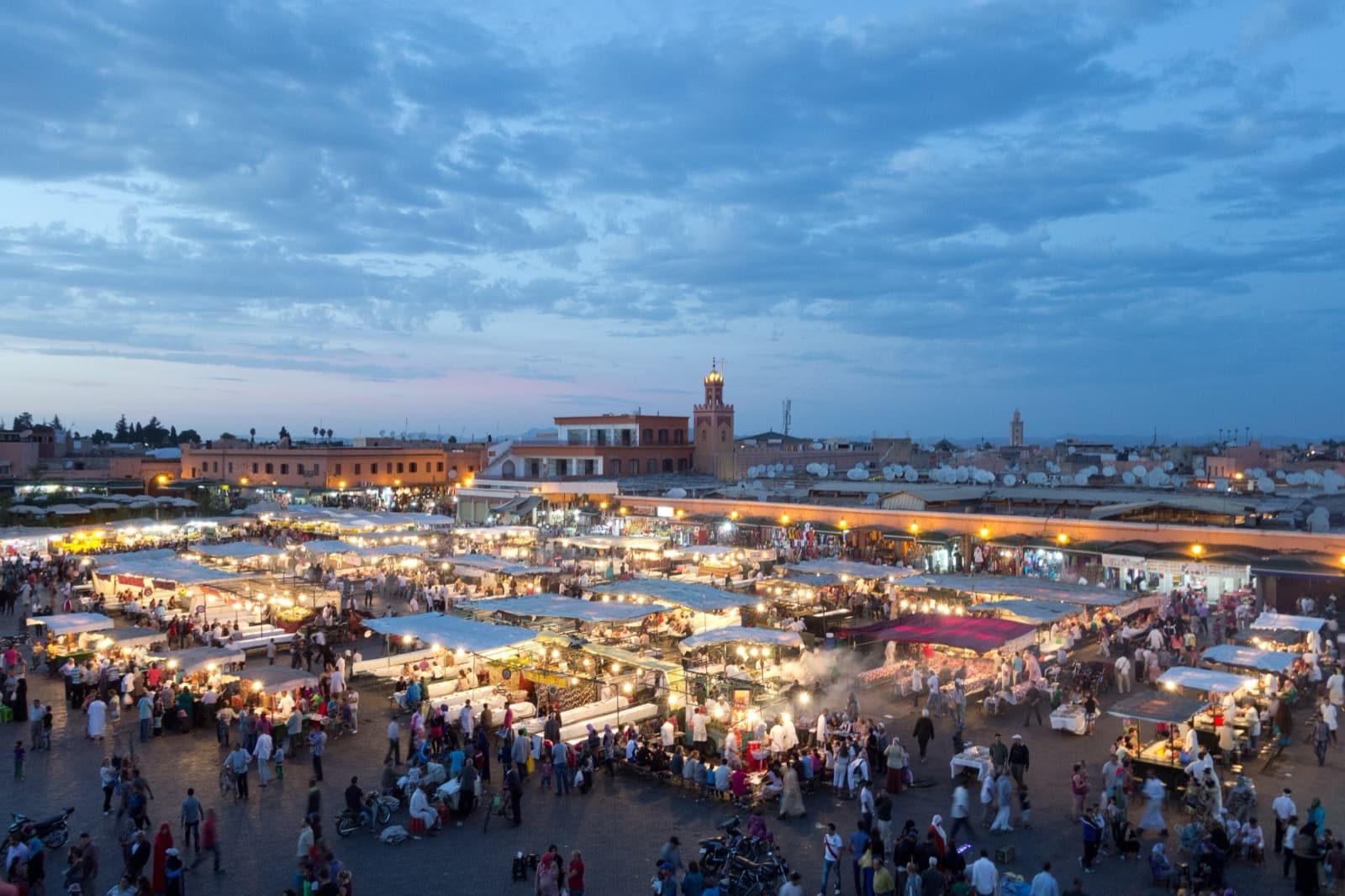
Jemaa el-Fnaa: The Great Open Square
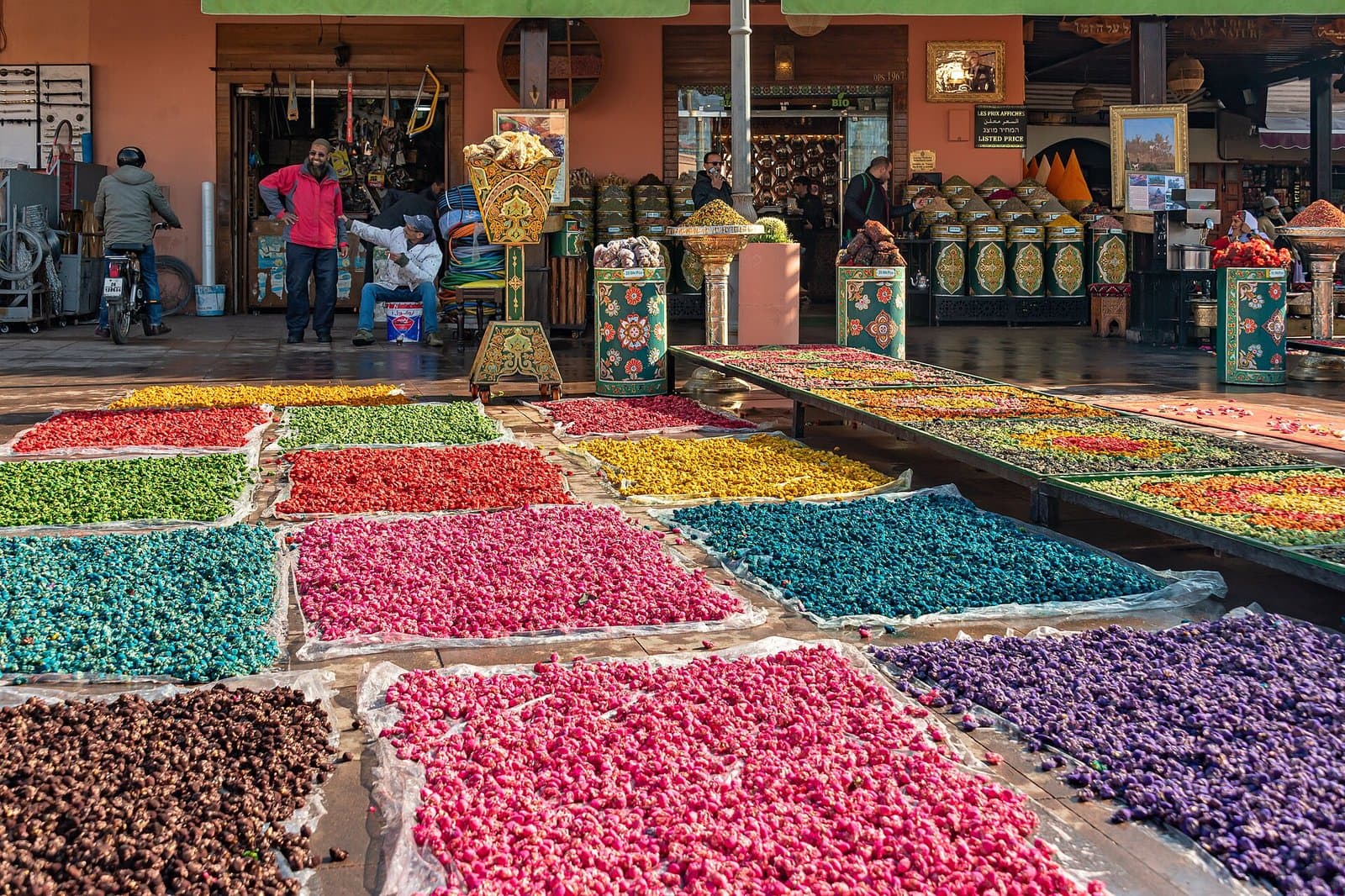
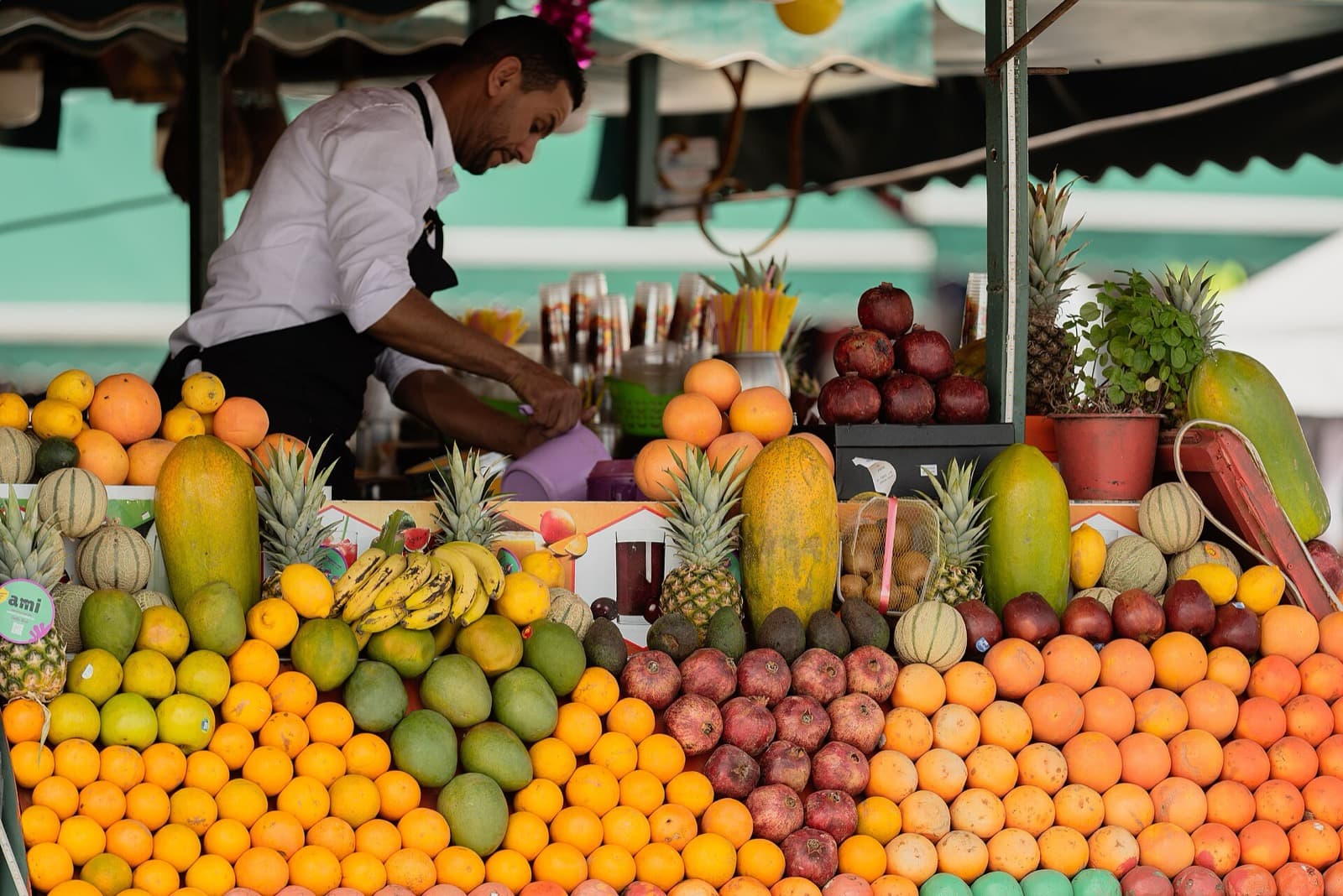
The old city's great open square, which rebuilds itself every day: juice stalls, storytellers and musicians, then food stalls at nightfall. Then into the souks.
- 12
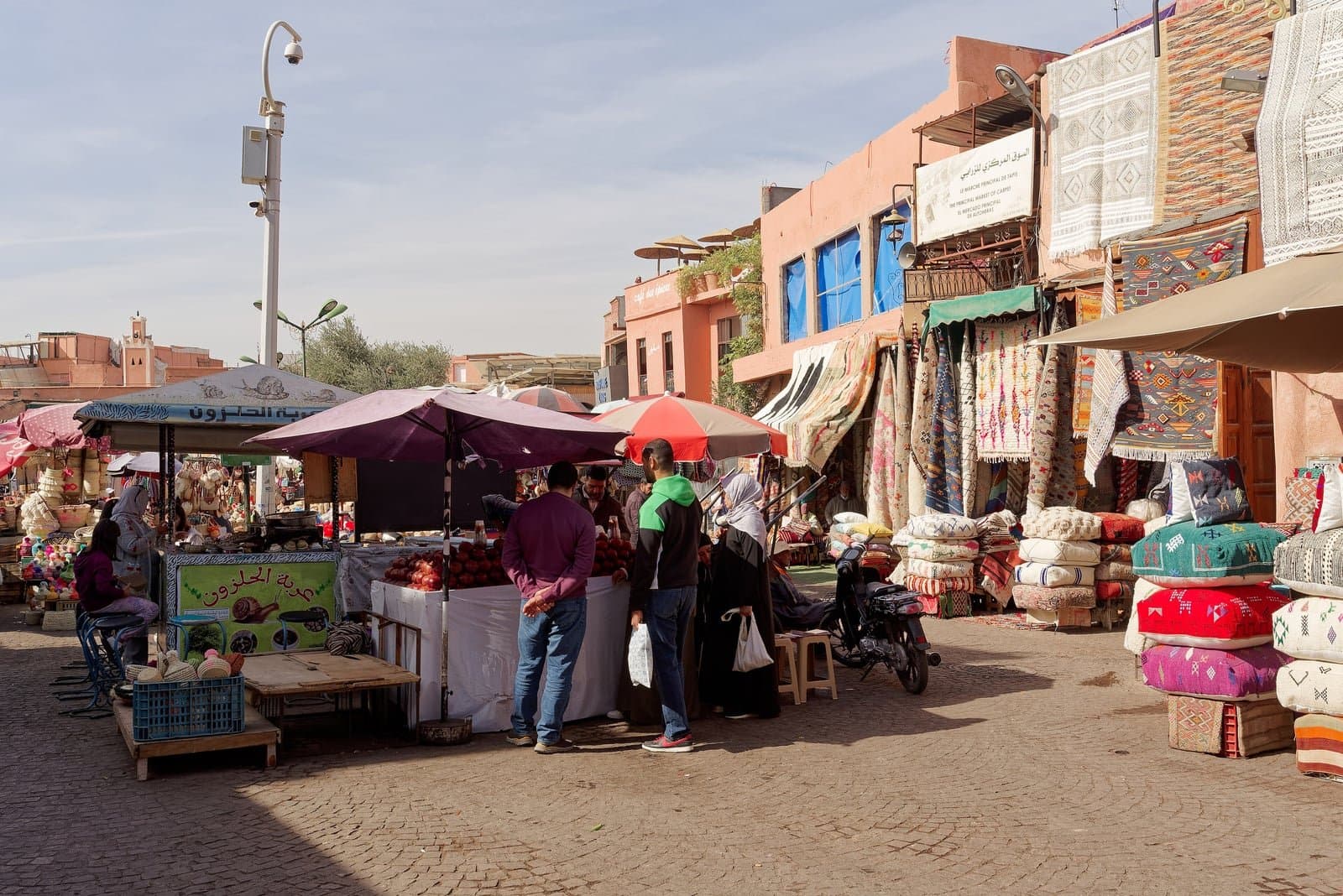
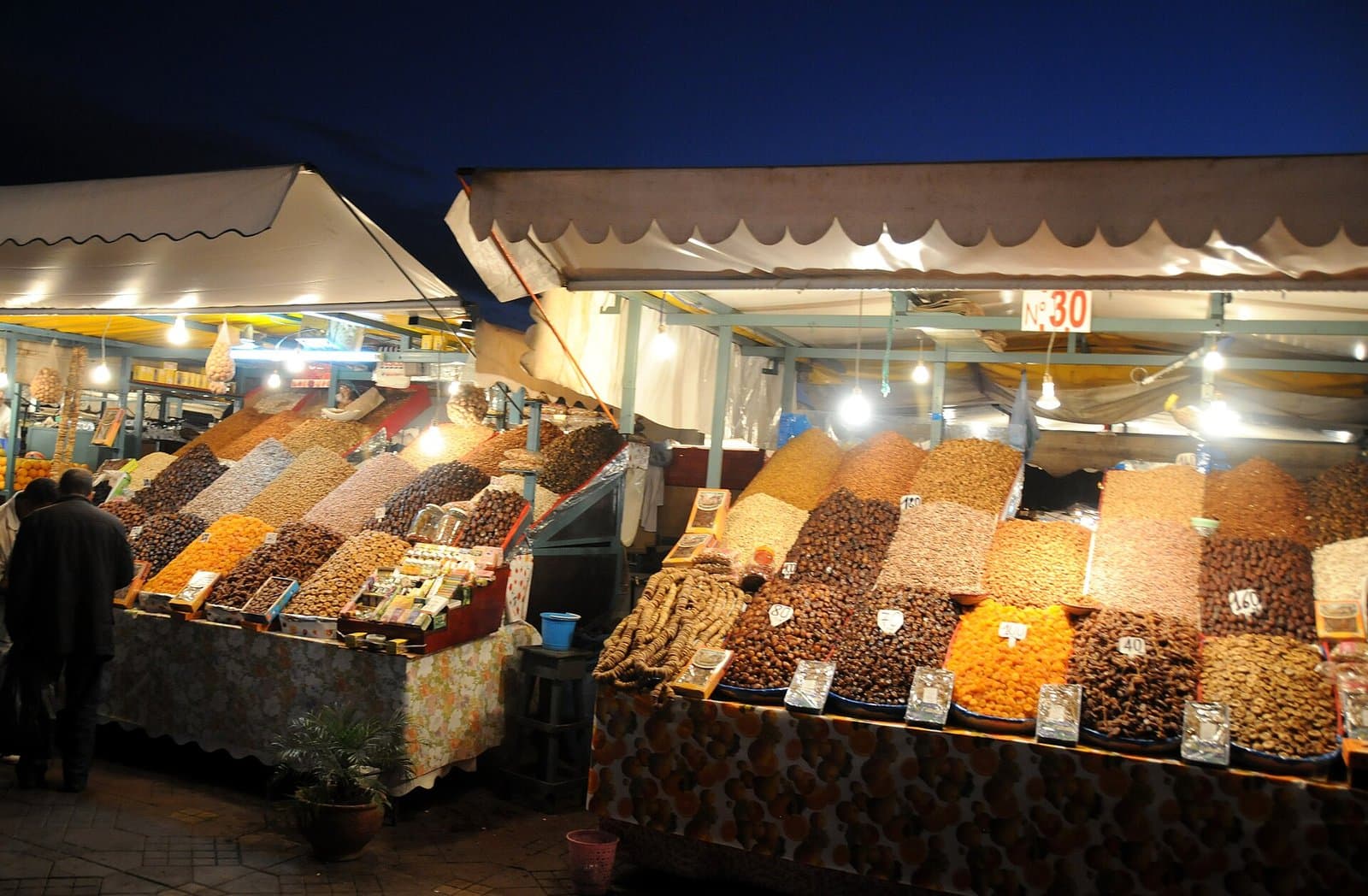
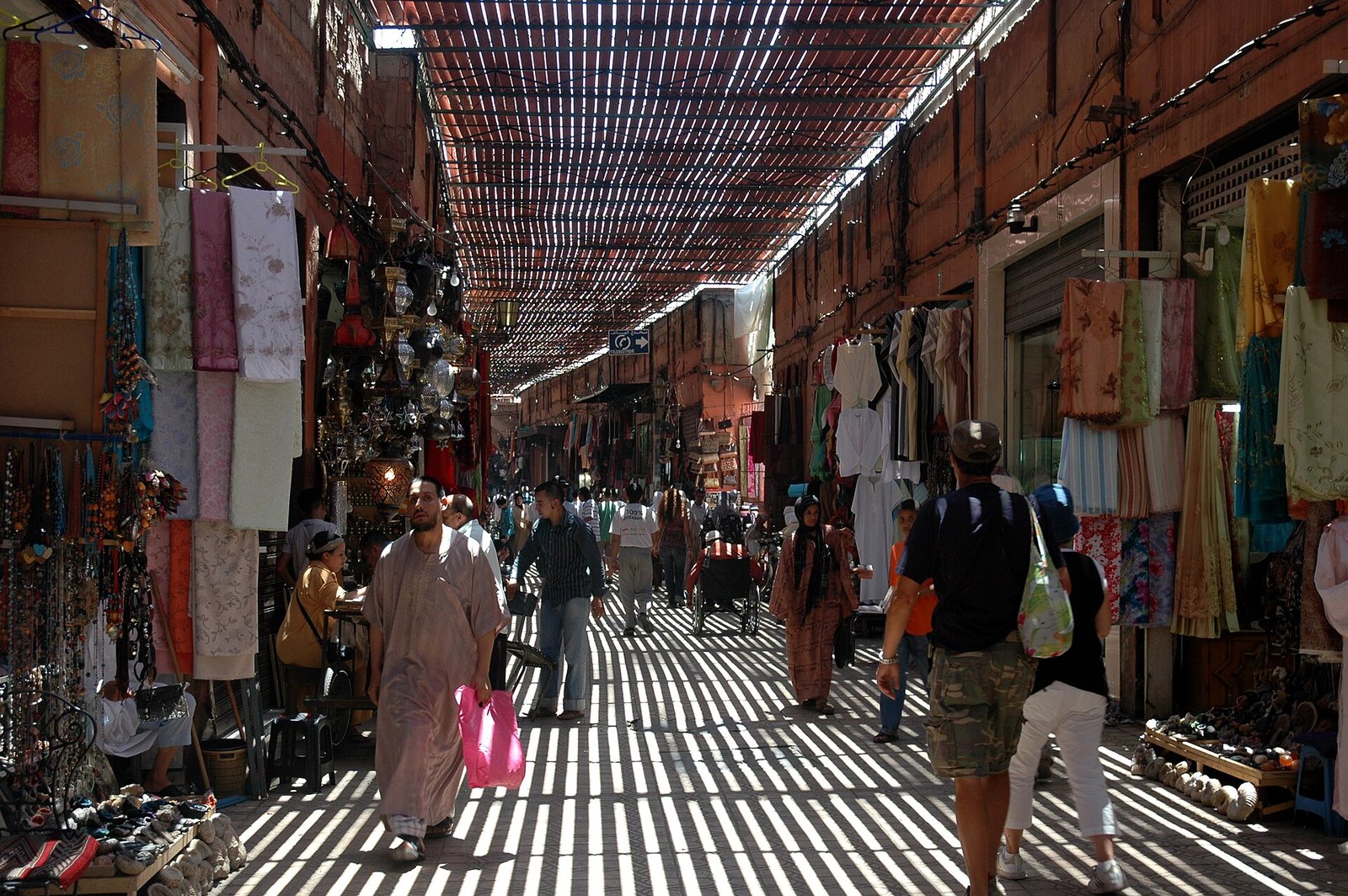
Rahba Kedima: How to Read a Souk
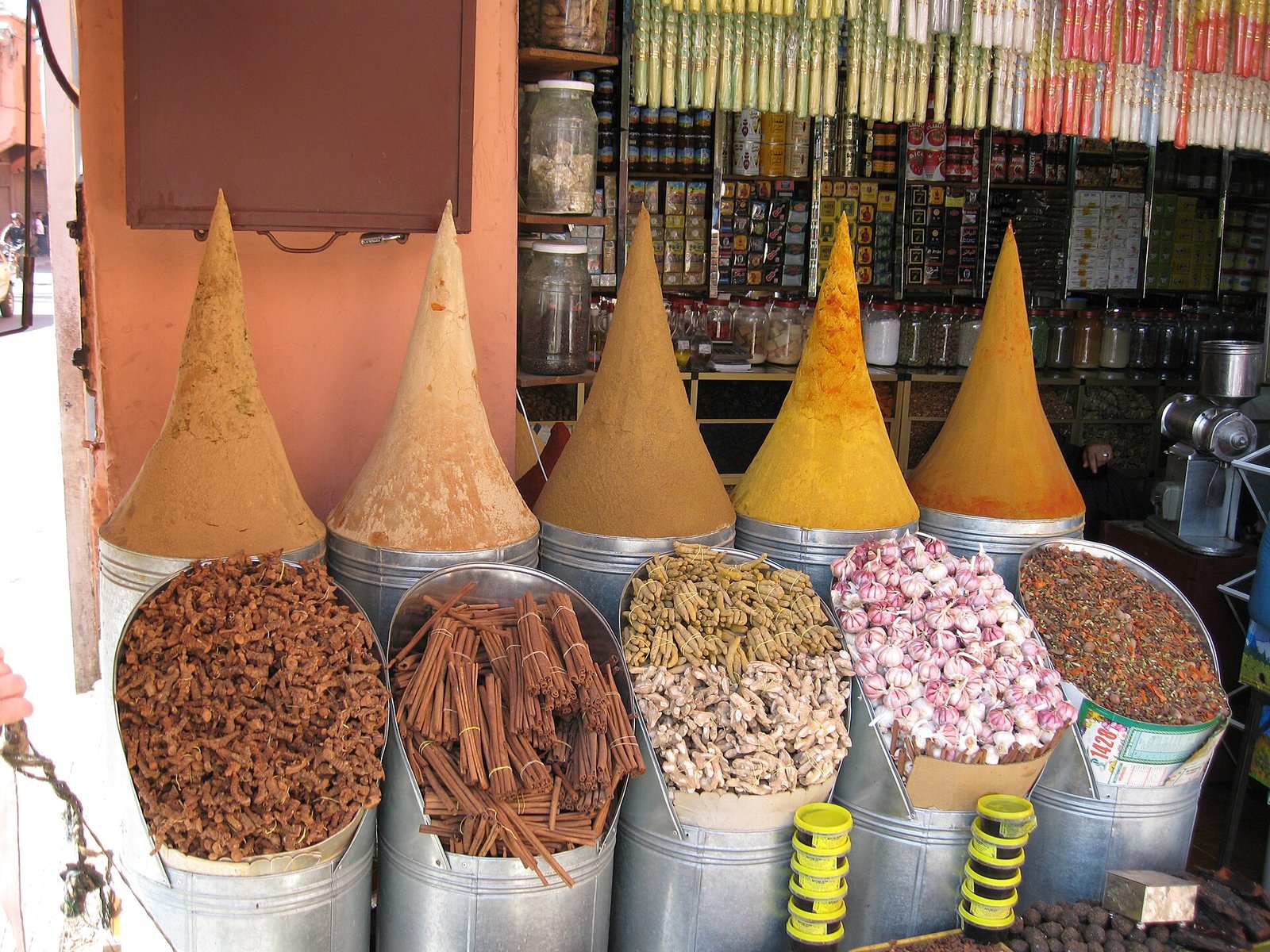
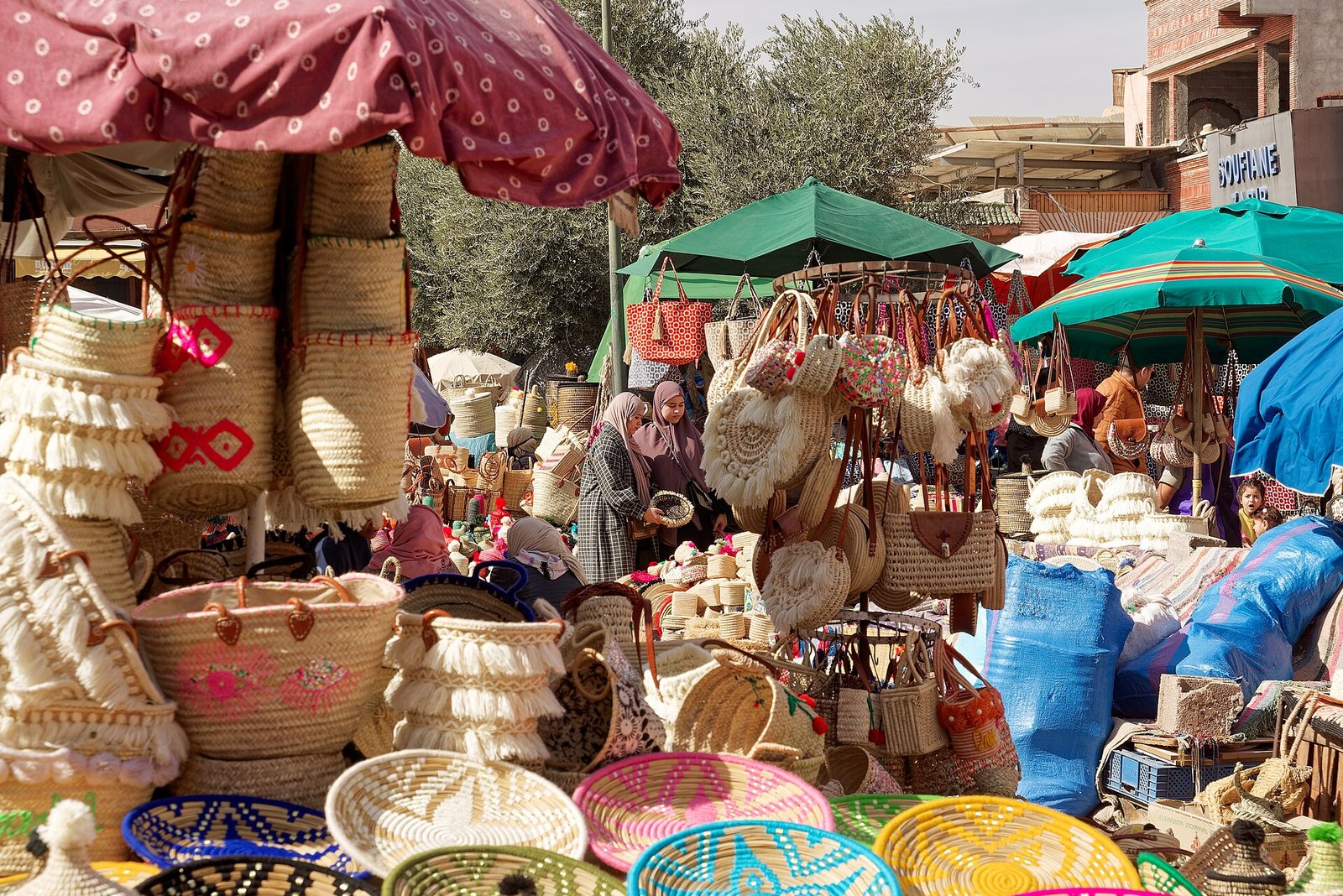
The old spice square in the heart of the souks: baskets, hats and remedies, how the market lanes are organised, how bargaining works, and how to stay out of trouble.
- 13
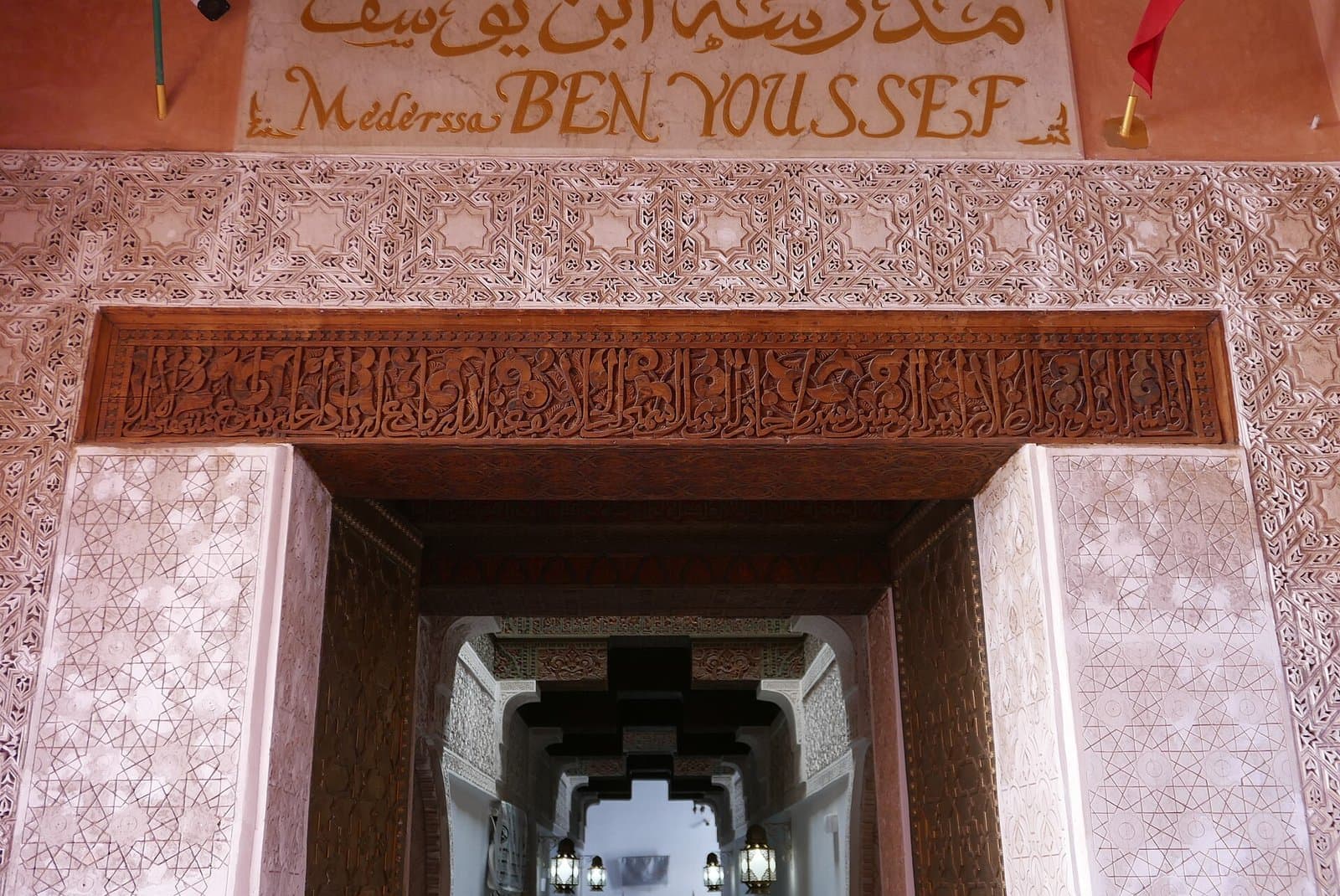
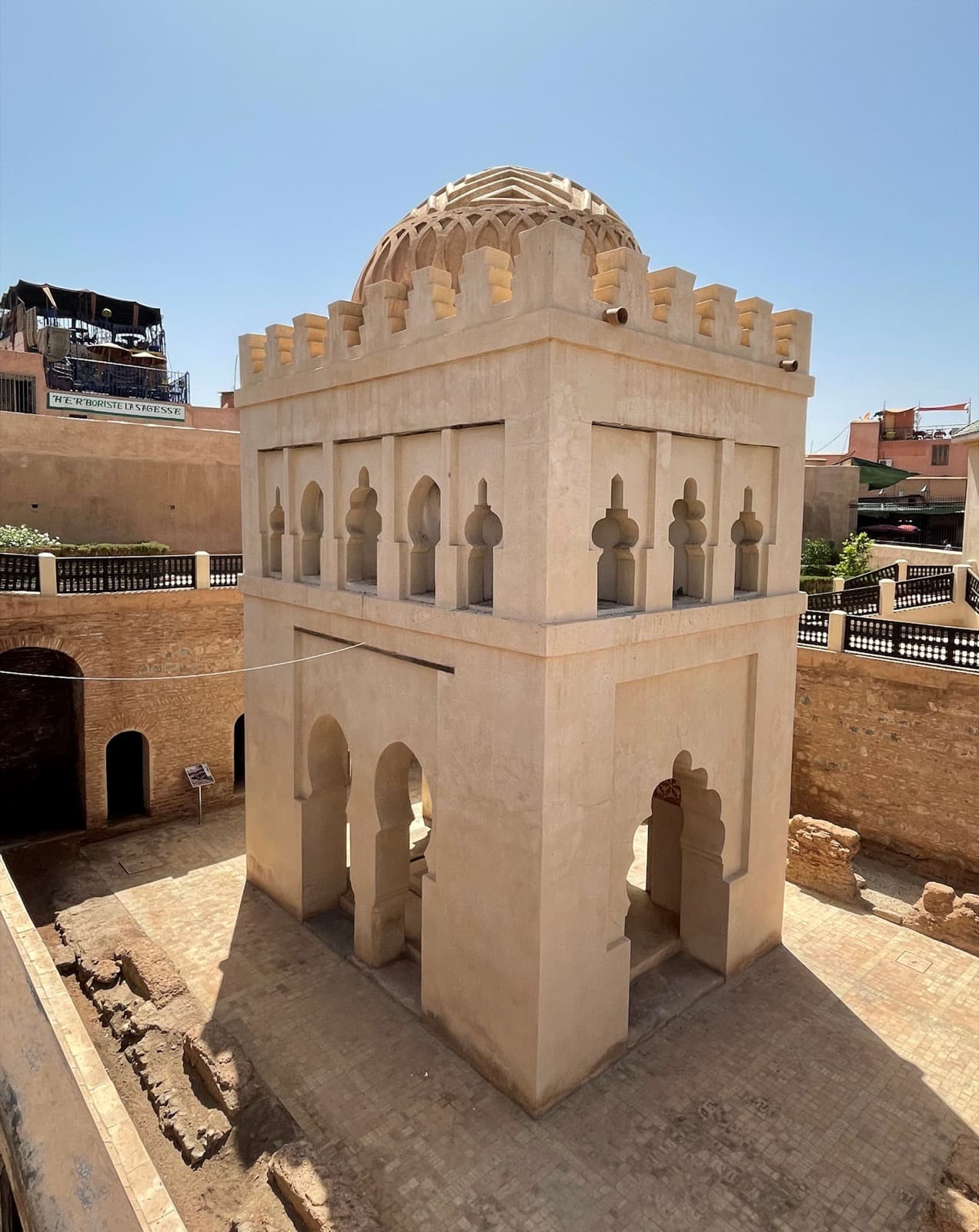
Ben Youssef: The College and the Honeycomb Door
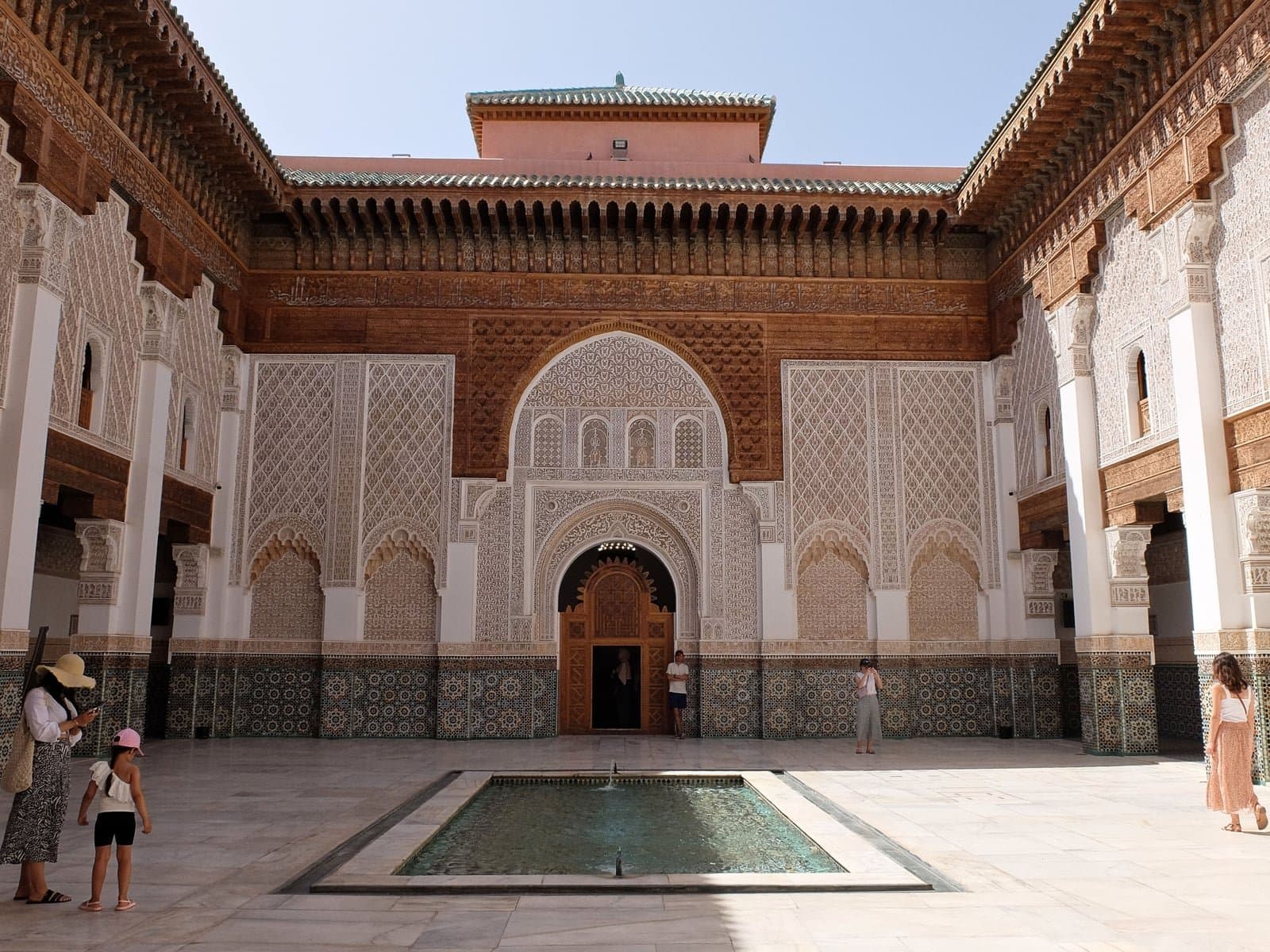
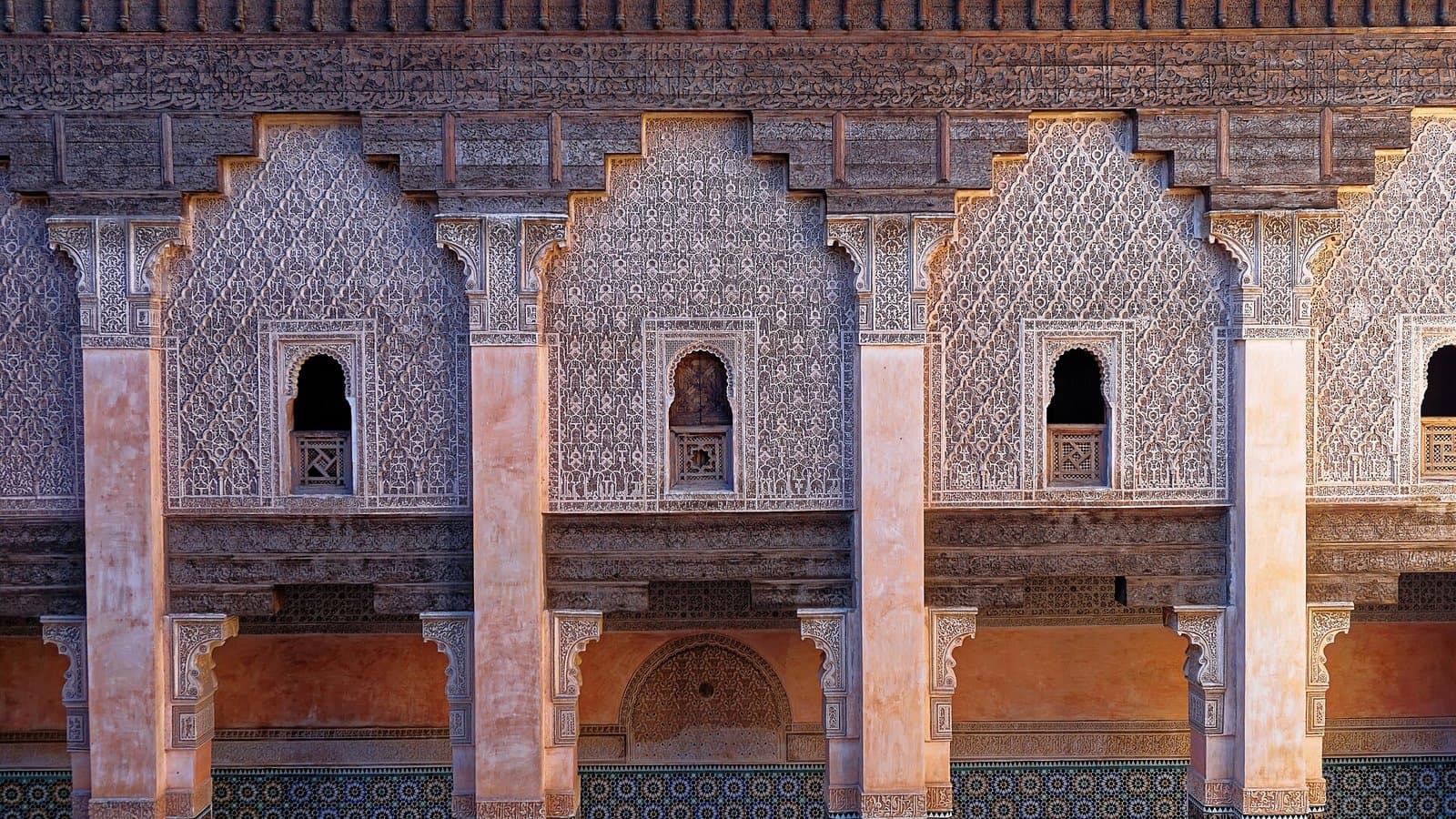
The great religious college of the medina. Ticketed: a honeycomb vault, a bronze-plated door and a carved cedar lintel at the entrance, and inside, tile, plaster and cedar at their finest.
- 14
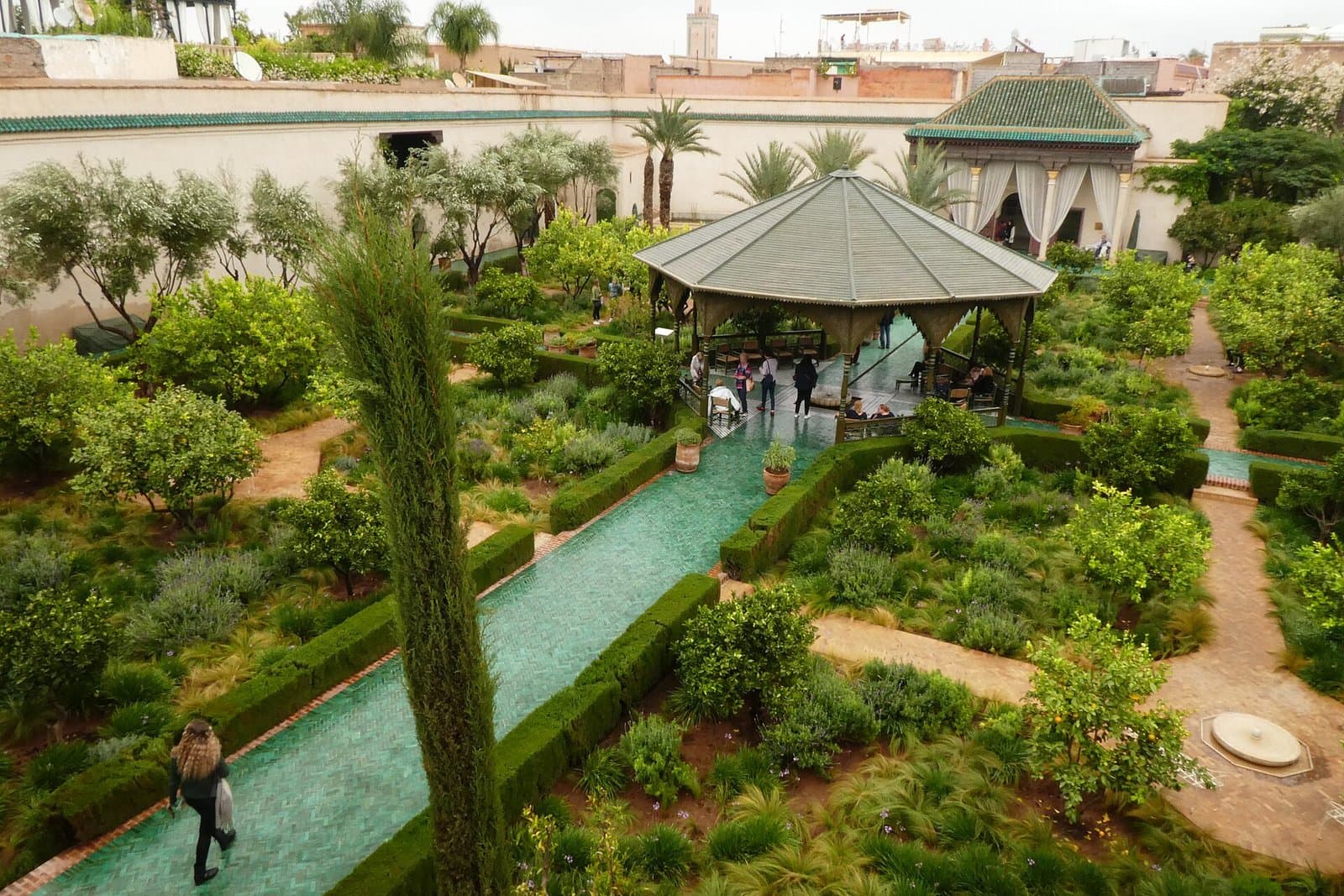
Le Jardin Secret: The Four-Part Garden, Rebuilt
A restored garden palace behind high blank walls. Ticketed: the four-part garden, restored and walkable, beside an exotic garden, with the old water channels and a tower.
- 15
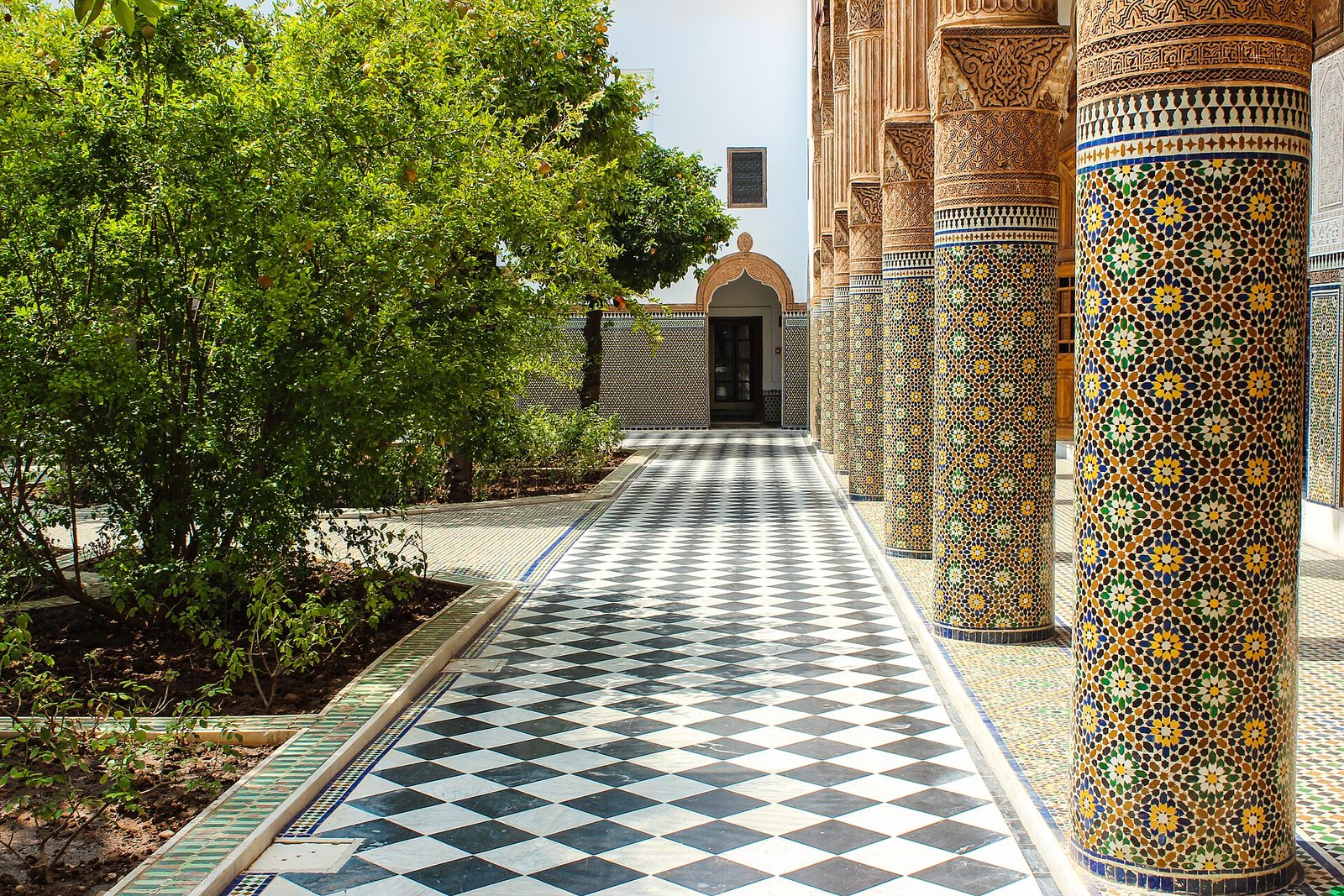
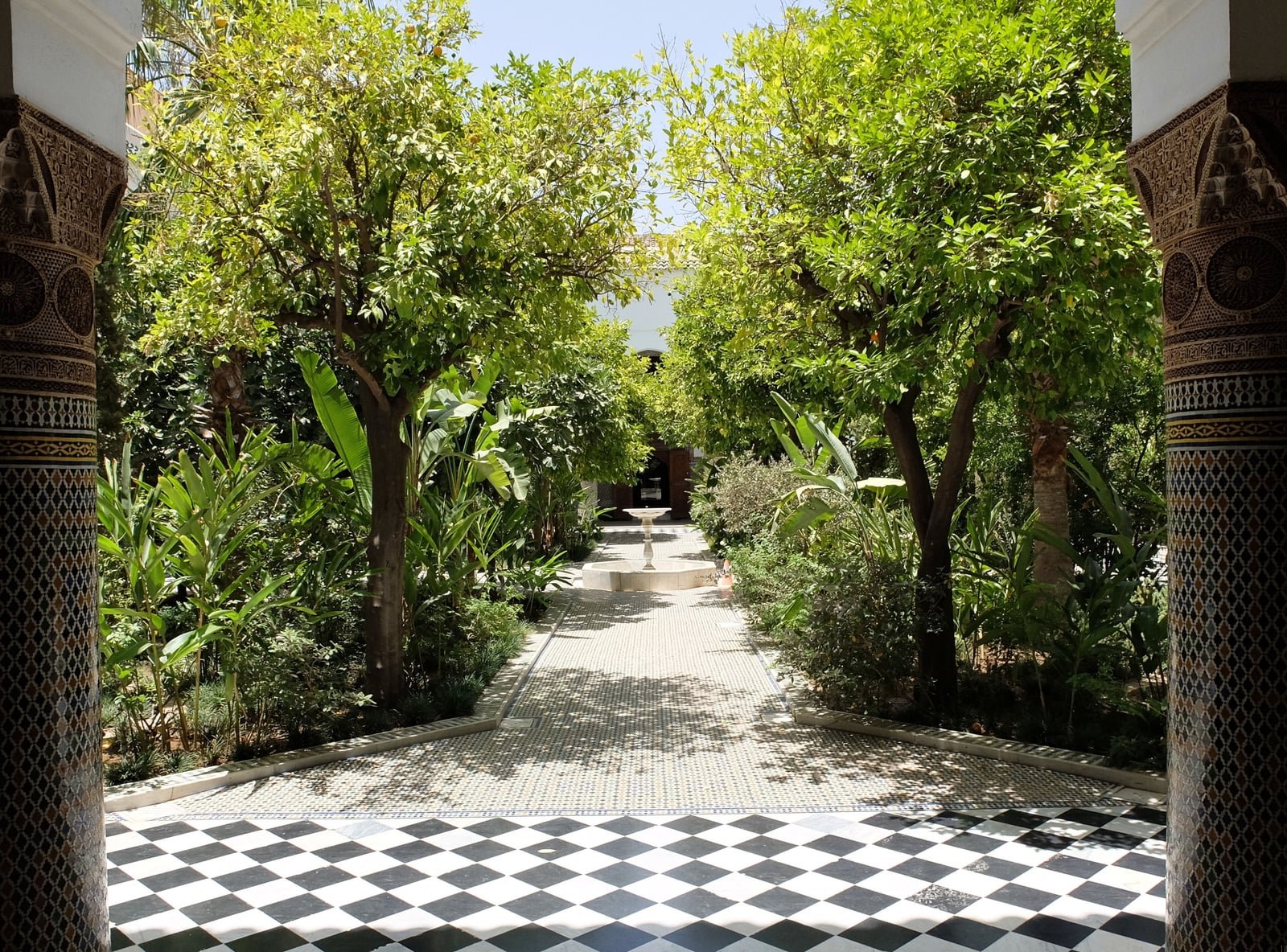
Dar el Bacha: The House That Dressed Its Front
A pasha's palace that broke the rule, built in 1910. Ticketed: decoration on show to the street, and a four-part courtyard garden with fountains and orange trees inside.
- 16
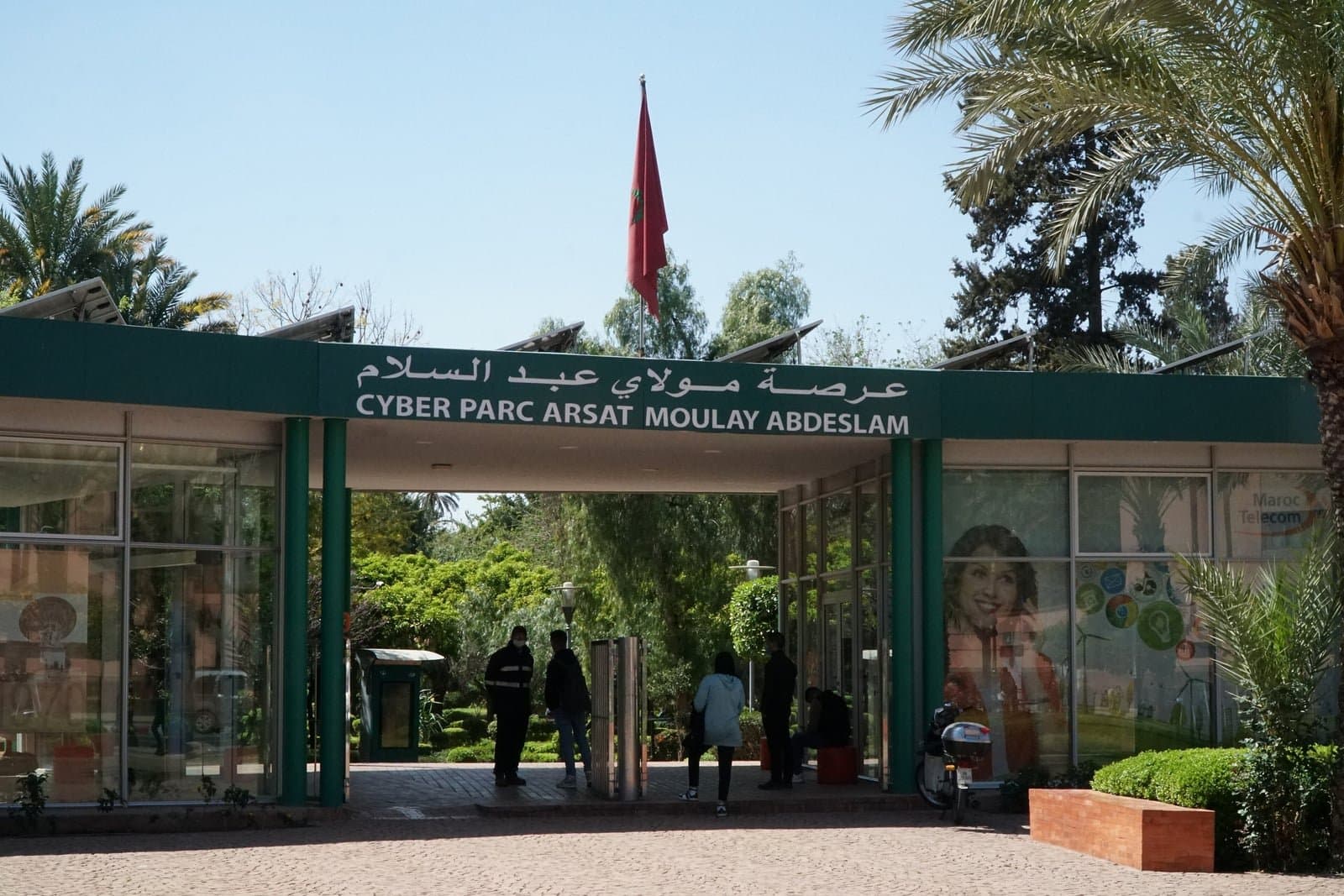
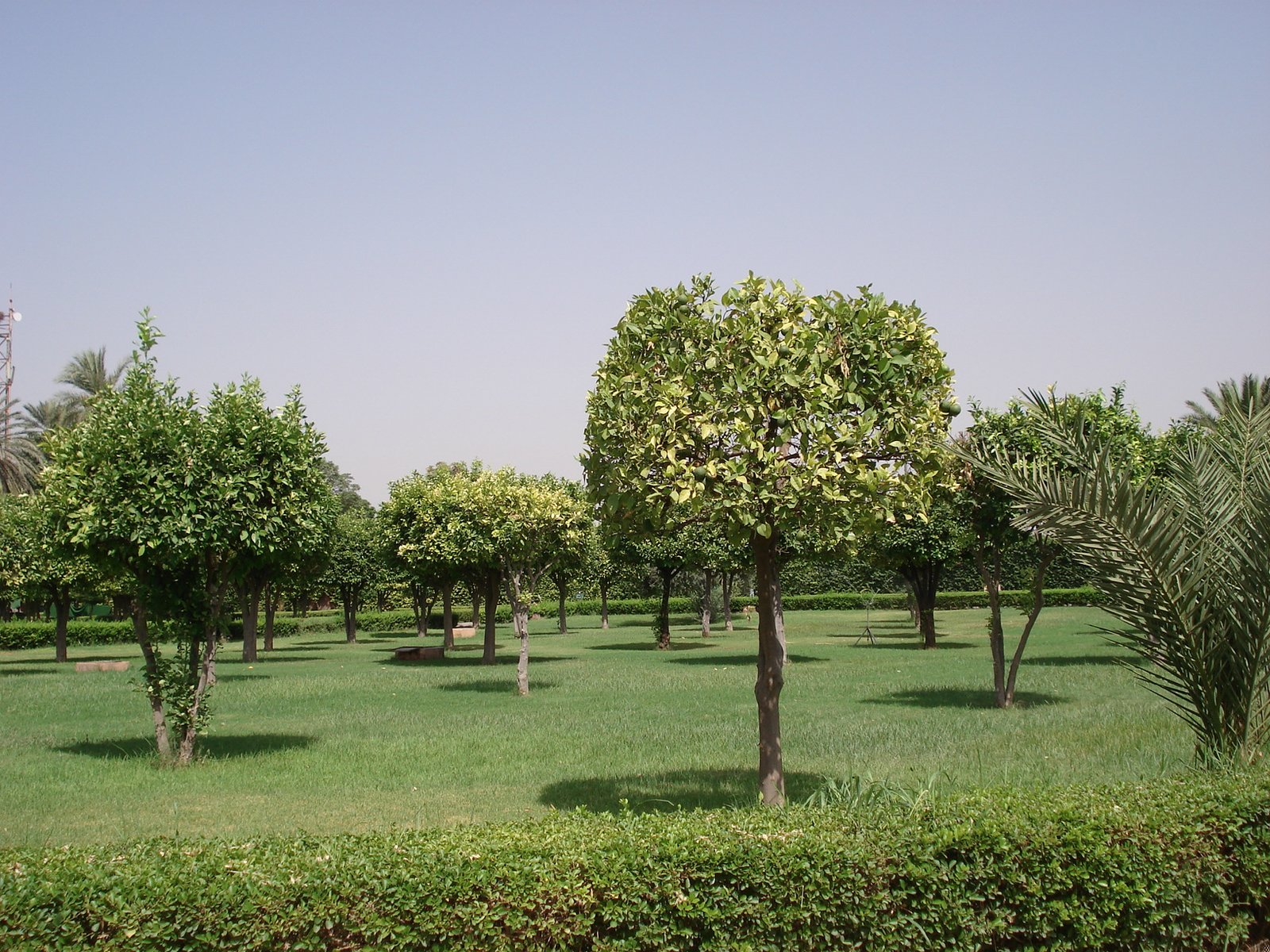
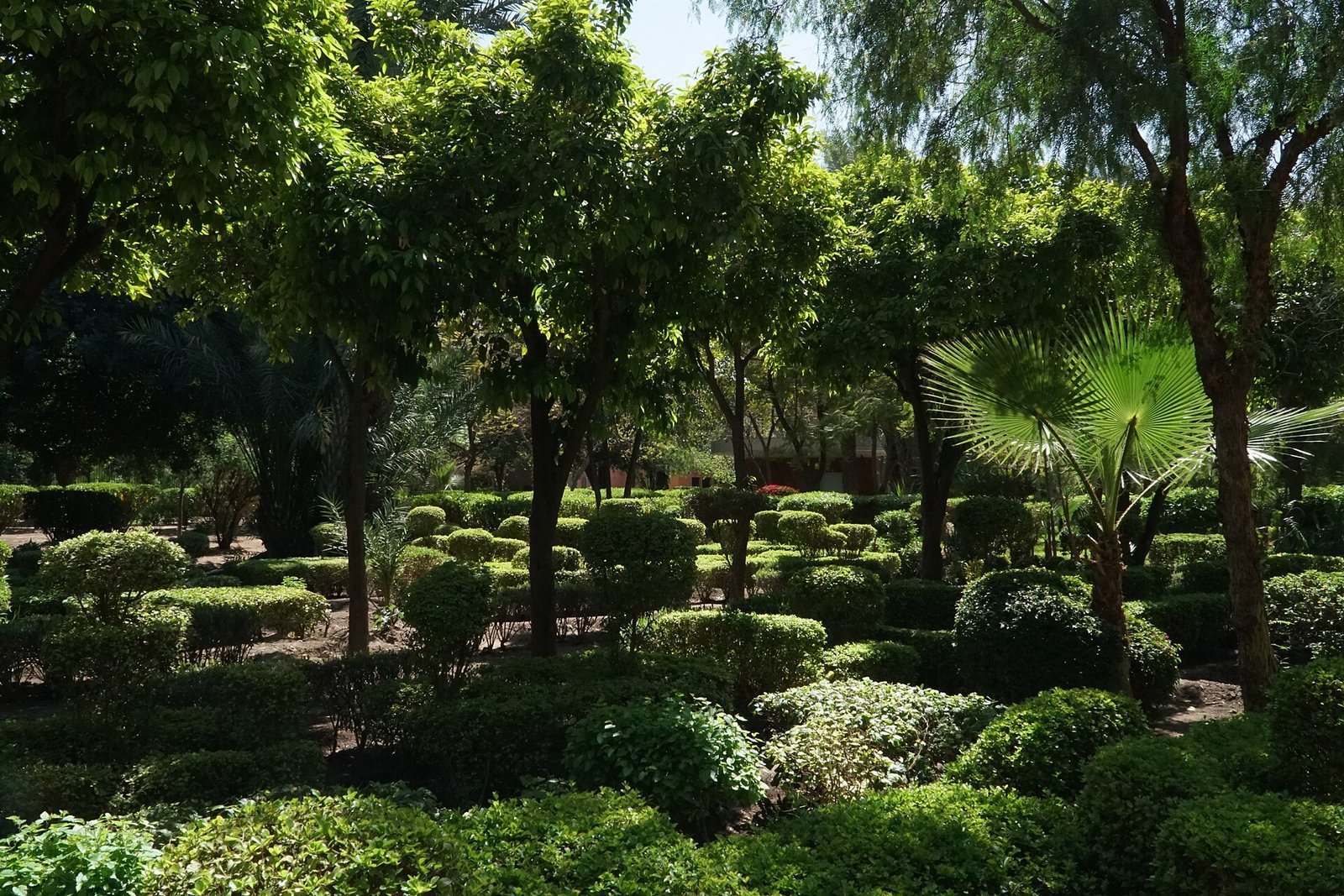
Cyber Parc: How to Read an Orchard
An old prince's orchard along the city walls, and the finish. Read its paths, tell a date palm from a fan palm, find the bitter orange, and see what became of the water.
Details
Best Time to Visit
Start early, around eight or nine, before the heat and the palace queues: the Saadian Tombs, the Badi and the Bahia open at nine. The walk takes about three hours at an easy pace and most of a day if you go inside several ticketed places, so pick two or three. Walk it in daylight: the Cyber Parc at the end closes in the evening. Spring and autumn are the most comfortable months, and the bitter oranges are in blossom from March; in summer the afternoon heat is severe. Many souks close on Friday lunchtimes for prayers. Hours checked 26 September 2026.
Pro Tips
- •Short on time? After stop 3 (Koutoubia Gardens), cut straight across to Jemaa el-Fnaa (stop 11) and tap play when you arrive: you still get the square, the souks, Ben Youssef and Le Jardin Secret.
- •Four Ministry of Culture monuments share one tariff, 100 DH for foreign adults, 9:00 to 17:00: the Saadian Tombs (stop 6), the Badi (stop 7), the Bahia (stop 9) and the Almoravid Koubba by Ben Youssef (stop 13). Checked 26 September 2026.
- •The Ben Youssef Madrasa (stop 13) is 50 DH and open 9:00 to 19:00 (9:00 to 16:30 in Ramadan), so it can wait until the afternoon. Checked 26 September 2026.
- •Le Jardin Secret (stop 14) is 100 DH, 80 DH under 24, free under 12, with the tower 40 DH extra; open 9:30 to 18:30 from February to October, last entry 30 minutes before closing. Checked 26 September 2026.
- •Dar el Bacha (stop 15) is 60 DH and closed on Mondays (Fondation Nationale des Musees). Checked 26 September 2026.
- •Each ticketed stop's details card has the price, the hours and a link to the official site, plus a Google Maps and Street View link to check the entrance before you go.
- •Non-Muslims cannot enter the working mosques on this walk (the Koutoubia, the Kasbah Mosque, Ben Youssef's mosque), but the Ben Youssef Madrasa is a monument and open to all.
Safety & Precautions
- •No map keeps up with the medina: doors close, passages get walled off, works come and go. If the street and the map disagree, trust the street and the signs and pick the route up at the next stop.
- •Motorbikes and scooters use the medina lanes. Keep to the side, step in when you hear an engine, and keep your bag closed and your phone secured: the UK Foreign Office reports drive-by motorbike theft of visible jewellery and bags.
- •People posing as guides approach walkers, especially in the souks. Official guides carry a badge. Someone who walks you somewhere will usually want paying, and if a stranger says the road ahead is closed, treat it as a common trick: step into a shop and ask.
- •Two stretches follow streets with car traffic: from the Koutoubia Gardens to Bab Agnaou, and from Dar el Bacha to the Cyber Parc. Keep to the pavement and cross at the lights.
- •Ask before photographing people; performers in Jemaa el-Fnaa often expect a tip.
- •The route is about six kilometres with little shade in places. Carry water, and wear a hat in the warmer months.
- •Several monuments were damaged in the September 2023 earthquake and have reopened, but scaffolding or closed rooms may still appear.
Travel advisory: Exercise Increased Caution (Level 2).
Gallery
Related Reading
Go deeper on what you'll see, hear, and walk through.

Overview
Best Self-Guided Walking Tours in Marrakech (2026)
3 min
Overview
Marrakech Travel Guide: Days, Transport, Season, and Safety
7 min
Overview
One Day in Marrakech: A Walkable Morning-to-Evening Itinerary
8 min
Thematic
Best Culture Walking Tours in Marrakech (2026)
2 min
Thematic
The Red City in Three Layers: How to Read Marrakech
8 min
Companion
El Badi Palace: Reading Marrakech's Royal Quarter Through a Ruin
7 min
Companion
Jemaa el-Fnaa: The Square That Unlocks the Whole Marrakech Medina
7 min
Deep dive
Bahia Palace: The Vizier Who Built a Palace to Outshine His King
6 min
Deep dive
Koutoubia Mosque: The Minaret a Dynasty Copied
6 min
Read
What to Eat in Marrakech: A Local Food Guide
6 min
Read the walk
The full story of Medina, Souks and Gardens: What the Red Walls Hide, in words. Prefer to listen? Play it narrated, from home or on location.
Introduction
Marrakech, on a plain below the Atlas mountains in southern Morocco, keeps an old walled city, the medina, that shows the street almost nothing. Its walls are packed red earth, plain and nearly windowless, and almost everything worth seeing is behind them: carved plaster, hand-cut glazed tile, painted cedar ceilings, courtyard gardens, and the souks, the covered market lanes where this city makes and sells.
Over sixteen stops and about six kilometres, this walk goes from the Koutoubia's tower through the old royal quarter and the palaces, across Jemaa el-Fnaa, through the souks, and out to an old orchard by the city walls. It takes about three hours at an easy pace, and most of a day if you go inside the ticketed places, so pick two or three.
If you are short on time, there is an easy shortcut. After the first three stops, cut straight across to Jemaa el-Fnaa, stop eleven, and you still get the square, the souks and the great college. When you get there, tap play.
It is best done in daylight. The line on your map is a guide, not a rule. Further in, the lanes will pull you off it, and that is part of the point.
So as you walk, look at the walls, and then look for what is behind them.
1. The Koutoubia: A Tower With Four Different Faces
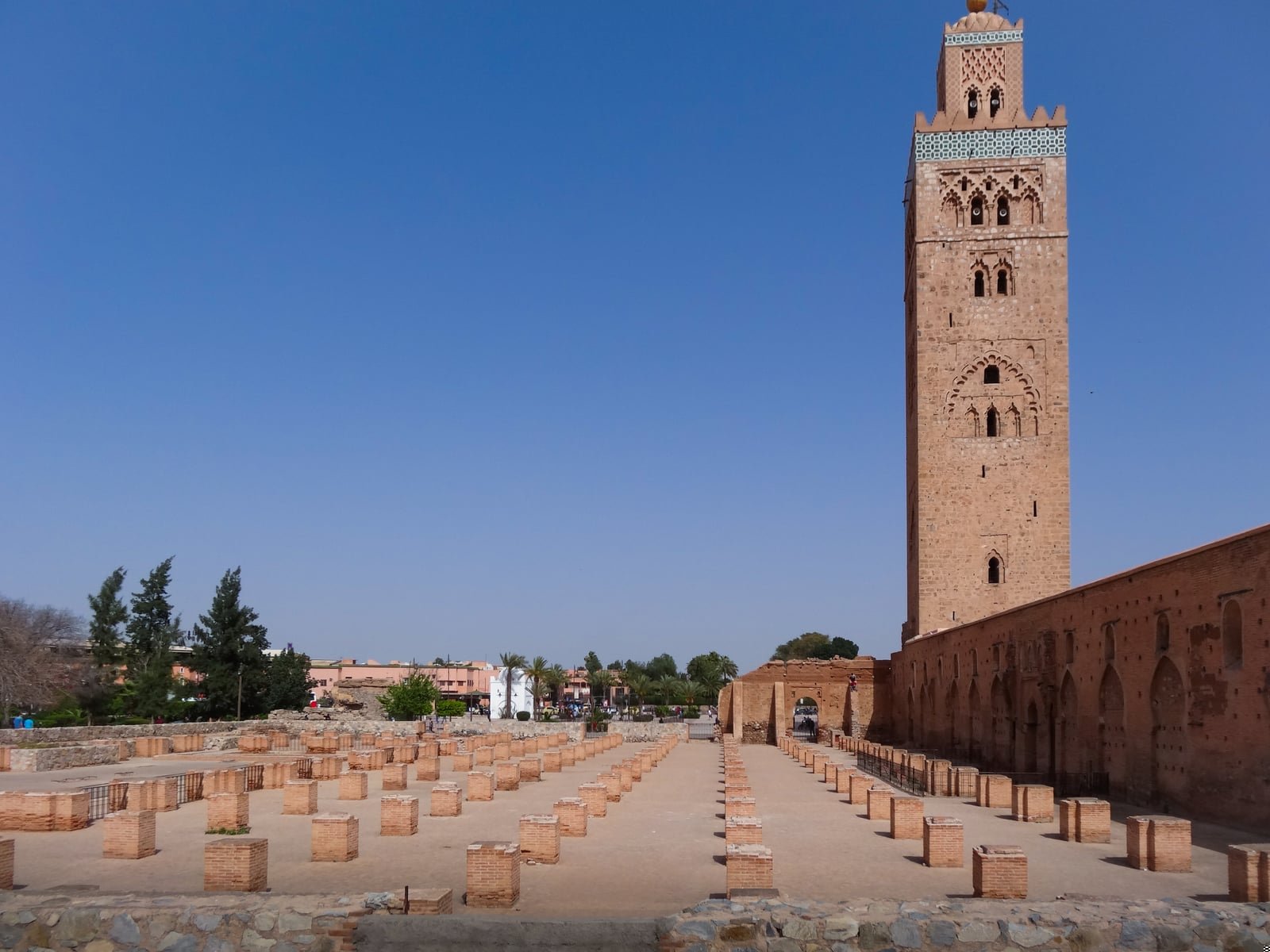
Welcome to the Koutoubia. Face the tall square tower. That is the minaret, about seventy-seven metres of stone, and a good place to start looking.
Each of its four faces carries a different pattern of blind arches, arches carved into the surface rather than cut through it. Some have inner edges scalloped into a row of rounded bites, like the rim of a shell. Around the windows, the surface is carved into a net of diamonds, like a garden trellis. Only the top tier is the same on every side, so walk a little way round and compare two faces. Near the top runs a band of green-and-white glazed tile, and above the small upper tower sit copper spheres, the largest about two metres across.
For a long time the tower was covered in the city's pink plaster. In the nineteen nineties, restorers took it off, and the stone you are looking at came back into view.
Notice the proportions: just over five times as tall as it is wide. The tower was finished in the late eleven hundreds, and it is thought to have inspired the Giralda in Seville and the Hassan Tower in Rabat.
And notice what is missing: no people, no animals. In a mosque the decoration is geometry, plant scrolls and script, nothing that lives. Keep that in mind. You will see it again and again today.
The fenced enclosure beside you, running toward the tower, holds the excavated foundations of an earlier mosque on this spot: rows of low pillar bases. Walk along the railing if you want a look.
The mosque is in use and closed to non-Muslims. The square around it is free. Next, a garden laid out for this view.
2. Parc Lalla Hasna: A Garden Laid Out for the View
This is Parc Lalla Hasna, a modern garden facing the Koutoubia, opened in two thousand and two. Find a path where you can see the whole tower over the trees.
From here the minaret's proportions are easiest to judge: the tall main shaft, then the small tower on top, then the spheres. Up close you read its surface. From a distance you read its shape.
Now look at the garden itself. Paths lined with roses and palms, fountains, and flowering shrubs, oleander among them. Most palms here with long feather-shaped leaves will be date palms, the tree this city treats as its emblem. You will meet them again at the end of the walk.
This garden is new, and it is public, which is worth noticing. For most of this city's history, the finest gardens were private, behind palace and house walls. Today you will see both kinds: the ones anyone can walk into, like this one, and the ones you have to go through a door to find.
Take a lap if you like. The park is free and open. Then walk round to the Koutoubia Gardens, just south of the mosque, with the tower on your left.
3. Koutoubia Gardens: Near Morocco's Earliest Four-Part Garden
You are in the Koutoubia Gardens, among orange trees, palms and rose beds, with the minaret standing over them. Storks are often about here too.
Learn one plan here, because you will see it all day. Take a rectangle. Cross it with two straight paths, so it falls into four beds. Put water where the paths meet, a fountain or a basin. Sink the beds a little below the paths, so you walk above the planting, and fill them with orange or lemon trees. That is the four-part garden, and in a house it is called a riad, which is why so many hotels here carry the name.
The earliest confirmed example in Morocco was laid out a few steps from here, in the early eleven hundreds, in the palace of a ruler called Ali ibn Yusuf, on ground now under the mosque. The palace is long gone. The plan went everywhere.
It needed water, and this is a dry plain. The answer came from an engineer from Muslim Spain, who dug a channel underground from higher ground until the water came out into the open, running day and night. A geographer of the time wrote that afterwards, orchards and gardens multiplied. Nine centuries ago, getting water here at all took an engineer and a tunnel.
A word before you go on. This is a long walk. If you would rather keep it short, this is the moment to cut straight across to Jemaa el-Fnaa, stop eleven. Otherwise, head south toward a carved gate. It is one of the longer legs, about eight minutes, along a busier road.
4. Bab Agnaou: Carved Shells and Leafy Script
Stand in front of the carved stone gate. This is Bab Agnaou, the gate of the Kasbah, the old royal quarter, built in the late eleven hundreds.
Read it from the outside in. Around the arch run frames of pattern, bands that alternate between lines radiating like sunrays and rows of interlaced little arches. In each upper corner, among carved leaves and scrolls, sits a carved shell. Across the top runs an inscription from the Quran, in an angular script whose letters end in little leaves. Script as decoration: no faces, again.
Now look at the arch itself. The big carved arch is the original. The smaller, plainer brick arch set inside it is later. The gate once had towers on either side and a covered passage that turned a corner. Those are gone. What survives is the carved face.
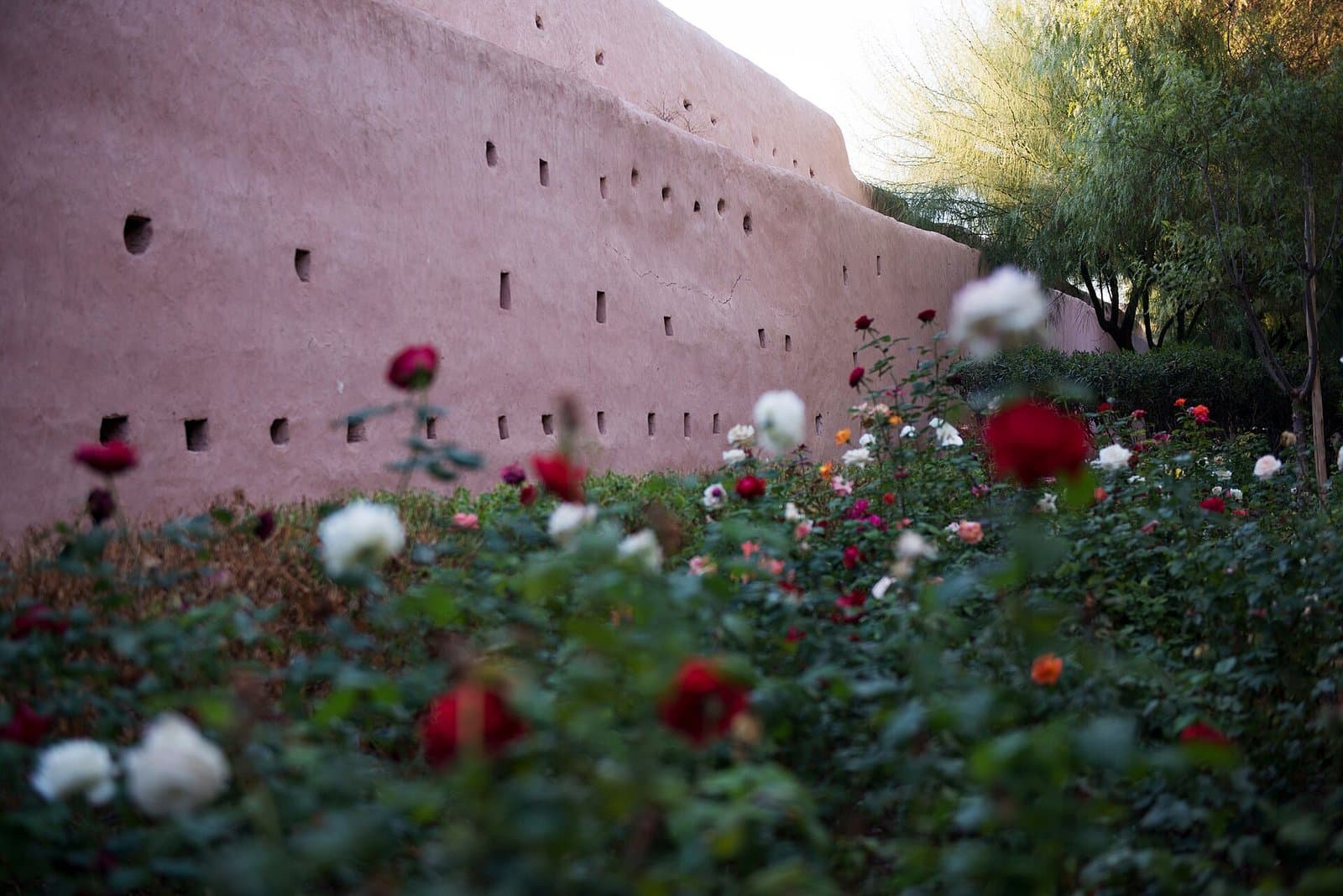
Then look at the earth wall beside the gate. It is packed earth: damp earth rammed layer by layer into wooden frames, then the frames taken away. Look for rows of little holes across its face. Those are the marks of the wooden scaffolding. The red is the local earth, and since the French protectorate of the nineteen tens, the colour of the old walls has been imposed on new buildings too, which is why the old and new parts of the city match.
One honest word before the lanes close in. No map keeps up with the medina, the old walled city, ours included. Doors close, passages get walled off, works come and go. If the street and the map disagree, trust the street and the signs, and pick the route back up at the next stop.
The gate is free. Walk through the arch into the royal quarter. Next, a minaret dressed in green.
5. The Kasbah Mosque: A Net of Brick and Green Tile
You are in front of the Kasbah Mosque, the great mosque of the royal quarter. Look up at its minaret.
Compare it with the Koutoubia. That tower was stone. This one is stone only at the bottom. Above the roofline it is brick, and the brick has been carved.
Read each face from the bottom up. First, three narrow horseshoe arches, topped by larger scalloped ones. Above them, the big panel: a wide net of diamonds, the same trellis you saw at the Koutoubia, but carved in brick and filled in with green glazed tile. Then a band of inscription, dark letters on white. Then the sawtooth crown, and three copper spheres on top.
Some of that tile is special. Fragments up there are the earliest surviving example of their technique used on a building. And the design itself travelled: this minaret set a style that was repeated, with small changes, for generations after it.
Notice again what the decoration is made of. Diamonds, arches, letters. Religious buildings here keep to geometry and script. You are about to see that rule held even for a sultan's grave.
The mosque is in use and closed to non-Muslims. Behind it are the Saadian Tombs. Follow the route round the mosque to their entrance.
6. The Saadian Tombs: Twelve Marble Columns Behind a Blank Wall
This lane leads to the Saadian Tombs, the burial ground of the family that ruled Morocco in the fifteen and sixteen hundreds. It is ticketed, and worth it, because nothing of it shows from the street. If you go in, keep listening. Inside there are two mausoleums, with gardens…
Full narration for this stop unlocks with the tour.
7. El Badi Palace: Earth Walls That Once Wore Marble
The high earth walls in front of you are the Badi Palace, and the ticket office is here at its main entrance. It is ticketed, and if you go in, keep listening. Look at the walls first. The same packed red earth as the city walls, with lime mixed in. Once, these walls were…
Full narration for this stop unlocks with the tour.
8. Tinsmiths' Square: Pierced Metal and Light
This is the Tinsmiths' Square, where the old city meets the royal quarter, between the Badi and the Bahia palaces. It was traditionally the metalworkers' square. Only a few workshops remain, so do not expect a square full of craftsmen, but look into the ones that are here.…
Full narration for this stop unlocks with the tour.
9. Bahia Palace: Tile, Plaster and Cedar, Bottom to Top
The gate with the information board beside it is the entrance to the Bahia Palace. The ticket office is just inside, and you do not need anyone to show you the way in. It is ticketed, and this is a fine place to learn how Moroccan decoration works. If you go in, keep…
Full narration for this stop unlocks with the tour.
10. Dar Zniber: Inside a Courtyard House
You are at the door of the Moroccan Culinary Arts Museum, in a restored palace-sized courtyard house. It is ticketed, about eighty dirhams, with a tea salon inside, and open until the evening. If you go in, keep listening. This is the stop to learn how a Marrakech house works,…
Full narration for this stop unlocks with the tour.
11. Jemaa el-Fnaa: The Great Open Square
You are in Jemaa el-Fnaa. Stop for a moment and take in the space. So far you have walked past blank walls, doors that turn corners, courtyards you had to pay to see. This is the opposite: no walls, no roof, no fixed plan. It is the old city's great open square, and it rebuilds…
Full narration for this stop unlocks with the tour.
12. Rahba Kedima: How to Read a Souk
You are in Rahba Kedima, the old square, a small open triangle in the middle of the souks. Look at the colour and the texture: woven baskets, knitted hats, scarves, traditional remedies, perfumes and spices. Here is how to read the souk around you. Historically, it was laid out…
Full narration for this stop unlocks with the tour.
13. Ben Youssef: The College and the Honeycomb Door
The door up this lane is the Ben Youssef Madrasa, a religious college finished in the fifteen sixties, and once the largest of its kind in Morocco. It is ticketed, and open into the early evening. If you go in, keep listening. Look up as you reach the entrance. Over the…
Full narration for this stop unlocks with the tour.
14. Le Jardin Secret: The Four-Part Garden, Rebuilt
The door here, behind high, windowless walls, is Le Jardin Secret, the Secret Garden. It is ticketed, the tower costs a little extra, and inside is the four-part garden from the Koutoubia Gardens, restored so you can walk it. If you go in, keep listening. Inside are two…
Full narration for this stop unlocks with the tour.
15. Dar el Bacha: The House That Dressed Its Front
You are at Dar el Bacha, the Pasha's House, now a museum. It is ticketed, and closed on Mondays. If you go in, keep listening. All day you have seen the rule: plain outside, everything inside. This house broke it. It was built in nineteen ten for Thami El Glaoui, who became…
Full narration for this stop unlocks with the tour.
16. Cyber Parc: How to Read an Orchard
The last stop is a garden, so walk in. This is the Cyber Parc, an orchard of about eight hectares running along the inside of the city walls. In the seventeen hundreds it was a prince's orchard garden. Today it is a free public park. Start with the ground under your feet. The…
Full narration for this stop unlocks with the tour.