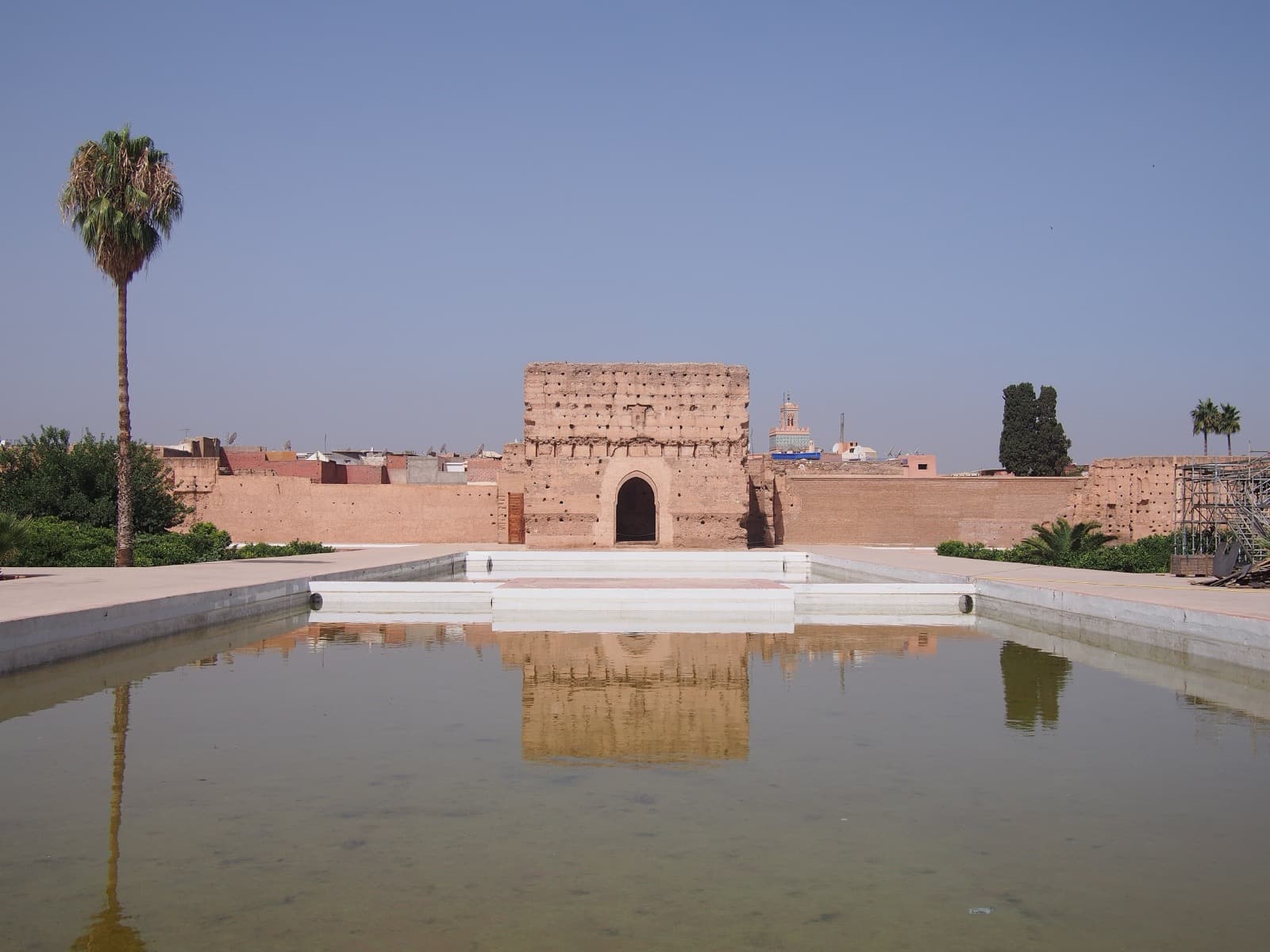
South of Jemaa el-Fnaa, behind the walls of the old kasbah, one roofless earthen ruin explains the entire royal quarter of Marrakech. El Badi Palace was built to dazzle foreign ambassadors, then dismantled and carried away to raise a rival city. The Saadian sultan Ahmad al-Mansur named it the Incomparable, spent a fortune making it worthy of the word, and within about a century of its completion another dynasty had stripped it to the bone. Standing in that emptiness today is the fastest way to understand what this walk is really about: how Morocco's dynasties built to display power, and how quickly that display could be undone.
The palace that was meant to overawe
El Badi means the Incomparable, one of the ninety-nine Names of God in Islam. Ahmad al-Mansur, the Saadian sultan, began the palace in December fifteen seventy-eight and finished it in fifteen ninety-three. He could afford ambition on this scale because of how he came to the throne. On the fourth of August fifteen seventy-eight, at the Battle of the Three Kings fought at Wadi al-Makhazin, three rulers died in a single day: the Portuguese king Sebastian, the deposed sultan al-Mutawakkil, and the ruling sultan Abd al-Malik. That is how al-Mansur inherited both a crown and, most likely, the vast ransom the Portuguese paid to recover their captured nobles. His later conquest of Timbuktu, Gao and the Songhai Empire around fifteen ninety, together with the sugar trade, filled the treasury further.
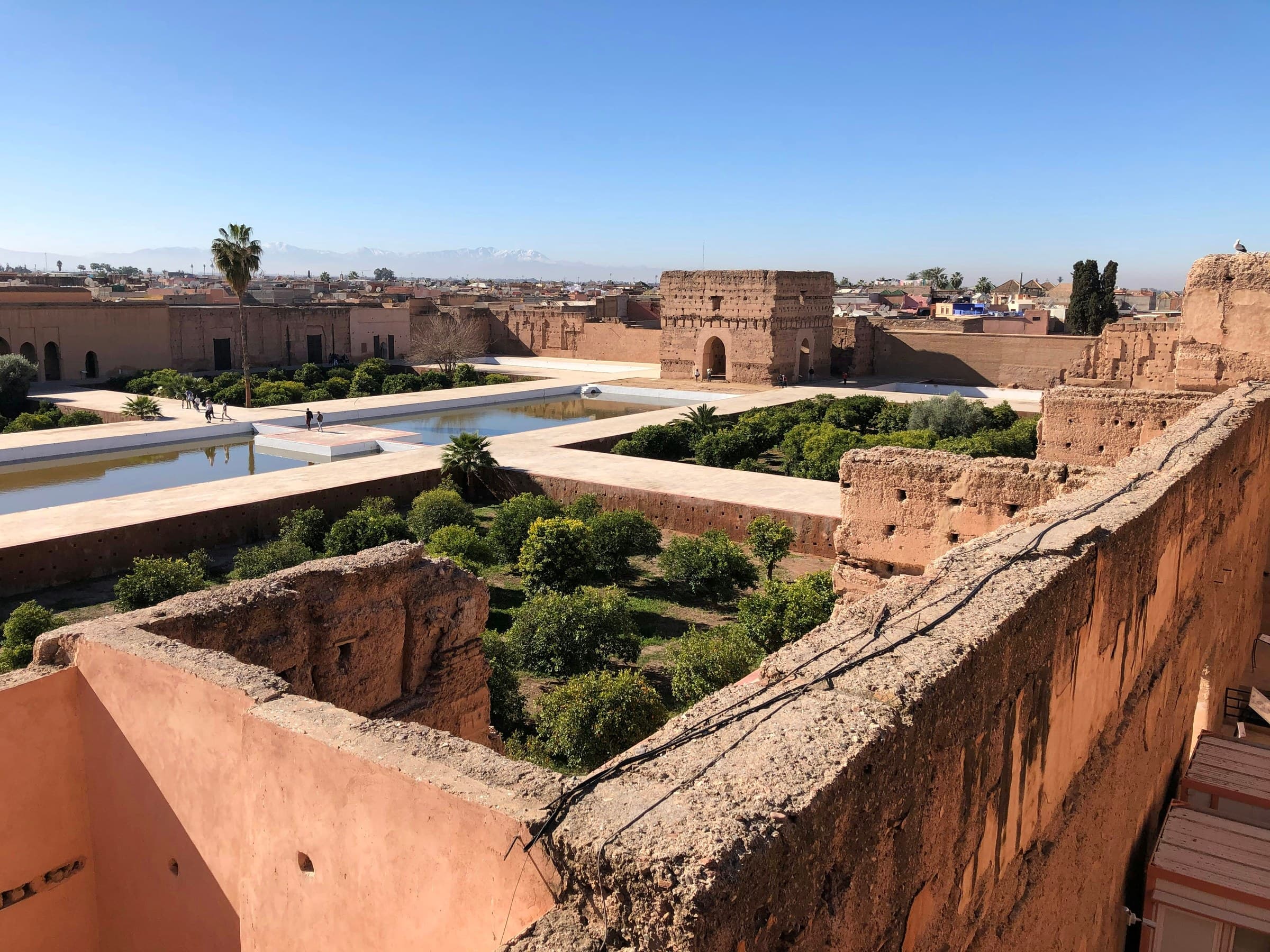
He put the money into the walls. El Badi was clad in Italian marble, reportedly exchanged for its own weight in sugar, along with gold, onyx and cut-tile mosaic. What you cross today is the skeleton: a vast roofless enclosure of rammed-earth walls, sunken orange gardens, a great central pool, and storks nesting along the ramparts. Around seventeen hundred and seven the Alaouite sultan Moulay Ismail had the palace demolished and its precious materials hauled off to build his new capital at Meknes. The lesson is written into the bare ground. A palace raised to stun ambassadors was reduced to earth and open sky within roughly a hundred years, and its riches now line another royal city entirely.
Why the ruin is the doorway, not the disappointment
Hear a stop from this walk
Cyber Parc: How to Read an Orchard
Many visitors arrive at El Badi expecting a palace and feel let down by an empty field. Read it the other way and it becomes the most eloquent stop of the walk. The Marrakech walking tours that treat these sites as a set understand that El Badi is the thesis made physical. Every other stop on this route is a variation on the same theme of power built to be seen, and El Badi is the one where you can watch that power reduced to its foundations. It is a roofless open ruin, so there is almost no shade across the sunken gardens and the central pool. Carry water and a hat, and keep an eye on the storks overhead. Then look at what is missing and imagine the marble.
That single idea threads the whole route. Our Medina, Souks and Gardens walk stops at the Badi's gate on a sixteen-stop loop of about six kilometres, with the Saadian Tombs, the Tinsmiths' Square at the Mellah's edge and the Bahia close by. It is a walk you set the pace on. This quarter draws insistent faux-guides who attach themselves at the gates, so a calm, firm no and your own map keep you free to move or stay as you like.
What the same man buried a short walk away
The story of El Badi does not stand alone, and neither does its sultan. A few minutes back toward the Kasbah Mosque lie the Saadian Tombs, the royal necropolis where Ahmad al-Mansur himself is buried. The eastern mausoleum was built between fifteen fifty-seven and fifteen seventy-four, the western between fifteen ninety-one and sixteen hundred and three. The grandest room, the Chamber of the Twelve Columns, rises about twelve metres high on twelve columns of Italian Carrara marble, beneath a cedar ceiling worked in star patterns. Around it lie some fifty-six marble tombstones and about a hundred further graves marked with coloured tiles.
Here the parallel with El Badi turns sharp. The same Moulay Ismail who dismantled al-Mansur's palace also reached these tombs, and he could not bring himself to destroy work this fine. So he had the necropolis walled off instead. It stayed sealed and half-forgotten for roughly two centuries, opened to the public only in nineteen seventeen by Morocco's antiquities service under the French Protectorate. One dynasty tore down the Incomparable palace and sealed away the tombs of the man who built it. Seeing both in an hour tells you more about how power passed between Moroccan dynasties than any single monument could.
Where the wealth came from, and where the walk lands
The route begins one stop earlier, at Bab Agnaou, the carved bluish-grey Almohad gate raised by the caliph Yacoub el-Mansour and completed around eleven eighty-eight to eleven ninety. It is the threshold of the whole royal quarter, ceremonial rather than defensive, since it opens inside the city walls. Beyond El Badi the walk moves through the mellah, the historic Jewish quarter laid out by Saadian decree in fifteen fifty-eight, a walled commercial and craft centre that was central to the sultans' own finances. This is the ground that helped make them rich. Its community, present in Morocco for many centuries, peaked at around forty thousand people in the late nineteen forties before almost all of Morocco's Jews emigrated; today only about two hundred remain, with the restored Lazama Synagogue and the Miaara cemetery carrying the memory. Walk it gently and quietly.
The walk climbs toward its two closing palaces. The Bahia Palace, begun in the eighteen sixties and vastly expanded from eighteen ninety-four to nineteen hundred, belonged not to a sultan but to Ba Ahmed, the grand vizier who effectively ruled Morocco during the young sultan Abdelaziz's reign. It holds about a hundred and fifty rooms across almost two hectares, built court by court with no single plan, and drew more than four hundred thousand visitors in just the first four months of two thousand nineteen. Next door, Dar Si Said, built at the turn of the twentieth century by Ba Ahmed's brother Si Said ibn Musa, reopened in two thousand eighteen as the National Museum of Weaving and Carpets, where the craft of the whole country is gathered under painted cedar. It has been listed as temporarily closed since the two thousand twenty-three earthquake, so check before you plan a visit.
El Badi shows you power stripped bare; the Bahia shows a servant of the crown outshining it. To walk the full arc at your own pace, start at Marrakech: the route runs through Bab Agnaou to the Saadian Tombs, the Badi and the Bahia.
Sources
- El Badi Palace, Wikipedia. Construction dates, funding, and Moulay Ismail's demolition for Meknes.
- Saadian Tombs, Wikipedia. Mausoleum dates, the Chamber of the Twelve Columns, and the nineteen seventeen reopening.
- Bahia Palace, Wikipedia. Vizier construction history and the two thousand nineteen visitor figures.
- Mellah of Marrakesh, Wikipedia. Fifteen fifty-eight foundation and twentieth-century community history.
- Bab Agnaou, Wikipedia. Almohad gate dating and its ceremonial role in the kasbah.
Ready to experience it?
Medina, Souks and Gardens: What the Red Walls Hide
180 min · 6.2 km · moderate
More from Marrakech
Explore more at your own pace.
Marrakech Travel Guide: Days, Transport, Season, and Safety
The Red City in Three Layers: How to Read Marrakech
Jemaa el-Fnaa: The Square That Unlocks the Whole Marrakech Medina
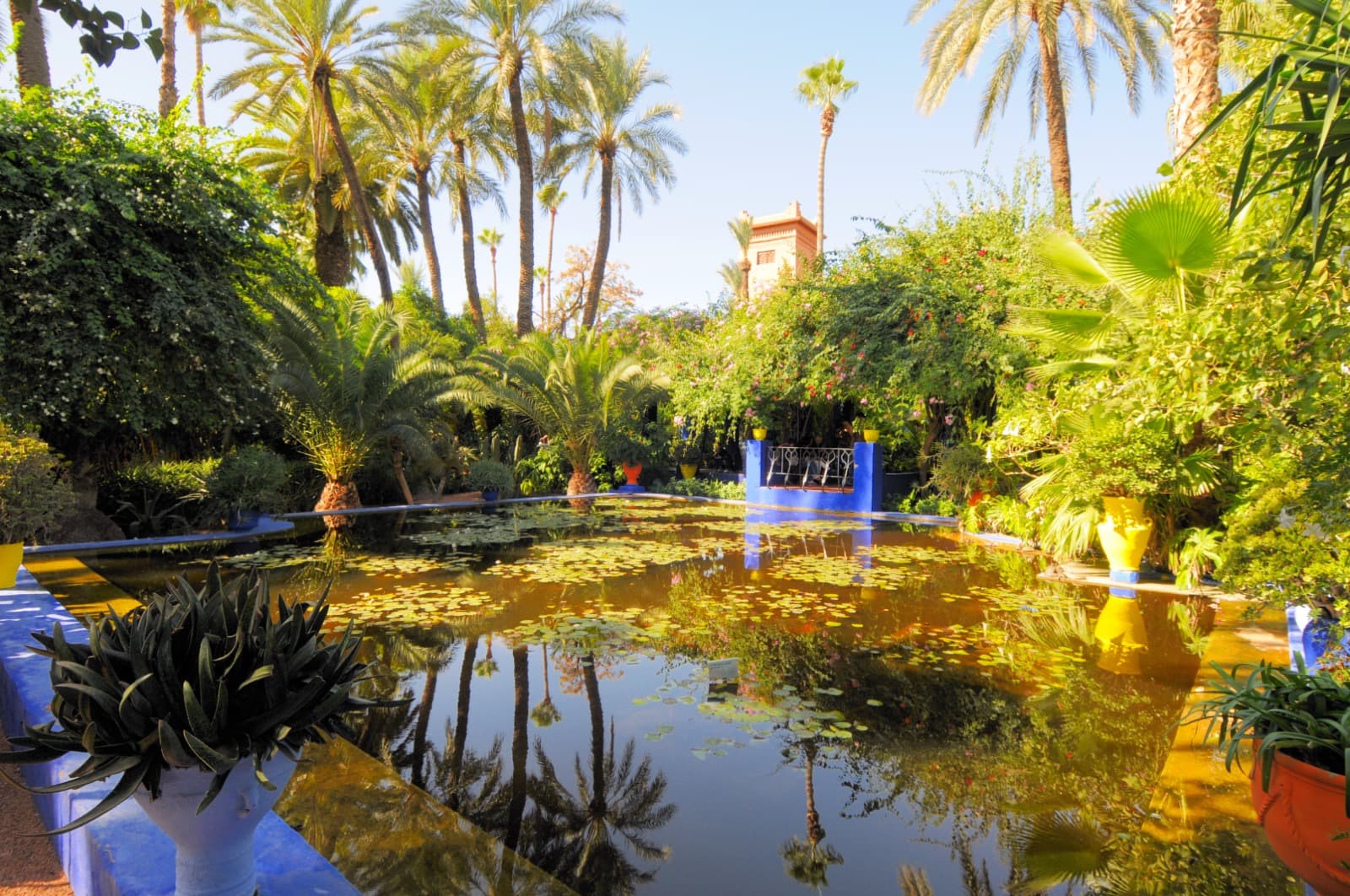
Majorelle Garden: The Blue That Reads the Whole of Marrakech
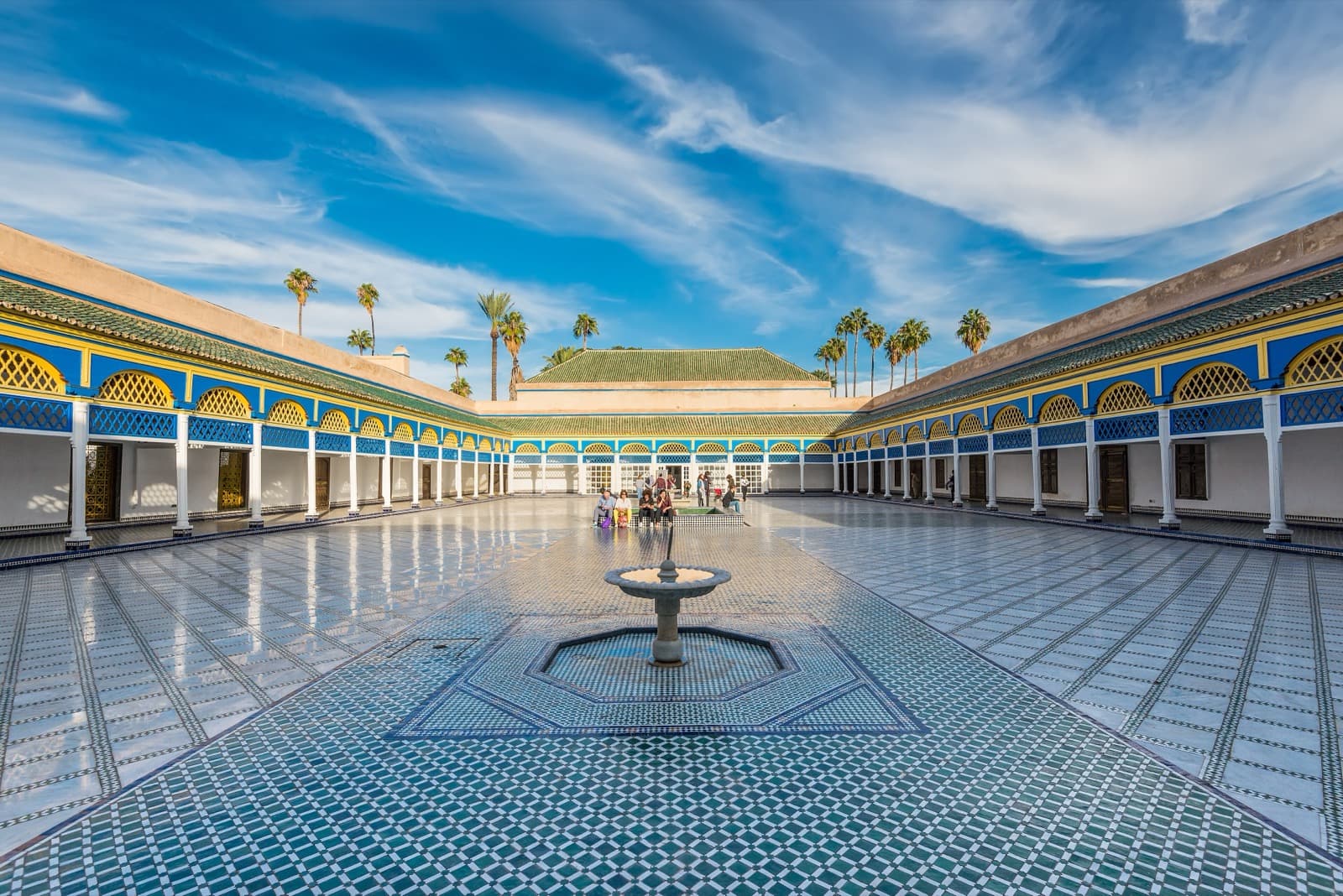
Bahia Palace: The Vizier Who Built a Palace to Outshine His King