Medina, Souks and Gardens: What the Red Walls Hide
180 min · 6.2 km · moderate
Plan Marrakech around three to four days, walk the medina on foot, use petit taxis or the airport bus to reach outlying gardens, aim for spring or autumn, and treat the city as safe but scam-aware rather than dangerous. That single combination answers most of what first-time visitors search for, and it maps neatly onto the way the Red City actually works: a dense, pedestrian old town ringed by ochre walls, with the famous gardens and museums scattered outside them. This guide walks through days, transport, timing, an honest word on safety, and rough budget, then hands you off to the self-guided routes that let you set your own pace.
How many days do you need in Marrakech?
Three days is the standard answer, and it holds up. In three full days you can cover the medina and its souks, the palace and tomb quarter to the south, the gardens and museums outside the walls, and still keep an unhurried rhythm. Add a fourth day if you want a slower morning, a hammam, or a day trip toward the Atlas Mountains without cramming.
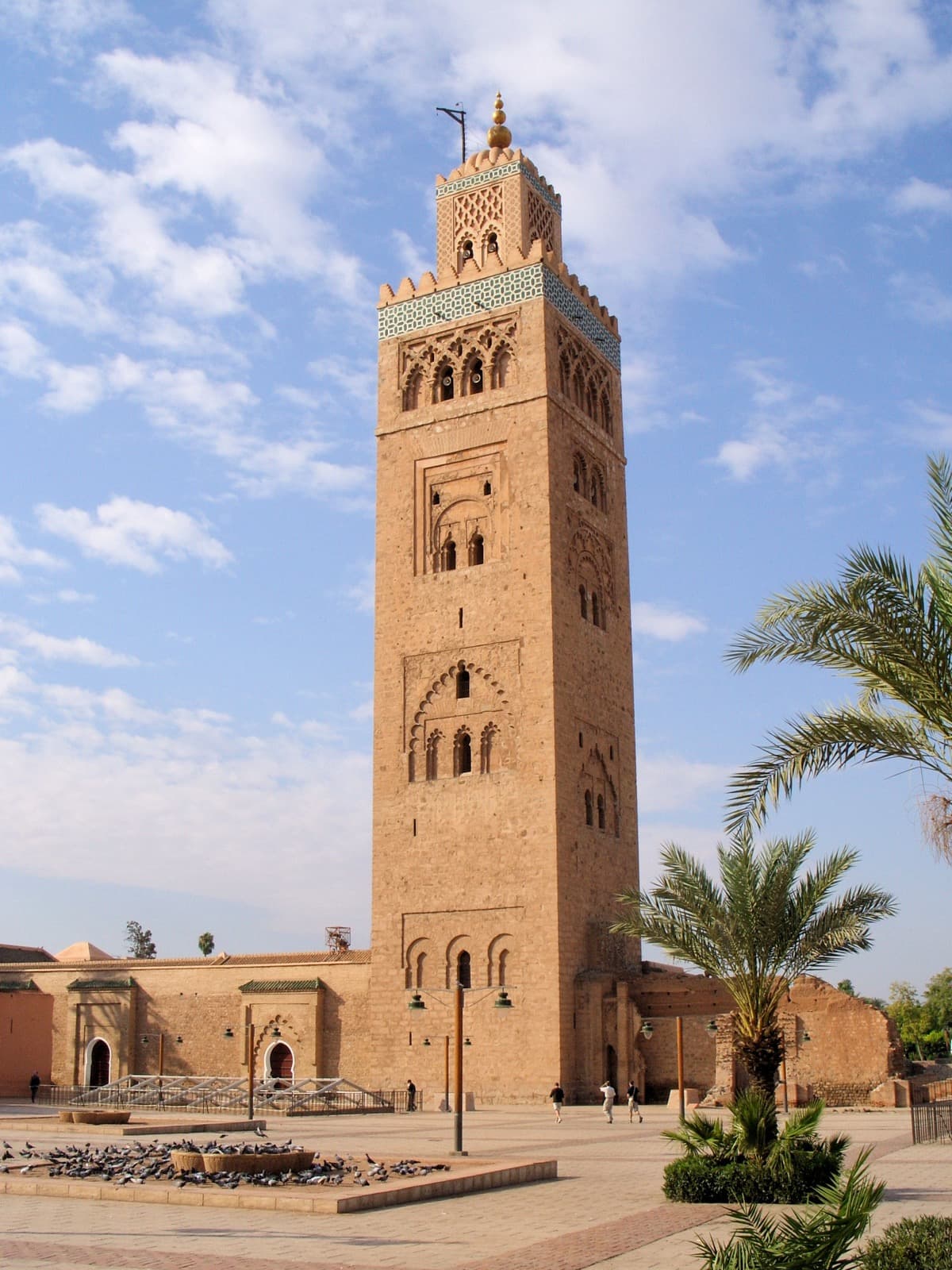
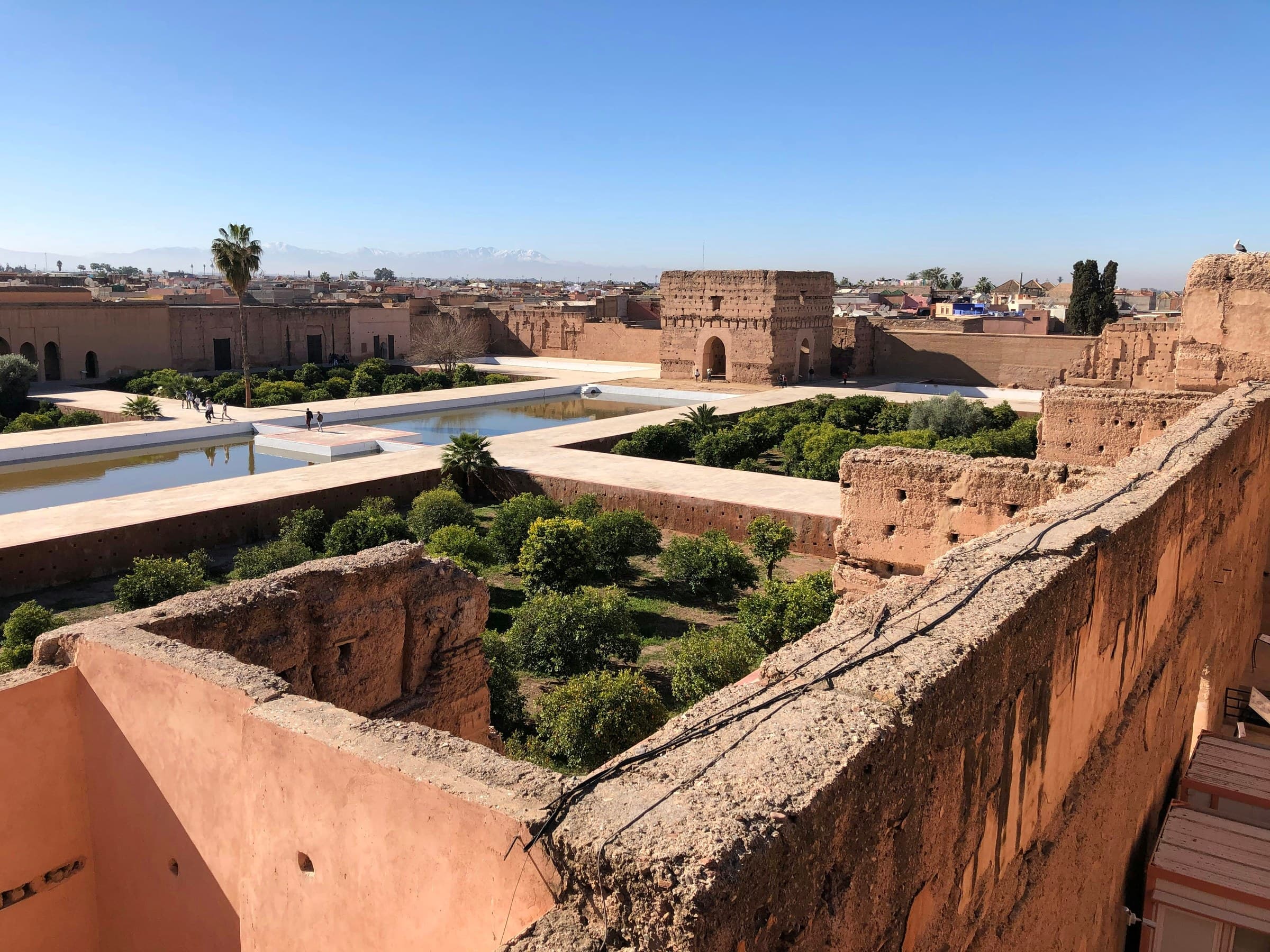
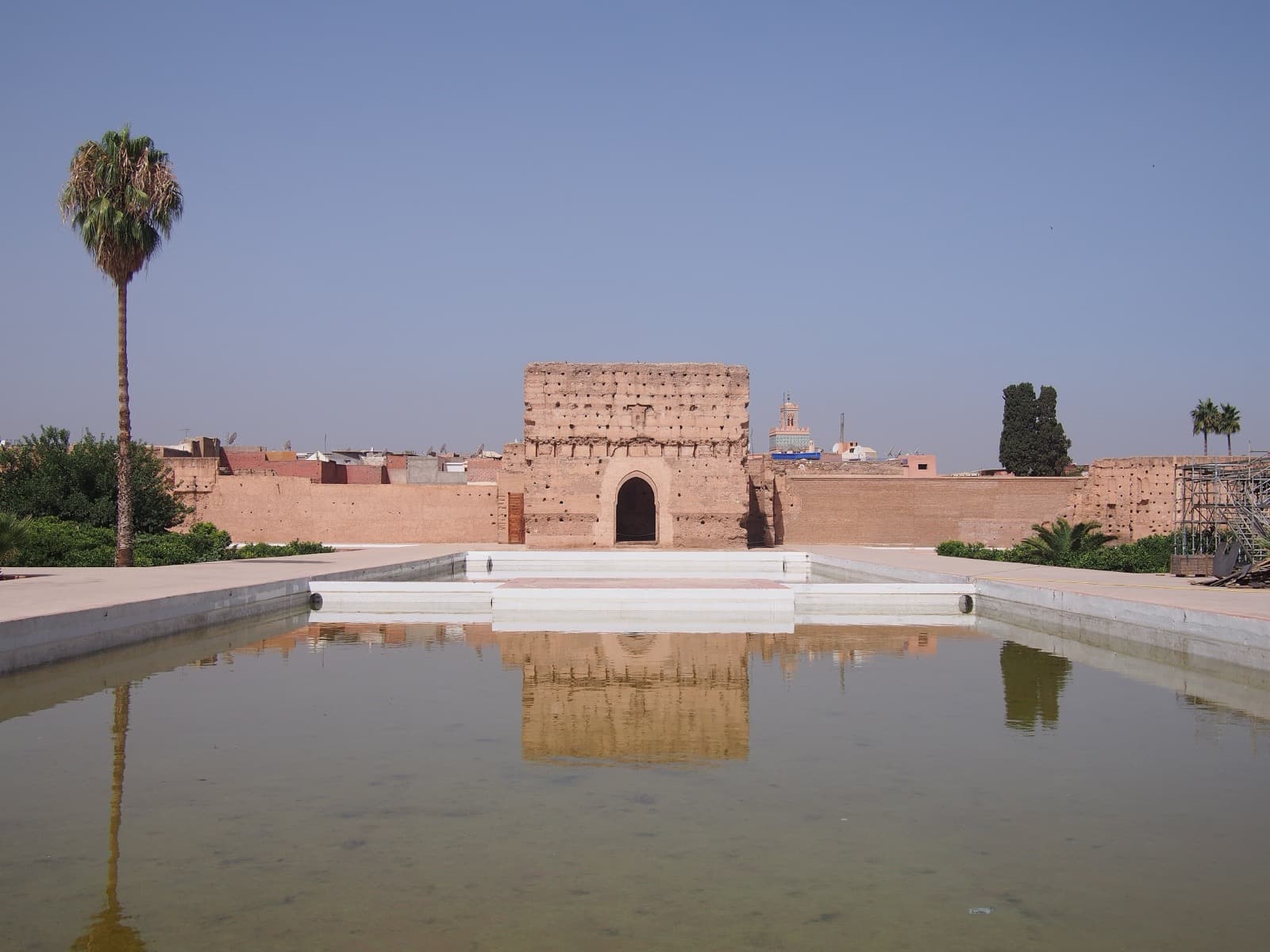
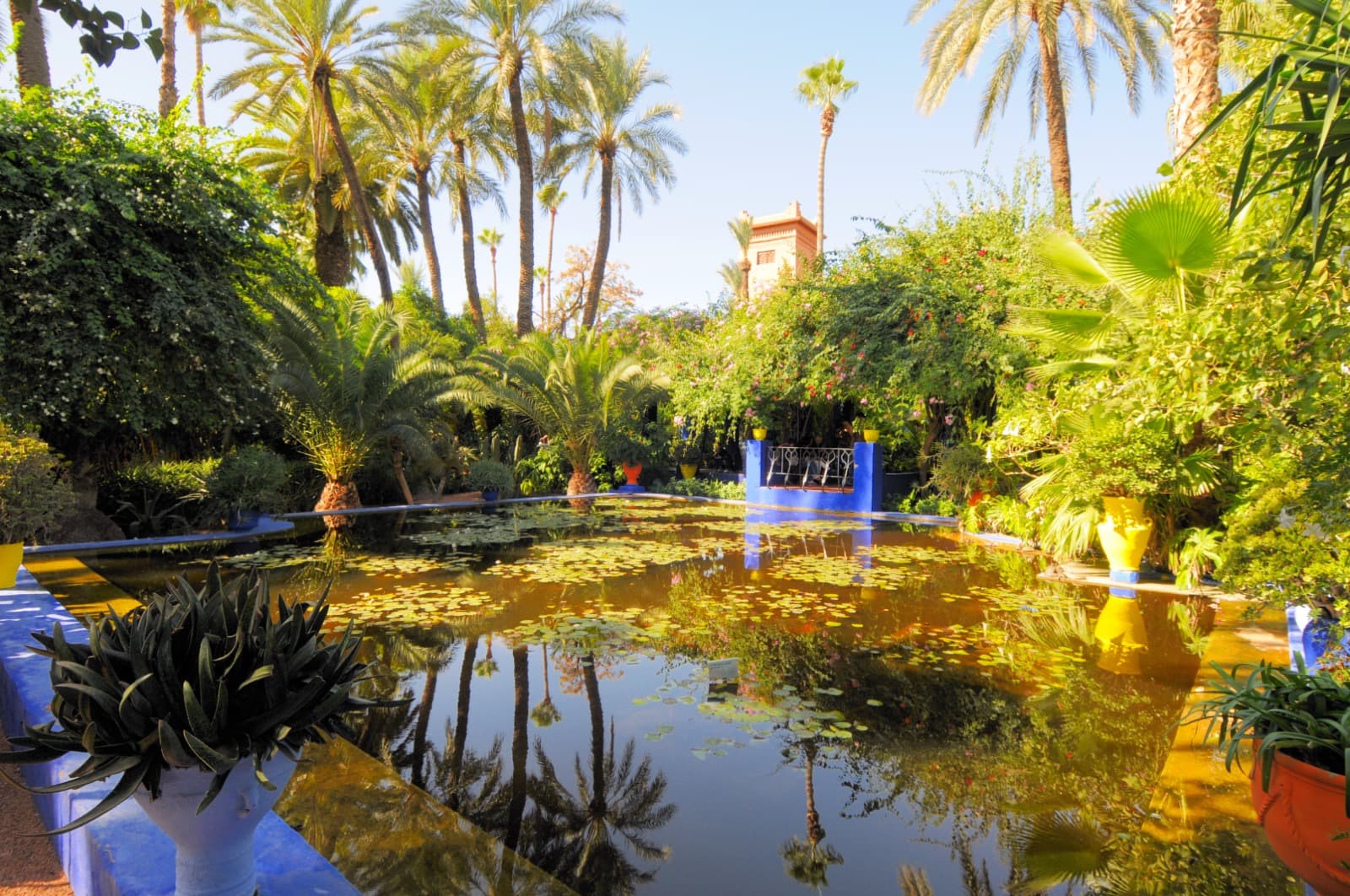
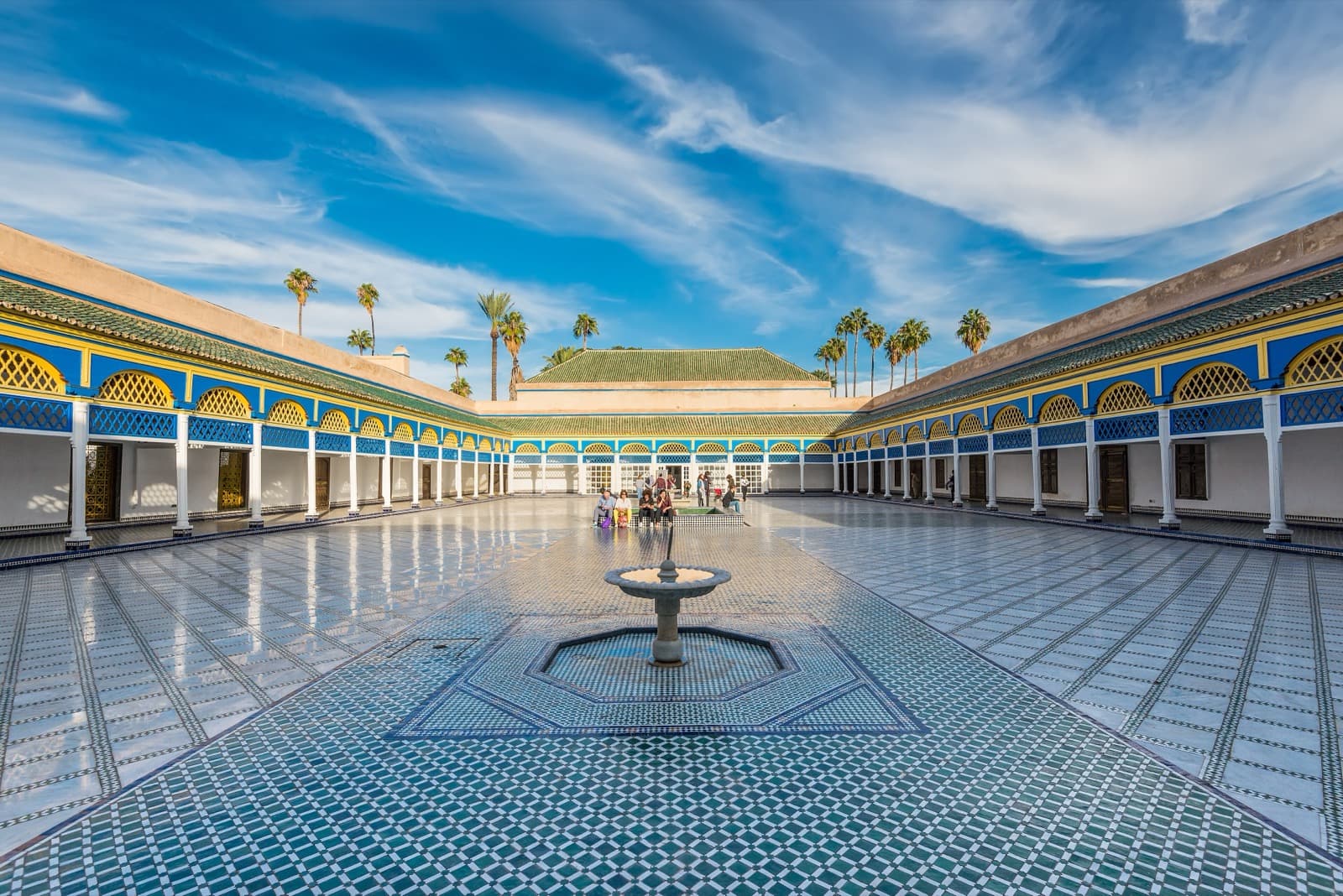
A workable shape: day one for the historic core (Jemaa el-Fnaa, the Koutoubia minaret, the souks, Ben Youssef Madrasa), day two for the royal quarter south of the square (the Saadian Tombs, El Badi Palace, Bahia Palace, the Mellah), and day three for the green city outside the ramparts (Majorelle Garden, the Yves Saint Laurent Museum, Menara or the Palmeraie). Those three days line up almost exactly with our three Marrakech walks, so you can hand each day to a self-guided route.
How do you get around Marrakech?
Hear a stop from this walk
Cyber Parc: How to Read an Orchard
Inside the medina, you walk. The old city is largely pedestrianized, its lanes are too narrow for cars, and petit taxis can only reach the main gates (a gate is a bab) or the edge of Jemaa el-Fnaa, from which you continue on foot to your riad. Trying to drive the medina is not the way in; a phone map and your own two feet are.
For everything beyond the walls, petit taxis are the workhorse. They are inexpensive, and the rule of thumb every local guide repeats is simple: insist on the meter, or agree the fare before you get in. Walking is also viable for shorter hops. From near Jemaa el-Fnaa to the Gueliz new town is roughly a twenty-five to thirty minute stroll.
From Menara Airport, you have two clear options. Bus Line Nineteen is the official airport line into the city center, priced at 30 dirham as of mid-2026, taking around thirty to fifty minutes. A petit taxi runs longer than the ride suggests only because of pricing friction: agree the fare before your bags go in the boot, and expect a regulated airport rate rather than a metered street fare. Drivers who open with a flat 150 to 200 dirham quote are above the fair price and can be declined.
When is the best time to visit?
Spring (March to May) and autumn (September to November) are the best windows. Daytime highs sit around 22 to 30 degrees Celsius, warm and dry, which is exactly what you want for walking shadeless souks and open squares.
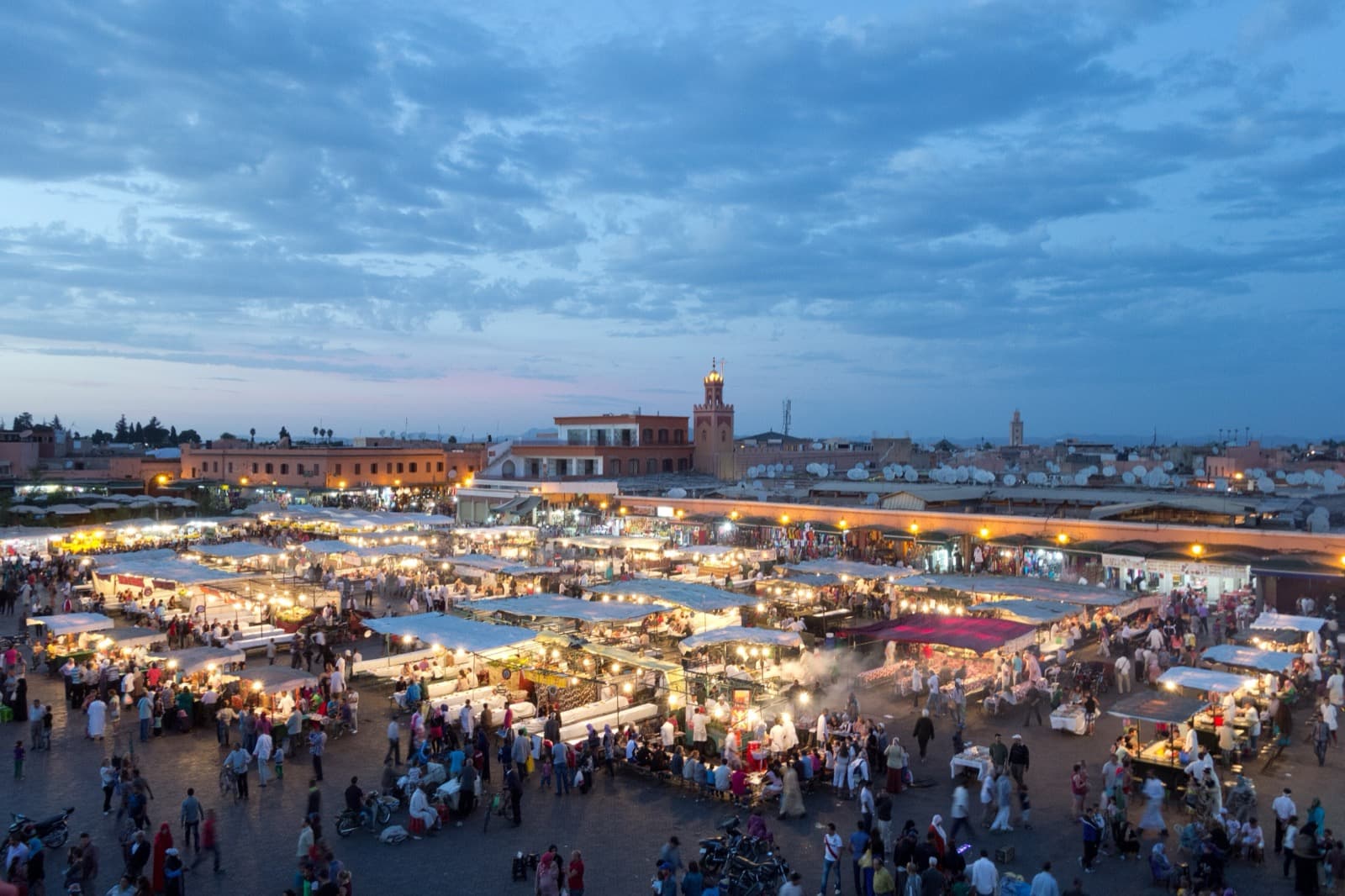
Summer is the honest caveat. July and August afternoons often reach the high thirties Celsius, and during heat waves they can push well past 40, with records above 45. Summer travel still works, but it reshapes the day: sightseeing moves to early morning and evening, and midday becomes shade-and-rest time. Our medina route already leans this way. As the tour notes, late afternoon into early evening is the finest window, when the sun softens the red walls and Jemaa el-Fnaa shifts from daytime juice carts and performers into the storytellers, musicians, and food stalls of the night.
One rhythm to respect year-round: this is a living Muslim city. Prayer times and Fridays change the tempo of the mosque quarters. The great mosques, including the Koutoubia, are exterior-only for non-Muslims, so build those stops around the call to prayer rather than against it.
Is Marrakech safe?
Marrakech is generally safe for visitors, and the framing that matters is petty scams rather than violence. Both the US State Department and the UK Foreign Office place Morocco at "exercise increased caution," the same tier as France, Italy, and Spain. Violent crime against foreigners is rare. What you actually manage is a set of well-documented, non-violent hustles.
The usual ones cluster in Jemaa el-Fnaa and the souks: unsolicited henna pressed onto your hand and then charged for, photos with snake charmers or water sellers followed by a demand for payment, and the classic faux-guide who tells you a route or a monument is "closed today" and steers you toward a relative's shop. Pickpocketing happens in the crowded square and at the airport, so keep valuables secure and out of sight.
Going self-guided is a genuine defense here, not just a preference. As the medina tour puts it, the busiest lanes are known for insistent faux-guides, so the real gift of your own map is quiet: your pace, your route, and no one pulling you into a shop. A firm, polite "no thank you" and steady walking handles nearly all of it. A licensed guide, booked through your riad, is wonderful company in the deepest lanes when you want one; the point is that you decide.
What will it cost?
Marrakech is inexpensive by European or North American standards, and much of the best walking is free. Jemaa el-Fnaa, the exterior of the Koutoubia, the souks, the Mouassine Fountain, and the ramparts cost nothing to experience.
Paid entries are modest and add up gently. The ticketed monuments in the medina and royal quarter (Ben Youssef Madrasa, the Saadian Tombs, El Badi Palace, Bahia Palace, Dar Si Said) each charge a small dirham fee, generally in the tens of dirham up to around 100. Carry small cash for these, since not every gate takes cards. The one place to plan ahead is Majorelle Garden: it is open daily from 8 a.m. to 6:30 p.m. with last entry at 6 p.m., uses timed tickets, and its only official ticket site is tickets.jardinmajorelle.com. Book a slot online to skip the queue, and note that the garden ticket and the Yves Saint Laurent Museum next door are separate admissions (a combined ticket that also covers the Berber Museum exists).
Your three self-guided walks
Each day of the classic Marrakech visit has a matching route you can walk at your own pace, with GPS-triggered audio at each stop:
- The Medina, Souks and Gardens walk is one loop of about six kilometres and three hours with the stops: the Koutoubia and two gardens beside it, Bab Agnaou, the Kasbah Mosque and the Saadian Tombs, El Badi, the Bahia and the Culinary Arts Museum, Jemaa el-Fnaa, the spice square and the souks, Ben Youssef Madrasa, Le Jardin Secret, Dar el Bacha, and the Cyber Parc orchard by the city walls.
- The gardens route reaches the green Marrakech outside the walls: Majorelle Garden and the Yves Saint Laurent Museum, the Menara and Agdal gardens, and the Palmeraie, with a stop on the khettaras, the water channels that made a desert city of gardens possible.
For the full set of routes and where each one starts, see Marrakech walking tours or browse the city page at /morocco/marrakech.
Sources
- Marrakech Menara Airport to city center transport options, 2026 (Moroccan Travel Trips)
- Best time to visit Marrakesh month-by-month (GetYourGuide Explorer)
- Getting around Marrakesh (Lonely Planet)
- Is Morocco safe: a local guide's honest answer, 2026 (GuideMe.ma)
- Official Jardin Majorelle site: hours and tickets
- Medina of Marrakesh World Heritage inscription (UNESCO)
Frequently asked questions
- How many days do you need in Marrakech?
- Three full days is the standard and works well: one for the medina and souks, one for the palaces and tombs south of Jemaa el-Fnaa, and one for the gardens and museums outside the walls. Add a fourth day for a slower pace, a hammam, or a day trip toward the Atlas Mountains. These days map onto the city's two self-guided routes: the medina loop takes in the souks and the royal quarter, and the gardens route reaches the green Marrakech outside the walls.
- How do you get from Marrakech Menara Airport to the medina?
- Two clear options exist. Bus Line Nineteen is the official airport line into the city center at 30 dirham as of mid-2026, taking around thirty to fifty minutes. A petit taxi is faster but priced by negotiation, so agree the fare before your bags go in the boot and expect a regulated airport rate. Petit taxis cannot enter the medina's narrow lanes, so they drop you at a gate or the edge of Jemaa el-Fnaa.
- What is the best time of year to visit Marrakech?
- Spring (March to May) and autumn (September to November) are best, with daytime highs around 22 to 30 degrees Celsius, warm and dry for walking. Summer is the caveat: July and August afternoons often reach the high thirties Celsius and can push past 40 during heat waves, so summer sightseeing shifts to early morning and evening with midday rest.
- Is Marrakech safe for tourists?
- Marrakech is generally safe, with concerns centered on non-violent scams rather than violence. The US State Department and UK Foreign Office both rate Morocco at exercise increased caution, the same level as France, Italy, and Spain. Common hustles include unsolicited henna, paid photos with performers, and faux-guides claiming a route is closed. A firm no thank you, steady walking, and secured valuables handle most of it, and going self-guided keeps you on your own route.
- How do you get around Marrakech within the city?
- Inside the medina you walk, since the old city is largely pedestrianized and its lanes are too narrow for cars. For everything beyond the walls, petit taxis are cheap and reliable, but insist on the meter or agree the fare first. Shorter hops such as the medina to the Gueliz new town are a pleasant twenty-five to thirty minute walk.
- Do you need to book Majorelle Garden tickets in advance?
- Yes, booking ahead is recommended. Majorelle Garden is open daily from 8 a.m. to 6:30 p.m. with last entry at 6 p.m., and it uses timed tickets. The only official ticket site is tickets.jardinmajorelle.com, and buying a time slot online lets you skip the queue. The garden ticket and the adjacent Yves Saint Laurent Museum are separate admissions, though a combined ticket that also covers the Berber Museum is available.
Ready to experience it?
Medina, Souks and Gardens: What the Red Walls Hide
180 min · 6.2 km · moderate
More from Marrakech
Explore more at your own pace.
The Red City in Three Layers: How to Read Marrakech
El Badi Palace: Reading Marrakech's Royal Quarter Through a Ruin
Jemaa el-Fnaa: The Square That Unlocks the Whole Marrakech Medina
Majorelle Garden: The Blue That Reads the Whole of Marrakech
Bahia Palace: The Vizier Who Built a Palace to Outshine His King