Medina, Souks and Gardens: What the Red Walls Hide
180 min · 6.2 km · moderate
One day in Marrakech is enough to walk the medina's core on foot and see the royal quarter, with a short taxi hop to the gardens in the late afternoon. Start at Jemaa el-Fnaa when it is quiet, spend the morning in the walled old city between the Koutoubia minaret and the Ben Youssef Madrasa, cross south after lunch to the Saadian Tombs and the palaces around Bab Agnaou, then ride out to the Majorelle Garden for the cool end of the day. The distances are small, the ticketed sites are cheap, and everything below routes into a Roamer self-guided audio tour so you keep your own pace with no group and no fixed clock.
This is a walking plan, not a checklist. The medina is compact: the whole morning loop covers roughly two and a half kilometres of lanes, and the royal quarter to the south is a similar distance. Only the gardens sit far enough out to warrant a taxi. Read on for the hour-by-hour route, verified prices and hours, and honest notes on the touts you will meet.
The short answer: how to spend one day
- Early morning: Jemaa el-Fnaa and the Koutoubia Mosque exterior, before the heat and crowds.
- Late morning: the souks, the Almoravid Koubba, and the Ben Youssef Madrasa.
- Midday: lunch on a rooftop overlooking the square, then a rest through the hottest hours.
- Early afternoon: south to Bab Agnaou, the Saadian Tombs, El Badi Palace, the Mellah, and the Bahia Palace.
- Late afternoon and evening: taxi to the Majorelle Garden and the Yves Saint Laurent Museum, then back to Jemaa el-Fnaa for the night food stalls.
The first two blocks follow the Jemaa el-Fnaa medina tour. The afternoon follows the palaces-and-tombs tour. The gardens close the day. All three are on the Marrakech city page.
Morning: the medina core on foot
Hear a stop from this walk
Cyber Parc: How to Read an Orchard
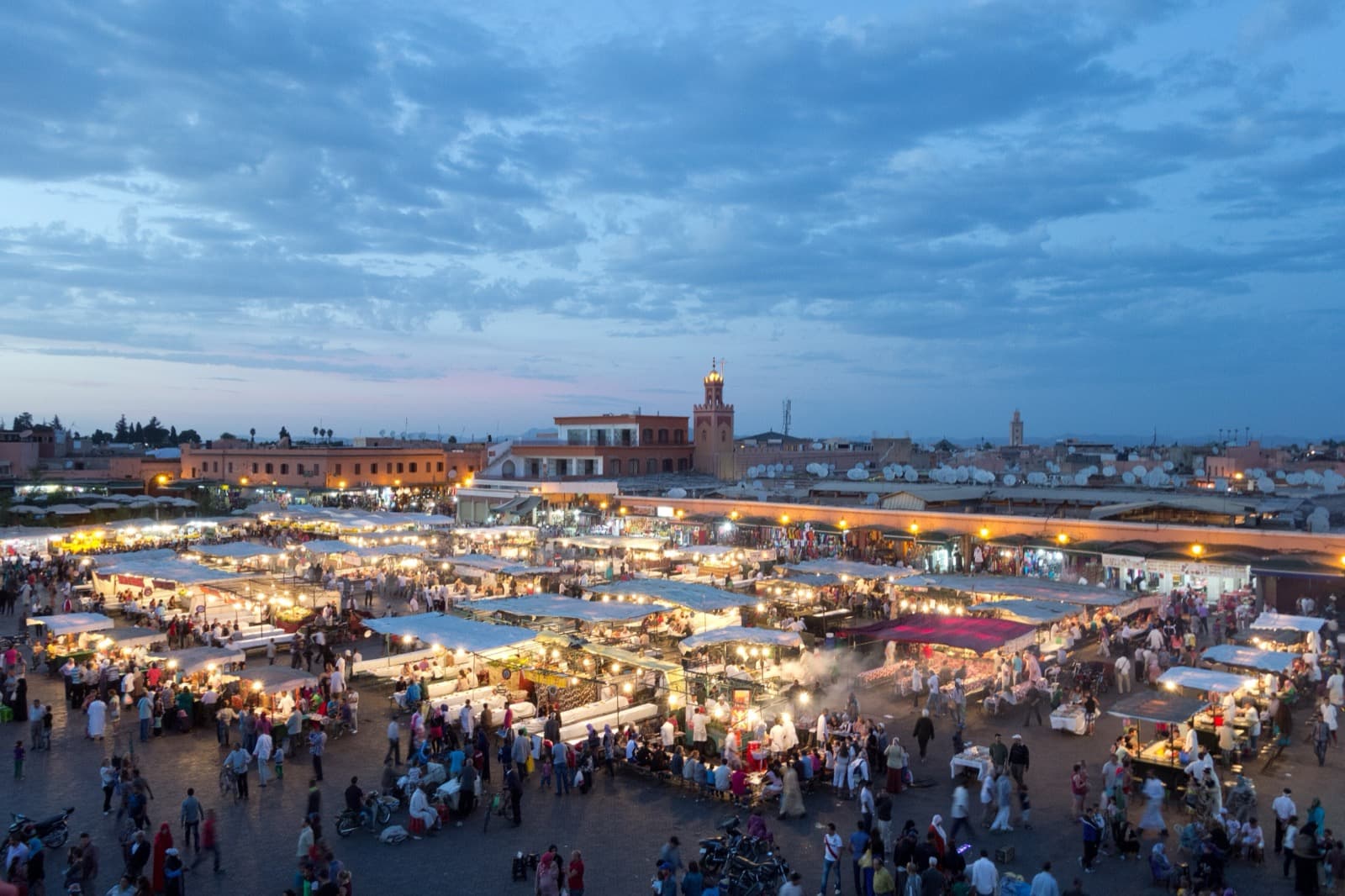
Begin at Jemaa el-Fnaa, the open square that has been the social hub of the medina since the city's early centuries. Arriving early means juice carts and a few musicians rather than the full evening press. The square's oral tradition of storytellers and performers was proclaimed a UNESCO Masterpiece of the Oral and Intangible Heritage of Humanity in 2001, a recognition of living performers rather than any single building. Entry is free: it is a public square.
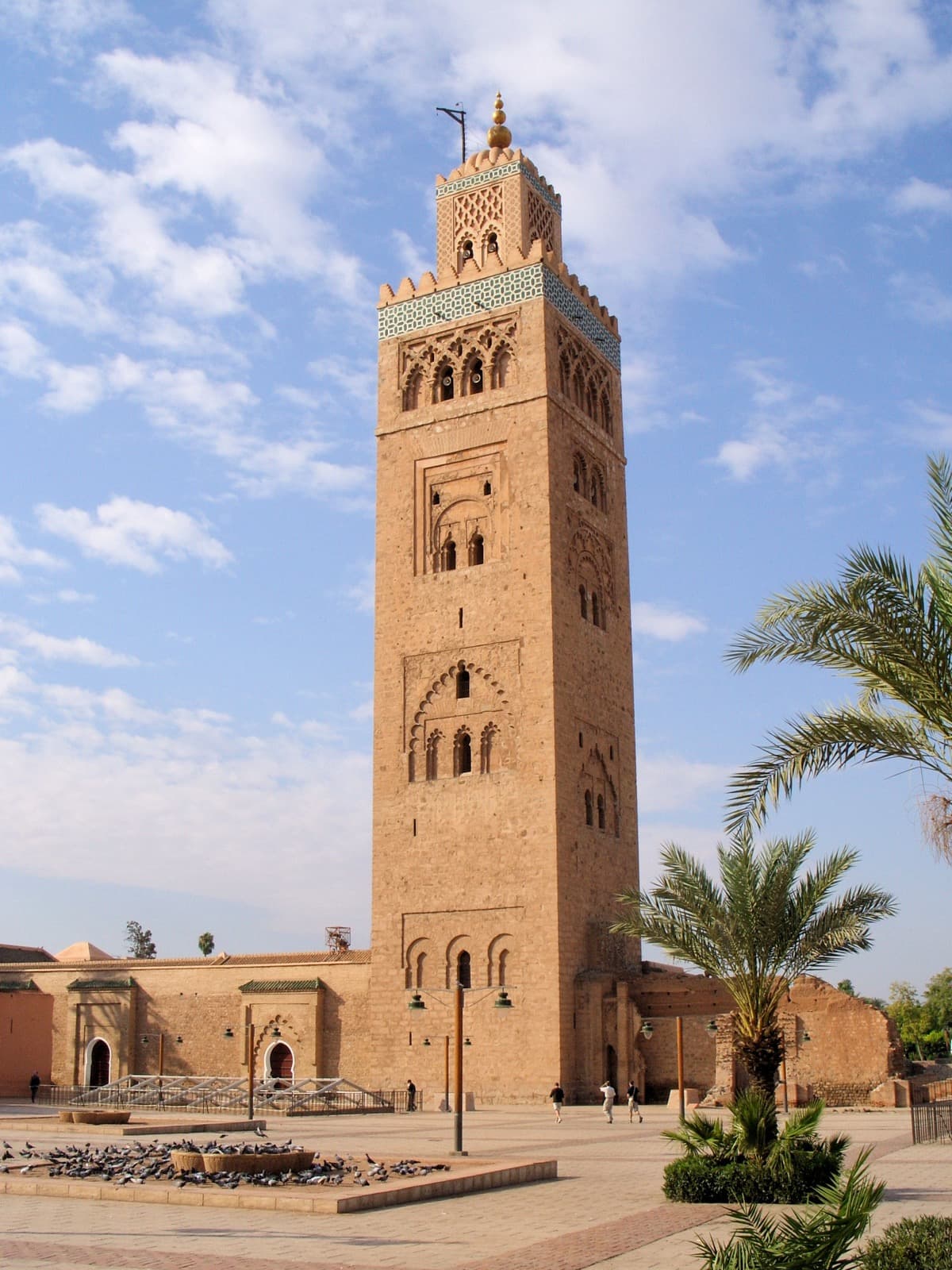
Walk a few minutes west to the Koutoubia Mosque. Its minaret stands about seventy-seven metres tall and is thought to have inspired both the Giralda of Seville and the Hassan Tower of Rabat. Note the practical rule that shapes any Marrakech day: non-Muslims may not enter active mosques in Morocco, so the Koutoubia is an exterior stop. Admire the minaret, the gates, and the gardens around it, all free to see from outside.
From the square, the souks fan north toward the Ben Youssef Mosque. They are organized by craft into named quarters, so the market works almost like a walkable trade directory. Two ticketed monuments anchor the north end. The Almoravid Koubba is the only surviving example of Almoravid architecture in Marrakech, and its dome carries some of the earliest muqarnas, the honeycomb carving that became a signature of Moroccan design. A few steps on, the Ben Youssef Madrasa was in its prime the largest madrasa in the Maghreb, with roughly one hundred and thirty student rooms. Both take a small dirham entry paid in cash at the door.
If you lose your bearings in the lanes, walk south and you will spill back into Jemaa el-Fnaa. That reliable fallback is the reason the medina is easy to explore self-guided.
Midday: eat, rest, and reset
The medina gets fierce sun by midday with little shade, so this is the hour to sit down. Rooftop cafes ring Jemaa el-Fnaa and give you the square from above. Spring and autumn are the most comfortable seasons overall. In high summer, treat the middle of the day as a genuine break rather than a walking block, and shift more of the route into the cooler morning and late afternoon.
Afternoon: the royal quarter and the tombs
Head south toward Bab Agnaou, one of the principal gates of the old Almohad kasbah, the walled royal citadel laid out in the southern medina in the late twelfth century. Its carved stone is framed by a Quranic inscription in foliated Kufic script, and because it sat inside the walls it was ceremonial rather than defensive.
Beside the Kasbah Mosque, a discreet passage leads to the Saadian Tombs. When the Alaouite sultan Moulay Ismail plundered the nearby Saadian palaces, he walled up this necropolis rather than destroy it, and it stayed hidden for roughly two centuries until it was rediscovered in 1917. Its finest chamber, the Chamber of the Twelve Columns, rises about twelve metres on columns of Italian Carrara marble. The tombs run one narrow passage to that chamber, so arriving near opening or in the late afternoon spares you the longest queue. The site is open daily from about 9 in the morning to 5 in the afternoon, with entry around sixty to one hundred dirham.
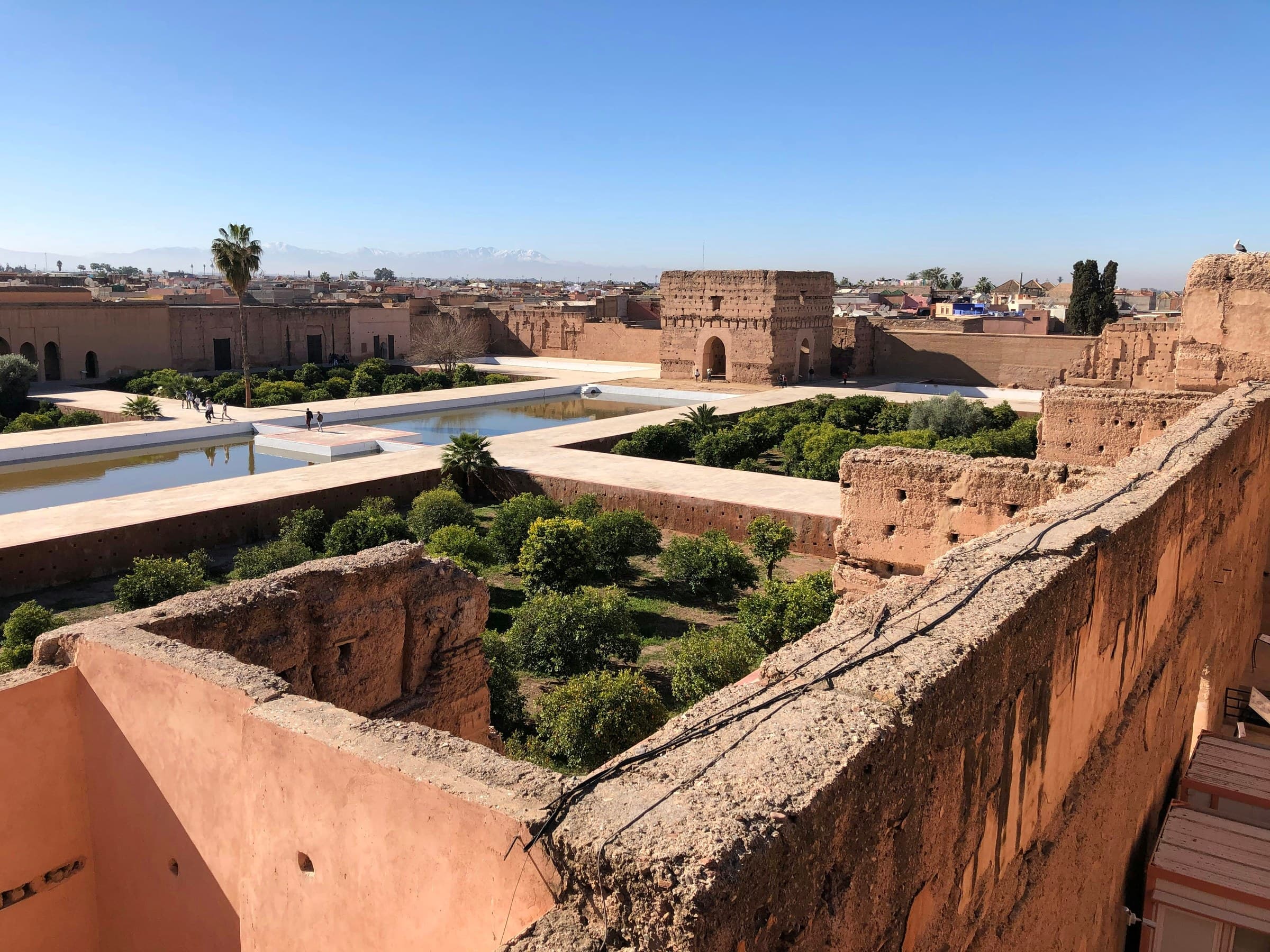
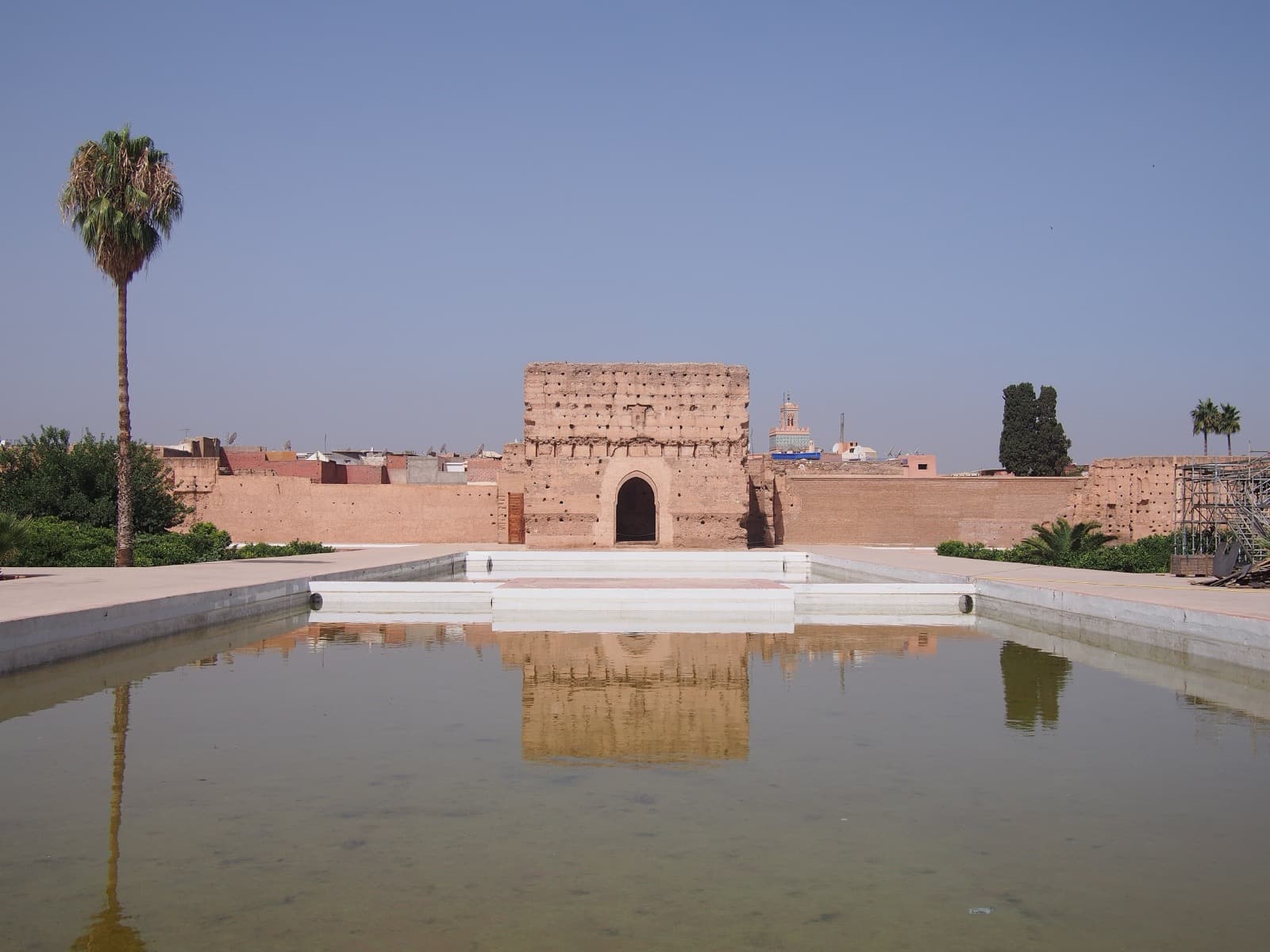
A short walk east brings you to El Badi Palace, once Ahmad al-Mansur's showpiece and named the Incomparable after one of the ninety-nine Names of God in Islam. Moulay Ismail later stripped it, and today it is a roofless open ruin where storks nest on the ramparts. It keeps similar hours to the tombs, roughly 9 to 5, with entry near one hundred dirham. Carry water and a hat: there is almost no shade across the sunken gardens.
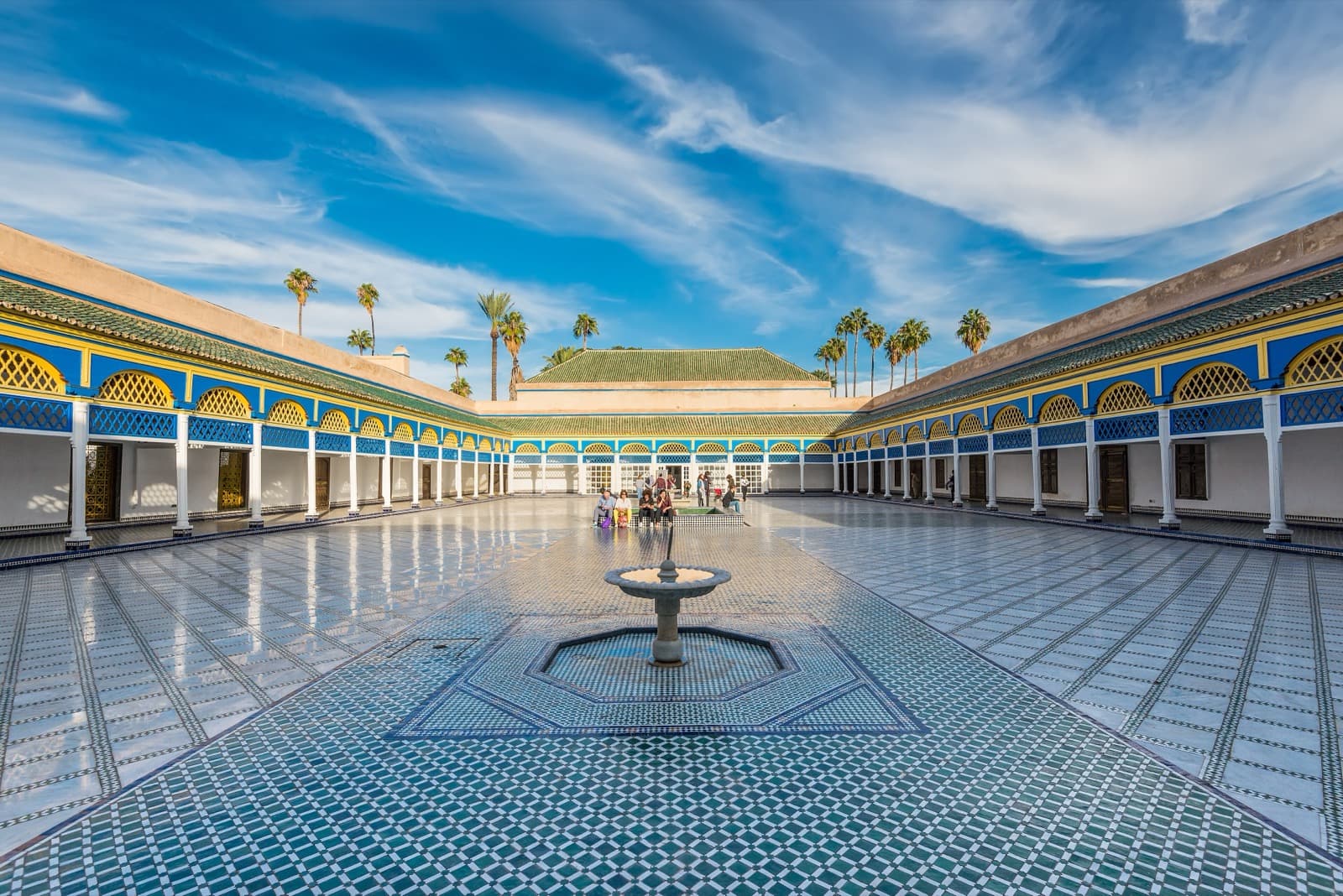
From here, thread through the Mellah, the Jewish quarter created by Saadian decree in 1558, then finish at the Bahia Palace, built court by court by two generations of grand viziers. It has around a hundred and fifty rooms and no single master plan, so treat its painted cedar rooms and riad gardens as a gentle maze rather than a fixed route. The Bahia opens in the morning, around 8 or 9 depending on the season; standard adult entry is modest, on the order of seventy to one hundred dirham, and during Ramadan (roughly mid-February to mid-March in 2026) the palaces run shortened hours, so confirm on the day. Buy tickets only at the official window inside each gate, never from anyone on the street.
Late afternoon: the gardens
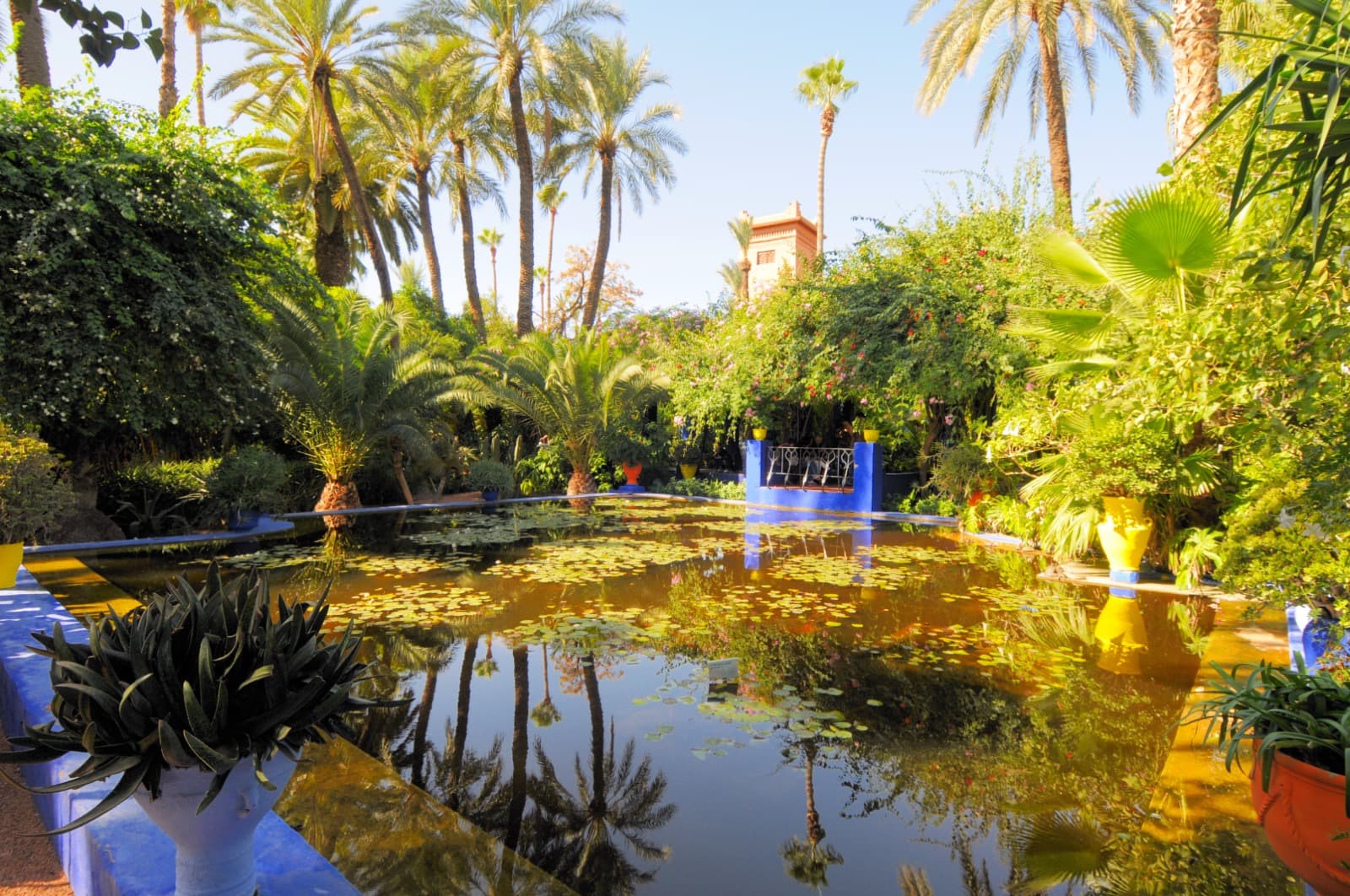
Close the day in green Marrakech. Taxi north to the Majorelle Garden, rescued in 1980 by Yves Saint Laurent and Pierre Berge after it was threatened with demolition. The cobalt blue that covers its buildings, bleu Majorelle, is named for the painter Jacques Majorelle and has actually been patented. Book a timed slot in advance: the official ticket site is tickets.jardinmajorelle.com, and there are effectively no walk-up door sales, so buy online. Combined tickets with the Berber Museum and the neighbouring Yves Saint Laurent Museum are available if you want all three.
The Yves Saint Laurent Museum, opened in 2017 and designed by Studio KO, sits beside the garden; its brick facade was built to resemble the weave of fabric. Note its own schedule: it is open every day except Wednesday, from 10 in the morning to 6:30 in the evening, with last entry at 6. If you would rather stay in the medina, skip the gardens and simply linger longer over Jemaa el-Fnaa as it turns into its evening self, when storytellers, musicians, and food stalls take over the square.
Practical notes and honest safety framing
Marrakech is broadly safe for visitors, and violent crime against tourists is uncommon. The real friction is petty and social, not dangerous. Insistent faux-guides and touts work the crowds around Jemaa el-Fnaa, the souks, and the medina gates, and anyone who steers you may expect a tip. A calm, firm "la shukran" (no thank you), steady eye contact, and your own phone map are all you need to stay on your own route. Keep your hands to yourself around henna artists in the square, agree any price before a transaction, and ask a taxi for the meter or fix the fare first.
Carry small dirham notes: the ticketed monuments and small tips are cash, and many places do not take cards. Wear comfortable closed shoes for uneven cobbles shared with scooters and handcarts. Dress modestly, with shoulders and knees covered, especially near mosques. Fridays and daily prayer times change the rhythm around the mosque quarters, so build the exterior mosque stops around those moments.
Because a self-guided Roamer tour runs on your phone with GPS-triggered audio, you sidestep the faux-guides entirely and keep the whole day at your own pace. Open the city page at /morocco/marrakech to pick your first route.
Sources
Frequently asked questions
- Can you see Marrakech in one day?
- Yes. The medina is compact enough to walk the core in a morning and the royal quarter in an afternoon, with one short taxi hop to the gardens. The morning loop around Jemaa el-Fnaa covers roughly two and a half kilometres, and the palace quarter to the south is a similar distance. You will not see everything, but you can cover the main square, the souks, the Ben Youssef Madrasa, the Saadian Tombs, the palaces, and the Majorelle Garden in a full day.
- How much does it cost to visit the main sites in Marrakech?
- Individual monuments are inexpensive and paid in cash at the door. The Saadian Tombs and El Badi Palace run roughly sixty to one hundred dirham each, and the Bahia Palace is in a similar range. Jemaa el-Fnaa, the souks, and the Koutoubia exterior are free. The Majorelle Garden is a timed online ticket that costs more, with combined options for the Berber Museum and the Yves Saint Laurent Museum. Buy tickets only at official windows or the official Majorelle site, never from touts on the street.
- What time do Marrakech attractions open?
- The Saadian Tombs and El Badi Palace are generally open daily from about 9 in the morning to 5 in the afternoon. The Bahia Palace opens in the morning as well, around 8 or 9. The Yves Saint Laurent Museum is open every day except Wednesday, from 10 to 6:30 with last entry at 6. During Ramadan, which falls roughly mid-February to mid-March in 2026, several sites run shortened hours, so confirm on the day.
- Can non-Muslims go inside the Koutoubia Mosque?
- No. Non-Muslims may not enter active mosques in Morocco, including the Koutoubia and the Mouassine Mosque. You can admire the minaret, the gates, and the surrounding gardens from outside, all free of charge. The Almoravid Koubba, the Ben Youssef Madrasa, the Saadian Tombs, and the palaces are monuments and museums that you can enter with a ticket.
- Is Marrakech safe to walk around alone?
- Broadly yes. Violent crime against tourists is uncommon, and the main friction is petty and social rather than dangerous. Insistent faux-guides and touts work the crowds around Jemaa el-Fnaa and the medina gates, and henna artists may grab your hand and then demand payment. A firm la shukran (no thank you), steady walking, and your own phone map keep you on your route. Agree prices before any transaction and ask taxis for the meter or fix the fare first.
- Do you need to book the Majorelle Garden in advance?
- Yes. The Majorelle Garden uses timed online tickets sold through its official site, and there are effectively no walk-up door sales. Book an early slot for the coolest and quietest visit. Combined tickets bundle the garden with the Berber Museum and the neighbouring Yves Saint Laurent Museum if you plan to see all three.
Ready to experience it?
Medina, Souks and Gardens: What the Red Walls Hide
180 min · 6.2 km · moderate
More from Marrakech
Explore more at your own pace.
The Red City in Three Layers: How to Read Marrakech
El Badi Palace: Reading Marrakech's Royal Quarter Through a Ruin
Jemaa el-Fnaa: The Square That Unlocks the Whole Marrakech Medina
Majorelle Garden: The Blue That Reads the Whole of Marrakech
Bahia Palace: The Vizier Who Built a Palace to Outshine His King