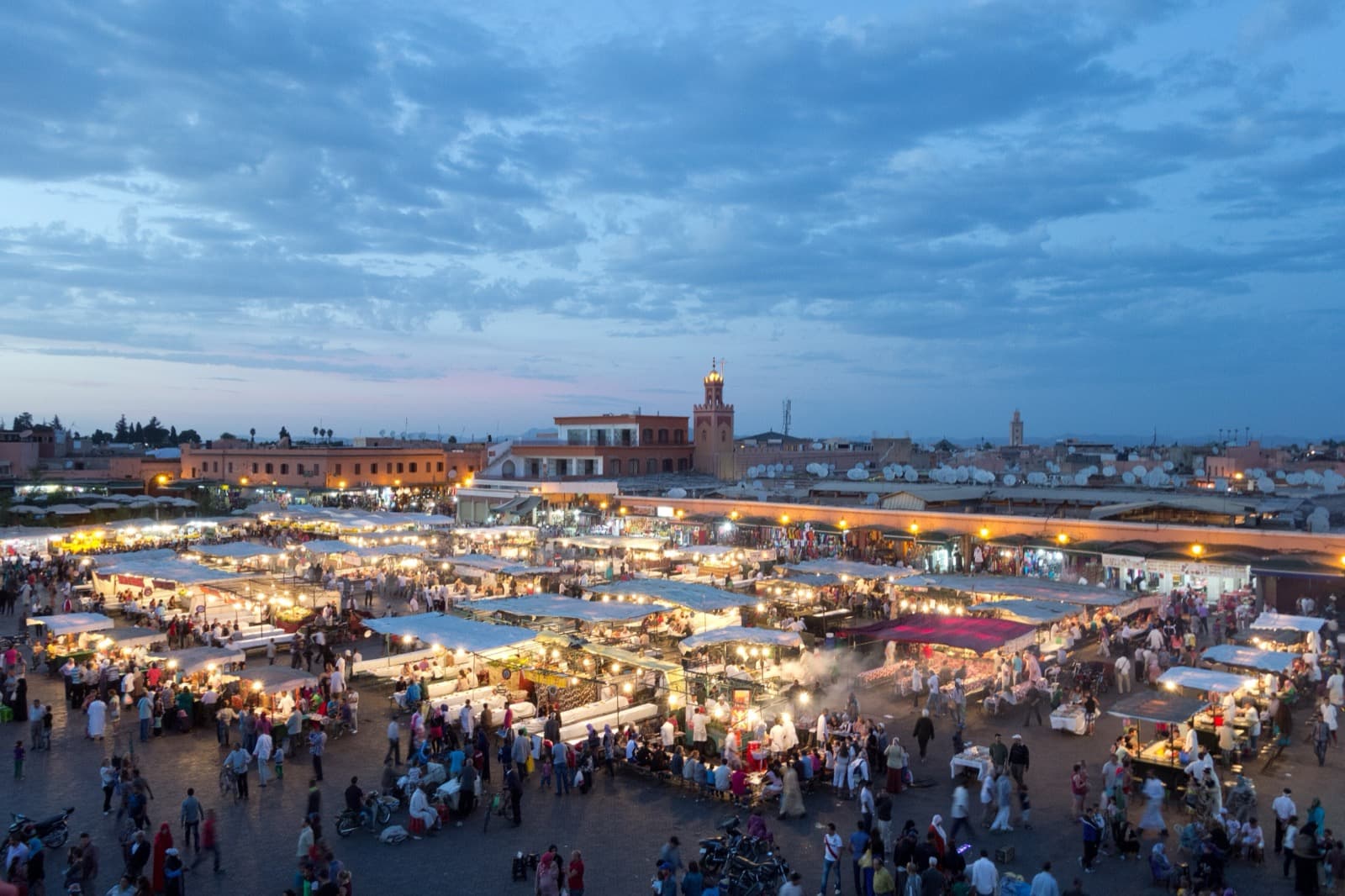
Jemaa el-Fnaa is not a plaza to cross but a stage that keeps two clocks, and reading how it turns from a daytime market of juice carts and snake charmers into a nighttime theatre of storytellers, musicians, and food stalls is the fastest way to understand the entire red-walled medina of Marrakech. This self-guided walking tour uses the square as its doorway, then follows the logic outward: a minaret a dynasty copied across two continents, a covered market organized like a trade directory, the small dome where Moroccan ornament was first drafted, the college where craftsmen finished the sentence, a civic fountain that watered people and animals side by side, and the ochre ramparts that give the Red City its name. The argument of the tour is simple. The old city is a thousand-year-old machine for trade, prayer, and performance, and it is still running at full tilt.
The square that explains the city
Start with what makes Jemaa el-Fnaa singular. It is not the stone. It is the sound. UNESCO proclaimed the oral and performance culture of the square a Masterpiece of the Oral and Intangible Heritage of Humanity in 2001, then inscribed it on the Representative List in 2008. The honor is for the halqa, the performance circle that forms when a storyteller or a group of musicians draws a ring of listeners around them. This was a landmark idea in heritage protection, because it safeguarded a living tradition of performers rather than a building.
Even the name refuses to settle, which tells you something about how old and layered this place is. Tradition glosses Jemaa el-Fnaa several ways, none of them agreed upon: the assembly of the dead, tied to public executions; the mosque of ruination, after a Friday mosque the Saadian sultan Ahmad al-Mansur is said to have begun here and abandoned; or simply the assembly place. The square has been the commercial and social hub of the medina since the city's early centuries, and it sits at the center of a medina the Almoravids founded in the late eleventh century. When UNESCO inscribed the whole Medina of Marrakesh as a World Heritage site in 1985, this was its beating heart.
The square is also famous for touts and insistent faux-guides, and this is exactly where the case for walking it yourself becomes concrete. With your own quiet map you owe no one a purchase and no one a route. You can linger at the edge or wade into the circles, then move on whenever you like. If you want a fuller sense of how the tours in this city fit together, the hub page for Marrakech walking tours lays out the options.
From one square, the whole machine
Hear a stop from this walk
Cyber Parc: How to Read an Orchard
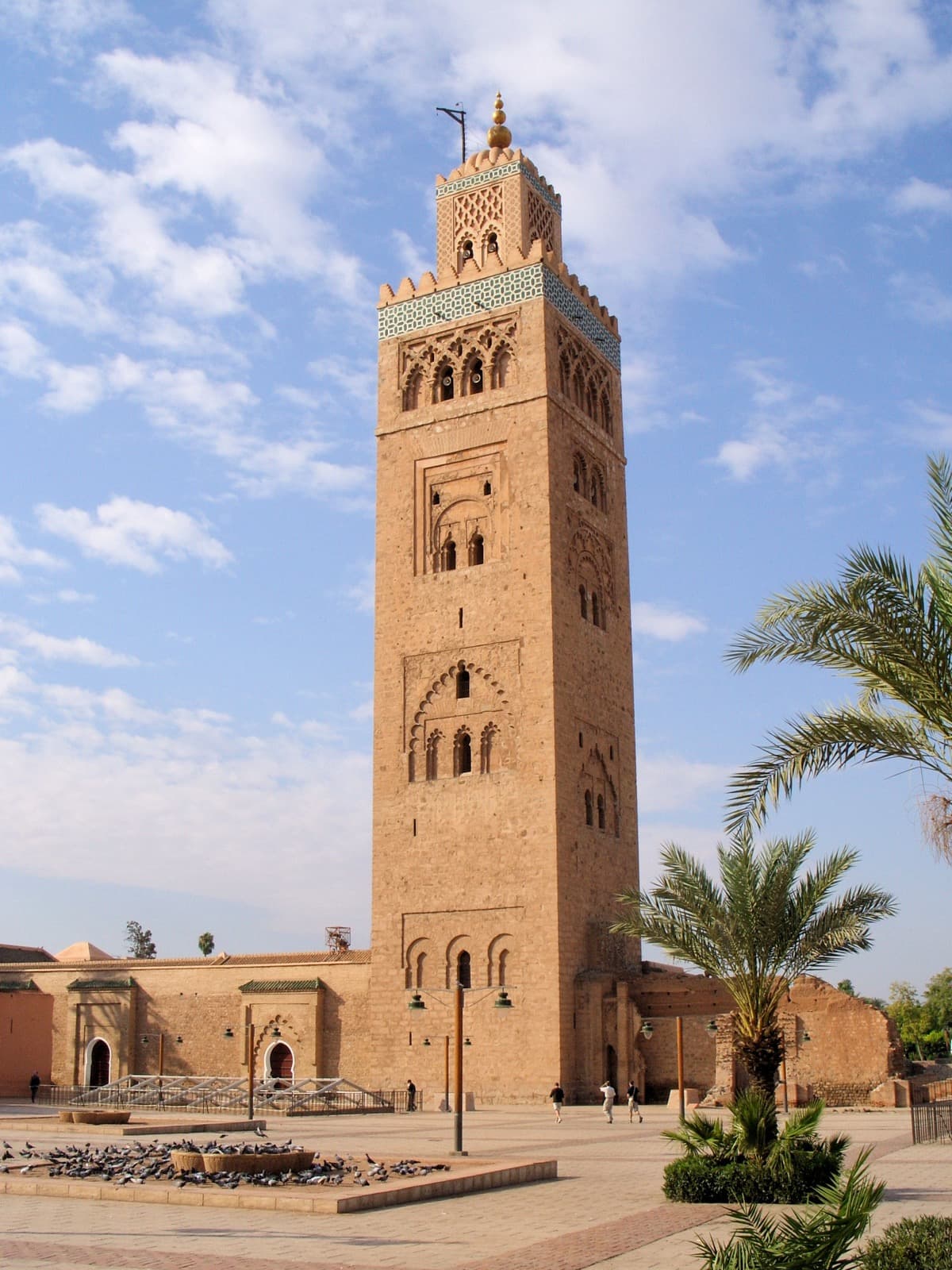
Once you read the square as a stage, the rest of the route falls into place as a working system. Southwest of the square rises the Koutoubia, the great mosque of Marrakech and the minaret you have probably been navigating by all day. It is the work of the Almohads, an Amazigh dynasty who took the city from the Almoravids in 1147. The minaret stands about seventy-seven metres tall, and scholars connect it to the Giralda of Seville and the Hassan Tower of Rabat, both raised in the same era. What you are looking at is effectively the prototype of a whole family of great towers. Even the name is a trade story: Koutoubia comes from kutubiyyin, the booksellers whose market once stood at its foot. It is an active mosque, so non-Muslims admire it from outside, and on this walk that boundary is its own reward rather than a locked door.
North of Jemaa el-Fnaa, under an arched gateway, the city turns into a covered labyrinth. The souk is not one market but dozens, organized for centuries by craft and guild into named quarters, so the whole thing reads like a trade directory you walk through. The main artery, Souk Semmarine, runs heavy with textiles toward the Ben Youssef Mosque. Branch off and you reach the Dyers' Souk, the metalworkers ringing on their anvils, the leatherworkers, and the spice and apothecary stalls. Threading through are the historic funduks, the caravanserais where caravan traders once lodged and sold their goods, many clustered toward the Mouassine quarter. These are living crafts at work, heritage in motion, not a display put on for visitors.
Where the ornament was born, and where it was finished
Two interiors on this route show the same craft tradition at its beginning and its peak, and both are monuments you can actually enter, unlike the working mosques. Near the Ben Youssef Mosque stands the Almoravid Koubba, an ablutions pavilion raised in the early twelfth century under Ali ibn Yusuf. Almost everything else the Almoravids built in Marrakech is gone, which makes this the only surviving example of Almoravid architecture in the city and among the very few Almoravid monuments left anywhere. Step inside and look up: the dome carries carved floral and vegetal motifs, bands of calligraphy, and some of the earliest muqarnas, the honeycomb stalactite carving that became a hallmark of Moroccan design. It is essentially the origin point of the classic Moroccan decorative vocabulary.
A few steps on brings the climax, the Ben Youssef Madrasa. First founded in the fourteenth century by the Marinid sultan Abu al-Hasan, it was rebuilt and completed in 1564 to 1565 under the Saadian sultan Abdallah al-Ghalib. In its prime it was the largest madrasa in the Maghreb, with roughly one hundred and thirty student rooms housing up to some eight hundred students. Its great courtyard, about twenty by sixteen metres, holds a long reflecting pool, and the surfaces around it perform in carved cedar, sculpted stucco, and zellij tilework. Closed for restoration in 2018, it reopened to visitors in April of 2022. If the Koubba is the first draft, this is the finished sentence written four centuries later.
The gift of water and the wall that names it all
The Mouassine Fountain, part of a Saadian charitable complex built between 1562 and 1573 under Abdallah al-Ghalib, turns the walk from grandeur to generosity. Its three left-hand bays served as a drinking trough for animals and the right-hand bay as a public fountain for people, so beast and citizen were provided for side by side. In a hot land, freely given water was infrastructure and gift at once. The route ends where the medina itself ends, at the Almoravid ramparts ordered by Ali ibn Yusuf and completed in early 1127. Built of rammed earth mixed with up to seventeen percent lime, they run roughly nineteen kilometres around the old city, six to eight metres high, and their deep ochre glow at sunset is why Marrakech is called the Red City.
You can walk all sixteen stops at your own pace, lingering in the square or the souks as long as you like, with no group and no schedule. Start in Marrakech and let Jemaa el-Fnaa be your way in.
Sources
- UNESCO, Cultural space of Jemaa el-Fna Square (Intangible Cultural Heritage listing): confirms the 2001 Masterpiece proclamation and 2008 Representative List inscription.
- Wikipedia, Jemaa el-Fnaa: background on the square's history, name debates, and daily rhythm.
- Wikipedia, Kutubiyya Mosque and Ben Youssef Madrasa: minaret height, Almohad and Saadian building dates, and restoration timeline.
- Wikipedia, Almoravid Qubba and Walls of Marrakesh: Almoravid dating, ornament significance, and rampart dimensions.
Ready to experience it?
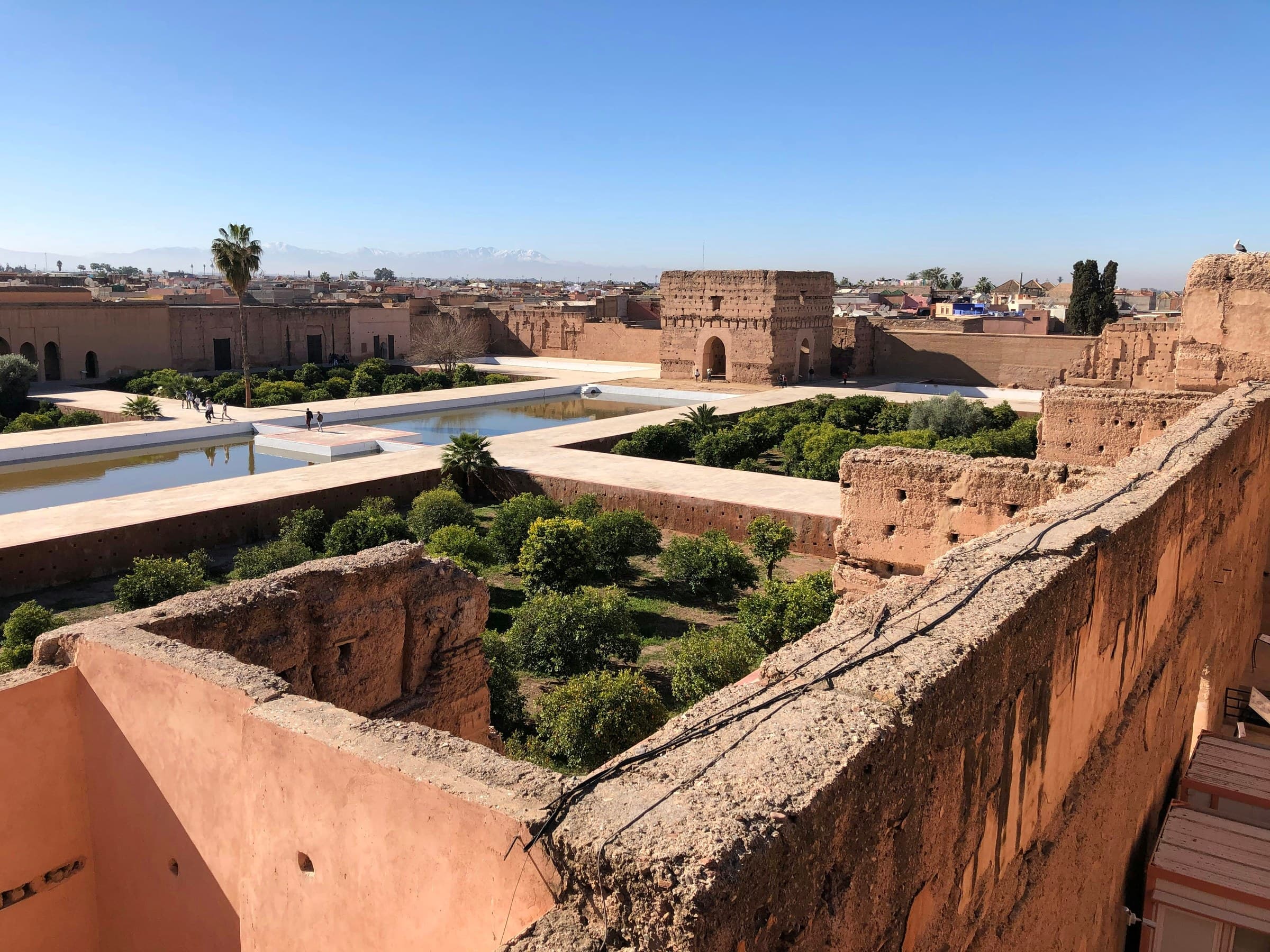
Medina, Souks and Gardens: What the Red Walls Hide
180 min · 6.2 km · moderate
More from Marrakech
Explore more at your own pace.
Marrakech Travel Guide: Days, Transport, Season, and Safety
The Red City in Three Layers: How to Read Marrakech
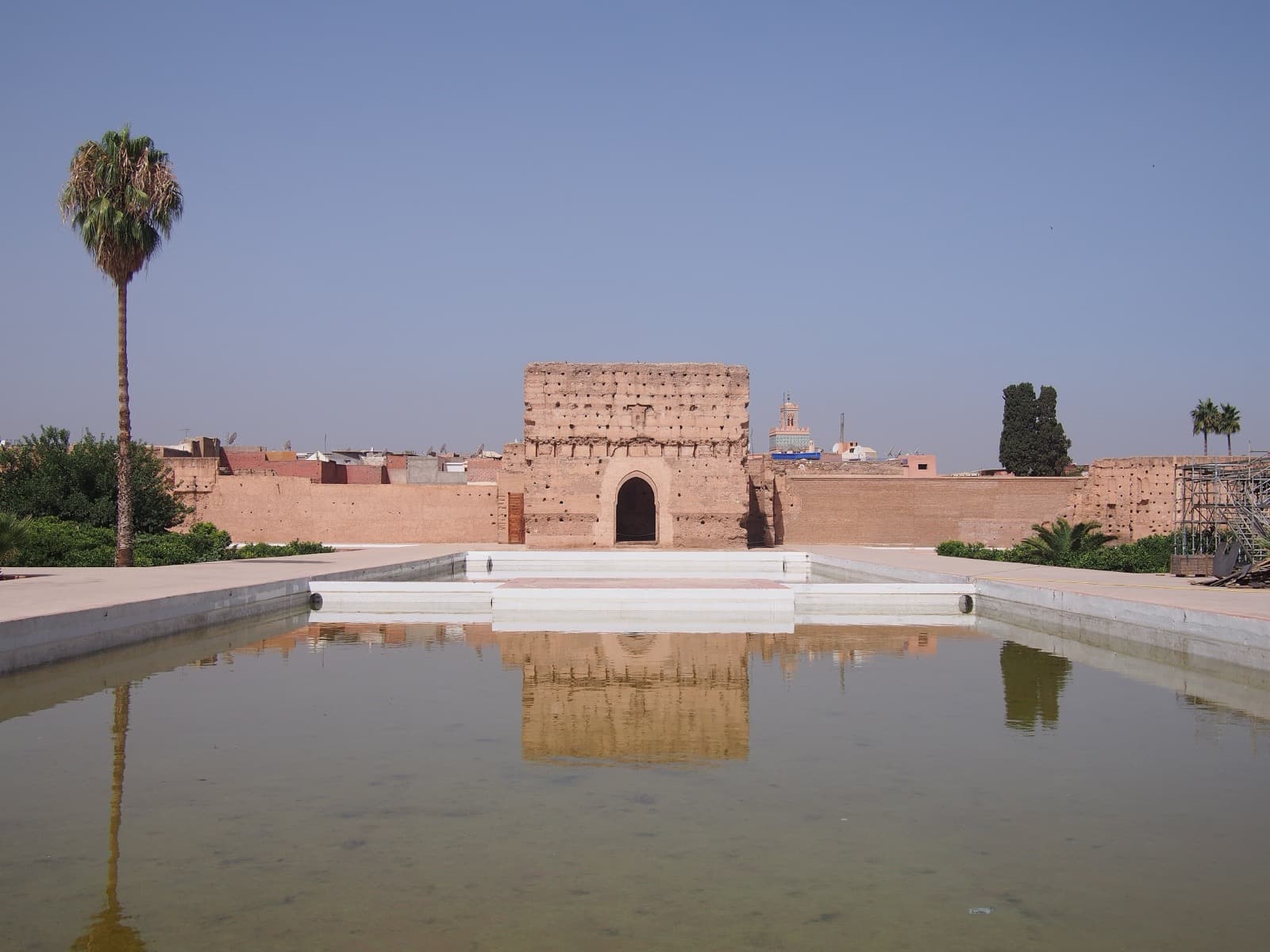
El Badi Palace: Reading Marrakech's Royal Quarter Through a Ruin
Majorelle Garden: The Blue That Reads the Whole of Marrakech
Bahia Palace: The Vizier Who Built a Palace to Outshine His King