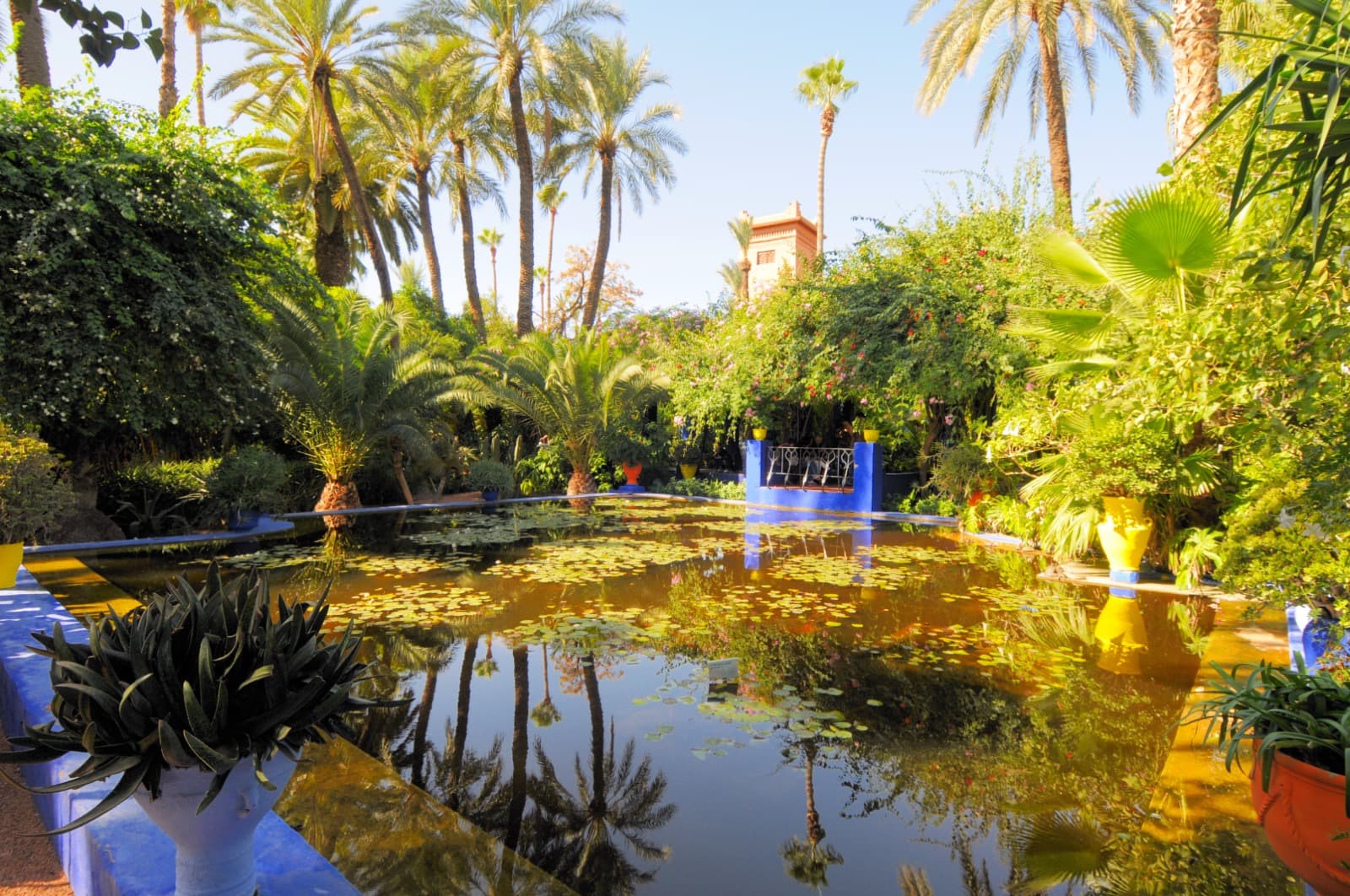
Majorelle Garden is where a painter decided that colour could work as a form of shade, and that decision is the door into the whole green story of Marrakech: the water and the shade that a red desert city has treated as its truest luxury for nine centuries. The cobalt-blue villa most visitors come to photograph looks like a private dream, and it was one. But it also connects, thread by thread, to medieval royal groves, monumental reservoirs, and a network of hidden channels that carry mountain snow to a dry plain. Read the blue carefully and it stops being a pretty backdrop. It becomes the first line of an argument about how any of this is possible at all.
A painter's blue, patented and rescued
The French artist Jacques Majorelle, who lived from 1886 to 1962, bought this plot in 1923 and built it slowly: a villa, a studio, and a garden of cacti, bamboo, palms, and quiet reflecting pools. In 1937 he mixed an intense ultramarine and spread it across the walls and pergolas, a shade so much his own that it now carries his name, bleu Majorelle, a colour he patented before his death. He said he drew it from the tiles he saw around the city and from the deep indigo of Amazigh, or Berber, cloaks. He opened the garden to the public in 1947.
Then the story turns the way many artists' estates do. After a costly divorce Majorelle sold the property, the garden slid into neglect, and he died in Paris in 1962. By the Fondation Jardin Majorelle's own account, the couturier Yves Saint Laurent and his partner Pierre Berge bought and restored the place in 1980, saving it from developers who would have paved it over. Today it draws more than seven hundred thousand visitors a year, making it one of the most visited sites in all of Morocco.
What makes it a good first stop on a self-paced walk is not just the colour. It is the way you can experience it. The ticket is timed and booked online, so there is no crowd at the gate and no one steering you through. You drift the blue lanes at your own speed, sit by the pools, and let the bamboo cool the light. Linger as long as the colour holds you, then move on when you decide to, not when a guide's whistle says so.
The museum next door, and the man who loved this city
Hear a stop from this walk
The Agdal Gardens: The Medieval Orchard-Empire That Still Feeds on Atlas Snow
A few steps from the garden gate stands a building that looks woven rather than built. The Musee Yves Saint Laurent Marrakech opened on the nineteenth of October, 2017, designed by the firm Studio KO. Its earth-coloured terracotta brick is laid, in the museum's own words, like a lace of bricks that evoke the weave of fabric. In January of 2018 the building won a Wallpaper Design Award for the best new public building.
The two sites are two halves of one man's Marrakech. Saint Laurent died in 2008, and by his wishes his ashes were scattered in the Majorelle Garden, where a memorial bearing his name still stands. You do not need to double back to see it. The point is simply that the blue garden and the brick museum belong to the same story: a designer who found his palette in this city and gave part of himself back to it.
The mirror that is really a reservoir
From here the route turns backward and outward, and this is where the tour's real argument arrives. A short taxi hop west brings you to the Menara, a vast olive grove laid out around an enormous rectangular basin, the water measuring roughly 195 metres by 160. UNESCO ties its origins to the Almohads, an Amazigh dynasty, and their ruler Abd al-Mumin, around 1157. At the head of the basin sits a green-tiled pavilion, rebuilt in 1870 by the Alaouite sultan Muhammad the Fourth on the ruins of an earlier sixteenth-century Saadian pavilion.
The classic photograph frames that pavilion mirrored in still water with the snow of the High Atlas rising behind it. Here is the twist. The mirror is not decoration. It is a working reservoir. Water arrives through a khettara, an underground channel that taps the distant mountain water table, and it is stored here to gravity-feed the lower orchards when they need it. What looks like a painting is in fact a machine for surviving a dry plain.
The orchard-empire and the hidden channels
South of the kasbah the scale grows again. The Agdal is an enormous walled royal estate, among the oldest gardens of its kind still in use anywhere. UNESCO credits its founding to the Almohads in the twelfth century, with its great reservoir and terraced layout shaped under the caliph Abu Yaqub Yusuf, who reigned from 1163 to 1184. It covers about 340 hectares, ringed by a wall roughly nine kilometres long. A census in 1916 counted nearly thirty thousand olive trees and close to ten thousand orange trees inside. In 1985 it was inscribed, together with the Medina of Marrakesh, on the UNESCO World Heritage List. Because it is a working royal garden, it opens only in part and only on certain days, so you take it in from the walls rather than as a full stroll.
Then comes the stop with nothing to enter and everything to understand: the khettaras themselves. These are the Moroccan form of the qanat, gently sloping underground channels dug from the foot of the Atlas to carry snowmelt to the city by gravity alone, no pump, no engine, only the patient tilt of the land. The water-heritage record ties them to the very founding of Marrakech. Under the Almoravids, the dynasty who founded the city between 1070 and 1072, large khettaras were built, and the sultan Ali ibn Yusuf, son of the founder Yusuf ibn Tashfin, expanded the system to bring drinking water to the growing town.
The route closes at the Palmeraie on the green edge of the city, an Almoravid-era grove watered from the start by khettaras, running some eight kilometres and holding over one hundred thousand date palms. Legend says it sprang from date-pits dropped by a marching army. The quieter truth is grander: it was deliberately planted and deliberately watered by the same hidden channels you learned to see at the Menara.
That is the reward of walking the full arc rather than only the marquee. The blue garden is beautiful on its own, but it means more once you know what carried the water. You can plan the rest of your day among Marrakech walking tours, and the practical details for reaching each garden sit on the Marrakech city page. Start at the blue gate, and let the pace be yours.
Sources
- Majorelle Garden, Wikipedia. Dates for Jacques Majorelle, the 1923 purchase, the patented blue, and the 1980 restoration.
- Fondation Jardin Majorelle, official site. The garden's own account of the Saint Laurent and Berge rescue from developers.
- Musee Yves Saint Laurent Marrakech, official site and Studio KO project record. The Studio KO design, the 2017 opening, and the brick facade description.
- UNESCO World Heritage List, Medina of Marrakesh (1985 inscription). Almohad and Alaouite garden history for the Menara and Agdal.
- Academic overview of the khettara in Morocco. Qanat-type gravity channels and their tie to the Almoravid founding of the city.
Ready to experience it?
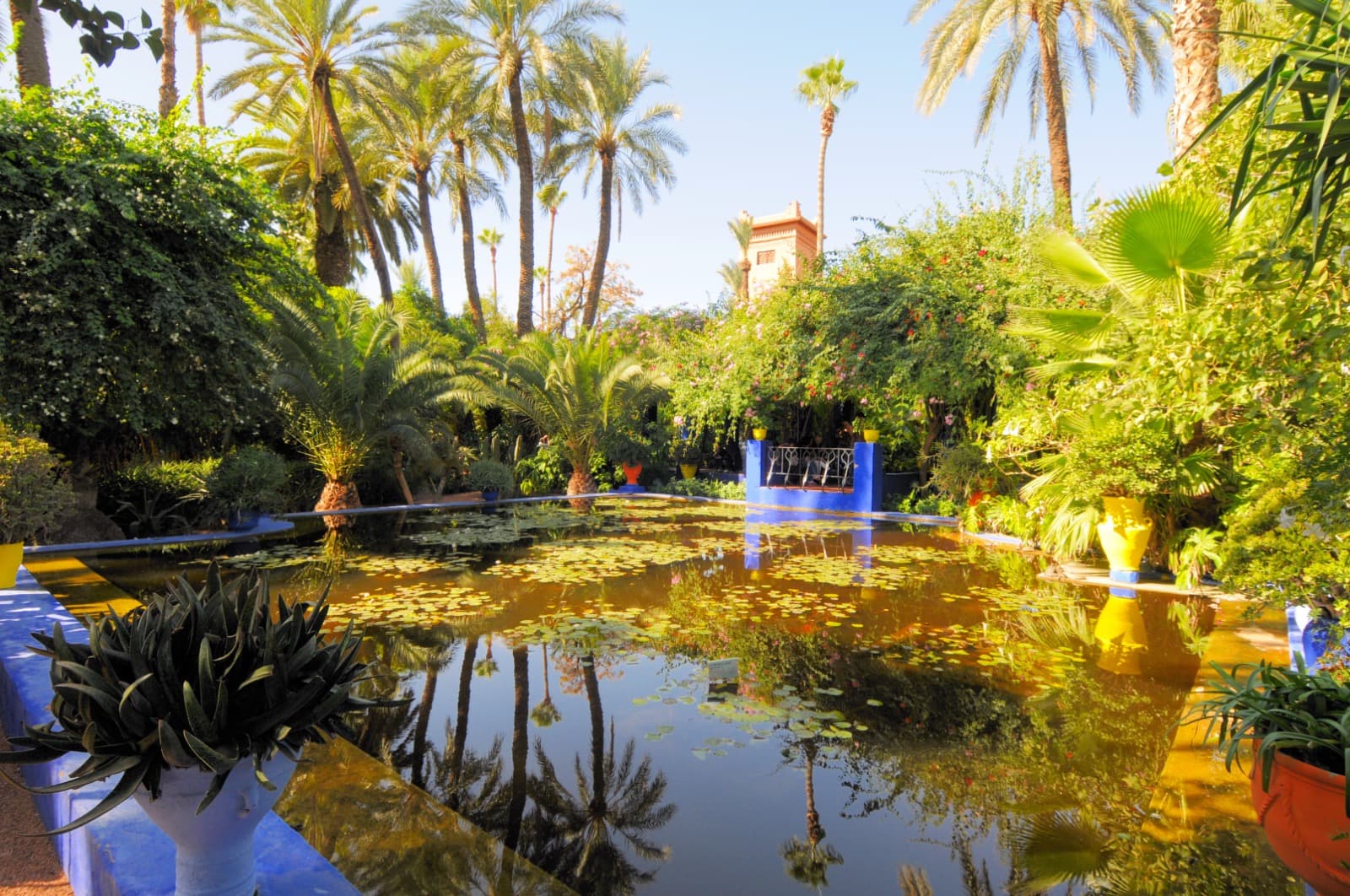
Majorelle Garden: The Green Marrakech Behind the Red Walls
150 min · 15 km · moderate
More from Marrakech
Explore more at your own pace.
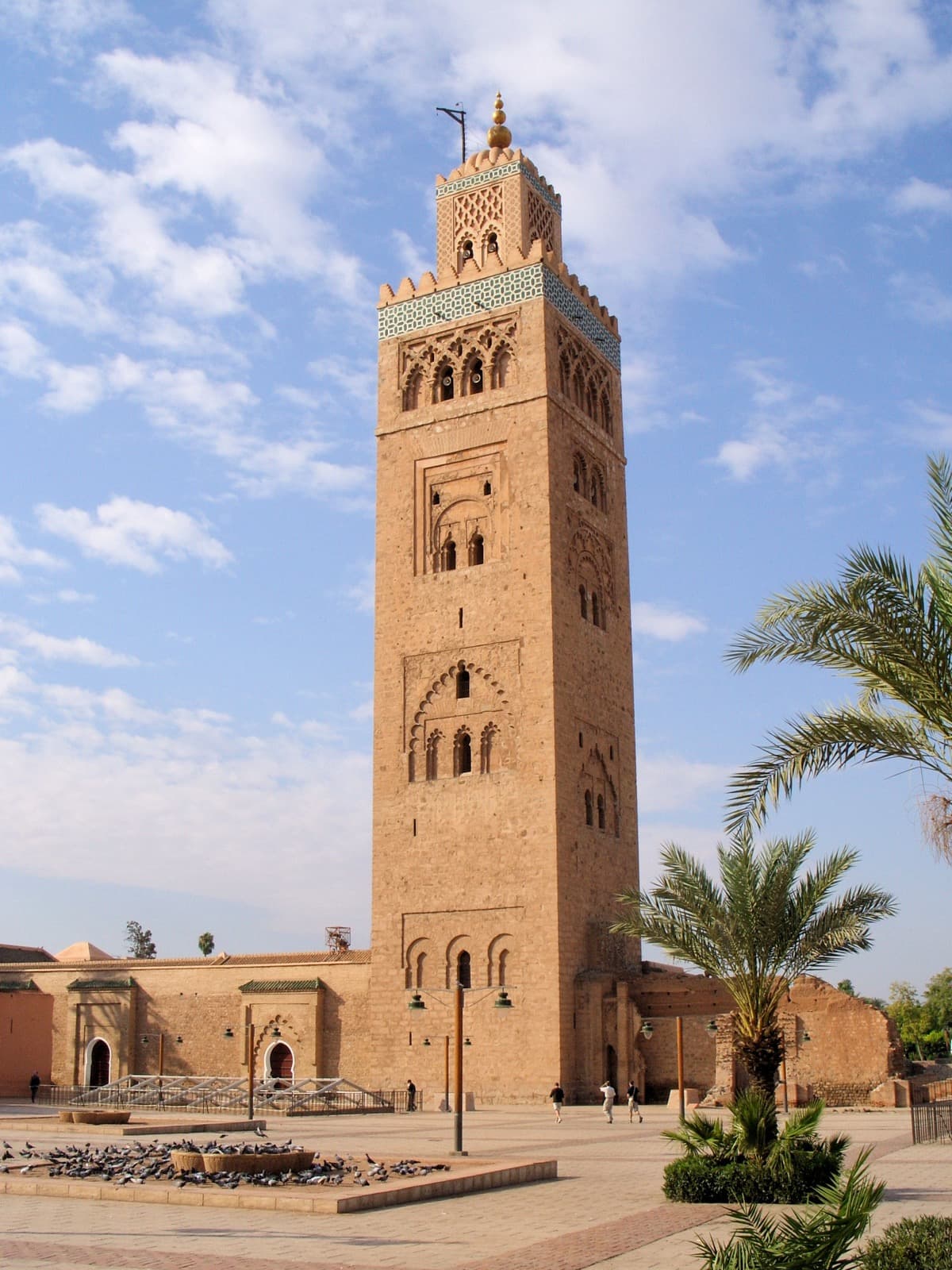
Marrakech Travel Guide: Days, Transport, Season, and Safety
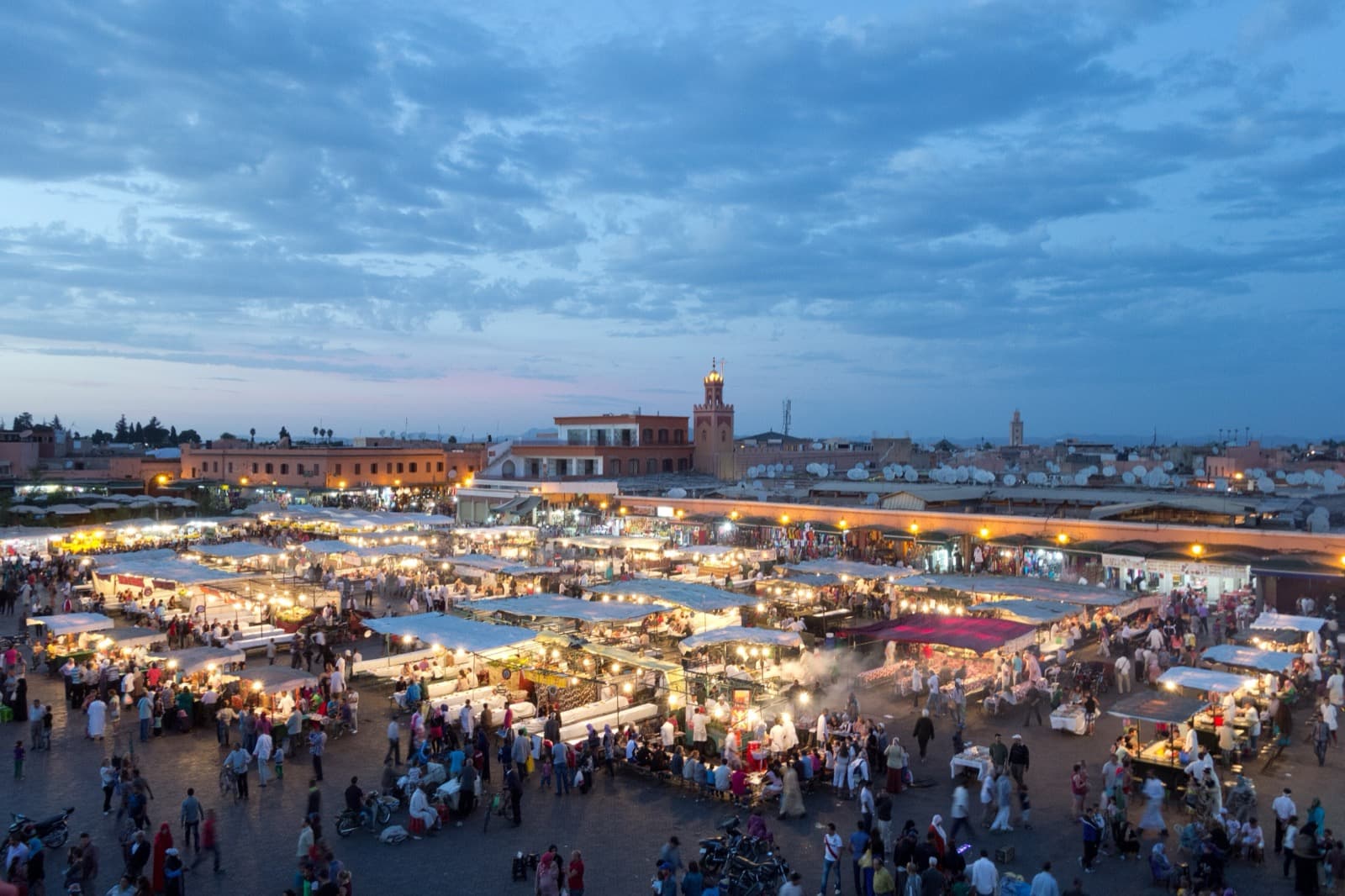
The Red City in Three Layers: How to Read Marrakech
El Badi Palace: Reading Marrakech's Royal Quarter Through a Ruin
Jemaa el-Fnaa: The Square That Unlocks the Whole Marrakech Medina
Bahia Palace: The Vizier Who Built a Palace to Outshine His King