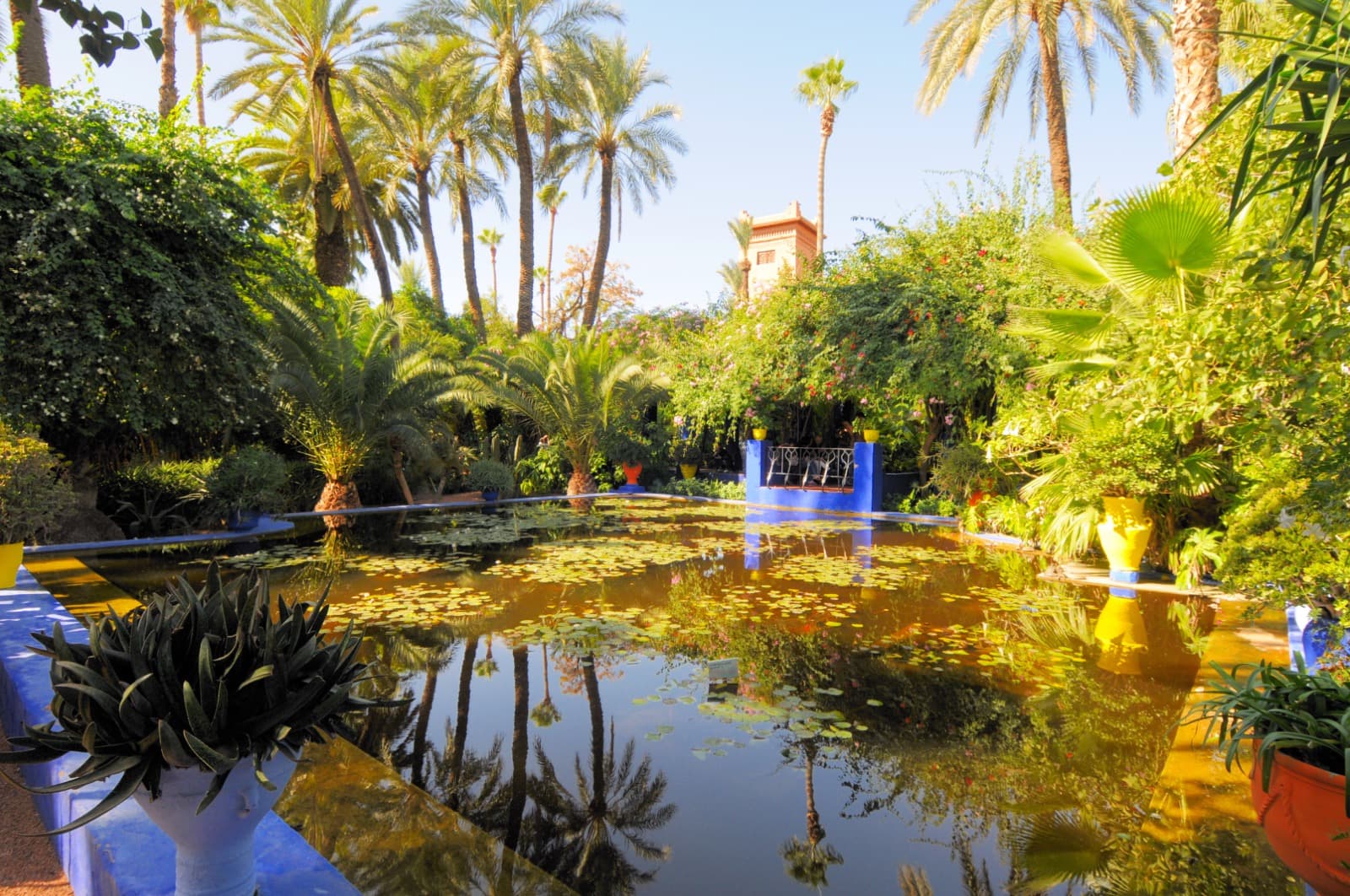
Majorelle Garden: The Green Marrakech Behind the Red Walls
4.42·6 Stops·150 minutes·15 km·Walking + taxi
A self-paced route through the green Marrakech hidden behind the red walls, from a painter's cobalt-blue dream to the medieval royal groves and the invisible mountain water that made a desert city of gardens possible.
Start · The Majorelle Garden: A Painter's Blue Dream in the Desert Light
DirectionsStops
- 1
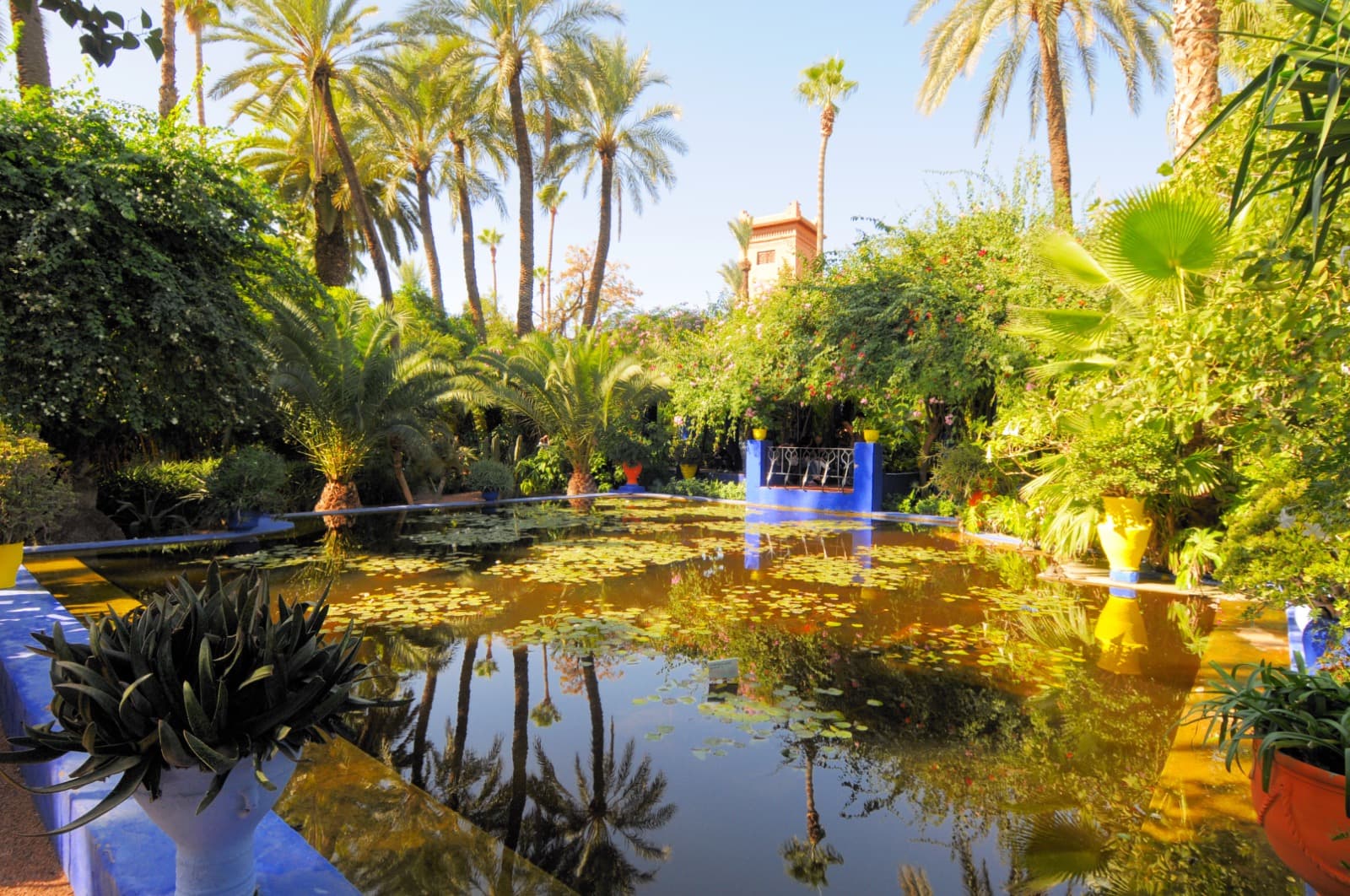
The Majorelle Garden: A Painter's Blue Dream in the Desert Light
A cobalt-blue villa and studio set in a garden of cacti, bamboo, and reflecting pools, built by a French painter and later rescued by a couturier.
- 2

The Yves Saint Laurent Museum: The Designer Who Found His Palette in This City
A terracotta-brick museum beside the garden, devoted to the couturier whose work drew on the colours of Marrakech.
- 3
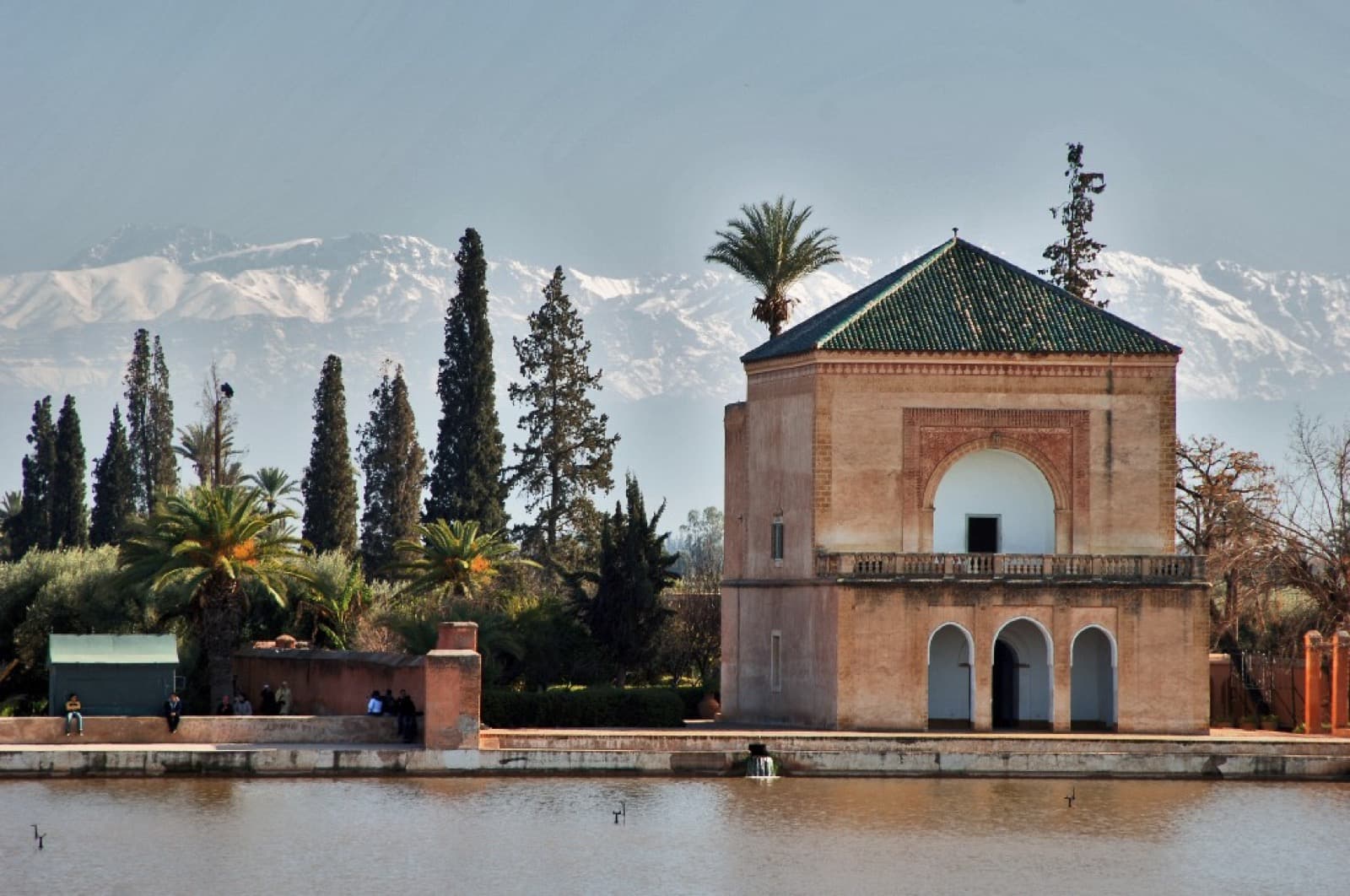
The Menara Gardens: The Mirror of Water and Mountains That Is Really a Reservoir
An Almohad-era olive grove around a vast rectangular basin, with a green-tiled pavilion mirrored against the snows of the Atlas.
- 4
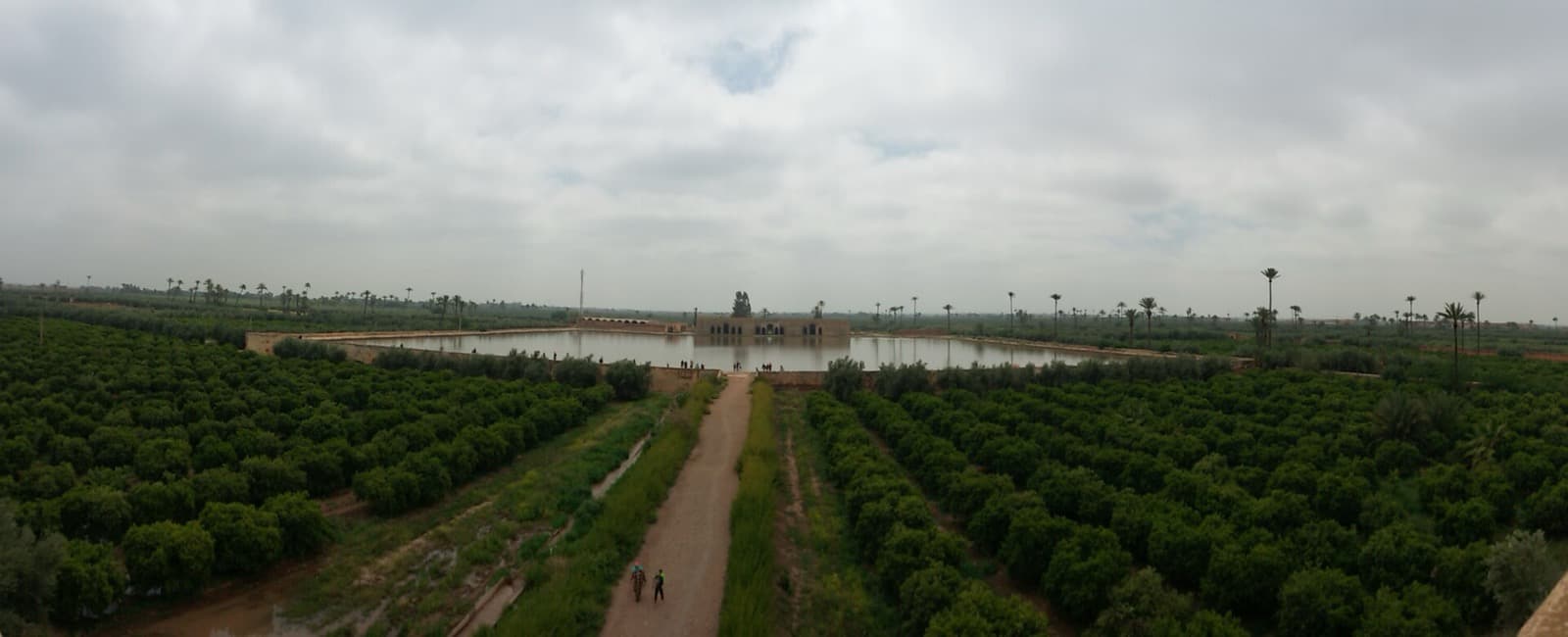
The Agdal Gardens: The Medieval Orchard-Empire That Still Feeds on Atlas Snow
An enormous walled royal garden of olives, oranges, and pomegranates, founded by the Almohads and still watered by historic basins and mountain channels.
- 5
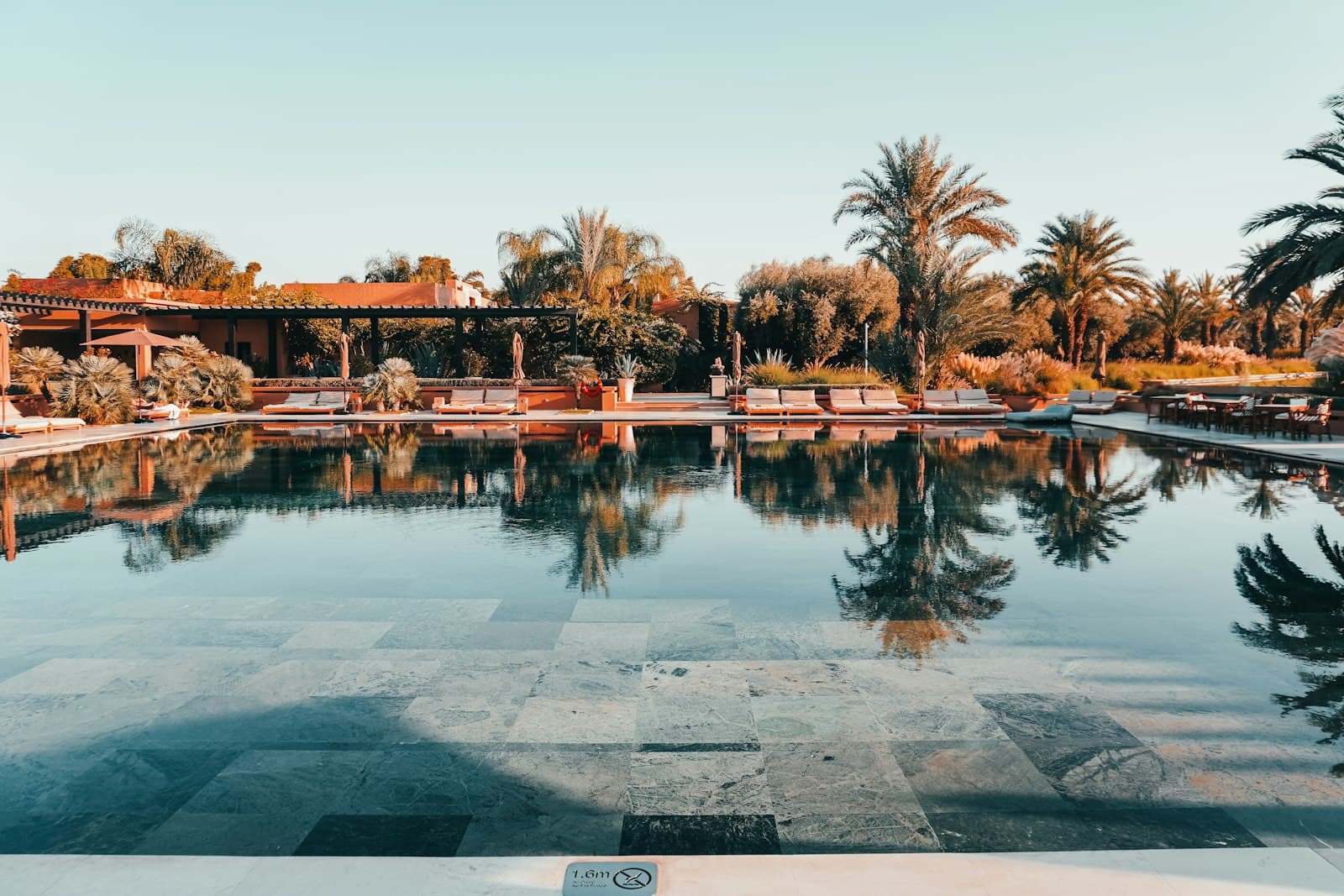
The Khettaras: The Hidden Channels That Are the Real Reason the City Exists
The invisible gravity-fed underground channels, dug from the foot of the Atlas, that carry mountain snowmelt to Marrakech and made a city of gardens possible.
- 6
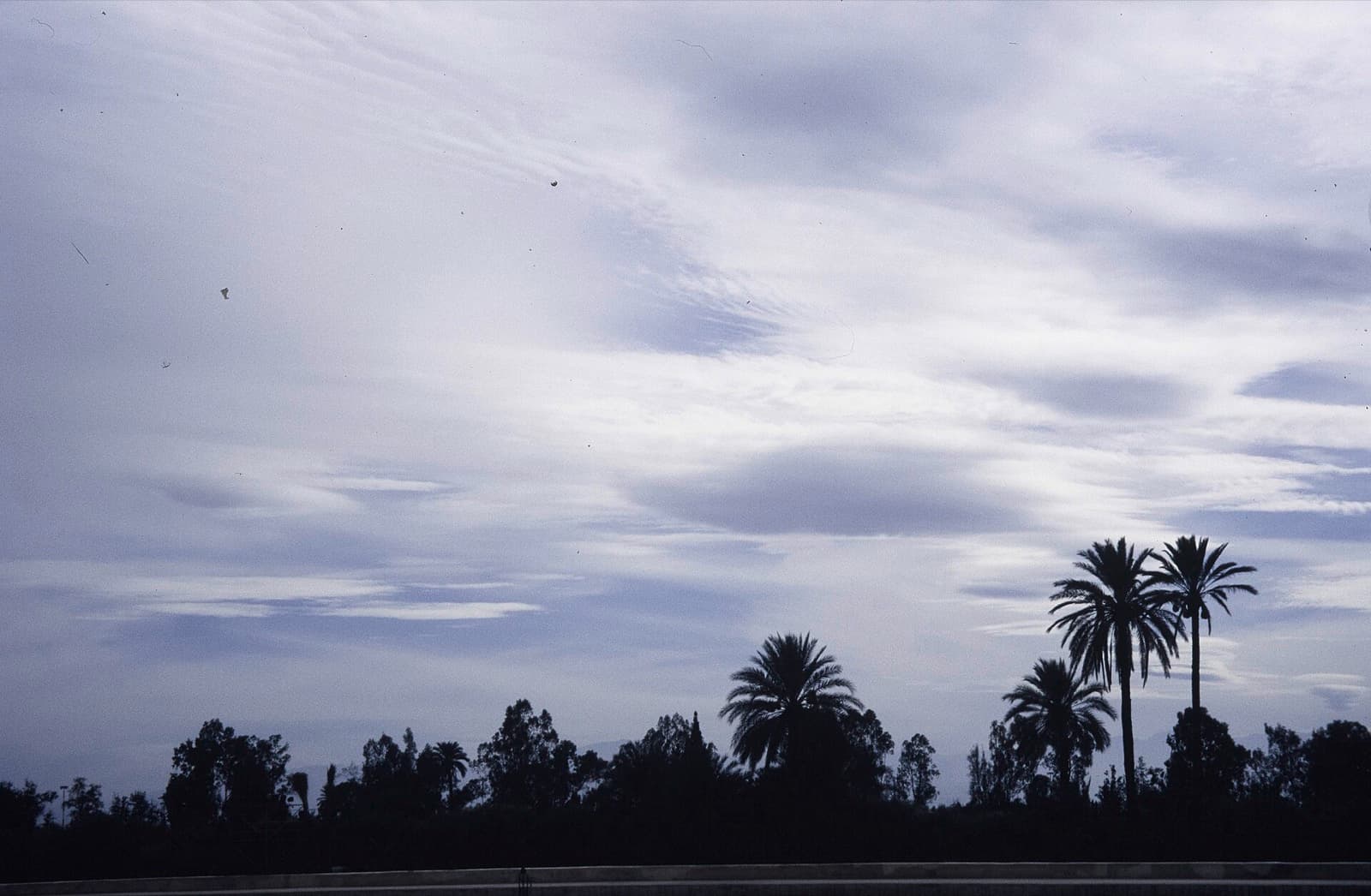
The Palmeraie: A Forest of Palms That Legend Plants from a Founding Army's Lunch
An ancient Almoravid-era palm grove on the city's green edge, watered by khettaras, wrapped in a founding legend about date-pits and a marching army.
Details
Best Time to Visit
Early morning or the last hours before sunset, from about October to April. The Majorelle Garden is calmest and coolest right at opening, before the midday crowds and heat, and its timed online ticket keeps it manageable. The Menara and Agdal groves and the Palmeraie have little shade, so the low sun of morning or late afternoon is far kinder, and the Atlas snow shows best behind the Menara basin in the clearer light of the cooler months. Note that the Agdal opens only in part and on certain days when the King is not in residence, so plan it flexibly, and remember that Friday and prayer times slow the rhythm of the city.
Pro Tips
- •Book the Majorelle Garden online in advance with a timed slot: there are no door sales, and the earliest slots are the quietest and coolest.
- •This route is built around short taxi hops between the garden district, the Menara, the Agdal, and the Palmeraie, so agree the fare or ask for the meter before you set off and keep small dirham notes handy.
- •The combined Majorelle, Yves Saint Laurent Museum, and Berber Museum ticket is worth it if you plan to see all three, but any single site can be done on its own if you would rather move on.
- •Check locally whether the Agdal is open the day you go, since it admits visitors only in part and only on certain days; treat it as a view from the walls rather than a guaranteed full stroll.
- •Carry water and sun cover for the Menara, Agdal, and Palmeraie: they are open groves with little shade, and the plain gets hot fast.
- •Let the order and pace be yours. Each stop is short and skippable, so linger over the blue lanes or the palms and drop anything that does not pull at you.
Safety & Precautions
- •Around the garden district, the medina gates, and the taxi ranks you may meet insistent faux-guides, touts, and shopkeepers; a firm, polite no and your own map keep you free to move at your own pace, and no one needs to steer you into a shop.
- •The Menara, Agdal, and Palmeraie have strong sun and very little shade, so carry water, and the medina lanes are a genuine maze with uneven footing, best taken slowly and at your own pace.
- •Dress modestly, especially near any mosque, shrine, or working royal ground; non-Muslims cannot enter active mosques or living shrines in Morocco, so view those from the outside, and be aware that Friday and prayer times change the rhythm of the city.
- •The currency is the Moroccan dirham, and small cash is useful for tickets, the Menara pavilion fee, and taxi fares and tips; agree taxi fares before you ride.
Travel advisory: Exercise Increased Caution (Level 2).
Gallery
Related Reading
Go deeper on what you'll see, hear, and walk through.

Overview
Best Self-Guided Walking Tours in Marrakech (2026)
3 min
Overview
Marrakech Travel Guide: Days, Transport, Season, and Safety
7 min
Overview
One Day in Marrakech: A Walkable Morning-to-Evening Itinerary
8 min
Thematic
Best Culture Walking Tours in Marrakech (2026)
2 min
Thematic
The Red City in Three Layers: How to Read Marrakech
8 min
Companion
Majorelle Garden: The Blue That Reads the Whole of Marrakech
7 min
Deep dive
The Yves Saint Laurent Museum in Marrakech: A Building Woven From Brick
6 min
Read
What to Eat in Marrakech: A Local Food Guide
6 min
Read the walk
The full story of Majorelle Garden: The Green Marrakech Behind the Red Walls, in words. Prefer to listen? Play it narrated, from home or on location.
Introduction
Marrakech is a red city on a dry plain in Morocco, and for nine centuries its truest luxury has not been gold but water and shade. This route reads the green Marrakech behind the red walls, six stops across roughly two and a half hours, and about fifteen kilometres in all, most of it covered by short taxi hops rather than one long march, so you move at your own pace with no group and no schedule. You begin with the marquee, a painter's cobalt-blue garden that a couturier rescued, and then step next door to the modern museum devoted to the designer who found his palette in this city. From there the story turns backward and outward, to the medieval royal groves of the Menara and the Agdal, where a mirror of water against the mountains turns out to be a working reservoir. You will meet the invisible engineering that makes all of it possible, the khettaras, gently sloping underground channels that bring mountain snowmelt to the city by gravity alone. And you will end at the ancient palm forest on the green edge of town, where a founding legend and the real history of water finally meet. Nothing here rushes you. Each stop is short and skippable, the order is a suggestion, and the map is your own. Amazigh dynasties, a French brush, and a modern house of fashion all left their mark on this soil. When you arrive at the entrance of the Majorelle Garden, begin with stop one.
1. The Majorelle Garden: A Painter's Blue Dream in the Desert Light
You are standing where a painter decided that colour could be a form of shade. The French artist Jacques Majorelle, who lived from eighteen eighty-six to nineteen sixty-two, bought this plot in nineteen twenty-three and slowly built a villa, a studio, and a garden of cacti, bamboo, palms, and quiet reflecting pools. In nineteen thirty-seven he mixed an intense ultramarine and painted it across the walls and pergolas, a shade so much his own that it carries his name to this day, bleu Majorelle, a colour that is now patented. He said he drew it from the tiles he saw around Marrakech and from the deep blue of Amazigh, or Berber, cloaks. He opened the garden to the public in nineteen forty-seven. After a costly divorce he sold the property, the garden fell into neglect, and Majorelle died in Paris in nineteen sixty-two. Then, by the Fondation Jardin Majorelle's own account, the couturier Yves Saint Laurent and his partner Pierre Berge bought and restored the place in nineteen eighty, saving it from developers who would have paved it. Today it draws more than seven hundred thousand visitors a year, among the most visited sites in all of Morocco. Here is the autonomy of it. Your ticket is timed, booked online, so there is no crowd at the gate and no one steering you. You can drift the blue lanes at whatever pace you like, sit by the pools, and let the bamboo cool the light. Linger as long as the colour holds you. When you are ready, the next chapter is quite literally next door.
2. The Yves Saint Laurent Museum: The Designer Who Found His Palette in This City
A few steps from the garden gate stands a building that looks woven rather than built. This is the Musee Yves Saint Laurent Marrakech, which opened on the nineteenth of October, twenty seventeen, designed by the architecture firm Studio KO. Its earth-coloured terracotta brick is laid, in the museum's own words, like a lace of bricks that evoke the weave of fabric, an assemblage of cubes and curves made from terra cotta, concrete, and terrazzo drawn from Moroccan materials. It runs to about four thousand square metres and holds exhibition halls, an auditorium, a research library of thousands of volumes, a bookshop, and a cafe. Inside, according to the museum, is the work of a couturier whose collections ran to thousands of garments and tens of thousands of accessories, a designer who loved this city and let its colours run through his work. In January of twenty eighteen the building won a Wallpaper Design Award for the best new public building. You are welcome to go in, so this is a stop you can spend an hour on or pass by, entirely your call. There is one more thread that ties this museum back to the garden you just left. Yves Saint Laurent died in two thousand eight, and by his wishes his ashes were scattered in the Majorelle Garden, where a memorial bearing his name still stands. You need not double back to see it. Simply know that the blue garden and this brick museum are two halves of one man's Marrakech.
3. The Menara Gardens: The Mirror of Water and Mountains That Is Really a Reservoir
A short taxi hop west of the medina brings you to one of the most photographed views in Morocco, and one of the most misunderstood. The Menara is a vast olive grove laid out around an enormous rectangular basin, the water measuring roughly one hundred and ninety-five metres by…
Full narration for this stop unlocks with the tour.
4. The Agdal Gardens: The Medieval Orchard-Empire That Still Feeds on Atlas Snow
South of the kasbah stretches something closer to an orchard-empire than a garden. The Agdal is an enormous walled royal estate, among the oldest gardens of its kind still in use anywhere. UNESCO records credit its founding to the Almohads in the twelfth century, with its great…
Full narration for this stop unlocks with the tour.
5. The Khettaras: The Hidden Channels That Are the Real Reason the City Exists
Stand beside the Agdal's great basins and consider what you cannot see, because the hidden thing is the real hero of this whole route. The gardens, the fountains, and the reservoirs of the Menara, the Agdal, and the palm forest all depend on a network no visitor ever…
Full narration for this stop unlocks with the tour.
6. The Palmeraie: A Forest of Palms That Legend Plants from a Founding Army's Lunch
An easy taxi hop to the northern and eastern edge of the city brings you to where the red plain turns green with palms, and where this whole story finds its close. This is the Palmeraie, an ancient grove created in the Almoravid period and watered, from the start, by a khettara…
Full narration for this stop unlocks with the tour.