Medina, Souks and Gardens: What the Red Walls Hide
180 min · 6.2 km · moderate
In Marrakech, eat the city's own dishes first: tanjia, the slow-cooked meat that men buried in bathhouse embers, then tagine and harira at any stall, mechoui lamb pulled from an underground oven near midday, and grilled skewers, snails, and fresh orange juice on Jemaa el-Fnaa after dark, all washed down with sweet mint tea poured from a height. Below is what each dish is, where the tradition comes from, and how to order it without guessing.
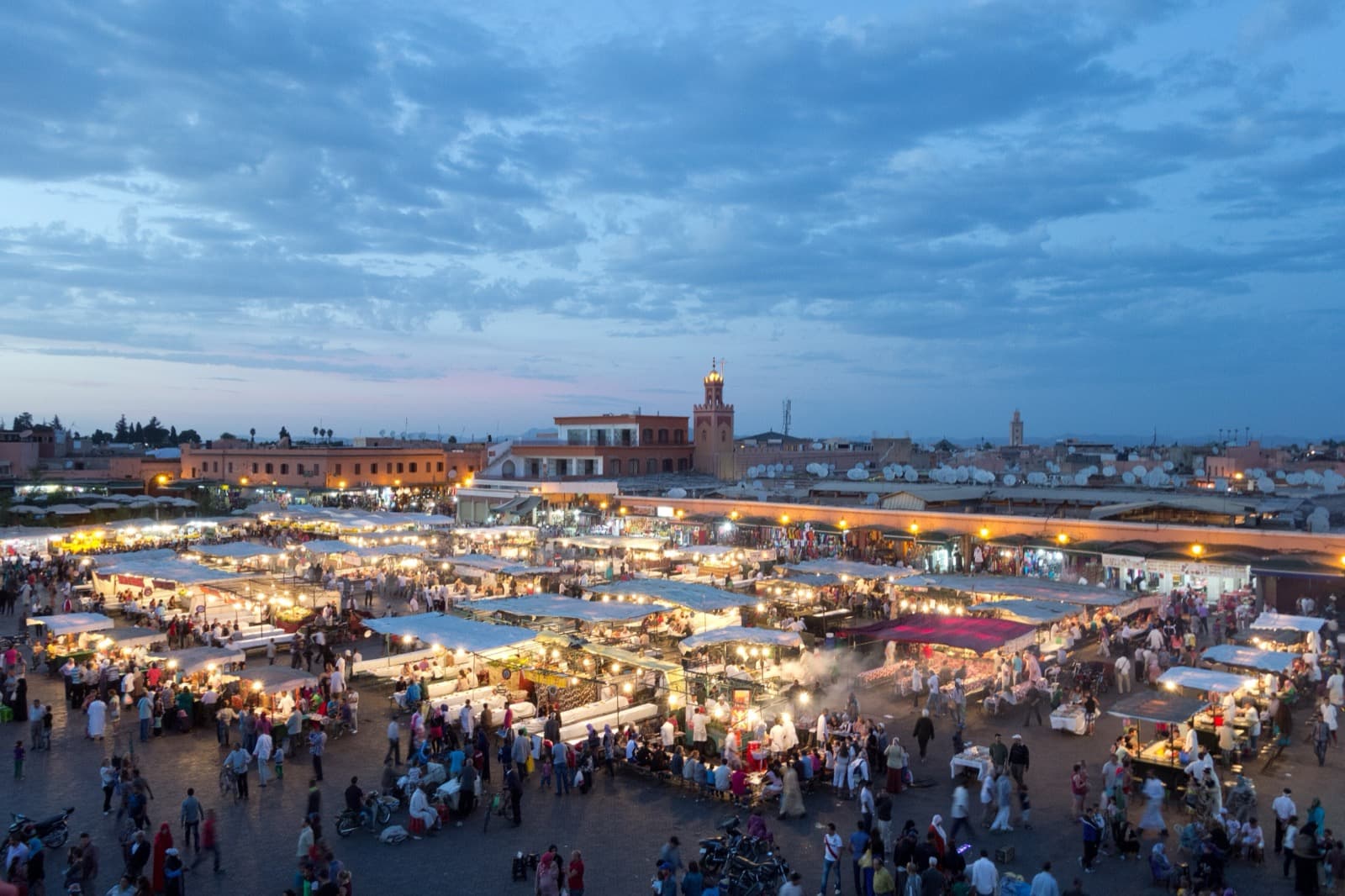
The food is part of why the main square carries a UNESCO title. The Cultural space of Jemaa el-Fnaa Square was proclaimed a Masterpiece of the Oral and Intangible Heritage of Humanity in 2001 and inscribed on the Representative List of the Intangible Cultural Heritage of Humanity in 2008, recognition that covers the storytellers, musicians, and the food stalls together as one living practice. When you eat here, you are eating inside a protected tradition, not just at a market.
Tanjia: the dish that belongs to Marrakech
If you try one thing that is specifically Marrakchi, make it tanjia (also spelled tangia). It is named after the tall, urn-shaped clay pot it cooks in. Lamb or beef goes into the sealed pot with garlic, preserved lemon, cumin, saffron, and olive oil, then the pot is taken to a farnatchi, the furnace that heats a neighborhood hammam (public bathhouse). It slow-cooks for roughly five to six hours in the ashes beside the fire, not in the flames, until the meat falls apart at a touch.
Tanjia has a specific social history: it was traditionally a men's dish, prepared by male artisans and merchants, and closely tied to bachelors and single workers who cooked it while they went about their day in the souks. That is the origin worth knowing when you order it. Look for it in medina food houses and stalls rather than expecting it on every riad menu, and know it is meant to be shared.
Tagine and harira: the everyday backbone
Hear a stop from this walk
Cyber Parc: How to Read an Orchard
Tagine is the stew you will see most, named after the conical earthenware lid that traps steam and returns it to the pot. Chicken, lamb, or beef cook slowly with vegetables and often preserved lemon and olives, or with sweet notes from prunes or apricots. It is a good default at lunch and comes with bread for scooping, since flatware is optional.
Harira is a tomato-based soup thick with chickpeas, lentils, and usually a little meat. It is a year-round comfort dish and the classic food for breaking the fast during Ramadan, so you will find pots of it going especially fast in the evening. On Jemaa el-Fnaa it is one of the cheapest, most reliable ways to eat well, often served with dates or a sticky sweet on the side.
Mechoui: time your visit for the lamb
Mechoui is whole lamb, slow-roasted in an underground clay-pit oven until it is tender enough to pull apart by hand. The best-known place to eat it is Mechoui Alley, the short lane of vendors just off the north side of Jemaa el-Fnaa. Here the timing matters: the lambs typically come out around 11 in the morning and sell until roughly early afternoon, so this is a lunch dish, not a late-night one.
Ordering is simple and physical. You point to the cut you want, it is weighed, and you pay by weight. It arrives with almost nothing added: salt, ground cumin, bread, and mint tea. Eat with your hands, dip into the cumin, and do not expect a menu.
Jemaa el-Fnaa after dark: skewers, snails, and juice
At dusk the square fills with numbered food stalls. This is where to eat grilled brochettes (skewers) and merguez (spiced sausage), bowls of ghoulal (small snails in a peppery, cumin-heavy broth that you pick out with a toothpick), and, for the adventurous, slow-cooked sheep's head served with cumin and salt. Fresh orange juice stands ring the square and are a genuine pleasure in the heat.
How to order like a local: walk the stalls first, then sit at whichever is busiest with Moroccans. High turnover is your best signal for freshness, and the evening food scene here is generally reliable for exactly that reason. Prices are marked or negotiated per portion, so agree on what you are getting before you sit.
Breakfast and mint tea: the parts people skip
Moroccan breakfast is built on bread. Look for msemen (a buttery, layered square flatbread), baghrir (the spongy "thousand-hole" pancake), and round khobz, eaten with honey, olive oil, or amlou, a Berber spread of toasted almonds, argan oil, and honey. Many medina riads will make amlou if you ask, so it is worth asking.
Mint tea (atay, sometimes called "Berber whiskey," with no alcohol involved) follows nearly every meal and every welcome. Gunpowder green tea is brewed with fresh spearmint and a lot of sugar, then poured from high above the glass to raise a foam called rghwa. It is a gesture of hospitality, so accepting the first glass matters. It is customary to pour three rounds from the same pot, each a little stronger than the last.
Eat well without getting sick
The honest safety picture: the cooked food on and around Jemaa el-Fnaa in the evening is generally safe precisely because it moves so fast. The two things worth caution are water and things washed in it. Drink sealed bottled water and check the cap is intact. Skip ice at street stalls, and be selective with the freshly squeezed juice, since some square vendors have been reported to thin the juice with local water, which is a common cause of upset stomachs. Raw salads and unpasteurized dairy are the other items to approach carefully. None of this should keep you from the stalls: choose the crowded ones, watch that fried-food oil is light rather than dark, and eat what is hot off the grill.
Where to walk it off
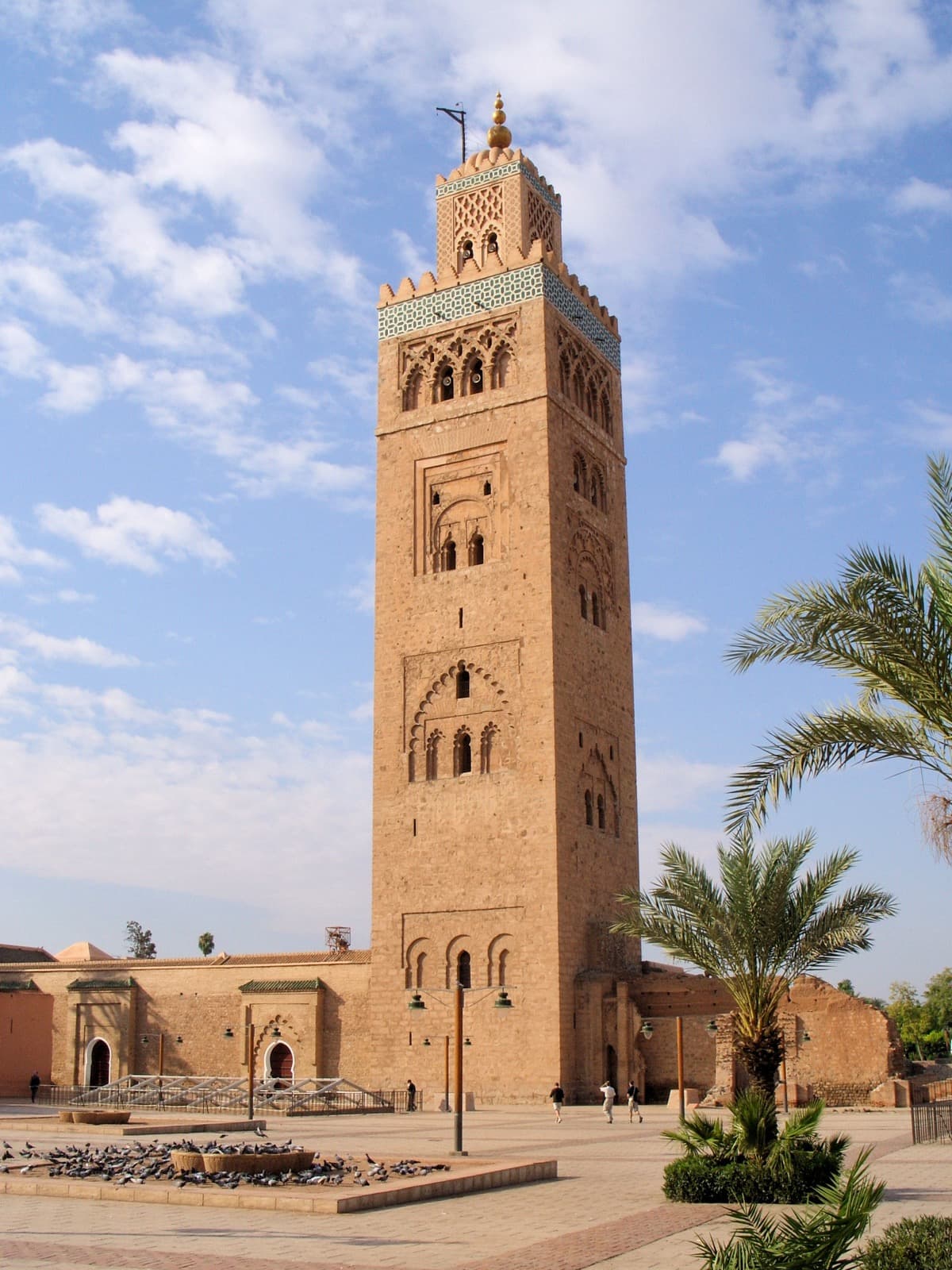
Most of these dishes cluster around one square, so the food and the sights overlap. The Jemaa el-Fnaa: The Heart of the Marrakech Medina walking tour puts you at the storytellers' square, the Koutoubia minaret, and the souks, the same streets where the tanjia pots and mechoui ovens sit. For the sultans' Marrakech of the Bahia Palace and the Saadian Tombs, or the Majorelle Garden across the walls, browse the full set of Marrakech walking tours and let the audio carry you between stops at your own pace, hungry or not.
Sources
Frequently asked questions
- What is the signature dish of Marrakech?
- Tanjia (also spelled tangia) is the dish most specific to Marrakech. Meat is sealed in a tall clay urn with garlic, preserved lemon, cumin, saffron, and olive oil, then slow-cooked for about five to six hours in the ashes of a hammam bathhouse furnace. It was traditionally a men's dish tied to the artisans and bachelors of the souks.
- Is the street food at Jemaa el-Fnaa safe to eat?
- The cooked food at the evening stalls is generally reliable because of very high turnover, so choose the busiest stalls with local customers. Be more cautious with freshly squeezed juice, since some vendors have been reported to dilute it with local water, and avoid ice, raw salads, and unpasteurized dairy. Drink sealed bottled water and check the oil on fried food is light rather than dark.
- What is mechoui and when can I eat it in Marrakech?
- Mechoui is whole lamb slow-roasted in an underground clay-pit oven until it pulls apart by hand. It is a lunch dish: the lambs typically come out around 11 in the morning and sell out by early afternoon at spots like Mechoui Alley near Jemaa el-Fnaa. You order by pointing to a cut, it is weighed, and it comes with salt, cumin, bread, and mint tea.
- How do you drink Moroccan mint tea?
- Mint tea (atay) is gunpowder green tea brewed with fresh spearmint and plenty of sugar, poured from high above the glass to raise a foam called rghwa. It is a gesture of hospitality, so accepting the first glass matters. It is customary to serve three rounds from the same pot, each one a little stronger than the last.
- What is the difference between a tagine and a tanjia?
- A tagine is a stew named after the conical lidded pot it cooks in, made with chicken, lamb, or beef and vegetables, often with preserved lemon, olives, or dried fruit, and it is common across Morocco. A tanjia is specific to Marrakech, cooks in a tall urn-shaped pot buried in bathhouse-furnace ashes for hours, and has a distinct history as a men's dish.
- What do Moroccans eat for breakfast in Marrakech?
- Breakfast centers on bread: msemen (a buttery layered flatbread), baghrir (a spongy thousand-hole pancake), and round khobz, eaten with honey, olive oil, or amlou, a Berber spread of toasted almonds, argan oil, and honey. It is served with mint tea and is meant to be a slow, shared meal. Many medina riads will prepare amlou if you ask.
Ready to experience it?
Medina, Souks and Gardens: What the Red Walls Hide
180 min · 6.2 km · moderate
More from Marrakech
Explore more at your own pace.
The Red City in Three Layers: How to Read Marrakech
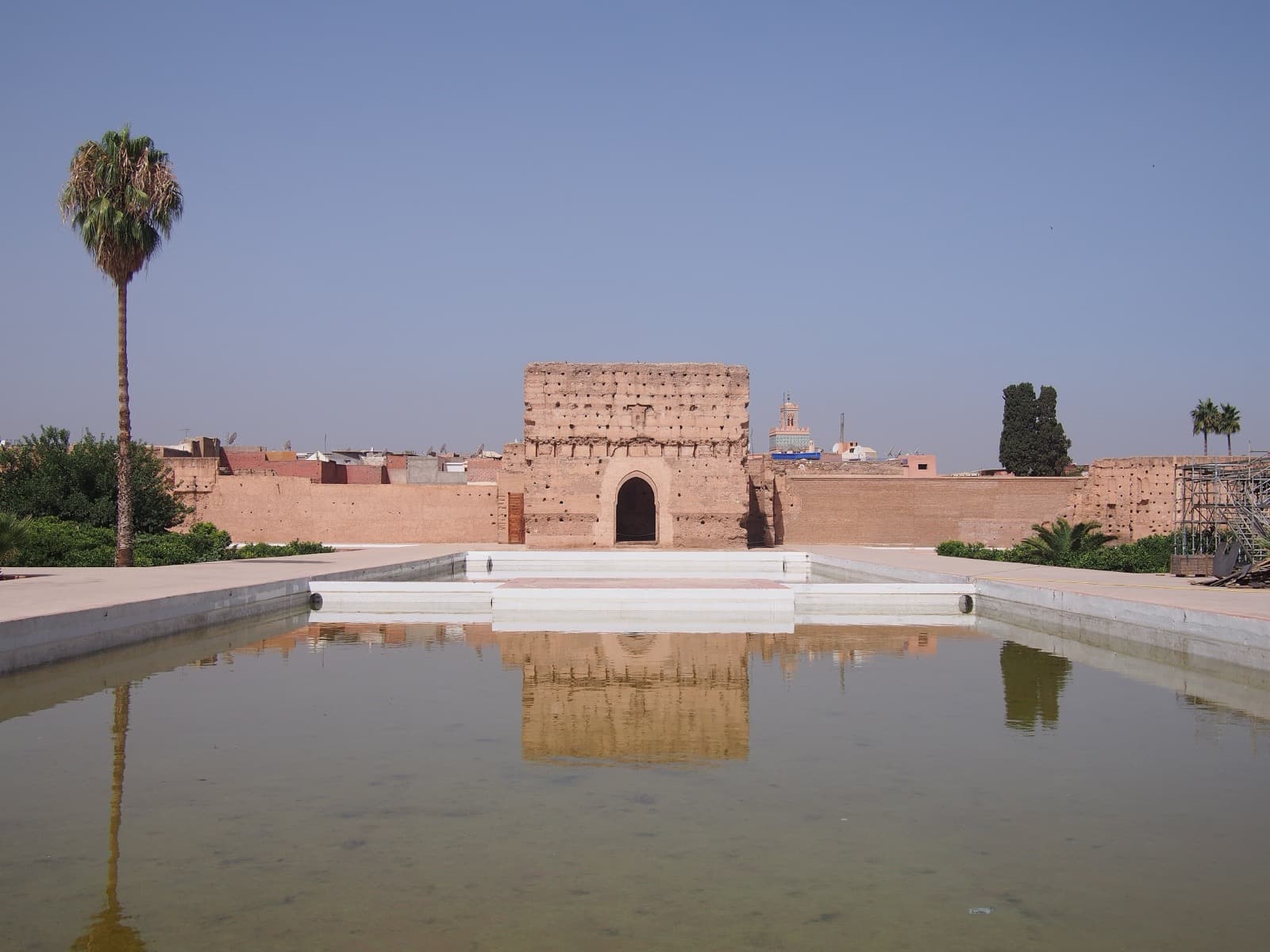
El Badi Palace: Reading Marrakech's Royal Quarter Through a Ruin
Jemaa el-Fnaa: The Square That Unlocks the Whole Marrakech Medina
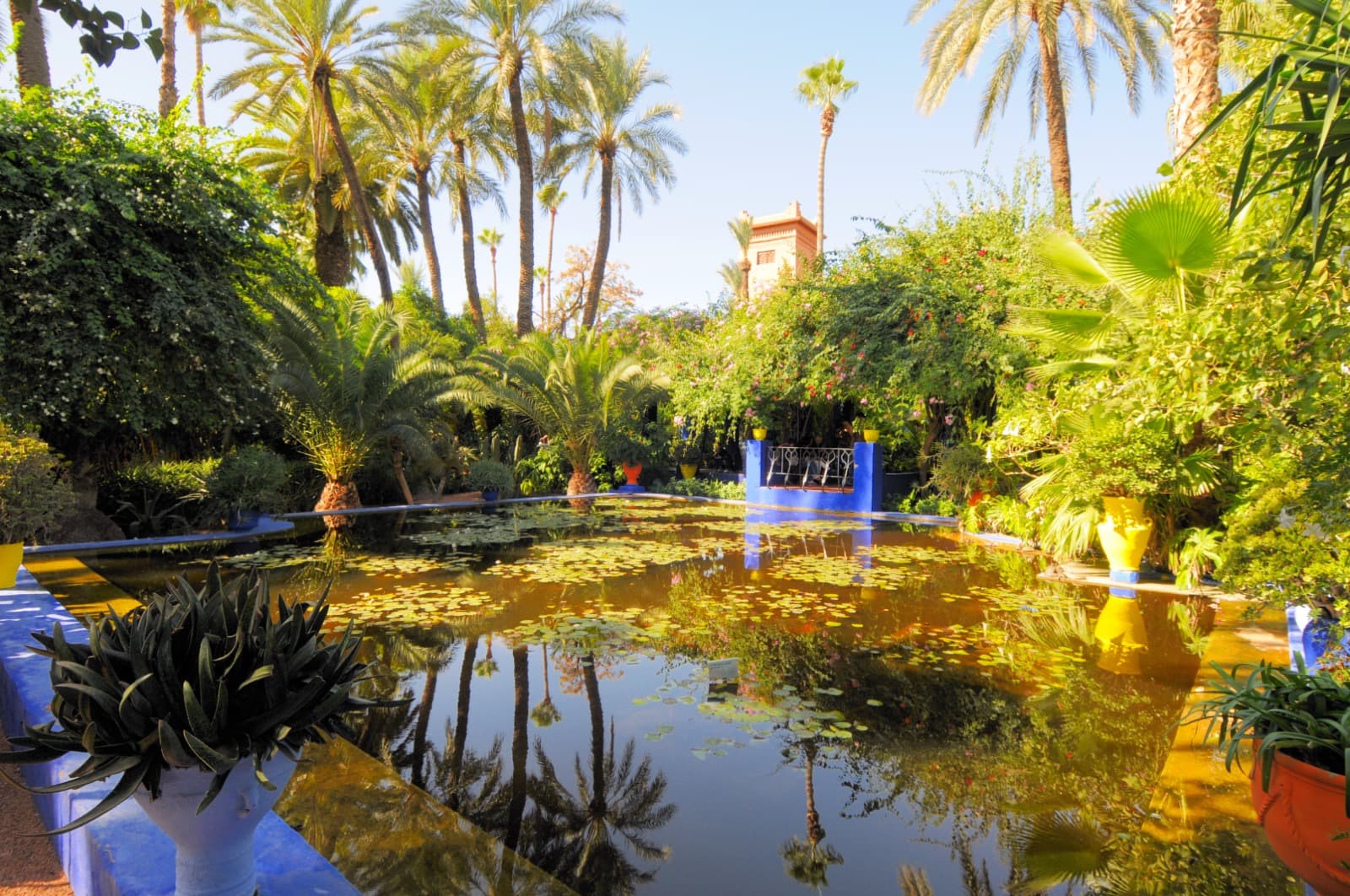
Majorelle Garden: The Blue That Reads the Whole of Marrakech
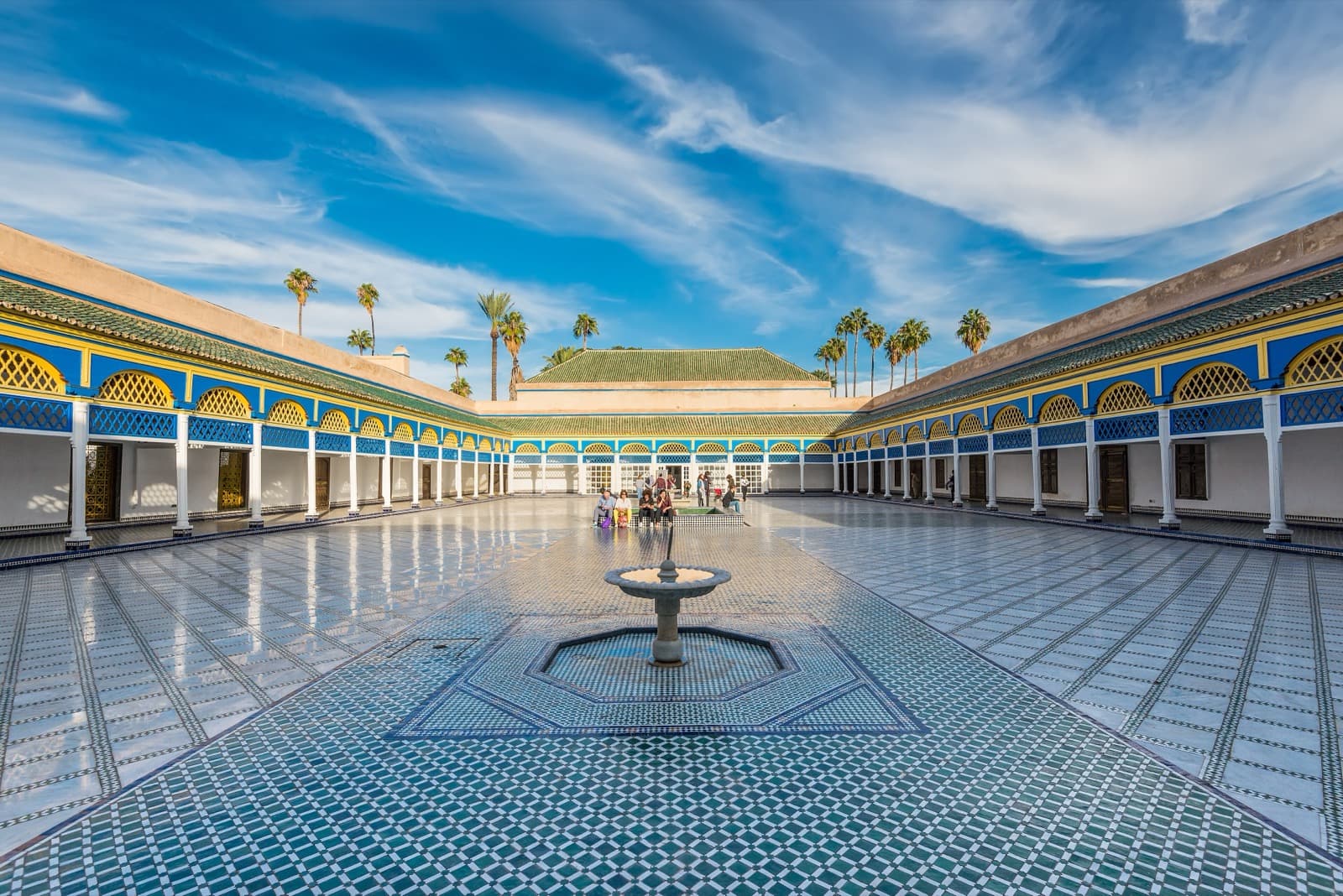
Bahia Palace: The Vizier Who Built a Palace to Outshine His King